

 , Viktor Brygadyrenko 2,*,†
1 Department of Parasitology and Veterinary and Sanitary Expertise, Dnipro State Agrarian and Economic University, 49000 Dnipro, Ukraine
2 Department of Zoology and Ecology, Oles Honchar Dnipro National University, 49010 Dnipro, Ukraine
†These authors contributed equally.
Abstract
Background: Helminthiases inflict annual losses on the meat and dairy
livestock industries. The commonest species of ruminant parasites are the
nematodes: Strongyloides papillosus and Haemonchus contortus,
which lay eggs in the intestine and enter the feces. There, the eggs develop into
larvae, which when voided with the feces crawl onto plants. Methods: In
our experiment, we evaluated the survivability of the noninvasive and invasive
(L
Keywords
- nematode larvae mortality
- flavoring
- essential oil
- nematicidal activity
- migrating larva
- plant extract
Pollution of the environment by various chemical drugs, including antiparasitic, is a global problem. Against the background of their extensive application in agriculture, including veterinary medicine, researchers have observed an increase in toxic loading on natural ecosystems and agrocoenoses. Moreover, they have observed the presence of residual amounts of those drugs in products with animal origins. Researchers have also recorded resistance by parasites to many active compounds in various synthetic drugs [1]. An important aspect of this issue is the high price of anthelmintic drugs. Combating nematodes is economically important in various spheres of animal farming in many countries worldwide. Therefore, many scientists devote their best efforts to studying alternative ways of fighting parasites, including helminths [2, 3, 4, 5, 6], parasitic protozoa [7, 8], and ectoparasites [9, 10].
One such method is using compounds from natural sources, including medicinal plants [11, 12, 13], their essential oils [14, 15], and any individual compounds found in them [16, 17, 18, 19]. Many of them have a broad range of uses in various spheres of human activity, including agriculture, medicine, and cosmetology. Such compounds exert an array of beneficial properties, including having low toxicity and being easily metabolized [20, 21]. In addition, many are cheap and available. Therefore, medicinal plants, essential oils, and their constituents are potentially interesting as an alternative to modern synthetic antiparasitic drugs [22, 23, 24, 25]. The purpose of our research was to study the effect of eugenol, isoeugenol, carvacrol, and thymol on the survival of ruminant nematode larvae in vitro.
The effect of aromatic compounds extracted from essential oils was studied in vitro in 2022–2023, in a Laboratory at the Department of Parasitology and Veterinary–Sanitary Expertise of the Dnipro National Agrarian and Economic University (Ukraine). Fecal samples were collected from naturally infected ruminants (goats) by the Clinical–Diagnostic Center of Veterinary Medicine at the Dnipro State Agrarian-Economic University.
Coprological examinations of the feces were performed using the McMaster
technique. The larvae of Haemonchus contortus (Rudolphi, 1803), and
Strongyloides papillosus (Wedl, 1856) were cultivated in goat feces for
10 days at a temperature of 18–22 °C. Muellerius
capillaris (Mueller, 1889) emerges into the environment at the larval stage.
Thus, H. contortus (L
During the in vitro experiment, we used first–third-stage (L
For the experiment, we used four compounds (Table 1), which were extracted from the essential oils of medicinal plants: eugenol (manufactured by Carlo Erba Reagents, Italy), isoeugenol (Acros Organics, Belgium), thymol (Carl Roth, Karlsruhe), and carvacrol (Acros Organics, Belgium). When preparing the aqueous emulsion, we used 0.01 mL of eugenol per 1 mL of a 10% solution of polysorbate-80 in water.
| Name | Formula | Use |
| Thymol | C |
Thymol is used to make menthol. In medicine, it is used as an anti-worm drug when treating hookworm infection, trichuriasis, and other helminthiases. In beekeeping, it is used against Acari. It is a good antiseptic drug for disinfecting the mouth, fauces, and nasopharynx. It is broadly used in stomatology. It is used in the pharmaceutical industry as a preservative component in many drugs. |
| CAS 89-83-8 | ||
| Carvacrol | C |
It is used as a food aroma ingredient and also as a preservative. Additionally, it is used in cosmetology as a flavoring. |
| CAS 499-75-2 | ||
| Еugenol | C |
Eugenol is used in the food industry as an aroma ingredient and a flavoring in tea, meat, cakes, perfumery, aroma ingredients, and essential oils. In medicine, it is a local antiseptic and anesthetic agent. Eugenol is also used as an attractant to lure and collect bees. This compound is present in some insecticides, fungicides, and herbicides in the agriculture of the European Union. Eugenol is used in many household items as an aroma ingredient. |
| CAS 97-53-0 | ||
| Isoeugenol | C |
Isoeugenol is used similarly to eugenol. It has been approved for cleaning or safety in an occupational or industrial setting (e.g., industrial cleaning supplies or laundry detergent, eye wash, spill kits). Home air fresheners, including candles with a fragrance. |
| CAS 97-54-1 |
To study the effects of the experimental compounds on nematode larvae, the parasites previously placed in water (4 mL) were put into 10 mL test tubes and centrifuged for 4 min at 1500 rpm. Then, the supernatant was removed, and the larvae and sediment were evenly stirred and placed in 1.5 mL plastic test tubes, 0.1 mL in each [33].
Next, various concentrations of the aqueous emulsions of the studied compounds (1%, 0.1%, 0.01%, and 0.001%) were added to the larval culture consecutively (10–60 larvae/sample on average). The experiment was performed at 22 °C for 24 h. During the experiment, we counted live and dead specimens, taking into account two factors: immobility and destruction of the larvae intestines.
According to the results of the experiment, we calculated the mean and standard
deviations (
| Substance | Nematode species | Nematode larvae mortality (control), % | Nematode larvae mortality in 1% solution, % | Nematode larvae mortality in 0.1% solution, % | Nematode larvae mortality in 0.01% solution, % | Nematode larvae mortality in 0.001% solution, % | LC |
Thymol 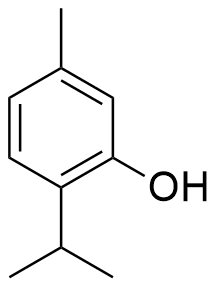 |
L |
7.9 |
100.0 |
100.0 |
47.8 |
7.2 |
0.0138 |
| L |
0.0 |
100.0 |
97.7 |
14.6 |
0.0 |
0.0483 | |
| L |
2.7 |
100.0 |
96.4 |
14.6 |
3.0 |
0.0489 | |
| L |
1.3 |
100.0 |
100.0 |
25.4 |
1.4 |
0.0397 | |
Carvacrol 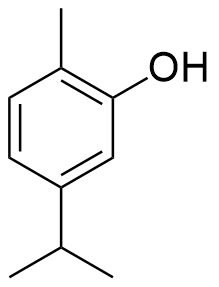 |
L |
6.4 |
100.0 |
100.0 |
41.6 |
11.3 |
0.0229 |
| L |
0.0 |
100.0 |
89.7 |
23.4 |
0.0 |
0.0461 | |
| L |
6.1 |
100.0 |
43.8 |
17.7 |
7.9 |
0.1993 | |
| L |
6.4 |
100.0 |
100.0 |
29.4 |
9.2 |
0.0363 | |
Eugenol 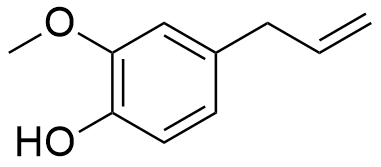 |
L |
7.9 |
100.0 |
100.0 |
11.9 |
11.5 |
0.0489 |
| L |
0.0 |
100.0 |
98.3 |
2.3 |
0.0 |
0.0547 | |
| L |
0.0 |
100.0 |
99.3 |
8.2 |
1.3 |
0.0513 | |
| L |
0.3 |
100.0 |
100.0 |
51.2 |
1.1 |
0.0098 | |
Isoeugenol 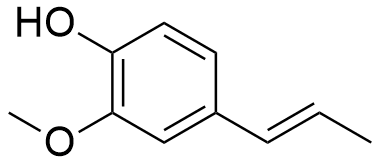 |
L |
2.7 |
100.0 |
100.0 |
9.2 |
3.1 |
0.0504 |
| L |
0.0 |
100.0 |
100.0 |
1.5 |
0.0 |
0.0543 | |
| L |
4.2 |
100.0 |
100.0 |
8.9 |
5.4 |
0.0506 | |
| L |
2.2 |
100.0 |
100.0 |
8.4 |
2.0 |
0.0509 |
Note: different letters indicate values which reliably differed one from another
within one line of the table according to the results of comparison using the
Tukey test with Bonferroni correction (p
The aromatic compounds, extracted from essential oils of medicinal plants—eugenol, isoeugenol, carvacrol, and thymol—appeared to have effects on the nematode larvae (Table 2). After using 1% solutions of all four compounds, we found no viable nematodes.
A sufficiently strong effect on the nematode larval stages was also exhibited by
the isoeugenol, eugenol, and thymol 0.1% emulsion solutions. When using the
0.1% solutions, we observed a mortality rate of over 96% in the studied
nematode larvae at various stages of development. Carvacrol also had notable
anthelmintic properties against noninvasive stages of the nematode larvae,
including L
Solutions of eugenol, isoeugenol, thymol, and carvacrol at 0.01% had no significant effects on various stages of the larvae development. Nonetheless, noninfective larvae of the studied nematodes were partially affected. At 0.01%, the greatest effect on the noninfective stages of S. papillosus was exerted by thymol and carvacrol emulsions, and the greatest effect on M. capillaris was exerted by eugenol. A subsequent reduction in concentration of the studied compounds caused death in no more than 11.5% of the nematode larvae at various development stages.
During the experiment, we identified a lethal concentration, which caused 50%
of the nematode larvae to die. For L
In the literature, much data exist on the effects of eugenol on H. contortus. The study by Pessoa et al. [34] revealed that essential oil from Ocimum gratissimum L., the main component of which is eugenol, has ovicidal properties against H. contortus. The influence of the essential oil and eugenol in the 0.5% concentration emulsion resulted in the maximal inhibition of the egg development. The same results were reported by Anthony et al. [35] and Pandey et al. [36]. Thus, eugenol is active not only against eggs but also third-stage larvae, as observed in our experiment.
Inhibition of the emergence of H. contortus (L
Eugenol is one of the main components identified in the extract, as well as essential oil from Syzygium aromacum [38, 39, 40]. Carrillo-Morales et al. [40] recorded an inhibition rate of 99.87% against the emergence of H. contortus from the eggs, subject to methanol extract at a concentration of 1.25 mg/mL.
The ovicidal effects of eugenol, thymol, and carvacrol were reported by Katiki
et al. [41]. A comparison of those compounds revealed that the best
results were produced by carvacrol, which is also different from our results,
whereby carvacrol produced the lowest effect on the larvae of the third-stage
H. contortus in our experiment. As with the LC
Helal et al. [42] confirmed that eugenol has an inhibiting effect on H. contortus third-stage larvae. However, by comparing this result of influence with the inhibiting properties of other compounds included in the coriander oil, the strongest effect on larvae mobility was attained by linalool. A combination of coriander oil and linalool had a synergic anthelmintic effect on larvae mobility.
Thymol is one of the main components in the plant extracts from the
Thymus genus (Lamiaceae). According to Elandalousi et al. [43],
extracts from T. capitatus can inhibit eggs from hatching
when applied at a concentration close to 2 mg/mL. However, the LC
André et al. [44] studied the effect of thymol on the different stages of H. contortus development: eggs, larvae, and mature specimens. According to the in vitro egg hatch assay, a thymol concentration of 0.5 mg/mL inhibited 98% of the larvae from hatching. Thymol at a concentration of 8 mg/mL can inhibit 100% of the larvae from developing and 100% decrease in the mobility of adult worms.
André et al. [45] studied the anthelmintic properties of carvacrol using tests on egg hatching and larvae development, and by assessing the mobility of adult H. contortus. André and co-authors found that carvacrol inhibited the larvae from hatching by 97.7% when administered at a dose of 1.0 mg/mL. A carvacrol concentration of 2 mg/mL inhibited 100% of larvae from developing, whereas 200 µm/mL inhibited the mobility of the adult worms by 58.3% following a 24-hour exposure.
A strong effect of carvacrol on nematodes was reported by Abidi et al. [46]. Essential oil from Origanum majorana, of which carvacrol is one of the main constituents (35.65%), displayed ovicidal activity in all tested concentrations (1, 2, 4, and 8 mg/mL), the highest dose (8 mg/mL) of which produced an inhibitive effect on egg hatching of over 80%.
The inhibiting properties of various essential oil components were studied by Zhu et al. [47]. They found that carvacrol was a main component in the essential oils from Arisaema franchetianum and A. lobatum and was lethal to the larvae of H. contortus.
Ferreira et al. [48] also analyzed the anthelmintic properties of thymol, which is one of the main constituents of the essential oil from Thymus vulgaris. This oil and its main constituent were quite effective against three stages of the H. contortus development. Oil from Thymus vulgaris and thymol can inhibit the eggs from hatching by 96.4–100.0%. Larvae inhibition accounted for 90.8–100% and inhibition of mobility equaled 97.0–100.0%. In the experiment by Ferreira et al. [48], who used mature specimens, the mobility of H. contortus was completely inhibited within the first 8 h. By contrast, the same effects against H. contortus where not observed in a subsequent in vivo experiment [48]. Another in vivo experiment conducted by Imani-Baran et al. [49] also indicated that crude powder and crude aqueous extract from Trachyspermum ammi (the main component of thymol) have dose-dependent anthelmintic effects against gastrointestinal nematodes in donkeys (Equus asinus). However, such ineffectiveness can be corrected through technical improvements that increase the bioavailability of the oil. Despite some differences in the experiments with thymol, carvacrol, eugenol, and isoeugenol, the results of numerous studies allow us to assume that those compounds can be further researched in relation to preparing drugs with anthelmintic properties.
Here, controlling the adults of the studied nematode species was the primary objective since targeting the sexually mature stages in parasitic vertebrates is very difficult. Hence, we targeted the larval stages that are found in the environment. This research topic remains relevant not only for the species we studied but also for other nematodes that are also parasites in vertebrate animals. It is also advisable to study the effects of eugenol, isoeugenol, carvacrol, and thymol solutions on them. Such a direction in parasitology can help solve a number of issues related to the resistance of H. contortus and other nematodes to anthelmintic drugs, and also the problems associated with toxic loading in natural ecosystems.
Administering eugenol, isoeugenol, carvacrol, and thymol using in vitro
conditions exerted antiparasitic properties against the nematode larvae of
S. papillosus, H. contortus, and M. capillaris. Of the
compounds we tested, following extraction from essential oils of medicinal plants
(eugenol, isoeugenol, carvacrol, and thymol), the strongest effect against
various larval stages of S. papillosus, L
The data presented in this study are available on request from the corresponding author.
OB and VB designed the research study, analyzed the data, wrote the manuscript. OB performed the research. Both authors contributed to editorial changes in the manuscript. Both authors read and approved the final manuscript.
Not applicable.
We thank the leadership of the Dnipro State Agrarian and Economic University for administrative and technical support.
This research received no external funding.
The authors declare no conflict of interest.
References
Publisher’s Note: IMR Press stays neutral with regard to jurisdictional claims in published maps and institutional affiliations.