

 , Kai-Yu Hsieh 1,*, Feng-Yu Heish 2, Ming-Hsuan Li 1, Chun-Chieh Yu 3, Chun-Ting Lin 1
1 Department of Management Sciences, Tamkang University, 25137 New Taipei, Taiwan
2 Physical Education, Tamkang University, 25137 New Taipei, Taiwan
3 AgriSense Agri-Food Education Association, 25137 New Taipei, Taiwan
Abstract
As global concerns about sustainability and healthy eating intensify, this study provides new insights into the moderating role of sport and leisure involvement in sustainable food consumption, highlighting its influence on consumer decision-making patterns. Using structural equation modeling (SEM) and hierarchical regression analysis, we confirm that green involvement, health awareness, and environmental awareness significantly enhance consumer attitudes toward sustainable food, which in turn drive purchase intentions. Notably, consumers with low sport and leisure involvement rely more on their environmental attitudes when making purchasing decisions, whereas those with high sport and leisure involvement prioritize the functional and health-related attributes of sustainable food. This study offers a novel perspective on green consumption behavior theory while providing valuable insights for market segmentation, sustainable agriculture promotion, and regional revitalization. Our findings suggest that policymakers and businesses should tailor personalized marketing strategies and improve supply chain transparency to accelerate the growth of the green food market and promote economic and environmental sustainability.
Keywords
- sustainable agriculture
- green involvement
- health awareness
- environmental awareness
- sustainable food purchase intention
- sport and leisure involvement
In recent years, growing concerns over climate change, ecosystem degradation, and food security have drawn increasing attention to sustainable food consumption. Consumers are progressively aligning their values with environmental and health-related goals, making food choices that reflect both ethical and ecological considerations (Castellini et al, 2023; Liang et al, 2024). Sustainable food—characterized by organic production, ethical sourcing, and ecological responsibility—has emerged not only as a market trend but also as a reflection of personal identity and lifestyle (Kayani et al, 2023).
This shift in consumer behavior aligns with the evolving concept of sustainable agriculture, which emphasizes biodiversity, soil health, and long-term resource preservation, while also supporting rural economies and promoting social well-being (Rockström et al, 2009; Garnett et al, 2013). According to the widely accepted sustainability framework, sustainable agriculture is built upon the integration of three interrelated pillars: environmental integrity, economic viability, and social equity. While this study primarily focuses on environmental sustainability and green consumer behavior, it acknowledges the broader importance of a holistic sustainability approach.
Despite the surge in interest, actual consumer adoption of green or sustainable food remains fragmented and inconsistent across demographic and cultural lines (Lizcano-Prada et al, 2024). Many consumers express support for sustainable food systems, but fail to translate attitudes into purchasing behaviors due to factors such as cost sensitivity, availability, and limited engagement with sustainability values (Carrington et al, 2014). Consequently, there is growing interest in understanding the psychological antecedents and contextual moderators that shape sustainable food attitudes and purchase intentions.
A large body of literature has identified constructs such as green involvement, health awareness, and environmental awareness as central to explaining sustainable consumer behavior. Green involvement reflects individuals’ emotional and cognitive engagement with environmental issues, influencing their attention to and interest in sustainable products (Matthes et al, 2014; Chen et al, 2024). Health awareness, defined as the recognition of personal well-being needs and proactive health management, is another critical factor—particularly as consumers increasingly associate sustainability with healthful living (Castellini et al, 2023; Nanu and Rahman, 2023). Environmental awareness captures the cognitive dimension of ecological understanding and is closely linked to pro-environmental attitudes and behaviors (Liang et al, 2024; Sachdeva and Singh, 2023).
However, while these constructs have been studied independently, few empirical studies have integrated them into a unified behavioral framework. Even fewer have explored how these psychological factors interact with lifestyle segmentation variables—such as sport and leisure involvement—which may significantly condition sustainable food decisions. Sport and leisure involvement refers to the degree of engagement in physical, recreational, or fitness-related activities, often associated with health-conscious and performance-driven lifestyles (Kim et al, 2021). Active individuals, particularly those engaged in outdoor or nature-based sports, may develop heightened environmental awareness and a preference for natural, organic, and ethically sourced foods (Johansson et al, 2024; Mallen et al, 2011). Nonetheless, not all physically active consumers exhibit sustainability-oriented behaviors, especially when convenience or performance takes precedence over environmental considerations (Grosso and Turco, 2025).
Although previous studies have explored green involvement, health, and environmental awareness in isolation, there remains a critical gap in understanding how lifestyle factors such as sport and leisure involvement moderate these relationships (Ihle et al, 2024; Niu et al, 2024). This study proposes that lifestyle identity—reflected through sport and leisure engagement—may function as a motivational amplifier that conditions the strength of psychological predictors of sustainable food attitudes and intentions.
Accordingly, this study seeks to address the following research question:
How does sport and leisure involvement moderate the effects of green involvement, health awareness, and environmental awareness on attitudes and purchase intentions toward sustainable food?
Building on the identified research gap and the theoretical frameworks outlined above, this study seeks to empirically investigate the psychological and contextual mechanisms that influence sustainable food consumption. Specifically, the research aims to unpack how key antecedents—namely green involvement, health awareness, and environmental awareness—interact with lifestyle factors to shape consumer attitudes and behavioral intentions.
To answer this question, the study proposes three main objectives:
1. To examine the influence of green involvement, health awareness, and
environmental awareness on sustainable food attitudes. 2. To assess the effect of sustainable food attitudes on purchase intentions. 3. To explore whether sport and leisure involvement moderates the relationships
between psychological antecedents and sustainable food attitudes and intentions.
The study adopts a multidimensional perspective rooted in the Theory of Planned Behavior (TPB; Ajzen, 1991), while drawing on the Health Belief Model (Rosenstock, 1974) and Norm Activation Model (Jaffar and Latiff, 2024) to capture health-related and moral drivers. The integration of lifestyle segmentation builds on the Attitude–Behavior–Context (ABC) theory (Guagnano et al, 1995), positioning lifestyle as a contextual force shaping behavior.
In light of the rising complexity of consumer decision-making in the sustainable food domain, it is increasingly important for research to adopt integrative frameworks that reflect the interplay of values, identity, and lifestyle. Existing literature has predominantly focused on isolated predictors of green consumption, often overlooking the nuanced ways in which psychological antecedents interact with contextual and lifestyle variables. Against this backdrop, the present study makes a timely and meaningful contribution by offering a multi-layered approach that connects individual-level motivations with lifestyle segmentation.
This study contributes to the growing literature on sustainable consumer behavior in four key ways:
1. Integration of Psychological Antecedents: It unifies green involvement, health
awareness, and environmental awareness into a comprehensive model, providing a
more nuanced understanding of sustainable food attitudes. 2. Lifestyle-Based Moderation: It introduces sport and leisure involvement as a
novel moderating variable, capturing lifestyle differences that influence how
psychological drivers operate across consumer segments. 3. Clarification of Conceptual Distinctions: The study distinguishes between
environmental awareness (cognitive) and environmental concern (affective),
addressing a long-standing ambiguity in sustainability research. 4. Strategic Implications for Sustainable Marketing: By identifying
high-involvement consumer subgroups (e.g., fitness-conscious individuals), this
study offers actionable insights for green marketing strategies and
sustainability policy design.
In sum, this research advances the theoretical and practical understanding of sustainable food consumption by embedding psychological and lifestyle dynamics within an integrated framework. It responds to calls for segmentation approaches that move beyond demographics toward psychographic and activity-based profiles, offering a richer understanding of when and why consumers choose sustainable food.
The remainder of this paper is organized as follows: Section 2 reviews the relevant literature and proposes the conceptual framework. Section 3 outlines the research design and methodology. Section 4 presents the empirical results. Section 5 discusses the key findings in relation to theoretical and practical implications. Section 6 concludes the paper with a summary of key findings, implications, and suggestions for future research.
This study draws upon three key theoretical frameworks to explain sustainable consumption behavior in an integrative manner. The Theory of Planned Behavior (TPB) accounts for rational decision-making based on attitudes and intentions (Ajzen, 1991). The Health Belief Model (HBM) captures health-related motivations by emphasizing perceived vulnerability and the anticipated benefits of preventive behavior (Rosenstock, 1974). In contrast, the Norm Activation Model (NAM) introduces a moral-psychological dimension, emphasizing internalized ethical obligations that guide pro-environmental action (Schwartz, 1977; Jaffar and Latiff, 2024). Together, these frameworks offer a comprehensive foundation for understanding the interplay between personal health, environmental values, and sustainable food attitudes.
Green involvement refers to an individual’s cognitive, emotional, and behavioral engagement with environmental issues, encompassing preferences for eco-friendly products, support for sustainable practices, and participation in environmental advocacy (Matthes et al, 2014). It reflects the extent to which sustainability values are internalized and expressed through daily consumption behaviors. Consumers with high green involvement often favor products with eco-certifications, avoid over-packaging, and remain loyal to brands that demonstrate a genuine commitment to sustainability (González-Viralta et al, 2023). These behaviors frequently extend beyond purchasing to include environmental advocacy and participation in corporate responsibility campaigns (Chen et al, 2024).
From the value-belief-norm (VBN) perspective, green involvement is interpreted as an activated personal norm shaped by biospheric and altruistic values. This normative orientation leads to actions such as waste reduction, plant-based diets, and support for organic agriculture. Importantly, this form of involvement often reflects a convergence of environmental and health concerns. Environmentally engaged consumers frequently choose organic or chemical-free products not only to reduce ecological harm but also to avoid potential health risks (Gubricka et al, 2023), reinforcing a dual consciousness that integrates planetary and personal well-being (Castellini et al, 2023).
Recent studies further suggest that this green-health synergy operates through behavioral spillover effects—where environmental motivations reinforce health consciousness, particularly among younger consumers who see eco-friendly practices as both ethically sound and physically beneficial (Hafeez et al, 2023; Salameh et al, 2021). Concurrently, green involvement is also a key antecedent of environmental awareness, promoting value internalization and ecological information-seeking (Nguyen et al, 2023; González-Viralta et al, 2023). Such moral engagement fosters heightened personal relevance and urgency toward environmental issues (Gao et al, 2021).
In summary, green involvement functions as a foundational driver of sustainability-oriented consumption. It not only shapes product preferences but also enhances both health and environmental awareness by embedding sustainability into identity and lifestyle.
H1: Green involvement positively influences health awareness.
H2: Green involvement positively influences environmental awareness.
Recent developments in behavioral models have expanded TPB by integrating ecological concern and perceived consumer effectiveness, thereby improving its predictive validity in sustainable food choices (Mouloudj et al, 2025; Liu and McCarthy, 2023). These extensions emphasize the role of health awareness in shaping sustainable attitudes and behaviors.
According to HBM, individuals are more likely to adopt health-promoting behaviors when they perceive personal vulnerability and believe that specific actions—such as consuming healthier foods—can mitigate health risks (Rosenstock, 1974). Health-conscious consumers thus gravitate toward organic, minimally processed foods free from synthetic additives, which are associated with enhanced immunity, energy levels, and disease prevention (Castellini et al, 2023).
Sustainable food options—often organic, locally sourced, or non-GMO—commonly referred to as GOM (Green/Organic/Minimal-processed) foods—closely align with these health priorities. Health-aware individuals tend to view these products not only as nutritionally superior but also as ethically sound, given their associations with reduced chemical exposure, animal welfare, and transparent sourcing (Do Paco et al, 2019). This convergence of personal wellness and ecological responsibility enhances the appeal of sustainable food choices.
Under the TPB framework, health awareness informs behavioral beliefs—namely, expectations that healthy consumption yields positive life outcomes such as vitality, longevity, and quality of life. These beliefs are reinforced by social networks and value-based communities that encourage health-conscious behavior.
Supporting this view, recent empirical evidence indicates that health-aware consumers increasingly associate sustainable food with holistic well-being, including disease prevention and sustained energy (Sun et al, 2023). TPB extensions further confirm that health values influence not only product preference but also intention formation, particularly in societies undergoing dietary transitions (Kim et al, 2022; Contreras-Manzano et al, 2024).
In sum, health awareness significantly shapes sustainable food attitudes by integrating individual health concerns with broader ethical and environmental considerations.
H3: Health awareness positively influences sustainable food attitude.
Environmental awareness encompasses an individual’s cognitive understanding of ecological challenges—such as climate change, pollution, and biodiversity loss—along with a sense of moral responsibility to respond through sustainable actions (Kayani et al, 2023). It is essential to distinguish awareness (knowledge-based evaluation) from concern (emotion-driven urgency); this study focuses on awareness as the rational and cognitive foundation for sustainable food choices (Abdelhady et al, 2021).
Both direct experiences (e.g., environmental volunteering) and indirect channels (e.g., education, media, and public campaigns) contribute to the formation of environmental awareness, which in turn increases the likelihood of pro-environmental behaviors (Kollmuss and Agyeman, 2002). Green involvement, as discussed earlier, plays a critical role in nurturing environmental awareness by encouraging daily eco-friendly actions that reinforce personal accountability (Castellini et al, 2023).
In the context of food consumption, environmental awareness leads individuals to reject industrial food systems characterized by high environmental costs and to favor alternatives such as organic, local, or plant-based foods (Liang et al, 2024). These choices are increasingly seen not as mere lifestyle expressions but as ethical imperatives.
Recent study shows that environmental awareness enhances sustainable food attitudes by increasing both cognitive evaluation and moral sensitivity to the environmental consequences of consumption (Pfeiffer et al, 2021). Consumers with high environmental awareness are more likely to adopt sustainable dietary practices—such as plant-based eating or reduced food waste—as a form of ecological responsibility (Culliford and Bradbury, 2020; Venter de Villiers et al, 2024; Verain et al, 2021).
In conclusion, environmental awareness provides a vital cognitive and ethical basis for forming positive attitudes toward sustainable food.
H4: Environmental awareness positively influences sustainable food attitude.
Sustainable food attitude refers to consumers’ evaluations of food produced in environmentally responsible and ethically sound ways (Rusyani et al, 2021). These attitudes are shaped by deeply held values and lifestyle preferences that emphasize both personal health and ecological sustainability. According to the Theory of Planned Behavior (TPB), such attitudes are informed by behavioral beliefs—such as the belief that sustainable food consumption generates both individual and societal benefits (Ajzen, 1991; Mouloudj et al, 2025).
Recent literature identifies three primary antecedents that shape sustainable food attitudes:
• Health awareness, which drives preferences for natural, minimally
processed foods associated with disease prevention and vitality (Castellini et al, 2023; Sun et al, 2023). • Environmental awareness, which motivates consumers to reject
industrial agricultural practices and support eco-friendly alternatives (Liang et al, 2024; Culliford and Bradbury, 2020). • Green involvement, which fosters increased attention to eco-labels
and encourages decisions aligned with personal environmental values (Chen et al, 2024).
In addition, green trust—defined as belief in the credibility and transparency of sustainability claims—plays a moderating role. Prior work has shown that consumer trust in organic and sustainable claims reinforces both environmental and health motivations in purchase decision-making (Lazaroiu et al, 2019). When consumers perceive authenticity and consistency in brand messages, their attitudes toward sustainable food tend to be more favorable (Do Paco et al, 2019).
Among these factors, green involvement has been shown to be particularly influential. It reinforces eco-centric identity and enhances the perceived congruence between consumer values and product attributes (Kamboj et al, 2022). Highly involved consumers not only pay close attention to environmental indicators such as certifications and origin labels, but also develop stronger emotional and moral attachments to sustainability principles (Nguyen et al, 2023).
Furthermore, demographic factors such as age and cultural context also shape sustainable food attitudes. For example, Kowalska et al. (2021) found that young consumers in both Poland and the United Kingdom exhibit favorable perceptions of organic food and report corresponding purchasing behaviors, emphasizing the role of generational and regional influences in green consumption.
In summary, sustainable food attitude is a multidimensional construct rooted in ethical identity, environmental values, and health motivations. It serves as a critical bridge between personal beliefs and sustainable consumption behaviors.
H5: Green involvement positively influences sustainable food attitude.
Sustainable food purchase intention refers to an individual’s willingness to buy food products that align with environmental, health, and ethical standards. It reflects a broader commitment to values such as climate responsibility, animal welfare, and personal well-being (Ajzen, 1991; Lin and Niu, 2018; Niu et al, 2024).
Under the TPB framework, purchase intention is shaped by three elements: attitude toward the behavior, perceived social norms, and perceived behavioral control. When consumers believe that purchasing sustainable food contributes meaningfully to both personal health and ecological goals, their intention to act increases (Dangelico and Pontrandolfo, 2010; Niu et al, 2024).
Empirical evidence suggests that sustainable food is often perceived as both safe and socially responsible, particularly among younger, educated, and health-conscious consumers (Kowalska et al, 2024). However, the well-documented attitude–behavior gap persists, in which favorable attitudes do not always translate into actual purchasing behavior. Barriers contributing to this gap include:
• High price sensitivity. • Skepticism toward green claims or labels. • Limited product availability. • Perceived inconvenience or effort.
To bridge this gap, scholars recommend interventions such as behavioral nudges, clearer label transparency, and stronger social norm reinforcement (e.g., peer endorsements or community validation) (Liu and McCarthy, 2023). Moreover, enhancing consumers’ perceived behavioral control—by improving access, affordability, and product visibility—has been shown to align intention more closely with action.
Among all predictive variables, attitude consistently emerges as the strongest determinant of sustainable food purchase intention, especially when reinforced by behavioral control and social support (Kowalska et al, 2024; Liu and McCarthy, 2023; Niu et al, 2024). Furthermore, attitude persistence—the ability of values to withstand external challenges such as price or product limitations—plays a critical role in maintaining intention over time (Nanu and Rahman, 2023; Niu et al, 2024).
H6: Sustainable food attitude positively influences sustainable food purchase intention.
H7: Green involvement positively influences sustainable food purchase intention.
Sport and leisure involvement refers to individuals’ engagement in physical and recreational activities that reflect a health-oriented and active lifestyle (Kim et al, 2021). This includes both structured activities (e.g., gym training, yoga classes) and informal pursuits (e.g., hiking, cycling), which are closely associated with personal wellness and energy maintenance.
Numerous studies have found that individuals with high sport and leisure involvement tend to be more nutritionally aware and prefer foods perceived as natural, functional, and performance-enhancing (Liu and McCarthy, 2023; Venter de Villiers et al, 2024). For example, endurance athletes may favor organic proteins or energy-dense whole foods, while outdoor sports enthusiasts often develop a stronger emotional bond with nature. This ecological connection can reinforce environmental awareness and increase preference for sustainable food (Kowalska et al, 2024).
However, this relationship is not homogeneous. Some sport-involved individuals may prioritize performance efficiency or convenience over sustainability. For instance, bodybuilders might prefer high-protein processed products for their utility, even if they conflict with environmental principles (Grosso and Turco, 2025).
Therefore, sport and leisure involvement may moderate the effect of health awareness on sustainable food attitude. Consumers with strong value–health integration are more likely to translate awareness into sustainable preferences, whereas those driven by performance or aesthetic goals may not.
This segmentation perspective highlights the nuanced impact of lifestyle factors on consumption behavior. While some physically active individuals align food choices with sustainability values, others do not, resulting in a fragmented relationship (Su et al, 2022; Grosso and Turco, 2025).
H8: Sport and leisure involvement moderates the relationship between health awareness and sustainable food attitude.
Sustainable consumption has transitioned from a peripheral concern in environmental psychology and consumer behavior to a central strategic imperative in business management. Amid increasing demands for ESG (Environmental, Social, and Governance) disclosure, supply chain compliance, and brand differentiation, firms now view consumer sustainability behaviors as a source of competitive advantage (Gubricka et al, 2023).
This study contributes to this strategic conversation by demonstrating that consumer lifestyle segmentation—specifically sport and leisure involvement—can shape green food purchase intentions. These insights offer valuable implications for product positioning, market entry strategies, and sustainability communication. In particular, sustainable brand management has been identified as critical in enhancing food consumers’ willingness to support green labels and certifications (Majerova et al, 2020).
The findings are also consistent with the Resource-Based View (RBV) and Dynamic Capabilities Theory, which emphasize the strategic value of intangible assets. Health and environmental values held by consumers can be transformed into organizational resources such as green brand trust, supply chain transparency, and third-party certifications—all of which are difficult for competitors to replicate and can contribute to sustained differentiation (Kayani et al, 2023; Alkaraan et al, 2024).
Recent research further underscores the importance of aligning product innovation with health-based motivations. For example, Kowalska et al. (2024) found that attitudes toward functional beverages are heavily influenced by perceived health benefits and lifestyle fit—findings echoed in this study’s results regarding green food. Such insights enable companies to craft functionally aligned, value-driven marketing strategies for health- and sport-oriented consumers.
This study addresses three strategic challenges facing modern firms:
1. ESG Disclosure and Brand Trust: Sustainable food consumption provides tangible
proof of environmental commitment, enhancing brand credibility and fulfilling ESG
requirements (Springmann et al, 2021). 2. Supply Chain Compliance: Transparent labeling and certified sustainable
practices (e.g., organic or carbon footprint labels) improve both regulatory
compliance and consumer confidence (Venter de Villiers et al, 2024; Verain et al, 2021). 3. Market Differentiation: Targeting low-involvement consumers with emotional,
value-based messages, while appealing to high-involvement consumers through
performance-aligned and functional benefits, enables more effective segmentation
strategies (Kim et al, 2021).
In conclusion, sustainable consumption should not be viewed merely as a branding initiative or a component of corporate social responsibility. Rather, it represents a strategic fulcrum for business transformation, stakeholder alignment, and long-term competitiveness. By integrating consumer lifestyle variables into strategic planning, firms can unlock deeper behavioral insights and build meaningful engagement with sustainability-oriented consumers.
This study recruited adult participants residing in Taiwan, aged between 18 and 79 years, all of whom were required to have sufficient disposable income to ensure purchasing capability relevant to the study’s focus on green/sustainable food consumption. A total of 577 questionnaires were distributed using a non-probability, convenience sampling method, primarily through online platforms and community-based networks. This approach was selected for its practicality and accessibility, enabling the researchers to reach a diverse consumer base with varying degrees of experience in green consumption.
Although convenience sampling does not involve randomization and may limit the generalizability of the findings, it is a widely accepted method in exploratory consumer behavior studies (Etikan et al, 2016). To mitigate potential sampling bias, the study intentionally targeted a heterogeneous participant pool across age groups, educational levels, and lifestyle profiles, including both experienced and inexperienced green consumers.
After excluding 44 incomplete or invalid responses, a total of 533 valid questionnaires were retained, yielding an effective response rate of 95.6%. The demographic characteristics of the final sample are summarized as follows:
• Gender: 61% female, 39% male. • Age: 24.8% under 20; 32.5% aged 21–30; 15.2% aged 31–40.
• Education: 74.9% held a college degree or higher. • Marital Status: 72% were unmarried. • Green Consumption Experience: 73% reported prior purchase of sustainable
products. • Top Physical Activities: jogging, fitness training, and cycling.
Overall, the sample was young, well-educated, and health- and environmentally conscious—characteristics that align well with the target consumer segment for sustainable food behavior research.
All constructs were assessed using multi-item Likert-type scales, with responses ranging from 1 (strongly disagree) to 6 (strongly agree). The use of a 6-point scale was intentional, aimed at eliminating the neutral midpoint to reduce central tendency bias and encourage more decisive responses. Prior research has validated this format for producing clearer attitudinal distinctions, especially in studies related to sustainability and health-related behavior (Weijters et al, 2010; Rezaei, 2015). Maeda (2015) also notes that midpoint-free scales enhance measurement precision by minimizing interpretive ambiguity.
The measurement instruments used in this study are described below:
• Sport and Leisure Involvement: Measured using five items adapted
from Zaichkowsky’s (1985) Personal Involvement Inventory (PII) and modified
for the context of physical activity and leisure (Niu et al, 2024). The
original semantic differential format was transformed into declarative statements
to better suit this context. This scale captures respondents’ psychological
involvement and affective orientation toward sport and leisure activities. Sample
items include: “Sport and leisure activities are important to me” and “I am
passionate about sport and leisure activities”. • Health Awareness: Assessed using eleven items originally developed
by Ellen (1994) and revised by Niu et al. (2024) to reflect attentiveness
to personal health behaviors. Representative items include: “I take personal
responsibility for my health” and “Maintaining good health requires my active
involvement”. • Environmental Awareness: Measured using three items adapted from
Schlegelmilch et al. (1996) and revised by Niu et al. (2024). This scale
evaluates environmental concern and awareness. Sample items include: “I care
about environmental issues” and “I believe I should be informed about
eco-friendly and environmental issues”. • Sustainable Food Attitude: Measured using five items adapted from
Al-Swidi et al. (2014) and revised by Niu et al. (2024) to reflect
general perceptions toward sustainable food products. Items include: “I believe
green products are healthy” and “I believe green products taste good”. • Sustainable Food Purchase Intention: Measured using three items
adapted from Dodds et al. (1991), and later modified by Lin and Niu
(2018) for the sustainable consumption context. This scale evaluates
respondents’ likelihood and intent to purchase sustainable food. Items include:
“I intend to buy sustainable food products in the near future”. • Green Involvement: Measured using ten items adapted from
Zaichkowsky’s (1985) Personal Involvement Inventory, revised for green
consumption contexts by Niu et al. (2024). The scale captures emotional and
cognitive engagement with green food purchasing. Sample items include:
“Purchasing green food is important to me”, “Purchasing green food is
valuable”, and “I am eager to engage in purchasing green food”.
A complete list of scale items and references is provided in Appendix A.
In accordance with the two-step approach recommended by Anderson and Gerbing (1988), this study employed Structural Equation Modeling (SEM) to examine the sequential relationships and validate the links between various independent and dependent constructs. Confirmatory Factor Analysis (CFA) was conducted to assess the model’s goodness-of-fit and to establish the convergent and discriminant validity of the measurement model. The structural model was subsequently tested to clarify the causal relationships among the variables, and the moderating effects were examined in the second stage of the analysis.
The means, standard deviations, and reliability coefficients for the study
variables are presented in Table 1. As shown in, the Cronbach’s
| Variable | Mean | SD | Cronbach’s |
| Green Involvement (GI) | 4.247 | 0.825 | 0.949 |
| Sport and Leisure Involvement (SLI) | 4.733 | 0.956 | 0.934 |
| Sustainable Food Attitude (SFA) | 4.655 | 0.811 | 0.901 |
| Health Awareness (HA) | 5.059 | 0.772 | 0.865 |
| Environmental Awareness (EA) | 4.789 | 0.788 | 0.892 |
| Sustainable Food Purchase Intention (SFPI) | 4.122 | 0.905 | 0.869 |
n = 533.
SD, Standard Deviation.
To assess potential common method bias, Harman’s single-factor test was conducted following the guideline proposed by Podsakoff et al. (2003). The unrotated principal component analysis indicated that the first factor accounted for 45.22% of the total variance, which is below the commonly accepted threshold of 50%. Thus, common method variance is not deemed to be a serious concern in this study.
Confirmatory factor analysis (CFA) was employed to validate the factor structure identified by exploratory factor analysis, ensuring that the observed variables accurately measure the latent variables. To assess the goodness-of-fit indices in CFA, convergent and discriminant validity analyses must be conducted. Convergent validity includes three key elements: factor loadings, composite reliability, and average variance extracted (AVE). According to Bagozzi and Yi (1988), standardized factor loadings should range between 0.6 and 0.95. Composite reliability should exceed 0.6, while AVE should be greater than 0.5 based on measurement standards. If CFA reveals factor loadings exceeding 0.6 across multiple dimensions, the item is considered valid; otherwise, it will be excluded. In this study, the t-values of the factor loadings for all dimensions were greater than 1.96, indicating significance. Furthermore, the composite reliability of all dimensions was above 0.6, and the AVE for each dimension exceeded 0.5, demonstrating good consistency across all dimensions in this study. Specific results can be found in Table 2.
| Variable | Items | Factor loading | CR | AVE |
| Sport and leisure involvement (SLI) | SLI1 | 0.884 | 0.946 | 0.777 |
| SLI2 | 0.924 | |||
| SLI3 | 0.909 | |||
| SLI4 | 0.851 | |||
| SLI5 | 0.835 | |||
| Health Awareness (HA) | HA1 | 0.885 | 0.938 | 0.686 |
| HA2 | 0.847 | |||
| HA3 | 0.893 | |||
| HA4 | 0.907 | |||
| HA5 | 0.844 | |||
| HA6 | 0.760 | |||
| HA11 | 0.626 | |||
| Environmental Awareness (EA) | EA1 | 0.867 | 0.896 | 0.743 |
| EA2 | 0.913 | |||
| EA3 | 0.802 | |||
| Sustainable Food Attitude (SFA) | SFA1 | 0.823 | 0.906 | 0.660 |
| SFA2 | 0.858 | |||
| SFA3 | 0.872 | |||
| SFA4 | 0.828 | |||
| SFA5 | 0.663 | |||
| Green Involvement (GI) | GI1 | 0.803 | 0.950 | 0.656 |
| GI2 | 0.776 | |||
| GI3 | 0.824 | |||
| GI4 | 0.847 | |||
| GI5 | 0.769 | |||
| GI6 | 0.862 | |||
| GI7 | 0.814 | |||
| GI8 | 0.776 | |||
| GI9 | 0.836 | |||
| GI10 | 0.784 | |||
| Sustainable Food Purchase Intention (SFPI) | SFPI 1 | 0.919 | 0.920 | 0.794 |
| SFPI 2 | 0.921 | |||
| SFPI 3 | 0.830 |
n = 533.
CR, Composite Reliability; AVE, Average Variance Extracted.
Discriminant validity analysis is a statistical method used to determine whether two or more concepts are truly distinct. According to Hair et al. (1998), the criterion for assessing discriminant validity is that the square root of the AVE for each construct should be greater than the correlation coefficients between that construct and any other constructs, with this condition being met for at least 75% of the comparisons. In this study, the square roots of the AVEs for each construct ranged between 0.810 and 0.891, all of which were greater than the correlation coefficients between constructs. The square roots of the AVEs for all constructs met the criterion, demonstrating discriminant validity of the scale. Specific results are presented in Table 3.
| Dimension | SLI | HA | EA | GI | SFPI | SFA |
| SLI | 0.881* | |||||
| HA | 0.546 | 0.828* | ||||
| EA | 0.514 | 0.485 | 0.862* | |||
| GI | 0.416 | 0.435 | 0.461 | 0.810* | ||
| SFPI | 0.378 | 0.441 | 0.500 | 0.726 | 0.891* | |
| SFA | 0.382 | 0.449 | 0.539 | 0.620 | 0.641 | 0.812* |
* The diagonal values represent the square roots of the AVEs.
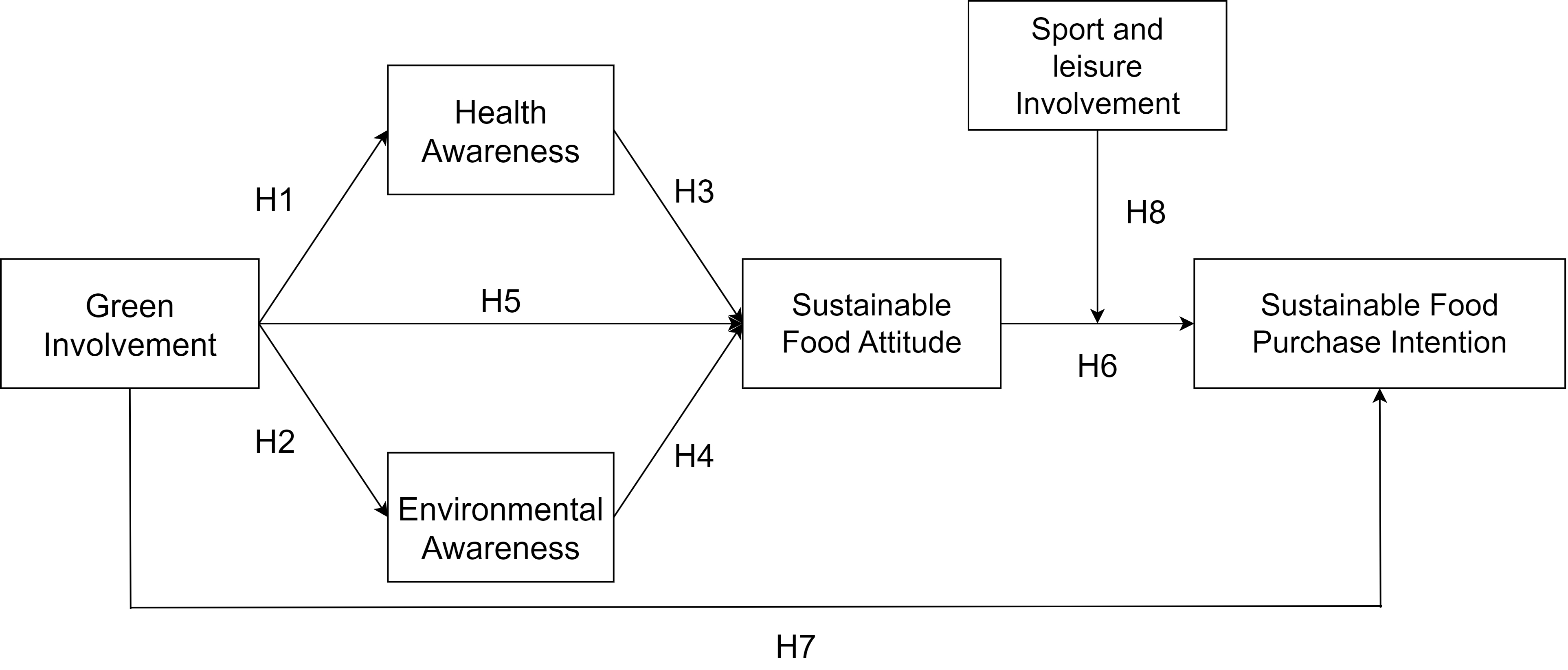
Structural equation modeling (SEM) was employed to validate the conceptual framework of this study, as shown in Fig. 1. Following the recommendation of Bagozzi and Yi (1988), modification indices (MI) greater than 3.4 were used as the threshold for model refinement. During the iterative adjustment process, items with the highest MI values were sequentially removed to improve model fit. Specifically, four items (HA7, HA8, HA9, and HA10) from the health awareness construct were excluded. After these modifications, the revised structural model demonstrated acceptable goodness-of-fit.
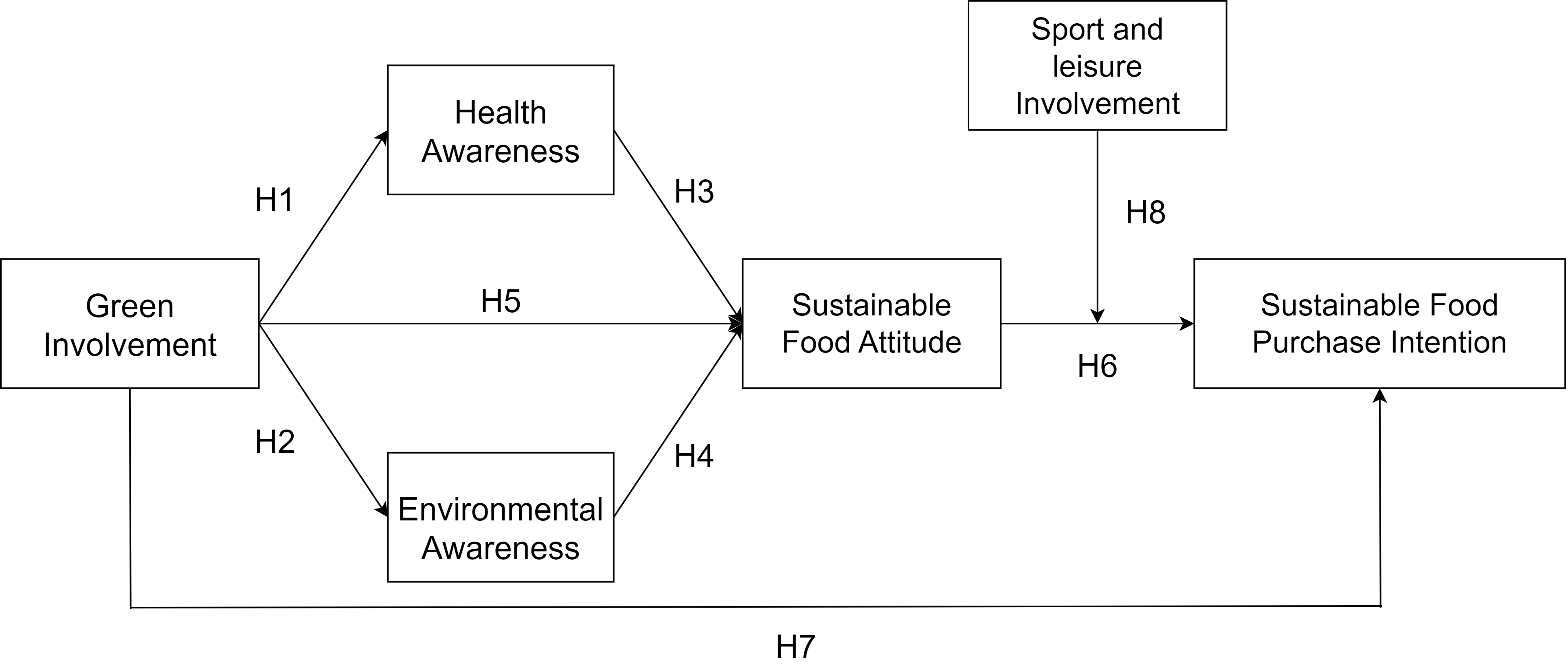 Fig. 1.
Research framework.
Before conducting SEM analysis, it was necessary to evaluate model fit to
confirm its appropriateness. The model yielded 338 degrees of freedom, and the
chi-square value was 968.331 with a p-value less than 0.001. Although
the significant p-value suggests rejection of the null hypothesis, the
chi-square to degrees of freedom ratio (
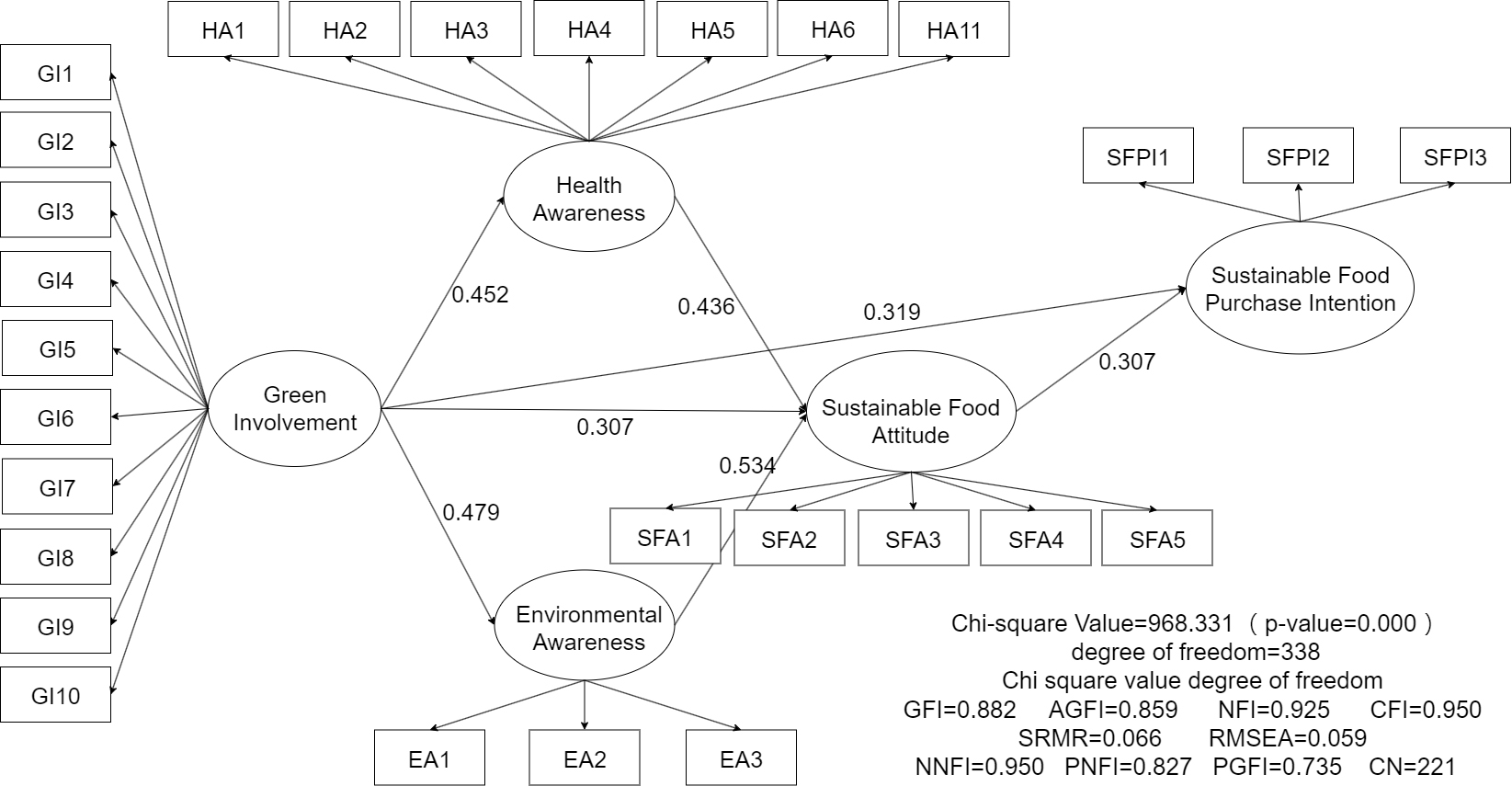
Further assessment of model fit indices confirmed the adequacy of the model. The values were Goodness-of-Fit Index (GFI) = 0.882, Adjusted Goodness-of-Fit Index (AGFI) = 0.859, Standardized Root Mean Square Residual (SRMR) = 0.066, Root Mean Square Error of Approximation (RMSEA) = 0.059, Normed Fit Index (NFI) = 0.925, Non-Normed Fit Index (NNFI) = 0.950, Comparative Fit Index (CFI) = 0.950, Parsimonious Normed Fit Index (PNFI) = 0.827, Parsimonious Goodness-of-Fit Index (PGFI) = 0.735, and Critical N (CN) = 221. All indices met or exceeded standard criteria, demonstrating that the model achieved an ideal level of fit and providing strong support for the hypothesized structural relationships among the study constructs (Fig. 2).
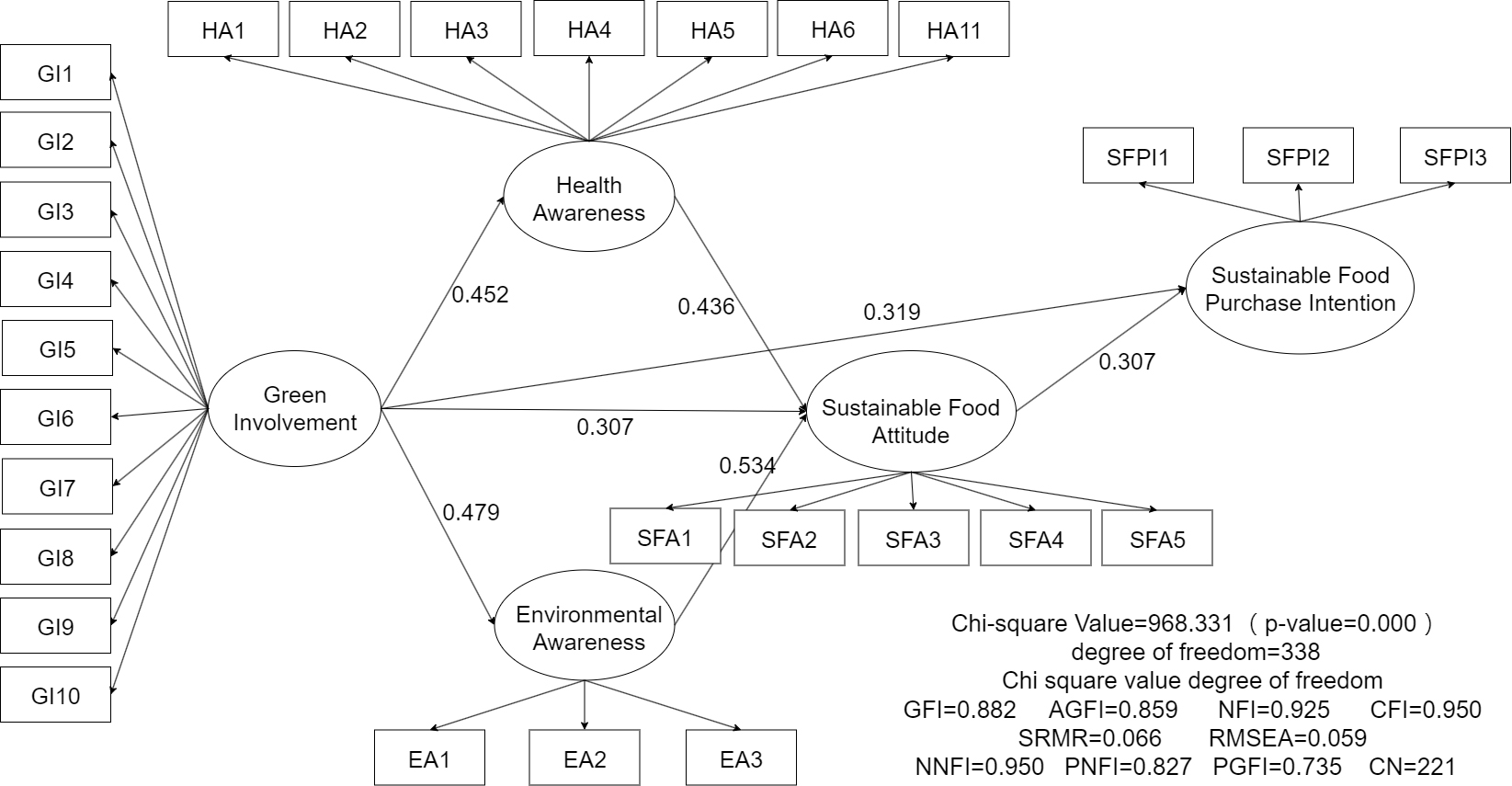 Fig. 2.
Research framework. The model of structural equation modeling.
Based on the SPSS 27.0 (IBM, Armonk, NY, USA) analysis and hypothesis testing results from the study model, as shown in Table 4, most hypotheses were supported. Specifically, the results indicate that most of the hypotheses in the research model are validated. The analysis revealed that sport and leisure involvement does not directly influence consumers’ attitudes toward green/sustainable products, suggesting that health awareness and environmental awareness serve as critical full mediators. Consequently, consumers’ participation in sport and leisure t activities can effectively influence their attitudes toward green/sustainable products through health awareness and environmental awareness, which ultimately leads to purchasing behavior for such products.
| Hypothesis | Independent variable | Dependent variable | Path coefficient | t-value | p-value |
| H1 | GI | HA | 0.452 | 10.338 | p |
| H2 | GI | EA | 0.479 | 10.218 | p |
| H3 | HA | SFA | 0.436 | 8.469 | p |
| H4 | EA | SFA | 0.534 | 10.961 | p |
| H5 | GI | SFA | 0.307 | 3.212 | p |
| H6 | SFA | SFPI | 0.307 | 6.250 | p |
| H7 | GI | SFPI | 0.319 | 6.564 | p |
SEM, Structural Equation Modeling.
These results demonstrate that consumers’ green involvement can indirectly influence their attitudes and purchase intentions toward green products through health awareness and environmental awareness, thereby validating the hypotheses of the study model.
The hierarchical regression analysis was conducted to examine the moderation effect of sport and leisure involvement on the relationship between sustainable food attitude and sustainable food purchase intention. The results from the regression models are presented in Table 5.
| Independent Variable (IV) (Dependent Variable (DV)) | Sustainable food purchase intention | ||||
| Model 1 | Model 2 | Model 3 | Model 4 | ||
| Previous purchase | –0.187** | –0.128** | –0.111 | –0.104** | |
| Exercise frequency | 0.108* | 0.060 | 0.018 | 0.023 | |
| Education level | 0.071 | 0.065 | 0.056 | 0.070 | |
| Independent Variable (IV) | |||||
| Sustainable food attitude | 0.524 | 0.480** | 0.503** | ||
| Moderating effect | |||||
| Sport and leisure involvement | 0.143** | 0.135** | |||
| Interaction Term | |||||
| Sustainable food attitude * sport and leisure involvement | 0.113** | ||||
| R2 | 0.060 | 0.329 | 0.344 | 0.356 | |
| 0.055 | 0.324 | 0.338 | 0.349 | ||
| 11.278** | 211.196** | 12.547** | 9.971* | ||
n = 533.
*p
Regression Analysis Results
Model 1 includes only the control variables.
Model 2 adds sustainable food attitude as an independent variable, significantly
increasing the explained variance (
Model 3 incorporates the moderator sport and leisure involvement, further
improving the model’s explanatory power (
Model 4 introduces the interaction term (sustainable food attitude
Findings indicate that Sport and Leisure Involvement significantly moderates the effect of sustainable food attitude on sustainable food purchase Intention. Specifically, consumers with low sport and leisure involvement exhibit a stronger reliance on their attitudes when making purchasing decisions, whereas those with high involvement are less influenced by attitude alone, likely due to their emphasis on functional and nutritional aspects of food.
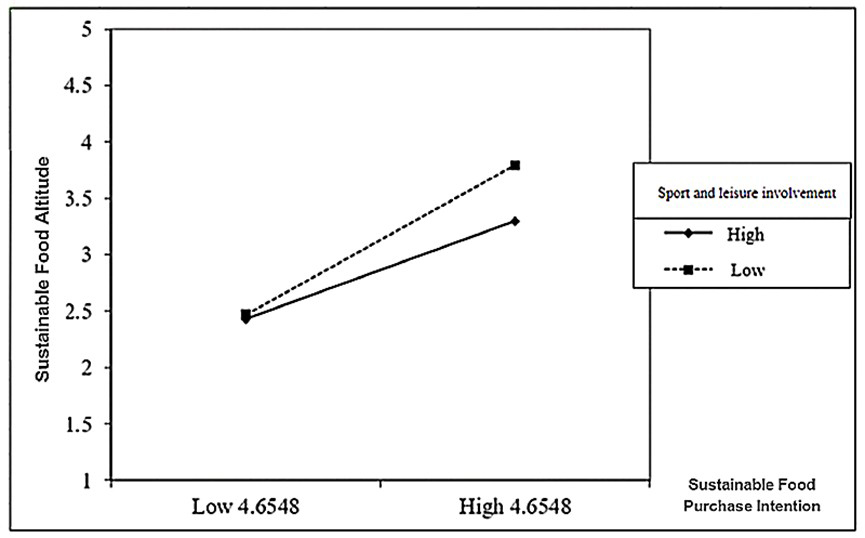
To further explore the moderating effect of sport and leisure involvement, this study conducted a simple slope analysis to compare the impact of green/sustainable food attitude on green/sustainable food purchase intention under high and low levels of sport and leisure involvement.
The results (see Fig. 3) indicate the following:
• Low Sport and Leisure Involvement Consumers: For this group, attitudes toward
green/sustainable food have a stronger influence on their intention to purchase
such products (with a steeper slope). This suggests that these consumers rely
more on personal attitudes when making decisions. They are likely to prioritize
environmental values over considerations like nutritional content or fitness
benefits, opting for green foods based on eco-friendly beliefs. • High Sport and Leisure Involvement Consumers: In contrast, the influence of
attitudes toward green/sustainable food on purchase intention is weaker (with a
gentler slope) for this group. This indicates that, in addition to environmental
consciousness, these consumers are more likely to consider the impact of food on
their sports performance and health, such as protein content, low sugar, and the
absence of artificial additives (Kim et al, 2021).
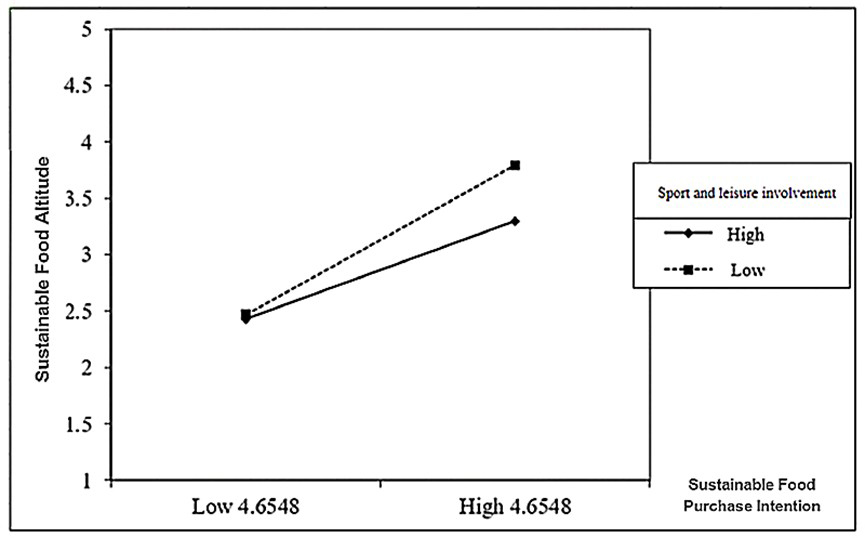 Fig. 3.
Moderation plot.
These findings suggest that low sport and leisure involvement consumers rely more on their green attitudes when making purchasing decisions, while high sport and leisure involvement consumers take a more rational approach, factoring in the functional and health benefits of the food. This further supports the hypothesis that consumer behavior is influenced by individual backgrounds and lifestyle choices.
This study sheds new light on the psychological and lifestyle determinants of sustainable food attitudes and intentions by integrating green involvement, health awareness, and environmental awareness into a unified framework moderated by sport and leisure involvement. While previous studies have independently examined these constructs, our research contributes to the field by combining them into a lifestyle-centered behavioral model, which provides a more nuanced understanding of consumer segmentation in sustainability research.
In line with prior research, green involvement was shown to exert significant positive effects on both environmental and health awareness (Matthes et al, 2014; Chen et al, 2024). However, unlike earlier work that treats green involvement primarily as a behavioral trait, our findings emphasize its value-integrative function—serving as a cognitive and emotional precursor that aligns ecological responsibility with personal well-being. This supports the view of green involvement as a meta-orientation that governs sustainability-related choices (Venter de Villiers et al, 2024).
Health awareness also played a pivotal role in shaping attitudes toward sustainable food, consistent with the Health Belief Model (Rosenstock, 1974) and extended by more recent study highlighting health-related sustainability adoption (Castellini et al, 2023). Yet our study uniquely demonstrates that when paired with high sport and leisure involvement, health awareness becomes a stronger predictor of sustainable attitudes. This result aligns with Liu and McCarthy (2023), who found that physically active individuals demonstrate a preference for ethical and organic food when such choices are perceived as performance-enhancing or vitality-supporting. Therefore, lifestyle context acts as a motivational amplifier, not merely a background variable.
Environmental awareness also predicted sustainable food attitudes, as expected (Kayani et al, 2023; Liang et al, 2024). Our study goes further by clarifying the cognitive-affective distinction between awareness and concern—a gap often overlooked in the literature. While concern reflects emotional salience, our findings confirm that cognitive environmental awareness, especially factual understanding of food system impacts, drives more rational and stable attitude formation. This finding is supported by recent experimental work by Abdelhady et al. (2021), which showed that information-based interventions were more effective in activating long-term sustainable behavior than affect-laden messaging.
A particularly novel contribution lies in examining the moderating effect of sport and leisure involvement—a lifestyle variable rarely included in mainstream green marketing studies. Prior work on physical activity and sustainability has generally treated them as parallel but separate domains (Grosso and Turco, 2025). Our results suggest that sport and leisure involvement significantly enhances the link between health awareness and sustainable food attitudes. This reveals a synergistic alignment between health identity and consumption behavior, especially among younger, fitness-oriented consumers.
This finding holds significant segmentation value. While most sustainability communication targets eco-conscious consumers broadly, our study shows that distinct subgroups—such as sport-engaged consumers—respond to tailored value propositions, often rooted in performance, recovery, or energy optimization. These results extend the consumer lifestyle segmentation framework and suggest that green marketing should move beyond demographics and values toward activity-based psychographic profiling.
In sum, this study integrates multiple behavioral theories—TPB, HBM, and VBN—within a unified, lifestyle-oriented model. It extends the literature by addressing the attitude–behavior gap not only through motivational constructs but also by identifying moderators that condition the strength of these relationships. This is particularly relevant in the post-pandemic era, where personal health, environmental sustainability, and active lifestyles increasingly converge in consumer identity.
This study advances the theoretical understanding of sustainable consumer behavior by presenting a multi-dimensional psychological model that integrates green involvement, health awareness, and environmental awareness—moderated by sport and leisure involvement—to predict sustainable food attitudes and purchase intentions. This study advances the understanding of sustainable consumer behavior by presenting an integrated lifestyle-based model. It combines psychological predictors with a lifestyle-oriented moderator to better explain sustainable food attitudes and intentions.
Green involvement is reconceptualized as a foundational psycho-social orientation that activates other sustainability-related cognitions. This provides a new lens for interpreting sustainable behavior beyond attitudinal models. This perspective aligns with emerging views in moral psychology and consumer ethics, where value–identity congruence plays a central role in shaping eco-conscious behavior.
Second, by differentiating between environmental awareness (cognitive understanding) and concern (affective engagement), this study supports a more nuanced treatment of sustainability antecedents—a refinement that enhances the conceptual clarity between cognitive and affective drivers of sustainability behavior. Finally, the introduction of sport and leisure involvement as a contextual moderator offers a fresh dimension to behavioral modeling, emphasizing that personal lifestyles and identity pursuits can strengthen or weaken the impact of psychological determinants on consumer choice.
This approach contributes to a growing trend in sustainability research that moves beyond static predictors and incorporates dynamic, lifestyle-based segmentation as a theoretical lens for explaining variance in green behavior.
From a practical standpoint, the findings provide rich insights for marketers, policy planners, and sustainability-driven enterprises aiming to design tailored interventions for promoting sustainable food consumption.
First, the study identifies sport and leisure involvement as a strategic segmentation variable, offering a high-potential target group for green food marketing. Firms can position eco-friendly, organic, or plant-based products not only around environmental values but also around personal performance, vitality, and recovery—keywords that resonate strongly with sport-engaged consumers.
Second, the link between health awareness and sustainable food attitude suggests an opportunity for cross-sector collaboration between health and sustainability sectors. For example, health-focused platforms (gyms, wellness apps, sports clubs) could serve as dissemination channels for eco-food messaging, especially when integrated with personalized lifestyle content.
Third, green involvement and environmental awareness emerged as powerful attitude drivers, indicating that educational messaging and green labeling remain essential. However, the study also confirms that lifestyle congruence amplifies these effects. Therefore, marketers should reframe green messages through the lens of lifestyle benefits (e.g., active living, longevity, quality of life) rather than moral obligation alone.
Finally, for ESG-focused organizations, the study highlights how consumer-level sustainability orientation can translate into brand trust, transparency demands, and market loyalty, aligning with both regulatory and reputational imperatives in sustainable business practice.
Despite its contributions, this study is not without limitations, which offer fruitful directions for future research.
First, the study employed a convenience sampling method, which, while practical and common in exploratory consumer research, may limit the generalizability of findings. Although efforts were made to capture demographic diversity, future studies are encouraged to adopt probabilistic sampling techniques—such as stratified or panel-based designs—to enhance external validity and allow for cross-cultural comparisons. In particular, extending this research to Western markets or culturally diverse Asian populations could uncover meaningful differences in sustainability-related behaviors across sociocultural contexts.
Second, although our model focused on psychological and lifestyle drivers of sustainable food consumption, it did not incorporate market-driven constraints such as price sensitivity, product availability, or skepticism toward green claims. These factors have been shown to weaken the attitude–behavior relationship, especially when sustainable products are perceived as costlier or less accessible. Future research could investigate how perceived barriers—like green fatigue, greenwashing, or ethical confusion—influence intention formation and purchase behavior under real-world conditions.
Third, the study measured behavioral intention rather than actual purchasing behavior. While intention is a reliable antecedent of behavior, the well-documented attitude–intention–behavior gap suggests that future research should integrate behavioral tracking (e.g., purchase data, digital footprints, or mobile payment records) or experimental field studies to validate behavioral outcomes in real consumption settings. Longitudinal designs may also offer insights into how attitudes and behaviors evolve over time.
Fourth, while sport and leisure involvement was found to moderate the health awareness–attitude link, this construct was treated as a unidimensional lifestyle indicator. Future studies should explore how different types of physical activity—such as nature-based recreation vs. gym-based fitness—may yield contrasting effects on sustainable food attitudes. For example, outdoor enthusiasts may be more attuned to environmental concerns, whereas gym-goers may prioritize nutritional functionality over eco-ethics. Segmenting consumers by sport type could enrich understanding of differentiated green value preferences.
Fifth, future research could expand the lifestyle framework by incorporating additional psychographic and contextual variables. These might include sustainability literacy, digital health engagement (e.g., fitness tracking apps), climate anxiety, or green peer influence. Social norms, in particular, deserve more attention as emerging studies indicate they play a significant role in shaping sustainable behaviors, especially in collectivist cultures.
Finally, researchers may examine how green marketing appeals perform across multiple channels and contexts—from digital platforms and in-store environments to social influencer campaigns and community-based initiatives. A multi-channel approach could help determine the effectiveness of value-aligned messaging and better inform both academic theory and practitioner strategy.
In sum, this study lays the groundwork for a lifestyle-centered and psychologically integrated model of sustainable food behavior. By highlighting the dynamic interaction of personal values, health identity, and behavioral context, it invites deeper interdisciplinary inquiry into how sustainable choices emerge, consolidate, and evolve within complex consumer ecosystems.
All data reported in this paper will be shared by the correspondence authors upon reasonable request.
HJN: Writing—review & editing, Supervision, Project administration, Methodology, Conceptualization. KYH: Writing—original draft, Investigation, Data curation. FYH: Investigation. MXL: Software, Investigation, Data curation. CCY: Writing—review & editing, Resources, Contributed to interpretation of results. CTL: Investigation, Resources. All authors contributed to editorial changes in the manuscript. All authors read and approved the final manuscript. All authors have participated sufficiently in the work and agreed to be accountable for all aspects of the work
We gratefully acknowledge Dong-Yan Wu the intial data collection and processing.
This research received no external funding.
The authors declare no conflict of interest.
During the preparation of this work the authors used ChatGpt-3.5 in order to check spell and grammar. After using this tool, the authors reviewed and edited the content as needed and takes full responsibility for the content of the publication.
See Appendix A.
All items were measured using a 6-point Likert scale (1 = strongly disagree; 6 = strongly agree).
Sport and Leisure Involvement (Adapted from Zaichkowsky, 1985; Niu et al, 2024):
1. Sport and leisure activities are important to me. 2. I am very interested in sport and leisure activities. 3. Participating in sport and leisure activities is one of my favorite things. 4. Sport and leisure activities make me feel happy. 5. I am passionate about sport and leisure activities.
Health Awareness (Adapted from Ellen, 1994; Niu et al, 2024):
1. I am very concerned about my physical health. 2. I regularly pay attention to my mental health. 3. I care a lot about my overall health status. 4. I have always been concerned about my health. 5. I pay attention to how my body feels each day. 6. I take personal responsibility for my health. 7. Maintaining good health requires my active involvement. 8. I only pay attention to my health when I’m sick. (reverse-coded). 9. A life without illness is very important to me. 10. My health depends on how I take care of myself. 11. Living a healthy lifestyle is very important to me.
Environmental Awareness (Adapted from Schlegelmilch et al, 1996; Niu et al, 2024):
1. I care about environmental issues. 2. I am aware of the current environmental problems. 3. I believe I should be informed about eco-friendly and environmental issues.
Sustainable Food Attitude (Adapted from Al-Swidi et al, 2014; Niu et al, 2024):
1. I believe green products are beneficial for the environment. 2. I believe green products are healthy. 3. I believe green products are of good quality. 4. I believe green products are safe. 5. I believe green products taste good.
Sustainable Food Purchase Intention (Adapted from Dodds et al, 1991; Lin and Niu, 2018):
1. I intend to buy sustainable food products in the near future. 2. I will choose to buy sustainable food instead of conventional products. 3. I will do my best to purchase sustainable food products next month.
Green Involvement (Adapted from Zaichkowsky, 1985; Niu et al, 2024):
1. Purchasing green food is important to me. 2. Purchasing green food is interesting. 3. Purchasing green food is something I care about. 4. Purchasing green food makes me feel happy. 5. Purchasing green food is meaningful. 6. Purchasing green food is appealing. 7. Purchasing green food is fascinating. 8. Purchasing green food is valuable. 9. I am eager to engage in purchasing green food. 10. Purchasing green food is necessary.
References
Publisher’s Note: IMR Press stays neutral with regard to jurisdictional claims in published maps and institutional affiliations.