
 , Sanja Bauk 2,*
1 Faculty of Business Economics and Law, Adriatic University Bar, 85000 Bar, Montenegro
2 Estonian Maritime Academy, Tallinn University of Technology, 10120 Tallinn, Estonia
Abstract
This study highlights the challenges that a traditional organizational culture faces in harmonizing with contemporary business models and globalization trends. The constructs as of research and innovation, teamwork, decision-making, risk-taking, market orientation, and adaptation are considered. The research method was based on a case study of Montenegro. A desk review of key literature sources on organizational culture was conducted first. Then, the position of Montenegrin organizational culture in the international business environment was explored using a survey as the data collection method, with Cameron and Quinn’s methodology serving as the theoretical framework.
Keywords
- organizational culture
- traditionalism
- globalization
- business
- adaptation
- development
There is general agreement that organizational culture exists and plays an important role in shaping behavior in organizations, but there is little consensus on what organizational culture is. The descriptions that can be used in the absence of a universally accepted definition are: organizational culture is how organizations do things; organizational culture is the sum of the values and rituals that serve as the glue to integrate the members of the organization; organizational culture is the civilization in the workplace, etc. (Kapidani et al, 2020). It is important because it permeates all organizational constructs and processes in a subtle, intangible way. It is a key factor in understanding an organization’s functioning since it explains the internal life of an organization.
This study examines the resilience of the organizational culture of a small developing country, Montenegro, under the conditions of pervasive globalization. Montenegro is somehow stuck between a strong tendency for homophobic fragmentation based on tradition and a search for national identity on the one hand, and the huge pressure of globalization bias on the other hand (Nikčević, 2015). The study examines the impact of this phenomenon on the organizational culture of several selected Montenegrin companies. Montenegro is trying to maintain its distinctiveness while also adjusting to the needs of the modern world, including the globalization of commerce.
To the best of our knowledge, a sound, comparable examination of organizational culture has not been conducted in Montenegro under the current highly digitalized and globalized circumstances. As a result, this study pioneers the development of guidelines for reconciling traditional models of organizational culture with the demands of business internationalization. It aims to provide a contribution to the understanding of the mechanisms through which organizational culture influences the transformation of existing practices in line with contemporary business requirements. Mapping an organizational culture to its specific dimensions makes it easier to quantify certain patterns, enabling policy makers and managers to identify the strengths and weaknesses before implementing certain strategies.
The topic is briefly introduced in the introduction section. The review of literature in the areas of organizational culture in general, in Montenegro specifically, and in globalization settings takes up the literature review section. The following part of the study focuses on the organizational culture that is currently in place in Montenegro, a developing economy that has long been in a state of transition from socialism into capitalism. The paper’s next section addresses the problem statement and hypothesis. The methodological framework, based on Cameron and Quinn’s (2011) theory, is presented in the following part of the paper. The subsequent sections cover the results analysis, a discussion of the findings, and the conclusion, along with the study’s limitations and future research plans.
This environmental scan covers organizational culture in general and in Montenegro specifically, in terms of globalization, sustainability, innovation, organizational agility, job-automating technology, and leadership.
In the compared literature, it can be noticed that most of the authors who deal with organizational culture have tried to determine the concept and define the phenomenon of organizational culture. However, there is no universal or generally accepted definition of organizational culture that adequately reflects all its elements.
The organizational culture represents the way things are done in an organization (Quinn and Rohrbaugh, 1983). It is a matter of the way of thinking and the behavior of the employees in an organization, and the extent to which an organization will be successful in its business depends on its organizational culture. Culture is also viewed as a system of informal rules by which people behave most of the time (Deal and Kennedy, 1982). In his works from the 1980s, Hofstede (1984) defines organizational culture as the collective programming of the mind that distinguishes the members of one organization from those of another. Later, the same author more studiously defines organizational culture as a system of assumptions, beliefs, values, and norms of behavior that the members of one organization have developed and adopted through shared experiences, manifested through symbols, which guide their thinking and behavior (Hofstede, 2001). A similar definition was given by other authors who looked at organizational culture as a set of values and norms, attitudes, and rules of conduct that employees in an organization adhere to when performing business activities (Abdalla et al, 2020; Ashkanasy et al, 2010; Colquitt and Wesson, 2015; Engelen et al, 2016). Organizational culture includes socio-cultural activities, repetitive patterns of perception, working methods, and assessments of organizational culture, as well as sets of myths, symbols, and common behaviors (Chatman and Choi, 2022; Scott and Allen, 2023; Tulcanaza-Prieto et al, 2021). It encompasses deeper values and serves as the basis for developing shared organizational norms (Paais and Pattiruhu, 2020). Despite the existence of different definitions of organizational culture, all of them to some extent have in common that organizational culture means acquired knowledge and experience, at both individual and group levels, that greatly contribute to the creation of a specific organizational culture.
One is able to distinguish the type of culture present in an organization by looking at the degree of risk taken by it in the marketplace and looking at the feedback on the results of its measures taken from the marketplace. There may be a macho culture of strong, confident people; a culture of hard work but with a lot of fun; a culture of taking risks; or a culture of following processes strictly (Deal and Kennedy, 1982). It is possible to differentiate the particular culture of a company by looking at its external and internal orientation, i.e., the flexibility of the company: it may have a clan-like culture, an adhocratic culture, or a marketing and hierarchical culture (Cameron and Quinn, 2011).
In terms of the distribution of power, one can recognize a culture of power and the culture of the roles, the tasks, and the support in companies where there is a culture of power (Handy, 1995). When examining the criteria of adaptability, the mission of a company, the level of employee involvement, and the level of consistency throughout a company, the authors Hartnell et al (2016) distinguished the following types of cultures: a mission-oriented culture, a culture of involvement, a task-oriented culture, and a relationship-oriented culture. The classification of organizational culture based on employee behavior by Sonnenfeld and Ward (2008) distinguished another four types of organizational culture: an academic culture, a sports team culture, a club culture, and a culture of fortification.
According to some authors, innovation is a phenomenon that both improves and reflects a modern organization’s successful business operations (Dani and Gandhi, 2022; McCausland and McCausland, 2022). Bauk (2017) and Bauk et al. (2017a; 2017b) dealt with the influence of organizational culture on intelligent, rational digital transformation in various spheres in developing environments. Certain cultures are more innovation-oriented because they have a dynamic and favorable environment for innovation development and people who are willing to take risks, unlike hierarchical cultures (Isensee et al, 2020).
The business environment in Montenegro is unique due to a combination of political, cultural, and historical factors. As a country at the crossroads of East and West, Montenegro has a rich historical heritage that has shaped its cultural identity. Throughout the centuries, it has been the meeting place of the influences of the Ottoman, Venetian, and Austro-Hungarian empires that left their marks on the country’s economy, architecture, legislation, education, and living and working customs. During the Yugoslavian period, the ideas and practices of socialism and collectivism shaped the social and economic norms in the region (Nikčević, 2015). As an officially independent state now, Montenegro continues to strengthen its national identity, emphasizing the preservation of its traditions and cultural heritage (Ćalović-Marković, 2024; Laštro et al, 2023; Lisica, 2024).
Strong family and community ties are a major part of Montenegro’s economic environment. Support from networks of family and friends demonstrates the traditional values in the country. The business ethics evident emphasize the value of long-term relationships over short-term profits, while trust, loyalty, and mutual support serve as the cornerstones of the business relationships in the country.
Being among the smallest nations in Europe, Montenegro has a small market and scarce resources, necessitating development strategies that are tailored to its needs. The nation’s sociocultural traits, such as its strong opposition to the loss of its national identity, guarantee the preservation of local values, even as modern trends become more widespread (Nikčević, 2023; Nikčević and Pavićević, 2024).
Constitutionally, Montenegro is an ecological country, with five national parks and the medieval city of Kotor under United Nations Educational, Scientific and Cultural Organization (UNESCO) protection (Hajduković, 1993). It is a coastal state, and it has the commercial and passenger Port of Bar, as well as the passenger Port of Kotor, which connect Montenegro to the whole world by sea. With its varied landscape and genuine people, it is an attractive tourist destination—a unique piece in the mosaic of the globalized world.
The issue of the connection between organizational culture and the current process of globalization has been considered by Vonk and Silva (2024) and Wu et al (2024). They claimed that thanks to the processes of globalization, differences in business practices in different cultures are being erased. Lingmont and Alexiou (2020) examined the moderating role of culture (learning and authoritarian ones) in the relationship between smart technology, artificial intelligence, robotics, and algorithm awareness and job insecurity. There are inspiring studies that raise many questions for researchers, and these relate to organizational culture in the setting of the global pandemic caused by the coronavirus (COVID-19) (Balkan and Akyuz, 2023; Lunt et al, 2024; Vázquez-Martínez et al, 2021). When everyone is physically apart from one another and works from home, it imposes changes on organizational culture.
The positive side of globalization is the unhindered movement of people, goods, capital, and knowledge; the development of education, since the market encourages employees who are highly educated; more efficient economic development, etc. All this is accompanied by the strong development of knowledge, information, and operation technologies (Suminar and Telaumbanua, 2023; Wang et al, 2022). When it comes to the negative side of the globalization process, the most visible aspects are the monopolies of multinational companies, tax avoidance, structural unemployment, the deepening gap between the rich and the poor, the draining of the labor force from unstable countries, etc. Large companies have the power of monopoly and manipulation. They offer standardized products (thanks to new technologies) and establish the rules of the single world market. Furthermore, globalization leads to the uniformization of tastes, customs, and habits (Mushtaq et al, 2022).
Regardless of the positive and negative sides of globalization, no organizational culture can develop outside the context of globalization. The key is to recognize the benefits of globalization as much as possible and to incorporate them appropriately into the local context. Such an approach contributes to the formation of a flexible and progressive organizational culture harmonized with globalization.
This research focuses on how globalization processes have impacted Montenegro’s organizational culture and how it can embrace modern organizational culture values to assure its own progress.
The phenomenon of organizational culture is related to achieving business success. It affects employees satisfaction, their team and personal achievements, as well as overall working conditions. The trend of globalization has imposed the need for Montenegrin companies to be market-oriented in numerous aspects, including organizational culture.
The inability to understand organizational culture and its importance for business success has a negative impact on the ability of Montenegrin businesses to operate profitably and strengthen the overall social and economic development of the country. Notwithstanding, organizational culture is a very important aspect of cooperation between Montenegrin and foreign companies. Montenegro has a chance to achieve better results through smart cooperation, which includes national interests but also an awareness of the needs of others. Although Montenegro is a small country, spatially and demographically (with an area of 13,883 km2 and 623,633 inhabitants (Monstat, 2024a)), it is still a part of the international business mosaic, and its slow adaptation could have negative effects on its development. Therefore, the main question is: How should Montenegro’s organizational culture be rationally adapted to global business trends, including organizational culture changes?
In defining the hypotheses, we made use of empirical knowledge, extensive preliminary research of relevant secondary literary sources, and consultations with experts. By examining the following hypotheses, which reflect the current state of Montenegrin organizational culture, we aim to find out whether and to what extent Montenegrin companies are ready to respond to the modern organizational culture challenges:
H1: There is reluctance towards research and innovation.
H2: There is a lack of concern for employees’ welfare.
H3: There is a centralized approach to decision-making.
H4: There is a lack of market-oriented attitudes.
Each of these hypotheses is based on the empirical knowledge of the conditions in Montenegro and how they should be in accordance with the imperatives of modern business in the context of globalization. We found support for the reasoning behind the hypotheses in a detailed review of relevant sources and ethnographical research based on primary data collection and analysis.
Globalization implies constant research leading to development and innovative solutions. However, there is no research without people who possess knowledge as a fundamental business resource. Any responsible organization should not only perceive the profitability of investments in research, innovation, and knowledge but also implement them in its business strategies to improve performance (López-Cabarcos et al, 2021). It is necessary to develop an organizational culture that is oriented towards continuous investment in people, knowledge, research, and innovation skills. It is also necessary to have employees who can adopt new knowledge (Rohman et al, 2021).
Practice has shown that the bearers and drivers of society and progress are still individuals. However, everyone achieves more in the team than alone. At the same time, the process of globalization emphasizes the importance of teamwork. By working in teams, employees reduce costs, shorten deadlines, and bring satisfaction with what is done. Also, teams allow organizations to become more flexible in line with the pace of change. In that sense, it is necessary to develop a culture that encourages, rewards, supports, and legitimizes teamwork (Morales-Huamán et al, 2023; Pandey and Chitranshi, 2023).
Globalization has created a different business environment compared to the traditional business frameworks and decision-making methods. Such a business environment requires managers to have a broad knowledge of business trends. Things must be viewed in the global context to make valid decisions. In this sense, globalization requires that the traditional vertical hierarchical structures that involve decision-making from the top, without or with very little involvement of employees, be replaced by flexible structures, which implies decentralization in decision-making and the involvement of employees in the decisions (Schwartz, 2016).
Globalization requires that companies become market-oriented, which implies a market-oriented organizational culture, i.e., the way of thinking and behavior of employees should be directed towards the consumers to recognize and meet their needs. All this must be viewed in the context of teamwork, continuous investment in knowledge and innovation, acceptance of change, recognition of competition, conquest of new markets, and the like (Tabatabaei, 2024). The role of managers is crucial in favoring a market-oriented culture. They should recognize employees as a key resource and permanently invest in their knowledge and training.
Furthermore, globalization leads to change and uncertainty. There are some cultures that are more willing to accept risk than others, and thus globalization and the risks it carries with it. However, accepting risk and change is an integral part of modern market-driven business, whether the outcome is positive or negative.
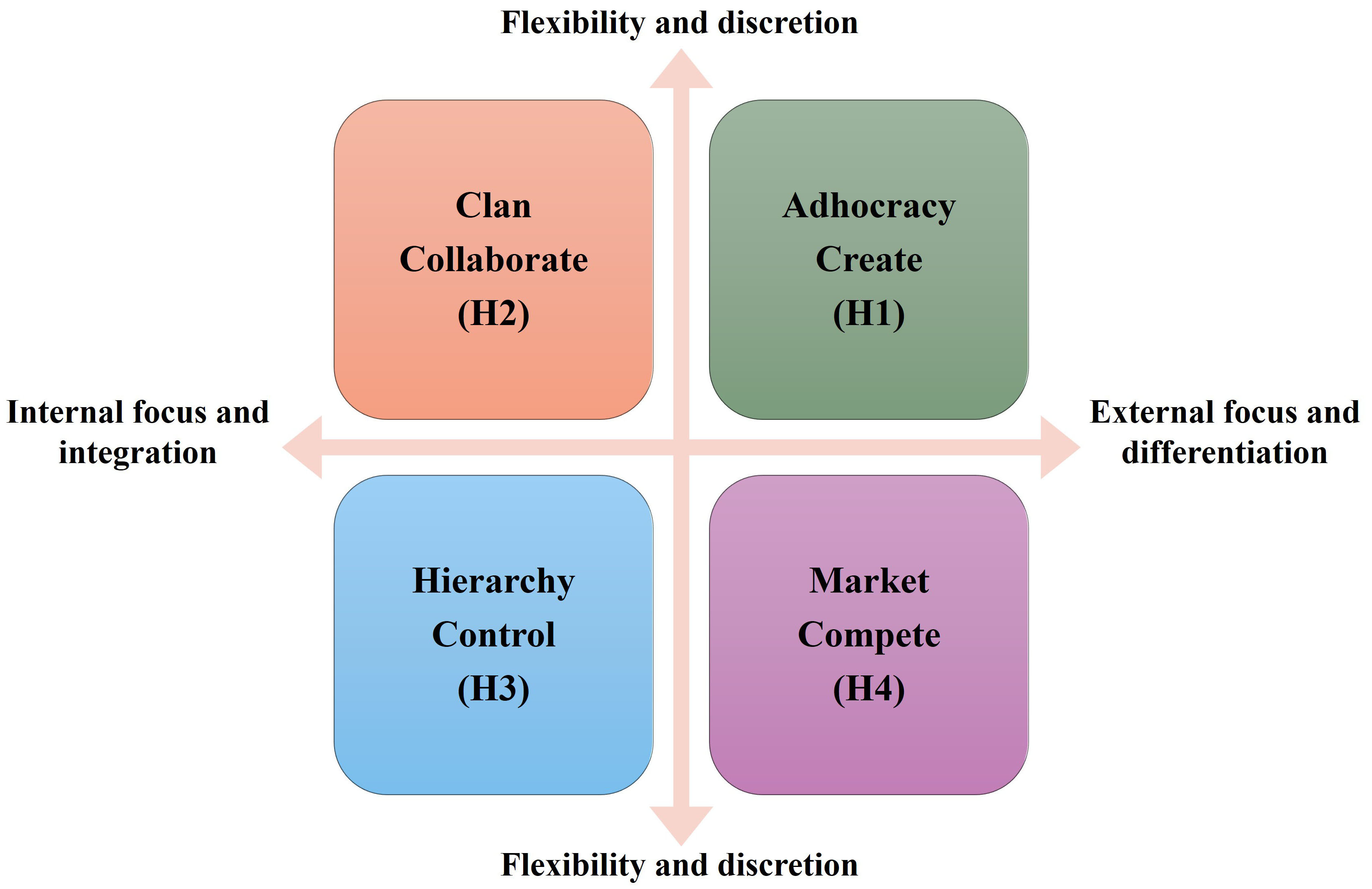
The hypotheses are based on extensive desktop research and consultation with experienced managers. Cameron and Quinn’s (2011) Competing Values Framework (CVF) was used as the theoretical framework for conceiving the questionnaire and conducting quantitative data analysis. It is a well-known and proven model for comprehending and evaluating organizational culture. It has been used extensively in both academic and practical settings to diagnose and guide organizational culture transformation. Its dependability and credibility offer a solid basis for its implementation in any business setting. The CVF offers practical advice for modernizing culture in addition to evaluating it. It provides a clear road map for appropriate interventions, like teambuilding activities, process reengineering, or leadership development, by examining the differences between the desired and existing cultures. A logical connection between the CVF’s main constructs and this study’s hypothesis is given in Fig. 1. Both the intended future culture and the existing culture can be measured using the quantitative tools that the CVF provides.
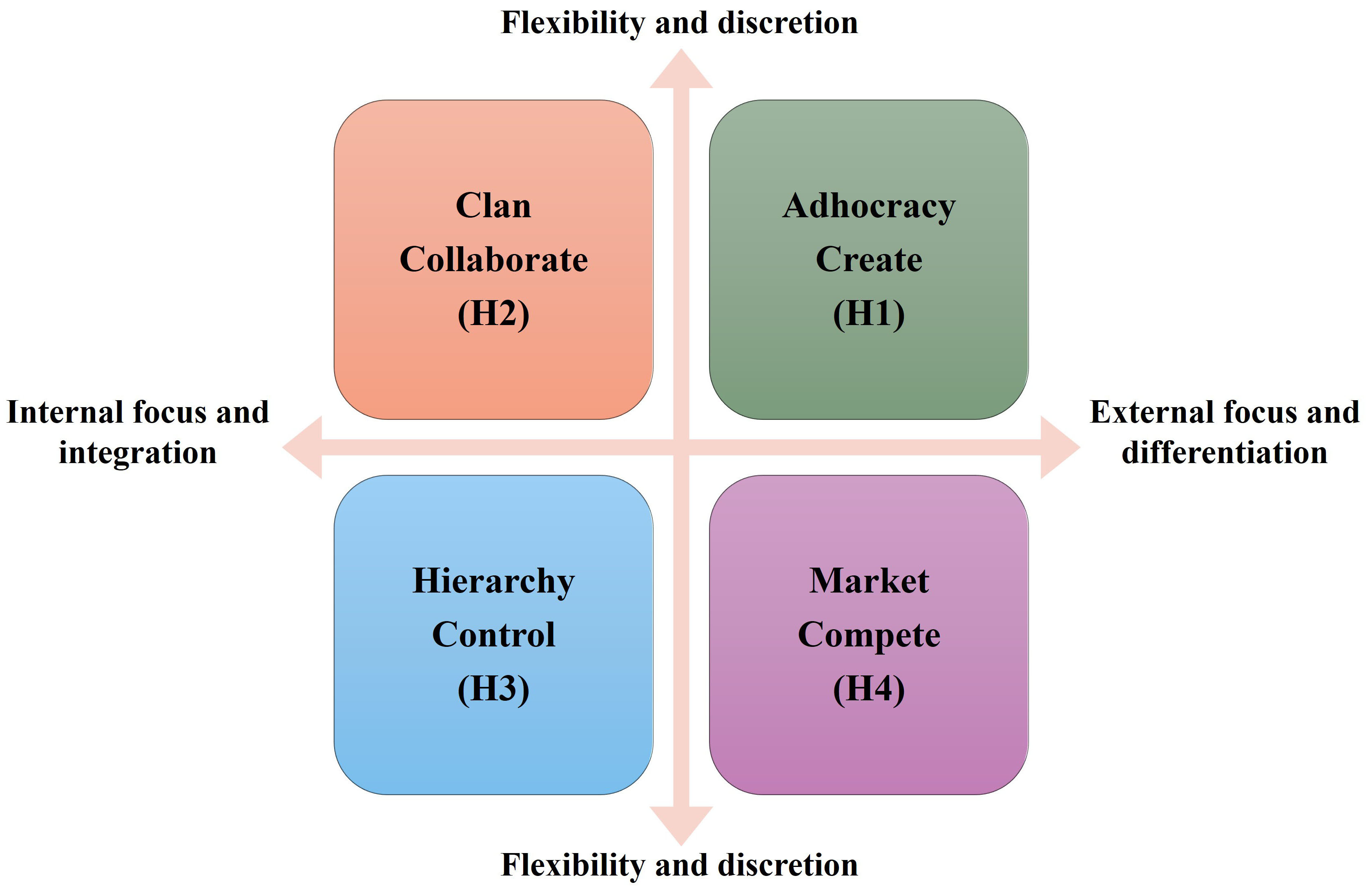 Fig. 1.
The CVF’s relationship with the hypotheses. CVF, Competing Values Framework.
The use of the CVF in this study is justified by its applicability in analyzing and measuring organizational culture at the company level, as well as the possibility of comparison with global trends. More precisely, the CVF categorizes organizational culture into four key quadrants: clan, adhocracy, market, and hierarchy. Each quadrant represents different values and priorities that shape how organizations function and respond to internal and external challenges. By analyzing organizations through this framework, it becomes possible to identify areas of misalignment that may hinder performance, growth, and adaptability in a rapidly changing business environment.
The hypotheses outlined in this study explore key organizational challenges that may arise due to a misalignment with the values proposed by the CVF. Understanding these challenges through the CVF lens can help organizations implement targeted interventions to enhance their cultural and operational effectiveness.
Innovation and research are primarily associated with the adhocracy culture within the CVF model, which emphasizes flexibility, adaptability, and risk-taking. Organizations that exhibit reluctance toward research and innovation often lean towards a hierarchical culture, where control takes precedence over creativity. This reluctance can result in stagnation, reduced competitiveness, and an inability to adapt to industry shifts.
A strong emphasis on employee welfare is characteristic of the clan culture, which fosters collaboration, mentorship, and a family-like atmosphere. Organizations that do not prioritize employee well-being may align more with the market or hierarchy cultures, where productivity and efficiency are prioritized over human-centric concerns. A lack of concern for employees can lead to high turnover, reduced morale, and lower organizational commitment. Prioritizing employee welfare not only enhances job satisfaction but also improves overall organizational performance by fostering a loyal and motivated workforce.
Centralized decision-making is a hallmark of the hierarchy culture, where authority and control rest in the hands of top executives. While this structure can provide stability and consistency, it often stifles innovation and responsiveness. In contrast, a culture of adhocracy encourages decentralized decision-making, fostering agility and employee engagement. A highly centralized approach can slow down decision processes, reduce employee autonomy, and hinder creative problem-solving.
Organizations that fail to adopt a market-oriented approach are often disconnected from customer needs and industry trends. The market culture within the CVF emphasizes external positioning, competitiveness, and goal achievement. A lack of market-oriented behavior often suggests a dominance of clan or hierarchy cultures, where internal processes take precedence over external responsiveness. This can lead to a decreased market share, customer dissatisfaction, and missed business opportunities. To remain competitive, organizations must ensure that their products and services align with evolving customer expectations. Implementing customer feedback loops and data-driven strategies can enhance responsiveness and market (re)positioning.
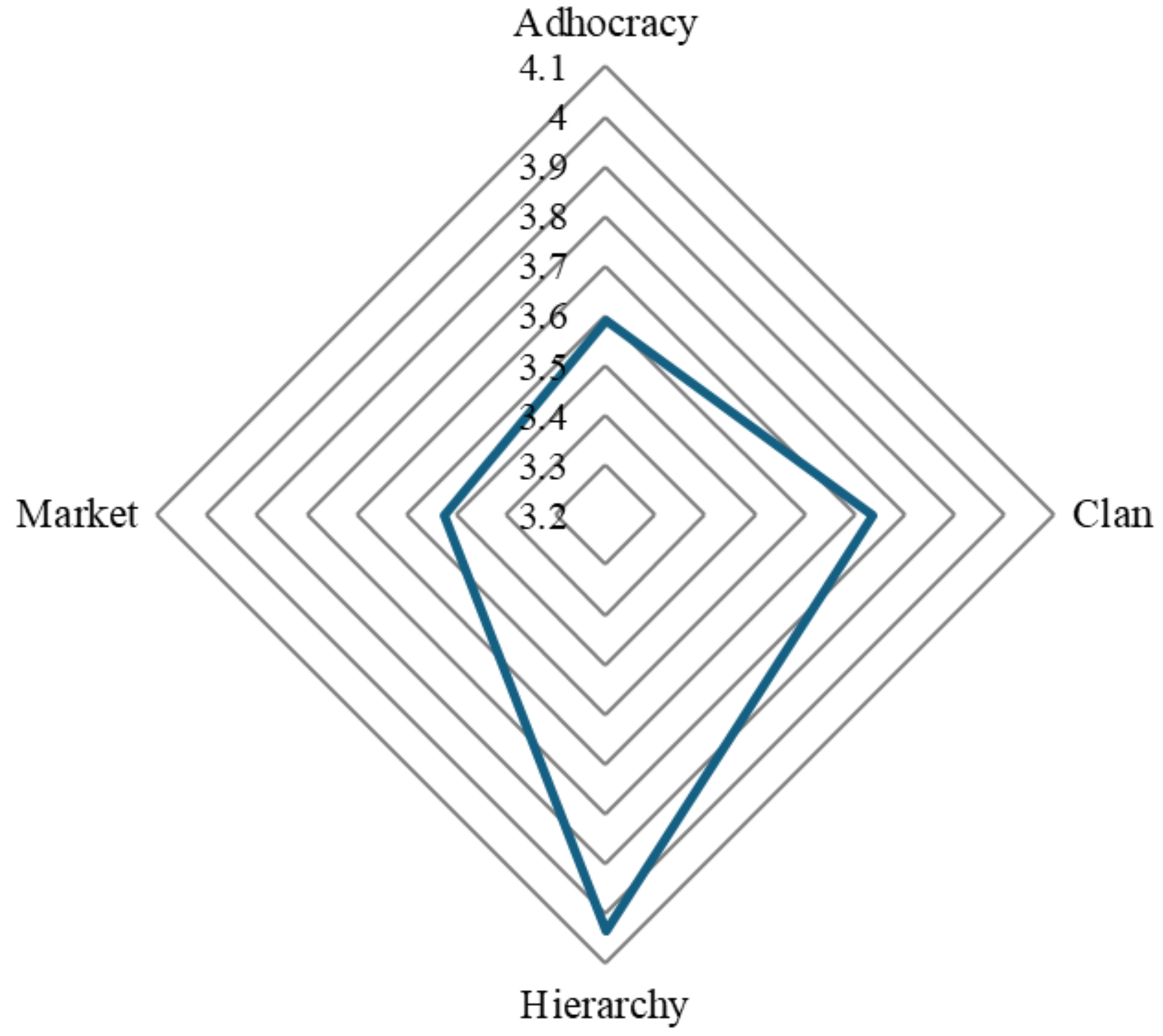
A case study was applied as the research strategy, and a survey as the data collection method. The extent of the researchers’ interference was minimal since we studied the processes as they normally occurred. The study setting was uncontrived, while the time horizon was a one-shot and cross-sectional. We initially designed a comprehensive questionnaire consisting of 40 questions based on our main research question, the hypotheses, and key constructs such as organizational leadership, management-employee relations, organizational glue, and success criteria. After cleansing the collected data and performing factor analysis in the SPSS (IBM SPSS Statistics for Windows, Version 29.0.2.0 IBM Corp: Armonk, NY, USA) environment, we selected some questions (statements) to which respondents answered with a number on a 1–5 scale. The scheme of the hypotheses and statements conceived around the CVF constructs—create, collaborate, control, and compete—is given in Table 1. Through the process of data analysis, we selected positive answers (5-yes and 4-mostly yes) and measured the frequency of their occurrence. We did the same with the negative answers (2-mostly no and 1-no). Neutral responses (3-no opinion) were not included in the analysis. The borderline cases served to test the hypotheses. Additionally, we mapped the average values of the measured variables (S1.1–S4.4) onto the CVF matrix to highlight the dominant aspects of the Montenegrin organizational culture that was examined.
| Hypothesis | Statement |
| H1: Reluctance towards research and innovation | S1.1 The company supports employees’ professional development. |
| S1.2 The company has enough resources for research and innovation. | |
| S1.3 Employees are keen to carry out research and innovate. | |
| H2: Lack of concern for employee welfare | S2.1 The company’s strength is teamwork. |
| S2.2 An employee’s individual success is recognized as the company’s success. | |
| S2.3 The company takes care of employees’ social welfare. | |
| H3: Centralized approach to decision-making | S3.1 Company policies, processes, and decisions are efficient. |
| S3.2 Employees take part in decision-making to a sufficient level. | |
| S3.3 The time and energy of the employees should be more respected. | |
| H4: Lack of market-oriented behavior | S4.1 Prior business analysis and planning are recognized as essential. |
| S4.2 The customer is the backbone of the company’s strategy. | |
| S4.3 Human resources are recognized as the key to business success. |
To ensure the credibility of the respondents’ answers, we repeated the questions (statements) in a modified form and linked them to the control variables that corresponded to the following constructs of organizational culture: professional development importance, attachment to collectivism, managers’ attitudes towards human capital, and significance of the clients’ needs. Table 2 shows the logical matrix between the hypothesis and the control variables. To avoid biased answers, we deliberately shuffled related questions in the survey. The questions (statements) related to the control variables were all Likert-type with five alternatives offered in the answers. The answers were ranked with numbers from 1 (the lowest value) to 5 (the highest value). The respondents had to choose one of the five numbers to indicate their level of agreement or disagreement with the offered alternatives. The average values of the measured variables (S1.1–S4.3) and corresponding control variables (C1–C4) are mapped on the CVF diagram to visualize the dominant features of the analyzed organizational culture (Fig. 2).
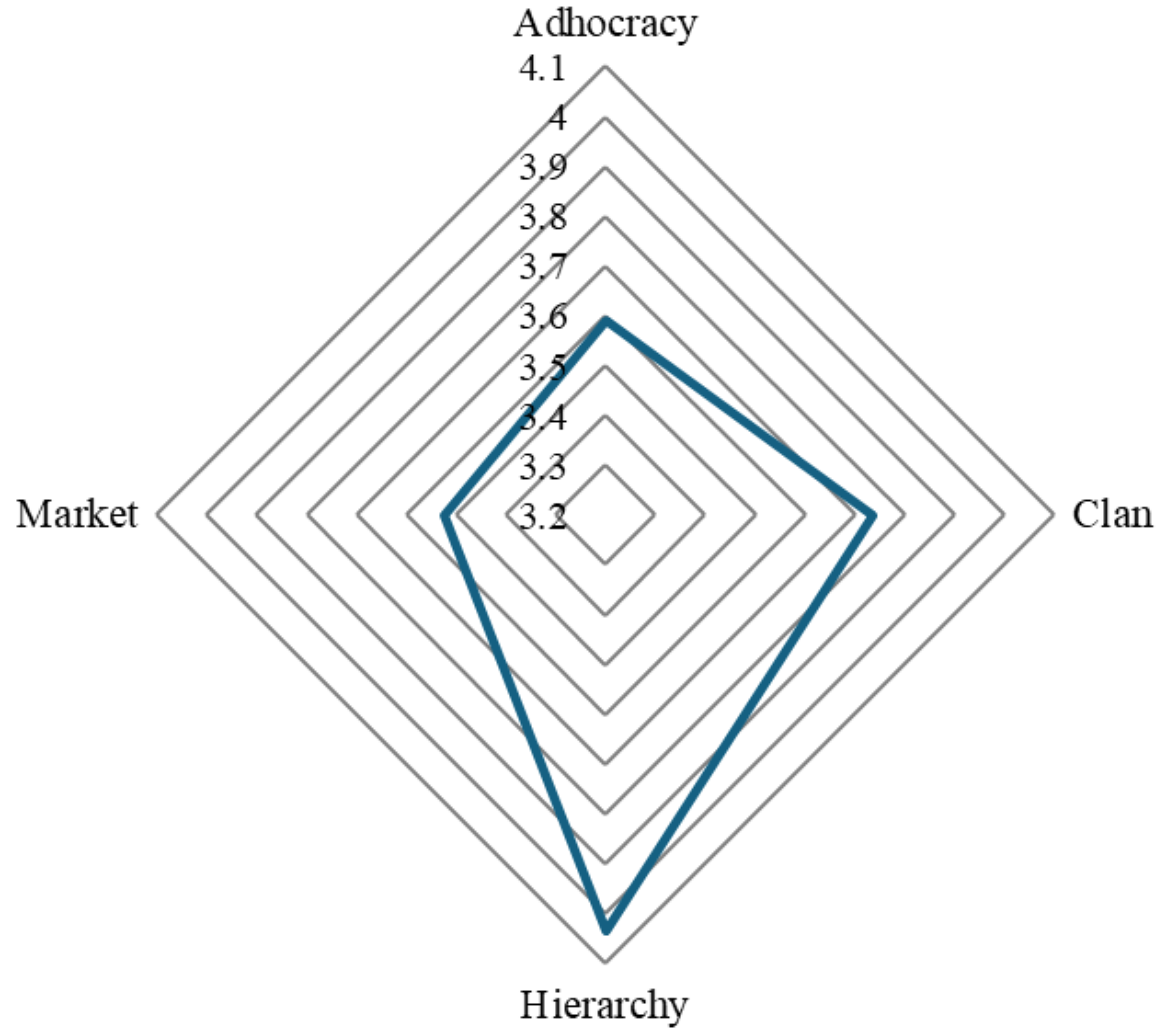 Fig. 2.
The CVF matrix.
| Control variables (hypotheses) |
| C1: Perception of professional development importance (H1) |
| C2: Personal attachment to collectivism (H2) |
| C3: Managers’ attitudes towards human capital (H3) |
| C4: Significance of clients’ needs (H4) |
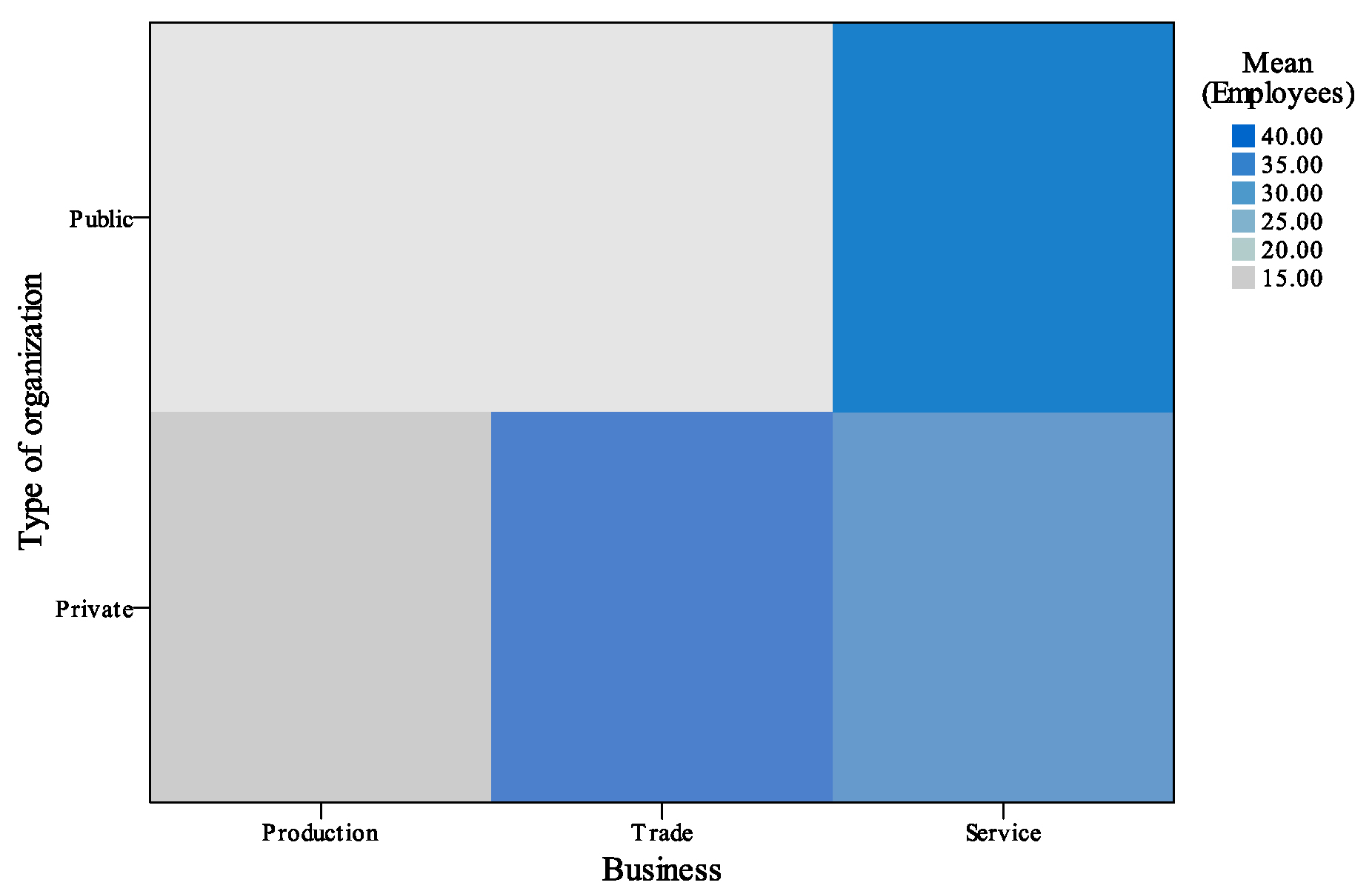
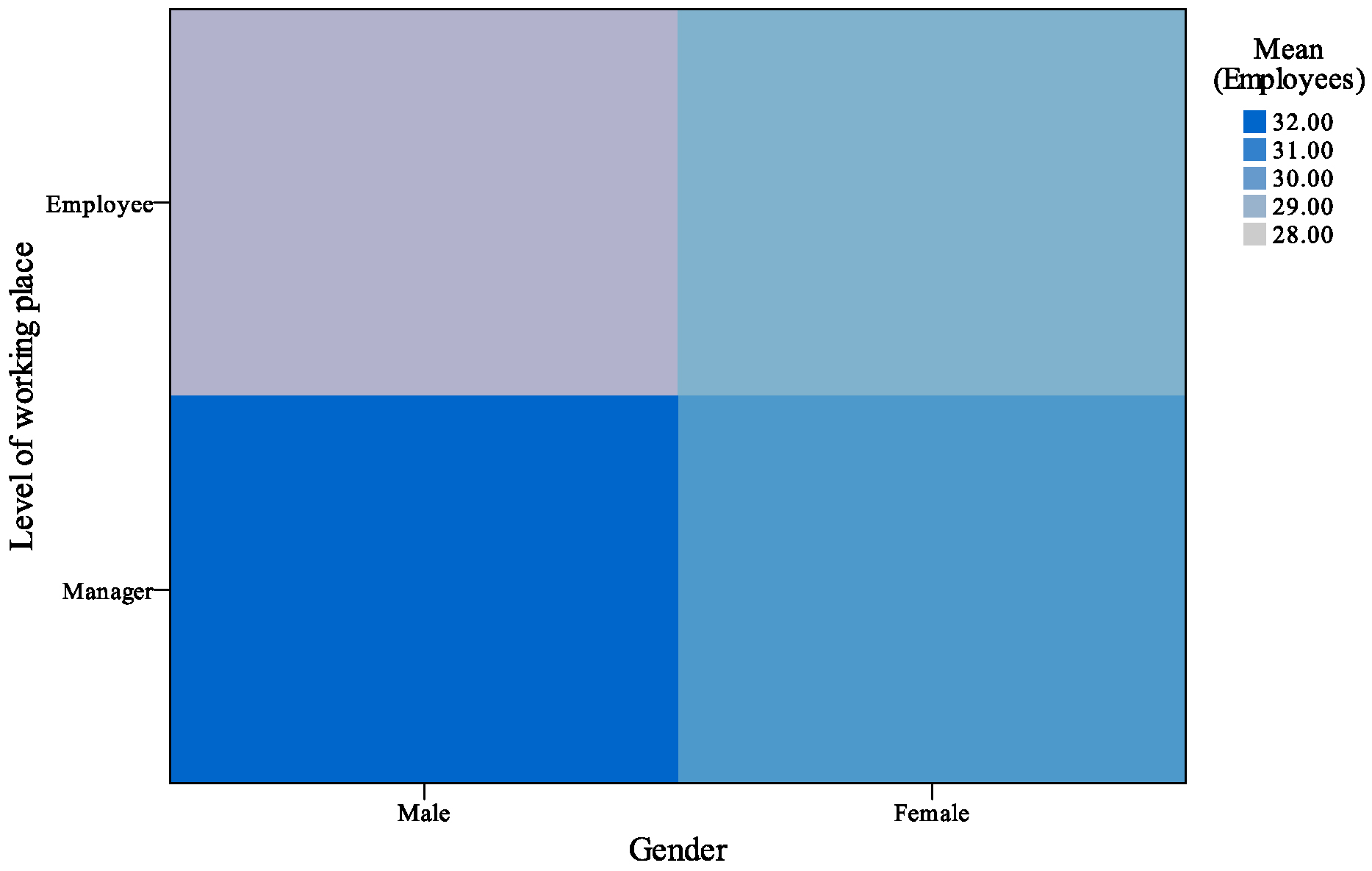
Lastly, the analysis of the demographic data was conducted. The results are presented in tabular and graphical form, i.e., as heat maps for the organizational structure and the gender distribution of the employees in operational and managerial roles.
A survey was carried out in the period from September to December 2023 to examine the companies in Montenegro’s readiness to accept globalization trends. The research methodology was based on quantitative statistical analysis and comparison with the relevant secondary sources. The survey was conducted in 20 Montenegrin companies—10 state and 10 private ones—on a sample of 350 employees of different ages, educational levels, and genders. Most of the respondents had higher education qualifications. In total, 400 questionnaires were distributed, but 50 of these were not handed back, so the survey finally included a sample of a total of 350 respondents.
The sample of 20 companies was carefully selected to provide relevant insights into the Montenegrin business environment. Its representativeness is reflected in the diversity of the sectors (production, trade, and services), levels of technical and technological development, number of employees, and geographical coverage, which allowed us to shed light on the challenges faced by companies in urban and rural environments. In addition, Montenegro’s economy is small. In 2024, Montenegro had only 59 companies with more than 250 employees (Monstat, 2024b).
When selecting the sample, we ensured that all categories of respondents were adequately represented to draw reliable conclusions. In this sense, care was taken to ensure that the participants in the study had different levels of work experience, education, and positions in their organizations. The aim was to test a diverse sample and obtain the most comprehensive and accurate results possible. The questionnaire consisted of closed questions that were unambiguous and straightforward. We tried to steer clear of loaded, recall-dependent, ambiguous, double-barreled, and positively and negatively worded questions. Consequently, we believe that the collected data provides the most accurate picture of the circumstances. The management representatives agreed that the employees could be asked in writing to participate in the study before the questionnaire was administered.
The analysis was organized into three parts. In the first one, the constructs with which the largest number of respondents agreed were selected, as well as those with which the largest number of respondents disagreed. Neutral answers were not considered. The hypotheses were validated based on the findings. In the second part of the analysis, the average means of the key and control variables were mapped on the CVF diagram to underscore the dominant dimensions of the studied organizational culture. The third part of the research examined whether the means of the control variables in the model differed with statistical significance concerning the variables related to each company examined, i.e., its ownership structure and business activity, and those variables related to the socio-demographic characteristics of the respondents, i.e., age, education, occupational level, and gender. The last part of the data analysis included a heat map of the ownership and business structures of the companies, as well as a heat map of the gender structures of the different roles in the companies. In highlighting the constructs with the highest number of positive and negative responses, these responses were coded as follows in the first part of the analysis: yes (Y), mostly yes (MY), no (N), and mostly no (MN). The results and analysis of the borderline cases used to test the hypotheses are presented in Table 3. The ANOVA (IBM SPSS Statistics for Windows, Version 29.0.2.0 IBM Corp: Armnok, NY, USA) analysis revealed significant differences in the means of the variables on which the hypotheses were based. The critical F value for the 95% confidence interval was 1.96. All F values were higher than the critical F value, while the significance levels were lower than 0.05 for the compared sets of variables associated with the hypotheses. The validation of the hypotheses could be summarized as follows:
| Hypotheses | S | Dominant frequencies | ANOVA | |||
| Y | MY | N | MN | |||
| H1: Reluctance towards research and innovation (R&I) | S1.1 | - | 101 | - | - | F = 21.40 |
| S1.2 | - | - | 215 | - | Sig | |
| S1.3 | - | - | 172 | - | ||
| H2: Lack of concern for employee welfare | S2.1 | 128 | 128 | - | - | F = 24.42 |
| S2.2 | - | 121 | - | - | Sig | |
| S2.3 | - | - | 140 | - | ||
| H3: Centralized approach to decision-making | S3.1 | - | - | 127 | - | F = 32.75 |
| S3.2 | - | - | - | 90 | Sig | |
| S3.3 | - | 142 | - | - | ||
| H4: Lack of market-oriented behaviour | S4.1 | - | 148 | - | - | F = 47.54 |
| S4.2 | - | - | - | 105 | Sig | |
| S4.3 | - | - | - | 112 | ||
ANOVA, Analysis of Variance; Y, Yes; MY, Mostly Yes; N, No; MN, Mostly No.
H1: Although the employees recognized the importance of career development and lifelong learning, their companies did not have enough resources for research and innovation (R&I). Additionally, many respondents showed low interest in R&I.
H2: The employees were aware of the importance of teamwork and the positive correlation between individual employee success and the success of the company. However, most respondents did not agree with the statement that the company took sufficient care of the benefits of the employees.
H3: The employees were mainly not involved in decision-making, and people’s time and energy were not respected properly. This indicated a centralized approach to decision-making, which was recognized as inefficient.
H4: The respondents commonly agreed that prior business analysis and planning were important, even though customers and employees were not recognized as key success factors in the companies.
These observations and the ANOVA tests confirmed hypotheses H1–H4.
In the second part of the data analysis, the average values of the key variables, S1.1–S4.3, and the related control variables, C1–C4, were calculated and plotted on the CVF diagram (Fig. 2). The hierarchy (control) and clan (cooperation) dimensions of the organizational culture were dominant in the analysis setting. The strategies of the analyzed companies should be shifted towards the market (compete) and adhocracy (create) dimensions of the organizational culture matrix to meet the demands of the global business world. These changes are crucial for adapting organizations to global trends that favor dynamism, innovation, and competitiveness. While the hierarchy and clan dimensions provide stability and efficiency in local contexts, a shift towards the market and adhocracy dimensions could help organizations become more agile, change-ready, and competitive in the global marketplace. This shift requires not only a change in strategic direction but also a change in the organizational culture, leadership, and the employees’ mindsets (Nikčević, 2024).
In the third part of the study, the mean values of the answers concerning the control variables in the model (C1–C4) were examined to see if they differed significantly with respect to the variables related to the companies’ ownership type and activity and the socio-demographic characteristics of the respondents, i.e., their age, education, role in the company, and gender. The outcomes obtained through the t-test and the ANOVA F-test in SPSS are given in Table 4. A significance level higher than 0.05 was considered relevant. The results demonstrated that there were different combinations of statistically significant influences of the company’s ownership type and business activities and the socio-demographic characteristics of the respondents on all measured control variables in the model. This confirmed the validity of the sample.
| Variables | Company | Age | Gender | Education | Role | |
| Public; Private | Production; Trade; Service | Male; Female | Elementary; Secondary; High; Higher | Manager; Employee | ||
| Sig. (t-test) | Sig. (ANOVA) | Sig. (ANOVA) | Sig. (t-test) | Sig. (ANOVA) | Sig. (t-test) | |
| C1 | 0.787 | 0.657 | 0.689 | 0.776 | 0.286 | 0.154 |
| C2 | 0.823 | 0.556 | 0.664 | 0.847 | 0.858 | 0.492 |
| C3 | 0.699 | 0.876 | 0.209 | 0.789 | 0.738 | 0.450 |
| C4 | 0.745 | 0.687 | 0.975 | 0.698 | 0.342 | 0.203 |
In addition to the t-test and the ANOVA analysis of the demographic and control variables, heat maps of the business ownership type vs. activity and the gender vs. role in business were generated in the SPSS environment. The manufacturing and trade enterprises were all privately owned, while the service enterprises were publicly owned (Fig. 3) in the data set analyzed.
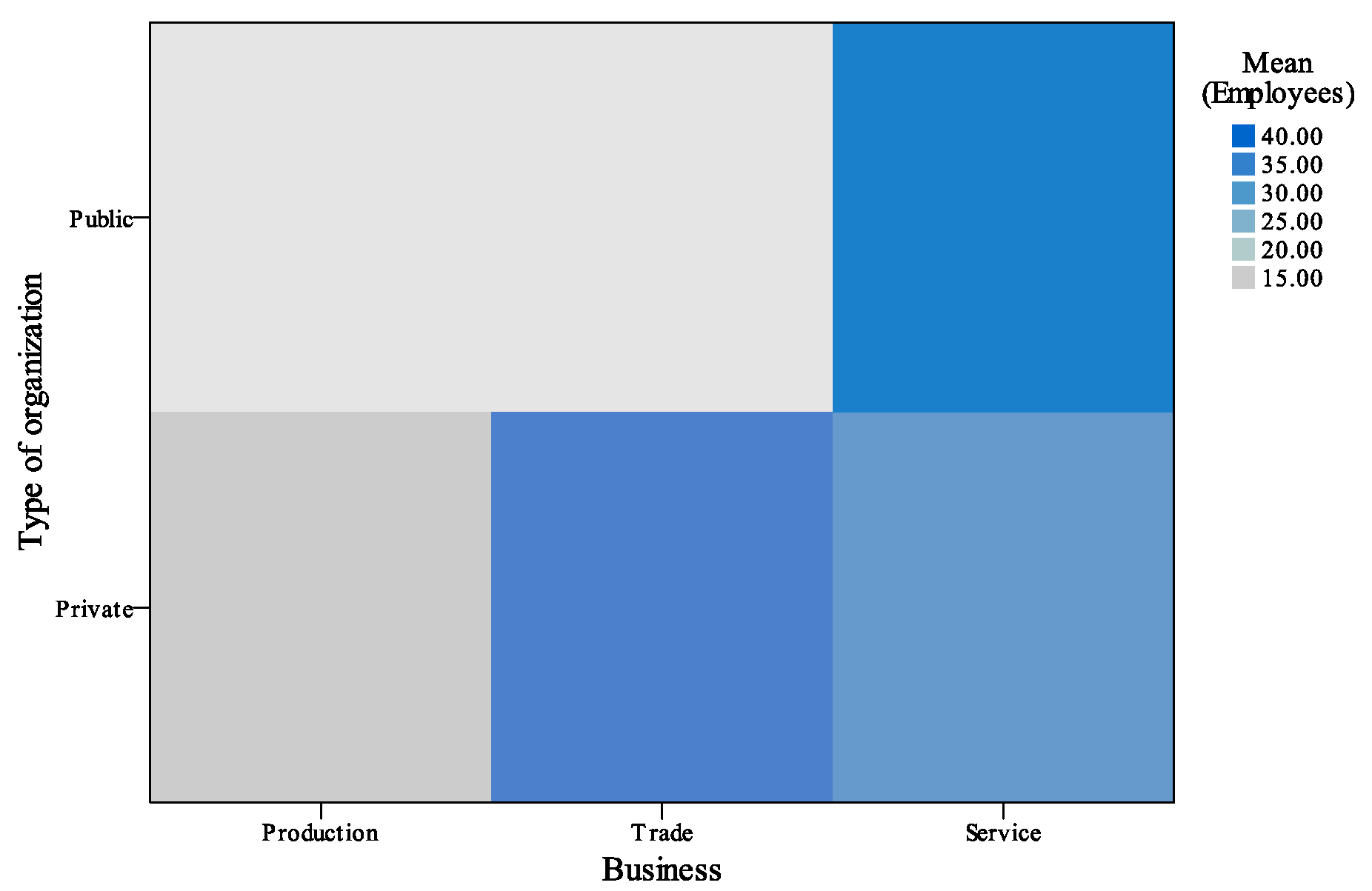 Fig. 3.
Companies’ ownership structure and business activities.
Only the service sector remained in state ownership. This change in the ownership structure reflects the privatization strategy implemented during the transition period, which aimed to increase competitiveness and efficiency in the production and trade sectors. At the same time, the retention of state ownership in the service sector reflects the desire to ensure the availability of basic services and to safeguard public interests.
Within this context, it is to be noted that Montenegro has undergone a gradual transition from socialism to capitalism, which has created a unique process compared to other Southeastern European countries, where the transition has been faster. Although they have recognized the importance of global market norms, many Montenegrin companies have maintained an internal orientation based on stability and control, which puts them at a disadvantage compared to competitors who have adapted to the market more quickly. Privatization and market liberalization, which started in the 1990s, led to social and political tensions as citizens feared losing security in the economic environment. This fear contributes to resistance to innovation and market adaptation, making Montenegrin businesses less competitive. Montenegro’s culture, shaped by historical differences, also creates challenges in adapting to global business practices. Unlike other European countries, Montenegrin organizations often emphasize personal relationships, which creates differences in business ethics.
Furthermore, regarding the demographic analysis, although the numbers of women and men participating in the research were equal, men dominated in the leadership positions, which is characteristic of Montenegrin society, where patriarchalism is deeply rooted (Fig. 4). This trend points to the existence of gender stereotypes and social norms that continue to shape professional roles and opportunities, particularly in leadership. Even though the presence of women in the labor force in Montenegro is increasing, particularly in the education and service sectors, their progress into managerial positions remains limited. This imbalance between women and men in leadership positions can have long-term implications for the efficiency of organizations and gender equality in society. Promoting equal opportunities for women in leadership, together with changing cultural attitudes, could contribute to greater social cohesion and improved organizational performance (Monstat, 2020).
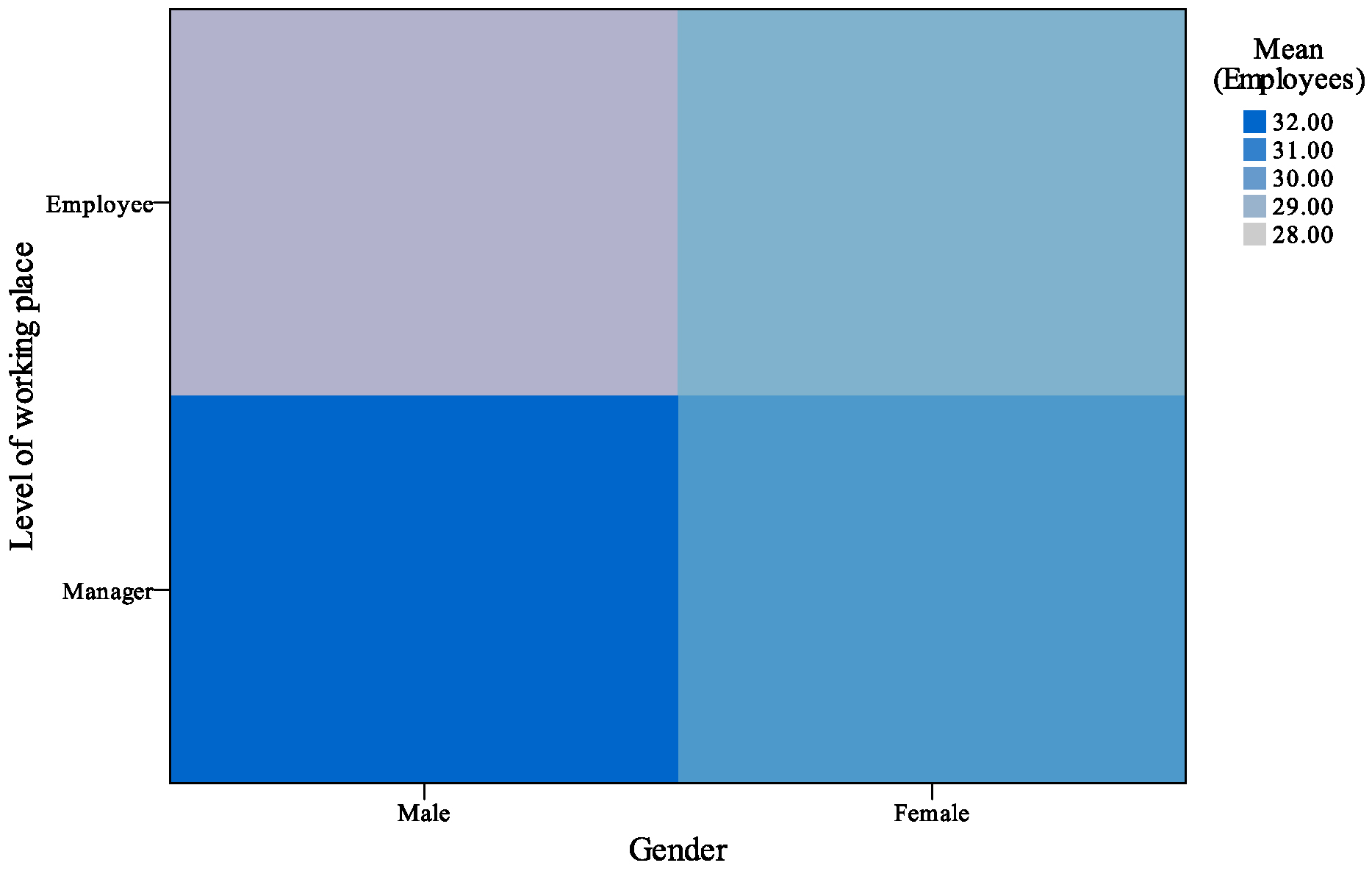 Fig. 4.
Gender and roles in the companies.
Although organizations supported professional development and lifelong learning as key factors for their competitive advantage, the results showed that employees were not ready for research and innovation. Research and development were not given much importance in the previous (socialist) period in Montenegro. This development component has only recently been taken as important in tertiary education, although there is still insufficient investment in research and development.
The respondents were aware of the importance of teamwork and the positive correlation between individual success and the success of the company. However, most respondents did not agree with the statement that the company took sufficient care of the benefits (well-being) of the employees. This attitude is most likely a consequence of collectivism, which is characteristic of the Montenegrin national culture. Employees mostly identify with the collective (organization) in which they work. Therefore, it would be expected that the organization in which they work would take care of them. This could be explained by the inherited syndrome of socialism and self-governing relations, according to which everyone is loyal to the collective, and in return, the collective is responsible for the fate of the individual. However, this research did not confirm that there was organizational concern for the well-being of the employees, although a large percentage of the employees expressed loyalty to their organization.
The employees showed a negative attitude towards the statement that employees took part in decision-making to a sufficient level. Montenegro is a country with a large distance between power and the people, which means that power is largely concentrated with the country’s leaders.
Even though there was a need for the companies to plan and analyze past business practices, neither customers nor employees formed the backbone of the companies’ strategies. This is the result of a risk-averse and centralized approach to decision-making, which implies a lack of market orientation.
Using the CVF matrix, we could see that the dimensions of hierarchy (control) and clan (cooperation) dominated the organizations in Montenegro. Although these dimensions could contribute to stability and internal order, they often hinder the necessary agility and innovation, especially in the face of global business demands. Business strategies should be shifted towards the market and adhocracy dimensions to achieve sustainability and a competitive advantage, as this would allow greater flexibility and speed in decision-making and responding to market changes. These shifts do not mean a complete rejection of the values of hierarchy and clan, but a balancing of these values with the needs of the global marketplace. Organizations need to enable innovation and market competition, but at the same time, they need to maintain the elements of control and cooperation that ensure coherence and stability. A successful transition requires investment in the development of management skills and leadership that supports team dynamics and creativity. Changes in the organizational culture could be achieved through training, changes in management practices, and the introduction of new technologies and project management approaches. It is important to encourage entrepreneurship and improve the infrastructure for research and development, which would lay the foundations for long-term economic growth and a stronger position for Montenegro in the global business market. This would not only enable the improvement of organizational performance but also lead to the strengthening of the competitiveness of the country’s economy.
The research showed that the organizational culture in Montenegro differs from the global organizational culture in some aspects. Namely, it is characterized by a reluctance to conduct research and pursue innovation, insufficient representation of teamwork, centralized decision-making, change and risk aversion, and a lack of market-oriented attitudes. These are the result of residuals of the past, the burden of the old socialist system, and the non-acceptance of new values. Therefore, some dimensions of Montenegrin organizational culture need to change fundamentally, while some dimensions need to be upgraded and strengthened. It is recommended that the traditional values of the organizational culture, which dominate now, be replaced by the values inherent in the global market.
To reduce collectivism, it is necessary to change the current belief of employees that their workplace is safe and that the state is obliged to take care of the social status of each employee. This system of beliefs and values leads to the fact that employees are not independent; they do not have the creativity to display self-initiative and self-help. This can result in insufficient accountability in their behavior and performance at work.
Accepting risk, coping with failure, and taking responsibility are part of the business policies of modern companies. Therefore, it is necessary to replace the traditional value of individual work with one of teamwork, while decision-making needs to be done at all levels. Additionally, rigid and centralized control systems should be replaced with more flexible and decentralized ones, as they could inhibit employees’ ideas and initiatives going forward. It is necessary to create a culture that is receptive to formally accepted business models, as this could ensure social advancement and development.
The imperative of the necessity of investing in people and their lifelong education should play a key role in creating and changing the organizational culture. By dealing with the necessity of acquiring new knowledge and skills, a new power structure could be established in companies, based on the authority of competence and knowledge, not on the authority of titles and acquired positions. By developing awareness of the need for new knowledge and skills, as well as motivating all employees to acquire new knowledge, it is possible to prevent the development of so-called irreplaceability syndrome. The workplace and power would then only be protected by knowledge. Successful companies are characterized by a deep respect for each person, teamwork, openness, trust, respect for the company, decentralization, delegation of tasks, autonomy, risk acceptance, learning from mistakes, openness to change, and the like. If companies aim to be successful in the market, they are supposed to embrace these dimensions of organizational culture.
In the case of Montenegro, adopting globalization is a necessity rather than a choice. Its biggest advantage is that, as a small country, it can adapt quickly to global trends. What is harder and slower to achieve are the changes to the way of thinking. Changes in the mindsets and the acceptance of global trends represent a chance for the economic development of Montenegro. The services of foreign experts can be used to this end, but Montenegro should encourage the many established people who have unfortunately left the country to return. Foreign specialists can comprehend and resolve issues to a certain degree and can thus be very beneficial, but Montenegrins are more familiar with the culture and mindset of the country. Some good ideas have unfortunately failed because deeply ingrained Montenegrin customs have prevented them from being considered.
Montenegro’s rich and diverse cultural heritage, shaped by the influences of different civilizations, is presented as a resource that can contribute to global value chains. These cultural elements have the potential to inspire innovative diversity management practices and provide fresh perspectives in an interconnected global economy.
This research contributes to a deeper understanding of how organizations, especially those in small markets, need to balance the key dimensions of organizational culture to implement change successfully and remain competitive at a global level. From a theoretical perspective, the paper extends the understanding of how the CVF’s dimensions influence organizational dynamics and how their interactions shape the ability of the organizations to adapt to the challenges of globalization.
In terms of practical implications, the paper provides concrete guidance for policymakers, managers, and practitioners on how to improve the organizational culture in Montenegro. The organizations should invest in the development of their people through training and mentoring and by creating a motivating work environment. A skilled and engaged workforce is a key resource in meeting the challenges of globalization. Developing a culture that supports continuous development increases resilience and ensures long-term success.
By combining theoretical insights and practical recommendations, this paper provides useful guidelines for organizations that want to become more competitive in the global market while preserving and enhancing their specific cultural values.
Despite its rigorous methodology, this study is not without limitations. Firstly, the employees’ responses may be biased by fear of losing their jobs. They may have answered according to what they thought was socially desirable to remain loyal. Furthermore, focusing on the specific dimensions of organizational culture of research and innovation, teamwork, decision-making, risk-taking, and market orientation in the context of Montenegro as a developing country leaves other dimensions unexplored. Therefore, future research should examine the role of additional dimensions such as results orientation, communication, attention to detail, and stability, or it should analyze the overall effect of organizational culture by including all these dimensions. The research design used was that of a case study, and the number of respondents was limited. In the future, a similar study should be conducted with a larger sample, longitudinally over time and across a wider geopolitical area with different socio-political dynamics. It should be conducted in cooperation with the Montenegrin scientific diaspora and expanded with qualitative research. Special attention should be paid to responsible governance, education, innovation, and development.
The datasets used and analyzed during the current study are available from the corresponding author on reasonable request.
GN and SB designed the research study and performed the research. Both authors contributed equally to drafting the manuscript and critically revising it for significant intellectual content. Both authors read and approved the final manuscript. They have participated sufficiently in the work and agreed to be accountable for all aspects of the work.
Not applicable.
This research received no external funding.
The authors declare no conflict of interest.
References
Publisher’s Note: IMR Press stays neutral with regard to jurisdictional claims in published maps and institutional affiliations.