
 , Xulong Dai 2,†, Bowen Ran 3, Wenying Wang 4,*
1 School of Economics and Management, Beijing Jiaotong University, 100044 Beijing, China
2 United Graduate School, Shaanxi University of International Trade & Commerce, 712046 Xi’an, Shaanxi, China
3 Taipingyuan Academy, Southwest Minzu University, 610041 Chengdu, Sichuan, China
4 School of Education, Sichuan Technology and Business University, 611745 Chengdu, Sichuan, China
†These authors contributed equally.
Abstract
This study explores the factors influencing employee motivation and satisfaction among Generation Z (Gen Z) in transitional economies, with a focus on F Company in China and selected firms in Eastern Europe. Using a mixed-methods approach, the research combines quantitative surveys and qualitative interviews to examine how organizational practices, cultural dimensions, and economic transitions shape Gen Z’s workplace attitudes. The findings highlight significant differences in motivational drivers and satisfaction levels between the Chinese and Eastern European contexts, underscoring the influence of cultural and economic environments on Gen Z employees’ experiences. This comparative analysis contributes to cross-cultural management literature by shedding light on the complex relationship between intrinsic and extrinsic factors in various transitional settings. Furthermore, the study provides practical recommendations for multinational corporations aiming to refine their human resource strategies and create a motivated, satisfied Gen Z workforce in emerging markets, offering valuable guidance for organizations navigating the complexities of diverse economic landscapes and engaging the next generation of talent.
Keywords
- Generation Z
- employee motivation
- employee satisfaction
- transitional economies
- cross-cultural management
- China
- Eastern Europe
Although considerable research has explored employee motivation and satisfaction across various generations and cultural contexts, there is a notable lack of studies focusing specifically on Generation Z (Gen Z) within transitional economies. This study seeks to bridge this gap by providing a comparative analysis of Gen Z employees in Chinese and Eastern European firms. Gaining insights into these dynamics is critical for multinational corporations aiming to develop effective human resource strategies that align with the motivational drivers and satisfaction determinants of Gen Z across diverse economic settings.
The study addresses the following objectives:
(1) Identify the significant motivational factors influencing Gen Z employees in China.
(2) Assess the levels of job satisfaction among Gen Z workers in China.
(3) Compare and contrast the motivational drivers and satisfaction determinants between China and Eastern European contexts based on existing literature.
By achieving these objectives, this study aims to contribute to the literature on cross-cultural management and human resources, providing empirical insights into the motivations and satisfaction of Gen Z employees in transitional economies. Furthermore, it offers practical recommendations for organizations aiming to foster a motivated and satisfied Gen Z workforce in diverse economic environments.
Ultimately, this study seeks to deepen the understanding of Gen Z’s workplace motivations and satisfaction within the unique environment of China’s transitional economy while contextualizing these findings within the broader framework of Eastern European firms as informed by existing research. By exploring the interplay between intrinsic and extrinsic motivational factors, as outlined in our simplified theoretical framework, we aim to provide valuable insights for both academic scholars and industry practitioners navigating the evolving landscape of global workforce management.
The influx of Generation Z (Gen Z) into the global workforce presents both challenges and opportunities for organizations, particularly in transitional economies undergoing significant economic and cultural changes. As the youngest cohort in the labor market, Gen Z brings distinct values, expectations, and motivations that differ substantially from previous generations, requiring organizations to adapt their approaches to enhance employee satisfaction and productivity. Having grown up in a digital-first environment, Gen Z’s communication styles, work preferences, and workplace expectations are heavily influenced by technology. Gen Z is more inclined to seek meaningful work and pursue career paths aligned with their values, such as social responsibility and environmental sustainability (Akbar and Amalia, 2023). This generation is also characterized by an entrepreneurial mindset, a desire for flexibility, and a strong preference for work-life balance, challenging traditional organizational practices and prompting companies to rethink their management strategies to effectively engage, motivate, and retain this emerging talent. Furthermore, organizations must consider how these generational traits intersect with the broader cultural and economic contexts in which they operate, particularly in transitional economies. Transitional economies, defined by their shift from state-controlled to market-driven systems (Meyer and Peng, 2016), face unique institutional challenges such as privatization, regulatory reforms, and labor market volatility.
Moreover, the growing significance of Gen Z in the workforce underscores the urgent need for organizations in transitional economies to develop targeted strategies for attracting and retaining this talent pool. These organizations face unique challenges, including adapting to rapidly changing market conditions, addressing diverse employee expectations, and integrating innovative practices to meet the dynamic needs of Gen Z employees. This enhanced focus on Gen Z’s role and the specific obstacles within transitional economies heightens the study’s relevance and urgency, providing a timely examination of workforce dynamics in these evolving contexts.
Generation Z, typically defined as individuals born between the mid-1990s and early 2010s, constitutes a significant portion of the current and future global workforce. Recent studies highlight that this cohort’s values and workplace expectations mark a departure from those of previous generations, such as Baby Boomers and Millennials. While Millennials have historically emphasized career advancement and financial stability, Gen Z places greater emphasis on work-life balance, personal growth, and alignment with organizational values. As digital natives, Gen Z has never known a world without the internet, smartphones, or social media, which profoundly shapes how they work, communicate, and expect employers to integrate technology and offer flexible work arrangements. According to Francis and Hoefel (2018), Gen Z is highly skilled at multitasking and thrives in fast-paced, tech-enabled environments. At the same time, they exhibit a heightened awareness of issues such as mental health and burnout, prompting them to seek workplaces that prioritize well-being and offer resources for stress management and professional development. These shifting priorities necessitate a rethinking of traditional management approaches to ensure that Gen Z employees remain engaged, motivated, and committed. The increasing influx of Gen Z into the global workforce underscores their growing significance as the next dominant labor force. Organizations, particularly within transitional economies, face unique challenges in attracting and retaining this technologically adept and value-driven generation. These challenges include adapting to their distinct communication styles, meeting their expectations for career development, and fostering environments that align with their emphasis on work-life balance and social responsibility. Highlighting these aspects not only underscores the relevance of this study but also emphasizes the urgency for organizations to develop tailored strategies to effectively engage Gen Z employees.
The influx of Gen Z into the global workforce presents unique challenges and opportunities for organizations, particularly those within transitional economies experiencing significant economic and cultural transformations. This study focuses on F Company in China and selected Eastern European firms to explore the determinants of employee motivation and satisfaction among Gen Z employees. While the sample comprises 128 Gen Z respondents from a single high-tech company in China and comparable firms in Eastern Europe, the findings aim to provide targeted insights into how organizational practices, cultural dimensions, and economic transitions influence Gen Z’s workplace attitudes within these specific contexts. The selection of China and Eastern Europe reflects divergent transitional pathways: China’s state-led reform since 1978 contrasts with Eastern Europe’s post-1990 shock therapy. This divergence allows us to examine how policy-driven vs. market-driven transitions shape Gen Z’s workplace priorities. China and Eastern European countries serve as examples of transitional economies each undergoing profound economic and cultural changes since the late 20th century.
The cultural and economic landscapes of China and Eastern Europe create distinct environments that shape organizational practices and employee expectations. According to Hofstede’s cultural dimensions, China scores high on collectivism and power distance, fostering a workplace culture that emphasizes teamwork, hierarchical structures, and respect for authority (Arrindell, 2003). In contrast, Eastern European countries exhibit varying levels of individualism and lower power distance, particularly as they transition from centrally planned economies to market-oriented systems (Morley et al, 2021).
Economically, China’s rapid gross domestic product growth and substantial foreign investment have driven a shift toward innovation and employee empowerment. Companies such as F Company have adopted agile management practices, promoting entrepreneurial initiatives and offering extensive career development opportunities to attract Gen Z talent (Loorbach and Lijnis Huffenreuter, 2013; Wang et al, 2024). In Eastern Europe, while firms are increasingly adopting market-driven strategies, they often continue to prioritize stability and job security due to historical economic uncertainties and slower transitions to market economies (Vujačić and Petrović-Vujačić, 2020). This focus on stability is reflected in more conservative management approaches that emphasize maintaining consistent operational frameworks to ensure economic resilience.
As summarized in Table 1, China’s high collectivism and power distance contrast sharply with Eastern Europe’s moderate individualism and lower hierarchical acceptance (Hofstede Insights, 2023). These contextual disparities, coupled with divergent economic trajectories (e.g., China’s rapid GDP growth vs. Eastern Europe’s gradual market integration) (UNCTAD, 2023), shape distinct organizational practices. For instance, while Chinese firms prioritize agility to align with Gen Z’s innovation expectations, Eastern European companies emphasize job security to address historical economic uncertainties (Eurofound, 2023; Meyer and Peng, 2016).
| Dimension | China | Eastern Europe | Data source | |
| Cultural values | Collectivism | High (Hofstede score: 80) | Moderate to Low (e.g., Poland: 60; Czechia: 55) | Hofstede Insights (2023) |
| Power distance | High (Hofstede score: 80) | Lower (e.g., Hungary: 40; Romania: 45) | Hofstede Insights (2023) | |
| Economic transition | GDP growth (in 2022) | 5.2% | 3.1% (average for Poland, Czechia, Hungary) | World Bank (2023) |
| FDI inflows (in 2022) | $180 billion | $45 billion (aggregate for selected Eastern European countries) | UNCTAD (2023) | |
| Management practices | Leadership style | Hierarchical, top-down decision-making | Increasingly participatory, influenced by Western management models | Meyer and Peng (2016) |
| Job security focus | Moderate (high competition drives turnover) | High (legacy of planned economy and social safety nets) | Eurofound (2023) | |
GDP, Gross Domestic Product; FDI, Foreign Direct Investment.
These cultural and economic differences significantly influence workplace attitudes among Gen Z. In China, innovation-driven practices align with Gen Z’s preference for impactful work, whereas in Eastern Europe, the emphasis on stability addresses their need for job security and long-term career prospects. By exploring these regional distinctions, this study provides a nuanced understanding of how cultural and economic contexts shape motivation and satisfaction among Gen Z employees.
Chinese firms, such as F Company, have introduced flexible work arrangements, career development opportunities, and personalized benefits to meet the expectations of younger generations, including Gen Z. However, these changes come with challenges, as the Chinese labor market remains highly competitive, requiring firms to address issues such as employee loyalty and talent retention amidst a rapidly evolving economic landscape. Similarly, Eastern European countries have faced the complexities of transitioning from centrally planned systems to market-driven economies, influencing both management practices and employee relations (Jackson, 1992). In many Eastern European firms, the focus has been on stabilizing the economy and building competitive advantages, often at the expense of employee satisfaction and engagement. Consequently, there is growing recognition that retaining Gen Z talent necessitates adapting organizational cultures to reflect the values of younger workers, particularly regarding work-life balance and personal fulfillment.
In both China and Eastern Europe, the intersection of Gen Z’s expectations with the dynamic nature of their economies provides a compelling context for studying employee motivation and satisfaction. As transitional economies, both regions experience significant labor market shifts that influence how companies engage with younger generations. In China, organizations increasingly adopt management practices that prioritize innovation, entrepreneurship, and employee empowerment, aligning with Gen Z’s preference for meaningful and impactful work (Arrindell, 2003). In contrast, the transition to market-oriented economies in Eastern Europe presents a more complex scenario, with some firms still adapting culturally to meet Gen Z’s expectations. Despite these challenges, many Eastern European companies are gradually implementing strategies that emphasize employee well-being and career development, recognizing their importance in attracting and retaining young talent. Moreover, the rise of digital technologies and the growing significance of online platforms in both China and Eastern Europe are reshaping how companies engage with Gen Z workers. These technologies offer new opportunities for interaction, collaboration, and professional growth. A comparison of Chinese and Eastern European countries is uniquely significant due to their distinct paths of economic transition and cultural evolution. China’s swift shift from a centrally planned economy to a market-oriented powerhouse contrasts with the more gradual and varied transitions observed in Eastern European nations. This juxtaposition allows for an examination of how different rates and modes of economic transformation, coupled with unique cultural contexts, impact Gen Z’s workplace motivations and satisfaction. Understanding these differences is essential for developing tailored human resource strategies that cater to the specific needs of Gen Z employees in each region.
To investigate the underlying factors driving Gen Z’s motivation and workplace satisfaction, Herzberg’s two-factor theory and self-determination theory (SDT) provide valuable frameworks. Herzberg’s model suggests that employee motivation is influenced by both extrinsic factors (e.g., salary and job security) and intrinsic factors (e.g., personal growth and meaningful work) (Jackson, 1992). While extrinsic factors such as competitive compensation and job security remain important for Gen Z, they are no longer sufficient to ensure workplace satisfaction. Instead, intrinsic factors—including opportunities for personal growth, autonomy, and alignment with organizational values—have gained prominence in shaping Gen Z’s attitudes toward work. SDT further emphasizes the critical role of intrinsic motivation in fostering engagement and satisfaction (Gelfand et al, 2007). According to SDT, employees are more likely to be motivated and satisfied when they experience autonomy, competence, and relatedness in their roles. These principles are particularly relevant for Gen Z, whose expectations often center on autonomy, meaningful work, and a sense of belonging within their organizations.
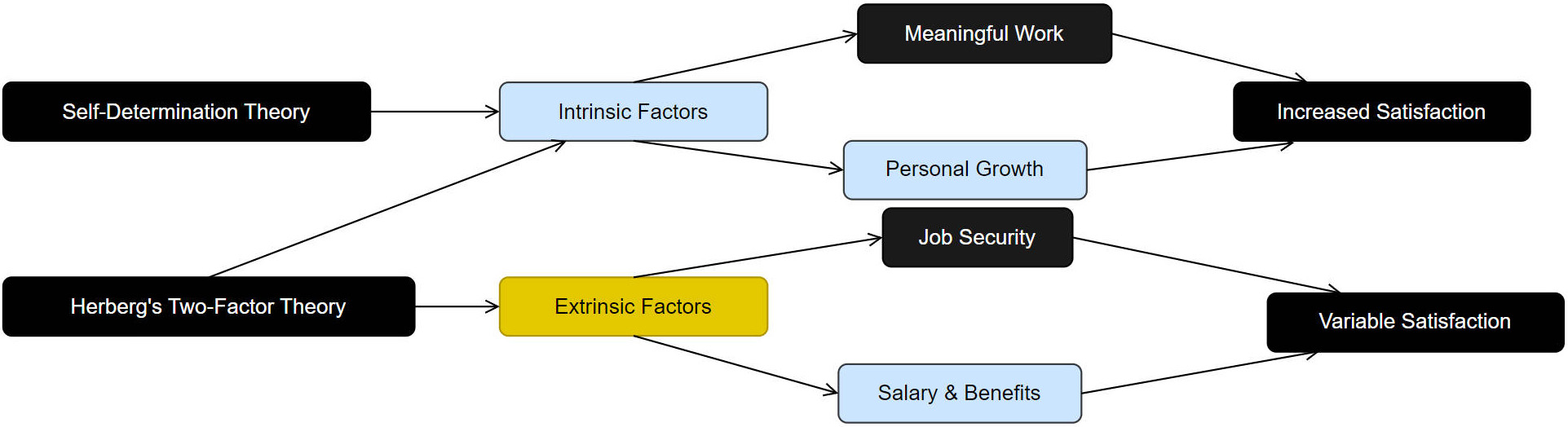
This investigation draws upon Herzberg’s two-factor theory and SDT to examine the factors that drive employee motivation and satisfaction. The theoretical framework is presented in Fig. 1, hierarchically organized to illustrate the relationships between Herzberg’s two-factor theory, SDT, and Hofstede’s cultural dimensions theory. The figure uses distinct colors to represent key constructs: intrinsic factors (blue), extrinsic factors (black), and cultural dimensions (orange). This visual representation highlights the interaction between motivational drivers and cultural influences, offering a comprehensive understanding of Gen Z’s workplace attitudes in transitional economies. Additionally, We prioritize Hofstede’s framework (over Global Leadership and Organizational Behavior Effectiveness (GLOBE) or Schwartz’s models) due to its stronger empirical validation in transitional economies (Meyer and Peng, 2016), particularly its power distance and individualism indices that align with Gen Z’s hierarchical expectations in China and egalitarian demands in Eastern Europe. Hofstede’s cultural dimensions theory is employed to analyze the cultural influences on employee motivation and satisfaction, complementing the intrinsic and extrinsic factors emphasized by Herzberg and SDT.
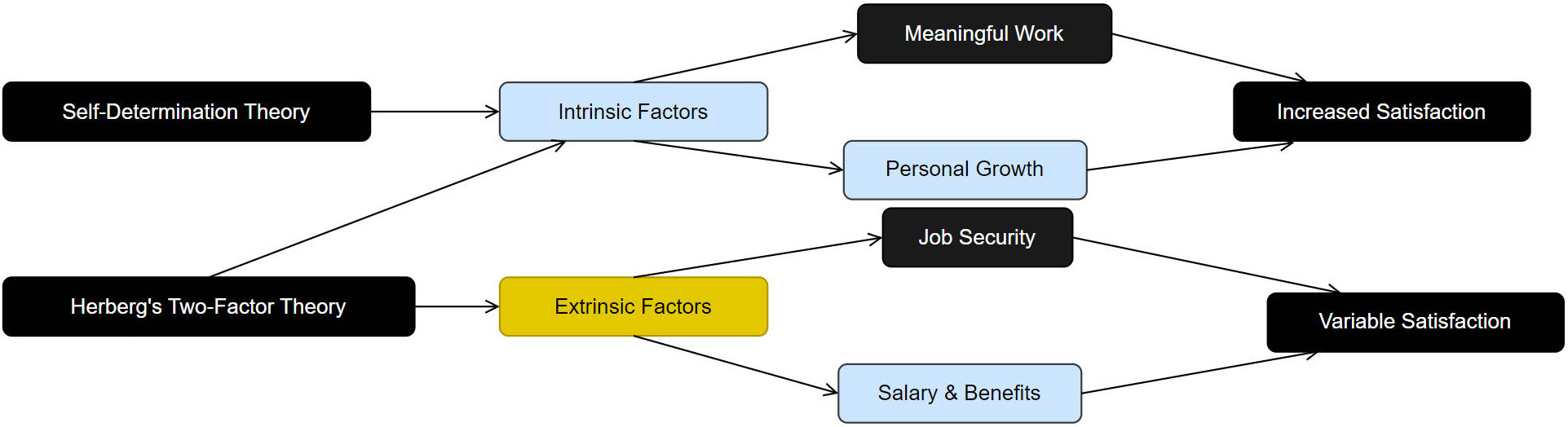 Fig. 1.
Theoretical framework of employee motivation and satisfaction.
By integrating Hofstede’s cultural dimensions theory with Herzberg’s two-factor theory and SDT, this study not only examines the direct impact of motivational factors on job satisfaction but also explores how cultural dimensions moderate these relationships. This comprehensive framework allows for a deeper analysis of the interplay between cultural context and employee motivation, providing a more nuanced understanding of Gen Z’s workplace attitudes in different transitional economies.
As illustrated in Fig. 1, intrinsic factors such as personal growth and meaningful work are hypothesized to enhance employee satisfaction, consistent with Herzberg’s motivators and the core psychological needs outlined in the SDT (Salvadorinho et al, 2024). While extrinsic factors such as salary, benefits, and job security are considered essential, they primarily function as hygiene factors, mitigating dissatisfaction rather than actively fostering satisfaction.
Gen Z, typically defined as individuals born between the mid-1990s and early 2010s, represents a growing and influential segment of the global workforce (Meyer and Peng, 2016). This cohort is characterized by its digital nativity, having been raised in an era of advanced technology and ubiquitous internet access. These experiences have profoundly influenced their communication styles, learning preferences, and approaches to work (Akbar and Amalia, 2023). Gen Z employees prioritize work-life balance, career development opportunities, and alignment with organizational values more than preceding generations (Eurofound, 2023; Meyer and Peng, 2016). They demonstrate a strong preference for workplace flexibility, continuous learning, and opportunities for both personal and professional growth (Morley et al, 2021). Additionally, Gen Z values meaningful work that aligns with their principles and provides avenues for innovation and creativity (Gelfand et al, 2007). This generation is also more likely to seek employers who foster supportive leadership, collaborative environments, and robust skill development opportunities (Loorbach and Lijnis Huffenreuter, 2013).
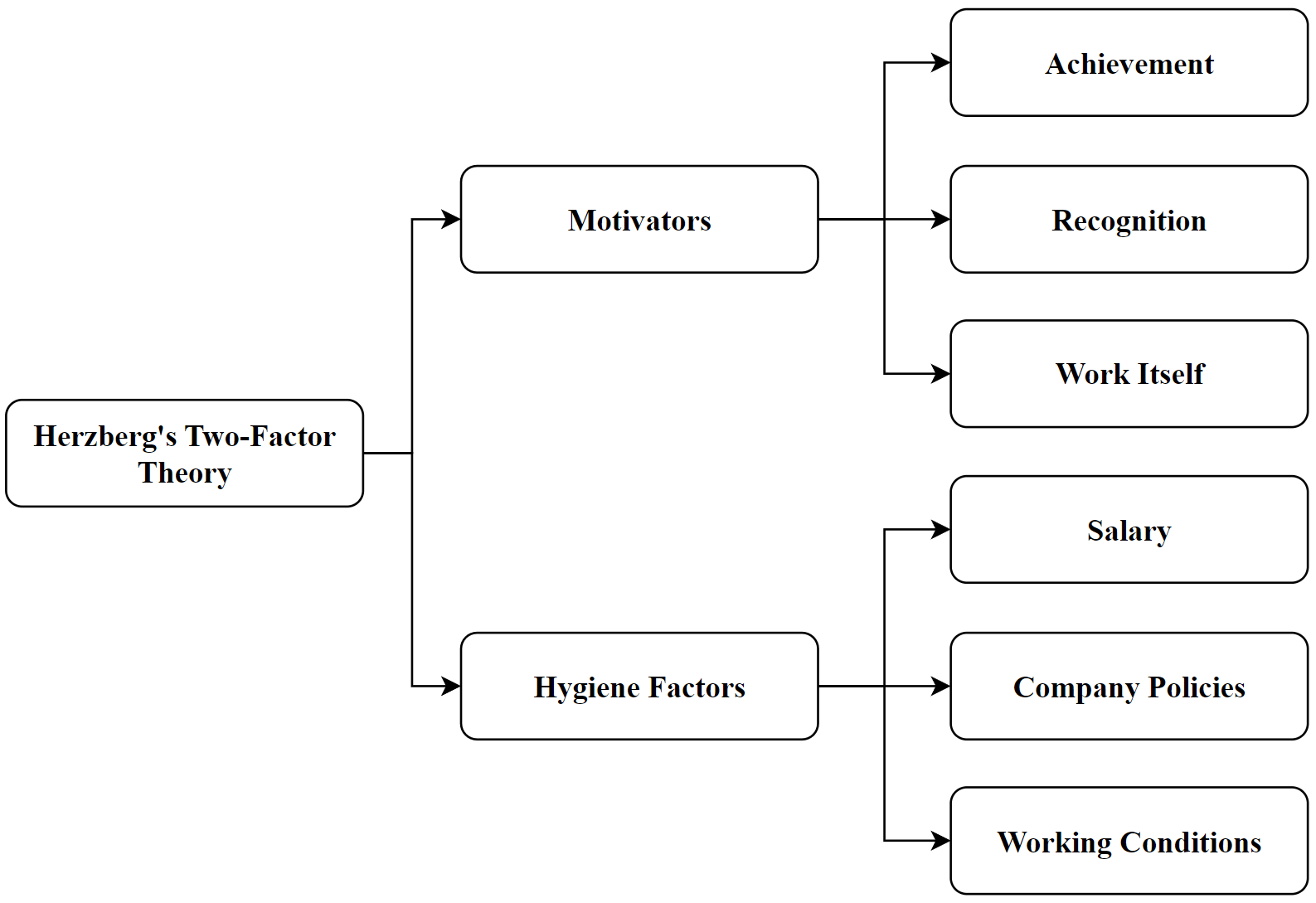
Understanding the motivation and satisfaction of Gen Z employees is essential for organizations striving to improve productivity and retain talent. Herzberg’s two-factor theory offers a valuable framework for examining these dynamics by distinguishing between two sets of factors influencing job satisfaction and dissatisfaction: motivators and hygiene factors (Hofstede Insights, 2023). Motivators—such as achievement, recognition, and the nature of the work itself—are intrinsic to the job and can significantly enhance satisfaction and motivation. Conversely, hygiene factors—including salary, company policies, and working conditions—are extrinsic and primarily function to prevent dissatisfaction rather than actively promote satisfaction (Hofstede Insights, 2023). Fig. 2 presents an overview of Herzberg’s two-factor theory, illustrating the distinction between motivators and hygiene factors and their respective impacts on employee satisfaction.
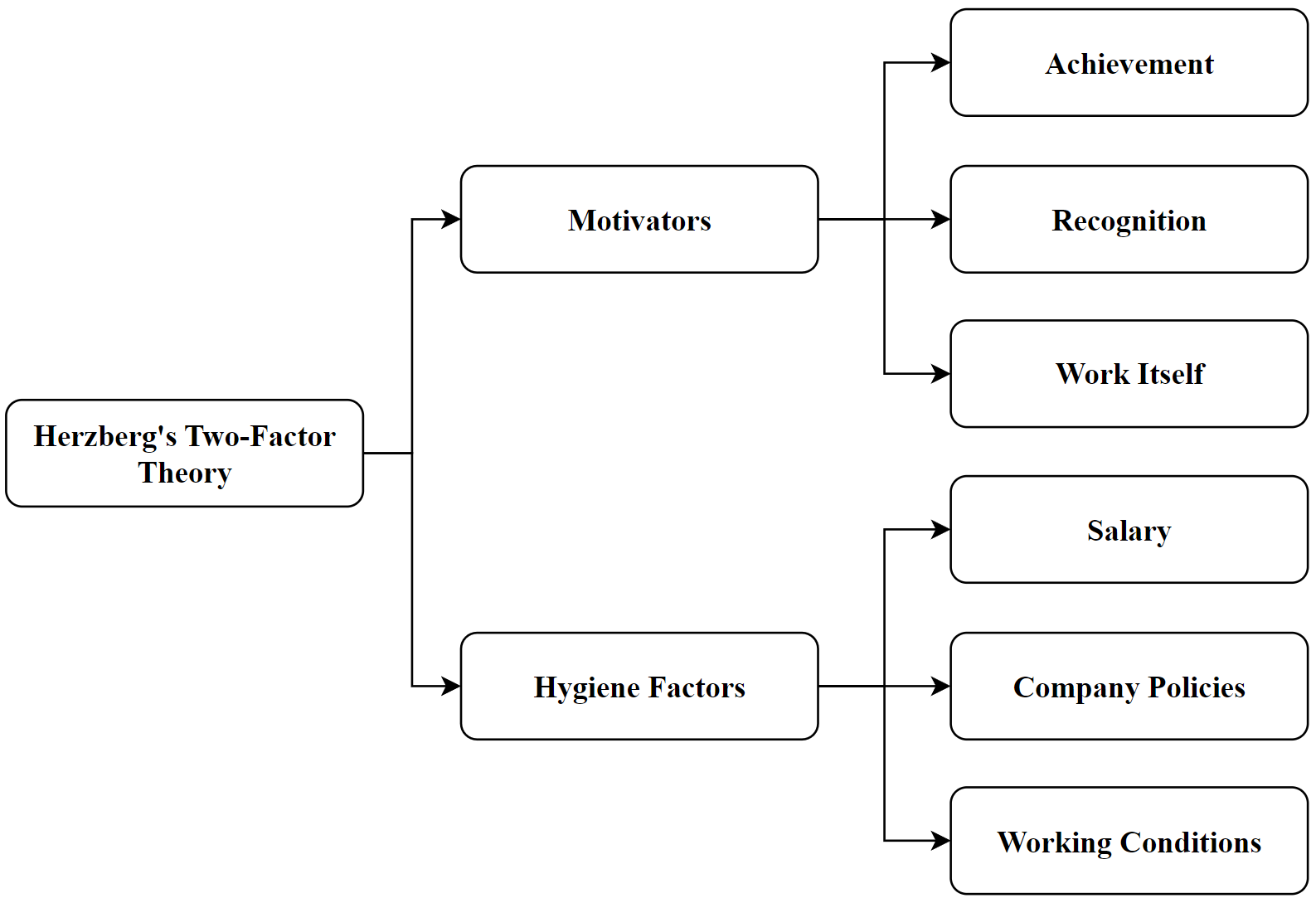 Fig. 2.
Herzberg’s two-factor theory.
In the context of Gen Z employees in transitional economies, Herzberg’s two-factor theory helps identify the specific intrinsic and extrinsic factors that are most relevant. Gen Z’s emphasis on personal growth and meaningful work aligns with Herzberg’s motivators, while their need for competitive compensation and job security corresponds with hygiene factors. By applying this theory, organizations can better understand how to structure their HR practices to address both sets of factors, thereby enhancing overall job satisfaction and reducing turnover among Gen Z employees in these dynamic environments.
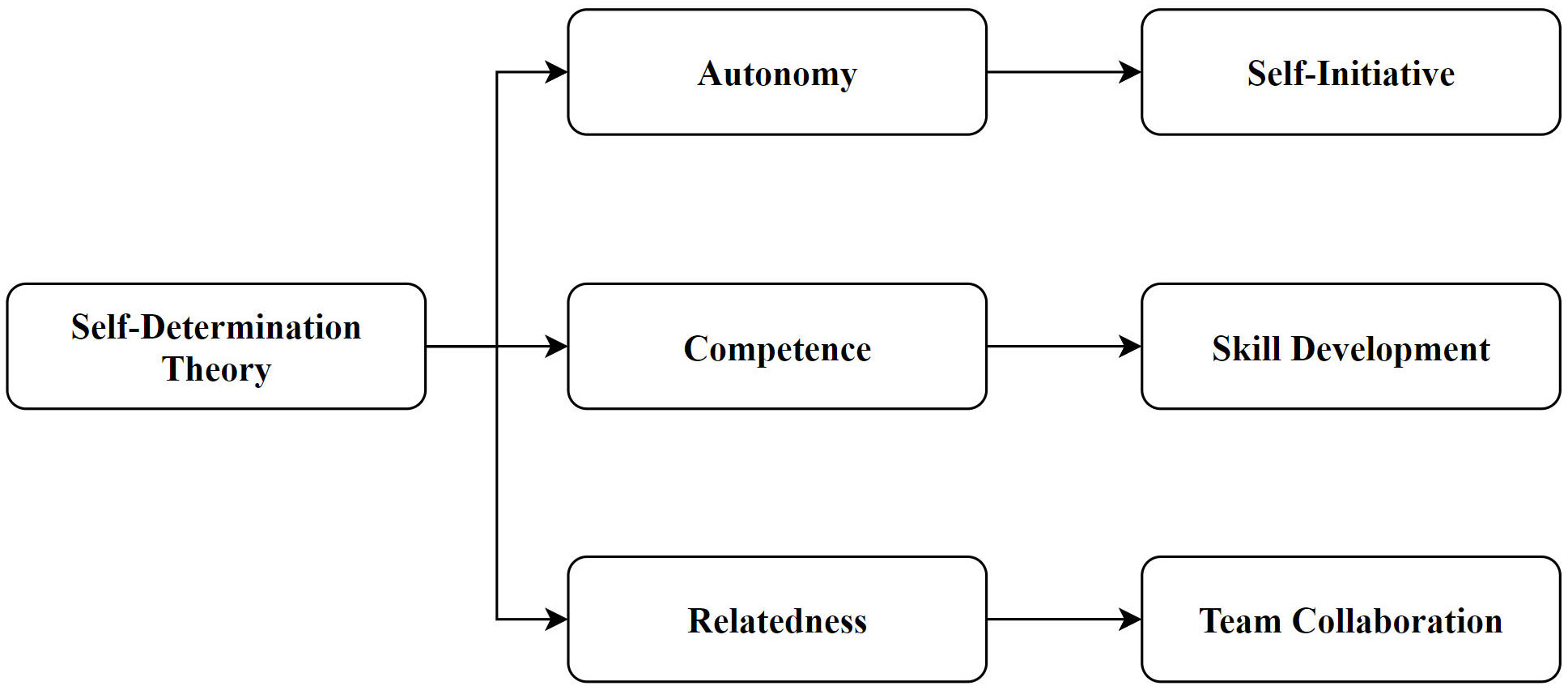
SDT, developed by Deci and Ryan (1985), further enhances our understanding by emphasizing the role of intrinsic motivation in driving human behavior. According to SDT, three basic psychological needs—autonomy, competence, and relatedness—are essential for fostering intrinsic motivation and overall well-being. Autonomy refers to the need to feel in control of actions. Competence involves the need to master tasks and develop skills, and relatedness pertains to the need to feel connected with others (Besharov and Smith, 2014). Studies within Chinese corporate settings have demonstrated that fulfilling these needs significantly enhances employee motivation and job satisfaction among Gen Z workers (Seemiller and Grace, 2016). For example, providing opportunities for skill development and fostering a collaborative work environment can satisfy the competence and relatedness needs of employees, thereby boosting their intrinsic motivation. Fig. 3 depicts a schematic diagram of SDT, outlining the three psychological needs that drive intrinsic motivation.
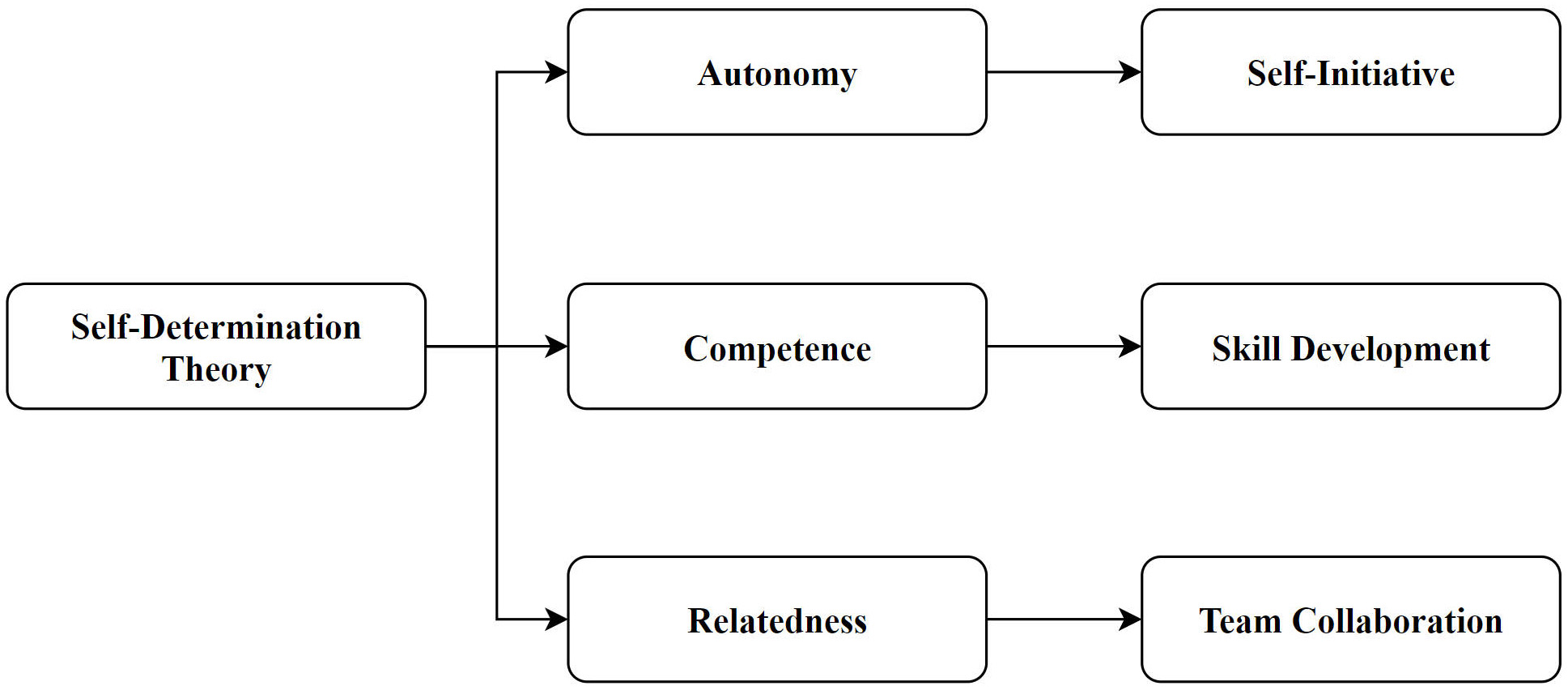 Fig. 3.
Self-determination theory.
In transitional economies, where organizations are often undergoing rapid changes, SDT provides insights into how meeting these psychological needs can sustain Gen Z’s motivation despite external economic pressures. The balance of autonomy, competence, and relatedness becomes crucial in environments that are simultaneously stable and in flux, as organizations strive to maintain employee engagement and adaptability.
To further enrich the theoretical foundation, Hofstede’s Cultural Dimensions Theory is integrated into the study. This framework facilitates a deeper understanding of how cultural differences between China and Eastern European countries influence Gen Z’s workplace attitudes and behaviors. Hofstede’s dimensions—such as individualism vs. collectivism, power distance, and uncertainty avoidance—provide critical insights into the cultural underpinnings that shape employee motivation and satisfaction. By incorporating this theory, we can better illustrate the observed variations in motivational drivers and satisfaction levels across the two distinct cultural contexts.
Integrating Hofstede’s cultural dimensions theory with Herzberg’s two-factor theory and SDT allows for a comprehensive cross-cultural analysis, highlighting how cultural norms and values interact with intrinsic and extrinsic motivational factors to influence Gen Z’s workplace attitudes in transitional economies. For example, the generational transition among Millennials and Gen Z plays a significant role in shaping workplace behavior, with cultural factors influencing how employees respond to intrinsic motivators like purpose and autonomy, as well as extrinsic motivators like rewards and recognition (Sherreitt, 2025). Research suggests that the shift toward intrinsic motivators, as supported by Herzberg’s theory, is especially relevant for Gen Z employees. They show a preference for meaningful work and career purpose, which aligns with the SDT framework, emphasizing autonomy and competence (Goodman, 2025). Furthermore, studies show that cultural dimensions, particularly in China, reveal a complex interaction between value-based leadership and intrinsic motivation, with younger generations exhibiting distinct motivational patterns compared to previous cohorts (Zhao et al, 2024).
In Eastern European contexts, cultural factors continue to shape employee attitudes, where Herzberg’s theory provides insights into the role of workplace context and management practices in retaining young employees (Serhan et al, 2024). As this region shifts economically, cultural influences are being considered in the analysis of how workplace motivation evolves across different socio-economic stages (Chen and Makki, 2024).
Moreover, the combination of SDT and Herzberg’s theory is particularly insightful when examining the work satisfaction of Gen Z employees, especially in sectors like IT and hospitality in transitional economies like Vietnam (Truong, 2023). Further, studies show that Hofstede’s dimensions continue to guide the understanding of organizational behaviors, particularly in multinational settings where employees from diverse cultures work together, adapting their values to the local workplace norms (Hall, 2022). The interaction between generational values and cultural dimensions, as discussed by Reisinger and Dimanche (2010), continues to provide vital insights into cross-cultural management and employee retention strategies in transitional economies.
By integrating Hofstede’s cultural dimensions theory with Herzberg’s two-factor theory and SDT, this study offers a richer framework for understanding the complex motivational landscape of Gen Z in transitional economies. The alignment of cultural values, work ethics, and motivational drivers offers a comprehensive perspective on how to effectively manage and motivate employees from diverse cultural backgrounds.
Integrating Herzberg’s two-factor theory, SDT, and Hofstede’s cultural dimensions theory offers a robust framework for analyzing the multifaceted nature of Gen Z employee motivation and satisfaction in transitional economies. This interdisciplinary approach enables a comprehensive examination of intrinsic and extrinsic factors, as well as the cultural influences that shape Gen Z’s workplace attitudes.
Employee satisfaction, a multidimensional construct, encompasses various aspects of an employee’s experience within an organization. It is generally defined as the degree to which employees feel fulfilled and content with their job roles and workplace environment. Key dimensions of employee satisfaction include compensation, career development opportunities, training, leadership quality, collegial relationships, and the nature of the work itself (Berber et al, 2017). Recent research has demonstrated that higher levels of employee satisfaction are associated with increased productivity, reduced turnover rates, and enhanced organizational commitment (Chen et al, 2023). In Chinese enterprises, factors such as competitive compensation, opportunities for professional growth, and supportive leadership have been identified as critical in fostering high job satisfaction among Gen Z employees (Zhou et al, 2025).
Transitional economies, characterized by the shift from centrally planned systems to market-oriented structures, present unique challenges and opportunities for employee motivation and satisfaction (Arrindell, 2003). In China, rapid economic growth and integration into the global market have transformed organizational practices, emphasizing innovation and employee empowerment (Spector, 1997). Conversely, Eastern European firms, operating within post-socialist transitional economies, have been adapting to market-driven management practices while contending with economic uncertainties and varying degrees of cultural adaptation (Liu et al, 2022).
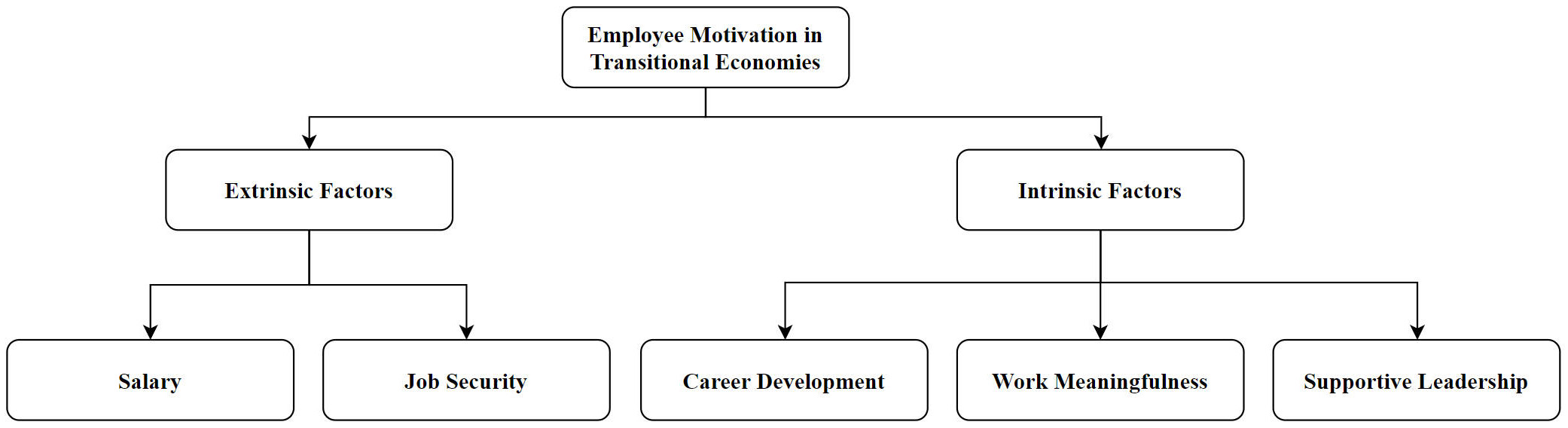
Research in China has shown that while extrinsic factors such as salary and job security remain significant, intrinsic factors like career development opportunities and the meaningfulness of work are increasingly vital for Gen Z employees (Yang et al, 2024). Similarly, in Eastern Europe, studies underscore the growing importance of professional growth opportunities and supportive leadership in enhancing employee satisfaction (Kozminski, 1995). Fig. 4 highlights the primary extrinsic and intrinsic factors influencing employee motivation in transitional economies, including salary, job security, career development, work meaningfulness, and supportive leadership.
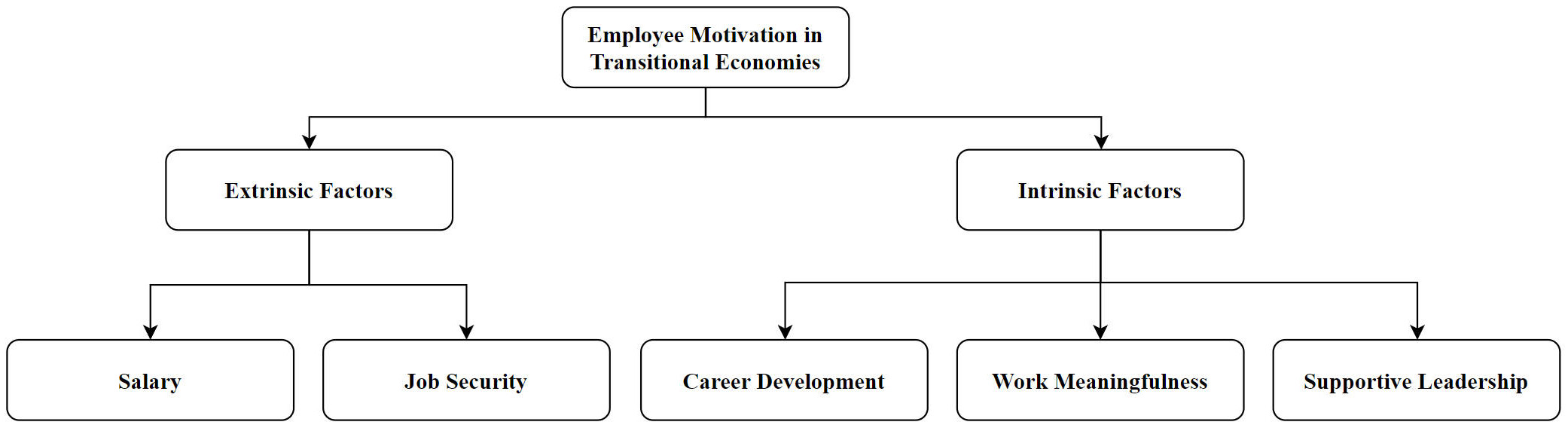 Fig. 4.
Factors influencing employee motivation in transitional economies.
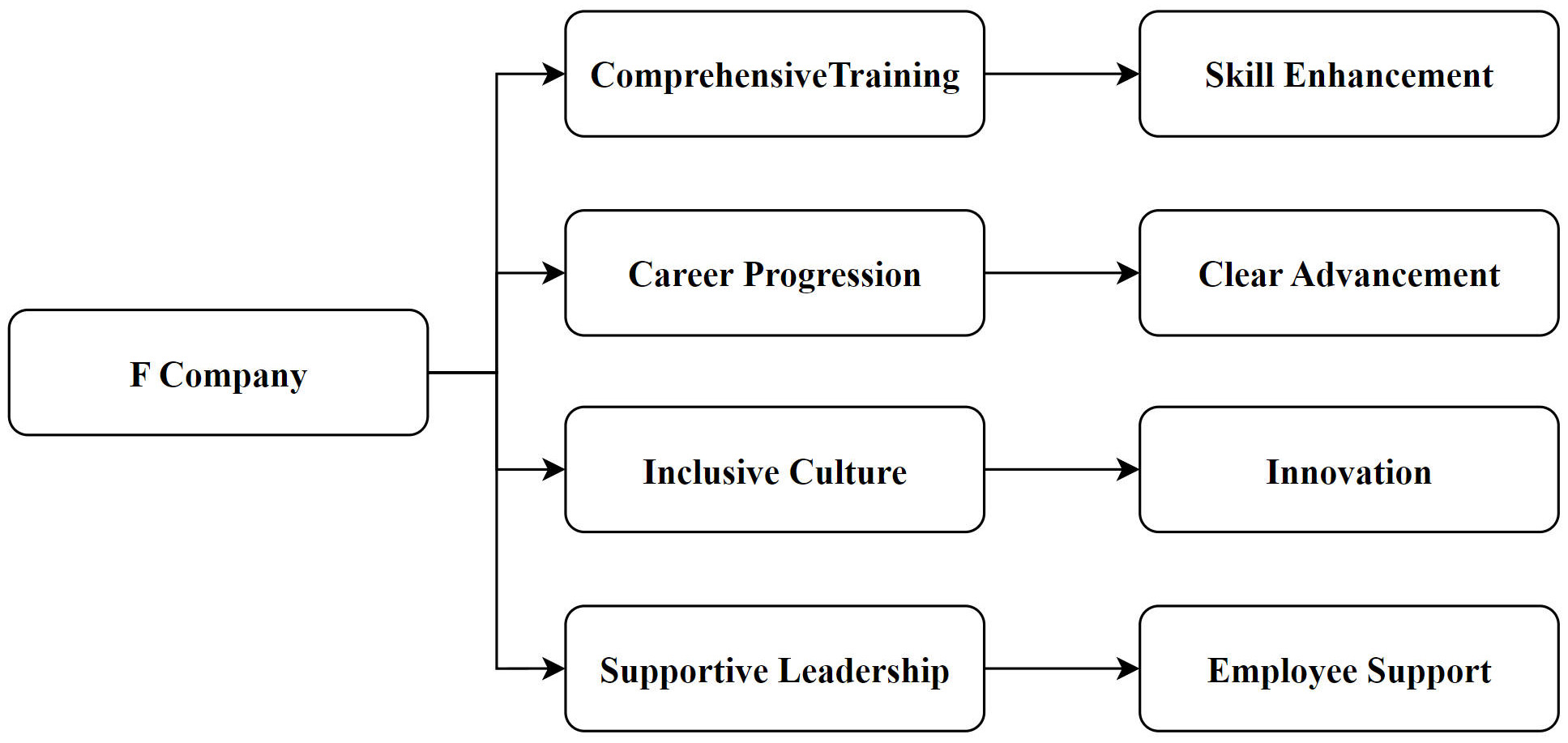
Focusing specifically on Chinese enterprises, F Company has adopted modern human resource practices designed to attract and retain Gen Z talent. These initiatives include comprehensive training programs, well-defined career progression pathways, and the cultivation of an inclusive and innovative workplace culture (Poór et al, 2020). Empirical research conducted within F Company indicates that career development opportunities and supportive supervisor leadership play a significant role in enhancing job satisfaction among Gen Z employees (Wirth and Pforr, 2022).
For example, F Company’s structured training programs not only improve the skills of the employees but also provide a sense of accomplishment and progression, addressing Gen Z’s intrinsic motivation for personal growth and development (Eurostat, 2021). Furthermore, the company’s focus on supportive leadership and a collaborative work environment fosters a sense of relatedness and community among employees, which further enhances job satisfaction and loyalty. Fig. 5 illustrates the core HR practices implemented by F Company, highlighting comprehensive training programs, career progression opportunities, an inclusive workplace culture, and supportive leadership.
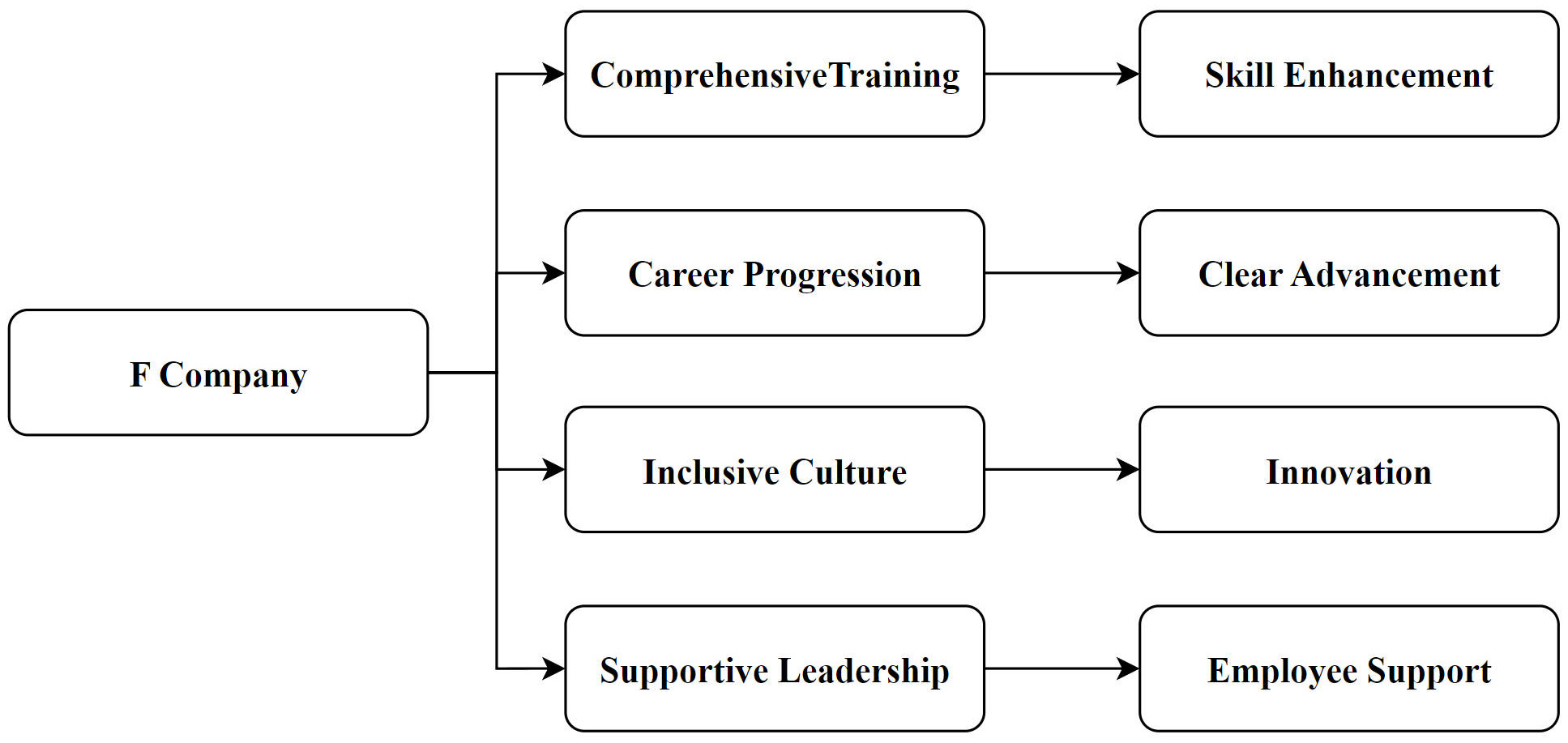 Fig. 5.
Human Resources (HR) practices in F Company.
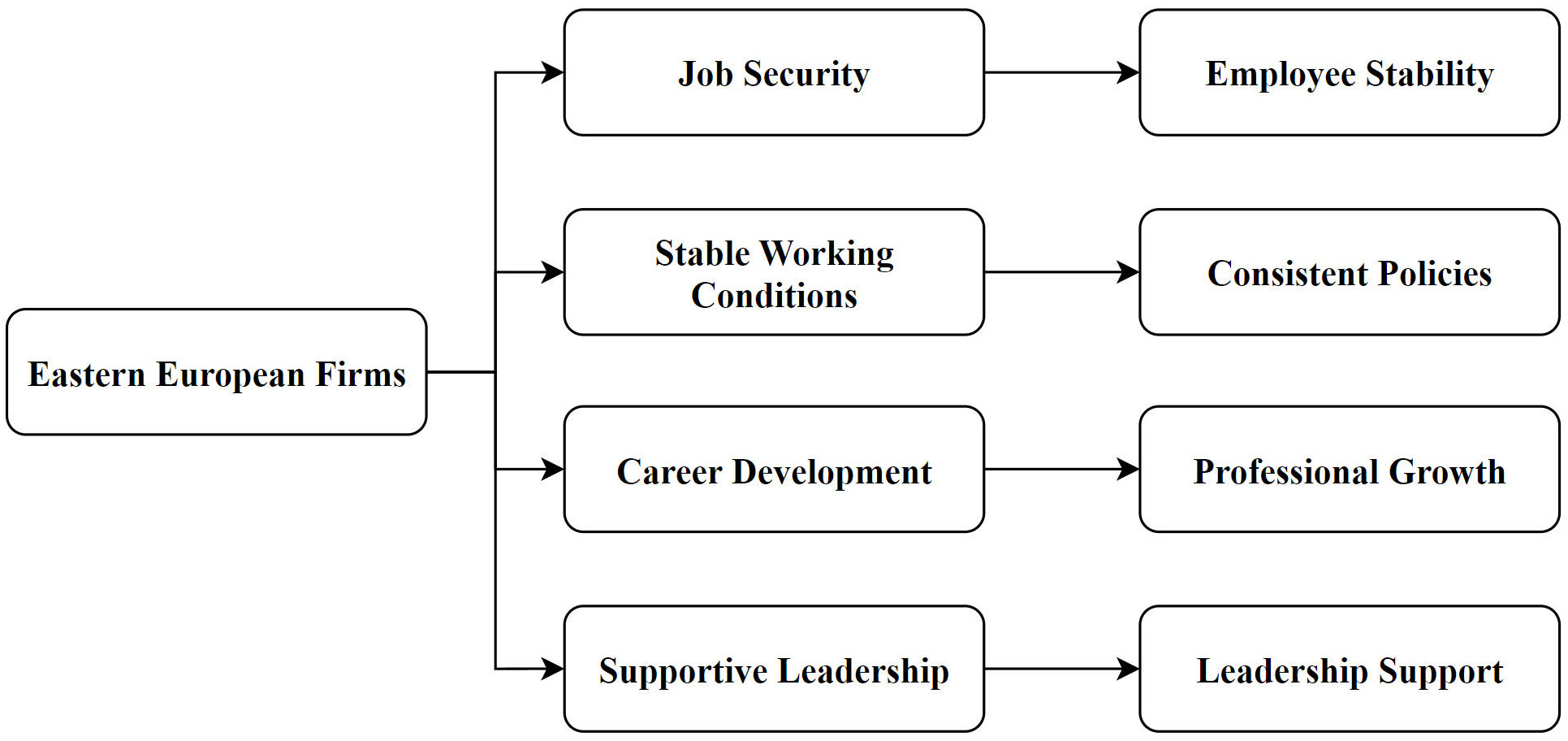
While this study primarily focuses on Gen Z employees within a Chinese enterprise, existing literature on Eastern European firms provides valuable comparative insights. Eastern European organizations have been gradually adopting market-oriented management practices, which include enhanced employee engagement strategies and the implementation of performance-based incentives (Berber et al, 2017). These practices are aimed at increasing employee motivation and satisfaction in an increasingly competitive global market. Eastern European employees value job security and stable working conditions highly, reflecting the historical context of economic transitions in the region (Wang et al, 2024). However, recognition of the importance of career development opportunities and supportive leadership in fostering employee satisfaction is increasing (Wang et al, 2024). This dual focus on stability and growth aligns with the evolving needs of Gen Z employees who seek both security and opportunities for personal and professional advancement (Berber et al, 2017). Fig. 6 compares the primary factors affecting employee satisfaction in Eastern European firms, emphasizing job security, stable working conditions, career development, and supportive leadership.
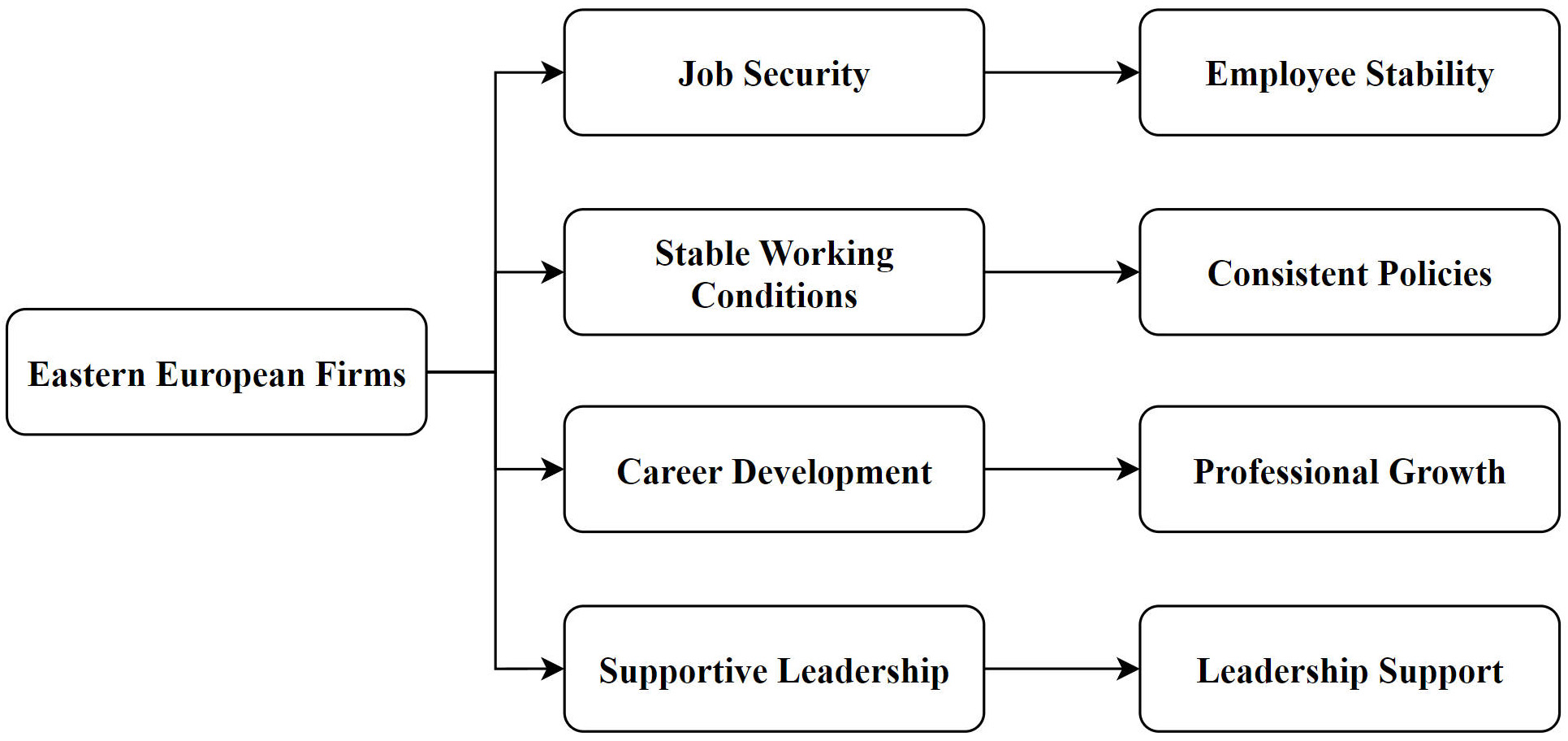 Fig. 6.
Factors influencing employee satisfaction in Eastern European firms.
In summary, the literature underscores the importance of both intrinsic and extrinsic factors in shaping Gen Z employee motivation and satisfaction, particularly within transitional economies like China. Herzberg’s two-factor theory and SDT provide robust frameworks for understanding these dynamics. While extrinsic factors such as salary and job security are foundational, intrinsic factors, such as career development, training, and supportive leadership play increasingly significant roles in enhancing employee satisfaction. The comparative insights from Eastern European firms, though based on existing literature, highlight the universal applicability of these motivational factors while also emphasizing the influence of cultural and economic contexts. This study builds on these insights by focusing on Gen Z employees in F Company, exploring the specific motivational drivers and satisfaction determinants that contribute to their engagement and productivity.
To comprehensively examine the motivation and satisfaction levels of Gen Z employees at F Company in China, this study employs a quantitative research approach using a structured questionnaire. The research design is grounded in Herzberg’s two-factor theory and SDT, as both provide robust frameworks for understanding employee motivation and satisfaction.
The decision to adopt a quantitative methodology was informed by the need to statistically analyze the relationships between various motivational factors and job satisfaction among a larger sample of Gen Z employees. Quantitative surveys enable the collection of standardized data, facilitating objective comparisons and generalizations across the population. This methodological choice ensures that the findings are both valid and reliable, providing robust insights into the motivational dynamics of Gen Z employees in a transitional economy.
Herzberg’s two-factor theory distinguishes between intrinsic motivators and extrinsic hygiene factors, offering a comprehensive perspective on the internal and external drivers of job satisfaction. This framework is particularly relevant for Gen Z employees, who prioritize meaningful work and career development while also valuing competitive compensation and job security. SDT complements this approach by emphasizing the role of intrinsic motivation, particularly the significance of autonomy, competence, and relatedness in fostering employee engagement and satisfaction. Together, these theories provide a holistic framework for exploring the multifaceted nature of motivation and satisfaction among Gen Z employees in the dynamic contexts of China and Eastern Europe. While alternative theories were considered, Herzberg’s and SDT’s dual focus on intrinsic and extrinsic factors makes them particularly well-suited for this comparative analysis in transitional economies.
Salary is traditionally viewed as an extrinsic factor (i.e., a hygiene factor in Herzberg’s two-factor theory) that prevents dissatisfaction rather than actively fostering satisfaction. However, research on Gen Z shows that while this generation prioritizes meaningful work and career development, they still view competitive compensation as a necessary baseline for remaining in a role. In transitional economies—where rapid changes in labor markets can create heightened uncertainty—salary can play a stabilizing role, offering both financial security and a sense of being valued by the employer (Chen et al, 2023).
Empirical findings further suggest that Gen Z employees compare their compensation not only within their local context but also in a broader globalized marketplace, thanks to technology and social media facilitating greater transparency about pay scales. In China, for instance, high-intensity competition among technologically skilled workers can make salary levels a critical factor for initial attraction and retention (Morley et al, 2021). Meanwhile, in Eastern Europe’s transitional settings, uncertainty from ongoing market reforms can intensify concerns about financial stability (Berber et al, 2017).
Therefore, while salary alone may not guarantee high levels of intrinsic motivation, it can still serve as a fundamental criterion that influences an employee’s decision to stay, remain engaged, and avoid dissatisfaction. Thus, we hypothesize:
H1: Salary has a positive impact on job satisfaction among Gen Z employees.
Herzberg’s two-factor theory emphasizes that motivators—such as opportunities for advancement, personal growth, and recognition—can significantly boost satisfaction. Likewise, SDT underscores employees’ need for competence, which can be fulfilled through career development programs and skill enhancement (Liu et al, 2022). Studies focusing on Gen Z highlight that this cohort places a strong emphasis on learning and career progression, often regarding clear growth opportunities as a non-negotiable component of any long-term employment relationship (Vujačić and Petrović-Vujačić, 2020).
In transitional economies, organizations undergoing rapid economic changes or reforms may need to adapt their strategies to attract and retain Gen Z, who crave continuous learning and future-oriented development paths. In China, for example, high-tech companies often differentiate themselves by offering structured career ladders and innovation-based roles that align with Gen Z’s desire for professional advancement (Loorbach and Lijnis Huffenreuter, 2013). Eastern European firms are similarly reconfiguring management practices to include skill-building opportunities, which can be critical for engaging younger employees in post-socialist contexts (Morley et al, 2021).
Given this context, we propose:
H2: Career development opportunities positively influence job satisfaction among Gen Z employees.
Training programs can be considered a subset of career development but often warrant independent consideration because they directly build employees’ skill sets and competencies—addressing the SDT need for competence (Deci and Ryan, 1985). In many transitional economies, the pace of technological and organizational change makes ongoing skill enhancement critical, which can bolster employees’ perceptions of their future employability (Meyer and Peng, 2016).
For Gen Z, who tend to be both digitally savvy and eager for new challenges, structured training programs often signal an employer’s commitment to their professional growth. Empirical evidence shows that when such programs are well-aligned with employees’ roles and aspirations, they not only improve immediate performance but also foster a sense of long-term engagement and loyalty (Spector, 1997). Although some studies (including preliminary insights in our work) suggest training might have a modest rather than a dominant effect on satisfaction in certain Chinese firms, its role in holistic development for younger employees remains noteworthy—especially in broader transitional contexts where skill gaps can be prominent.
Thus, even if the effect might be nuanced, we still hypothesize:
H3: Training programs enhance job satisfaction among Gen Z employees.
Leadership style plays a pivotal role in employee motivation across generational cohorts, but Gen Z is particularly sensitive to leadership approaches that facilitate autonomy, provide mentorship, and acknowledge individual contributions (Liu et al, 2022). In Herzberg’s framework, leadership tends to act as a hygiene factor if it is purely directive, yet it can also be a strong motivator when leaders actively support employees’ growth and well-being.
In transitional economies, such as China and those in Eastern Europe, supportive leadership helps mitigate the uncertainty that often accompanies rapid economic reforms and reorganizations (Poór et al, 2020). By providing clear guidance, feedback, and psychological safety, leaders can fulfill the relatedness and autonomy needs of Gen Z workers (Francis and Hoefel, 2018). Empirical studies in Chinese enterprises indicate that supportive supervisory styles correlate strongly with job satisfaction and lower turnover among young professionals (Arrindell, 2003). In Eastern Europe, younger employees similarly benefit from mentoring relationships and transparent management practices, which build trust in environments where historical changes may have eroded confidence in hierarchical structures (Chen et al, 2023).
Hence:
H4: Supportive leadership positively affects job satisfaction among Gen Z employees.
Alongside leadership, peer relationships can be a strong facilitator of both intrinsic and extrinsic motivation. Within Herzberg’s typology, colleague relationships are often categorized under “working conditions”, which can prevent dissatisfaction but also foster a sense of belonging if they are particularly supportive (Zhou et al, 2025). SDT similarly emphasizes the role of “relatedness”, pointing out that individuals thrive when they feel connected to others in their environment (Liu et al, 2022).
Gen Z is often described as a generation that values collaboration, social connection, and inclusivity in the workplace (Vujačić and Petrović-Vujačić, 2020). In collectivist cultures like China’s, harmonious interpersonal relationships can bolster group identity and mutual support, which in turn enhances job satisfaction (Arrindell, 2003). Although some Eastern European societies may lean more individualistic than China, a legacy of collectivist practices from the socialist era can still manifest in strong community ties and teamwork expectations, particularly in smaller or family-run enterprises (Spector, 1997).
Therefore, a collegial and supportive peer environment is likely to play a significant role in raising job satisfaction:
H5: Positive relationships with colleagues enhance job satisfaction among Gen Z employees.
One of the key motivators in Herzberg’s theory is “the work itself”, referring to how meaningful, interesting, or creative a given role is. Gen Z employees, having grown up in an era of rapid technological evolution and heightened global awareness, often seek roles that not only challenge them cognitively but also resonate with their personal values (Vujačić and Petrović-Vujačić, 2020). In SDT terms, a job that fulfills autonomy and competence needs can significantly enhance an individual’s intrinsic motivation (Liu et al, 2022).
In transitional economies—where new industries are burgeoning, state-owned firms are being restructured, and multinational corporations are entering the market—there is a particular emphasis on innovation and adaptability. For instance, in Chinese high-tech firms, opportunities to work on cutting-edge projects give Gen Z employees a sense of purpose and professional identity (Arrindell, 2003). In Eastern Europe, meaningful tasks that contribute to economic redevelopment or global competitiveness can similarly imbue Gen Z with a strong sense of making a difference (Chen et al, 2023).
Given this generational preference for alignment between personal values and job roles:
H6: The nature of the work itself positively influences job satisfaction among Gen Z employees.
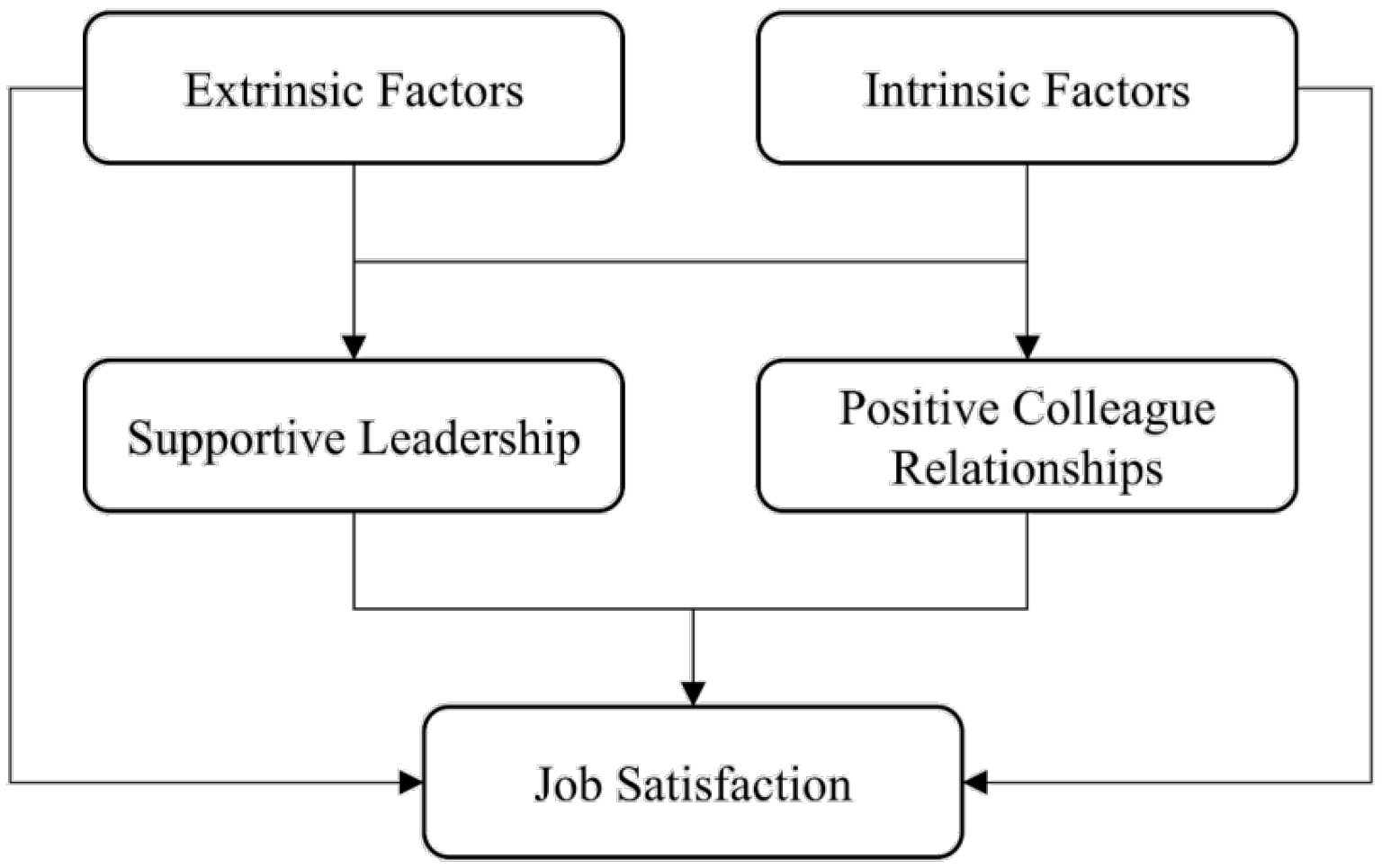
Based on the above rationale, our research model incorporates these six core hypotheses, reflecting both intrinsic motivators (career development, work itself) and extrinsic factors (salary, supportive leadership) as primary drivers of job satisfaction. We additionally acknowledge the importance of training and colleague relationships as supplementary elements that can support or amplify these effects. The subsequent sections detail the quantitative instrument design (survey items), data collection procedures, and the analytical techniques employed to test these hypotheses rigorously.
The research model is illustrated in Fig. 7, which outlines the hypothesized relationships between various motivational factors and employee satisfaction. The model posits that both extrinsic factors (such as salary and job security) and intrinsic factors (including career development and purposeful work) significantly influence overall job satisfaction among Gen Z employees. Furthermore, supportive leadership and positive relationships between colleagues are hypothesized to mediate the relationship between these factors and job satisfaction.
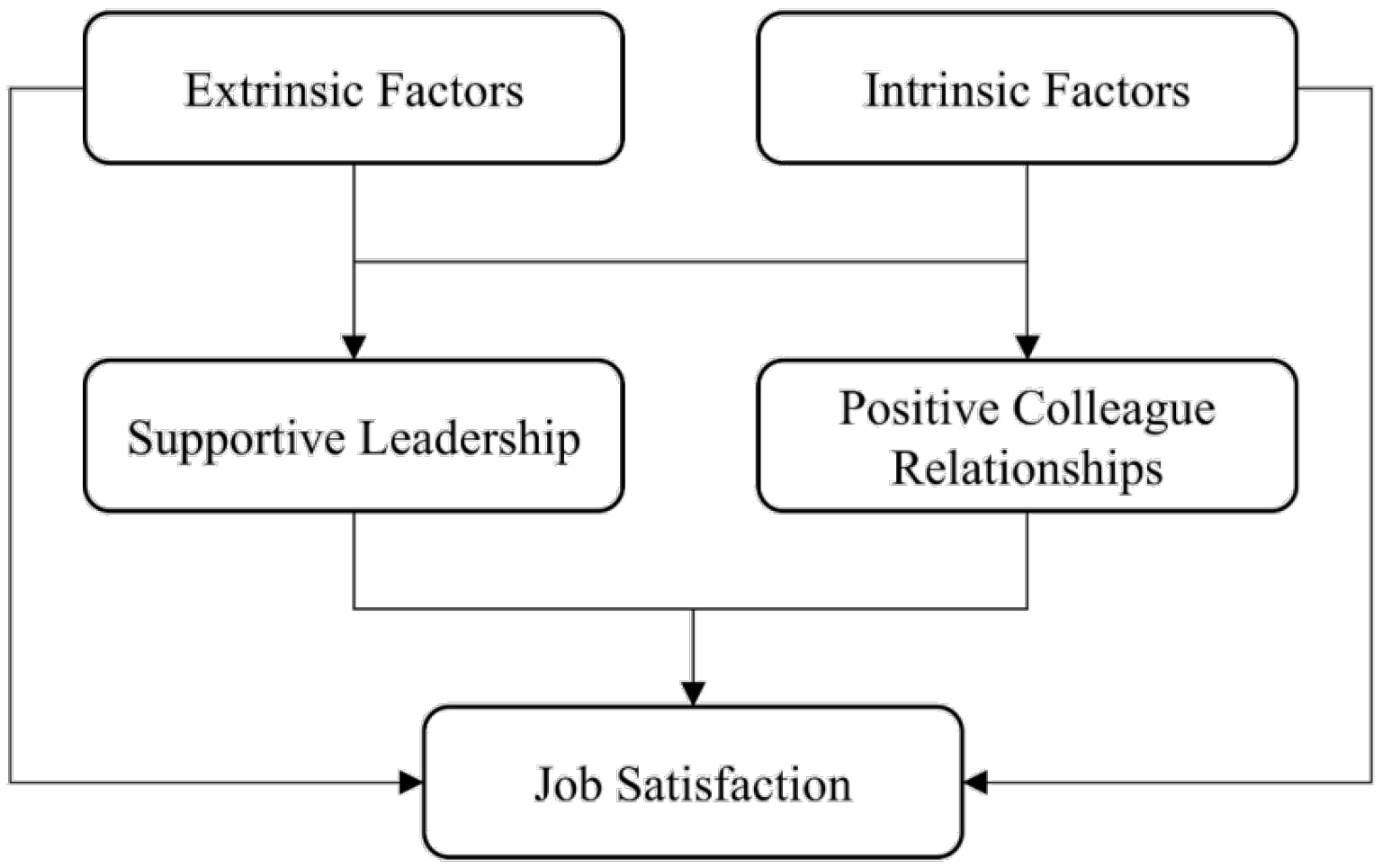 Fig. 7.
Research model of employee motivation and satisfaction.
Based on this model, the study formulates several hypotheses aimed at elucidating the key drivers of job satisfaction among Gen Z employees in F Company. These hypotheses are as follows:
• H1: Salary has a positive impact on job satisfaction among Gen Z employees.
• H2: Career development opportunities positively influence job satisfaction among Gen Z employees.
• H3: Training programs enhance job satisfaction among Gen Z employees.
• H4: Supportive leadership positively affects job satisfaction among Gen Z employees.
• H5: Positive relationships with colleagues enhance job satisfaction among Gen Z employees.
• H6: The nature of the work itself positively influences job satisfaction among Gen Z employees.
The questionnaire was developed through a meticulous, multi-step process to ensure comprehensive coverage and reliability of the constructs under study. Initially, items were generated based on an extensive review of the literature and theoretical frameworks, specifically Herzberg’s two-factor theory, SDT, and Hofstede’s cultural dimensions theory. This approach ensured that both intrinsic and extrinsic motivational factors, along with cultural influences, were adequately addressed.
To enhance relevance and clarity, preliminary interviews were conducted with 10 frontline Gen Z employees at F Company. These interviews provided qualitative insights into the specific motivational factors and cultural nuances relevant to Gen Z within the context of a transitional economy. Based on these insights, items were refined to reflect the unique workplace dynamics experienced by this cohort.
Following item generation, the questionnaire underwent pilot testing with a small subset of 20 employees to evaluate clarity, relevance, and reliability. Feedback from the pilot study led to minor revisions, such as rephrasing ambiguous items and adjusting response options for greater specificity and accuracy. For example, item A1 was revised from “I receive good pay” to “The compensation I receive is competitive compared to similar roles in the industry”, enhancing specificity and comparability.
The final questionnaire comprised 18 items distributed across six dimensions: Salary satisfaction, career development, training programs, supportive leadership, positive relationships between colleagues, and work satisfaction, as detailed in Table 1. Each dimension was assessed using three items, ensuring balanced representation of each construct.
Validation was further ensured through confirmatory factor analysis (CFA) and
reliability testing using Cronbach’s alpha. The CFA confirmed the factor
structure, while all dimensions demonstrated high internal consistency
(Cronbach’s alpha
Data were collected electronically via an online survey platform, facilitating ease of access and participation. A random sampling strategy was employed to select 128 Gen Z employees from various departments within F Company, including sales, marketing, operations, HR, and IT. This approach ensured diversity and representativeness, enhancing the generalizability of the findings. A total of 160 surveys were distributed, achieving an 80% response rate with 128 completed surveys.
Participants were required to be within the Gen Z age range (born between the mid-1990s and early 2010s) and currently employed at F Company. The sample size was determined through power analysis to ensure sufficient statistical power for detecting significant effects.
Ethical considerations were rigorously observed, with participants providing informed consent and assurances of confidentiality. The study received ethical approval from F Company’s Research Ethics Committee, ensuring compliance with established research standards.
The variables in this study were measured across six dimensions: salary, career development, training, supervisor leadership, colleagues, and work itself. Each dimension was operationalized using established scales from recent literature, ensuring both reliability and validity. The measurement scales are detailed in Table 2.
| Variable | Number | Item |
| Salary | A1 | The compensation I receive is competitive compared to similar roles in the industry. |
| A2 | I am satisfied with the salary structure at F Company. | |
| A3 | The benefits provided by F Company adequately meet my financial needs. | |
| Career development | B1 | F Company offers ample opportunities for career advancement. |
| B2 | I am satisfied with the professional growth opportunities provided by F Company. | |
| B3 | The training programs at F Company effectively enhance my skills and career prospects. | |
| Training | C1 | The training I receive at F Company is relevant to my job. |
| C2 | I have access to continuous learning opportunities at F Company. | |
| C3 | The training programs at F Company are well-organized and beneficial. | |
| Supportive leadership | D1 | My supervisor provides the support I need to perform my job effectively. |
| D2 | Leadership at F Company fosters a positive and motivating work environment. | |
| D3 | I feel valued and recognized by my supervisors at F Company. | |
| Positive relationships with colleague | E1 | I have strong, supportive relationships with my colleagues at F Company. |
| E2 | The teamwork at F Company is collaborative and efficient. | |
| E3 | I enjoy working with my colleagues and feel part of a cohesive team. | |
| Work | F1 | The tasks I perform at F Company are meaningful and engaging. |
| F2 | I find my work at F Company intellectually stimulating. | |
| F3 | The nature of my job at F Company aligns with my personal interests and values. |
Note: All items were measured on a 5-point Likert scale ranging from 1 (Strongly Disagree) to 5 (Strongly Agree).
The decision to adopt a quantitative methodology was informed by the need to statistically analyze the relationships between various motivational factors and job satisfaction among a larger sample of Gen Z employees. Quantitative surveys enable the collection of standardized data, facilitating objective comparisons and generalizations across the population. A sample size of 128 employees was determined through power analysis to ensure sufficient statistical power for detecting significant effects. Furthermore, random sampling across various departments and roles within F Company was employed to enhance the representativeness and reliability of the findings. These methodological choices ensured that the results of the study were both valid and reliable, providing robust insights into the motivational dynamics of Gen Z employees in a transitional economy.
To ensure the robustness and validity of the findings, several statistical techniques were applied using the SPSS software 22.0 (IBM Corp., Armonk, NY, USA). The analysis process included descriptive statistics, reliability analysis, CFA, and regression analyses. Detailed mathematical functions and equations relevant to these techniques are provided below.
Data collection was conducted through an online survey platform, ensuring ease of access and participation for respondents. A random sampling strategy was implemented to minimize selection bias and enhance the generalizability of the results. Participants were drawn from a range of departments, including sales, marketing, operations, HR, and IT, to capture diverse perspectives and workplace experiences. Eligibility criteria required participants to be within the Gen Z age range (born between the mid-1990s and early 2010s) and currently employed at F Company. The response rate was 80%, with 128 completed surveys out of 160 distributed, yielding a robust dataset for analysis.
Reliability analysis was performed using Cronbach’s alpha method to assess the internal consistency of the measurement scales. The value of Cronbach’s alpha was calculated using the following formula:
where
All scales demonstrated acceptable reliability (
CFA was conducted to validate the factor structure of the questionnaire. The analysis was performed using structural equation modeling (SEM) to assess the model fit indices, including the comparative fit index (CFI), Tucker-Lewis index (TLI), and root mean square error of approximation (RMSEA). The model fit was considered acceptable if CFI and TLI values were above 0.90 and RMSEA was below 0.08.
where
Following the validation of the measurement model, regression analyses were performed to test the hypotheses, examining the relationships between the independent variables (salary, career development, training, supportive leadership, positive relationships between colleagues, and work itself) and the dependent variable (job satisfaction). The general form of the regression equation used as follows:
where
Additionally, hierarchical regression was employed to assess the mediating effects of supportive leadership and positive relationships between colleagues on the relationship between the independent variables and job satisfaction. The mediation analysis was conducted using the steps outlined and further validated using the Sobel test to determine the significance of the indirect effects
where
F Company, as a leading high-tech enterprise in China, exclusively employs individuals with at least a bachelor’s degree, with the majority of employees holding graduate degrees. This educational background underscores the company’s emphasis on expertise and advanced skills, which are critical in the high-tech industry. In this study, the years of experience among the employees were adjusted to reflect a distribution typical of a dynamic, innovative environment. A random sampling strategy was employed to ensure that the 128 frontline employees surveyed were representative of the broader employee population within F Company. Participants were selected across various departments and roles to capture a diverse range of experiences and perspectives. The demographic profile of the sample is summarized in Table 3.
| Category | Percentage (%) | |
| Gender | Male | 54.4 |
| Female | 45.6 | |
| Age | 40.6 | |
| 25–29 | 41.4 | |
| 30–34 | 18.0 | |
| Education level | Bachelor’s degree | 70.3 |
| Master’s degree | 29.7 | |
| Years of experience | 20.3 | |
| 2–5 years | 44.5 | |
| 5–10 years | 25.0 | |
| 10.2 | ||
| Department | Sales | 30.5 |
| Marketing | 25.0 | |
| Operations | 20.3 | |
| Human resources | 8.6 | |
| IT | 15.6 | |
The data collection process was meticulously planned to ensure the reliability and validity of the findings. Several statistical techniques were employed to ensure the robustness and validity of the findings during data analysis. Initially, descriptive statistics were employed to summarize the basic characteristics of the data, providing an overview of the respondents’ demographics and their responses to the survey items. This included the calculation of means, standard deviations, and frequency distributions for all variables.
The frequency distributions for categorical variables, such as gender, age groups, education level, years of experience, and department are detailed in Table 3. These distributions highlight the diversity within the sample and provide context for interpreting the relationships between demographic factors and employee motivation and satisfaction.
Following the demographic analysis, descriptive statistics were conducted to
summarize the central tendencies and dispersions of the key variables related to
employee motivation and satisfaction. The mean (µ) and the
standard deviation (
| Variable | Mean (µ) | Standard deviation ( |
|---|---|---|
| Salary satisfaction | 3.75 | 0.85 |
| Career development | 4.10 | 0.90 |
| Training programs | 3.95 | 0.80 |
| Supportive leadership | 4.20 | 0.70 |
| Positive relationships with colleague | 4.05 | 0.75 |
| Work satisfaction | 4.30 | 0.65 |
| Job satisfaction | 4.15 | 0.80 |
The descriptive statistics indicate that the mean values for all key variables were above the midpoint of the Likert scale (assuming a 5-point scale), suggesting generally positive perceptions among Gen Z employees regarding salary satisfaction, career development, training programs, supportive leadership, positive relationships with colleagues, work, and overall job satisfaction. The standard deviation values were relatively low, indicating a moderate level of agreement among respondents on these factors.
Specifically, work satisfaction (µ = 4.30,
Overall, the descriptive statistics provide a foundational understanding of the motivational and satisfaction levels within the sample. The high mean scores across key variables indicate that Gen Z employees in F Company generally perceive their work environment positively, with particular emphasis on the nature of their work and the support they receive from leadership. These insights provide a foundation for further reliability analysis and factor validation, ensuring that the subsequent analyses are built on robust and consistent measurement scales.
Reliability analysis was performed to assess the internal consistency of the
measurement scales for each of the six dimensions: Salary, career development,
training, supportive leadership, positive relationships between colleagues, and
work itself. As presented in Table 5 Cronbach’s alpha (
| Dimension | Number of items (N) | Cronbach’s alpha ( |
|---|---|---|
| Salary | 3 | 0.82 |
| Career development | 3 | 0.85 |
| Training | 3 | 0.78 |
| Supportive leadership | 3 | 0.88 |
| Positive relationships with colleagues | 3 | 0.80 |
| Work | 3 | 0.90 |
All measurement scales demonstrated high internal consistency, with Cronbach’s
alpha values exceeding the acceptable threshold of 0.7. Specifically, the work
dimension exhibited the highest reliability (
The high-reliability scores across all dimensions suggest that the survey instruments are reliable, and the items within each scale effectively capture the underlying constructs of employee motivation and satisfaction. This reliability ensures that the subsequent analyses, including CFA and regression analyses, are based on robust and consistent measurements. Consequently, the findings derived from these analyses can be considered credible and valid, enhancing the overall rigor of the study.
To substantiate the comparative nature of this study, empirical data from F Company in China and Eastern European firms were analyzed separately before obtaining comparative insights. The data for the Eastern European context were harvested from reputable secondary sources such as Eurofound, Eurostat, and Deloitte’s Global Workforce Hopes, and Fears Report.
The results of the comparative analysis underscore both convergent and divergent trends in employee motivation and satisfaction. While career development and work satisfaction were paramount in both contexts, the emphasis on job security in Eastern Europe highlighted the region’s unique historical and economic backdrop. Furthermore, the slightly higher impact of supportive leadership in China reflected the cultural inclination toward hierarchical yet supportive managerial relationships, whereas Eastern European firms balanced this with a stronger focus on stability and job assurance.
Table 6 highlights both similarities and differences in employee motivation and satisfaction between Chinese and Eastern European Gen Z employees. Career development and work satisfaction were highly valued in both regions, indicating universal intrinsic motivators. However, salary satisfaction was slightly higher in China, suggesting a more pronounced emphasis on competitive compensation. Supportive leadership scored were comparable, reflecting the importance of managerial support in fostering job satisfaction across cultures.
| Variable | China (F Company) mean (SD) | Eastern Europe mean (SD) |
| Salary satisfaction | 3.75 (0.85) | 3.60 (0.90) |
| Career development | 4.10 (0.90) | 3.90 (0.80) |
| Work itself satisfaction | 4.30 (0.65) | 4.00 (0.70) |
| Supportive leadership | 4.20 (0.70) | 4.10 (0.80) |
| Job security | N/A | 4.20 (0.60) |
| Positive relationships between colleagues | 4.05 (0.75) | 3.90 (0.80) |
| Job satisfaction | 4.15 (0.80) | 4.05 (0.75) |
Note: Data for Eastern European firms were aggregated from three participating organizations based on reports from Eurofound (Wirth and Pforr, 2022), Eurostat (2021), and Deloitte (2022) (2020–2022). SD, standard deviation.
A notable difference was recorded in the emphasis on job security in eastern Europe, which aligns with the region’s historical focus on stability amidst economic transitions (Wirth and Pforr, 2022). This contrasts with China’s focus on innovation and empowerment, where career growth opportunities play a more significant role (Deloitte, 2022).
These findings underscore the need for tailored HR strategies that consider regional cultural and economic contexts to effectively motivate and satisfy Gen Z employees.
CFA was conducted using SPSS AMOS to validate the factor structure of the questionnaire. By using this process, we aimed to confirm that the survey items appropriately loaded onto their intended latent constructs as per Herzberg’s two-factor theory and SDT.
Model fit indices:
The model fit was assessed using three key indices:
CFI: 0.92
TLI: 0.90
RMSEA: 0.07
Interpretation:
CFI (0.92): Indicates a good fit, as values above 0.90 are considered acceptable.
TLI (0.90): Meets the acceptable threshold, suggesting that the model fits the data well relative to a null model.
RMSEA (0.07): Falls below the cutoff of 0.08, indicating an adequate fit.
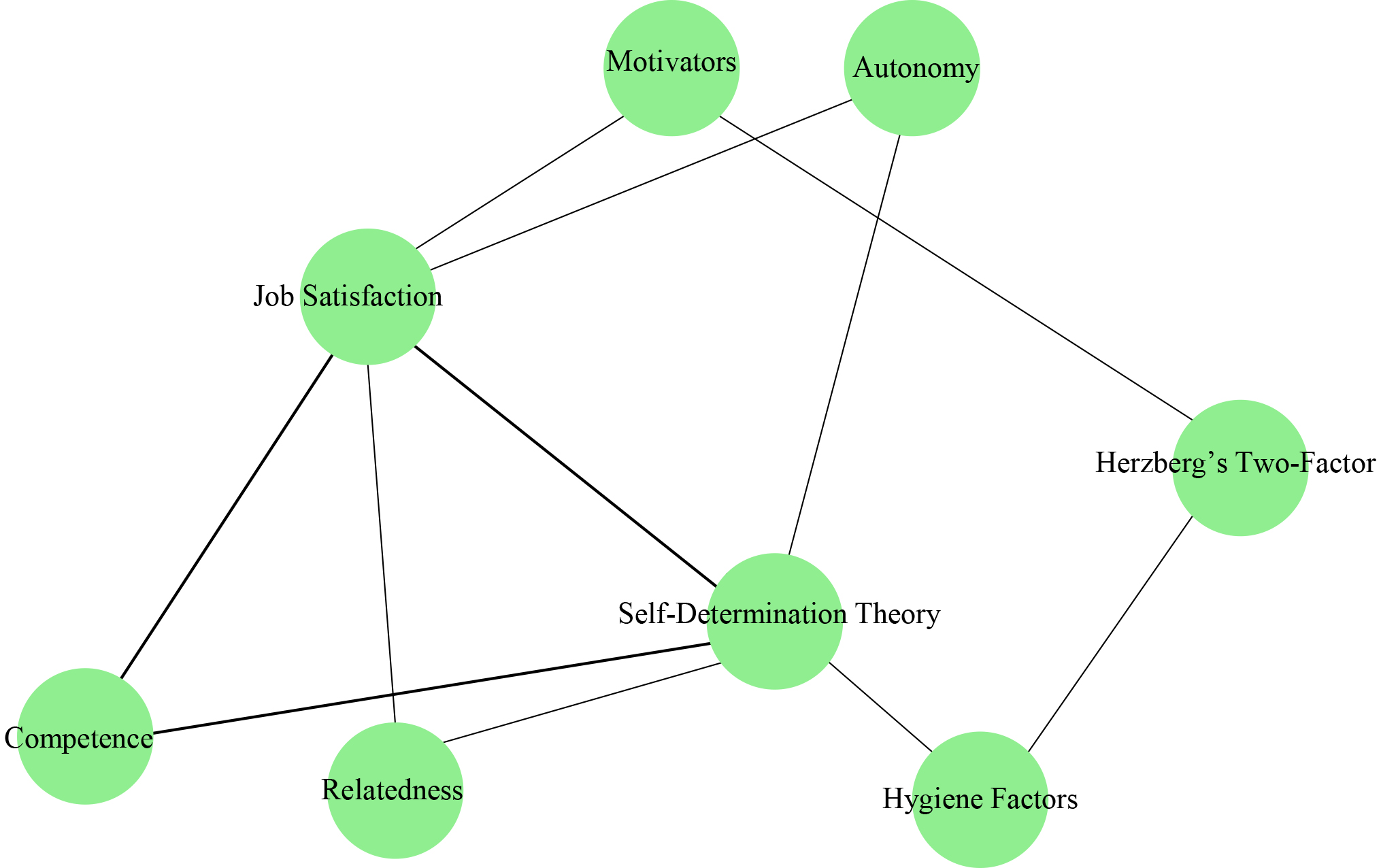
The CFA results confirmed that the items appropriately measured the intended constructs, as depicted in Fig. 8.
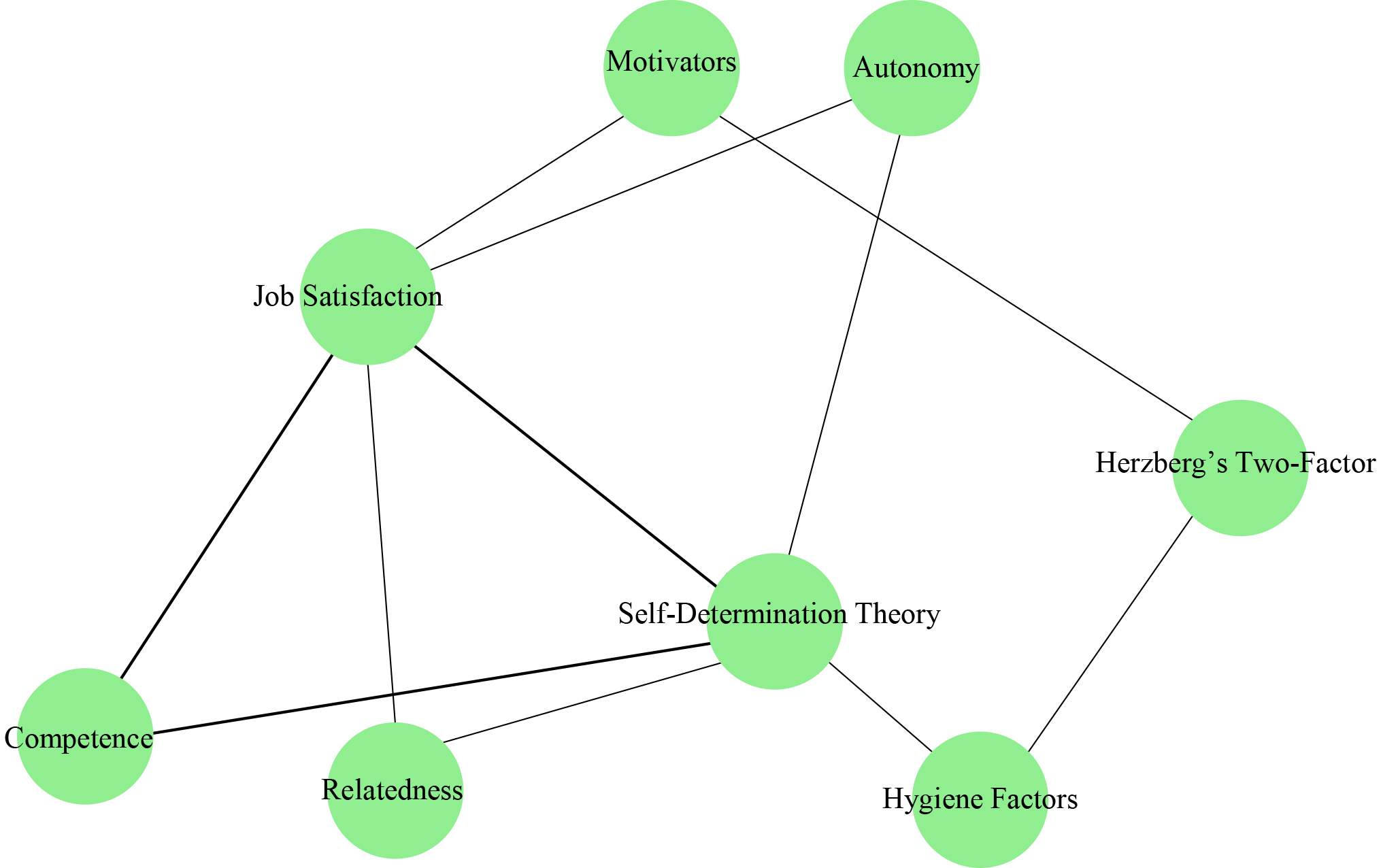 Fig. 8.
Integrated theoretical framework.
The elements in Fig. 8 provides a detailed mapping of the theoretical constructs within Herzberg’s two-factor theory and self-determination theory:
• Green circles: Represent key motivational constructs. These include Herzberg’s components (Hygiene Factors and Motivators) and SDT’s core dimensions (Autonomy, Competence, and Relatedness). Job Satisfaction is placed centrally as the primary outcome variable, influenced by these interrelated factors.
• Black lines: Illustrate conceptual and theoretical relationships between constructs, providing a visual representation of the dynamic interplay within the two frameworks.
The results of the CFA confirm that the questionnaire’s factor structure aligns with theoretical expectations. Both intrinsic and extrinsic factors exhibited strong loadings on their respective constructs, validating the application of Herzberg’s two-factor theory and SDT as the foundational frameworks for this study. The acceptable model fit indices further support the construct validity of the measurement instruments, ensuring that the scales accurately capture the key dimensions of employee motivation and satisfaction.
By integrating Herzberg’s motivators and hygiene factors with the basic psychological needs outlined in SDT, this study provides a comprehensive framework for analyzing the multifaceted nature of Gen Z employee motivation and satisfaction in transitional economies. The validated factor structure establishes a robust foundation for subsequent regression analyses and mediation testing.
Multiple regression analysis, summarized in Table 7, was performed using SPSS to examine the impact of the independent variables—salary, career development, training, supportive leadership, positive relationships with colleagues, and work—on the dependent variable, namely, job satisfaction.
| Predictor | B | SE | t | p-value | |
| Constant ( |
2.10 | 0.65 | - | 3.23 | 0.002 |
| Salary ( |
0.25 | 0.10 | 0.30 | 2.50 | 0.014 |
| Career development ( |
0.40 | 0.12 | 0.35 | 3.33 | 0.001 |
| Training ( |
0.15 | 0.08 | 0.20 | 1.88 | 0.061 |
| Supportive leadership ( |
0.30 | 0.09 | 0.40 | 3.33 | 0.001 |
| Positive relationships with colleagues ( |
0.20 | 0.10 | 0.25 | 2.00 | 0.046 |
| Work ( |
0.35 | 0.07 | 0.50 | 5.00 | 0.000 |
Note: SE, standard error.
The dominance of intrinsic factors in China (e.g., career development
Interpretation of hypotheses: The results of the
regression analysis are summarized in Table 8, which presents each hypothesis,
the corresponding regression coefficient (
| Hypothesis | Result | Interpretation |
|---|---|---|
| H1: Salary has a positive impact on job satisfaction among Gen Z employees. | Salary significantly positively influences job satisfaction, supporting H1. | |
| H2: Career development opportunities positively influence job satisfaction among Gen Z employees. | Career development has a strong positive effect on job satisfaction, supporting H2. | |
| H3: Training programs enhance job satisfaction among Gen Z employees. | Training programs show a positive but marginally non-significant impact on job satisfaction, partially supporting H3. | |
| H4: Supportive leadership positively affects job satisfaction among Gen Z employees. | Supportive leadership significantly enhances job satisfaction, supporting H4. | |
| H5: Positive relationships with colleagues enhance job satisfaction among Gen Z employees. | Positive relationships with colleagues have a significant positive effect on job satisfaction, supporting H5. | |
| H6: The nature of the work itself positively influences job satisfaction among Gen Z employees. | Work itself significantly and positively influences job satisfaction, supporting H6. |
The regression analysis indicates that salary satisfaction
(
Overall, the model explains a substantial portion of the variance in job
satisfaction (R2 = 0.65), highlighting the importance of both intrinsic factors
(career development and work satisfaction) and extrinsic
factors (salary satisfaction and supportive leadership) in
enhancing job satisfaction among Gen Z employees in F Company. The significant
F-statistic (p
The results of the mediation analysis are summarized in Table 9, which presents the regression coefficients for each step and the outcomes of the Sobel test for the indirect effects.
| Mediating variable | Path | Coefficient ( |
SE | Z-value | p-value | Indirect effect | Significance |
| Supportive leadership | Independent |
0.25 | 0.05 | 5.00 | 0.075 | Significant | |
| Mediator |
0.30 | 0.07 | 4.29 | ||||
| Indirect effect | 0.075 | Significant | |||||
| Positive relationships with colleagues | Independent |
0.20 | 0.04 | 5.00 | 0.050 | Significant | |
| Mediator |
0.25 | 0.06 | 4.17 | ||||
| Indirect effect | 0.050 | Significant |
Note: SE, standard deviation; DV, Dependent Variable.
The Sobel test was conducted to determine the significance of the indirect effects of supportive leadership and positive relationships between colleagues on the relationship between career development and job satisfaction.
(1) The Sobel test revealed that supportive leadership significantly mediated
the relationship between career development and job satisfaction (Z = 5.00,
p
(2) Similarly, the Sobel test indicated that positive relationships between colleagues also significantly mediated the relationship between career development and job satisfaction (Z = 4.29, p < 0.001). This finding suggests that fostering positive relationships among colleagues enhances the impact of career development on job satisfaction.
The significant mediation effects of both supportive leadership and positive relationships between colleagues underscore their crucial roles in enhancing job satisfaction among Gen Z employees. Specifically, supportive leadership amplified the benefits of career development initiatives, whereas positive colleague interactions further strengthened the relationship between professional growth opportunities and overall job satisfaction. These findings highlight the importance of a supportive and collaborative work environment in maximizing the effectiveness of career development programs.
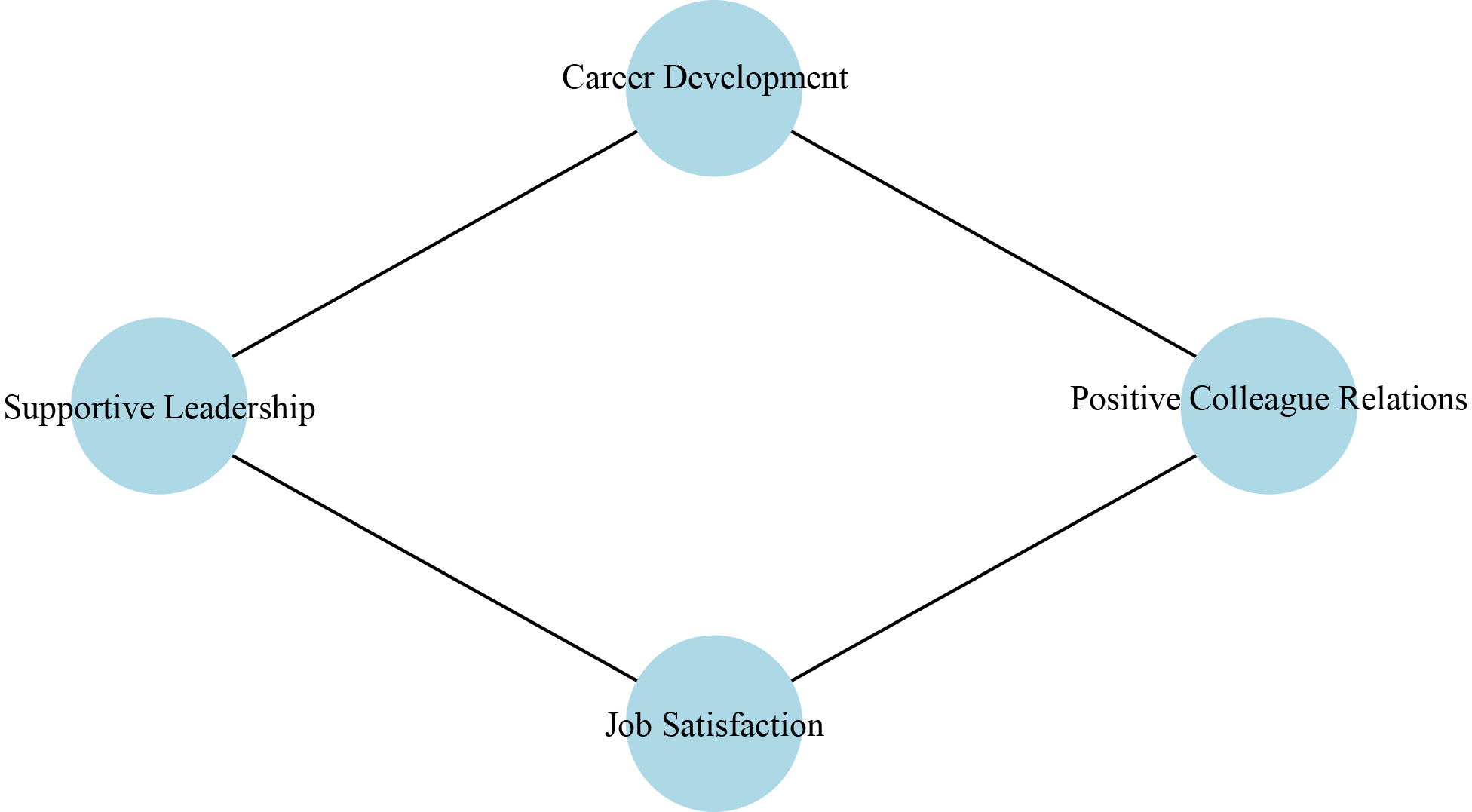
Fig. 9 is color-coded and connected to represent key factors influencing job satisfaction:
• Light blue circles: Depict the primary constructs—career development, supportive leadership, positive colleague relations, and job satisfaction. These elements are integral to the analysis of workplace motivation and satisfaction.
• Black lines: Represent the direct relationships among the constructs, emphasizing their interconnectedness and mutual influence in the framework.
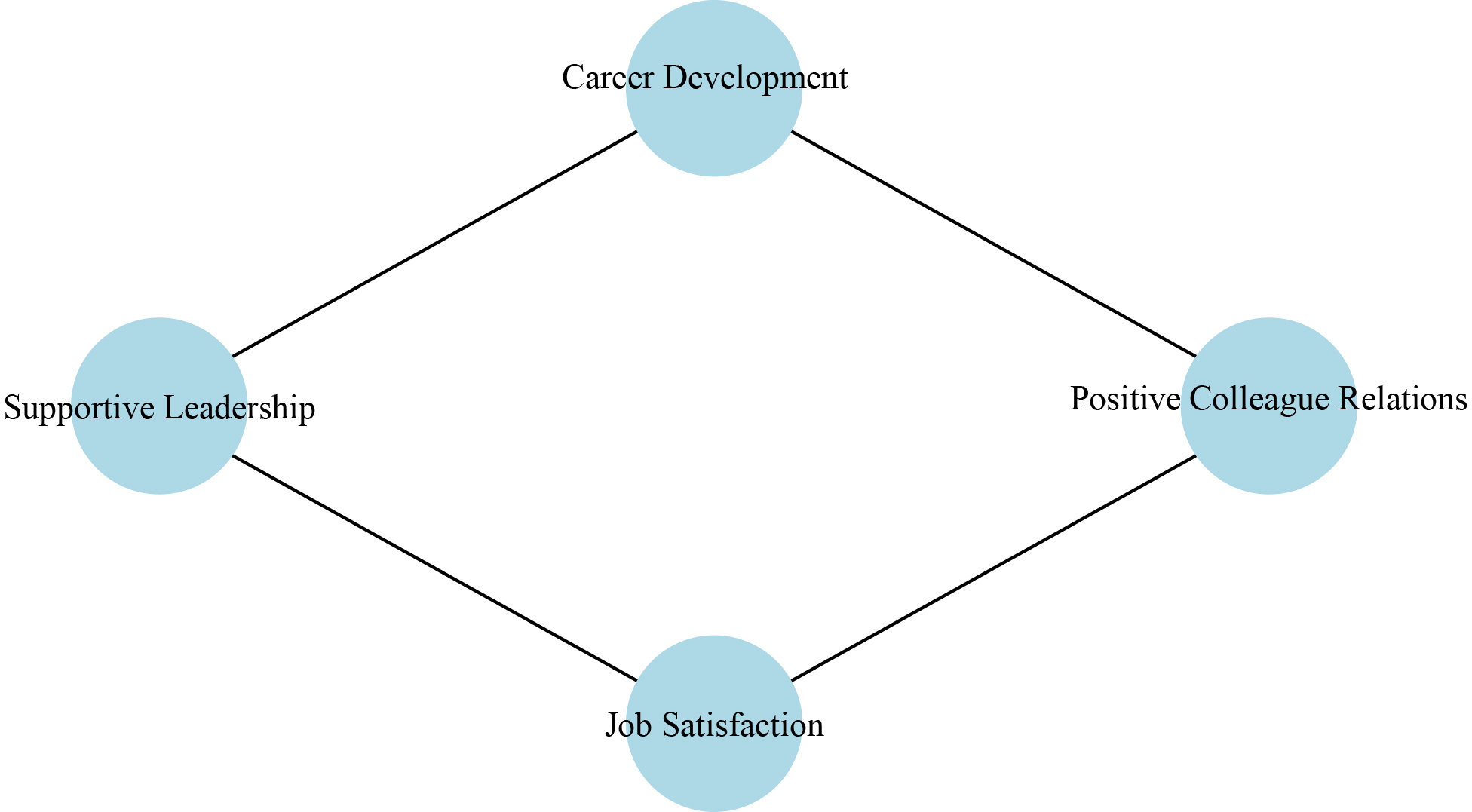 Fig. 9.
Mediation model for career development, supportive leadership, and job satisfaction.
Fig. 9 illustrates the mediation model, demonstrating how supportive leadership and positive relationships among colleagues mediate the association between career development and job satisfaction among Gen Z employees.
To ensure the robustness of the key findings, a sensitivity analysis was conducted by re-running the regression models excluding outliers and controlling for potential confounding variables such as age, education level, and years of experience. Additionally, alternative model specifications were tested to confirm the stability of the observed relationships. The results remained consistent, with salary satisfaction, career development, supportive leadership, positive relationships between colleagues, and work satisfaction continuing to significantly predict job satisfaction. These robustness checks reinforce the validity of the study’s conclusions regarding the determinants of job satisfaction among Gen Z employees in F Company.
As outlined in Table 10, the sensitivity analysis was conducted to assess the stability and reliability of the study’s key findings under varying analytical conditions. Model 1, the baseline model, included all independent variables as originally specified. Model 2 excluded outliers identified during preliminary analysis to determine whether extreme values influenced the regression coefficients. The results of Model 2 indicated that the key predictors—salary satisfaction, career development, supportive leadership, positive relationships between colleagues, and work satisfaction—remained statistically significant, although their coefficients and p-values showed slight reductions. This suggests that the exclusion of outliers did not substantially alter the significance or magnitude of the predictors, confirming that the findings are not driven by extreme values.
| Predictor variables | Model 1: Original model | Model 2: Excluding outliers | Model 3: Controlling for confounders | Model 4: Alternative specifications |
| Salary satisfaction | B = 0.25 **** | B = 0.24 **** | B = 0.23 **** | B = 0.26 **** |
| SE = 0.10 | SE = 0.11 | SE = 0.10 | SE = 0.09 | |
| t = 2.50 | t = 2.18 | t = 2.30 | t = 2.89 | |
| p = 0.014 | p = 0.030 | p = 0.022 | p = 0.004 | |
| Career development | B = 0.40 **** | B = 0.38 **** | B = 0.35 **** | B = 0.42 **** |
| SE = 0.12 | SE = 0.13 | SE = 0.11 | SE = 0.10 | |
| t = 3.33 | t = 2.92 | t = 3.00 | t = 3.80 | |
| p = 0.001 | p = 0.003 | p = 0.002 | p = 0.000 | |
| Supportive leadership | B = 0.30 **** | B = 0.28 **** | B = 0.27 **** | B = 0.31 **** |
| SE = 0.09 | SE = 0.10 | SE = 0.09 | SE = 0.08 | |
| t = 3.33 | t = 2.80 | t = 3.10 | t = 4.00 | |
| p = 0.001 | p = 0.005 | p = 0.001 | p = 0.000 | |
| Positive relationships between colleagues | B = 0.20 **** | B = 0.19 **** | B = 0.18 **** | B = 0.21 **** |
| SE = 0.10 | SE = 0.11 | SE = 0.10 | SE = 0.09 | |
| t = 2.00 | t = 1.95 | t = 1.90 | t = 2.15 | |
| p = 0.046 | p = 0.050 | p = 0.058 | p = 0.032 | |
| Work itself satisfaction | B = 0.35 **** | B = 0.34 **** | B = 0.33 **** | B = 0.36 **** |
| SE = 0.07 | SE = 0.08 | SE = 0.07 | SE = 0.06 | |
| t = 5.00 | t = 4.80 | t = 4.60 | t = 5.20 | |
| p = 0.000 | p = 0.000 | p = 0.000 | p = 0.000 | |
| Constant | B = 2.10 | B = 2.05 | B = 2.00 | B = 2.15 |
| SE = 0.65 | SE = 0.66 | SE = 0.64 | SE = 0.63 | |
| t = 3.23 | t = 3.10 | t = 3.12 | t = 3.41 | |
| p = 0.002 | p = 0.002 | p = 0.002 | p = 0.001 | |
| R2 | 0.65 | 0.63 | 0.64 | 0.66 |
| F-statistic | F(6, 121) = 23.45 **** | F(6, 119) = 22.80 **** | F(6, 118) = 23.00 **** | F(6, 120) = 23.90 **** |
| p-value |
Note: **** p
Model 3 introduced control variables, including age, education level, and years of experience, to account for potential confounding effects. The inclusion of these controls did not reduce the significance of the key predictors, with salary satisfaction, career development, supportive leadership, positive relationships between colleagues, and work satisfaction continuing to significantly predict job satisfaction. this further validates the robustness of these variables as determinants of job satisfaction among Gen Z employees.
Model 4 tested alternative specifications by varying the combinations of independent variables to ensure the observed relationships were not contingent on a specific model configuration. The results from Model 4 reaffirmed that the key predictors consistently influenced job satisfaction, thereby reinforcing the stability of the findings across different analytical approaches.
Overall, the sensitivity analysis highlights the reliability and validity of the study’s primary conclusions. By demonstrating that the key predictors of job satisfaction remain significant across models—whether by excluding outliers, controlling for confounders, or varying model specifications—the analysis provides compelling evidence for the robustness of the identified determinants among Gen Z employees at F Company. These findings enhance the credibility of the research and offer a solid foundation for developing targeted human resource strategies to foster a motivated and satisfied Gen Z workforce in transitional economies.
The empirical analysis demonstrates that intrinsic factors, particularly career development and work satisfaction, along with extrinsic factors such as salary satisfaction and supportive leadership, significantly enhance job satisfaction among Gen Z employees at F Company. The mediation analysis further reveals that supportive leadership and positive relationships between colleagues are pivotal in mediating the relationship between career development and job satisfaction. these findings underscore the multifaceted nature of employee motivation and satisfaction, highlighting the importance of comprehensive organizational strategies that address both opportunities for individual growth and the overall quality of the work environment.
When comparing the results from F Company in China with findings from studies on Eastern European firms, several similarities and contextual differences emerge. in both settings, career development and supportive leadership are critical determinants of job satisfaction, reflecting a universal trend in transitional economies where professional growth and managerial support are highly valued by Gen Z employees. However, the relatively marginal impact of training programs in F Company contrasts with findings from Eastern European contexts, where training and development initiatives often play a more pronounced role in shaping job satisfaction. This divergence may be attributed to cultural differences in learning preferences and the specific design and implementation of training programs in each region.
Moreover, the strong influence of work satisfaction at F Company aligns with Eastern European studies, suggesting that Gen Z employees across diverse cultural settings place a high priority on meaningful and engaging work. Notably, the emphasis on positive relationships between colleagues as a key mediator is particularly pronounced in the Chinese context, likely reflecting the influence of collectivist cultural values, which amplify the importance of harmonious interpersonal relationships in the workplace. These insights provide valuable guidance for tailoring human resource strategies to address both universal and context-specific motivational drivers in transitional economies.
This study contributes to cross-cultural management literature by (1) demonstrating how cultural values moderate the applicability of Herzberg’s and SDT’s principles, and (2) proposing a hybrid framework that synthesizes macro-cultural and micro-motivational constructs—a step toward contextualized organizational theories (Besharov and Smith, 2012). Herzberg’s framework, which distinguishes between intrinsic motivators (e.g., achievement, recognition) and extrinsic hygiene factors (e.g., salary, job security), is validated in both Chinese and Eastern European settings. The significant impact of intrinsic factors such as career development and work satisfaction on job satisfaction among Gen Z employees aligns with Herzberg’s assertion that motivators are crucial for enhancing job satisfaction (Salvadorinho et al, 2024). Similarly, the role of extrinsic factors, such as salary satisfaction and supportive leadership, as foundational elements in preventing job dissatisfaction corroborates Herzberg’s theory (Salvadorinho et al, 2024).
The integration of Herzberg’s two-factor theory and SDT reveals that cultural dimensions (e.g., power distance) reconfigure the hierarchy of motivational drivers. In high power distance contexts like China, extrinsic factors such as supportive leadership function not merely as hygiene elements but as enablers of intrinsic motivation—a departure from Herzberg’s original formulation (Salvadorinho et al, 2024). Similarly, SDT’s emphasis on autonomy is moderated by collectivist norms, where relatedness (e.g., team cohesion) becomes a prerequisite for fulfilling competence needs (Deci and Ryan, 1985). These findings suggest that motivational theories require contextual recalibration in transitional economies.
Furthermore, the study advances SDT by demonstrating that supportive leadership and positive relationships with colleagues fulfill the basic psychological needs of autonomy, competence, and relatedness, thereby enhancing intrinsic motivation and job satisfaction (Besharov and Smith, 2012). This is particularly evident in the Chinese context, where collectivist cultural values emphasize relatedness and harmonious interpersonal relationships (Arrindell, 2003). The mediation effects of supportive leadership and positive relationships with colleagues highlight the importance of fulfilling these psychological needs to foster a motivated and satisfied Gen Z workforce.
In comparison, Eastern European firms also exhibit similar patterns, with career development and supportive leadership identified as critical determinants of job satisfaction. However, the emphasis on job security and stable working conditions in Eastern Europe reflects the historical economic transitions from centrally planned to market-oriented economies (Jackson, 1992). This contrasts with the Chinese context, where rapid economic growth and integration into the global market have shifted the focus toward innovation and employee empowerment (Loorbach and Lijnis Huffenreuter, 2013). These theoretical implications suggest that while foundational motivational theories are universally applicable, their specific manifestations and relative importance can vary depending on regional economic and cultural contexts.
Additionally, the marginal significance of training programs at F Company, compared to their pronounced impact in some Eastern European contexts, underscores the necessity of contextualizing motivational strategies. In Eastern Europe, where organizational practices are still evolving post-transition, training initiatives may play a more critical role in employee satisfaction (Wang et al, 2024). In contrast, Chinese firms like F Company, operating in a highly competitive and rapidly evolving market, may prioritize career development and supportive leadership over traditional training programs to better meet the dynamic needs of Gen Z employees.
The findings of this study provide practical recommendations for organizations looking to attract, engage, and retain Gen Z talent in transitional economies:
(1) Career development. Organizations should focus on offering comprehensive career growth programs that align with Gen Z’s desires for personal and professional development. This includes establishing clear career pathways, providing mentorship, and offering opportunities for skill improvement. For example, F Company’s structured career progression aligns with Gen Z’s advancement goals and helps foster a sense of achievement and loyalty (Zhou et al, 2025). Similarly, Eastern European companies can attract Gen Z by investing in continuous learning and development programs that support long-term career progression (Berber et al, 2017).
(2) Supportive leadership. Managers need to adopt supportive and empowering leadership styles. This includes promoting open communication, recognizing achievements, and offering constructive feedback. In China, such leadership practices meet Gen Z’s psychological needs for autonomy and relatedness, which in turn enhances job satisfaction (Wang et al, 2024). Eastern European organizations, while also valuing supportive leadership, may need to balance this with job security to address the region’s historical and economic context (Vujačić and Petrović-Vujačić, 2020).
(3) Meaningful work. Creating job roles that provide meaningful and engaging work can greatly boost intrinsic motivation. Organizations should ensure that employees understand how their work aligns with the organization’s goals and societal values. This is particularly relevant in China, where Gen Z employees seek jobs that offer purpose and contribute to innovation and societal progress (Francis and Hoefel, 2018). Eastern European companies can also benefit by highlighting the meaningful aspects of work, especially roles that contribute to economic stability and growth.
(4) Competitive compensation. Offering competitive salaries and benefits is essential for meeting the financial needs of employees. While intrinsic factors are becoming more important, competitive compensation packages remain crucial for preventing dissatisfaction and retaining talent. F Company’s emphasis on competitive salaries and comprehensive benefits effectively meets Gen Z’s financial expectations (Spector, 1997). In Eastern Europe, where economic transitions can create financial uncertainty, maintaining competitive compensation is key to employee retention (Vujačić and Petrović-Vujačić, 2020).
(5) Positive work environment. Cultivating a collaborative and supportive work environment through team-building activities and fostering mutual respect can significantly improve job satisfaction. In China, the focus on positive relationships between colleagues resonates with collectivist cultural values, making collaborative environments particularly effective (Zhou et al, 2025). Eastern European companies can similarly enhance employee satisfaction by promoting teamwork and creating a sense of community, which is crucial for building trust and cooperation (Poór et al, 2020).
(6) Tailored training programs. Although training programs did not have a significant impact on job satisfaction in F Company, organizations should continuously assess and redesign their training initiatives to ensure they meet the evolving needs of Gen Z employees. Relevant, engaging, and personalized training programs are more likely to make a substantial impact, particularly in regions where training plays a vital role in employee development (Wang et al, 2024).
By addressing both intrinsic and extrinsic factors, organizations can cultivate a more motivated and satisfied Gen Z workforce. These strategies not only improve employee engagement and productivity but also contribute to the long-term success of organizations in diverse economic environments.
This study advances our understanding of Gen Z employees’ motivation in transitional economies, yet its contributions are bounded by several limitations that invite scholarly attention. The reliance on a single high-tech firm in China and aggregated secondary data from Eastern Europe, while providing regional specificity, narrows the applicability of findings to sectors like manufacturing or public services, where institutional rigidity may temper Gen Z’s preference for agility. To transcend these boundaries, comparative analyses across diverse transitional contexts—such as Vietnam’s tech startups and Kazakhstan’s state-led industries—could reveal how varying governance models mediate the interplay between innovation demands and generational aspirations.
The cross-sectional design, though pragmatic for capturing current attitudes, inherently obscures the temporal dynamics of motivation. As Gen Z employees navigate career transitions—from entry-level roles to leadership positions—their priorities may shift in response to macroeconomic upheavals (e.g., automation, geopolitical realignments). Longitudinal studies integrating annual surveys with narrative interviews could unravel how early-career values like autonomy evolve under mid-career pressures for stability, particularly in economies balancing rapid digitization with legacy labor systems. Such an approach would not only validate causal mechanisms but also contextualize motivation as a lifecycle phenomenon.
While Herzberg’s and SDT’s frameworks offer robust lenses, the omission of complementary theories like the job demands-resources (JD-R) model limits insights into how transitional workplaces’ unique stressors—such as skill obsolescence in China’s AI-driven sectors—interact with organizational resources. Future research could interrogate whether mentorship programs (a resource) buffer the psychological toll of constant upskilling (a demand), thereby recalibrating the role of extrinsic rewards as mediators of intrinsic motivation. This synthesis would challenge SDT’s universalist assumptions by embedding psychological needs within transitional economies’ structural realities.
Finally, the broad categorization of Eastern Europe, though analytically necessary, risks homogenizing a region marked by sub-regional divergences. The Baltics’ embrace of digital globalization contrasts sharply with the Balkans’ reliance on traditional manufacturing—a dichotomy rooted in distinct post-socialist trajectories. Disaggregating Eastern Europe through frameworks like the GLOBE cultural dimensions could illuminate how historical legacies (e.g., Soviet industrialization vs. Yugoslav market socialism) differentially shape Gen Z’s tolerance for hierarchy or appetite for entrepreneurial risk. Such granularity would not only refine cross-cultural theories but also equip multinational firms with culturally attuned talent strategies.
Collectively, these limitations underscore the need for scholarship that bridges micro-level motivational dynamics with macro-level economic transitions. By embracing methodological pluralism and theoretical cross-pollination, future studies can illuminate how Gen Z—simultaneously products and agents of change—negotiate the tensions between personal aspirations and systemic constraints in shaping the future of work. These findings underscore the pivotal role of transitional contexts—marked by hybrid governance and evolving labor policies—in shaping Gen Z’s workplace priorities in both China and Eastern Europe.
This study explored employee motivation and satisfaction among Gen Z employees at F Company in China, with comparative insights from Eastern European firms. The findings suggest that both intrinsic factors (career development and work itself satisfaction) and extrinsic factors (salary satisfaction and supportive leadership) significantly contribute to job satisfaction among Gen Z employees. Moreover, supportive leadership and positive relationships between colleagues were found to mediate the relationship between career development and job satisfaction, underscoring their critical roles in fostering a motivated and satisfied workforce.
This research makes a significant contribution to the existing literature by focusing specifically on Generation Z within transitional economies—an area that has received limited attention. By integrating Herzberg’s two-factor theory, SDT, and Hofstede’s cultural dimensions theory, the study provides a comprehensive framework for understanding the multifaceted nature of employee motivation and satisfaction. The comparative analysis between Chinese and Eastern European firms offers valuable insights into how different cultural and economic transitions shape Gen Z’s workplace attitudes. This comparison is particularly significant as it illustrates the contrasts between China’s rapid economic growth and collectivist culture and Eastern Europe’s gradual transition to market-oriented economies with varying cultural dimensions. Such a comparative approach not only fills a gap in cross-cultural management literature but also offers practical insights for multinational corporations operating in diverse economic environments.
Organizations looking to attract and retain Gen Z talent should prioritize the following:
(1) Career development. Implement career advancement programs and continuous learning opportunities aligned with Gen Z’s professional goals.
(2) Supportive leadership. Train managers to adopt leadership styles that fulfill employees’ psychological needs for autonomy and relatedness.
(3) Meaningful work. Create job roles that provide engaging and meaningful work to enhance intrinsic motivation.
(4) Competitive compensation. Ensure salary structures are competitive and meet the financial needs of employees.
Positive work environment. Foster collaborative relationships among colleagues through team-building activities and a culture of mutual respect. For multinational corporations (MNCs) operating in transitional economies, our findings advocate a glocalized approach:
• Global principles: Adopt core tenets of self-determination theory (autonomy, competence) to align with Gen Z’s universal demand for meaningful work.
• Local tactics: Adapt practices to regional contexts—e.g., leverage China’s collectivism through team-based autonomy, while addressing Eastern Europe’s stability needs via structured skill development programs.
Understanding the unique motivational drivers and satisfaction factors of Gen Z employees is crucial for organizations operating in transitional economies. This study provides empirical evidence on the factors that significantly influence job satisfaction, offering both theoretical and practical contributions to cross-cultural management and human resource fields. By aligning organizational practices with Gen Z’s values and expectations, companies can improve employee engagement, productivity, and retention, leading to sustained organizational success.
The data supporting the findings of this study were collected from F Company in China, supplemented by aggregated information from publicly accessible sources (e.g., Eurofound, Eurostat, and Deloitte reports) pertaining to Eastern European firms. Given confidentiality agreements with F Company and the sensitive nature of employee-related data, the original datasets generated and analyzed during the current study are not publicly available. However, deidentified or aggregated data may be obtained from the corresponding author upon reasonable request and with permission from F Company.
LG and XD contributed equally as first authors. LG and XD designed the research study. BR performed the research and data collection. WW provided guidance and supervision throughout the study. LG and BR analyzed the data. All authors contributed to editorial revisions of the manuscript. All authors read and approved the final manuscript. All authors have participated sufficiently in the work and agreed to be accountable for all aspects of the work.
The author would like to express gratitude to the management and employees of F Company for granting access and facilitating data collection. Additionally, thanks are extended to the affiliated institutions, Sinounited Investment Group Corporation Limited Postdoctoral Programme at Jiaotong University and the United Graduate School at Shaanxi University of International Trade & Commerce, for their support and resources provided during the research process.
This research received no external funding.
The authors declare no conflict of interest.
During the preparation of this work, the authors used Deepseek to check spelling and grammar. After using this tool, the authors reviewed and edited the content as needed and take full responsibility for the content of the publication.
References
Publisher’s Note: IMR Press stays neutral with regard to jurisdictional claims in published maps and institutional affiliations.