

 , Ahmad Daragmeh 2,*, Arta Kuci 3
1 Faculty of Finance and Accountancy, Budapest University of Economics and Business, 1055 Budapest, Hungary
2 Faculty of Business and Economics, Birzeit University, 00972 Birzeit, Palestine
3 Doctoral School of Management and Business Administration, Hungarian University of Agriculture and Life Sciences, 2100 Godollo, Hungary
Abstract
As environmental issues gain prominence in daily life, there is a corresponding increase in environmental awareness. This study seeks to extend the Theory of Planned Behaviour by incorporating price sensitivity and environmental concerns to elucidate the green clothing purchase intentions among Kosovars. The proposed research model was validated by distributing self-administered questionnaires to a sample of 528 students and employees at the University of Pristina. Before the primary data collection phase, a pilot study was conducted to assess the reliability and validity of the measurement instruments. We evaluated the hypotheses using a structural equation modeling (SEM) approach, which effectively examines complex relationships among variables. The results demonstrate that environmental concerns significantly enhance consumers’ attitudes and subjective norms regarding green clothing products. Furthermore, these attitudes significantly influence consumers’ intentions to purchase such products in Kosovo. In contrast, we identified price sensitivity and subjective norms as having an insignificant effect on consumers’ attitudes and intentions to purchase green clothing products.
Keywords
- green purchasing
- Theory of Planned Behaviour
- environmental concern
- consumer intention
- Western Balkan
Technological progress and industrialization drive economic development, enhancing people’s lives and improving their lifestyles. However, environmental protection is critical worldwide as modernization and economic growth advance (Ahmed et al, 2023). Components like waste, air pollution, and climate change have contributed globally to the degradation of the environment and, therefore, impacted people’s health and socio-status worldwide (Manisalidis et al, 2020). In particular, developed economies have been affected the most by over-production/consumption and inefficient implementation of natural resources. Therefore, in the recent decade, people worldwide have begun to care more about their environment (Funk et al, 2020). The market for environmentally friendly products has been growing positively worldwide and is expected to increase yearly (Salleh et al, 2010). One of the main reasons for these positive trends is that customers’ knowledge and interest in health and environmental protection is constantly increasing (Brÿiý-Stipÿeviý et al, 2013). Accordingly, one of the easiest ways for customers to reduce their negative impact on the environment would be to make appropriate purchasing decisions. Many studies have recommended that promoting knowledge and interest in environmentally friendly consumption would directly impact consumers’ purchasing decisions (Paul et al, 2016; Pinto de Moura et al, 2012). Sustainable development has thus become the focus of attention not only among consumers but also among businesses, not only because of mandatory environmental policies but also because of consumer pressure. Faced with the emergence of ecological consumption, companies have already begun to promote their brands and products with eco-labels and environmental marketing (Maichum et al, 2016).
Recent studies have shown that people’s environmental knowledge and positive attitudes toward environmental protection have increased over the past decade. People are willing to pay more for goods produced by companies that positively impact society and the environment. Nevertheless, the purchase rate of green products has declined recently (Clifford and Martin, 2011). Despite growing environmental awareness, people still need to buy more green products as hoped (Joshi and Rahman, 2015). A corresponding number of people are reluctant to buy green products because green campaigns are confusing, prices are high, and there is a lack of environmental awareness and knowledge (Maichum et al, 2016). Therefore, green product marketers must investigate the reasons behind people’s buying behavior. In this sense, this study’s main objective is to develop the Theory of Planned Behaviour (TPB) and understand the motivations of Kosovar consumers to purchase green clothing. This study integrates two of the most influential social psychological concepts (environmental awareness and decreased price sensitivity) to the TPB to analyze the psychological and external components that promote a green economy (Zhang and Luo, 2021).
The TPB is applied worldwide to analyze consumers’ motivations for their intentions and behavior. It is one of the most well-known social psychological theories describing purchase intention’s components and background. Therefore, this study utilized this theory.
Specifically, this study aims to analyze the components influencing consumers’ purchase intention regarding green clothing products in Kosovo and the relationship between the following variables: Attitude, subjective norms, environmental concern, and decreased price sensitivity. The paper is structured as follows: Section two describes green consumption in Kosovo and explains the study’s conceptual framework. Section three describes the origin of the data and variables and the research methods, and section four presents the results. Sections five and six provide the concluding remarks and contributions of the study. The final section identifies the study’s limitations and provides directions for future research.
Sustainable development is already an integrated concept in Kosovo, and it is included in the main policy report, the National Strategy of Kosovo (2016–2022). The country’s legislation explicitly incorporates the features of sustainable development, mainly through the Law on Environmental Protection and the Law on Rural and Agricultural Development (Kosovo Environmental Programme – Ministry of Environment and Spatial Planning, 2019). However, environmental problems in Kosovo have worsened over the decades due to the unrestrained use of natural and mineral resources, growing industrial production with high levels of pollution, and the lack of appropriate policies, laws, societies, and institutions to address and solve the problems (Kosovo Environmental Action Plan, 2016). As a result, the environment in Kosovo has deteriorated, negatively affecting the population’s health (Tahirukaj et al, 2005; Zeneli et al, 2011). Electricity generation in Kosovo primarily relies on lignite, accounting for over 98% of the total output. Power plants near Pristina emit dust levels that exceed European environmental standards by 74%, significantly impacting air quality and public health (United Nations Development Programme (UNDP), 2010).
According to the Kosovo Environmental Protection Agency, using and wasting fertilizers and pesticides significantly impacts water quality (Kosovo Environmental Programme – Ministry of Environment and Spatial Planning, 2019). These pollutants do not align with ecosystem conservation goals related to underwater or surface sources. Therefore, considering all these agricultural practices that negatively impact the environment and socioeconomic factors, it is crucial to stop the transformation of the food sector in Kosovo and reanalyze how to promote a more environmentally friendly food system.
Based on the fourth section of the Green Agenda for the Western Balkans, in particular the Sustainable Agriculture and Food Production component, the country is determined to develop its agricultural sector in line with E.U. regulations by improving the framework quality of food, focusing on environmentally friendly production, promoting sustainable farming practices and adequate waste management, and improving health controls in the food sector (Foundation Office Kosovo, 2021). In this line, if Kosovo meets the proposed and accepted conditions, it will enhance its chances of E.U. integration, eliminate carbon dioxide tariffs on goods exported to the E.U., and, most importantly, foster a healthier and safer environment for its society.
Several studies have addressed the psychological side of understanding the drivers that motivate consumers to buy. Among the best-known models in this area is the widely used TPB (Ham et al, 2015). The Theory of Planned Behavior (TPB) asserts that several vital factors directly influence an individual’s intention to engage in a specific behavior: Attitude (Question: Do I want to engage in this behavior?), subjective norms (Question: Will it be acceptable to other people if I do this?), and perceived behavioral control (Question: Do I have the necessary skills to perform this behavior?) (Ham et al, 2015).
The TPB is the most accurate method for predicting purchase intentions (Yadav and Pathak, 2016). The TPB framework is an evolution of the theory of reasoned action (Ajzen, 1985). It has been the most widely used theoretical model for predicting behavioral intentions over the past decade (Fielding et al, 2008). Accordingly, several studies show that intentions are the most accurate predictors of behavior and completely offset the effect of perceived behavioral control, attitude, and subjective norms (Gracia and de magistris, 2007; Liobikienė et al, 2016). According to Patch et al (2005), researchers define intention as an intentional action that requires both stimulation and behavior to elicit it. Specifically, intention serves as the most significant determinant of individual behavior, forming the core of the Theory of Planned Behavior (TPB) model, as noted by Han et al (2010).
Recent research has widely employed the TPB to investigate consumer behavior toward green products. The TPB asserts that attitudes, subjective norms, and perceived behavioral control primarily determine behavioral intentions. Recent studies underscore the applicability of the TPB in understanding consumer responses to environmentally sustainable products. Sharma and Foropon (2019) investigated the interactive effects of product attributes on environmental concern levels, green purchase intentions, and various proposed patterns of green purchasing behavior using the extended TPB.
Additionally, research conducted by Gupta (2021) employed the TPB to investigate the associations among attitudes, purchase intentions, and purchase behavior of young consumers concerning green products. Moreover, Wu and Chiang (2023) investigate the mediating variables within the TPB, precisely attitude, subjective norms, and perceived behavioral control, to analyze their mediating roles in green word-of-mouth intention and their influence on subsequent green product purchase behavior. These studies collectively demonstrate the robustness of TPB as a theoretical framework for comprehensively exploring the determinants of consumer behavior towards green products.
Given the urgent need to address ecological problems, there has been a groundbreaking increase in people’s awareness of their environmental responsibilities and ecological impacts (Chen et al, 2022). When people realize the negative impact of a particular product or service on the environment, environmental awareness emerges, and as a result, people develop ecological attitudes and principles (Sánchez-Bravo et al, 2020). Environmental concern is crucial to studying ecological behavior (Joshi and Joshi, 2016). It does not influence buyer behavior directly but indirectly through factors such as perceived behavioral control, attitudes, and subjective norms (Zhang and Luo, 2021). As many studies show, there is a positive relationship between environmental concern and subjective norms related to pro-environmental behavior, but the intensity of this relationship varies (Borusiak et al, 2021).
In addition, recent studies have established a strong correlation between environmental concerns and subjective norms regarding the purchase of green products. A plausible hypothesis is that higher levels of environmental concern among individuals positively influence their perception of subjective norms toward buying green products. Empirical evidence supporting this hypothesis includes research indicating that individuals more aware of and concerned about environmental issues are more likely to perceive social pressure to engage in environmentally friendly behaviors. A study Joshi and Rahman (2019) found that individuals with higher environmental concerns tend to perceive more significant social pressure and peer approval to purchase green products, suggesting that environmental concern strengthens the subjective norms of eco-friendly consumption. Additionally, a meta-analysis by Barbarossa and De Pelsmacker (2016) confirmed that environmental concern is a significant predictor of subjective norms, which drive the intention to buy green products. These findings collectively support the hypothesis that heightened environmental concern enhances subjective norms toward the consumption of green products. Accordingly, we hypothesize the following:
Hypothesis 1: Environmental concern positively influences consumers’ attitudes toward green clothing products.
Hypothesis 2: Environmental concern influences consumers’ subjective norms when buying green clothing products.
Attitude reflects a person’s beliefs and feelings about buying a particular product or service. Attitude refers to a customer’s tendency to evaluate a product or service positively or negatively (Ahmed et al, 2017). Recent studies indicate consumer attitudes significantly influence their price sensitivity towards green products. A study Grimmer and Bingham (2013) found that consumers with solid pro-environmental attitudes are more willing to pay a premium for green products, as their commitment to environmental values outweighs cost considerations. Specifically, in the context of green clothing, the impact of consumer attitudes on price sensitivity is even more pronounced. Joy et al (2012) observed that fashion-conscious consumers who prioritize sustainability are less price-sensitive when purchasing eco-friendly apparel. This is corroborated by Wiederhold and Martinez (2018), who found that ethical concerns and a desire to support sustainable fashion practices significantly reduce price sensitivity among green clothing buyers. These consumers view their purchases as moral choices, reinforcing their willingness to pay higher prices for products that align with their values.
Furthermore, Consumer attitudes are pivotal in shaping purchase intentions, especially toward green products like green clothing. Recent studies indicate that positive attitudes toward environmental sustainability significantly increase the likelihood of consumers choosing green products over conventional ones. A study by Shin and Lee (2021) emphasizes that favorable consumer attitudes toward sustainability positively and strongly affect the intention and the actual acquisition of sustainable fashion products. Based on the preceding discussion, we hypothesize the following.
Hypothesis 3: Attitude toward buying green clothing products affects decreasing price sensitivity to buy it.
Hypothesis 4: Attitude toward buying green clothing products positively influences intention.
Hypothesis 5: The decreased price sensitivity mediates the effect of attitude on consumers’ behavioral intention to buy green clothing.
Subjective norms refer to individuals’ beliefs about the acceptance of specific behaviors by others. These norms arise from perceived social approval and individuals’ encouragement to align their views and choices with their peers (Ham et al, 2015). Subjective norms significantly influence consumers’ price sensitivity when they purchase green products, including green clothing. Contemporary research indicates that individuals guided by robust subjective norms favoring environmental sustainability exhibit diminished price sensitivity in their green product purchasing decisions (Taufique et al, 2017). This inclination arises from their heightened valuation of the environmental attributes associated with green products, motivating them to accept higher costs to uphold their eco-conscious beliefs and a favorable social image (Goh and Balaji, 2016).
Furthermore, several studies have shown that the influence of subjective norms on the formation of an intention is less than the influence of attitudes on the formation of a particular intention (Krueger et al, 2000). According to Ham et al (2015), the link between intention and subjective norms is considered the weakest aspect of TPB. Ajzen (1991), The TPB inventor asserts that personal determinants, such as perceived behavioral control and attitudes, strongly influence individuals’ intentions. Accordingly, Kumar and Ghodeswar (2015) analyzed the factors influencing purchase intention for green products and their impact on consumer behavior. They concluded that subjective norms do not directly correlate with purchase intention. However, a study Chen (2007) showed a positive relationship between subjective norms and the intention to purchase green products. The intention to buy green clothes increases when a person has a positive subjective norm to buy green products. Therefore, we hypothesize the following.
Hypothesis 6: Subjective norms toward buying green clothing products affect the decreasing price sensitivity of buying them.
Hypothesis 7: Subjective norms toward buying green clothing products positively influence intention.
Hypothesis 8: The decreased price sensitivity mediates the effect of subjective norms on consumers’ behavioral intention to buy green clothing.
In the most familiar and acceptable interpretation, price is the value consumers are willing to pay for services or products they wish to purchase (Fiyat et al, 2021). Price sensitivity is particularly evident in people’s reactions to the price of services and goods, also referred to as price flexibility (Fiyat et al, 2021). Price usually tells customers something about the quality of a product or service, which influences customers’ purchasing decisions. It influences the value consumers are willing to pay for the services or products they want to buy (Fiyat et al, 2021). Thus, if individuals believe they will receive high-value fulfillment from a particular product or service, they will be willing to pay different prices for that product or service (Kucher et al, 2019). When price sensitivity decreases, consumers become less responsive to price changes. They are willing to continue buying the product even if its price increases.
Customers generally consider price a determinant of the quality of goods to rationalize higher intention to pay more to buy that product (Lichtenstein et al, 1993). However, customers are willing to pay more for products that offer them higher value and for specific occasions, such as holidays, when buying gifts for others or emergencies (Uslu and Huseynli, 2018). According to Oesman (2021), environmentally conscious consumers are more willing to buy a green product and pay a higher price. Consumers who are aware of environmental issues are more willing to pay more for an environmentally friendly product and are more likely to intend to do so. According to Noor and Abaidah (2019), customers are more willing to pay more for green products if they understand the impact of their purchasing behavior on the environment. In turn, it can help protect the environment. Due to the uniqueness of the influence of price sensitivity on green behavior, this study proposes that green price sensitivity influences green behavior. As a result, the study proposes the following hypotheses:
Hypothesis 9: Decrease price sensitivity positively influences consumers’ intention to buy green clothing products.
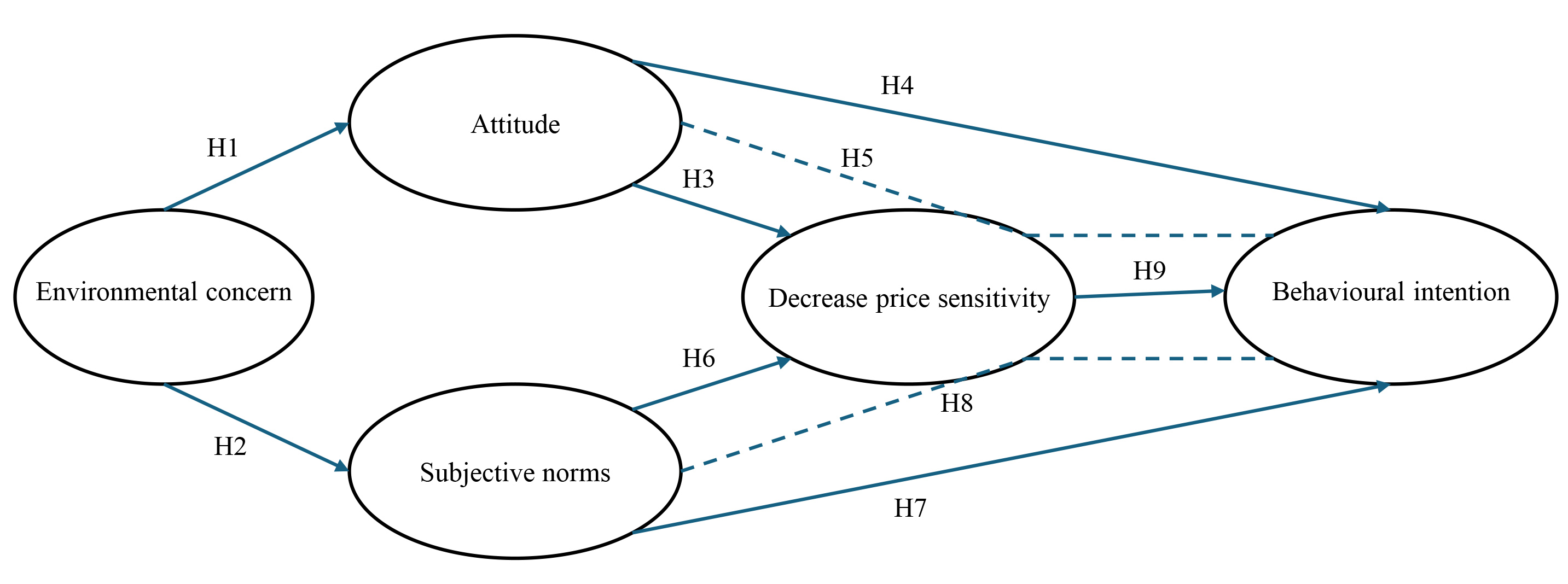
The developed hypotheses propose a research model, illustrated in Fig. 1.
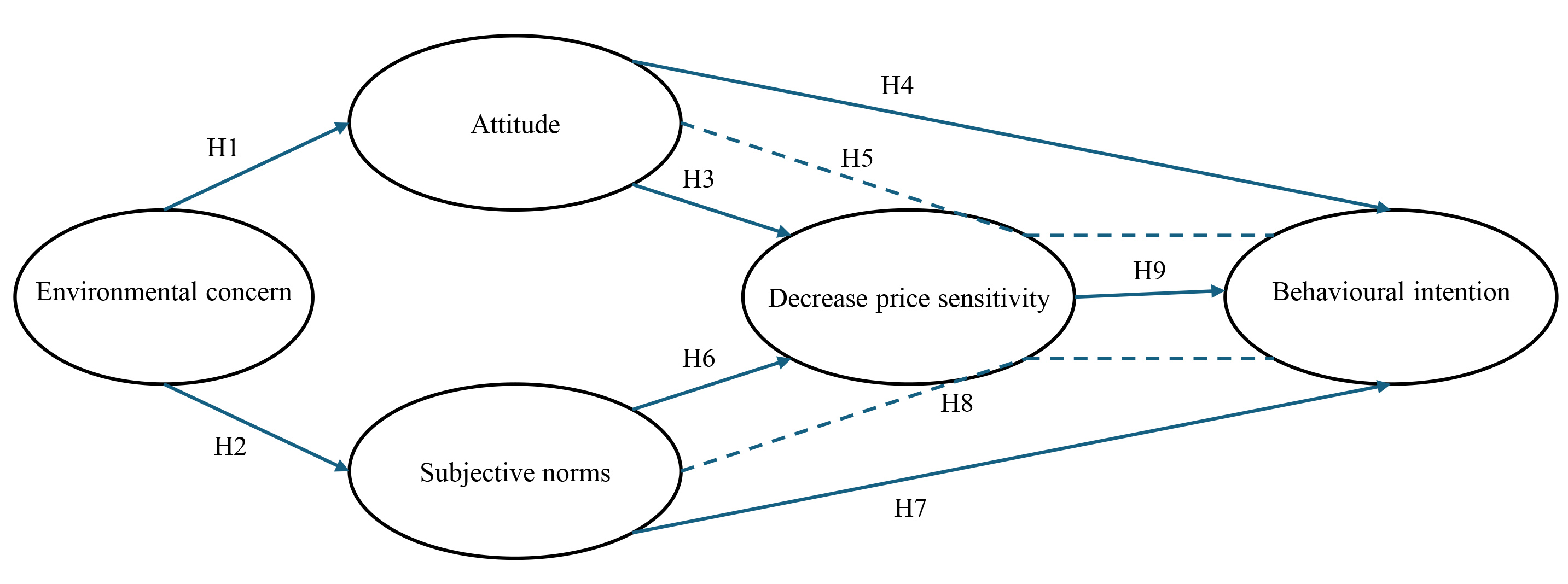 Fig. 1.
Conceptual framework.
We conducted data collection using a printed questionnaire survey. We derived the research framework, measurement items, and operational definitions from established hypotheses and prior studies. As detailed in Appendix Table 6, construct measurements were adopted from existing literature to ensure content validity. We conducted a pilot test with 40 participants to validate the measurement instruments. We used the feedback from this pilot test to revise the wording of the measurement items. Researchers solicited students and employees from the University of Pristina to volunteer for survey participation. They collected a total of 675 responses. After excluding repetitive and incomplete questionnaires, the final valid sample included 528 participants. We analyzed partial least squares using IBM SPSS version 18.0 (SPSS Inc., Chicago, Illinois, USA) and Smart Partial Least Squares (PLS) version 3.0 (SmartPLS GmbH, Hamburg, Germany) (Sarstedt et al, 2017).
Table 1 presents the participants’ demographic data to elucidate the characteristics of the sample. The sample comprised 57.4% female respondents and 42.6% male respondents. The age distribution indicated that most respondents (62.7%) were between 18 and 29 years old. Educational attainment varied, with the most significant proportion being college graduates (67.4%), followed by those holding a master’s degree or higher (21.8%). Regarding employment status, 19.3% of the respondents were employed full-time, 38.9% were employed part-time, and approximately 42% were unemployed. Additionally, there was a notable familiarity with green products among respondents, with 91% reporting that they had purchased them at least once in the past month.
| N | % | ||
| Sex | |||
| Male | 225 | 42.6 | |
| Female | 303 | 57.4 | |
| Total | 528 | 100 | |
| Age | |||
| 18 to 29 | 331 | 62.7 | |
| 30 to 40 | 61 | 11.5 | |
| 41 to 50 | 38 | 7.2 | |
| Above 50 | 98 | 18.6 | |
| Total | 528 | 100 | |
| Educational level | |||
| Bachelor | 356 | 67.4 | |
| Master | 115 | 21.8 | |
| Ph.D. | 43 | 8.1 | |
| Others | 14 | 2.7 | |
| Total | 528 | 100 | |
| Work status | |||
| Employed (full-time) | 102 | 19.3 | |
| Employed (Part-time) | 206 | 39.0 | |
| Unemployed | 220 | 41.7 | |
| Total | 528 | 100 | |
| Green product usage frequency | |||
| Once a month | 248 | 47.0 | |
| 2 to 5 times a month | 164 | 31.1 | |
| 6 to 10 times a month | 68 | 12.9 | |
| Once a year | 48 | 9.0 | |
| Total | 528 | 100 | |
This study conducted data analysis in two distinct phases. First, we assessed the validity of the outer model (measurement model) construct. Next, we evaluated the proposed causal model and research hypotheses using the inner model. In the partial least squares (PLS) method, the outer model delineates the relationships between latent constructs and their respective indicators. Table 2 summarizes each construct item’s factor loadings and reliability test results. The composite reliability and Cronbach’s alpha scores for all constructs exceeded the threshold of 0.7, indicating satisfactory reliability. We conducted convergent and discriminant validity tests to evaluate the construct validity of the factors. According to Fornell and Larcker (1981), researchers fulfill the requirements for convergent validity when factor loadings and average variance extracted (AVE) exceed 0.5 and reliability exceeds 0.7.
| Constructs | Item Loading | Cronbach’s Alpha | Composite Reliability (C.R.) | Average Variance Extracted (AVE) | |
| Attitude (ATT) | 0.868 | 0.863 | 0.783 | ||
| ATT1 | 0.890 | ||||
| ATT2 | 0.882 | ||||
| ATT3 | 0.920 | ||||
| Subjective norms (S.N.) | 0.829 | 0.826 | 0.671 | ||
| SN1 | 0.831 | ||||
| SN2 | 0.875 | ||||
| SN3 | 0.878 | ||||
| SN4 | 0.726 | ||||
| Environmental concern (E.C.) | 0.782 | 0.861 | 0.702 | ||
| EC1 | 0.841 | ||||
| EC2 | 0.847 | ||||
| EC3 | 0.831 | ||||
| Decrease price sensitivity (DPS) | 0.883 | 0.865 | 0.808 | ||
| DPS1 | 0.904 | ||||
| DPS2 | 0.886 | ||||
| DPS3 | 0.929 | ||||
| Behavioral intention (P.I.) | 0.864 | 0.876 | 0.802 | ||
| PI1 | 0.897 | ||||
| PI2 | 0.883 | ||||
| PI3 | 0.928 | ||||
ATT, Attitude; SN, Subjective norms; PBC, Perceived behavioural control; EC, Environmental concern; DPS, Decrease price sensitivity; BI, Behavioural intention; PI, Purchase intention.
As illustrated in Table 2, all constructs satisfied the criteria set forth by Fornell and Larcker (1981), thereby demonstrating favorable convergent validity. Furthermore, researchers establish discriminant validity when each construct’s square root of the Average Variance Extracted (AVE) exceeds the correlation coefficients between constructs. Tables 2,3 display the discriminant validity of the model constructs. All dimensions exhibited composite reliability and AVE values above the thresholds, indicating robust convergent validity. Additionally, we confirmed discriminant validity by demonstrating that the square root of the Average Variance Extracted (AVE) for each construct exceeded the correlation coefficients between constructs in our proposed model (Fornell and Larcker, 1981; Sarstedt et al, 2017).
| ATT | BI | EC | DPS | SN | |
| ATT | 0.878 | ||||
| BI | 0.751 | 0.901 | |||
| EC | 0.736 | 0.822 | 0.831 | ||
| DPS | 0.213 | 0.268 | 0.212 | 0.902 | |
| SN | 0.668 | 0.663 | 0.658 | 0.308 | 0.830 |
The inner model of the Partial Least Squares (PLS) approach comprises path structures between constructs. The outcomes of the hypothesis tests for the inner model, including the path coefficients and their significance levels, are presented in Fig. 1 and Table 4. The effect of environmental concern on consumers’ attitudes and subjective norms was significant, thus supporting H1 and H2. H4 was also confirmed, as attitude significantly influenced consumers’ behavioral intention to purchase green clothing products. However, H3 and H5 were not supported, as the impact of attitude on reducing price sensitivity and the moderating effect of reduced-price sensitivity between attitude and behavioral intention were insignificant.
| H# | Effect Path | Original Sample (O) | Sample Mean (M) | Standard Deviation (STDEV) | T Statistics (|O/STDEV|) | p values | Status |
| H1 | EC |
0.353 | 0.375 | 0.047 | 5.211 | 0.012 | Supported |
| H2 | EC |
0.402 | 0.416 | 0.053 | 7.094 | 0.003 | Supported |
| H3 | ATT |
0.123 | 0.132 | 0.028 | 1.958 | 0.084 | Not Supported |
| H4 | ATT |
0.658 | 0.663 | 0.063 | 13.893 | 0.000 | Supported |
| H5 | ATT |
0.163 | 0.168 | 0.032 | 1.623 | 0.053 | Not Supported |
| H6 | SN |
0.273 | 0.281 | 0.039 | 3.207 | 0.047 | Supported |
| H7 | SN |
0.121 | 0.122 | 0.029 | 1.534 | 0.056 | Not Supported |
| H8 | SN |
0.203 | 0.210 | 0.040 | 3.041 | 0.041 | Supported |
| H9 | DPS |
0.102 | 0.107 | 0.026 | 1.703 | 0.068 | Not Supported |
ATT, Attitude; SN, Subjective norms; EC, Environmental concern; DPS, Decrease price sensitivity; PI, Purchase intention.
The empirical results demonstrate that subjective norms do not significantly influence consumers’ purchase intention for green clothing. The analysis demonstrates that subjective norms significantly influence behavioral intention, with this relationship mediated by a decrease in price sensitivity. Furthermore, subjective norms significantly impacted reducing price sensitivity, confirming H6 and H8, while H7 was not confirmed. Lastly, H9 was not supported, as the results indicated that the effect of reduced-price sensitivity on Kosovars’ behavioral intention to purchase green clothing products was insignificant. Table 4 provides a detailed examination of the influences of each construct. The path coefficient quantifies the direct effect of a predictor variable on a response variable. In contrast, researchers measure the indirect effect by multiplying the coefficients from the predictor variable to the mediator variable.
To evaluate the adequacy of the structural model, researchers employ the coefficient of determination (R2) and the t-value of the path coefficients. The R2 estimates surpass the thresholds suggested in previous research, indicating that the measurement model fits the data well. As illustrated in Table 5, the R2 values demonstrate that the constructs of the model account for 58.7% of the variance in consumers’ behavioral intentions and 43.2% of the variance in price sensitivity reduction. The study employs the effect size (f2) to measure the strength of the relationships between constructs within the model, according to Daragmeh et al (2021). f2 values of 0.02, 0.15, and 0.35 correspond to low, medium, and high effect sizes. Table 5 reveals that the effect of price sensitivity reduction on behavioral intention is low, while the effects of subjective norms and attitude on behavioral intention are moderate and high, respectively.
| Construct | R2 | f2 | Decision |
| Behavioral intention | 0.587 | ||
| Attitude | 0.386 | High | |
| Subjective norms | 0.221 | Moderate | |
| Decrease price sensitivity | 0.124 | Low | |
| Decrease price sensitivity | 0.432 | ||
| Attitude | 0.0934 | Low | |
| Subjective norm | 0.175 | Moderate | |
| Attitude | 0.319 | ||
| Environmental concern | 0.428 | High | |
| Subjective norm | 0.381 | ||
| Environmental concern | 0.392 | High |
This study aimed to determine whether consumers in Kosovo have attitudes and intentions to purchase green clothing and to examine the determinants that influence consumers’ intentions to purchase green clothing. Previous studies in the field of environmentally friendly products have primarily concentrated on organic foods, while researchers have given limited attention to environmentally friendly clothing (Chowdhury et al, 2021; Htar et al, 2022; von der Heidt et al, 2017). To the authors’ knowledge, no studies have examined green clothing in Kosovo. The authors aim to conduct this study to offer valuable insights to stakeholders, including marketers and policymakers.
The TPB was adopted in this study and extended by two factors, namely (environmental concern and price sensitivity). The study makes a significant contribution by developing a unique framework incorporating green contextual elements and using the constructs of TPB Ajzen (1991) as critical determinants of green consumer behavior in Kosovo. Our model explains 58.7% of the variance in consumers’ intention to buy green clothing. The results revealed that environmental concerns are crucial in shaping consumers’ attitudes and subjective norms toward green clothing products. However, the direct effect of price sensitivity and subjective norms on consumers’ intentions was not supported.
The study’s main contribution is that consumer concern for the environment significantly and positively affects subjective norms and attitudes toward green clothing. Consumers’ concern for the environment and their awareness of eco-friendly behaviors, such as buying green clothing, were the most decisive influences, followed by attitude, subjective norm, and decreased price sensitivity. Consumers who express concern for the environment should be the primary targets for marketing green products, as they demonstrate a favorable attitude toward purchasing these environmentally friendly options. When consumers have a positive attitude and care about the environment, they are more likely to make efforts to reduce their environmental impact (Chaudhary and Bisai, 2018; Ogiemwonyi et al, 2023; Singh and Gupta, 2013).
On the other hand, the results showed that the influence of environmental attitude on decreased price sensitivity was insignificant. Several studies show that people are willing to pay a high price for green products because they believe buying them can contribute to environmental protection (Cronin et al, 2011; Yue et al, 2020). On the other hand, some researchers argued that extremely price-sensitive customers are more inclined to buy certain products than others (Rihn et al, 2018; Zhao et al, 2021). This study reveals that environmental attitudes do not significantly reduce price sensitivity when consumers purchase green products. Despite a positive attitude towards green clothing, consumers in Kosovo remain unwilling to pay the higher prices associated with these environmentally friendly options compared to conventional products, which may have detrimental effects on the environment. The study found that a decrease in price sensitivity does not significantly influence the behavioral intentions of consumers in Kosovo to purchase green clothing. This finding suggests that Kosovar consumers prioritize the price of green clothing over its environmental benefits. Although respondents demonstrate a reasonable awareness of global warming, climate change, and the green movement, they are not willing to pay higher prices for green products despite holding positive attitudes toward environmental sustainability. Consequently, if consumers perceive the price of green clothing to be high relative to conventional products, they may choose not to purchase it and instead opt for non-green clothing.
The study identified that subjective norms do not significantly predict purchase intention. This finding aligns with the results reported by Kamalanon et al (2022) but contrasts with the conclusions drawn by Xu et al (2022) and Wongsaichia et al (2022). Previous research utilizing the TPB framework, as outlined by Ajzen (1991) and specifically within the context of green marketing, has often identified subjective norms as the weakest predictor in behavioral intention models. The present study supports this view, indicating that consumers perceive the approval of significant others as an inconsequential factor in their decision to purchase green clothing. Family, friends, and social influencers, including those on social media, do not exert sufficient positive influence to drive consumers toward purchasing green clothing.
However, similar to Taufique et al (2017), this study also uncovered that subjective norms significantly affect decreased price sensitivity. This finding is crucial as it suggests that while subjective norms may not directly influence the intention to purchase green clothing, they play an important indirect role by reducing price sensitivity. This reduction in price sensitivity mediates the relationship between subjective norms and the behavioral intention to buy green clothing. In other words, when consumers experience social pressure to engage in environmentally friendly behaviors, they become less sensitive to the higher prices of green products, which positively influences their intention to purchase green clothing.
This study has made a theoretical contribution to scientific research for several reasons. First, as noted earlier, numerous green product purchase intention studies have focused on organic foods. Limited research has focused on green clothing products, particularly in Kosovo. This study addresses this gap by investigating a topic that has yet to receive extensive examination in the existing literature.
Second, this study provides significant theoretical contributions by extending the TPB to environmental concerns and price sensitivity factors to understand green consumer behavior better, specifically in Kosovo’s green clothing context. The extended TPB model successfully explained 58.7% of the variance in consumers’ intentions to purchase green clothing, highlighting its robustness and relevance. Integrating environmental concern as a pivotal factor reinforces previous findings by researchers such as Chaudhary and Bisai (2018) and Ogiemwonyi et al (2023), who emphasized the importance of environmental attitudes in shaping consumer behavior.
Third, the study’s results challenge the traditional understanding of subjective norms within the TPB framework, typically regarded as a weak predictor of behavioral intention. While subjective norms did not directly predict purchase intention, their significant effect on decreasing price sensitivity adds a nuanced layer to the TPB model. This finding aligns with Taufique et al (2017), suggesting that subjective norms can indirectly influence purchase intentions by mitigating price concerns, thereby encouraging environmentally friendly purchasing behaviors.
Fourth, the study also brings forth an exciting contrast in the literature. While prior studies Xu et al (2022) and Wongsaichia et al (2022) found subjective norms to be significant predictors of purchase intention, our findings, consistent with Kamalanon et al (2022), highlight a context-specific divergence, suggesting that cultural or regional factors in Kosovo might dilute the direct influence of social pressures on purchase intentions. This observation necessitates further research to explore the contextual and cultural dynamics that affect the effectiveness of subjective norms in promoting green consumer behavior.
Finally, the acceleration of Kosovo’s green economic recovery is also a significant opportunity to capitalize on the momentum created by growing public awareness of environmental degradation in Kosovo. Therefore, this study’s results allow for conclusions and comparisons between Kosovar society and the populations of other countries previously examined for green clothing.
The study’s findings affect decision-makers and marketers in apparel companies that sell green clothing products. For green clothing products, direct consumer wellness benefits may be more difficult to discern than organic foods, where consumers may notice a significant difference in their health status. The benefits of green clothing products contribute to the well-being of various stakeholders. These benefits include environmental protection, which impacts society as a whole, and improvements in the well-being of garment factory workers involved in manufacturing. Marketing campaigns and promotional strategies should emphasize the environmental benefits of green clothing to resonate with this segment. Highlighting the positive environmental impact of green clothing can foster a stronger emotional connection and drive purchase behavior.
Additionally, the finding that subjective norms significantly affect price sensitivity reduction implies marketers should leverage social influence to mitigate price barriers. Marketing strategies should include endorsements from social influencers, community leaders, and environmental advocates who can effectively communicate the value of green products. By creating a perception of social approval and desirability around green clothing, marketers can reduce consumers’ price sensitivity and enhance their willingness to pay a premium.
Furthermore, the study reveals that despite consumers’ positive attitudes towards green products, high prices remain a significant barrier. This observation suggests that price remains a critical factor in consumer decision-making. Therefore, marketers should implement pricing strategies that enhance the competitiveness of green clothing relative to conventional products. These strategies may include offering discounts, bundling green products, or highlighting the long-term cost savings and superior quality associated with green clothing. Policymakers can also play a crucial role by providing incentives and subsidies for green products, thus lowering consumer price barriers. Educational campaigns to raise awareness about the environmental impact of clothing choices can further reinforce positive attitudes and subjective norms toward green consumption.
Finally, the study highlights the need for ongoing consumer education regarding the environmental benefits of green products. Educational initiatives that inform consumers about the impact of their purchasing decisions on the environment can enhance their environmental concerns and, subsequently, their purchasing behavior. Collaborative efforts between governments, NGOs, and businesses can create a more informed and environmentally conscious consumer base.
This work acknowledges certain limitations and provides suggestions for future research. The researchers employed a quantitative research approach to collect data via a survey. The researchers limited the number of questions to maintain participant attention throughout the survey. The fixed nature of survey questions and the restricted response range can hinder conducting a deeper and more detailed discussion. Therefore, the researchers recommend that future studies adopt a qualitative research approach, such as focus groups, to explore the most important or all selected determinants in greater depth. This approach would verify the findings of this study and uncover new valuable information.
Furthermore, the sample in this study represents Kosovar consumers in Pristina, excluding consumers’ perspectives from other cities and towns. Additionally, this research did not consider the influence of demographic factors. Future studies could address this gap by investigating the impact of demographic variables on green purchasing behavior. Lastly, future research could examine other factors contributing to the reported inconsistency in green purchasing behavior and identify the influence of relatively understudied factors such as perceived green image and green brand. This broader exploration could provide a more comprehensive understanding of the determinants influencing green consumer behavior.
The datasets used and/or analyzed during the current study are available from the corresponding author on reasonable request.
JS, AD, and AK designed the research study. JS and AD performed the research. AD analyzed the data. All authors contributed to editorial changes in the manuscript. All authors read and approved the final manuscript. All authors have participated sufficiently in the work and agreed to be accountable for all aspects of the work.
Not applicable.
This research received no external funding.
The authors declare no conflict of interest.
See Table 6.
| Environmental concern (Kamalanon et al, 2022) |
| EC1. I strongly believe in the importance of the preservation of nature and wildlife. |
| EC2. I am an environmentally responsible person. |
| EC3. I like to be involved in environmental protection issues and events in my country. |
| Decrease price sensitivity (Ozanne and Vlosky, 1997) |
| DPS1. green clothing with a higher sale price is acceptable. |
| DPS2. I have a higher identity for environmental label products with higher prices. |
| DPS3. Green clothing that can reduce the body’s burden or higher price is acceptable. |
| Subjective norms (Kamalanon et al, 2022) |
| SN1. People around me (e.g., family, friends, health experts, and celebrities) might have a good impression of me if I purchase green clothing. |
| SN2. People around me might perceive me well if I purchase green clothing. |
| SN3. Most around me would expect that I should buy green clothing. |
| SN4. People around me motivate me to buy green clothing. |
| Attitude (Kamalanon et al, 2022) |
| ATT1. I like the idea of purchasing green clothing. |
| ATT2. I have a favorable attitude toward purchasing green clothing. |
| ATT3. Environmental protection is important to me when I purchase products. |
| Behavioral intention (Kamalanon et al, 2022) |
| BI1. I am willing to buy some green clothing. |
| BI2. If the qualities of the products are similar, I may purchase green clothing. |
| BI3. I would consider switching to green clothing for ecological reasons. |
References
Publisher’s Note: IMR Press stays neutral with regard to jurisdictional claims in published maps and institutional affiliations.