

 , Szymon Truskolaski 1
1 Institute of International Business and Economics, Poznan University of Economics and Business, 61-680 Poznań, Poland
Abstract
In this article, we analyse which internal characteristics of firms lead to sanctions overcompliance and how this affects economic performance. The results are based on a 2003 survey of 610 SMEs (small and medium enterprises) affected by trade restrictions. The Chi-Square Automatic Interaction Detection (CHAID) technique was used to identify the factors driving firms’ overcompliance and the adjustment strategies that minimised the costs of withdrawal from sanction-targeted areas. The findings show that the most important drivers of overcompliance are ethical in nature, including employee pressure and firms’ internal moral and sustainability codes of conduct. Overcompliance was associated with poorer economic performance compared to pre-war levels, though its effects were mitigated by a combination of cost cutting and proactive adjustment strategies.
Keywords
- Russian-Ukrainian war, sanctions
- voluntary restriction
- financial results
- ethical and moral motivations
- proactive strategies
The invasion of Ukraine by Russia in February 2022 came as a profound shock to Europe and the rest of democratic world. This act, presented by the Russian government as a legitimate takeover operation, prompted significant opposition and condemnation from most European and North American states, citizens and businesses. In response to the attack, numerous countries within Western world imposed sanctions on Russia and Belarus (an ally in the invasion), which remain in place to this day and have been extended on multiple occasions. Unlike the 2014 restrictions, the sanctions imposed in 2022 were much broader in scope and were widely supported by the citizens of the Western world. Equally unusual (in terms of so far observed rather reluctant compliance) was the significant voluntary expansion of sanctions by companies and the withdrawal of operations from Russia and Belarus. This distinctive approach to corporate response serves as the foundation for the subsequent analysis.
The consequences of economic sanctions are contingent upon their direct enforcers—companies from countries being sanctions’ senders’ as well as their recipients. However, sanctions represent a sudden and significant change in the established rules of the game, which either disrupts or renders it impossible to continue business prior to sanctions’ imposition. The introduction of restrictions generates switching costs for companies, hence compliance serves as the rational response to sanctions only when alternative ways of doing business appear too costly or risky.
From this point of view overcompliance with sanctions is an unusual phenomenon, as traditional cost analysis suggests that a company should cease sanctioned activities and continue all others considered legal. But examples of such voluntary have been widely observed during the Russian-Ukrainian military conflict (Wall Street Journal, 2022; Sonnenfeld, 2024). The phenomenon of companies withdrawing from operations in Russia and Belarus, beyond the scope of sanctions, is unprecedented and widespread. This raises the question of why this has happened and what rationale prompted these companies to behave in this way.
To date, overcompliance as a reaction of companies to the imposition of sanctions has mainly been analysed from a political science perspective (e.g., Early and Preble, 2024; Verdier, 2022; Giumelli, 2017; Early, 2015) and studies have not inquired into the internal rationales that led companies to behave in this way. Furthermore, to the best of our knowledge, the hierarchy of these rationales has not been investigated to date. There is also a paucity of research on which voluntary restrictions allow companies to maintain their economic performance at pre-crisis (here, war and sanctions’ introduction) levels.
Therefore, the article attempts to answer the following questions:
RQ1. What internal characteristics of companies make them voluntarily overcomply with sanctions?
RQ2. What adjustment strategies do enable overcomplying companies to maintain their economic performance prior to the imposition of sanctions?
The study presented in this paper offers a managerial and company perspective on sanctions overcompliance: the rationale behind the decisions and strategies companies implement in the face of sanctions. It shows what is the hierarchy and importance of certain internal characteristics of companies that make them voluntarily restrict their business in the sanctioned area and what actions are undertaken in order to compensate this excessive compliance and losses generated by such decisions.
To answer these questions, surveys were conducted using e-survey (Computer Assisted Web Interview (CAWI) method) in medium enterprises from the three countries that imposed sanctions on Russia and Belarus after the invasion of Ukraine. A total of 610 enterprises from Poland (200), Germany (210) and the USA (200) were surveyed using international research agencies. We analysed the data obtained using the algorithm Chi-Square Automatic Interaction Detection (CHAID) to construct classifications tree aimed at identifying the key factors influencing the dependent variables in two research questions.
The rest of the paper is organized as follows. In the literature review section we analyse the premises of the companies’ overcompliance to sanctions that were either conceptually diagnosed or empirically tested. We focus on internal factors that may be the premises of companies’ overcompliance and build the hypotheses that are further subject to empirical testing. In this section, an analysis is conducted of the relationship between organisational compliance and the economic performance of companies. Due to the scarcity of literature on this topic, the analysis draws upon political science publications that address the relationship between sanctions and the economic performance of the companies involved, as well as on research on companies’ adjustment strategies in the face of sudden internal crises.
In the subsequent section, the methodology of data collection and analysis is delineated. The rationale behind the selection of companies for the empirical study is expounded, along with the justification for the utilisation of specific sampling criteria. Following the description of the research sample, the explanation and rationale for employing CHAID analysis method to address the research questions and evaluate the hypotheses is given.
The next section presents the results of the research including two classification trees that depict the hierarchy of factors which contributed to the decision to voluntarily extend sanctions (RQ1) and adjustment measures that allowed to maintain pre-war economic performance (RQ2). In the final section of this article, the main conclusions of the research findings are presented. The section goes on to consider how economic actors, when faced with actions that are considered immoral, stand up for the principles shared by their employees, managers, customers and the citizens. Furthermore, it is demonstrated that decisions to voluntarily withdraw or curtail activities in a conflict area require companies to proactively compensate for ethically driven decisions. The discussion is concluded with commentary on the study’s limitations, its managerial implications, and the more general issue of the public communication of the legitimacy of sanctions in terms of their effectiveness.
The use of sanctions as an instrument of international political influence has been a long-standing practice within the international arena. The most prevalent form of sanctions currently in use are economic and financial restrictions imposed on a country that has violated the international order. Consequently, they have attracted the greatest attention from academics (e.g., Meyer et al., 2023; Bapat et al., 2020; Peksen, 2019; Stępień et al., 2016; Early, 2015; Drezner, 2003). Despite the fact that such sanctions restrict the economic relations of sender and recipient countries, it rarely serves an economic purpose. The objective of sanctions is usually political: to condemn the actions of those who have violated the established order and to compel them to alter their behaviour in accordance with the established norms (Cranmer et al., 2014; Kirshner, 1997; Carter, 1987). Economic pressure serves here as means of advancing political objectives while obviating the necessity for military intervention.
The imposition of sanctions demonstrates a sudden and significant alteration to the prevailing conditions in the environment (Grauvogel et al., 2024; Hufbauer and Jung, 2020; Stępień and Weber, 2019; Hufbauer et al., 1997). In order to respond to such a change, companies can choose from three possible baseline response options:
• undercompliance which can take a form of either avoidance, or violation of sanctions (Gaur et al., 2023; Meyer et al., 2023; Andreas, 2005; Early, 2015; Barry and Kleinberg, 2015);
• compliance—alignment with sanctions, and continuing to operate in the sanctioned country in those areas not affected by the restrictions (Early, 2021; Weber and Stępień, 2020; Tyran and Feld, 2006);
• overcompliance—defined as the voluntary restriction of business activities with the target country to a greater extent than is required by sanctions (Verdier, 2022; Breen, 2021; Batmanghelidj and Moret, 2022; Early and Preble, 2020; Giumelli and Onderco, 2021; Giumelli, 2017).
For a model rational actor, the selection of a specific option is the consequence of an analysis of the short, medium and long-term costs and benefits associated with the implementation of a particular strategy. It is vital to consider costs and benefits not only from the perspective of the entity making the decision, but also from the standpoint of potential responses to sanctions by business partners, consumers, and ultimately, the stance of states—both sanctions’ senders and targets—regarding duration and enforcement of sanctions see, for example, (Early and Preble, 2020; Weber and Stępień, 2020; Stępień et al., 2016).
However, companies are not perfect optimisers of their actions, especially in the face of sudden change. The determination of an appropriate adjustment option, with regard to sanctions, is contingent upon factors including access to information and the accuracy and efficacy of the company’s individual assessment of risks, costs and benefits.
Research on corporate overcompliance with sanctions is limited to political science perspective, are conceptual in nature (Verdier, 2022; Johnston, 2015; Batmanghelidj and Moret, 2022), analyse secondary economic aggregate data or take a politicians or citizen point of view as prevalent (Giumelli and Onderco, 2021; Breen, 2021; Early and Preble, 2020).
Breen (2021), Smith and Poplin (2022) and Verdier (2022) identify a range of external and internal premises that incline companies to voluntarily overcomply with sanctions. From the perspective of the legal environment, these can be classified as legislation pertaining to uncertainty, lacking transparency and its effectiveness. Another external factor is the high likelihood of a future sanctions’ expansion. With regard to the internal rationale, Smith and Poplin (2022) and Verdier (2022) posit that the high costs of compliance and prudence as well as concern for a company’s reputation.
Legislative uncertainty pertains to the content and scope of sanctions, which can be vague and thus leaving room for interpretation (Arnold, 2016). Companies lacking the capacity to accurately assess the types of activities that are/or are not subject to sanctions may limit or withdraw from operations in the country subject to restrictions in order to eliminate the risk of potential legal consequences resulting from violations of the law. Verdier (2022) focuses on the reasons for overcompliance, but the lessons learned from unclear regulations may be diametrically opposed for firms that believe the risk of potential sanctions violations is outweighed by the costs of continuing operations, even in the face of legal challenges related to sanctions avoidance.
The ambiguity and imprecision of sanctions encourage both over-compliance and circumvention of sanctions. This phenomenon is analogous to the ambiguity of legislation, which has been demonstrated to influence corporate attitudes towards sanctions. The choices made by firms (over- or under-compliance) will depend on an assessment of the risks associated with the functioning of a country’s enforcement apparatus. An effective or repressive enforcement apparatus will induce firms to over-comply. The government’s public declaration of its intent to enforce sanctions can exert pressure on companies to comply, particularly if the declaration is perceived as authoritative. The state’s public declaration of its intention to regulate the extent of compliance with sanctions provides a rationale for complying with or extending sanctions voluntarily.
Conversely, an evaluation of the enforcement apparatus as lacking efficacy may result in companies circumventing or violating sanctions. Furthermore, it has been proven that there is a link between the ambiguity of the legal system and its politicisation. The study found that firms with strong ties to the ruling political elite are more likely to violate and circumvent sanctions than those without such relationships and protection (Bond et al., 2015).
A further factor, albeit not directly related to the precision and efficiency of the legislation, pertains to formal institutions. Specifically, it concerns the estimation of the probability of the duration and extension of sanctions over time. When firms expect imminent cessation of sanctions, they would probably temporarily suspend operations in the sanctioned regions, anticipating a swift return to the pre-conflict status quo.
Conversely, the strong likelihood that sanctions will be maintained or even expanded will prompt companies to permanently rebuild their relationships with partners in the sanctioned country (Grauvogel et al., 2024; Weber and Stępień, 2020). This may entail decisions regarding business abandonment prior to the imposition of sanctions.
Another factor that leads to overcompliance is external social pressure. However, most research, and only in political science, focuses on pressure from citizens of sanctioned countries (Alexseev and Hale, 2020; Frye, 2019; Grossman et al., 2018; Seitz and Zazzaro, 2020). Few studies address the issue of social pressure in the countries that impose sanctions, e.g., in the form of boycotts of companies that continue to operate in the sanctioned area (Onderco, 2017; Simmons et al., 2015; Portela et al., 2021). With respect to Russia’s invasion of Ukraine, Early and Preble (2024), have proven that firms have been quite sensitive to public opinion by either pausing their economic activity in the Russian market or withdrawing from it completely in seeking to stave off boycotts and further public condemnation. As demonstrated by Hare and Jones (2023), personal involvement in supporting Ukraine and sanctioning Russia became commonplace in civic discourse. The reactions of companies to the invasion and the imposition of sanctions have become significant indicators of their ethical attitudes towards citizens. As articulated by Sonnenfeld et al. (2024), citizens were able to monitor whether companies publicly committed to suspend or withdraw their business activities in Russia, as a rationale for, for example, actively abandoning or supporting their actions. But, citizens’ pressure to divest from a country that is an aggressor has a broader context than sanctions alone: the motivation to demonstrate against violations of public order has mostly a moral basis, not just a legal or economic one (Buddeberg and Hecker, 2018; Abulof and Kornprobst, 2017; Whang and McLean, 2014; Whang, 2011; Heckathorn, 1990).
Two internal premises mentioned by Verdier (2022) in his analysis of firms’ overcompliance are the costs of complying with sanctions and firms’ reputation. With regard to the former, the author emphasises that, given the number, scope and dynamics of changes in restrictive legislation, the cost of keeping track of what is permitted and what is treated as a violation of the law leads companies to voluntarily limit their activities in a sanctioned country (De Amicis and Stewart, 2022; Cover, 2022). The case analysed in this article is such a situation. From 2022 onwards, the number and scope of sanctions have constantly changed and expanded, increasing the cost of monitoring them and confronting companies with the question of whether bearing them is too much of a burden.
Another internal feature highlighted by Verdier (2022) that induces firms to overcomply is their reputation. This characteristic as a reason for voluntarily limiting or abandoning operations in a sanctioned country is also highlighted by Giumelli and Onderco (2021) and Giumelli (2017). It is directly related to the pressure from consumers and citizens for companies to respond in a certain way to the situation that triggered the sanctions. A company’s reputation is the effect of trust and consumer loyalty, built up through a certain way of operating, not only at the purely business level (e.g., providing products and services of a certain quality, paying taxes where the company is registered), but also on the social arena—e.g., honouring the idea of sustainability, developing initiatives for the environment and stakeholders who contribute to a better quality of life (Aula and Mantere, 2020; Doorley and Garcia, 2015; Alsop, 2010; Walsh et al., 2009; Fombrun and Van Riel, 2004).
A predominant perspective within the philosophy of economics literature asserts that contemporary liberal societies anticipate businesses to act in a morally responsible manner, particularly in the context of socially intricate and sensitive issues (French, 2022; Buddeberg and Hecker, 2018; Dubbink and Smith, 2011; Newton, 1986). At a minimum, societal expectations of companies’ moral behaviour relate to the principle of harm minimisation, encompassing the adherence to contractual obligations, the welfare of employees, and the avoidance of unlawful activities.
Many companies emphasise actions in line with social expectations in their codes of conduct, which are intended to respect moral and societal beliefs of their customers, business partners and employees. The people comprising a business entity are of paramount importance, with their beliefs that extend the scope of purely economic benefit-cost calculations.
Irrespective of a company’s declared code of conduct, the propensity of its employees to behave morally is, on the one hand, a function of a specific company policy and, on the other hand, stems from their personal moral norms: their subjective belief in what is right or wrong (Biel and Thøgersen, 2007; Ajzen, 1991; Schwartz, 2012). In situations of sudden instability (e.g., a nearby war), moral codes of a higher order (e.g., those stemming from membership of a group or organisation) may be subject to contest, become secondary to one’s own beliefs and resonate in the form of a behavioural pressure for the organisation to which individuals belong (Ripken, 2009; Schwartz and Davis, 1981).
In light of the aforementioned considerations, the following hypotheses are proposed regarding the significance of companies’ internal premises to overcomply, operating under the assumption that the predominant rationale is of an ethical nature:
H1—Overcompliance is prompted by employees’ moral attitudes condemning Russia’s aggression against Ukraine.
H2—The factor that induces overcompliance is the company’s moral code/moral values.
H3—The company’s commitment to sustainability contributes to overcompliance.
H4—Protecting the company’s reputation is a premise for overcompliance.
H5—The extensive scope, intricacy and volatility of sanctions prompt companies to overcomply.
Research on the relationship between overcompliance to sanctions and the economic performance of such entities is practically non-existent. The extant literature on firms’ reactions to sanctions from an economic perspective has tended to focus on the choice of adjustment strategies (Weber and Stępień, 2020; Barry and Kleinberg, 2015; Early, 2015; Meyer and Thein, 2014; Lektzian and Biglaiser, 2013; Oliver, 1991) or the direct relationship between the imposition of sanctions and their economic performance without considering the extent to which they have adapted to them (e.g., Abweny et al., 2024; Halawani, 2023; Huynh et al., 2023; Korhonen, 2019).
A review of studies by Özdamar and Shahin (2017) analyses the effects of sanctions on the targets’ and senders’ states. However, it is noteworthy that the majority of the listed effects pertain to macroeconomic, political and humanitarian consequences. With regard to the economic effects of sanctions in the senders’ countries, the costs incurred by these states (and thus companies operating there) are a result of business (e.g., trade, cooperation, investment) restrictions in target countries (Lektzian and Sprecher, 2007). The consequences of sanctions encompass industries that are directly and indirectly affected by them, and manifest in a diminution in trade, a reduction in its profitability due to offsetting losses by contracting with less lucrative markets, costs of modifying economic chains or disinvestment (see Besedeš et al., 2017; Biglaiser and Lektzian, 2011; Botterill and McNaughton, 2008; Yang et al., 2004; Hufbauer et al., 1997).
Overcompliance is a companies’ voluntary action that involves the intentional restriction of previously employed strategies. Consequently, it is to be expected that the financial ramifications of such actions may exceed those of mere compliance with sanctions, particularly in the short term. The present study focuses on the short period between the outbreak of war, the imposition of sanctions, and the reactions of firms. Consequently, the following hypothesis is postulated:
H6—In the short term, overcompliance worsens the economic performance of companies that voluntarily ceased their operations in the sanctioned area.
The firm, in the face of sanctions can adjust to the new rules of economic game either passively or proactively (Weber and Stępień, 2020; Barry and Kleinberg, 2015; Early, 2015; Meyer and Thein, 2014; Lektzian and Biglaiser, 2013; Oliver, 1991):
• passive measures of a legal nature involve, e.g., freezing activities in sanctioned markets, downsizing, divestment while illegal ones strive at continuation of activities in sanctioned markets in the face of inept enforcement of restrictions;
• proactive measures are the ways to seek revenues from alternative actions to those already in place: legal measures involve reconfiguring supply chains without the involvement of entities from sanctioned countries, entering new markets or starting activities in a different sector, industry; while acting at the edge of the law aims at circumventing sanctions, e.g., by reaching sanctioned markets through third countries.
A body of research listed above demonstrates that companies utilise a combination of passive and proactive methods in their strategic response to sanctions, irrespective of the level of compliance. Since overcompliance is a voluntary restriction of activities in sanctioned markets, it seems that, when faced with a choice of compliance measures, companies will adopt a range of proactive or passive activities, excluding those that constitute a violation of the law.
The adjustment behaviour of firms facing sanctions can be compared to that of firms facing external crises. Research into the behaviour of small and medium-sized companies in the face of such external shocks (e.g., financial crisis, the 2019 pandemic) demonstrates that companies, in order to maintain their market presence, utilise a combination of passive and proactive strategies. Passive adjustments, such as cost and investment reduction or business freeze, are implemented with the objective of preventing bankruptcy and maintaining the status quo. Conversely, proactive strategies are oriented towards the identification of new opportunities, including radical innovations that result in a permanent transformation of their business models (Gittins et al., 2022; Kraus et al., 2020; Wenzel et al., 2021). However, Eggers’ (2020) meta-analysis of crisis adjustment strategies employed by SMEs (small and medium enterprises) suggests that successful survival strategies are more proactive in nature, with a strong emphasis on market and business orientation.
It can thus be assumed that overcompliance, defined as the voluntary increase in scope of change and concomitant increase in costs and losses (compared, for example, to compliance), will require companies to adopt a more proactive approach to adjustment. In order to compensate for the level of losses caused by overcompliance, companies will have to apply a variety of both passive and proactive measures. However, it seems that measures of a proactive nature (the legal one) should be applied to a greater extent for a long-term positive effect. The following hypothesis is thus proposed:
H7—Minimising the negative effects of overcompliance requires a combination of passive (reducing costs) and proactive (seeking opportunities, new solutions) measures.
H8—Proactive adjustment measures better mitigate negative economic consequences of overcompliance than passive, cost cutting actions.
The objects of the study are medium-sized companies from sanction senders (Poland, Germany and the USA). The results are based on an electronic questionnaire survey conducted in 2023 among 610 medium-sized companies operating in industries directly or indirectly affected by trade restrictions. The English version of the questionnaire was sent to US companies and back-to-back translated into Polish and German. The survey was conducted by the international research companies SAGO and Indicator. The respondents of the e-survey were only CEOs, CFOs or company owners.
The decision to focus on medium-sized enterprises as the primary subjects of inquiry was a deliberate one. To date, the majority of quantitative studies of corporate behaviour towards sanctions have been dominated by large entities whose economic results are widely published in international databases. However, these are aggregate results that fail to reveal the rationale behind specific adjustment strategies, and consequently, fail to reveal management motivations, only their consequences. Furthermore, the influence of large actors in shaping the scope of sanctions is not to be underestimated, due to their lobbying capacities in international and governmental organisations (Meissner, 2024; Kolomeitsev et al., 2024; Lambert, 2019; Rodman, 1998). It can therefore be hypothesised that their actions may not just be a reaction to a sudden change, but the result of previous, not publicly known information underlying the shaping of the scope of sanctions in this way.
Conversely, large companies, by virtue of their size and reputation, are subject to heightened public scrutiny and judgement. When confronted with public condemnation of the actions of an aggressor state violating public order (in this case, Russia and Belarus), they are subject to greater public pressure for overcompliance than lesser-known companies. In comparison to large companies, medium-sized entities wield significantly less influence in shaping the scope of sanctions and anticipatory overcompliance movements. Additionally, they are not subject to the same degree of public and social pressure as their larger counterparts. Consequently, it is intriguing to observe their decision to voluntarily restrict their operations in sanctioned countries, given their limited influence on law making in this area and their relative insulation from the substantial legal, administrative and social pressures experienced by their larger, more prominent competitors. Thirdly, the strategies employed by medium-sized enterprises are a hybrid of the behaviour of small and large entities (Crossley et al., 2021; Achtenhagen et al., 2017). Their managerial and ownership structures are less intricate than in large entities, but more standardised and elaborate than in smaller counterparts (Josefy et al., 2015; Baumann-Pauly et al., 2013; Hansmann, 2000). Consequently, managerial decisions made in crisis situations may be executed with greater immediacy and fewer considerations than in large entities characterised by complex ownership and management structures.
The exclusion of small entities from the research sample precluded the collection of relevant data. While it is acknowledged that their responses to sanctions would have been a valuable addition to the research, concerns regarding the reliability of the results obtained from the quantitative survey prevailed. Firstly, the scope and dynamics of the sanctions that have been imposed on Russia and Belarus since 2022 require businesses operating in these markets to constantly monitor their scope, costs and repercussions of compliance. This raises concerns about the awareness and understanding small operators have of the scope of sanctions, and whether their decisions regarding voluntary limits or continuations of operations in Russia and Belarus are driven by a conscious fear of potential repercussions or are influenced by other factors. Secondly, small entities with international operations frequently do not formulate their strategies in the foreign arena autonomously, but rather, they are components of a supply chain in which they do not wield significant influence. Therefore, their adjustment strategies may be the consequence of the decisions made by the more dominant partners who oversee these chains.
The selection of countries from which the subjects surveyed originate is also deliberate. Poland, a neighbouring nation to both Ukraine and Russia, has extensive economic relations with both of them. Poland has also been a major recipient of war refugees, providing asylum during the initial phases of the conflict. It is estimated that several million Ukrainians are currently employed in Poland. Furthermore, the historical context of Polish-Russian relations is characterised by an intricate interplay of mutual animosities and sentiments (Gorska, 2010; Cheremushkin, 2002). Germany, the largest economy in the European Union, has extensive economic ties with both Russia and Ukraine, involving industries being subject to analysed sanctions (Karnitschnig and Nöstlinger, 2022). The USA continues to wield significant political and economic influence on the global stage. Its response to various economic and political events has a significant impact on the behaviour of other major and minor actors in the international arena. The United States is the leader of NATO and is at the forefront of imposing sanctions on other countries, also determining how they are controlled internationally.
The survey encompassed companies directly or indirectly impacted by the sanctions. The firms represent following industries: agriculture, manufacturing, trade, and transport and storage. The financial and fuel industries, despite being impacted by sanctions, were deliberately excluded from the survey. The rationale behind the exclusion of these industries is as follows: firstly, they are predominantly comprised of large entities; secondly, the nature of their operations necessitates the dissemination of information that is selective and cautious; and thirdly, we have concerns that the response rate of these entities would be, on the one hand, low and, on the other, overly cautious.
The characteristics of the research sample are delineated in Table 1.
| Criteria | USA | % | Germany | % | Poland | % | Total | % | |
| 1 | Country | 200 | 32.80 | 210 | 34.40 | 200 | 32.80 | 610 | 100 |
| 2 | Industry | ||||||||
| – Agriculture | 16 | 8 | 40 | 19 | 23 | 11.50 | 79 | 13 | |
| – Manufacturing | 59 | 29.50 | 58 | 27.60 | 64 | 32.00 | 181 | 29.70 | |
| – Wholesale/Retail Trade | 97 | 48.50 | 60 | 28.60 | 73 | 36.50 | 230 | 37.70 | |
| – Transportation/Storage | 28 | 14.00 | 52 | 24.80 | 35 | 17.50 | 115 | 18.90 | |
| – Other | 0 | 0 | 0 | 0 | 5 | 2.50 | 5 | 0.80 | |
| 3 | Size (number of employees) | ||||||||
| – 50–99 | 57 | 28.50 | 113 | 53.80 | 115 | 57.50 | 285 | 46.70 | |
| – 100–249 | 143 | 71.50 | 97 | 46.20 | 85 | 42.50 | 325 | 53.30 | |
| 4 | Main client | ||||||||
| – B2B Sector | 45 | 22.50 | 65 | 25 | 152 | 58 | 262 | 43 | |
| – B2C Sector | 23 | 11.50 | 61 | 62 | 14 | 14 | 98 | 16 | |
| – B2B & B2C | 132 | 66.00 | 84 | 33.60 | 34 | 13.60 | 250 | 40.98 |
Source: own calculations.
This study employed CHAID algorithm to construct classification trees aimed at identifying the key factors influencing the dependent variables to answer the research questions:
RQ3. overcompliance measured as response to question q5r5 being a declaration of a voluntary limitation of business in Russia/Belarus.
RQ4. the economic performance; a compound latent variable measured as a mean of: the total net income, the total revenue, level of profitability and price and non-price competitiveness level. The measurement was taken on the day of the survey in comparison with the pre-war condition.
The CHAID technique was selected for its ability to analyze complex interactions between categorical predictors and segment the dataset into meaningful subgroups. All variables were standardized into categorical or ordinal formats to meet the requirements of the CHAID algorithm. Missing data were treated as a separate category to retain all observations in the analysis.
CHAID recursively partitions the data into subsets using statistical tests of association. At each Node, the algorithm determines the predictor Xj that exhibits the strongest relationship with the dependent variable Y. For categorical predictors, the Chi-Square test is applied:
where:
• Oij: Observed frequency in the i-th row and j-th column of the contingency table,
•
expected frequency under the null hypothesis,
• r: Number of rows (categories of Xj),
• c: Number of columns (categories of Y).
At each Node, the algorithm conducts a Chi-Square test of. Categories within a
predictor are merged if their statistical association with the dependent variable
is not significantly different (p-value
where:
• m: Number of comparisons in the current Node,
• praw: p-value from the Chi-Square test.
Multiway splits were allowed, enabling a Node to branch into multiple groups
simultaneously, as CHAID does not limit splits to binary partitions. The
algorithm terminated splitting when one of the following conditions was met: (1)
no predictor variable had a statistically significant association with the
dependent variable (p-value
In the first classification tree answering RQ1 (see Fig. 1 in Findings) independent variables included employee moral pressure, ethical commitments, compliance initiatives, and sustainability goals. Independent variables answering RQ2 (see Fig. 2) include various aspects of business operations and strategic adjustments, such as changes in supply chains, finding new markets, trade with Russia via third countries, reduction of labour force or cost cutting.
All variables were standardized for consistency and encoded as ordinal or categorical as required by the CHAID method. The dataset in the first classification tree (Fig. 1) included a Cronbach’s alpha value of 0.942 for the factors, ensuring high internal consistency. The dependent variables in the second classification tree (Fig. 2) were created as a composite factor based on six survey items (Q7r1–Q7r6). Factor loadings for the components ranged between 0.860 and 0.906, ensuring a robust representation of the construct. A factor mean of zero was applied, where firms with positive assessments of economic performance exhibit a positive factor mean, while firms with negative assessments exhibit a negative factor mean.
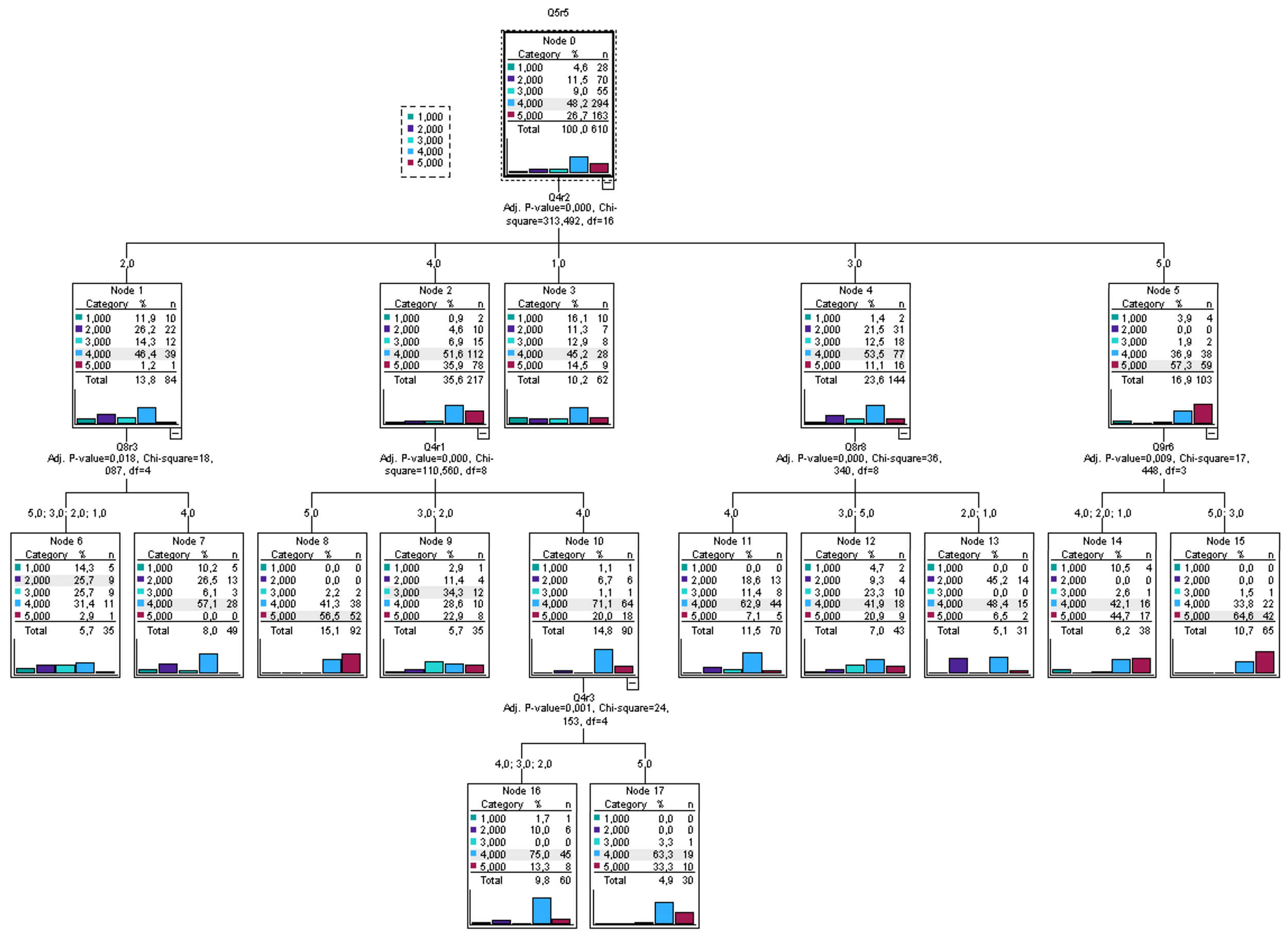
In order to answer the RQ1, i.e., to explore the premises of overcompliance (see Fig. 1 in Findings section) we included all companies (610 responses), regardless of their compliance behavior. This broader dataset allows for the differentiation between factors influencing overcompliance and those not directly associated with it. Node 0 in Fig. 1 shows the distribution of responses to q5r5 (voluntary overcompliance). The split by q4r2 highlights that employee pressure was a critical determinant. If only overcompliant companies were analysed, the comparison to companies unaffected by such internal pressure would be lost, leading to biased results and incomplete understanding of voluntary business restriction drivers.
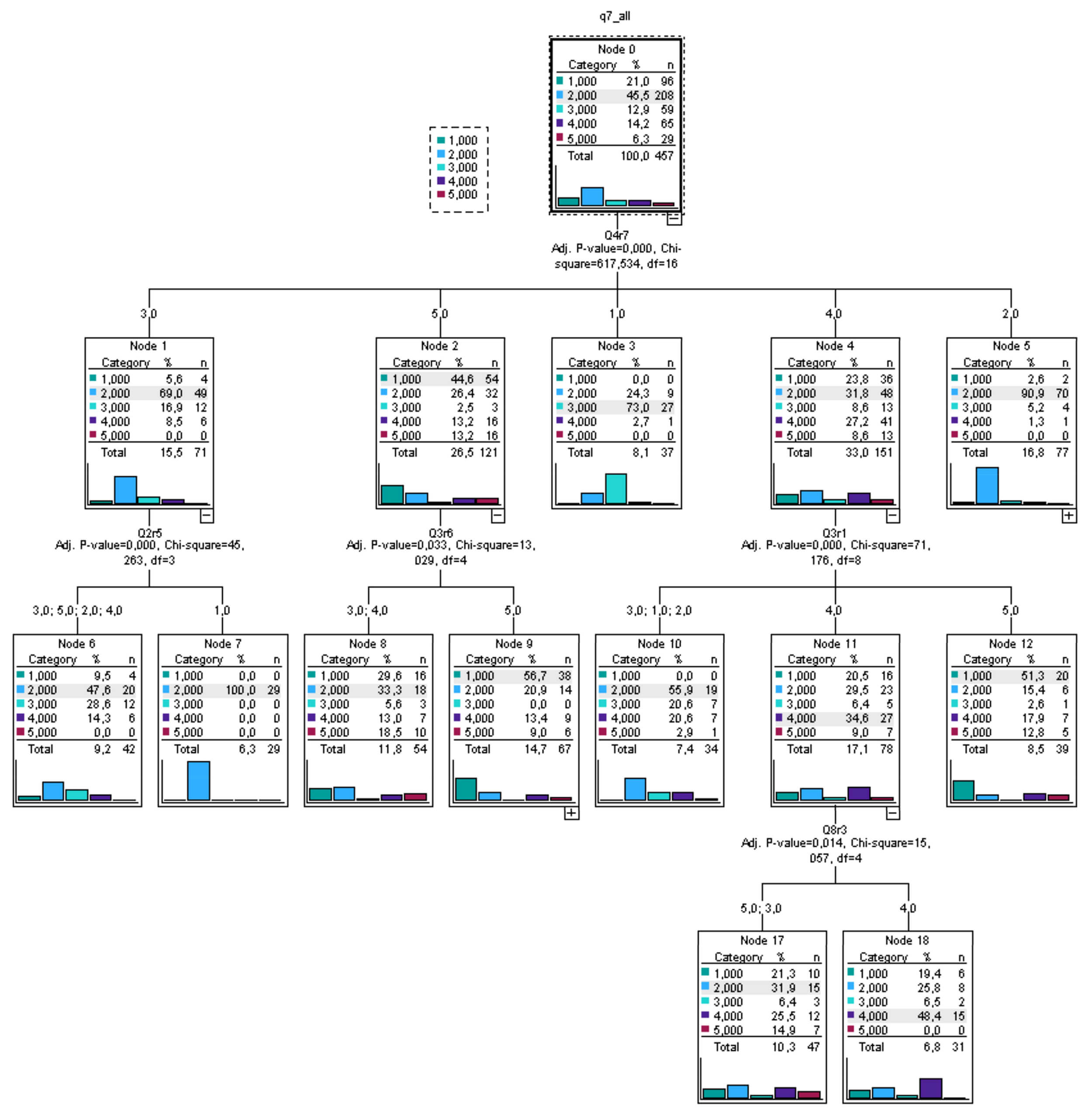
In contrast, the classification tree that answers the RQ2 (Fig. 2) focuses on economic performance, measured through the dependent variable q7_all. Since this analysis aims to understand the performance of overcompliant firms, we restricted the sample only to these companies (457) that voluntary ceased their activities in Russia and Belarus. Including non-overcompliant companies in this case would dilute the results, as their economic outcomes may stem from fundamentally different decision-making processes unrelated to overcompliance.
The CHAID classification trees (see Figs. 1,2) illustrate the segmentation process and the influence of independent variables (in Fig. 1—employee sentiment, ethical commitments, compliance initiatives, and sustainability goals; in Fig. 2 —e.g., compliance regulations, deinvesting, cost cutting, seeking for new opportunities) on the dependent variable (in Fig. 1, answering RQ1—premises of overcompliance and in Fig. 2, answering RQ2—economic performance). The classification trees are structured as follows:
 Fig. 1.
Premises of overcompliance—classification tree. Legend: Variables Used in the Decision Tree: q5r5: “We have voluntarily limited our operations in Russia and/or Belarus”. q4r2: “Our employees demanded that we stop doing business with Russia and/or Belarus”. q8r3: “We are always looking for new opportunities in the market”. q4r1: “We determined that Russia’s armed attack contradicts our company’s values”. q8r8: “We organize meetings, professional resources, and/or training to promote compliance with government regulations”. q9r6: “Our mission is to transform our business to be fully sustainable”. q4r3: “As a company, we felt that withdrawing operations from Russia/Belarus was our moral obligation”. 1—strongly disagree; 2—disagree; 3—neutral; 4—agree, 5—strongly agree.
1. Structure and Node details: each Node represents a subset of respondents, categorized by their answers to the main dependent variable (in Fig. 1 this is overcompliance and in Fig. 2 this is economic performance) and within each Node the responses are summarized both numerically and graphically:
• In Fig. 1, answering the question what were the most important premises of overcompliance the Node 0 represents the question q5r5 (voluntary overcompliance) Node 0 (root), shows that 26.7% of respondents selected “5” (strongly agree), while 11.1% selected “4” (agree). Node 2 represents subgroup of respondents that agreed (4) with the statement q4r2: and shows that vast majority of this subgroup also answered either agree (4; 51% of this Node, 112 companies) or strongly agree (5; 36%, 78 companies within this subgroup) with the statement about voluntary overcompliance. The same logic applies to each Node; for example, Node 17, comprising of 30 companies consists from 29 companies that overcomplied with sanctions.
• In Fig. 2 Node 0 represents the economic performance of companies that overcomplied with sanctions. Economic performance is measured as a compound variable of financial and competitive indices in comparison with the respective measures before war outbreak and sanctions’ imposition.
2. Splitting variables and process: Nodes are divided based on predictors, which are displayed below each split. The splitting process is guided by the statistical strength of association between each predictor and the dependent variable, measured through the Chi-Square test. For example:
• In Fig. 1 (premises of overcompliance) Node 0 is split by q4r2 and Node 2 is split by q4r1.
• In Fig. 2 (economic performance) Node 0 corresponds to the dependent variable calculated as the mean of five survey questions related to economic performance. Node 0 demonstrates that 35% of companies reported at least the same economic performance as before the war and sanctions imposition, indicating that internal compliance measures as well as passive and proactive adjustment strategies correlate with better economic outcomes. Node 0 is split by the question q4r7, while, e.g., Node 3 is split by question q2r5.
3. Flow and interpretation: respondents flow through the tree based on their answers. Nodes represent specific respondent groups characterized by unique combinations of answers to the predictors. For instance:
• In Fig. 1, respondents who answered “4” to q4r2 are directed to Node 2, while those who answered “1” are directed to Node 3.
• In Fig. 2, respondents who answered the question q4r7: are redirected to Nodes 1 to 5, depending on the answer they chose (1—strongly disagree to 5—strongly agree).
4. Graphical representation: bar charts in each Node visually depict the distribution of responses to general questions (Fig. 1—overcompliance and Fig. 2—economic performance) facilitating a quick comparison across Nodes.
The Fig. 1 showing the classification tree of overcompliance premises reveals that voluntary actions aimed at cessation of business in Russia and Belarus are influenced by multiple interconnected factors, including mostly ethical ones, such as employees’ moral convictions, sustainable conduct as the ideology embedded in the company strategy or internal company conviction to respect the law. Prior to delving into the hierarchy of the results obtained and their significance, it is noteworthy that, from a sample of 610 surveyed entities, a total of 75% of respondents (457 companies) indicated that their actions fell outside the scope of sanctions. When compared to other results from studies of companies’ behaviour towards sanctions (Gaur et al., 2023; Meyer et al., 2023; Early, 2021; Early, 2015; Weber and Stępień, 2020; Barry and Kleinberg, 2015), this is an unusual occurrence. Consequently, it can be posited that, in the case under scrutiny, corporate entities were governed by considerations other than those typically economic in nature.
The most critical factor that decided to overcomply with sanctions were employees pressure to refrain from doing business in sanctioned area (q4r2). Companies facing strong employee demands to cease operations were significantly more likely to overcomply due to the pressure of internal stakeholders. These are Node 2 (with the answer 4—agree) and Node 5 (with answer 5—strongly agree with employees pressure). The next in importance was a moral code of the company itself (q4r1) which made those entities to limit business operations voluntarily (Nodes 8 and 10). Slightly less important premise to overcomply with sanctions is sustainable conduct of companies (Nodes 14 and 15). This is due to the fact that, regardless the answers to the question q9r6 (Node 14—companies indicated 4, 2 or 1 while in Node 15 companies answered 5 or 3) the vast majority of companies in both Nodes overcomplied with sanctions. This means that the sustainability aspect favoured either compliance or overcompliance but not as much as the moral code of conduct.
However, the factors of moral code of companies and sustainability are more important than other factors shown the in the second row of hierarchy. The Nodes retrieved by analysis of questions q8r8: “We organize meetings, professional resources, and/or training to promote compliance with government regulations” (Nodes 11, 12, 13) and q8r3: “We are always looking for new opportunities in the market” (Nodes 6 and 7) comprise of companies that overcomplied but not so profoundly as those who followed their moral code or sustainable ideology. Companies’ internal regulations make them comply with the rule of law (q8r8), but it is not clear from the pattern of responses that majority of companies that overcomply are actually following the rule of law. Companies constituting Nodes 6 and 7 are these for which sanctions made them seeking new opportunities in the market (q8r3). However, this is important to stress that these are entities which did not experience pressure from employees to overcomply (Node 1). For some of these companies, the search for new opportunities largely took the form of voluntary withdrawal from operations in Russia (Node 7).
A very interesting case of companies is those in Node 17, which is characterised by answer 4 (agree) to question Q4R3 (As a company, we felt that withdrawing operations from Russia/Belarus was our moral obligation). Only those companies that either complied with the sanctions (1 out of 30) or over-complied (29 out of 30) were included in Node 17. These are both companies that responded ‘yes/agree’ to the question about pressure from employees to refrain activities from Russia/Belarus and those whose motive for overcomplying was the company’s moral values.
Taking the above findings into consideration we can state that three out of five hypotheses were supported with the following order of its importance as the premises of sanctions’ overcompliance:
H1—Overcompliance is prompted by employees’ moral attitudes condemning Russia’s aggression against Ukraine—supported.
H2—The factor that induces overcompliance is the company’s moral code/moral values—supported.
H3—The company’s commitment to sustainability contributes to overcompliance—supported.
The findings did not prove the remaining two hypotheses even though the statements about protecting company reputation as a reason for compliance/overcompliance was given in the questionnaire together with statements about complexity and dynamic change of sanctions scope.
H4—Protecting the company’s reputation is a premise for overcompliance—declined.
H5—The extensive scope, intricacy and volatility of sanctions prompts companies to overcomply—declined.
Despite the absence of evidence indicating concern for one’s own reputation as a motivation for overcompliance, the underlying ethical and moral rationales for such actions are noteworthy. These rationales contribute to the cultivation of a company’s reputation as socially and morally responsible. Moreover, a salient rationale for voluntarily reducing operations in sanctioned areas is the development of internal knowledge and awareness, thereby promoting compliance with government regulations. It can be inferred that during such meetings and training sessions, the complexity, intricacy and volatility of the sanctions imposed on Russia and Belarus became evident. This may have led to the acknowledgement that conducting business in these territories posed a significant risk of unconsciously violating the law, thereby jeopardising the company’s integrity.
Fig. 2 below shows a classification tree that depicts the hierarchy of the dependence of firms’ economic performance on the respective adjustment activities. The sample consists of 457 firms that voluntarily extended sanctions and reduced or withdrew from Russia and Belarus despite the absence of such restrictions. The dependent variable, q7_all, is a composite measure of economic performance derived from key financial/economic indicators (e.g., total revenue, profitability, and price and non-price competitiveness) compared to pre-war levels.
 Fig. 2.
Overcompliance and economic performance—classification tree. Legend: Variables Used in the Decision Tree: q7_all: Composite variable representing economic performance (5 = much better performance than the one before the sanctions imposition; 4 = better performance than the one before the sanctions imposition; 3 = the same level of performance comparing to sanctions imposition; 2 = worse economic performance in comparison with the one before the sanctions imposition; 1 = much worse economic performance in comparison with the one before the sanctions imposition). q4r7: “Our company provided guidelines and/or training for employees regarding compliance with sanctions”. q2r5: “Our company suffered investment losses in the conflict zone”. q3r6: “Our business partners pressured us to cease operations in Russia and/or Belarus”. q3r1: “We reduced labor costs or downsized operations in Russia/Belarus in response to geopolitical challenges”. q8r3: “We are always looking for new opportunities in the market”. 1—strongly disagree; 2—disagree; 3—neutral; 4—agree, 5—strongly agree.
The root Node (Node 0) indicates that 66% of companies that overcomplied reported worse economic performance in comparison with the pre-war and sanctions’ imposition period with 34% of firms reported either the same or better performance. The segmentation process reveals several significant factors influencing performance, categorized into internal compliance measures, external stakeholder pressures, cost management strategies and proactive strategies aimed at looking for new opportunities stemming from the current situation.
Firms that implemented comprehensive training programs for sanctions compliance to a great extent (Node 2) exhibited relatively worse economic performance than the rest of companies from the sample. In Node 2, 71% of companies reported that their performance was much worse or worse than before war and sanctions’ imposition period. However, companies which answered 4 (agree, Node 4) have shown better economic indices than the whole sample (only 55% of companies within this subgroup suffered from the worse economic situation in comparison with 66% exhibited in the whole sample, Node 0). This might indicate that internal compliance initiatives enabled those organizations to align operations with geopolitical restrictions while maintaining regulatory integrity. However, in instances where companies have over-complied, yet simultaneously abandoned endeavours to maintain internal transparency, thereby ensuring their operations are compliant, have achieved economic neutrality to the greatest extent (Node 3). Such results may suggest that companies in Node 4 withdrew from operations in Russia and Belarus to a greater extent than required by the sanctions, but continued to operate in sanctioned area and thus maintained an expensive compliance administration apparatus. In contrast, companies in Node 1 may not have had any reason to implement compliance initiatives since they had completely ceased operations in Russia and Belarus.
Pressure from business partners to withdraw from Russia and Belarus was a significant external driver that worsened the economic performance of companies that overcomplied with sanctions (Nodes 8 and 9).
Another factor worsening the economic situation of the companies in the sample was the loss of investment capital located in the conflict areas (Ukraine, Russia). However, it is crucial to consider the redistribution of responses within Nodes 6 and 7. All companies that did not incur investment losses (Node 7) still experienced a deteriorated economic situation in comparison to their pre-war status. In contrast, some companies in Node 6, which suffered investment losses, demonstrated resilience by either maintaining their performance or achieving an improvement. A subsequent analysis of the responses exhibited by these companies indicates that this accomplishment can be attributed to two key factors: the reconfiguration of supply chains and the identification of new markets, signifying proactive measures.
when used not to the extreme, provided better economic results than exhibited by the whole sample (Node 11). Those companies which fully agreed with the statement of labour costs’ reduction or downsizing operations in Russia/Belarus have reported worse economic performance than the companies in Node 11, but the same as the whole sample (Node 0).
The companies in both Nodes delineated by the statement “We are always looking for new opportunities in the market” show better economic performance than the whole sample. A particularly salient finding is the group of companies in Node 18, where 54% of respondents exhibited results that were either the same as or better than those in the pre-conflict period. These companies also indicated that they had implemented internal compliance measures and cost-cutting strategies in their adaptation efforts.
The results presented illustrate the following general relationships. First, overcompliance is associated with a deterioration of the pre-crisis economic situation for the majority of the surveyed companies, confirming the hypothesis:
H6—In the short term, overcompliance results in the worse economic performance of companies that voluntarily ceased their operations in the sanctioned area—supported.
Furthermore, the findings of this study indicate the factors that contribute to the deterioration of corporate performance. Primarily, this is attributable to the additional pressure from supply chain partners to refrain from operating in sanctioned regions and investment losses in these areas. Companies that implement transparent internal sanctions monitoring procedures while maintaining operations in Russia and Belarus encounter additional costs, consequently leading to diminished performance in comparison to those that have fully discontinued operations in the region and are therefore not encumbered by monitoring expenses.
Nevertheless, our second research question pertained to the identification of measures that could mitigate the financial losses incurred as a consequence of overcompliance. The responses to this question can be found in Nodes 11, 17 and 18. These three groups of companies serve to confirm the hypothesis:
H7—Minimising the negative effects of overcompliance requires a combination of passive (reducing costs) and proactive (seeking opportunities, new solutions) measures—supported.
However, the results do not confirm our last hypothesis that proactive adjustment measures better mitigate negative economic consequences of overcompliance than passive, cost cutting actions. The Node 17 indicates that, despite the superior economic performance exhibited by the companies within this group in comparison to the overall sample, they nevertheless demonstrate suboptimal performance in comparison to those employing passive adjustment strategies (Node 11). This outcome may be attributable to the presence of companies within this group who answered ‘3’ (neutral) to the statement enquiring about their pursuit of novel opportunities in a newly constrained environment. While the companies that answered in the affirmative (Node 18) demonstrate the highest economic performance within the sample, it is notable that some companies in Node 17 are seeking new, proactive solutions to an even greater extent than those in Node 18. An in-depth analysis of the companies in Node 17 that answered 5 (strongly agree) to the question about seeking proactive solutions ‘outside the box’ shows that they have refocused their supply chains or invested in new markets. While this strategic realignment may yield long-term benefits, the survey findings reveal that the economic performance of these companies at the time of the survey does not yet indicate this.
The research presented in this article demonstrates that when determining a particular strategy in relation to sanctions, the majority of companies in the sample were guided by considerations other than the typical economic cost-benefit analysis. The companies surveyed primarily acted on ethical motivations. The most significant rationale for overcompliance was pressure from employees, dictated by the moral condemnation of the aggressor states (Russia and Belarus). The company’s moral code, which denounces Russia’s aggression against Ukraine, and its commitment to sustainability, as outlined in its strategic framework, also influenced this course of action.
Nevertheless, the choice to overcomply has predominantly unfavourable economic consequences in the sample, at least in the short term. The negative outcomes were primarily attributable to external factors, namely the withdrawal of supply chain partners from Russia and Belarus and the economic losses incurred as a result, including disinvestment (both domestic and international). Conversely, companies that elected to curtail their operations in sanctioned regions, yet did not fully relinquish them, encountered augmented expenses pertaining to the surveillance of sanctions. The most economically sound decision, however, was taken by those companies that completely ceased operations in these areas, thereby negating the need for ongoing monitoring of sanctions. A combination of cost-cutting measures and proactive initiatives seeking out new opportunities in the context of the new rules of the game contributed to minimising the negative economic impact of overcompliance. Nevertheless, it is important to note that certain proactive measures, such as the reconfiguration of supply chains or the entry into new markets, did not result in an immediate enhancement of economic performance.
It is at this nexus that the most significant limitation of our research must be emphasised. As our survey was conducted in 2023, we could only assess the dependence of overcompliance on economic performance in the short term. The long-term implications of proactive strategies remain uncertain. While there is compelling evidence from studies of corporate behaviour in crisis (Gittins et al., 2022; Wenzel et al., 2021; Eggers, 2020) to suggest a positive effect, further research is required to confirm such an outcome.
A further limitation of the research stems from the adoption of specific criteria for the construction of the research sample. The findings are limited to only three countries—sanction senders and to medium-sized companies. A more expansive sample, encompassing additional countries and a range of entity sizes, would facilitate a more nuanced examination of their sanctions-related strategies and the impact these strategies have had.
Notwithstanding the aforementioned limitations, it is nevertheless believed that the research results presented have significant economic, managerial and regulatory design implications. Firstly, from the point of view of economic considerations, cost-benefit calculations should more broadly take into account social and environmental costs as those that determine economic action. The findings of the present study demonstrate that business motivations of companies in the face of responses to sanctions are ethical and socially responsible. Contemporary perceptions of economics are evolving towards the adoption of a management approach that is ethically, socially and environmentally conscious. The costs of actions guided by such motives can be regarded as long-term investments in a company’s reputation, image, and its public perception.
In relation to the research conducted on the relationship between overcompliance and economic performance, the results obtained are unsatisfactory. It appears that companies that have voluntarily restricted their activities in sanctioned markets failed to mitigate the losses caused by such a decision. This can be interpreted as a deliberate managerial decision to anticipate a future negative financial outcome that the company can withstand and survive. However, the limited use of proactive measures gives rise to the question of whether all avenues for loss compensation have been exhausted and whether such opportunities were actively pursued. From a managerial perspective, the range of actions available to offset such decisions is considered to be inadequate. Moreover, the adoption of decisions that are ethically and socially sound yet result in adverse economic consequences does not, in itself, provide a valid rationale for managerial inaction in situations where crisis intervention is imperative.
The research results presented here has, also an important implication regarding sanctions’ communication and effectiveness. The armed attack by Russia on Ukraine has been extensively publicised in the media, thereby fostering social debate and prompting both citizens and companies to adopt a stance on the act of violating public order itself, as well as a response to it. As demonstrated in the theoretical and empirical sections, social pressure, including the one from employees, is a significant factor in prompting compliance or overcompliance. This phenomenon, in turn, has the effect of intensifying the severity of sanctions imposed on target countries, thereby enhancing their likelihood of achieving the desired outcomes. Unfortunately, we have to point out, that the research on the effectiveness of sanctions demonstrates that those directed against authoritarian regimes are often politically ineffective, even though they result in losses for the targeted economies (Gaur et al., 2023; Huynh et al., 2023; Peksen, 2019; Korhonen, 2019; Lektzian and Sprecher, 2007). However, regardless of the plausibility of the political effect, the economic onerousness of sanctions invariably results in negative economic consequences for the targeted country, which should not be underestimated.
Not applicable.
Conceptualization: BS. Methodology: BS, ST. Data collection: BS, ST. Formal analysis: ST. Writing – original draft: BS, ST. Writing – review & editing: BS, ST. Both authors have read and approved the final manuscript. Both authors have participated sufficiently in the work and agreed to be accountable for all aspects of the work.
Not applicable.
Funding for this study was provided by the grant from the National Agency for Academic Exchange under the Intervention Grants Programme, project entitled RUSAN, no. BPN/GIN/2022/1/00037.
The authors declare no conflict of interest.
References
Publisher’s Note: IMR Press stays neutral with regard to jurisdictional claims in published maps and institutional affiliations.