
 , Magdalena Godek-Brunel 2,*
 , Aline P. Pündrich 3
1 Magellan, IAE Lyon School of Management, University of Lyon, UJML, 69008 Lyon, France
2 International Business Departement, ESCE International Business School, OMNES Education, 69007 Lyon, France
3 EM Strasbourg Business School, Université de Strasbourg, 67085 Strasbourg Cedex, France
Abstract
This study focuses on boycotts driven by geopolitical crises, exemplified by the backlash against French retailer Leroy Merlin in Poland during Russia’s invasion of Ukraine. It examines the cognitive processes underlying consumers’ decisions to boycott specific companies during crises and the factors influencing shifts in participation over time. It also explores how corporate crisis management and communication strategies affect boycott dynamics. Using a temporal perspective, results show that perceived company errors can exacerbate actions, while transparency and consistency help ease tensions in polarized contexts. Additionally, the study demonstrates that enhancing value propositions (e.g., quality, services, price) can reduce boycott participation.
Keywords
- boycott
- crisis management
- cognitive dissonance
- war context
- Leroy Merlin
The phenomenon of boycotts—when consumers deliberately avoid products or services from specific companies as “an attempt, by one or more parties, to achieve particular objectives by inducing individual clients to not buy certain products” (Friedman, 1985: 97)—has gathered significant academic attention over the years. Scholars have considered this topic from many different angles: the impact of boycotts in turnover at targeted firms (McDonnell and Cobb, 2020), the motivations of boycotting (Braunsberger and Buckler, 2011; John and Klein, 2003), the impact on local economies in developing countries (Chen, 2025), the communication questions related to boycott (Geweke, 2025), and even the use of boycotts as punishment against products associated with foreign competitors during international conflicts (Chen, 2025), among many others.
A boycott may be the expression of a consumer’s desire to change things or, from another perspective, their support for a specific moral cause (Hashim and Kasana, 2019). It includes hostility toward a company by its consumers, driven by controversial political ideologies and geopolitical conflicts (Neilson, 2010). A recent example of such dynamics unfolded between March and May 2022, when multiple Polish media outlets criticized both Polish and foreign brands that chose not to withdraw from the Russian market following Russia’s aggression against Ukraine.
The severe backlash, particularly against the well-known and respected French company Leroy Merlin, illustrates how companies can face swift consequences from countries not directly affected by a crisis, but which are located in neighbouring regions where media coverage and public sentiment amplify the issue. This case provides a critical example to help understand boycott motivations, especially given the strategic importance of examining why customers in similar geopolitical contexts may target one brand while sparing others. Existing research has not fully explored these selective reactions to brand actions, particularly in politically charged situations. Furthermore, to the best of our knowledge, only one study (Lasarov et al., 2023) examines shifts in boycott participation, focusing on differentiating between phases and drivers in a nonpolitical, non-war context. This lack highlights a gap in understanding the dynamics of boycott participation over time in situations where cognitive dissonance (CD) reduction factors are at play, underscoring the originality of this study.
The study aims to analyse, over time, the cognitive processes that influence consumers’ decisions to target a particular company for boycott within a given geopolitical context. Additionally, we investigate how the company’s crisis management policies and communication influence the willingness to boycott. Accordingly, the study addresses the following questions: (1) Why do consumers choose to boycott a specific company? (2) What factors lead consumers to stop boycotting in a war context? Answering these questions will help us define the actions boycotted companies can take that are aligned with consumers’ cognitive processes to mitigate boycott effects.
Political consumerism is broadly defined as “consumer choice of producers and products with the goal of changing objectionable institutional or market practices. It is based on attitudes and values regarding issues of justice, fairness, or non-economic issues that concern personal and family well-being and ethical or political assessment of favourable and unfavourable business and government practice” (Micheletti, 2003, p. 14). The prevalence and impact of political consumerism are contingent on various contextual factors, including political freedom and material prosperity in the country, as well as political solidarity and traditions of citizen mobilization in consumer issues (Boström et al., 2019; Schwalb et al., 2023; Zorell, 2019). The likelihood of political consumerism is higher in developed countries, which are characterized by high GDP per capita and long-established institutions (Boström et al., 2019; Gundelach, 2020). However, post-communist countries are developing forms of this activism that is marked by economic nationalism and the collective memory of struggles against oppression (Gerő and Kerényi, 2025; Pellandini-Simányi and Gulyás, 2019).
Political consumerism refers to decisions deliberately to avoid (boycott) or seek (buycott) specific products for political, ethical, or environmental reasons (Stolle et al., 2005). Boycotts are one of the central mechanisms through which consumers aim to influence societal and corporate behaviour (Boström et al., 2005). For political consumers, boycotts are more than economic acts; they are a symbolic act of political participation that reflects broader societal identities and aligns with collective goals. They serve not only as tools for consumer protest but also as a means to reinforce social movements and civil society engagement (Narayanan and Singh, 2025).
Boycotts have proven effective in damaging a targeted firm’s reputation, leading to declines in profits and a reduction in the number of loyal consumers (Wang et al., 2021). Nevertheless, they rarely result in long-term economic impact. Their greater potential lies in altering social norms and rallying support, particularly when they succeed in raising awareness about the issue they aim to address (Bhattacharya and Sen, 2004).
Prior studies have viewed consumers’ decision to boycott as a cost-benefit analysis, in which they evaluate the possible gains (e.g., to change a firm’s behaviour, increase one’s self-esteem) and the costs of this action (e.g., needing to search for substitute products) (Klein et al., 2004; Zeng et al., 2021). If the costs of boycotts are too high and cause important individual economic losses, for example, consumers are likely to downplay unethical behaviours due to economic calculation and thus reduce their boycott intention (Scheidler and Edinger-Schons, 2020). As loyal clients develop a higher commitment to a product, they typically incur higher costs in boycotting since they must invest more time and energy in finding and adjusting to other brands. In general, consumers seem more likely to participate in a boycott if the targeted company has satisfactory substitutes (Sen et al., 2001).
If the goal of a boycott is to bring awareness, it can be long-lasting and effective when it reflects an organized movement (e.g., The Palestinian Boycott, Divestment and Sanctions National Committee). However, spontaneous consumer boycotts are considered to be less effective and last shorter periods of time (Buheji and Ahmed, 2023). For a boycott to keep its efficacy, it needs a clear coordination as well as organized and dynamic local, regional, and global leaders (Buheji and Ahmed, 2023).
Over time, a boycott movement may be influenced by consumers who switch allegiance due to cost concerns, losing hope, shifting their focus away from the issue, or simply experiencing a decline in enthusiasm (Salas et al., 2019). Additionally, consumers might question the success of a highly uncertain boycott strategy, doubting either the purpose of continuing their participation or its utmost necessity (Klein et al., 2004).
As time passes, it is increasingly difficult to keep individuals engaged in a boycott behaviour, so the participation rate tends to fall. In fact, if consumers judge the likelihood of others participating in the boycott as low, they are less likely to participate and target a brand as well (Klein et al., 2004). Social media make boycotts more visible and widespread, allowing them to quickly gain a momentum; however, when the spotlight is gone, the buzz fades and the collective action weakens (Salas et al., 2019).
Ettenson and Klein (2005) examined boycott movements at two distinct points in time and observed that within one year of the start of such actions, some consumers continued to boycott the company, while others had abandoned it. Chavis and Leslie (2009) investigated the impact of the boycott of French wine in the US market and observed that the effect on sales was visible within the first six months but completely disappeared after that. Hoffmann (2011) provided further insights into temporal effects; by grouping participants based on their engagement dates, he explored why consumers joined boycotts at different stages. Lasarov et al. (2023) examined drivers of individual boycott participation, distinguishing a “heat-up” phase in which boycott participation is fuelled by expressive drivers (perceived egregiousness and brand image), as well as a “cool-down” phase, in which instrumental drivers are more influential. During the cool-down phase, additional instrumental drivers—such as subjective costs and perceived control—emerge, keeping initial participants from continuing the boycott due to a more careful and rational consideration on their part.
Emotional expression is a strong predictor of consumer engagement in boycott behaviours (Farah and Newman, 2010), especially when it involves negative emotions such as disgust, anger, and outrage. However, positive emotions like empathy toward individuals affected by unethical practices can also play a significant role. These feelings can motivate individuals to participate in boycotts (Braunsberger and Buckler, 2011), particularly those who perceive higher levels of egregiousness (John and Klein, 2003; Klein et al., 2004). Thus, regulation of emotions can play a central role in the boycott behaviour by consumers. In order to better understand this phenomenon, the theory of CD provides a theoretical framework to link emotional regulation and the decision to boycott.
CD refers to a psychological discomfort caused by two discordant cognitions that plunges the individual into a negative emotional state, leading them to reduce such uncomfortable feelings (Festinger, 1957). Theory postulates that an individual seeks a cognitive equilibrium that, when broken, generates a state of tension (Festinger, 1957) often perceived as intolerable (Harmon-Jones, 2019). This tension emerges when an opinion or a decision conflicts with an individual’s existing beliefs and cognitions, particularly in situations where behaviour contradicts beliefs, or when it is exposed to information that is incompatible with other existing cognitions (Festinger, 1957).
Basically, individuals are motivated to reduce CD because they cannot tolerate the feeling of psychological discomfort that it generates (stress, anxiety, and even guilt; Harmon-Jones, 2019). In fact, the greater the inconsistency, the stronger the motivation to reduce it (Festinger, 1957). Thus, the primary goal of dissonance reduction strategies is to restore cognitive harmony by aligning one’s beliefs, actions, and perceptions of reality. Literature presents several generic dissonance reduction strategies. Individuals may simply change their attitude (Albarracín and Shavitt, 2018) to align with their behaviour (Van Veen et al., 2009), or they can add new cognitions (Gawronski and Brannon, 2019; Harmon‐Jones et al., 2015) to fill the gap between attitude and behaviour. For example, individuals can look for additional information that supports their behaviour or helps them justify the problematic issue (Beauvois et al., 1993). Individuals may also seek to confirm their beliefs or behaviours through selective information exposure (Hart et al., 2009; Knobloch-Westerwick et al., 2015) while avoiding dissonant information (Bran and Vaidis, 2022). Another strategy consists of varying the importance of the elements involved in the inconsistency relationship (Vaidis and Bran, 2018), either by reducing the weight of the problematic cognitions (Harmon‐Jones et al., 2015)—trivializing their inconsistency (Beauvois and Joule, 2019; Harmon-Jones, 2019)—or reducing their perceived significance (McGrath, 2020). Finally, a rationalization in act change (Fointiat et al., 2013) consists of individuals reducing their CD by performing a second behaviour in the same direction as the problematic one, thereby reinforcing it (Vaidis and Bran, 2018).
One of the central themes in the boycott literature is the role of corporate behaviour. Companies perceived as unethical or socially irresponsible—for example, engaged in environmental harm, human rights abuses, controversial political stances—often become targets of intense consumer disdain (Fetscherin and Heinrich, 2015) and are more likely to be boycotted (Klein et al., 2004). In fact, the perceived hypocrisy of an enterprise—when its professed values conflict with its actions—amplifies boycott tendencies (Auger et al., 2003). Unlike minor grievances, ideological incompatibility affects consumers on a personal level, leading them to reject companies that violate their deeply held values (Costa and Azevedo, 2023). Such moral avoidance (Lee et al., 2009) arises when consumers’ ideological beliefs clash with a company’s values or associations, and it is more pronounced regarding companies that actively promote or are publicly associated with values or practices opposed by certain consumer groups (Fetscherin and Heinrich, 2015).
Accessibility of information also affects the likelihood of a boycott, since companies that are more prominent or widely discussed in social and traditional media are more likely to be boycotted (John and Klein, 2003). Additionally, social media tends to intensify negative feelings and reactions from customers (Kucuk, 2019). In this regard, visibility plays a dual role: while large companies are more susceptible to public scrutiny, smaller ones may avoid similar levels of consumer backlash simply due to a lack of widespread awareness (John and Klein, 2003). Public discourse, such as social media platforms, can quickly amplify the reasons behind a boycott, making some companies easier targets than others (Hoffmann and Müller, 2009). Since social norms and peer influence often motivate boycotts, such movements become widely recognized within certain communities or groups (Hoffmann and Müller, 2009). When consumers perceive that their social networks or communities widely support a boycott, they feel a stronger obligation to participate, leading to a higher likelihood of targeting certain enterprises over others (Hoffmann and Müller, 2009).
Our study adopts a qualitative, exploratory methodology through a single longitudinal case study. This method enables researchers to examine a context using a comprehensive view (Baxter and Jack, 2008). Our study follows a six-stage case study process (Yin, 2009), enhanced by recommendations from the broader methodological literature.
Our research started by a comprehensive literature review to identify relevant gaps and relate them to the research questions (Ravitch and Riggan, 2016; Yin, 2009). Our study sought to know the reason why consumers choose to boycott a specific company, as well as the factors leading them to stop boycotting in a war context.
Single-case studies include the examination of critical, extreme, representative, typical, revelatory (involving a novel situation), and longitudinal cases (Yin, 2009). We chose the single-case study method because it enables us to enhance theory by analysing new and original phenomena—such as the boycott of Leroy Merlin stores in Poland in a context of war—through an in-depth revealing study and a longitudinal case (Yin, 2014). In order to do so, we precisely defined the time boundaries of the case (Yin, 2014), starting our research with the Russian aggression on Ukraine (February 22, 2022) and concluding it on August 31, 2024.
We defined the different phases of the case study protocol and the data collection methods in order to ensure data triangulation. We collected the first data set using two different methods:
• Netnographic research (Kozinets, 2002) on Leroy Merlin Polska’s Facebook page from March 2022 to March 2024, which led to the analysis of more than 10,000 posts. Netnography (Kozinets, 2002) involves a researcher joining an online forum, electronic tribe, or other open-source social media platform to observe and record discussions for analysis. In our case, we did not actively participate in the forum but instead focused on reading and selecting online discussions that we deemed relevant to our study.
• Two series of interviews with Polish consumers using a previously developed interview guide, the first in summer 2022, and the second in summer 2024. The sample Appendix Table 1 included 30 participants, 15 men and 15 women, between 26 and 72 years old. The distribution of education levels is as follows: 10 participants (33.3%) have a diploma below elementary education, 11 participants (36.7%) have an education up to secondary level (a bachelor’s degree), and 9 participants (30%) have diplomas above secondary education.
We followed the research protocols for a netnographic analysis (Kozinets, 2002). The first step was to choose a community on Leroy Merlin Polska’s Facebook page because this company’s social media platform had the highest number of users (its number of followers was more than three times of those on Instagram or YouTube platforms). Its publications elicited a strong response from internet users (internauts), clearly articulating their point of view and aligning with the demographic characteristics of Leroy Merlin Polska’s client base, which is predominantly composed of individuals over the age of 25. We tracked Facebook publications for two years (from March 2022 to March 2024).
During this period, in order to process all the data from interviews and posts, we used the preestablished open thematic coding method presented in Appendix Fig. 3, which was then enriched during the course of the analysis. Our coding system was based on theoretical and empirical results. The first level of codes (reasons to boycott and reasons to stop boycotting Leroy Merlin) and the second level of codes (country of origin, firm specificities, adding cognitions, reducing the importance of cognitions, rationalization of attitude change) were based on netnographic theory, and their manifestations (historical relationship, economical cynicism, etc.) were extracted from empirical material. Afterward, two researchers carried out separate analyses using an inter-rater agreement procedure (Cohen Kappa’s: 89%) in order to check the reliability of our classification.
Netnographic analysis consisted of identifying first all the posts referring to the Russian-Ukrainian war. Then, we divided the posts in three groups: Leroy Merlin’s policy announcements, Leroy Merlin’s statements about providing aid to Ukrainians, and Leroy Merlin’s promotional posts that were not linked to the war but where internauts’ comments about the company’s actions in Russia could be found. We then investigated to what extent the various players responded to the company’s statements regarding their policy and their links to the war by tracking the number of comments and the number of emoticons: “angry”, “like”, as well as the increase in the number of comments. Appendix Table 2 shows the company’s statements and posts that generated the most reactions from internauts. To investigate how the involvement of internauts changed over time, we notified the number of comments and emoticons at five different times (March 2022, October 2022, March 2023, October 2023, and March 2024).
We also triangulated the netnographic data with three other sets of data (Kozinets, 2002): the in-depth interviews, national and sectorial press articles about Leroy Merlin (Appendix Table 3), and the company’s announcements on their corporate website. To this end, we created a Leroy Merlin case study database, including all the secondary data (press articles, company documents), interview transcripts, and preliminary netnographic analysis, enabling us to develop an audit trail from data collection through analysis to final conclusions. We categorized, indexed, and cross-referenced all the items in the database to facilitate easy retrieval (Yin, 2009), and we supported construct validity through multiple sources of evidence and multiple measures of the same construct (Yin, 2009). Then, we proceeded to an analytical generalization that involved the extraction of abstract concepts from each unit of analysis (Yin, 2014) and their connection to the theoretical foundations in our discussion. Following that, we proceeded to semi-directive interviews.
Our data analysis occurred in two distinct phases. First, from June to August 2022 we examined the factors that motivated individuals to participate in Leroy Merlin’s boycott movements. Second, from July to August 2024 our focus shifted to understanding why some of our respondents stopped boycotting Leroy Merlin. This second phase incorporated an analysis of psychological processes, particularly regarding how individuals reduced or dismissed conflicting cognitions and rationalized their actions.
Leroy Merlin, founded in 1923, is a French distribution brand combining housing and do-it-yourself (DIY) activities. It is nowadays a part of ADEO Mulliez family group (Auchan, Decathlon, Boulanger, etc.), and exceeded €30 billion in turnover in 2022, €9 billion of which was generated in France, its main market. In Poland, the company was firmly established and was one of the leaders in the DIY and home improvement market. Its 75 stores in Poland exceeded €2 billion in turnover in 2022 and employed 13,000 people. Also present in the Russian market, representing 18% of the company’s overall revenues, Leroy Merlin operated 112 stores and employed 45,000 people before the war.
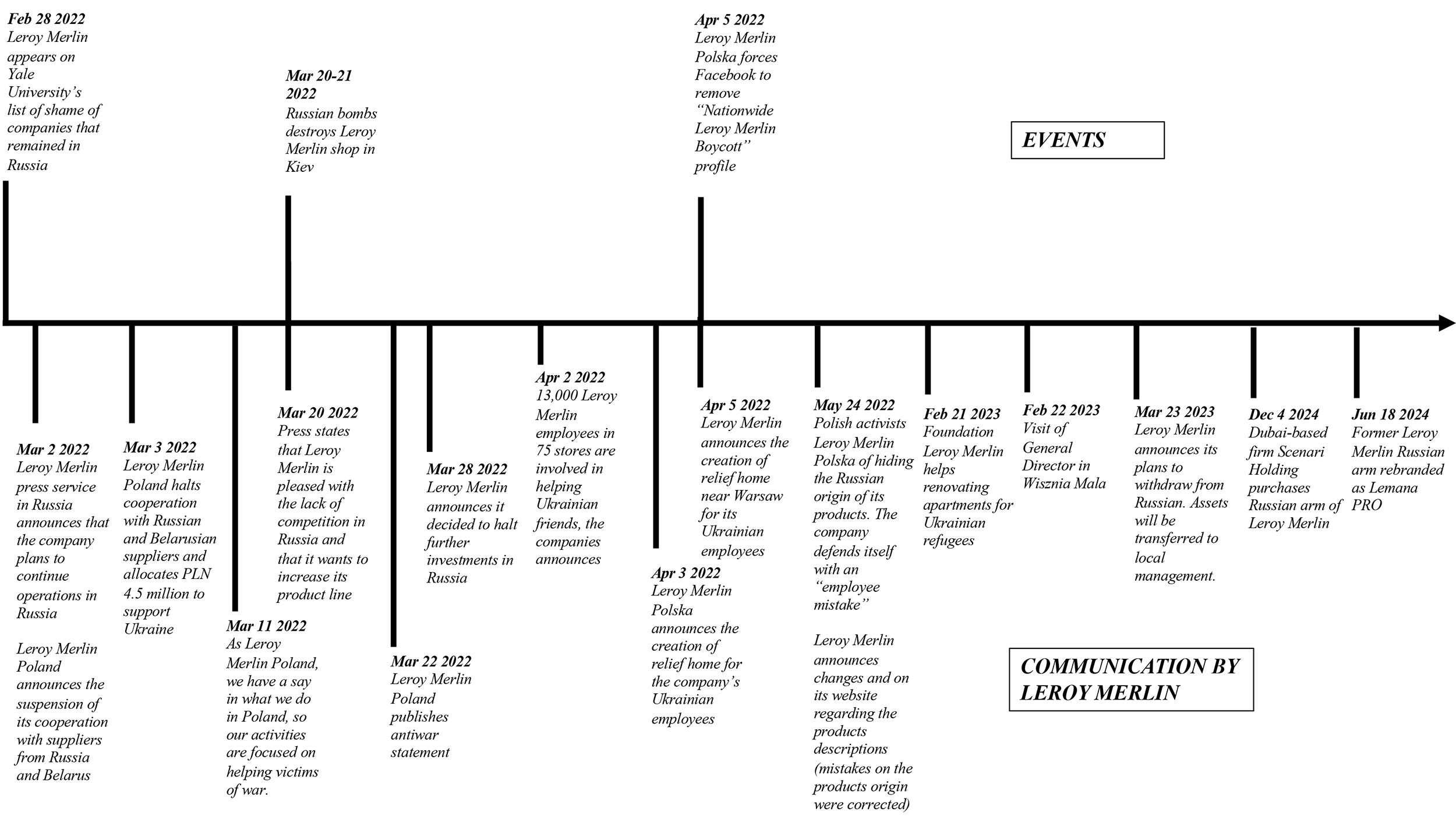
On February 28, 2022, Yale School of Management published a list of firms that did not withdraw from Russia, among which was Leroy Merlin Polska. On March 2, 2022, the Russian agency Tass reported that Leroy Merlin planned to continue normal operations in Russia. Once spread by the Polish media, this information provoked negative press in Poland against Leroy Merlin Polska. Polish citizens began calling for a boycott of the French company despite the announcement by the general director of Leroy Merlin Poland, Krzysztof Kordulewski, on the same day, about the suspension of cooperation with suppliers from Russia and Belarus and, the day after, an offer of 4.5 million zlotys to support Ukraine. On March 11, Leroy Merlin Polska emphasized that Leroy Merlin was helping Ukrainians, seeking to absolve themselves of any responsibility and pointing out they were following French headquarters’ directions.
A few days later, the British newspaper The Telegraph revealed internal documents from Leroy Merlin indicating that the company sought to take advantage of competitors’ withdrawal from the Russian market and aimed to expand its product lines. When the Polish media published this information, it triggered a second wave of criticism against the company, coinciding with the night when Russia bombarded the Ukrainian mall near Kyiv. On March 22, the director of Leroy Merlin Polska, on behalf of the board, released an anti-war declaration, and the Polish media sarcastically pointed out that this declaration did not mention the word Russia.
It is worth mentioning that, during this period, Polish authorities declared their intent to help Ukraine through all possible means. On March 12, 2022, the Polish Parliament massively passed a Law on Assistance (health, education, work facilities) on behalf of Ukrainian citizens. From the beginning of the war, Polish society was heavily involved in helping Ukrainians, hosting them in their homes, organizing transport, and assisting at the Polish-Ukrainian border. From February 24, 2022, to January 10, 2023, over 9.5 million refugees crossed the border into Poland, of whom more than 1.5 million registered as living in Poland during this period.
As demonstrations and boycotts increased, Leroy Merlin Polska announced on March 24, 2022, that its French parent company had decided to halt further investments in Russia. Additionally, the Polish subsidiary posted information on its Facebook page about its actions to help Ukrainian employees of the firm. However, this communication sparked further negative reactions on Polish social media, where customers accused Leroy Merlin Polska of hypocrisy and demanded a rapid withdrawal from Russia (Appendix Table 4).
In May 2022, rumours said that Leroy Merlin Polska continued selling Russian products while pretending they originated in Poland. The company blamed the issue on an employee error. By the end of 2022, Leroy Merlin Polska had not published any further statements concerning Ukraine. At the same time, Leroy Merlin increased its marketing initiatives and offered competitive prices, significantly boosting advertisement on Poland’s four main television channels between March 10 and May 17, 2022.
Leroy Merlin boycotts in Poland were highly visible in 2022. A survey conducted by GfK Census DIY comparing construction store traffic in Poland from May to October 2022 versus 2021 revealed an average 25.9% year-over-year decline in customer numbers at major chains. Leroy Merlin recorded the largest drop, with a decline of over a third (35%).
Despite the war in Ukraine, Leroy Merlin achieved 20% of its sales and a quarter of its net income (€287.4 million) in Russia by 2023. In March 2023, Leroy Merlin announced its withdrawal from Russia and the transfer of its assets to local management. By December 2023, Leroy Merlin Russia was nearly completely sold (99.993%) to Scenari Holding, a Dubai-based company, and renamed Lemana PRO six months later. Fig. 1 summarizes the events during this period.
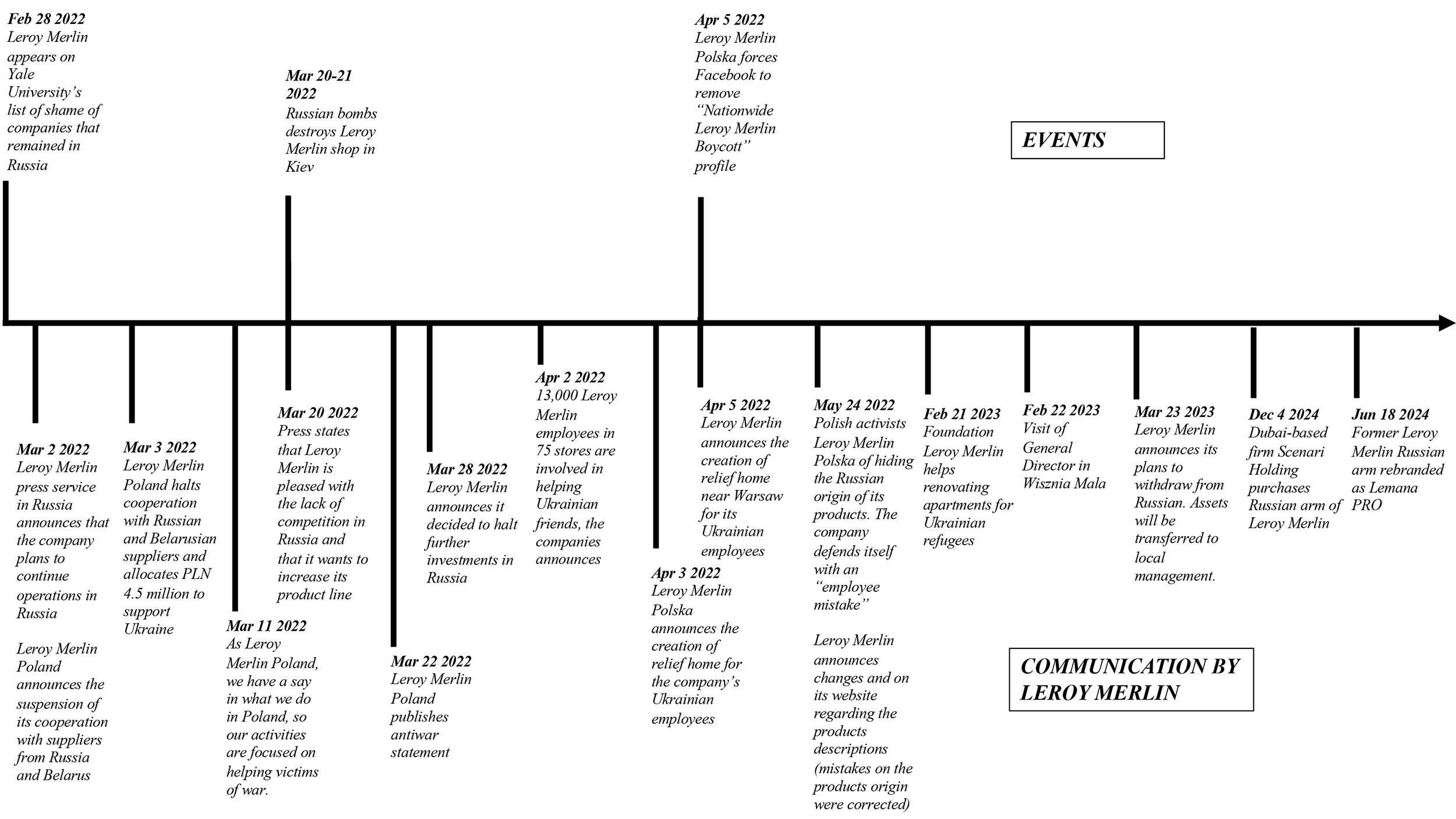 Fig. 1.
Timeline showing Leroy Merlin statements concerning Russian-Ukrainian war printed by Polish media (March 2022–March 2024).
While the general principle applies to all companies, the case of Leroy Merlin helps us understand why some companies may be more targeted by boycott actions than others. At this point, two aspects seem to have had an influence: Leroy Merlin’s nationality on the one hand and its practices on the other.
Regarding Leroy Merlin’s nationality, the company status as the target of a boycott is linked to the complex historical relations between France and Poland, which strongly influence the expectations Poles have toward French companies and denotes non-instrumental motivations (Friedman, 1985; Klein et al., 2004) for engaging in the boycott. For some of the boycotters, “there is a feeling of betrayal because France and Poland have a long-shared history” (18, see Appendix Table 1 for the respondent identification and details). Leroy Merlin’s decision to continue its business in Russia seems to evoke latent sorrows in certain individuals, leading to the use of boycott as a punishment against the company’s actions (Abosag and Farah, 2014; Braunsberger and Buckler, 2011), especially if, somehow, this company represents a foreign country within the context of an international conflict (Chen, 2025). Additionally, there is a perception of history that seems to repeat itself: “There is a historical sentiment that France hasn’t always supported Poland when necessary, and this manifests again with Leroy Merlin’s stance” (28). The historical context exerts a direct influence on the phenomenon of political consumerism, a notion that is in alignment with the pivotal role of contextual factors as emphasized by the seminal works of Boström et al., (2019), Zorell (2019), and Schwalb et al. (2023). The historical memory of the French army’s refusal to provide military assistance despite the formal military alliance in September 1939, and the geographical proximity of the Russian-Ukrainian war, have reinforced the symbolic significance of these acts of consumption by Poles.
In a similar vein, while many of our respondents declared to be engaged in actions of boycott as a means to demonstrate empathy (Buheji and Ahmed, 2023) for the Ukrainian people, they also tended to associate France and its people, government, and companies with negative characteristics in order to justify their boycotting. Criticisms emerged notably against the French people: “the French often see themselves as champions of democracy, but by continuing to do business in Russia, Leroy Merlin shows that this is not always the case” (1).
Some of the respondents considered that France and its national companies tended to adopt a rather pragmatic approach toward Russia, prioritizing economic interests over European principles and solidarity, which caused sharp criticisms against Leroy Merlin. From that perspective, some individuals would adopt boycott behaviour as a strategy to pressure the company to change its practices and policies (Braunsberger and Buckler, 2011; John and Klein, 2003). Many consumers criticized the supposed lack of solidarity of the French pragmatic approach, especially considering the values historically highlighted by this country: “France has often prioritized its economic interests, even when it conflicted with the expectations of its allies in Central Europe, and Leroy Merlin seems to follow this logic” (9). According to some of the respondents, that would explain the reason why the DIY company would be a legitimate target, since the “French like to lecture others, but their attitude towards Russia shows that these lessons do not always apply to themselves” (9), which caused “a certain resentment [in Poles] towards the French attitude” (3) and gave some people the opportunity to express a feeling of revenge: “the French are often perceived as more cynical; that explains why Leroy Merlin is more criticized” (12) “so now we, simple Poles, will show them and hit where it hurts” (11).
Beyond nationality, respondents also pointed out the specificities of Leroy Merlin, regretting the gap between the image the company projected and its actions: “their image as a responsible and local company in Poland contradicts the fact that they continue to operate in Russia” (14). Because Leroy Merlin had cultivated an image of proximity and responsibility in Poland, such perceived hypocrisy—when its professed values conflict with its actions—further motivated consumers to participate in the boycott (Auger et al., 2003; John and Klein, 2003): “I cannot easily forgive Leroy Merlin, which built its reputation on values of proximity” (25). For many respondents, the company’s decision to continue operations in Russia was very disappointing: “if only they didn’t present themselves as a responsible company, but in this case, it’s so hypocritical” (1). Some of the respondents mentioned an infringement on the relationship of trust: “Leroy Merlin has earned the trust of consumers here, which makes their decision to stay in Russia even harder to accept” (27). Some even go as far as to mention a form of betrayal: “the relationship they built with Polish consumers is betrayed by their decision to continue in Russia” (18). The expression of such negative emotions played a significant role in Polish consumers’ participation in the boycott behaviours (Braunsberger and Buckler, 2011; Farah and Newman, 2010; Klein et al., 2004).
These contradictions, similar to the Trautwein and Lindenmeier (2019) findings, led internauts to express their frustrations and anger toward Leroy Merlin, using words like shame, disgrace, hypocrisy, and greed when reacting to the company’s behaviour (Appendix Tables 4,5). Furthermore, internauts used boycotts in order to pressure Leroy Merlin to change its policy toward its presence in Russia by declaring to eagerly encourage others to take part in the boycott: “I am finishing with you and will convince all my family members and friends and acquaintances to make a similar move. There are things much more important than money” (Facebook LM Polska post, March 11, 2022). These rationales are in line with former studies (Braunsberger and Buckler, 2011; John and Klein, 2003). What is new are the declarations of an irrevocable disappointment toward the brand, leading to permanent brand avoidance: “‘Leroy Merlin and all our 112 stores in Russia are operating normally. We are not planning any changes,”’ a spokesman said. Is this true???? If so - au revoir Leroy!!! Au revoir forever!!” (Facebook LM Polska post, March 2, 2022).
In face of this situation, Leroy Merlin’s official anti-war announcements regarding their help to Ukrainian employees (Appendix Table 4) did not bring the positive expected effects. On the contrary, they provoked further anger and vivid reactions from internauts, who accused Leroy Merlin of hypocrisy because they still had their stores operating in Russia “Please tell us how much donations and aid you have collected in your stores in Russia?” or “I’m afraid that no social action or advertising will convince many Poles. Poles are vindictive. I understand that the Polish branch is doing what it can and probably has good intentions, but unfortunately my foot will not rise in this store” (Facebook LM Polska post, April 5, 2022).
There was a noticeable decline in support for the boycott over time, visible through the number of internaut reactions on Leroy Merlin’s Facebook (Appendix Table 4) and between the two phases of our in-depth interviews. At the beginning of the war, internauts massively responded to promotional posts of the company (1.5 K comments on March 10, along with 3.5 K of angry emoticons). However, 7 months later (October 7, 2022), there were only 72 disapprovals of Leroy Merlin’s policy. The following year, no comments linked to the war were visible on the company’s Facebook page (Appendix Table 5).
As for the interviews, while a majority (17 out of 30) of respondents initially supported the boycott during the first period (June–August 2022), this support diminished significantly (7 out of 30) by the second period (July–August 2024), which would be an expected phenomenon in such long-term events (Chavis and Leslie, 2009; Ettenson and Klein, 2005). However, contrary to the favourable attitude toward the boycott previously identified, this time respondents’ behaviour no longer aligned with their initial attitude, which characterizes a shift potentially influenced by a situation of CD (Festinger, 1957), as well as the very nature of the boycott against Leroy Merlin, that is, a spontaneous movement led by consumers, which is known to be less effective and shorter in time than more coordinated and organized boycotts (Buheji and Ahmed, 2023). In fact, individuals employed three types of strategies to reduce their CD: the addition of an extra cognition, the elimination/reduction of the importance of a cognition, and a rationalization of attitude change. It is important to note that consumers did not use just one strategy, but rather employed several of them in a nonexclusive way.
Some of the individuals added new cognitions (Harmon‐Jones et al., 2015) to explain why they decided to stop boycotting Leroy Merlin. Some explained that by referring to the new economic situation, “with inflation, I don’t really have a choice anymore[;] I have to prioritize stores that are more affordable” (7). Sometimes, this economic pragmatism goes beyond individual behaviour, and a national framework is invoked: “they support the Polish economy by employing many people here. Contractors, suppliers, so in the end boycott is like playing against your team” (30). Some of the respondents ended up acknowledging mitigating circumstances for Leroy Merlin: “I have realized that, like for others, the Russian market is too important for them just to walk away from” (16). The economic reasoning also extends to other direct and indirect market players who, according to respondents, would not sustain practices considered more ethical than those of Leroy Merlin, because “the other stores aren’t any better, so I might as well go back to where I’m used to shopping” (30). Sometimes the practices implemented by the company to respond to the crisis were used to justify the relaxation of the boycott: “they contribute to charitable works in Ukraine to compensate” (21).
Others reduced dissonance by selectively exposing themselves to information (Hart et al., 2009; Knobloch-Westerwick et al., 2015) about the Polish boycott. By judging the likelihood of others’ participation as low, consumers are less likely to participate and boycott a targeted company (Klein et al., 2004). Thus, they use the behaviour of other consumers, who apparently are not boycotting Leroy Merlin, to justify their own: “in any case, everyone keeps buying there, I don’t see why I should continue boycotting alone” (21).
Since the effect of the boycott is factored into the reasoning, leading the boycott movement to lose strength as participants switch over time due to many factors, among which are losing hope, shifting focus away from the issue, or experiencing a decline in enthusiasm (Salas et al., 2019). This boycott can be perceived as positive, as in “I read that Leroy Merlin’s parent company has stated its intention to sell its subsidiary to Russians, so we won” (28), or negative, when respondents state that “the boycott didn’t have the expected effect, and the war continues, so I might as well resume my purchases” (16) and “I think I placed too much hope in the boycott” (21).
Consumers want to minimize a thought or piece of information that creates dissonance. Thus, in order to justify their decision to end the boycott, some of our respondents reduced the gap between their attitude toward the boycott and their behaviour by modifying the weight or eliminating certain cognitions (Vaidis and Bran, 2018).
Our respondents tended to minimize the significance (Albarracín and Shavitt, 2018; McGrath, 2020) of the boycott. In order to do that, boycotters had three main options. The first option was to discuss the overall economic importance of Leroy Merlin by saying that “their business with Russia doesn’t have a strong impact on the conflict in Ukraine” (7) while questioning the purpose of the boycott itself (Klein et al., 2004). The second option was to question the very significance of their action as a simple customer, somehow losing hope that the impact their engagement in the boycott may cause on consumers (Salas et al., 2019): “I’m a small customer anyway, I don’t bring them a lot of zlotys, and in the end, it’s the only store close to where I live” (6). Thus, they questioned the number of their visits to the store—“I realized that I didn’t go there that often, so … here it is” (28)—as well as the amount spent on each visit, since “when I see how full the other customers’ shopping carts are and then look at what I’m buying” (21).
Respondents then invoked time when they said that “it’s hard to continue feeling directly concerned so then you go back to your habits” (23), which illustrates a cool-down phase of boycotts in which instrumental drivers become more influential and the subjective costs and perceived control of the boycott movement come in play (Lasarov et al., 2023). Distance was another element that led individuals to reduce the perceived gravity of the situation in this phase of the boycott movement (Lasarov et al., 2023), since some respondents felt that “at the end, the conflict remains far from here, in the east, not even in Kyiv, and my purchases don’t really have an impact on this situation” (12). Some of the respondents even mentioned that they “had the image of Russians at our borders, but it still looks so far” (7) to justify the relaxation of their good intentions and their struggle.
With the rationalization of attitude change (Fointiat et al., 2013; Vaidis and Bran, 2018) the process of reducing CD takes a complete behavioural turn because engagement with the boycott movement becomes difficult for consumers to maintain. Individuals first tend to break their engagement with the boycott movement by revisiting the once boycotted store. After that first visit, it seems like a natural step to resume their regular visits and get back to their pre-boycott shopping habits. Despite the fact that taking part in a boycott means taking a public stance and openly supporting a cause by responding with feelings of empathy for a particular situation (Buheji and Ahmed, 2023), respondents seemed to have a rather conflict-free approach to the abandonment of their boycott engagement. Among their reasons to resume shopping at Leroy Merlin, and to keep on doing so, respondents evoked practical issues such as “I needed materials to renovate my house, and Leroy Merlin remains the best option … So, I went back once, and then I started going again” (1). Respondents also mentioned economic issues, for “their prices are unbeatable. I made one purchase with a guilty conscience, then two, and then I went back” (30). Issues related to product and service quality also came up in respondents’ reasons since “unfortunately, there’s no comparison in terms of value for money with the others, so I went back for my daughter the first time, and then it was for me” (30). For these consumers, breaking their engagement with the boycott movement was the hardest step, but once it was done, it was “easier not to think about it anymore than to keep boycotting every day” (6), even if “in the beginning I felt a little bit guilty—what do you want, nobody’s perfect” (3).
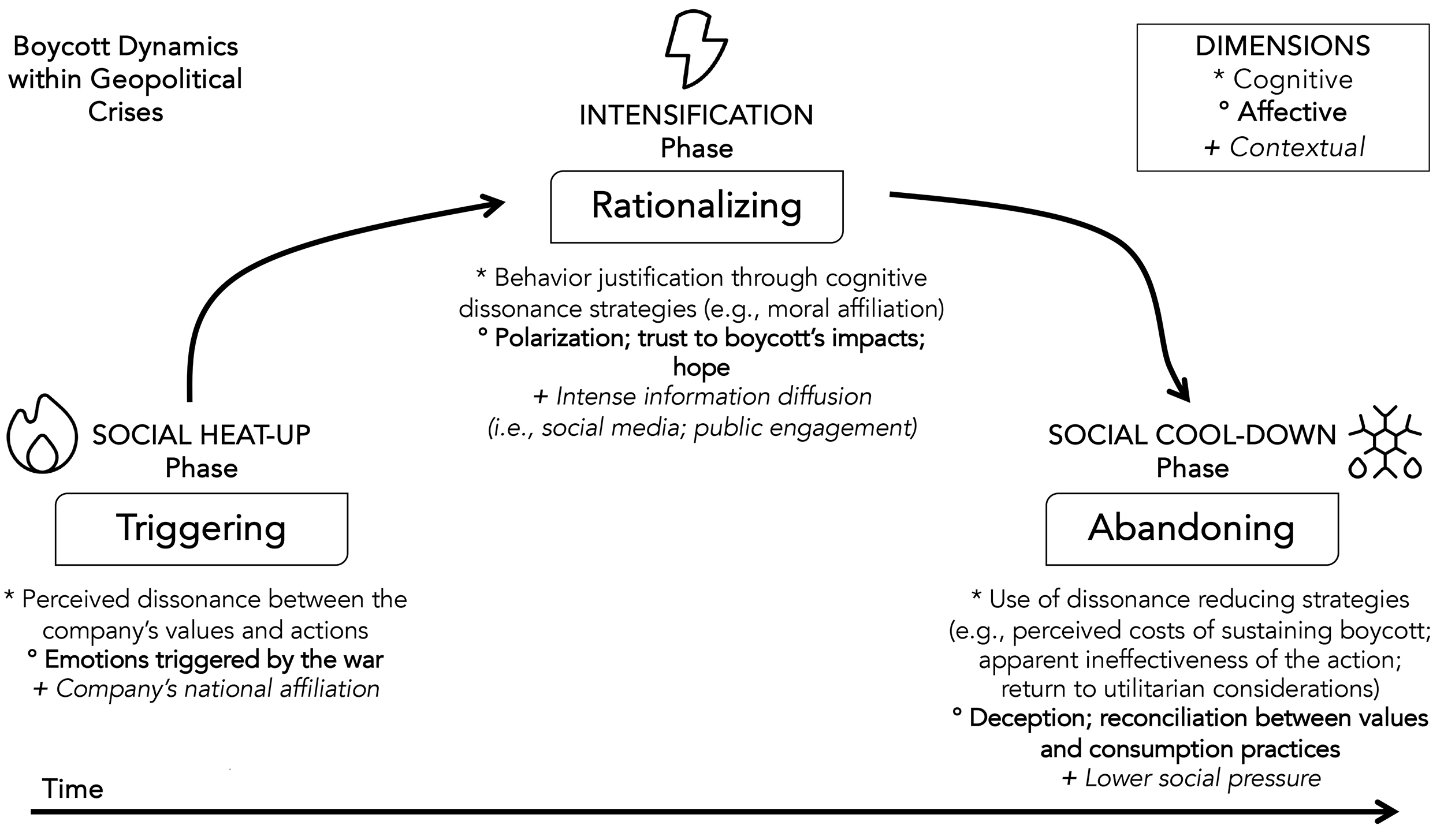
Our results revealed that controversial actions by targeted companies, as well as their measures to defend and protect themselves in such situations, influence consumers’ decision to engage or not in a boycott. Additionally, individual factors play a critical role in determining whether or not a consumer chooses to engage in a boycott. The following analysis offers companies facing boycotts actionable managerial strategies to mitigate a boycott’s impact effectively. Fig. 2 illustrates our results by distinguishing three phases of boycott involvement: heat up, intensification, and cool down.
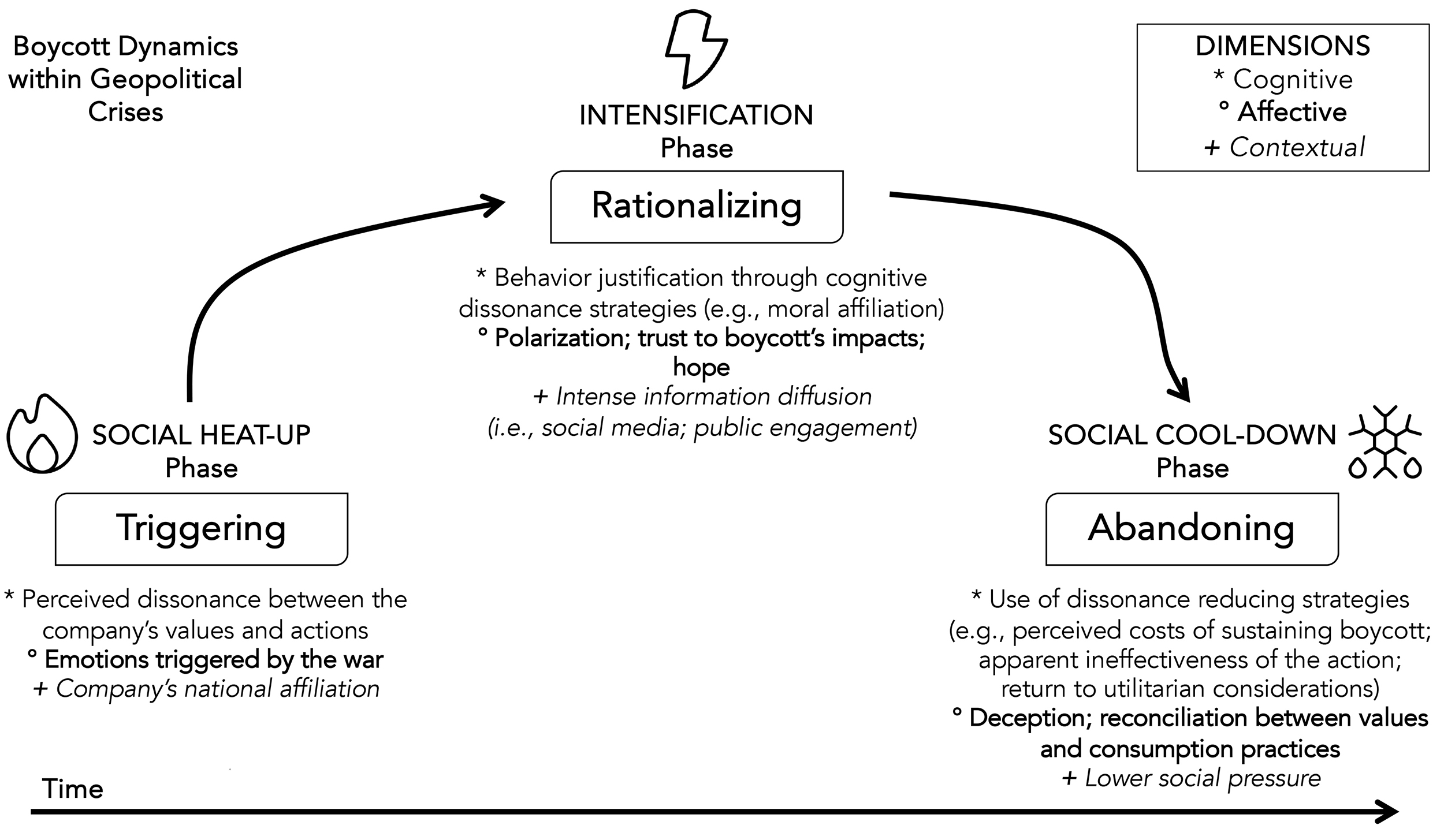 Fig. 2.
Boycott dynamics within geopolitical crises.
Perceived corporate hypocrisy—where there is a gap between promoted values and actual practices—increases boycott risks (Auger et al., 2003). For that reason, companies should seek to minimize perceived hypocrisy through consistent values. Efforts to eliminate symbolic incongruences can bolster brand integrity and trust among stakeholders (Costa and Azevedo, 2023). Leroy Merlin’s Polish consumers expressed betrayal due to the contrast between the company’s responsible image and its actions in Russia. Therefore, consistency between values and actions across markets is crucial to reduce the potential for the dissonance consumers feel when supporting the brand (Lee et al., 2009).
The initiation or enhancement of boycotts as a form of political consumerism can be influenced by contextual factors. It is incumbent on foreign managers operating within Polish subsidiaries to exercise the utmost prudence and sensibility with regard to national values and historical backgrounds. The Polish people evince a profound commitment to their history and the struggle for independence. (Boström et al., 2019; Schwalb et al., 2023; Zorell, 2019). Poles are dedicated to the memory of their history and the fight for independence. Despite the pervasive influence of neoliberal consumerism in contemporary Polish society, historical resistance, notably the national riots of the 19th and 20th centuries, as well as the Solidarity movement, has significantly influenced civil engagement and political behaviour (Bartoszek and Cekiera, 2019). The key ingredients of the Polish ethic of solidarity as stated by Beyer (2007, p. 207) include “unity among differences, the foundation of hope at the movement’s roots, self-sacrifice and heroism, promoting the equality and dignity of all, the centrality of participation, the affirmation of ‘bread and freedom,’ an option for the poor, and the insistence on life in truth.” Furthermore, the influence of Catholicism on the shaping of Polish values and cultural practices cannot be overstated (Sadlon, 2021). Indeed, the active participation of the Polish Church in the national struggle against foreign invaders is a significant contributing factor to this phenomenon. It is evident that honesty, generosity, and empathy continue to be regarded as highly significant values. In the Polish context, political consumerism is frequently framed in terms of national solidarity, defending Polish values or producers against perceived external threats (e.g., Russian products, Western corporations exploiting local workers). Foreign firms operating in Poland should be conscious of the national pride of Poles and adhere to principles of integrity and consistency in their corporate communication to avoid any accusation of hypocrisy or dishonesty.
Companies should consider in their crisis communication strategies the possibility of navigating ideological conflicts that may arise from their operations (Costa and Azevedo, 2023). In such cases, a clear and honest dialogue increases the chances of managing consumer perceptions and therefore reducing the emotional intensity of boycott (Costa and Azevedo, 2023), especially when consumers add new cognitions by acknowledging the challenging economic realities faced by companies. By transparently explaining business constraints and any ethical challenges associated with market exits, brands can reduce the perception of irresponsible behaviour and help consumers feel less conflicted about their purchase choices (Fetscherin and Heinrich, 2015; Klein et al., 2004). For brands like Leroy Merlin, addressing concerns over their continued presence in Russia could involve openly communicating the company’s policies and limitations, rather than allowing an uncontrolled narrative to dominate.
As a major support to crisis management and communication, social responsibility strategies enable companies to better manage such critical situations (Costa and Azevedo, 2023), since establishing a proactive and genuine commitment to social responsibility can create a “trust capital” that shields companies during crises (Tsarenko and Tojib, 2015). When companies are perceived as aligned with ethical values, they can foster a “love is blind” effect, where loyal consumers are more forgiving of their missteps due to a solid relationship foundation, therefore helping to mitigate the damage from ideological conflicts (Tsarenko and Tojib, 2015). Such a perception may prevent ideological conflicts from escalating into widespread avoidance, allowing companies to foster stronger stakeholder relationships. This trust capital can act as a buffer during times of crisis, helping companies retain loyal customers and limit negative backlash (Tsarenko and Tojib, 2015; Veloutsou et al., 2020). In the case of Leroy Merlin, its response could involve transparently addressing its complex international presence, explaining its contributions to local economies in Poland and France, and showing accountability in markets where ethical conflicts arise.
Along the same vein, highlighting social responsibility efforts as part of crisis communication through charitable donations, support for affected communities, or environmental efforts can offer consumers an additional rationale to support the company. Despite the risks that such an approach involves, such as the appearance of greenwashing, companies can emphasize how they contribute positively to social issues and therefore add a favourable cognition that consumers can use to rationalize continued patronage despite the boycott (Costa and Azevedo, 2023). This was evident when consumers rationalized their continued purchases from Leroy Merlin due to its supportive actions for Ukrainian refugees, which added a positive element to their perception of the brand, and when they realized that Leroy Merlin contributed positively to the local economy by employing local workers, supporting local suppliers, and contributing to economic stability in the region.
Social support can also enhance brand resilience, as boycotts are often driven by peer influence, particularly in social networks and communities (Hoffmann and Müller, 2009). Leroy Merlin could therefore engage influential local customers and opinion leaders who can share positive narratives about the company’s contributions to local communities.
In cases where consumers prioritize practical needs over ideological stances, a powerful retention strategy to manage crisis can be accomplished by emphasizing brand quality, affordability, and other positive attributes when compared to the competition to encourage loyalty. Companies can do that by offering incentives, such as loyalty rewards or discounts, which may help ease CD for consumers who are price sensitive or pragmatically motivated to return. Many customers justified breaking the boycott toward Leroy Merlin due to price and convenience, so reinforcing these benefits through strategic promotions may facilitate reengagement. Leroy Merlin can emphasize these practical benefits, reinforcing consumer relationships based on product and service quality, which may override ideological motivations for some consumers. Additionally, the company can try to leverage a gradual reengagement by acknowledging the emotional difficulty of long-term boycotting, and communicate in a way that resonates with the gradual return of former customers. Understanding that CD may ease over time enables companies to frame the reengagement process as a practical decision, aligning with consumers’ evolving priorities.
Emotional forgiveness can be facilitated by acknowledging consumer grievances, expressing empathy, and offering corrective measures to show the company’s commitment to improvement (Costa and Azevedo, 2023). Therefore, managing boycotts also involves recognizing the emotional dynamics that drive consumer behaviour by developing emotional forgiveness strategies. For example, Leroy Merlin could publicly express regret for any distress caused by its decisions while outlining the concrete steps it is taking to remediate it.
Companies can benefit from understanding CD reduction techniques, as consumers may naturally employ rationalizations when ending a boycott. For example, financial pressures, practicality, or reduced perception of impact can lead consumers to rationalize returning to the brand, as observed among individuals resuming purchases at Leroy Merlin. By recognizing these tendencies, companies can create communication strategies that subtly align with consumer justifications, such as affordability or local economic contributions, without directly encouraging anti-boycott actions (Costa and Azevedo, 2023). This approach might prevent consumers from feeling an overwhelming need to boycott.
This study demonstrates the importance of transparent and robust crisis management procedures for companies, while taking into account the contextual and temporal singularity of boycotts in their managerial responses. As a result, it provides a better understanding of boycott dynamics in relation to geopolitical conflicts and offers important literary implications. First, it highlights the importance of the credibility of commercial communications in managing difficult circumstances, including boycotts. Our results show how perceived errors or inefficiencies in corporate communications can reinforce boycott actions. Transparency and consistency appear as key levers to ease tensions in a polarized ideological context. Second, a novel contribution in the context of international governance is to highlight the cross-border effects of geopolitical conflicts. We show that local tensions can have a significant impact in other countries, in this case Poland, where historical and cultural factors reinforce consumer reactions. Third, this study adopts a temporal perspective, analysing the evolution of boycott behaviours in terms of three main factors: corporate communications, the geopolitical context, and consumers’ psychological and behavioural processes. Fourth, in addition to honest and coherent communication, the results tend to demonstrate that increasing the value proposition (quality, services, price, promotion, etc.) encourages customers to reduce their boycott engagement.
This study has some limitations that open up research avenues. First, the qualitative and one-off approach limits the generalizability of the results to other cultural and geopolitical contexts. A comparative analysis of several countries would enable testing the validity of these results in different contexts. Finally, the exploratory design of this study encourages confirmatory research that uses quantitative techniques to accurately measure the influence of factors such as customers’ psychological processes and communication reliability.
Nethnographic research data and presse release are open to the public, the interviews are anonymous and confidential. The links for the presse articles and facebook posts precise dates are included.
OB, MGB and APP designed the research study. MGB made the interviews and gathered nethnographic research (Facebook posts) and Polish press revue. After translation, all the authors analyzed the data and contributed to critical revision of the manuscript for important intellectual content. All authors read and approved the final manuscript. All authors have participated sufficiently in the work and agreed to be accountable for all aspects of the work.
Not applicable.
This research received no external funding.
The authors declare no conflict of interest.
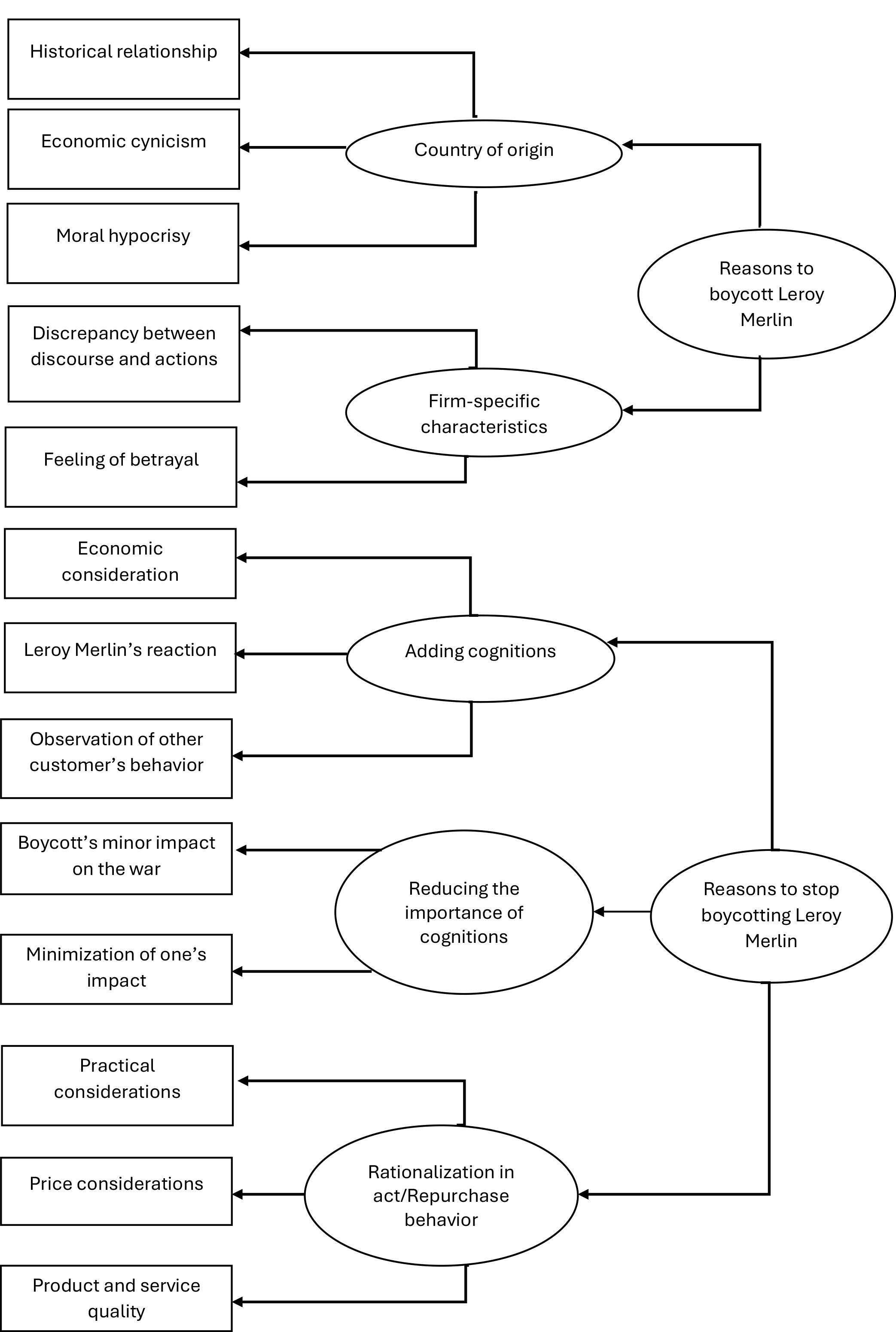 Fig. 3.
 The coding framework.
| Gender | Age | Level of education | Boycotted during period 1 | Boycotted during period 2 | |
| 1 | Male | 32 | High school diploma to a bachelor’s degree | Yes | No |
| 2 | Female | 34 | High school diploma to a bachelor’s degree | No | No |
| 3 | Male | 41 | More than a bachelor’s degree | Yes | No |
| 4 | Female | 52 | More than a bachelor’s degree | Yes | Yes |
| 5 | Male | 61 | Less than a bachelor’s degree | No | No |
| 6 | Female | 47 | High school diploma to a bachelor’s degree | Yes | No |
| 7 | Male | 30 | More than a bachelor’s degree | Yes | No |
| 8 | Female | 43 | Less than a bachelor’s degree | No | No |
| 9 | Male | 58 | High school diploma to a bachelor’s degree | Yes | Yes |
| 10 | Male | 39 | Less than a bachelor’s degree | No | No |
| 11 | Female | 28 | More than a bachelor’s degree | Yes | Yes |
| 12 | Female | 44 | High school diploma to a bachelor’s degree | Yes | No |
| 13 | Male | 67 | High school diploma to a bachelor’s degree | No | No |
| 14 | Female | 48 | More than a bachelor’s degree | Yes | Yes |
| 15 | Male | 72 | Less than a bachelor’s degree | No | No |
| 16 | Female | 37 | High school diploma to bachelor’s degree | Yes | No |
| 17 | Male | 53 | Less than a bachelor’s degree | No | No |
| 18 | Female | 64 | More than a bachelor’s degree | Yes | Yes |
| 19 | Male | 29 | Less than a bachelor’s degree | No | No |
| 20 | Female | 50 | Less than a bachelor’s degree | No | No |
| 21 | Female | 45 | Less than a bachelor’s degree | Yes | No |
| 22 | Male | 26 | More than a bachelor’s degree | No | No |
| 23 | Male | 38 | High school diploma to a bachelor’s degree | Yes | No |
| 24 | Female | 63 | Less than a bachelor’s degree | No | No |
| 25 | Male | 70 | More than a bachelor’s degree | Yes | Yes |
| 26 | Male | 57 | High school diploma to a bachelor’s degree | No | No |
| 27 | Female | 49 | Less than a bachelor’s degree | Yes | Yes |
| 28 | Female | 60 | More than a bachelor’s degree | Yes | No |
| 29 | Male | 33 | High school diploma to a bachelor’s degree | No | No |
| 30 | Female | 55 | High school diploma to a bachelor’s degree | Yes | No |
| Date | Event | Author | Source |
| March 2, 2022 | According to the Leroy Merlin press service in Russia the company plans to continue operations in Russia. | Russian agency TASS, Leroy Merlin press service in Russia | https://tass.com/economy/1415495 Polish media: https://pl.wikinews.org |
| March 2, 2022 | Leroy Merlin Poland gives a statement on the suspension of cooperation with suppliers from Russia and Belarus. | Leroy Merlin Polska | https://media.leroymerlin.pl |
| March 3, 2022 | Leroy Merlin Poland halts cooperation with Russian and Belarusian suppliers and allocates PLN 4.5 million to support Ukraine. | Leroy Merlin Polska and general director Leroy Merlin Polska | https://media.leroymerlin.pl |
| March 11, 2022 | As Leroy Merlin Poland, we have a say in what we do in Poland, so our activities are focused on helping victims of war. | Leroy Merlin Polska | Facebook Leroy Merlin Polska |
| March 20, 2022 | Leroy Merlin is pleased with the lack of competition in Russia and wants to increase its product line. | The Telegraph, Leroy Merlin internal documents | https://www.telegraph.co.uk/business/2022/03/20/business-usual-french-firms-ignoring-russia-boycott/ |
| Polish media on March 22, 2022: https://www.money.pl/ | |||
| March 22, 2022 | Leroy Merlin Poland gives an anti-war statement. | On behalf of the general director of Leroy Merlin Polska | Press declaration reprinted by several Polish media with critics that the word Russia is not used |
| March 28, 2022 | French parent company Leroy Merlin announced on March 24 this year that it had decided to halt further investments by the brand in the Russian Federation. | Leroy Merlin Polska | https://media.leroymerlin.pl |
| April 2, 2022 | In 75 stores, 13,000 Leroy Merlin employees are involved in helping Ukrainian friends. | Leroy Merlin Polska | Facebook Leroy Merlin Polska |
| April 3, 2022 | Leroy Martin announces creation of relief home for LM Ukrainian employees. | Leroy Merlin Polska | Facebook Leroy Merlin Polska |
| April 5, 2022 | Leroy Martin announces aid to LM Ukrainian employees and the creation of a relief home near Warsaw. | Leroy Merlin Polska | Facebook Leroy Merlin Polska |
| May 24, 2022 | Polish activists accuse the French chain of hiding the Russian origin of its products. Leroy Merlin Polska defends itself with an “employee mistake”. | Ogólnopolski Bojkot Leroy Merlin (OBLM), Rzeczpospolit, LM spokesman | https://www.rp.pl/handel/art36356561-leroy-merlin-ukrywal-rosyjskie-pochodzenie-produktow-to-pomylka-pracownika |
| May 24, 2022 | Leroy Merlin makes a statement on changes to product descriptions on its website (mistakes on products’ origin were corrected). | Leroy Merlin Polska | https://media.leroymerlin.pl |
| February 21, 2023 | Foundation Leroy Merlin helps renovate apartments for Ukrainian refugees. | Miasto Pila Leroy Merlin | Facebook Leroy Merlin Polska |
| February 22, 2023 | Foundation Leroy Merlin helps renovate apartments for Ukrainian refugees. The General Director visits them in Wisznia Mala. | Wisznia Mala Leroy Merlin | Facebook Leroy Merlin Polska |
| March 24, 2023 | French supermarket chain Leroy Merlin has announced that it plans to withdraw from the Russian market. Assets will be transferred to local management. | Head of Adeo, the owner of LM, quoted by Reuters | https://www.bankier.pl/wiadomosc/Leroy-Merlin-wreszcie-wycofa-sie-z-Rosji-Po-18-latach-8512238.html |
| https://www.reuters.com/business/retail-consumer/french-diy-retailer-leroy-merlin-transfer-ownership-russian-business-management-2023-03-24/ |
| Date | Event | Source |
| February 28, 2022 | Leroy Merlin is on the list of shame (companies that stayed in Russia). | https://som.yale.edu/story/2022/over-1000-companies-have-curtailed-operations-russia-some-remain |
| March 16, 2022 | French employers’ head defends Danone’s and Decathlon’s decision to stay in Russia. “Russians and workers must eat,” he says. | https://wyborcza.biz/biznes/7,147743,28228517,szef-francuskich-pracodawcow-broni-decyzji-danone-czy-decathlona.html |
| March 20/21, 2022 | Russian bombs destroy Leroy Merlin shop in Kiev. | https://www.wiadomoscihandlowe.pl/ |
| March 21, 2022 | Leroy Merlin chain headquarters is disconnected Ukrainian employees from corporate communications. | https://businessinsider.com.pl/wiadomosci/jest-apel-ukrainskiej-dyrektorki-do-centrali-leroy-merlin/4bmfcwe |
| March 23, 2022 | Zelenski to the French: Help Ukraine and withdraw companies from Russia (including LM); support Ukraine’s war budget. | https://wyborcza.pl/7,75399,28256338,zelenski-do-francuzow-pomozcie-ukrainie-i-wycofajcie-firmy.html |
| April 5, 2022 | Leroy Merlin Polska forces Facebook to remove the profile of the “Nationwide Leroy Merlin Boycott”. | Leroy Merlin. Facebook skasował profil “Ogólnopolskiego Bojkotu Leroy Merlin”- https://www.bankier.pl/wiadomosc/Leroy-Merlin-Facebook-skasowal-profil-Ogolnopolskiego-Bojkotu-Leroy-Merlin-8312840.html |
| February 2, 2023 | French chains Auchan and Leroy Merlin not only did not cease business operations after the Russian invasion of Ukraine began but also supported the Russian military, according to an investigation by a team of journalists from Le Monde, The Insider, and the Bellingcat group. | https://mycompanypolska.pl/artykul/auchan-i-leroy-merlin-swiadomie-wspieraja-rosyjska-armie-dostawy-pod-pozorem-pomocy-humanitarnej/11260 |
| December, 4, 2024 | Scenari Holding, a Dubai-based firm, purchased Leroy Merlin’s Russian entity. | https://wyborcza.biz/biznes/7,177151,30471953,rosyjskie-sklepy-leroy-merlin-przejal-inwestor-znad-zatoki-perskiej.html?disableRedirects=true |
| June 18, 2024 | Leroy Merlin’s former Russian arm rebrands as Lemana PRO. | https://www.reuters.com/business/retail-consumer/leroy-merlins-former-russian-arm-rebrands-lemana-pro-2024-06-18/ |
| Leroy Merlin in Russia will hide behind a new name. | https://www.rp.pl/handel/art40656831-leroy-merlin-w-rosji-schowa-sie-za-nowa-nazwa-zdumiewajace-tlumaczenie |
| Date of the post | Facebook internauts’ reactions | Internauts’ comments (with most reactions) |
| Mars 2, 2022 | 1.7K like emoticons, 1.2 angry, 874 loves | 2.2K comments |
| LM stops selling products from Russia and Belarus. | What about the stores in Russia! Russian News Agency: “‘Leroy Merlin and all our 112 stores in Russia are operating normally. We are not planning any changes,”’ a spokesman said.” Is this true???? If so - au revoir Leroy!!! Au revoir forever!! | |
| Is Leroy Merlin Poland going to withdraw from the Russian market? What is the official position? From what I have read, the chain intends to stay there and increase sales. If this is true, I ask all people of good will not to use Leroy Merlin’s offer - there are other construction stores with Polish capital. | ||
| In solidarity, you stop cooperating with companies from Russia and Belarus, which was marginal anyway - read it didn’t bring you much money. | ||
| But you won’t leave Russia - there you have sensed a niche after other companies that withdrew, and you are expanding the assertion. The cash has to agree! | ||
| SHAME!!! | ||
| It’s just a shame that not only are you the only one staying in Russia, but you’re also increasing your product range. #boycottLeroyMerlin #StopPutinNOW | ||
| March 11, 2022 | 12K angry emoticons | 11.8K comments |
| LM announcement: As Leroy Merlin Poland, we have a say in what we do in Poland, so our activities are focused on helping victims of war. | I applaud your employees for their organized assistance. Unfortunately, this cannot hide the fact that your company’s headquarters has decided to cowardly support the Russian market. The best way to show your management our displeasure is, unfortunately, to boycott your domestic branch. Put pressure on your headquarters and boards! Let them stand on the good side and withdraw from Russia! | |
| Over the years, my husband and I have shopped at Leroy Merlin. Big purchases. Unfortunately, this is a thing of the past. I feel very sorry for the employees of the chain, because I understand that they have no control over this situation, and eventually it will affect them. Maybe the head office will do the right thing after all!!! | ||
| I am also finishing with you and will convince all my family members and friends and acquaintances to make a similar move. There are things much more important than money. | ||
| April 2, 2022 | 1K angry, 117 laugh, 104 likes | 954 comments |
| In 75 stores, 13,000 Leroy Merlin employees are involved in helping Ukrainian friends. | An appeal to all. Boycott, boycott and once again boycott. There are enough stores of this type in pl. | |
| I have a question for ADEO are your employees in Leroy Merlin Russia and Auchan Russia also running some kind of aid campaigns for Ukrainian citizens???? | ||
| DISGRACE SIMPLY! Employees get involved in helping the Ukrainians, and the network does business in Russia???! | ||
| I am boycotting! | ||
| We know, Polish branch of Liroja cultivates local proUA policy, to this does not change the fact that the mother-company is selling itself for dirtydiengi. Boycott lasts. | ||
| April 3, 2022 | 2.8K angry, 1.3 likes, 272 loves | 2.3K comments |
| Leroy Martin announces creation of relief home for LM Ukrainian employees. | I only feel sorry for Polish workers that they have to support their families working for such a corporation. Well, you could never expect anything good from the French | |
| I will avoid your stores for the rest of my days with great disgust | ||
| But you are whitewashed !!! bottom! Now how much money in ads you have to put, to alleviate your situation…shame. Helping Ukrainians will not help you ! they are counting on other support that the whole world is asking you for. greed and greed will take its toll on you for a few years…. | ||
| Please tell us how much donations and aid you have collected in your stores in Russia? | ||
| April 5, 2022 | 1.2K angry, 168 likes, 85 laughs | 1.4K comments |
| Leroy Martin announces aid to LM Ukrainian employees and the creation of relief home near Warsaw. | Took off the end of the post, so I’ll add: “and we block any initiative that dares to criticize us.” | |
| I’m afraid that no social action or advertising will convince many Poles. Poles are vindictive I understand that the Polish branch is doing what it can and probably has good intentions, but unfortunately my foot will not rise in this store, even if there will be goods for free. I have no influence on what gas I heat with, but what I buy I have influence on. | ||
| I will definitely never buy in this chain again. And no PR efforts will change that. Embarrassing attitude of the chain. | ||
| For not being unequivocal and shutting the mouths of critics, I won’t buy anything from you anymore | ||
| Become a hero of this war, get out of Russia! |
| Date of the post | Facebook internauts’ reactions | Internauts’ comments (examples) |
| March 10, 2022 | 3.5K angry emoticons | 1.5K comments |
| Potential customers under consideration. The management of the Leroy Merlin hypermarket chain has decided not to leave the Russian market. “After the departure of some companies from the market, we are open to proposals to increase supplies and expand the assortment,” is the beginning of a letter from the company’s top management to its partners, which RIA Novosti quotes. I understand that the company’s Polish branch is not responsible for this, but it doesn’t matter. Let the Polish branch tell the headquarters that Polish consumers know that the frogs will continue to chug bloody rubles and that there is no approval for this. And let them take a look at the profiles of Coca-Cola, McDonald’s and Pepsico. There’s no waiting, because reputations take a long time to rebuild. | ||
| I was supposed to order kitchens and doors, I will not order. Boycott | ||
| I bought from you for many years and left a substantial amount of money. You have made a choice and a very bad one. My choice is that I will not buy anything from you anymore! Fortunately, you can get all your products elsewhere. You already have moral bankruptcy. Now it’s time for the next level - financial bankruptcy. | ||
| You can be sure that neither I nor anyone in my family will NEVER buy anything from your stores again. You have not left the Russian market, your choice. We too have a choice. We are avoiding it by a wide margin. | ||
| October 7, 2022 | 132 likes, 72 angry, 14 loves, 2 laughs | 84 comments |
| Are you weathering the warehouses in the Russians too? Because I have not read that you have left Russia? | ||
| At the Russians would also need to air out the warehouses…well yes you probably won’t forget about your friends! | ||
| Do you accept rubles? | ||
| Then why don’t you send them to Ukraine, they will help rebuild the houses destroyed by the Russians? Because to Russia you send all the time. | ||
| March 23, 2023 | 199 likes, 61 angry, 27 loves, 1 laugh | 30 comments |
| Oh what great commercials you guys have like the last one “Cheaper than that Да Да Да!” | ||
| Is it possible to pay in rubles with you? | ||
| Are you also active in Mariupol? | ||
| October 26, 2023 | 78 likes, 7 loves, 6 angry, 1 laugh | 4 comments |
| The comments are not visible at the Facebook page | ||
| March 16 2024 | 10 likes, 6 loves, 6 angry | 18 comments |
| Not all comments are visible | ||
| Comments that are visible do not concern the war |
References
Publisher’s Note: IMR Press stays neutral with regard to jurisdictional claims in published maps and institutional affiliations.