
 , Richard Yeaw Chong Seow 2,*
 , Xiaolan Zhang 1, Xu Yi 1,*
1 School of Management, University of Science and Technology of China, 230026 Hefei, Anhui, China
2 Pôle Paris Alternance (PPA) Business School, 75014 Paris, France
Abstract
This systematic review examines how senior women’s leadership relates to junior women’s workplace loneliness, using the queen bee syndrome (QBS) perspective to explain when leadership practices intensify or reduce isolation. Guided by Preferred Reporting Items for Systematic Reviews and Meta-Analyses (PRISMA) protocols, this study synthesizes 30 studies published from 2013 to 2024 across Scopus, Web of Science, Emerald, Wiley, and Google Scholar. The evidence maps antecedents and outcomes of loneliness under female leadership and shows that distancing, withheld mentorship, and tokenism weaken supportive relationships and increase the risk of isolation. The study illustrates how senior women leaders may unintentionally affect the emotional well-being and social connectedness of female subordinates. This effect becomes clearer when QBS arguments are integrated with social support theory, which explains how female leadership behaviors can either foster or undermine the social resources that women rely on at work. The findings provide actionable insights for corporations and managers, highlighting the need to cultivate meaningful support networks and inclusive environments that protect employees from loneliness associated with female leadership. By synthesizing empirical findings, identifying theoretical and methodological gaps, and outlining a future research agenda, this study advances understanding of how female leadership and workplace loneliness are intertwined.
Keywords
- female leadership
- female leader
- workplace loneliness
- workplace isolation
- social support
- queen bee theory
Humans are social beings who place high importance on relationships with others to satisfy their desire for belonging (Maslow, 1954). Although modern society is more interconnected than ever, meaningful human interaction remains fundamental, and loneliness persists as a widespread and deeply human experience (Berg-Weger and Morley, 2020). In the organizational context, workplace loneliness is a critical issue, defined as “the sense of being socially alienated, separated, or alone at work despite being encircled by coworkers” (Ozcelik and Barsade, 2018, p. 104). While scholarly interest in loneliness can be traced back to the early 20th century, and its theoretical foundations strengthened considerably in the mid-century contributions of Bowlby (1969) and Weiss (1973), its specific manifestations and consequences in the workplace have only recently begun to receive exclusive attention. Early attempts to extend the concept to the workplace began with efforts to understand how social disconnection operates in professional environments (Perlman and Peplau, 1981). Interest in this area has grown rapidly in recent years as organizations increasingly acknowledge the serious implications of workplace loneliness for employee well-being and performance (Ozcelik and Barsade, 2018; Wright and Silard, 2021).
Conceptually, loneliness reflects an undesirable emotional state rooted in the belief that one’s social relationships are insufficient or lack meaningful connection (Wright and Silard, 2021). This experience often carries a sense of sadness, anxiety, or inner emptiness that persists even when individuals are surrounded by others. Prior scholarship reinforces this view by describing loneliness as an affective response shaped by a person’s perception of social isolation rather than by objective indicators alone (Maes et al., 2019). More recent research extends this understanding by showing how loneliness develops through subjective interpretations of disconnection and the heightened cognitive focus that follows (Morese and Palermo, 2022). Although these studies provide valuable insight into the psychological foundations of loneliness, far less is known about how these mechanisms unfold within organizational contexts where social interactions are shaped by power, hierarchy, and structural constraints. These insights point to the need for further inquiry into the varied sources of loneliness within organizational environments, where social interactions are shaped by complex structures, expectations, and power dynamics.
Gender dynamics introduce a further layer of complexity to understanding workplace loneliness. Substantial evidence shows that women continue to be underrepresented in leadership roles across many sectors, and this persistent imbalance shapes their experiences in meaningful ways (Seo et al., 2017). Women frequently report stronger feelings of workplace loneliness, in part because gendered disparities in leadership limit access to the social and professional networks that help foster inclusion (Thelma and Ngulube, 2024). A recent study also indicates that women in male-dominated settings are often excluded from informal networks and leadership pipelines, which compounds their sense of isolation and restricts opportunities for advancement (Villamor et al., 2023). Such exclusion is reinforced by cultural and psychological barriers commonly described as the glass ceiling and the leadership labyrinth (Eagly and Carli, 2018). A central barrier involves the expectation that women must continually inhabit what scholars refer to as impossible selves. This notion captures the conflicting and often irreconcilable standards imposed on women who aim to lead. They are expected to exhibit assertiveness to demonstrate competence, yet at the same time display warmth to remain likable. Sustained efforts to balance these demands often generate feelings of inauthenticity and emotional fatigue as women repeatedly monitor, adjust, and defend their leadership identities (Schaumberg and Flynn, 2017). In senior roles, this pressure not only shapes how women see themselves but also influences how they evaluate and interact with junior women. Leaders who feel compelled to embody these impossible selves may scrutinize female subordinates more harshly, distance themselves from those who do not conform to dominant norms, or limit mentoring to avoid being associated with “less legitimate” versions of womanhood. In this way, impossible selves become a relational issue as well as an intrapersonal one, creating conditions in which junior women encounter both constrained support and heightened vulnerability to workplace loneliness.
Systemic pressures extend beyond these role expectations. Female leaders continue to confront biased stereotypes, such as the motherhood penalty, and face uneven access to sponsorship and advancement opportunities that are essential for establishing visibility and credibility (Alon et al., 2022). Many female leaders also encounter double binds in which assertiveness is interpreted as aggressiveness, while collaborative or empathetic leadership is dismissed as weak or ineffective (Ellemers et al., 2012). These contradictory evaluations stem from deeply embedded gender schemas that associate leadership with masculinity and communal traits with femininity. As a result, female leaders often find themselves navigating a situation where any behavioral choice can be used to undermine their perceived suitability for leadership roles.
Within this broader landscape, the queen bee syndrome (QBS) represents a particularly damaging pattern of behavior that warrants close attention. QBS describes situations in which senior women distance themselves from junior women and, at times, engage in direct criticism of those they supervise (Sobczak, 2018). Derks et al. (2016) offer insight into why this occurs, showing that women who rise to leadership in male-dominated environments often adapt by adopting traits traditionally associated with male leadership, including assertiveness, dominance, competitiveness, and a degree of emotional detachment. These adaptations can signal to others that success requires aligning with masculine norms, which in turn encourages further distancing from female colleagues and deepens patterns of social exclusion.
Research on workplace loneliness has grown substantially in recent years, yet the role of gendered power relations in shaping these experiences remains underexplored. Although loneliness at work is increasingly recognized as a significant organizational concern, far less is known about how senior female leadership behaviors influence the social and emotional well-being of their female subordinates (Anand and Mishra, 2021). This gap is especially salient because female leadership often operates within hierarchical structures shaped by under-representation, gendered expectations, and unequal access to supportive networks. These conditions create a unique context in which isolation can be both experienced and reproduced.
The present study responds to this gap by examining workplace loneliness through a synthesis of empirical research on female leadership, social support, and gendered organizational dynamics. Positioning QBS at the center of this inquiry enables a closer look at how adaptive leadership responses may unintentionally reinforce the isolation faced by junior women. Employees who struggle to meet their social needs at work experience emotional strain and declines in mental and physical health, which underscores the importance of identifying the mechanisms that sustain such disconnection. Accordingly, this review investigates both the antecedents and the consequences of workplace loneliness under female leadership and highlights directions for future inquiry. To ensure conceptual clarity and methodological rigor, the review follows the Preferred Reporting Items for Systematic Reviews and Meta-Analyses (PRISMA) guidelines. This structured approach guides the identification, screening, and selection of studies and supports transparent reporting throughout the process. Drawing from Scopus, Web of Science, Emerald, Wiley, and Google Scholar, and focusing on publications between 2013 and 2024, the review builds a comprehensive evidence base that illuminates how leadership behaviors and social support processes intersect with women’s experiences of loneliness in organizational settings.
Through this integrative perspective, the study deepens understanding of the gendered foundations of workplace loneliness and shows how QBS operates as a key mechanism that reinforces isolation within organizational hierarchies. QBS emerges through two interconnected pathways: senior women may withhold mentorship and sponsorship, creating uncertainty for junior women about their prospects for advancement, and those who experience QBS directly often feel constrained, unsupported, and excluded from informal networks that structure daily organizational life (Arvate et al., 2018). These effects intensify when women lack visible role models or developmental opportunities, producing the emotional strain and loneliness that can hinder career progression (Faniko et al., 2017). By reframing QBS as a behavioral response shaped by structural and cultural conditions rather than as interpersonal conflict, the review clarifies how distancing and support withdrawal intersect with social support processes to influence women’s capacity for connection and belonging at work. Integrating QBS with social support theory offers a more nuanced explanation of how gendered expectations shape relational environments and provides new directions for studying internalized norms and identity threats in women’s leadership trajectories. The findings also carry practical significance, encouraging organizations to strengthen mentoring, promote inclusive leadership, and cultivate trust within leadership pipelines, while highlighting the need for policies that address not only representation but also the social and emotional conditions that affect women’s effectiveness and well-being. By underscoring these interconnected issues, the review points to ways organizational cultures might evolve to reduce the unintended isolation associated with women’s advancement and sets the stage for the theoretical grounding, methodological approach, and concluding analysis that follow in the subsequent sections.
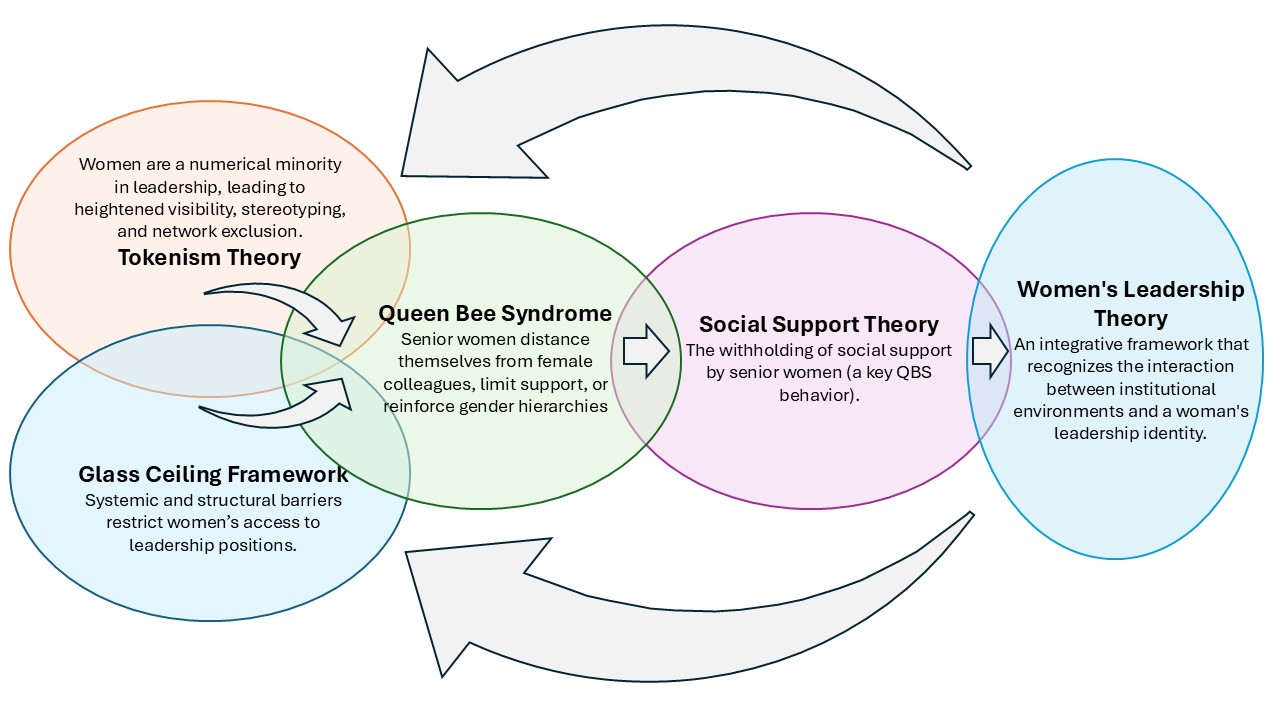
The influence of female leadership on workplace loneliness becomes clearer when structural constraints and behavioral adaptations are examined as interconnected forces. Therefore, this study adopts a multi-theoretical framework that brings together tokenism, the glass ceiling, QBS, social support theory, and female leadership theory to explain how loneliness emerges among women in organizational settings. The framework conceptualizes loneliness as the outcome of mutually reinforcing pressures rather than a direct or linear effect of leadership behavior. Within this structure, QBS responses develop from the combined weight of tokenism and glass ceiling pressures, both of which interact in cyclical ways that shape how women navigate expectations of leadership. Tokenism theory provides a foundation for understanding these dynamics. As Kanter (1977) argues, women’s numerical under-representation increases visibility, intensifies scrutiny, strengthens stereotype-based expectations, and reduces access to informal networks where mentoring and sponsorship typically occur. The glass ceiling framework adds another layer of constraint by showing how structural barriers impede mobility and limit access to influential positions even among competent and ambitious women (Glass and Cook, 2016; Ryan and Haslam, 2007). These persistent inequities require female leaders to signal credibility and legitimacy within visibility-driven and competitive environments. For instance, in many male-dominated departments, senior women report that endorsing or mentoring junior women exposes them to accusations of favoritism or identity-based alliances. Due to promotion panels often treating women as representatives of their gender rather than as individuals, any perceived underperformance by a junior woman can reflect negatively on the senior woman who supported her. This reputational risk, coupled with the scarcity of promotion opportunities for women, creates strong incentives for senior women to distance themselves from female subordinates and to avoid sponsorship roles, especially when their own legitimacy is still being questioned. Furthermore, the effort to maintain legitimacy often increases vulnerability to QBS behaviors, particularly when women attempt to distance themselves from other women or assimilate into masculine-coded norms to align with dominant leadership expectations (Cohen and Swim, 1995). As leaders engage in these adaptive strategies, they inadvertently restrict the emotional, informational, and instrumental support that sustains meaningful work relationships, thereby reinforcing the two dimensions of workplace loneliness outlined by Wright et al. (2006), which concern emotional deprivation and the loss of social companionship. The interaction between tokenism and glass ceiling effects shows how under-representation, limited access to support, and enduring structural disadvantages converge to heighten workplace loneliness and stimulate defensive leadership responses. Tokenism amplifies vulnerability and public scrutiny, while the glass ceiling narrows mobility and advancement opportunities. These intertwined pressures reinforce internalized competition and create incentives to withdraw support, emulate masculine behavioral norms, and disengage from female colleagues. The resulting dynamic reflects not isolated obstacles but a system of interdependent forces that shape both isolation and adaptive behavioral responses among women.
Social support theory clarifies the mechanism through which these structural and behavioral pressures translate into loneliness. Limited access to supportive relationships weakens leader–member exchange, reduces engagement, and undermines performance, although climates grounded in empathy and psychological safety can buffer these effects (de Jong-Gierveld, 1989; Peplau, 1985). Therefore, the absence of support signals more than stylistic variation in leadership. It exposes systemic inequities that constrain trust and collaboration among women. Robust and reliable networks transform leadership practices and cultural conditions into a sense of belonging, whereas selective or withdrawn support fosters isolation. The presence of support interrupts the cycle shaped by tokenism and distancing, while its absence reflects deeper inequities that inhibit solidarity rather than individual preference. Intersectional disadvantages related to race, age, motherhood, and nationality further intensify these pressures by restricting access to networks and increasing exposure to scrutiny. Female leadership theory provides the final element of this framework by emphasizing that agency operates within structural constraints. Leaders interpret expectations, assess risks, and adjust their identity strategies accordingly, which means their responses are shaped by both organizational pressures and personal judgments (Ryan et al., 2016). Some leaders may unintentionally perpetuate exclusion when systemic inequities limit their options, whereas others foster mentoring and inclusivity when their environments offer psychological and structural safety. The influence of local norms, reward systems, and sanction mechanisms shapes how leaders navigate these demands. Distancing may appear to be a rational strategy for preserving credibility when opportunities are scarce and surveillance is intense. However, organizations can shift these incentives by institutionalizing mentoring, allocating protected time for developmental work, and establishing transparent promotion pathways, thereby encouraging more supportive leadership practices. Therefore, QBS responses reflect contextually shaped behavioral choices rather than innate leadership flaws.
The framework illustrated in Fig. 1 depicts these processes as a cyclical system in which structural barriers, QBS behaviors, and social support interact over time to shape workplace loneliness. Structural constraints in the form of tokenism and the glass ceiling intensify visibility pressures, restrict mobility, and heighten scrutiny. These conditions trigger QBS responses that limit support for junior women. As relational resources deteriorate, emotional and social loneliness increase among female subordinates. The curved arrows in the figure represent feedback loops, as loneliness weakens network visibility and performance signals, thereby reinforcing the structural pressures that activated QBS behaviors in the first place. This perspective positions workplace loneliness as an outcome of interacting organizational forces rather than an individual deficit, highlighting the complexity of the systems within which female leaders operate.
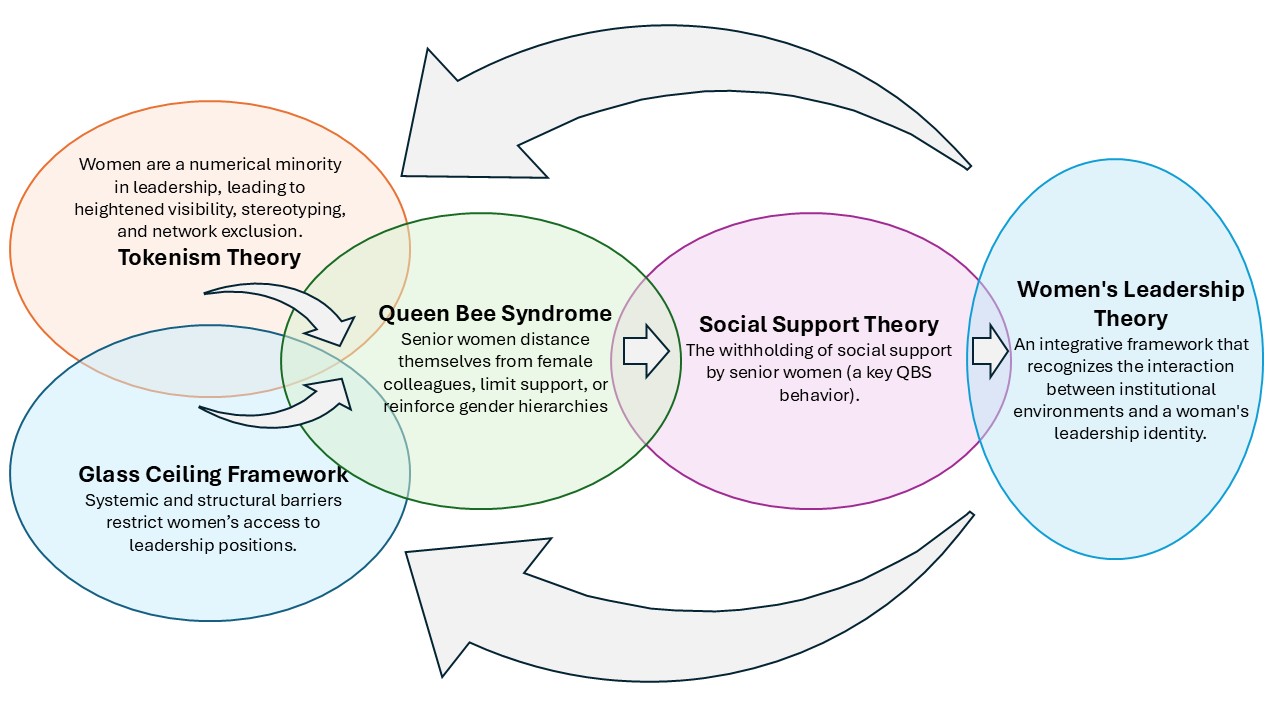 Fig. 1.
The conceptual framework that explains workplace loneliness. QBS, queen bee syndrome. Source: Authors’ own creation.
Weiss (1973) laid the foundation for understanding loneliness by distinguishing between emotional isolation, which reflects the absence of a close and secure attachment, and social isolation, which arises from a lack of connection to a broader network or community (Qualter et al., 2015). Building on this distinction, Wright et al. (2006) adapted these ideas to organizational settings and identified two central forms of loneliness at work: emotional deprivation and the perceived absence of social companionship. Emotional loneliness stems from the lack of a meaningful bond in the workplace, whereas social loneliness emerges when individuals feel disconnected from the social fabric of their organization (Ozcelik and Barsade, 2018). Although loneliness is inherently subjective, its triggers vary across individuals and contexts, as personal expectations, job structures, and organizational cultures shape how unmet social needs are interpreted. When employees experience ongoing gaps between their desired and actual levels of connection, loneliness becomes a multifaceted condition with wide-ranging psychological, emotional, and physiological consequences (Lam and Lau, 2012).
Despite advances in understanding these dimensions, prior research has largely relied on cross-sectional designs that limit causal inference and cannot fully capture how loneliness evolves in response to changing work demands, relational dynamics, or technological shifts in communication (Wright, 2013). Mixed-method approaches offer a promising way forward, as they can illuminate both the structural patterns and the lived experience of loneliness in contemporary workplaces (Wright and Silard, 2021). Therefore, future research could adopt qualitative methods that reveal the depth and nuance of these experiences. Phenomenological studies, for example, would enable scholars to explore how women in leadership and followership roles make sense of loneliness and how it shapes their emotional and cognitive states. Narrative inquiry could trace how women interpret their career journeys while managing feelings of isolation and responding to QBS dynamics, thereby situating loneliness within broader professional trajectories. A grounded theory approach would allow researchers to build a theory directly from empirical data, providing insight into the organizational conditions that heighten or alleviate loneliness among women professionals. Such work would offer a stronger theoretical basis for designing interventions that address the structural and relational factors contributing to workplace loneliness.
Workplace loneliness is far more than an instance of personal discomfort. Earlier studies consistently link it to a range of psychological concerns, including reduced self-regulation, diminished self-esteem, and heightened anxiety (Hawkley et al., 2008). Its consequences extend into the physiological realm as well, with lonely individuals facing greater risks of adverse health outcomes such as delayed recovery and even increased mortality (Hickin et al., 2021; Silard and Wright, 2020). Yet despite these well-documented effects, an important gap remains in understanding how loneliness unfolds across cultural and industrial contexts. Cultural values shape not only how loneliness is interpreted but also how it is experienced. In collectivist settings, such as China and Japan, where belonging to the group is central to one’s social identity, loneliness often emerges from exclusion or from failing to meet group norms, leading to feelings of shame and the sense of having lost one’s place within the community. In these contexts, interventions aimed at strengthening team cohesion and reinforcing shared purpose may be particularly effective. By contrast, in more individualistic cultures such as the United States and Western Europe, loneliness tends to be interpreted as a personal failure to form meaningful dyadic ties or to realize a sense of authenticity in one’s relationships (Rokach, 2018). Therefore, interventions in these environments may be better directed toward high-quality mentoring relationships or structured opportunities for personal connection. This comparison illustrates why a single, standardized approach is unlikely to address loneliness effectively; strategies that do not account for cultural conditions risk overlooking the very factors that give rise to loneliness in the first place.
A similar variation emerges across industries, where organizational norms shape distinct expressions of loneliness. Employees in highly competitive technology firms may experience loneliness because of cultures that emphasize individual performance and isolated work, whereas those in caregiving professions may encounter loneliness when emotional support from colleagues is insufficient during high-pressure situations. Loneliness drains psychological resources, including self-control, which can create vulnerabilities that contribute to harmful outcomes such as substance misuse (Bian and Leung, 2015; Stavrova et al., 2022). For this reason, researchers and practitioners must distinguish loneliness from other negative interpersonal experiences that may appear similar but operate through different mechanisms. Workplace ostracism and abusive supervision can certainly evoke isolation, yet they represent distinct constructs that involve different psychological processes (Elahi et al., 2020; Howard et al., 2020). Moreover, subjective loneliness should not be confused with objective solitude. It is entirely possible for individuals to feel profoundly lonely in a crowded office, or conversely, to feel connected while working alone at home (Holt-Lunstad et al., 2015). Loneliness also differs from other undesirable work experiences, such as role conflict or boredom, which may generate dissatisfaction but do not necessarily signal a lack of social connection (Lazarus, 1995). Establishing conceptual clarity across these distinctions is essential for designing effective interventions and for avoiding conceptual overstretch in future research.
Women make up a substantial portion of the global workforce, yet their strong performance and the high levels of confidence shown in them by employees and stakeholders rarely translate into proportional representation in senior roles (Moreno et al., 2021). Despite their prevalence in the labor market, women remain significantly underrepresented in top leadership positions. As Brady et al. (2011) observe, women account for only a small fraction of corporate CEOs, senior executives, and top earners in Fortune 500 firms. This persistent disparity reflects the complex set of obstacles women encounter as they progress through leadership pipelines. Scholars describe this trajectory as a “labyrinth” shaped by gendered stereotypes, constrained access to high-visibility assignments, and exposure to precarious leadership roles known as the glass cliff (Kark and Eagly, 2010; Zhang and Basha, 2023). These barriers are deeply rooted in social, legal, cultural, educational, and organizational systems that continue to reproduce inequalities (Lim et al., 2020). Systemic gender inequity, persistent pay gaps, uneven access to labor markets, and ingrained gender stereotypes all contribute to this ongoing imbalance (Crites et al., 2015; Navarro-Astor et al., 2017). Research further suggests that women are often placed into roles with low visibility or high failure risk, reinforcing the very conditions that impede their advancement (Zhang and Basha, 2023). Within this environment, QBS emerges as a coping strategy that some senior women adopt in male-dominated settings. Harvey (2018) explains that QBS manifests when women who have succeeded in navigating masculine cultures distance themselves from or undermine junior women as a way to protect their own position. Such behavior not only undermines potential solidarity but also reinforces a climate of isolation, making it more difficult for women as a collective to advance. Although these patterns have been documented, there remains a shortage of longitudinal and qualitative work that captures how women experience QBS and how these dynamics shape feelings of loneliness over time.
Women in the broader workforce are also more vulnerable to workplace loneliness, which contributes to reduced engagement and higher turnover intentions (Carli and Eagly, 2016). Social support is a critical buffer in this regard, as it mitigates the impact of workplace stressors and fosters a sense of belonging (Jolly et al., 2021). Yet many studies overlook the important distinction between forms of support. Emotional support refers to empathy, trust, and attentive listening, often provided by colleagues or peers (Stoverink et al., 2018), while instrumental support encompasses tangible resources such as mentoring, sponsorship, and career guidance that typically come from supervisors or senior figures (Eisenberger et al., 2020). Understanding this distinction is essential, particularly when examining the intersection between QBS and workplace loneliness. The denial of instrumental support through withheld mentoring or sponsorship limits a junior woman’s opportunities for growth, while emotional distancing or subtle forms of undermining erode trust and psychological safety. This combination creates a powerful set of conditions in which workplace loneliness can intensify. The absence of both practical support for advancement and emotional affirmation leaves junior women feeling stalled in their careers and isolated in their working lives.
Within organizational settings, social support plays an essential role in shaping employee well-being and the broader workplace climate. Supportive interactions from supervisors and colleagues help cultivate trust and psychological safety, which in turn foster a meaningful sense of belonging at work (Derks et al., 2011). When such support is limited or inconsistently provided, employees are more likely to experience heightened stress and loneliness, a pattern well established in the literature (Guidetti et al., 2018). Quantitative studies of organizational climate suggest that factors such as engagement, job satisfaction, perceptions of safety, social status, and access to supportive relationships influence women’s progression into managerial roles (Khushk et al., 2023). Negative conditions, including discrimination and harassment, can sharply undermine employees’ sense of belonging (León-Pérez et al., 2021). The harm is often magnified when mistreatment occurs within hierarchical relationships, as victims may lack the power or psychological safety needed to address the behavior, ultimately eroding trust and disrupting relational networks (Nienaber et al., 2015). These deteriorating conditions weaken the quality of interpersonal connections and can increase employees’ vulnerability to workplace loneliness.
The literature also indicates that women tend to thrive in environments that nurture collaboration and encouragement. Organizations that create such climates often have higher levels of female representation in leadership roles (Warren et al., 2019). Yet career advancement for women is frequently shaped by concerns about the level of support they will receive. Warren et al. (2019) observe that many women hesitate to pursue leadership opportunities because they anticipate criticism or fear that any mistake will be excessively scrutinized, a pattern corroborated by Alameeri et al. (2021). While prior studies underscore the significance of social support, a more nuanced approach is needed to understand the particular challenges women face, especially when QBS influences relational dynamics. Scholarship often treats social support as a single construct, but distinguishing its key components is essential. Emotional support encompasses empathy, trust, and validation typically offered by peers, whereas instrumental support involves tangible resources, mentoring, and career advocacy that are usually provided by supervisors (Jauhar and Lau, 2018). Recognizing these distinct forms of support clarifies how their absence, or strategic withholding in the context of QBS, can profoundly shape women’s experiences of connection, opportunity, and belonging in the workplace.
This study draws on a systematic literature review approach and follows the PRISMA protocols to maintain rigor and transparency in the processes of study identification, screening, and analysis (Ellili and Seow, 2025). To gain a comprehensive view of the existing scholarship, we conducted an extensive search across five major databases, namely Scopus, Web of Science, Emerald, Wiley, and Google Scholar. These platforms were selected for their disciplinary breadth and their established credibility within academic research communities (Seow, 2024). Leading journals in the field, such as the Academy of Management Journal, Journal of Organizational Behavior, the International Journal of Human Resource Management, the Leadership Quarterly, Leadership and Organization Development Journal, Journal of Leadership and Organizational Studies, and Journal of Applied Psychology, regularly feature research on leadership and related organizational phenomena. The search strategy was guided by a set of carefully constructed keywords that captured the core concepts of interest, such as “women leadership”, OR “female leadership”, OR “leaders’ style”, AND “women leadership development”, AND “workplace loneliness”, OR “loneliness”, OR “workplace isolation”, AND “social support”. To ensure the evidence reflected contemporary developments in both theory and practice, the review focused on publications from 2013 to 2024 across disciplines, including business, psychology, medicine, management science, and the social sciences.
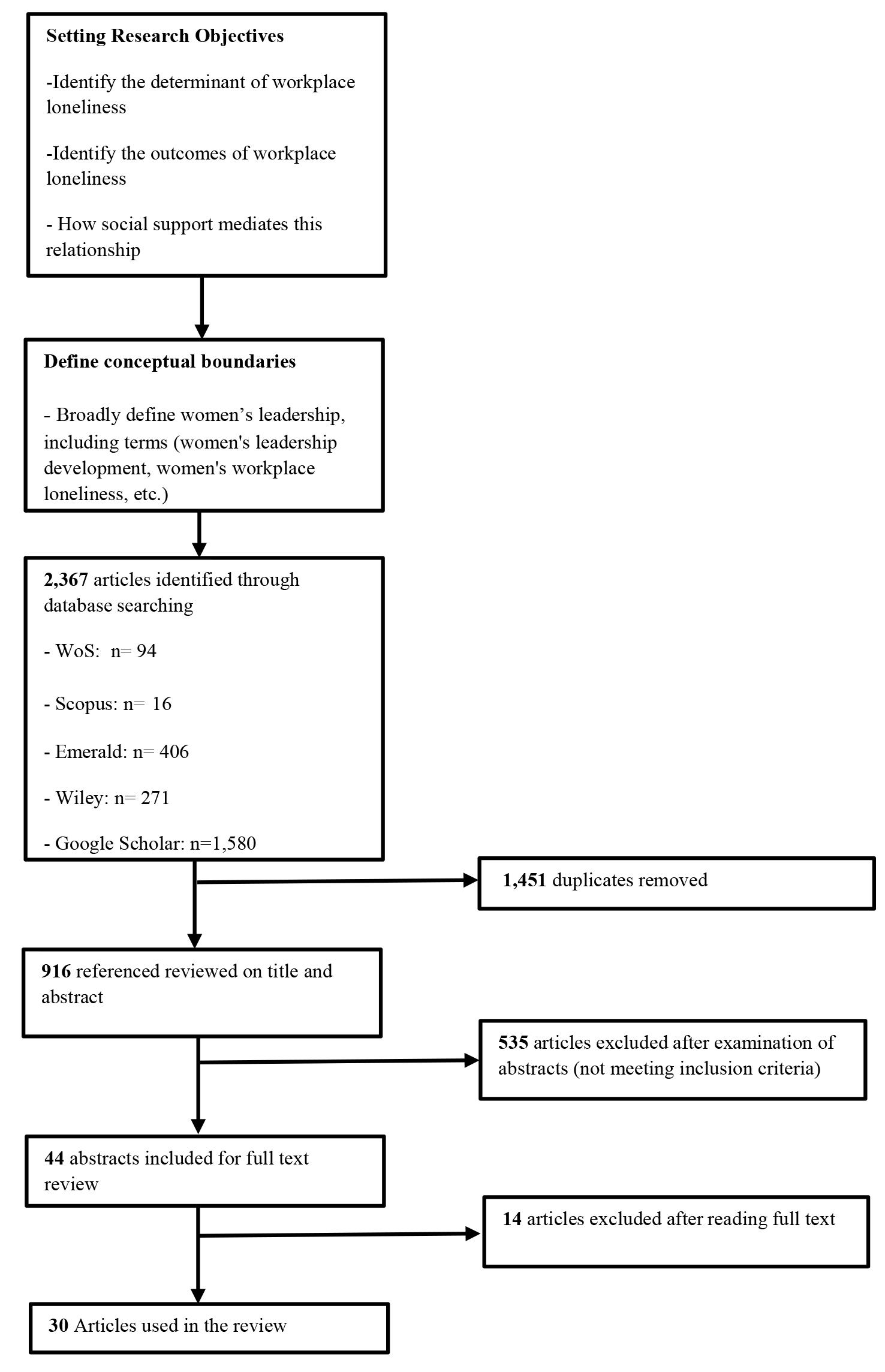
The initial database search generated a substantial pool of studies that was refined through a structured, multi-stage screening process. To ensure consistency and academic relevance, the review focused on English-language publications, primarily peer-reviewed journal articles, although credible books and institutional reports were included when they met the same standards. Alongside these inclusion criteria, a complementary set of exclusion criteria was applied to preserve methodological rigor. Specifically, studies were excluded if they failed to meet one or more of the following conditions: (a) the article was not peer-reviewed, (b) the content lacked direct relevance to the core themes of female leadership, workplace loneliness, or social support, (c) the publication was not written in English, or (d) the study fell outside the specified publication window of 2013 to 2024. Duplicate entries were then eliminated, after which the remaining records underwent a detailed screening of their titles, abstracts, and full texts to assess relevance, methodological soundness, and alignment with the objectives of the review. This process resulted in a final set of 30 studies included in the analysis, as illustrated in Fig. 2. To interpret the selected literature, content analysis was employed to identify recurring patterns, conceptual frameworks, and emerging thematic trends. Although drawing on multiple databases reduced the potential for selection bias, the exclusion of sources indexed in other platforms inevitably limits the breadth of the review. The decision to omit grey literature, including dissertations, conference papers, and unpublished manuscripts, may also introduce some publication bias. Even so, these limitations were mitigated through the consistent application of strict inclusion protocols and the cross-validation afforded by multiple databases, ensuring the overall credibility and transparency of the review process (Seow, 2025).
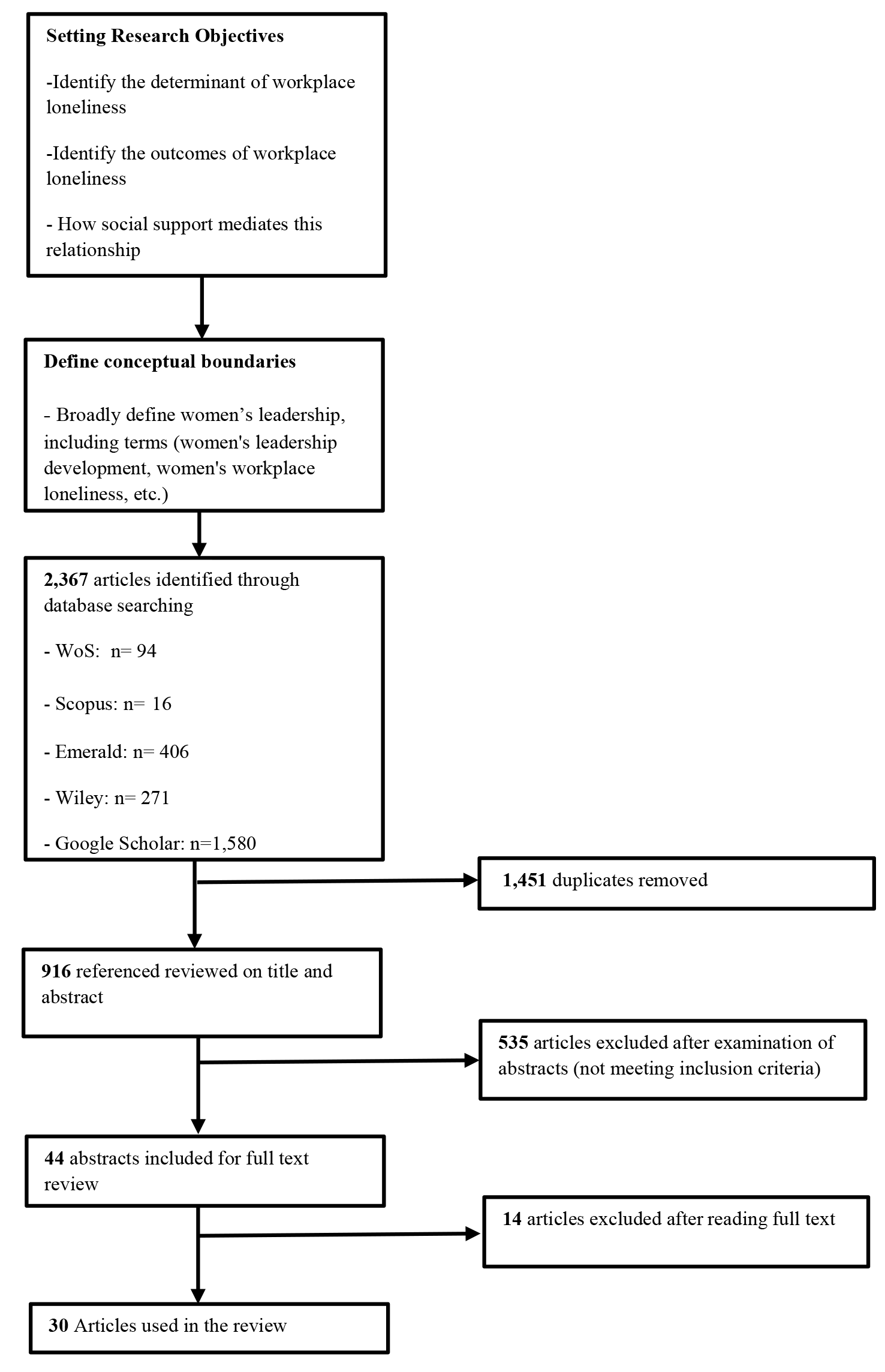 Fig. 2.
PRISMA protocol. PRISMA, Preferred Reporting Items for Systematic Reviews and Meta-Analyses. Source: Adapted from Hunter et al. (2019).
This systematic review draws on 30 studies published between 2013 and 2024 to examine the intricate connections among female leadership, social support, and workplace loneliness. The literature reveals a multifaceted pattern in which leadership behavior, organizational context, and person–environment fit intersect to shape loneliness-related outcomes. To present cohesive findings, the discussion is organized thematically to illuminate recurring mechanisms, highlight areas where evidence remains thin, and outline directions for subsequent inquiry. Although causal conclusions cannot be drawn from the existing body of work, the synthesis identifies several converging themes that inform an emerging evidence-based framework. Table 1 provides an overview of the contexts, methods, and key relationships featured in the reviewed studies, illustrating the interplay among leadership climates, person–environment fit, and social support in predicting workplace loneliness.
| Author(s) | Research context | Methodology | Findings |
| Barreto et al. (2025) | Research on loneliness considers gender by comparing the loneliness reported by men and women. | Quantitative | Loneliness gender gaps are driven by mineralization and marginalization, not by gender itself. |
| Khabibullaeva and Khabibullaeva (2025) | Loneliness in working women | Qualitative | Loneliness can cause psychological and physical issues, as well as social isolation and low self-esteem. |
| McCarthy et al. (2025) | A multidisciplinary perspective on loneliness and the relationship between gender differences in loneliness. | Qualitative | Workplace loneliness combines the perceived lack of social connections and cognitive discrepancy with the unbalanced cost-benefit of workplace relationships (social exchange). |
| Lam et al. (2024) | Does loneliness matter for leadership? | Qualitative | Leader loneliness is closely related to three key management themes: leader-follower interactions, emotional dynamics, and organizational well-being. |
| Thelma and Ngulube (2024) | Barriers to women’s advancement in leadership positions | Qualitative | Female executives encounter specific challenges, such as isolation, alienation, and imposter syndrome, that impede growth and career success. |
| Sullivan and Bendell (2023) | Managerial interventions to combat employee loneliness | Qualitative | Effective leadership reduces workplace loneliness by developing relationships, promoting change, and cultivating a people-centric culture. |
| Firoz et al. (2022) | The socio-demographic determinants of workplace loneliness | Quantitative | Age, marital status, and workplace friendships all strongly predicted workplace loneliness, while gender, organization type, job role, or tenure did not. |
| Lepinteur et al. (2022) | Gender, loneliness, and happiness | Quantitative | Female penalty is explained by the disproportionate rise in loneliness for women during the pandemic. |
| Ong (2022) | Gender-contingent effects of leadership on loneliness | Quantitative | This study broadens role congruity theory by extending it to leaders’ subjective experiences, highlighting the negative affective effects, such as loneliness, associated with leadership positions. |
| Silard and Wright (2022) | Managers’ status and workplace loneliness | Quantitative | While managers and subordinates reported equal levels of loneliness, the reasons differed significantly: employee loneliness was predicted by emotional connection and mutuality. |
| Smith and Sinkford (2022) | Barrier to female leadership | Qualitative | To combat isolation, effective female leadership development involves a combination of formal training and intentional, immersive encounters. |
| Gabriel et al. (2021) | Leader loneliness at work | Quantitative | Leader loneliness is self-correcting, and problem-focused thinking alleviates it by encouraging next-day work involvement. |
| Tian et al. (2021) | Gender differences in the effect of workplace loneliness on organizational citizenship behaviors | Quantitative | Gender influences the loneliness-engagement-OCB route; the indirect effect of engagement is considerable for women but not for men. |
| Wang and Liu (2021) | Effects of job autonomy on workplace loneliness among knowledge workers | Quantitative | Job autonomy alleviates workplace loneliness by increasing employees’ perceived insider status. |
| Jamieson (2019) | Effect of creative and innovative leadership on workplace loneliness. | Qualitative | Higher degrees of creative and innovative leadership skills are significantly connected with decreased workplace loneliness. |
| Maes et al. (2019) | Gender differences in loneliness across the lifespan | Qualitative | A meta-analysis found a near-zero overall gender difference in loneliness across the lifespan. The effects were all minor, with age, sampling area, and publication year being the only significant modifiers. |
| Pietri et al. (2019) | The relationship between temporary employment, loneliness at work, and job satisfaction | Quantitative | Temporary employees report more workplace loneliness than permanent employees. This loneliness influences the unfavorable connection between temporary employment and job satisfaction. |
| Zumaeta (2019) | Lonely at the top | Quantitative | Top executives’ loneliness is caused by role-specific challenges such as social isolation, a lack of support, and weariness. |
| Athanasopoulou et al. (2018) | Female CEO careers and workplace implications | Quantitative | Future female leaders are unlikely to be the lonely pioneers, but this does not automatically translate into more developmental environments for women. |
| Hoobler et al. (2018) | Business cases of female leadership | Qualitative | When a female is appointed to fill a position simply because of her gender, i.e., as a token, she may face social isolation and other negative experiences due to social identity issues. |
| Rokach (2018) | The effect of gender and culture on loneliness | Qualitative | Gender and loneliness are studied, as well as loneliness and cultural elements such as collectivism and individualism. |
| Peng et al. (2017) | Leader-member exchange relationship and workplace loneliness | Quantitative | Workplace loneliness inhibits creativity by limiting leader-member contact, particularly when leader compassion is low. |
| Tahir et al. (2017) | Isolation and loneliness experiences | Mixed-methods | Head teachers indicated relatively low levels of workplace isolation, which they mostly saw as a temporary situation. |
| Tabancalı (2016) | Relationship between job satisfaction and loneliness at the workplace | Quantitative | The results of the study have indicated that there was a substantial negative association between workplace loneliness and job satisfaction. |
| Rhee and Sigler (2015) | Untangling the relationship between gender and leadership | Qualitative | Female leaders continue to face barriers owing to sexual stereotypes and preconceptions. |
| Waytz et al. (2015) | The relationship between power and loneliness | Quantitative | The findings address the “lonely at the top” argument by illustrating how power alters social cognition and affects well-being and motivation across organizational hierarchies. |
| Nicolaisen and Thorsen (2014) | Loneliness among men and female | Qualitative | Female’s loneliness was associated with economic concerns. |
| Rokach (2014) | leadership and loneliness | Qualitative | Leadership responsibilities across industries are connected with high stress, alienation, and loneliness, which can negatively impact health, social, and familial relationships. |
| Tiwari (2013) | Women and workplace loneliness | Qualitative | Research suggests that women are more likely than men to experience loneliness and isolation. |
| Wright (2013) | Managers’ and non-managers’ loneliness in organizations | Quantitative | Managerial status was not a significant predictor of loneliness, suggesting that variables other than seniority contribute to workplace loneliness. |
CEO, chief executive officer; OCB, organizational citizenship behaviors. Source: Authors’ compilation.
The first major theme emerging from the review concerns the pivotal role of leadership behavior in shaping subordinate loneliness. Research by Yang et al. (2023), for example, shows that emotionally intelligent leadership can diminish feelings of isolation. However, these same interpersonal skills may be mobilized quite differently within the dynamics of QBS. In QBS contexts, senior women may withhold emotional support, mentoring, or meaningful interaction from junior women, a pattern that directly undermines what Jha (2023) describes as person–environment fit. For many junior women, this sense of fit is closely tied to the relationship they form with female supervisors. Supportive leaders cultivate inclusion, respect, and psychological safety; by contrast, QBS leaders erode these conditions, leaving subordinates feeling excluded and, in many cases, acutely lonely. Although studies such as Yang et al. (2023) and Jha (2023) illuminate important aspects of leadership influence, they rely heavily on self-reported data drawn from convenience samples. Many studies are also cross-sectional, limiting insight into how leader–subordinate relationships evolve over time or how the effects of QBS accumulate and persist (Spector, 2019). Moreover, a large share of the evidence is derived from Western, Educated, Industrialized, Rich, and Democratic (WEIRD) populations, which raises concerns about generalizability to more diverse cultural and industry contexts where leadership norms and expressions of loneliness may differ substantially (Apicella et al., 2020). These limitations matter, as workplace loneliness carries significant personal and organizational consequences. Ozcelik and Barsade (2018) show that loneliness influences both emotional well-being and performance, while Basit and Nauman (2023) find that it consistently predicts lower engagement and job satisfaction. Their additional observation that loneliness disproportionately affects individuals who already sit at the lower end of the social relationship continuum is particularly salient when viewed through the lens of QBS. A junior woman supervised by a queen bee leader may not be socially withdrawn by disposition, yet the lack of support and the experience of isolation place her in a uniquely vulnerable position. Under these conditions, loneliness becomes not only more likely but more damaging, reinforcing the need for research that captures these dynamics with greater nuance and methodological depth.
Workplace loneliness rarely unfolds as a momentary experience; it often develops into a self-perpetuating cycle with substantial consequences. Employees who feel lonely tend to withdraw socially, distrust colleagues, and reduce their prosocial behavior, which further isolates them and deepens their sense of disconnection (O’Day and Heimberg, 2021). Leadership plays a decisive role in either interrupting or reinforcing this cycle. Supportive leaders can rebuild trust and create opportunities for connection, while leaders who withdraw or withhold support, particularly when such behavior reflects QBS dynamics, sustain and even intensify the pattern. The costs of this cycle extend beyond interpersonal strain. Organizations face losses in creativity and engagement and, ultimately, higher turnover (Ertosun and Erdil, 2012; Li et al., 2019). Individuals bear emotional burdens as well, with women who experience same-gender betrayal or withdrawal of mentorship reporting heightened exhaustion and burnout (McIntyre et al., 2018; Nicholson, 2012).
Another core theme is the mediating function of social support, which links leadership behavior to employees’ experience of loneliness at work. Supportive leaders cultivate belonging and strengthen interpersonal ties, which positions social support as a crucial resource for fostering healthy workplace relationships (Tian et al., 2023). Leaders who enact QBS behaviors, however, erode this resource by encouraging competition, withholding connection, and discouraging collaboration. A key limitation across much of the literature is its reliance on broad, single-dimension measures of social support. Few studies distinguish among emotional support, such as empathy and relational warmth from peers, instrumental support, such as mentoring and career advocacy provided by supervisors, or informational support, such as guidance from mentors. This lack of differentiation is not a minor methodological oversight; it obscures the specific mechanisms through which QBS inflicts harm (Eisenberger et al., 2020; McMullan et al., 2018; Stoverink et al., 2018).
Our analysis suggests that QBS functions through a dual deprivation process. On one hand, it strips junior women of instrumental support by denying them access to mentorship, advancement opportunities, and career sponsorship. On the other hand, it corrodes emotional support by creating climates characterized by distrust, exclusion, and psychological unsafety. When these dimensions are combined into a single construct, the literature fails to detect the severity and complexity of this dual assault. As a result, the extent to which QBS deepens workplace loneliness, leaving women professionally stalled and personally isolated, is likely underestimated. A nuanced understanding of these distinctions is essential for identifying which forms of social support are most effective in buffering against QBS-related harm. For instance, a strong, supportive mentor can help a junior woman build resilience and optimism, yet when she reports to a leader who consistently engages in QBS behaviors, that protective resource may be undermined, heightening her vulnerability to stress and diminishing her self-esteem (Chaudhary et al., 2022).
The last theme relates to uneven consequences and methodological limitations that constrain what can be inferred from the current evidence. Chang (2018) argues that women of color are particularly susceptible to loneliness, suggesting that broad organizational interventions may be inadequate without attention to the distinct vulnerabilities faced by specific groups. Methodological constraints further limit what can be concluded from existing research. Many studies rely on cross-sectional self-report surveys, which restrict causal inference and introduce the risk of common method bias. It remains unclear whether loneliness diminishes performance or whether lower-performing employees become more isolated over time. The predominance of convenience samples drawn from single organizations or industries also limits the generalizability of findings. Furthermore, the literature seldom captures the experiences of women working outside the corporate sector, including those in blue-collar roles or in the gig economy, leaving important voices absent from the evidence base.
Many of the studies reviewed share a common limitation: they rely on broad measures of perceived social support that overlook important distinctions among its emotional, instrumental, and relational forms. As McMullan et al. (2018) note, support from supervisors and support from peers often stem from different predictors and lead to different outcomes, yet these nuances are frequently collapsed into a single measure. Without this level of specificity, it becomes difficult to determine whether various types of support within employees’ social networks are capable of buffering the harmful effects of QBS or workplace loneliness. Methodological constraints compound this issue. Since independent and dependent variables are often derived from the same source, concerns about common method variance arise, as correlations may be inflated by shared method bias rather than reflecting true associations (Podsakoff et al., 2003).
Drawing on this evidence, we interpret senior female leadership behaviors, including those aligned with QBS, as shaped by broader gendered organizational structures that influence how women leaders perceive their roles and, in turn, how their subordinates experience social support and loneliness. Advancing this line of inquiry requires research designs capable of capturing the temporal and situated nature of these dynamics. Longitudinal studies would allow scholars to examine how QBS behaviors unfold over time and how their effects accumulate or diminish in relation to subordinate outcomes (Spector, 2019). Qualitative approaches that investigate women’s motivations, interpretations, and lived experiences of QBS would provide equally critical insight into the processes underlying these behaviors. Integrating these approaches within mixed-methods designs would generate a more comprehensive and contextualized understanding of QBS and its consequences (Creswell and Clark, 2023). Beyond description and interpretation, there is also a pressing need to evaluate interventions aimed at countering QBS. This requires methodological movement beyond correlational work toward action research and quasi-experimental designs that test the effectiveness of real-world strategies for disrupting QBS and strengthening social support systems within organizations (Hunziker and Blankenagel, 2024).
This review conceptualizes women’s workplace loneliness as the product of a layered interaction among structural constraints, leadership behaviors, and the quality of social relationships within organizations. QBS is framed not as a fixed personal characteristic but as a context-dependent adaptation shaped by the limited agency available to women operating in gendered environments. At the point where tokenism, the glass ceiling, and social support converge, scarcity under constant evaluation weakens relational networks. Cross-level mentoring programs that provide protected time, clear developmental goals, and accountability mechanisms are expected to fortify leader–member relationships, increase the density of professional networks, and reduce emotional deprivation, thereby easing loneliness. Where QBS intersects with social support processes, selective mentoring and the withdrawal of support exacerbate isolation. Leadership development initiatives that help senior women recognize QBS dynamics, cultivate inclusive and compassionate practices, and rely on structured sponsorship rather than informal gatekeeping can reduce distancing behaviors, improve performance signals, and broaden access to career pathways. The intersection of QBS with female leadership theory highlights the tension between agency and constraint. Transparent criteria for selection, promotion, and workload allocation are likely to lower reputational risks and make it safer for senior women to support junior women, which in turn discourages defensive leadership responses. Broader organizational initiatives, such as communities of practice, peer-coaching groups, and cross-unit rotations, can expand informal networks, reduce competitive scarcity, and enhance access to emotional, informational, and instrumental support. These mechanisms create a clear line of sight between interventions and anticipated outcomes, since strengthened perceptions of support, denser and more reliable professional connections, lower emotional deprivation, and fewer distancing behaviors signal a more inclusive and connected organizational climate.
Future research can advance this framework by empirically testing the cyclical processes that connect tokenism, the glass ceiling, queen bee behaviors, social support, and workplace loneliness. Longitudinal designs are particularly well-suited to this task, as they allow scholars to observe how structural pressures accumulate and how changes in mentoring practices or leadership development programs influence loneliness trajectories among junior women. Mixed methods approaches, especially those that combine survey data with interviews or daily diary studies, would deepen understanding of how women interpret and navigate QBS-related interactions in their day-to-day work. Multi-level and cross-contextual studies could further clarify how team climates, organizational cultures, and industry settings shape the strength and direction of these mechanisms. Field experiments and quasi-experimental interventions that introduce structured mentoring, transparent evaluation procedures, or inclusive leadership training would also help establish causal effects and identify the practices that most effectively weaken QBS dynamics and reinforce social support. Through these methodological expansions, future research can extend the present framework and produce more robust evidence on how structural reforms and leadership development initiatives mitigate loneliness among women.
Building on this theoretical foundation, future studies should also link practical interventions to their expected outcomes. Enhancing visible and dependable support is likely to reduce loneliness by strengthening leader, member relationships and widening access to mentoring and sponsorship. Structured cross-level mentoring that includes protected time, clear objectives, and accountability mechanisms can turn supportive intentions into sustained relationships that address emotional deprivation and social fragmentation. It will also be important for future research to incorporate intersectional perspectives, recognizing that women who face overlapping disadvantages related to race, age, motherhood, or employment status may experience QBS and loneliness in distinct ways. Broader initiatives, such as communities of practice or cross-unit rotations, can help expand informal networks and reduce competitive scarcity, while transparent criteria for recruitment, promotion, and workload allocation may lower structural triggers that encourage defensive leadership behavior. Given that current empirical evidence is concentrated within a narrow range of sectors, comparative analyses across healthcare, education, technology, and professional services are needed to establish the contextual boundaries of these mechanisms. Expanding inquiry across different national and institutional settings would also clarify how cultural and structural contexts influence the interaction between organizational barriers, leadership agency, and access to social support. Methods such as short-interval experience sampling or social network analysis can capture feedback loops in real time, offering insight into whether increases in social support precede reductions in loneliness or decreases in distancing behaviors. Such approaches would provide a more temporally sensitive understanding of how workplace loneliness develops and how it may be interrupted.
A copy of all reviewed documents is available from the first author upon reasonable request.
Supervision, project administration: XLZ and XY; investigation, data curation: AK and RYCS; conceptualization, methodology, formal analysis: XLZ, XY, and AK; writing—original draft preparation, writing—review and editing: AK and RYCS; validation XLZ and XY. All authors contributed to critical revision of the manuscript for important intellectual content. All authors read and approved the final manuscript. All authors have participated sufficiently in the work and agreed to be accountable for all aspects of the work.
Not applicable.
This research received no external funding.
The authors declare no conflict of interest.
During the preparation of this work the authors used ChatGPT to improve the language and readability of the paper. After using this tool/service, the authors reviewed and edited the content as needed and take full responsibility for the content of the publication.
References
Publisher’s Note: IMR Press stays neutral with regard to jurisdictional claims in published maps and institutional affiliations.