
 , Rahila Ali 2,*
 , Ahlam Almusharraf 1, Renu Sharma 1, Abad Alzuman 1, Nida Khan 3
1 Department of Management, College of Business Administration, Princess Nourah Bint Abdul Rahman, 11564 Riyadh, Saudi Arabia
2 Faculty of Management, Jagran Lakecity University, 462044 Bhopal, India
3 Department Of Psychology Fatima, College of Health Sciences, Abu Dhabi, UAE
Abstract
The rapid integration of artificial intelligence (AI) into human resource (HR) systems is reshaping organizational practices, yet its effects on culture, climate, and work attitudes remain underexplored in emerging economies. This study investigates how AI-driven HR practices influence the three dimensions of the Organizational Social Context (OSC) in Saudi Arabia’s higher education sector and whether employee perceptions mediate these relationships. Using survey data from 869 university professionals and Partial Least Squares Structural Equation Modeling (PLS-SEM), the results indicate that AI-based HR practices significantly affect all three outcomes. Employee perceptions mediate the effects on climate and work attitudes but not on culture. The findings suggest that transparent communication, inclusive implementation, and trust-building are essential to maximize AI’s organizational benefits. For practitioners, employee acceptance and perceptions of AI are critical for enhancing climate and engagement. For scholars, the study identifies employee perception as a key mediator linking AI to organizational outcomes, providing a foundation for future research on AI in HR across industries and cultures.
Keywords
- AI-based HR practices
- organizational culture
- organizational climate
- work attitude
- OSC measure
- employee’s perception of AI
- Saudi Arabia
- educational sector
Artificial Intelligence (AI) has emerged as a transformative force, significantly influencing modern industries and organizational operations (Lim, 2025). As a technological discipline that simulates human intelligence, AI encompasses systems capable of learning, problem-solving, and decision-making (Bohr and Memarzadeh, 2020; Dhamija and Bag, 2020). In the domain of Human Resource Management (HRM), AI is now integrated into various functions, including recruitment, performance assessment, and employee analytics (Murugesan et al., 2023). This integration has been shown to improve operational efficiency and employee-related outcomes.
The current study aims to examine the influence of AI-driven HR practices on three core elements of the Organizational Social Context (OSC): organizational culture, organizational climate, and work attitudes. Organizational culture refers to the shared norms and values that shape employee behavior and drive internal cohesion, while organizational climate reflects employees’ perceptions of their work environment, including aspects such as job satisfaction and support systems (Schneider et al., 2013). Work attitudes relate to individuals’ levels of job satisfaction and organizational commitment, both of which are crucial indicators of engagement and performance (Bajrami et al., 2021).
Although AI adoption in HRM is advancing, most existing research emphasizes functional improvements, with less attention given to its broader social and psychological implications, particularly in non-western contexts such as Saudi Arabia (Alrashedi and Abbod, 2021). Furthermore, limited empirical work has applied the OSC framework to investigate how AI-driven Human Resource (HR) strategies influence organizational dynamics. AI has become an increasingly prominent enabler of innovation in HRM, transforming how organizations manage recruitment, onboarding, performance evaluation, and employee engagement (Bohr and Memarzadeh, 2020; Dhamija and Bag, 2020) underscoring the need to address employee concerns during AI implementation.
The education sector, especially universities and higher education institutions, is a strategic and dynamic environment for studying AI-driven HR practices due to its ongoing digital transformation, public policy mandates, and complex organizational structures. While OSC has been widely applied in service and health care organizations, its application to an AI-enabled HR environment, particularly in higher education institutions, is novel. The education sector in Saudi Arabia presents a strategically significant context for this study for several reasons, such as its rapidly digitalizing as a result of Vision 2030 (Abdullateef et al., 2023) and the National Strategy for Data and AI (NSDAI), both of which encourage automation and technology use in universities (Memish et al., 2021).
While the Organization Social Context (OSC) framework has been extensively validated in western service sector settings, particularly in the United States (Glisson et al., 2008; Glisson et al., 2012), its application in non-western and educational contexts remains limited. This presents an opportunity to extend the framework to new cultural and institutional environments such as Saudi Arabia’s higher education sector, which is an area undergoing rapid digital transformation aligned with Vision 2030 (Wajid, 2025). Given the unique organization dynamics shaped by hierarchical structures, cultural values, and national labor reform, examining how OSC components—culture, climate, and work attitudes—respond to AI-driven HR practices offers valuable knowledge. As a result, the study contributes by determining the relevance of the OSC framework in new contexts, supporting its cross-cultural generalizability and paving the way for future research adaptation. Examining the connection between AI-driven HR practices and the educational social context yields significant insights that have broader implications for innovation in both public and private sectors, employee engagement, and the long-term reform of HR practices.
The integration of artificial intelligence into human resource management has gained substantial momentum, transforming traditional HR processes into data-driven, agile, and personalized functions. AI technology has been applied across a range of HR domains, including talent acquisition, employee engagement, onboarding, learning and development, and performance management. In the area of recruitment, AI-powered systems have automated crucial tasks such as resume screening, candidate shortlisting, and preliminary assessments. These innovations have significantly increased efficiency and objectivity in hiring decisions (Dwivedi et al., 2019). However, they also raise concern regarding algorithmic bias and fairness, with studies warning that AI models may replicate or exacerbate existing social inequalities if not carefully monitored (Hanna et al., 2025). For onboarding and employee engagement, AI-enabled platforms provide personalized learning paths, real-time performance feedback, and chatbot support, thereby enhancing the employee experience and enabling continuous engagement (Rathore et al., 2021). The system fosters a more inclusive and responsive HR environment where employees can access support and resources tailored to their individual needs. In the area of performance management, AI facilitates real-time analytics and individualized coaching, supporting dynamic goal-setting, skills development, and performance evaluation (Bastida et al., 2025). These tools contribute to improved employee development while enabling managers to make informed, data-driven decisions. Despite these advantages, the adoption of AI in HRM is not without challenges. Ethical concerns such as data privacy, algorithmic transparency, and the explainability of AI-based decisions require comprehensive governance frameworks and regulatory oversight (Davenport et al., 2020; Zhu et al., 2021; Vinchon et al., 2023). In the Saudi industrial sector, HR managers reported both optimism and apprehension regarding AI’s effect on recruitment, evaluation, and employee relations (Alshahrani et al., 2025). Moreover, there is a growing emphasis on ensuring that AI implementations align with organizational values and support human-centered HR practices (Reilly, 2018; Samarasinghe and Medis, 2020).
Overall, the growing role of AI in HRM reflects a meaningful shift toward more efficient, responsive, and people-centered practices. From hiring and onboarding to performance management and even offboarding, AI is reshaping the entire employee journey, highlighting its increasing value as a strategic partner in today’s evolving workplace (George and Thomas, 2019).
While the OSC framework has been widely validated in Western service sectors such as healthcare and social services (Glisson et al., 2008; Hemmelgarn and Glisson, 2018), its application to other industries remains limited. Most studies emphasize the effects of climate and culture on service effectiveness, employee well-being, and innovation in these contexts. However, there is little empirical evidence on how OSC operates in education, particularly in non-Western countries undergoing rapid digital transformation. Saudi Arabia’s education sector, shaped by Vision 2030, is undergoing digital transformation, including the implementation of AI-enabled HR systems for hiring, training, and performance management. Studies (Hamad et al., 2019) reveal that while AI fosters modernization, resistance emerges due to hierarchical and conservative cultures. Alamer and Alharbi (2022) further emphasize that employees’ perceptions of fairness and support regarding the use of technology strongly influence their work attitudes. In the context of universities and other educational institutions, the OSC model is especially useful in revealing how leadership styles, HR practices, and administrative decisions influence the everyday experiences of faculty and staff. When the organizational climate is supportive and positive, it tends to increase job satisfaction and openness for innovation. On the other hand, rigid cultures can create resistance to change and limit progress (Zhang et al., 2023).
The previous research on education has often examined climate, culture, or work attitudes individually, but few studies have applied the integrated OSC model to capture their interdependence. Moreover, with the increasing adoption of AI-based HR practices in universities, the education sector provides a novel and strategically important context for extending OSC. By situating OSC in Saudi higher education, this study addresses two critical gaps-first, it tests OSC theory in a new cultural and institutional environment beyond its traditional service-sector applications, and second, it examines how technological shifts such as AI adoption reshape the organizational social context.
The way employees think about AI is a key factor in how AI-based HR practices affect the results of a firm. As new technologies like Smart Technology, Artificial Intelligence, Robotics, and Algorithms (STARA) grow more common in the workplace, workers are more likely to question their responsibilities, job security, and long-term career possibilities. This cognitive and emotional evaluation has a big impact on how people deal with and accept changes in the workplace.
From a theoretical perspective, employee perceptions of technology adoption are well-rooted in models like the Technology Acceptance Model (TAM) (Davis, 1989) and the Unified Theory of Acceptance and Use of Technology (UTAUT) (Venkatesh et al., 2003). According to TAM, two beliefs—perceived usefulness and perceived ease of use—determine whether or not a person will adopt a technology. UTAUT adds to this understanding by including things like performance expectancy, effort expectancy, social influence, and facilitating conditions. These models reveal that how employees perceive AI will change their jobs, workloads, and relationships affects how much they accept and use AI-driven HR practices.
Empirically, Brougham and Haar (Brougham and Haar, 2018) emphasize that increased awareness of STARA is linked to decreased organizational commitment and career satisfaction, suggesting that employees may experience psychological strain as AI systems are adopted. This aligns with UTAUT’s notion that lack of perceived control or social support can inhibit technology acceptance.
Conversely, Kumari (2021) presents a more positive narrative, showing that employees recognize the potential of AI to improve HR efficiency across functions like recruitment, planning, and performance analysis. This reflects the TAM’s idea of perceived usefulness and shows how positive expectations can foster openness to change.
According to Jain et al. (2022), automation may take away some jobs, but it also creates new ones that require different skill sets. Facilitating Conditions and Effort Expectancy, which come under the Unified Theory of Acceptance and Use of Technology (UTAUT), emphasize the significance of organizational support and perceived ease of use in technology adoption, which is related to employee adaptability. According to Horodyski (2023), without human involvement, AI-driven recruitment undermines applicant experiences and interpersonal bonds. This indicates a gap where social influence and automated trust become major acceptance criteria. Roohani (2023) address the role of performance expectancy in employee perception and indicate that AI with strategic alignment and ethical protections can boost workplace productivity and employee satisfaction.
As per Presbitero (2023), AI-driven job displacement increases employment uncertainty and psychological discomfort, which drives career exploration. How AI is adopted and incorporated into organizational culture depends on employee views of risk, autonomy, and rights. These findings suggest that employees’ views on AI’s efficiency and their concerns about job loss influence how AI-based HR practices affect organizational culture, climate, and work attitudes. This study uses employee perception of AI as a mediator to explain the relation between AI-driven HR practices and the three domains of the OSC framework.
This study employed an explanatory research design to investigate the influence of AI-driven human resource (HR) practices on key components of the Organizational Social Context (OSC)—namely, organizational culture, organizational climate, and work attitude—within the education sector in Saudi Arabia. Furthermore, it examined the mediating role of employee perception of AI, contributing to an integrated understanding of how technological interventions influence workplace dynamics.
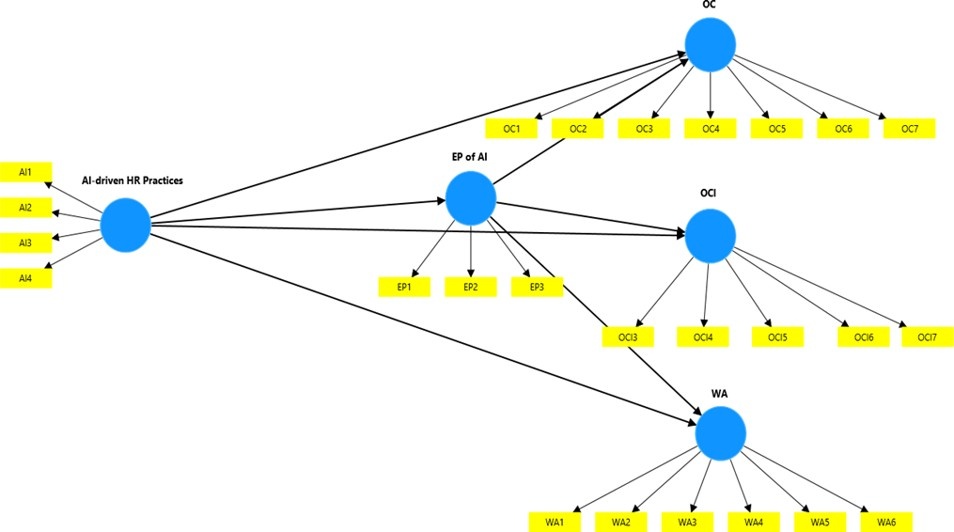
The proposed conceptual framework (see Fig. 1) delineates the relationship between the independent variable (AI-driven HR practices) and dependent variables (organizational culture, organizational climate, and work attitude), with employee perception of AI acting as a mediating construct.
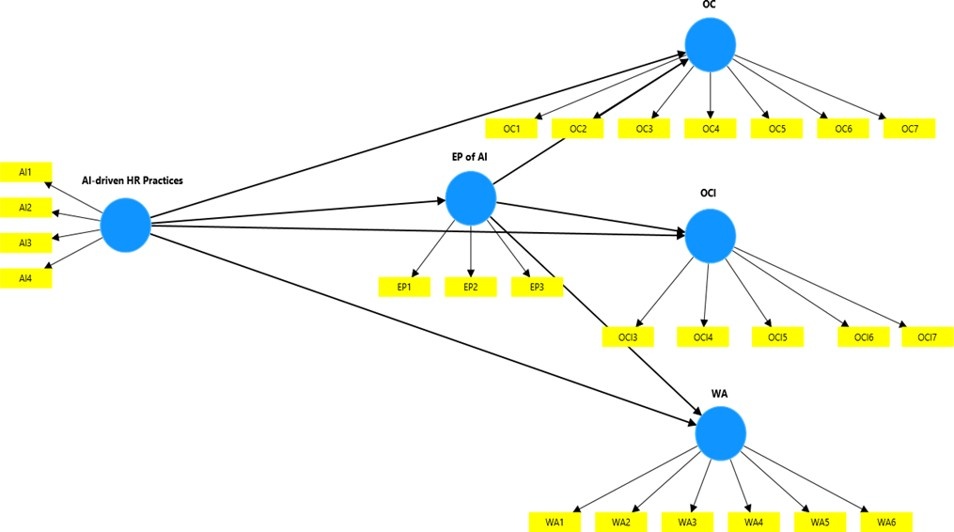 Fig. 1.
A proposed conceptual framework. Note: EP of AI, Employee Perception of Artificial Intelligence; OC, Organizational Culture; OCl, Organizational Climate; WA, Work Attitude.
This framework aligns with the following research objectives:
1. To determine the impact of AI-driven HR practices on organizational culture.
2. To assess the effect of AI-HR practices on organizational climate.
3. To examine the influence of AI-HR practices on work attitudes.
4. To evaluate the mediating role of employee perceptions toward AI in the above relationships.
To operationalize these objectives, the following hypotheses were developed, each grounded in relevant theoretical frameworks:
H1: AI-based HR practices significantly influence organizational culture.
Organizational structure and values impact organizational culture, according to the OSC framework (Glisson et al., 2008). Based on sociotechnical systems theory in organizational development, it is an approach to complex organizational work design that recognizes the interaction between people and technology in workplaces. Well-integrated AI tools can reshape cultural norms toward innovation, transparency, and data-driven decision-making, while poorly aligned implementations may disrupt existing values and create resistance.
H2: AI-HR practices are significantly associated with organizational climate.
The OSC framework explains climate as employees’ perceptions of their work environment. The Affective Events Theory (Weiss and Cropanzano, 1996) suggests that daily interactions with AI-enabled systems such as feedback algorithms or automated appraisals can evoke emotional responses that shape perceptions of equality, workload, and collaboration. Thus, AI adoption is likely to influence employees’ psychological climate (Schneider et al., 2013; Pan and Froese, 2022).
H3: AI-HR practices significantly impact work attitude.
Based on the Theory of Planned Behavior (TPB) (Ajzen, 1991), work attitudes (engagement, job satisfaction, and intention to stay) are influenced by employees’ behavioral beliefs about the work environment. AI-driven HR practices that improve career advancement and reduce inconsistency in appraisals can help develop productive work attitudes (Alamer and Alharbi, 2022).
H4: Employee perception of AI mediates the relationship between AI-HR practices and organizational culture.
According to the Technology Acceptance Model (TAM) (Davis, 1989) and Self-Determination Theory (Deci and Ryan, 1985), employees’ perceptions of a system’s fairness and convenience of use identify how they accept change. Employee [A1] perspectives on AI thus serve as a significant mediating role in exploring whether AI-HR advancements become integrated in organizational culture (Presbitero and Teng-Calleja, 2023). However, culture is fundamentally more resistant to change than flexible factors such as organizational climate or work attitudes (Martin, 2001). This [A2] shows that, even if AI-based HR practices are well received, they may not be sufficient to influence deep-level cultural beliefs in the short run. The distinction between surface-level constructs (e.g., climate and attitudes) and deep-level constructs (e.g., culture) is important in defining the limits of perception mediation (Glisson et al., 2008; Schneider et al., 2013).
H5: Employee perception of AI mediates the relationship between AI-HR practices and organizational climate.
Referring to Affective Events Theory and TAM again, the emotional and cognitive responses to AI adoption, such as trust, anxiety, or motivation, moderate how AI practices translate into psychological experiences of support, collaboration, and role clarity. Furthermore, the effect of AI’s involvement in HR operations was found to be more salient in organizations with a collaborative climate.
H6: Employee perception of AI mediates the relationship between AI-HR practices and work attitude.
Employees who perceive AI as enabling competence and autonomy are likely to be satisfied and engaged with their jobs, according to Self-Determination Theory. If AI is perceived as impersonal, it may reduce motivational elements, resulting in negative work attitudes (Jin et al., 2024).
This research was carried out in Saudi Arabia, a nation undergoing a transformative economic shift under its Vision 2030 initiative (Moshashai et al., 2020). This vision focuses on digital transformation, economic diversification, and workforce modernization, particularly through the integration of AI technologies (Asem et al., 2024). In HRM, AI is increasingly adopted for recruitment, performance evaluations, employee engagement, and strategic planning (El-Ghoul et al., 2024).
Given this context, this study investigates how AI-driven HR practices affect internal organizational dynamics in the Saudi educational sector. It further explores whether employees perceive AI as a growth enabler or a disruptive force, thus contributing to the discourse on technological adaptation in human capital management.
The target population comprised employees in Saudi Arabia’s service sector, particularly those working in educational institutions where AI-based HR adoption is actively emerging. This sector’s human-capital-intensive nature makes it an ideal context for evaluating the impacts of AI on organizational culture, climate, and work attitudes.
A total of 1000 online surveys were distributed via Google Forms, and 897 responses were received. After excluding incomplete responses, 869 valid questionnaires were retained, yielding a response rate of 87%. Sampling followed the guidelines of Krejcie and Morgan (1970), ensuring statistical adequacy. A simple random sampling technique was used to minimize bias. Respondents were informed of the voluntary nature of the study and assured of anonymity.
Among the respondents, 52.08% were male, and 47.92% were female. Of these, 61.22% held teaching positions, and 38.78% were administrative staff. Educational qualifications included 67% PhD holders and 33% with Master’s degrees. Age distribution indicated that 56% were between 25–40 years, while 44% were above 40.
The study applied a non-probability convenience sampling technique to collect data from academic and non-academic professionals working in public and private educational institutions across Saudi Arabia. The data was gathered using an online self-administered questionnaire distributed through university mailing lists, social media networks (LinkedIn and WhatsApp groups), and institutional portals over a three-month period (October–December 2024). A total of 869 genuine responses were received, including 532 academic staff and 337 administrative professionals from 15 educational institutions. While convenience sampling allowed for practical and timely data collection, it introduces potential biases related to self-selection and non-representativeness. As such, the results may reflect the views of more digitally literate, accessible, or AI-aware employees and can’t be generalized to the entire population of the institution’s employees in Saudi Arabia. To assess potential variation across subgroups, post-hoc analyses were conducted based on respondent roles (academic vs. administrative), age, gender, and academic institute type (public vs. private). While the core model relationships remained consistent, minor differences in employee perceptions of AI were observed between public and private institutions, suggesting that organizational structure and digital proficiency might affect attitudes toward AI-driven HR practices. We discuss these variations in the results section to ensure a detailed understanding.
The questionnaire was divided into various sections, including the OSC framework
(organizational culture, climate, and work attitude), AI-based HR practices, and
employee perception of AI. Data analysis was executed through Partial Least
Squares and Structural Equation Modeling (PLS-SEM) to assess the hypothesized
relationships, as data normality evaluations showed multivariate normality
violations (Mardia’s coefficient
This study used a structured questionnaire divided into two main components: (A) Demographic Information and (B) Latent Constructs related to Organizational Social Context (OSC) framework, AI-based HR practices and Employee Perception of AI. All items were measured on a five-point Likert scale ranging from 1 = Strongly Disagree to 5 = Strongly Agree (Refer Appendix Table 6).
Respondents were requested to fill their demographic characteristics, including Gender: (1) Male, (2) Female, Age Group: (1) 25–40 years, (2) 40 and above, Educational Qualification: (1) PhD Degree, (2) Master’s Degree, Profile Category: (1) Administrative, (2) Academic.
These demographic components were explored for differential impacts in the first study but were removed from the final structural model due to a lack of statistical significance, retaining model fit.
The study adapted the Organizational Social Context (OSC) measure developed by Glisson et al. (2008; 2012), originally comprising 105 items. From this, 21 observed items (OC1–OC7, OCl1–OCl7, WA1–WA6) were derived from validated OSC subdimensions and were carefully selected and tailored to the Saudi higher education sector. This operationalization was based on prior empirical research (e.g., Glisson et al., 2008) and aligned with the Organizational Culture Survey (https://www.cymha.ca/resource-hub-files/t_change_assessment_survey_organizational_culture_survey.pdf). The adaptation ensured conceptual fidelity while enhancing contextual relevance: The OSC framework includes three key subdimensions:
Organizational Culture (shared behavioral norms, expectations)
1. OC1: The organizational culture is formal and structured;
2. OC2: The organizational culture is flexible and adaptable;
3. OC3: The organization is responsive to environmental changes;
4. OC4: Shared values in the organization emphasize the importance of skills and expertise;
5. OC5: Employees feel free to express their opinions at work;
6. OC6: Employees demonstrate passion and enthusiasm for their work;
7. OC7: Overall, I am satisfied with the organizational culture.
Organizational Climate (perceptions of support, role clarity)
1. OCL1: I experience low levels of stress in my daily work;
2. OCL2: I rarely encounter role conflicts in my job responsibilities;
3. OCL3: My role allows me to fully utilize my skills and capabilities;
4. OCL4: My workload is not excessive;
5. OCL5: My workload is manageable;
6. OCL6: I clearly understand how my role contributes to organizational success;
7. OCL7: Collaboration across different teams/departments is encouraged and facilitated.
Work Attitudes (job satisfaction, commitment, retention intentions)
1. WA1: I have opportunities for career growth and advancement;
2. WA2: The organization actively supports my professional development;
3. WA3: I am highly engaged in my current role;
4. WA4: I am highly engaged in the organization as a whole;
5. WA5: I plan to stay with this organization for at least another year;
6. WA6: I am generally satisfied with my current role;
7. WA7: I am satisfied with my experience working in this organization.
Each subdimension was treated as a reflective latent construct in the PLS-SEM model, with the respective items as first-order observed indicators.
AI-Based HR Practices and Employee Perception of AI
To assess the technological dimension of the model, two additional constructs were included:
AI-Based HR Practices (6 items)
1. AI1: AI is used in resume screening, candidate sourcing, or interview scheduling;
2. AI2: AI is used in scheduling interviews or coordinating candidate communication;
3. AI3: AI is used in succession planning, career path mapping, or identifying high-potential employees;
4. AI4: AI is used in providing feedback, setting performance goals, or managing evaluations;
5. AI5: AI is used to personalize learning paths, recommend training modules, or track employee progress;
6. AI6: AI analytics are used to monitor employee engagement or predict retention risks.
These items were adapted from prior validated sources (Dwivedi et al., 2019; Kumari and Hemalatha, 2021) and reflect the extent to which AI is embedded in HR functions.
Employee Perception of AI (5 items)
1. EP1: I believe AI can enhance efficiency in HR functions;
2. EP2: I am comfortable interacting with AI tools in the workplace;
3. EP3: I trust AI systems to make fair HR-related decisions;
4. EP4: I am concerned about job displacement due to AI;
5. EP5: I perceive AI to have a positive impact on my career growth.
These items, adapted from Abhilasha Singh and Shaurya (2021), and Presbitero (2023), were used to capture employees’ reactions to AI-driven changes in HR practices.
Control variables such as age, gender, job type, and institution type were considered during model planning but were removed from the final structural model because they caused PLS-SEM model fit concerns.
This decision followed recommendations from Hair et al. (2019b) that advise model parsimony and alignment with theoretical focus when non-hypothesized variables undermine fit or inflate standard errors. This complete measuring methodology rigorously tested the hypothesized links between AI-based HR practices, employee perception, and organizational social context in higher education, and the Zhao et al. (2010) typology was used for mediation analysis.
As shown in Fig. 1, the proposed conceptual framework positions employee perception of artificial intelligence (EP of AI) as a key driver influencing organizational culture (OC) and organizational climate (OCl), which subsequently shape work attitudes (WA). This model integrates organizational social context perspectives to capture the human technology interaction in the Saudi higher education sector.
As presented in Table 1, all constructs demonstrated acceptable internal
consistency, with composite reliability values ranging from 0.833 to 0.947,
exceeding the 0.70 threshold (Hair et al., 2019b). Convergent validity was
established as all AVE values surpassed 0.50. Two low-loading items (
| Construct | Item | Factor loading | Cronbach’s |
rhoA | rhoC | AVE | VIF |
| AI-Driven HR practices | AI1 | 0.472 | 1.193 | ||||
| AI2 | 0.736 | 1.533 | |||||
| AI3 | 0.890 | 0.731 | 0.796 | 0.833 | 0.566 | 2.381 | |
| AI4 | 0.840 | 2.132 | |||||
| Employee perception of AI | EP1 | 0.697 | 1.255 | ||||
| EP2 | 0.776 | 0.721 | 0.797 | 0.843 | 0.645 | 1.855 | |
| EP3 | 0.920 | 2.160 | |||||
| Organizational culture | OC1 | 0.870 | 4.116 | ||||
| OC2 | 0.799 | 2.983 | |||||
| OC3 | 0.915 | 4.486 | |||||
| OC4 | 0.915 | 0.935 | 0.955 | 0.947 | 0.721 | 4.511 | |
| OC5 | 0.864 | 3.096 | |||||
| OC6 | 0.727 | 2.385 | |||||
| OC7 | 0.839 | 3.158 | |||||
| Organizational climate | OCl3 | 0.596 | 1.062 | ||||
| OCl4 | 0.489 | 1.444 | |||||
| OCl5 | 0.816 | 0.781 | 0.756 | 0.835 | 0.512 | 2.192 | |
| OCl6 | 0.755 | 2.238 | |||||
| OCl7 | 0.853 | 2.641 | |||||
| Work attitude | WA1 | 0.740 | 1.725 | ||||
| WA2 | 0.708 | 1.551 | |||||
| WA3 | 0.777 | 1.993 | |||||
| WA4 | 0.818 | 0.872 | 0.886 | 0.904 | 0.611 | 2.227 | |
| WA5 | 0.874 | 2.789 | |||||
| WA6 | 0.761 | 1.874 |
Note: The table reports standardized factor loadings, Cronbach’s alpha
(
| AI-driven HR practices | EP of AI | OC | OCl | WA | |
| AI-driven HR practices | 0.752 | ||||
| EP of AI | 0.628 | 0.803 | |||
| OC | 0.256 | 0.193 | 0.849 | ||
| OCl | 0.289 | 0.255 | 0.594 | 0.715 | |
| WA | 0.460 | 0.450 | 0.302 | 0.418 | 0.782 |
| AI-driven HR practices | EP of AI | OC | OCl | WA | |
| AI-driven HR Practices | |||||
| EP of AI | 0.800 | ||||
| OC | 0.293 | 0.209 | |||
| OCl | 0.305 | 0.280 | 0.568 | ||
| WA | 0.564 | 0.539 | 0.316 | 0.421 |
Table footnotes: All HTMT values were below 0.90, indicating good discriminant validity (Henseler et al., 2015).
All latent constructs had Variance Inflation Factor (VIF) values below 3.3
(Hair et al., 2019b), indicating no multicollinearity. Cohen’s f2 values
were calculated to assess the impact of exogenous variables on endogenous
constructs. Effect Size (f2): Cohen’s f2 values were computed to
determine the magnitude of the effect of exogenous variables on endogenous
constructs. The results indicated that AI-based HR practices had a medium to
large effect on the organizational atmosphere (f2 = 0.37) and that
employees’ perceptions had a medium to large effect on their work attitude
(f2 = 0.29). This means that the effects were very real. The SRMR
(Standardized Root Mean Square Residual) is 0.062, which means the model fits
perfectly (threshold
Following the evaluation of the measurement model, the next phase involved analyzing the structural model to assess the hypothesized relationships between AI-driven HR practices and the three core components of the Organizational Social Context (OSC): Organizational Culture, Organizational Climate, and Work Attitude.
H1: AI-driven HR practices significantly and positively affect organizational culture.
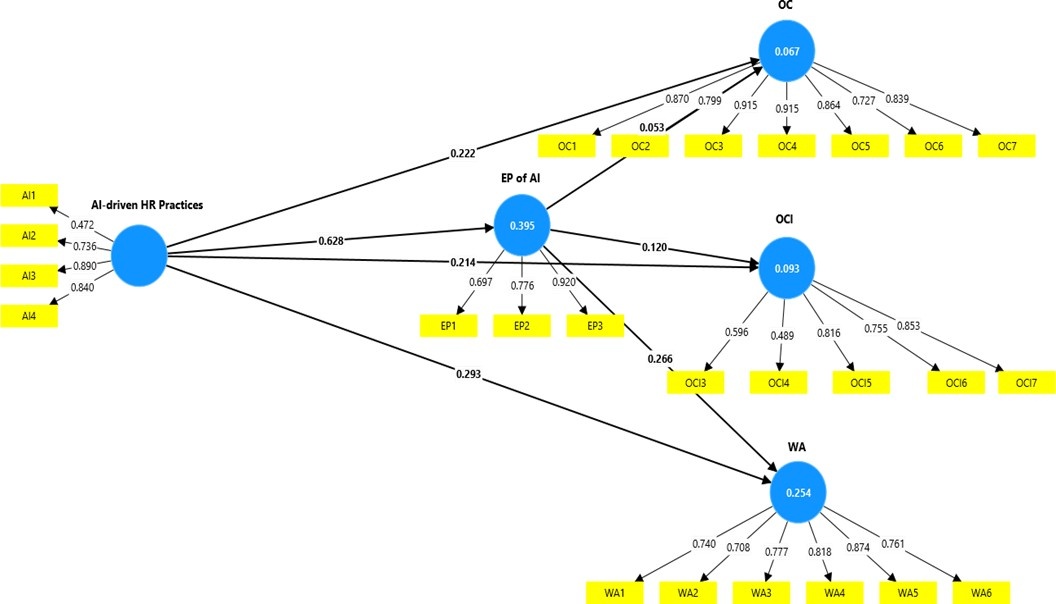
The analysis reveals a significant and positive effect of AI-driven HR practices
on organizational culture (
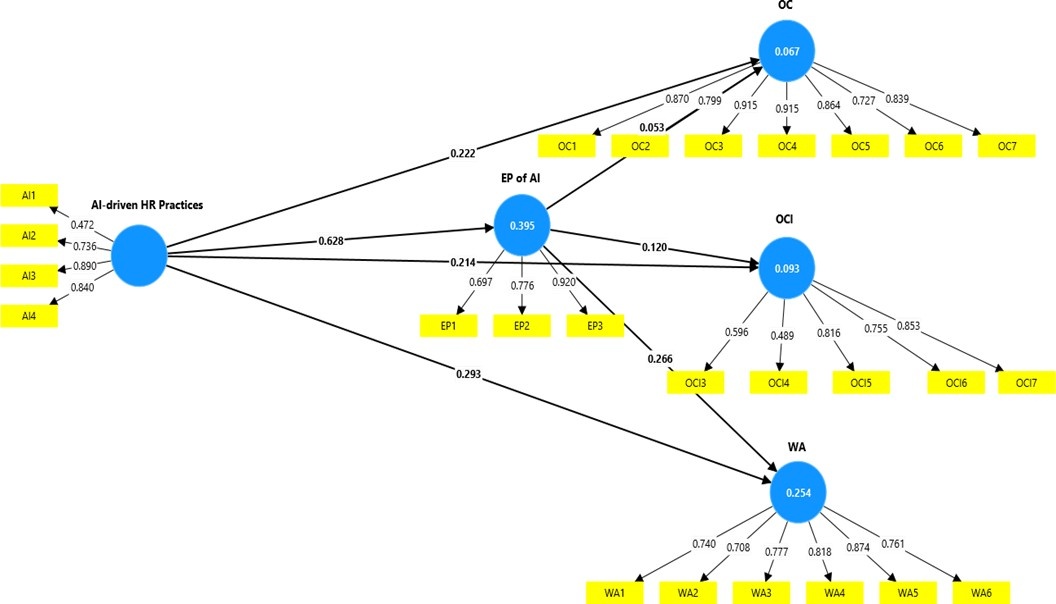 Fig. 2.
Structural model depicting the relationships between AI-driven HR practices and organizational outcomes. Direct relationships between AI-driven HR practices and organizational culture, organizational climate, and work attitude. Mediation pathways through employee perception of AI (EP of AI). Note. AI, Artificial Intelligence; EP of AI, Employee Perception of Artificial Intelligence. The model illustrates both the direct and indirect (mediated) effects of AI-driven HR practices on organizational outcomes, with employee perception of AI acting as a key intermediary.
| Hypothesis | Path | Beta coefficient | Standard deviation | T value | p value | Decision |
| H1 | AI-driven HR | 0.222 | 0.042 | 5.301 | 0.000 | Supported |
| Practices |
||||||
| Organizational | ||||||
| Culture | ||||||
| H2 | AI-driven HR | 0.214 | 0.043 | 4.950 | 0.000 | Supported |
| Practices |
||||||
| Organizational | ||||||
| Climate | ||||||
| H3 | AI-driven HR | 0.293 | 0.038 | 7.658 | 0.000 | Supported |
| Practices |
||||||
| Work Attitude |
H2: AI-driven HR practices significantly and positively affect organizational climate.
The findings show a significant positive effect of AI-driven HR practices on
organizational climate (
H3: AI-driven HR practices significantly and positively affect work attitude.
The path coefficient for the relationship between AI-driven HR practices and
work attitude is also significant (
To evaluate the indirect effects of AI-driven HR practices via the mediating role of Employee Perception of AI (EP of AI), a bootstrapping procedure (5000 samples) was applied. The results for each dependent variable are outlined below.
H4: EP of AI mediates the relationship between AI-driven HR practices and organizational culture [A1].
The total effect of AI-driven HR practices on organizational culture was
significant (
| Hypothesis | Path | Total effect | Direct effect | Indirect effect | t (indirect) | p | 99% CI (lower–upper) | Mediation type |
| H4 | AI HR |
0.256*** | 0.222*** | 0.034 | 1.218 | 0.223 | [–0.021, 0.087] | Not Supported |
| H5 | AI HR |
0.289*** | 0.214*** | 0.076** | 2.731 | 0.006 | [0.024, 0.131] | Partial Mediation |
| H6 | AI HR |
0.460*** | 0.293*** | 0.167*** | 6.234 | 0.000 | [0.115, 0.220] | Complementary Mediation |
Note: ***p
H5: EP of AI mediates the relationship between AI-driven HR practices and organizational climate.
The results indicate both a significant direct effect (
H6: EP of AI mediates the relationship between AI-driven HR practices and work attitude.
A strong total effect (
This is the example 1 of equation.
This is the example 2 of equation.
These equations were used to compute composite reliability and average variance extracted, respectively (Hair et al., 2019a).
Findings reveal that AI-driven HR practices significantly shape organizational culture, climate, and work attitudes, but the strength of influence varies. While AI directly affected culture, employee perception did not mediate this relationship, suggesting that cultural change is rooted in long-standing norms and requires sustained, leadership-driven initiatives (Trist and Emery, 1973; Younis et al., 2024) (Refer to Tables 4,5 and Fig. 2 for the structural model analysis results). The robustness of the model was supported by consistent relationships across multiple subgroups, reinforcing the stability of our findings despite the non-probability sampling approach.
In contrast, organizational climate proved more responsive: employee perception significantly mediated the link between AI practices and climate. As climate reflects employees’ immediate experiences (Schneider et al., 2013), positive perceptions of AI tools—such as fairness, collaboration, and clarity—can quickly enhance trust and engagement (Mikalef and Gupta, 2021).
Work attitudes, including job satisfaction, engagement, and retention intentions, were also positively influenced by AI practices, with employee perception as a significant mediator. Aligned with the Theory of Planned Behavior (Ajzen, 1991) and Self-Determination Theory (Deci and Ryan, 1985), positive AI perceptions enhanced motivation, while negative views—linked to job loss fears—dampened outcomes (Bhargava et al., 2021).
Overall, the study extends the OSC framework by integrating AI-HR practices and employee perceptions as key antecedents. While AI adoption can quickly improve climate and work attitudes, its effect on deep cultural values is slower and requires broader, multi-level change efforts.
This study extends the OSC framework (Glisson et al., 2008; Glisson et al., 2012) by incorporating AI-HR practices and employee perceptions as critical antecedents of social context dimensions. While AI may influence behavioral practices or routines, such technological shifts may not be sufficient to alter the core beliefs and shared assumptions that define culture, at least in the short term. Therefore, the non-significance of the mediation effect suggests that employee perceptions of AI, though critical for engagement and climate, may lack the depth to reshape foundational cultural values without sustained, multi-level organizational change (Glisson et al., 2008). Drawing on Schein’s model of culture and the OSC framework, culture comprises deeply held values and assumptions that may evolve more slowly and may require broader systemic interventions beyond perceptual or technological change alone. This suggests that AI adoption can directly shape visible practices and routines, but its influence on core cultural values may be more indirect or lagged. This pattern is consistent with findings in other regional and global studies emphasizing the influence of national culture on AI adoption and employee adaptation (Tuffaha and Perello-Marin, 2023).
The Saudi Arabian cultural context offers key insights for understanding AI adoption in HR. Hierarchical organizational structures concentrate decision-making with senior leaders, making their endorsement crucial for employee acceptance. Collectivist workplace values can foster group support for AI if it benefits the organization but may also generate resistance if perceived as threatening social cohesion or job security (Chung et al., 2025). The challenges identified in this study resonate with broader findings from emerging regions, where infrastructural and cultural complexities influence AI’s integration into HR systems (Lutfi, 2025). Although Saudi Vision 2030 has significantly increased women’s participation in the workforce, cultural norms continue to influence how men and women perceive and engage with AI, particularly in sensitive areas such as recruitment, performance monitoring, and career advancement (Saleh and Malibari, 2021). These differences may affect both adoption rates and the effectiveness of AI-driven HR interventions across gendered employee groups.
The findings offer concrete implications for university administrators and HR professionals navigating AI adoption in higher education settings:
• Since employee perception of AI significantly mediates the effect of AI-driven HR practices on work climate and attitude, HR managers must actively manage change communication, involve employees in AI implementation processes, and provide reassurance on job security to reduce resistance.
• Training initiatives and digital literacy workshops should be implemented to ensure smooth integration of AI systems, particularly in performance appraisal, recruitment, and training.
• AI systems must be introduced within a supportive and transparent climate. HR leaders should deploy climate assessment tools regularly to track how AI is shaping employee experiences, ensuring alignment with institutional values.
• Universities should develop internal guidelines to regulate ethical AI use in HR, addressing fairness, privacy, and transparency. This ensures AI aligns with institutional missions and social values as well.
The study unveils practical evidence that AI-driven HR practices significantly impact the organizational social context, particularly organizational climate and employee work attitudes. These relationships are mediated by employee perceptions of AI, emphasizing the psychological and affective dimensions of technology adoption. However, organizational culture appears less susceptible to this mediation effect, suggesting that deeply embedded cultural values and norms are more resistant to change through technology alone. By employing the OSC framework, the study captures the deeper interplay between technology, employee cognition, and organizational dynamics within Saudi Arabia’s higher education sector. The findings underscore the strategic imperative for educational institutions to manage not only the functional deployment of AI but also the perceptual and emotional responses of their employees. To maximize the significance of AI integration, HR leaders must address employee concerns, develop transparency, and ensure the AI practices enhance rather than replace human decisions. Practically, it offers guidance for institutions to align AI-based HR initiatives with employee-centered strategies that support organizational well-being and adaptability.
Future research should explore these dynamics across various sectors and geographies, adopt longitudinal designs to diagnose changes in perception over time, and engage interdisciplinary perspectives to deepen understanding of AI’s transformative role in human resource management.
While the study determines the influence of AI-driven HR practices on the organizational social context, it does not fully account for potential reciprocal effects, such as how existing cultural orientation may shape technological adoption. Future research should investigate whether organizations with more innovative cultures are inherently more likely to adopt AI, thereby reinforcing or moderating the observed effects. Policymakers can leverage these insights to create sector-specific guidelines that balance technology innovation with employee engagement and well-being so that AI integration strengthens rather than compromises organizational culture.
Although this study offers valuable insights, the analysis combined responses across public and private institutions as well as academic and administrative staff. These subgroups may differ in their perceptions and adoption of AI-based HR practices due to variations in governance structures, resource availability, and job functions. While subgroup analysis was beyond the scope of this study, future research could employ multi-group structural equation modeling to examine whether the observed relationships hold consistently across institutional types and staff categories.
• Cross-sectional survey data was used which restricts the inference making about the causality among AI-based HR practices, organizational culture, and employee attitudes. Causal claims could be made more robust with a longitudinal or experimental design.
• The data were obtained by self-report questionnaires, which could be confounded with social desirability bias and common method variance, even though, as mentioned, they were controlled for by the statistical analysis.
• The research is carried out in higher education in Saudi Arabia. Industry-specific variations in organizational dynamics (e.g., health care, manufacturing, government) may restrict generalization to other sectors.
• Factors internal (such as leadership style, size and digital literacy of employees) and external (among labor laws, policy environment) to the firm might influence the relationship tested but they have not been included in this research.
All data reported in this paper will be shared by the corresponding author upon reasonable request.
RA, ZA and RS designed the research study. AM and AA performed the research. NK and AM provided help and advice on the methodology and research Analysis. RA analyzed the data. RS, NK and ZA drafted the manuscript different sections respectively. All authors contributed to critical revision of the manuscript for important intellectual content. All authors read and approved the final manuscript. All authors have participated sufficiently in the work and agreed to be accountable for all aspects of the work.
The research protocol was approved by the IRB Log Number: 23-0438 and all of the participants provided signed informed consent.
We gratefully acknowledge the assistance and instruction from Princess Nourah Bint AbdulRahman University, Riyadh Saudi Arabia.
This research received grant-Princess Nourah bint Abdulrahman University Researchers Supporting Project Number: PNURSP2026R797.
The authors declare no conflicts of interest.
During the preparation of this work the authors used ChatGpt-3.5 in order to check spell and grammar. After using this tool, the authors reviewed and edited the content as needed and takes full responsibility for the content of the publication.
Questionnaire is an adapted version of (Hemmelgarn and Glisson, 2018) questionnaires, See Table 6.
| Section A- | Demographic | ||||
| Gender | 1. Male | 2. Female | |||
| Age | 1. 25–40 years | 2. 40 and above | |||
| Educational Level | 1. PhD Degree | 2. Master’s Degree | |||
| Category of Profile | 1. Administrative | 2. Academic | |||
| 1 | 2 | 3 | 4 | 5 | |
| Section B-OSC Measure | Strongly Agree | Agree | Neutral al | Disagree | Strongly Disagree |
| Statement | |||||
| Culture: The word “culture” refers to the general values, attitudes, and behaviors you can observe in our organization. | |||||
| The organizational culture is formal and structured. | |||||
| The organizational culture is flexible and adaptable. | |||||
| The organization is responsive to environmental changes. | |||||
| Shared values in the organization emphasize the importance of skills and expertise. | |||||
| Employees feel free to express their opinions at work. | |||||
| Employees demonstrate passion and enthusiasm for their work. | |||||
| Overall, I am satisfied with the organizational culture. | |||||
| Climate: These questions look to explore your feelings about how you see yourself in your role and the organization. | |||||
| I experience low levels of stress in my daily work. | |||||
| I rarely encounter role conflicts in my job responsibilities. | |||||
| My role allows me to fully utilize my skills and capabilities. | |||||
| My workload is not excessive. | |||||
| My workload is manageable. | |||||
| I clearly understand how my role contributes to organizational success. | |||||
| Collaboration across different teams/departments is encouraged and facilitated. | |||||
| Work Attitude: These questions look to explore your feelings about your satisfaction with your current role. | |||||
| I have opportunities for career growth and advancement. | |||||
| The organization actively supports my professional development. | |||||
| I am highly engaged in my current role. | |||||
| I am highly engaged in the organization as a whole. | |||||
| I plan to stay with this organization for at least another year. | |||||
| I am generally satisfied with my current role. | |||||
| I am satisfied with my experience working in this organization. | |||||
| Section C-AI based HR practices in the organization: These questions look to explore the selective HR practices in the organization. | |||||
| AI-driven HR solutions are used to find suitable applicants with the necessary skills and expertise for a position. (Recruitment) | |||||
| AI-based software is implemented to find the best talent for the job. (Talent Management) | |||||
| AI driven monitoring of goals and feedback is practiced for Performance evaluation. (Performance Management) | |||||
| AI-based application is used for the employee’s development and growth. (Training and Development) | |||||
| Section D-AI practice in the organization: These questions look to explore the perception of employees towards AI practices | |||||
| AI-based software is the future of educational industry (Employees Perspective of AI) | |||||
| Employees are interested in using AI-based software (Employees Perspective of AI) | |||||
| AI is easing the company’s operations (Employees Perspective of AI) | |||||
References
Publisher’s Note: IMR Press stays neutral with regard to jurisdictional claims in published maps and institutional affiliations.