
 , Vivien Valkó 2,*
1 Department of Marketing, Management and Methodology, Keleti Károly Faculty of Business and Management, Obuda University, 1086 Budapest, Hungary
2 Department of Business Sciences, Management and Organization, Faculty of Economics, Health Sciences and Social Studies, Károli Gáspár University of the Reformed Church in Hungary, 1131 Budapest, Hungary
Abstract
In response to evolving organisational challenges, employers are increasingly embracing innovative work practices designed to improve both operational efficiency and employee satisfaction. In this context, the role of sustainability and corporate social responsibility has become increasingly prominent, linking organizational objectives more closely with employee well-being. This research examines how employees’ demographic characteristics shape their perceptions of remote work, with particular emphasis on performance, job satisfaction, and sustainability. The empirical research was conducted between January and March 2024 using a quantitative survey design. The questionnaire was distributed among employees of small and medium-sized enterprises (SMEs) in Slovakia, and 248 valid responses were received. The sample included employees who had previously worked remotely, or were currently working remotely. Based on the results, age negatively and education level positively influence the perception of the sustainability of telework and job satisfaction. Marital status was not a determining factor for any of the dependent variables.
Keywords
- remote work
- sustainability
- satisfaction
- performance
- SME
- South Slovakia
- employee
The rising demand for atypical forms of employment is driven by changes in the nature of work, imbalances in labour markets, and the rapid spread of innovation and technological progress. Such employment arrangements represent a reconfiguration of traditional work structures, particularly with regard to workplace location and scheduling (Karácsony, 2021). Almost five years ago, the dynamics of traditional work were profoundly disrupted by the outbreak of coronavirus disease (COVID-19), first identified in China in 2019. In Slovakia, paragraph 11 of the Labour Code stipulates that employers are entitled to introduce remote work in the event of a national state of emergency. In response to the pandemic, the Slovak government made remote work mandatory in February 2021. This shift also affected employees with no prior experience of this work arrangement. Moreover, remote work has accelerated the digitalization of work-related tasks (Sirovátka et al., 2023). In the academic literature, numerous studies have explored the advantages and disadvantages of remote work, including employee and employer satisfaction, performance outcomes, and implications for work–life balance. Key factors in evaluating the effectiveness of remote work extend beyond the allocation of time for family, social, and leisure activities to potential risks such as overwork, insufficient organisational support, and feelings of isolation (Petrulytė et al., 2023). Assessing remote work from both organisational and scholarly perspectives is therefore essential (West, 2017), although much of the existing literature continues to emphasise the employee viewpoint. The effectiveness of remote work within organisations largely depends on management support and responsiveness to employee needs (Martinkienė et al., 2021).
Today, many employers also present remote work as an incentive to enhance employee satisfaction and strengthen retention. This study is grounded in social exchange theory (SET), which posits that relationships and behaviours are shaped by mutual benefit (Agbanyo and Shi, 2024). The objective is to foster a reciprocal arrangement between employer and employee: while organisations benefit from a more efficient and productive workforce, employees gain from improved work–life balance, higher job satisfaction, and stronger organisational commitment (Felstead and Henseke, 2017). When employers provide remote work opportunities that align with employees’ needs, satisfaction and performance are likely to improve, thereby reinforcing the sustainability of remote work.
Accordingly, the present research aims to examine how demographic factors (age, marital status, education level) shape perceptions of remote work—specifically in terms of sustainability, satisfaction, and performance—among employees in the small and medium-sized enterprise (SME) sector in southern Slovakia. This study addresses a topical issue in labour economics, responding to the growing demand for empirical research on telework, which it examines from the perspective of sustainable working methods and demographic factors. This research emphasizes that telework is largely shaped by individual preferences and experiences. Recognizing these preferences and demographic structures enables the development of targeted Human Resource (HR) strategies that create a sustainable, inclusive, and supportive work environment. From a practical perspective, the study contributes to the implementation of effective management practices and workplace reforms. Its added value also lies in its focus on a Slovak region characterized by complex social, economic, and cultural conditions. Empirical research on employment, management, and organisational issues in this region remains scarce. This study therefore fills an important gap by being the first to examine teleworking in terms of sustainability, performance, and satisfaction in the SME sector, highlighting the heterogeneity of employees and the demographic aspects that shape their experiences.
Remote work represents an alternative form of organising and performing work within the framework of an employment relationship, involving the continuous execution of tasks from a location outside the employer’s premises (Onyemaechi et al., 2018). It is a modality through which employees, by leveraging technological tools, deliver the outcomes of their work to the employer without being physically present in the workplace (Peters et al., 2016; Robelski et al., 2019). According to Article 2 of the 2002 European Framework Agreement on Remote Work, remote work refers to tasks carried out under a contractual employment relationship, facilitated by information and communication technologies (ICT), and performed either at the employer’s premises or remotely (Bajzikova et al., 2016).
A significant milestone in the institutional recognition of remote work in Europe was the publication of the 1993 White Paper by the European Commission, which consolidated key regulatory recommendations for various policy domains, including employment. Remote work was explicitly included in these documents as part of the strategic modernisation of work structures. One of the foundational texts, the Bangemann Report, prepared under the guidance of Commissioner Dr. Martin Bangemann, underscored the role of digital transformation in achieving strategic European goals and explicitly promoted the advancement of remote work modalities. The Lisbon Summit of the European Council in March 2000 further debated policy priorities related to remote work, leading to the adoption of the eEurope 2002 Action Plan by the European Commission, which promoted digitalisation and the modernisation of labour practices across Member States (Marin, 2021). In 2008, the European Commission issued additional recommendations for implementing remote work. It stressed that remote work should be voluntary, that employees must retain the right to return to their previous on-site roles, and that employers should cover costs, ensure a safe working environment, and monitor the physical and mental well-being of remote employees (Türkeș and Vuță, 2022).
In Slovakia, the legal recognition of remote work was established on 1 September 2007 through an amendment of the Labour Code (Act No. 348/2007 Coll.), which aligned Slovak legislation with European Union directives. The institutionalisation of remote work was further reinforced by strategic documents such as the National Employment Strategy of the Slovak Republic, which emphasised flexible arrangements as part of broader labour market modernisation. In 2013, only 3.7% of employees in Slovakia engaged in remote work, reflecting limited uptake compared to Western European countries. Article 52 of the Slovak Labour Code defines a remote worker as an employee who performs tasks for their employer from home or another off-site location, as stipulated in their employment contract. Such work must be conducted using electronic means, and the outcomes delivered to the employer (Murray Svidroňová, 2016). However, the conceptual boundaries of remote work under Slovak law have been subject to debate. Ladiverová and Nevická (2021) and Adamička and Greguš (2021) argue that occasional or emergency-induced home-based work—such as that introduced under extraordinary circumstances—does not fully correspond to the legal and functional concept of remote work, unless the employment contract specifies tasks that can be performed on a continuous remote basis.
Employee satisfaction is widely recognised as one of the most critical success factors and sources of competitive advantage for organisations. Remote work has increasingly been framed as a sustainable solution that reorganises work processes, enhances organisational competitiveness, and improves job quality. Furthermore, it provides greater employment opportunities for individuals disadvantaged in the labour market (EU-ILO Project, 2020). Scholars specialising in remote work argue that this work modality fundamentally reshapes motivational dynamics, influencing not only employees’ attitudes toward their jobs (Garai-Fodor and Jäckel, 2024) but also their organisational perspectives (Morganson et al., 2010). Mäkikangas et al. (2022) present a contradictory view of remote work: on one hand, it may serve as a source of conflict, draining employees’ energy and diminishing their motivation. On the other, it can enhance job satisfaction, reduce stress, and improve performance. The success of remote work is therefore not guaranteed; it requires organisations to identify suitable employees and tasks while also ensuring adequate control and appropriate working conditions (Wicks, 2002). In his work, Martin (2012) examines the effectiveness of remote work through the lens of organisational benefits. From this perspective, remote work is associated with increased productivity and performance, enhanced employee retention, and strengthened organisational loyalty. Remote work helps mitigate disruptions to business continuity, and absenteeism rates tend to remain low. Employee retention is closely linked to turnover rates, which can be significantly reduced through the availability of flexible work arrangements. Employees often express appreciation for the flexibility afforded by remote work, especially in terms of scheduling. Numerous companies have acknowledged the strategic advantages of remote work and have integrated it into their long-term operational frameworks. According to research conducted by Global Workplace Analytics, more than two-thirds of employers reported higher productivity levels among remote workers (Flores, 2019). Remote work offers the potential to include a wide range of individuals in the labour market, including older adults, retirees, and persons with disabilities (Basile and Beauregard, 2016). Work is not only a source of livelihood, but also a means of social participation and the pursuit of individual goals. As such, individuals with disabilities have a fundamental right to contribute to society. Remote work presents a valuable opportunity for them to engage in independent employment and participate in economic activities, free from the physical and structural barriers often associated with traditional workplaces. An innovative work culture—when properly implemented—can provide equal opportunities and non-discriminatory conditions for all employees. Remote work also challenges traditional gender role assumptions, particularly the notion that men are the sole or primary breadwinners. Remote work provides mothers with greater flexibility, enabling them to better balance household responsibilities and professional commitments (Greenhill and Wilson, 2006). Employees engaged in remote work benefit from equal treatment regardless of their health status or family circumstances. Remote work also removes many geographical constraints, allowing individuals to experience a sense of physical safety and comfort within their home environment (Meshur and Ulusoy, 2013). Abdulrahim and Yousif (2023) found a statistically significant relationship between job satisfaction and performance among remote workers. Employees frequently demonstrate greater responsibility and report feeling both physically and mentally at ease, which contributes to higher-quality work outcomes.
A range of factors influence remote work performance, including gender, age, marital status, education level, managerial support, willingness to collaborate, intrinsic motivation, and personal preference for remote work. Employees’ perceptions vary depending on their life stage and experiences, which in turn affect their overall quality of life. Family status can exert both positive and negative effects on remote work experiences, particularly depending on whether employees have children. Gender also plays a role, as men and women approach remote work differently. Women often view remote work more positively and, following childbirth, frequently prioritise access to remote work opportunities when evaluating job options. Ultimately, the desire to work remotely is shaped by individual needs and preferences. In some cases, employees are even willing to accept lower compensation in exchange for the flexibility and autonomy that remote work provides (Gegerfelt and Sanström, 2023; Esposito et al., 2024).
Doering and Tilcsik (2025) found that women encounter less gender discrimination in remote work, particularly younger women and those collaborating primarily with male colleagues. Shah et al. (2025) reported that the burden of maintaining work–life balance falls disproportionately on working women, largely because of childcare and household responsibilities. Kashive and Debarati (2025) emphasise that flexible work arrangements enhance women’s job satisfaction, support a healthier work–life balance, and reduce stress levels. Parry (2025) argues that women are more inclined to engage in remote work, a tendency shaped by the availability of flexible hours and the prospect of balancing professional and personal responsibilities. From the perspective of mothers, remote work provides a favourable arrangement, enabling continued employment immediately after childbirth and offering more predictable scheduling conditions (López-Igual and Rodríguez-Modroño, 2020). The flexibility associated with remote work often reduces stress levels among working mothers. However, this tendency does not apply uniformly across all households with children (Solís, 2016). Raišienė et al. (2022) found that parents with young children often struggled to maintain concentration while working from home, and remote work arrangements at times had negative repercussions for family life. Arntz et al. (2020) found that during the coronavirus, remote work had a negative impact on parents, manifesting in difficulties in work-life balance. Generational differences also shape attitudes toward remote work. Younger employees often find remote work more compatible with their lifestyles and external activities (Pokojski et al., 2022). A study of Russian workers revealed that older employees experience greater challenges with remote work and frequently report lower levels of organisational commitment (Toscano et al., 2022). However, research by Sharit et al. (2009), based on interviews with U.S. managers at various organisational levels, suggests that older employees are frequently regarded as more reliable, self-directed, and capable of managing their time effectively. In contrast, younger employees tend to display greater flexibility, a stronger orientation toward teamwork, and higher levels of digital competence.
Both Golden and Veiga (2005) and Morikawa (2021) emphasise that employees with higher levels of education and those performing complex job roles are generally more adaptable to remote work, and they tend to achieve better outcomes than individuals with lower educational attainment and simpler tasks. According to Phillips (2020), employee performance in remote settings depends not only on access to suitable technological tools but also on the availability of managerial support. Within this performance nexus, autonomy plays a particularly important role. Autonomy refers to the employee’s ability to determine work methods independently, optimise the work environment, and schedule working hours. Remote work has been shown to strengthen employee autonomy, which in turn enhances task execution. Thus, it is not remote work itself that improves performance, but rather the autonomy it enables that drives productivity gains (Metselaar et al., 2023).
Remote work also expands labour market participation for individuals in rural or less accessible regions. For parents, it allows greater family involvement and supports a more harmonious alignment of professional and personal priorities. Additionally, reduced commuting time serves broader societal interests by lowering energy consumption and reducing environmental strain. Remote work provides viable opportunities across diverse health conditions, age groups, and cultural backgrounds, thereby promoting inclusion and diversity (Türkeș and Vuță, 2022).
From an environmental standpoint, remote work represents a sustainable employment modality. It contributes to the reduction of carbon emissions, decreases road infrastructure wear, and lowers organisational costs associated with office leasing. Reduced commuting further diminishes energy consumption, which is increasingly vital in the context of climate change. As an energy-efficient alternative, remote work has the potential to reduce air pollution and curb the demand for energy-intensive office spaces. Households also benefit from lower expenditures on fuel and professional attire. Empirical evidence from Licite-Kurbe and Leonovica (2021) shows that the adoption of remote work has yielded financial savings for organisations, particularly in office maintenance, electricity, and internet services. Overall, remote work makes a substantial contribution to achieving the Sustainable Development Goals (SDGs) (Chalabi and Dia, 2024; Hook et al., 2020). It reduces professional shortages, real estate and transportation costs, while simultaneously enhancing workforce adaptability, employer flexibility, and the quality of customer relations. In this sense, remote work constitutes an environmentally friendly and sustainable solution (Karia and Asaari, 2016).
The eighth Sustainable Development Goal (SDG 8), promoted by the European Union under the 2030 Agenda for Sustainable Development, highlights the importance of development-oriented policies that foster productive employment, decent work, entrepreneurship, creativity, and innovation. These objectives directly inform employment policy and stress the need to guarantee equal labour rights for all, irrespective of nationality, gender, or race (Zarestky and Collins, 2017). There is a clear interconnection between employee satisfaction, well-being, and sustainability. Employers and HR professionals are increasingly expected to integrate social, economic, and environmental dimensions into organisational practices. Retaining satisfied, high-performing employees and ensuring their long-term engagement is regarded as a cornerstone of sustainable organisational success (Piwowar-Sulej et al., 2024). In this regard, Eng et al. (2024) advocate hybrid work models that leverage the benefits of remote work to promote sustainable employment structures. Similarly, Ziomek and Furmańczyk (2024) argue that remote work encourages more sustainable consumption behaviours. According to Núñez-Sánchez et al. (2024), corporate social responsibility (CSR) plays an increasingly important role in embedding remote work practices. Within the CSR framework, employers are expected to provide stable employment conditions, ensure a safe and supportive work environment, and value employees’ contributions (Wolf et al., 2024).
This research examines how employees’ demographic characteristics shape their perceptions of remote work, with particular emphasis on performance, satisfaction, and sustainability. It builds on previous findings that identify remote work as a sustainable employment model, closely connected to individual preferences and demographic factors.
In the empirical investigation, we sought to address the following research questions:
1. Does age influence employees’ performance, satisfaction and perception of the sustainability of telework?
2. Does marital status influence employees’ performance, satisfaction and perception of the sustainability of telework?
3. Does education level influence employees’ performance, satisfaction and perception of the sustainability of telework?
Based on these research questions, the following hypotheses were formulated:
H0: Employee demographics does not affect their perception of the sustainability of telework.
H1: Employee demographics affect their perception of the sustainability of telework.
H0: Employee demographics does not affect their satisfaction in telework.
H2: Employee demographics affect their satisfaction in telework.
H0: Employee demographics does not affect their performance in telework.
H3: Employee demographics affect their performance in telework.
The research followed a deductive approach, in which hypotheses were formulated based on the research questions and subsequently tested through primary data collection. The applied sampling technique was purposive sampling, with the sample defined according to pre-established criteria. The target group consisted of employees working in the SME sector in southern Slovakia who had prior experience with remote work or were currently working remotely. No specific sample size was predetermined; rather, the aim was to obtain the largest possible number of valid and analysable responses.
A quantitative research design was adopted. Prior to the main survey, a pilot
study was conducted with a control group of 20 participants to assess the clarity
and relevance of the questionnaire items. Based on the pilot results, several
questions were revised. The final data collection instrument was a self-designed
questionnaire consisting of 29 items, including closed-ended, semi-open, and
open-ended questions. The items were organised into categories covering
demographics (gender, age, education, marital status), performance, satisfaction,
and sustainability, with the latter three assessed primarily through scale-type
questions and statements. To improve measurement reliability—particularly in
capturing individual preferences—a 10-point Likert scale was employed. On this
scale, 1 corresponded to *“I completely disagree”*, while 10 corresponded to
*“I completely agree”*. The internal consistency of the scale-based items was
evaluated using Cronbach’s alpha (
To test the hypothesis H1, H2, H3 was used Multiple Regression Analysis.
Multiple regression was used to examine how independent variables affect multiple
dependent variables. The hypotheses examined how age, education level, and
marital status influence performance, satisfaction and sustainability regarding
the telework. If p is less than 0.05, then a relationship can be
demonstrated between the independent and dependent variables. The regression
coefficient beta (
In total, 248 completed questionnaires were collected, representing 80% of those distributed. Of the respondents, 50.8% were women and 49.2% were men. The largest proportion worked in education (23.8%), followed by retail and wholesale (10.1%) and logistics (8.1%). Prior to the coronavirus pandemic, 19.4% of respondents had the opportunity to work remotely. For 80.6%, remote work was first experienced during the pandemic and has since remained partially or fully in place.
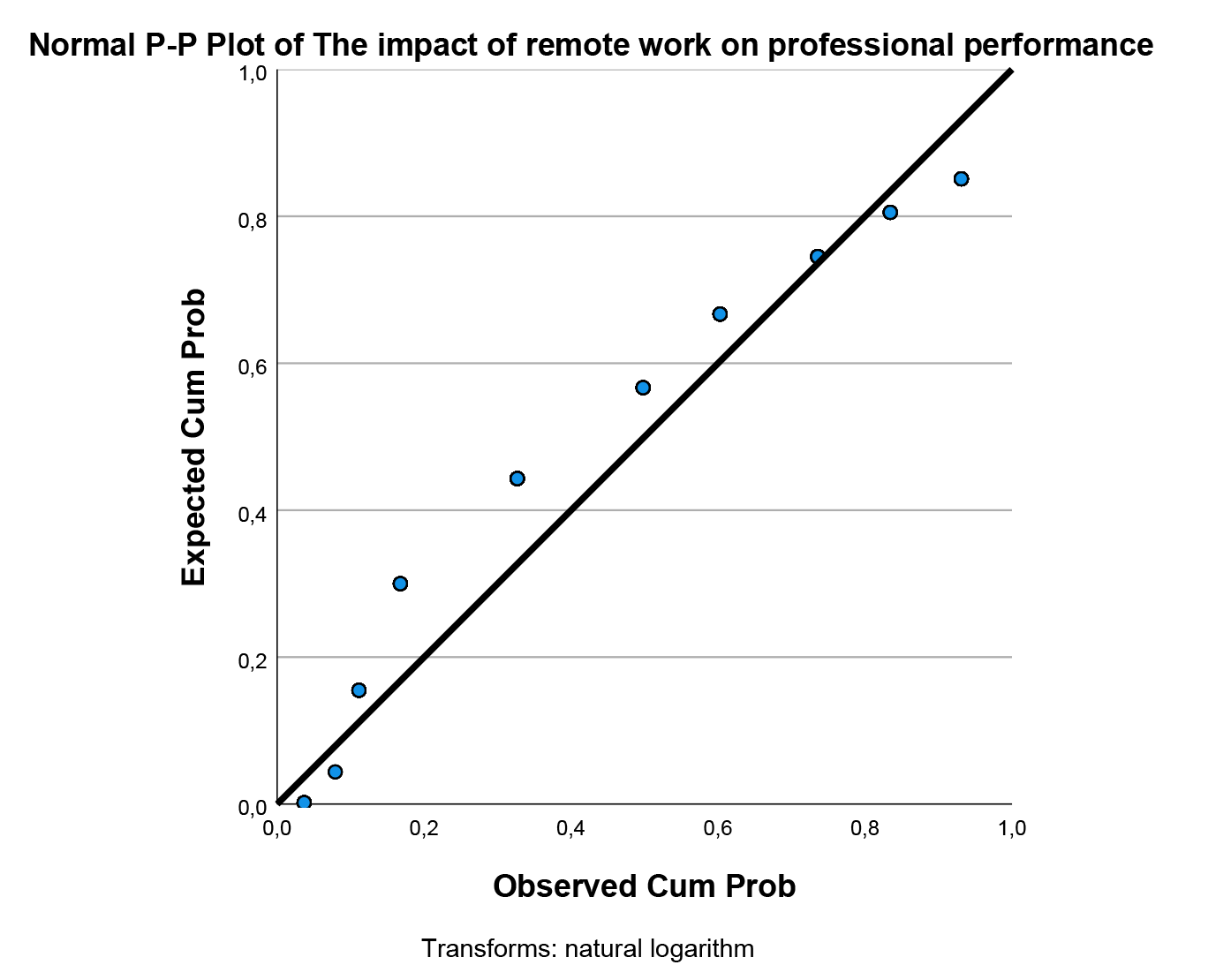
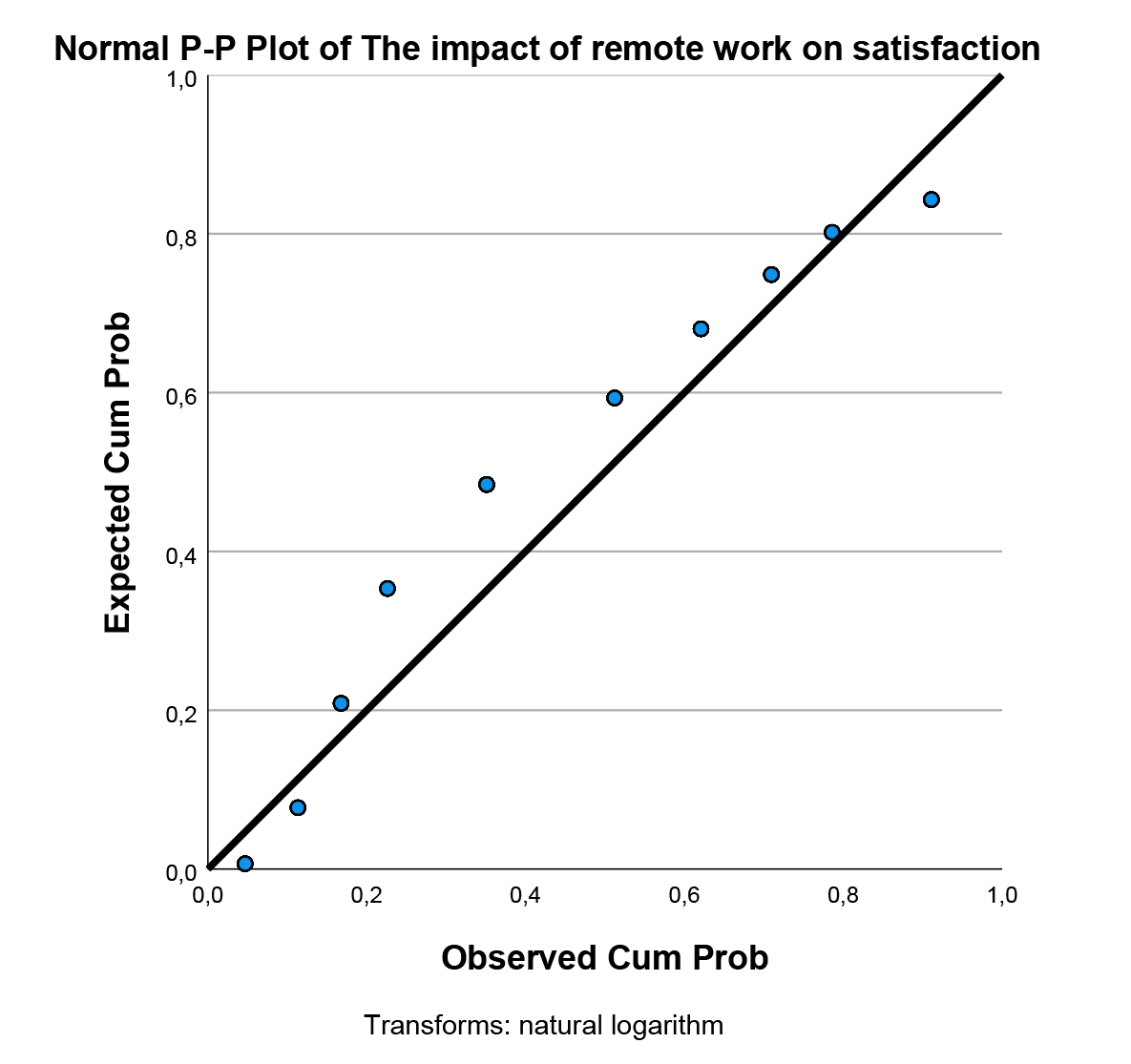
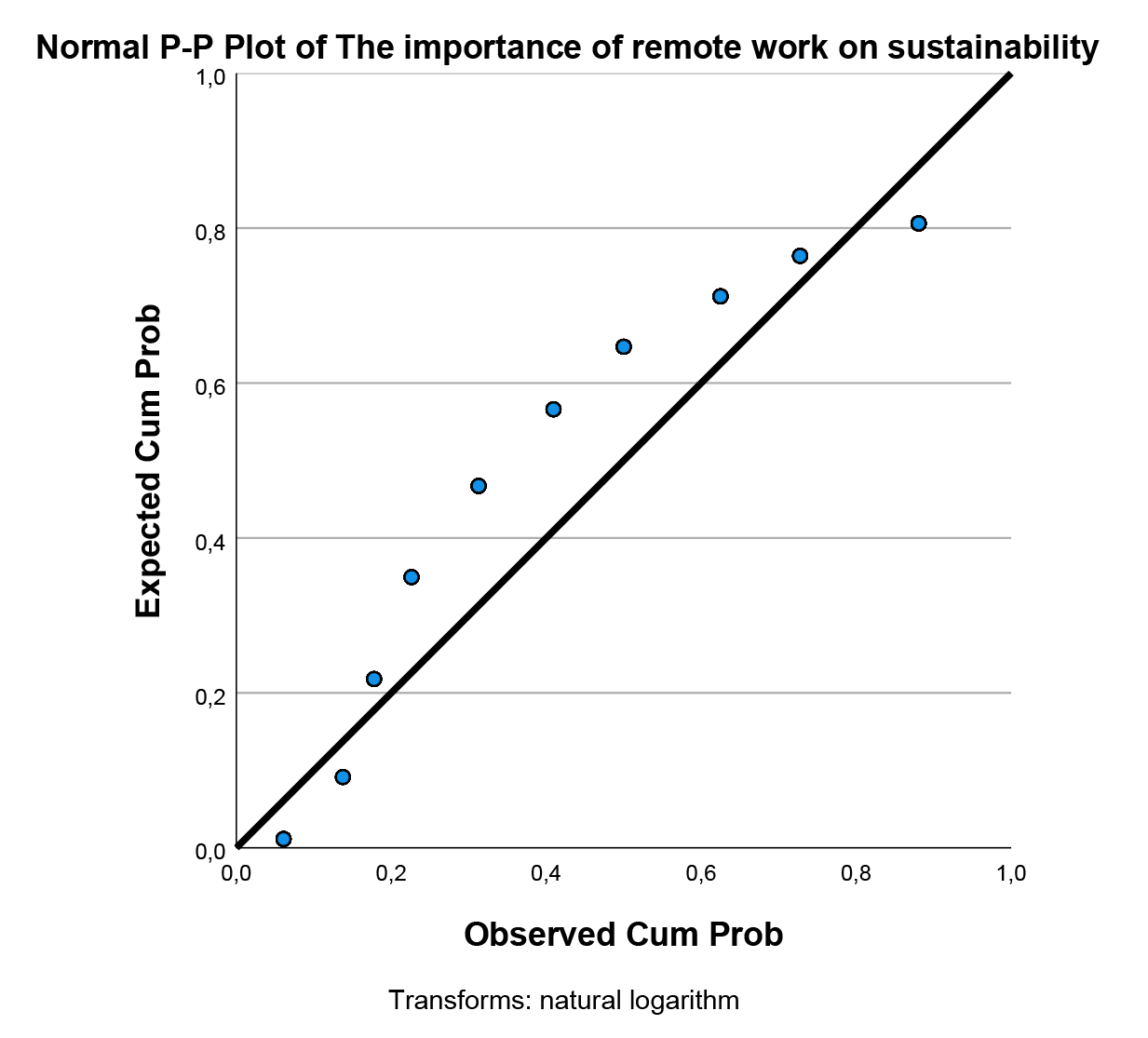
As a first step, normality tests were conducted for the dependent variables—performance, satisfaction, and sustainability (see Figs. 1,2,3). The data points aligned closely with the linear reference line in the P-P (Probability-Probability) Plots, indicating that the distributions of all three variables approximated normality. Thus, the assumption of normality was deemed satisfied. All dependent variables were measured on an ordinal scale, and the independent groups consisted of three or more categories. The observations were mutually independent, with each respondent contributing to only one group per variable. The assumption of homoscedasticity (equal variances) was tested separately for each hypothesis and confirmed to hold. The reliability of the Likert-scale items used to measure the dependent variables was assessed using Cronbach’s alpha, which yielded a value of 0.732. This exceeds the conventional threshold of 0.70, indicating that the scale demonstrated acceptable internal consistency across all three constructs.
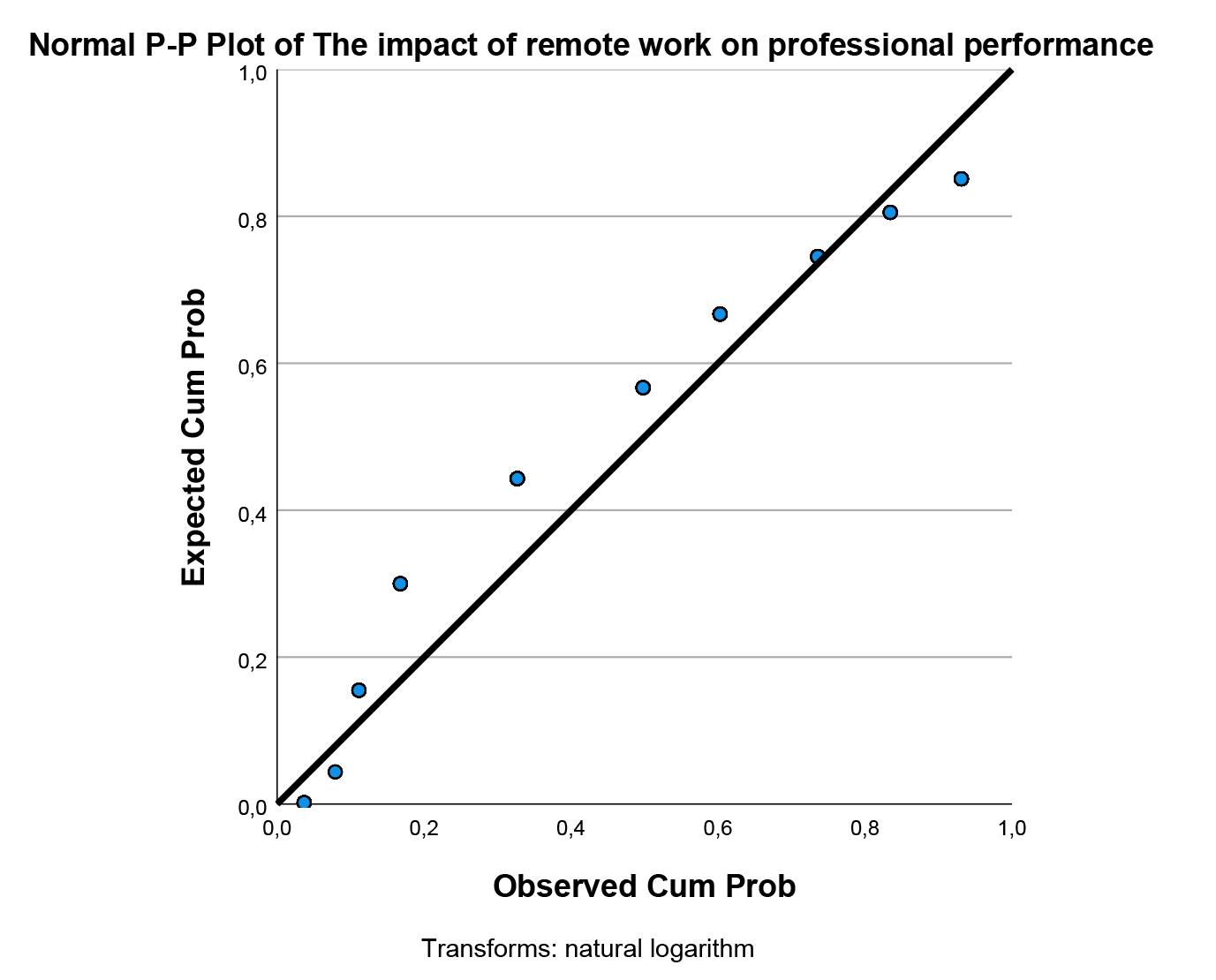 Fig. 1.
Normality test: P-P Plot (Performance). P-P, Probability-Probability.
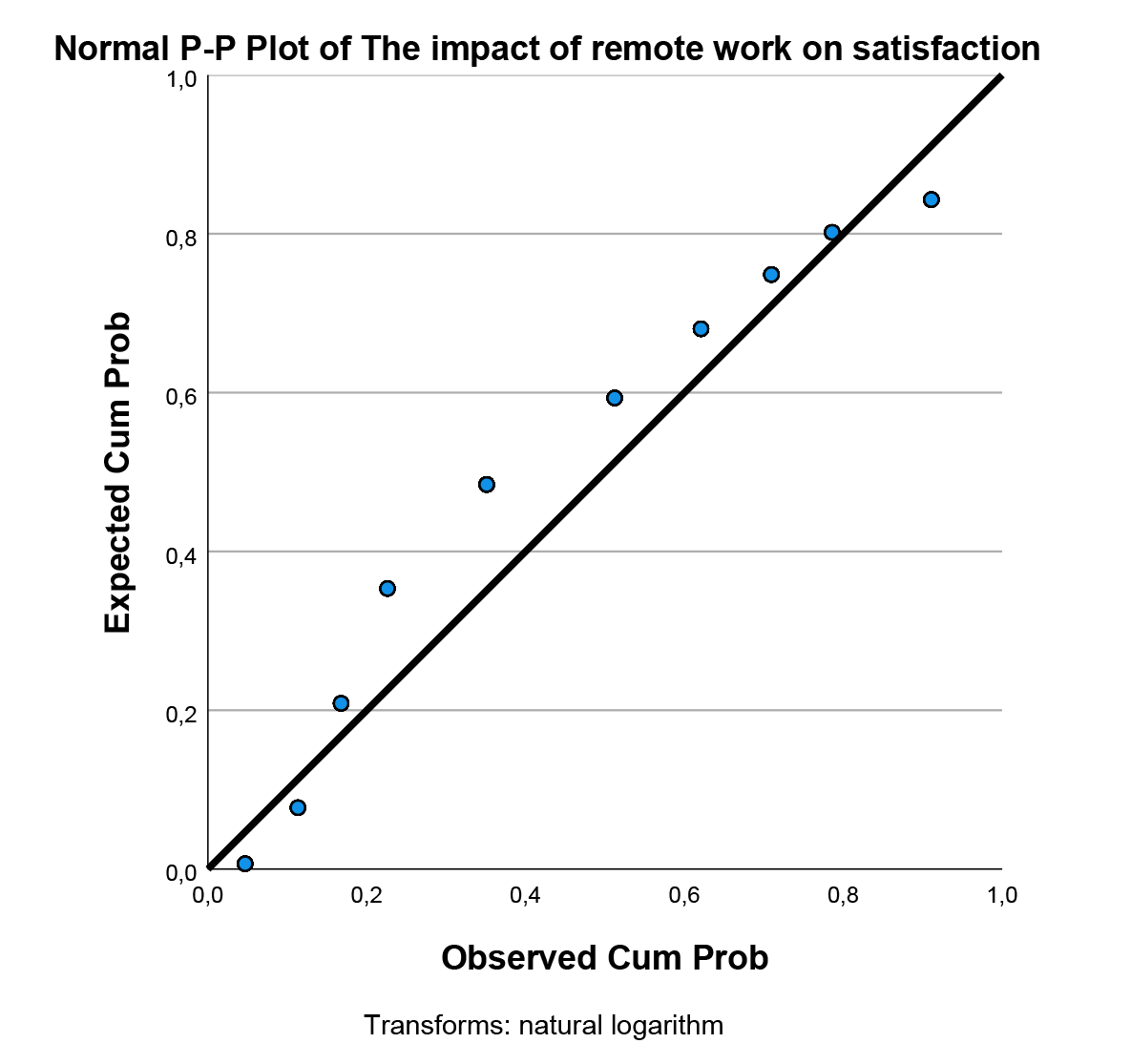 Fig. 2.
Normality test: P-P Plot (Satisfaction).
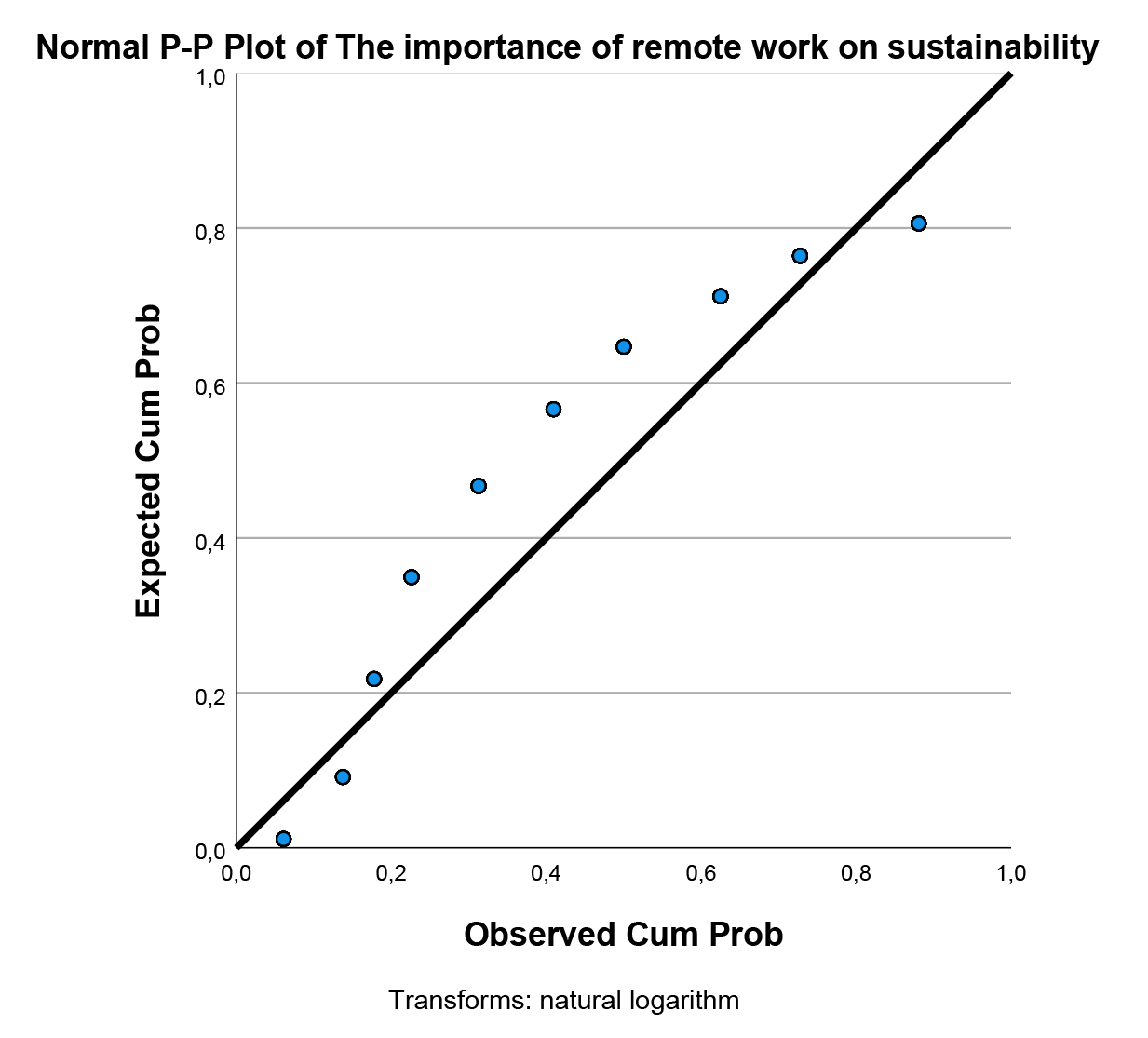 Fig. 3.
Normality test: P-P Plot (Sustainability).
Table 1 presents descriptive statistics for the independent variable *age group*. The respondents are on average in the 20–30 age group. The standard deviation (0.7034) is not very large, so the values are relatively close to each other.
| Age group | Frequency | Percent | Valid percent | Cumulative percent | |
| Valid | 20–30 age group | 176 | 71.0 | 71.0 | 71.0 |
| 31–40 age group | 41 | 16.5 | 16.5 | 87.5 | |
| 41- and above | 31 | 12.5 | 12.5 | 100.0 | |
| Total | 248 | 100.0 | 100.0 | ||
| Mean | 1.415 | ||||
| Median | 1.000 | ||||
| Mode | 1.0 | ||||
| Std. Deviation | 0.7034 | ||||
Table 2 presents descriptive statistics for the independent variable *marital status*. The respondents are on average single or in a relationship. The group of singles has only one more respondent. Based on the standard deviation (0.785), the data are relatively close to each other, but there is some difference.
| Marital status | Frequency | Percent | Valid percent | Cumulative percent | |
| Valid | Single | 93 | 37.5 | 37.5 | 37.5 |
| In a relationship | 92 | 37.1 | 37.1 | 74.6 | |
| Married with children | 63 | 25.4 | 25.4 | 100.0 | |
| Total | 248 | 100.0 | 100.0 | ||
| Mean | 1.88 | ||||
| Median | 2.00 | ||||
| Mode | 1 | ||||
| Std. Deviation | 0.785 | ||||
Table 3 presents descriptive statistics for the independent variable *education level*. The respondents have on average Master’s degree. The standard deviation (1.191) indicates a relatively wide distribution of the data.
| Education level | Frequency | Percent | Valid percent | Cumulative percent | |
| Valid | Vocational school | 38 | 15.3 | 15.4 | 15.4 |
| High school | 32 | 12.9 | 13.0 | 28.3 | |
| Bachelor’s degree | 53 | 21.4 | 21.5 | 49.8 | |
| Master’s degree | 109 | 44.0 | 44.1 | 93.9 | |
| Doctoral degree | 15 | 6.0 | 6.1 | 100.0 | |
| Total | 247 | 100.0 | 100.0 | ||
| Mean | 3.13 | ||||
| Median | 4.00 | ||||
| Mode | 4 | ||||
| Std. Deviation | 1.191 | ||||
Table 4 presents descriptive statistics for the dependent variables *sustainability, satisfaction, performance*. The respondents rated the sustainability of teleworking as high on average. However, the standard deviation (3.0364) shows that there is a relatively large difference between data. The same can be said about performance and satisfaction.
| Sustainability | Satisfaction | Performance | ||
| N | Valid | 248 | 248 | 248 |
| Missing | 0 | 0 | 0 | |
| Mean | 6.444 | 6.056 | 6.177 | |
| Median | 7.000 | 6.000 | 6.000 | |
| Mode | 10.0 | 5.0 | 5.0 | |
| Std. Deviation | 3.0364 | 2.8135 | 2.5229 | |
Table 5A,5B and 5C show the results of regression analysis regarding the H1 hypothesis.
Age has a significant effect (p = 0.022
| Model | R | R square | Adjusted R square | Std. error of the estimate | Change statistics | Durbin-Watson | ||||
| R square change | F change | df1 | df2 | Sig. F change | ||||||
| 1 | 0.234 | 0.055 | 0.043 | 2.9748 | 0.055 | 4.696 | 3 | 243 | 0.003 | 1.831 |
df, degrees of freedom.
| ANOVA | ||||||
| Model | Sum of Squares | df | Mean Square | F | Sig. | |
| 1 | Regression | 124.667 | 3 | 41.556 | 4.696 | 0.003 |
| Residual | 2150.451 | 243 | 8.850 | |||
| Total | 2275.117 | 246 | ||||
ANOVA, Analysis of variance.
| Coefficients | ||||||||
| Model | Unstandardized Coefficients | Standardized Coefficients | t | Sig. | Collinearity Statistics | |||
| B | Std. Error | Beta | Tolerance | VIF | ||||
| 1 | (Constant) | 6.284 | 0.673 | 9.331 | 0.000 | |||
| 2. Age | –0.675 | 0.294 | –0.156 | –2.299 | 0.022 | 0.841 | 1.188 | |
| 3. Education level | 0.461 | 0.163 | 0.181 | 2.831 | 0.005 | 0.954 | 1.048 | |
| 4. Marital status | –0.171 | 0.268 | –0.044 | –0.640 | 0.523 | 0.814 | 1.228 | |
B, regression cofficient; VIF, Variance Inflation Factor.
Table 6A,6B and 6C show the results of regression analysis regarding the H2 hypothesis.
Education level has a significant effect (p = 0.004
| Model | R | R square | Adjusted R square | Std. error of the estimate | Change statistics | Durbin-Watson | ||||
| R square change | F change | df1 | df2 | Sig. F change | ||||||
| 1 | 0.197 | 0.039 | 0.027 | 2.7807 | 0.039 | 3.286 | 3 | 243 | 0.021 | 2.004 |
| ANOVA | ||||||
| Model | Sum of Squares | df | Mean Square | F | Sig. | |
| 1 | Regression | 76.237 | 3 | 25.412 | 3.286 | 0.021 |
| Residual | 1878.970 | 243 | 7.732 | |||
| Total | 1955.206 | 246 | ||||
| Coefficients | ||||||||
| Model | Unstandardized Coefficients | Standardized Coefficients | t | Sig. | Collinearity Statistics | |||
| B | Std. Error | Beta | Tolerance | VIF | ||||
| 1 | (Constant) | 4.485 | 0.629 | 7.124 | 0.000 | |||
| 2. Age | –0.083 | 0.275 | –0.021 | –0.303 | 0.762 | 0.841 | 1.188 | |
| 3. Education level | 0.438 | 0.152 | 0.185 | 2.875 | 0.004 | 0.954 | 1.048 | |
| 4. Marital status | 0.170 | 0.250 | 0.047 | 0.681 | 0.497 | 0.814 | 1.228 | |
Table 7A,7B and 7C show the results of regression analysis regarding the H3 hypothesis. There is no significant correlation with performance for the independent (demographic) variables. It can be stated, that employee demographics do not affect their performance in telework. The H0 hypothesis was accepted and the H3 hypothesis was rejected.
| Model | R | R square | Adjusted R square | Std. error of the estimate | Change statistics | Durbin-Watson | ||||
| R square change | F change | df1 | df2 | Sig. F change | ||||||
| 1 | 0.138 | 0.019 | 0.007 | 2.5166 | 0.019 | 1.572 | 3 | 243 | 0.197 | 2.235 |
| ANOVA | ||||||
| Model | Sum of Squares | df | Mean Square | F | Sig. | |
| 1 | Regression | 29.860 | 3 | 9.953 | 1.572 | 0.197 |
| Residual | 1538.998 | 243 | 6.333 | |||
| Total | 1568.858 | 246 | ||||
| Coefficients | ||||||||
| Model | Unstandardized Coefficients | Standardized Coefficients | t | Sig. | Collinearity Statistics | |||
| B | Std. Error | Beta | Tolerance | VIF | ||||
| 1 | (Constant) | 5.096 | 0.570 | 8.945 | 0.000 | |||
| 2. Age | 0.185 | 0.249 | 0.052 | 0.744 | 0.458 | 0.841 | 1.188 | |
| 3. Education level | 0.259 | 0.138 | 0.122 | 1.876 | 0.062 | 0.954 | 1.048 | |
| 4. Marital status | 0.002 | 0.227 | 0.001 | 0.011 | 0.991 | 0.814 | 1.228 | |
The present research aims to examine how demographic factors shape perceptions of remote work—specifically in terms of sustainability, satisfaction, and performance—among employees in the SME sector in southern Slovakia. Research takes different approaches to the effects of age on telework. Sharit et al. (2009) and Toscano et al. (2022) identify older generations as more experienced in the labour market, they also emphasise that younger employees are typically more adaptable to novel work arrangements, including remote work. This is consistent with the findings of Pokojski et al. (2022), who argue that younger generations tend to identify more strongly with remote work. Mäkikangas et al. (2022) share a similar perspective, describing the effectiveness of remote work as contradictory. While some individuals experience only positive outcomes, others encounter negative consequences. As Esposito et al. (2024) note, the evaluation of remote work effectiveness largely depends on individual preferences and experiences. In the research was showed, that age has a negative impact on the perception of the sustainability of telework. The older employee, the more negatively they view the sustainability of telework. This can be partially identified with previous literature. Furthermore, was found no correlation between the age of employees and their performance and satisfaction. This raises further questions and allows for the expansion of the scientific dialogue.
Teleworking is most commonly performed by white-collar workers, where educational attainment plays an important role in determining the types of jobs that individuals can fill. The survey results show that the majority of respondents (N = 110) have a master’s degree (MA/MSc), indicating that the sample is predominantly composed of highly educated employees. Our results showed that education level positively influences the perception of the sustainability of telework and satisfaction in telework. This finding is consistent with the findings of Golden and Veiga (2005) and Morikawa (2021), who emphasize that employees with higher educational attainment are generally better able to adapt to telework environment than those with lower educational attainment.
Research on remote work, family roles, and private life reflects diverse perspectives. According to Núñez-Sánchez et al. (2024), employee well-being considerations play a central role in the effectiveness of remote work. Employers are therefore expected to ensure stable employment conditions and provide a safe and supportive work environment for all employees (Wolf et al., 2024). Kashive and Debarati (2025) argue that flexible work options enhance women’s job satisfaction, promote a healthier work–life balance, and reduce stress. Similarly, Parry (2025) contends that women are more inclined to engage in remote work, largely influenced by the availability of flexible hours and the ability to balance professional and personal responsibilities. At the same time, Shah et al. (2025) found that the burden of achieving work–life balance falls disproportionately on working women, primarily due to childcare and household responsibilities. Türkeș and Vuță (2022) as well as Greenhill and Wilson (2006) describe remote work as a family-friendly mode of employment, while Raišienė et al. (2022) and Arntz et al. (2020) highlight its potential negative impacts on working parents. In contrast, Gegerfelt and Sandström (2023) and Esposito et al. (2024) contend that marital status alone has a neutral effect on remote work, with the presence of children serving as a more decisive factor. Despite the fact that numerous studies report about the effects of marital status on telework, this study did not find a correlation with marital status for any of the hypotheses. This raises further questions and allows for the expansion of the scientific dialogue.
Research into the economic and social effects of remote work highlights the importance of employment policies and organisational practices that support its sustainable development in future labour markets. As a form of employment, remote work has become a crucial area of academic inquiry, reflecting the transformation of modern employment structures and work patterns. Such research is essential not only for identifying the potential of remote work but also for addressing unresolved issues and emerging challenges.
In the Slovak context, studies on remote work can contribute to the modernisation of the labour market, inform the design of effective employment policies, and ultimately enhance organisational competitiveness. Our study focused primarily on theoretical analysis, complemented by original empirical findings. Based on the hypothesis tests, it can be concluded that the demographic characteristics of employees have less influence on performance, satisfaction and perception of the sustainability of telework. The first hypothesis showed that employees’ age negatively influences, and their education level positively influences, the perception of the sustainability of telework. The older the employee, the more their perception of the sustainability of telework decreases. The higher the employee’s education level, the greater their perception of the sustainability of telework. Marital status does not influence the perception of the sustainability of telework. The second hypothesis showed that education level has a positive effect on satisfaction in telework. The higher the education level of employees, the more satisfied they are with telework. Age and marital status do not affect satisfaction in telework. The third hypothesis showed that the demographic characteristics of employee have no effect on their performance.
This research aimed to enrich the literature on remote work, particularly by contributing to an improved understanding of the socio-economic dynamics of the southern Slovak region. Examining the economic and social attitudes of specific target groups and subnational regions is especially important for shaping development processes—economic, social, and cultural alike. Research carried out in underexplored regions and among specific population groups opens new avenues for innovation and employment policy, particularly in relation to remote work. Our findings can help inform corporate decision-making, guide infrastructure development, and support the effectiveness of governmental interventions.
We recommend our research findings to both academic and practitioner audiences, as they offer valuable insights into how demographic differences influence employees’ perceptions of performance, satisfaction, and sustainability in remote work. Integrating contemporary work methods not only enhances employee and organisational performance but also fosters an innovative mindset within firms. Remote work has the potential to strengthen employees’ organisational commitment and should therefore be encouraged. These findings are also relevant for employees who have not yet engaged in remote work, as they provide a comprehensive picture of demographic differences in perceptions of performance, satisfaction, and sustainability.
Remote work can enhance both organisational performance and employee well-being and is likely to become an integral component of modern work culture, exerting significant influence on social, organisational, and labour dynamics. From a societal perspective, remote work contributes to more equitable and inclusive working conditions. It allows employees to work more flexibly and supports work–life balance—an especially important consideration for individuals with family responsibilities. To strengthen the sustainable introduction of remote working, policymakers should prioritize the development of supportive legal and institutional frameworks that encourage flexible working arrangements while protecting workers’ rights. Investment in digital infrastructure, particularly in rural and less accessible areas, remains essential to ensure equal access to remote working opportunities across regions. Employers, for their part, should adopt evidence-based human resources strategies that make remote working a permanent feature of their organisational structure, while promoting an inclusive culture that reduces the risk of social isolation and work-life imbalance. Finally, cooperation between governments, employers, and educational institutions is needed to build digital skills, improve labour market adaptability, and ensure that remote work contributes significantly to sustainable economic growth.
Research on remote work entails numerous methodological and contextual challenges, and recognising these limitations is essential for shaping future research agendas. A recurring issue concerns the difficulty of obtaining representative samples and reliable data, particularly in heterogeneous industry environments such as the one examined in this study. Demographic and employment data are not always collected uniformly, which may result in the under- or over-representation of certain groups and, consequently, sample bias.
One of the main limitations of purposive sampling is that the sample does not reflect the entire population; the selection of participants according to specific criteria inevitably affects the objectivity of the results. Concerns about the reliability and validity of data are especially relevant in the case of online survey-based studies. Furthermore, because the findings are derived from data collected at a single point in time, longitudinal research will be required to validate and refine these conclusions.
Current and future research directions in telework are shaped by new technologies, changing socio-economic trends, and the evolving expectations of employees and employers. Areas of ongoing interest include workplace inequalities, work-life balance, and the psychological and mental health effects of telework. These topics require further theoretical research and practical intervention. Employees’ perceptions of telework are also strongly influenced by cultural factors, which are reflected in national attitudes and organisational cultures. The effectiveness of teleworking may also depend on communication practices, technological readiness, access to digital tools, and prevailing attitudes toward work-life balance.
Future research should provide deeper insights into how remote work affects workplace dynamics and creative processes. In addition, given the growing presence of artificial intelligence in the workplace, it is critical to examine the role of AI in shaping the future of remote work—from job design and task automation to employee well-being and productivity.
The datasets used and analysed during the current study are available from the corresponding author on reasonable request.
PK, VV: conceptualization, theoretical framework development; VV: statistical analysis, data collection; VV: literature review; PK: discussion structuring; PK: language and formatting, final manuscript review. Both authors contributed to editorial changes in the manuscript. Both authors read and approved the final manuscript. Both authors have participated sufficiently in the work and agreed to be accountable for all aspects of the work.
We would like to thank all respondents who voluntarily participated in the survey.
This research received no external funding.
The authors declare no conflict of interest.
References
Publisher’s Note: IMR Press stays neutral with regard to jurisdictional claims in published maps and institutional affiliations.