

 , Kai Wan 2
1 School of Economics, Zhejiang University of Technology, 310015 Hangzhou, Zhejiang, China
2 School of Economics, Hangzhou Dianzi University, 310018 Hangzhou, Zhejiang, China
Abstract
The National Innovation Demonstration Zones and Innovative City Pilot Policies are a critical institutional framework designed to facilitate the transformation of growth drivers. Can these policies synergistically empower administrative boundary regions to achieve “emission reduction and quality improvement”? This study leverages data from 285 Chinese prefecture-level cities spanning 2006 to 2020. Using township-level administrative boundary areas as a scientific basis and employing a quasi-natural experiment approach with the “dual pilot” policy, we construct a staggered difference-in-differences model to systematically investigate the impact of innovation-driven policies on the scale and efficiency of carbon emissions. Our findings indicate that the “dual pilot” innovation-driven policy can effectively promote emission reduction and quality improvement in administrative boundary regions. The “dual pilot” policy not only directly drives effective emission reduction through a dual-drive mechanism but also influences carbon emissions in boundary regions via technological diffusion, structural optimization, and policy synergy effects. Further analysis reveals that the “dual pilot” policy is more effective for reducing carbon emissions and enhancing quality in boundary regions of non-resource-based and coastal cities. Additionally, cities that were designated as innovative cities before becoming national independent innovation demonstration zones exhibit a stronger policy synergy effect in their boundary regions.
Keywords
- innovation-driven policy
- staggered difference-in-differences model
- administrative boundary areas
- carbon emissions
- reduction in quantity and improvement in quality
The escalating global warming has emerged as a critical threat to human existence and sustainable development. Consequently, China established the goal of achieving carbon peak by 2030 and carbon neutrality by 2060 in 2020 to address the ecological and environmental challenges. In contrast to the European Union (EU), which coordinates member states’ emissions reductions through the Carbon Border Adjustment Mechanism (CBAM), and the United States, which promotes regional collaboration via the Clean Power Plan, China faces unique institutional and geographic constraints. Due to administrative fragmentation and natural barriers, pollution indicators at monitoring stations located in administrative border areas are significantly higher than those in non-border areas, making these regions a major obstacle to China’s green development and the realization of its dual carbon goals. Especially against the backdrop of actively and steadily advancing carbon peak and carbon neutrality, how to effectively enhance the local emission reduction willingness and achieve low-carbon development in border areas has become an important issue worthy of in-depth research. Existing studies suggest that technological innovation is a key factor influencing environmental benefits. Different innovation environments can lead to varying levels of low-carbon development among cities (Fischer et al., 2003). This may imply that government policy arrangements can influence carbon emissions in border areas by altering macro conditions such as the innovation foundation. In China, the National Innovation Demonstration Zones (NIDZ) promote industrial upgrading through technological breakthroughs and address the supply of low-carbon innovation. Pilot innovative cities play an important role in advancing green and low-carbon transformation and high-quality development by optimizing systems and reducing the cost of technology application through institutional optimization and system integration. Data from the National Bureau of Statistics show that, as of 2023, 78 pilot innovative cities had absorbed 500 billion yuan in scientific research funds and fiscal science and technology inputs. Meanwhile, the total output value of high-tech zones in 21 the NIDZ reached 12 trillion yuan. Moreover, the NIDZ and pilot innovative cities have also actively promoted the “dual carbon” goals. For instance, Wuhan, as a “Dual pilot” city, has been actively building a green manufacturing system and focusing on the research and development of clean energy and green technologies, including green electricity and photovoltaic power, thereby effectively empowering the city’s overall green and low-carbon transformation. Therefore, this paper attempts to explore how China’s innovation demonstration zones and pilot innovative cities can form a two-way feedback between technological innovation and institutional innovation to avoid cross-regional arbitrage by enterprises and achieve “emission reduction with quality improvement” through factor mobility and standard convergence. What is the underlying mechanism? What heterogeneous characteristics exist in this coordinated policy shock? Clarifying these issues is of both theoretical and practical importance for developing countries, as it helps them seize opportunities for institutional innovation, enhance the coordinated effectiveness of innovation-driven policies, and accelerate the transition to low-carbon development. Moreover, it offers valuable insights for Eastern European countries seeking to establish synergistic mechanisms between technological demonstration zones and institutional innovation zones, thereby avoiding the risk of policy failure due to isolated interventions.
Three strands of literature are closely related to this paper. The first strand explores the causes of administrative border pollution and effective carbon reduction strategies. It posits that local governments’ strategic emission reductions and the agglomeration of polluting firms caused by lax environmental regulations are significant reasons for the more severe pollution at provincial borders (Lipscomb and Mobarak, 2016). Another strand of literature focuses on river basins, suggesting that the severe water pollution at borders is due to inadequate coordination mechanisms among local governments, leading to shirking of responsibilities (Sigman, 2005). A subsequent study explains the issue of border pollution in transboundary rivers from the perspective of enforcement intensity disparities, arguing that varying levels of environmental regulation across regions cause the spatial relocation of polluting firms, thus triggering border pollution effects (Du et al., 2019). Regarding the practical challenge of effective carbon reduction, most literature examines ways to reduce carbon emissions primarily from the perspectives of energy consumption (Ramanathan, 2006), technological progress (Dong et al., 2021a), and financial development (Bhattacharya et al., 2017). A smaller body of literature, from the input-output perspective, argues that integrating into global value chains effectively enhances carbon emission efficiency through the triple effects of catching up, innovation, and leadership (Liu and Zhao, 2021). Dong et al. (2021b) highlighted that there is a nonlinear relationship between the agglomeration of productive services and carbon emission efficiency, with market mechanisms playing a key role in improving carbon emission efficiency.
The second stream of literature examines the policy effects of the NIDZ. Some scholars have explored the operational mechanisms and talent incentive systems of one or more demonstration zones. Another portion of the literature investigates the economic benefits of the NIDZ, including regional Research and Development (R&D) innovation performance (Guo et al., 2021), regional innovation capability, enterprise innovation levels (Gao and Yuan, 2021), and green high-quality development (Liu et al., 2022b). Liu et al. (2022a) argue that the NIDZ policy effectively promotes the agglomeration of scientific talent and innovation funds by pioneering and exploring in areas such as scientific research management mechanisms and administrative approvals, thereby stimulating corporate innovation vitality. This policy, along with the pilot policy for innovative cities and the high-tech enterprise policy, jointly promotes technological advancement.
The third strand of literature focuses on analyzing the basic connotations, evaluation indicators, and implementation effects of innovative cities (Li et al., 2022). Several scholars have utilized the Innovative City Pilot Policies (ICP) as natural experiments to examine their economic benefits, such as the quality of foreign direct investment, industrial structure transformation (Zhu and Lee, 2022), and urban productivity. Other study explores the role of the ICP in incentivizing technological innovation, with key mechanisms including industrial greening, talent agglomeration, capital deepening, informatization levels, and the intensity of environmental regulations (Pan et al., 2022). A few researchers suggest that the pilot innovative cities can generate technological spillover effects, where source governance technologies significantly enhance green technological innovation in surrounding cities through diffusion (Liu et al., 2022a). However, research on the combined effects of the NIDZ policy and the ICP policy remains limited. Only a small number of studies have compared the effects of combined policies versus single policies on technological progress, but these studies have not deeply explored the environmental benefits of policy synergy. The synergistic mechanisms have not been addressed, leading to a lack of in-depth theoretical analysis and empirical testing of the optimal pathways for policy synergy.
While prior studies have confirmed the pollution border effect and explored the impacts of the NIDZ and ICP on macroeconomics and corporate behavior, several limitations persist. First, although existing research has examined the causes and measurement of border pollution, most studies have concentrated on provincial borders and have not precisely quantified the pollution border effect. In reality, significant carbon emission gaps exist not only at provincial provinces but also at municipal boundaries in China, where carbon emissions remain elevated. The identification of carbon emission borders in the current literature remains relatively imprecise. Moreover, prior studies have predominantly focused on optimizing either the “quantity” or the “quality” of carbon emissions, with few systematically investigating how to effectively achieve “reduction in quantity and improvement in quality” from the perspective of policy coordination. Second, existing literature has either separately examined or compared the policy effects of the NIDZ and ICP, neglecting the synergistic effects of innovation-driven policies on carbon emission reduction. In practice, some cities have implemented both the NIDZ and ICP policies, and the interaction between them may generate novel carbon emission reduction patterns. Analyzing policy effects from a single perspective could introduce bias. Consequently, this paper investigates the impact and mechanism of the NIDZ and ICP on carbon emissions in border areas. Additionally, this study delves into the heterogeneity in effectiveness resulting from the sequence of policy implementation, city positioning, and geographical location.
The marginal contributions of this paper are as follows: First, it deepens the exploration of the causal relationship between innovation-driven institutional factors and carbon emissions in administrative boundary areas. By examining the comprehensive benefits of linking the “quantity” and “quality” of carbon emissions in these areas through innovation-driven policies, this paper addresses the limitation of prior literature, which often separately explores carbon emission reduction or efficiency improvement. Moreover, this paper employs point-source data to depict carbon emissions at the township level with greater precision, addressing the limitation of existing studies that define administrative boundaries only at the provincial level. This refined approach offers a more granular measurement tool for tackling the widely observed issue of “pollution transfer across administrative boundaries” in regions such as the U.S.-Mexico industrial corridor and the border areas between EU member states. Second, this paper extends the theoretical perspective of innovation policy collaborative governance and reveals the “synergistic effect” among similar policies. Unlike previous studies that mainly evaluated the effectiveness of individual innovation policies, this paper systematically examines the synergy between two Chinese-characteristics innovation policies: pilot innovative cities and the NIDZ. It proposes a theoretical framework of “policy portfoli–regional collaboration–low-carbon governance”. Not only does this study enrich the global climate governance policy toolbox, but the revealed mechanism of “synergistic effects” also offers important reference value for late-developing countries facing similar challenges of regional development imbalance. Third, it uncovers the potential reasons for the heterogeneity effects of innovation-driven policies. By considering the policy implementation sequence, urban resource endowment, and the characteristics of coastal and inland cities, this paper summarizes the carbon reduction patterns of the “Dual pilot” policies across different scales and levels. This provides theoretical guidance for promoting the “Dual pilot” policy synergy and low-carbon development in administrative boundary areas in a differentiated manner. At the same time, it provides micro-level evidence for improving the principle of “common but differentiated responsibilities” under the Paris Agreement, offering valuable insights for Belt and Road Initiative countries seeking to adapt China’s experience to their own resource endowments and policy contexts.
ICP and NIDZ serve as pivotal institutional innovations for the government to implement the innovation-driven development strategy. Innovative city pilots can continuously spur corporate innovation by aggregating innovative resources, accelerating the regional flow of new knowledge and technologies, optimizing resource allocation, and cultivating top-notch research institutions and talent. They also facilitate industrial upgrading and enhance energy efficiency (Zeng et al., 2023), thereby providing an endogenous driving force for carbon emission reduction in border regions. NIDZ can effectively boost urban innovation performance and quality by realigning local government goals, targeting financial supply, improving the efficiency of fiscal science and technology funds, and enhancing internet infrastructure (Aisaiti et al., 2022). The two types of policies establish a dynamic coupling mechanism of “institutional fit-technology diffusion” through complementary effects. First, the Dual pilot policies can achieve spatial governance complementarity. Innovative city pilots enhance land mixed-use efficiency in border regions via “multi-planning integration”, while the high-end resource concentration in demonstration zones increases the green total factor productivity per unit of land. Second, the Dual pilot policies can form a policy tool complementarity. The command and control policies of city pilots, such as energy consumption dual control, combined with the market incentive policies of demonstration zones, such as carbon tax rebates, create a “carrot and stick” approach that effectively curbs the carbon transfer behavior of border enterprises. Third, the Dual pilot policies can complement innovation cycles. Demonstration zones, with their focus on long-cycle basic research, synergistic with the short-term innovative application promotion characteristics of city pilots, significantly shortening the transformation lag of low-carbon technologies from the laboratory to the “last mile” of the administrative borders.
Compared to cities with a “single pilot” innovation-driven policy, those with a “Dual pilot” policy typically possess a more robust foundation for achieving carbon emission reduction and quality enhancement. By nature, both the ICP and the NIDZ represent critical experiments in implementing innovation-driven policies. These initiatives not only effectively foster knowledge spillover and drive technological innovation within enterprises but also promote strategic transformation of local governments and optimize resource allocation through policy coordination. This, in turn, facilitates the agglomeration of high-end talent, innovative technologies, and financial resources. The first logical argument advanced in this paper is that the knowledge spillover effect in “Dual pilot” cities can significantly contribute to carbon emission reductions in adjacent areas. The implementation of “Dual pilot” policies is more conducive to generating new knowledge and technologies, which are likely to spread through both formal and informal channels. These spillover effects are not only pronounced within the central cities but also extend to neighboring administrative regions. The effective transmission of knowledge and information enables polluting enterprises in these bordering areas to rapidly and accurately access diverse technological information, potentially leading to the adoption of suitable emission reduction strategies or breakthroughs in new technologies (Borghesi et al., 2015). Furthermore, “Dual pilot” cities offer more advantageous talent policies, which enhance human capital levels within the pilot cities and provide a talent foundation for knowledge spillover to adjacent regions. Since early 2017, “Dual pilot” cities such as Wuhan, Xi’an, Changsha, Chengdu, Hangzhou, and Shenyang have introduced policies like simplified settlement procedures for innovative talents, housing subsidies, and research funding. These measures have attracted talent and laid a crucial groundwork for the transformation green and high-pollution industries (Wan and Yu, 2025). The improvement in urban human capital also benefits border regions by enhancing resource allocation efficiency and advancing the development and dissemination of green production and pollution control technologies, thereby promoting low-carbon development in these areas.
Additionally, “Dual pilot” cities are more committed to improving information infrastructure. They ensure public support and information facilities that cater to the development needs of specific industries and facilitate knowledge flow. On one hand, the improvement of information infrastructure can effectively break down information barriers, reduce communication costs, and mitigate information asymmetry in bordering areas (Liu et al., 2019). This enables polluting enterprises in these regions to engage in digital technology learning across time and space, thereby accelerating low-carbon transformation through learning effects. On the other hand, a robust information infrastructure helps address issues such as access barriers and information inadequacies in public environmental monitoring in bordering areas. The public can quickly access vast amounts of carbon emission information and provide instant feedback on various platforms, thus reinforcing the dual supervision of local governments and high-carbon enterprises (Pan et al., 2024). This, in turn, exerts a constraining effect on carbon emissions in bordering areas.
The second logical perspective in this paper posits that “Dual pilot” cities can enhance the strategic guidance of the government and provide institutional guarantees for carbon emission reduction in administrative border areas. On the one hand, the ICP and the NIDZ represent the pilot promotion of the national innovation-driven development strategy and the strategic goal of building an innovative country. These initiatives integrate the combined efforts of national and local strategies, effectively advancing low-carbon development in border areas through coordinated planning and the scientific formulation of overall urban development plans. Carbon emissions in administrative border areas result from the combined effects of endogenous urban economic evolution and exogenous government intervention. Firms in these border areas choose carbon emission strategies based on carbon reduction costs and external regulatory pressures, while governments consider local economic conditions and promotion objectives when planning industrial layouts and environmental regulation intensity in border areas (Wang et al., 2024). The implementation of the “Dual pilot” policy compels local governments to integrate innovation development strategies into all aspects of urban economic, technological, educational, and social development. This not only guides the flow of resources towards high-tech industries but also effectively curbs carbon emissions in border areas by enhancing the efficiency of urban innovation factor utilization, thereby fully leveraging the government’s role in growth identification and adaptive guidance. Furthermore, Dual pilot cities provide various non-market policy incentives for firms in administrative border areas to engage in innovative activities through a series of institutional frameworks and preferential policies, such as tax incentives, R&D subsidies, credit facilitation, and land-use concessions. The enhancement of innovation capacity in border areas further contributes to carbon emission reductions. On the other hand, the implementation of the “Dual pilot” policy forces local governments to pay more attention to environmental protection (Lin et al., 2011). For instance, the “Guidelines for Building Innovative Cities” lists “green and low-carbon” alongside “innovation-driven”, “distinctive features”, and “local leadership” as the four core principles of innovative city construction. The “Upgrading Action Plan for the Chang-Zhu-Tan NIDZ” also proposes the development of a technology-supported carbon peak and carbon neutrality pilot, promoting green and low-carbon pilot initiatives supported by technology. Meanwhile, the central government has explicitly included green development indicators, such as air quality and energy consumption per unit of Gross Domestic Product (GDP), as evaluation metrics for the comprehensive performance of “Dual pilot” cities. Under the pressure of these assessment indicators, local governments are constrained and motivated to strengthen environmental regulation and governance, particularly in both central and border areas, and to prioritize the development of industries with higher technological levels and cleaner production methods (Ren et al., 2018). This, in turn, facilitates the “qualitative improvement and quantitative reduction” of carbon emissions in administrative border areas. Accordingly, this paper proposes Hypothesis H1:
H1: The synergy of the “Dual pilot” policy—ICP and NIDZ—promotes the “qualitative improvement and quantitative reduction” of carbon emissions in administrative border areas.
The technology diffusion effect resulting from enhanced innovation capabilities is the primary driver of carbon emission improvements in administrative border regions. The “Dual pilot” cities optimize resource allocation by increasing innovation investment, aggregating innovation knowledge and talent elements, thereby promoting the “reduction in quantity and improvement in quality” of carbon emissions in border regions (Ryzhenkov, 2016).
Firstly, in terms of innovation investment, one of the key tasks of the “Dual pilot” policy is to promote technological innovation output by reasonably guiding the flow of fiscal funds and ensuring the supply of innovation elements. The central government also uses indicators such as the “proportion of local fiscal science and technology appropriation in local fiscal expenditure” and the “number of invention patents granted per million people” in “Dual pilot” cities as acceptance criteria. This compels local governments to establish special funds for the construction of ICP, increase support for science and technology funds, expand the scope of science and technology funds, and provide financial guarantees for the implementation of major technological breakthroughs and green production transformation projects. The emergence of numerous innovation funds and technological innovation achievements provides border regions with opportunities to acquire new technologies and methods, thereby promoting low-carbon development in these regions. Secondly, in the process of implementing the “Dual pilot” policy, pilot cities actively formulate policies to cultivate and attract innovative talent, thus fostering a talent advantage. The aggregation of innovative talent not only enhances the overall knowledge stock of cities but also effectively reduces the cost of knowledge and information transfer from central to border regions through the enhancement of human capital. This encourages the high-frequency exchanges, aiding polluting enterprises in border regions in better mastering market information and carbon reduction technologies, thereby effectively curbing carbon emissions in these regions. Thirdly, the “Dual pilot” policy accelerates the pace of new infrastructure deployment within jurisdictions, breaking down spatial and temporal barriers through the flow of information elements and effectively reducing information asymmetry in green technology innovation activities in border regions (Ke et al., 2017). In this context, on the one hand, the improvement of the innovation capacity in border regions and the diffusion of technology from central regions provide key momentum for energy conservation and emission reduction in polluting enterprises. Continuous innovation through green processes and products effectively optimizes the energy consumption structure and carbon resource utilization efficiency in border regions, fundamentally restraining carbon emissions. On the other hand, the combined effect of the “Dual pilot” policy and the “invisible hand” of the market can accelerate the reallocation of various elements from low-efficiency sectors to high-efficiency sectors, guiding the reallocation of capital, technology, and talent to high-tech industries in border regions (Lin and Monga, 2011), and continuously eliminating outdated production capacity. This, in turn, empowers the “reduction in quantity and improvement in quality” of carbon emissions in border regions by enhancing the overall efficiency of element utilization. Given this, we propose Hypothesis H2a:
H2a: The “Dual Pilot” innovation-driven policy can effectively achieve a reduction in scale of carbon emissions and an improvement in carbon emission efficiency in administrative border regions through the technology diffusion effect.
The “Dual pilot” cities primarily foster industrial and technological system innovation by establishing high-tech development zones, science parks, innovation bases, and implementing various policies. Local governments introduce target industries and related sectors for the ICP, achieving increasing returns to scale internally and economies of scale externally through the agglomeration of high-tech industries. The industrial agglomeration driven by these innovation zones also triggers a “circular cumulative” effect, accelerating innovation activities, knowledge spillovers, and technology diffusion. This process enhances energy efficiency in polluting enterprises while benefiting administrative boundary areas through the emergence of skilled labor, market demand, and information. These favorable conditions not only effectively reduce carbon abatement costs in the boundary areas but also motivate polluting enterprises to undertake technological upgrades and reshape production processes (Song and Wang, 2016). In this context, on one hand, innovation-driven policies, through institutional reforms, accelerate the integration of new resources and technologies while effectively reallocating existing factors of production through the market mechanism. Particularly, by guiding the flow of new production factors to boundary areas and recombining them with existing ones, these policies effectively match green technological progress, fostering the emergence of high-tech and knowledge-intensive industries represented by fintech and consumer technology. This leads to low-carbon development in boundary areas through industrial upgrading and rationalization (Cheng et al., 2019). Furthermore, the linkage and spillover effects of high-tech industries can create a “catfish effect” in traditional high-pollution industries (Lin et al., 2011), where intense market competition compels traditional extensive industries in boundary areas to accelerate their low-carbon transition. On the other hand, innovation-driven policies can significantly optimize the capital input-output structure by guiding the orderly migration of capital away from low-value-added “three high” industries towards greener emerging industries. Traditional pollution-intensive industries in administrative boundary areas, under policy pressure, may be compelled to adopt clean production practices, implement pollution control technologies, or exit entirely, thereby driving the low-carbon transformation of industries in these areas. Some “three high” enterprises may actively relocate under the “pollution haven” effect, optimizing the industrial structure in boundary areas through the exit of polluting firms. Therefore, the “Dual pilot” policy helps to harness structural optimization effects, effectively reducing carbon emissions and enhancing the quality of carbon resource consumption in administrative boundary areas. This paper proposes Hypothesis H2b:
H2b: The “Dual pilot” innovation-driven policy can effectively achieve a reduction in carbon emissions and an improvement in carbon efficiency in administrative boundary areas through structural optimization effects.
The “Dual pilot” cities can leverage the effect of policy overlap to provide policy support for carbon emission reduction within administrative boundary areas. Institutional factors, especially in China’s transitional period, significantly influence urban development and should not be underestimated (Berman and Bui, 2001). Among these factors, the institutional environment and government functions serve as key drivers for low-carbon development, playing a crucial role in promoting the “decrease in quantity, increase in quality” of carbon emissions in boundary areas. By integrating the two pilot reform policies, the innovative city pilot program optimizes the urban innovation environment, accelerates industrial upgrading, and facilitates the spillover of urban innovation capabilities. Meanwhile, the NIDZ aims to provide flexible and reliable institutional convenience for enterprises engaging in technological innovation by transforming government functions. If an innovative pilot city also benefits from the NIDZ policy, the resulting reduction in institutional transaction costs and further refinement of market competition mechanisms can provide substantial policy support for enterprises in boundary areas to access more clean production factors. For instance, Shenzhen’s “Plan” emphasizes deepening the reform of administrative management systems, streamlining administrative levels, and establishing an efficient service-oriented government. The simplification of administrative approval processes not only enhances the efficiency of administrative approvals and environmental regulation by the government but also lowers the entry barriers and non-productive costs for enterprises, thereby encouraging high-tech enterprises to cluster in boundary areas. The enhanced empowerment of factors such as new technologies, new knowledge, and human capital further improves the potential for a “decrease in quantity and increase in quality” of carbon emissions in boundary areas, achieving a “multiplier effect”. Similarly, the inhibitory effect of the NIDZ on carbon emissions in boundary areas will also benefit from the ICP policy. Moreover, Dual pilot cities are typically accompanied by a series of supportive policies, such as tax incentives, R&D subsidies, credit facilitation, and land use preferences (Alder et al., 2016). The institutional system optimization effect resulting from policy overlap not only provides effective financial support for the implementation of clean production activities and green technology innovation in boundary areas, thereby incentivizing industries in these areas to achieve low-carbon transformation, but also helps reduce the uncertainties caused by a lack of information and knowledge, and enhances their resilience to such uncertainties. Additionally, the advancement of various laws, regulations, environmental policies, and other support tools conducive to green and low-carbon development in Dual pilot cities directly or indirectly creates favorable policy conditions for the low-carbon transformation of boundary areas, facilitating the “decrease in quantity and increase in quality” of carbon emissions in these areas. Accordingly, this paper proposes Hypothesis H2c:
H2c: The “Dual pilot” policy driven by innovation can effectively reduce the scale of carbon emission and improve carbon emission efficiency in administrative boundary areas through the effect of policy overlap.
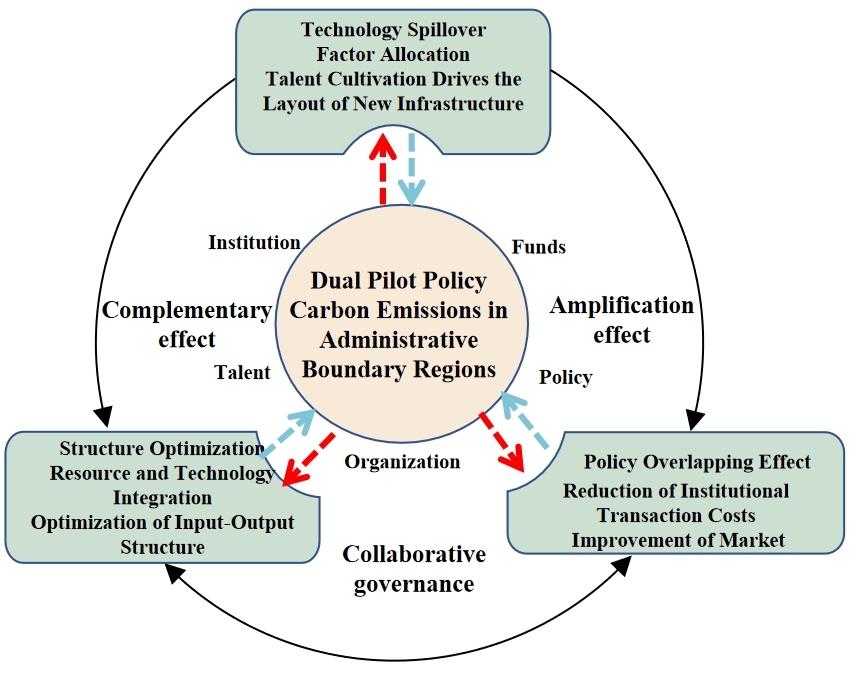
The variable relationship diagram of this paper is shown in Fig. 1.
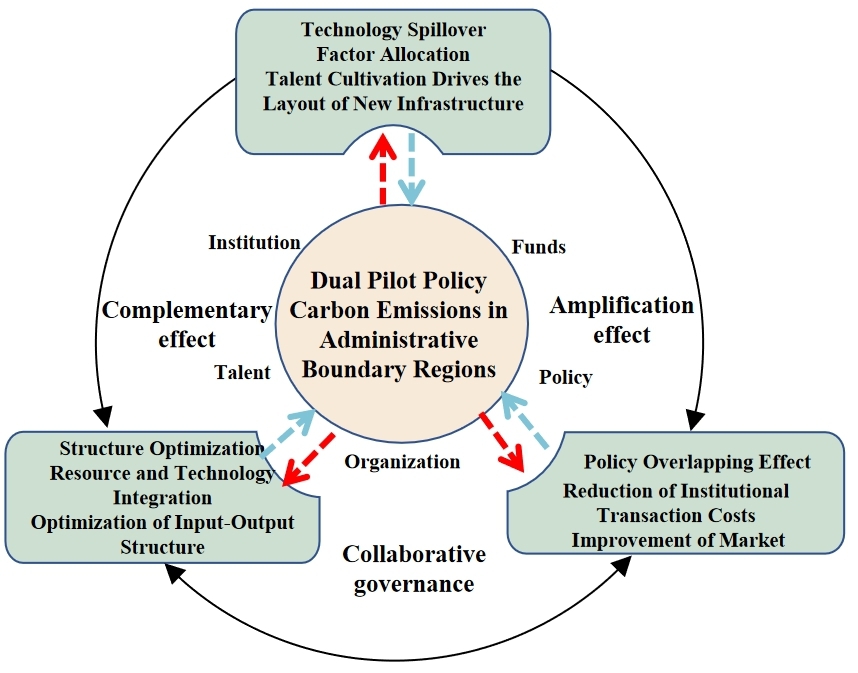 Fig. 1.
Relationship of variables.
We conducted the analysis using data spanning from 2006 to 2020. The data used in this study are primarily derived from four sources: (1) Vector data in Shapefile (SHP) format for urban administrative boundaries were obtained from the National Fundamental Geographic Information Database. We manually identified boundary towns and neighboring towns using the Chinese administrative division layer. (2) Carbon emissions data were synthesized by matching satellite observations of global point source databases with global nighttime light distributions. (3) The lists of China’s innovative city pilots and national independent innovation demonstration zones were manually collected and compiled based on publicly available reports. (4) All other regional-level data were sourced from the China Urban Statistical Yearbook.
The ICP and the NIDZ represent exogenous policy shocks to both the “quantity” and “quality” of carbon emissions within administrative boundaries. As such, they can be regarded as a quasi-natural experiment of innovation-driven policies. Given that both pilot policies were implemented in phases, progressively expanding the scope of participating cities, this paper employs a staggered difference-in-differences (DID) model to assess the impact of the “Dual pilot” programs on carbon emissions, with a specific focus on reducing the quantity and improving the quality. Additionally, a two-way fixed effects model, which accounts for both time and city, is employed to mitigate concerns of endogeneity. The specific model is specified as follows.
In this model, i and t denote city and time, respectively.
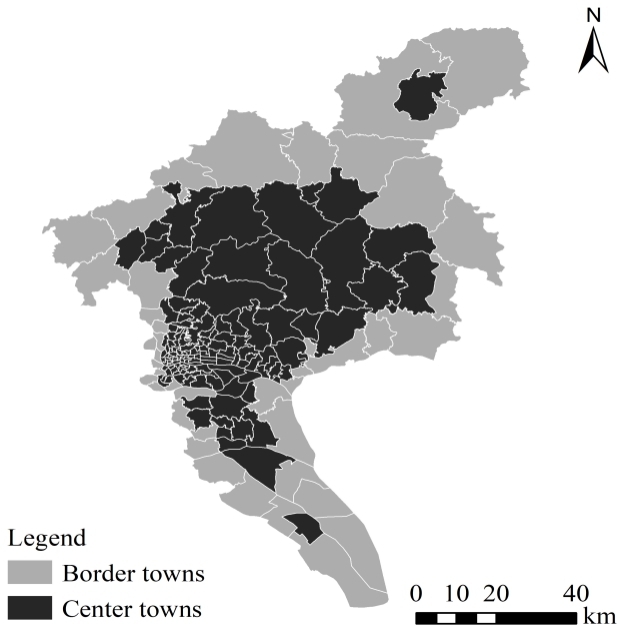
Dependent Variables. Scale and efficiency of carbon emissions. CESC: The level of carbon emissions is an important indicator of whether the dual-carbon goals can be achieved. This paper further characterizes the carbon emissions of Chinese townships. First, we estimate national emissions using global fuel consumption statistics and calculate emissions from power plants using a point-source database. Efficiency of carbon emissions (CEEF): This paper measures the efficiency of carbon emissions by the GDP generated per unit of carbon emissions. Identification of administrative boundaries. After determining the indicators for measuring carbon emissions, this paper further clarifies the specific scope of the administrative boundary areas. Following Yu et al. (2025), we characterize urban boundary areas at the township level, defining townships that are within a city and border other cities as boundary townships, and those that are within a city but do not border other cities as central townships. To clearly illustrate the definition of boundary and central townships, Fig. 2 shows the case of Guangzhou. By matching boundary township data with carbon emissions data, we obtain the CESC and the CEEF.
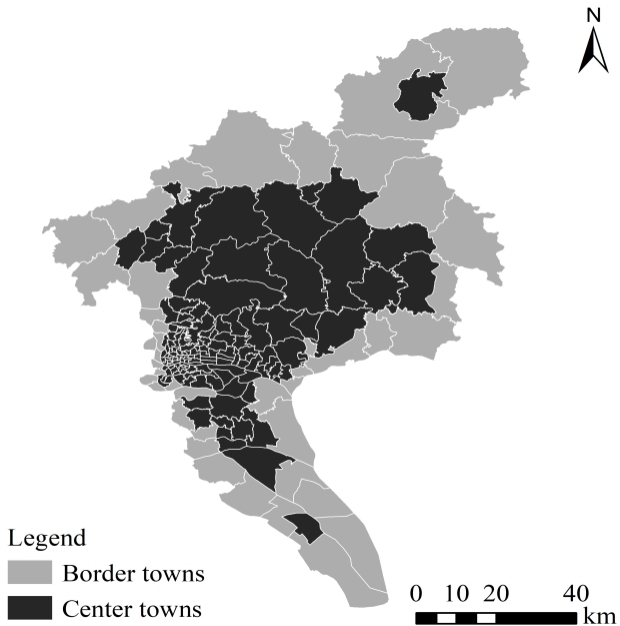 Fig. 2.
Boundary towns and central towns in Guangzhou.
Explanatory Variables: The “dual-pilot” policy, encompassing the ICP and NIDZ, is the focus of this study (Policy). We construct a dummy variable to represent whether a city simultaneously serves as both the ICP and the NIDZ. This dummy variable is assigned a value of 1 if a city is designated as both pilots in the same year and in all subsequent years, and 0 otherwise. Similarly, the identification strategy for the “single-pilot” city variable follows the same principle. If a city is designated as either the ICP or the NIDZ, the policy treatment variable is set to 1 in the year the city becomes a pilot and in all subsequent years, and 0 otherwise. Based on this approach, we identify 31 “dual-pilot” cities in China from 2006 to 2020.
Mediating Variables. (1) Technology Diffusion Effect: This study uses green technology innovation as a proxy variable. Relevant information, including patent application numbers, application dates, publication numbers, publication dates, patent titles, abstracts, classification numbers, applicants, and inventors, was obtained from the National Intellectual Property Administration. Green patents were identified and matched using the classification numbers according to the “International Patent Classification Green Inventory” published by the World Intellectual Property Organization (WIPO), and these were aggregated at the prefecture-level city scale. The total number of green patent applications was used to measure the level of green innovation in cities (Innovate), and a log transformation was applied after adding 1. (2) Structural Optimization Effect: This study measures the structural optimization of border regions using the level of industrial structure sophistication (SH), with the ratio of value-added of the tertiary industry to that of the secondary industry serving as the proxy variable. (3) Policy Overlap Effect: The number of innovation policies issued by various cities from 2006 to 2020 was manually collected from the Peking University Law Database and used as a proxy variable for policy overlap (PO). Specifically, to ensure the accuracy, comprehensiveness, and efficiency of the search, the data source was limited to local regulations and rules by effectiveness level and issuing department, with “innovation” as the keyword for full-text search. For example, in Wuhan, the approving authorities were set as “Hubei Provincial People’s Congress, Hubei Provincial Government, other institutions in Hubei Province, Wuhan People’s Congress, Wuhan Municipal Government, and other relevant administrative institutions of Wuhan”. The number of innovation policies retrieved for Wuhan was used as the proxy variable.
Control Variables. We select the following control variables. Specifically, economic development (Economic); Government intervention (Gov); Foreign direct investment (FDI); Urbanization level (Urban); The number of development zones (Zone); Average city temperature (Temp); Humidity (Humidity); Average wind speed (Wind); and Rain (Rain). Descriptive statistics for these variables are presented in Table 1.
| Variables | Obs | Mean | Std | Min | Max |
| CESC | 4275 | 14.060 | 1.315 | 8.434 | 17.380 |
| CEEF | 4275 | 21.710 | 46.770 | 0.354 | 733.800 |
| Policy | 4275 | 0.041 | 0.198 | 0 | 1.000 |
| Innovate | 4275 | 7.168 | 3.926 | 0 | 18.500 |
| SH | 4275 | 0.954 | 0.539 | 0.094 | 5.348 |
| PO | 4275 | 33.580 | 24.810 | 0 | 188.000 |
| Economic | 4275 | 10.450 | 0.708 | 8.717 | 11.980 |
| Gov | 4275 | 14.510 | 0.933 | 12.320 | 17.210 |
| FDI | 4275 | 9.781 | 1.913 | 4.635 | 13.910 |
| Urban | 4275 | 5.871 | 0.678 | 3.829 | 7.183 |
| Zone | 4275 | 4.088 | 3.432 | 0 | 14.000 |
| Temp | 4260 | 15.040 | 5.236 | 2.873 | 24.020 |
| Humidity | 4260 | 69.120 | 9.280 | 45.100 | 82.170 |
| Wind | 4260 | 2.132 | 0.479 | 1.128 | 3.537 |
| Rain | 4260 | 6.783 | 0.593 | 4.979 | 7.781 |
Obs, Observation; Std, Standard Deviation; CESC, scale of carbon emissions; CEEF, efficiency of carbon emissions; SH, sophistication; PO, policy overlap; Gov, government intervention; FDI, foreign direct investment.
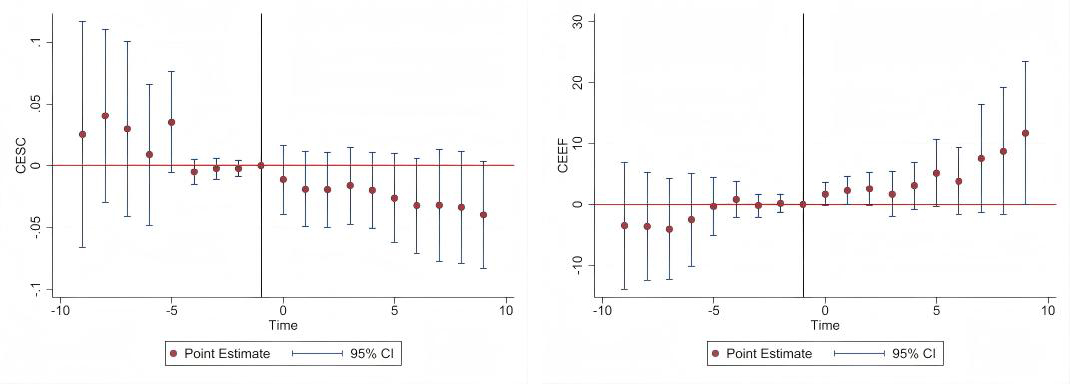
We employed an event study approach to test for parallel trends, using the period immediately preceding the policy implementation as the baseline. After the introduction of the “Dual pilot” policy, the trend in CESC shows a significant reduction. Specifically, there were no significant effects in the 10 periods prior to the policy, whereas several significant negative effects emerged in the periods following the policy, indicating a downward trend. Therefore, the parallel trends assumption holds. Further analysis using an alternative dependent variable revealed a significant upward trend in CEEF. Similarly, there were no significant effects in the 10 periods prior to the policy, but several significant positive effects emerged in the post-policy periods, indicating an upward trend. Consequently, the parallel trends assumption is validated. The regression results are reported in Fig. 3.
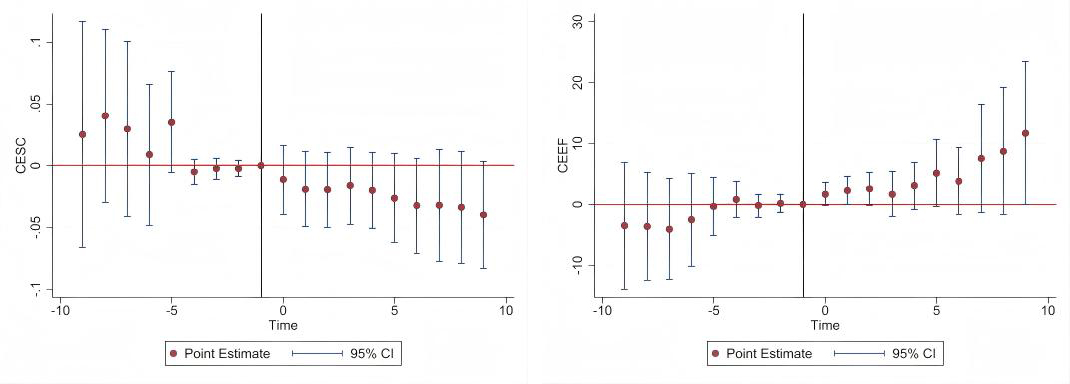 Fig. 3.
Parallel trends test. CI, Confidence Interval.
Table 2 presents the baseline regression results regarding the impact of the “Dual pilot” policy on carbon emissions in border areas. Column (1) shows the effect of the “Dual pilot” policy on the scale of carbon emissions in border areas when only the core explanatory variable is included. The coefficient of the core explanatory variable is significantly negative. When control variables are added, the regression results are reported in Columns (2) and (3) of Table 2. It can be observed that the coefficient of CESC remains significantly negative, while the coefficient of CEEF for border towns is significantly positive at the 1% level. This indicates that the implementation of the “Dual pilot” policy not only significantly reduces the scale of carbon emissions in border areas but also enhances carbon emission efficiency, achieving both “quantity reduction and quality improvement”. This finding suggests that the “Dual pilot” policy effectively motivates border towns to reduce carbon emissions voluntarily, thereby helping border areas achieve “quantity reduction and quality improvement”. Therefore, Hypothesis H1 of this study is confirmed.
| (1) | (2) | (3) | |
| CESC | CESC | CEEF | |
| Policy | –1.380*** | –0.027** | 4.473** |
| (0.100) | (0.013) | (2.006) | |
| Economic | –0.054*** | 14.622*** | |
| (0.014) | (2.132) | ||
| Gov | 0.017 | 1.157 | |
| (0.014) | (2.147) | ||
| FDI | –0.001 | 0.877** | |
| (0.003) | (0.398) | ||
| Urban | 0.078** | 0.465 | |
| (0.036) | (5.595) | ||
| Zone | 0.001** | 0.009 | |
| (0.001) | (0.094) | ||
| Temp | –0.003 | –0.512 | |
| (0.002) | (0.343) | ||
| Humidity | 0.001 | 0.951*** | |
| (0.001) | (0.161) | ||
| Wind | –0.016 | 5.409*** | |
| (0.013) | (2.094) | ||
| Rain | –0.049*** | –2.802 | |
| (0.013) | (2.036) | ||
| _cons | 3.345*** | 3.485*** | –209.889*** |
| (0.02) | (0.291) | (45.133) | |
| City | NO | YES | YES |
| Year | NO | YES | YES |
| N | 4275 | 4259 | 4259 |
| adj. R2 | 0.043 | 0.992 | 0.842 |
Robust standard errors in parentheses; ***, **, and * indicate significant at the 1%, 5%, and 10% levels, respectively. Control variables, city, and time are controlled for, below.
To address potential endogeneity issues stemming from omitted variables, measurement errors, or reverse causality, we further employ an instrumental variable (IV) approach. Following the methodology of Dong et al. (2021a), who used historical data as instruments to mitigate endogeneity concerns, we select the status of a city as a treaty port between 1840 and 1930 as our instrumental variable. This choice is justified for two reasons. First, treaty ports were pivotal locations for the dissemination of Western modern culture, ideas, and ideologies in China. These areas also experienced rapid economic development following the reform and opening-up period. This historical context provides a strong foundation for the implementation of pilot policies and serves as a model for subsequent policy expansion, thereby satisfying the relevance condition of the instrumental variable. Second, the status of a city as a treaty port is a historical variable that is unlikely to directly influence carbon emissions within administrative boundary areas, thus meeting the exogeneity condition. The regression results are presented in Table 3 and indicate that our main findings remain robust even after accounting for potential endogeneity. Specifically, the “Dual pilot” policy has effectively promoted “qualitative improvement with quantitative reduction” in carbon emissions within administrative boundary areas. Additionally, we conducted tests for weak instruments, and the results confirm that weak instrument issues are not a concern.
| (1) | (2) | (3) | |
| Policy | CESC | CEEF | |
| IV | 0.041*** | ||
| (0.010) | |||
| Policy | –4.087*** | 2.358*** | |
| (0.808) | (0.453) | ||
| _cons | –1.490*** | 7.519*** | 13.516*** |
| (0.123) | (0.853) | (0.660) | |
| Control | YES | YES | YES |
| City | YES | YES | YES |
| Year | YES | YES | YES |
| N | 4259 | 4259 | 4259 |
| adj. R2 | 0.226 | 0.134 | 0.183 |
| Kleibergen-Paap rk Lagrange Multiplier statistic | 6.140 | ||
| Kleibergen-Paap Wald rk F statistic | 53.330 | ||
Robust standard errors in parentheses; ***, **, and * indicate significant at the 1%, 5%, and 10% levels, respectively. IV, instrumental variable.
During the period examined in this study, related environmental policies could potentially bias the estimated results. To address this concern, we systematically exclude the impact of policies that might affect carbon emissions within administrative boundary areas. These policies include: (i) the “Five Provinces and Eight Cities” low-carbon city pilot policy implemented by the National Development and Reform Commission in July 2010; (ii) the “Air Pollution Prevention and Control Action Plan” introduced by the State Council in 2013, targeting 57 key cities; (iii) the Environmental Protection Tax Law of the People’s Republic of China, which came into effect on January 1, 2018, with 12 provinces, including Hebei, raising their tax rates following the transition from fees to taxes; (iv) the sulfur dioxide emission trading pilot program initiated by the central government in 2007 and implemented in nine provinces, including Hebei and Shanxi, as well as in the cities of Tianjin and Chongqing. Considering the common sources of pollution, we conducted robustness checks by excluding the samples from these four policy pilots individually. The regression results, reported in Columns (1) and (2) of Table 4, show that after excluding the interference from other policies, the “Dual pilot” policy continues to suppress the scale of carbon emission and enhance carbon emission efficiency in boundary areas, with robust results.
| (1) | (2) | (3) | (4) | |
| CESC | CEEF | CESC | CEEF | |
| Policy | –0.075** | 6.200** | –0.017*** | 4.501*** |
| (0.034) | (2.677) | (0.004) | (0.873) | |
| _cons | 3.178*** | –210.873*** | 1.996*** | –348.121*** |
| (0.349) | (51.343) | (0.164) | (35.516) | |
| Control | YES | YES | YES | YES |
| City | YES | YES | YES | YES |
| Year | YES | YES | YES | YES |
| N | 2385 | 2385 | 1410 | 1410 |
| adj. R2 | 0.992 | 0.842 | 0.999 | 0.983 |
Robust standard errors in parentheses; ***, **, and * indicate significant at the 1%, 5%, and 10% levels, respectively.
Although the staggered DID method applied earlier provides useful insights, the non-random nature of the ICP and NIDZ means that they are not strict natural experiments, and thus there remains a potential for selection bias. To address this concern, we further employ a multiple-period Propensity Score Matching-Difference-in-Differences (PSM-DID) model for robustness checks. The regression results are presented in Columns (3) and (4) of Table 4. The findings reveal that the regression coefficient for CESC remains significantly negative, while the coefficient for CEEF in boundary towns remains significantly positive, consistent with the baseline regression results. This indicates that the effect of the “Dual pilot” policy in promoting “qualitative improvement with quantitative reduction” in carbon emissions within administrative boundary areas is robust.
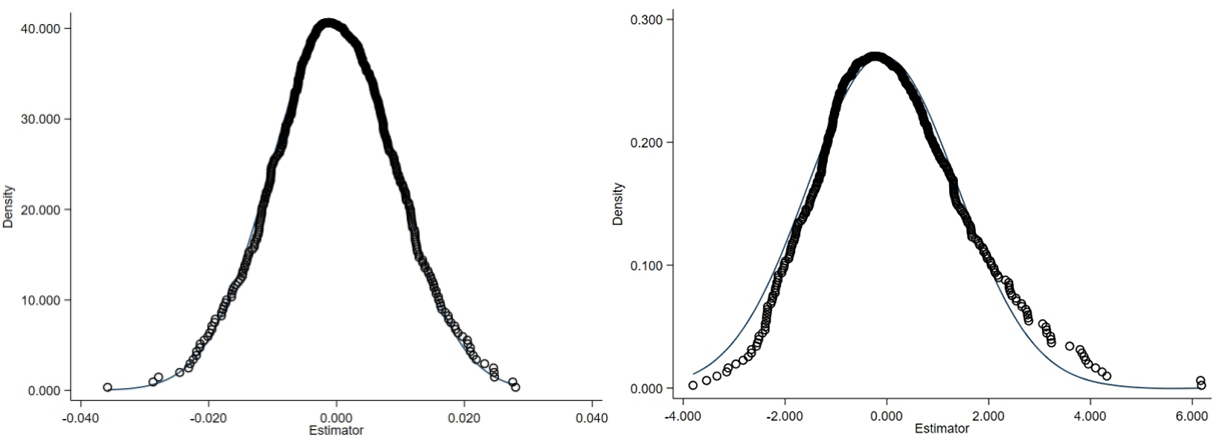
To test the robustness of our findings, we conducted a placebo test by randomly reassigning the treatment and control groups. Specifically, we used computer-generated randomization to create new treatment groups and repeated this process 1000 times. We then applied a staggered Difference-in-Differences (DID) regression to each set of randomly assigned groups. The results are presented in Fig. 4. Finally, we compared the p-values obtained from the placebo tests with those from the actual treatment effect reported in Column (2) of Table 2. We found that the p-values from the placebo tests were not significant, whereas the p-values from the actual treatment effect remained significant.
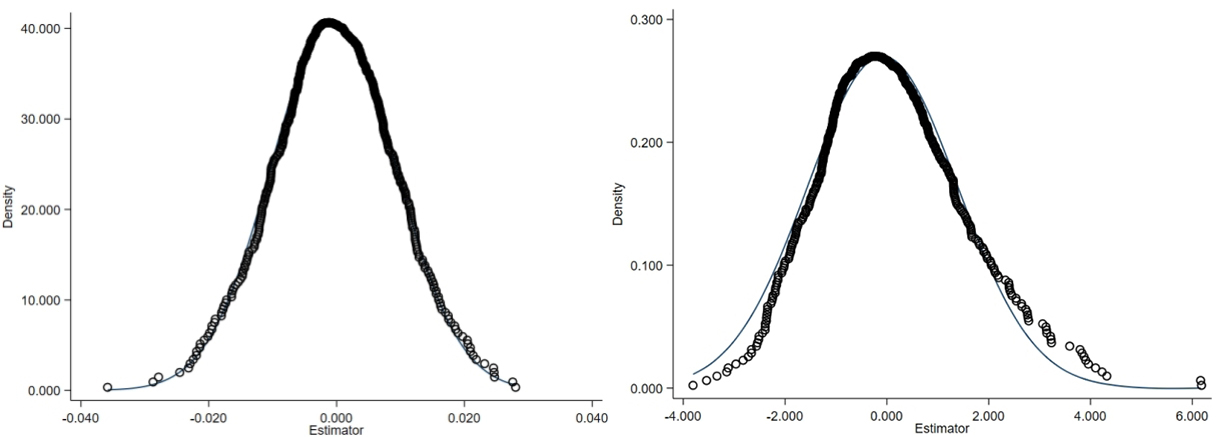 Fig. 4.
Placebo test.
Based on the theoretical analysis presented earlier, this paper posits that the “Dual pilot” policy, which includes the ICP and the NIDZ, may promote “qualitative improvement with quantitative reduction” in carbon emissions within administrative boundary areas through the mechanisms of technological diffusion, structural optimization, and policy synergy. To explore these mechanisms, we conduct tests on the aforementioned three channels. Specifically, we first examine the impact of the “Dual pilot” policy on the mediating variables. Building on this, to address potential concerns that the causal effect of the mediating variables on the dependent variable might not be fully substantiated theoretically, we further verify the impact of these mediating variables on scale of carbon emissions and efficiency within administrative boundary areas. This provides additional correlational evidence to support the proposed mechanisms.
Administrative boundary areas often suffer from inadequate influx of new technologies and information due to information isolation and low levels of market integration. Under the influence of the “Dual pilot” policy, which includes the ICP and the NIDZ, the central cities have experienced a gradual concentration of innovation investments, cutting-edge knowledge, and innovative talent, as well as improvements in information infrastructure. These changes have led to significant technology spillover effects in administrative boundary areas, stimulating pollution-intensive firms in these regions to enhance their carbon reduction capabilities through process improvements and upgrades to pollution control equipment. Moreover, the technological advancements in carbon emission management and related equipment have also contributed to further reductions in carbon reduction costs in boundary areas, thus promoting “qualitative improvement with quantitative reduction” in carbon emissions. We test this mechanism in the paper, and the mediation test results are reported in Table 5, columns (1) and (4). The findings indicate that the “Dual pilot” policy significantly promotes technology diffusion. Specifically, increased technology diffusion further suppresses the scale of carbon emissions and enhances carbon emission efficiency in boundary areas. This demonstrates that the implementation of the “Dual pilot” policy effectively facilitates the spread of advanced technologies to administrative boundary areas, thereby leading to the replacement and integration of new production factors with traditional ones. Consequently, through the emergence of new business models and the transformation of high-carbon industries, the policy significantly impacts carbon emissions in these regions, confirming Hypothesis H2a.
| (1) | (2) | (3) | (4) | (5) | (6) | |
| Innovate | SH | PO | CESC | CESC | CESC | |
| Policy | 0.990*** | 0.056** | 8.624*** | |||
| (0.089) | (0.022) | (1.527) | ||||
| Innovate | –0.007*** | |||||
| (0.002) | ||||||
| SH | –0.025*** | |||||
| (0.009) | ||||||
| PO | –0.037*** | |||||
| (0.013) | ||||||
| _cons | 31.896*** | 8.120*** | –101.034*** | 13.729*** | 14.056*** | –0.037*** |
| (2.005) | (0.504) | (34.347) | (0.293) | (0.300) | (0.013) | |
| Control | YES | YES | YES | YES | YES | YES |
| City | YES | YES | YES | YES | YES | YES |
| Year | YES | YES | YES | YES | YES | YES |
| N | 4259 | 4259 | 4258 | 4259 | 4259 | 4258 |
| adj. R2 | 0.939 | 0.851 | 0.675 | 0.992 | 0.992 | 0.990 |
Robust standard errors in parentheses; ***, **, and * indicate significant at the 1%, 5%, and 10% levels, respectively.
The results of the mediation analysis for the structural optimization effect are reported in Columns (2) and (5) of Table 5. Following the implementation of the “Dual pilot” policy for ICP and NIDZ, we observe an increase in the share of the tertiary sector, a significant reduction in the scale of carbon emissions, and a notable improvement in carbon emission efficiency in administrative boundary areas. These findings suggest that the innovation-driven “Dual pilot” policy has, to some extent, hindered the development of traditional high-energy-consuming industries, thereby leading to a notable increase in the proportion of the tertiary sector—an important indicator of industrial structure upgrading. Additionally, the wider application of clean energy technologies has facilitated the substitution of fossil fuels, such as coal, with clean energy sources like wind and solar power. This substitution has effectively alleviated the path dependence on traditional energy sources in administrative boundary areas and driven pollution-intensive firms to accelerate their low-carbon transformation. Furthermore, the implementation of the “Dual pilot” policy has also pressured local governments to strengthen environmental regulation, thereby transforming administrative boundary areas from carbon emission havens into more regulated zones. The tightening of environmental constraints has led to the exit of some high-energy-consuming firms, thereby significantly reducing the scale of carbon emissions and improving carbon emission efficiency through the structural optimization effect. Therefore, hypothesis H2b is supported.
The results of the mediation analysis for the policy overlap effect are reported in Columns (3) and (6) of Table 5. Following the implementation of the “Dual pilot” policy for ICP and NIDZ, the intensive release of related supporting policies has created significant overlap effects. This has led to a substantial reduction in the scale of carbon emissions and a notable improvement in carbon emission efficiency in administrative boundary areas. These findings indicate that “Dual pilot” cities are more conducive to enhancing local governments’ strategic guidance on urban low-carbon development. On one hand, policy overlap effects can be effectively leveraged through streamlining administration and optimizing government service processes. On the other hand, financial incentives such as subsidies, tax breaks, and land use discounts provide critical funding support, achieving a “small investment with significant returns” effect and ensuring effective financial backing for low-carbon development in boundary areas. Moreover, environmental regulation policies and other supporting tools are more readily advanced in “Dual pilot” cities, directly or indirectly promoting “qualitative improvement with quantitative reduction” in carbon emissions in administrative boundary areas. Therefore, Hypothesis H2c is supported. (Results for the dependent variable, carbon emission efficiency, were retrieved and found to be consistent with the requirements.)
Although both the Innovative City Pilot Policies (ICP) and the National Innovation Demonstration Zones (NIDZ) are national pilot policies, the sequence of policy implementation differs among “Dual pilot” cities. To further investigate how the sequence of the “Dual pilot” policy affects the “quantity” and “quality” of carbon emissions in administrative boundary areas, we categorize the sample based on the policy implementation sequence. One group consists of cities that first established NIDZ before becoming “Dual pilot” cities, reflecting the dual impact of first becoming the NIDZ and then the ICP on boundary area carbon emissions. The other group includes cities that first became Innovative Cities before being designated as NIDZ, to examine the dual impact of this sequence on boundary area carbon emissions. The regression results are presented in Columns (1) and (2) of Table 6. These results indicate that becoming the NIDZ before being designated a “Dual pilot” city does not significantly affect the scale or efficiency of carbon emissions in administrative boundary areas. Columns (3) and (4) reflect the impact of the sequence where cities first pilot as ICP and then as NIDZ. This sequence significantly promotes the “quantitative reduction and qualitative improvement” of carbon emissions in boundary areas. This may be due to several factors. First, cities that first implemented the ICP policy had a pilot period of up to eight years, whereas cities that first implemented the NIDZ policy had a shorter period of 1 to 3 years. The shorter pilot period limited the accumulation of technology and information, thus making the short-term effects on “quantitative reduction and qualitative improvement” less evident. Second, compared to the NIDZ, the ICP focuses more on top-level strategic guidance and covers various aspects such as development models, management systems, and cultural institutions. Implementing the ICP policy first can provide a better institutional environment and innovation foundation for the NIDZ, thereby enhancing the policy’s effectiveness through a “one plus one is greater than two” effect and promoting low-carbon development in boundary areas.
| NIDZ First, Then ICP | ICP First, Then NIDZ | |||
| (1) | (2) | (3) | (4) | |
| CESC | CEEF | CESC | CEEF | |
| Policy | 0.099 | 2.791 | –0.078*** | 5.197*** |
| (0.151) | (2.485) | (0.014) | (1.987) | |
| _cons | 32.937*** | –571.016*** | 9.444*** | –167.238*** |
| (2.686) | (140.649) | (0.392) | (56.490) | |
| Control | YES | YES | YES | YES |
| City | YES | YES | YES | YES |
| Year | YES | YES | YES | YES |
| N | 225 | 225 | 225 | 225 |
| adj. R2 | 0.739 | 0.903 | 0.995 | 0.889 |
Robust standard errors in parentheses; ***, **, and * indicate significant at the 1%, 5%, and 10% levels, respectively. NIDZ, National Innovation Demonstration Zones; ICP, Innovative City Pilot Policies.
Resource endowments are a key factor influencing urban development and may result in heterogeneous effects of the “Dual pilot” policy. To examine the heterogeneity arising from differences in urban classification due to initial resource endowments, this study utilizes the list of resource-oriented cities released by the State Council in 2013. A dummy variable is constructed, coded as 1 for resource-based cities and 0 for non-resource-based cities. The results are reported in Table 7. We find that the “Dual pilot” policy induces a “quantitative reduction and qualitative improvement” effect on carbon emissions in the boundary areas of non-resource-based cities. This may be attributed to the fact that resource-based cities primarily rely on natural resource endowments for development, which often results in a singular economic structure that is susceptible to the “resource curse” and severe path dependence. Moreover, resource-based industries tend to concentrate in administrative boundary areas, and local governments’ protectionist behaviors aimed at economic growth can impede the flow of factors and low-carbon development. Consequently, it is challenging for the current “Dual pilot” policy to exhibit its carbon reduction effects in the boundary areas of resource-based cities. In contrast, non-resource-based cities generally exhibit a more diversified industrial structure and a stronger innovation foundation. These characteristics facilitate the flow of innovation elements between regions. Additionally, local governments in these cities are also better positioned to quickly adapt to trends in high-quality economic development. Consequently, these factors enhance the “quantitative reduction and qualitative improvement” effect of the “Dual pilot” policy on carbon emissions in boundary areas.
| Non-Resource Cities | Resource Cities | |||
| (1) | (2) | (3) | (4) | |
| CESC | CEEF | CESC | CEEF | |
| Policy | –0.033** | 4.471* | 0.046 | –1.640 |
| (0.014) | (2.507) | (0.043) | (4.886) | |
| _cons | 3.232*** | –194.029*** | 4.097*** | –213.727*** |
| (0.406) | (71.706) | (0.422) | (47.860) | |
| Control | YES | YES | YES | YES |
| City | YES | YES | YES | YES |
| Year | YES | YES | YES | YES |
| N | 2564 | 2564 | 1695 | 1695 |
| adj. R2 | 0.993 | 0.829 | 0.990 | 0.876 |
Robust standard errors in parentheses; ***, **, and * indicate significant at the 1%, 5%, and 10% levels, respectively.
Compared with inland cities, coastal cities generally exhibit higher levels of economic development, innovation infrastructure, and market orientation, making them more likely to actively promote low-carbon development in boundary areas under the “Dual pilot” policy. To investigate this heterogeneity, we classify cities based on whether they are coastal, assigning a value of 1 for coastal cities and 0 otherwise, and conduct the analysis accordingly. The regression results are reported in Table 8. We find that the “Dual pilot” policy has a significantly stronger effect on the “quantitative reduction and qualitative improvement” of carbon emissions in coastal cities than in inland cities. This finding may be attributed to the more advanced economic conditions, faster flow of innovation factors, and more comprehensive supporting policies in coastal regions. Alternatively, it could also reflect selective enforcement and relaxed regulations in less developed inland provinces aimed at achieving economic growth.
| Coastal Cities | Non-Coastal Cities | |||
| (1) | (2) | (3) | (4) | |
| CESC | CEEF | CESC | CEEF | |
| Policy | –0.031*** | 0.838** | –0.025 | 2.463 |
| (0.010) | (0.344) | (0.016) | (3.426) | |
| _cons | 2.632*** | –65.544*** | 3.658*** | –109.933*** |
| (0.308) | (10.126) | (0.343) | (22.46) | |
| Control | YES | YES | YES | YES |
| City | YES | YES | YES | YES |
| Year | YES | YES | YES | YES |
| N | 660 | 660 | 3599 | 3599 |
| adj. R2 | 0.997 | 0.924 | 0.990 | 0.199 |
Robust standard errors in parentheses; ***, **, and * indicate significant at the 1%, 5%, and 10% levels, respectively.
The NIDZ and ICP policies, as significant institutional innovations, have had a remarkable impact on addressing the carbon emission challenges in boundary areas. This study examines the synergistic effects, mechanisms, and heterogeneous impacts of these policies on both the “quantity” and “quality” of carbon emissions in boundary areas. The study finds that: First, the “Dual pilot” policy, driven by innovation, significantly enhances the “quantitative reduction and qualitative improvement” of carbon emissions in administrative boundary areas. This finding confirms the effectiveness of policy instrument combinations in promoting energy conservation and emission reduction. It also provides indirect empirical support for the European Union’s Just Transition Fund in addressing cross-border emissions reduction challenges through a multi-instrument approach. Second, the “Dual pilot” policy effectively reduces the scale of carbon emissions and improves carbon emission efficiency by leveraging technological diffusion, structural optimization, and policy synergy effects. This finding also confirms that, unlike Eastern European countries which rely more heavily on financial and technological support within the EU framework, China’s “Dual pilot” policy emphasizes a two-way feedback loop between technological and institutional innovation. This approach creates a synergistic effect through the interplay of technology, industrial restructuring, and overlapping policies, thereby exerting pressure on administrative border regions to reduce emissions. Third, compared with becoming the NIDZ first and then the ICP, becoming the ICP first and then the NIDZ better enhances carbon emission reduction outcomes in boundary areas. Additionally, relative to resource-based and inland cities, the “Dual pilot” policy more effectively promotes the “quantitative reduction and qualitative improvement” of carbon emissions in non-resource-based and coastal cities.
Accordingly, we propose the following policy recommendations:
First, it is essential to fully recognize and leverage the policy synergy between NIDZ and ICP to orderly advance the “reduction and quality enhancement” of carbon emissions in administrative boundary areas. On the one hand, the strategic spatial planning integration of these two types of policies can be promoted. Specifically, the technological breakthrough advantages of the demonstration zones can be combined with the green infrastructure standards and cross-domain governance models of the innovative pilot cities. This integration can be achieved through the joint establishment of a “low-carbon corridor along the border”, facilitating the complementary use of various elements. On the other hand, a dynamic coordination platform should be established. Provincial-level departments can coordinate the two types of policy toolkits and design “industry innovation-institutional innovation coupling plans” for the border areas. Concurrently, a joint assessment mechanism for carbon emission performance can be established to create a positive cycle of “technological breakthroughs-institutional adaptation-reduction and quality enhancement”. Moreover, cross-demonstration zone and pilot city pairings can be encouraged to cooperate. Through institutional innovations such as innovation enclaves and pollution discharge rights trading, the loss of reduction efficiency caused by administrative segmentation can be mitigated, ultimately achieving a synergistic governance effect where one plus one is greater than two.
Second, the significant role of the “Dual pilot” policy in technology diffusion, structural optimization, and policy synergy should be leveraged to maximize its “carbon reduction and quality improvement” benefits. Specifically, the government should enhance its strategic guidance on urban innovation, encourage universities and research institutions to engage in research and development, and facilitate the orderly flow of new knowledge and technologies to less developed boundary areas. Support should be focused on high-tech industries, particularly those involved in green production and clean energy. Moreover, stricter environmental regulations should be imposed on high-pollution and high-energy-consumption enterprises in boundary areas to achieve effective carbon reduction. Additionally, more comprehensive supportive policies should be developed to provide a robust institutional environment for low-carbon development in “Dual pilot” cities.
Third, the development of NIDZ and ICP should be tailored to local conditions and the sequence of policy implementation should be planned reasonably to provide an innovative foundation for carbon reduction in administrative boundary areas. Non-resource-based cities and coastal areas should be guided to continue exploring new carbon reduction pathways under the “Dual pilot” policy by leveraging their inherent advantages. Focus on dismantling institutional barriers in resource-based cities, actively nurturing and supporting the development of clean industries, and overcoming the “high carbon curse” that results from the “resource curse”. Simultaneously, for inland boundary cities, differentiated composite strategies should be adopted to further enhance the innovative foundation, industrial structure, and related supportive policies in administrative boundary areas. Technology innovation policies should be used as a “lever” to drive low-carbon development in boundary areas.
Available from the corresponding author upon request.
SL: Writing-original draft, Data Collection and Collation. XY: Conceptualization, Methodology, Writing-original draft. KW: Substantial contributions to the conception or design of the work. All authors contributed to editorial changes in the manuscript. All authors read and approved the final manuscript. All authors have participated sufficiently in the work and agreed to be accountable for all aspects of the work.
We are extremely grateful for the valuable comments and suggestions provided by the reviewers.
Our research was supported by the Program of National Social Science Foundation (24CJL046).
The authors declare no conflict of interest.
References
Publisher’s Note: IMR Press stays neutral with regard to jurisdictional claims in published maps and institutional affiliations.