
 , Irina Antoaneta Tănăsescu 2, Nicoleta Valentina Florea 3, Mihaela Denisa Coman 4,5,*
 , George Ciprian Gîju 3
1 Doctoral School of Economics and Humanities, Valahia University of Targoviste, 130004 Târgoviște, Romania
2 Faculty of Political Sciences, Letters and Communication, Valahia University of Targoviste, 130004 Târgoviște, Romania
3 Faculty of Economics, Valahia University of Targoviste, 130004 Târgoviște, Romania
4 Institute of Multidisciplinary Research for Science and Technology, Valahia University of Targoviste, 130004 Târgoviște, Romania
5 Faculty of Economics, Hyperion University of Bucharest, 030615 Bucharest, Romania
Abstract
This study investigates the impact of perceived unfair media coverage on job-related stress among public sector employees in Romania. Amid growing media scrutiny of institutional performance, it examines how such exposure affects employees’ well-being. Using a structured survey administered to 400 civil servants from public institutions in the South Muntenia Region, the study employs an ordered multinomial probit model and non-parametric correlation techniques to explore the associations between perceived media-induced stress and key socio-demographic and job-related variables. The results indicate that perceived stress is significantly influenced by employees’ age and job type, with operative staff and older employees reporting higher stress levels. Gender differences were also found to be statistically significant, suggesting differentiated stress responses across demographic groups. However, interest in institutional media image and participation in internal meetings did not significantly predict perceived stress. These findings contribute to the occupational stress literature by extending job demands–control models to incorporate media exposure as a contextual stressor, particularly within public institutions in Central and Eastern Europe. The study suggests that targeted organizational policies are necessary to support operational staff, including enhanced internal communication and media literacy training, to mitigate the psychological burden of media scrutiny. The research design is cross-sectional and geographically limited to one region of Romania. Furthermore, constructs such as “unfair media coverage” are based on subjective perceptions and were not corroborated through external media content analysis. The novelty of this study lies in its empirical examination of media-induced stress in public organizations, integrating socio-demographic predictors with perceived institutional vulnerability to media narratives.
Keywords
- job-related stress
- stress factors
- civil servant
- organizational climate
- media coverage
- discrete choice
In today’s digital information ecosystem, public organizations operate under continuous scrutiny from both traditional and new media channels. They are exposed to ongoing pressure from local media outlets and powerful media conglomerates—so-called mega-media actors—which consolidate influence through networks of news agencies, print and broadcast platforms, and digital publications. Additionally, the rise of social media has amplified this exposure, enabling rapid dissemination of content and, at times, escalating reputational risks. In such a complex context, the boundary between legitimate accountability and undue media pressure becomes increasingly blurred, raising concerns about the psychological effects of media narratives on public employees. In Romania, public organizations operate under growing public scrutiny, amplified by digital media and politically polarised narratives. Investigative journalism, opinion-driven reporting, and viral social media content often contribute to reputational pressure, especially in institutions managing public funds or delivering essential services. Recent studies emphasise that public sector employees perceive media exposure not only as institutional criticism but also as a personal reputational threat, particularly when coverage is perceived as biased or inaccurate (Neag and Coman, 2022; Săftei, 2023).
The role of media in the shaping of the public image of an organization is acknowledged and widely presented in the literature (Kang and Park, 2018; Marine-Roig et al., 2017; Oncioiu et al., 2021; Rodionov et al., 2022; Sultan et al., 2021; Wawrowski and Otola, 2020). As the public continuously requests improvements in the quality of services received from the institutions, all aspects of the latter represent a research field for media; consequently, the news regarding these institutions, particularly the negative ones, enjoys a large audience. However, it may happen that, in their rush for subjects of large audience the reporters and press bodies to be tempted to release news insufficient verified or biased presented. The causes, effects, and modalities of stress mitigation in employees have been widely examined in the literature (Akbari et al., 2017; Baillargeon et al., 2009; Karasek, 1979; Karasek et al., 1981; Leka et al., 2003). To the authors’ knowledge, this is the first attempt to study the stress induced in personnel as a result of situations considered within the organization as unfair, covered in the media. In this context, it is important to clarify how unfair media coverage is understood in the present study. Drawing on Entman’s (2007) framing theory, we define unfair media coverage as reporting that lacks factual accuracy, omits relevant context, or exhibits bias through selective emphasis, leading to a distorted representation of the organization. Such coverage may undermine institutional legitimacy and be perceived as unjust by employees, particularly when it affects their professional identity. These dynamics are compounded by a lack of structured media communication training and limited institutional support in managing media relations. In this context, stress generated by perceived unfair media coverage becomes a significant dimension of occupational strain in the Romanian public administration.
Currently, the diminution of the psychosocial risks and the occupational stress represents both moral and legal requirements, following their sizeable economic and social impact (An and Gu, 2023; De Sario et al., 2023; du Plesis, 2017; Mirbod et al., 1999; Parmentier et al., 2023; Piao et al., 2022; Ramos-Galarza and Acosta-Rodas, 2019; Sinclair et al., 2024). In the United States, job-related stress is considered the major source of stress among adults, and its influence has progressively increased over the past decades. Job stress can be evaluated starting from the definition stated in the framework of JDC (job demands and control, or the decision latitude) model, developed by Karasek (1979); in this approach, job stress at work is defined as the perception of having small control but increased demands. Further research has proven that the job stress at work is associated with various hazards such as cardiovascular diseases, headaches, back-pains, insomnia, anxiety, depression, ulcers and gastrointestinal disorders (Baillargeon et al., 2009; Bültmann et al., 2002; EU-OSHA, 2014; Karasek, 1979; Karasek et al., 1981; Lewig et al., 2007). The daily absenteeism due to job stress in 1989 was estimated to be one million work nonattendances (Rosch and Pelletier, 1989); further on, a more recent study points out that the number of employees calling in illness as a result of stress has tripled from 1996 to 2000 (Jones and Daigle, 2018). In addition, the literature highlights the emergence of presenteeism, where employees, although present at work, do not perform at their full capacity. In this development, the job-related stress is considered one of the main drivers. Thereby, based on the employee reports, which indicated an average of four days off for sickness per year and considered themselves under-productive for an average of 57.5 days a year, it has been concluded that the presenteeism costs business ten times more than the absenteeism (Smith, 2016).
There are various estimations of the job-related stress costs. A report for the European Agency for Safety and Health at Work (EU-OSHA) estimates, for the EU-28 Member States of European Union at the time, as result to the occupational stress, a total cost of 617 billion euros annually. This figure comprises the employers’ costs resulting from absenteeism and presenteeism (272 billion euros), loss of productivity (242 billion euros), health care costs (63 billion euros), and social welfare costs in the form of payments for disability benefit of 39 billion euros (EU-OSHA, 2014). A previous study, deployed in 2000, for the 15 EU Member States, estimated a loss of 600 million working days (Cox et al., 2000), leading to a “conservative estimation” of fiscal costs induced by job-related stress of 20 billion euros (European Commission, 2000; Sharma and Lata, 2013); thereby, the comparison indicates a severe upward trend. Besides other relevant results of various research deployed in the field, these figures leaded the European social partners to adopt the Framework Agreement on Work-related Stress. This is the second document of this type within the European Union, as binding to all member states (European Commission, 2011).
With regards to Romania, the estimation of the employed persons having to work at very high speed or to tight deadlines, the latest data available indicate a general upward trend, from 55% in 2005 to 46.3% in 2010, and 63% in 2015; for comparison, the EU-28 corresponding average indicate 46.2% in 2005, 44.2% in 2010, and 44.9% in 2015, respectively (Eurostat Database, 2019). The authors’ interest in the field has been also leaded by the situation of the mentioned country, which, at the EU-level, is overpassed only by Cyprus; in this undesirable raking, the other countries that form the upper category are Greece, United Kingdom, Sweden, Spain, and Denmark. However, the research does not distinctly disclose for the implied costs of the stress induced by the media as a component of stress related to job duties.
The literature on stress management highlights that control over occupational stress can be addressed through actions at both the individual and organizational level, typically grouped into three areas: (i) First, identifying the organisational factors that contribute to stress. In this context, the present paper focuses on examining the existence and intensity of stress perceived by public employees as a result of media exposure, especially in cases where coverage is perceived as unfair; (ii) Second and third, although intervention techniques and organizational assistance strategies are relevant to the broader discussion on stress management, these aspects fall outside the empirical scope of this study. They are addressed in this paper only as practical implications based on the interpretation of the findings, rather than as primary research objectives.
Accordingly, this study aims to investigate how perceived unfair media coverage affects job-related stress among employees in public institutions, considering socio-demographic characteristics and organizational roles, using an empirical approach based on survey data and discrete choice modelling. The presented research has been deployed in various public institutions located in the South Muntenia Region in Romania, one of the latest Central and Eastern Europe (CEE) countries which joined the EU. The study is aimed to contribute to the existing literature on job-related stress and psychosocial risk mitigation job-related stress and diminution of the associated psychosocial risks, both in western and in CEE countries (EU-OSHA, 2014; De Sario et al., 2023; Guimarães et al., 2021; Parmentier et al., 2023; Sinclair et al., 2024).
The paper has the following structure: introduction, presentation of stress factors and their influence upon the performance of employees, the negative media coverage as a source of stress, besides a local and regional analysis of this topic. The next section comprises the research methodology, in whose framework have been presented the research objectives and hypotheses; also, there have been analysed several variables in this respect, based on the results of a survey. Further on, a model for an in-depth analysis of the considered variables in relation to perceived stress has been developed. The results of the modelling have been commented on, besides the conclusions, pointing out the limits of the study and the future research directions.
Considering the importance of media in shaping of the public image of an organization (Kang and Park, 2018; Oncioiu et al., 2021; Rodionov et al., 2022; Sultan et al., 2021), detecting news considered incorrect or fake regarding the organization’s activity has become one of the institution’s priorities, as this may mislead the readers with obvious negative implications (Qian et al., 2021). Consequently, one of the key objectives of public institutions is to protect their employees and their well-being using, among other tools, the constant monitoring of the side-effects as result of media stress upon the job performance of the employees and the quality of provided services (Burke and Pignata, 2020; Coman et al., 2022).
The outstanding informational resources acquired by the social media platforms, regarding the preferences of their personal users allowed the former to deploy some questionable campaigns, which raised, at the societal level, serious concerns with respect to adequate usage of the collected data; there has been expressed rumours and clues regarding the possibilities for subsequent usage of the aggregated data in various analyses, deployed with final purpose of exerting influences upon the individuals’ decisions.
Studies in the field confirm that negative news, anticipated to elevate the (media) stress of the targeted individuals, spreads swiftly, particularly in online social networks (Guimarães et al., 2021), and with a forceful impact (Mahmud et al., 2021). In this era of communication technologies, the drawbacks of this informational ‘aggression’ highlight the importance of rigorous information and news verification (Wang et al., 2021) and the continuous monitoring of harmful fake news. In the era of communication technologies, informational “aggressions” represent a substantial reason for rigorous verification of information and news (Wang et al., 2021) as well as constant monitoring of fake news with a negative impact on individuals and society using multimodal detection models (Song et al., 2021).
The authorities in charge moved to action, either through changes in regulations regarding the protection of personal data, as in the case of Europe (European Union, 2016), or initiated legal investigations as a reaction to the press disclosures, as in case of the United States (Liao, 2018; Schneiderman, 2018). These initiatives are consistent with, e.g., findings of a European survey, which pointed out the awareness both in citizens and in legal entities that, besides undermining the public institutions, influencing voting decisions and immigration policies, environmental and health policies, public finance, and security represent the most harmful consequences of fake news (European Commission, 2018). Based on the specific connections in the media industry, it may be deducted that the information derived from analysing aggregated data can be subsequently utilised in various campaigns utilising traditional media vectors (print, audiovisual, outdoor).
Currently, in Europe, there is a debate regarding the necessary forward measures aimed at managing the social and organizational harm created by fake and compromising news.
Based on the information above, the research hypothesis no. 1, can be formulated as follows:
H1—There is an association between the interest of the employees in adequate media coverage of their organizational image, on the one side, and their perceived stress, in reverse situations.
In recent years, the phenomenon of fake news has assumed new dimensions within the social and media landscape, significantly impacting public institutions and organisations. The deliberate dissemination of false or misleading information—often labelled as fake news, pseudo-news, or propaganda—can tarnish reputations, disrupt internal operations, and manipulate public sentiment (Chong and Choy, 2020). While some scholars emphasise the risks of censorship in mitigating fake news, there is growing consensus that solutions should focus on enhancing media literacy and promoting transparent communication (Chong and Choy, 2020; European Commission, 2018).
Transparency has become a central demand in both public discourse and organizational governance. New digital technologies have amplified the public’s expectations for openness, sometimes inducing forms of indirect pressure or “self-censorship” among institutions (Xifra, 2008). At the same time, transparency is viewed as a mechanism for control and accountability, particularly in public institutions, where internal control systems help delineate responsibilities and ensure traceability (Arnold et al., 2019; State et al., 2017). As global financial and industrial environments evolve, organizations are expected to adopt increasingly transparent practices to maintain legitimacy (Ng and Ngai, 2015). However, fake news directed at institutions introduces both financial and psychological strain. Research has shown that such disinformation can lead to economic losses (Dong et al., 2022), provoke market instability and price volatility (Wu et al., 2022), increase operational costs (Naumer and Yurtoglu, 2022), and cause employee confusion and internal disarray (Ferreira et al., 2021). The societal consequences include widespread mistrust, emotional manipulation, and the erosion of institutional credibility (Han et al., 2021; Himdi et al., 2022; Przybyla and Soto, 2021). This informational pressure also manifests in the form of media-induced stress at the workplace, especially within public institutions. In this study, media-induced stress refers to the psychological strain experienced by employees as a result of external media content that is perceived as critical, unfair, or damaging to their institution’s reputation. This stress is rooted in exposure to media narratives that provoke anxiety, fear of public judgment, or internal institutional pressure. Recent empirical validation of the transactional stress model confirms its relevance for understanding how perceived external stressors—such as media pressure—interact with individual resources to generate stress responses. In organizational settings, this is often exacerbated by a lack of support, unclear communication protocols, and low media literacy. The perception and intensity of such stress are not uniform but vary depending on individual characteristics and socio-demographic variables. For example, age has been shown to influence stress perception, with younger employees often experiencing more stress due to limited professional experience and underdeveloped coping mechanisms (Edet et al., 2022; Yazdi et al., 2023). Similarly, gender plays a role, with a study reporting that female employees may experience higher levels of stress in high-demand roles, especially in service and healthcare sectors (Ezenwaji et al., 2019). Meanwhile, work experience also shapes how stress is perceived and managed—less experienced individuals, particularly those in frontline roles, are more vulnerable to occupational stress due to insufficient exposure to stress-management strategies and job-specific challenges (Roszko-Wójtowicz et al., 2023).
Considering the above, the research hypothesis no. 2, can be formulated as:
H2—The media stress at work is perceived in a different manner depending upon the socio-demographic and personal features: (a) age, (b) gender, and (c) work experience.
The communication is one-to-one, from the institution to the target groups and reversely, between the two sides, the media represents the main informational vector. This type of communication, based on direct relationship, is specific, among others, to direct marketing as an expression of translation from mass to personalized communication (Thomas et al., 2006). Using an expressive metaphor, some authors consider this type of market targeting very similar to the example of targeting using a rifle (Bly, 2019). The backwardness of one-to-one communication can be observed in situations when the content of the news highlights the sensational side—and these situations are met on an upward trend. Distorting the statements or attitudes of public servants, sometimes with the aim of raising ratings, has become an increasing practice used in search of an audience.
In the age of mass media, are used sophisticated methods aimed to manipulate the public, like attracting attention through various stimuli, influencing the person’s subconscious with various images aimed to create a state of tolerance for false messages, and distortion that can influence decision-making, and impressing the public using pseudo-scientific data (Morawski, 2019). Notably, the psychology literature presents cases showing that human behaviour is based on a series of unconscious mechanisms, although very familiar to media producers. The experiments deployed in this respect have proved that, in situations when the information is presented very quickly, the human brain tends to overestimate its truthfulness without questioning its veracity: “As a result of brain overloading with the information provided by the media, the humans do not question this information” (Gheorghe, 2015).
The negative image produced as a result of the unfair reflection in the media of certain aspects of the organization affects internal and external communication, disturbs the code of interaction with the beneficiaries and collaborators of the institution, and affects the working performance of personnel (Zefinescu et al., 2015). In contrast, inside the affected institution, it inhibits creativity and conviviality. Communication barriers emerge due to employees’ reluctance to make statements or share their opinions with the media, as their expressions may be misinterpreted.
Due to specific influence on the public, unfair media coverage can generate real crises within the organization’s subject of news, especially in cases when the reported information is not entirely based on objective reality. Allegations, “halves” of truth or misinterpretations are undoubtedly harmful for any organization which is the subject of news, no matter their value of truth; actually, in cases when the rating represents the real aim of news, the focus is not upon the subject of news, but the manner of presentation.
Media stress affects employees, clients, stakeholders in general, and their performance, besides the trust, attitude, perception, behaviour, communication, search for or transmission of information to a target audience especially in crises (Jamal et al., 2021), creativity (De Clercq and Pereira, 2021), leading to scepticism, worries, negative experiences, the appearance of questions (Mahdi et al., 2022), insecurity, the emergence of unstable contexts (Yoon et al., 2021), and fear (Zhang et al., 2022).
Prior research suggests that the professional position within an organization significantly shapes how individuals perceive and respond to occupational stressors, including media scrutiny. Employees in managerial roles may experience heightened exposure to media pressure due to their visibility and direct responsibility for institutional communication, while operational staff may feel vulnerable due to limited involvement in decision-making and insufficient organisational shielding mechanisms (Ezenwaji et al., 2019; David, 2016). Furthermore, hierarchical level has been linked to variations in stress perception across different public-sector contexts, with leadership roles often correlated with anticipatory stress, image management, and increased workload during media crises (Roszko-Wójtowicz et al., 2023). These findings support the expectation that perception of media pressure is not uniform across the institutional structure. Moreover, the way employees relate to the institution’s public image may influence their sensitivity to external media narratives. Individuals who express a high level of interest in how their organization is publicly portrayed often internalise media representations as personal threats to their reputation. This concern may intensify emotional involvement and increase perceived stress when the institution is targeted by critical or negative media coverage. Research in organizational behaviour suggests that identification with institutional image and perceived exposure are predictors of vulnerability to reputational stress, especially in public-facing roles (Entman, 2007; Neag and Coman, 2022). Accordingly, employees with a stronger affective or reputational connection to the institution are expected to experience higher levels of media-related stress.
Based on the above considerations, the following hypotheses are proposed:
H3—The type of position held within the organization (executive/operative) is correlated with the media stress at work; and
H4—The frequency in meetings held with the managers in cases of inadequate/inappropriate media coverage of the organization’s position influence the perceived stress in employees.
The impact of negative or false information upon the individual, organizational or societal performance has been approached in various studies, aimed to evaluate the influence of the considered variables within models based on the specific of various fields: in stock exchanges using a relation function (Dong et al., 2022), bond markets using alternative risk model specifications (Abuelfadl and Yamani, 2021), learning process using Gradient Episodic Memory (GEM) and Elastic Weight Consolidation (EWC) algorithms and datasets (Han et al., 2021), language field using textual analysis (Himdi et al., 2022), news articles using the Convolutional Neural Network model (Akhmetov et al., 2022), stock prices fluctuations and using the negative news to the stock price influence model (Wu et al., 2022), fake news using Hierarchical Multi-modal Contextual Attention Network (Qian et al., 2021), stock exchange using prediction models (Chen et al., 2022), crisis linked by COVID-19 using Fama and French five-factor model (Alqadhib et al., 2022).
The novelty of the present study is that its’ primary approach regards a
specific form of stress, that is, the job stress induced by the employees as a
result of the unfair media coverage, as considered within the target
organization. Besides, unlike the research already carried out, the model used in
analysing the impact of media stress upon performance belongs to the category of
the discrete choice approach, which has been extensively used in different
fields, with viable and effective results. The model is based on the perceived
stress by the civil servant in the news that regards the employer institution in
cases when the organization’s management considers the respective news as an
unfair reflection of truth. Considering n civil servant, denoted by
The considered form for the implied model is the following:
In the above model, the endogenous variable (
The reasons for Ordinary Least Squares (OLS) and the derivative regression
models do not represent suitable choices for econometric modelling in case of
limited dependent variables are extensively presented in the literature
(Baltagi, 2008; Gujarati and Porter, 2015; Verbeek, 2017). The model
estimation is based on the residual variable distribution function in the case of
such models. Various options may be considered in this respect: in logistic
distribution, the logit model may be used; considering that the residual variable
follows the normal distribution, the choice is represented by the normit (or
probit) model. The normit model is based on the normal cumulative distribution
function,
Specifically, in the case of multinomial ordered choices, the values of
endogenous variable are subject of modelling through considering a latent
(unobserved) variable,
The
The normit and logit estimators’ validity is subject to testing after
estimation. However, some issues arise when using conventional
Another goodness-of-fit measure suitable in case of discrete outcome models is Eqn. 3:
in which, N represents the number of observations. As
Besides the discrete choice approach, investigation tools comprise the
nonparametric correlation methods, i.e., the Spearman’s and the Kendall’s
(
in which, R has been denoted as the rank of the observation.
Kendall’s rank order, or Kendall’s
Kendall’s score
in which, the
To apply this model, data were collected through a dedicated survey, and the measurement of the dependent and independent variables was carefully operationalized, as described in the following section.
The data set used in the present paper was collected through research specially organized among functionaries in public institutions located in the South Muntenia Region in Romania. Thereby, the interviewees who take part in the study are employees of the following public institutions: General Directorate of Social Assistance and Child Protection, the national fixed communication networks, some Cities and county Halls and schools, labour agencies, regional branches of Public Finances, Homeland Security and Defence Ministries. Due to limited resources and the unavailability of a database comprising the personnel of all the public institutions, the authors opted for a multistage survey. In the first stage, a random sample of employers from the public institutions under investigation was extracted. In the next stage, the civil servants of each institution who responded to the questionnaire were chosen using the step counting method.
The survey questionnaire consists of three questions for identification and six questions regarding the media stress perceived by the employees included in the sample. Perceived stress was evaluated through the answers provided in ten sentences regarding the inner state of the respondent in a situation associated with stress. Respondents were asked to evaluate their perceived stress in situations where the media coverage of their institution was considered unfair. In line with Entman (2007), such coverage is understood as being biased, misleading, or lacking adequate context. It’s important to note that, although subjective, this operationalization reflects how employees themselves interpret media narratives, especially when they perceive institutional credibility or personal professional reputation as being misrepresented. The measurement of perceived stress was based on 10 statements adapted from the Job Demand–Control (Karasek, 1979; Karasek et al., 1981). Respondents were asked to evaluate how often they experienced certain inner states when their institution was exposed to negative or unfair media coverage. These included feelings of irritation and dissatisfaction, involvement in conflictual situations, fatigue, frustration, discouragement, and being overwhelmed by responsibilities, as well as fears of criticism and of the future. In contrast, some items reflected more positive states, such as calmness and confidence or safety. Interest in media coverage (INT) was measured with a single item. Meetings (MET) were measured with a single item asking about the frequency of participation in meetings organized by management following negative or unfair media coverage. This approach, i.e., of addressing the two abovementioned variables using one item for each of them, has been relied on the idea that meetings and declared interest could contribute to perceived stress of the employees in the organization under the considered circumstances. While each of these constructs was measured through a single item due to the exploratory nature of this study and the need to maintain questionnaire brevity, this approach may limit the construct validity. The intention was to capture employees’ general orientation toward the institution’s media image (INT) and their practical engagement in internal responses to media situations (MET). Nevertheless, these single-item operationalizations should be interpreted cautiously. Future studies are encouraged to utilize validated multi-item scales to more accurately assess these constructs and enhance measurement robustness.
The intensity of the perceived stress was evaluated as an average of the answers provided to the aforementioned ten statements; the answers to these items have been ordered using the Likert’s scale, with values from 1 to 4. Further, these averages were rounded to the closest integer value to comply with the discrete choice variables environment, as described in the above paragraph. The summary of collected data and values assigned in the model are presented in Appendix Table 8. Of the 448 civil servants approached, 400 returned fully completed questionnaires, an 11.2% ratio of non-responses. Therefore, these 400 validated questionnaires were used in the modelling process according to the presented methodology. The descriptive statistics of the variables are presented below in Table 1.
| Statistics | PS | AGE | GEN | INT | MET | POS | SRTY |
| Mean | 2.13 | 2.9 | 1.4 | 3.4 | 2.2 | 1.3 | 2.64 |
| Median | 2 | 3 | 1 | 4 | 2 | 1 | 3 |
| Max. | 4 | 5 | 2 | 4 | 4 | 3 | 4 |
| Min. | 1 | 1 | 1 | 1 | 1 | 1 | 1 |
| Std. Dev. | 0.40 | 0.96 | 0.50 | 0.70 | 1.06 | 0.53 | 0.89 |
| Skewness | 1.39 | 0.02 | 0.16 | –1.36 | 0.34 | 1.43 | 0.00 |
| Kurtosis | 6.29 | 2.50 | 1.02 | 4.68 | 1.88 | 4.10 | 2.17 |
| Jarque-Bera | 155.41 | 2.05 | 33.34 | 85.59 | 14.30 | 78.75 | 5.73 |
| Prob. | 0.00 | 0.35 | 0.00 | 0.00 | 0.00 | 0.00 | 0.05 |
| Sum | 427 | 598 | 292 | 698 | 452 | 264 | 529 |
| Sum Sq. Dev. | 33.4 | 184.0 | 49.7 | 98.0 | 226.5 | 57.5 | 159.8 |
| Obs. | 400 | 400 | 400 | 400 | 400 | 400 | 400 |
PS, perceived stress; GEN, Gender; INT, Interest; MET, Meetings; POS, Position; SRTY, Total work history; Std. Dev., Standard Deviation; Prob., Probability (p-value); Sum Sq. Dev., Sum of Squared Deviations; Obs., Number of Observations.
The model estimation employs the normit and logit techniques presented above and is performed using the Eviews v.12 (IHS Global Inc., USA) software package. The results are reported in Table 2 below presented.
| Variables | NORMIT Coefficient | LOGIT Coefficient |
| AGE | 0.204* (1.67) | 0.265 (1.14) |
| POS | –0.487** (–2.34) | –1.012** (–2.21) |
| INT | –0.038 (–0.26) | –0.043 (–0.16) |
| SRTY | 0.083 (–0.65) | 0.192 (0.79) |
| MET | –0.075 (–0.76) | –0.107 (–0.57) |
| GEN | –0.281 (–1.31) | –0.644 (–1.54) |
| Pseudo R2 | 0.065 | 0.062 |
| LR statistic | 14.11** | 13.39** |
| Log-likelihood | –100.82 | –101.18 |
| Restr. log likelihood | –107.87 | –107.88 |
| Avg. log likelihood | –0.50 | –0.50 |
| Limit 1 (– |
–2.775*** (–3.42) | –5.553*** (–3.44) |
| Limit 2 ( |
0.587 | 0.565 (0.389) |
| Limit 3 ( |
2.179*** (2.59) | 4.173** (2.38) |
Note: The values in brackets represent the Z-statistics. ***, **, * indicate the coefficients/limit points that are statistically significant at the 1%, 5%, and 10% levels, respectively. LR, likelihood ratio.
From the Table 2, results both the significance of two of the three threshold-points (at 1% level), and the validity of the model (at 5% level of significance), based on the likelihood ratio (LR) statistics; this is consistent with the other measure of the goodness-of-fit of the considered model, that is, the value of pseudo-R2, very near to zero (0.065 for the normit, and 0.061 for the logit model, respectively).
The variables that reported statistically significant influence upon the perceived stress of the employees, as result of internally considered as unfair media coverage of the organizational image, are the following:
• The position held by the interviewee—at 5% level of significance. Considering the values assigned in the model for the variable POS, from 1 to 3, the negative coefficient, in both models, expresses that the media stress reported decrease with the position of the civil servant; that is, the phenomenon affects with increased intensity, particularly, the operative personnel. This result may be considered somehow counterintuitive, as one might think that, generally, the managers are the most affected by the stress. However, the situation can be explained as result of the measurements and policies put in place as results of the unfair media coverage, as considered within the institution, which affects mainly the operative personnel. Based on this finding, the third research hypothesis (H3) is validated, that is, the type of position held within the organization (executive/operative) is correlated with the media stress at work;
• AGE—at 10% level of significance. Considering the ascending values assigned in the model, results that the intensity of perceived stress augments with the age of the employee;
• Starting from the results of the logit model presented in Table 2,
which indicates a p-value of 0.1329 for the coefficient of the employee’s gender,
led the authors to conduct an in-depth investigation into the correlation of the
concerned variables. As presented in Table 3, the Spearman rank order, Kendall’s
score, and Kendall’s
| Test | Spearman rank order | Kendall’s score | Kendall’s |
Kendall’s |
| Correlation | –0.1488 | –1117 | –0.0561 | –0.1472 |
| Covariance | –297.2500 | - | - | - |
| t-Statistic | –2.1179 | - | - | - |
| Probability | 0.0354 | 0.0359 | 0.0359 | 0.0359 |
Considering the possible associations between the socio-demographic variables included in the model, there has been performed the partial correlation analysis. The results are presented in Table 4.
| Variable/Test | AGE | GEN | |
| SRTY | |||
| Covariance | 1305.125 | 135.500 | |
| Correlation | 0.433 | 0.049 | |
| t-Statistic | 6.753 | 0.699 | |
| Probability | 0.000 | 0.485 | |
| Kendall’s |
0.388 | 0.027 | |
| Kendall’s |
0.276 | 0.046 | |
| Kendall’s score | 5486 | 542 | |
| Probability | 0.000 | 0.485 | |
| GEN | |||
| Covariance | –96.500 | ||
| Covariance | –0.035 | ||
| Correlation | –0.495 | ||
| t-Statistic | 0.621 | ||
| Probability | –96.500 | ||
| Kendall’s |
–0.032 | ||
| Kendall’s |
–0.019 | ||
| Kendall’s score | –386 | ||
| Probability | 0.621 | ||
From the above results there may be observed that the only correlation between the socio-demographic variables included appears in case of AGE and SRTY, with obvious explanations. However, this association does not affect the results, as the work experience, although strongly correlated with age, does not reported significant influence in the framework of the model.
With respect to the hypothesis (H1)—The stress perceived by the employees in case inadequate media coverage of their organizational image, based on their interest; in this respect, the reported value of the estimator in the model (INT) is not statistically significant; this result appears in contradistinction with the situation of the 92% of interviewees, which stated that they are interested (33%) or very interested (59%) in the accurate reflection in media of the information concerning their employer institution. Similar to the above situation, the results of the partial correlation analysis between the mentioned variables (i.e., INT and PS), are presented in the Table 5. However, this contradiction between the reported perceptions, and the results issued in the framework of the model respectively, may be explained that, although the employees are interested in an adequate media coverage of their institution, it is not necessarily correlated with their stress, in cases of occurrence of some adverse situations; thereby, there may be considered that the hypothesis (H1) is not validated.
| Test | Spearman rank order | Kendall’s score | Kendall’s |
Kendall’s |
| Correlation | –0.030 | –223 | –0.001 | –0.028 |
| Covariance | –55.875 | - | - | - |
| t-Statistic | –0.416 | - | - | - |
| Probability | 0.678 | 0.679 | 0.679 | 0.679 |
Concerning the (H4)—The media stress at work can be mitigated through adequate policies, based on their discussions within meetings, held with this purpose, the correlation with the perceived stress has been evaluated, in the research framework, based on the variable MET, of whose estimator did not report a statistically significant value, i.e., the hypothesis (H4) is not validated. However, the variable concerning the frequency in meetings held consecutively to media news considered as unfair within the organization has been considered as, usually, these meetings result in procedures and organizational changes, with could imply an increase in the level of the perceived stress. Interestingly, the partial correlation analysis suggests a correlation, between variables MET and SRTY, although significant at 10% level of significance. A possible explanation of this result is that the awareness of organizational changes as result of meeting held with the managers increase with the work experience; also, the correlation/covariance sign indicate a positive association (Table 6).
| Test | Spearman rank order | Kendall’s score | Kendall’s |
Kendall’s |
| Correlation | 0.127 | 1527 | 0.077 | 0.107 |
| Covariance | 386.060 | - | - | - |
| t-Statistic | 1.799 | - | - | - |
| Probability | 0.073 | 0.077 | 0.077 | 0.077 |
Specific to the ordered models is that neither the value nor the sign of the
parameters can provide information regarding the results of the estimation;
therefore, the direct interpretation of parameters represents a serious source of
ambiguity. To establish their true sense (that is, the marginal effects), the
coefficients of the variables reported as significant through the model are
subject to future processing. The resulting coefficients from Eqn. 1, using
probit model (Table 2) are subject of this processing (as two of the three
“threshold”-points
The marginal effects express the influence upon the specific probabilities per unit change in the regressor; it depends on all the parameters considered in the model, the data, and which probability (cell) is of interest. It can be negative or positive. The figures in the Table 7 below describe the implied probability distribution of the perceived stress for an interviewee with average characteristics: age of 2.99 (35.5 years), who states an increased interest for a fair mediation (3.49), a position of 1.32 (~operative), implied in meetings with managers for analysis and proposals 2.26 (~sometimes) and a working history of 2.645 (~7.9 years).
| Marginal effects | |||||||
| AGE | POS | INT | SRTY | MET | GEN | ||
| Y* = 0 | 0.0028 | –0.0017 | 0.0041 | 0.0001 | –0.0002 | 0.0001 | –0.0003 |
| Y* = 1 | 0.7214 | –0.0667 | 0.1595 | 0.0275 | –0.0593 | 0.0054 | –0.0129 |
| Y* = 2 | 0.9853 | 0.0609 | –0.1456 | 0.0101 | 0.0377 | –0.0106 | 0.0253 |
| Y* = 3 | 1.0000 | 0.0076 | –0.0181 | –0.0377 | 0.0219 | 0.0050 | –0.0121 |
* – marginal effects calculated as the partial derivatives of the conditional probabilities with respect to each regressor.
The changes in characteristics (x) imply corresponding changes in the probability distribution. In terms of figures, the changes in characteristics induce changes in the placement of the partitions in the distribution and, in turn, in the probabilities of the outcomes. The estimations of conditional probabilities and corresponding marginal effects are presented in Table 7.
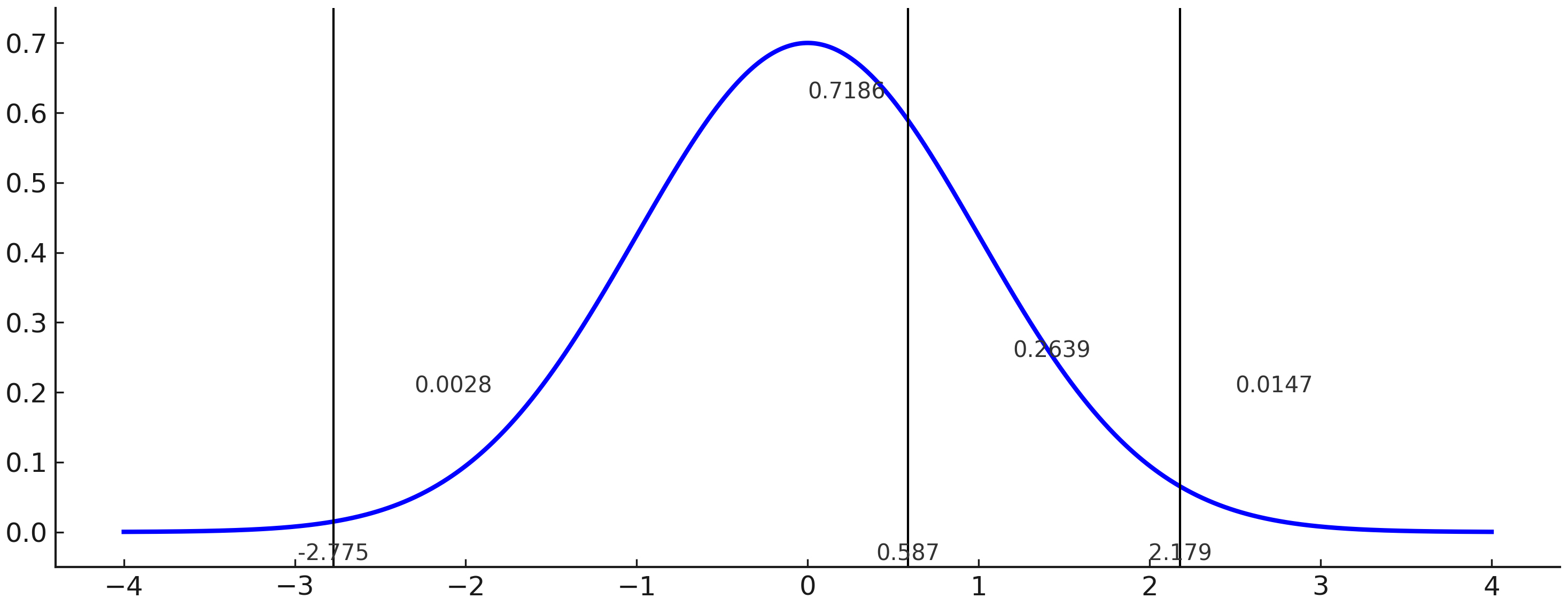
The implied model for a person with average characteristics, as described above, is plotted in Fig. 1 below.
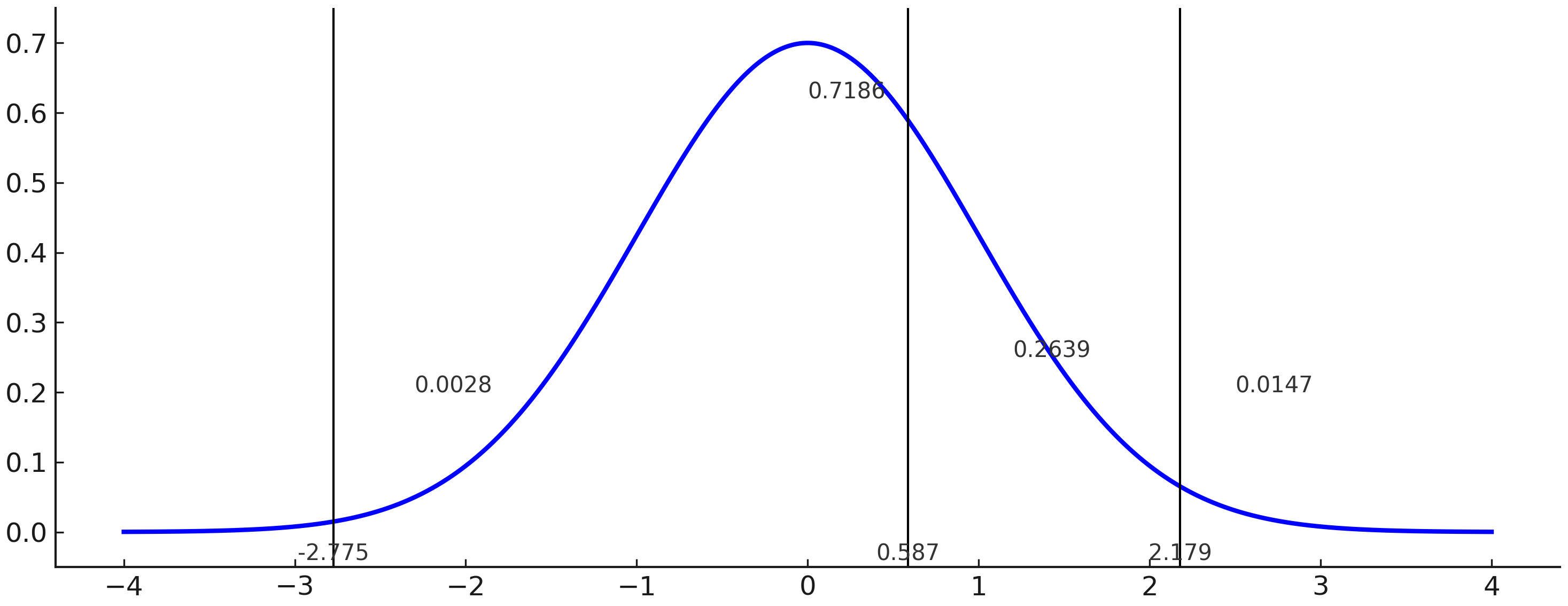 Fig. 1.
Estimated Ordered Normit Model.
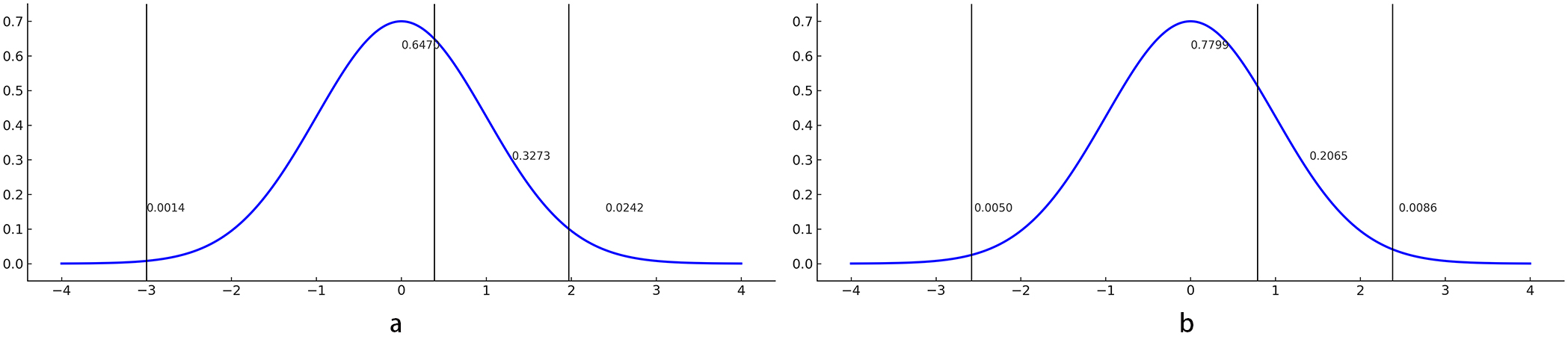
The partial effects, as they appear in the four cells, describe the expected change in the probabilities, for example, per additional age range: –0.00017, –0.0667, 0.0609, and 0.0076, respectively. In this specific case, the most important positive marginal effect is associated with the medium superior age range. This result may be implied by the specific issues of respective age (e.g., children in school, payment of a mortgage, etc.), and the willingness to minimise the uncertainties linked to the job in the respective period. As it appears in Fig. 2 below, the implied changes are typically of reduced magnitude; for this reason, these effects are denominated as “marginal”.
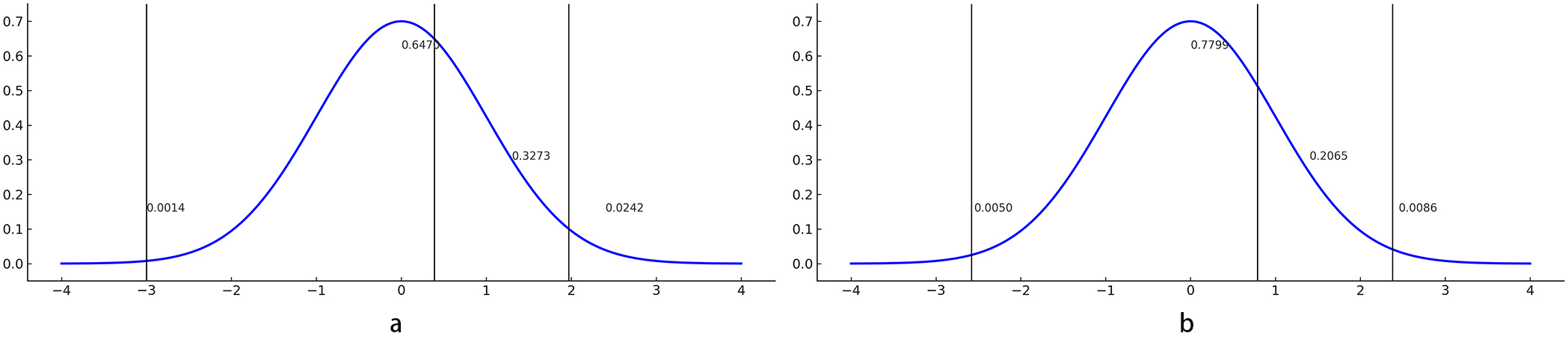 Fig. 2.
Partial effect of change in mean age to (a) 50.5 and (b) to 30.5 years in Ordered Normit Model estimated.
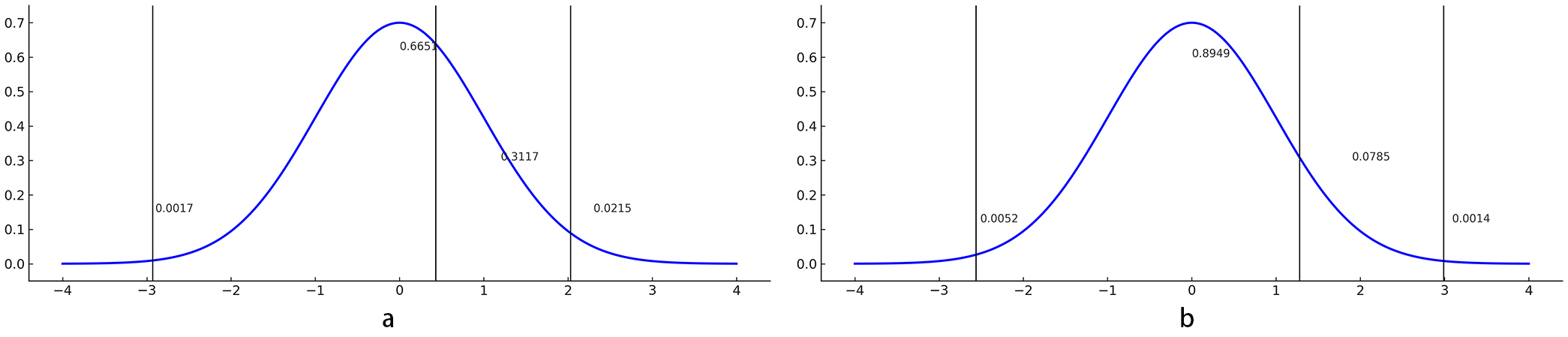
As indicated by the figures in Table 4, the situation shown in Fig. 2 is common for the other variables. An interesting situation can be remarked in case of position type held (management/operative): thereby, the interviewees who reported a perceived stress above the mean, every new step in the occupied position is expected to induce a diminution in perceived stress by 14.56%; instead, the respondents who stated a perceived stress below mean, every new step in occupied position is expected to lead to an increase in perceived stress by 14.56%.
Considering the situation of same (average) interviewee presented in Fig. 1, in cases of (a) an operative and (b) a management position, the probability distribution for perceived stress changes as is depicted in the Fig. 3 presented below.
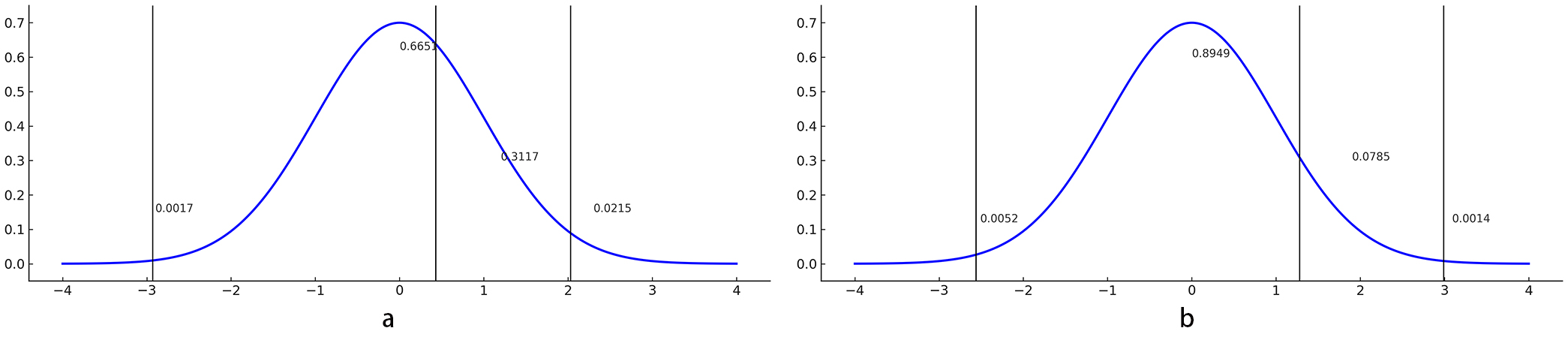 Fig. 3.
Partial effect of change in position to (a) operative (1) and (b) management (3) in Ordered Normit Model estimated.
This situation may be also result of dissimulate reporting of perceived stress in case of all type of positions: the operative positions pretending to be more affected than real, and the managers trying to express a complete control through the diminished levels of perceived stress in cases they consider as unfair media coverage of the organizational image; the statistical significance of position within the model of perceived stress expresses that type of reporting is sizeable.
These findings can be interpreted through the lens of the Job Demands–Resources (JD-R) model (Bakker and Demerouti, 2007), in which unfair media coverage may be viewed as a specific job demand—an external pressure that consumes emotional and cognitive resources. In the absence of appropriate institutional support (resources), such demands may contribute to emotional exhaustion and diminished engagement, particularly among staff with limited media interaction training or low organizational influence.
The present study contributes to the growing body of research on occupational stress by exploring how perceived unfair media coverage may affect employees in public institutions. The results support the idea that media narratives function not only as channels of information but also as contextual stressors, especially in public sector environments where institutional image and legitimacy are highly sensitive to external perception. One of the key findings indicates that demographic characteristics such as age, gender, and job role significantly influence how stress is perceived. Employees in operational positions and those over the age of 50 reported higher levels of stress induced by the media. These results are consistent with previous empirical evidence highlighting the role of sociodemographic factors in shaping individual responses to occupational stress (David, 2016; Edet et al., 2022). Studies in the field tend to point out that the lay-offs decisions consider also affective determinants besides the individual performance, which induce uncertainty, especially in the operational personnel (Ariely, 2009; van Dierendonck et al., 2012; Zatzick et al., 2015), as the lay-offs in managers tend to be postponed (Dencker, 2012). Older employees or those in less autonomous positions may experience a heightened sense of vulnerability when their institutions are the target of media scrutiny. Conversely, the study found no statistically significant relationship between employees’ interest in institutional image or participation in internal meetings and their levels of perceived stress. This may suggest that organizational efforts to engage staff in communication or image-related activities do not necessarily translate into psychological resilience against external media pressure. Such a disconnect might reflect limitations in current internal communication strategies or the more profound emotional impact of sustained negative exposure through the press and digital platforms.
These results align with the job demands–resources theoretical model, where media pressure can be understood as an external job demand that consumes emotional and cognitive resources. When organizations lack adequate support mechanisms, such as stress management structures or professional counselling, employees may experience reduced coping capacity and increased emotional exhaustion (Ezenwaji et al., 2019). In this context, the media acts not merely as an observer but as a powerful actor, influencing institutional dynamics and employee well-being. This counterintuitive result—greater media stress among operational staff—appears to deviate from some national findings and may reflect context-specific institutional dynamics rather than a general pattern. While some studies (e.g., Sabie et al., 2025) have associated higher media-related stress with managerial visibility, our findings suggest that in the South Muntenia context, operational staff may feel more vulnerable due to limited control over media narratives and fewer buffering mechanisms at institutional level. This outcome may be influenced by the specific organizational cultures prevalent in Central and Eastern Europe, where operational personnel often face a greater burden during reputational crises or institutional restructuring. In such contexts, operational employees may lack both voice and support, making them more susceptible to psychological strain caused by external media scrutiny.
It is important to acknowledge that, although the concept of unfair media coverage is subjectively perceived by employees, such perceptions can still represent a relevant psychological burden. As shown in the methodology, the study treats these perceptions not as objective indicators of media quality but as relevant factors in understanding how stress emerges in reaction to public narratives. Subjectivity is therefore a strength in capturing the lived experiences of organizational members.
From a practical standpoint, the study highlights the need for public sector organizations—especially in Central and Eastern Europe—to acknowledge the emotional impact of external media discourse. While institutions cannot fully control media content, they can invest in targeted communication strategies, internal psychological support, and training programs to foster media literacy and stress resilience among staff (Roszko-Wójtowicz et al., 2023). However, the findings should be interpreted with caution due to several limitations. The cross-sectional design of the study restricts causal interpretation. The regional focus limits generalizability to broader national or international contexts. Furthermore, the reliance on self-reported data introduces potential bias due to individual interpretation and social desirability. Future research could benefit from longitudinal designs, triangulation with qualitative data, or comparative analyses across different administrative systems.
Considering the health risks and the associated costs of the job-related stress, results that putting into place of a stress prevention policy represents as a premise for organizational performance (Contrada and Baum, 2011). Drawing on the conceptual framework outlined by Contrada and Baum (2011), the authors propose the following stages of the model for the prevention and management of the effects induced by media stress:
• Monitoring of the stress-causing factors and analyzing of their effects upon the performances and creativity of the personnel. Irrespective to specific dimension, each organization should consider preparation of a risk analysis on potential crises, including on media stress affecting the employees and the organization, and to create an effective stress management plan. The smaller the company, the more harmful the crisis. Usually, within the large companies are put in place adequate financial resources and personnel in order to prevent a failure and/or to ensure the recovery in case of occurrence of a wide range of adverse situations. An internal reputation study may represent an efficient monitoring tool, with the aim of understanding the employees’ key expectations. Based on the results of the study, may be elaborated a data collecting programme in order to help understanding the strong and weak points in the communication quality;
• Impact assessment through the analysis of the crisis situations previously managed by the organization, alongside their causes, the organizational behaviour adopted, and the potential vulnerabilities in a worst-case scenario of a future crisis, including through the using of simulation processes and software modelling;
• Implementation of specific measurements for diminution or prevention of stress: development of new ways for internal communication, creation of a stimulativ environment for ethical behaviours, reduction of fears and psychosocial issues, improvement of work environment, favouring satisfaction and creativity;
• Communication of the results related to objectives; this step is necessarily in order to improve the activity within the organization, managing a programme which enables every employee to act as a good communicator with the outside of the organization;
• Development of regulations regarding the status of the spokesperson, and of the public relations guide, in order to meet all the statutory provisions in public relations, besides the good practices examples;
• Initiation of media campaigns, involving the civil society, education, and based on volunteering, considering that social assistance is an aspect of wide interest;
• Organizing of trainings for civil servants, both for operative and managerial position; based on the knowledge acquired, they are expected to meet basic requirements of the public communication, correlated to the specific activities of the represented institution.
A proper management of the individual and organizational stress induced by the media requires a communication strategy, involving the sharing of the information to the personnel, which represents the most credible image vector outside the organization, and in relation to media representatives, therefore limiting the impact on performances and confidence, concomitant to development of actions in order to improve the creativity. These insights should serve as exploratory guidelines rather than evidence-based prescriptions for institutional change.
This study examined the relationship between perceived unfair media coverage and job-related stress among public sector employees in Romania. The analysis revealed that socio-demographic and organizational factors significantly influence stress levels. Specifically, the operational staff and older employees reported higher levels of stress, while gender differences were also evident. Conversely, the stated interest of the employees in institutional image and their participation in internal meetings did not show significant predictive value. These findings particularly enhance our understanding of occupational stress by underscoring media exposure as a contextual stressor that impacts employees in diverse ways, depending on their role and personal characteristics. The results indicate that operational staff, who often have less control over communication and decision-making processes, may feel more vulnerable when institutions are the subject of negative media narratives.
The study provides several practical implications. Public organizations should consider strengthening their internal communication, offering targeted support to operational staff, and promoting media literacy training to reduce the psychological burden of negative coverage. Addressing media-related stress may be important for sustaining employee motivation, well-being, and institutional performance.
Although the empirical results do not support direct causality, the significant associations observed between stress levels and factors such as age, gender, and organisational role suggest areas where targeted organizational strategies may be beneficial. These include more sensitive internal communication protocols during periods of media attention, employee support systems that acknowledge the psychological impact of media narratives, and media literacy training initiatives designed to help staff navigate external reputational pressures. A nuanced understanding of stress-related phenomena is needed to guide the adaptation of organizational measures to specific institutional contexts. The limitations of the current study, such as the cross-sectional design, the regional focus, and the relatively limited set of background variables collected, also need to be considered. Furthermore, the reliance on self-reported data introduces potential bias due to individual interpretation and social desirability. A further limitation relates to the validation of the perceived stress scale, which in this study relied on items adapted from the Job Demand–Control framework and a Likert measurement. More extensive validation could be considered in future research. Another limitation concerns the operationalization of the variables interest in media coverage (INT) and frequency of meetings (MET), each measured through a single item. Although appropriate for an exploratory analysis, this simplification may have reduced the robustness of construct measurement and partially explain their lack of statistical significance. Future research should consider adopting longitudinal or mixed-method designs, integrating additional variables, and exploring interactions among socio-demographic factors. Comparative studies across different regions or countries could also offer valuable insights into how institutional and cultural contexts influence employees’ perceptions of media-induced stress.
JDC, Job Demands and Control; EU-OSHA, European Agency for Safety and Health at Work; GEM, Gradient Episodic Memory; EWC, Elastic Weight Consolidation; OLS, Ordinary Least Squares.
All data reported in this paper will be shared by the corresponding author upon reasonable request.
MM, MDC and NVF: Conceptualization. IAT, GCG and MDC: Data curation. MDC, NVF and MM: Formal analysis. IAT, GCG and MDC: Investigation. MM and NVF: Methodology. MM, NVF and MDC: Project administration. IAT and GCG: Resources. MM and MDC: Software. MM and NVF: Supervision. MM, NVF and MDC: Validation. MDC, and IAT: Visualization. MM and MDC: Writing – original draft. NVF and MM: Writing – review & editing. All authors contributed to editorial changes in the manuscript. All authors have participated sufficiently in the work and agreed to be accountable for all aspects of the work. All authors read and approved the final manuscript.
The authors are extremely thankful to all civil servant that contributed, encourage and provided valuable feedback throughout the research process.
This research received no external funding.
The authors declare no conflict of interest.
During the preparation of this work the authors used Grammarly in order to check spell and grammar. After using this tool, the authors reviewed and edited the content as needed and takes full responsibility for the content of the publication.
| Value assigned in the model | Employees N = 400 | ||
| 1. Situation perceived as stressful (PS) | |||
| Almost never | 1 | 0.307 | |
| Sometimes | 2 | 0.400 | |
| Often | 3 | 0.169 | |
| Almost every time | 4 | 0.124 | |
| 2. Age (AGE) | |||
| 18–25 years | 1 | 0.05 | |
| 26–35 years | 2 | 0.27 | |
| 36–45 years | 3 | 0.38 | |
| 46–55 years | 4 | 0.26 | |
| Over 55 years | 5 | 0.05 | |
| 3. The interest reported for an adequate media coverage of the organizational image (INT) | |||
| Totally disinterested | 1 | 0.02 | |
| Neutral | 2 | 0.06 | |
| Interested | 3 | 0.33 | |
| Very interested | 4 | 0.59 | |
| 4. Work experience (SRTY) | |||
| 1–3 years | 1 | 0.090 | |
| 4–10 years | 2 | 0.370 | |
| 11–20 years | 3 | 0.345 | |
| Over years | 4 | 0.195 | |
| 5. In cases of unfair media coverage of the organization’s position, there is an increase in frequency of management meetings (MET) | |||
| Almost never | 1 | 0.295 | |
| Sometimes | 2 | 0.325 | |
| Often | 3 | 0.205 | |
| Almost every time | 4 | 0.175 | |
| 6. Gender (GEN) | |||
| Female | 1 | 0.54 | |
| Male | 2 | 0.46 | |
| Value assigned in the corresponding variable | Employees N = 400 | ||
| 1.1 I feel irritated, dissatisfied | |||
| Almost never | 1 | 0.185 | |
| Sometimes | 2 | 0.355 | |
| Often | 3 | 0.225 | |
| Almost every time | 4 | 0.235 | |
| 1.2 I enter conflictual situations | |||
| Almost never | 1 | 0.555 | |
| Sometimes | 2 | 0.36 | |
| Often | 3 | 0.06 | |
| Almost every time | 4 | 0.025 | |
| 1.3 I feel calm | |||
| Almost never | 1 | 0.115 | |
| Sometimes | 2 | 0.28 | |
| Often | 3 | 0.315 | |
| Almost every time | 4 | 0.29 | |
| 1.4 I feel tired | |||
| Almost never | 1 | 0.255 | |
| Sometimes | 2 | 0.45 | |
| Often | 3 | 0.21 | |
| Almost every time | 4 | 0.085 | |
| 1.5 I feel frustrated | |||
| Almost never | 1 | 0.35 | |
| Sometimes | 2 | 0.355 | |
| Often | 3 | 0.14 | |
| Almost every time | 4 | 0.155 | |
| 1.6 I feel confident and safe | |||
| Almost never | 1 | 0.305 | |
| Sometimes | 2 | 0.325 | |
| Often | 3 | 0.195 | |
| Almost every time | 4 | 0.175 | |
| 1.7 I feel discouraged | |||
| Almost never | 1 | 0.265 | |
| Sometimes | 2 | 0.505 | |
| Often | 3 | 0.155 | |
| Almost every time | 4 | 0.075 | |
| 1.8 I feel afraid by the future | |||
| Almost never | 1 | 0.36 | |
| Sometimes | 2 | 0.465 | |
| Often | 3 | 0.095 | |
| Almost every time | 4 | 0.08 | |
| 1.9 I am afraid of being criticized | |||
| Almost never | 1 | 0.335 | |
| Sometimes | 2 | 0.465 | |
| Often | 3 | 0.135 | |
| Almost every time | 4 | 0.065 | |
| 1.10 I feel overwhelmed by responsibilities | |||
| Almost never | 1 | 0.345 | |
| Sometimes | 2 | 0.445 | |
| Often | 3 | 0.16 | |
| Almost every time | 4 | 0.05 | |
References
Publisher’s Note: IMR Press stays neutral with regard to jurisdictional claims in published maps and institutional affiliations.