
 , Ziliang Song 2, Chaoyan Peng 3,*
 , Zhi Yang 4
1 Department of Human Resource Management, School of Economics and Management, Anhui Normal University, 241002 Wuhu, Anhui, China
2 Department of Business Administration, School of Economics and Management, Harbin Engineering University, 150001 Harbin, Heilongjiang, China
3 Department of Financial Management, School of Management Engineering, Anhui institute of information Technology, 241199 Wuhu, Anhui, China
4 Department of Information Management and Information Systems, Business School, Henan University of Science and Technology, 471000 Luoyang, Henan, China
Abstract
Faced with fierce external competition and rapidly growing demand, China’s rail transit equipment industry can advance by strengthening the collaborative performance among industries, universities, and research institutes (I-U-R). This study aims to construct and visualize the I-U-R co-patent networks of China’s rail transit equipment industry to gain a comprehensive understanding of the patterns and dynamics of collaborative innovation. Based on 2876 cooperative patents from the China National Knowledge Infrastructure database (1986–2018), the study applies statistical and social network analysis methods to systematically analyze the full evolutionary trajectory of I-U-R co-patent networks in China’s rail transit equipment industry, from “quantitative change” (scale expansion) to “qualitative change” (structural transformation). The results show that the connections among network innovation participants have become progressively closer, the network has expanded in scale, and distinct developmental stages have emerged. The network structure has evolved from a single-core to a cross-regional, multi-core configuration, with enterprises consolidating their dominant position, occupying the core of the network. This study provides theoretical support for strengthening China’s rail transit equipment industry’s co-patent networks and contributes to both collaborative innovation network theory and co-patent research methodology.
Keywords
- co-patent networks
- network structure
- network characteristic
- network evolution
- rail transit equipment industry
- social network analysis
Rail transit offers high efficiency, low costs, and a large carrying capacity, making it a significant potential driver of global transportation development (Zhou et al., 2016). The rail transit equipment industry serves as a crucial development industry in China, directly related to national and social development (Chen et al., 2016). In contrast to other modes of transportation, rail transit has clear advantages in reliability, safety, energy efficiency, congestion reduction, and the mitigation of environmental pollution (McCollum et al., 2014; Li et al., 2018). In 2004, the State Council approved the “Mid-to-Long Term Railway Network Plan” to connect major cities in China, to meet the growing demand for inter-city travel, and to promote economic and social development. In 2010–2012, the State Council issued the “Decision of the State Council on Accelerating the Cultivation and Development of Strategic Emerging Industries” and the “Twelfth Five-Year Development Plan for High-end Equipment Manufacturing Industry”, issued by the Ministry of Industry and Information Technology, identifying the rail transit equipment industry as a critical development priority. In 2015, the State Council officially issued “Made in China 2025”, outlining its goal to become a “manufacturing power”; the rail transit equipment industry was identified as one of ten key areas. In the past three years, policy documents, such as the “Railway 13th Five-Year Development Plan”, have shown continued strong support for the rail transit equipment industry. At present, China has established a rail transit equipment manufacturing system integrating Research and Development (R&D), design, manufacturing, testing and service, with a high degree of independent R&D, complete supporting equipment, advanced technology, and large-scale operations. As the world’s largest rail transit construction market, China must prioritize the localization of rail transit equipment in its future development (Li et al., 2024). At present, China’s independent R&D in the production of rail transit equipment has already yielded significant results. China’s rail transit equipment industry exemplifies innovation-driven growth, intelligent transformation, foundational strengthening, and green development, making it one of China’s most innovation-intensive sectors. It also demonstrates strong international competitiveness and a pronounced industrial driving effect within the high-end equipment manufacturing sector. These achievements have attracted worldwide attention (Lu et al., 2016).
After joining the World Trade Organization, the domestic rail transit equipment market became increasingly internationalized. Through government loans, leases, and joint ventures, some multinational companies introduced products, capital, and technologies into the Chinese market. This trend has posed serious challenges to China’s rail transit equipment industry. Many key technologies—such as Alternating Current (AC) drives, system integration, braking systems, trucks, information systems, and lightweight car body components like mechanical seals—still rely on imports, weakening domestic R&D capabilities. According to research on the international competitiveness and influencing factors of the rail transit equipment manufacturing industry (Yan, 2021), from 2005 to 2019, China remained at a relatively low level globally, with weak competitive advantages. The above situation was gradually reversed during 2001–2008. Since the launch of “Implementation Plan for the Domestication of Urban Rail Transit Equipment” in 2001, domestic enterprises have focused on absorbing core technologies through technology introduction and cooperative production. Meanwhile, the state has rolled out intensive policies to promote Industry-university-research (I-U-R) collaboration, accelerating the localization substitution of key technologies. In 2008, China’s first independently designed high-speed rail was put into operation, marking the industry’s transition from “reliance on imports” to “self-control and autonomy”, and the import dependence of core technologies was drastically reduced, laying a solid foundation for the subsequent global leadership. In contrast, countries such as Mexico, Spain, Austria, and the Czech Republic showed strong comparative advantages. Italy, Germany, and the United States—though closer to China in performance—maintained relatively stable growth and an absolute advantage. Overall, China still lacks a comparative advantage relative to other major exporters. The main factors driving the international competitiveness of China’s rail transit equipment manufacturing include technological capability, global market demand, the exchange rate, the development level of machinery and transport equipment, and technological strategy. Among these, the exchange rate affects competitiveness mainly by influencing import costs, but the root issue remains the strong import dependence caused by a low technological level. Therefore, technology and international market demand are the most critical influencing factors, and improving core innovation capacity and expanding global reach are essential. Domestically, important factors include capital investment, research funding, supporting industrial development, policy openness, and government investment—all of which remain significantly positively correlated with the industry’s international competitiveness.
There is still a big gap between the innovation capability of China’s rail transit equipment industry and the world’s advanced level. Due to factors such as the globalization of science and technology, industrial restructuring, and the emergence of an open economic structure, independent technological innovation alone can no longer meet the requirements of industrial development (Dong and Wang, 2012). With ongoing economic globalization, collaborative innovation in rail transit equipment manufacturing has emerged as a clear trend. Compared with traditional industries, the rail transit equipment industry is characterized by solid technical integration and high innovation risk, along with a more robust demand for knowledge and information (Xie et al., 2011). To address innovation bottlenecks, the industry must leverage expertise and resources from companies, universities, and research institutes (Schiller, 2006). Industry-university-research (I-U-R) collaboration helps overcome limitations in knowledge flow and utilization by strengthening the exchange of ideas and the sharing of information among innovation subjects (Yoon and Park, 2017). It is an efficient mode of cooperation in the current innovation environment. To accelerate innovation, we must build a better communication platform for cooperation among enterprises, universities, and research institutes. Faced with fierce external competition and rapid growth in demand, China has advanced the rail transit equipment industry by improving the performance of I-U-R collaboration—meeting the needs of domestic rail transit development and achieving leap-forward growth (Lv et al., 2010).
Patents provide detailed information about key aspects of a technical field and reflect the latest trends in technological progress (Zhang et al., 2014). Cooperative patents are a key indicator of collaborative innovation capacity, as they directly reflect the output level of technological cooperation. The significance of cooperative patent data is increasingly recognized worldwide. Many organizations collaborate on R&D by co-applying for patents, thereby forming co-patent networks (Liang and Liu, 2018). These networks play a vital role in promoting technological innovation, as their structure and evolutionary characteristics influence the efficiency of knowledge flow and the degree of knowledge sharing. Co-patent networks provide communication platforms that allow collaborators to quickly identify experts in the Chinese rail transit equipment industry, seek out innovation partners, and access external knowledge (Liu et al., 2019). To speed knowledge flow, optimize resource allocation among innovation entities, enhance the development of patented technologies, and accelerate their transformation into productivity, this study constructs I-U-R co-patent networks for the Chinese rail transit equipment industry from the perspective of a patent. We employ social network analysis methods and complex network theory to analyze the structural characteristics and spatial-temporal evolution of these networks, discuss their current status and internal development trends, and propose strategies to optimize I-U-R co-patent collaboration (Liu and Tan, 2013). This paper also conducts an empirical analysis of collaborative partner selection and regional versus cross-regional cooperative innovation preferences in co-patent networks. By analyzing patent collaboration data, we address a gap in the research on I-U-R collaborative innovation in China’s rail transit equipment industry. Effective use of I-U-R co-patent networks can promote R&D, accelerate patent commercialization, and enhance innovation in the rail transit equipment industry while also serving as a model for industrial upgrading that can guide the transformation of other high-end equipment manufacturing sectors. In addition, this study provides unique empirical data from the Chinese context for the international academic community, revealing dynamic patterns of network evolution and technological development. More importantly, this study offers new theoretical and empirical insights to global academic discourse and provides a reference path for latecomer countries seeking technological catch-up and industrial upgrading.
At present, scholarly research on the development of China’s rail transit system presents a pattern of multidimensional development. From the perspective of environmental benefits, the development of China’s rail transit system can reduce air pollution in the long run by reducing driving and also alleviate traffic congestion (Huang et al., 2018b; Sun et al., 2019). From a spatial perspective, China’s rapidly expanding rail transit system has generated and will continue to produce a gradual contraction of space, significantly reducing rail travel time between major cities (Diao, 2018). From a methodological perspective, early research revealed trends in China’s rail transit system, using patent statistical analysis, and systematically evaluated the operational efficiency and performance of urban rail transit (Huang et al., 2018a; Yang et al., 2014). Complex network theory has been used to analyze the Beijing rail transit system (Sun et al., 2018b), the Guangzhou subway system (Zhu and Luo, 2016), and the Shanghai subway system (Yang and Chen, 2018; Zhang et al., 2011) to explore their structural and evolutionary characteristics. The latest research has employed a causal framework across different stages of development to assess the impact of rail transit system expansion on travel behavior in Shenzhen, providing multidimensional empirical evidence for policy formulation (Zhou et al., 2024).
Clearly, the development of China’s rail transit system has become an important research focus, and many scholars have conducted extensive research on related topics. However, few scholars have studied the development of China’s rail transit system from the perspective of organizational cooperation within the industry. Exploring collaborative innovation in China’s rail transit equipment industry can promote technological collaboration among organizations and enable technology sharing, thereby enhancing the technology level of China’s rail transit system.
The narrow concept of patent collaboration refers to collaboration during the patent research and development process—specifically, when multiple entities (individuals or organizations) jointly participate in invention creation and jointly apply for a patent. The broader concept of patent collaboration encompasses the entire patent life cycle, including research and development, licensing, transfer, and industrialization. Existing research on patent collaboration has primarily examined various aspects such as changes in the number of cooperative patents, collaboration motivations, collaboration models, and collaboration network structures (Liu et al., 2019; Liu et al., 2023a; Xu et al., 2019). Based on the attributes of the cooperative entities, different collaboration models and networks emerge. Collaborations among inventors, organizations, and regions give rise to inventor collaboration networks, organizational collaboration networks, and regional collaboration networks (Fleming and Frenken, 2007; Liu et al., 2023b). The I-U-R collaboration network is a form of organizational collaboration network.
The I-U-R collaboration, as a key mechanism for promoting innovation, has become increasingly prominent in research on innovation networks. Cooperative patents have become a core metric in the quantitative analysis of I-U-R collaboration (Chang, 2017; Fischer et al., 2019; Hall et al., 2005; Yoon, 2015). The earliest I-U-R network originated with early industry-university networks (Motohashi and Muramatsu, 2012; Petruzzelli, 2011; Hong and Su, 2013). The industry-university network concept posits that the relationship between universities and enterprises shifted from two independent entities to collaborative network participants through government funding (Etzkowitz and Leydesdorff, 2000; Etzkowitz, 2002). I-U-R collaboration networks are formed because innovative entities offset resource disparities among different types of entities through collaborative innovation, thus achieving complementary advantages (Shoikova and Denishev, 2004). Based on the theory of small-world networks, shorter average path lengths and higher clustering coefficients in the I-U-R collaboration network are more conducive to resource acquisition by internal innovation entities (Matsuzawa et al., 2017). Currently, research on I-U-R collaboration networks mainly focuses on their structural characteristics and evolution (Abrahams et al., 2019; Paulo and Porto, 2018; Gay and Dousset, 2005; Heo and Lee, 2019; Liang and Liu, 2018; Thune, 2007; Vesselkov et al., 2018).
For emerging industries such as China’s rail transit equipment industry, establishing an I-U-R collaboration network to promote sustainable development is essential. Therefore, this study aims to construct and visualize the I-U-R co-patent networks of China’s rail transit equipment industry for a comprehensive understanding of the patterns and dynamics of collaborative innovation in a more integrated way. Meanwhile, identifying the geographical location of the patent applicants aids an understanding of the distribution and flow of knowledge and provides a basis for researchers to conduct technological management and formulate policies. However, limited attention has been paid to the co-patent networks in the context of China’s rail transit equipment industry.
Social network analysis, which originated in anthropology and sociology, has been applied to economic and managerial analysis (Monaghan et al., 2017). It enables the identification of differences among actors and facilitates the exploration of network dynamics. The value of this analytical approach lies in its capacity to map relationships and clarify connections, interactions, and behavioral patterns (Sun et al., 2018a). Freeman (1991) was the first to apply social network analysis to the field of innovation, marking the formal establishment of network research within innovation studies. Social network analysis has since been widely applied in innovation theory, spanning regions, industries, organizations, and technologies (Melander and Arvidsson, 2022; Provan et al., 2007; Wang and Cao, 2021). Clearly, there have been significant achievements in using social network analysis to study innovation in different fields. However, few studies have applied social network analysis to analyze innovation activities in the rail transit equipment industry.
Based on the preceding literature review, the shortcomings of existing research and the pressing issues that need to be addressed can be summarized in three key areas. First, few scholars have studied the development of China’s rail transit system from the perspective of inter-organizational patent collaboration within the industry. Second, a platform conducive to the exchange of external knowledge for patent inventors or collaborative innovation subjects in China’s rail transit sector has not yet been established. Third, few studies have applied social network analysis to innovation activities in the rail transit equipment industry. Therefore, from the perspective of inter-organizational patent collaboration, this study aims to construct and visualize the I-U-R co-patent networks of China’s rail transit equipment industry through social network analysis, offering comprehensive insights into collaborative innovation patterns and dynamics. This study contributes to the development of China’s rail transit system, patent collaboration, I-U-R collaboration network, the application of social network analysis in innovation research, and provides theoretical support for researchers in technology management, policy formulation, and the optimization of I-U-R co-patent networks in China’s rail transit equipment industry.
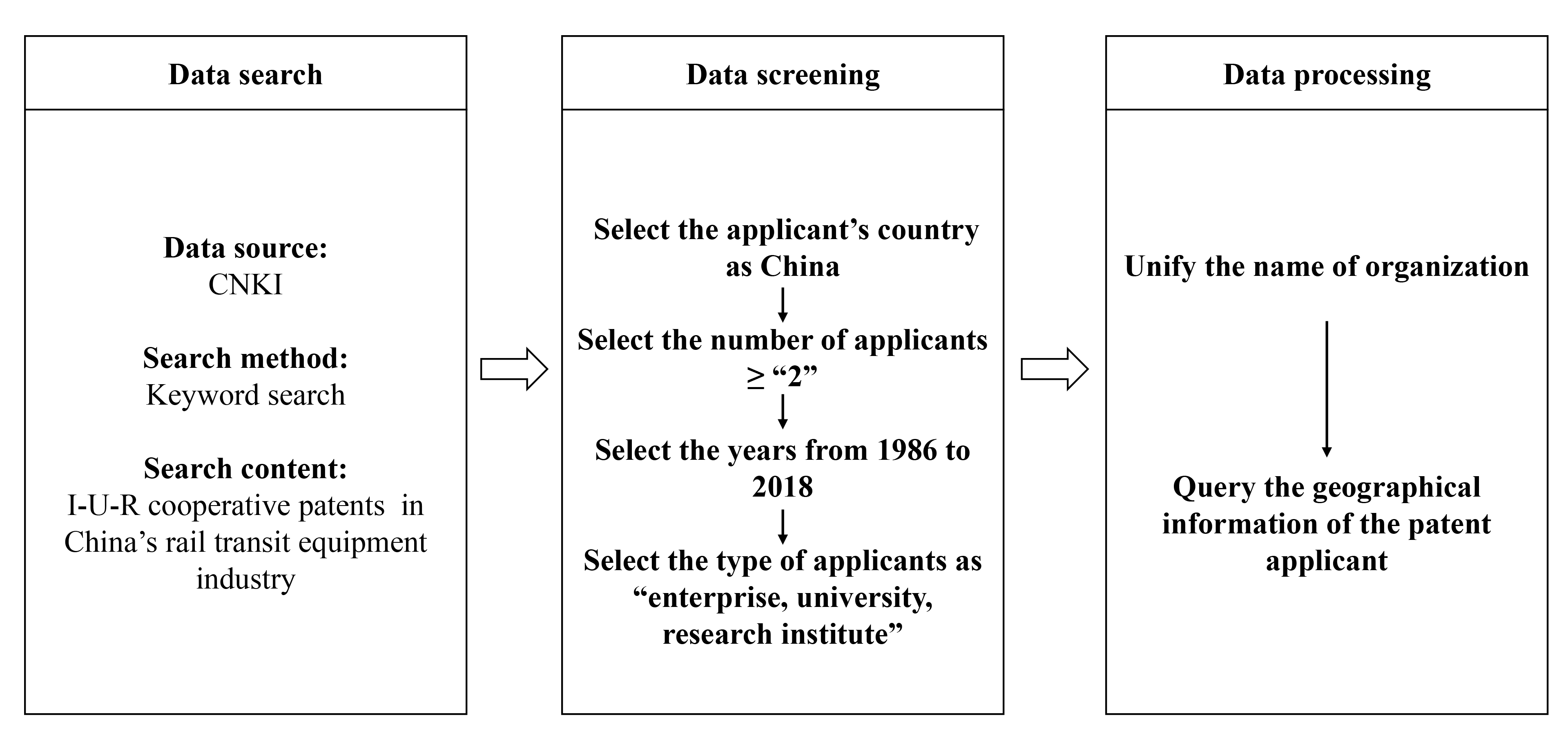
The patent data used in this study come from the patent retrieval and analysis system established by the China National Knowledge Infrastructure (CNKI), based on the China National Intellectual Property Administration patent database. This database includes patents from eleven countries, two organizations, and two regions—namely China, the United States, Japan, the United Kingdom, Germany, France, Switzerland, Russia, South Korea, Canada, Australia, the World Intellectual Property Organization, the European Patent Office, Hong Kong, and Taiwan. It contains over 180 million patents from 1970 to the present, with approximately 4.5 million new patents added annually. Among these, Chinese patents include invention patents, design patents, and utility model patents applied for in mainland China since 1985, totaling over 60.5 million, with approximately 2.5 million new patents added each year. The database is updated weekly. As such, it offers high data integrity, frequent update cycles, and broad coverage, effectively capturing the patent collaboration activities in China’s rail transit equipment industry. The keyword search strategy follows the approach suggested by Porter et al. (2008), involving identifying key terms from the literature and consulting experts and scholars in China’s rail transit equipment industry. Keywords were revised through expert input and iterative adjustments based on initial search results. The final keywords include terms such as rail, rail vehicle, railway vehicle, track, train, fixed joint, railway car, bogie, carriage, vehicle wheel, and axle. An advanced search mode was employed, combining keyword input with filtering to obtain relevant data. A total of 63,699 patents were recorded. A manual review was then conducted to extract collaborative patent data, revealing 2876 collaborative patents and a total of 904 applicants. Ucinet software (Version 6.721, Analytic Technologies, Lexington, KY, USA) was used to analyze the patent data and map patent collaboration relationships. The specific data collection and processing steps are shown in Fig. 1.
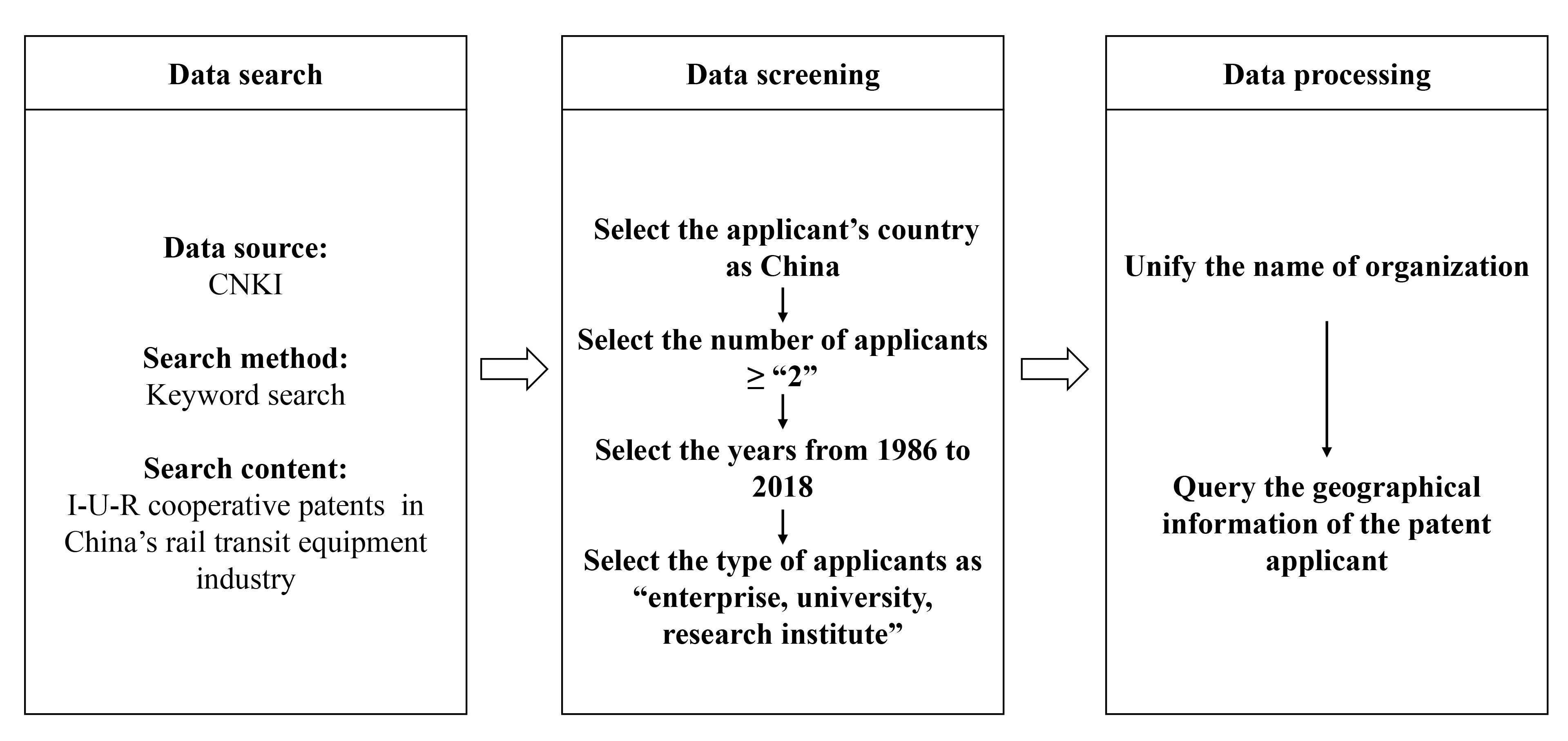 Fig. 1.
Flowchart of data collection and processing. CNKI, China National Knowledge Infrastructure; I-U-R, Industry-university-research.
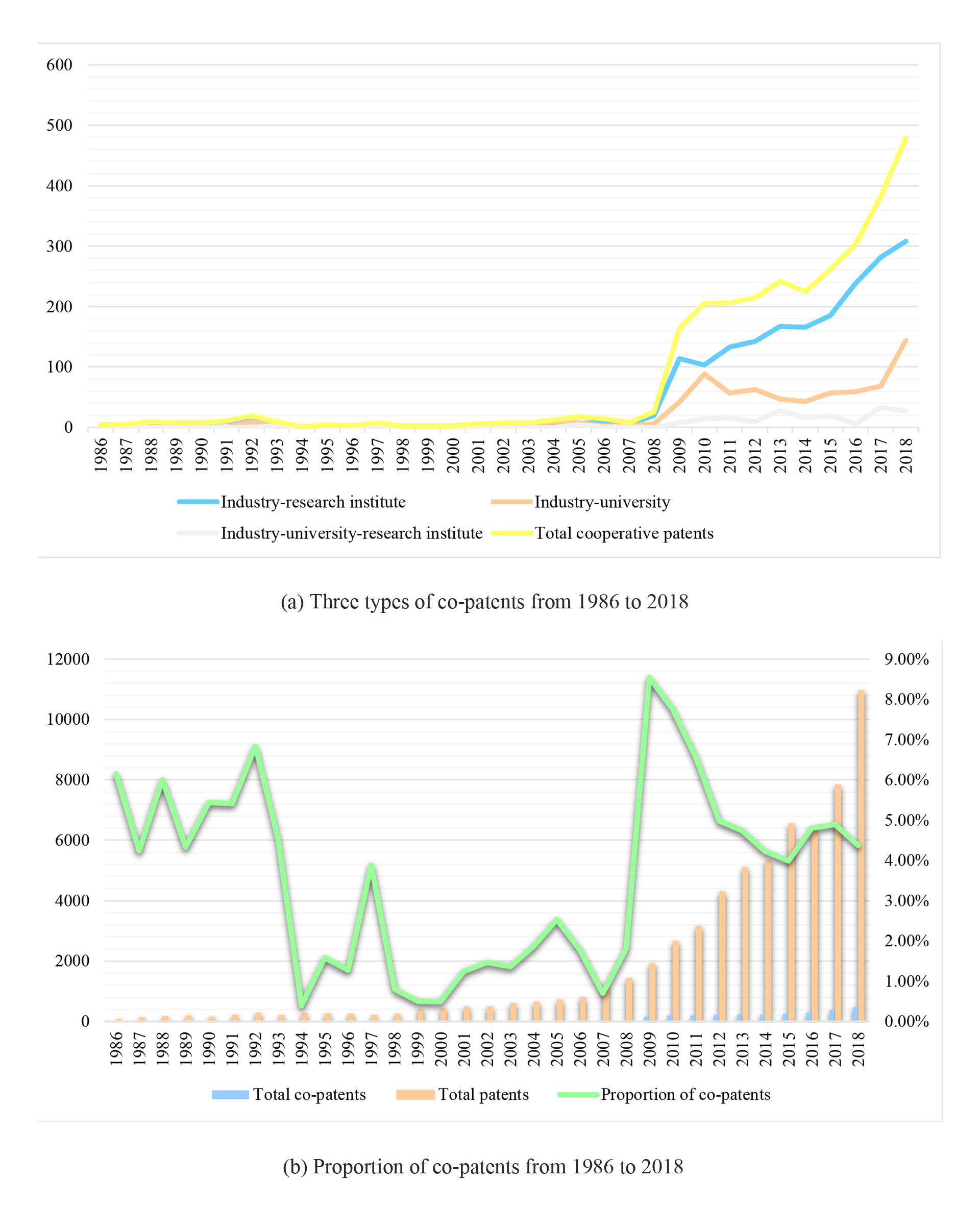
This paper statistically analyses a total of 63,699 patents and 2876 collaborative patents in chronological order (see Fig. 2). Fig. 2 shows that the number of collaborative patents remained at a low level from 1986 to 2008, with most years recording fewer than 10. After 2008, the number of collaborative patents exhibits a rapid upward trend, indicating that I-U-R collaborative innovation in the Chinese rail transit equipment industry is continuously strengthening. The increment and growth rate of industry–research institute collaboration patents far exceed those of the other two types. These patents account for 68.35% of the total, suggesting that the degree of collaboration between industry and research institutes is higher than that of the other two types. I-U-R collaboration in the Chinese rail transit equipment industry is thus primarily driven by cooperation between companies and research institutes. This is because such cooperation directly connects to the market and facilitates the industrialization of technology. Due to time and energy constraints, university researchers are mainly engaged in theoretical research and also have teaching responsibilities.
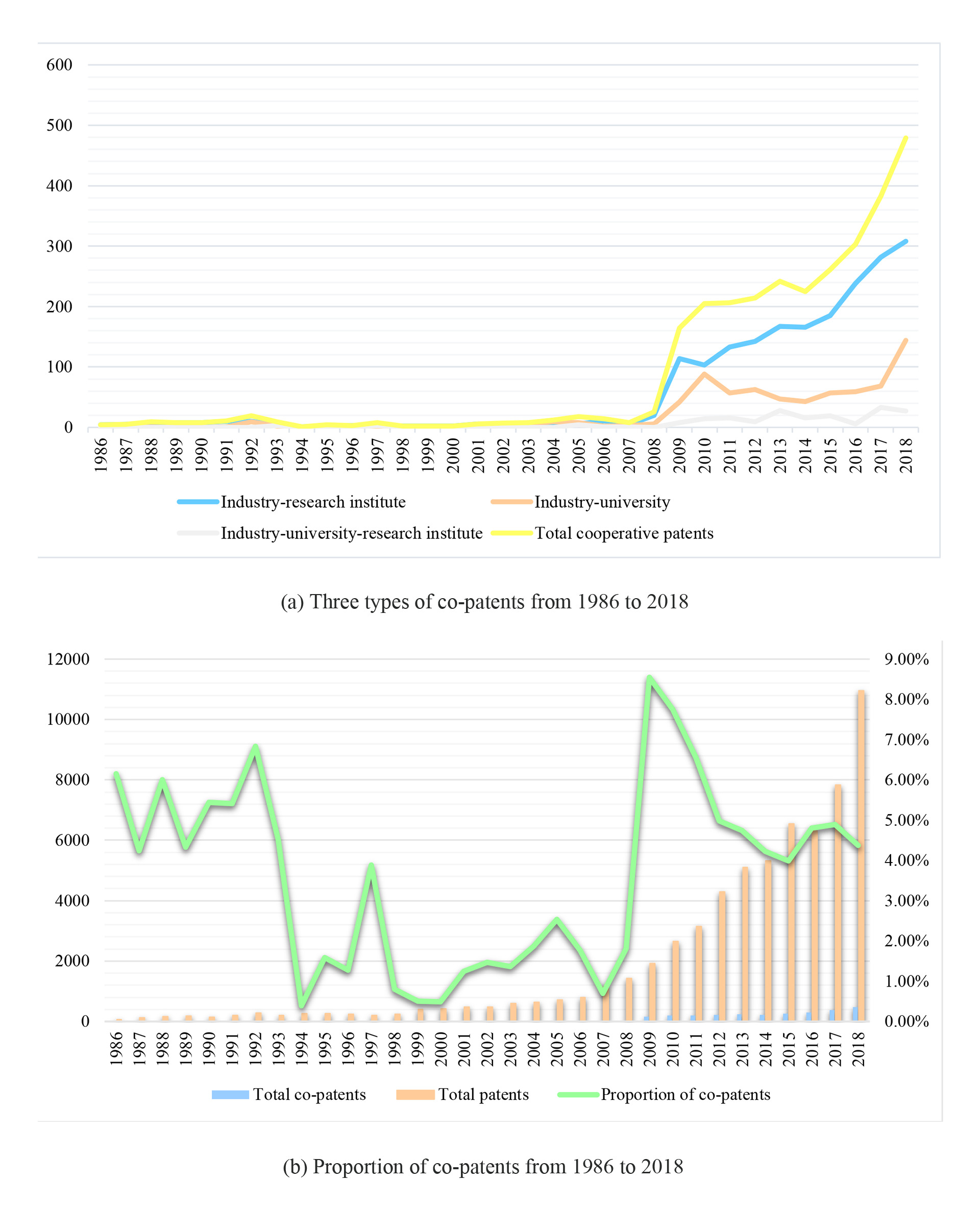 Fig. 2.
Patent collaboration trend from 1986 to 2018.
It can also be observed that from 1986 to 2018, the total number of patents showed a continuous upward trend. The number of total patents grew slowly during 1986–2007 but began to increase rapidly after 2008. Due to the small number of both total and collaborative patents during 1986–1993, the proportion of collaborative patents remained stable at 4%–6%, which did not accurately reflect the overall trend of patent collaboration. As the total number of patents continued to grow between 1994 and 2008, the proportion of collaborative patents remained at a relatively low level. This proportion reached its peak in the years that followed, possibly due to the financial crisis reducing available R&D funding and prompting greater patent cooperation to lower costs (Lee et al., 2010). From 2012 to 2018, the proportion of collaborative patents stabilized at around 5%. Compared with earlier periods, the trend in collaboration during this period increased significantly, indicating that innovation collaboration in this field has been steadily strengthening.
Social network analysis is an interdisciplinary academic method now widely adopted to analyze economic and management issues (Park et al., 2011). A social network consists of social actors (such as individuals or organizations), binary relationships, and other social interactions between actors. Industry-university-research innovation activities involve interactions among many innovative actors (enterprises, universities, and research institutions), making the resulting social networks increasingly complex. The I-U-R co-patent network is essentially a complex relational system, characterized by non-linearity, dynamics, and heterogeneity. Traditional research methods (such as regression analysis and case studies) show significant limitations in analyzing such complex networks. These methods focus on isolated variables (such as R&D investment and the number of patents) and cannot capture the interaction relationships among entities. However, the core of I-U-R collaborative innovation lies in knowledge flows and technological cooperation. Social network analysis, which uses relational data as its core analytical unit, can overcome the limitations of traditional variable-oriented methods. It also provides powerful dynamic tracking capabilities, enabling analysis of changes in network structure over time and revealing the patterns and trends in network evolution. The advantage of social network analysis is that it maps scenes, clarifies connections, interactions, and behavior models, and monitors network dynamics. Therefore, social network analysis was employed to construct I-U-R co-patent networks for China’s rail transit equipment industry at different stages and to analyze the evolutionary characteristics of the network structure. It uses standardized indicators and dynamic models to systematically assess the structure and development of co-patent networks. Common network indicators include average path length (Mao and Zhang, 2017), network density (Sasaki et al., 2015), network centralization (Singh et al., 2017; Ruhnau, 2000), and the E-I index (Wu et al., 2021), among others.
Average path length (Mao and Zhang, 2017) is the average geodesic distance between all pairs of nodes in the network. A longer average path length indicates greater connectivity within the network. The formula for calculating the average path length L is as follows:
where
Network density is the ratio of actual connections to all potential connections in a network (Sasaki et al., 2015). A higher network density indicates more frequent interactions between nodes, as well as faster and more efficient transmission of knowledge and information. The closer the ratio is to 1, the higher the cohesiveness of the network and the closer the connections between nodes. The formula for calculating network density D is as follows:
where M is the actual connections, n is the number of nodes,
and
Network centralization serves as an indicator of the cohesiveness within the entire network topology and constitutes a quantitative assessment of group influence (Singh et al., 2017; Ruhnau, 2000). A higher degree of centralization signifies that nodes exhibiting greater betweenness centrality exert more pronounced and resilient control over other nodes within the network. The formula for calculating network centralization Cb is as follows:
where n is the number of network nodes,
From the research on network centralization, we can conclude that there are multiple subgroups with core nodes in the network. Using the External–Internal (E-I) index, we can examine whether the formation of subgroups affects communication and collaboration. The E-I Index is the ratio of the density within a coherent subgroup to the overall network density. The closer the result is to 1, the more connections tend to occur outside the subgroup; the closer the result is to –1, the fewer the connections between subgroups and the more concentrated they are within the subgroup. A result of 0 indicates that connections in the network are randomly distributed. The formula is as follows:
where EL is the number of connections between subgroups, IL is the number of connections within subgroups, and the range of values is [–1,1].
Node centrality reflects the importance of a node within the entire network. This study primarily illustrates it using the degree centrality indicator. Degree centrality refers to the number of nodes directly connected to a given node. The higher the degree centrality, the more connections that node has. Such nodes are usually located at the center of the network and have a significant influence on other nodes. Core nodes in the network are identified based on the relative size of their degree centrality (Liu et al., 2019; Liu et al., 2023a).
Based on the cooperative patents of China’s rail transit equipment industry from 1986 to 2018, this study adopts multi-time-slice static comparison combined with social network analysis. The combination of these methods improves both the refinement of the time dimension and the depth of structural relationships. It not only retains the evolution tracking ability of dynamic analysis but also integrates the micro-level in-depth description advantage of static analysis, making it a panoramic tool for social network research. At the organizational level, the co-patent networks over the years are constructed, the core indicators of the networks in each year are analyzed, and the temporal evolution trend of the network structure is identified through horizontal comparison across the years. At the regional level, based on national policies, industrial cycles and major technological milestones, the research period is divided into three stages: 1986–2001, 2002–2008, and 2009–2018. The co-patent networks of each stage are constructed, and the core indicators of each stage’s network are analyzed. Through horizontal comparisons between stages, the spatial evolution trend of the network structure is identified.
Network nodes of the I-U-R co-patent networks in the rail transit equipment
industry include enterprises, universities, and research institutes.
Collaborative patents link nodes with each other, and the degree of association
between nodes is directly related to the frequency of collaboration. For example,
if the number of collaborative patents between enterprise A and research
institute B is n, then the degree of association between the two is
n. The collected data are sorted and imported into an Excel spreadsheet.
If A and B have a collaborative patent, it is counted as 1. If enterprise A,
university B, and research institute C jointly apply for a patent, the
collaboration is split into three pairs—namely, enterprise A and university B,
enterprise A and research institute C, and university B and research institute
C—each counted as 1. Excel is then used to measure the connections between all
patent applicants, forming an n
After converting the I-U-R collaborative patent information of the rail transit
equipment industry from 1986 to 2018 into the above symmetric matrix, the
co-patent network matrices are obtained. The sizes of the matrices are as
follows: 9
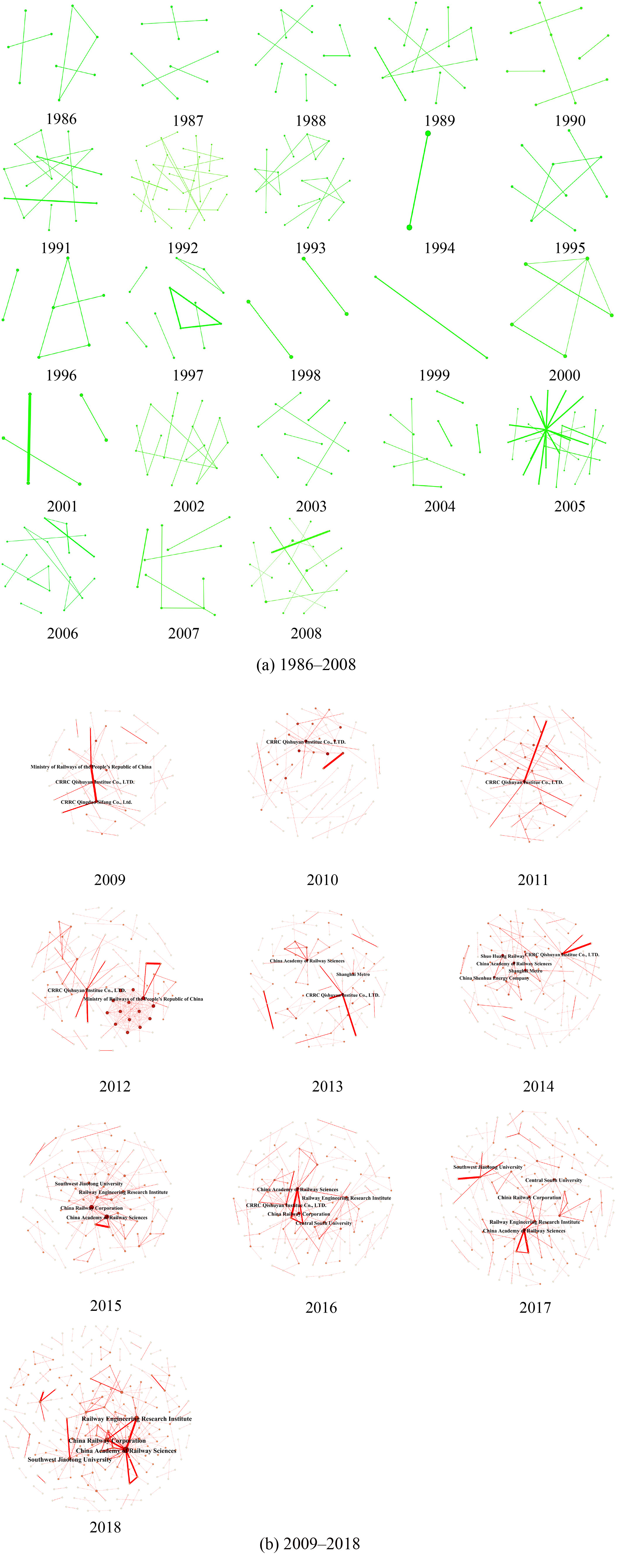
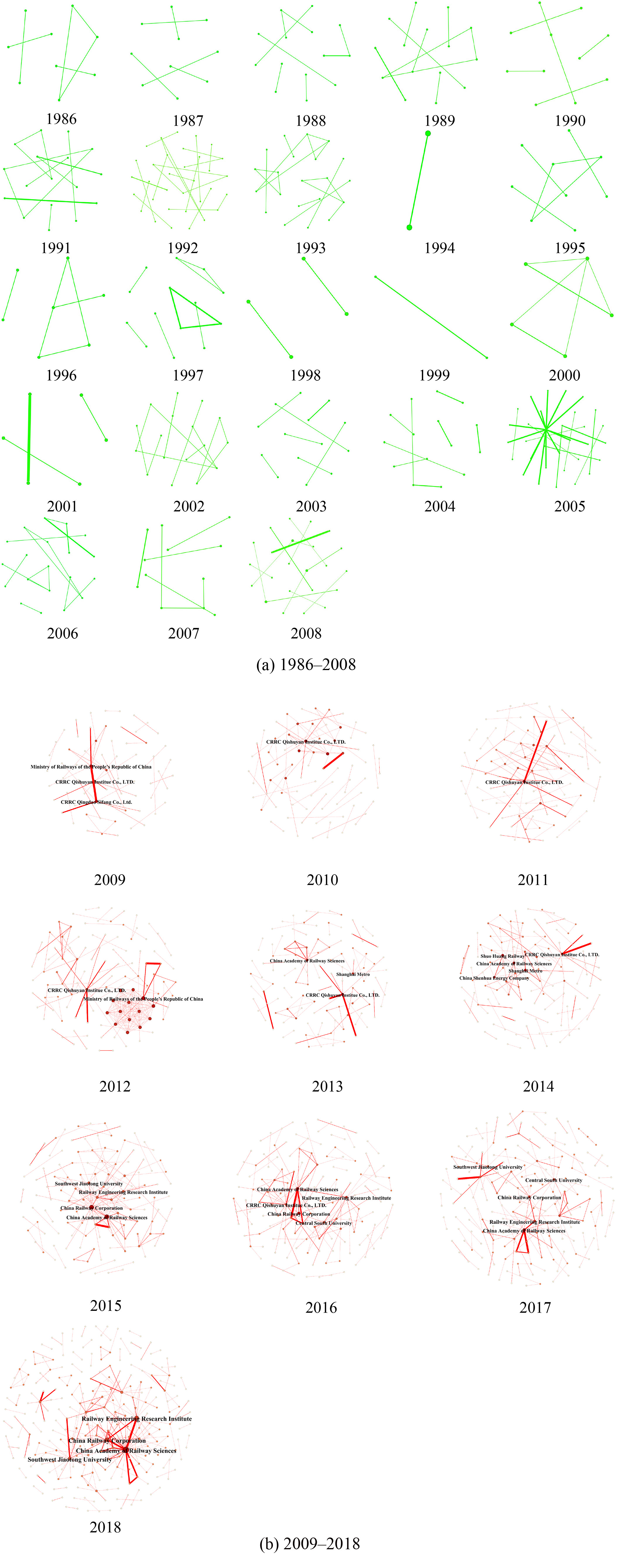 Fig. 3.
The I-U-R co-patent networks from 1986 to 2018.
A high-density network can speed up the flow of knowledge, information, and resources within the network, improving mutual learning and innovation activities among the various applicants. Table 1 presents the density of the I-U-R co-patent networks in the rail transit equipment industry from 1986 to 2018. The network density over this period exhibits a general downward trend, with fluctuations in certain years. By observing the scale and density values of the co-patent networks from 1986 to 2018, we can see that while the network scale continues to expand, the density values of the co-patent networks gradually decrease, indicating that the overall network has become more diffuse. Each patent applicant, influenced by resource limitations and other factors, can only establish and maintain a certain number of collaborative relationships. As the network scale expands rapidly, and more patent applicants enter the network, the resources available to support individual partnerships become more constrained. When the cost of forming a new collaboration exceeds the incremental income, applicants tend to maintain existing partnerships rather than form new ones. As a result, the co-patent networks exhibit low density, indicating that network functionality could be improved and that there remains considerable room for further development within the co-patent networks. Entities within the network can further develop their respective strengths and establish more extensive and deeper patent collaboration relationships with other entities. Additionally, in 1994 and 1997, the number of collaborative patents was very small, and all network nodes were linked, resulting in an exceptional case where the network density reached 1.
| Year | Density | Centralization | E-I index | Year | Density | Centralization | E-I index |
| 1986 | 0.167 | 0 | –0.667 | 2003 | 0.0879 | 0 | –0.714 |
| 1987 | 0.111 | 0 | –0.6 | 2004 | 0.1143 | 1.10 | –0.75 |
| 1988 | 0.0934 | 1.18 | –0.75 | 2005 | 0.1402 | 21.16 | –0.917 |
| 1989 | 0.0952 | 0 | –0.778 | 2006 | 0.0947 | 1.02 | –0.867 |
| 1990 | 0.1091 | 2.22 | –0.667 | 2007 | 0.1212 | 3.31 | –0.143 |
| 1991 | 0.1103 | 0.83 | –0.667 | 2008 | 0.1028 | 0.39 | –0.692 |
| 1992 | 0.0417 | 0.39 | –0.714 | 2009 | 0.0764 | 3.58 | –0.958 |
| 1993 | 0.081 | 1.03 | –0.882 | 2010 | 0.0756 | 3.22 | –0.556 |
| 1994 | 1 | 0 | 0 | 2011 | 0.0458 | 1.77 | –0.775 |
| 1995 | 0.1667 | 0 | –0.667 | 2012 | 0.0614 | 1.05 | –0.893 |
| 1996 | 0.2381 | 0 | –0.2 | 2013 | 0.0484 | 0.55 | –0.806 |
| 1997 | 0.1758 | 0 | –0.8 | 2014 | 0.0455 | 1.72 | –0.872 |
| 1998 | 0.3333 | 0 | 0 | 2015 | 0.066 | 10.66 | –0.385 |
| 1999 | 1 | 0 | 0 | 2016 | 0.0464 | 8.91 | –0.986 |
| 2000 | 0.3333 | 0 | 0 | 2017 | 0.0323 | 7.66 | –0.895 |
| 2001 | 0.4 | 0 | –0.333 | 2018 | 0.026 | 12.08 | –0.359 |
| 2002 | 0.1029 | 1.61 | –0.714 |
E-I, External–Internal.
Table 1 shows that the network centralization of I-U-R co-patent networks in the rail transit equipment industry has generally been rising. In 2005, clear central nodes began to appear in the network. By 2018, network centralization reached 12.08, indicating that resources within the network had started to concentrate around specific core nodes. Although the density of the co-patent networks gradually decreases as the network expands and becomes more diffuse, centralization continues to increase, indicating that some network nodes are emerging as core nodes, and the number of such core nodes shows an increasing trend. This pattern indicates that I-U-R patent collaboration in the rail transit equipment industry exhibits a small-scale aggregation effect, with group formation centered around individuals or entities with strong innovative capabilities as the core. These groups, in turn, form a larger group through strong alliances.
Taking into account both network density and network concentration, we can see that a decrease in network density does not necessarily indicate a weakening of cooperation. Network density has an inverted U-shaped relationship with cooperation efficiency (Gilsing et al., 2008). When network density is too low, it can create information islands, hindering cooperation; when network density is too high, it can lead to redundant connections, thereby reducing cooperation efficiency. When network density is moderately lowered, cooperation efficiency is highest. The decline in I-U-R co-patent network density in China’s rail transit equipment industry reflects the optimization of the network structure. For instance, key innovation entities play an increasingly significant role, and a small-world network has already begun to form.
Table 1 also shows that the E-I index is less than 0 from 1986 to 2018, except in 1994, 1998, 1999, and 2000. This is because there were fewer collaborative patents in those four years, making the network distribution close to random and the presence of subgroups less apparent. The E-I index of the I-U-R co-patent networks in the rail transit equipment industry is close to –1, indicating fewer connections between subgroups in the network, meaning that resource exchange and sharing occur primarily within small groups. Members outside a given group rarely have the opportunity to exchange and collaborate with members of the group. The E-I index shows an upward trend in 2016–2018, indicating that connections between different groups are improving. Cooperation within subgroups in the I-U-R co-patent networks of China’s rail transit equipment industry is not necessarily detrimental to the dissemination of innovation. In the context of core technology development, intellectual property protection, and a stable market environment, internal cooperation within subgroups effectively promotes technological iteration through resource integration and collaborative innovation. However, to break through technical barriers, adapt to international markets, or introduce cutting-edge technologies, collaboration across subgroups becomes a necessary supplement. The policies and industry structure promote the efficiency and scope of industry innovation dissemination by encouraging a mixed model: internal cooperation within subgroups as the primary approach, and external cooperation among subgroups as the secondary approach.
In contrast to the above analysis of the structural characteristics of the co-patent networks, the I-U-R co-patent networks in the rail transit equipment industry are divided into the following three stages. This study selects 2001 and 2008 as cutoff years because these years were each associated with national policies, industrial cycles, and major technological milestones. In terms of national policies, in 2001, the “Implementation Plan for the Domestication of Urban Rail Transit Equipment” directly promoted the development of domestic equipment manufacturing and ended the high dependence on imported equipment. Meanwhile, the “Tenth Five-Year Plan” (2001–2005) proposed accelerating railway technological transformation, and the construction of high-speed rail in China officially began. The “Mid-to-Long Term Railway Network Plan” (adjustment in 2008) explicitly identified high-speed rail as a strategic emerging industry in China. Also, in response to the global financial crisis in 2008, China stimulated the economy through large-scale infrastructure investment, with high-speed rail becoming a key area of focus. In terms of technological milestones, around 2001, China gradually gained control over core technologies such as subway vehicles, signal systems, and traction power supply through technology introduction and cooperative production. At the same time, domestic production policies led to a significant drop in equipment prices. In 2008, China’s first independently designed high-speed rail entered service, marking the beginning of the high-speed rail era in China. This high-speed rail adopted technologies with fully independent intellectual property rights, forming the technical standard system of China’s high-speed rail. In terms of industrial cycles, 2001 marked the transition of China’s rail transit equipment industry from “reliance on imports” to “self-control and autonomy”. In 2008, it advanced from “self-control and autonomy” to “global leadership”.
The germination stage (1986–2001). The industry predominantly relies on technology importation, with core components exhibiting a high level of dependence on overseas supplies. The absence of targeted industrial policies at this stage resulted in a limited number of cooperative patents. In 2001, the launch of “Implementation Plan for the Domestication of Urban Rail Transit Equipment” provided a foundation for the subsequent rapid development of the industry. In the early days of the I-U-R co-patent networks, only a few enterprises collaborated with universities or research institutes, presenting one-to-one and one-to-many collaboration models. The overall network was disconnected and loosely distributed. At this time, enterprises, universities, and research institutes collaborated only to solve current technological innovation problems and obtain heterogeneous resources, without engaging in repeated collaborations. The joint stability among enterprises, universities, and research institutes was relatively low. During this stage, the number of network nodes and connections in the I-U-R co-patent networks was limited, and collaboration remained underdeveloped.
The transitional stage (2002–2008). With the advancement of localization policies (“Mid-to-Long Term Railway Network Plan” in 2004 and 2008; “Tenth Five-Year Plan” from 2001 to 2005), the I-U-R collaboration has shifted to technology digestion, absorption, and secondary innovation, and cooperative patents have focused on the localized transformation of core technologies. The industry has begun to shift from “reliance on imports” to “self-control and autonomy”, and the import dependence of core technologies was significantly reduced. As collaboration deepened among the leading patent applicants in the co-patent networks, the network gradually expanded, and collaboration among the patent applicants became more extensive. The collaboration between enterprises, universities, and research institutes became more in-depth, and all participants’ recognition of and reliance on the co-patent networks increased. At this time, the collaboration model remained largely unchanged. The overall network remained disconnected, though parts of it became connected, presenting a core-edge network structure. Enterprises, universities, and research institutes used innovation networks to obtain heterogeneous resources, reduce information search costs, and lower transaction costs by strengthening collaboration, resulting in greater collaborative stability. During this stage, the number of network nodes and connections in the I-U-R co-patent networks grew rapidly, node strength began to increase, core nodes started to appear, and the overall level of collaboration improved.
The developmental stage (2009–2018). Under the advantages of multiple policies (“Decision of the State Council on Accelerating the Cultivation and Development of Strategic Emerging Industries” in 2010; “Twelfth Five-Year Development Plan for High-end Equipment Manufacturing Industry” from 2011 to 2015; “Made in China 2025” in 2015; “Railway 13th Five-Year Development Plan” from 2016 to 2020), the industry has entered the stage of independent innovation and global output, I-U-R collaboration focuses on cutting-edge technologies. Cooperative patents span the whole industrial chain, and the technological level has reached the globally leading standard, thereby entirely eliminating reliance on imports. With the further development of the co-patent networks, the network exhibited an agglomeration effect. The collaborative relationships among enterprises, universities, and research institutes often took the form of strong, repeated partnerships, which significantly promoted the transfer of tacit knowledge. At the same time, companies, universities, and research institutes fully recognized the positive functions of co-patent networks. They were willing to provide them with heterogeneous resources and knowledge, forming economies of scale and scope. In the co-patent networks, enterprises, universities, and research institutes established strong collaborative relationships characterized by a many-to-many collaboration mode. The overall connectivity of the network was high, and the core node in the network had a higher degree, playing a leading role. The cost of information search and collaborative transactions among enterprises, universities, and research institutes was low, and the collaborative relationships were highly stable.
The geographical information of the patent applicants is extracted, and the applicants are classified by city and province. Patent applicants located in the same city are recognized as intra-city collaborations, while those in the same province are identified as intra-provincial collaborations. In Table 2, we can see that the number of participating provincial-level administrative regions and cities in the I-U-R co-patent networks of the Chinese rail transit equipment industry has increased year by year across the three stages, reaching 28 provinces during the developmental stage. Compared with the number of collaborative provinces, the number of collaborative cities better reflects the geographical expansion of the I-U-R co-patent networks, increasing by as much as 86%. It is also evident that the average path length of the co-patent networks was 1.513 from 1986 to 2001, 2.746 from 2002 to 2008, and 3.632 from 2009 to 2018. This indicates that the network scale is expanding rapidly, the number of patent applicants is growing quickly, and the transmission efficiency of the I-U-R co-patent networks is decreasing. The network density is declining, and the average path length is increasing. This shows that although the spatial coverage of the co-patent networks is expanding, the degree of closeness among participants is declining. It further indicates that the I-U-R co-patent networks of the Chinese rail transit equipment industry are still in the developmental stage, with significant room for improvement.
| Stage | Number of provinces | Number of cities | Network density | Average path length |
| Germination stage | 20 | 51 | 0.4576 | 1.513 |
| Transitional stage | 20 | 68 | 0.1239 | 2.746 |
| Developmental stage | 28 | 127 | 0.1039 | 3.632 |
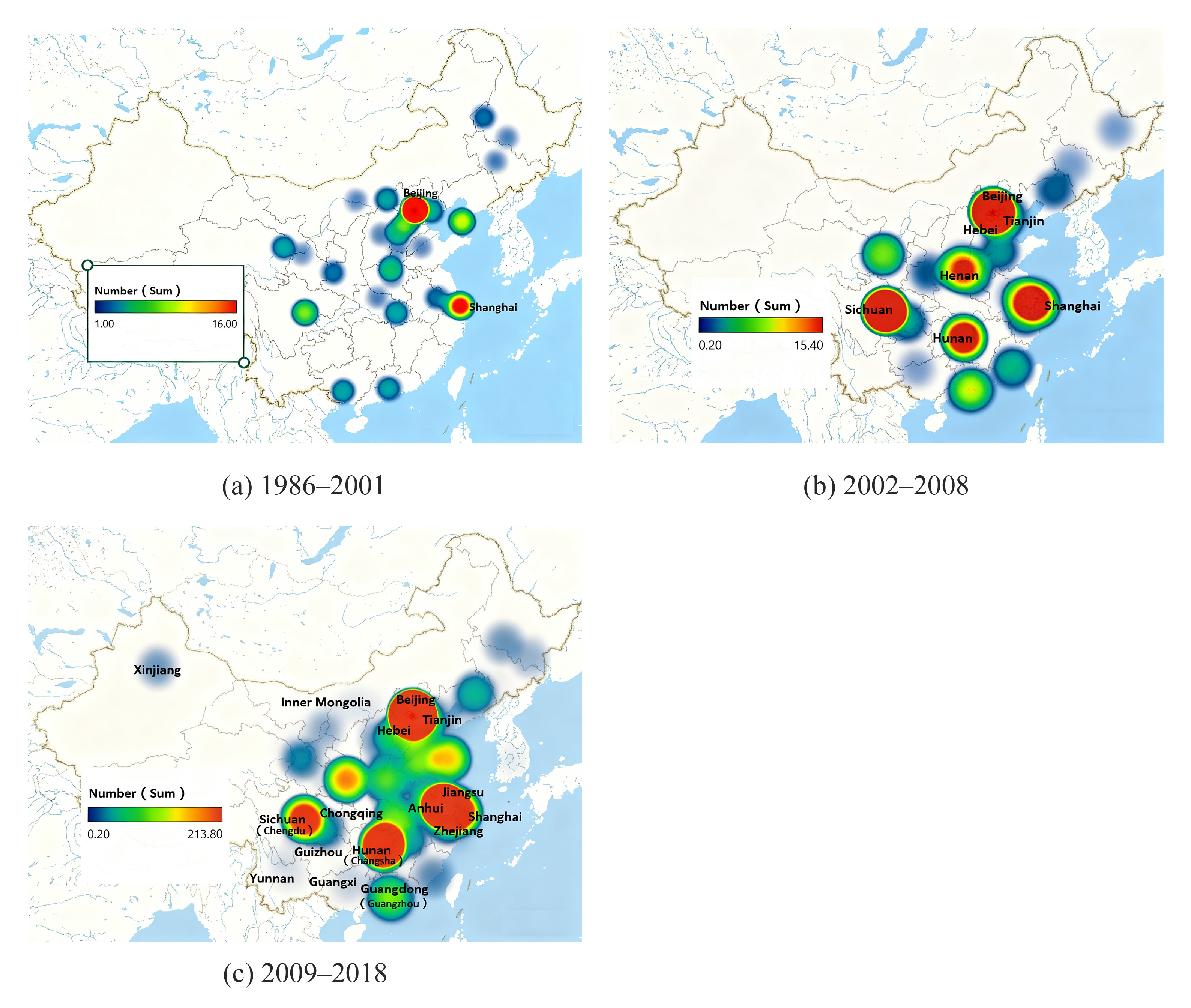
To more intuitively observe the geographical changes in I-U-R patent collaboration in the rail transit equipment industry across the three stages, the data are visualized using Power Map in Excel (Version Office 2021, Microsoft Corporation, Redmond, WA, USA). The spatial evolution of the I-U-R co-patent networks appears in Fig. 4. In the germination stage, 20 provincial-level administrative regions and 51 cities participated in the I-U-R co-patent networks, forming a network structure centered on Beijing and Shanghai. With strong economic foundations and concentrated educational resources, Beijing and Shanghai have become the vanguards of rail transit development. They serve as bases for knowledge production and diffusion, promoting co-patent activity in surrounding cities. In addition, the most critical areas in the co-patent networks are the provincial capitals of the northern and eastern regions and their small-scale surrounding areas. At this stage, the economic belts have not yet formed a core city to lead development, but it is evident that the Bohai Economic Circle and the Yangtze River Economic Belt have taken shape.
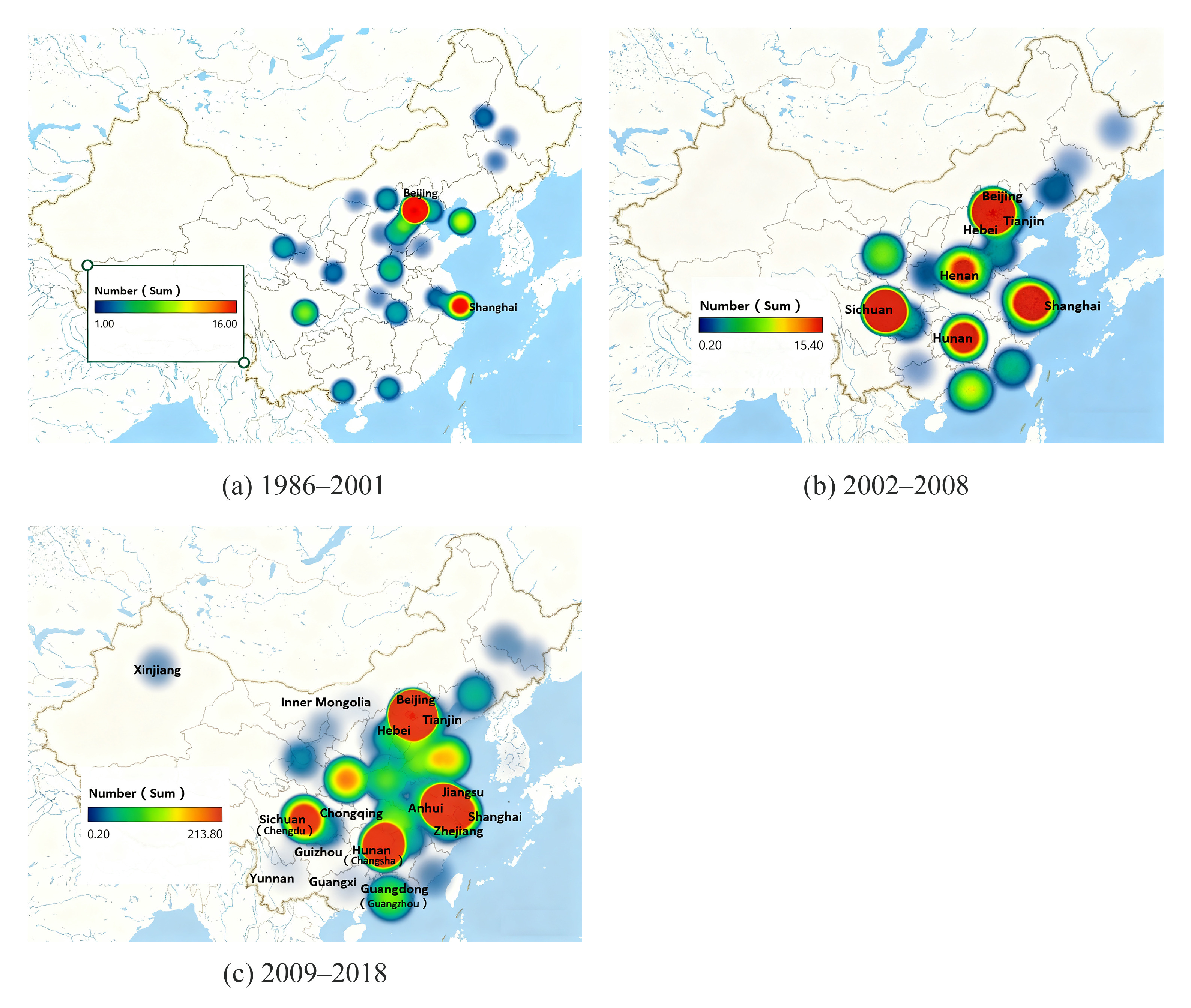 Fig. 4.
Spatial evolution of the I-U-R patent collaboration.
In the transitional stage, Beijing remains at the core of the I-U-R co-patent networks. From a national perspective, core nodes have begun to increase, forming a multi-core structure centered on Beijing, Tianjin, Shanghai, Hebei, Henan, Sichuan, and Hunan. In particular, the southwestern region centered on Chengdu, Sichuan Province, has gradually evolved from the point distribution of the previous stage into a more connected structure, with its radiation range further expanded.
During the developmental stage, the I-U-R co-patent networks included 28 provincial-level administrative regions and 127 cities, forming a clear multi-core structure. While the Beijing economic circle remained at the core position, the Yangtze River Delta and Central South regions experienced faster development than other regions. Fig. 4 demonstrates that the radiation area of the Yangtze River Delta, centered on Shanghai, has expanded into most of Anhui and Jiangsu provinces. Similarly, the scope of patent collaboration in the central-south region, centered on Hunan, expanded significantly. Compared with the previous stage, the core areas of I-U-R patent collaboration in the rail transit equipment industry grew dramatically during this stage, and inter-regional connections became closer, forming a more integrated network.
By 2018, the I-U-R co-patent networks had formed a structure centered on Beijing, Shanghai, Changsha, and Chengdu, with the provinces more closely linked. Shanghai and Zhejiang became highly integrated, showing strong spatial agglomeration within the Yangtze River Delta. Spatial agglomeration effects also emerged in Wuhan, Changsha, Chengdu, Chongqing, and other cities. However, Guangzhou and Shenzhen in the Pearl River Delta had fewer links with other regions, possibly related to the relatively smaller number of high-level universities and research institutes in Guangdong Province. In southwestern provinces such as Yunnan, Guizhou, and Guangxi, geographical constraints, lower economic development, and poor transportation have contributed to lower spatial agglomeration efficiency in the innovation network. Overall, from a spatial evolution perspective, the I-U-R co-patent networks in the rail transit equipment industry have developed significantly. A basic structure has formed, including the Bohai Economic Circle with Beijing at its core, the Yangtze Delta Economic Belt with Shanghai at its core, and the Central South Economic Circle centered around Changsha (Hunan) and Chengdu (Sichuan). In southwestern regions such as Yunnan, Guizhou, and Guangxi, both intra- and cross-regional collaboration require further strengthening. I-U-R patent collaboration in Xinjiang, Tibet, Inner Mongolia, and other provinces remains in its infancy and requires supportive policies.
From the above analysis, it is clear that the spatial evolution of the co-patent networks in China’s rail transit equipment industry exhibits a degree of imbalance. On the one hand, the formation of a multi-core system is fundamentally a process of element reconfiguration. The dual-core driving model has spread across multiple regions, reflecting the flow of innovation from administrative centers to industrial clusters. However, the weakening of coordination in the Pearl River Delta region indicates that simple economic radiation does not automatically translate into collaborative innovation. A tripartite linkage mechanism that integrates “industry, research, and policy” is therefore needed. On the other hand, regions such as Yunnan, Guizhou, and Guangxi have insufficient agglomeration efficiency. This is due not only to physical isolation caused by geographic barriers but also to the absence of innovation communities like the “system of Chinese Academy of Sciences” in the Yangtze River Delta or the “university-enterprise” alliances in the Pearl River Delta. At the same time, the expansion of the network reveals a paradox. The sharp increase in the number of cooperative cities, coupled with the rising average path length, suggests that the industry’s expansion exhibits “increased quantity but decreased quality”. Most of the new nodes are peripheral cities, and their connections to core cities require passing through intermediate nodes, extending the information transmission path. The decline in network density further confirms the sparsity of connections between nodes, which is directly related to resource dispersion and administrative barriers.
To ensure the accuracy of applicant classification, this study delineates applicant categories based on the following criteria. (1) Enterprises: applicants whose names contain the logo of for-profit organizations, such as companies, groups and limited liability companies, or those verified as industrial and commercial registered enterprises through the National Enterprise Credit Information Publicity System. (2) Universities: applicants whose names include the logo of a higher education institution, such as a university or college, and are officially listed in the national registry of ordinary higher education institutions published by the Ministry of Education. (3) Research institutes: applicants whose names contain the logo of research institutes or other research-oriented institutions, or non-profit R&D institutions affiliated with the national research system. For applicants with ambiguous names or those engaging in cross-border operations (e.g., a technology transfer center in a university), classification is determined by considering the attributes of their supervising bodies and actual business scope. If the core function is promoting technology industrialization, such applicants are classified as enterprises. Disputed applicant classifications undergo a rigorous review and confirmation process by two domain experts to ensure the reliability of the analysis.
In this paper, the degree of nodes and the number of connections are used to examine the status changes of different types of patent applicants during the three stages. The degree of a node refers to the total number of other nodes connected to it, reflecting the node’s importance within the network. A higher degree value indicates a more critical position, a broader source of knowledge, and measures collaborative breadth. The number of connections indicates the frequency of cooperation between one node and other nodes. A higher number of connections suggests more frequent and longer-term collaboration, which serves to measure collaborative depth. To avoid the influence of degree on collaborative depth, the ratio of the number of connections to collaborative degree is used. A breadth-depth matrix is established to classify patent applicants in the network into four types. (1) High-breadth and high-depth (HH) nodes have many collaborative partners and high collaborative strength; these are the core nodes in the network. (2) High-breadth and low-depth (HL) nodes interact widely with other nodes but lack depth, making it difficult to sustain collaboration. These are important but not central nodes. (3) Low-breadth and high-depth (LH) nodes have fewer partners but stronger collaboration intensity and are common nodes in the network. (4) Low-breadth and low-depth (LL) nodes have fewer partners and weak collaboration strength, placing them at the network’s periphery. The criteria for defining the breadth and strength of collaboration are determined by the average values of all network nodes.
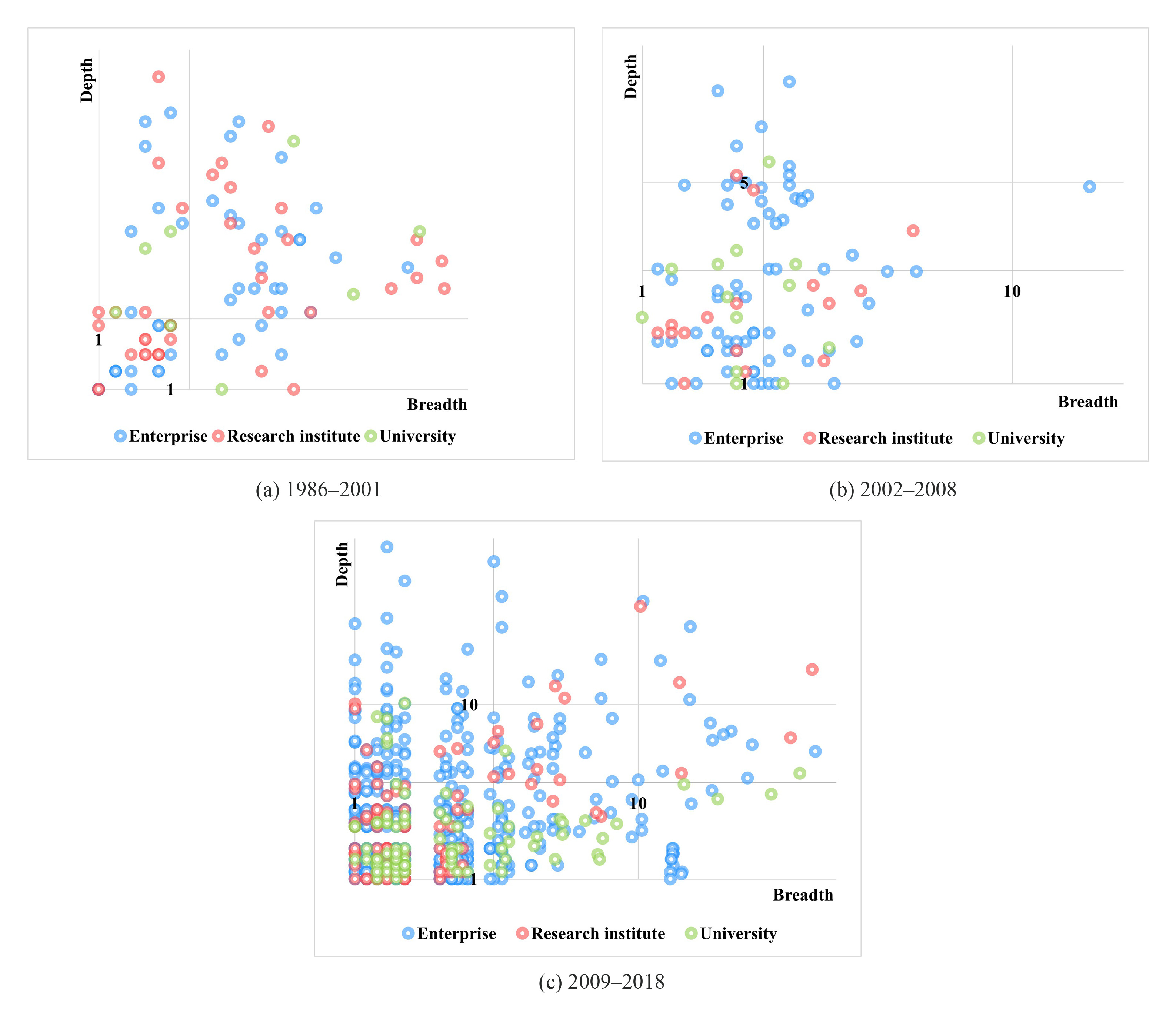
The breadth-depth matrix for each stage is shown in Fig. 5. In the germination stage, there were 23 enterprises, 17 research institutes, and three universities classified as HH type, accounting for 32.1% of all participants. These entities occupy core positions in the collaborative network, with broad and frequent collaboration. There were also 43 enterprises, 17 research institutes, and two universities classified as LL type, comprising 46% of participants and playing a minimal role in information exchange. The HH and LL types accounted for a large proportion of the network at this stage.
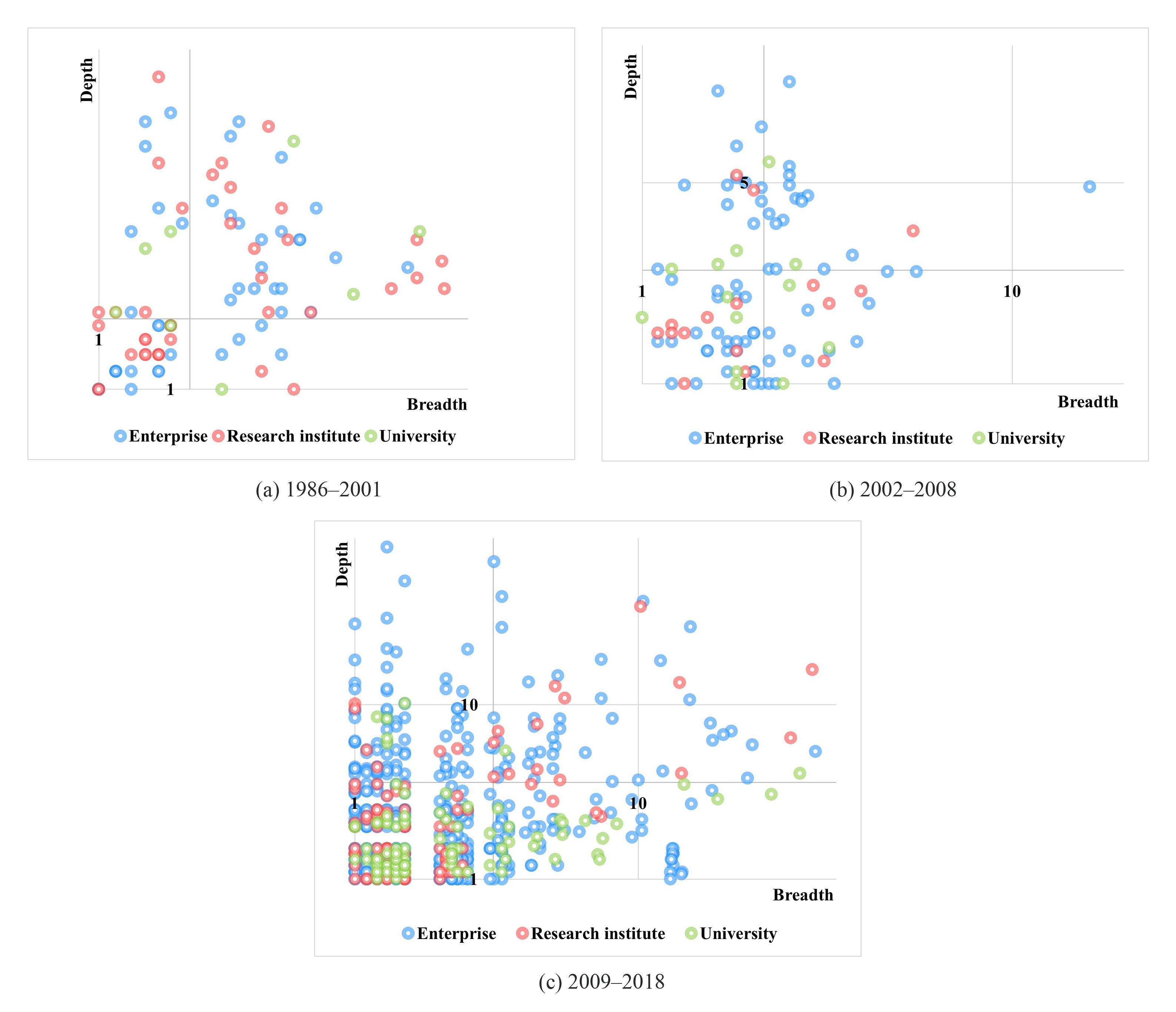 Fig. 5.
Breadth-depth matrix in each stage.
In the transitional stage, 18 enterprises, one research institute, and one university were classified as HH type, accounting for 20.8% of participants—a decline from the previous stage. Meanwhile, 32 enterprises, nine research institutes, and seven universities belonged to the LL type, comprising 50% of participants, a higher proportion than in the previous stage. The number of research institutes and universities declined, and their roles in the co-patent networks have diminished. Although the number of participants declined slightly, the number of collaborative patents increased slightly. Core nodes began to emerge and concentrate resources, raising the average values for high-breadth and high-depth and marginalizing the edge nodes.
In the developmental stage, there were 67 enterprises, 19 research institutes, and five universities classified as HH type; 87 enterprises, three research institutes, and 21 universities as HL type; 73 enterprises, eight research institutes, and seven universities as LH type; and the remaining 59% of participants were LL type. The number of participants increased rapidly. Enterprises in the collaborative network maintained a strong core position and played a more prominent role. Most universities saw significant growth in collaborative breadth, but collaborative depth remained largely unchanged. This reflects the state’s emphasis on rail transit equipment manufacturing and the importance of enterprises in I-U-R co-patent networks, as they often propose technological requirements and provide funding. Overall, synergy among participants in the I-U-R co-patent networks continues to strengthen.
Based on the above analysis, and from the perspective of technological innovation ecology, we can observe that in the germination stage, a core-periphery structure begins to take shape. HH-type nodes constructed the basic framework for technological innovation through high-frequency collaboration, with patent collaboration intensity more than seven times greater than that of LL-type nodes. This structure reflects the need for resource concentration to achieve technological breakthroughs during the early exploration period. The presence of many LL-type nodes indicates that the industry remains at the stage of technological accumulation, where participants engage mainly in exploratory cooperation. In the transitional stage, resources were reorganized, and the network was restructured. Although the number of HH-type nodes decreased, the number of cooperative patents rose, showing that core nodes improved cooperation efficiency through strategic contraction and resource concentration. The increased proportion of LL-type nodes indicates a reduction in industry entry barriers, allowing many small and medium-sized enterprises to participate in innovation efforts via patent alliances. By the developmental stage, the enterprise-led ecosystem was firmly established. As many as 67 enterprises belonged to the HH type, forming an “industry–university–research institute” triangular structure. At this point, the network displayed small-world characteristics, with core nodes creating technological barriers by controlling key resources.
This paper has comprehensively analyzed I-U-R patent collaboration in the rail transit equipment industry and presented the following main findings:
First, before 2008, the number of I-U-R collaborative patents in the rail transit equipment industry was relatively small, with most years recording fewer than ten such patents. However, after 2008, the number of collaborative patents increased rapidly as collaboration among companies, universities, and research institutes in the Chinese rail transit equipment industry continued to strengthen. Greater collaboration intensity among multiple actors appears to drive higher innovation output (patents), suggesting that I-U-R collaboration serves as an important mechanism for promoting technological innovation in this sector. This finding directly supports the core logic of the triple helix theory. Notably, the increase and growth rate of industry–research institute collaboration patents far exceed those involving industry–university and industry–university–research institute collaboration partnerships. Thus, I-U-R collaboration in this industry is primarily driven by partnerships between enterprises and research institutes rather than balanced interactions among all participants, with universities playing a comparatively minor role. The findings thus challenge the implicit assumption of the triple helix theory that the actors in these collaborations are relatively equal partners.
Second, as the scale of I-U-R co-patent networks in the rail transit equipment industry has expanded, the network has exhibited a trend toward low density and high centralization, along with distinct stage characteristics. The number of network nodes and connections has increased rapidly, with participants becoming progressively more interconnected. Core nodes in the network have consistently been occupied by state-owned enterprises, concentrating innovation resources within them. In China’s rail transit equipment industry, the state is not only an external policy maker, but also an internal participant deeply embedded in the co-patent network. As the core implementers of the national industrial strategy, state-owned enterprises leverage their institutional advantages to secure priority access to R&D funding, infrastructure resources, and market entry opportunities, forming inherent resource endowments that support their innovation activities. By relying on the central position of state-owned enterprises in the network and superimposing multiple intervention mechanisms such as policy guidance and resource injection, the state continues to influence the network’s evolutionary trajectory, forming a collaborative innovation ecosystem centered on state-owned enterprises. As a result, the directions of universities’ basic research are influenced by the demands of enterprises, while research institutes struggle to independently achieve breakthroughs in technological research. This dynamic undermines the ideal state of “equality and collaboration” among the three, posing a challenge to the “balanced interaction” premise in the triple helix theory. This largely reflects national conditions and policies in China. The rail transit equipment industry is strategically important to national and social development, with natural monopolies and high entry barriers, making the industry more concentrated. At the same time, the state has actively supported high-tech private enterprises, which have developed quickly by leveraging their strengths, thereby enhancing their status in the network and contributing to its sustainable development.
Finally, based on the data from different years and performance characteristics, the I-U-R co-patent networks in the rail transit equipment industry can be divided into three stages: the germination stage (1986–2001), the transitional stage (2002–2008), and the developmental stage (2009–2018). China’s rail transit equipment industry has undergone a transformative shift, evolving from a state characterized by “low technological level and strong import dependence” to one marked by “self-control, autonomy and global leadership”. The core driving force of this transformation is the national policy guidance and I-U-R collaborative innovation. The formation of an innovation system led by state-owned enterprises, supported by research institutes and participated by universities, has promoted the leap of core technologies from “import digestion” to “independent breakthrough”, and finally achieved the fundamental reversal of import dependence and the improvement of global competitiveness. The proportion of participants in the LL type has increased, while the proportion of participants in the HH type has declined, though HH nodes continue to play an increasingly important role. Across all three stages, enterprises have remained at the core of the network, and their roles and status have continued to strengthen. The collaborative breadth of most universities has improved markedly, although collaborative depth has remained largely unchanged. The co-patent networks evolved from a single-core structure in the first stage to a multi-core structure in later stages. In the first stage, 20 provincial administrative regions and 51 cities participated in the co-patent network, with only Beijing and Shanghai occupying core positions. By the third stage, 28 provincial administrative regions and 127 cities engaged in patent collaboration, and the network had formed three key economic zones: the Bohai Economic Circle centered on Beijing, the Yangtze Delta Economic Belt centered on Shanghai, and the Central South Economic Circle centered on Changsha (Hunan) and Chengdu (Sichuan). In essence, this results from the deep coupling of I-U-R across different regions, reflecting the triple helix theory’s expectation for the agglomeration and collaboration of innovation factors at the regional level and demonstrating that such collaboration can form a stable regional innovation cluster. However, intra-regional and cross-regional collaboration in the southwestern regions of China remains underdeveloped. Patent collaboration in Xinjiang, Tibet, Inner Mongolia, and other provinces is still nascent and requires policy support.
The contributions of this study are as follows. First, it enriches theoretical research on the development of China’s rail transit system and patent collaboration. Earlier studies of the development of China’s rail transit system typically focused on individual cities, such as Beijing, Shanghai, Shenzhen, and Guangzhou (Sun et al., 2018b; Yang and Chen, 2018; Zhang et al., 2011; Zhou et al., 2024; Zhu and Luo, 2016). In contrast, we assess the development status of the entire country and compare regional differences. Meanwhile, while previous research explored technological innovation capabilities in China’s rail transit field through patent analysis (Yang et al., 2014), this paper analyzes both independent and collaborative innovation capabilities using co-patents. We also compare innovation outcomes among different types of actors. This paper explores the development of China’s rail transit system from the perspective of organizational patent collaboration within the industry.
Second, it enriches theoretical research on the I-U-R collaboration network. Previous studies have achieved significant results in different fields (Abrahams et al., 2019; Paulo and Porto, 2018; Gay and Dousset, 2005; Heo and Lee, 2019; Liang and Liu, 2018; Thune, 2007; Vesselkov et al., 2018). However, limited attention has been paid to I-U-R collaboration networks in the context of China’s rail transit equipment industry. Earlier work on China’s rail transit networks largely focused on the development scale of specific city networks (Zhang et al., 2011; Yang and Chen, 2018). In contrast, this study dynamically analyzes the evolution of collaborative innovation among actors in China’s rail transit sector and the formation of core innovation regions from a network perspective. We examine the changing processes of core cities, provinces, and innovation entities across different stages, as well as changes in the breadth and depth of cooperation.
Third, it enriches the application of social network analysis in innovation. An increasing body of research has shown that innovation in technological fields is influenced by the networks in which it occurs, and that network structure is closely related to innovation outcomes (Zhang and Guan, 2019). The application of social network analysis to innovation in different fields has achieved significant results (Melander and Arvidsson, 2022; Provan et al., 2007; Wang and Cao, 2021). However, few studies have applied social network analysis to the study of innovation activities in the rail transit system. From the perspective of co-patents, we construct the co-patent networks of China’s rail transit equipment industry—a composite system of multiple entities (industry, university, and research institutes). This approach goes beyond the traditional focus on dual collaboration and offers a systematic analysis of collaborative innovation in the industry. It helps deepen our understanding of how collaborative innovation capabilities accumulate over time. Our research on the evolution of co-patent networks in the rail transit equipment industry broadens the application of social network theory. We identify the developmental stages of these networks, explain the mechanisms behind the emergence of core actors, and propose actionable strategies for optimizing the networks.
Fourth, this study advances theoretical research on the triple helix model. The traditional triple helix theory originates from a Western market-oriented context, emphasizing spontaneous and dynamic interaction among government, industry, and university to promote knowledge production and technology transformation. In China’s rail transit equipment industry, the government often acts as a coordinator or leader, promoting spontaneous collaboration between industry and academia through policy frameworks. In China’s institutional context, the active intervention of the state has emerged as a key driver of collaborative innovation. The central role of state-owned enterprises in co-patent networks reflects the deep integration of national will and industrial development. This study not only expands the application boundary of the triple helix theory, but also provides new empirical support for understanding the collaborative innovation model of state-led economies, forming the state-led triple helix model. This model effectively compensates for the limitations of the traditional triple helix theory in explaining non-Western or state-led innovation systems. In the traditional triple helix theory, universities are often regarded as the core of academia and assume the core role of knowledge creation and technology transfer (Etzkowitz and Leydesdorff, 2000; Etzkowitz, 2002). This study distinguishes research institutes from universities as independent subjects and finds that the role of research institutes in collaboration is far greater than that of universities, thus validating the conceptual scope of academia within the quadruple helix framework. Academia is not monolithic; it includes both universities and research institutes. In different industries, there may be significant differences in the functions and collaborative values of the two types of academia. This study complements the representation of the triple helix theory in specific industry scenarios. In industries with high technology maturity and strong engineering application orientation (such as rail transit equipment), research institutes (focusing more on applied research and technology transformation) may more effectively form efficient collaboration with enterprises than universities (focusing more on basic research), which provides a new empirical basis for the application of the triple helix theory under conditions of industrial differentiation. The evolution of co-patent networks in this industry illustrates how triple helix interactions help transition the innovation ecosystem from a linear to a network mode (Yoon, 2015; Yoon and Park, 2017).
China’s I-U-R co-patent networks in the rail transit equipment industry have developed significantly, especially over the past ten years. The scale of the networks has expanded rapidly, but further strengthening and improvement are still needed.
First, the Chinese government plays a leading role in the development of the rail transit equipment industry. It should allocate innovation resources more rationally and increase industrial innovation investment based on the specific needs of different regions and innovation entities. For example, the government should direct more capital and talent toward underdeveloped areas and high-potential collaborators. The Chinese rail transit equipment industry remains partly monopolized by the state, with state-owned enterprises dominating core nodes in the network. The government should focus on cultivating innovation entities with strong capabilities in interdisciplinary collaboration and technical integration, supporting them in forming the core of the network. These entities should play key roles in organizing learning, communication, and collaborative R&D activities. Additionally, the government must increase investment in external resources to attract more innovative entities into the co-patent network. While private enterprises participate in patent collaboration, their numbers and influence remain limited compared with state-owned enterprises in the short term. Their flexibility and market responsiveness are not yet fully leveraged. The government should implement a variety of incentive policies to encourage private enterprises to join R&D collaboration, fostering the rapid development of the Chinese rail transit equipment industry. The government must also promote a talent training mechanism and a talent exchange program. Policies should encourage technical staff of enterprises to work part-time at universities and university faculty to work part-time in enterprises. Joint graduate student training programs between enterprises and universities can help integrate theory and practice. The government should also formulate recruitment policies to attract high-level overseas talent.
Second, enterprises, universities, and research institutions each face challenges in independent patent development, though each has unique advantages. They should work together more closely. The government should encourage deeper collaboration among universities, research institutes, and enterprises, especially through strategic alliances for collaborative innovation. The government should establish an I-U-R collaboration platform for the Chinese rail transit equipment industry to broaden and deepen resource sharing and improve the quality of technical information. Through this platform, universities and research institutes can effectively allocate infrastructure and expertise, while enterprises can fully leverage their funds and social resources, thereby promoting more efficient resource use, complementary advantages, and greater efficiency in collaborative R&D and innovation. Innovative entities can select the most suitable partners for collaborative R&D via this platform, leveraging its resources and innovation information to stimulate new patent ideas. In addition, the platform reduces R&D risks, cuts costs, and shortens the patent R&D cycle. Therefore, strengthening this platform will ultimately enhance the number and quality of co-patents in the entire rail transit equipment industry.
Finally, the essence of transforming scientific and technological achievements lies in linking technical supply with market demand. Therefore, it is necessary to establish a demand-oriented mechanism for transforming scientific and technological achievements as the fundamental approach to bridging the gap between technology and economic development in China. In the I-U-R innovation system of the rail transit equipment industry, enterprises serve as the main body, while universities and research institutes provide technological support. As technology demanders, enterprises should enhance their awareness of collaborative innovation in the face of market competition and elevate collaborative R&D to a key strategic position in enterprise development. The driving force behind collaborative innovation for enterprises lies in profit-maximization and market competitiveness. Research institutes and universities likewise seek to improve academic standards, cultivate advanced talent, share in economic benefits, and gain recognition by solving the practical problems faced by enterprises. The I-U-R collaboration patents in the rail transit equipment industry are important national scientific and technological innovation projects. If such projects fail due to dissatisfaction over the distribution of benefits, the economic losses would be immeasurable. To improve the profit distribution system for co-patents among enterprises, universities and research institutes in the rail transit equipment industry, the government should formulate relevant policies to ensure a fair and balanced allocation of benefits among parties.
This study has some limitations. First, the data search method used relies on keyword search, which may cause the omission of some cooperative patents. To mitigate this problem, future studies could improve patent identification by applying the latest international patent classification for China’s rail transit equipment industry released by the China National Intellectual Property Administration. Second, relying solely on cooperative patents is insufficient to explore collaborative innovation within China’s rail transit equipment industry. In future research, multiple data sources should be combined, including other innovation indicators such as collaborative projects and joint publications, to construct a more comprehensive collaborative innovation network for China’s rail transit equipment industry. Third, the social network analysis method employed in this study uses static networks and cannot capture the complex dynamic evolution characteristics (such as the entry or exit of network nodes). In future research, time series network models, dynamic stochastic models, and system dynamics models could jointly capture the dynamic mechanism of the collaborative innovation network in China’s rail transit equipment industry.
Based on research on the co-patent networks in China’s rail transit equipment industry, future studies can also explore the following three areas. First, a quantitative model of co-patent network effects could reveal how network structures—such as node connection strength and centrality distribution—influence innovation performance, including patent output and technology conversion rates. This model may further help identify the leverage effects of key nodes, such as leading enterprises and top universities. Second, reasons for the evolution of co-patent networks could be examined dynamically to show how factors like policies, technologies, culture, and markets drive network changes (Tian et al., 2022). This includes analyzing path dependence and identifying key turning points in the network’s transition from “linear cooperation” to “ecological collaboration”. Third, the robustness of co-patent networks could be evaluated against external shocks, such as technology blockades and supply chain disruptions. Redundancy mechanisms and risk-mitigation strategies could be developed to enhance network stability.
The corresponding author will share all data reported in this paper upon reasonable request.
YT and ZS designed the research study. YT and ZS performed the research. ZS acquired the data. YT, ZS, CP and ZY analyzed the data. YT, ZS, CP and ZY interpreted the data. YT and ZS written the initial draft of manuscript. YT, CP and ZY modified the manuscript. All authors contributed to editorial changes in the manuscript. All authors read and approved the final manuscript. All authors have participated sufficiently in the work and agreed to be accountable for all aspects of the work.
We gratefully acknowledge the assistance and instruction from professor Weiwei Liu of Harbin Engineering University.
This research is financially supported by the National Natural Science Foundation of China (Grant No. 72404003; 72404079). This research is financially supported by the Humanities and Social Science Fund of the Ministry of Education of China (Grant No. 24YJC630194).
The authors declare no conflict of interest.
During the revision of this manuscript, the authors utilized Doubao to support two key aspects of the work. First, the authors employed the AI tool to facilitate the detailed elaboration and clear explanation of relevant theories, ensuring a more comprehensive and rigorous presentation of conceptual arguments. Second, the AI assisted in the meticulous linguistic refinement of the manuscript, including adjustments to sentence structure, terminology, and overall readability, to enhance the academic style and clarity of the study. All content generated by the AI tool was subjected to rigorous review, critical revision, and final approval by the authors. The authors assume full and exclusive responsibility for the intellectual content, accuracy, and integrity of the final manuscript, affirming that all contributions adhere to the highest standards of academic ethics and authorship accountability.
References
Publisher’s Note: IMR Press stays neutral with regard to jurisdictional claims in published maps and institutional affiliations.