
Landmarks of Aquatic Biodiversity – past, present, and future
Submission Deadline: 31 Mar 2022
Guest Editors

Lucian Blaga University of Sibiu, Applied Ecology Research Center, Sibiu, Romania Transylvania, Romania
Interests: Fundamental and applied ichthyology; Fish ecology; Taxonomy and systematic; Aquatic systems assessment; Monitoring and management; Ecologic monitoring; Water; Sediment; Macroinvertebrates and fish toxicology
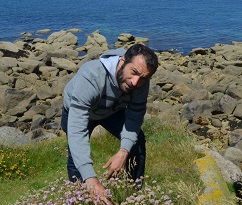
UMR UL/AgroParisTech/INRAE 1434 Silva, Université de Lorraine, Faculté des Sciences et Techniques - BP 70239 - 54506 Vandoeuvre-lès-Nancy, France
Interests: Ecology; Plant Science; Natural Sciences; Landscape; Territory and Natural Resources Management; Ethnoecology; Physioecology

Lucian Blaga University of Sibiu, Applied Ecology Research Center, Sibiu, Romania Transylvania, Romania
Interests: Freshwater Ecology; Bodiversity Assessment; Monitoring and Management; Entomology (Ephemeroptera, Trichoptera, Plecoptera); Macroinvertebrates and Fish Toxicology
Special Issue Information
Dear Colleagues,
The Earth՚s aquatic and semi-aquatic habitats, ecosystems, and biomes, as well as their associated biodiversity have been impacted by humans for millenniums. The human impact has been and continue to be a significant driving changing force. The Earth anthropization, along the Anthropocene, resulting in aquatic and semi-aquatic biodiversity drastic change and loss, and consequently loss of ecosystems resilience, productivity, and their diminishing along with disappearance. Ground water, hyporheic water, springs, rivers, streams, wetlands, ponds, swamps, wetlands, bogs, lakes, alluvial plains, deltas, estuaries, lagoons, dune slaks, coastal areas, seas, oceans, etc., all giving the blue safe ecological color of our planet are increasingly suffering due to our actions. The representative species of all kingdoms, Monera, Protista, Fungi, Plantae and Animalia, releasing continuously distressing calls through the specialists’ studies results! Aquatic and semi-aquatic biodiversity ecological status is not only a precious indicator of our planet environmental quality trends but also a game changer; it can induce regional, and global changes. Innovative researchers know that, but is time to be more determined in bringing attention to the scientific community, and finally to the decision makers that this issue remain as an equal level of importance with the climate changes! This special issue is a collegially kind invitation to bring into light genuine exquisite research results around the globe and make them to speak and advocate throughout the international recognized Frontiers in Bioscience-Landmark/Ecology editorial platform and publication for the aquatic, semi-aquatic, and riverine biodiversity protection and conservation, not only for their sake but finally for the human species sake too!
Assoc. Prof. Doru Bănăduc, Asst. Prof. Kevin Cianfaglione and Assoc. Prof. Angela Curtean-Bănăduc
Guest Editors
Keywords
- Aquatic Biodiversity
- Human Impact
- Regional to Global and Long Term Research
Published Papers (2)
Remote sensing and in-situ approach for investigation of pelagic communities in the reservoirs of the electrical power complex
Front. Biosci. (Landmark Ed) 2022, 27(7), 221; https://doi.org/10.31083/j.fbl2707221
(This article belongs to the Special Issue Landmarks of Aquatic Biodiversity – past, present, and future)
Historical analysis of an imperiled fish species: environmental variables modeling, biotic interactions, extirpation, and current restricted-range
Front. Biosci. (Landmark Ed) 2022, 27(5), 165; https://doi.org/10.31083/j.fbl2705165
(This article belongs to the Special Issue Landmarks of Aquatic Biodiversity – past, present, and future)