

 , Keerthanashree Reddy Napa Prasad 2, Anushya Vardhini Venkatesan 2, Tamil Azhagan Shanmugavel Ravichandran 2, Sarvesh Sabarathinam 3,*
1 Department of Pharmaceutical Biotechnology, Faculty of Pharmacy, Dr.M.G.R. Educational and Research Institute, Velappanchavadi, 600077 Chennai, Tamil Nadu, India
2 Department of Pharmacology, Faculty of Pharmacy, Dr.M.G.R. Educational and Research Institute, Velappanchavadi, 600077 Chennai, Tamil Nadu, India
3 Center for Global Health Research, Saveetha Medical College and Hospitals, Saveetha Institute of Medical and Technical Sciences (SIMATS), Saveetha University, 602105 Chennai, Tamil Nadu, India
Abstract
The oral cavity is a complex ecosystem that harbors a diverse microbial community. Viral infections can significantly disrupt this delicate balance, leading to various oral health issues. This review delves into the intricate relationship between viruses and oral health, exploring the impact of both RNA and DNA viruses. We discuss the mechanisms through which these viruses influence the oral microbiome, modulate immune responses, and contribute to various oral diseases, including periodontal disease, oral candidiasis, and oral cancer. Additionally, we highlight the potential of saliva as a valuable diagnostic tool for viral infections and oral health assessment. By understanding the viral–oral health nexus, we can develop effective strategies for prevention, early diagnosis, and targeted interventions to improve oral health outcomes.
Keywords
- microbial
- oral health
- gut microbiota
- immunity
The digestive system of all animals, whether herbivores or omnivores, begins with the mouth. Thus, proper oral hygiene is vital for a healthy digestive system and overall well-being [1]. However, special attention is required for all types of feeders, especially omnivores. Meanwhile, humans must maintain oral hygiene carefully since many diseases spread through the mouth. The mouth cavity contains a diverse array of bacteria, with over 700 species currently identified. Viruses are inherently challenging to identify, particularly using traditional techniques such as in vitro cultivation, and also difficult to cure compared to bacterial or fungal infections. However, these issues have reduced following the introduction of molecular biology technologies, especially different PCR-based techniques. Two types of nucleic acids make up viruses: ribonucleic acid (RNA) and deoxyribonucleic acid (DNA); examples of DNA viruses include the herpes viruses, such as the human herpes virus 6, human papillomavirus (HPV), hepatitis B virus, Epstein–Barr virus (EBV), hepatitis B virus, and herpes simplex virus (HSV). Meanwhile, RNA viruses include orthomyxoviruses, influenza viruses, paramyxoviruses, parainfluenza, mumps, measles, Toga viruses, rubella, retroviruses (human immunodeficiency virus (HIV)), rhabdoviruses, rabies, double-stranded reoviruses, rotavirus, picornaviruses, rhinovirus, enterovirus, coxsackievirus, echovirus, and poliovirus [2]. Viruses uniquely disrupt the oral microbiome compared to bacteria and fungi. The ability of viruses to integrate into host genomes (e.g., DNA viruses such as HPV) or persist as latent infections (e.g., HSV). The immune-modulatory effects of RNA viruses such as HIV and their role in microbial dysbiosis have been studied from the earliest stages of infection to their persistence or progression; the pathophysiology of HIV and HPV infection is closely linked to the mucosa-associated lymphoid tissue (MALT). Thus, HIV infection results in the transfer of microbial products from the stomach to the bloodstream and long-term impairments in mucosal immunity. These alterations encourage the release of proinflammatory cytokines, monocyte activation, and T cell activation. The gut microbiota seems to affect immunological responses to HPV, affecting the host–mucosal milieu, leading to viral persistence and the development of HPV-related cancer. Herpes labialis recurrences, which typically affect the lips or surrounding skin, are typically milder than the original infections and usually result from the latent virus reactivating. After the first HSV infection, virions go to the sensory dorsal root ganglion, where latency occurs at the site of infection on the skin or mucosa. Upon activation, the latent virus commences replicating within the ganglion and typically travels down the trigeminal nerve to the original injection site, where it infects the epithelial cells, resulting in a recurrent infection—known as the “ganglion trigger theory”. However, an alternative concept, the Hill and Blyth skin trigger theory, maintains that the virus is constantly released from lesions in neural terminals [3, 4, 5]. Meanwhile, anecdotal evidence suggests that patients infected with the hepatitis C virus (HCV) are more likely to experience dental decay, promoting a decline in self-esteem due to poor oral hygiene, and find it difficult to maintain a healthy diet because of their poor oral health. These symptoms have been linked to several factors, including injection drug abuse, methadone medication, and underutilization of dental services. Moreover, chronic illnesses are thought to increase the chances of developing oral and dental diseases caused by biological mechanisms [6, 7]. These mechanisms can be triggered directly, such as for a probable increased risk of developing periodontal disease, which is linked to an inflammatory response induced by diabetes, or indirectly, such as for the probable increased risk of dental caries in HCV-infected patients due to decreased salivary flow from prescribed medications [8]. Dental care is not typically covered by insurance, and expenses are frequently exorbitant. Furthermore, individuals with HCV who are admitted to government dentistry clinics sometimes end up on incredibly long waiting lists. Hence, the reported significant tooth damage and associated poor oral health may be related to difficulty accessing dental treatment [9]. RNA-dependent RNA polymerase (RdRp), which is virally encoded, is used by RNA viruses to reproduce their genomes. RNA synthesis of these extra RNA strands uses the RNA genome as a template (an RNA molecule serves as the template to generate new RNA molecules). Three different forms of RNA must be generated at least once during the replication of RNA viruses: the genome, a copy of the genome, and messenger RNAs. Certain RNA viruses also synthesize subgenomic mRNAs. RdRp is the essential component in these processes [9, 10]. The oral microbiota, comprising over 750 bacterial and fungal species, significantly influences oral and systemic health. Therefore, changes in its composition, often linked to conditions including periodontal disease, dental caries, and HIV infection, can lead to dysbiosis and increased risk of opportunistic infections. HIV infection, in particular, can impair salivary IgA production, affecting the oral microbiome and increasing susceptibility to oral diseases.
Oral lichen planus (OLP) is an inflammatory condition defined by a cell-mediated autoimmune response of mucous membranes, which frequently emerge as red, swollen tissues or white, lacy patches. CD8+ T lymphocytes cause these lesions and induce cell death of the basal cells in the epithelium. The presence of specific T cells in the oral mucosa of OLP patients suggests that HCV may be involved in the pathogenesis, expansion, and autoimmune reactions of the disease, which may progress to lichen planus (LP). HCV replicates in the oral mucosa, resulting in a localized immune response. Based on Andreasen’s clinical classification, there are six recognized types of OLP: reticular, papular, erosive–ulcerative, atrophic, plaque, and bullous. Reticular forms are seen as “mild”, and erosive–ulcerative versions are “severe”; it can be fatal, restricting patients from eating or drinking because of the crippling symptomatology [11].
Dry mouth is a subjective complaint arising from reduced salivary flow due to specific drug classes that can cause hyposalivation and/or xerostomia. According to a study by Alavian et al. [6], 12% of all HCV-infected patients experience dry mouth during anti-HCV medication. This is due to the reversible suppression of salivary gland function that seems not to be dose-dependent and quickly returns to baseline when treatment ceases. Patients suffering from xerostomia due to HCV infection presented diffused lymphocytic infiltrates in their salivary glands, primarily consisting of CD8+ T cells. Furthermore, significant increases in the quantity of inflammatory cells were linked to these infiltrates, indicating that the inflammatory response remained active. Another study found chronic sialadenitis and salivary gland (SG) fibrosis in HCV-infected patients, which are signs of persistent tissue damage and remodeling in response to ongoing inflammation [12].
Periodontal disease represents a range of diseases caused by the intricate interactions of several microbial infections occurring in a dental biofilm, which then triggers the immune response of the host. This leads to inflammation of the gums and the tissues surrounding them. Necrotizing gingivitis, necrotizing ulcerative periodontitis, chronic periodontitis, and linear gingival erythema are the most significant HCV- and HIV/AIDS-related periodontal disorders. A chronic inflammatory condition called periodontitis affects the alveolar bone, the periodontal ligament, and the gum tissue surrounding the teeth. As one of the most prevalent dental illnesses, periodontitis can cause tooth movement and loss. Periodontitis has been related to numerous systemic disorders, including diabetes, Alzheimer’s disease, and respiratory infections, according to an increasing number of research reviews. Further investigations remain necessary to determine the biological mechanism beneath this association. The inflammation of the periodontal ligament can raise the likelihood of HCV transmission through secretions from the mouth, particularly Gingival Crevicular Fluid (GCF). Studies have demonstrated an association between periodontal disease activity and elevated levels of AST in the GCF of individuals with the condition. There is mounting evidence that periodontitis can impact liver transplantation and contribute to the development of liver illnesses such as cirrhosis, hepatocellular carcinoma, and non-alcoholic fatty liver disease. Hence, controlling oral health issues is crucial for preventing and treating liver fibrosis since periodontitis may be linked to the development of viral liver disease [13].
Oral candidiasis (OC) is the most prevalent oral lesion in people with HIV/AIDS. Candida albicans is most often blamed; however, other related species are also related and can also cause infections: Candida glabrata, Candida tropicalis, Candida krusei, Candida guilliermondii, Candida dubliniensis, Candida lusitaniae, Candida parapsilosis, Candida pseudotropicalis, and Candida stellatoidea. Three common manifestations of OC include angular cheilitis, pseudomembranous candidiasis, and erythematous candidiasis. When CD4 cell levels are typically between 200 and 500, erythematous candidiasis classically manifests as red, atrophic patches on the tongue and palate. At reduced CD4 cell counts (200 cells per microliter), pseudomembranous candidiasis manifests as detachable, white, curd-like lesions on an erythematous base on the palate and buccal mucosa [14].
Oral hairy leukoplakia (OHL) often manifests as white, fuzzy, or hairy patches on the sides of the tongue, although these patches can also form on the roof of the mouth, cheeks, and gums. HIV or other immune-compromised conditions are frequently linked to this illness. OHL is brought on by the EBV, which is a linear double-stranded genetic material virus that is a member of the Lymphocryptovirus genus, Herpes viridae family, and gamma herpes viruses subfamily. EBV can infect lymphocytes, especially B cells and epithelial cells. Additionally, EBV is linked to certain cancers, such as Burkitt lymphoma and nasopharyngeal carcinoma, as well as other illnesses, such as infectious mononucleosis.
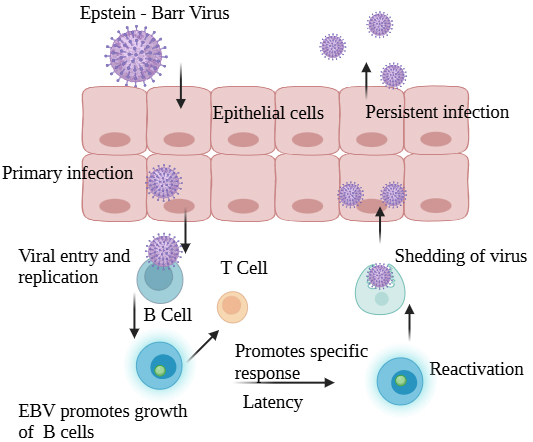
Similar to HPVs, EBV has two distinct lifecycles: lytic and latency. While the EBV genome is amplified more than 100–1000 times through the viral replication machinery during the lytic cycle, the viral genome transforms into a closed circular plasmid and functions similarly to the host chromosomal DNA during the latency cycle. The lytic process favors viral lytic replication, which creates S-phase-like cellular conditions. The mechanism through which EBV functions is depicted in Fig. 1. Meanwhile, a prolonged infection of non-cytopathic, hepatotropic hepatitis B virus (HBV) can eventually result in cirrhosis and hepatocellular cancer. Pre-genomic RNA (pgRNA), an RNA intermediary found in nucleocapsids, is reverse-transcribed by HBV to duplicate its genomic DNA [15].
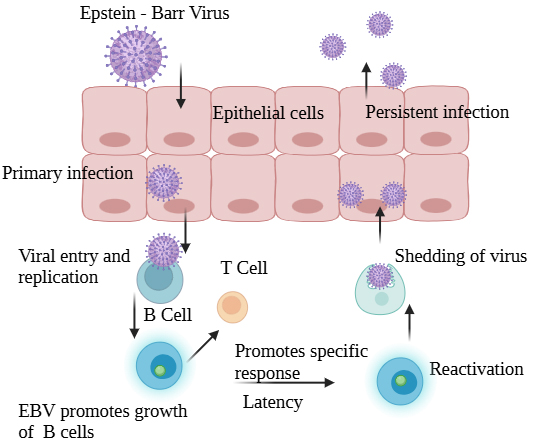 Fig. 1.
Mechanism of EBV infection. EBV, Epstein–Barr virus. The figure was created with BioRender.com.
Kaposi’s sarcoma (KS) is the most common cancer among individuals living with HIV. KS is a multifocal proliferative condition caused by infection with human herpesvirus 8 (HHV8). KS can manifest in four clinical forms: classic KS, endemic KS (African), iatrogenic KS (immunosuppression-/transplant-associated), and epidemic KS (HIV-related), which is a defining characteristic of acquired immunodeficiency syndrome (AIDS). Oral KS commonly affects the palate, gingiva, and posterior tongue. Meanwhile, multiple lesions often involve the hard palate. Gingival involvement can lead to tooth loss and alveolar bone deterioration. Clinically, KS lesions present as papules, nodules, or early macular lesions. Individuals with oral mucosal KS lesions tend to have lower CD4+ counts than skin-only lesions [16].
HSV is a frequent viral infection, especially in youngsters, which causes herpetic gingivostomatitis. Compared to other viruses, HSV is a rather big double-stranded DNA virus. Members of the Herpesviridae family can induce largely diverse disease processes even if they are members of the same family. The most common way for HSV-1, a member of the alpha subfamily, to spread is through direct contact with contaminated saliva or an active perioral lesion. HSV-1 usually appears as a painful inflammation of the mucous membranes inside the mouth, gingiva, or gums. Although soreness and swelling are the main symptoms, if the infection is not adequately treated, several problems could occur. Indeed, other side effects of herpetic gingivostomatitis include lymphadenopathy, dehydration dysphagia, and secondary bacterial infections [17].
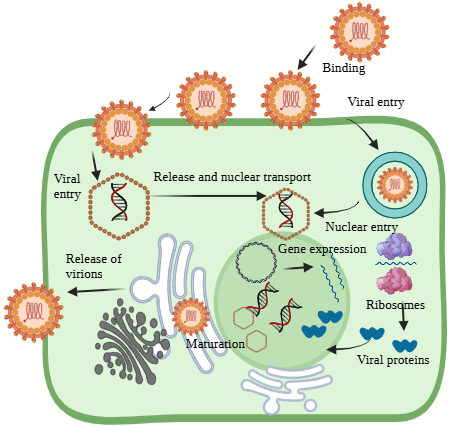
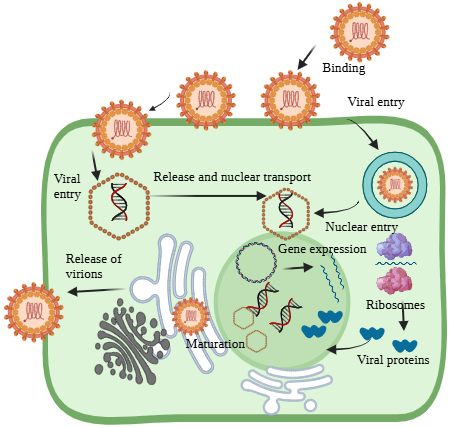
Fig. 2 illustrates the transition between lytic and latent phases. Latency in the sensory ganglia leads to recurrent infections affecting oral epithelial tissues, contributing to herpes labialis and gingivostomatitis.
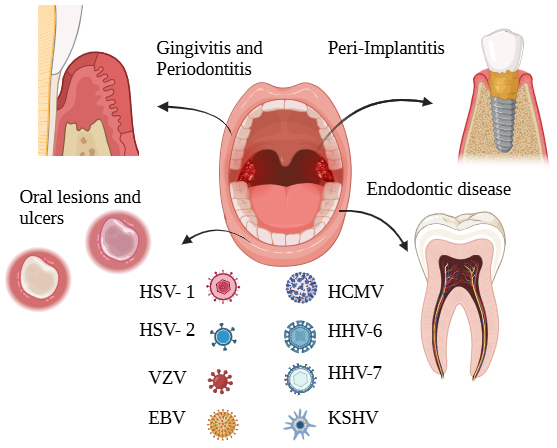
The varicella zoster virus (VZV) is a double-stranded, icosahedral, encapsulated virus with an approximately spherical shape that causes shingles (herpes zoster) and chickenpox. VZV can lie latent in nerve cells after the first chickenpox infection and reactivate later in life, especially in adults, resulting in painful face and mouth blister-like lesions. Commonly referred to as shingles or herpes zoster, this disorder frequently affects the trigeminal nerve, which provides facial sensibility. Shingles can produce painful, blistering lesions inside the mouth, usually on the tongue, gums, roof of the mouth, or within the cheeks. Additionally, shingles results in Ramsay Hunt syndrome, xerostomia, dysphagia, and postherpetic neuralgia [18, 19, 20, 21, 22]. Fig. 3 provides an overview of human herpes viruses via dental infection.
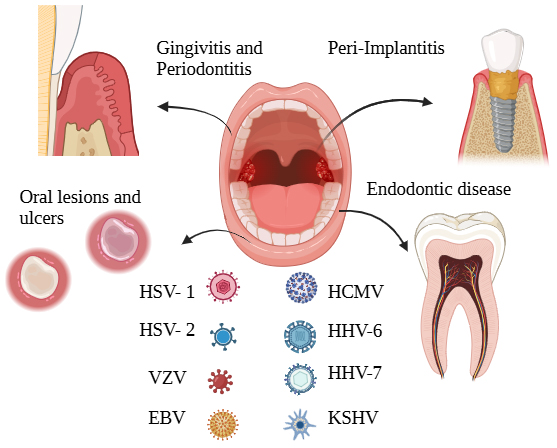 Fig. 3.
Human herpes viruses in dental infection. HSV, herpes simplex virus; VZV, varicella zoster virus; HHV, human herpesvirus; KSHV, Kaposi’s sarcoma-associated herpesvirus; HCMV, Human cytomegalovirus. The figure was created with BioRender.com.
Biomarkers are molecules that can be utilized as prognostic indicators or for screening, diagnosis, characterization, and disease monitoring. Numerous salivary molecules, including enzymes, specific and nonspecific proteins, antibodies, and other compounds, can be biomarkers of oral illnesses. Over two thousand proteins, enzymes, electrolytes, tiny chemical compounds, and antimicrobials are found in saliva. Gingival crevicular fluid, debris, sloughed epithelial cells, bacteria and their byproducts, plasma-derived components, and nasopharyngeal discharge are all present in saliva [23].
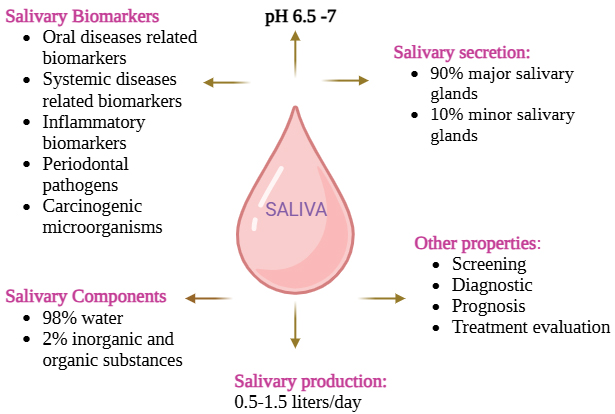
The basic description of saliva is given in Fig. 4. Tumors can spread quickly because cells divide much more rapidly; however, infrared spectroscopy can identify some of the biomarkers found in saliva. In addition to monitoring periodontal diseases, saliva has been used in epidemiological studies to screen and identify systemic inflammations, indicating its potential as a diagnostic tool. Since saliva contains cancer-detection biomolecules, researchers believe it contains biomarkers that can detect malignancies and provide alternatives for early diagnosis [24]. Saliva comprises 98% water; the remaining 2% contains mucus, electrolytes, antibacterial agents, enzymes, and other compounds. These components enable saliva to perform essential functions, including rinsing the mouth, dissolving food particles, clearing food and bacteria, lubricating soft tissues, forming food boluses, diluting debris, and aiding in swallowing, speaking, and chewing. All of these functions are closely related to the unique properties of saliva and its constituent elements [25]. An overview of saliva is depicted in Fig. 5.
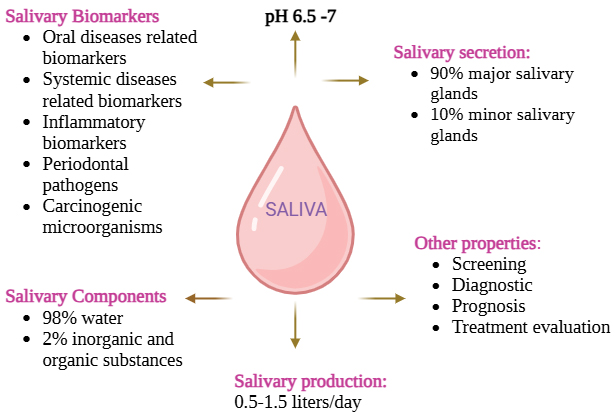
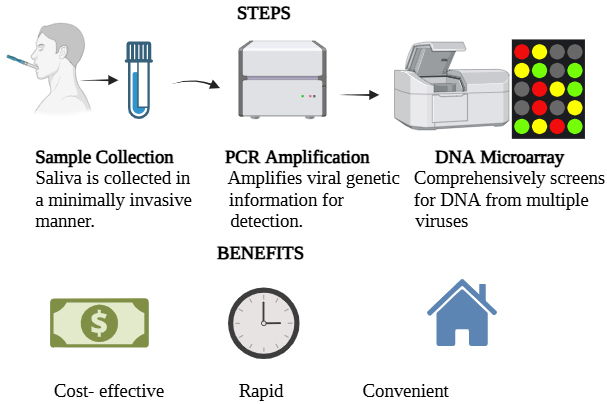 Fig. 5.
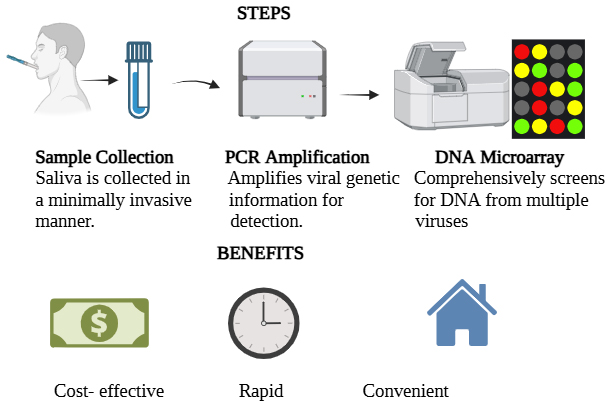
Saliva as a biological fluid. Steps for minimally invasive saliva sampling during herpesvirus and SARS-CoV-2 diagnostic testing. The figure was created with BioRender.com.
OLP is a chronic inflammatory disease affecting the mouth. Periodontitis is a gum disease that damages the tissues supporting teeth. Primary Sjögren’s syndrome (pSS) is an autoimmune disease affecting salivary and tear glands. Oral leukoplakia is a condition characterized by white patches on the oral mucosa, increasing oral cancer risk. Implantitis is an inflammatory condition around dental implants, often caused by bacterial infection. Gingival crevicular fluid (GCF) is the fluid secreted by the gums, particularly at the interface between the gums and the teeth. GCF is distinct because it is significantly lower in quantity in a healthy oral cavity and increases in patients with an infection or gum disease. In addition to being non-invasive, the concentration of GCF can be used as a biomarker to reveal illness. The electrolytes, albumins, globulins, lipoproteins, and other constituents in GCF provide a distinct composition; thus, GCF can be used as a diagnostic marker in HIV-positive patients because it can identify anti-HIV antibodies. The microbiome Streptococcus Gordonii is a common salivary bacterium that is prevalent in periodontal settings and contributes to inflammation and bone loss; hence, it can also be used as a biomarker [24]. Furthermore, S. Gordonii can infiltrate the bloodstream and result in potentially fatal conditions such as endocarditis. S. Gordonii may also impact the development of protective biofilm layers, raising the incidence of dental cavities. Since Ti-based biosensors can provide information about peri-implantitis and bacterial breakdown upon antibacterial or antimicrobial treatments, these biosensors are essential, given the widespread use of Ti-based dental implants. Alpha-amylase is important as a biomarker since it contributes to oral texture, flavor, and odor and tracks stress levels. Alpha-amylase also significantly impacts the oral cavity while being in very minute concentrations in saliva. While since saliva is a biological fluid that scientists and clinical practitioners frequently utilize to diagnose viruses and describe the mouth cavity’s microbial makeup, serum and plasma assays and whole blood and urine tests can be used as substitutes for saliva testing. However, compared to other testing techniques, saliva tests have several advantages, including being less invasive, being reasonably priced, and using readily available samples. Saliva tests were employed in many cases and studies to identify the presence and activity of viruses, frequently followed by PCR to measure and amplify viral DNA. Researchers and medical practitioners can better understand viral infections in the oral cavity and throughout the body thanks to the effective and affordable use of saliva testing [26, 27]. Fig. 5 illustrates the steps for minimally invasive saliva sampling during herpesvirus and SARS-CoV-2 diagnostic testing.
A quantitative reverse transcription–polymerase chain reaction (RT-qPCR) is used in several saliva tests to identify viral RNA in subject saliva samples. The development of various sampling technologies, including nasal and pharyngeal swabs, which use RT-qPCR to detect viral RNA, was prompted by the need for SARS-CoV-2 diagnostic testing. RT-qPCR testing is especially advantageous because of its high sensitivity and cost. Saliva samples offer greater testing accessibility and enable more people to be tested more comfortably and minimally invasively, even though some have reported up to 20% higher sensitivity with diagnostic assays using nasopharyngeal swabs than saliva samples. Multiplex RT-qPCR analysis assays have been performed using self-administered oral and nasopharyngeal swabs, including those found in at-home testing kits, with an accuracy on par with tests conducted by medical professionals [28, 29].
While salivary diagnostics have shown promise, many studies focus on small cohorts or specific viral infections, limiting generalizability.
Variability in biomarker levels due to individual differences in salivary composition or systemic conditions could impact diagnostic reliability.
The lack of standardized protocols for salivary diagnostic tools hinders their integration into routine care.
Research has demonstrated that saliva samples possessed similar sensitivity to nasopharyngeal swabs in detecting SARS-CoV-2. Tests for HIV antibodies based on saliva have shown excellent accuracy. Two extensive investigations demonstrated 100% sensitivity and specificity for saliva anti-HIV antibody testing. ELISA has been shown to have a sensitivity of 93.6% and specificity of 92.6% in saliva testing for the hepatitis B surface antigen, suggesting that it has the potential to be a dependable diagnostic method. Meanwhile, although frequently used to treat respiratory infections, nasopharyngeal swabs can cause discomfort and pose a risk to medical personnel because of possible exposure. Therefore, saliva testing provides a less invasive option with similar sensitivity for some infections. For instance, research found that saliva testing for SARS-CoV-2 was almost as successful as nasopharyngeal swabs, with a sensitivity that was 3.4% lower. Nonetheless, blood tests are frequently regarded as the gold standard for various infections because of their high sensitivity and specificity. However, trained individuals must collect blood samples, which is intrusive. Although saliva tests might not be as sensitive and specific as blood testing for all illnesses, the non-invasive sample collection represents a more patient-friendly alternative.
This review emphasizes the intricate relationship between viruses and oral health, specifically how different RNA and DNA viruses affect immune responses and dental microbiota. According to the current research, viral infections seriously upset the equilibrium of oral microbes, which frequently makes people more susceptible to opportunistic infections. For example, HIV has been associated with salivary IgA suppression and oral microbiota dysbiosis, which may increase the risk of periodontal disease and other oral pathologies. Furthermore, other RNA viruses, such as HCV, worsen diseases, including xerostomia and periodontitis, suggesting a connection between systemic viral infections and oral health decline. Saliva-based biomarkers represent a promising, non-invasive diagnostic option, and this review emphasizes the need for novel diagnostic methods. Salivary diagnostics may help with the early diagnosis and treatment of oral disorders, particularly for those with weakened immune systems. Additional investigation into saliva biomarkers for different viral infections may improve the precision of diagnosis and guide therapeutic approaches. Furthermore, there is a continued need for educational interventions to increase treatment inclusivity, as seen by the observed reluctance of certain dental practitioners to treat patients with bloodborne viruses. Filling these gaps can assist in controlling the public health burden related to oral consequences of viral infections, improve patient outcomes, and promote a more comprehensive approach to managing viral impacts on oral health. Future research should concentrate on developing diagnostic capacities in environments with limited resources, evaluating saliva-based screening techniques for wider uses, and examining the direct pathways through which viruses affect oral health.
The intricate interplay between viruses and oral health underscores the significance of a comprehensive understanding of viral pathogenesis and its impact on oral microbiota. As highlighted in this review, viral infections can disrupt the delicate balance of the oral ecosystem, leading to a range of oral diseases. Saliva, a readily accessible biological fluid, has emerged as a promising diagnostic tool for early detection and monitoring of viral infections and oral health status. Further research is imperative to unravel the complex mechanisms underlying viral–oral interactions, identify novel biomarkers, and develop innovative strategies for preventing, diagnosing, and treating viral-related oral diseases. Ultimately, by addressing these challenges, we can improve oral health outcomes and enhance the overall well-being of individuals.
SR, ESS, KRNP, AVV, TASR and SS designed the work plan and wrote the manuscript study. SS provided help and advice on the manuscript editing, reviewing. All authors contributed to editorial changes in the manuscript. All authors read and approved the final manuscript. All authors have participated sufficiently in the work and agreed to be accountable for all aspects of the work.
Not applicable.
We would like to thank Faculty of Pharmacy, Dr. M.G.R. Educational and Research Institute, Velappanchavadi Chennai – 600077.
This research received no external funding.
The authors declare no conflict of interest.
References
Publisher’s Note: IMR Press stays neutral with regard to jurisdictional claims in published maps and institutional affiliations.