
Special Interview with Dr. Aarón Terán More: Interdisciplinary Exploration and Future Development of Peptide and Protein Metallization Research
7 August 2025
The First International “Peptide and Protein Metalation” conference was held in Naples, Italy, from 10 to 12 June 2025. The conference (https://www.ppmnaples25.com/home) aimed to gather a community of researchers that spans different areas of chemistry and biology, and operates in many Universities and Research institutions, to showcase their latest findings on different topics ranging from bioinorganic to medicinal chemistry, from catalysis to toxicology, from biological chemistry to materials sciences. Aarón Terán More attended to the conference thanks to the support of IMR Press.
We are honoured to have Dr. Aarón Terán More for an interview, which will focus on his academic journey and research work, and we hope to gain valuable insights and inspiration from his experiences and reflections.
Introduction of Dr. Aarón Terán More
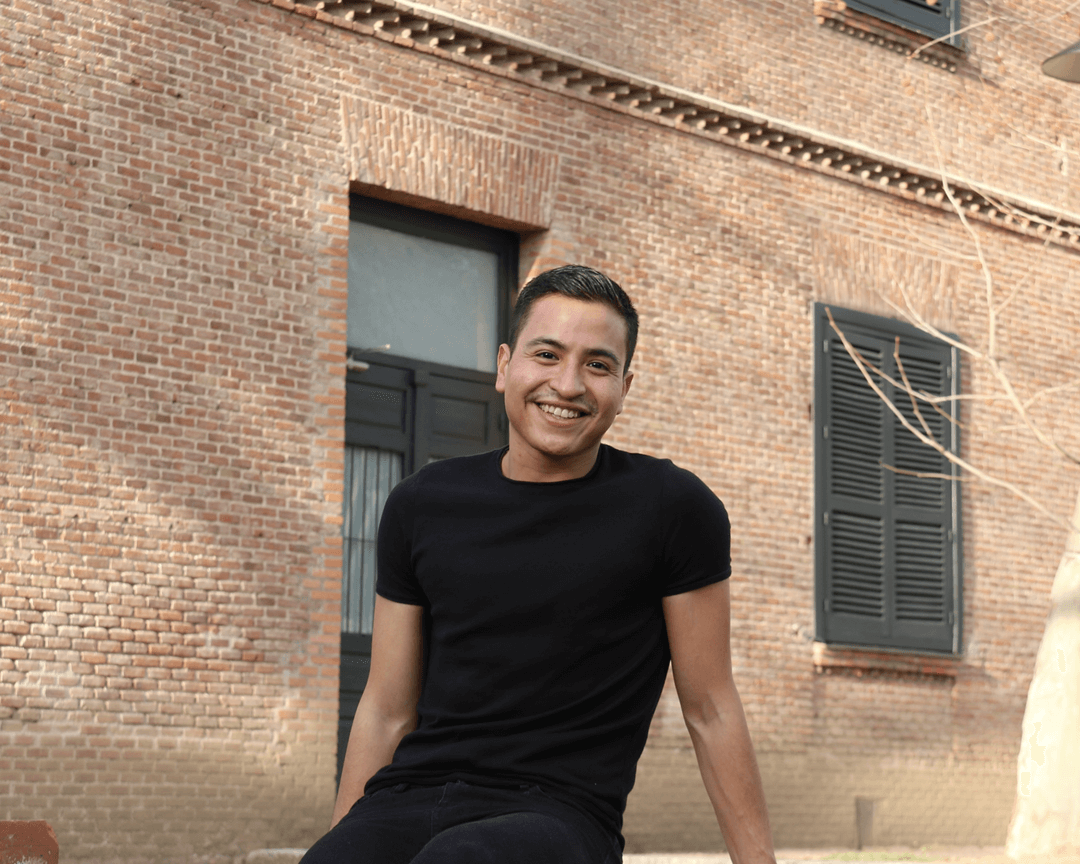
Dr. Aarón Terán More is Post Doc at the Department of Physics "E. Pancini" of the University of Naples Federico II (Italy). He received his PhD in Advanced Chemistry from Complutense University of Madrid (Spain) in 2023. His current research interests include the design of inorganic-protein hybrid systems and their study using computational chemistry tools.
The University of Naples Federico II, established in 1224 by Emperor Frederick II, is the world's oldest public, secular university. As a pioneer in higher education, it has consistently been at the forefront of scientific and technological advancements. The Department of Physics "E. Pancini" stands as a testament to this legacy, renowned for its cutting-edge research and interdisciplinary collaborations.
The "E. Pancini" Department of Physics at the University of Naples enjoys a high reputation internationally for its outstanding research and educational quality. The department covers multiple research fields such as theoretical physics, particle physics, quantum computing, astrophysics, and medical physics. It actively participates in international cooperation and cultivates scientific research talents with a global perspective.
Part 1: About Aarón Terán More
"Currently, my work focuses on how computational methods can be used to explore and understand various biological mechanisms. For me, this has been a significant transition in my career—and an exciting one."
Q1: Could you briefly introduce your academic background and current research focus?
I completed all my advanced chemistry studies—including my bachelor's, master's, and PhD—at the Complutense University of Madrid in Spain. After completing my PhD, I moved to Naples, Italy, where I am currently a postdoctoral researcher in the Department of Physics at the University of Naples Federico II.
As for my research, I initially worked as an experimental scientist. During my bachelor's, master's, and PhD studies, I was consistently involved in experimental research. However, after completing my PhD, I decided to make a shift and broaden my expertise. Around two years ago, I began learning about computational chemistry and started engaging in related research projects. I began studying how computational chemistry can be applied to better understand biological processes.
Currently, my work focuses on how computational methods can be used to explore and understand various biological mechanisms. For me, this has been a significant transition in my career—and an exciting one.
Q2: What led you to enter this particular research field? Were there any pivotal moments or influential mentors that shaped your academic journey?
When I began my academic journey, I was always interested in understanding the biological function of different enzymes. I’ve always been curious about the role of enzymes in the human body. During my PhD, my work was related to the design of different enzymes. Now, as a postdoc, I'm trying to understand the biological role of enzymes—but through computational methods.
Q3: In your opinion, what are the most promising research directions in your field? Are there any emerging technologies or concepts that could lead to breakthrough developments?
That's a very good question. In my opinion, research often follows trends.
Currently, it's very common for research groups to collaborate with computational chemistry teams to gain deeper understanding of specific molecular properties. One of the most promising directions in chemistry, in my opinion, is the integration of artificial intelligence. AI has the potential to transform and accelerate the research process—from molecular design to data analysis. It is becoming one of the most essential tools across all fields.
Part 2: Conference Participation and Research Exchange
"There were people from biology, chemistry, and physics backgrounds all in one room, sharing their expertise. When I saw the program, I was very happy to see such a diverse group of people coming together. "
Q4: What led you to learn about this conference, and what motivated you to participate?
The Peptide and Protein Metalation Conference was a unique opportunity to bring together outstanding scientists from diverse fields. There were people from biology, chemistry, and physics backgrounds all in one room, sharing their expertise. When I saw the program, I was very happy to see such a diverse group of people coming together. The organizer, Professor Antonello Merlino, is someone I had the chance to work with a few years ago. From him, I learned the importance of collaboration across disciplines to achieve groundbreaking discoveries. It was a great pleasure for me to attend the conference and learn from leading scientists, while also engaging in deep discussions.
Q5: What are the key scientific questions addressed in the abstract you presented at this conference?
In the abstract I presented, our research focused on understanding how small oncogenic and anti-oncogenic molecules interact with biological systems. Our goal was to elucidate their mechanisms of action. This is fundamental research, but it's essential in paving the way for effective molecular target design in the future. We aim to understand their selectivity, binding modes, and structure-activity relationships.
Q6: What challenges did you encounter during this study, and how did you overcome them?
When working with biological systems, there are many challenges. One of the main difficulties in our case was the unpredictable behavior of drug molecules. When you start studying a compound, it’s hard to anticipate how it will behave. So, reproducibility becomes a major challenge—we usually repeat experiments two, three, or even five times to ensure what we observe is valid.
Q7: Were there any talks or perspectives at this conference that impressed you or inspired new ideas for your own research?
Yes, I was absolutely inspired by the talks at the conference. I left full of new ideas.
In general, all the talks were excellent, but one that stood out for me was Professor Annette Rompel’s from the University of Vienna. She works with polyoxometalates and showed how the same compounds could be applied to studying cancer, diabetes, and even in founding a startup. It was amazing how interdisciplinary collaboration led to such impactful results.
Part 3: Research and Academic Development
"My advice would be to share your work as much as possible—attend conferences, use preprint servers, and engage on social media."
Q8: Has your abstract evolved into a full manuscript? Do you plan to submit it to a peer-reviewed journal?
Yes, our abstract has evolved into a full manuscript. We are now finishing up the data analysis and integrating computational and biological results. We’re currently in the writing stage and trying to tell a coherent and compelling research story.
Q9: What are the key criteria you usually consider when selecting a journal for submission?
Selecting a journal is always a tough decision, because your work will be archived there permanently. So, it’s important to be very thoughtful about where you publish. The first thing I usually consider is the journal’s scope and whether it aligns with my research topic.
Then, of course, the impact factor matters—we always hope to publish in high-impact journals. But beyond that, I also value the speed and transparency of the publication process. Some journals take a very long time to publish, which can be frustrating. Another key aspect is the peer review process. I believe constructive reviews help us improve our research.
And finally, visibility. I think it's increasingly important that journals promote articles on platforms like social media.
For example, when journals post on X (formerly Twitter), and tag authors and institutions, it helps our work reach a wider audience.
Q10: Have you had a chance to explore IMR Press journals or our official website? Do you have any suggestions or feedback regarding our content presentation, user experience, or overall academic services?
Yes, after the conference, I visited the IMR Press website. It’s nicely organized and easy to navigate. I found it easy to search for different topics and locate articles.
One suggestion I might offer is to include thematic collections—like grouping articles under a specific topic such as metalloproteins.That way, readers can quickly find relevant content with a single click.
Q11: The academic publishing field is increasingly exploring ways to support researchers—such as offering scholarships, training programs, and more. In your opinion, what areas could publishers further improve or enhance to better support the research community?
This interview itself is already a great initiative. It’s not common for early-career researchers to be invited to share like this. But beyond that, I think publishers could offer training and resources specifically tailored for early-career researchers.
Researchers need to know how to write a paper, how to review one, and how to manage large datasets. While some of this can be learned through experience, structured courses or lectures would be especially helpful (Welcome everyone to visit the Education section on the IMR Press official website IMR Press Education. We are constantly updating various related learning courses). Additionally, I think mentoring programs would be extremely valuable. Having the guidance of someone with more experience can make a big difference.
Q12: What advice would you give to early-career researchers seeking to increase the visibility and impact of their work?
My advice would be to share your work as much as possible—attend conferences, use preprint servers, and engage on social media. Platforms like X, LinkedIn, and ResearchGate can help expand your visibility and allow others to discover your work.
Also, networking is extremely important. Building relationships with others in your field can lead to collaboration and valuable feedback. You can learn a lot from your peers, and they can also benefit from your expertise.
We would like to thank Dr. Aarón Terán More for his sincere sharing. In the future, IMR Press will continue to publish more interviews with academic figures to record their explorations and reflections, so please look forward to it!