


1 Knowledge and Art Practices and Data Management, Huygens Institute, Postbus 10855, 1001 EW Amsterdam, Netherlands
2 Faculty of Humanities, University of Amsterdam, Postbus 15540, 1001 NA Amsterdam, Netherlands
Abstract
This article discusses the development of an unpublished classification of the arts, Beeldleer (Iconology) that its creator Henry van de Waal (1910–1972) described as a tool with the title ‘Globus Iconographicus’ for mapping and organizing knowledge of visual and non-visual arts. Explorations of the archives of art and literature historian Van de Waal reveal the role that cartographical methods and the Universal Decimal Classification (UDC) played in the design of a catalogue system of topographical prints and drawings of Leiden University Library and ultimately in the development of his classification systems of the arts, Iconclass and his hardly known Beeldleer. I claim that Beeldleer has potential value as a classification of the (making of) global art beyond the canon of Western art history and for mappings with non-visual art forms. This will be demonstrated by applying Beeldleer to classify the work of the Sámi artist and environmentalist Britta Marakatt-Labba (born 1951). Finally, I will argue that the publication on the Semantic Web of this incomplete and sometimes outdated classification, preferably in ontology design patterns, might still be relevant for knowledge organization of (digital) art history. In particular, for its syntactic qualities, Beeldleer could play a crucial role in contextualizing the (pre-) preliminary results of experiments with computer vision and artificial intelligence.
Keywords
- globus iconographicus
- classification of arts
- Henry van de Waal
- Beeldleer classification system
Almost every art historian has heard of Iconclass. Less known is that its creator, Henri van de Waal (1910–1972), for the greater part of his life, worked on another classification of the arts: “Beeldleer” (Iconology), which was never published. This article will demonstrate how cartography, in combination with the Universal Decimal Classification, was instrumental in the development of Beeldleer and the ultimately published art classification: Iconclass. The sources regarding the history of Beeldleer and Iconclass are dispersed over multiple archives1. For the impact of cartography and the UDC on the developments of these classifications of the arts, I merely focus on the Archives of the Collection Bodel Nijenhuis, which nowadays make part of the combined cartographical collections of Leiden University Libraries2. However, before diving into the archives, I first briefly sketch the life and works of Henri van de Waal.
Iconclass, the classification that is used worldwide to describe the contents foremost of historical, mythological, and biblical scenes of Western culture, is probably more famous than its creator. Van de Waal is seldom only mentioned in the margins of publications about his well-known classification system. Those who want to know more about Van de Waal have to rely foremost on biographical notes by people close to him. They appeared respectively in a Festschrift in honor of his sixtieth birthday on 3 March 1970 (Couprie et al, 1970) and posthumously on the occasion of the centennial of his day of birth in 2010 (Ekkart, 2010a).
From these personal memories, we get the impression of a hardworking and demanding scholar with a very broad interest in the humanities and in other disciplines. Van de Waal taught his students not only in the history of the visual arts but also in literature, poetry, music, anthropology, and sociology. Foremost, he wanted to teach them how to look at works of art and make them acquainted with their artisanal aspects, i.e., with the making of art (Ekkart, 2010b; Sluijter, 1998). Finally, these notes refer sometimes anecdotically to Van de Waal’s obsession with card-systems. One of his students even called it a “fiche-mania” (Bavelaar, 2010).
Although Van de Waal is primarily known as an art historian, he enrolled at Leiden University in 1929 to study Dutch language and literature. After earning his bachelor’s degree, he pursued a degree in the history of art. He completed his studies cum laude in 1934 and shortly thereafter became an assistant in the Print Room of the Leiden University Library. In 1940, just before the outbreak of World War II, he defended his PhD in Arts and Philosophy, again cum laude, presenting an iconological study of seventeenth-century historical depictions of the Batavian Revolt. Of Jewish descent, Van de Waal had to leave his job at the Print Room in November 1940, and after a long period of hiding, he was arrested and sent in 1943 to the Dutch transportation camp Westerbork. After the war, Van de Waal returned to the Print Room now as head assistant, and not long after, in December 1945, he was appointed as an extraordinary professor at Leiden University. On the 22nd of March 1946, Van de Waal held his inaugural address with a plea for iconology (van de Waal, 1946, p. 19–22), and a half year later, on the 11th of August, he became a full professor. He combined this position with the directorship of the Print Room until his death on the 7th of May 1972.
Van de Waal was still an assistant of the Print Room of Leiden University when he received in 1938 the request of the Board of Curators of Leiden University to create a catalogue system for the topographical drawings and prints in its library3. Perhaps the Board had heard from Van de Waal’s obsession with card systems. However, it may be, the final report with the outline of the system was handed over by Van de Waal to the board on the 1st of March 1938.
In the same period, Van de Waal was developing his catalog system for the topographical drawings and prints for the Leiden University library and working on his PhD. Although he defended his dissertation just before the Second World War, the manuscript was lost during his period of forced exile. The PhD (van de Waal, 1940a) was published in an adapted version as part of a comprehensive iconological study in two volumes on the representation of the history of the Low Countries between 1500–1800 (van de Waal, 1952)4.
The report to the Board explaining the catalogue system of the topographical prints and drawings of Leiden University Libraries and Van de Waal’s PhD dissertation contain all sorts of references to geography and cartography. The same archive box: “systeem [system] Henri van de Waal” that holds the report to the Board, also contains several maps with annotations of Van de Waal that reveal a thorough analysis of charting and projecting systems. In his PhD and its statements Van de Waal also referred to the organization of topographical data and tried to explain the difference between iconography and iconology by comparisons to “Kunsttopographie” [art topography] and “Kunstgeographie” [art geography]5. Although Van de Waal explained his catalogue system of topographical prints in two periodicals—one dedicated to documentation and classification (van de Waal, 1939), the other to the history of arts (van de Waal, 1940b)—in particular, the archival sources of the Collection Bodel Nijenhuis are essential for understanding the relation between cartography and classification in the development of his iconological methodology and iconographical systems.
In his report to the Board, Van de Waal described the problem of searching in a topographical collection: “One looks for an image of a particular city and its surroundings, a certain area and its surroundings or of a particular region. It is evident that an alphabetically organized collection of topographical prints cannot provide an answer to many questions. For instance, consider the question whether the collection holds images of castles in ‘Het Gooi’. This question cannot be answered without extensive research”6. Van de Waal chose the example of “Het Gooi”, not without reason. The Gooi area extends over two provinces in the Netherlands. In an alphabetical order of the topographical prints per province, the images of the castles would require a search both in the provinces of Utrecht and North Holland. Moreover, they could not be represented in conjunction with each other. Therefore, Van de Waal (1940b, p. 15) stated: “There the question is legitimate, whether it would not be possible to attribute and order topographical data according to a numerical system that arises from the characteristics of the topographical data themselves”. The archive box in the collection Bodel Nijenhuis reveals that Van de Waal found the answer to this question combining cartography and classification.
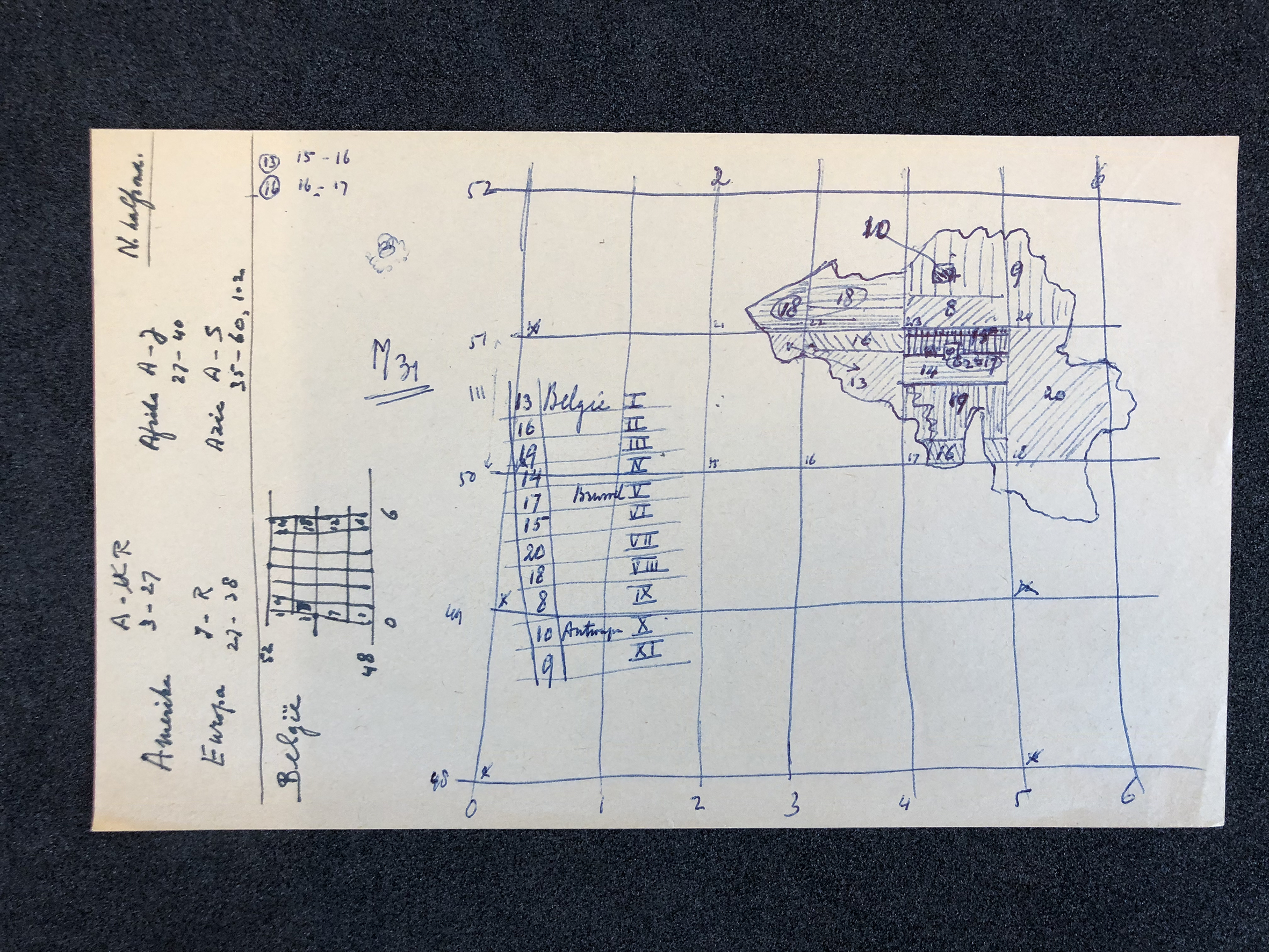
The box contains several maps, some sketched by Van de Waal himself (Fig. 1),
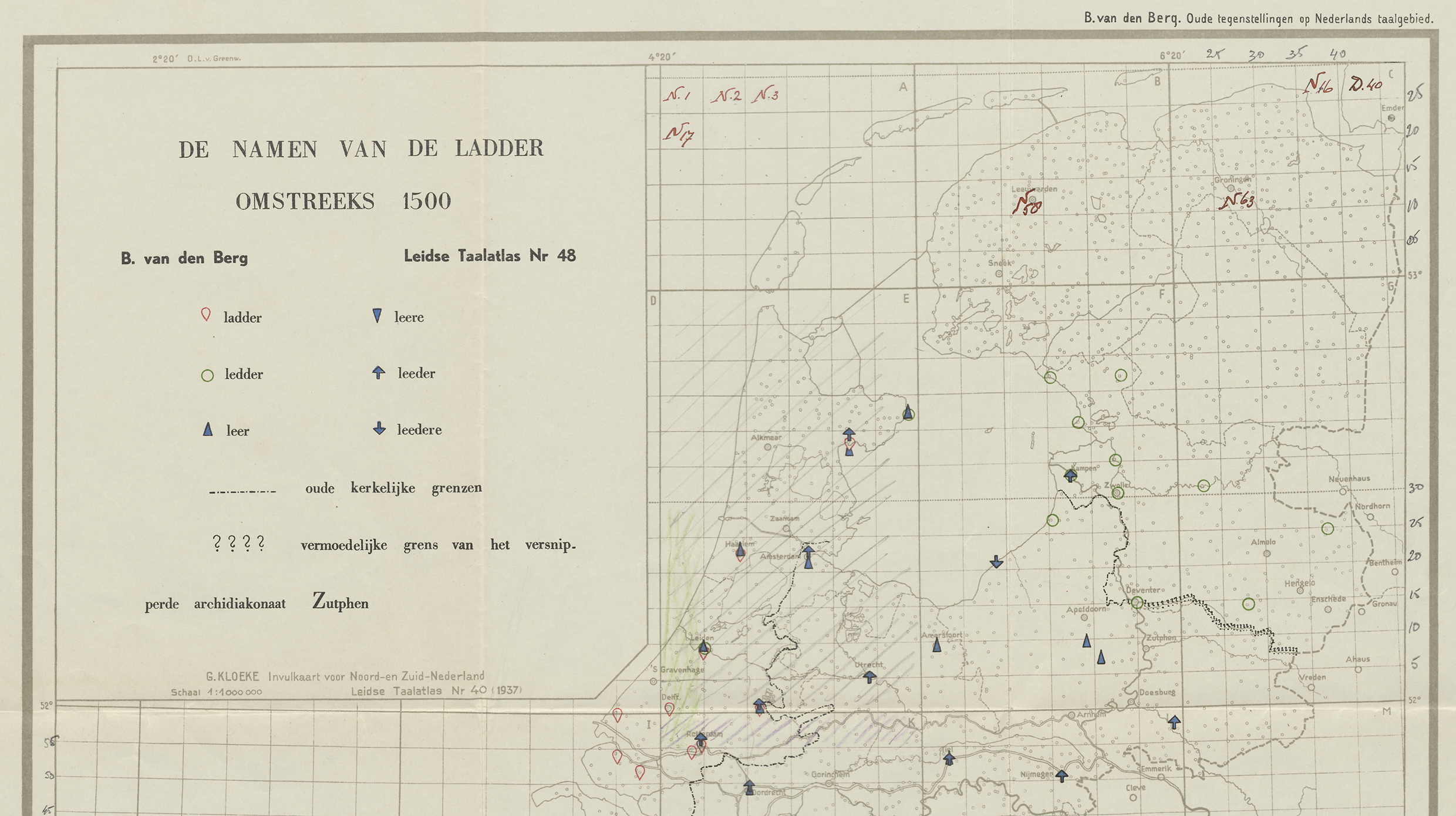
others annotated by him. One of the latter maps is made by Berend van den Berg
(1911–1979) as part of a PhD (Berg, 1938) under the supervision of a
renowned Dutch dialectologist, Geninus Gherardus Kloeke (1887–1963) (Fig. 2).
The map [1:1.000.000] of the Netherlands and in Flanders (currently a part of
Belgium) and foreseen with a grid system of squares subdivided in 6
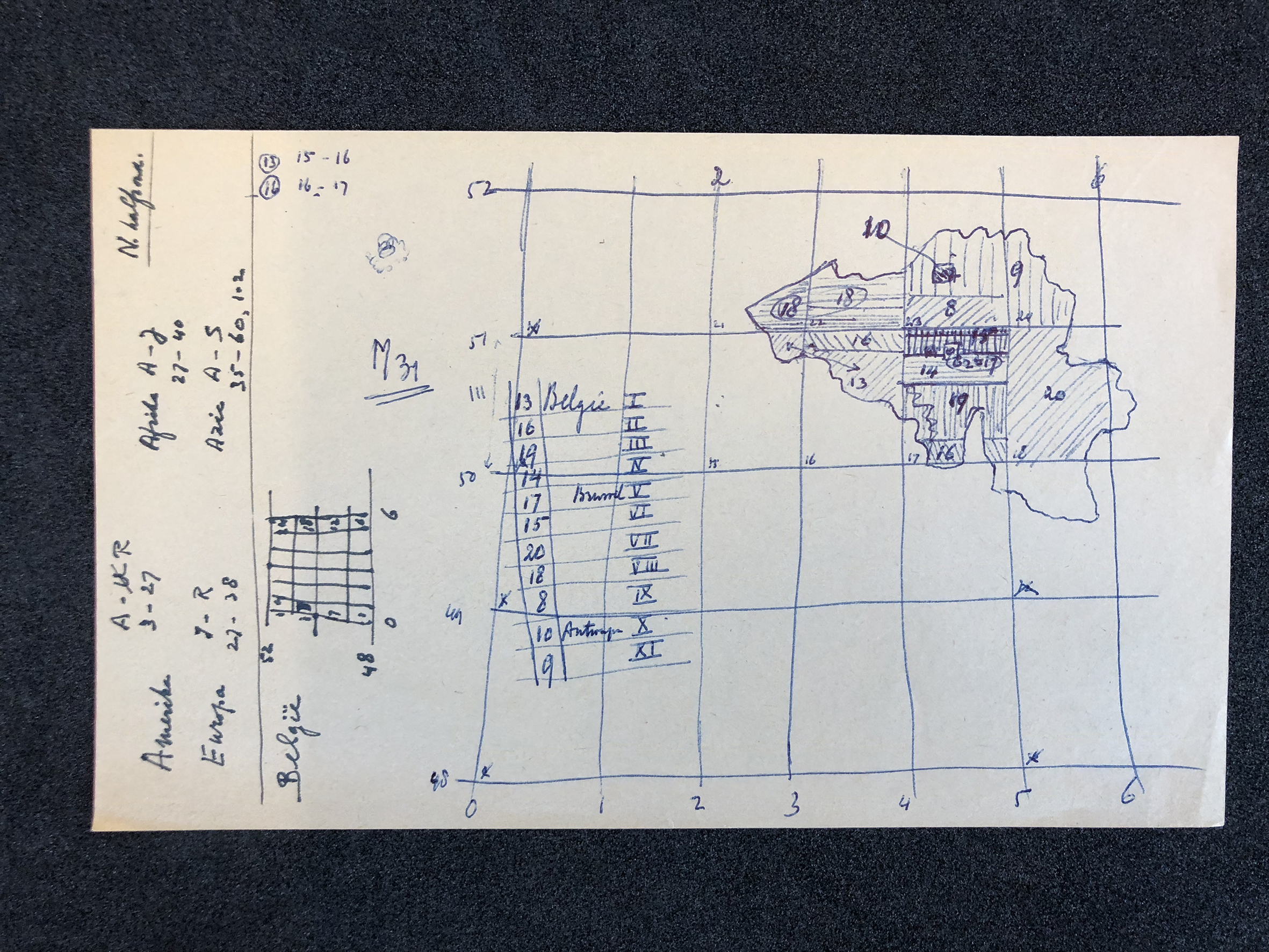 Fig. 1.
Map of Belgium by Henri van de Waal manuscript drawing with
gridpattern and numerical annotations (ca. 1938). Leiden, University Libraries,
Archief van de Collectie Bodel Nijenhuis, Doos 2 map “Systeem Henri van de
Waal” (1938-39), 1 (Notities voor het beschrijven van 1 Buitenlandse prenten
“Systeem van de Waal 1938–1939” folder 2) Ink drawing. Measures: 20
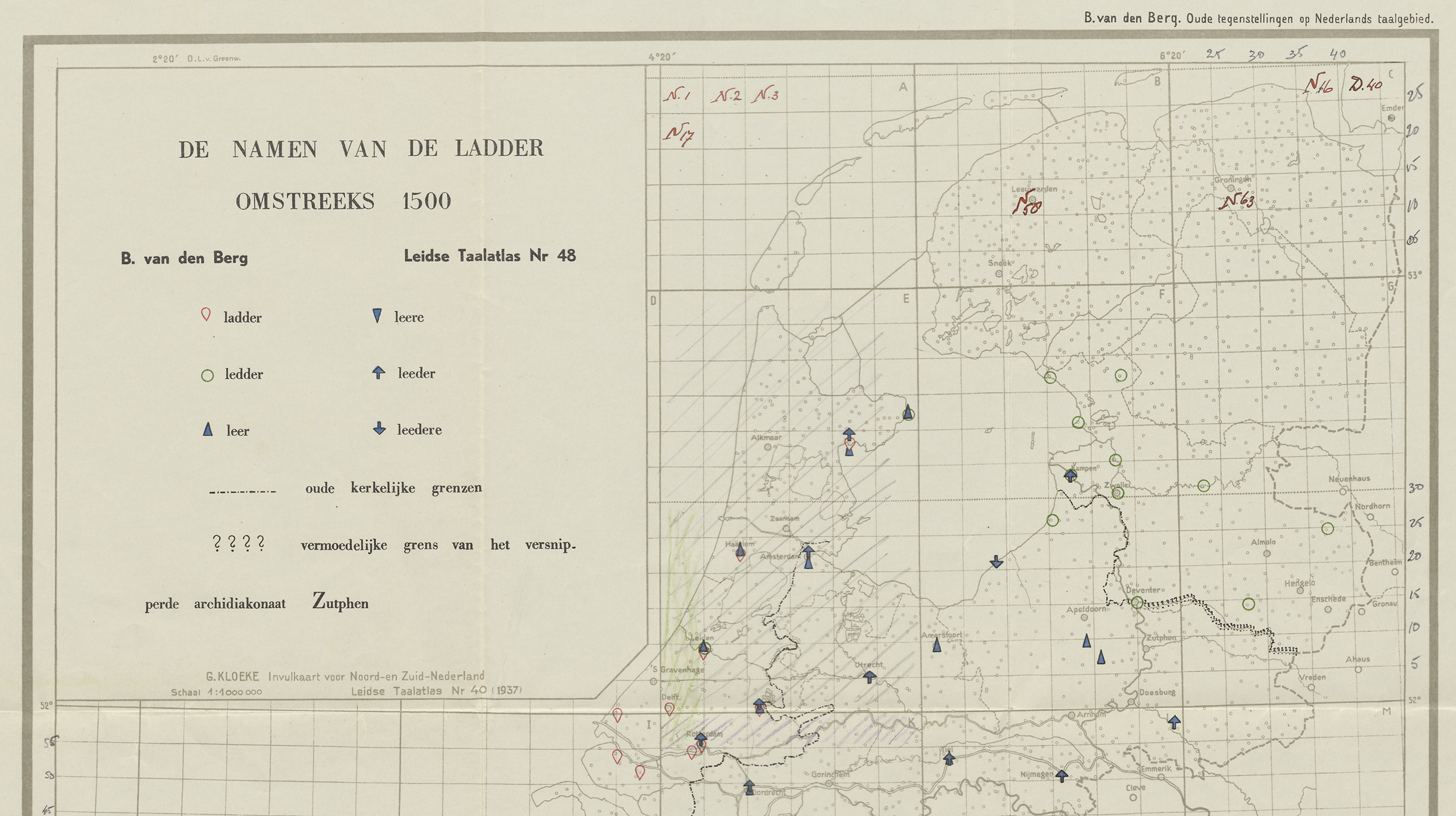 Fig. 2.
Dialect Map of Low Countries: Names of Ladders around 1500 Nr. 48. Berend van den Berg op G. Kloeke, Insert map of Low Countries, Leidse Taalatlas [Language Atlas of Leiden] (Netherlands) 48 (1937) (detail) Scale 1: 1000.000. 43 cm–47.5 cm. In: Leiden University Libraries, Archief van de Collectie Bodel Nijenhuis, Box 2 folder 1 (Notities voor het beschrijven van 1 Buitenlandse prenten “Systeem van de Waal 1938–1939” file 1).
Van de Waal (1940b, p. 20) was aware of the complexity of his system. For that reason he considered it only useful for “an extensive collection with a universal [cursive Van de Waal] scope”. The term “universal” probably must not only be read as a characteristic of a collection with a range that goes beyond regional or national topographical information, but also seems to be related to the classification with the same adjective: the Universal Decimal Classification (UDC). This classification system was developed by Paul Otlet (1868–1944) and Henri La Fontaine (1854–1943) by the end of the Nineteenth century in Brussels with the aim to organize universal knowledge for a global society and as an active instrument to keep world peace after World War I. Van de Waal’s interest in the UDC is reflected in the correspondence and other documentation in the collection Bodel Nijenhuis: “Systeem Henri van de Waal”. For instance, the box holds letters from and to Frits Donker Duyvis (1894–1961) a spider in the web of Dutch documentation before World War II and a pivotal figure in the dissemination of the UDC not only in the Netherlands but also internationally (Rayward, 1975, ad vocem; van den Heuvel, 2012, 2013). Donker Duyvis was between 1922 and 1929 the director of the Nederlands Instituut voor Documentatie en Registratuur (NIDER). This office promoted the application of the decimal system for the filing systems of national governmental bodies such as the Dutch Postal and Telegraph Service, the administrations of Dutch municipalities, and industrial bodies. The promotion was apparently successful; by the end of 1925, the administration of some 170 institutions was organized with a decimal system. In 1924, NIDER also housed the Dutch branch of the International Institute of Documentation, which in 1937 would change its name to the International Federation of Documentation (FID) (Rayward, 1967). Furthermore, Donker Duyvis was in 1925 a co-founder of the Nederlands Instituut voor Efficiency (NIVE), later affiliated with NIDER, to promote efficiency in Dutch governmental bodies and industries by exhibitions and publications of which some (one by J.M.C. Muller dealing with the organization of an archive of drawings using decimal numbers) are included in the mentioned archive box7. Donker Duyvis was the most important promotor of the UDC in the Netherlands who played a crucial role in the decentralization of the International Institute of Bibliography (IIB) founded by Paul Otlet and Henri La Fontaine with a world center of documentation in Brussels in mind. Despite his reorientation since 1924 of the focus of the IBB with its classification UDC towards a confederation of national documentation centers, there was no loss of belief that these centers could operate only with a uniform system for classifying documentary items. To implement that idea, a Classification Committee was installed as “a liaison center for all who co-operate in the development of the tables of the Decimal Classification” with Donker Duyvis as its secretary (Rayward, 1975, p. 228 and 277). Donker Duyvis and Muller (1934) published an abridged version of the UDC in Dutch and would be engaged for almost 40 years in adjusting this decimal classification to meet practical needs in organizing scientific knowledge and in developing concordances for interoperability with other classification systems.
Most of the letters of Van de Waal to and from Donker Duyvis and of his colleagues of NIDER, NIVE and the FID (all on working on the premises of NIDER in the Hague) concerned an article on his topographical system in the FID-Communications published by NIDER. However, Donker Duyvis pointed Van de Waal (1940b, notes 2 and 11; van den Heuvel, 2013) also to topographical classifications used in the German postal system, such as the Ortnummersverzeichnins des deutsches Reichs, published in Berlin in 1928. Although Van de Waal valued the numerical, non-alphabetical order of the German decimal postal code system, he considered it only partially suitable for the organization of topographical prints and drawings. Not only did it have a hierarchical structure, but the numbers also tended to become very long when details on the topographical representations needed to be annotated. For that reason, Van de Waal came up with his own system by adapting a map and combining it with an existing decimal classification notation system.
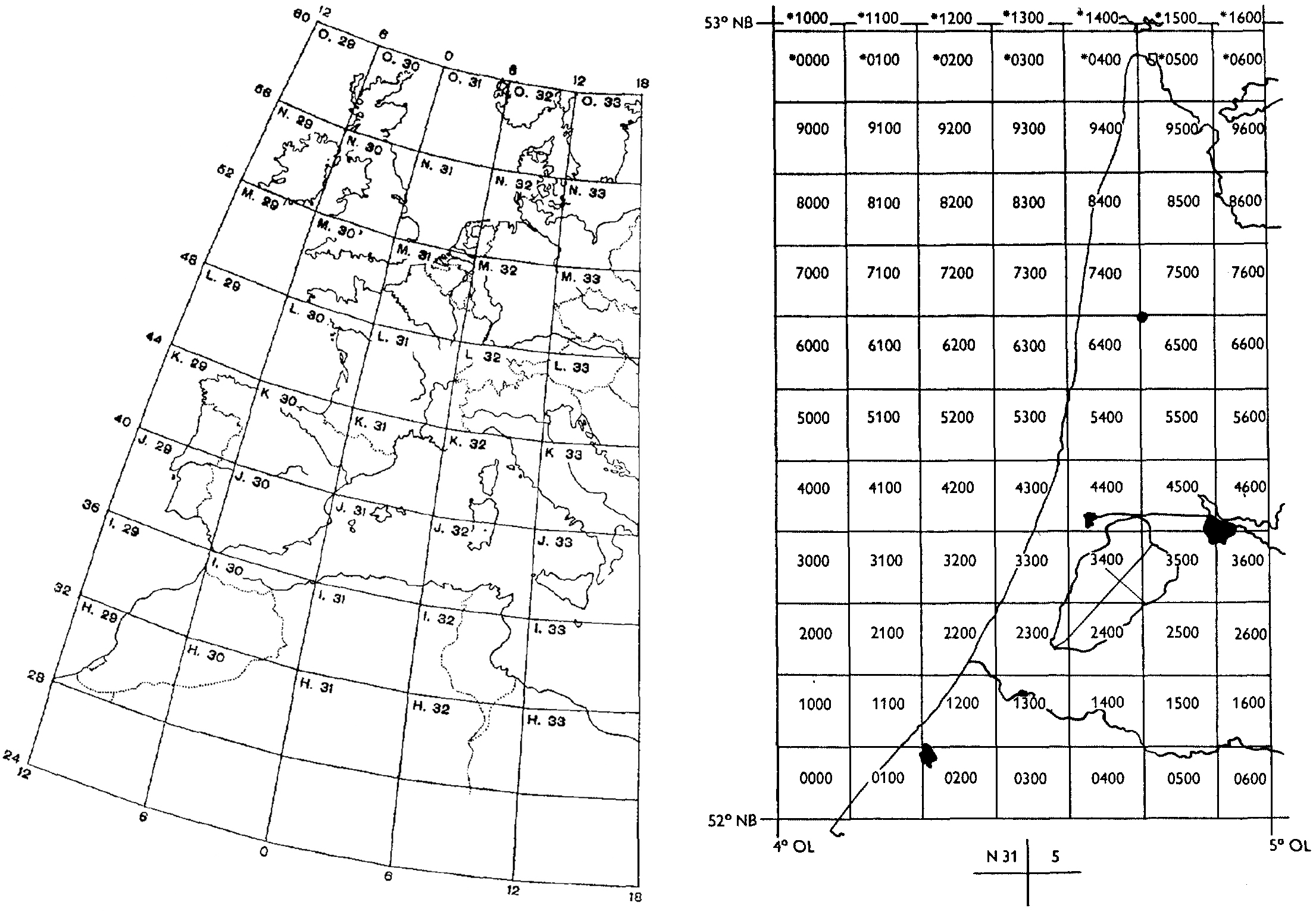
The point of departure of Van de Waal’s topographical system was the
International 1:1.000.000 World Map in multiple sheets, also known as the
“Millionth Map”8 (Fig. 3, left). The initiative was presented for the first
time in 1891 by the German geographer Albrecht Penck (1858–1945) with the
idealistic aim—comparable to the vision of Otlet and La Fontaine of the
UDC—as an instrument to serve a Mondial society instead of creating political
and administrative borderlines9. The initiative would result in an
international cartographical collaboration first in the Central Bureau of the Map
of the World in Londen and after World War II in UNESCO10. The foreseen
series of sheets that ultimately had to form the World Map (but that never was
realized in full) had a polyconic grid system based on longitudinal and
meridional lines that served as an index system for all topographical data. The
grid of this world map, which since 1913 served as a reference system for data of
all sorts of societal issues, consists of sheets with 24 rectangles that
correspond to 4
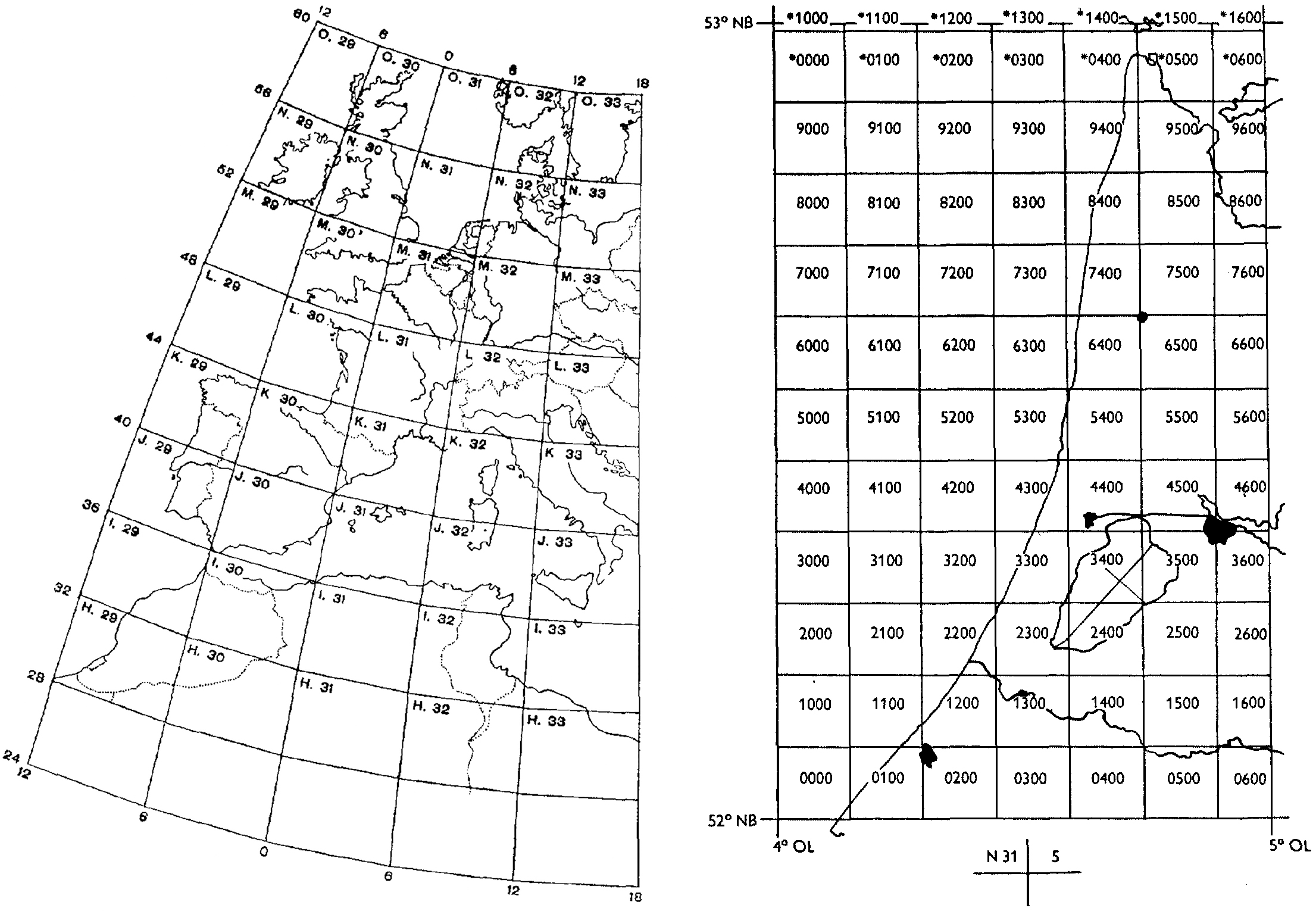 Fig. 3.
Millionth Map. Scale 1:1000,000. Sheet Western Europe (Left). Map from an area in the province of Noord-Holland (Netherlands) design Henri van de Waal after Millionth World Map (Right). Illustration 1 and 5 from Henri van de Waal, De rangschikking en catologisering van een topografische atlas (1940b).
The world map in question probably appealed to Van de Waal because it allowed
for the representation of a certain area according to internationally agreed
standards, independently from political or administrative borders. Moreover, not
only topographical but also scientific data of various domains could be organized
and presented systematically in the grid. However, because the topographical
prints and drawings mostly covered much smaller areas, Van de Waal needed a more
fine-grained system in order not to lose too much detail. Furthermore, he also
considered the extension of the quadrants of the international world map in
oblong strips unsuitable. Therefore, Van de Waal (1940b, note 3) adapted the
map with the advice of A. van Hengel and C.A.J. von Freitag Drabbe from the
Topographical Service in The Hague, who recently had introduced new stereometric
and photogram maps based on a similar grid system. Each sheet of the world map
was subdivided into decimal quadrants of 10
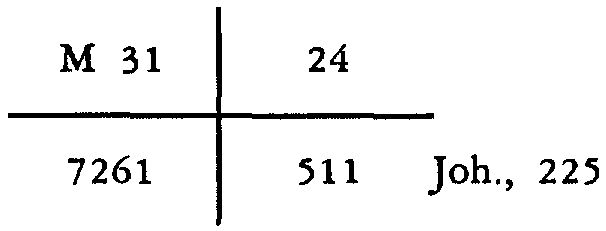
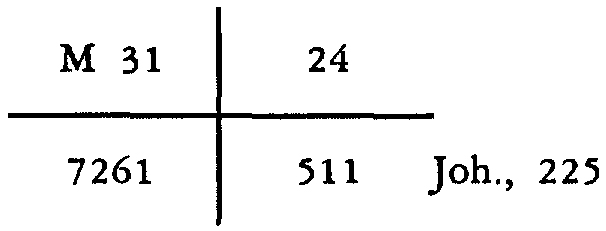 Fig. 4.
Schema classification Root lot of St. John’s Cathedral in ’s-Hertogenbosch Netherlands design Henri van de Waal. Illustration from Henri van de Waal, “De rangschikking en catologisering van een topografische atlas” (1940b, p. 19).
Before the publication of Iconclass in 1968, Van de Waal began developing a more comprehensive classification system for the arts known as Beeldleer, which he translated as Iconology in the years leading up to World War II13. Once again cartography was an important source of inspiration for Van de Waal’s classification of the arts. In an art historical conference held in 1952 in Amsterdam, Van de Waal (1955, p. 602) explained how he envisioned the making and use of his general classification of iconography: “If I draw a map, I need not to enumerate all the localities; if only my map represents the STRUCTURE [capitalization Van de Waal] of the whole area, I include in anticipation all geographical possibilities. From this example you may already get an idea of what I mean if I say that such a general system, in order to deal with the innumerable possibilities should be consistent”. Van de Waal (1955, p. 605) concluded his paper once again with a mapping metaphor: “in composing my system for filing ‘all the portrayable’, I often felt inspired by the example of Dutch makers of nautical instruments. As such a means for finding our way through the still greatly unmapped iconographical archipelagos and for their iconological exploration I constructed this tool as a globus iconographicus [cursive by Van de Waal]”.
The importance of this mapping metaphor for understanding Van de Waal’s view on the task he had set for himself to create a tool for “iconological exploration” can hardly be overstated. The aim is not to draw a map as a static object but as a system that could be used as a mapping tool to fill in still uncharted territories of the arts gradually. In the next section, I will first describe the main characteristics of Beeldleer (Iconology) and then explore its potential role as a universal classification of global art, beyond the Western canon.
Beeldleer, never published in full, got hardly any attention beyond a profound article in Knowledge Organization titled “Hypericonics” by Gerhard Jan Nauta (1993). Nauta also developed a website with a classification database with the same name, which is no longer in existence. The term “Hypericonics” was introduced to express the non-linear character of the classification system with cross-references between terms in its various subsections that allow for linking multidimensionally similar to hypertext. Nevertheless, Van de Waal called his system in development Beeldleer, which he translated as “Iconology”. I stick to this term and its translation considering that Van de Waal envisioned Beeldleer as a kind of image theory or doctrine, comparable to the term Bild-Lehre in German, and for his emphasis on iconology as a method to promote the role of the arts in society.
The development of the Beeldleer system can be followed in various successive documents that reveal a continuous editing process. One finds the most complete version of Beeldleer in the archives of the RKD Dutch Institute for Art History14. It is impossible to describe the system and all its changes over time in detail. Therefore, I will limit myself to a document describing the background of the main classes of Beeldleer and just give a brief impression of their contents herein15.
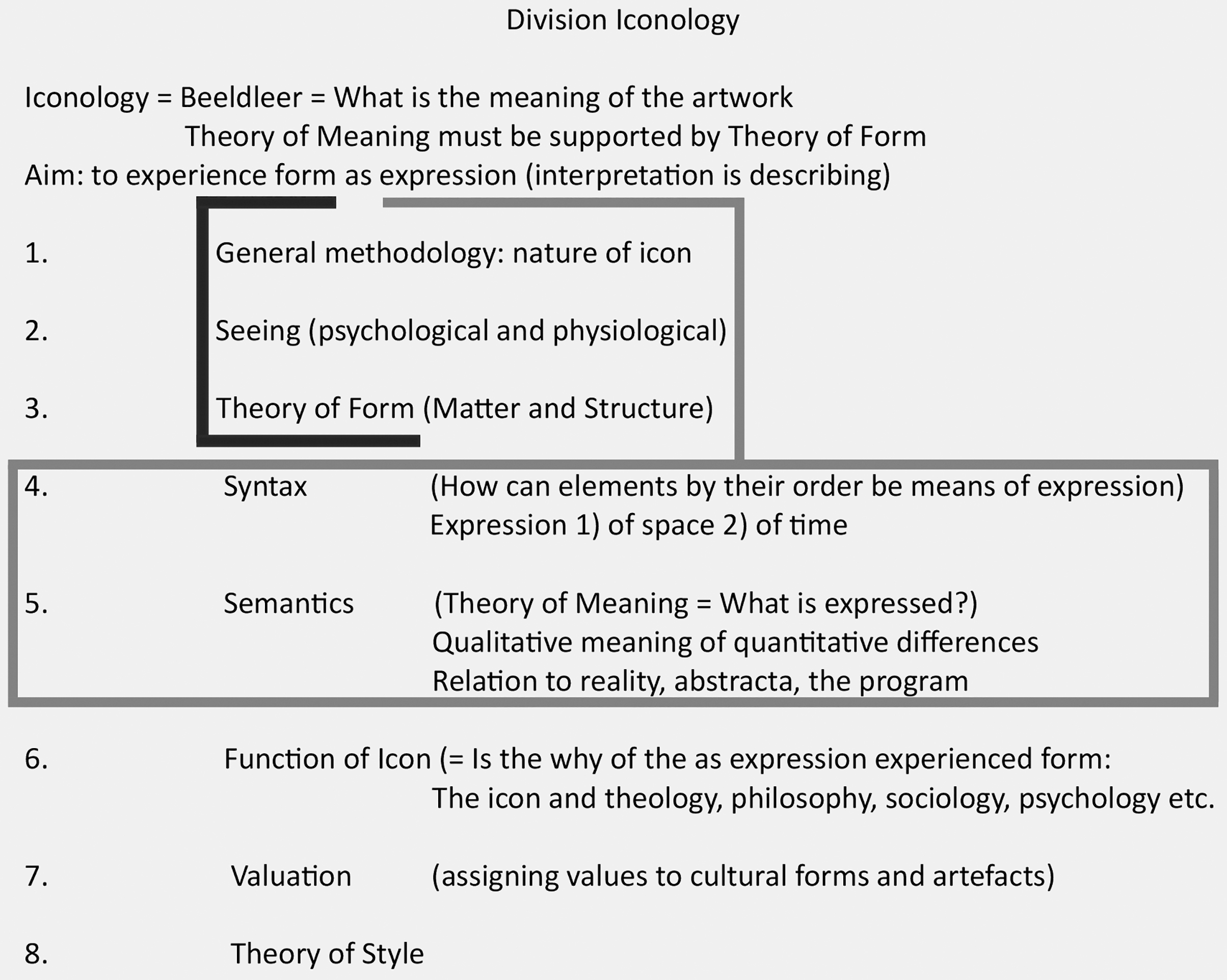
An archival document in typescript titled “Indeling Iconologie” (Division Iconology) explains the theoretical background of Beeldleer16. Here, the lines in black and grey (in the original document, respectively blue and red) and textual annotations (originally in Dutch) are highly relevant for understanding the relationships in the original order of the main structure of this classification of the arts (Fig. 5).
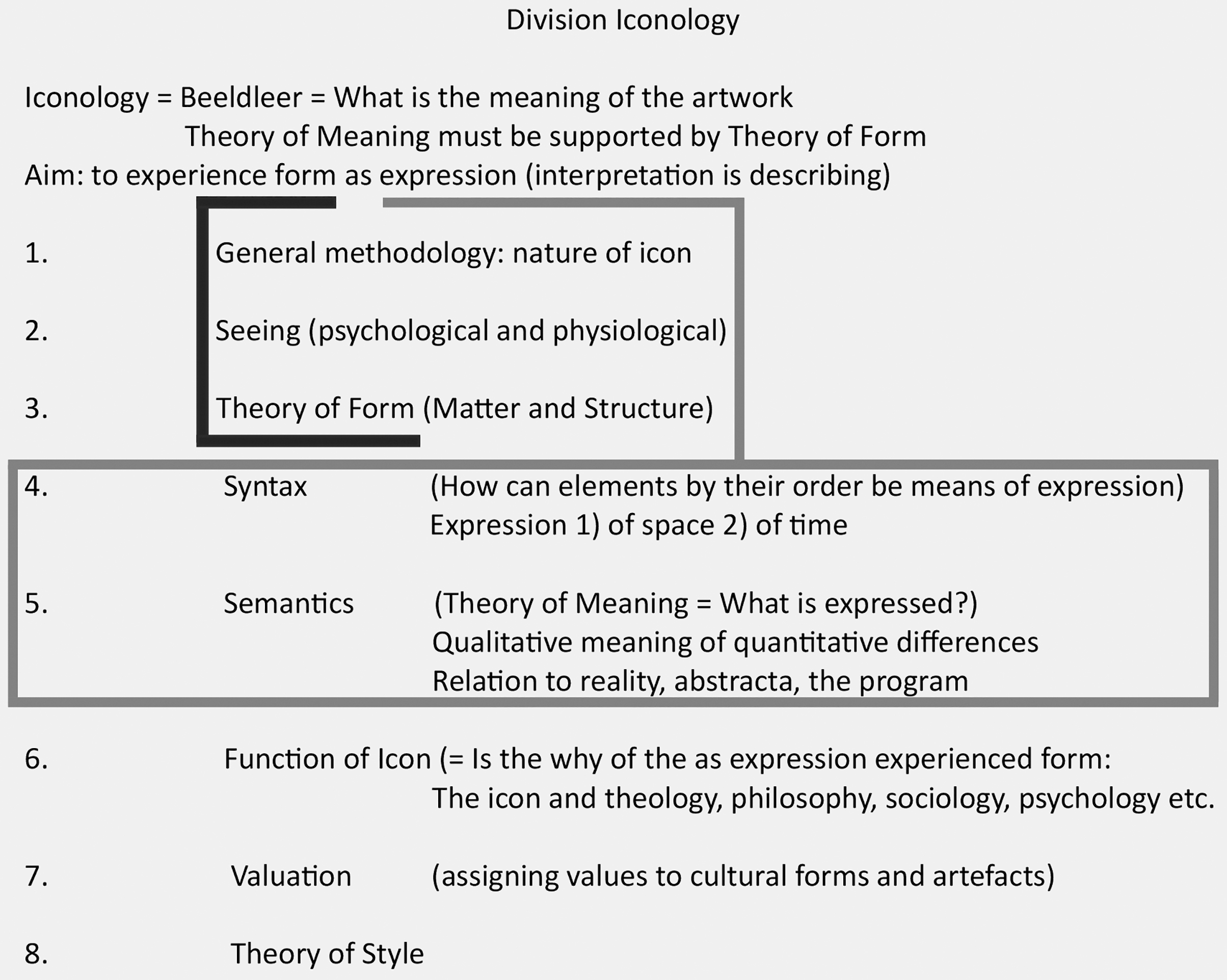 Fig. 5.
Henri van de Waal, Division of Iconology. Translation and black and white image after the original document: “Indeling Iconologie”. The Hague, RKD, HaRKD 0625-Box 16. Division Iconology (“Indeling Iconologie”), s.d. [1949 ca.].
This one-page document from around 1949 provides definitions related to the “Theory of Form” and “Theory of Meaning” and groups specific main classes of Beeldleer using colored lines17. Van de Waal defines Beeldleer (Iconology) as an answer to the question: “What does the artwork mean?” Furthermore, he states that a theory of meaning needs to be supported by a “theory of form”. The aim hereof is to experience form as expression. Black lines (see Fig. 5) connect everything related to form: (1) general methodologies regarding the nature of the icon; (2) seeing both in a physiological and psychological sense; and (3) theory of form, while a grey line (in the original red) connects expression with the next two main classes: (4) syntax (positioning in time and space); and (5) semantics which Van Waal considers to be the theory of meaning (“What is expressed?”) to explain “qualitative meaning of quantitative differences”. The three classes mentioned earlier, (6) function of icon, (7) valuation, and (8) theory of style, have no further colored highlights.
In short, with this document, Van de Waal visually stresses the importance of syntax and semantics (here in grey) and indicates (here in black) the preconditions to come to a meaningful interpretation. This precondition is the understanding of form based, in the first place, on observation.
This document was translated into a classification system that had the following order in its final known version: (1) Introduction; (2) Vision/seeing; (3) Form (matter and structure); (4) Space; (5) Semantics; (6) Function of icon; (7) Valuation (appreciation, attributing values to forms of culture and artefacts); and (8) Theory of style. Note that 1 was previously labeled as “general methodologies regarding the nature of the icon” and that class 4 syntax in the ultimate version became space by moving all subclasses related to time to 8 theory of style. Van de Waal, when typing out the last version of Beeldleer, had probably given up the idea of publishing it as a printed classification system (similar to DIAL (Gerson, 1972) and Iconclass) and thought perhaps of another, more generic book format18. Nevertheless, we continue to discuss Beeldleer as a classification system because the main structure and its subclasses remained reasonably in place despite some changes in nomenclature.
The subclasses in the “introduction” that in previous versions were labeled as “methodology” reflect a wide array of methods, domains, techniques, operations, and definitions that are relevant for describing the work of the art historian both as an individual researcher and as a professional in various institutional settings. Worthwhile to mention are the classes that Van de Waal distinguishes in the perspectives that art historians can take in their analyses between “centripetal methodology” (that focuses on unique characteristics in a work of art) and “centrifugal methodology” (with a focus on general types and laws in artworks). While the first class must have served as a wide overview of the profession and practices of the art historian, the following section concerns the already mentioned emphasis of Van de Waal on seeing art and on how to look. It deals both with physiological aspects of vision and with ways of representation by artists to control or manipulate the view of the observer. The primary purpose of this class is to support the art historian in what Van de Waal calls “esthetic-critical observation”. Noteworthy for the universal character of Beeldleer is the subclass “ethnic differences” with references to non-European systems of spatial representation and styling. The third section, “Form (Matter and Structure)”, contains subclasses that allow for zooming in on the making of various arts (architecture, painting, photography etc.) and for describing their formal characteristics in detail, such as composition, proportion, line, color but also in more general terms such as form and beauty and form and expression. The following fourth class is “Space”. It is hard to explain why Van de Waal gave a new name to this section that previously was called “Syntax”, which dealt with the order in which forms are expressed in space and time. Not only did Van de Waal consider syntax a fundamental condition in the making of art, as the motto of his inaugural address of 1946 reveals, but before the rename of this label, it was also the logical pendant of the next class, “semantics”19.
While the subclasses in “semantics” could be seen as indicators to recognize aspects of meaning, the following one, “functions of the icon”, was probably intended to situate them in broader contexts. Examples of contexts in which these icons could function as concepts are language, biology, sociology and society. It should be added that some of the subclasses in this section such as “clean and good”, “ugly” or “kitsch” are rather normative and need to be assessed critically/reformulated before including them in future applications of Beeldleer. Class 7: Valuation (appreciation, attributing values to forms of culture and artefacts) contains subclasses, foremost methodological ones to enable such critical assessments and validations of the functions of icons in various contexts. To these seven discussed main categories of Beeldleer, Van de Waal added in the last known version a new one: “Theory of Style”. It seems that Van de Waal first considered to include aspects of “style” as a sub-classis of one or more main headings of Beeldleer, but in the end decided to bring it in as a separate class in his hierarchical system20. Van de Waal’s Theory of Style category contained a subclass ethnic styles, that could be relevant for describing non-Western art works21.
Despite the genuine attempts of the current developers of Iconclass to adapt it into a more inclusive global system, its original design with a strong focus on the meaning of Western figurative artworks of the Early Modern Period still shapes the potential of its application22.
These limitations of existing classifications of the arts raise questions such as how to categorize the (preliminary) results of computer vision experiments of the huge quantities of non-figurative of abstract artworks; how to classify non-Western art; or how to deal with the making of art works rather than interpretations hereof.
Beeldleer (Iconology) provides many classes not only for describing the formal features of visual artworks, but also for comparisons with other creative expressions such as architecture, literature, poetry, film, music etc. Finally, Beeldleer (Iconology) also allows for contextualizing and giving meaning to these works not only in the domains of art-history or cultural heritage but also in a societal sense by including classes dealing with psychology, sociology, ethnography, anthropology, politics, and so on.
I already noted that Van de Waal never published Beeldleer and that only a much smaller system, Iconclass was accomplished. It is important to realize that Iconclass, which appeared in paper format in 1968, was not only smaller in scope but that the paper format of this classification was also structured quite differently. While Beeldleer was envisioned as a multidimensional, fully numerical decimal classification system, Iconclass was designed as a hierarchical system with alpha-numerical notations. In its digital format, the scope of Iconclass was not only considerably enhanced, but also its structure became less hierarchical with cross-links to comparable subclasses of the various main classes23. This raises the question of the extent to which the less encompassing Iconclass that in its digital format was developed much further since Van de Waal’s death meets the challenges of (digital) art history today. What added value can the publication of Beeldleer have for art historical research? Answering that question first requires a comparative analysis and critical reflection of both systems.
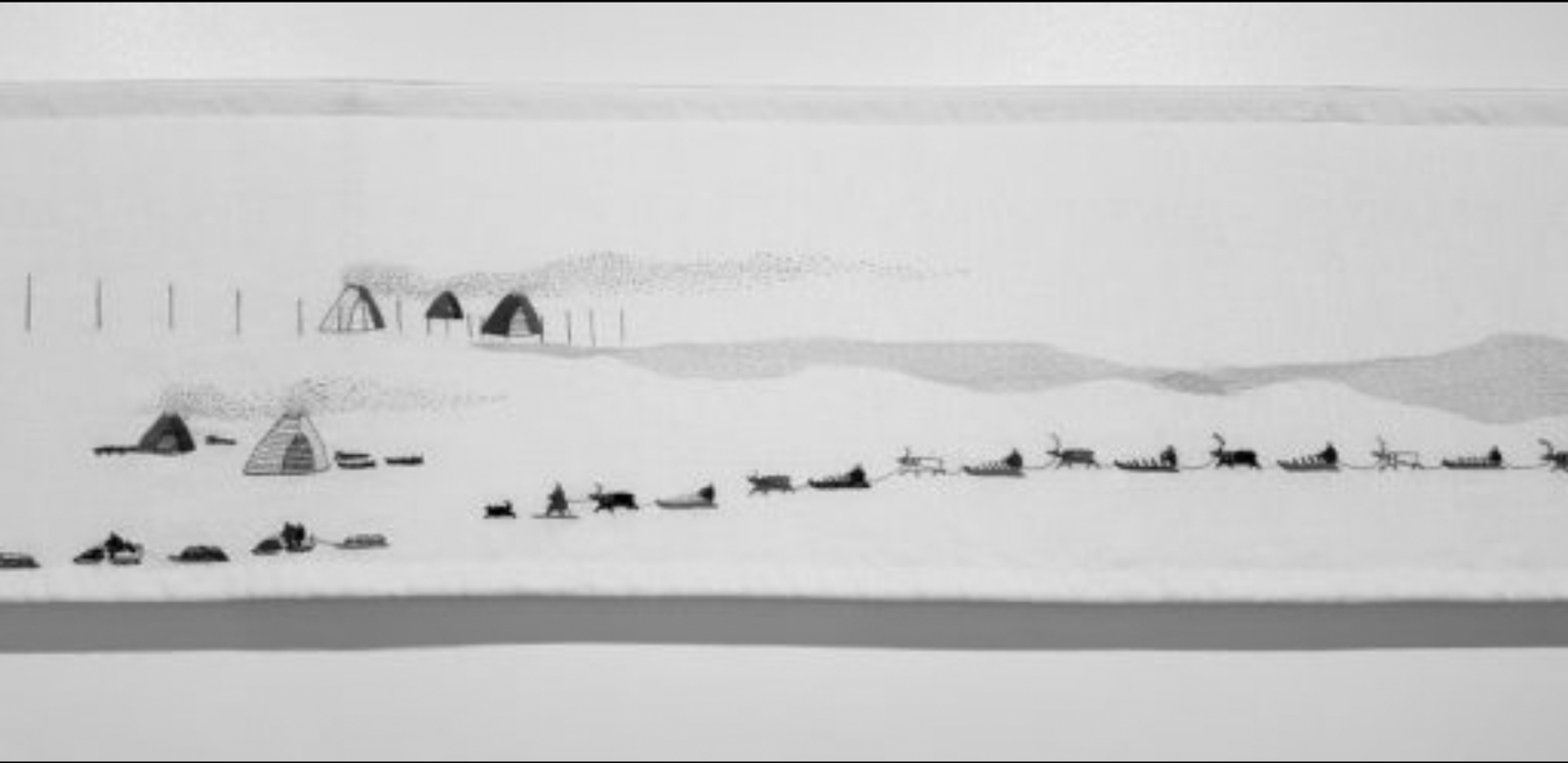
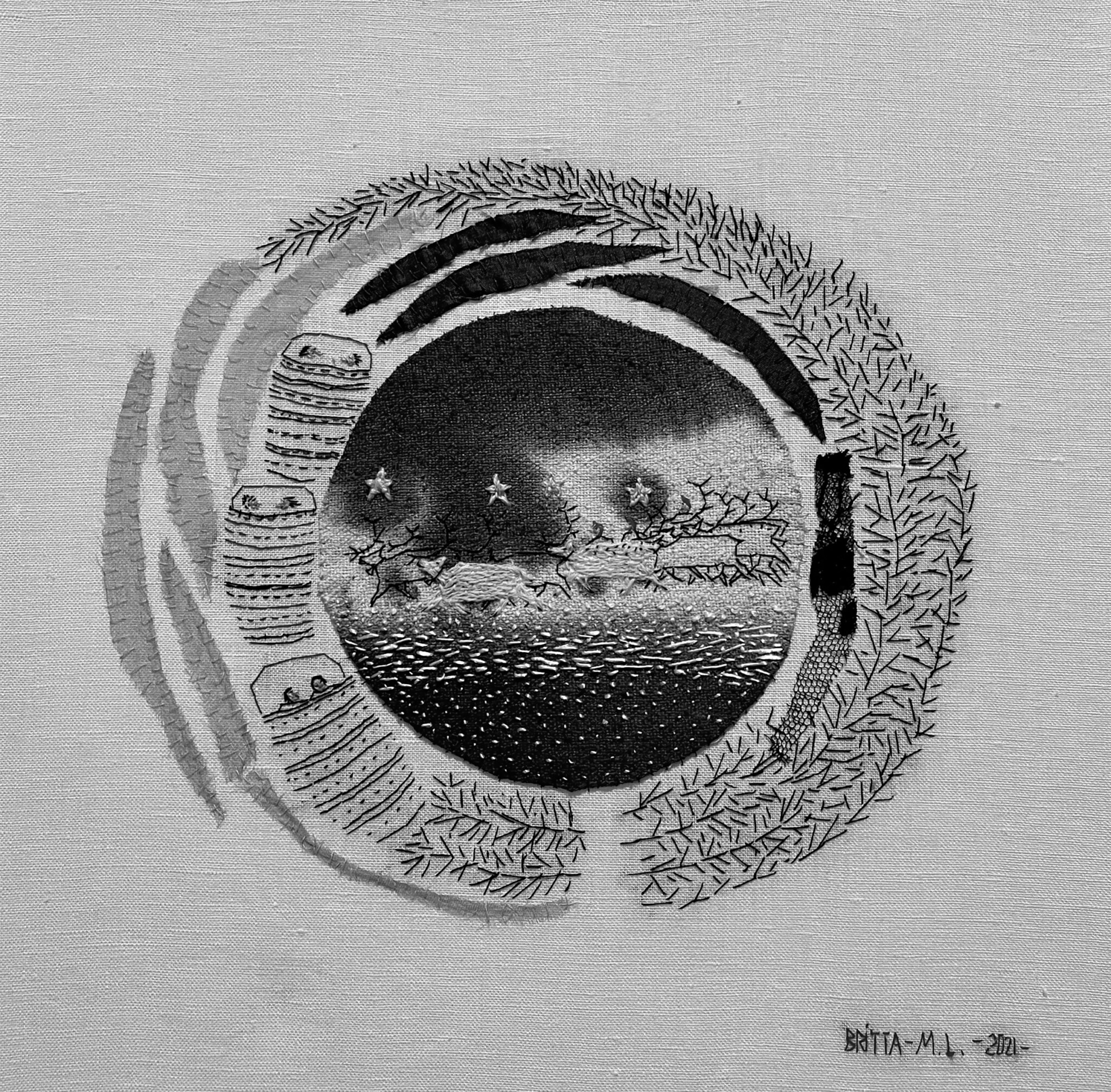
For this comparative analysis, I will look into the life and work of the artist and environmentalist Britta Marakatt-Labba (born in 1951). Marakatt-Labba works in different media, such as wood sculpture, lithographs, watercolor painting and drawings. However, she is foremost a textile artist who prefers, in particular, embroidery because its slow production process allows her to think about what she wants to express in her art. Marakatt-Labba is a Sámi artist from the Swedish part of Lapland or the less contested term Sápmi that the inhabitants prefer to use when referring to this area that stretches over parts of Norway, Sweden, Finland and Russia. In that regard, the cartographical method that Van de Waal adapted to map topographical data without making use of national or administrative borders fits in very well with classifying artworks of Marakatt-Labba and that of the artist group Máze of which she was one of the founding members in 1971. The aim of the group was to emancipate the Sámi culture and to promote their art not just in ethnographical terms or as folk art but as an exponent of contemporary art. Another characteristic was that their art played a role in political action. Marakatt-Labba’s environmental activism resulted in a brief imprisonment during the so-called Alta Conflict; a protest in 1981 against the building of a hydroelectric dam on the Alta River. Her work Garrját (The Crows) from 1981, reminds me of this incident. The birds that stand in Sámi culture for creatures that grab what they can gradually become police officers24. Although the Máze group was dissolved in 1983, art’s role in promoting Sámi culture combined with a political agenda more and more directed against climate change continued to shape the work of Marakatt-Labba. Garrját (The Crows) was, for instance, followed by other political works such as Johtin I and II (The Move), respectively of 2016 and 2018, that dealt with the forced relocation of the city of Kiruna to create new access to the largest iron-ore mine of the world. This embroidery on tarpaulin charts also recalls the historic dislocation ordered by the Swedish government in the 1920s, resulting in the forced relocation of hundreds of Saḿi families. Mapping the past, present, and future connects historic settler colonialization to present-day forced displacement for economic reasons in the Saṕmi region. Such historical representations on similar material but in a completely different format concern the 3D installation Dah́pah́usat aíggis/Events in Time (2013). Canvas sheets are hanging from wooden sticks in a broken circle. On the outside Marrakatt-Labba embroidered a swastika and a German eagle referring to the Nazi occupation of Norway during World War II. Seen from inside the circle, there is an embroidered visualization of the 2011 Utøya terrorist attacks. The assassin–right-wing extremist Anders Behring Breivik—is imagined as a double-headed bird of prey, surrounded by weapons and with bullets flying in all directions. With a completely different historical representation, Marakatt-Labba made her international breakthrough in contemporary art at the 4th Documenta Kassel (2017). It is a 24-meter-long tapestry Historjá (History) that she embroidered between 2003 and 2007 to represent the Sámi history in an oblong landscape with gods in extending forests and never-ending reindeer trails (Fig. 6). At another important international art event, the Biennale of Venice of 2021, she alternated oblong embroidered landscapes with circular views of the night sky “In the footsteps of the stars” as refracted through an orb or reflected in an eye, suggesting the parabolic projections used to create two-dimensional maps25 (Fig. 7). These images were compared to ‘mappa mundis’, maps that convey history and legend as well as geography. Around the circumference of the circular representation of the sky are snapshots of Sámi life: with camping Sámi asleep under blankets transforming into trees and reindeer trails26. Sámi history is strongly based on oral history, and her work can be seen as a visual storytelling. The Sámi culture has a concept for art, Duodij, that stands for a product/object as well as the process of making art. It relates to handicrafts such as needlework and carpentry, and working with multiple, foremost natural materials such as wood, bones, stones, antlers, and reindeer leather to make knives, drums, clothes, hats, and decorative objects as well. These handicrafts also have mythological meanings and are expressions of the gods, who, in the Sámi culture, are female27. It goes without saying that the multilayered and complex work of Marakatt-Labba poses challenges for classification. The Duodij concept of art requires classes for techniques that combine material aspects of the object with the process of making art. Her choice for different compositions in 2D, very long landscapes, circular projections, and 3C require yet again different classes for representing art. Then there are the classes needed for her multilayered, visual storytelling that mix ethnographical traditions with political points of view.
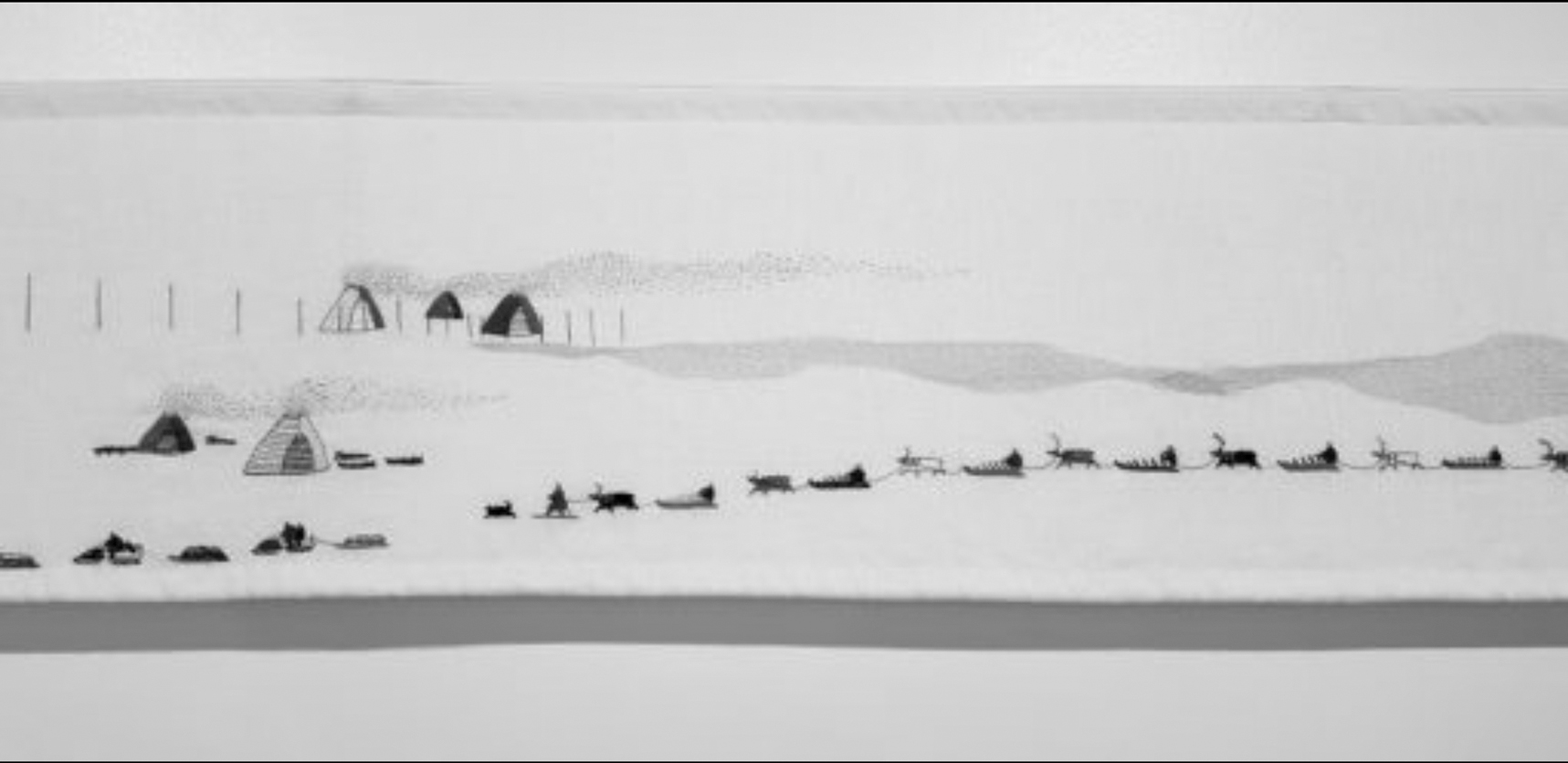 Fig. 6.
Britta Marakatt-Labba, Historjá (History) 2003–2007 (Detail) embroidered tapestry 24 meters long.
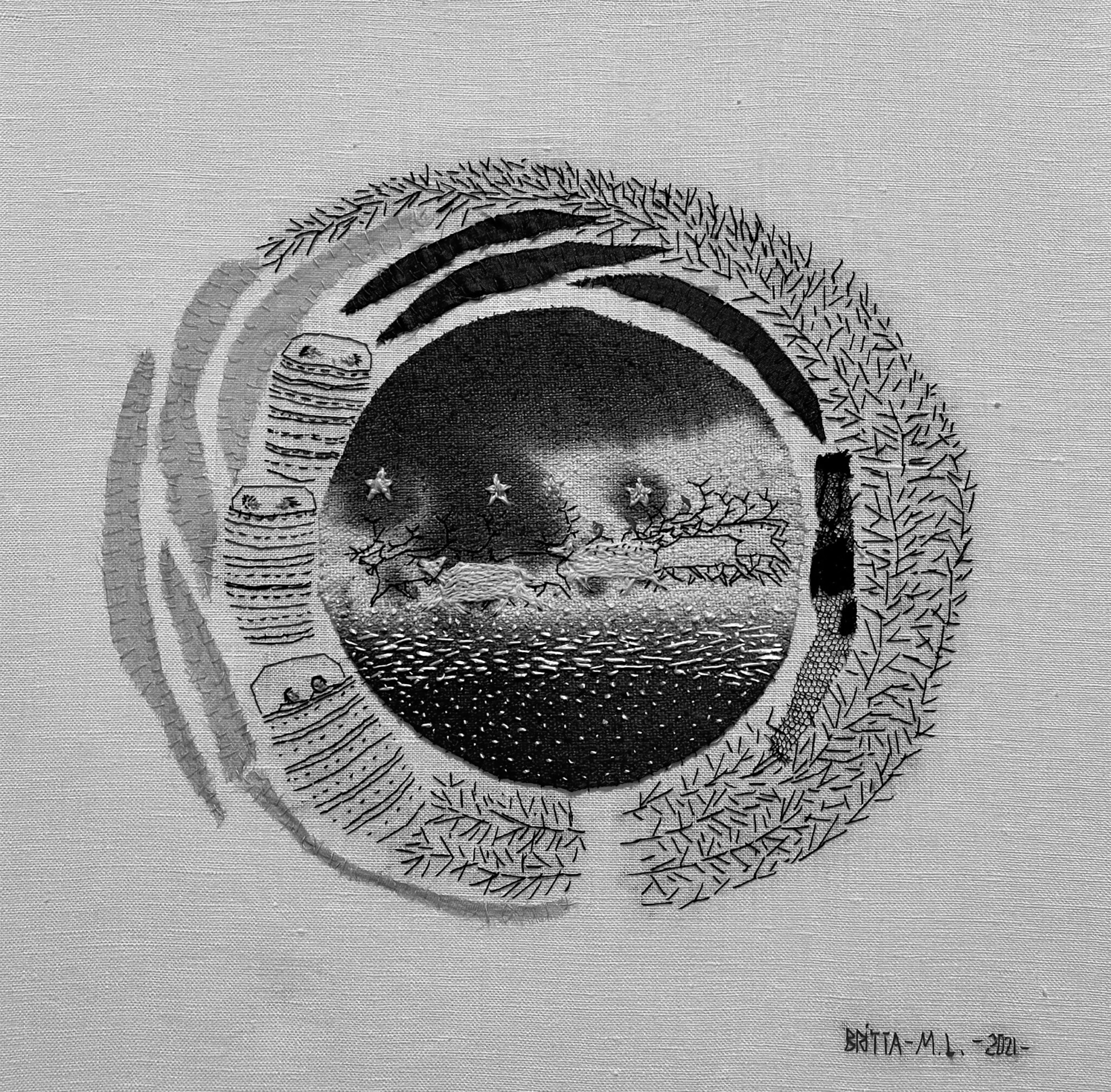 Fig. 7.
Britta Marakatt-Labba, In the footsteps of the stars (2021) Embroidery and appliqué.
Iconclass certainly has classes that would help describe some aspects of the work of Marakatt-Labba. Class 41 “material aspects of daily life” holds the specific class 41D443 “(other forms of) needlework, e.g., crocheting, knitting, embroidering”. But also, Class 47 “crafts and industries” has relevant classes for describing “handicrafts” and “materials”. For a more generic classification of the contents of Marakatt-Labba’s work the classes 48A92 “folk art” or 84 “fairies and tales” could be used, while for her political activism classes 44C4 “political demonstration” or 44C6 “racial emancipation” might be relevant. At first sight, it seems logical to add Sámi to the class 32B311(…) (+1) indigenous European peoples (with NAME) (+anthropological characteristics emphasized). However, in the hierarchical structure of Iconclass, the Sámi would, in that case, stand in between European nationalities, such as the Belgians or Swedes; in short, having administrative rather than ethnographic connotations. When Marakatt-Labba was arrested, she declared that she did not respect the borders between Norway and Sweden but that the only demarcation lines that mattered to her were the reindeer trails that stretch over the whole Sápmi area populated by the Sámi. In short, the use of administrative instead of ethnographic classes would not do justice to the views of Marakatt-Labba and her work, which is strongly rooted in Duodij art combined with visual storytelling and contemporary art as political activism.
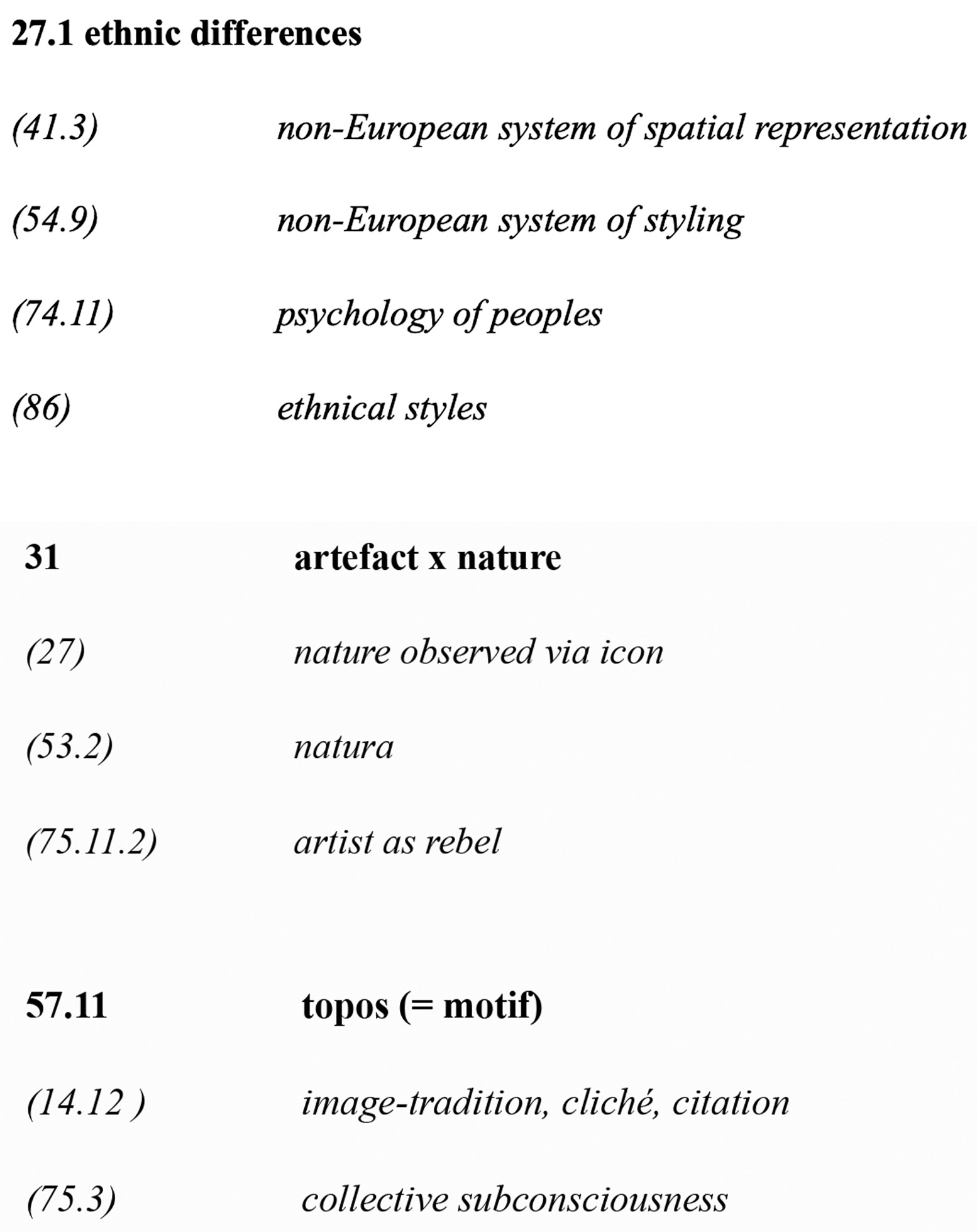
Although Iconclass certainly has classes to capture characteristics of folk art and techniques, Beeldleer seems to have far more categories to classify the complexity of Marakatt-Labba’s multilayered work. For material/formal aspects, the 14.14.7 applied art techniques would hold relevant classes. For instance, 65.8 art and politics and 65.9 folk with their sub-sub classes of 6 function of icon are useful to capture the contents of her work. Particularly interesting for expressing the relationships between themes addressed by Marakatt-Labba, such as cross boundary spatial representation not corresponding with European borders, ethnic styles, Sámi psychology, artist as rebel in relation to nature and image traditions in storytelling are certain groups of cross-references that Van de Waal created for his Beeldleer (Fig. 8). Here are a few examples of such relevant groups:
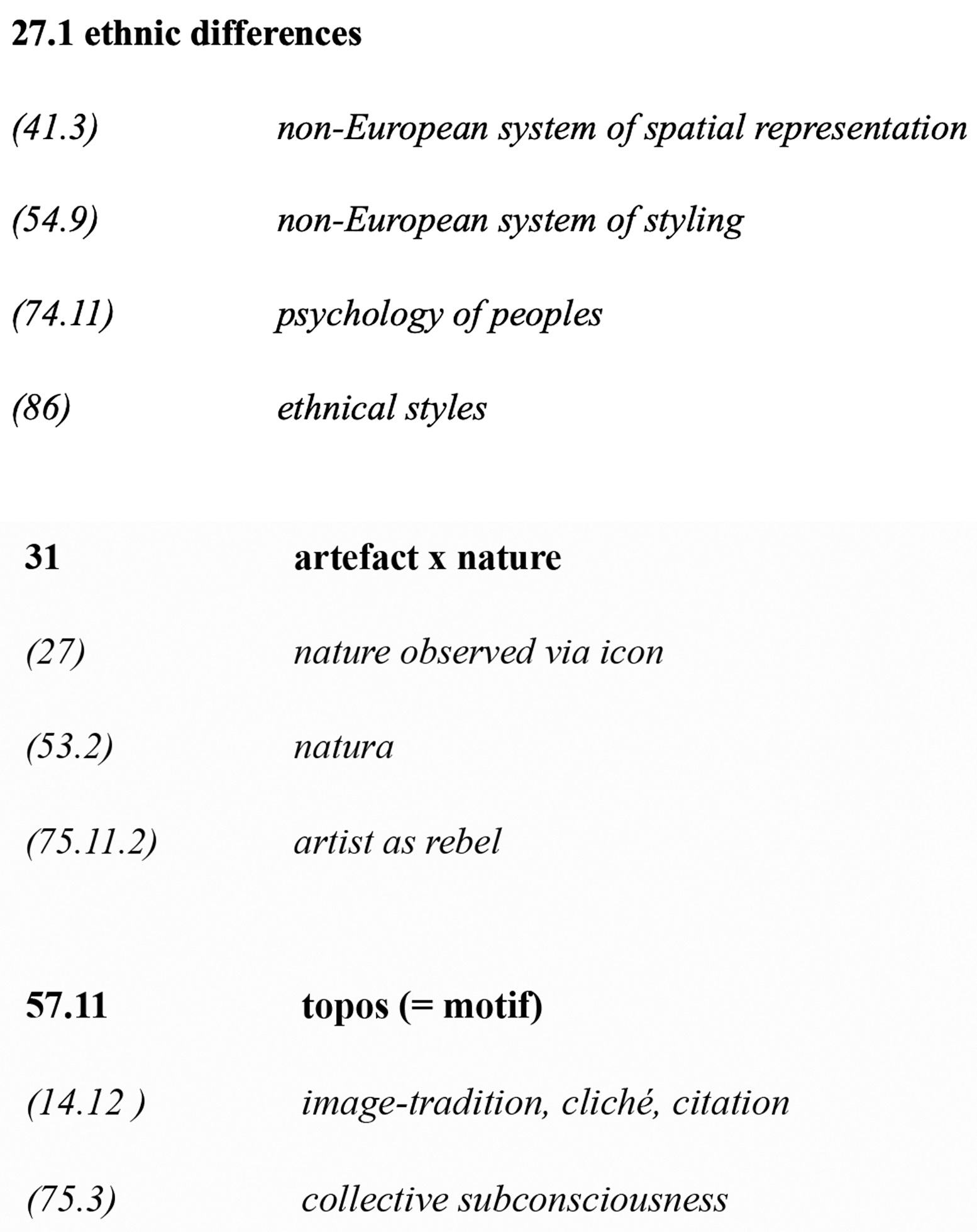 Fig. 8.
Three groups of subclasses with cross references in Beeldleer relevant for describing combinations of folk art, Sámi culture not confined by European borders and political activism in the work of Britta Marakatt-Labba.
In short, apart from having more relevant classes to describe the work of Marakatt-Labba, Beeldleer (and it must be said the early version of Iconclass) seems more coherent. It is important to note that in Beeldleer and in the presentation of the first ideas of what would become Iconclass, ethnography and mythology expressed in folk art played an important role in shaping these classifications of the arts. During the mentioned art historical conference in 1952 in Amsterdam, Van de Waal referred to the ethnographical index of the Outline of Cultural Materials (Murdock, 1950) published by Human Relations Areas Files Inc. This index refers to the documentation of cultural materials in various global areas organized according to this index and Van de Waal (1955, p. 602) added: “I can hardly stress the value of such an enterprise as a tool for Cross-Cultural survey”. He continued (van de Waal, 1955, p. 602): “There is another field from which I think art history can learn with this special kind of difficulties: folklore. The whole bulk of possible subjects in folk literature has been marshaled by Stith Thompson (1932–1936) in his Motif-Index, where we find the two consistent principles again: a consistent survey and a great facility for citing”. During this conference, he also presented his ideas for an iconographical system that would ultimately be developed and published as Iconclass. It had five main sections (1) The Supernatural, (2) Nature, (3) Man, (4) Society and (5) Abstracts that in Van de Waal’s view would cover all the subjects which mankind has succeeded to portray and four additional specific classes of a unique (“historical”) character: (6) History, (7) The Bible, (8) Myths and legends, tales (with exception of classical antiquity) and (9) Myths and legends of classical antiquity. In the published version of Iconclass myths and legends of classical antiquity remained one of the nine classes, but the class: myths and legends, tales (except classical antiquity) fell apart in multiple sub(sub-) classes, such as 48A92 as part of the subclass 48A9: “stylistic and formal differentiation of art” or 84 “fairies and tales” as subclass of literature. This change not only would give ethnography and folk art a less prominent place in the classification but also resulted in a separation of the visual arts and literature that Van de Waal in Beeldleer and early versions of Iconclass still tried to keep together for cross-cultural surveys. This potential of cross-cultural surveys is also recognizable in the design of Beeldleer. For instance, Van de Waal included 57.11.0 Motif–Index. This brings us to a third advantage of Beeldleer apart from the great number of relevant classes, coherence in the cross-references, the multi-dimensional system not only shows connectivity with the classification but also allows for making connections with organized knowledge structures, such as ontologies, classifications and vocabularies outside Beeldleer.
More and more cultural heritage institutions and researchers in digital art history are experimenting with artificial intelligence and computer vision. Up to now, the modeling and the assessment of the quality of the (intermediate) results of these experiments are either benchmarked by generic stylistic views on the history of art or by classifications specifically focused on the semantic meaning rather than syntactic, formal aspects of artworks. For instance, in several experiments Heinrich Wölfflin’s (1864–1975) five rather stylistics categories (formulated in his Principles of Art History as early as 1915!) were used to assess and to (pre-)classify the results of computer vision experiments with recognizing art styles (Elgammal, 2018; Lecoutre et al, 2017). Not only are such categories too generic, but they also result in rather predictable outcomes confirming the canon.
Other experiments underlined the importance of the existing digital applications of Iconclass for enhancing the role of artificial intelligence in iconographic research (Brandhorst, 2022a; Brandhorst, 2022b). Bell and Impett (2021) and Schneider (2024) confirmed that Iconclass was instrumental in labeling and providing meaning to recognized poses in artworks. Furthermore, new ontologies are developed that focus on one particular subdomain of art history i.e., the interpretation of the meaning of artworks, such as Icon, based on the iconological studies of the American art historian Erwin Panofsky (1892–1968) (Baroncini et al, 2021; Baroncini, 2024; Sartini et al, 2023).
All these classifications and ontologies were designed with a different purpose that shaped their potential use and limitations for (digital) art history and cultural heritage28.
I state that to contextualize experiments with computer vision in the history of art and cultural heritage, a classification system of the arts is needed that goes beyond the generic stylistic categories of art historians of the past and that supplements existing classifications and ontologies such as Iconclass and Icon, with categories suitable to describe formal aspects of artworks on a global level. Beeldleer (Iconology), with its universal scope and strong emphasis on syntactic aspects of the arts, is such a classification. Therefore, I promote its publication in a digital format after some updates and revisions of the paper format.
These updates and revisions are undoubtedly necessary. It was noted that Beeldleer has differences in coherence and includes outdated and normative terms. As Nauta (1993, p. 38) stated firmly: “The condition in which the system was encountered after Van de Waal’s death is not ‘finished’. It is doubtful whether a system such as this can or should even be ‘finished’; insights change, connections become clearer or blurred, new connections need attention etc. Lack of transparency is really inevitable”. This critical observation is in line with the explanation of Van de Waal himself, who according to one of his pupils, Rudi Fuchs (1972–1973, p. 6) had answered the latter’s question of why he did not publish Beeldleer with the argument: “that publication would codify it and turn it into a system beyond his control”. Nauta published Beeldleer as a closed website for his students as a test environment for the creation of a “shared information space”. The structure of this space would continuously be manipulated by its users. Therefore, it seems far too different in nature from the well-controlled system that Van de Waal had in mind.
The publication of Beeldleer on the Semantic Web by well-organized ontologies allows us to link and contextualize data on a global level in a far more controlled and rigorous way. However, the observation that Beeldleer in some parts is more coherent than in others, stands in the way of the publication of Beeldleer in full. Nevertheless, parts of Beeldleer could still be crucial in connecting different parts of linked data within the Semantic Web with so-called ontology design patterns (ODP). These are reusable parts of ontologies that can be (re-)used as building blocks to extend or bridge specific gaps in existing ontologies to support the publication of linked data on the Semantic Web. In particular, parts of Beeldleer could be used for the creation of what and Gangemi and Presutti (2009, p. 4–6) have called mapping and correspondence ontology design patterns, which respectively allow for creating semantic associations between existing ontologies and transforming a conceptual model into a new ontology. They could be applied in the history of the arts respectively to harmonize differences on a conceptual level within or between ontologies of the arts. It was noted that Beeldleer provided openings to external knowledge structures such as Stich Thompson’s Motif-Index. This allows for linking data supported by other related historically informed ontologies of the arts created by domain experts such as Iconclass and ICON. The latter ontology also has mappings to CIDOC-CRM that might have relevant classes. However, being developed in the context of cultural heritage institutions, this ontology strongly emphasizes objects. Historians of the arts need to take objects, historical processes, and contexts into account. For example, several researchers in the last decade have been focusing on the processes of making artworks using performative art historical methods. Interesting projects such as Art Datis, DURARE or Arches of Science develop relevant classifications and vocabularies of materials and recipes29. Nevertheless, classifications to assess the quality of the outcomes of re-enactment experiments in (digital) art history and theoretical reflections hereof are still missing.
Beeldleer not only has classes to capture analyses of historical processes but also to frame the cultural, psychological, sociological, and philosophical contexts of artworks. In that regard, the reuse of parts of Beeldleer for current and future classifications of the arts to frame new developments in art historical research based on collaborations between the human mind and information technology can be seen as Van de Waal’s ultimate goal to contribute to the systematic study of the function that the image possesses in society. The digital publication of Beeldleer and the creation of mappings to other classifications using Semantic Web technologies based on art historically informed ontologies could be the realization of Van de Waal’s “globus iconographicus”. Similarly, such mappings could result in a dynamic knowledge structure that continuously can be filled in, expanded and updated for iconographical description of uncharted domains of the arts. Such a knowledge structure of the arts would be a useful instrument to classify and to contextualize the (preliminary) results of current and future experiments in computer vision and artificial intelligence.
The data that support the findings of this study are available from the cultural heritage institutions mentioned in the references. In some cases, restrictions may apply to the availability of these data. Data is however available from the authors upon reasonable request and with permission of the institution’s names in the notes.
Author is the sole author. The author has participated sufficiently in the work and agreed to be accountable for all aspects of the work.
I am indebted to Gerhard Jan Nauta (Leiden University), who provided a full transcription of the latest version of Beeldleer. Hans Brandhorst and Etienne Posthumus (Iconclass developers) and André van de Waal (all founding members of the Henri van de Waal Foundation) provided advice. Corrie van Maris (Academic Historical Museum Leiden), Martijn Storms and Jef Schaeps (Leiden University Library-Resp. Cartographical collections and Print room) and the archivists of the RKD The Dutch Institute for Art History were most helpful in getting access to the dispersed archives. Furthermore, I am grateful to Elmer Kolfin for lending his copy of the Van de Waal lecture notes of Mrs. O.L. Bouma and for the comments of Eric Jan Sluijter, both of the University of Amsterdam.
This research received no external funding.
The author declares no conflict of interest.
1RKD Netherlands Institute for the History of Art The Hague HaRKD 0625, Archive of The Print Room of Leiden University Libraries, The Archives of the Academic Historic Museum of Leiden University, Archive Van de Waal and Leiden University Libraries, Archives of the Collection Bodel Nijenhuis.
2Leiden University Libraries, Archives of the Collection Bodel Nijenhuis, Box 2 folder 11: “Systeem Henri van de Waal (1938-39)” covers: “(1) Notities van het beschrijven van de buitenlandse prenten (2 covers) and (2) Notities voor het beschrijven van kaarten”. The importance of the design of the system to organize the topographical prints of the Collection Nijenhuis has previously been discussed in a short article by the author in Dutch: Van den Heuvel (2024a). Parts of that article are reused in this much longer English version.
3Leiden, University Library, Collection Bodel Nijenhuis, Archive Box 2 folder 11- ‘Systeem van de Waal (1938-1939)’ includes the report (in multiple versions) with recommendations to the Board of the University of 1 March 1938.
4For a pdf of the dissertation: https://iconclass.org/read/1940_waal_dissertation.pdf; for the text of Waal 1952 https://www.dbnl.org/tekst/waal016drie01_01/index.php accessed August 15, 2024.
5See, van de Waal 1940a Statement XIII: “To order the topographical data in many cases a topographical system is preferable to alphabetical orders”: 2 and note 10. See further, van de Waal 1952: 4 note 3.
6Leiden, University Library, Collection Bodel Nijenhuis, Archive Box 2 folder 11- ‘Systeem van de Waal (1938-1939)’ Report: 5.
7J.M.C. Muller (1930) and further a general booklet with information and the statutes and an overview of all publication of NIVE until then: Korte Beschrijving (1937). J.M.C Muller was the secretary and treasurer of NIDER.
8Aim of the Millionth Map was to represent the world on a total of 2500 sheets. Boggs (1929).
Please note that the Millionth Map sheet Van de Waal discussed and his adaptations for his division of topographical prints are only illustrated in the Dutch version Waal 1940b and not in the French F.I.D. article van de Waal 1939.
9Similarly to La Fontaine Penck participated in the Paris Peace Conference of 1919/20. However, later, Penck would co-create the Nazi ideology of “Kulturboden”. See, Górny (2022).
10Only 400 sheets were realized in 1953, and in 1990, the project was incompletely ended. See, Nikola (2013) and Pearson and Heffernan (2015).
12Regelen (1918). See further, Waal, 1940b:18 and note 7. For the two lists of index numbers: 24-5. This list is not included in the van de Waal 1939 article on the classification of topographical prints.
13Iconclass was published as an annotation system to the Decimal Index of Art of the Low Countries (D.I.A.L.). For a history of Iconclass, see Straten (1994) and the website of Iconclass with an extensive bibliography: https://iconclass.org/help/about accessed June 27, 2023. Richter Sherman (1987).
14The Hague, RKD, HaRKD 0625 -Box 17 “Archief Henri van de Waal (via Universiteit Leiden Gerhard Jan Nauta)”. The latest version is held in a brown folder with a red-bordered label with the subscription: “Henri van de Waal Burggravenlaan 30 Leiden” and compiled not before 1957. A separate list of alphabetical terms (ca. 875 in total) contains reference numbers as an index of the classification Beeldleer. The label covers partially a title of the folder which also mentions the year 1957. This version is therefore of 1957 or later. The alphabetical list is a green folder in the same box with the title: “Beeldleer Alf”.
15For a complete publication of the classification Beeldleer, its history and its art historical interpretation see, Van den Heuvel (2024b). Parts of this article are based on that contribution.
16The Hague, RKD, HaRKD 0625 -Box 16. Division Iconology (“Indeling Iconologie”), s.d. [1949 ca.]
17There are several other not-dated versions. Nevertheless, the discussed document seems to express a decisive moment in creating the overall structure of the Beeldleer. This is supported by the annotation in pencil on the document right above with the subscription: “100 ex.” which suggests that the document was the pre-ultimate version for distribution. In later versions of Beeldleer the discussion about the relation between Icon and time is moved from the class 4 syntax to class 8 style. In the notes (1949–1953) of Mrs. O.L. Bouma of the lectures of Van de Waal it becomes clear that the latter still addressed space and time as syntaxial categories that belong together.
18This would not only be supported by claims from his students that Van de Waal intended to publish Beeldleer to assist in their teaching but also explain some references in related documents to the word “hoofdstuk” [chapter in English].
19See van de Waal 1946, Traditie and Bezieling: “One can hardly conceive art without form, without style, without code. There is no other work than composed and constructed. All fantasy in art requires a syntax”.
20This seems to be confirmed by several documents kept in The Hague, RKD, HaRKD 0625 -Box 16 showing orders and suborders of various classes, such as the term “understanding of style” in addition to class 5 “historical connection/coherence”, “stylistics” as subclass 4.3 (following 4.1 art criticism and 4.2 Wölfflin) of class 4 interpretation and “style criticism (connoisseurship)” as sub-class 11.22.5 of class 1: “general methodologies”. The crossing out of “esthetical critical vision, 28” also reveals an earlier consideration of Van de Waal to bring in “style criticism (connoisseurship)” as a sub-class of 2 “vision”, while the addition of the number 80 makes his final decision clear to make “style-criticism” part of the new created class: 8 “theory of style”.
21When moving between classes and subclasses as in the above-described example of terms related to style, Van de Waal must have realized that there was no one solution for positioning a certain class. For that reason, he added in other, later overviews of the main structure, the class 9 “empty” to express the potential inclusion of yet unknown relevant topics.
22See for instance, Hans Brandhorst (with contributions by Angela Kailus et al.), Revising Iconclass section 32B human races, peoples, nationalities. Full text of the explanation and a listing of the revised concept definitions.
23Relevant for the understanding of the implications of differences between the paper and digital formats of Iconclass, Brandhorst and Posthumus (2019). esp. 204 and 207–210.
24Hakan Stenlund, Britta Marakatt-Labba, “The Embroidered Resistance Art”. https://www.swedishlapland.com/stories/britta-marakatt-labba/.
25Quoted from Madeline Weisburg “Britta Marakatt-Labba”: https://www.labiennale.org/en/art/2022/milk-dreams/britta-marakatt-labba.
26See also https://markontour.com/2024/03/24/britta-marakatt-labbas-moving-the-needle/.
27Per Mathiesen. 2010. “Sámiid Duodij”. Cultural Survival Article 6-4 Ethnic Art: Works in Progress? February 9, 2010: https://www.culturalsurvival.org/publications/cultural-survival-quarterly/samiid-duodji.
28For the art historical implication of the differences between these classifications/ontologies see further Van den Heuvel (2024b).
29https://artdatis.nl; https://durare.sites.uu.nl/sources-on-art-technology/; https://www.archesproject.org/arches-for-science/, accessed August 15, 2024.
References
Publisher’s Note: IMR Press stays neutral with regard to jurisdictional claims in published maps and institutional affiliations.