
 , Sidonia Martínez 1, Javier Carballo 1,*
1 Area de Tecnología de los Alimentos, Facultad de Ciencias de Ourense, Universidad de Vigo, 32004 Ourense, Spain
Abstract
This work aimed to investigate the impact of adding different spices on the accumulation of biogenic amines throughout the ripening process of Chorizo and Salchichón (two Spanish traditional sausages).
Five distinct batches of chorizo (A: produced only with sweet paprika; B: with sweet paprika + spicy paprika; C: with sweet paprika + garlic; D: with sweet paprika + oregano; E: with sweet paprika + spicy paprika + garlic + oregano) and three different batches of salchichón (A: produced with white pepper; B: with black pepper; C: with white + black peppers) were manufactured and analyzed in triplicate. Along 30 days of ripening, samples were taken from each replicate of each batch, and the Aw and pH values were assessed, as well as the contents of tryptamine, 2-phenylethylamine, putrescine, cadaverine, histamine, tyramine, spermidine, and spermine using high-performance liquid chromatography methods.
The final total average content of biogenic amines in chorizo sausage was 355.23 mg/kg of T.S in batch A. The addition of spices (spicy paprika, garlic, and oregano) significantly reduced this value (p < 0.001), with percentage reductions of 13.72%, 28.01%, 14.36%, and 23.89% in batches B, C, D, and E, respectively, compared with the content in batch A. Meanwhile, the accumulation of amines during ripening was notably lower in the salchichón sausage compared with chorizo (83.77–87.43 mg/kg of TS at the end of manufacturing), and no effect was observed regarding the type of spices added (p > 0.05).
The generation and accumulation of biogenic amines were notably lower in salchichón than in chorizo sausage, possibly due to differences in the ingredients other than spices, integrating the mixture formulas. The addition of spicy paprika, oregano, and, especially, garlic promoted a reduction in the generation of biogenic amines in the chorizo sausage, particularly cadaverine, putrescine, and tyramine. This reducing effect appears to be due to an enhancement of acidification that occurs during manufacturing, as well as the subsequent inhibitory effect on amine-producing microbial groups.
Keywords
- biogenic amines
- spices
- raw-fermented sausages
Biogenic amines are nitrogen compounds with low molecular weight widely distributed in nature and with well-known roles and actions. During the production process of fermented/ripened foods, they are principally produced by the decarboxylation of their precursor amino acids [1, 2, 3] by the action of endogenous enzymes of the foods themselves and, to a greater extent, by enzymes of microbial origin [4, 5, 6].
The presence of biogenic amines in foods has a double importance, related to consumers’ health and food quality [5, 7]. Biogenic amines ingested in high quantities can cause adverse effects in the consumer, such as allergic reactions characterized by gastrointestinal and neurological symptoms (histamine), diet-induced migraine (tyramine), respiratory and blood pressure disorders (tyramine, histamine), vasoconstrictive effects (tyramine, tryptamine and 2-phenylethylamine), besides carcinogenic effects (putrescine and cadaverine) [8, 9, 10]. Furthermore, amines such as putrescine and cadaverine could act as precursors for the formation of heterocyclic nitrosamines, potentially carcinogenic compounds, in acidic environments [11, 12]. From the standpoint of food quality, an excessive accumulation of biogenic amines alters the characteristic and desirable sensory attributes of fermented foods.
In fermented foods, the formation and accumulation of biogenic amines is mainly the result of the multiplication of concrete microbial strains having specific genes encoding decarboxylase enzymes [13]. This process is usually activated as a response of the microbial cells to the acid stress that occurs during fermentation [14]. Some decarboxylases are kept active even after cell lysis of the bacteria that produce them, which contributes to the accumulation of biogenic amines in foods [6, 14].
In raw-cured sausages, the generation of biogenic amines during ripening is generally very significant, as these products gather some particularities that favour the process, such as the abundance of precursor free amino acids coming from proteolytic processes, the high microbial load including populations of potentially aminogenic microorganisms, and the acidity of the medium that favours the activity of decarboxylases.
The synthesis of biogenic amines in raw-cured sausages is conditioned by several intrinsic and extrinsic agents such as the hygienic quality of the raw materials, the pH, water activity (aw), and redox potential values, NaCl concentration, sausage diameter, ripening and storage temperature [6, 14, 15, 16], growth kinetics of the microorganisms, the intensity of the proteolytic processes that take place during ripening, and the decarboxylase activity of the bacteria present in the food [17, 18, 19].
As the biogenic amines are products of the microbial metabolism, measures to reduce the formation of these substances during the production of fermented meat products, and therefore to limit their adverse effects, are focused on the control of the amine-producing bacterial groups. Concrete measures can be divided into three groups [15]: (1) Quality control of the raw materials to minimize the microbial load of meat and the rest of ingredients and additives; (2) Adding of appropriate starter cultures for the control of spoiling bacteria, and (3) Use of spices/additives and control of the environmental conditions in rooms during fermentation/ripening.
Studies on the effect of quality of raw materials and use of starter cultures on the accumulation of biogenic amines in sausages are abundant in the literature. However, the effect of spices has received scarce attention until the present.
Spices are an important ingredient in the mixtures of raw-fermented sausages. Besides their flavouring effect, they have antioxidant and antimicrobial effects influencing biochemical events which take place during the sausage maturation. As the biogenic amines are mainly the result of microbial activity, antimicrobial substances and therefore the spices containing them could have some effect on the biogenic amine formation and accumulation during the ripening of the raw-fermented sausages.
Chorizo and Salchichón are the main Spanish raw-fermented sausages with great relevance in terms of production, consumption and economic significance [20]. Different varieties of Chorizo and Salchichón are manufactured in the different regions of Spain reflecting the regional traditions and cultural diversity. These varieties basically differ in the nature (natural or artificial) and diameter of the casings, the shape and size of the units, the proportion of lean/fat in the mix, the grade of mincing of the meat, the nature and quantity of the spices added and the way of carrying out the production process (smoking/not smoking, environmental conditions during ripening and duration of it, etc.). Spices are critical ingredients and differentiating elements of these sausages. The most common spices used in the formulation of Chorizo mix are paprika (Capsicum annuum L.) (sweet or spicy), garlic (Allium sativum L.), and oregano (Origanum vulgare L.). Sweet paprika is the typical and definitory spice of Chorizo and, as such, it is added in all productions, both artisanal and industrial, whereas spicy paprika, garlic and oregano are used inconstantly, and mainly in artisanal productions. Regarding Salchicón, pepper (Piper nigrum, L.) (black or white), whole or minced, is the characteristic spice.
These spices contain some molecules with proven antimicrobial properties [21, 22, 23, 24]. Paprika mainly contains capsaicin that is present in variable concentrations that result in different paprika (sweet, intermediate or spicy) categories. Garlic contains allicin, oregano has carvacrol and thymol, while pepper includes piperine, among other compounds with minor quantitative importance.
As previously indicated, due the antimicrobial effect of these spices and the primary role of the microorganisms in the biogenic amine formation, spices could influence the biogenic amine formation during the ripening of these sausage varieties. This effect remains in most cases unknown, and it deserves to be studied. Therefore, the aim of the present work, that in the case of Chorizo sausage is part of a wider study that was already partially published [25], is to investigate the effect of the spices, added in the quantities usually used in the production processes, on the formation and accumulation of the most important biogenic amines during the ripening of Chorizo and Salchichón sausages.
Sweet and spicy paprika were from the “Zoraida” brand (Hijos de Raúl Navarro, S.L., Molina de Segura, Murcia, Spain). Fresh garlic (Allium sativum) cloves were from Cooperativa Extremeña de Ajos Aceuchal (Olivenza, Badajoz, Spain) and they were finely chopped before adding to the sausage mixture. Dehydrated oregano (Origanum vulgare), black pepper and white pepper were provided by the “Carmencita” brand (Jesús Navarro, S.A., Novelda, Alicante, Spain).
Lean (shoulder) and back fat were obtained from Landrace
The additives and the reagents used in the analysis were from Sigma-Aldrich Co. (St. Louis, MO, USA) and Merck (Darmstadt, Germany).
Five distinct batches of Galician chorizo (named A, B, C, D, and E) were manufactured in triplicate and on different days following the traditional procedure as was previously described by Rodríguez-González et al. [25]. The basic mixture of sausages (batch A) was composed of lean pork (shoulder) (80%), pork back fat (20%), sweet paprika (22 g/kg), salt (15 g/kg), and water (40 mL/kg). In batch B, spicy paprika (3 g/kg) was also added. In batch C, garlic (4 g/kg) was added to the basic mixture. In batch D, oregano (1 g/kg) was added, and in batch E the three spices (spicy paprika, garlic, and oregano) were added in the indicated quantities. The lean, and the pork fat previously frozen, were first ground through a 10 mm diameter mincing plate and then they were vacuum mixed together with the rest of the ingredients for 3 min. The mix was left to stand for 24 h at 4 °C and afterwards stuffed into natural casing (porcine gut) of 36–38 mm in diameter. The sausages, tied following the traditional procedure in units of 15 cm. long, were first kept for 9 days at 6 °C and 80% relative humidity (R.H.), and then dried/ripened for another 21 days (12 °C and 75% R.H.). From each of the three replicates of each of the five batches, one sample was taken at 0 (mix immediately before stuffing), 2, 5, 9, 14, 21 and 30 days of ripening for subsequent analysis. Each sausage sample was made up of two sausage units.
Three different batches of Salchichón (named A, B, and C) were manufactured in triplicate and on different days following the standard procedure. The mixture of batch A was composed of lean shoulder (80%), pork back fat (20%), glucose (8 g/kg), dextrin (7 g/kg), salt (25 g/kg), sodium nitrate (0.085 g/kg), sodium nitrite (0.065 g/kg), sodium ascorbate (0.46 g/kg), and white pepper (2 g/kg). In batch B, white pepper was replaced with black pepper (2 g/kg). In batch C, a mix of white (1 g/kg) and black (1 g/kg) pepper was used. The lean, and the pork fat previously frozen, were first ground through a 10 mm diameter mincing plate and then they were vacuum mixed together with the rest of the ingredients for 3 min. The mix was then stuffed into collagen casing of 45 mm in diameter (code FIBRAN 00006890, Fibran Group, Barcelona, Spain). The sausages, tied in units of 30 cm. long, were first heated for 3 days (25 °C and 90% R.H.) and then dried/ripened for another 27 days (15 °C and 75% R.H.). From each of the three replicates of each of the three batches, one sample was taken at 0 (mix immediately before stuffing), 3, 7, 14, 21 and 30 days of ripening for subsequent analysis. Each sausage sample was made up of a sausage unit.
Moisture content was determined following the ISO 1442:2023 standard [26]. The water activity was measured by means of a Fast-lab (GBX, Bourg-de-Péage, France) automatically calibrated water activity meter. The pH values were measured in homogenates obtained from 10 g of sample and 90 mL of distilled water, using a pH-meter GLP21 (Crison Instruments, S.A., Barcelona, Spain) device equipped with a series 52 threaded head electrode. The pH-meter was initially calibrated at the working temperature with pH 4 and pH 7 standard buffer solutions (Crison Instruments, S.A., Barcelona, Spain) and then the pH value of the blend was assessed in duplicate.
Biogenic amines were analyzed by the methods described by Lorenzo et al. [27]. Five g of sausage sample were mixed with 10 mL of 0.6 N HClO4 and 1 mL of 1,7-diaminoheptane (internal standard). Then, the mixture was homogenized with a lab blender (IKA T 18B Basic Ultra-Turrax, IKA Werke GmbH & Co., Staufen, Germany) for 2 min and then centrifuged at 3000 rpm for 10 min at 4 °C. The supernatant was collected, and the same treatment was repeated with the residue for complete extraction. Finally, the two supernatants were introduced in a 25 mL volumetric flask and 0.6 N HClO4 was added until the volume of the flask was complete.
For derivatization, 0.5 mL of each extracted sample, or of the standard solution of each biogenic amine, were quickly placed in a tube, and 100 µL of 2 N NaOH, 150 µL of a saturated solution of NaHCO3 and 1 mL of dansyl chloride were added, consecutively. The tube was slowly shaken and placed in a water bath at 40 °C for 45 min. Then, 50 µL of ammonia were added to remove the dansyl chloride residue and the mixture was left to stand for 30 min. The volume was finally completed to 2.5 mL with acetonitrile and the mix was filtered through a 0.25 µm pore-size filter prior High Performance Liquid Chromatography (HPLC) analysis.
Separation, identification and quantification of the biogenic amines were
carried out by HPLC techniques, following the procedure described by Eerola
et al. [28], using a Spectra System chromatograph (Thermo Finnigan, San
José, CA, USA) equipped with a SCM 1000 degasser, a P4000 pump, an AS 3000
automatic injector, and a Photodiode Array UV6000LP detector. Separation of the
biogenic amines was carried out on a reverse phase C18 mod. Kromasil 100 column
(25 cm, 4 mm ID) (Teknokroma S. Coop. C. Ltda., San Cugat del Vallés,
Barcelona, Spain). The temperature of the column was 40
| Biogenic amine | Curve equation | R2 |
| Triptamine | y = 0.5304x – 0.0538 | 0.999 |
| 2-phenylethylamine | y = 0.4915x + 0.1001 | 0.998 |
| Putrescine | y = 1.1017x – 0.5411 | 0.997 |
| Cadaverine | y = 0.9312x + 0.0873 | 0.996 |
| Histamine | y = 0.8842x + 0.0077 | 0.995 |
| Tyramine | y = 0.8044x + 0.0396 | 0.995 |
| Spermidine | y = 1.1817x – 0.2752 | 0.997 |
| Spermine | y = 1.4475x + 0.2007 | 0.995 |
| 1,7 diaminoheptane | y = 0.9845x – 0.1488 | 0.999 |
Data were expressed as means
Table 2 shows the evolution of the contents of the 8 biogenic amines quantified
along the maturation of the different batches of Chorizo sausage. Tryptamine and
spermine were the main biogenic amines in the mixture before stuffing in the
different batches, followed by tyramine, 2-phenylethylamine, putrescine and
cadaverine, with histamine and spermidine being the minor amines. The contents of
all the biogenic amines increased significantly (p
| BA | Batch | Days of ripening | Days | Spices × Days | ||||||
| 0 | 2 | 5 | 9 | 14 | 21 | 30 | ||||
| Triptamine | A | 10.91a1 | 12.29a1 | 28.41b1 | 38.71c1 | 47.62d1 | 47.16d1 | 45.96d1 | *** | *** |
| B | 10.83a1 | 22.74b2 | 31.26c1 | 42.43d1 | 46.66de1 | 52.17ef2 | 48.33f2 | *** | ||
| C | 10.26a1 | 13.03b1 | 21.08c2 | 25.01d2 | 27.91e2 | 35.80f3 | 38.69g3 | *** | ||
| D | 9.59a1 | 12.89b1 | 17.08c3 | 18.98d3 | 28.00e2 | 37.71f3 | 37.52f3 | *** | ||
| E | 9.18a1 | 16.85b3 | 20.95c2 | 25.36d2 | 37.29e3 | 42.11e4 | 38.41f3 | *** | ||
| Spices | ns | *** | *** | *** | *** | *** | *** | |||
| 2-phenylethylamine | A | 6.38a12 | 8.26a1 | 10.56b1 | 13.29c1 | 20.23d1 | 30.76e1 | 26.62f1 | *** | *** |
| B | 7.21a1 | 8.15ab12 | 9.56bc1 | 10.61c2 | 22.66d2 | 27.48d2 | 24.00e2 | *** | ||
| C | 6.10a12 | 7.23a123 | 9.44b1 | 10.59c2 | 15.25d3 | 23.23e3 | 20.43f3 | *** | ||
| D | 5.73a2 | 6.24a3 | 7.72b2 | 9.78c3 | 18.65d4 | 23.95e3 | 23.69e2 | *** | ||
| E | 6.73a12 | 7.01a23 | 9.51b1 | 12.87c1 | 18.20d4 | 26.73e2 | 22.56f2 | *** | ||
| Spices | * | ** | ** | *** | *** | *** | *** | |||
| Putrescine | A | 5.29a1 | 8.01b1 | 18.97c1 | 22.98d1 | 24.89d1 | 30.11e1 | 41.98f1 | *** | *** |
| B | 5.34a1 | 7.82b1 | 15.54c2 | 18.42d2 | 22.55e12 | 27.68f2 | 38.41g2 | *** | ||
| C | 3.79a2 | 6.64b2 | 9.36c3 | 15.62d3 | 22.81e12 | 25.17f3 | 34.57g3 | *** | ||
| D | 4.26a3 | 5.51a3 | 11.07b4 | 15.68c3 | 21.49d2 | 26.87e2 | 35.44f23 | *** | ||
| E | 2.83a4 | 4.26a4 | 10.97b4 | 14.32c3 | 21.24d2 | 24.92e3 | 34.16f3 | *** | ||
| Spices | *** | *** | *** | *** | * | *** | *** | |||
| Cadaverine | A | 4.58a1 | 12.56b1 | 32.63c1 | 67.57d1 | 120.42e1 | 164.43f1 | 124.23g1 | *** | *** |
| B | 4.22a1 | 10.16a2 | 35.00b1 | 55.90c2 | 79.90d2 | 145.47d2 | 85.41e2 | *** | ||
| C | 3.02a2 | 8.24a3 | 23.39b2 | 28.63b3 | 55.04c3 | 82.89c3 | 59.15d3 | *** | ||
| D | 4.92a1 | 12.60b1 | 31.57c1 | 46.71d4 | 84.45e2 | 122.93f4 | 108.61g4 | *** | ||
| E | 4.28a1 | 10.24b2 | 26.46c2 | 34.01d3 | 65.10d3 | 89.42e3 | 72.00f5 | *** | ||
| Spices | *** | *** | *** | *** | *** | *** | *** | |||
| Histamine | A | 2.30a1 | 3.05b1 | 4.15c1 | 4.86d1 | 5.66e1 | 6.04e1 | 6.99f1 | *** | *** |
| B | 2.21a1 | 2.92b12 | 4.01c1 | 4.30d2 | 5.16e2 | 5.81f1 | 6.63g1 | *** | ||
| C | 1.99a1 | 2.37b2 | 3.44c2 | 3.99d3 | 4.99e23 | 4.98e2 | 6.70f1 | *** | ||
| D | 2.05a1 | 2.94b12 | 3.24b2 | 4.03c3 | 4.26c4 | 5.48d3 | 5.32d1 | *** | ||
| E | 2.21a1 | 2.54b23 | 3.57bc2 | 4.12bc23 | 4.59bc34 | 5.43bc3 | 6.43bc1 | *** | ||
| Spices | n.s. | ** | *** | *** | *** | *** | *** | |||
| Tiramine | A | 6.20a1 | 16.39b1 | 22.17b1 | 34.54c1 | 56.66d1 | 70.99e1 | 78.70f1 | *** | *** |
| B | 6.30a1 | 9.21a2 | 21.08b2 | 34.87c1 | 61.64d1 | 70.44e1 | 74.87f2 | *** | ||
| C | 4.13a2 | 8.75b2 | 13.26c3 | 34.17d1 | 45.33e2 | 60.30f2 | 70.92g3 | *** | ||
| D | 4.46a2 | 7.44a3 | 25.21b4 | 38.64c1 | 45.05d2 | 62.22e2 | 66.43f4 | *** | ||
| E | 5.79a1 | 6.74a3 | 14.53b5 | 39.96c1 | 47.23c2 | 56.50d2 | 62.22e5 | *** | ||
| Spices | ** | *** | *** | ns | *** | *** | *** | |||
| Espermidine | A | 1.66a1 | 2.98b1 | 3.48c1 | 4.37d1 | 6.01e1 | 6.92f1 | 7.45g1 | *** | *** |
| B | 2.07a2 | 1.92a2 | 1.75a2 | 2.57b2 | 3.48c2 | 3.75bc2 | 4.08c2 | *** | ||
| C | 1.67a1 | 2.18b2 | 2.57b3 | 3.15c3 | 3.87cd23 | 3.51de2 | 4.13e2 | *** | ||
| D | 2.17a2 | 2.68a1 | 2.69b3 | 3.10c3 | 5.05d4 | 5.64e3 | 6.40f1 | *** | ||
| E | 2.55ab3 | 1.85a2 | 2.68ab3 | 3.87ab4 | 4.04b3 | 4.45b3 | 5.28c12 | *** | ||
| Spices | *** | *** | *** | *** | *** | *** | *** | |||
| Espermine | A | 8.89a1 | 11.06b12 | 11.09b1 | 14.04c123 | 15.84d1 | 18.52e1 | 23.31f12 | *** | *** |
| B | 9.12a12 | 10.84a12 | 13.48b2 | 15.49bc1 | 16.31c1 | 19.71d1 | 24.74e2 | *** | ||
| C | 8.98a12 | 11.32b1 | 13.65c2 | 15.01c12 | 17.29d1 | 18.79d1 | 21.13e1 | *** | ||
| D | 9.40a12 | 10.91b12 | 11.83b1 | 13.03c3 | 16.66d1 | 19.63e1 | 20.80f1 | *** | ||
| E | 9.75a2 | 9.87a2 | 12.43b2 | 13.70b23 | 16.74c1 | 19.88d1 | 29.28e3 | *** | ||
| Spices | * | ns | ** | ** | ns | ns | ** | |||
| TBA | A | 46.22a1 | 74.60b1 | 131.45c1 | 200.37d1 | 297.32e1 | 374.94f1 | 355.23g1 | *** | *** |
| B | 47.30a1 | 73.76b1 | 131.68c1 | 184.60d1 | 258.35e1 | 352.51f1 | 306.48g2 | *** | ||
| C | 39.94a2 | 59.75b2 | 96.19c2 | 136.17d2 | 192.49e2 | 254.68f2 | 255.72f3 | *** | ||
| D | 42.58a3 | 61.22b2 | 110.40c3 | 149.95d3 | 223.60e3 | 304.44f3 | 304.20f2 | *** | ||
| E | 43.31a3 | 59.35b2 | 101.10c23 | 148.22d3 | 214.42e23 | 289.43f2 | 270.34g3 | *** | ||
| Spices | *** | *** | *** | *** | *** | *** | *** | |||
BA, Biogenic amines; TBA, Total biogenic amines. A: batch manufactured with
sweet paprika; B: with sweet paprika + spicy paprika; C: with sweet paprika +
garlic; D: with sweet paprika + oregano; E: with sweet paprika + spicy paprika +
garlic + oregano. a–g Means in the same row and sausage batch (A, B, C, D,
or E) not followed by a common letter are significantly different (p
The total biogenic amine content was multiplied during the maturation process by factors of 7.68, 6.47, 6.40, 7.14, and 6.24 in batches A (sweet paprika), B (sweet + spicy paprika), C (sweet paprika + garlic), D (sweet paprika + oregano), and E (sweet paprika + spicy paprika + garlic + oregano), respectively until reaching final values of 355.23, 306.48, 255.72, 304.20, and 270.34 mg/kg of T.S. in batches A, B, C, D, and E, respectively. These final values are in the same order as those found by other studies in different varieties of raw-cured sausages [4, 29, 30]. In the literature, highly variable total amine contents have been described in raw-cured sausages, ranging from 61.71 mg/kg in horse meat Salchichón sausage [31] to 1962.1 mg/kg in Chouriço grosso de Estremoz e Borba, a traditional Portuguese sausage [32]. At the end of the maturation process, the main biogenic amine was cadaverine, followed by tyramine, tryptamine and putrescine. Other studies have shown that tyramine, putrescine and cadaverine are generally the main biogenic amines in sausages [15, 33, 34, 35, 36, 37], with cadaverine contents showing the greatest variability between the different sausage varieties [15]. Spermine and spermidine are the only biogenic amines found in significant quantities in raw meat [38] and the other amines are generated during the sausage ripening by the decarboxylase activities of the different microbial species present. Suzzi and Gardini [37] reported that several works have described the ability of strains of lactic bacteria of the genera Lactococcus, Leuconostoc and Lactobacillus to produce tyramine, and the activity of these bacteria seems to be responsible for producing tyramine in fermented sausages. Regarding putrescine and cadaverine, their presence seems to be associated with the activity of enterobacteria [18, 37], which would have their origin in poor hygiene in the conservation and handling of raw meat used in the sausage manufacture.
In the present study, the final content of total biogenic amines in Chorizo
sausage was significantly (p
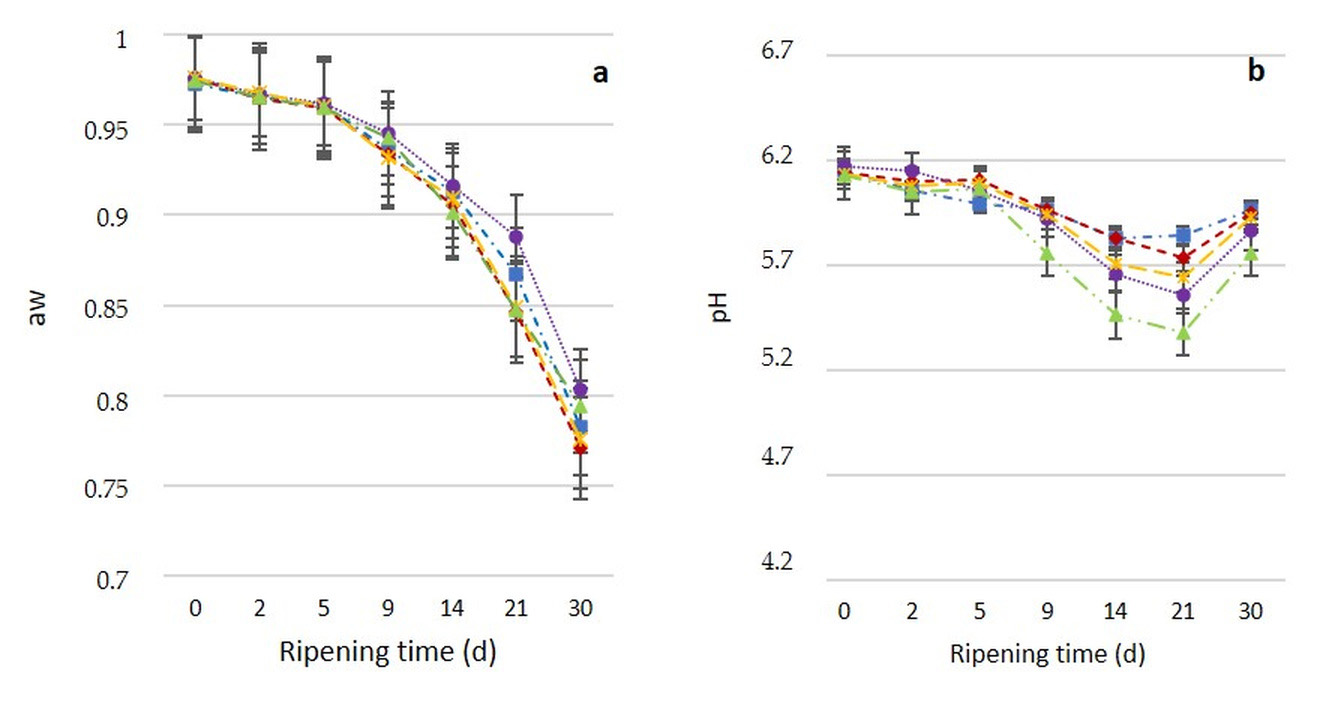
The reducing effect on the biogenic amine production by the added spices seems
to be due to the enhanced acidification during manufacture in batches B, C, D,
and E with respect to batch A (see Fig. 1b, Ref. [25]), possibly because these
spices in the added quantities stimulate the fermentative processes in this
sausage variety [25]. In fact, cadaverine and putrescine, the two biogenic amines
that experienced the most important decreases, are mainly produced by the
enterobacteria which is the microbial group more sensitive to the acidity.
Besides, the addition of these spices did not have a significant effect
(p
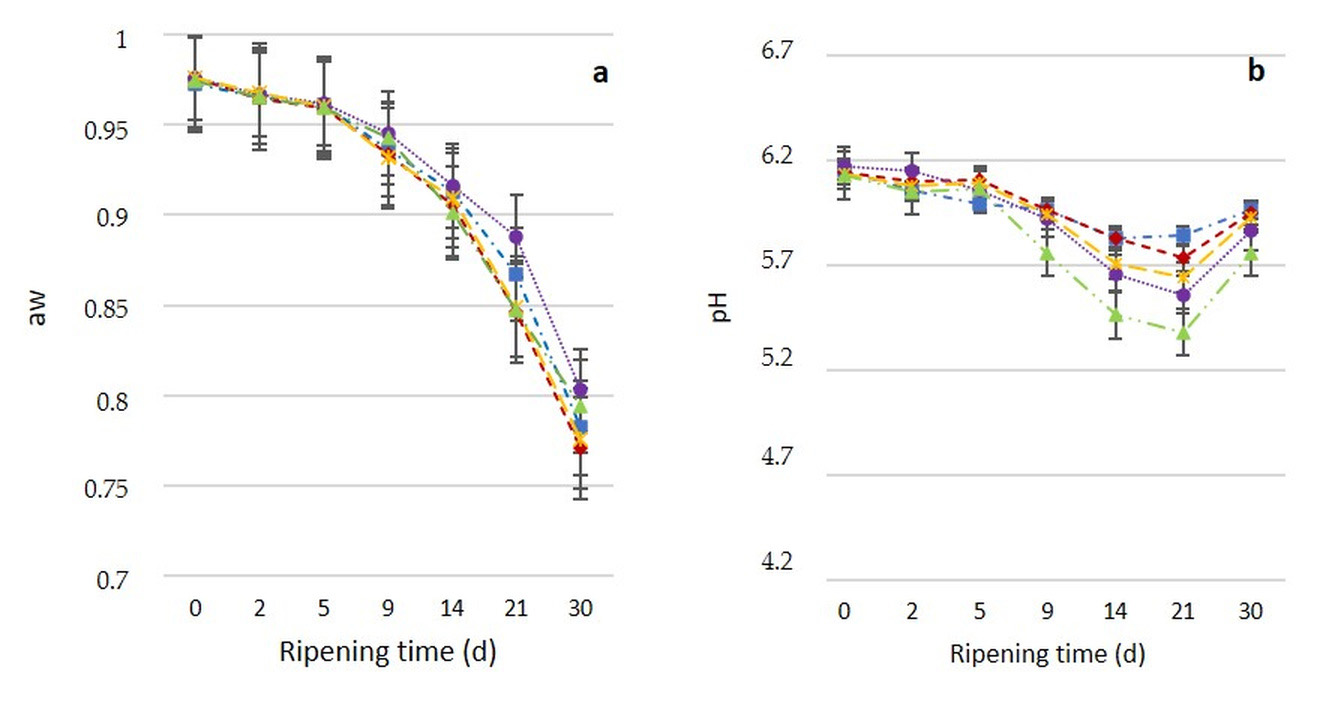 Fig. 1.
Evolution of Aw (a) and pH (b) values during the ripening of
Chorizo sausage manufactured with different spices. A (
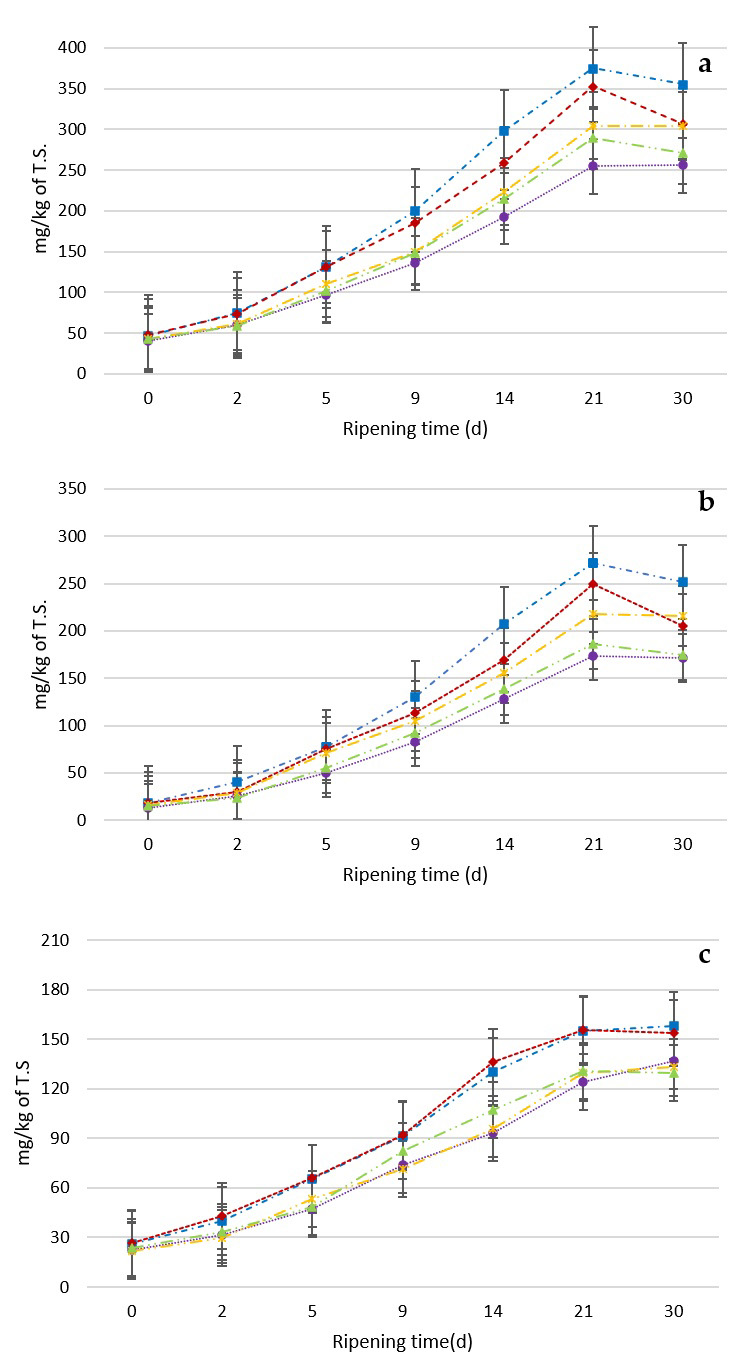
The biogenic amine index (BAI) and the total vasoactive biogenic amines (TVBA)
were calculated for more complete information. The evolution of these biogenic
amine groups during the manufacture of the five batches of Chorizo was plotted in
Fig. 2. The BAI was first proposed and used by Mietz and Karmas [39] with the
purpose of investigate the bacterial quality (freshness) of tuna. In the present
study, we used the formula proposed by Veciana-Nogués et al. [40]
for the BAI calculation, which includes tyramine in addition to the amines
initially proposed by Mietz and Karmas [39]. The BAI quantifies the amines coming
from microbial metabolism. The evaluation of these amines is of great interest in
foods in which any microbial growth is undesirable and indicates spoilage.
However, in fermented foodstuffs (foods and beverages), there is a desirable and
normal development of microorganisms during manufacturing. Therefore, this index
does not have an absolutely direct relationship with the microbiological quality
of food. In sausages, however, it remains as an indicator of the degree of
activity of the decarboxylating microorganisms in the product. The addition of
spices significantly (p
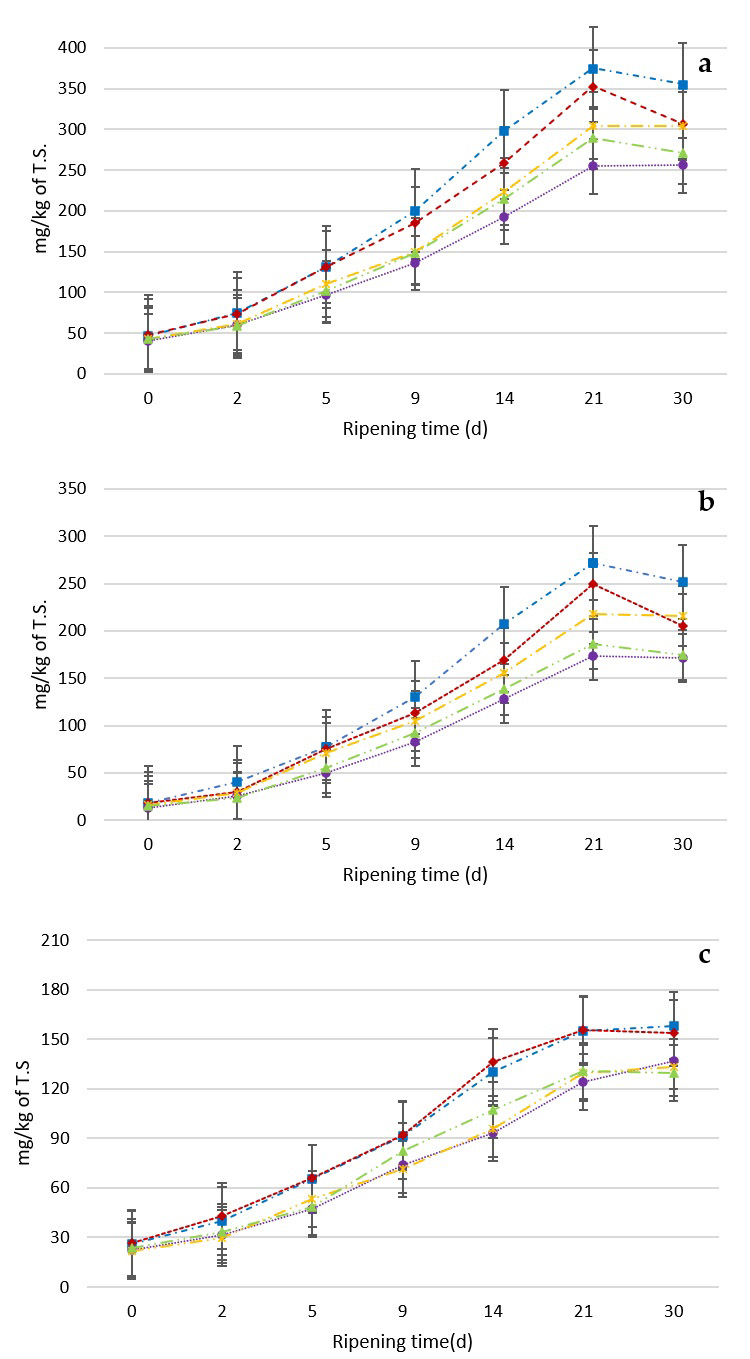 Fig. 2.
Evolution of the total biogenic amines (TBA) (a), biogenic amine
index (BAI) (sum of putrescine + cadaverine + histamine + tyramine) (b), and
total vasoactive biogenic amine content (TVBA) (sum of tyramine + histamine +
tryptamine + 2-phenylethylamine) (c) during the ripening of Chorizo sausage
manufactured with different spices. A (
Regarding the TVBA, the vasoactive amines (tyramine, histamine, tryptamine and
2-phenylethylamine) possess vasoactive and psychoactive properties and therefore
indicate a food poisoning hazard. The TVBA was also significantly reduced
(p
The toxicity of the biogenic amines widely varies among humans, depending on the individual metabolic capacity of detoxification that is in turn determined by the physiological state and the simultaneous intake of concrete drugs (such as mono amino oxidase -MAO- inhibitors) acting as potentiators of the toxic activity [15]. However, according to the data reported for the toxic dose per meal both in health and in sensitive and compromised individuals [41], amounts of amines quantified in Chorizo in the present work should not compromise the consumer health for a normal intake of this food.
Table 3 shows the evolution of the contents of the different biogenic amines
quantified during the maturation of the Salchichón sausage batches.
Putrescine and 2-phenylethylamine were the most important amines in the mixture
before stuffing, followed by tryptamine, spermine, cadaverine, tyramine, and
spermidine. No histamine was detected in either the mixture before stuffing or
the sausage throughout the maturation process. The content of all other biogenic
amines significantly increased (p
| BA | Batch | Days of ripening | Days | Spices × Days | |||||
| 0 | 3 | 7 | 14 | 21 | 30 | ||||
| Tryptamine | A | 1.70a1 | 5.78b1 | 10.75c1 | 11.72c1 | 17.53d12 | 25.97e12 | *** | * |
| B | 1.75a1 | 5.80b1 | 11.33c1 | 16.58d2 | 20.01e1 | 28.54f1 | *** | ||
| C | 0.84a2 | 2.57a2 | 6.88b2 | 9.28c3 | 15.16d2 | 23.00e2 | *** | ||
| Spices | ** | ** | ** | ** | * | * | |||
| 2-phenylethylamine | A | 2.02a1 | 2.81ab1 | 3.27b1 | 5.36c1 | 7.43d1 | 9.16e1 | *** | ns |
| B | 2.20a1 | 2.94b1 | 3.98c1 | 5.25d1 | 10.11e2 | 10.98f2 | *** | ||
| C | 2.65a1 | 3.05b1 | 3.51c1 | 5.58d1 | 7.38e1 | 9.08f1 | *** | ||
| Spices | ns | ns | ns | ns | * | * | |||
| Putrescine | A | 2.63a1 | 1.06a1 | 4.52b1 | 6.24b1 | 8.52c1 | 19.94d1 | *** | ns |
| B | 2.81a1 | 1.32b1 | 4.10a1 | 5.86c1 | 7.17c2 | 18.99d12 | *** | ||
| C | 2.19a1 | 1.57a1 | 4.99b1 | 5.93c1 | 7.90d3 | 16.70e2 | *** | ||
| Spices | ns | ns | ns | ns | * | * | |||
| Cadaverine | A | 0.38a1 | 0.75a1 | 4.88b1 | 6.54c1 | 9.14d1 | 18.82e1 | *** | ns |
| B | 0.71a2 | 1.16a2 | 4.18b1 | 6.82c1 | 8.10d1 | 17.73e1 | *** | ||
| C | 0.50a3 | 1.17a2 | 4.47b1 | 6.85c1 | 8.50d1 | 23.69e2 | *** | ||
| Spices | * | * | ns | ns | ns | * | |||
| Histamine | A | nd | nd | nd | nd | nd | nd | ||
| B | nd | nd | nd | nd | nd | nd | |||
| C | nd | nd | nd | nd | nd | nd | |||
| Spices | |||||||||
| Tyramine | A | 0.21a1 | 0.35a1 | 0.91b1 | 1.73c1 | 2.47d1 | 3.11e1 | *** | * |
| B | 0.32a2 | 1.09b2 | 1.52c2 | 2.38d2 | 2.56d1 | 3.55e1 | *** | ||
| C | 0.18a3 | 0.74b3 | 1.44c2 | 2.37d2 | 2.64e1 | 3.93f1 | *** | ||
| Spices | ** | ** | * | * | ns | ns | |||
| Spermidine | A | 0.16a1 | 1.27b1 | 1.88c1 | 2.11c1 | 2.49d1 | 3.09e1 | *** | ns |
| B | 0.24a2 | 0.72b2 | 1.40c1 | 2.50d1 | 2.37d1 | 3.61e1 | *** | ||
| C | 0.16a1 | 1.05b3 | 1.35c1 | 2.24d1 | 2.29d1 | 3.74e1 | *** | ||
| Spices | * | *** | ns | ns | ns | ns | |||
| Spermine | A | 0.64a1 | 1.74b1 | 2.16c1 | 2.67d1 | 3.05e1 | 3.68f1 | *** | ns |
| B | 0.56a2 | 1.96b2 | 2.09b1 | 2.77c1 | 3.38d1 | 4.02e12 | *** | ||
| C | 0.43a3 | 1.85b12 | 2.43c1 | 2.70c1 | 3.29d1 | 4.22e2 | *** | ||
| Spices | ** | ns | ns | ns | ns | * | |||
| TBA | A | 7.74a1 | 13.77b1 | 28.36c1 | 36.35d1 | 50.64e1 | 83.77f1 | *** | ns |
| B | 8.59a2 | 15.00b1 | 28.61c1 | 42.15d2 | 53.70e1 | 87.43f1 | *** | ||
| C | 6.95a3 | 12.00b2 | 25.06c1 | 34.95d1 | 47.17e1 | 84.35f1 | *** | ||
| Spices | *** | *** | ns | * | ns | ns | |||
BA, Biogenic amines; TBA, Total biogenic amines. A: Batch manufactured with
white pepper; B: manufactured with black pepper; C: manufactured with white +
black peppers. a–f Means in the same row and sausage batch (A, B, or C) no
followed by a common letter differ significantly (p
The total biogenic amine content in Salchichón sausage was multiplied during
the ripening process by factors of 10.82, 10.17, and 12.13 in the batches A
(white pepper), B (black pepper), and C (white + black), respectively until
reaching final values 83.77, 87.43, and 84.35 mg/kg of T.S. in batches A, B, and
C, respectively. These final values are among the lowest reported in the
literature for raw-cured sausages [15], and very similar to that observed by
Domínguez et al. [31] in this same sausage variety (Salchichón)
but manufactured with horse meat. There seem to be several reasons for the low
biogenic amine content in this sausage. First, the mixture in Salchichón was
immediately stuffed after mixing the ingredients and not left to stand as
occurred with Chorizo sausage. It is possibly for this reason that the contents
of biogenic amines in the mixture immediately before stuffing are much lower than
those observed in Chorizo in the present work. In addition, the Salchichón
sausage mixture contains substances with antimicrobial action such as nitrates
and nitrites that possibly inhibit amine-producing microorganisms. The presence
of fermentable sugars (dextrin and glucose) in the Salchichón sausage mixture
means that there is a greater quantity of substrates for fermentation causing a
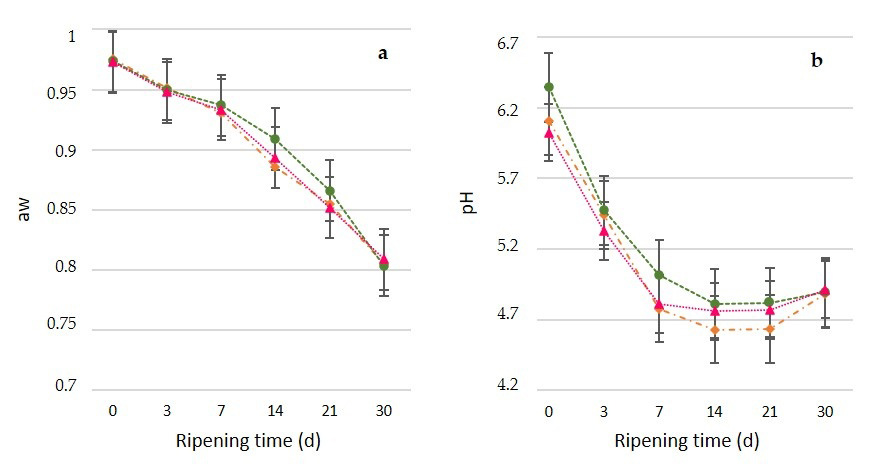
greater decrease in pH during production (see and compare Fig. 1b with Fig. 3b),
which would cause an additional inhibition of the spoiling microbiota producing
biogenic amines. No significant (p
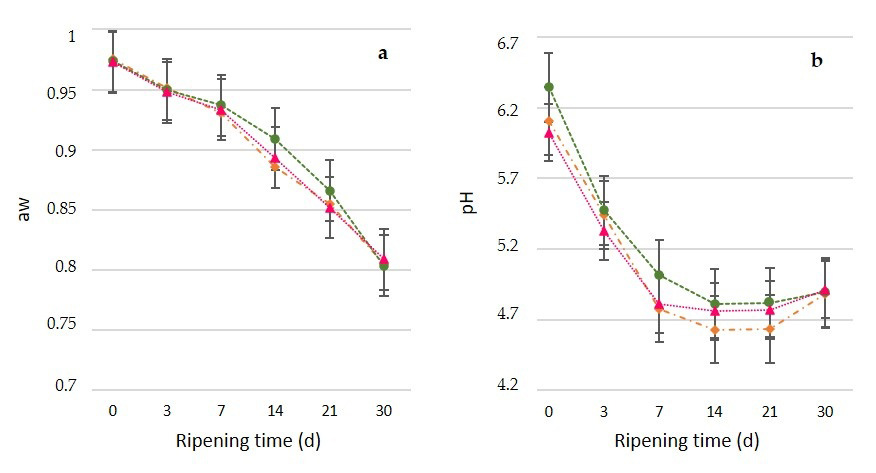 Fig. 3.
Evolution of Aw (a) and pH (b) values during the ripening of
Salchichón sausage manufactured with different spices. A (
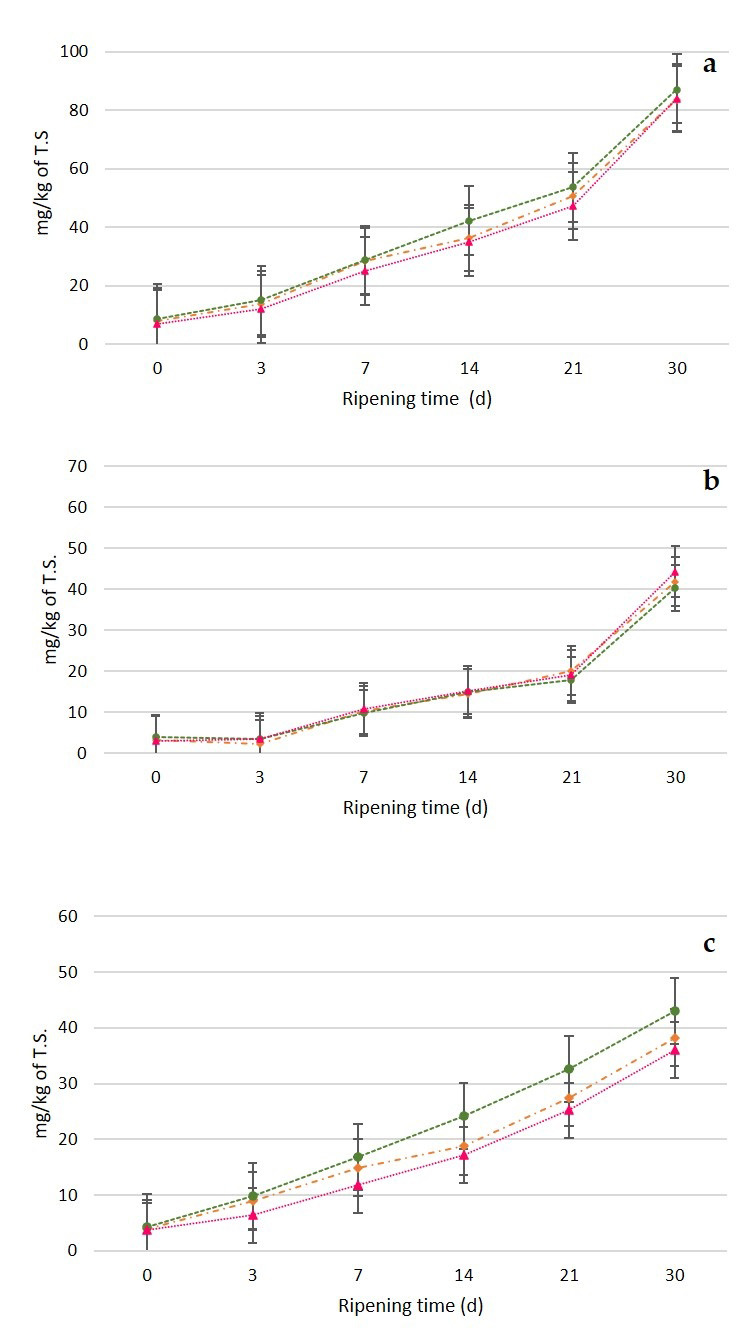
Fig. 4 shows the evolution of the biogenic amine index (BAI) and the total
vasoactive biogenic amine content (TVBA) along the manufacture of the three
batches of Salchichón. Biogenic amine index increased from values of 3.22,
3.84, and 2.87 mg/kg of T.S. in the mix before stuffing to values of 41.88,
40.28. and 44.32 mg/kg of T.S. in the final product, for the A, B, and C batches,
respectively. In the same way, the total vasoactive biogenic amine content
increased from values of 3.93, 4.27, and 3.67 mg/kg of T.S. in the mix before
stuffing to values of 38.24, 43.08. and 36.01 mg/kg of T.S. in the final product,
for the A, B, and C batches, respectively. As in the total biogenic amine
content, no significant (p
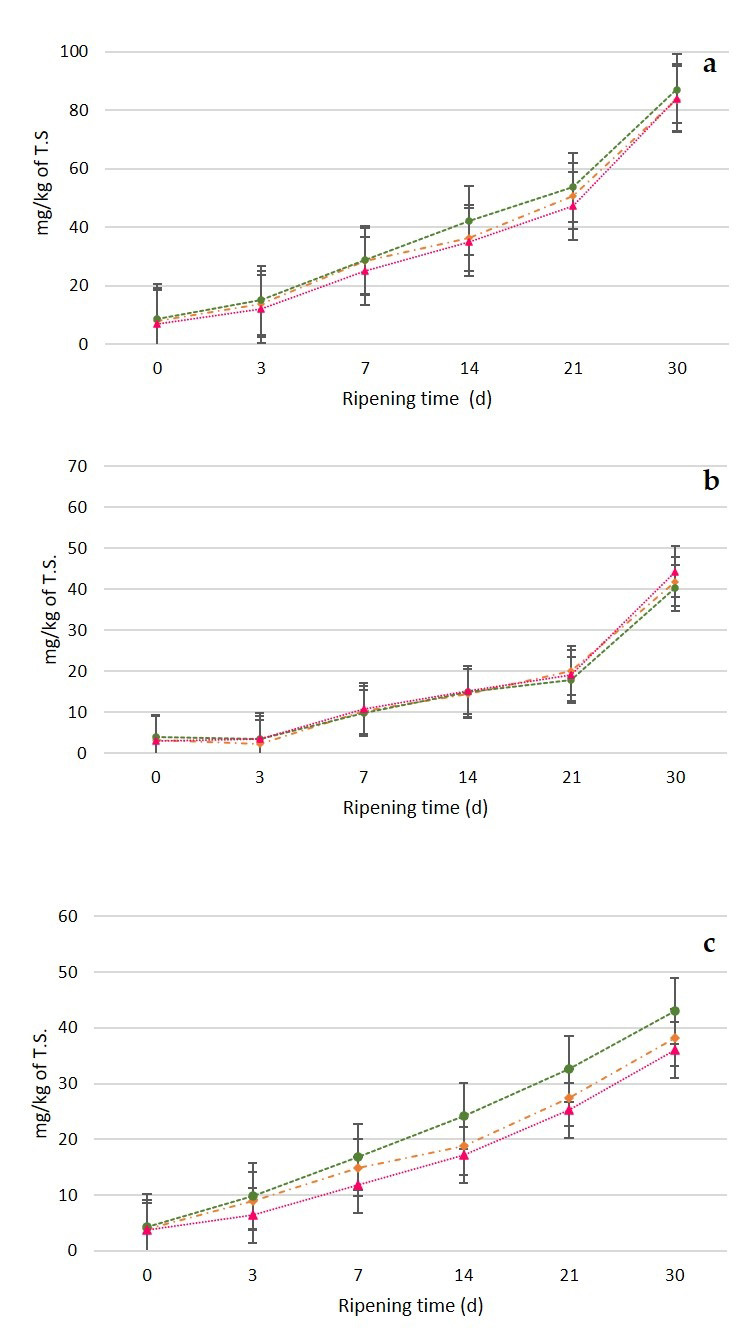 Fig. 4.
Evolution of the total biogenic amines (TBA) (a), biogenic amine
index (BAI) (sum of putrescine + cadaverine + histamine + tyramine) (b), and
total vasoactive biogenic amine content (TVBA) (sum of tyramine + histamine +
tryptamine + 2-phenylethylamine) (c) during the ripening of Salchichón
sausage manufactured with different spices. A (
As in the case of Chorizo sausage, levels of amines in Salchichón should not compromise the consumer health for a normal intake of this product.
There are not many studies in the literature reporting the effect of using spices on the contents of biogenic amines in raw-cured sausages, and most of the existing studies have been carried out investigating the effect of spices other than those used in the present work. Lu et al. [11] reported biogenic amine reducing effects using tea polyphenols, and essential oils of cinnamon, clove, ginger and anise. In the same way, Jia et al. [42] described reducing effects of star anise, black cardamom, clove, cassia, fennel, nutmeg and bay leaf. Similarly, Sun et al. [43] and Zheng et al. [44] reported reducing effects of extracts of three spices (cinnamon, clove and anise), and Sun et al. [45] also observed that the use of a mixture of cinnamon, clove and star anise extracts, combined with vacuum packaging, effectively inhibited the accumulation of biogenic amines during the storage of a raw-cured sausage.
In relation to the effect of the spices used in our work (spicy paprika, garlic, and oregano), Carmona-Escutia et al. [46] studied the effect of the use of paprika on quality parameters and the generation of biogenic amines during the maturation of Chorizo. They observed that the use of paprika stimulated the growth of lactic acid bacteria and inhibited the multiplication of Enterobacteriaceae. They also observed that the use of paprika in the formulation of Chorizo mixture reduced the content of total biogenic amines, specially cadaverine, but also putrescine and, to a lesser extent, tyramine, which seems to agree with the results in the present work.
Komprda et al. [35] studied the effect of paprika content, sausage diameter and the use of starter cultures on the formation of biogenic amines during the maturation of a fermented sausage. They observed that sausages with a larger diameter (80 mm) and made with a lower paprika content had a higher content of biogenic amines than sausages with a smaller diameter (50 mm) and a higher paprika content. They postulated that the higher paprika content could be responsible for the lower formation of biogenic amines, although, to obtain more conclusive results, this effect should be studied independent of the thickness of the sausage and the type of starter culture used. To shed more light on this effect, Komprda et al. [47] studied independently the effect of two types of spice mixtures (Paprikás, with paprika, and Hercules, without paprika) used in the production of typical Czech sausages. They observed that the spice mixture called Paprikás reduced the tyramine and putrescine contents in the sausage produced compared to sausages produced with the Hercules spice mixture. Subsequently, in order to identify the reducing effect on the production of biogenic amines of each of the components of the mixture called Paprikás, Sládková et al. [48] studied separately (and subsequently as a mixture of all of them) the inhibitory effect of each of the components of this mixture (paprika, spicy paprika, black pepper, paprika oleoresin, garlic granules, cumin essential oil, coriander oil, coriander oleoresin, rosemary extract and garlic essential oil) on two tyramine-producing microbial strains carrying the gene encoding the enzyme tyrosine decarboxylase (Pediococcus pentosaceus and Enterococcus faecalis CNRZ238). None of the components alone, nor the mixture of all of them, were able to totally inhibit these two microorganisms. Thus, the hypothesis that these components inhibit the formation of biogenic amines could not be conclusively confirmed in vitro.
As already mentioned, the spices essayed in the present study contain antimicrobial substances of different nature. Phenolic compounds, mainly present in spices, can destroy cell walls and membranes, alter the permeability of these membranes and allow the leakage and loss of cytoplasmic material, affecting the genetic material or the metabolism of microbial cells [49]. However, based on the results discussed and also based on the type of amines whose production is inhibited and the effect of spices on different microorganisms, it seems rather that in our study the inhibitory effect of spices on the production of biogenic amines is due to the stimulating effect on lactic acid bacteria that produce lactic acid that would have an inhibitory effect on microbial species (mainly enterobacteria) that produce biogenic amines. However, additional studies are necessary to definitely confirm this hypothesis.
The generation and accumulation of biogenic amines was notably lower in Salchichón than in Chorizo sausages, possibly due to the differences in ingredients other than spices integrating the mixture formulas.
The addition of different spices (spicy paprika, garlic and oregano) in Chorizo sausage, and especially the addition of garlic, caused the reduction of the generation of biogenic amines, particularly cadaverine, putrescine and tyramine, during the ripening process. This reducing effect seems to be due to an enhancement of acidification taking place during the manufacture and the subsequent inhibitory effect on amine-producing microbial groups, although this hypothesis should be corroborated by carrying out appropriate microbiological analysis. The alternative addition of white or black pepper in Salchichón sausage seems to have no impact on the formation of biogenic amines during the maturation process and on their content in the final product.
Data and Materials are available on request.
MRG performed the research and analyzed the data. SM optimized the methods, performed the research and analyzed the data. JC designed the research, get funding, optimized the methods, validated the data, and wrote the manuscript. All authors contributed to editorial changes in the manuscript. All authors read and approved the final manuscript. All authors have participated sufficiently in the work and agreed to be accountable for all aspects of the work.
Not applicable.
Not applicable.
This research was funded by the Xunta de Galicia (The Regional Government), Spain, through the CITACA Strategic Partnership, grant number ED431E 2018/07.
The authors declare no conflict of interest.
References
Publisher’s Note: IMR Press stays neutral with regard to jurisdictional claims in published maps and institutional affiliations.