
10 Apr 2025
Historical View and Some Unsolved Problems in Red Blood Cell Membrane Research—Video interpretation by Ingolf Bernhardt
Introduction
Professor Ingolf Bernhardt and Professor Lars Kaestner brought us Historical View and Some Unsolved Problems in Red Blood Cell Membrane Research (https://www.imrpress.com/journal/FBL/30/3/10.31083/FBL25331) in FBL Volume 30, Issue 3. We are honored to invite Professor Ingolf Bernhardt to interpret the article. Prof. Ingolf studied Physics at the Lomonossow University in Moscow and specialized in the field of Biophysics. His scientific interest focused on research into red blood cells, particularly ion transport through their membranes.
Author's Interpretation
In these articles, the unsolved problems we attributed to the following subjects:
First, phospholipid composition and distribution of red cell membranes in different species. The role of cardiolipin and plasmologans in biological membranes, lipid rafts and lipid scramblase. As an example, I would like to mention that human red blood cells have four major phospholipids in their membrane. Bovine red blood cells have only three types of phospholipids in their membrane. This means they have no phosphadidylcholine, leading to the situation that the outer membrane layer consists of 100% sphingomyelin.
Second, variation of red blood cell shape. Here, the red blood cells of camels are an interesting cell type because they are elliptocytes and do not change their shape like red blood cells from other species do.
Third, deformability of red blood cells in different mammalian species.
Fourth, cation transporters in the red blood cell membrane, including the activation or suppression of these transporters during red blood cell maturation. The focus in this section is on cation channels, since there are still channels with unclear molecular evidence.
Fifth, the mechanism of residual or leak ion transport. The question is: Is there a sodium-potassium/proton antiporter in the human red blood cell membrane? And: How does ion transport depend on the fatty acid composition of the red blood cell membrane?
We published several papers analyzing the leak sodium and potassium transport and came to the conclusion that this transport can be explained only assuming the presence of a sodium-potassium/proton antiporter in the cell membrane. There is some evidence that NHE9 could be the transporter we are looking for, but the final molecular biological proof is still missing.
The present review includes also a section with milestones of our understanding of the structure of biological membranes and ion transport processes across membranes. It starts with references of the first use of the words "cell" and "membrane", followed by the different theories of membrane structure. Concerning the permeability of membranes for ions in this section, we go back to the assumption that a biological membrane is impermeable for ions. This view changed completely after it became possible to measure the membrane permeability for ions using radioactive tracers and the discovery of the sodium pump.
Writing Motivation
The reason why we were writing this review is easy to understand. At the last conference of the "European Red Cell Society" in April 2024 on Ameland (The Netherlands), I gave a talk about the history of red blood cell membrane investigations as well as on unsolved problems in red blood cell membrane research. I did this because I was all my scientific life working with red blood cells. The main goal, however, was to give young scientists an idea what has been done already in the field. Reading publications, I realized that scientists repeat experiments, which were already done in the past. Therefore, it was my aim to summarize our basic knowledge.
Books Self-recommended
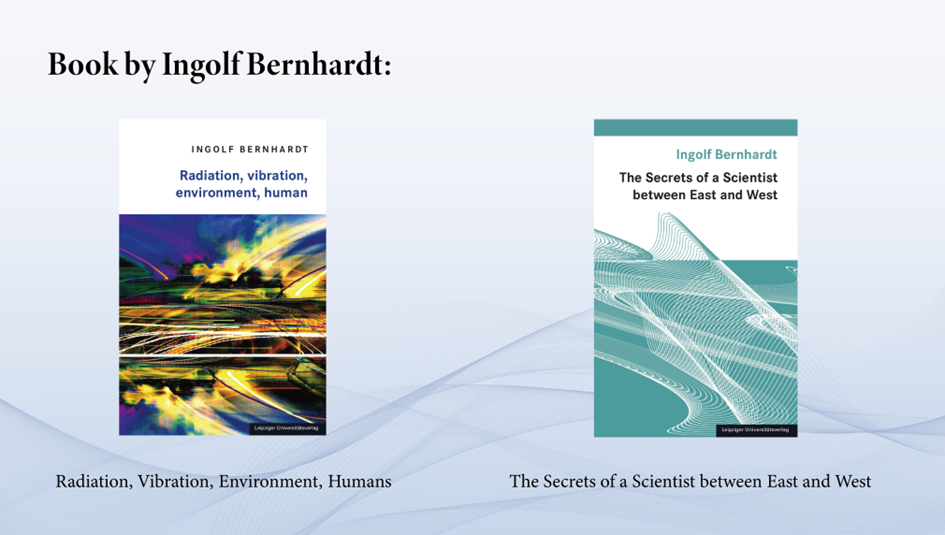
At the end, I would like to mention that I have written three books. Two are available both in German and in English. The third will come out in one month. The interested reader is recommended to read the cover texts of the editing company. The titles in English are for the first book: "The Secrets of a Scientist Between East and West", and for the second book: "Radiation, Vibration, Environment, Human". The third book will be available in German only, with the title: "Blood - the Red River of Life".
Related Papers
Historical View and Some Unsolved Problems in Red Blood Cell Membrane Research: https://doi.org/10.31083/FBL25331
Examination of Bovine Red Blood Cell Death in Vitro in Response to Pathophysiologic Proapoptotic Stimuli: https://doi.org/10.31083/j.fbl2812331