
Special Interview With Reviews in Cardiovascular Medicine (RCM) Editorial Board Member Prof. Adrian Baranchuk: A Vision for Cardiovascular Medicine and RCM
19 December 2025
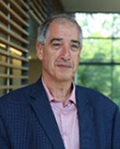
Recently, Reviews in Cardiovascular Medicine (RCM) is delighted to feature Professor Adrian Baranchuk in this interview. As a key member of the journal's Editorial Board, he has made long-standing contributions to cardiac electrophysiology and cardiovascular medicine, earning broad international recognition. His recent inclusion in Stanford University's 2025 world's top 2% scientists (https://topresearcherslist.com/Home/Profile/1154647) further highlights his academic impact. Seizing this opportunity, RCM hopes to offer readers deeper insights into his professional journey, research philosophy, and vision for the future.
With this in mind, let us begin the interview.
1. Could you please briefly introduce your academic background and your current main research interests? Would you like to share with us what specific area you have been focusing on recently?
Prof. Baranchuk: I am a full professor at Queen's University in Canada and also a professor in Argentina. I lead a large, global academic lab with over 150 active students from around the world. Our research covers general cardiology and specialized areas, notably the NET-Heart project, which investigates neglected tropical diseases affecting the heart. This project has produced 23 papers and a key book.
Personally, I publish between 20 and 30 papers annually, which is only possible with the support of students, residents, and fellows. In my lab, young researchers usually take the lead as first authors. I ensure that, regardless of gender, race, ethnicity, nationality, or religion, anyone dedicated to advancing knowledge is welcome in my lab.
2. After earning your medical degree from the University of Buenos Aires, you conducted research across several countries, including Spain and Canada. How have these international experiences shaped your academic philosophy and approach to research?
Prof. Baranchuk: My path was not fully planned. I trained in Argentina, moved to Spain during an economic crisis, and was introduced to high-level research there. Later, in Canada, working with world-class investigators inspired me to formulate better questions and search for evidence-based answers.
These experiences have allowed me to view how society, culture, and interactions with different communities shape one's tolerance for diverse lifestyles from a broader perspective. Between my time in Spain and at McMaster University in Canada, I was surrounded by outstanding researchers. This environment fueled my desire to ask and answer questions. It led me to gradually form ideas from daily discussions, often waking up in the middle of the night to jot down thoughts, and to learn how to answer questions in an evidence-based way.
3. In one of your previous interviews, you mentioned the impact of AI on medicine. With AI tools now capable of rapidly recognizing and analyzing electrocardiographic signals, do you think this will change how young physicians learn? Could AI make them more reliant on algorithms and less focused on fundamental clinical reasoning?
Prof. Baranchuk: AI is here to stay and can expedite care, but its current application in ECG is flawed. Traditional ECG machines have used basic AI for 40 years, but with only about 65% sensitivity because they were trained on outdated data. For new AI to be truly effective, its machine learning must be fed by experts at the "top of the knowledge pyramid," not by general practitioners or existing flawed systems. Otherwise, we risk perpetuating inaccuracies.
For young physicians, the goal is not to prohibit AI use but to help them remain creative thinkers. AI can help organize content, but original ideas must come from their own brains.
4. Looking ahead to the next 5–10 years, what major breakthroughs or new directions do you foresee in the field of cardiac electrophysiology and cardiovascular medicine? How do you think RCM can best capture and reflect these emerging trends?
Prof. Baranchuk: In the coming 5-10 years, cardiovascular medicine will face significant challenges, with obesity being a critical issue. Obesity is prevalent not only in high-income countries but also in low- and middle-income countries, affecting various aspects of cardiovascular health, including diabetes, coronary artery disease, conduction disorders, arrhythmias, and atrial fibrillation. RCM can contribute by publishing research on obesity and critically analyzing our past successes and failures in this area.
Additionally, we need to refocus on early prevention of cardiovascular diseases. It is now evident that cardiovascular diseases begin to manifest in younger populations, even in early childhood. This highlights the need for preventive education starting from a young age. RCM can play a vital role by publishing relevant studies and promoting awareness across scientific, social, and political spheres.
5. How did you first learn about RCM, and what motivated you to join its Editorial Board? What aspects of RCM attracted you the most, and what do you think are the journal's key strengths?
Prof. Baranchuk: I first learned about RCM when I sought a platform to disseminate my research to a wider audience while ensuring the journal's international reputation and transparency. RCM met these criteria perfectly. I was impressed by the transparency demonstrated in the published papers, such as the declaration of conflicts of interest. Moreover, RCM's international Editorial Board, comprising experts from all five continents, appealed to me greatly. These factors convinced me to join RCM's Editorial Board and contribute to this significant scientific communication platform.
6. RCM is dedicated to maintaining a fair and transparent peer review process. When reviewing manuscripts, which aspects do you pay the most attention to? How would you evaluate RCM's current performance in this regard?
Prof. Baranchuk: As a reviewer for numerous international journals, I consider several key factors when deciding whether to accept a review invitation. First and foremost, I assess whether the journal maintains transparency throughout the review process and safeguards the interests of the authors. Secondly, I evaluate the journal's standing in the academic community and whether it is respected by my peers in the field. Lastly, I ensure that the manuscript's topic aligns with my area of expertise. RCM excels in all these aspects.
I will reject invitations if a paper falls outside my area of knowledge, as it's unfair to the author to provide a substandard review. I apply this same rigorous principle to my work with RCM to ensure a fair evaluation for all submissions.
7. Based on your experience with RCM and other cardiovascular journals, what practical advice would you give to young researchers to help them improve the quality of their manuscripts?
Prof. Baranchuk: My key advice is to first conduct a systematic literature search to ensure your idea is novel.
Most importantly, seek good mentorship. A mentor can help refine research questions, guide study design, and support manuscript development.
Young investigators bring fresh ideas and should embrace their ability to contribute meaningfully.
We sincerely thank Prof. Baranchuk for sharing his valuable insights. His perspectives on research, education, and the future of cardiovascular medicine are truly inspiring. We look forward to continued collaboration and to advancing RCM's role as a platform for global scientific exchange.
Prof. Adrian Baranchuk's article was published in RCM:
Neglected Tropical Diseases and Sudden Cardiac Death: The NET-Heart Project
Journal Homepage: Reviews in Cardiovascular Medicine