
Special Interview with Reviews in Cardiovascular Medicine Editorial Board Member Dr. Allison B. Reiss: Exploring the Heart–Brain Axis and Promoting the Development of Cardiovascular Medicine
11 May 2026
Reviews in Cardiovascular Medicine (RCM) is an international, peer-reviewed, open-access journal dedicated to publishing review articles, research papers, short communications, and other types of content in the field of cardiovascular medicine. In this issue, we are honored to invite Dr. Allison B. Reiss, a member of the journal’s Editorial Board, for a special interview. Dr. Reiss is an Associate Professor of Medicine and Head of the Inflammation Laboratory at NYU Grossman Long Island School of Medicine, as well as a board-certified internal medicine physician and molecular biologist. Her research has long focused on the role of inflammation in atherosclerosis, Alzheimer’s disease, and other conditions, and she has made significant contributions to the emerging interdisciplinary field of heart-brain interaction. This interview aims to share her academic journey, cutting-edge insights into the heart-brain axis, and valuable suggestions for the journal’s development.
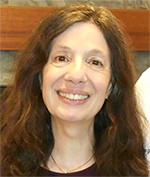 |
Allison B. Reiss, MD |
| Departments of Medicine and Foundations of Medicine, NYU Grossman Long Island School of Medicine, Mineola, NY, USA | |
| Interests: molecular cardiology; acute coronary syndromes; coronary artery disease; lipid profile |
1. Could you briefly introduce your academic background, your main research areas, and your current scientific work to the readers of Reviews in Cardiovascular Medicine (RCM)?
I am currently an Associate Professor of Medicine and Head of the Inflammation Laboratory at NYU Grossman Long Island School of Medicine. I received my Bachelor of Science degree in biology from CUNY Brooklyn College and my MD from SUNY Downstate College of Medicine. I trained in internal medicine at UMDNJ Rutgers and then went on to an NIH-sponsored physician scientist traineeship at NYU School of Medicine. I am both an internal medicine physician certified by the American Board of Internal Medicine and a molecular biologist with extensive training in wet lab and basic science techniques. This background gives me the broad skills to engage in bench-to-bedside research. My current areas of interest are centered on the causes, prevention, and treatment of cardiometabolic diseases and neurodegenerative disorders, and the interplay between these conditions.
2. Your research spans cardiovascular disease and neurodegenerative disorders such as Alzheimer’s disease. How do you interpret the importance of the heart–brain axis in modern medicine?
This is a critical intersection that dramatically affects both lifespan and healthspan. The interdependence may be overlooked because of the level of subspecialization that pervades modern medicine. A broad background in internal medicine helps to avoid some of the pitfalls of the disease-specific perspective that leads to fragmented rather than comprehensive care. The brain cannot function well unless the heart and blood vessels are working properly and delivering adequate oxygen and nutrients to the brain. A strong heart in a brain that is deteriorating with fading mental sharpness and/or diminishing control over movement and activity leaves the person with a poor quality of life and often feeling sad, anxious, and depressed. The co-morbidities that harm the heart also harm the brain. These include high blood pressure, abnormal lipid profile, diabetes, and other metabolic disorders. Chronic inflammation is one of the critical factors that harm the brain and the heart. The positive side of this is that lifestyle adjustments that are good for the heart are also beneficial to the brain. Both thrive with a nutritious and varied diet full of whole nutrient-dense foods (fruits, vegetables, nuts, protein, good fats) with minimal consumption of processed foods and added sugars. Regular physical activity, low or no alcohol consumption, avoidance of tobacco and illicit drugs, and social engagement with family and friends are important, as are good quality sleep and minimizing stress.
3. In a previous interview, you mentioned that you were drawn to medicine and biology from the age of seven. What do you think has been key to maintaining that passion and ultimately becoming a physician-scientist?
The passion stems from an unending curiosity about the nature of life and, particularly, human life. It has been a part of me from my earliest memories and continues to this day. It feels like my brain is just constantly seeking knowledge and complicated puzzles to solve. If I am not grappling with a problem or question in medicine, I feel bored and restless. New ideas come to me day and night, and even while I sleep, I want to bring them into the light and solve them. As an internal medicine physician, I have witnessed so much death and suffering from myriad disease states, and I think of all the people who struggled so bravely with heart failure, diminishing cognitive function, declining physical abilities, and cancer. They touched me deeply and, to this day, individuals continue to reach out to me from all over the world to tell me their stories. This inspires me to keep going because maybe my work can bring new ways to relieve suffering and cure or slow the diseases that often come with aging. It feels like this is what I was meant to do and was really not even a choice.
4. You mentioned facing challenges early in your career, especially as a woman in medicine. How did you overcome these barriers? And, based on your experience, could you offer some advice to beginners like yourself?
The barriers were much more obvious years ago, but unfortunately, they still exist today in less explicit form. I was discouraged from pursuing medicine because it was “too hard for a woman,” and I was chastised for taking a seat in a medical school class from a man who would presumably not leave the profession to take care of children and needed to be the breadwinner. In the wet lab setting, many of the doctoral students and post-docs made it clear that they did not want to waste time and effort teaching me molecular biology because they thought I was just going to go off and practice medicine and not really pursue research. I was committed and persistent, and eventually convinced them that research was my path. I also struggled with keeping my career momentum while raising my children, who were only 21 months apart in age. Motherhood was always my most important role, and nothing could deter me from being a mom. I think that it is somewhat easier for the current generation of women than it was for me, but they still encounter significant challenges. I use my voice to advocate for them, support their goals, and help them feel valued. My best advice is to do what you love and keep your dreams alive, and never let anyone convince you to take a path you do not want. Do not let yourself be relegated to the background. If you are naturally introverted like I am, it can be difficult to step forward, but do your best to overcome your reluctance so opportunities do not pass you by. Work hard, find great mentors, and manage stress. Live a healthy lifestyle and accept help when it is offered. Don’t forget to mentor others and treat your mentees and colleagues as you wish to be treated yourself.
5. You have long been engaged in research at the intersection of cardiovascular and neurodegenerative diseases. Based on your experience, how do you view the current frontiers and key scientific questions in the field of the heart–brain axis?
At its most basic, the question is: How do we keep both the brain and the heart healthy over a lifetime that extends into old age? If either one is not functioning well, our quality of life falls dramatically. We want to understand the role of lipids in the health of these two major organs, and particularly the mechanisms through which ApoE genetics exerts so much influence over them. The role of systemic and neuroinflammation needs elucidation because, while we see their influence, we also know that lowering inflammation alone does not cure or halt these conditions. We need to take a broad view and approach both as multifactorial diseases that intersect. We still have a lot of questions about the contribution of diet and environmental factors to heart and brain diseases. Finally, we need to refine and apply new tools and technology to understand and correct the molecular-level defects that lead to cardiovascular damage and neurodegeneration.
6. At present, emerging technologies such as artificial intelligence and single-cell sequencing are widely used in medical research. How can these technologies help explore the link between cardiovascular and cerebrovascular diseases, and how can we better integrate brain and cardiovascular research?
Single-cell and spatial multi-omics can analyze genotype and phenotype simultaneously from single cells. We can identify exact cell populations and pathways driving injury and document spatiotemporal characteristics of pathologic changes. In heart injury, we can see reparative macrophage subsets, endothelial denudation, or dysfunctional regrowth. With spatial transcriptomics and multi-omics, we can track the spread of pathology. These technologies, along with AI-assisted modeling, can be applied to uncover shared cellular and molecular mechanisms across the neurovascular unit and heart microvasculature. This type of brain-heart systems biology approach that recognizes their close interconnection can lead to dual-disease trials and makes it more likely that we will pick up disease drivers that might be missed with single-organ research. 3D imaging and organoid or tissue-engineered models let us test cause and treatment effects in systems that replicate a human-based environment.
CRISPR-based editing and mitochondrial genome editing are especially promising for correcting defined molecular defects, and engineered exosome or nanoparticle delivery systems may improve tissue targeting in both the heart and the CNS. I also want to mention a relatively simple method, which is the use of MitoTracker dyes, which are live-cell fluorescent stains that we can use to observe mitochondrial dysfunction, mass, and morphology in active mitochondria in living cells. Bioenergetics and mitochondrial viability are key to so many disease states. I think that this is only the beginning, and new technologies that allow us to replicate the genetic makeup of each individual are coming and will allow us to predict and avert diseases with a personalized approach.
7. What opportunity or circumstance led you to join the Editorial Board of Reviews in Cardiovascular Medicine (RCM)?
The journal contacted me by e-mail years ago, and I liked its scope and aims, so I partnered with my colleague, Dr. Joshua De Leon, to edit a Special Issue on Inflammation and Cardiovascular Diseases because that is such a key area of interest for me. I am on the editorial boards of select journals that contribute worthwhile publications in their field of focus, and Reviews in Cardiovascular Medicine consistently presents content that is of high quality.
8. You have served on the editorial boards of several journals. In terms of content strategy, international development, or academic dissemination, what areas do you think RCM could further optimize?
I think that RCM does an excellent job of synthesizing article content, educational offerings, and interviews. They are a presence at a number of meetings and conferences, and they offer support to authors and Special Issue opportunities. They might consider holding their own webinar education conferences based on Special Issue topics, as well as presenting awards to outstanding reviewers and authors. Their social media presence could be stronger and more targeted with short videos to raise awareness of the journal.
9. You have frequently mentioned your passion for public education in past interviews. What role do you believe academic journals should play in disseminating scientific knowledge and serving public health?
Academic journals play a vital role in spreading accurate and validated scientific knowledge throughout not only the medical and research communities, but also to the lay public as well. They must be unbiased and objective so that they can be trusted. They must debunk false and unproven information and be a platform for the free exchange of ideas worldwide.
In this interview, Dr. Reiss has eloquently shared her academic journey, articulated the clinical and scientific significance of the heart-brain axis, and offered forward-looking insights into the application of emerging technologies in cross-disciplinary heart-brain research. She also provided valuable suggestions for the future development of Reviews in Cardiovascular Medicine, including hosting webinar-based educational conferences on Special Issue topics, establishing awards for outstanding reviewers and authors, and strengthening social media presence through short videos. We extend our sincere gratitude to Dr. Reiss for taking the time to participate in this interview and for sharing her profound insights. RCM remains committed to building a high-quality platform for academic exchange and to advancing the field of cardiovascular medicine. We encourage our readers to stay tuned to the journal and to consider submitting their work.
Journal Homepage: Reviews in Cardiovascular Medicine
Related Special Issue: Inflammation and Cardiovascular Diseases