
Special Interview for World Hypertension Day: Conversation with Prof. Stefano Omboni, Editorial Board Member of Reviews in Cardiovascular Medicine — New Trends in Hypertension Management and the Future Path of Digital Transformation
6 May 2026
As World Hypertension Day on May 17 approaches, Reviews in Cardiovascular Medicine (RCM) has launched a special interview series under this year’s theme, “Controlling Hypertension Together!” focusing on global advances in hypertension research and clinical practice, to enhance public awareness and promote academic exchange.
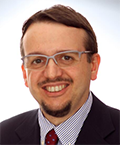 |
Stefano Omboni MD, FESC, ISHF |
| Clinical Research Unit, Italian Institute of Telemedicine, Varese, Italy; Department of Cardiology, Sechenov First Moscow State Medical University, Moscow, Russian Federation | |
| Interests: hypertension; telemedicine; clinical cardiology; blood pressure monitoring |
In this issue, we are honored to invite Prof. Stefano Omboni, Editorial Board Member of RCM. Prof. Omboni is Director of the Italian Institute of Telemedicine and Professor of Cardiology at Sechenov First Moscow State Medical University. He has long been engaged in research on hypertension, blood pressure monitoring, and telemedicine, with internationally recognized expertise in digital health and chronic disease management. He has made significant contributions to remote hypertension management, ambulatory blood pressure monitoring, and digital healthcare solutions, and has actively participated in international guideline development and multicenter research initiatives.
Focusing on advances in hypertension research, digital health empowerment, and global management strategies, Prof. Omboni shares his in-depth perspectives based on extensive research and clinical experience.
1. Could you briefly introduce your academic background and your current research focus? What motivated you to specialize in hypertension and blood pressure monitoring?
I am a physician and a cardiologist. My academic background is clinical physiology and cardiovascular pharmacology. I have always been fascinated by the study of the cardiovascular system and by technical innovation in cardiology. Thus, since the early years of my academic career, my research has focused mainly on the use of medical technologies, in particular blood pressure monitoring, and later on telemonitoring and telemedicine, as tools to better understand physiology and pathophysiology beyond blood pressure control and hypertension. In over 40 years of activity, I have published several original research papers and served on writing committees for major guidelines on hypertension, blood pressure monitoring, and telemedicine.
2. From your perspective, what have been the most significant developments and paradigm shifts in hypertension research throughout your career?
From the start of my career, as a young doctor, to the present day, hypertension research has rapidly evolved, passing through at least three major phases. In the eighties and nineties, the diffusion of modern and effective pharmacological drug treatments offered the hypertension specialist a vast and varied armamentarium to improve blood pressure control and reduce the risk of cardiovascular complications in patients. Then, the development of innovative and complex diagnostic procedures and medical device-based therapies has allowed early diagnosis of hypertension and the effective treatment of resistant cases. More recently, the rise of digital health, telemedicine, and artificial intelligence (AI), and the diffusion of wearable and cuffless devices, have helped facilitate the screening and management of hypertension in everyday life and raise awareness among the population of the importance of cardiovascular prevention.
3. The core goal of World Hypertension Day is to raise public awareness of blood pressure management. From your experience, is there a "translational gap" between current academic research and public education? How can we bridge it?
Indeed, there is still a translation gap between hypertension research and the clinical management of the condition. In particular, there is still poor literacy among doctors and patients about the condition, and this may explain why hypertension is still ineffectively managed in most patients or even remains undiagnosed in the early stages. However, initiatives like World Hypertension Day have helped over the years to increase awareness among patients about the importance of early screening of hypertension. I think education is very important, but it is not effective alone, given the characteristics of hypertension, namely, a silent condition that rarely negatively affects daily life activities. The diffusion of relatively accurate, affordable digital technologies should create the opportunity to facilitate regular blood pressure measurement using wearables or kiosks located in pharmacies, doctors’ offices, or shopping malls. Blood pressure measurement is the key to raising patient awareness and improving diagnosis.
4. As a strong advocate for telemedicine and remote monitoring, and against the backdrop of World Hypertension Day’s call for greater attention to blood pressure management, in your view, what is the single biggest opportunity that digital health currently offers for improving hypertension control worldwide?
Digital health, in particular connected health through telemedicine, has the unique advantage of enabling outreach to distant people and remote communities, thereby enabling effective hypertension screening. The same technology is also indispensable for helping doctors maintain blood pressure control and treatment adherence over time in treated patients.
5. AI, big data, and IoMT are rapidly applied in hypertension risk prediction, precision diagnosis, remote follow-up, and medication optimization. Do you think the AI-driven hypertension management model will become mainstream? What key challenges remain for real-world implementation?
I am very interested in AI, particularly predictive AI based on machine learning. Applications based on this type of AI may help with early screening for hypertension, also in non-medical settings, by combining features and clinical information from different patients. However, I think AI-based applications are still largely inaccurate, mainly because the clinical data supporting them are often inconsistent and not validated by doctors. Additionally, there is no consensus on the best and most reliable algorithms to rely on. We need to work on it by increasingly involving hypertension specialists in research programs aiming at developing these solutions.
6. In your 2022 interview, you discussed the challenges of scaling telemedicine in low-income countries. With the rapid evolution of AI and mobile health, do you see any concrete solutions that could help bridge the hypertension care gap between developed and developing nations?
I see digital health based on affordable mobile tools, including wearables and cuffless devices, as a very helpful approach, also in developing countries, to improve the screening and management of hypertension. The diffusion of mobile networks in remote areas of developing countries is favoring the adoption of such solutions.
7. How did you first get in touch with Reviews in Cardiovascular Medicine (RCM) and become a member of the editorial board?
I was approached by the editorial team in 2021. Since I often receive such invitations, I took my time to explore the journal and verify its quality and scientific validity. I found the journal's approach innovative, so I thought my contribution could help achieve the journal's mission.
8. As World Hypertension Day approaches, RCM plans to launch hypertension-themed content. As an editorial board member, what forms do you think the journal can adopt (such as special issues, review collections, young scholar forums, etc.) to better build an academic exchange platform for hypertension research?
I think a special issue dedicated to World Hypertension Day may be interesting. In my opinion, the special issue should present current hypertension guidelines in a succinct, easy-to-read way by highlighting the main recommendations, and it should report on worldwide experiences during the initiative, focusing on innovative approaches to effective hypertension screening.
9. In which aspects of RCM – such as peer review, article quality, internationalization of scholars, journal platform promotion, etc. – do you suggest further optimization or improvement?
Although many papers are reviews, I think the journal should aim to increase the number of brief editorials that focus on innovative aspects of cardiovascular medicine, written by experts in the field.
We sincerely thank Prof. Stefano Omboni for taking the time to participate in RCM’s World Hypertension Day special interview. In this conversation, Prof. Omboni shared profound insights ranging from blood pressure monitoring to telemedicine, from artificial intelligence to global health equity, highlighting the critical role of digital technology in raising public awareness and bridging the gap between hypertension research and clinical care. RCM remains committed to building a high-quality, international platform for cardiovascular medicine, facilitating the translation of cutting-edge hypertension research into clinical practice and public education. We extend our gratitude again to Prof. Omboni for his valuable contributions, and thank all our readers for their attention.
Journal homepage: Reviews in Cardiovascular Medicine
More Event Details: https://www.imrpress.com/page/WHD-special-feature