

 , Dongxue Fu 2
1 School of Literature and Media, Jingchu University of Technology, 448000 Jingmen, Hubei, China
2 Department of Computer Science and Technology, Central China Normal University, 430079 Wuhan, Hubei, China
Abstract
Chinese traditional paper-cutting, an important form of intangible cultural heritage (ICH), vividly reflects the richness of China’s historical and cultural legacy. However, due to the unique characteristics of ICH, its preservation and transmission face significant challenges. This paper explores knowledge organization methods for traditional Chinese paper-cutting ICH proposes the construction of a knowledge ontology model to achieve systematization, standardization, and digitization. The goal is to provide robust support for the preservation, inheritance, and innovation of this cultural tradition.
Keywords
- Chinese traditional paper-cutting
- intangible cultural heritage
- knowledge organization
- ontology construction
Chinese paper-cutting art has a long history, and its origin can be traced back to the Han Dynasty. The invention of paper laid the material foundation for its birth (He, 2007). Subsequently, it spread among the people and was developed and improved in different historical periods. During the Tang and Song Dynasties, paper-cutting art was already quite prosperous. It not only prevailed among the people but also became a part of court art. In the Ming and Qing Dynasties, it reached its peak, with rich themes and forms and more exquisite techniques. It carries rich traditional Chinese cultural connotations, serves as an important carrier of the Chinese nation’s spirit and emotions, contains beautiful implications, is closely linked to folk customs and activities, and is widely used for decoration during important festivals and celebrations, conveying beautiful wishes. Therefore, how to effectively organize and manage the knowledge of paper-cutting intangible cultural heritage (ICH) has become an urgent issue to be addressed.
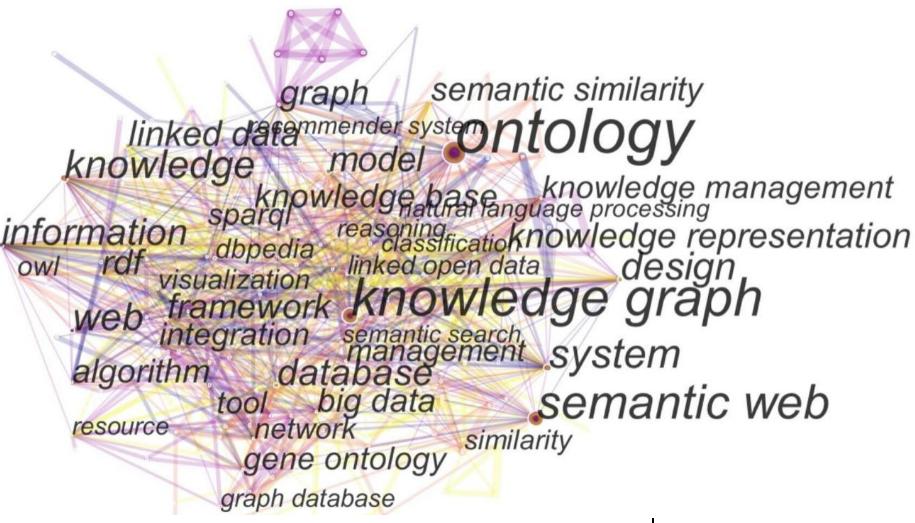
In the field of ICH knowledge organization, current research has achieved a series of notable accomplishments. However, when it comes to specialized research on Chinese traditional paper-cutting ICH, the number of studies remains relatively low. This status quo suggests that, despite the development of general theories and methods for ICH knowledge organization, more targeted research is still needed for specific types of ICH, such as paper-cutting. To gain a deeper understanding of the current research trends and hotspots in ICH knowledge organization, we utilized CiteSpace software (CiteSpace V 6.2.R3, Developed by Professor Chaomei Chen at Drexel University, Philadelphia, PA, USA) to conduct a keyword co-occurrence analysis of ontology-related literature in the Web of Science database from 2016 to 2020. In the analysis, we set the time slice to one year, selected keywords as the node type, chose the TOP 50 keywords for each time slice, and employed the log-likelihood ratio algorithm. Ultimately, we obtained a keyword co-occurrence map with 238 nodes and 943 connections, as shown in Fig. 1.
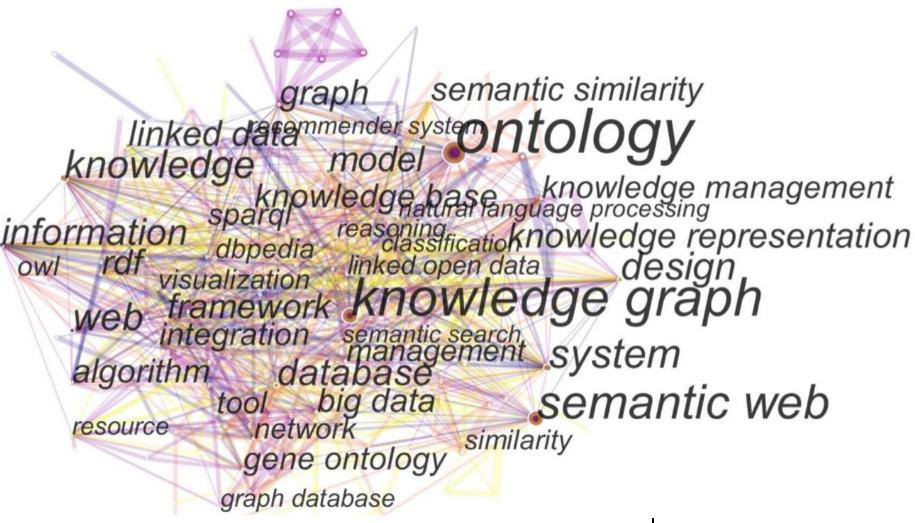 Fig. 1.
Keywords of knowledge organization research in recent years.
In terms of knowledge organization and construction, the KGen system developed by Rossanez et al (2020) automatically extracts entities and relationships from biomedical literature through natural language processing technology, providing an efficient and automated paradigm for domain knowledge integration, and its method can be extended to the field of cultural heritage. The multi-scale cross-domain thermochemical knowledge graph by Mosbach et al (2020) verifies the multi-modal modeling ability for complex scientific problems and provides a technical reference for the data fusion of cultural heritage. As a core tool for the digitalization of cultural heritage, multimedia ontology, Mallik and Chaudhury (2012) achieved the dynamic preservation of cultural heritage resources through semantic description and cross-media association. Moreover, Kim et al (2017) further combined mobile augmented reality technology and used the ontology model to provide contextual cultural information, significantly enhancing the user experience. In the field of image processing, the adaptive iterative mean filtering algorithm by Huijuan Guo et al. (2020) effectively solved the problem of salt-and-pepper noise in historical images. The current research trend is more inclined to integrate deep learning methods (such as the Convolutional Neural Network (CNN) model) to optimize the denoising efficiency. The semantic annotation method for intangible cultural heritage videos proposed by Xilong Hou et al. (2018) realizes the structured analysis of multi-modal data (such as images and 3D models) and knowledge discovery through the ontology model. The innovative application of mobile technology further promotes the protection of cultural heritage: the crowdsourcing framework designed by Hannewijk et al (2020) dynamically updates the knowledge graph through user-generated content. The heterogeneous cultural heritage access system by Kando and Adachi (2004) realizes the integration of resources across institutions by using semantic web technology. And Mallick et al (2021) combined multimedia ontology with machine learning algorithms and successfully achieved the automated transcription of the movements of traditional Indian dances, demonstrating the breakthrough value of artificial intelligence in the digitalization of intangible cultural heritage.
Research on knowledge organization in the cultural domain has seen significant advancements, particularly in ontology-based frameworks for ICH. Mallik and Chaudhury (2012) pioneered this field by constructing an ICH ontology using Ontowiki, integrating United Nations Educational, Scientific and Cultural Organization (UNESCO) classifications and existing Chilean ICH data to create a structured catalog, which has since become a foundational reference. Lombardo et al (2016) expanded on this by addressing visualization challenges in ICH representation, proposing a method to link physical artifacts with contextual metadata and demonstrating its application in mapping urban public art through contemporary art ontologies.
With the emergence of advanced technologies, later studies focused on integrating novel tools for enhanced preservation and interaction (Liu, 2014). Kim et al (2017) developed a semantic web-based mobile augmented reality (AR) system for the Incheon Pavilion in South Korea, enabling dynamic and interactive visualization of ICH resources. Similarly, Mallick et al (2021) employed multimedia ontologies and machine learning to codify Bharatanatyam, a classical Indian dance form, into Labanotation, achieving automated transcription for archival and educational purposes. More recently, Hannewijk et al (2020) advanced ontology modeling by designing an OWL2-QL-based framework for Vietnamese traditional dance (VTD), enabling formal representation, semantic reasoning, and querying capabilities.
These studies collectively highlight the evolution of cultural heritage ontologies—from foundational cataloging to technology-driven applications—emphasizing their role in preserving, interpreting, and disseminating intangible cultural knowledge across diverse contexts. Overall, the research on knowledge organization is extensive. However, in the research hotspots and trends of intangible cultural heritage, there are similarities. The integration of technologies such as big data, natural language processing, and deep learning with ontology is deepening and gradually becoming the research focus and topic of interest. Notably, knowledge organization has been scarcely applied in the research of traditional Chinese paper-cutting.
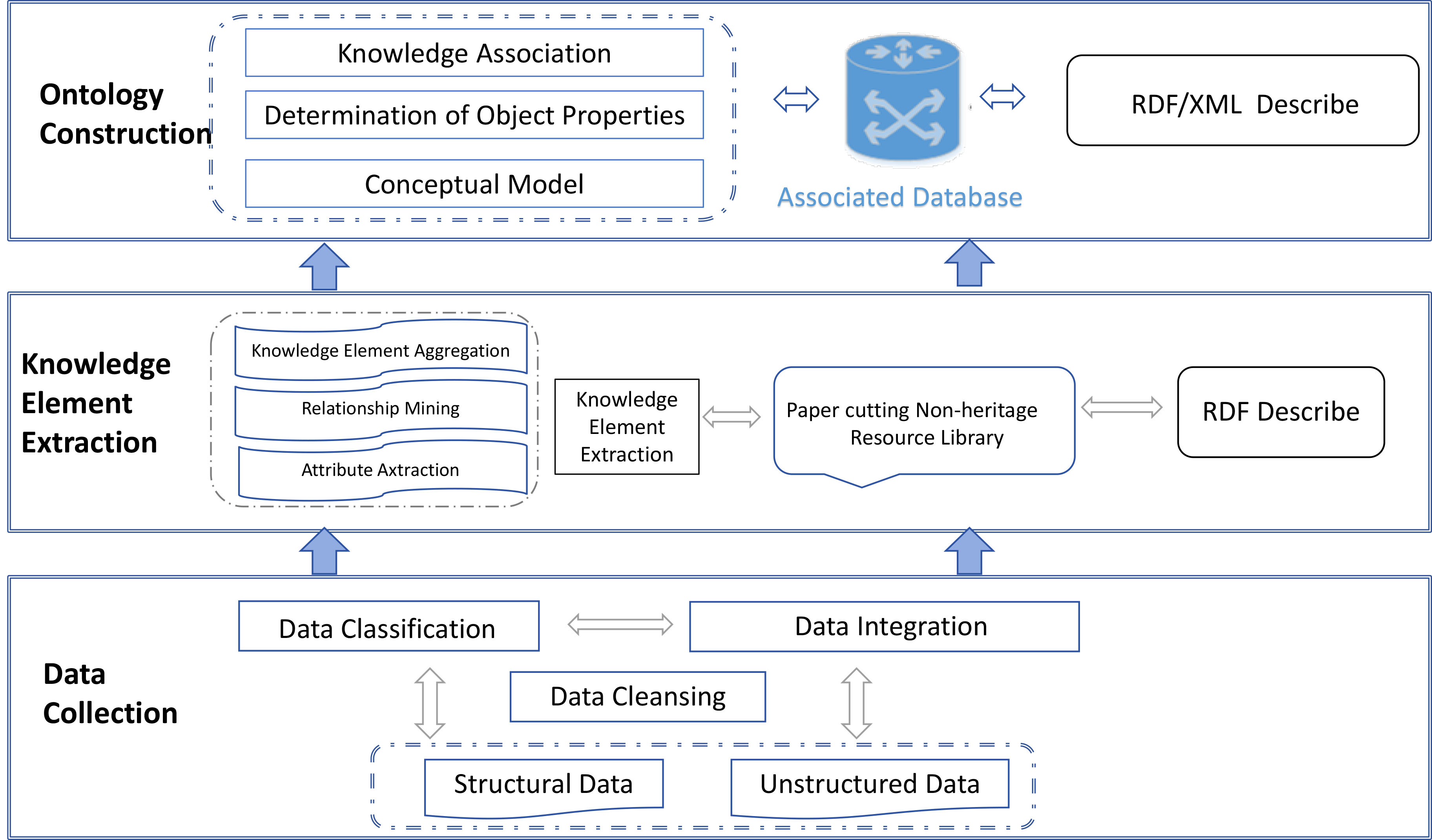
Based on the descriptive model of knowledge organization, this paper proposes a knowledge organization framework for Chinese traditional paper-cutting intangible cultural heritage. The process of knowledge element extraction involves both knowledge element abstraction and resource description. During the feature attribute extraction phase, we need to extract key feature attributes from paper-cutting works, such as the symmetry of patterns, the fluidity of lines, and the color coordination. These feature attributes can further refine our understanding of paper-cutting art and provide a foundation for subsequent knowledge element aggregation and abstraction. The relationship mining aspect is a crucial part of the framework diagram. By exploring the connections and patterns among different paper-cutting ICH objects, researchers can gain a deeper understanding of the internal structure and characteristics of paper-cutting ICH, providing strong support for subsequent data analysis and application. The aggregation of knowledge elements is a key step in knowledge organization. By merging and refining related knowledge elements, we can form a more refined and valuable knowledge base. In the knowledge organization of paper-cutting ICH, the aggregation of knowledge elements may involve the integration of techniques, styles, themes, and other aspects. The abstraction of knowledge elements involves extracting key information points from the aggregated knowledge base, such as the technical essentials and stylistic features of paper-cutting. These information points can provide powerful support for the protection, inheritance, and innovation of paper-cutting art. RDF/XML (RDF/XML is a serialization format based on Extensible Markup Language (XML) syntax, used to represent the triples (subject-predicate-object) in the Resource Description Framework (RDF) data model, and is commonly used for data storage and exchange in the Semantic Web.) and other semantic description languages are utilized to represent paper-cutting objects and their relationships. By defining clear semantic labels and relationships, we can clearly express the internal connections and hierarchical relationships among various elements in paper-cutting art. Fig. 2 illustrates the knowledge organization framework for paper-cutting intangible cultural heritage.
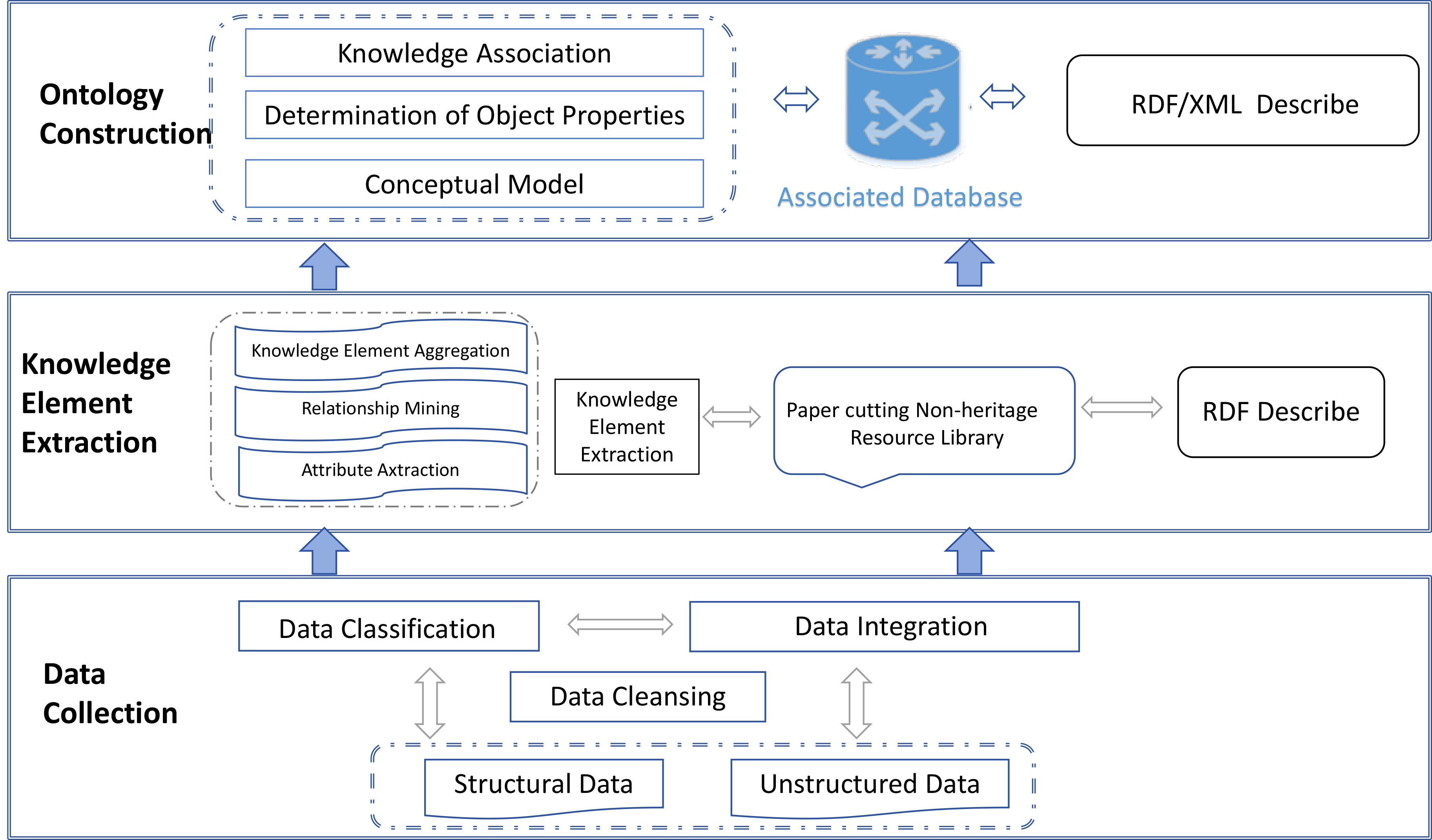 Fig. 2.
Framework for the organization of intangible cultural heritage of paper-cutting. RDF/XML is a serialization format based on Extensible Markup Language (XML) syntax, used to represent the triples (subject-predicate-object) in the Resource Description Framework (RDF).
The sources of Chinese traditional paper-cutting intangible cultural heritage resources are diverse, primarily including texts, images, videos, and other types. These resources collectively constitute the foundation for knowledge organization and description, providing abundant material for in-depth research on paper-cutting art. Firstly, for text resources, we will collect historical documents, research papers, news reports, and other materials related to paper-cutting art. These textual materials detail the origin, development, techniques, styles, and applications of paper-cutting in social life. By sorting and analyzing these texts, we can obtain in-depth information about paper-cutting art, providing a solid foundation for knowledge organization. Secondly, image resources are also a crucial part of data collection. We will obtain a large amount of image materials of paper-cutting works through self-shooting, online collection, and other methods. These images not only showcase the beauty and delicacy of paper-cutting art but also provide valuable materials for image analysis, feature extraction, and style recognition. During the collection process, we will focus on the quality and resolution of the images to ensure the accuracy of subsequent knowledge organization. Additionally, video resources cannot be ignored. We will collect video materials related to paper-cutting art, including instructional videos, documentaries, performance videos, and others. These video resources dynamically display the production process, artistic performances, and cultural connotations of paper-cutting, providing us with an intuitive and vivid way to understand paper-cutting art. When collecting video resources, we will pay attention to information such as video encoding format, clarity, and metadata description to ensure the standardization and usability of the video resources. At the same time, we will also focus on the diversity and professionalism of ICH video resources. Since paper-cutting art involves multiple fields such as dance, folklore, traditional arts, and traditional handicrafts, we will formulate corresponding collection and processing strategies based on different types of video resources. For example, for instructional videos, we will focus on the completeness and practicality of their teaching content; for documentaries, we will pay attention to the presentation of historical backgrounds and cultural connotations.
During the data collection process, we also need to pay attention to the structured and unstructured characteristics of the resources. Structured resources refer to data with clear formats and semantics, such as tables in databases and XML files. For paper-cutting ICH resources, structured data may include the names of paper-cutting works, authors, creation eras, technique classifications, style descriptions, and so on. These data are convenient for computer processing and data analysis. Unstructured resources refer to data without fixed formats and semantics, such as texts, images, and videos. Although these resources are difficult to directly process with computers, they contain rich information and details, making them an indispensable part of understanding paper-cutting art. During the data collection process, we need to appropriately process unstructured resources, such as through image recognition and video keyframe extraction, to extract useful information from them.
To ensure the standardization and usability of the data, we need to classify and integrate it. Based on the characteristics and purposes of paper-cutting ICH resources, we can categorize them into different groups, such as dance-related paper-cutting, folklore-related paper-cutting, traditional art-related paper-cutting, and so on (He, 2007). This classification helps users quickly find the required resources and understand their attributes and characteristics. Finally, the collected resources of various types will be consolidated and integrated to form a unified data platform. Through data integration, we can achieve resource sharing and interoperability, improving resource utilization efficiency. Additionally, data integration facilitates cross-domain and interdisciplinary research and analysis, providing powerful support for in-depth research and inheritance of paper-cutting art.
In the context of paper-cutting ICH, a complete paper-cutting work represents the smallest knowledge element. Scholars such as He (2007) categorized paper-cutting image information into six dimensions: paper-cutting type, tools and materials, technical characteristics, folkloric functions, and pattern morphology. Based on their classification framework, a multidimensional knowledge system for paper-cutting ICH can be effectively constructed. However, due to the fact that paper-cutting tools (e.g., specific carving knife designs or usage traces) cannot be reliably identified through direct visual observation and are rarely documented in existing digital records (e.g., missing museum metadata fields), this study excludes “tools and materials” from the core analytical scope during knowledge element selection.
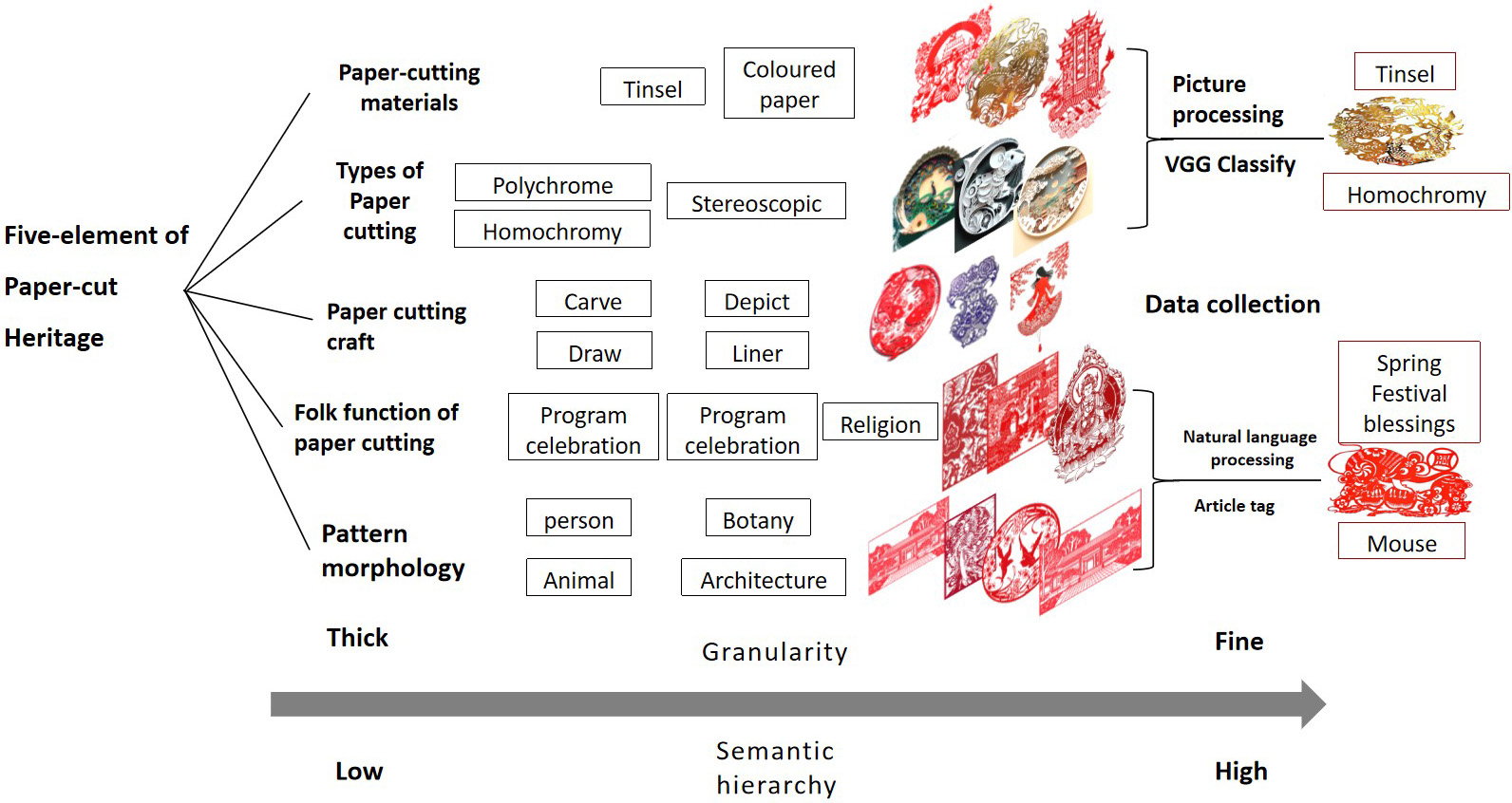
Utilizing the Universal Information Extraction (UIE) model, a general information extraction model trained and open-sourced by PaddleNLP, to perform entity extraction on texts related to Chinese traditional paper-cutting ICH. The main types of entities extracted include: Paper-cutting Names, such as “window decoration”, “auspicious character”, and “round flower pattern”; Paper-cutting Techniques, such as “intaglio”, “relief”, “folding”, and “punching”; Paper-cutting Themes, such as “figures”, “animals”, “plants”, “flowers”, “landscapes”, and “architecture”; and Paper-cutting Symbolic Meanings, such as “abundance and harvest” (represented by fish), “purity and elegance” (represented by lotus), and “good luck and happiness” (represented by magpie). The knowledge elements of paper-cutting intangible cultural heritage are shown in Fig. 3.
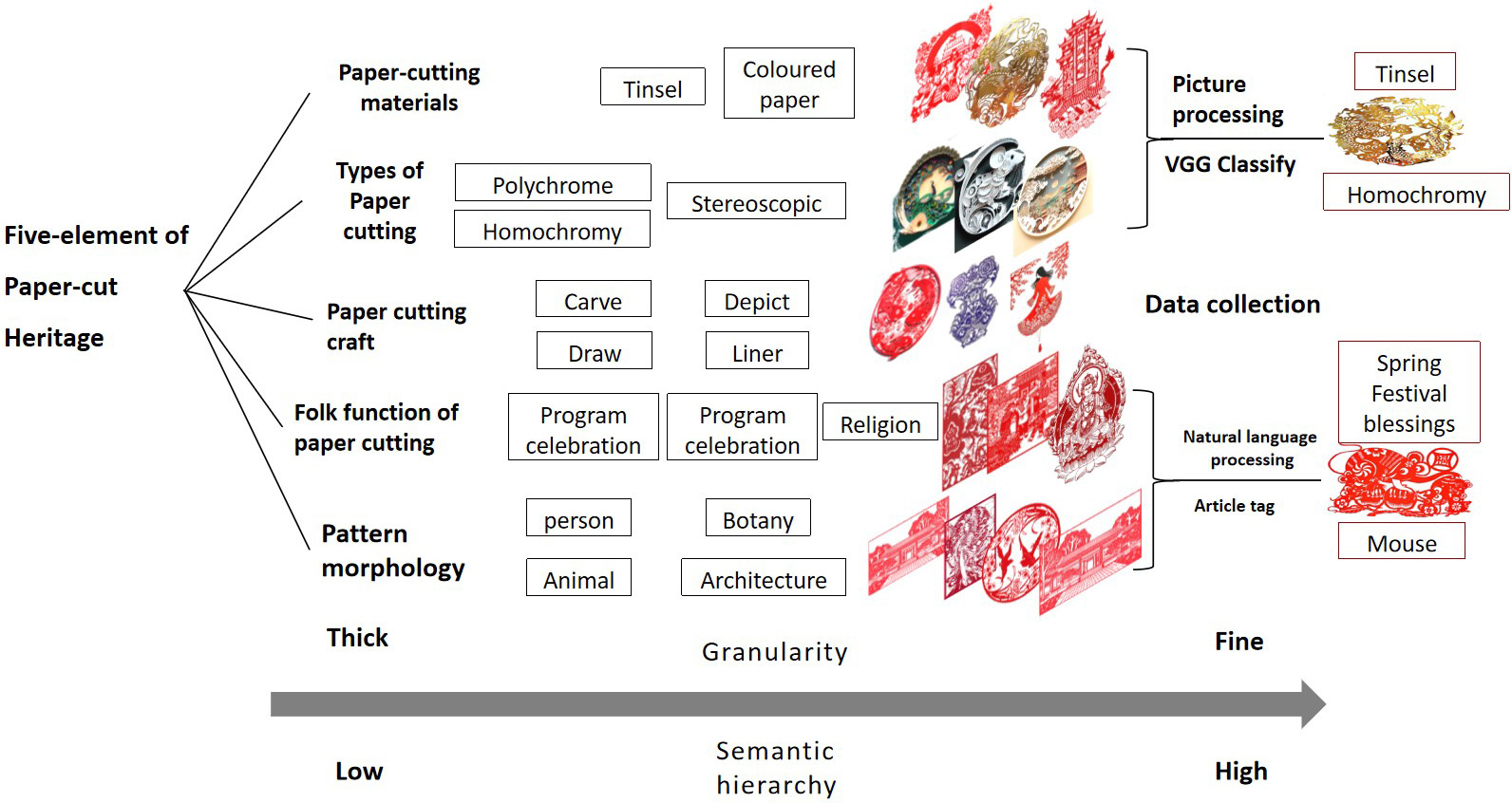 Fig. 3.
Intangible cultural heritage elements of paper-cutting.
Paper-cutting Application Scenarios: such as “festivals and celebrations”, “weddings”, and “home decoration”. The UIE model achieves unified modeling for different tasks such as entity extraction, relation extraction, and event extraction through the design of components like the Structured Schema Instruction (SSI) and Structured Extraction Language (SEL). It has lower dependency on labeled data and better transfer and generalization capabilities.
Paper-cutting materials can be broadly divided into metal foil and dyed paper, with dyed paper mainly made from rice paper and dyes. Paper-cutting types include single-color paper-cutting, multi-color paper-cutting, and three-dimensional paper-cutting. Techniques for paper-cutting include carving, engraving, writing, backing, and scissors-cutting. The folk roles of paper-cutting are also rich and diverse, not only used for festivals and celebrations such as the Spring Festival, Dragon Boat Festival, and Tomb-Sweeping Day, but also for weddings, funerals, and other ritual and religious occasions. The patterns of paper-cutting are varied, including human figures, animals, plants, and buildings, and the patterns change according to the theme of the paper-cutting. Even the same animal can have vastly different forms under different paper-cutting styles. In the knowledge element structure of paper-cutting intangible cultural heritage, a single image has its own complete knowledge element, which is then divided into five-dimensional knowledge elements, and the characteristics of each knowledge element are extracted specifically. The granularity of the knowledge elements changes from coarse to fine, and the richness of semantic levels also increases from low to high. However, due to the variety and large amount of information carried by some paper-cutting works, there may be overlaps between the expression types and elements of paper-cutting image resources. A single paper-cutting work may contain multiple pattern forms and folk themes.
Paper-cutting application scenarios include “festivals and celebrations”, “weddings and marriages”, “home decoration”, and more. The UIE model achieves unified modeling for different tasks such as entity extraction, relation extraction, and event extraction through the design of components like the Structured Schema Instruction (SSI) and Structured Extraction Language (SEL). It exhibits low dependency on labeled data and better transfer and generalization capabilities.
Paper-cutting materials can be broadly divided into metal foil and dyed paper, with dyed paper primarily made from rice paper and dyes. Paper-cutting types include single-color paper-cutting, multi-color paper-cutting, and three-dimensional paper-cutting. Techniques for paper-cutting encompass carving, engraving, writing, backing, scissors-cutting, and more. The folk roles of paper-cutting are also rich and diverse, not only used for festivals and celebrations such as the Spring Festival, Dragon Boat Festival, and Tomb-Sweeping Day, but also applied in rituals and religious contexts such as weddings and funerals. Paper-cutting patterns are varied, including human figures, animals, plants, and buildings, and the patterns change according to the theme of the paper-cutting. Even the same animal can have vastly different forms under different paper-cutting styles. In the knowledge element structure of paper-cutting intangible cultural heritage, a single image starts with a complete knowledge element, which is then divided into five-dimensional knowledge elements, and the characteristics of each knowledge element are extracted specifically. The granularity of the knowledge elements changes from coarse to fine, and the richness of semantic levels also increases from low to high. However, due to the variety and large amount of information carried by some paper-cutting works, there may be overlaps between the expression types and elements of paper-cutting image resources. A single paper-cutting work may contain multiple pattern forms and folk themes.
In the process of mining the relationships among the knowledge elements of paper-cutting intangible cultural heritage, we can leverage various technical means. Text mining technology can assist us in extracting key information from a vast amount of descriptions and literature on paper-cutting works, such as technique names and subject classifications. Semantic analysis technology can further reveal the semantic relationships between these key information, such as the similarities between techniques and the correlations between subjects. Machine learning technology can be used to build predictive models that predict new creative trends and styles based on existing paper-cutting work data. However, mining the relationships among the knowledge elements of paper-cutting intangible cultural heritage also faces some challenges. Due to the diversity and complexity of paper-cutting art, accurately identifying and classifying the knowledge elements of paper-cutting works is a difficult problem. Furthermore, paper-cutting works from different regions and schools may have significant differences, which also increases the difficulty of relationship mining. Therefore, we need to conduct in-depth analysis and research by combining specific paper-cutting works and literature. By mining the relationships among the knowledge elements of paper-cutting intangible cultural heritage, we can better understand and inherit this ancient folk art. This can not only promote the innovation and development of paper-cutting art but also provide useful references and insights for the protection and inheritance of other intangible cultural heritage projects. In view of this, this paper takes the entity set in the content of paper-cutting knowledge elements as the basis for semantic association mining and explores the semantic relationships between knowledge elements from the perspective of the semantic relationships between two entities, solving the problem of the simplification of semantic associations among knowledge elements caused by the uniqueness of knowledge element identifier words at present.
The composite relationships among knowledge elements consist of multiple and complex semantic relationships formed by the semantic ties between pairwise entities within different knowledge elements. In the exploration of multiple entity relationships, we should not only focus on the direct connections between knowledge elements but also delve into their indirect and potential relations. For instance, in paper-cutting art, a technique may be associated with multiple themes, which in turn may contain similar symbolic meanings. Through in-depth relational analysis, we can uncover these latent connections and provide inspiration for innovation in paper-cutting art. The exploration of multiple entity relationships is not confined to within paper-cutting art but can also be integrated with other fields. For example, combining techniques in paper-cutting art with modern design concepts can create paper-cutting works with a contemporary feel. Meanwhile, by analyzing the relationships between paper-cutting art and other art forms (such as painting and sculpture), we can broaden our understanding and application of paper-cutting art. In relation mining, technical means and humanistic concerns should complement each other. Technical means provide us with powerful data processing and analysis capabilities, while humanistic concerns ensure that we do not overlook the cultural connotation and emotional value of paper-cutting art during the mining process. Only by closely integrating technology with humanities can we truly uncover the composite relationships among the knowledge elements in paper-cutting art and inject new vitality into its inheritance and development.
The knowledge element aggregation layer aims to establish associative relationships among traditional paper-cutting-related knowledge through the organized arrangement of the data resource layer, utilizing digital humanities techniques and methodologies. This layer accomplishes the categorization and co-aggregation of knowledge within traditional paper-cutting resources. Knowledge categorization involves sorting related traditional paper-cutting resources based on factors such as their themes, which facilitates users’ access to and understanding of traditional paper-cutting works on related topics. Knowledge co-aggregation, on the other hand, connects different knowledge elements within traditional paper-cutting resources, establishing knowledge relationships among them. This includes the interconnection of various knowledge elements of traditional paper-cutting resources, such as people, events, spaces, and times, forming a more extensive and in-depth information network. In this paper, the clustering patterns of traditional paper-cutting knowledge elements can be summarized into three main specific implementation modes: scenario-based, relationship-based, and object granularity-based.
The scenario-based clustering pattern of knowledge elements refers to the selection, organization, and integration services of ICH knowledge elements based on objective scenario factors such as the application purposes, behaviors of traditional paper-cutting inheritors, time, or location of traditional paper-cutting knowledge elements. This can be further refined into various manifestations, including the organization and aggregation of traditional paper-cutting knowledge elements based on user needs, based on spatio-temporal environments, based on user search behaviors, and based on specific application scenarios such as physical tools and events.
The relationship-based organization and aggregation of traditional paper-cutting knowledge elements involves the aggregation based on the semantic associative relationships among the knowledge elements of the aggregated objects in specific contexts, including the associative aggregation based on the semantic relationships among various knowledge elements defined in this paper. The object granularity-based organization and aggregation of traditional paper-cutting knowledge elements involves the deconstruction and reorganization of knowledge resources in the field of traditional paper-cutting. It is the organization and integration of multi-dimensional facet knowledge description fragments contained in information units within a certain granularity framework. In the field of traditional paper-cutting, it mainly includes knowledge organization and aggregation forms based on two granularities: traditional paper-cutting knowledge elements and ICH projects. A review of the current multi-dimensional organization and aggregation patterns of traditional paper-cutting knowledge based on knowledge elements and their specific manifestations.
The construction of a conceptual system for traditional paper-cutting intangible cultural heritage (ICH) is a systematic project. Its core steps can be refined into two major sections: the first step is to conduct detailed and scientific category classifications for the ontology of traditional paper-cutting ICH based on the existing CIDOC CRM (CIDOC Conceptual Reference Model) model. Following closely is the second step, which involves clarifying and establishing the intricate object-attribute relationships among these classified categories. This paper resolutely selects the CIDOC CRM model as the foundation and meticulously constructs the ontology system for the field of traditional paper-cutting ICH on this basis. At the same time, to better align with the dual characteristics of traditional paper-cutting ICH, we have made necessary adjustments and optimizations to this system. During the construction process, we demonstrated a high degree of flexibility, carefully selecting and establishing corresponding categories according to the unique attributes of traditional paper-cutting ICH. This system can not only comprehensively and exhaustively record various types of ICH information, but compared to other models that only focus on the information of traditional paper-cutting ICH itself, our model is more forward-looking. It deeply perceives and incorporates the ecological information related to the inheritance of traditional paper-cutting ICH, demonstrating strong professionalism. This model covers a wide range of content, including not only the image knowledge elements and text knowledge elements of traditional paper-cutting ICH but also delving into the inheritance information of ICH. More importantly, it provides clear and definite definitions for the relationships between concepts, which mainly encompass five dimensions: people/institutions/projects, categories/events/objects, locations, time, and image resource information. These dimensions collectively constitute a complete and systematic framework, as shown in Table 1, providing a solid theoretical foundation and practical operational guidance for in-depth research and conservation of traditional paper-cutting ICH. Specifically, as shown in Table 1.
| Dimension | Concept description |
| E1-CRM Entity | Traditional paper-cutting intangible cultural heritage items |
| E2-Time | Creation Time |
| E48-Location | Place of Creation |
| Location of the Work | |
| E5-Event | Event Theme |
| Eventual events related to the work | |
| E21-Principal | Inheritor Category |
| Intangible Cultural Heritage Item Level | |
| E38-Image Resource | Paper-cutting materials |
| Cut-out Type |
CRM, Conceptual Reference Model.
Based on the five dimensions of the model, this study constructs a domain ontology model for paper-cutting intangible cultural heritage (ICH). The model comprises seven key dimensions: CRM entities, geographical locations, time dimensions, event dimensions, subject dimensions, ICH projects, and image resources. These dimensions collectively constitute the conceptual framework of the domain ontology for paper-cutting ICH. They are mainly divided into two categories. One category is ICH projects, which primarily involve the characteristics of the ICH attributes of paper-cutting ICH, such as ICH inheritors, the geographical locations where paper-cutting ICH occurs, and related events. These elements constitute a complete ecosystem of paper-cutting ICH. The other category is image resources, which concern the artistic attributes of paper-cutting itself, including paper-cutting materials, pigments, types and schools of paper-cutting, patterns and forms of paper-cutting, as well as the techniques used.
In determining the object properties of Chinese traditional paper-cutting intangible cultural heritage (ICH), we adopt the S-P-O (subject-predicate-object) triplet form, comprehensively and accurately presenting the unique charm of paper-cutting art by clarifying the domain, range, and description of each property. For example, we can define “paper-cutting techniques” as an object property, with the domain being paper-cutting works or paper-cutting artists and the range being specific technique names such as “combined yin and yang cutting” and “multi-layer color overlay”. The description provides specific explanations and demonstration effects of these techniques. Additionally, we can define “cultural symbolism” as an object property, with the domain being paper-cutting works and the range being symbolic meanings or implications such as “auspiciousness and good fortune” and “harvest and celebration”. The description explains how these symbolic meanings are embodied and interpreted in paper-cutting works. Through such object property settings, we can delve deeper into and showcase the cultural connotations and artistic value of Chinese traditional paper-cutting ICH, providing strong support for the preservation and transmission of this intangible cultural heritage. At the same time, this also provides richer and more systematic research materials and references for researchers and enthusiasts in related fields. By analyzing and summarizing the associative relationships between red archives, this paper defines 12 object properties, with their domains, ranges, and descriptions shown in Table 2.
| Object Propert | Domains | Ranges | Property descriptions |
|---|---|---|---|
| Creator | Individuals/Groups | Name/Title | The creator of the paper cut can be an individual artist, a craftsman, or a group or family. |
| Creation Time | Time | Year/Date | The time when the cut-out work was created or completed. |
| Region | Region/Ethnicity | Regional/Ethnic Name | The region or nationality to which the paper-cut works belong reflects their regional culture and national characteristics. |
| Theme content | Content/Topics | Category/Description | The content or theme expressed in the paper-cut work, such as people, animals, flowers, myths and legends, etc. |
| Material Tools | Materials/Tools | Material Name/Tool Type | Materials and tools used to make cut-out works, such as paper, scissors, carving knives, etc. |
| Dimensions | Size | Length |
The size of the cut-out work. |
| Color matching | Color | Color name/collocation description | The colors used in the cut-outs and how they are matched. |
| Cultural Implications | Moral/Symbolic | Moral Description/Symbolic Meaning | The cultural meaning or symbolism contained in the paper-cut work. |
| Inheritance Method | Inheritance/Transmission | How/How | The inheritance of paper-cutting skills, such as family inheritance, master-apprentice inheritance, community inheritance, etc. |
| Protection Level | Protection/Designation | Level Name | The level of protection of the paper-cut work or technique is recognized, such as national, provincial, municipal, etc. |
| Exhibition Venue | Venue/Institution | Name/Type | Places or institutions where paper-cut works are displayed or collected, such as museums, art galleries, intangible cultural heritage protection centers, etc. |
| Related Stories | Stories/Legends | Description | Stories, legends, or historical backgrounds related to paper-cutting works. |
In the knowledge system of traditional paper-cutting ICH, knowledge association encompasses both internal knowledge association pathways and external knowledge, and their close integration holds significant importance. Internal knowledge association pathways focus on the knowledge links between various elements within a single paper-cutting work, such as the association between patterns and symbolic meanings, colors and emotions, techniques and styles, as well as composition and themes. These associations reveal the deep cultural connotations and artistic characteristics of paper-cutting works, serving as the foundation for understanding and appreciating paper-cutting art. In contrast, external knowledge association pathways pay attention to the knowledge links between paper-cutting works themselves and between paper-cutting works and other cultural elements. By associating works with regional culture, historical backgrounds, creators, and other art forms, one can broaden their understanding and appreciation of paper-cutting art, revealing its historical evolution and cultural inheritance. Combining internal and external knowledge association pathways can break the isolation of traditional paper-cutting ICH knowledge, facilitating knowledge integration and innovation. This combination not only helps to deeply explore the intrinsic value of paper-cutting art but also provides new ideas and methods for its inheritance and development. Meanwhile, the construction of these association pathways provides richer and more systematic research materials and references for researchers and enthusiasts in related fields, contributing to the prosperous development of paper-cutting art.
Taking Hubei engraved paper-cutting works as an example, this paper conducts metadata extraction and organizes the knowledge using the constructed ontology model. Through instance validation, the applicability and effectiveness of knowledge in paper-cutting ICH have been proven. At the same time, problems and deficiencies in the construction process of the ontology model have also been identified, providing directions for improvement in subsequent research.
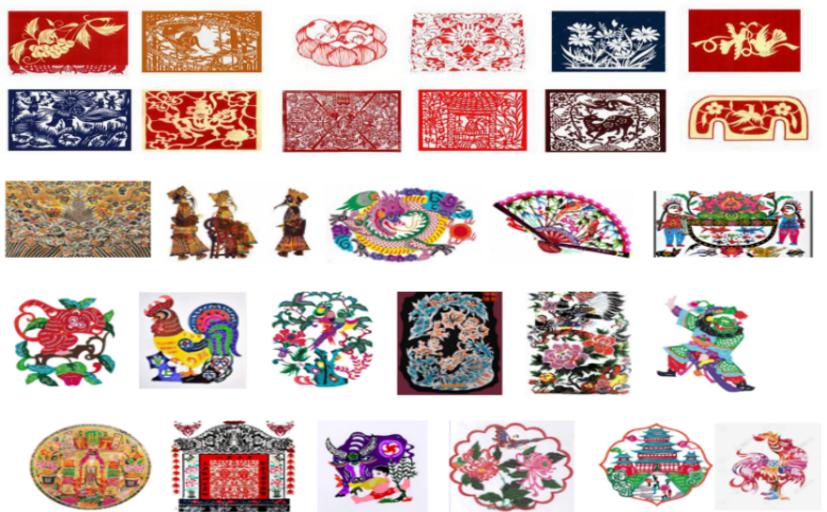
Hubei engraved paper-cutting, a folk treasure from the Hubei region of China, was included in the Expanded National Intangible Cultural Heritage List in 2008. Its artistic charm stems from the profound foundation of Chu culture. Hubei engraved paper-cutting perfectly embodies the essence of Chu culture through its simple, pure, healthy, and enthusiastic lifestyle concepts. Compared to the boldness of Northern-style paper-cutting and the delicacy of Southern-style paper-cutting, Hubei engraved paper-cutting stands out with its unique style that is both exquisite and grand. With a wide range of themes, full compositions, and profound symbolism, it excels in the use of metaphor and vivid expression, making the works “contain scenery within forms, with rounded lines and striking contrasts”, demonstrating extremely high artistic value. In terms of craftsmanship, Hubei engraved paper-cutting cleverly combines the two techniques of “cutting” and “engraving”. The paper-cutting done with scissors is concise and lively, while the engraving craftsmanship is exquisite and beautiful, with the “engraving” technique being more prevalent. The engraving knives used are mostly handmade by veteran artisans, each one being unique, reflecting the ultimate pursuit of craftsmanship. During the engraving process, Hubei engraved paper-cutting emphasizes the “broken knife” technique, using every stroke and line to outline the exquisite patterns of the graphics, with particular attention to detail. However, Hubei engraved paper-cutting also faces the dilemma of a lack of successors, which is related to the decreasing number of people willing to devote themselves to mastering the basics. Additionally, the combination of painting and engraving is another significant feature of Hubei engraved paper-cutting. High-level paper-cutting works cannot be achieved without a solid foundation in painting. The beautiful shapes and designs that capture both the spirit and form, combined with delicate decoration, jointly contribute to the artistic charm of Hubei engraved paper-cutting. Fig. 4 shows a pattern of Hubei engraved paper-cutting.
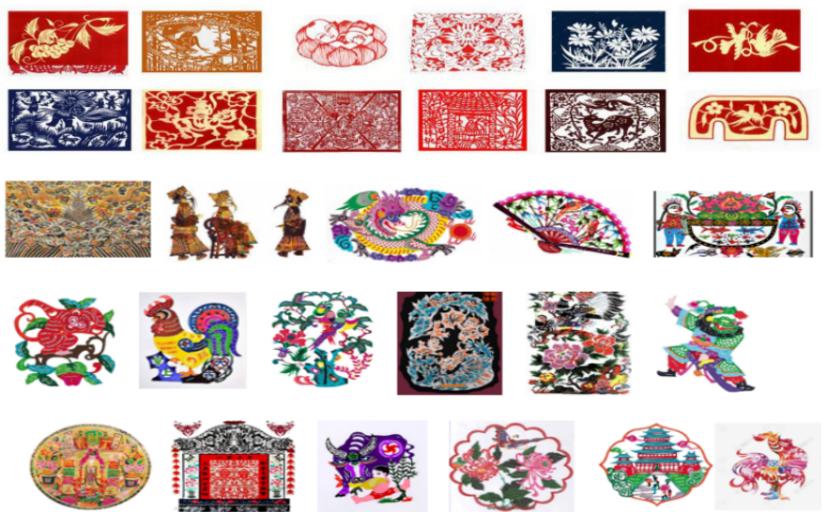 Fig. 4.
Hubei engraved paper-cutting pattern.
The knowledge construction of Hubei engraved paper-cutting requires two types of materials: ICH (intangible cultural heritage) materials and work materials. ICH materials primarily originate from the Hubei ICH Protection Center, the China ICH Network, cultural centers, and other sources, encompassing historical records, inheritance lineages, inheritor levels, and ICH application materials. Work materials are collected from the Xiaogan Folk and ICH Exhibition Hall, art galleries, museums, and other institutions, amounting to hundreds of works and their interpretations. These materials are divided into text and image categories. Image materials are classified using convolutional neural network algorithms, while text materials undergo core information extraction and labeling to form a dataset. Ultimately, combining both primary and secondary materials, the knowledge system and graph of Xiaogan engraved paper-cutting are constructed to provide displays for users.
With the increasing maturity of large language models and natural language processing technologies, this paper focuses on the textual data related to engraved paper-cutting information. The aim is to accurately extract labels for each work through text information extraction, in order to build and retrieve a knowledge base. Therefore, we chose the article tagging technology from Baidu AI Open Platform to extract knowledge elements from ICH paper-cutting texts. Experimental results show that the platform’s article tagging function has been called 500,000 times, with a concurrency of Queries Per Second (2QPS), fully meeting the experimental requirements. By extracting labels from 102 texts, we obtained a total of 278 labels. After excluding high-frequency emotional words such as “joyful” and “auspicious”, the remaining labels were organized into categories such as plants, animals, folk festivals, and character stories, as shown in Table 3.
| Name | Count rate | Meaning |
|---|---|---|
| Peony | 9 | The king of flowers, a symbol of auspiciousness and wealth, implies harmony between husband and wife, wealth and happiness |
| Plum Blossom | 4 | The messenger of spring, the five blessings of the plum blossoms, heralds the coming of the three beauties |
| Orchid | 3 | Beautiful and noble |
| Bamboo | 3 | Noble conduct, humble mind |
| Dragon and Phoenix | 12 | A king of beasts, a king of birds, a happy constitutional husband and wife, and the harmony of yin and yang |
| Magpie | 8 | Good news is frequent, happy events continue, and good news is safe |
| Mandarin Dduck | 8 | The male and female parts are two, and they live and fly together, implying a hundred years of good union and eternal union |
| Fish | 6 | The children and grandchildren are full, and there are more than enough every year, and the family benefits |
| Chicken | 4 | The auspicious bird symbolizes good fortune |
| Rat | 4 | It symbolizes the full house of children and grandchildren, removing the old and welcoming the new, and dispelling disasters |
| Butterfly | 3 | Good things, sweet love, happy marriage |
| Crab | 2 | Rich in the world, rich in all directions, across the world |
| Dong Yong | 5 | Dong Yong and the Seven Fairies, Dong Yong sold himself to bury his father |
| Yellow incense | 4 | Guarding the tomb and studying hard, warming the fan pillow, letting the horse be sick, and managing the government for the people |
| Meng Zong | 3 | Mother filial piety, crying bamboo shoots, three years of tomb |
| Lei Feng | 2 | Sacrifice one’s own interests for the sake of others |
| Bao Zheng | 2 | In charge of Kaifeng law enforcement, he is selfless and a model of clean officials |
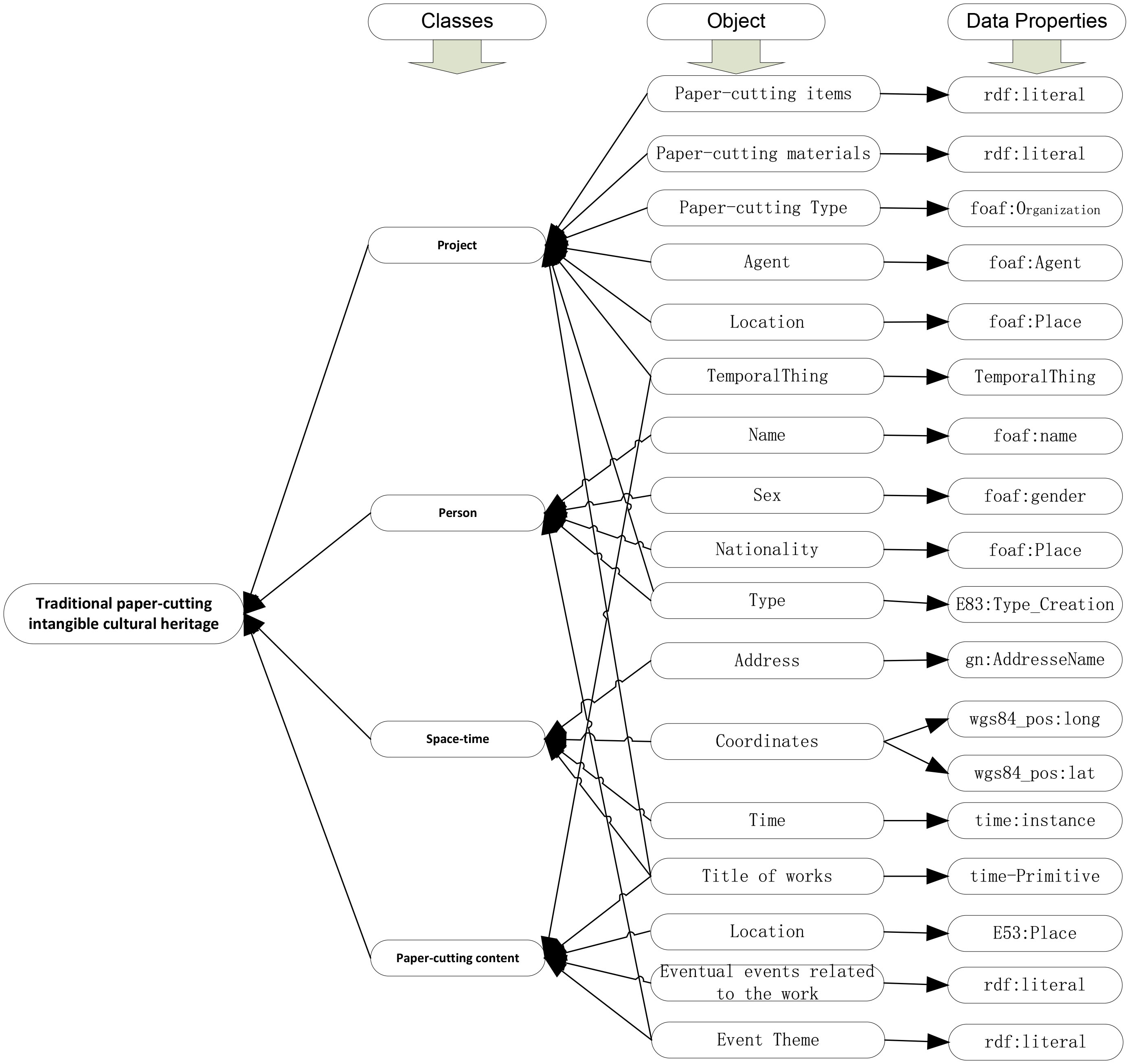
Drawing on the characteristics of traditional paper-cutting, this study constructs an ontology model for Hubei stencil paper-cutting as an ICH subject. The model strictly adheres to the metadata standards for ICH digital resources while incorporating the specific features of Hubei stencil paper-cutting, ensuring comprehensive coverage of all aspects of this art form. It defines object and data properties to precisely describe relationships and characteristics among categories. Based on ontology design principles, the study identifies core classes such as project items, bearer individuals, temporal and spatial categories, and thematic categories, and establishes semantic relationships through attribute definitions. This ensures the integrity and practicality of the model. The ontology model based on classes, objects, and data properties is shown in Fig. 5.
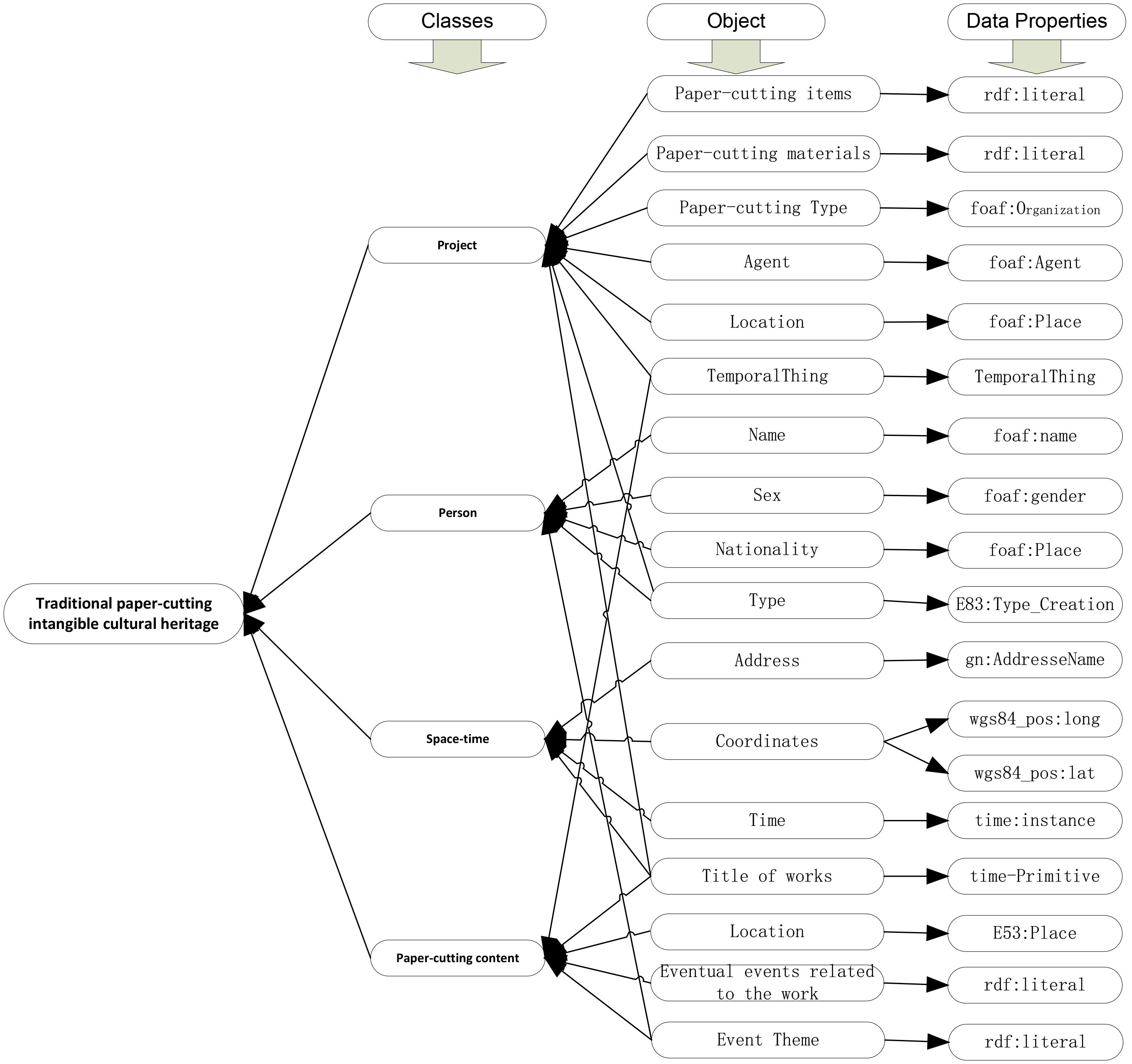 Fig. 5.
Ontology model.
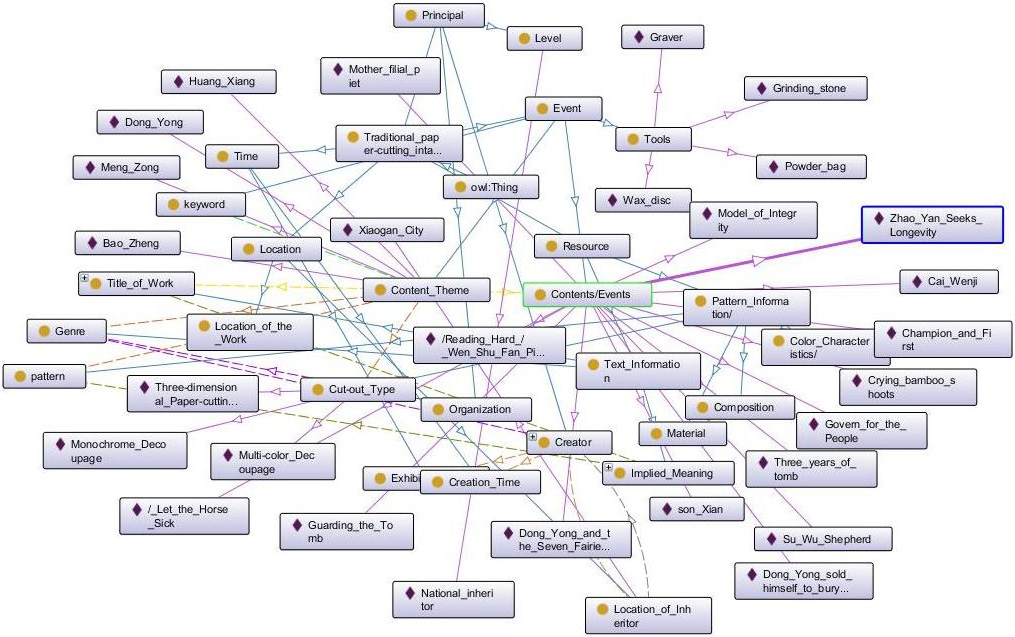
To visually present this complex ontology model, we utilized the OntoGraf plugin in Protégé for visualization, as illustrated in Fig. 6. In the visual representation, various categories and subclasses are clearly presented in boxes, with solid lines indicating inheritance relationships between categories. Object properties are connected to related categories through dashed lines, intuitively showing their associations. Due to the large variety of metadata involved in Hubei engraved paper-cutting, we deliberately designed the model with flexible expansion options for data properties to ensure its adaptability to future emerging needs. Finally, we imported entity data to further refine the model. This step not only verified the accuracy and effectiveness of the model but also provided solid data support for its subsequent applications. Through this visual construction process, we successfully combined the traditional ICH culture of Hubei engraved paper-cutting with modern information technology, injecting new vitality into its protection, inheritance, and development.
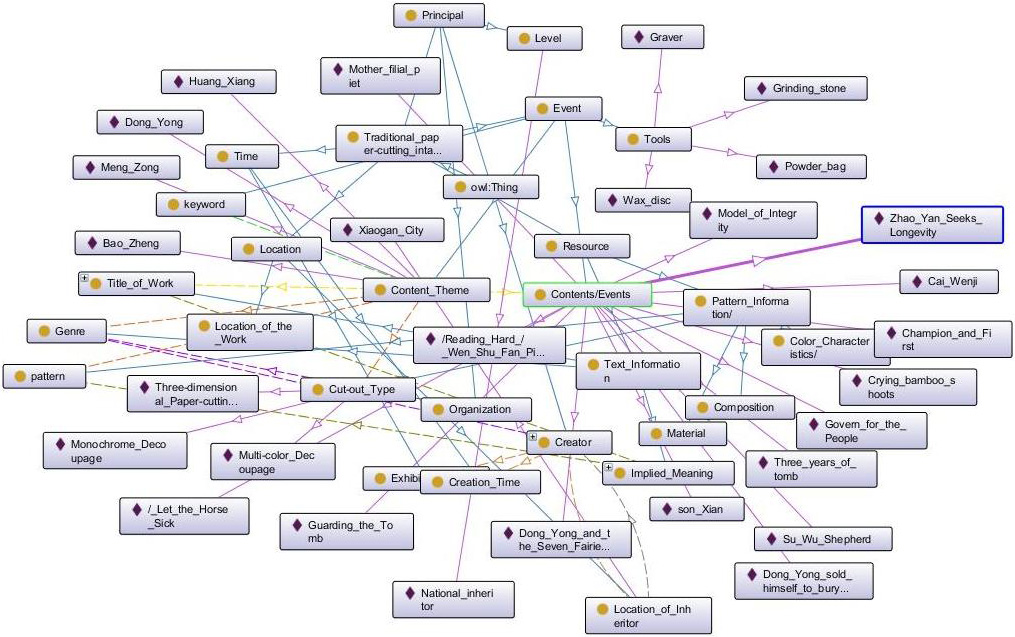 Fig. 6.
Exhibition of Hubei engraved paper-cutting instances.
This paper has constructed a knowledge ontology model suitable for Chinese traditional paper-cutting ICH and conducted instance verification. The research results indicate that the ontology model has high applicability and effectiveness in organizing paper-cutting ICH knowledge. However, due to the complexity and diversity of paper-cutting ICH, further efforts are required to build and refine the ontology model. Future research will focus on how to further optimize the structure and functions of the ontology model, improving the efficiency and quality of ICH knowledge organization. Additionally, it will explore the application of the ontology model in the digital protection, inheritance, and innovation of ICH, providing a reference for the transmission and development of ICH culture.
The datasets used and analyzed during the current study available from the corresponding author on reasonable request.
QF: Writing - original draft, Writing - review & editing, Visualization, Supervision, Project administration; DF: Conceptualization, Methodology, Software, Validation, Formal analysis, Investigation, Resources, Data Curation. Both authors contributed to editorial changes in the manuscript. Both authors read and approved the final manuscript. Both authors have participated sufficiently in the work and agreed to be accountable for all aspects of the work.
Not applicable.
This work was supported by the Provincial Social Science Fund Project “Digital Preservation and Development Research of Hubei Traditional Paper-cutting Art” (23ZD128), and the China University Industry - Academia - Research Innovation Fund “Knowledge Visualization Research on Intangible Cultural Heritage Teaching Resources in Higher Education Institutions in the Big Data Era” (2024IT182).
The author declares no conflict of interest.
References
Publisher’s Note: IMR Press stays neutral with regard to jurisdictional claims in published maps and institutional affiliations.