

 , Tamara Araboeli 1, Amr Ali-Eldin 1,2,3,*, Hanne Poelmans 1,2,4
1 Centre for Research and Development Monitoring (ECOOM-Interoperability), 3500 Hasselt, Belgium
2 Data Science Institute, Hasselt University, 3500 Hasselt, Belgium
3 Computer Engineering and Control Systems Department, Faculty of Engineering, Mansoura University, 35516 Mansoura, Egypt
4 Directorate Research, Library, International Office, Hasselt University, 3500 Hasselt, Belgium
Abstract
This paper describes the procedures for reviewing the Flemish Research Discipline Standard (Vlaamse OnderzoeksDiscipline Standaard, VODS) 2018 and developing the updated VODS 2023. The background, scope, principles, and consultation process are described, and an overview of the key changes are presented. The scope of the review was to remain aligned with current research practices and international standards and remain appropriate for statistical and reporting purposes. The VODS 2023 includes new discipline codes that were not present in the previous version. Some codes have been decoupled or merged compared to the VODS 2018 version. Some codes have been removed in the VODS 2023 because they have become obsolete. A discussion is included on how to improve the review process for future updates.
Keywords
- Flemish Research Discipline Standard
- VODS 2023
- classification scheme
- review process
The Vlaamse OnderzoeksDiscipline Standaard (VODS) (Vancauwenbergh and Poelmans, 2019) is a Flemish classification (VODS 2018) scheme used to classify researchers and their output according to their scientific research discipline.
The classification was developed by the Expert Centre for Research and Development Monitoring (ECOOM)-UHasselt in 2018 (Vancauwenbergh and Poelmans, 2019) by merging formerly used research discipline classifications into one harmonised classification tailored to the practices and needs of the Flemish research landscape while ensuring alignment with international classifications for benchmarking purposes. This article describes a case study of the review and update process of the VODS that was completed in 2022–2023 by ECOOM-UHasselt and the Flemish Department of Economics, Science and Innovation (Department EWI). It provides an overview of the review and consultation process, the main changes implemented compared to the previous version (2018), the limitations of the current approach, and future directions and follow-up.
The Vlaamse OnderzoeksDiscipline Standaard (Vancauwenbergh and Poelmans, 2019) is an established Flemish framework employed to categorise researchers and their scientific output based on their area of scientific expertise. This classification system, known as the VODS, was formulated in 2018 by the Expert Center for Research and Development Monitoring (ECOOM-UHasselt, Vancauwenbergh and Poelmans, 2019) in response to a request from the Flemish Department of Economy, Science and Innovation (Department EWI). The VODS was implemented by a significant number of Flemish research actors, including the main public funder, Research Foundation Flanders (FWO), the Flemish Interuniversity Council (VLIR), the Flanders Research Information Space (FRIS), and the Flemish research-performing organisations (e.g., the universities, universities of applied sciences, strategic research centers (SOCs), and scientific institutions). The primary objective of adopting one semantically harmonised scientific research discipline classification was to enhance the efficiency of administrative research reporting within the Flemish research landscape. Previously, within the Flemish academic community, four discipline code lists were used to classify researchers and their scientific output. Each classification had its unique structure and served different reporting purposes, such as scientific personnel statistics, funding allocation reports, project-and reviewer matching by funders, and research object categorisation on the FRIS portal.
A report on the harmonisation of research reporting (Peters and Lambrechts, 2011) noted that these multiple classifications led to additional work in creating crosswalks among the schemes and recommended consolidating the code lists into a single standardized format. Hence, the former classifications were merged into a standardized classification scheme encompassing all research in Flanders. The development of the classification system was based on globally used international reference standards, such as the Fields of Research and Development classification (OECD, 2015) and the Australian and New Zealand Standard Research Classification-Fields of Research (ANZSRC – FOR, 2020), and was adapted to the needs of the Flemish academic landscape. Using one semantically described standard ensures that Research and Development (R&D) statistics can be clearly understood, utilised for reporting purposes, and compared with other (inter)national discipline code lists. Shared standards enhance the efficiency of research reporting, facilitate information exchange between Current Research Information Systems (CRISs), and improve the visualization of research objects (Peters and Lambrechts, 2011).
The Flemish Research Discipline Standard (Vancauwenbergh and Poelmans, 2019) is a four-level hierarchical classification system comprising seven broad scientific sectors, 42 disciplinary fields, 382 disciplinary subfields, and 2866 highly specialised research disciplines (Table 1). The highest level, Sector Level 1, distinguishes seven high-level research areas, such as “Natural sciences”, and labels them with a 2-digit code. Disciplines at Sector level 1 correspond one-to-one with the international Fields of Research and Development (FORD, OECD, 2015) classification to enable international comparisons and reporting. The second level, Disciplinary field (L1), groups disciplinary fields such as “Mathematical Sciences” and labels them with a 4-digit code. Disciplinary fields within each sector share common frames of reference, methodology, and analysis. At level three of the VODS, disciplinary fields are subdivided into disciplinary subfields, called Disciplinary subfield (L2). Disciplinary subfields are denoted with a 6-digit numeric code and indicate specific subfields within a disciplinary field, such as “Algebra”. The lowest level, level four of the VODS, is the most granular and is labelled by 8-digit codes, signifying highly specialised disciplinary subfields, called Disciplinary subfield (L3), such as “Algebraic geometry”. Each discipline is provided with a unique code that carries the hierarchy of the list and a semantic definition that describes what is meant by each discipline and what topics can be reported under that discipline. Defining these disciplines unambiguously ensures a uniform understanding and semantic interoperability among all actors in the Flemish research landscape.
| Disciplinary Level 1 | Disciplinary Level 2 | Disciplinary Level 3 | Disciplinary Level 4 | ||||
| 01 | Natural sciences | ||||||
| 01 | Natural sciences | 0101 | Mathematical sciences and statistics | ||||
| 01 | Natural sciences | 0101 | Mathematical sciences and statistics | 010101 | Algebra | ||
| 01 | Natural sciences | 0101 | Mathematical sciences and statistics | 010101 | Algebra | 01010101 | Algebraic geometry |
| 01 | Natural sciences | 0101 | Mathematical sciences and statistics | 010101 | Algebra | 01010102 | Associative rings and algebras |
| 01 | Natural sciences | 0101 | Mathematical sciences and statistics | 010101 | Algebra | 01010103 | Category theory, homological algebra |
| 01 | Natural sciences | 0101 | Mathematical sciences and statistics | 010101 | Algebra | 01010104 | Commutative rings and algebras |
| 01 | Natural sciences | 0101 | Mathematical sciences and statistics | 010101 | Algebra | 01010105 | Field theory and polynomials |
| 01 | Natural sciences | 0101 | Mathematical sciences and statistics | 010101 | Algebra | 01010106 | General algebraic systems |
| 01 | Natural sciences | 0101 | Mathematical sciences and statistics | 010101 | Algebra | 01010107 | Group theory and generalisations |
| 01 | Natural sciences | 0101 | Mathematical sciences and statistics | 010101 | Algebra | 01010108 | K-theory |
| 01 | Natural sciences | 0101 | Mathematical sciences and statistics | 010101 | Algebra | 01010109 | Linear and multilinear algebra, matrix theory |
| 01 | Natural sciences | 0101 | Mathematical sciences and statistics | 010101 | Algebra | 01010110 | Non-associative rings and algebras |
| 01 | Natural sciences | 0101 | Mathematical sciences and statistics | 010101 | Algebra | 01010111 | Number theory |
| 01 | Natural sciences | 0101 | Mathematical sciences and statistics | 010101 | Algebra | 01010112 | Order, lattices, ordered algebraic structures |
The VODS classification incorporates a ‘Not elsewhere classified category’ at the lowest level of each discipline at levels 3 and 4 in the classification as a method to identify new, missing, or emerging disciplines. This inclusion allows for detecting disciplines that may have been overlooked or not previously accounted for.
The Flemish Research Discipline Standard further elucidates three interdisciplinary themes that are grouped together and presented separately at the bottom of the classification list: Architecture, Mobility, and Nanotechnology. Based on the advice of interuniversity discipline-specific working groups (e.g., working group Architecture) and individual experts from the five Flemish universities, it was determined that interdisciplinary research (IDR) requires experts to employ scientific expertise beyond the superordinate level 1 or 2 disciplines. The three interdisciplinary themes outlined above group disciplines that frequently combine aspects from multiple and distinct parent disciplines, and/or that have the same terminology yet examine the subject from a different perspective and belong to a distinct level 1 or 2 category from the classification list. The third-level discipline “Architecture”, for example, can be found both as a third-level subdiscipline residing under “Engineering and technology”, and as a third-level subdiscipline residing under “Humanities and the arts”. In the first case, “Architecture” refers to: “Scientific and technological aspects related to the design of buildings”. In the second case “Architecture” refers to: “The creation, transformation, and interpretation of the built environment”. Researchers who are innovative by combining elements of both approaches (Engineering and technology, and Arts and humanities) can select multiple discipline codes from different parent disciplines simultaneously, that are grouped under the IDR themes in the list, to indicate the interdisciplinary nature of their expertise and research output.
By regrouping these topics separately at the lower end of the list, greater emphasis is placed on the significance of interdisciplinary research. Other commonly used research classification schemes, such as the Australian and New Zealand Standard Research Classification-Fields of Research (ANZSRC – FOR, 2020) and the Canadian Research and Development Classification (CRDC, Legendre, 2019), also capture interdisciplinary research by allowing the selection of multiple discipline codes.
During the current review and update process, stakeholders were not explicitly asked about potential challenges in designating IDR in the classification. No suggestions or queries regarding IDR were received either. Future revisions of the VODS will include expert feedback on how to address the classification and monitoring of interdisciplinary research more efficiently without compromising the statistical principle of mutually exclusive research categories.
In addition to the fields that are inherently interdisciplinary in nature (for instance, Nanotechnology), the notion of interdisciplinarity may also be construed as the recurrent collaboration among various disciplines, which is manifested in research initiatives and scholarly publications. In this regard, interdisciplinarity is characterized as the amalgamation of knowledge, methodologies, and instruments derived from two or more distinct research domains to effectively tackle a scientific or societal challenge (National Science Foundation, 2005). In our classification framework, we do not encapsulate this interrelation due to its potential variability over time. However, these interrelations can be readily assessed through the analysis of the preserved metadata associated with research projects and publications within research information systems. ECOOM-UHasselt engages in an academic inquiry focused on quantifying the degree of interdisciplinarity inherent in research projects, utilizing diversity metrics extracted from stored project metadata within the knowledge institutions’ Current Research Information Systems (CRISs) (Pham et al, 2023).
Finally, to ensure compatibility and facilitate the integration of different systems and classifications, ECOOM-Hasselt developed translation tables between the VODS and international reference standards, such as the Fields of Research and Development (FORD) Classification (OECD, 2015) and the Australian and New Zealand Standard Research Classification-Fields of Research (ANZSRC – FOR, 2020).
Research discipline classifications (RDCs) are frameworks to categorize researchers and their research activities based on the field of study or subject, and/or the theoretical foundations and methodologies used. They differ in scope, structure, and granularity: some classifications focus on categorising research output (e.g., publications) based on the research discipline(s) to which they belong, while others focus on categorising researchers, research activities (e.g., research projects) or resources (e.g., infrastructure). Research disciplines are usually differentiated by the examination of a specific phenomenon, and a collection of theories, methodologies, conceptual frameworks, and normative standards (Becher and Trowler, 2001; Klein, 1990; Salter and Hearn, 1996).
Research discipline classifications are typically constructed as structured and hierarchical code lists that provide a numeric code and a semantic definition for each scientific discipline. Research classification schemes may vary in their levels of granularity and layeredness. Usually, the code list consists of several levels where a subdivision is made into major scientific domains, such as “Natural Sciences” and “Medical and Health Sciences”, subdivided further into groups and divisions. Research discipline classifications have been used to organise and classify academic research outputs for many decades and play an important role in monitoring, distributing, and sharing research. These classifications help identify and monitor trends in the research landscape and facilitate information retrieval, bibliometric analysis, and research evaluation.
Classification systems for research disciplines belong to the broader domain of knowledge organisation. Knowledge organisation includes the description, organisation and representation of information such as documents, concepts and topics by both humans and computer programmes (Hjørland, 2008). This is achieved by applying processes and standards such as classification systems, ontologies, thesauri, and other forms of metadata schemes. A few foundational discipline classification systems include the Dewey Decimal Classification (DDC, Scott, 1998) used in academic libraries, the Web of Science Subject Categories (WoS) to classify publications in academic journals, the Fields of Science and Technology (FOS) Classification (OECD, 2007) to categorise R&D activities in the public sector, the Fields of Research and Development (FORD) Classification (OECD, 2015) for R&D resources and organisations, and the Australian and New Zealand Standard Research Classification-Fields of Research (ANZSRC – FOR, 2020). The Dewey Decimal Classification was among the first classification standards to structure book subjects into ten knowledge domains with further subdivisions (Sweeney, 1983). Although the system was primarily developed for academic libraries, it has also been used to classify scientific research. Current research classifications that are used to register research output and activities in CRIS for administrative, information retrieval, and evaluative research reporting purposes (e.g., Frascati Manual, OECD, 2015) have their roots in library classification systems such as the Dewey Decimal Classification (Hjørland, 2016). Such bibliographical classifications are mainly used for information cataloging and retrieval (Hjørland and Claudio, 2022), and are predicated upon the principle of “literary warrant”. This principle implies that a classification system is exclusively based on the titles found within the literature. Consequently, these bibliographic classifications fail to accurately represent the contemporary research landscape.
In contrast to bibliographical schemes, research discipline classifications often modify international standards to align with local needs and formulate categories that are grounded in subject matter expertise, research and development and/or funding data, thus mirroring the current state of knowledge (Hjørland and Claudio, 2022). Hence, scientific research discipline classifications have come to deviate from library classification systems over time, mainly because the latter struggle to keep up with rapid progress in knowledge production.
The Australian and New Zealand Standard Research Classification-Fields of Research Classification (ANZSRC – FOR, 2020) classifies research activities based on the research methodology that is utilised, rather than the scope of the research or the expertise of the research unit (Australian Research Council, 2019b). The ANZSRC-FOR is structured hierarchically in three levels: divisions, groups, and fields, each with a unique 2-digit, 4-digit, or 6-digit number. ANZSRC-FOR is used by Australian and New Zealand government agencies, research organisations, universities and funding organisations, and stakeholders in the private sector for statistical and reporting purposes.
The Excellence in Research for Australia (ERA) framework utilizes FoR codes to categorize journals, researchers, and research outputs, with each entity being assigned one to three codes, including “M” for multidisciplinary journals. Assessment panels in Australia are organized according to FoR codes. The classification scheme is commonly used for comparisons at the global level. The FoR (Group level) is also used to assign disciplines to scientific publications in Dimensions (Hook et al, 2018; Porter et al, 2023). The FoR classification was updated in 2020.
The Fields of Science and Technology (FOS) Classification of the OECD Frascati Manual (OECD, 2002) is a common classification for R&D activities in the public sector. The FOS was developed in 2002 by the Organisation for Economic Cooperation and Development (OECD) and received an update in 2007 to align with evolutions in science and technology, particularly in ICT, biotechnology, and nanotechnology. Based on the FOS classification, UNESCO created its Fields of Research and Development (FORD) Classification (OECD, 2015) to categorize R&D resources and organisational units by subject.
In recent years, digital research publication indexes, such as Web of Science (WoS) and Scopus, have developed their own classifications to structure research outputs. Research journals on WoS are, for example, categorized by field of study using a subject categories classification system that includes more than 250 categories, ranging from “Mathematics” and “Physics” to “Social Sciences” and “Humanities”. Such classification systems are key for online databases and search engines to help users navigate and discover research. In addition to these generic classifications, many other, more granular and discipline-specific research discipline classifications are commonly used within communities of practice and royal societies, for example, in mathematics and chemistry (e.g., Mathematics Subject Classification (MSC)). Over time, classifications evolve to reflect changes in the academic landscape and to meet the needs of researchers and institutions.
Classifications are utilized to assign scientific disciplines to researchers and their activities and outputs. The discipline codes assigned to research objects, such as researchers, projects, publications, and datasets, convey important information about the object’s context. It informs us of the scientific domain and disciplinary field in which the researcher or research output is situated (Porter et al, 2023). The administrative information systems of research institutions maintain information about the discipline codes associated with affiliated researchers and their output.
For this purpose, global standards are used (e.g., OECD, 2015) or locally developed classifications tailored to the practices and needs of the regional research landscape. In Flanders, for example, researchers are asked by their host institution to select one or more disciplines at levels 3 and 4 of the VODS using an application in the internal information system. Information about the scientific disciplines linked to research objects allows research institutions to produce analyses and report on the composition of their staff by discipline, the distribution of public funding across scientific domains, and the research output compared between disciplines.
Discipline codes also contribute to the discoverability of research by allowing them to be used as filters on research portals, databases, and repositories. Flanders Research Information Space (FRIS), which serves as the research portal of the Flemish Department of Economy, Science, and Innovation (EWI), uses the VODS discipline codes (up to level 4) to enable users to conduct searches and apply filters to research objects (such as researchers, research organisations, projects, infrastructure, and datasets) on their portal. However, assigning researchers and their output to a specific discipline is more consequential than providing context to research activities and facilitating findability (Porter et al, 2023). In academics, knowledge classifications are widely used as a measurement tool for evaluative purposes, more specifically to monitor and report on the scientific policies of research institutions and regional and national governments. These evaluation reports can have a major impact on the distribution of public funding across institutions and disciplines.
In the Flemish research landscape, the VODS is used as an integral part of research reporting to the Flemish government, specifically to identify trends in academic personnel and research endeavours and report on the distribution of funding based on research disciplines. Adopting the VODS as a standardized classification system for research disciplines by the Flemish research-performing and funding organisations enables accurate comparisons and benchmarking of R&D statistics that can be meaningfully compared across research institutions and with international discipline code lists.
For example, the VODS is used to categorize financial reporting by research discipline in the annual reports of the Flemish research-performing institutions. Research funding organisations also benefit from a standardized discipline code list. For example, the Research Foundation Flanders (FWO) utilizes the VODS to match research projects with reviewers based on their discipline codes. Furthermore, the VODS is integral to research staff statistics conducted by the Flemish Interuniversity Council (VLIR) and for the tracking of research careers as performed by the Human Resources in Research Flanders (HRRF) project (ECOOM-Ghent). Finally, the VODS plays a part in ad hoc analyses and reporting on research activities and expertise within Flemish research-performing organisations.
A more recent challenge relates to the growing importance of interdisciplinary research (IDR) and how to report on this accurately. Research increasingly requires synergetic collaboration across disciplines to tackle multi-faceted global challenges such as climate change, pandemic outbreaks, and mobility studies (Newell, 2001; Van Noorden, 2015). In addition, many universities and public science funders actively aim to foster IDR and track how many of their funded projects and research outputs are interdisciplinary in nature (Allmendinger, 2015). Hence, the question arises of how interdisciplinary research should be defined and captured by RDCs? Interdisciplinary research presents significant challenges in its categorization within established research discipline classifications, as it fundamentally contests the foundational principles of statistical review (ANZSRC, 2020 review outcomes).
The tenet of mutual exclusivity among research categories precludes the formation of overlapping domains that might encapsulate components from one or more pre-existing research areas. Global research discipline classifications, including the Australian ANZSRC-FOR 2020 and the Canadian CRDC (Legendre, 2019), adopt a pragmatic methodology by designating interdisciplinary research to a variety of discipline codes. Within the ANZSRC 2020 framework, it is posited that allowing researchers to assign multiple codes to their research activities, or to distribute their research across diverse codes, suffices to represent interdisciplinary research initiatives (Australian Research Council, 2019b). For instance, a researcher who employs a theoretical framework or methodological approach from one discipline to investigate a subject matter from another discipline can concurrently allocate multiple codes to their research output in order to signify the interdisciplinary character of their expertise and scholarly contributions. This methodology affords researchers considerable flexibility to accurately categorize their research without complicating the classification system or producing superfluous codes (ANZSRC, 2020 review outcomes). This approach has similarly been incorporated into the VODS classification. Another approach is to automatically classify academic publications into a hierarchical tripartite structure (discipline, field, subfield)-or ultimately a 4-level structure in case of the VODS-based on their abstracts, facilitating both singular and multiple labelling classifications (Rao et al, 2023). Other possibilities to signal IDR in RDCs may be: (a) linking codes together, or (b) asking researchers to tag their expertise, activities and outputs as IDR to signal that the linked or multiple codes that were selected represent IDR.
The primary techniques to measure interdisciplinary research (IDR) comprise publication metrics and citation analysis (Zhang et al, 2016). The reference section of a paper is analysed to ascertain the disciplines of cited works. This is juxtaposed with the citation output, determining the disciplines of articles that cite the publication. A considerable disparity among these disciplines’ signals IDR. A notable drawback of citation-based techniques is their reliance on various classification frameworks, which may produce inconsistent results (Rousseau et al, 2019).
Several studies have utilized text-based approaches, including keyword analysis and topic modelling, as indicators of IDR (Bonaccorsi et al, 2021; Kim, 2022). Nonetheless, this methodology requires access to high-quality textual data, often unavailable in numerous databases. Another vital aspect of IDR pertains to collaboration among researchers with diverse disciplinary backgrounds (Zhang et al, 2018), termed the organizational approach. The amalgamation of knowledge from different research fields increases the probability of interdisciplinary outcomes (Rousseau et al, 2019). Consequently, a research initiative is deemed IDR if it encompasses significant diversity in disciplinary expertise among the participating researchers or organizations. ECOOM-UHasselt devised an organizational framework to categorize the interdisciplinarity of research projects into three tiers (low, medium, and high) based on a mathematical model of project diversity (Pham et al, 2023). The degree of IDR in research initiatives was measured by assessing the diversity of affiliated researchers, organizations, and disciplines. It was observed that projects exhibiting a greater distance among the associated disciplines possess a higher diversity score, which correlates with elevated levels of IDR in the research initiative.
Four years after its first implementation in 2018, ECOOM-UHasselt and the Flemish Department of Economics, Science, and Innovation initiated a first review-and-update process. The scope of the revision was to evaluate the use of the VODS among the stakeholders that have implemented the VODS in their systems. The objective was to assess the technical and structural components of the VODS, as well as its content in terms of potential missing disciplines, outdated disciplines, and any modifications that may be required. Regularly reviewing and updating classification systems is imperative for a variety of reasons. First, scholarly knowledge is continuously expanding. As research continues to evolve, new disciplines emerge while others may become obsolete. Some disciplines merge together while others are divided into separate, more specialized disciplines (Satija et al, 2014). As knowledge grows, definitions of research disciplines may need to be modified or made more specific. Classifications must evolve with the dynamics of the contemporary research community. Evolutions in scientific disciplines, such as the emergence of new, sometimes interdisciplinary research fields, should be integrated regularly to ensure accurate usage.
Second, regular updates ensure that the classification reflects the current research community and practices and continues to meet the stakeholders’ requirements. When the classification does not adequately reflect current practice, there is a risk of emerging alternative classifications, undermining the harmonization of research information required for policy evaluation and reporting purposes. Third, the classification must align with international standards to allow for meaningful comparisons and reporting. Moreover, tracking the changes in international classification schemes allows for discovering new and emerging research disciplines and identifying disciplines that may have become obsolete.
In the context of policy evaluations and administrative research reporting, it is important to consider some of the challenges often involved in updating research classifications. To prepare evaluative policy reports, there is a need for a standard frame of reference that can be used and understood by each stakeholder in a harmonized manner. Only then will it become possible to make meaningful comparisons between institutions. Hence, it is paramount that the update is conducted and implemented following a standardised approach by all stakeholders involved. Regarding research reporting purposes and statistical analyses, the VODS classification must be persistent for long-term data analyses. To meaningfully compare data between old and new reports using the old and recent versions of the classification, it is necessary to consider time-series compatibility and establish crosswalks between old and contemporary versions. Any update also requires technical changes to internal systems, hence, any review and update procedure should also consider the administrative efforts required by the stakeholders to incorporate these adaptations (Porter et al, 2023).
The role of the VODS classification in statistical analysis and evaluation requires following the principles of good research data management and reporting. Following the review process of the ANZSRC-FOR 2020, the United Nations Best Practice Guidelines for Developing International Statistical Classification (Hancock, 2013) can serve as a reference framework to keep in mind best practices regarding the development and evaluation of classification systems. This guideline describes six principles when reviewing a statistical classification: classification structures, exhaustiveness, mutual exclusivity, statistical feasibility, fit for purpose, and time-series compatibility. Statistical classifications require mutual exclusivity of the categories: categories within a classification should not overlap. It is also important that every researcher can find his or her discipline(s) in the classification, guaranteeing adequate coverage by providing an exhaustive list. For statistical purposes, it is crucial that users can accurately and consistently differentiate between categories within a classification based on the characteristics of the research being categorized. Another important point of consideration is time-series comparability: data should remain comparable between new and previous versions of a classification. A final criterion, fit for purpose, means that the classification must remain suitable for reporting and evaluation while avoiding potential unintended consequences on data reporting or management.
COOM-Hasselt distributed a call for the review and update procedure of the VODS to the research coordination departments of the Flemish research performing institutions and other stakeholders (e.g., Flemish government, public funder, interuniversity council) in the spring of 2021. The steering committee that helped develop and approve the original classification list (2018) was reconvened to coordinate the review process. The VODS steering committee comprises representatives from the stakeholders that employ the VODS for their administrative reporting and statistics (e.g., universities, universities of applied sciences, strategic research centres, Flemish scientific institutions, Flemish public funders). The steering committee’s role is to evaluate the expert recommendations on the reported gaps and decide what adjustments to make considering the hierarchical structure and granularity of the classification and alignment with other international classifications.
The scope of the review encompassed the overall structure and granularity of the VODS, structural or technical gaps, and any content gaps on each of the four levels of the classification.
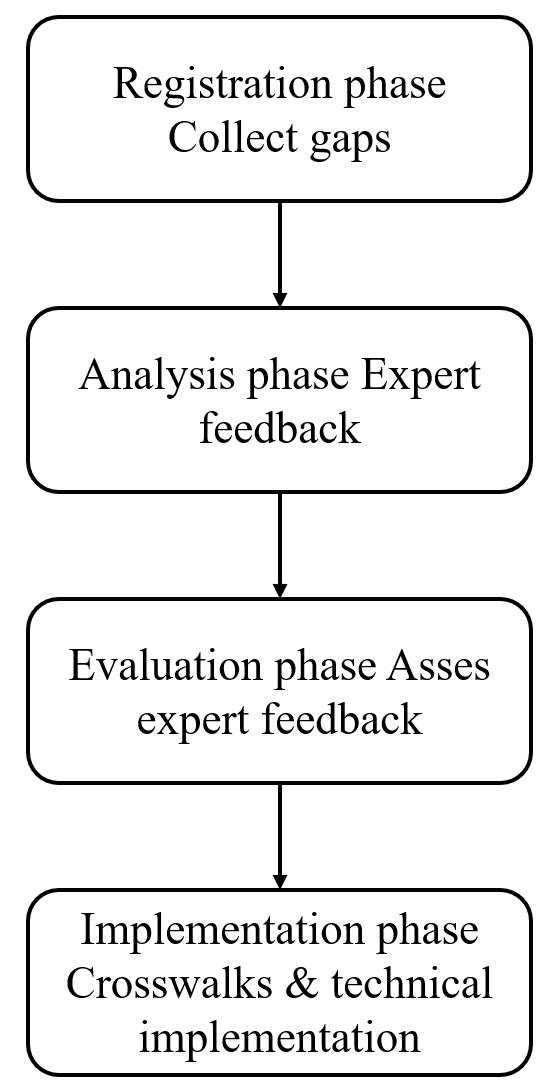
To complete this review and update procedure, we used a four-phase approach (Fig. 1):
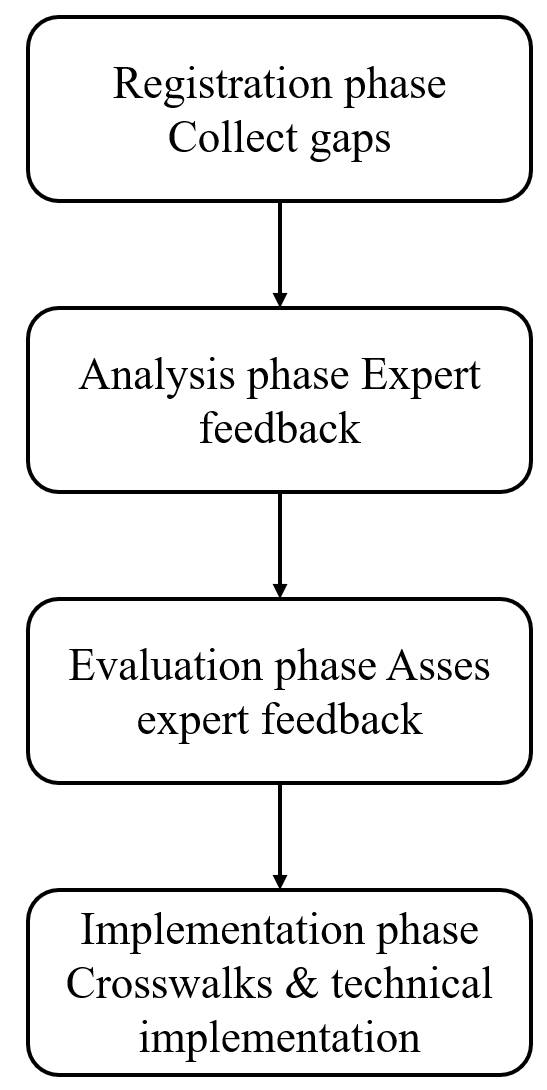 Fig. 1.
VODs Update Process Steps.
(1) A consultation and registration phase to collect and identify gaps based on feedback from the stakeholders.
(2) An analysis phase to assess the reported gaps and obtain expert recommendations from domain experts.
(3) An evaluation phase to assess the obtained expert recommendations.
(4) An implementation phase in which the stakeholders are supported with the technical implementation of the updated Flemish research discipline classification (preparation of translation tables etc.).
Stakeholders were invited to a consultation process in the initial consultation and registration phase. They were asked to call on their researchers to identify and report any gaps in the current code list. Each institution had the liberty to decide its preferred approach. Some institutions solicited feedback from all researchers, while others gathered feedback using a sample of researchers.
The gaps were recorded regarding disciplines and definitions to be removed, decoupled, merged, added, or modified. A deadline was set for receiving these submissions by email.
The stakeholders that employ the VODS for their statistics and reporting (public funder FWO, Flemish Interuniversity Council (VLIR), Flemish Department of Economics, Science and Innovation (EWI), Human Resources in Research Framework (HRRF)) were notified about the review and update procedure and were asked to indicate which codes were in use and which were not. Stakeholders and researchers could also submit suggestions and shortcomings continuously via email to ECOOM-Hasselt since the implementation of the first version of the VODS in 2018.
During the consultation and registration phase, the “Not elsewhere classified”
categories were analysed using the FRIS portal. The “Not elsewhere classified
category” is integrated at the lowest level of each discipline at levels 3 and 4
in the code list to detect missing or emerging disciplines. A high usage of the
“Not elsewhere classified categories” (
In total, 51 submissions reporting various technical and content gaps were recorded.
This yielded 74 individual suggestions for revisions to the VODS 2018. All submissions were gathered in a document and structured by gap type (technical or contextual), research domain (Sector Level 1 of the VODS) and VODS level (levels 1 & 2, and 3 & 4). In this document, each reported gap was described with metadata (name and affiliation of the requestor, date, type of gap (deactivation, addition, decoupling, merging, or modification), current location in the VODS, current location in the FORD and ANZSRC, etc.).
In the analysis phase, the gaps in the VODS were gathered and analysed based on three mechanisms:
(1) An analysis of any evolutions in international reference standards-the Australian and New Zealand Scientific Research Classification-Fields of Research (ANZSRC – FOR, 2020) and the Fields of Research and Development (FORD) classification (OECD, 2015)-and their impact on the VODS. There were no changes impacting levels 1 & 2 of the VODS.
(2) An analysis was performed on the usage of the “Not elsewhere classified”
categories of the VODS using the FRIS portal. The “Not elsewhere classified
category” is integrated at the lowest level of each discipline at levels 3 and 4
in the code list to detect missing or emerging disciplines. A high usage of the
“Not elsewhere classified categories” (
(3) The use of disciplines at levels 3 & 4 of the VODS was analysed using the FRIS portal.
If a discipline has a low frequency of use, it may indicate a need to remove or merge disciplines. A high frequency of use may sometimes indicate a need for further, more targeted disaggregation.
All submissions received since the VODS implementation in 2018 and after the call for public consultation were gathered in an analysis document, structured per research domain (Sector Level 1), and analysed at levels 1 & 2, and 3 & 4. A division was made based on the type of gap (technical and structural gaps vs content gaps). Technical and structural gaps do not concern the content of the disciplines but rather their structure or technical implementation. For these gaps, advice was sought from all stakeholders who have implemented the VODS in their systems. Content gaps were divided into levels 1 and 2, and 3 and 4.
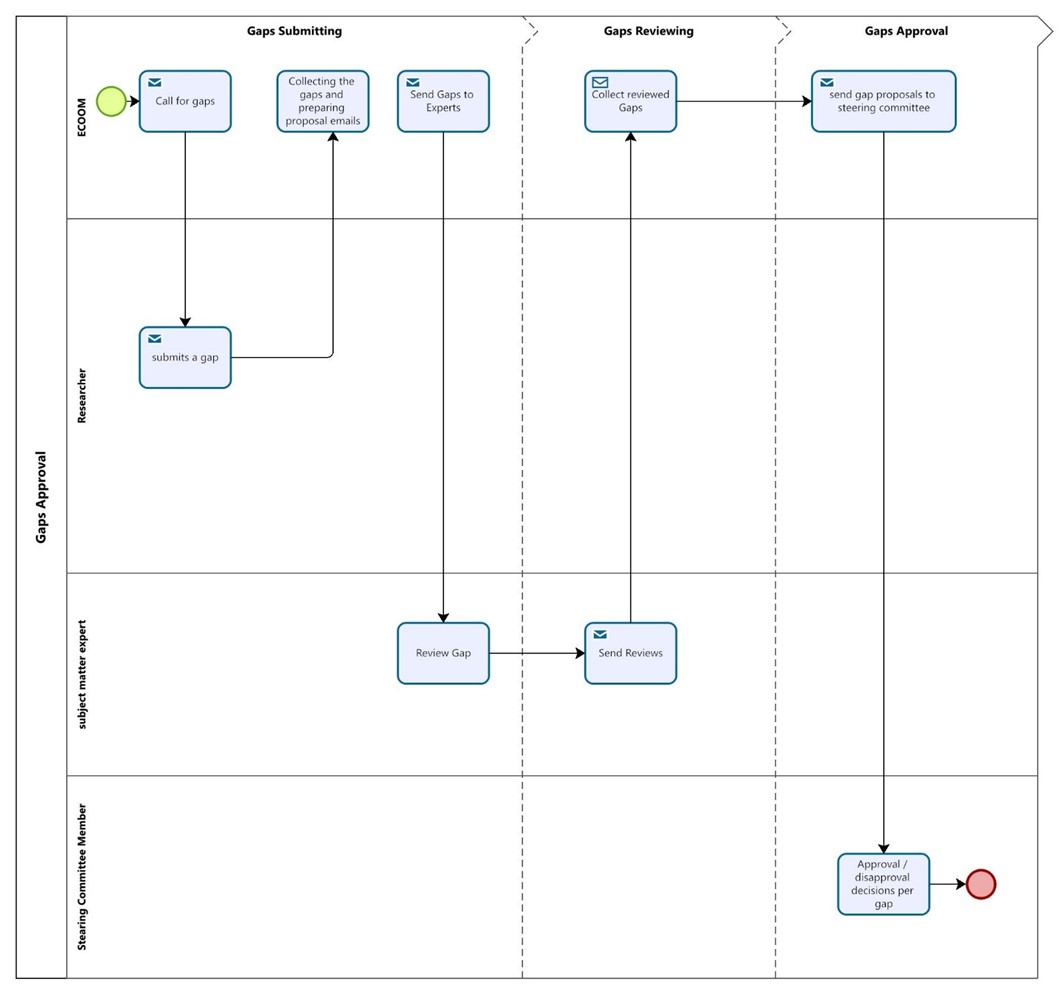
A total of 72 content gaps were identified. To analyse these gaps, we undertook targeted expert consultations (Fig. 2): for each reported gap, knowledge domain experts were sought via the FRIS portal and contacted about the identified gaps in their expertise domain via email.
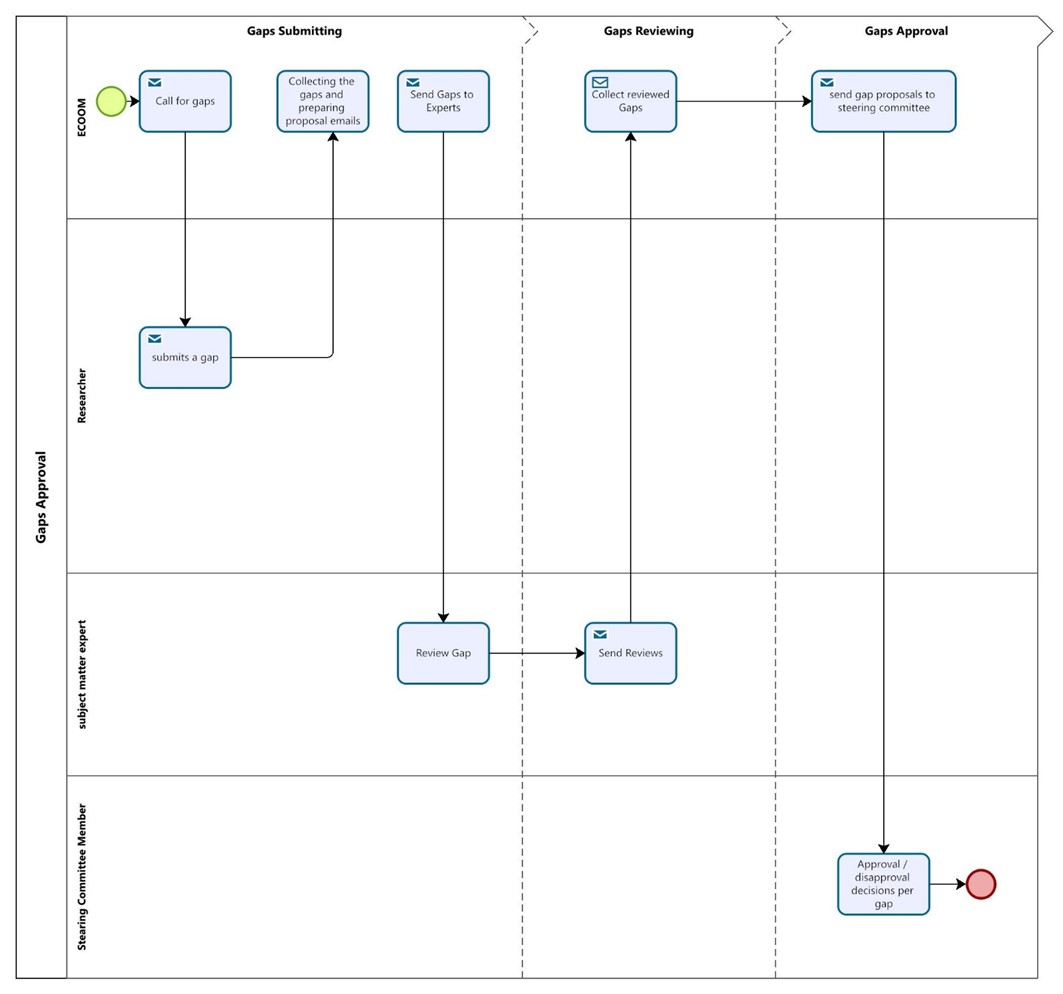 Fig. 2.
Flow chart update process. ECOOM, Expert Centre for Research and Development Monitoring.
They were asked to give their reasoned expert advice on the proposed changes (agree or disagree, arguments, references) and provide a rationale with references to support their response. Hereby, a representative expert consultation spread across the five Flemish universities, and a consensus among the experts was pursued. When experts disagreed, they were contacted again with the opponents’ arguments asking them to refute them or provide additional substantiation of their position until a consensual agreement could be reached. Not only were experts from a particular subdiscipline contacted, but an attempt was also made to look for experts with a helicopter view to obtain the most objective advice possible. The recent evaluation did not yield inquiries pertaining to interdisciplinary research.
In the evaluation phase, the expert advice obtained was used to create a proposal document for each major research domain (Sector Level 1 of the VODS: Natural sciences, Medical and Health Sciences, etc.) consisting of an overview of the reported gaps, the expert assessments (number of experts pro and contra), the arguments pro and contra, and a proposal to address the gap or not and how to address it. These proposal documents were then submitted for approval to the steering committee, which consisted of representatives from the institutions using the VODS. These proposals were discussed at a steering committee meeting, where the proposed revisions were presented based on a set of decision-making criteria. The steering committee is tasked with evaluating the admissibility of the submissions and deciding on whether and how to address the gaps. In reviewing the proposed adjustments, steering committee members considered the following four decision criteria:
(1) Assessment of the expert advice quality: number and quality of the arguments, alignment among experts, evidence from communities of practice (international associations), etc.
(2) Preserving the hierarchical structure and granularity of the list.
(3) Alignment with international classifications. Consideration was given to situating the discipline in international classifications, specifically, the FORD and the ANZSRC-FOR 2020.
It was verified whether the discipline occurred in the international classification lists and at what level. This was considered an argument in the steering committee meeting to accept or reject the suggestion.
(4) The level of impact of the proposed revisions on administrative research reporting and the continuity of statistical analyses. The implications of implementing the proposal include the structure and hierarchy of the VODS, as well as the impact on statistics and reporting.
Some proposals implied that a new third and/or fourth level had to be worked out to maintain the hierarchy of the list. When disciplines are moved to another research domain or level within the list, consideration is given to whether that discipline can be placed on par with the other disciplines within that domain or level.
After reviewing the proposed adjustments, the steering committee recommended actions based on the decision criteria. This resulted in the removal of obsolete disciplines and the addition of new disciplines. Some disciplines were moved to another sector or level in the VODS, and others were renamed or provided with updated definitions.
In the implementation phase, agreements were made to implement the new version of the VODS in each stakeholder’s CRIS systems or databases. At this point, the new version of the VODS was created, as well as concordance mappings with the previous version and other (inter) national classifications (e.g., ANZSRC – FOR, 2020). After the steering committee decided which gaps to address, an impact analysis was conducted to check for each data provider the number of projects, researchers, research organisations and datasets whose discipline codes needed to be adjusted. Given the many structural changes, it was decided to opt for a full conversion to a new list with retroactive adaptation of the modified codes. There were two types of adaptations to consider: 1-to-1 adaptations and 1-to-N adaptations. 1-to-1 adaptations can be transformed using a simple mapping by programming a query. However, the 1-to-N adaptations are more challenging because a substantive choice is required. We identified 29 discipline codes requiring a content choice when transforming to the new VODS classification. Three types of 1-to-N adjustments could be distinguished, requiring researchers to make a content choice when selecting their disciplines using the new VODS classification:
(1) Discipline codes that have been split: for example, the decoupling of 0504 Sociology and anthropology into 0509 Sociology and 0510 Anthropology.
(2) Discipline codes that have been newly created. For example, 12 new codes were created under 010108 Statistics at level 4 of the VODS.
(3) The “Other” and “Not elsewhere classified” categories. These are found at the lowest level of each discipline at levels 3 and 4 in the classification to identify new, missing, or emerging disciplines. In these cases, a content choice is possible. Researchers can either select a newly created discipline code or automatically map the “Other” to “Other” categories and the “Not elsewhere classified” to “Not elsewhere classified” categories (XXXX99 to XXXX99/XX9999 to XX9999). For example, 010399 “Other physical sciences” could be mapped to either a new code 010312 “Biophysics” or the same code in the new VODS classification.
The steering committee decided to align the approach to the 1-to-N adjustments with the status of the projects, researchers, and organisations (inactive, ongoing, or starting as of January 2024).
For active projects, researchers, and organisations, it was decided that stakeholders would: (a) program a query to automatically decouple old discipline codes into N new discipline codes and ask researchers to make a selection, and (b) program a query to automatically map the “Other” to “Other” categories and the “Not elsewhere classified” to “Not elsewhere classified” categories (XXXX99 to XXXX99/XXXX9999 to XXXX9999), to reduce the workload for all stakeholders involved. For inactive projects, researchers, and organisations, it was agreed to conduct automatic 1-to-N decoupling of the old discipline codes into N new codes and also automatically map “Other” to “Other” and “Not elsewhere classified” to “Not elsewhere classified” categories.
Projects, researchers, and organisations, starting as of January 1st, 2024, will immediately use the new VODS classification list. This implies that the VODS 2023 should be implemented by the stakeholders’ CRIS systems at least by January 1st, 2024. The practical implementation of the updated Vlaamse OnderzoeksDiscipline Standaard in the CRIS systems of the knowledge institutions implies drawing up concordance tables to compare the new version of the classification to the previous one. To ensure time-series compatibility of datasets, correspondence tables were published that provide mappings between the VODS 2018 and the VODS 2023. Hence, data categorized under the VODS 2018 will remain comparable with data categorized under the VODS 2023. Furthermore, mappings were created between the classification and other international standards to enable international comparisons and reporting.
Consistent with the VODS 2018, the VODS 2023 consists of four hierarchical levels, each more granular than the previous one. An important structural change involved making the naming of the levels more consistent. In the VODS 2018, Level 1 was named Sector Level 1, while levels 2 through 4 were named Disciplinary Field 1 to Disciplinary Field 3. Because this naming convention was confusing according to the stakeholders, the designation of the levels in the VODS 2023 has been changed to four disciplinary levels ranging from Disciplinary Level 1 to Disciplinary Level 4.
The VODS 2023 includes new discipline codes that were not present in the previous version. Some codes have been decoupled or merged compared to the VODS 2018 version. Some codes have been removed in the VODS 2023 because they have become obsolete. The review process also revealed a couple of new and emerging research disciplines. For many research disciplines, updated and improved definitions have been provided. The following table (Table 2) shows the changes in the number of disciplines at each level of the VODS. At level 1, no changes were introduced. This level continues with seven key research domains in alignment with the OECD FORD classification.
| VODS 2018 hierarchical levels | VODS 2018: Number of research disciplines | VODS 2023 hierarchical levels | VODS 2023: Number of research disciplines |
| Sector Level 1 | 7 | Disciplinary field (level 1) | 7 |
| Disciplinary field (level 2) | 42 | Disciplinary field (level 2) | 43 |
| Disciplinary subfield (level 3) | 382 | Disciplinary field (level 3) | 385 |
| Disciplinary subfield (level 4) | 2866 | Disciplinary field (level 4) | 2924 |
VODS, Vlaamse OnderzoeksDiscipline Standaard.
There were no evolutions in international research classifications that aligned with levels 1 & 2 of the VODS 2018.
05 Social sciences: 0509 Sociology & 0510 Anthropology:
The old 2nd-level Disciplinary field ‘Sociology and Anthropology’ of the VODS 2018 was split into two separate disciplines: ‘Sociology’ and ‘Anthropology’. Anthropology is further divided into the disciplinary subfield ‘Social and cultural anthropology’ (051001) at level 3 of the VODS (Disciplinary level 3) with an expansion of the 4th-level disciplines underneath to include five new disciplines.
Based on the targeted expert consultation, it was decided to divide the 2nd-level research discipline ‘Sociology and Anthropology’ into two separate disciplines: ‘Sociology’ and ‘Anthropology’.
This decision aligns our classification with the daily research practice at Flemish knowledge institutions, where there are separate anthropology and sociology departments, and both disciplines use separate methodologies and frames of reference. Furthermore, the Flemish Government distinguishes between the Doctorate in Social and Cultural Anthropology and the Doctorate in Social Sciences (for sociology, political science, and communication sciences). The decoupling of ‘Anthropology’ and ‘Sociology’ also corresponds to other international classifications, such as the ANZSRC-FOR, where Anthropology is a separate discipline. Expert consultations further revealed that Anthropology is a distinct scientific discipline from Sociology, with its own genealogy and development. While the American tradition includes archeology and biological and linguistic anthropology, the discipline is mostly limited to social and cultural anthropology in the European tradition. At the global level, anthropology is represented by the International Union of Anthropological and Ethnological Sciences (IUAES). In Europe, it is represented by the European Association of Social Anthropologists (EASA). As a result of this decoupling, the number of disciplines at Level 2 changed from 42 to 43 disciplines.
01 Natural Sciences: 0101 Mathematical Sciences and Statistics:
The Disciplinary field ‘Mathematical Sciences’ at level 2 of the VODS 2018 was renamed ‘Mathematical Sciences and Statistics’ in the VODS 2023. The discipline ‘Statistics and Numerical Methods’ at level 3 of the VODS 2018 was split into two separate disciplines, ‘Statistics’ and ‘Numerical methods’ at level 3 of the VODS 2023. This is consistent with the classification in the international ANZSRC-FOR, where Statistics is a separate discipline under ‘Mathematical sciences’ at Level 2 (equivalent to Level 3 in the VODS) alongside disciplines such as Applied mathematics, Mathematical physics, and Numerical and computational mathematics. The consulted experts argued that ‘Statistics’ is separate from ‘Numerical methods’ regarding the used methodologies and frames of reference, the size and content of the field, and international classifications and prizes (e.g., Mathematics Subject Classification (MSC)). At level 4 of the VODS 2023, the subdisciplines under ‘Statistics’ were expanded from three to thirteen 4th-level disciplines. The newly created research discipline ‘Numerical methods’ gained four disciplines at level 4.
01 Natural Sciences: 0103 Physical sciences:
The discipline ‘Biophysics’ was located at three distinct locations at level 3 of the VODS 2018: residing under “03 Medical and health sciences: 0301 Basic sciences; 0302 Clinical sciences, and 0306 Translational sciences”. The distinction between the discipline of Biophysics within the basic sciences, clinical sciences, and translational sciences lies in the separate scientific context within which the subject is investigated: from the perspective of basic, clinical, or translational sciences respectively. This distinction is also reflected in the separate semantic definitions of ‘Biophysics’ residing under the basic, clinical, and translational sciences.
Based on expert recommendations, it was decided to also add ‘Biophysics’ at level 3 of the VODS 2023 under “01 Natural sciences: 0103 Physical sciences”. The argument was that ‘Biophysics’ is an interdisciplinary research field that belongs to both the Physical sciences and the Medical and health sciences. This decision aligns with the ANZSRC-FOR classification where ‘Biological physics’ is situated under ‘Medical and biological physics’. To describe the discipline of Biophysics as a child discipline from the Physical sciences, it was opted to use a more generic definition: “Biophysics is the discipline that deals with aiming to unravel the physical and physico-chemical principles behind biological phenomena”.
03 Medical and health sciences: 0303 Health sciences:
The 3rd-level disciplines ‘Human movement and sports sciences’ (030305) and ‘Rehabilitation sciences’ (030306) were relocated from ‘Paramedical sciences’ to ‘Health sciences’ at level 2 of the VODS. This implies that these disciplines were removed under 0304 ‘Paramedical sciences’ and added again as new codes under 0303 ‘Health sciences.’ Also, their underlying fourth-level disciplines were given a new position and code in the classification list. The main motivation for this shift was that “Paramedical sciences” do not appear as a separate research field in international classifications such as the FORD and the ANZSRC-FOR.
03 Medical and health sciences: 0302 Clinical sciences:
To accommodate everyday scientific practice, a new discipline was added: 030237 ‘Human and medical genetics’. Within the disciplinary field of ‘Clinical sciences’, a subfield of ‘Medical and health sciences’, a new 3rd level discipline ‘Human and medical genetics’ was added in alignment with expert advice. There was a need for a discipline in the VODS for clinical geneticists dedicated to diagnosing, treating, and counselling people with genetic disorders. At level 4, the following subfields were newly created and added under ‘Human and medical genetics’: Clinical genetics, Metabolic/biochemical genetics, Cytogenetics, Molecular genetics, Mitochondrial genetics, Clinical genetics and molecular diagnostics, and Human and medical genetics not elsewhere classified.
Most of the codes that were deactivated and added in the VODS 2023 were the result of splitting codes at Level 2 (Sociology and Anthropology) and level 3 (Statistics and Numerical Methods), and the result of code reclassification (Human movement and sport sciences and Rehabilitation sciences were relocated from Paramedical sciences to Health sciences).
The VODS 2023 review-and-update procedure was labour-intensive and time-consuming, with room for improvement. Many steps can be automated such as gap collection and contacting subject matter experts. First, in the current procedure, submissions were reported via email and manually collected in a document per Disciplinary Level (Level 1) with descriptive metadata. An improvement would be to register and collect gaps through a user platform with targeted questions that automatically records useful metadata, such as the type of gap and action requested, arguments, references, etc. Answering key questions with drop-down menus and controlled vocabularies will ensure information gathering in a standardised manner. When starting a new review-and-update procedure, researchers will receive a link to an interface to enter their suggestions. These suggestions will be limited to certain gaps (add a discipline, deactivate a discipline, merge or split disciplines, move a discipline to another level or domain, modify a discipline (naming, definition, examples)).
To decide on adding, deactivating, or modifying research disciplines, it is crucial to have a standard definition of a research discipline. ECOOM-UHasselt and the VODS Steering Committee will develop a definition of what exactly constitutes a research discipline, considering at least the research focus, theoretical frameworks, research methodology, and method of analysis. To this end, future updates of the VODS 2023 will, in alignment with the ANZSRC-FOR 2020 update approach, inquire stakeholders on key issues such as the definition of a research discipline, the review and decision-making principles that are needed, and what criteria to use to distinguish between the Disciplinary Fields of the VODS and to classify research. For example, should we consider (inter)national research discipline classifications and evidence from communities of practice (e.g., peer-reviewed journals, academic societies, academic conferences, funding panels, publisher databases) to classify research?
The ‘Not elsewhere classified categories’ can be adjusted to include a free text field for researchers to describe missing or new research disciplines. Researchers can choose this category when unable to find an accurate discipline at levels 3 and 4. An automated notification can prompt researchers to describe the missing field using a free text field. This will enhance the classification’s ability to identify missing and emerging research fields.
Second, processing only eligible gaps will provide substantial efficiency gains rather than dealing with each reported gap. For example, the ANZSRC-FOR 2020 update and review procedure (Australian Research Council, 2019b) employs a set of criteria to check gap admissibility. Submitted gaps were accepted without further processing if the following conditions were met: (1) No competing suggestions were present, or a majority view emerged. (2) The alteration exhibited low complexity and was anticipated to lack controversy among stakeholders. (3) The proposal aligned with the ANZSRC 2020 Review principles that are derived from the United Nations Best Practice Guidelines for Developing International Statistical Classification (Hancock, 2013). When the above-described criteria were not met, the ANZSRC 2020 update used a set of decision-making principles to decide whether or not to incorporate a suggestion. The Australian ERG and New Zealand EWG recommend the following decision-making principles in order of greatest to least priority (Australian Research Council, 2019b):
• Support of representative groups of experts such as academies, deans’ councils, royal societies and other discipline peak bodies.
• Evidence of community of practice. Evidence that proposed changes reflect the way that researchers organise themselves, such as the existence of research groups, institutes, associations or conferences dedicated to a topic.
• Level of impact within the classification structure.
• Alignment with international practices and standards.
• Evidence of alignment of expertise.
• Bibliographic analysis/volume.
ECOOM-UHasselt will develop similar criteria and decision-making principles to assess gap eligibility and whether or not to incorporate submissions for future updates of the VODS 2023. The UN Best Practice Guidelines for Developing International Statistical Classification (Hancock, 2013) and the ANZSRC 2020 decision-making principles will be considered. To this end, ECOOM-UHasselt will consult with experts in research classification, and the steering committee will help determine these criteria. Third, the VODS 2023 update procedure conducted targeted expert consultations for each reported gap. Here, a precondition was built to obtain a consensus among at least five experts from each Flemish university. An iterative procedure was used when disagreements occurred, asking experts to refute opponents’ claims and support their position until a consensus was reached.
This procedure was inefficient for multiple reasons: (a) domain experts were sought manually using the FRIS portal and contacted by email, (b) the process relied on the willingness of domain experts to participate voluntarily, (c) the advice obtained from domain specialists was generally unsubstantiated and required repeated requests for more information and resources, and (d) consulting domain experts generally yielded more new gaps and questions than the solutions offered. The expert consultation process can be improved by automating some of its elements and using incentives. Contacting domain experts can proceed digitally through a data governance centre integrated with the FRIS portal. Future updates will only ask experts to assess eligible gaps. When eligible gaps are identified within a certain field of research, the experts who are active in these fields can receive an automated notification asking them to review these gaps and provide feedback. Rather than repeatedly contacting the experts for additional information, arguments, and references, the key questions will be asked immediately and registered using a harmonised approach. Next, a voting system may be introduced, by sending a notification to representative pools of researchers within the same research domain asking them to vote on the proposed adaptations.
Furthermore, the role of the VODS steering committee should be revised in alignment with international practices. In the current update, the steering committee was required to monitor the granularity of the VODS, and the alignment with international classifications, and to assess the expert advice. A proposal was presented for each gap to the steering committee, including at least five expert opinions and arguments, that decided which proposals to incorporate into the VODS 2023 or not. For future updates, the steering committee should take on the role of developing and monitoring more general criteria and principles for reviewing and updating the research discipline classification, determining the eligibility of reported gaps, and deciding which gaps to incorporate. In addition, the steering committee should, with the help of research classification experts, develop and monitor the main research classification principles. These questions are as follows: What is a research discipline? What is the difference between the Disciplinary Fields (levels) of the VODS? What criteria have to be met to deactivate a discipline, create a new discipline, merge disciplines or split them etc.? Finally, an AI algorithm can be developed to aid in the identification of new research disciplines.
The Vlaamse OnderzoeksDiscipline Standaard (VODS) update resulted in VODS 2023, reflecting current research practices accurately. VODS 2023 is more detailed with new disciplines, improving categorization accuracy for users. This enhances statistical feasibility and quality of statistics. Updated definitions align with Flemish research practices. Time series comparability was ensured between VODS 2018 and VODS 2023 with concordance tables. Concordances were also established with other classifications for comparative analyses (e.g., ANZSRC – FOR, 2020).
Categorising interdisciplinary research is challenging due to the principle of ‘mutual exclusivity’ of classification categories. VODS acknowledges interdisciplinary research by offering interdisciplinary themes such as architecture, mobility, and nanotechnology at the bottom of the list. These subjects span various disciplines across different categories. In addition, similar to the ANZSRC-FOR approach of IDR, the VODS allows multiple code assignments for one research activity, avoiding complex categories. Future updates will address how VODS 2023 should handle interdisciplinary research more accurately.
In the future, we expect to update the classification less frequently (every 5 to 10 years) to avoid significant changes to stakeholders’ internal systems and databases. The implementations will be less radical, especially at the higher levels of the classification. Changes at levels 1 and 2 significantly impact research reporting and evaluation, data analysis, and comparative statistics. Hence, these types of adjustments will be avoided as much as possible. 1-to-N adjustments cannot be deduplicated with a simple query but require researchers to make choices and conduct manual adjustments. Hence, care will also be taken to apply as few 1-to-N changes as possible when there is a content choice from the old to the new mapping.
The datasets used and/or analyzed during the current study are available from the corresponding author on reasonable request.
All authors designed the research study, performed the research and analyzed the data. All authors contributed to editorial changes in the manuscript. All authors read and approved the final manuscript. All authors have participated sufficiently in the work and agreed to be accountable for all aspects of the work.
The authors would like to thank the reviewers for the feedback and comments that they have made to improve the paper.
This study was funded by the Flemish Government, under the Expertise Center for Research and Development Monitoring (ECOOM Interoperability), Hasselt, Belgium.
The authors declare no conflict of interest.
References
Publisher’s Note: IMR Press stays neutral with regard to jurisdictional claims in published maps and institutional affiliations.