
Special Interview with Professor Marcello Migliore: Insights into Uniportal Video-Assisted Thoracoscopic Surgery (UVATS) for Pericardial Effusion Management
31 October 2025
We are pleased to have Professor Marcello Migliore in this interview. He is the corresponding author of the recent review article "Implementation of Uniportal Video-Assisted Thoracoscopic Surgery to Treat Pericardial Effusion: A Review" published in The Heart Surgery Forum (HSF 2025, 28(8), 635–643). Professor Migliore is an international authority in the field of thoracic surgery, currently affiliated with the Department of Surgery and Medical Specialties at the University of Catania in Italy, with the College of Medicine at Al Faisal University, and the Thoracic Surgery of the Organ Transplant Centre of Excellence at King Faisal Specialist Hospital & Research Centre in Riyadh, Saudi Arabia. He is an early pioneer and active promoter of Uniportal Video-Assisted Thoracoscopic Surgery (UVATS). He has also made outstanding contributions to the innovation and development of minimally invasive thoracic surgical techniques.
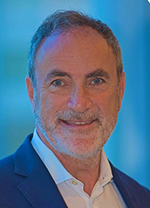
In this exclusive interview, Professor Migliore will delve into the inspiration behind this comprehensive review, discuss the core value and prospects of UVATS, and share his valuable experience collaborating with The Heart Surgery Forum.
1. Could you briefly introduce your research team? Regarding your recently published article "Implementation of UVATS to Treat Pericardial Effusion: A Review", could you share what inspired you to undertake and write this work?
Since April 2023, I have joined the Thoracic Surgery Department of the Organ Transplant Centre of Excellence at King Faisal Specialist Hospital & Research Centre in Riyadh, Saudi Arabia, and I have been a Visiting Professor of Thoracic Surgery at the Faculty of Medicine of Al Faisal University in Riyadh. I found enthusiastic junior residents in thoracic surgery and also excellent medical students with the desire to increase their knowledge and to publish good research. I am delighted to say that the first 3 authors are medical students of the Alfaisal University in Riyadh, and the fourth author has just been appointed as a Consultant Thoracic Surgeon in Leeds, UK.
The reason to publish this research was the evidence that information available in the literature regarding the use of UVATS for pericardial effusion was scarce, often contradictory, and with inaccurate information; therefore, there was a necessity to review the available information, including our own experience.
2. What do you consider to be the core findings or conclusions of this study? Could you briefly summarize them? In your view, what is the greatest innovation or clinical advantage of UVATS compared with traditional surgical approaches?
The findings indicate that UVATS is associated with shorter hospital stays, reduced postoperative pain, and lower recurrence rates compared to multiportal VATS and the subxiphoid approach. Furthermore, since UVATS minimizes intercostal trauma, it helps to enhance postoperative recovery.
3. Which discovery or result in your study excited or surprised you the most?
Although the procedure is relatively simple in expert hands, patients suffering from Pericardial effusion are generally very ill, and they deserve rapid and specialized treatment. The minimally invasive nature of a single 2-3 cm incision and the Enhanced Recovery After Surgery, which permits hospital discharge the same day or the day after, are the most exciting news for us and for the patient.
4. Regarding the development of UVATS, how do you view its journey from the initial concept to its gradual adoption and widespread use today?
Recent innovations, such as the development of ergonomic surgical instruments, high-definition cameras, and robotic-assisted UVATS, have addressed some of the technical challenges associated with the single-port approach. To properly implement UVATS in surgical training, we need to bridge the gap between current routine practice and innovation. These advancements will address concerns, such as reducing the learning curve, simplifying the surgical workflow, enhancing patient safety, and expanding indications. Nevertheless, challenges remain, including a steep learning curve, technical limitations, and the requirement for specialized instrumentation.
5. In the future perspective of your article, you mentioned hoping to use robot-assisted technology, 3D/4K vision systems, finer thoracoscopy, etc., to further enhance the feasibility and safety of UVATS. Will your next research direction be related to this?
The future of prospective research is simultaneous with investments in manufacturing companies. Certainly, Robotic UVATS is feasible, but we must take into account the cost/ benefit, which at the moment are not in favor of a positive outcome for robotic UVATS for pericardial effusion.
6. What advice do you have for young researchers who want to enter the related field or learn the related technical methods?
Thank you for this illuminating question. Junior surgeons must have passion and be creative. It is important to attend departments where there will be the possibility to develop new ideas and to discuss them without feeling angry. Passion must be discovered by themselves, and in the future, "the surgeon" will work alone as "unisurgeon" as it is already happening. If our pupils have passion, they will overcome all problems in their careers, and they will put their new ideas into practice for the benefit of our patients. Furthermore, although I am in favor of AI, I teach younger pupils that AI can help to make a diagnosis faster and to decide which operation to do or even help during the operation, but AI lacks humanity, empathy, compassion and communication (for example, a pat on the shoulder, few words said with calm and reassuring tone or even an embrace). In a few words, when using AI, our pupils should never forget the fundamental core of our profession: Humanity.
7. Do you think our journal's calls for papers are sufficiently diverse and effective? Through which channels do you personally prefer to receive such information?
I have been invited via email to send a paper. After reading the invitation letter, my personal feeling was immediately that The Heart Surgery Forum was not a "predators journal" but instead a pure scientific journal, and I was therefore happy to involve our juniors and to send the manuscript for possible publication.
8. How do you feel about the submission, review, and publication process for The Heart Surgery Forum?
The review process has been outstanding, and professionalism was evident throughout the different phases of publication. The reviewers provided excellent comments and questions that helped improve the manuscript, making its publication possible. The overall timing from submission to final acceptance and online publication was reasonable.
At the close of the interview, Prof. Marcello Migliore shared his genuine appreciation for The Heart Surgery Forum and expressed his warm regards to the readers. He conveyed his hope that the journal will continue to promote scientific exchange and inspire further progress in the field of cardiothoracic surgery.
We sincerely thank Prof. Marcello Migliore for taking the time to share his insights and experiences. His dedication to advancing minimally invasive thoracic surgery and improving patient outcomes continues to serve as an inspiration to the global medical community.
More Details:
Article Details: Implementation of Uniportal Video-Assisted Thoracoscopic Surgery to Treat Pericardial Effusion: A Review
Journal Homepage: The Heart Surgery Forum