
 , Rangasamy Anandham 1,*
 , Dananjeyan Balachandar 1, Murugaiyan Senthilkumar 1, Subramaniam Thiyageshwari 2, Saminathan Vincent 3
1 Department of Agricultural Microbiology, Tamil Nadu Agricultural University, Coimbatore, TN 641003, India
2 Department of Soil Science and Agricultural Chemistry, Tamil Nadu Agricultural University, Coimbatore, TN 641003, India
3 Department of Crop Physiology, Tamil Nadu Agricultural University, Coimbatore, TN 641003, India
Abstract
The utilization of various agrochemicals in crop production technology leads to soil health and fertility depletion. Multiple measures have been taken to revitalize the health of polluted soil. In this context, organic agriculture has increased over the past few years to overcome the detrimental effects of extensive modern agricultural practices. Several traditional organic formulations, such as panchagavya, jeevamurtha, beejamurtha, bokashi, etc., are vital in converting polluted farmlands into organic. Various countries have their own organic formulations to improve crop growth and yield. These formulations are rich sources of many macro and micronutrients, growth-promoting phytohormones, and provide resistance against biotic and abiotic stresses. Apart from these benefits, these formulations consist of several groups of beneficial microorganisms that belong to the phyla Proteobacteria, Firmicutes, Bacteroides, and Actinobacteria, while some of the novel groups of microorganisms were also reported from the ingredients used in the preparation of these organic formulations. These microorganisms can solubilize nutrients such as phosphorous and zinc, oxidize sulfur, reduce nitrate, and are also involved in the production of indole acetic acid, ethylene reduction enzyme (1-aminocyclopropane-1-carboxylic acid deaminase), and organic acids that promote plant growth and induce resistance in the plant system. Hence, the utilization of traditional organic formulations helps in the reclamation of environmental health without compromising crop yields. This review describes the importance of organic farming, the preparation and application of different types of traditional organic formulations in different countries, and the microbial composition and mechanism of growth promotion of different traditional organic formulations.
Keywords
- liquid organic formulation
- microbial preparation
- novel bacterial flora
- organic farming
- shelf life
- stress mitigation
The current increase in the global population demands increased food production. Despite the areas under production, the productivity of several food crops has been declining alongside the increased population for the past few decades due to the urbanization of cropping areas [1]. To increase crop productivity, several synthetic agrochemicals such as pesticides, fertilizers [2], hybrid seed varieties, and high-yielding varieties (HYV) are being used, which have been in practice since the 1960s—the beginning of the green revolution [3]. This technology has drastically increased crop production to meet food requirements. A study conducted by Nelson et al. [4] reported that agriculture is the major sector of the economy in many developing countries. Synthetic agrochemicals [5] and HYVs have increased crop production by several folds, making it possible for agricultural produce from developing countries to trade worldwide, thus raising their global statuses [6].
Genetically engineered seed types and agrochemicals have increased agricultural productivity [7, 8], although they have also been shown to have long-term consequences on soil. They act as pollutants in soil, water, and air and are identified as a cause of several diseases and disorders in humans, plants, animals, fisheries, and poultry [6, 9, 10]. The constant application of these chemicals in the agricultural field has caused several problems for the biotic and abiotic components of the earth [8, 10, 11]. Some insect pests and pathogens have gained resistance to these chemicals, making the application of some pesticides obsolete [2, 6]. Moreover, these compounds are not easily degraded and become residue in agricultural lands, and upon irrigation, they are discharged into freshwater, causing water pollution [6, 9]. The food products produced from these contaminated sites are reported to cause several diseases and disorders in the living system [10]. However, consuming pesticides on the surface of foods without proper washing leads to the intake of carbamate, organophosphate, organochlorides, etc., which causes problems such as nervous disorders, reproductive damage, and chronic disorders along with the weakening of the immune system [9, 10]. As the increased production of these chemicals is more likely due to low costs, many farming communities use them worldwide without knowing their impact on the environment and their daily life [2]. The practice of burning cultivation followed by some parts of farming communities leads to the emission of greenhouse gases such as carbon dioxide, nitrogen oxides, and methane [12], which are also reported to pollute the environment. To overcome these problems, several steps have been taken to achieve sustainable agriculture without compromising environmental health [13]. These practices include the conversion of agrochemicals polluted lands into organic using organic amendments such as panchagavya, jeevamurtha, and beejmurtha and practicing zero budget natural farming (ZBNF) [14] as the inoculation of several beneficial microorganisms as biofertilizers and biocontrol agents [15], which improves the growth and yield of plants without compromising the environmental health [16].
Farmers in different countries have independently developed various organic formulations or obtained indigenous technical knowledge (ITK). The farmers have successfully used these formulations to increase crop yield and soil health. However, to the best of our knowledge, comprehensive reports on microbial populations of these formulations and their plant growth-promoting mechanisms have yet to be reported. Hence, this review summarizes the importance of organic farming, preparation, and utilization of different traditional organic formulations of various countries, their microbial composition, and their role in enhancing crop growth and soil properties. For this purpose, a literature review focused on the information available on preparing different traditional organic formulations, their microbial diversity, and the substances responsible for the plant growth promotion that are present in these traditional organic formulations. Nearly 50 peer-reviewed scientific articles, conference materials, booklets, and book chapters published between 2000 and 2023 were analyzed. However, the main focus was on articles from the last ten years.
The concept of organic farming was first coined by Lord Northbound. Using the materials that originate from plants and animals is known as organic farming [17]. These organic farming practices are being followed to reduce the use of numerous synthetic agrochemicals and include the use of crop residues, crop rotation [10], organic manures, household wastes, microbial organisms as biofertilizers, and biopesticides [14, 17], vermicompost, organic formulations, traditional crop varieties together with proper management practices, and following indigenous techniques [14].
The soil, water, and air quality has deteriorated due to the extensive use of chemical-based pesticides and fertilizers in agriculture [9, 11]. These chemicals linger in agricultural fields as residues, reducing the fertility and nutrients of the soil and causing salinity, sodicity, and acidity, all of which are detrimental to plant development [10]. Moreover, they seriously impede crop growth by upsetting the equilibrium between pests and prey. Certain pests, including mealybugs in sugarcane, have become resistant to these insecticides, which puts some crops at risk [2, 6]. Developing seeds resistant to various stresses is essential to resolving these problems and increasing the yield. Enhancing crop adaptability through molecular-level enhancements has been a research topic for several years [7]. As a result, organic farming methods are gaining momentum in sustainable agriculture [17]. Various organic strategies are used in these activities to improve soil health and fertility, control pests and diseases, encourage plant growth and production, strengthen plant tolerance to biotic and abiotic stresses, and maintain biodiversity and human health [18]. Organic agricultural operations rely heavily on traditional organic formulations [19, 20].
Sustainable agriculture dramatically benefits from using organic formulations, which are essential to organic agricultural methods. These formulations are devoid of synthetic chemicals and genetically engineered organisms, consisting only of organically generated natural materials and substances [10, 19, 20]. They increase soil fertility, aid in moisture retention, enhance plant nutrient absorption, and improve soil structure. They also include natural pest-repelling substances or substances that encourage the growth of beneficial organisms that suppress pathogens and pests [21, 22]. The helpful microorganisms present in these formulations can aid in suppressing soil-borne pathogens. The benefits of adding traditional organic formulations are illustrated in Fig. 1. As per the National Programme for Organic Production (NPOP) report, in India, converting polluted land for organic farming takes a minimum of three years [23].
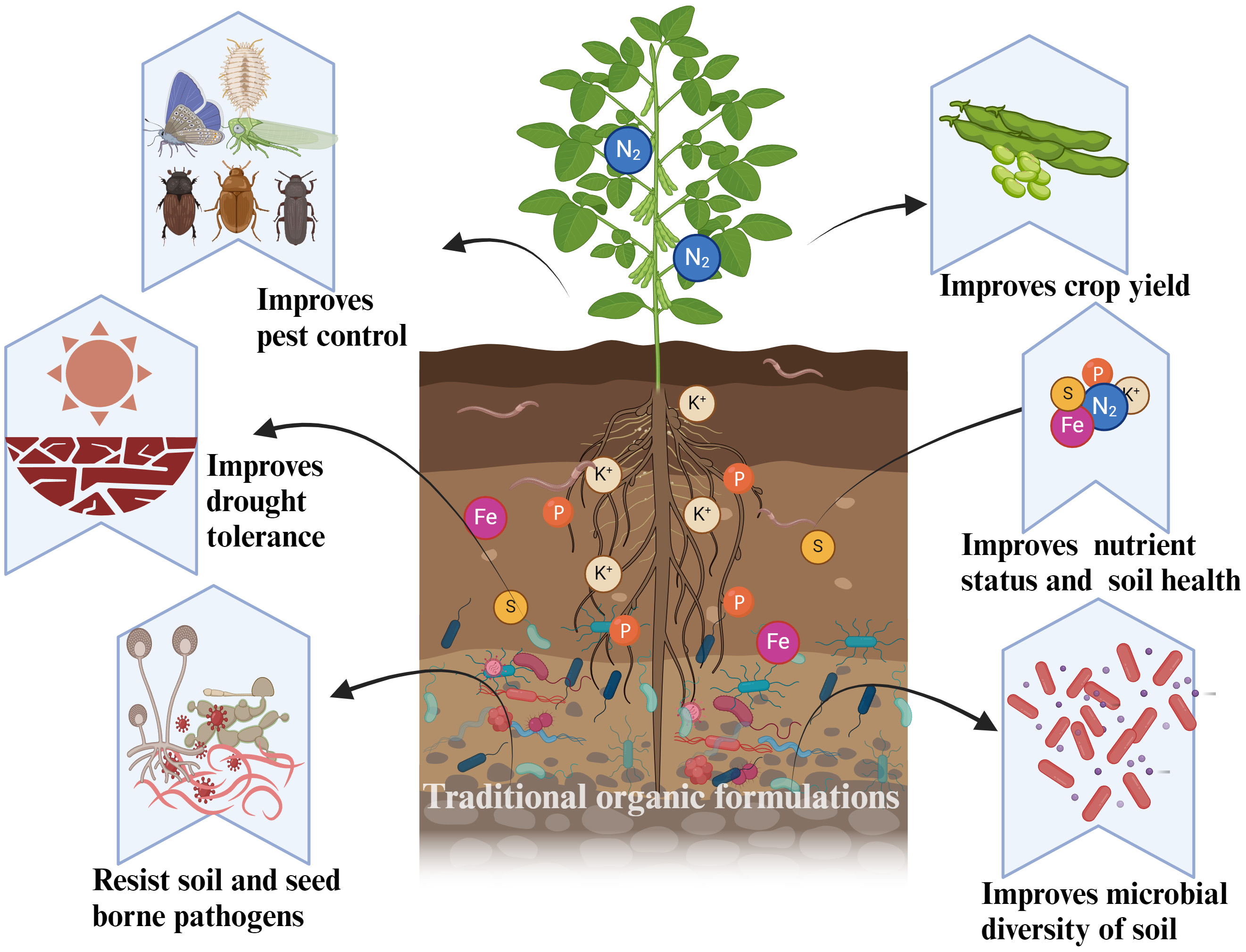 Fig. 1.
Beneficial effects of traditional organic formulations. Created with BioRender.com (Agreement number: EX26OGKIN7).
Organic inputs such as green manure, animal manure, bird manure, bovine manure, urine, compost, vermicompost, bio-char, and crops such as onions, garlic, nicotine, cloves, chilies, and microorganisms, which are mixed in various ratios to develop organic formulations that, when applied to plants, promote improved plant growth [10, 22, 24]. These organic formulations are used to improve the soil nutrient properties in terms of N, P, and K availability and micronutrients such as Si and Zn [14]; they also work against pests such as Meloydogine incognita, Aspidiotus nerii, Naupactus xanthographus, and pathogens, such as Phytophthora cinnamomi and Pythium spp. [25]. These organic inputs have served as alternatives to synthetic formulations. From 1500 BC to the evolution of the green revolution, these organic compounds were in use [24]. Numerous initiatives have been implemented at the national and international levels to support organic agricultural methods [26]. These data regarding the area under organic farming in the Asian continent for the past two decades are graphically represented in Fig. 2. They show an increasing trend in the areas under organic farming in the Asian continent.
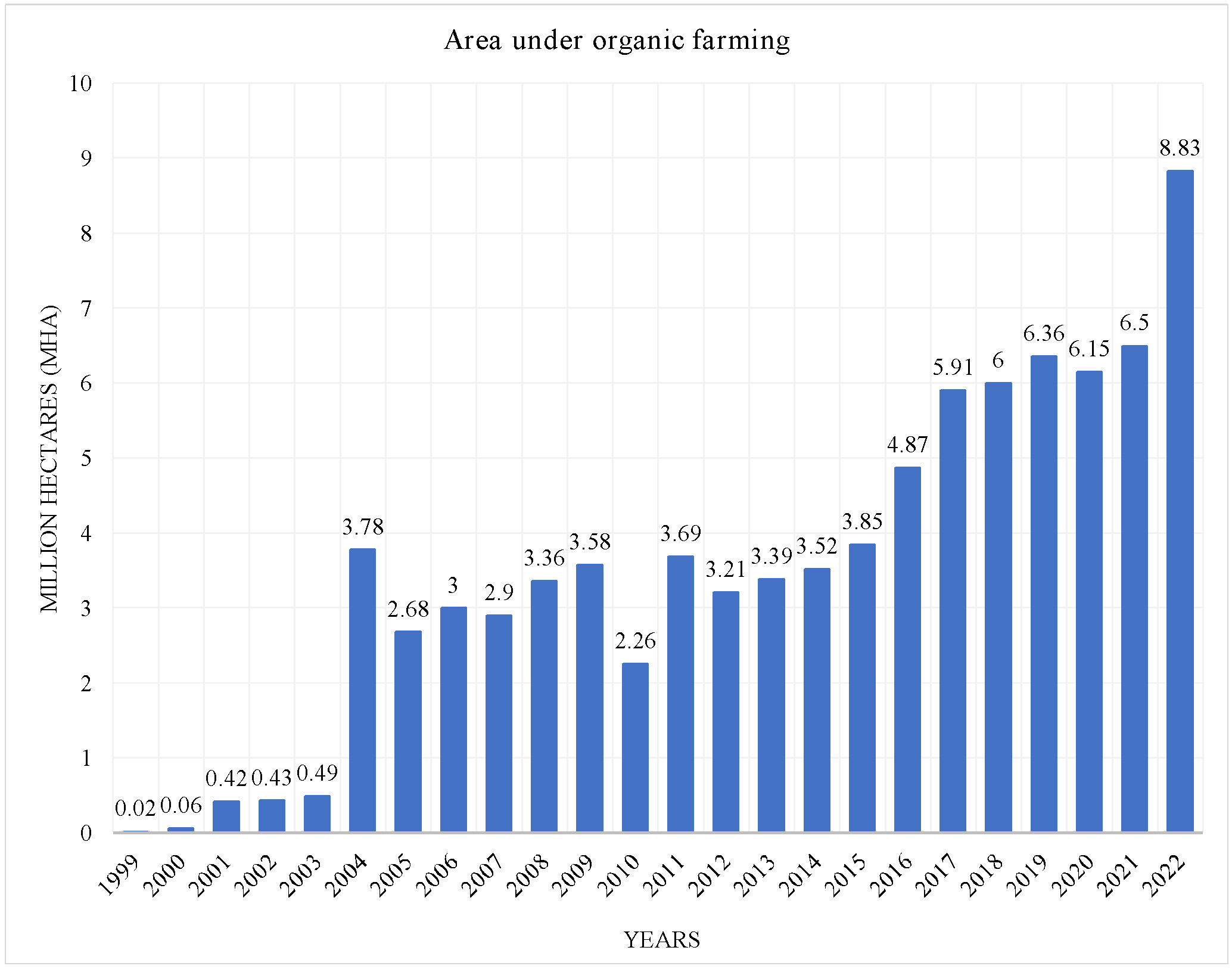 Fig. 2.
Graphical representation of areas under organic agriculture in Asia.
Different countries utilize different types of organic formulations depending on the availability of organic materials. The preparation method may vary with different formulations, and each formulation has its advantages in the growth and development of plants. Some of the widely known traditional organic formulations are panchagavya, amritpani, jeevamurtha, beejamurtha [19, 20], fish amino acid, egg amino acid, five leaves extract, EM solution [24], kunapajala [27], neem-based formulation—besara [19], sanjivak, dashparni [23], bokashi [28], neemhastra, brahmahastra, VESTA [29], and biological extract of Thailand [30].
Various organic components and preparation methods of formulations differ [14, 22]. As per Nandhini and Somasundharam [24], clockwise rotation is necessary for all preparations since it imparts positive energy to the formulation. The different types of organic formulations and their use are presented in Table 1 [14, 19, 20, 21, 24, 27, 28, 29, 30, 31, 32, 33, 34, 35, 36, 37, 38].
| Organic formulation (Country) | Method of preparation | Methods of application | Benefits | References |
| Amritpani (India) | Add ¼ L of ghee, ½ L of honey, and 10 kg of cow dung with 200 L of water and mix well. | 500 L/ha through irrigation. 3% foliar spray. | Induce biotic and abiotic stress tolerance in crops and improve crop growth and yield. | [20, 31] |
| Agneyastra (India) | Add 1 kg of Ipomea leaves and 5 kg of Azadirachta indica (neem) leaves with 500 g of Capsicum annuum (hot chilli) and 500 g of Allium sativum (garlic) in 10 L of cow urine and boil till they become half the volume (5 times) and filter the extract. | 2–3% foliar spray. | Effective insecticide against sucking pests, rollers, and borers. | [24] |
| Beejamurtha (India) | Add 50 g of cow dung, 50 mL of cow urine, 50 mL of cow milk, 3 g of limestone, and 1 L of water with a handful of soil and maintain in the shade for 24 hrs. | 50% foliar spray. 100% as seed treatment and root dip. | Provide macro and micronutrients and control soil and seed-borne pathogens. | [14, 33, 34] |
| Brahmahastra (India) | Add 2 kg of each of Azadiracta indica (neem) leaves, Annona (custard apple), Carica papaya (papaya), Punica granatum (pomegranate), and Psidium guajava (guava) in 10 L of cow urine and boil until the volume had reduced by 50% (5 times) and keep it for 24 hrs. | 100 L/acre by irrigation. | Used as a broad-spectrum pesticide. | [37] |
| Dashparni (India) | Add crushed leaves of Azadirachta indica (neem), Vitex negundo (nochi), Aristolochia (Isvaramuli), Carica papaya (papaya), Tinospora cordifolia (heart-leaved moonseed), Annona (custard apple), Millettia (karanj), Ricinus (castor), Nerium, Calotropis (Indian milkweed), with 1 kg of Capsicum (green chilli) paste, 500 g of Allium sativum (garlic) paste, 2 kg of cow dung, 20 L of cow urine, and 200 L of water and ferment for one month in the shade, with shaking at regular intervals. | 5–10% extract as foliar spray. 2 L/acre irrigation. | Improves resistance of plants against several pests and provides nutrition to crops. | [24] |
| Egg amino acid (India) | Place the eggs in Citrus limon (lemon) juice for ten days in the shade, and then smash them with an equal amount of jaggery and ferment for ten days. | 2% foliar spray. | Promotes plant growth. | [24] |
| Fish amino acid (India) | Chop the fish wastes and mix with jaggery at a ratio of 1:1. Fill the contents to 2/3rd volume of a jar, cover the top layer with jaggery, and ferment for two months. | 6% foliar spray. | Provides nutrition to plants. | [24] |
| Five leaves extract (India) | Mix the paste of five leaves, namely, Azadirachta indica (neem), Vitex negundo (nochi), Jatropha (physic nut), Calotropis (Indian milkweed), and Pongamia (karanj), and dissolve in 5 L of cow urine and 5 L of water and ferment for five days. Then, boil the extract for 30 minutes and keep them undisturbed for 12 hours. | 10% foliar spray. | Works against sucking pests. | [24] |
| Jeevamurtha (India) | Add 10 kg of cow dung, 10 L of cow urine, 2 kg of jaggery, 2 kg of pulse flour with some garden soil, and make up to 200 L with water; ferment for seven days in the shade, stirring three times per day. | 500 L/ha through irrigation. | Improves soil health and nutrition. | [24, 31, 33] |
| Kunapajala (India) | Add 1 kg of animal products, such as flesh, bone marrow, brain, blood, and excreta of a dead boar or other animals to 5 L of water, boil well, and transfer them to pots with paddy husk. Then, add 1 L of milk, 1 kg ghee, 500 g of honey, and 1 L of cow urine. Stir the contents at regular intervals for up to 14 days. | 1–10% foliar spray. | An insecticide against Helopeltis theivora and Biston suppressaria, it promotes the growth of beneficial microorganisms and improves the growth and yield of crops. | [27, 35] |
| Neemhastra (India) | Add 5 kg of crushed Azadirachta indica (neem) leaves in water, 5 L of cow urine, and 2 kg of cow dung, and ferment for 24 hrs. | 3–6% foliar spray. | A pesticide against sap feeders. | [24] |
| Panchagavya (India) | Add 5 kg of cow dung, 3 L of cow urine, 2 L of milk, 2 L of curd, 1 L of ghee, and 3 L of coconut water, along with bananas and ½ kg jaggery, mix them thoroughly, and ferment for seven days, stirring twice a day. | 3% for seed/seedling treatment and foliar spray. 50 L/ha for irrigation. | Boosts crops, promotes growth, induces biotic and abiotic stress tolerance in crops. | [19, 20, 24, 31, 32] |
| Sanjivak (India) | Add 10–20 kg of cow dung, 10 L of cow urine, and 50 g of jaggary in 30 L of water and ferment for ten days. | Dilute 20 times before application. Apply in 3 dosages (before sowing, 20 days after sowing (DAS), 45 DAS) as soil application/irrigation. | Promotes growth and induces biotic and abiotic stress tolerance in crops. | [36, 37] |
| Bokashi (Japan) | Prepare a vast number of wastes (crop residues, animal wastes, oil cakes, food processing residues, rock salt, phosphate rocks) for composting and periodically add a mixture of molasses and water to maintain moisture content, then, leave it for two weeks with proper turning. | Mix with 30% mountain soil or 10–20% carbonated rice hull and apply as a basal application or top dressing. | Promotes plant growth, acts as a biocontrol agent, and provides nutrition to crops. | [21, 28] |
| Effective Microorganisms (EM) solution (Japan) | Add 100 g of jaggary in 600 mL of water, natural vinegar, wine or brandy, and 100 mL of EM. Use Capsicum (chili), and Allium sativum (garlic) pastes to increase the potency of the formulation. Thoroughly mix all the ingredients and ferment in the shade for 5–10 days (release the gas daily). | 2–5% foliar spray. | A pest and disease control agent. | [21, 24] |
| Wild weed wineberry extract (South Korea) | Mix a wild variety of Rubus phoenicolasius (wine berry) with salt, molasses, decomposed leaves, and soil extract and ferment for seven days. | Foliar spray. | Consists of several plant growth-promoting bacteria (PGPB) and yeast. Promotes plant growth. | [32] |
| Wild forest noni extract (Thailand) | Mix ripen fruits of wild Morinda citrifolia plant (forest noni) with molasses and water at a ratio of 3:1:10 and fill them up to 4/5th volume of a plastic bucket and the remaining with water bags and allow anaerobic fermentation for eight days. | Foliar spray. | Rich in fermentative organisms such as Lactobacillus plantarum and Lactobacillus pentosus and promotes plant growth. | [38] |
| Biological Extract (Thailand) | Add 3 kg of plant and animal wastes to 1 kg of molasses in a bucket and keep an equally weighed stone on the top for one day. Then, take the stone, cover 2/3rd of the bucket using wastes, and ferment for seven days. | Dilute 500 |
Soil health improvement enriches microbial sources in soil and promotes plant growth. | [30] |
| VESTA (Europe) | Derived from leonardite and seaweed, it has more than 5400 unique microbes. | Application using fertigation method. | Improves soil health, plant growth, and bacterial community composition, diversity, and function. | [29] |
Preparing traditional organic formulations involves using products from cows, such as dung, urine, milk, and sometimes indigenous soil, as the inoculum of microorganisms [14, 22, 39]. The advantage of making them into a formulation is that the nutrients provided by the organic materials, such as crops, fruits, jaggery, molasses, and animal and plant wastes, are efficiently used by the microorganisms in the cow dung, cow urine, and soil. The cattle gut consists of various microorganisms, which pass through into the cattle dung and urine [24]. These organic formulations consist of several cultivable and uncultivable beneficial microorganisms that have an intense role in enhancing crop growth and productivity by improving soil health and fertility [22]. Various methods are available to analyze the cultivable and uncultivable microbial diversity of traditional organic formulations [22, 32, 40].
Different growth media, such as Reasoner’s 2A agar, Luria–Bertani, and tryptic soy, are used to culture the maximum microorganisms in these formulations [22, 32]. Following this, 16S rDNA segments, both short and long, were sequenced to classify the variety of bacteria into distinct genera and to identify them up to the species level. Bacteria present in these formulations were mainly grouped into the phyla Bacteroidetes (38.3 percent), Firmicutes (29.8 percent), Proteobacteria (21.3 percent), and Verrucomicrobia (2 percent) [22]. This thorough method highlights the diversity and complexity of the microbial communities present in these formulations, providing insight into their ecological relevance and uses. Most of the culturable microbial diversity was found to belong to the phyla Proteobacteria. The genera associated with panchagavya formulation were identified as Alistipes and Paludibacter and Bacteroides belonging to Bacteroidetes; Clostridium, Ruminococcus, Anaerovorax and Bacillus belonging to Firmicutes; Acinetobacter, Pseudomonas, Rheinheimera, Stenotrophomonas and Rhodobacter of Gammaproteobacteria and Alphaproteobacteria, respectively [22, 32], Cytophagia, Flavobacteriia and Betaproteobacteria were dominant in panchagavya [32]. Along with these beneficial microbes, some of the pathogens were also identified before the fermentation of panchagavya, such as Staphylococcus aureus, Salmonella sp., Escherichia coli [32, 40], Shigella flexneri, Bergyella zoohelcum, and Enterococcus durans; however, these pathogens had disappeared following fermentation [32].
Panchagavya is one of the majorly used organic formulations in India, which has been regarded as the inoculum of growth-promoting bacteria, fungi, actinomycetes, lactic acid bacteria, and yeast [32, 39]. Moreover, they contain many novel groups of microorganisms. The study conducted by Anandham et al. [32], using different concentrations of panchagavya and other formulations, consisted of nearly 169 bacterial isolates, where most of them belonged to the genera Azospirillum, Brevundimonas, Lactobacillus, Xenophilius, Xylophilus, Comamonas, and Acetobacter. Additionally, they showed changes in their diversity, which largely depended on the type and concentration of the organic ingredients used in their preparation. Meanwhile, 16S rDNA sequencing of cow dung revealed the presence of 146 bacterial isolates [41]. This formulation is denoted as a growth promoter and immunity booster of crops [35]. They contain nutrients, such as N, P, and K, vitamins and minerals, growth-promoting substances, such as indole acetic acid and gibberellic acid, and micronutrients that help colonize rhizosphere microbes [42]. Jeevamrutha, when applied to acidic or alkaline soil, increases and decreases the pH, respectively, thus creating a feeble condition for the plants to uptake nutrients. They also possess plant growth-promoting bacteria (PGPB), such as Bacillus pumillus and Bacillus licheniformis, which favor plant growth [43]. Nearly 105 bacterial isolates were isolated in the modified panchagavya and jeevamurtha [44]. Rhizopus, Koji mold (Aspergillus oryzae), Bacillus natto, Bacillus subtilis, lactic acid bacteria, yeast, and Actinobacteria were dominant in the bokashi formulation [21, 28]. Fermented wild forest noni from Thailand consists of several isolates of lactic acid bacteria and yeast at different stages of fermentation. Lactobacillus plantarum, Saccharomyces cerevisiae, Rhodotorula mucilaginosa, Pichia membranifaciens, and Pichia anomala were the most commonly found isolates, and they are essential for the fermentation of wild noni [38].
Only a tiny percentage of the enormous diversity of microorganisms can be cultured in the laboratory and characterized using 16S rDNA sequencing in different formulations. Unculturable bacteria constituted 83.3% of the phylum Bacteroidetes and 87.5% of Firmicutes in the cow dung microbiota [22]. Various methods have been adopted to cultivate yet-to-be cultured organisms present in any mixed microbial environment, such as adding signaling molecules that promote the growth of certain uncultured microbes [45] using advanced technology to establish/mimic the natural environment under in vitro conditions [46]. Furthermore, several molecular approaches, such as fluorescence in situ hybridization (FISH), catalyzed reporter deposition (CARD)-FISH [47], flow cytometry and cell sorting (FACS), whole-genome amplification [48], and diffusion bioreactor [49] followed by next generation sequencing (NGS) have played an essential role in the identification of several uncultivable microorganisms [50].
Traditional organic formulations consist of many microorganisms belonging to the phyla Proteobacteria, Firmicutes, and Actinobacteria [22, 51]. The polyphasic taxonomy of these formulations revealed the presence of several novel species of bacteria, such as Lysinibacillus xylanilyticus [39], Larkinella bovis [51], Azospirillum ramasamyi [52], Leucobacter denitrificans [53], and Microbacterium suwonense [54] from cow dung and fermented bovine products.
The bacteria in the various organic formulations have been categorized as plant growth-promoting bacteria (PGPB) [20, 55], which helps in the development and growth of plants from the production of several phytohormones, such as indole acetic acid (IAA), cytokinins, gibberellins, and volatile organic compounds (VOC) [30]; ACC deaminase, which degrades the precursor of ethylene, solubilization of nutrients, such as P, Si, Zn, fixation of nitrogen, producing exopolysaccharides (EPS) [15, 56]. In contrast, fermentative bacteria help in the decomposition of organic substances present in the formulation and aid in the enrichment of microbial diversity of the formulation [38]. Additionally, antibiotic-producing organisms can produce antibiotic substances that inhibit or arrest the growth of pathogenic microbes [57]. The combined use of Narayan Deorao Pandharipande (NADEP) compost and traditional organic fertilizers improved the quality of organic rice by increasing the macronutrients, micronutrients, and the grain length, breadth, and width of rice [31]. Effective microorganisms (EM) are known as a consortium of beneficial microorganisms similar to N fixers, P solubilizers, plant growth-promoting rhizobacteria (PGPR), pink-pigmented facultative methylotrophs (PPFM), lactic acid bacteria, and yeasts [15, 24, 32, 38, 55]. The animal and fish wastes used in kunapajala are rich in carbohydrates, proteins, and alkaloids and provide phosphorus, triacylglycerides, esters, sterol esters, phospholipids, and vitamins A, D, and E [27]. Honey used in this preparation acts as the initiator of fermentation. This formulation is rich in microorganisms such as Rhizobium, Azotobacter, and other beneficial microorganisms, which improves crop production [27]. Some bacteria, such as Bacillus and Bacteroides, were identified as effective degraders of lignocellulosic compounds, which also act as a part of sustainable agriculture [58]. The growth-promoting mechanism of the microbes present in the organic formulations are listed in the Table 2 [14, 15, 19, 20, 21, 24, 28, 29, 30, 31, 32, 33, 35, 36, 37, 38, 55, 56, 58, 59, 60].
| Organic formulations | Microorganisms involved | Metabolites | Growth-promoting mechanisms | References |
| Panchagavya, amritpani, sanjivak, and bokashi | Plant growth-promoting bacteria (PGPB) (Bacillus, Enterobacter, Pseudomonas, Azospirillum, Agrobacterium, and Rhizobium) | Indole acetic acid (IAA) | Promotes cell division and cell elongation. | [19, 20, 24, 30, 31, 32, 36, 37, 59] |
| Promotes the formation of primary and lateral roots. | ||||
| Induces plant defense mechanisms. | ||||
| Kunapajala, sanjivak, and bokashi | Herbaspirillum, Acetobacter, Azospirillum sp., and Bacillus sp. | Gibberellins | Increases flowering and fruiting of crops. | [30, 35, 36, 37, 59] |
| Panchagavya, amritpani, and bokashi | Pseudomonas sp. and Methylobacterium | Cytokinins | Promotes cell division and cell expansion. | [19, 20, 24, 30, 31, 32, 59] |
| Panchagavya and jeevamurtha | Proteobacteria and Actinobacteria | ACC deaminase ( |
Prevents synthesis of ethylene under various stress conditions. | [15, 24, 31, 33, 56] |
| Jeevamurtha, fish amino acids, egg amino acids, bokashi, biological extracts, and VESTA | Plant growth-promoting rhizobacteria (PGPR) | Exopolysaccharides | Increases water permeability and nutrient uptake, promotes soil stability, soil fertility, plant biomass, and chlorophyll content of leaves. | [21, 24, 28, 29, 30, 58] |
| EM solutions, five leaf extracts, Beejamurtha, wild weed wineberry extract, and wild forest noni extract | Lactic acid bacteria and yeast | Anti-microbial substances | Defends against pathogenic microbes. | [14, 21, 24, 33, 38, 55] |
| Kunapajala, panchagavya, amritpani, dashparni, neemhastra, and agneyastra | Bacillus sp., Pseudomonas sp., and Streptomyces sp. | Secondary metabolites (salicylic acid, jasmonic acid, ethylene, and reactive oxygen species (ROS) | Induces systemic resistance. | [24, 35, 60] |
| Amritpani, kunapajala, dashparni, and neemhastra | PGPR (Burkholderia sp., Bacillus sp., and Pseudomonas sp.) | Lipopolysacc-harides, siderophores, flagellin | Induces systemic resistance. | [31, 35, 60] |
| Amritpani, kunapajala, dashparni, and neemhastra | Bacillus sp., Pseudomonas sp., and Azospirillum sp. | Volatile organic compounds (VOCs) | Improves the photosynthetic activity of plants and increases phytohormone synthesis. | [31, 35, 59] |
Unlike storage periods of commercial biofertilizers, the microorganisms present in these traditional organic formulations vary at different storage periods and formulation types. Every formulation has a different storage period, and its efficiency depends on its storage period [24, 39]. While jeevamurtha has more bacteria on days 9 to 12 of preparation [33] and was changed in the later period of storage, beejamurtha has more colonies of bacteria, fungi, and actinomycetes [14] on the day of preparation and is drastically reduced following an increase in the storage period. Unlike the quality control norms for synthetic fertilizers and biofertilizers, traditional organic formulations do not contain any particular standard criteria. These preparations are purely prepared by farmers in their fields and are not widely commercialized.
Using traditional organic formulations offers a holistic and environmentally conscious approach to agriculture. By fostering microbial diversity, enhancing plant resistance to stresses, and promoting sustainable farming practices, these formulations offer a promising avenue for developing resilient and environmentally friendly agricultural systems. Therefore, integrating traditional organic formulations and a suitable cropping pattern maximizes the growth and yield of crops. The awareness of consuming organic foods has been constantly increasing, which creates a need to adopt these traditionally prepared organic formulations to convert polluted agricultural lands into those fit for organic production. Despite the advantages of these preparations, the problem remains that they can only be stored for a short period, and changes in the environmental conditions alter the properties and microbial load of these formulations.
EAY and RA designed the review. EAY and RA wrote the original draft. DB contributed to the literature search and figure design. MS, ST and SV provided oversight, literature search, and direction for the manuscript. All authors have participated sufficiently in the work to take public responsibility for appropriate portions of the content and agreed to be accountable for all aspects of the work in ensuring that questions related to its accuracy or integrity. All authors read and approved the final manuscript. All authors contributed to editorial changes in the manuscript.
Not applicable.
Not applicable.
This wok was supported by Biostimulants Efficacy Testing Structure (BETS) (BMGF/BETS/DR/CBE2023/R001), Bill and Melinda Gates Foundation, USA.
The authors declare no conflict of interest.
References
Publisher’s Note: IMR Press stays neutral with regard to jurisdictional claims in published maps and institutional affiliations.