
Interview with Shigeki Matsubara: CEOG Journal Editorial Board Member and Stanford World's Top 2% Scientists
21 May 2025
Today, CEOG is proud to present an exclusive interview with Prof. Shigeki Matsubara, a distinguished member of the CEOG and recognized globally as one of the World's Top 2% Scientists. After 46 years as a medical doctor, he reflected on his journey and offered insights for younger generations, including his views on AI in medical writing.
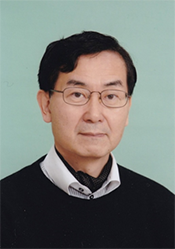
Prof. Shigeki Matsubara, is a distinguished researcher specializing obstetrics and gynecology, medical writing, and artificial intelligence. He currently serves as an Emeritus and Visiting Professor and the Director of Clinical Research Support Team Jichi (CRST) of Jichi Medical University (JMU, Japan). Prof. Matsubara used to be an Editor-in-Chief of several journals and is an academic editor of CEOG. He published more than 600 papers, with over 450 being the first-authored.
Q1: Could you briefly introduce your academic background?
Prof. Matsubara:
My journey in medicine has involved many kinds of activities, now I will have a brief look back at my long journey.
- General practitioner: I graduated from Jichi Medical University (JMU), Japan, in 1979. This university was established to address the “no-doctor areas” in Japan. I worked as the sole doctor on a remote Pacific island, managing every condition, from strokes to severe injuries. I expected to spend my life as a rural general practitioner.
- Basic scientist: In 1984, an unexpected telephone call opened a new chapter for me: I was invited to enter JMU's Postgraduate School. There, I studied the ultrastructural cytochemistry of the placenta. As a latecomer to both clinical obstetrics-gynecology and cell biology, I worked as a daytime OBGYN physician and a nighttime cell biologist. I clarified the characteristics of trophoblastic mitochondria [1], and continued cytochemical research until 2004.
- University OBGYN staff: In 1988, I became a lecturer, and in 2002, an opportunity led me to become a full professor of OBGYN at JMU. I encountered many cases of life-threatening obstetric hemorrhage, especially placenta accreta spectrum (PAS). This became the beginning of my second major step. Necessity drove me to devise various hemostatic procedures, including the Matsubara–Yano uterine compression suture [2] and the 8-step cesarean hysterectomy [3].
- Helping younger doctors to write: Becoming a professor prompted me to help my staff write papers, and thus necessity trained me to become a paper writer myself. Then came my third major step: I realized that many JMU graduates working as rural doctors had no mentors for research or writing. This resonated with my own experience—being solitary in a remote area, yearning to research but not knowing how. In 2010, I volunteered to establish the Clinical Research Support Team Jichi (CRST), which supports younger rural doctors in completing papers/research [4]. Over 15 years, CRST has supported 110 papers, and eight doctors have obtained PhDs through CRST-aided research.
- As an administrator: The fourth step came when I became Senior Vice President of JMU Hospital in 2016. I engaged in many administrative roles, and also served as president of several scientific meetings. Although these jobs were completely different from my work as a cell biologist or surgeon, new roles opened my eyes.
- Returning to an ordinary clinician and researcher: The final step saw me retire from professorship in 2020. As a visiting and emeritus professor, I continued to help younger doctors write papers. At the same time, I returned to being a front-line clinician in a rural hospital—much like my island days.
Summarizing all, a rural general practitioner, a basic scientist, an OBGYN physician innovating hemostatic techniques, and more—all these phases enriched my professional life. I fully enjoyed every step.
Q2: What advice would you give to young physicians or researchers who are just starting out in their academic careers?
Prof. Matsubara: My advice to the younger generation is simple: “Do what you can do now.” Looking back, I realize the importance of every step in my career. I never imagined that rural practice would become the cornerstone of my future. The same holds true for every stage. For example, without my experience in placentology, I could not have devised new PAS surgical techniques. Without my paper writing skills, I could not have established CRST. It seemed like a long and winding road away from academia; yet now, I realize that every step shaped me. After retiring from my professorship, I wrote over 100 first-authored papers and continue to write. The philosophy of “doing what I can do” continues to bring me lifelong joy in research and writing.
Q3: What do you think of AI application prospects?
Prof. Matsubara: While AI has significant potential, I believe that it should not be relied upon too heavily in academic writing. Since 2023, I have studied AI's role in academic writing. At first, I questioned whether my decades of experience in paper writing had become obsolete in the face of AI. However, I have now regained my confidence in human writing. AI cannot replace humans.
1)AI cannot effectively express the "human touch", such as personal anecdotes, beliefs, or famous phrases that reflect one's life. This human element—this storytelling quality—enriches academic publications. It is humans, not AI, who can create such flavor [5].
2)AI may advance, and the sophistication of prompts may improve. AI may replace humans “to some extent,” but careful human editing and judgment are mandatory. This requires independent writing skills.
3)The joy of writing comes only after one’s own struggle with the process [6]. Excessive reliance on AI means losing the lifelong joy of paper writing.
Paper writing is both an art and a fundamental human intellectual activity. Regardless of how AI advances, your own writing skill will never fade, but rather shine even more brightly.
Finally, a message from Professor Shigeki:
To the younger generation:
Embrace the future lifelong joy of your own writing. Do what you can do now. Every step you take, even if it feels like a detour, will one day connect back into a direct road. Keep walking it. Writing with your own mind and heart will bring you a joy that lasts a lifetime.
IMR Press sincerely thanks Professor Shigeki Matsubara for participating in this interview. His professional journey is a heartfelt embodiment of medical ideals and a steadfast dedication to the craft of writing. Guided by the belief in “doing what can be done now,” he has continuously explored and expanded across the realms of clinical practice, research, administration, and academic writing—ultimately shaping a medical life rich in both depth and warmth. We believe Professor Matsubara’s story will inspire and encourage many in the medical community, lighting the path forward.
The representative studies by Prof. Shigeki Matsubara mentioned in this article have now been supplemented with references for readers' further reading.
References
[1] Matsubara S, Minakami H, Sato I, Saito T. Decrease in cytochrome c oxidase activity detected cytochemically in the placental trophoblast of patients with pre-eclampsia. Placenta. 1997; 18: 255–259. https://doi.org/10.1016/s0143-4004(97)80059-8.
[2] Matsubara S, Yano H, Ohkuchi A, Kuwata T, Usui R, Suzuki M. Uterine compression sutures for postpartum hemorrhage: an overview. Acta Obstetricia et Gynecologica Scandinavica. 2013; 92: 378–385. https://doi.org/10.1111/aogs.12077.
[3] Matsubara S, Kuwata T, Usui R, Watanabe T, Izumi A, Ohkuchi A, et al. Important surgical measures and techniques at cesarean hysterectomy for placenta previa accreta. Acta Obstetricia et Gynecologica Scandinavica. 2013; 92: 372–377. https://doi.org/10.1111/aogs.12074.
[4] Matsubara S, Ohkuchi A, Kamesaki T, Ishikawa S, Nakamura Y, Matsumoto M. Supporting rural remote physicians to conduct a study and write a paper: experience of Clinical Research Support Team (CRST)-Jichi. Rural and Remote Health. 2014; 14: 2883.
[5] Matsubara S. Comparing letters written by humans and ChatGPT: A preliminary study. International Journal of Gynaecology and Obstetrics: the Official Organ of the International Federation of Gynaecology and Obstetrics. 2025; 168: 320–325. https://doi.org/10.1002/ijgo.15827.
[6] Matsubara S, Matsubara D. What's the difference between human-written manuscripts versus ChatGPT-generated manuscripts involving "human touch"? The Journal of Obstetrics and Gynaecology Research. 2025; 51: e16226. https://doi.org/10.1111/jog.16226.