


 , Quanzhang Li 1, Jiatai Li 1
1 The Second Clinical College, Guangzhou Medical University, 511436 Guangzhou, Guangdong, China
Abstract
According to the World Health Organization, the cesarean section (CS) rate is alarmingly high. As such, it is urgent to reduce the rate of CS. In this meta-analysis, we aimed to examine the effects of prenatal exercise on delivery outcomes.
A search was carried out in databases including PubMed, ProQuest, Scopus, China National Knowledge Infrastructure (CNKI), Wanfang, and Weipu, from January 1, 2020 to August 27, 2024. Two reviewers independently assessed the articles for quality and risk of bias using the Cochrane handbook. The statistical heterogeneity was determined using the Cochran’s Q test and Higgins’ I2 coefficient.
Of the 243 reviewed articles, 11 were included in this review, which contained 2553 pregnant women. The results of the meta-analysis showed that there was a statistical difference in the CS rate between the prenatal exercise group and non-prenatal exercise group (p < 0.05). There were also statistical differences in CS rate between the experimental group and the control group, with aerobic exercise combined with childbirth training (p < 0.05).
Prenatal exercise including aerobic exercise during pregnancy and prenatal training related to delivery was effective in reducing the rate of CS, and aerobic exercise combined with delivery training also reduced the rate of CS and increased the rate of natural delivery.
Graphical Abstract
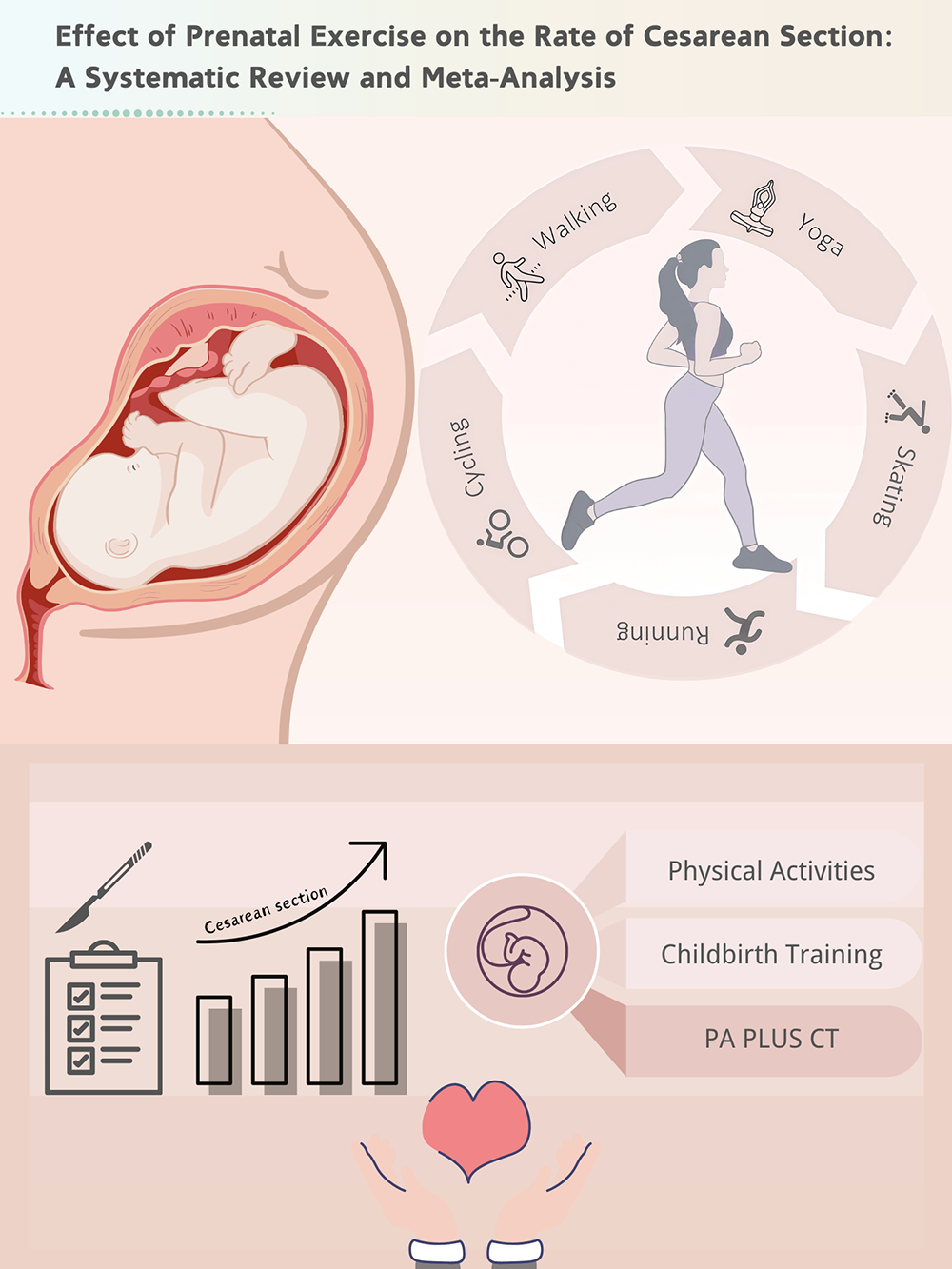
Keywords
- pregnancy
- cesarean
- prenatal care
- exercise
- training
Pregnancy is one of the most sensitive and important stages in the life of the mother, and childbirth is a major event in a woman’s life. There are many factors that affect the outcome of childbirth, including the mother’s age, gestational weeks, number of deliveries, body mass index (BMI), congenital heart disease, cardiomyopathy, history of smoking and drinking, pregnancy-induced hypertension, hyperthyroidism during pregnancy, gestational diabetes, and anemia. Cesarean section (CS) is one of the most common surgeries worldwide and is essential in complex childbirth situations. However, the overuse of CSs has brought many health problems for both mothers and infants, including postoperative complications, longer recovery periods, and increased risks for future pregnancies [1].
Globally, the rate of CSs continues to rise, especially in China, where the rate has reached 46.2%, far exceeding the World Health Organization’s recommended upper limit of 15%. This worrying trend highlights the urgent need to reduce unnecessary CSs. While CSs are necessary in certain situations, they can have many adverse effects on the health of both mothers and infants. First, CSs can lead to intraoperative complications, such as wound infections and amniotic fluid embolism. Second, recovery time after a CS is usually longer, and mothers are more prone to postpartum depression, with the physical discomfort after a CS generally being more severe than after a natural birth [2]. More importantly, CSs can affect the health of the uterus and increase the risks of future pregnancies, such as the formation of uterine scars that may lead to preterm birth (PTB) or miscarriage.
From a perinatal perspective, studies have shown that when the CS rate is below 20%, increasing the rate of CSs is associated with a decreased in f perinatal incidence and mortality rates. However, when the rate of CSs exceeds 25%, the risks of perinatal incidence and mortality increase [3]. The ideal rate of CSs should be maintained between 5% and 10%, at which point the health outcomes for both mothers and infants are the most ideal [4]. Therefore, reducing the rate of CSs has become an important issue in the global healthcare system. To this end, exploring interventions that can effectively reduce the rate of CSs, especially the effects of prenatal exercise, has become one of the hot topics of current research.
Prenatal exercise has been considered an effective strategy for improving pregnancy health and may reduce the rate of CSs. Prenatal exercise includes various forms of physical activity, such as aerobic exercises (walking, swimming), strength training (exercises using resistance bands, weightlifting), and flexibility and core strength training (yoga, Pilates, others). These exercises not only help improve maternal cardiorespiratory function and control weight gain, but also enhance muscle endurance in the pelvic and abdominal areas, preparing for childbirth. Studies have shown that combining these forms of exercise can improve maternal health, reduce pregnancy complications (such as macrosomia), and help increase the rate of natural births.
Although existing randomized controlled trials (RCTs) show that prenatal exercise may reduce the rate of CSs, due to differences in study design, sample size, and types of exercise, the existing evidence remains inconsistent. Therefore, there is a lack of systematic and comprehensive research assessments, especially the impact of integrating different forms of exercise on birth outcomes. These issues make it impossible for us to draw definite conclusions about the effects of prenatal exercise.
This study aims to investigate the impact of prenatal exercise on the rate of CSs through systematic review and meta-analysis. Specifically, the objectives of this study are: (1) to assess the impact of different types of prenatal exercise (such as aerobic exercise, strength training, yoga, others) on the rate of CSs; (2) to analyze whether prenatal exercise can reduce the incidence of CSs by improving the health status of pregnant women. Our question is: Can prenatal exercise significantly reduce the rate of CSs in pregnant women?
Existing studies have shown that prenatal exercise may play a significant role in reducing the rate of CSs. Mottola’s [5] study showed that regular aerobic exercise can effectively reduce the incidence of CSs, especially in terms of weight management and fetal position correction. Barakat et al.’s [6] research also supports this conclusion, believing that systematic physical activity during pregnancy can enhance the preparation for childbirth, reduce pregnancy complications, and thus reduce the need for CSs.
However, despite existing studies showing that prenatal exercise may effectively reduce the rate of CSs, there are still some limitations in the current literature. Indeed, most studies have small sample sizes, and there are significant differences in study design, making it impossible to compare the effects of different types of exercise consistently. In addition, many studies only focus on specific types of exercise, lacking an assessment of the combined effects of various forms of exercise.
This study will systematically evaluate the impact of prenatal exercise on the rate of CSs through meta-analysis, filling the gaps in the current literature. Unlike previous studies, this study will comprehensively analyze various forms of prenatal exercise, assess the potential impact of different types of exercise on the rate of CSs, and provide evidence-based specific recommendations, aiming to provide new ideas and strategies for reducing the rate of CSs.
To ensure the reproducibility of the study, the literature search was conducted using the following databases: PubMed, ProQuest, Scopus, China National Knowledge Infrastructure (CNKI), VIP, and Wanfang. Based on the following core considerations: ① the impact of timeliness on the quality of research, ② the progress of methodology, ③ the timeliness of policy and practice, ④ information overload and feasibility, the search period ranged from January 1, 2020, to August 27, 2024, with a language restriction to English. The search strategy has been registered in the International Prospective Register of Systematic Reviews (PROSPERO, CRD42024584877). The keywords used included, but were not limited to: “prenatal exercise”, “exercise intervention during pregnancy”, “caesarean section rate”, “randomized controlled trial”, “pregnancy outcomes”, as well as their synonyms and related combinations, such as “antenatal physical activity”, “cesarean delivery outcomes”. In addition, Boolean operators (AND, OR) were used to optimize the search formula, with specific examples as follows:
- “prenatal exercise AND pregnancy outcomes”
- “exercise intervention OR physical activity AND caesarean section rate”
- “randomized controlled trial AND antenatal physical activity”
To ensure comprehensive retrieval, we also screened the reference lists of relevant literature to obtain additional studies.
To clearly present the criteria, the inclusion and exclusion criteria are listed as follows:
Inclusion Criteria
① The study subjects are healthy pregnant women, with single pregnancy, cephalic presentation, normal pelvic and fetal positions, and no separation of the symphysis pubis;
② The intervention measures are prenatal exercises, including physical activities (such as running, swimming, yoga) and prenatal labor training (such as birth ball exercises, pelvic floor muscle training, Lamaze breathing training);
③ At least one outcome indicator is assessed, such as the rate of CS;
④ Sufficient data are reported, including sample size, mean, and standard deviation;
⑤ The study type is a RCT.
Exclusion Criteria
① The study subjects are unable to exercise due to twin pregnancy, breech presentation, placenta previa, PTB, miscarriage, cervical relaxation, separation of the symphysis pubis, other severe medical comorbidities (such as heart, kidney, liver diseases), or have a history of cognitive impairment and mental illness;
② The intervention measures are not prenatal exercises, or are not the only intervention;
③ There are no outcome indicators to assess;
④ Insufficient data are available;
⑤ The study is not a RCT (such as case reports, reviews, animal experiments, comments);
⑥ The study has issues with insufficient data, language barriers, others.
Two reviewers independently screened the literature and extracted the following data: first author, publication date, country, sample size, participant characteristics (such as age, mean, and standard deviation), intervention measures, and main outcome indicators (such as the rate of CS). If there was a disagreement, a third reviewer made the decision.
The assessment of study bias risk was conducted using the Cochrane Collaboration Risk of Bias Tool described in the Cochrane Intervention Systematic Review Manual (version 5.1.0, https://handbook.cochrane.org/), including the following seven dimensions:
① Random sequence generation (selection bias);
② Allocation concealment (selection bias);
③ Blinding of participants and personnel (performance bias);
④ Blinding of outcome assessment (detection bias);
⑤ Incomplete outcome data (attrition bias);
⑥ Selective reporting (reporting bias);
⑦ Other biases (such as funding support and conflicts of interest of researchers).
Each risk of bias was assessed as “low risk”, “unclear”, or “high risk”.
Data analysis was performed using Review Manager 5.4 software
(https://revman.cochrane.org/). The significance of the p-value is
defined as if p
The Q test was used to determine the significance of heterogeneity, with
p
The I2 statistic quantitatively assessed the degree of heterogeneity:
I2
25%
I2
For studies with high heterogeneity, a random-effects model was used for
analysis to reduce the impact of inter-study differences. For missing data,
priority was given to using full data analysis; if the missing proportion was
small (
The search process followed a systematic approach, resulting in a total of 243 articles initially retrieved from 6 databases (PubMed, ProQuest, Scopus, CNKI, Wanfang, and Weipu). After removing 110 duplicates using Endnote (X9, Clarivate Analytics, Seattle, WA, USA), 133 unique articles remained. During the title and abstract screening, 113 articles were excluded for the following reasons: they were irrelevant to prenatal exercise or cesarean delivery outcomes, focused on unrelated topics (e.g., non-pregnant populations), or lacked primary research data.
The full-text of 20 remaining articles was reviewed in detail. At this stage, 9 articles were excluded based on the following criteria:
① Non-randomized studies: 5 articles did not use RCT designs.
② Inadequate intervention details: 2 studies did not provide sufficient information on the prenatal exercise protocols used.
③ Lack of relevant outcomes: 2 studies did not report CS rates or comparable delivery outcomes.
Ultimately, 11 RCTs meeting all inclusion criteria were included in the meta-analysis [7, 8, 9, 10, 11, 12, 13, 14, 15, 16, 17]. These studies involved a total of 2553 pregnant women, with 1152 in the exercise groups and 1401 in the control groups (Table 1, Ref. [7, 8, 9, 10, 11, 12, 13, 14, 15, 16, 17]).
| Author | Year | Country | Age ( |
Sample | Outcome | ||
| Experimental group | Control group | Experimental group | Control group | ||||
| Laura Baena-García et al. [7] | 2023 | Spain | 33.1 |
33.1 |
50 | 86 | Gestational age (GA) at birth, duration of labor, placental and neonatal weight and type of birth |
| Madigan J. Raper et al. [8] | 2021 | USA | 30.7 |
29.4 |
58 | 67 | GA, risks of (PTB |
| María del Carmen Carrascosa et al. [9] | 2021 | Spain | 31.1 |
31.5 |
145 | 141 | Principal outcome: use of epidural analgesia during labor. Other outcomes: use of epidural analgesia before 6 cm cervical dilation, labor pain, type of delivery, time of active labor, episiotomy or perineal tear, and induction of labor. |
| Natalia Misan et al. [10] | 2022 | Poland | 30 |
31 |
182 | 65 | The term of delivery, duration of the first and the second stage of labor, perineal excision, oxytocin administration, the other modes of deliveries, fetal weight or length and Apgar score in the first and in the fifth minute |
| Raquel Rodríguez-Blanque et al. [11] | 2020 | Spain | 34.74 |
33.47 |
65 | 64 | Spontaneous delivery, the Apgar score at five minutes, first-trimester BMI, non-spontaneous and CS delivery, with 95% confidence intervals |
| Samantha M. McDonald et al. [12] | 2022 | USA | 30.5 |
29.4 |
131 | 61 | Occurrence of non-elective cesarean births, birth weight (kg; continuous), preterm ( |
| Virginia Y. Watkins et al. [13] | 2021 | USA | 29.93 |
28.16 |
203 | 608 | Primary outcome: duration of the second stage of labor. Secondary outcomes: duration of the active stage, prolonged first and second stage, mode of delivery, rates of second stage cesarean delivery, operative vaginal delivery, severe perineal lacerations, and postpartum hemorrhage |
| Yogyata Wadhwa et al. [14] | 2020 | India | 26.10 |
25.80 |
76 | 76 | The need for labor induction, self-perceived pain and perceived exertion during labor, duration and nature of the delivery, newborn infant weight, maternal weight gain, history of back pain, and postpartum recovery |
| Zhou Liqiong [15] | 2022 | China | 29.62 |
29.58 |
50 | 50 | Natural delivery rate, duration of labor |
| Peng Jianmei et al. [16] | 2021 | China | 26.26 |
24.13 |
100 | 100 | Mode of delivery, reasons for CS, duration of labor, postpartum hemorrhage, rate of perineal circumcision, neonatal body weight |
| Chen Tingting [17] | 2024 | China | 28.72 |
28.51 |
100 | 100 | Mode of delivery, duration of labor, pelvic muscle force, quality of life |
GA, gestational age; PTB, preterm birth; BW, birthweight; CS, cesarean section; BMI, body mass index.
This stepwise filtering process is illustrated in the updated Preferred Reporting Items for Systematic reviews and Meta-Analyses (PRISMA) flow diagram (Fig. 1), providing a clear visual summary of the study selection stages.
 Fig. 1.
Flow diagram of the study. RCTs, randomized controlled trials.
The risk of bias tool was used to display detailed information on the quality assessment of the studies. Of all the selected studies, 5 described the way in which randomization was generated and were rated as low risk. Another 6 studies only mentioned the method of randomization without specifying the way in which randomization was generated, and were rated as unclear. A small number of studies had poor blinding of study participants and patients, and poor blinding of outcome measures. Overall, all included studies were considered to be at low risk of bias (Fig. 2).
 Fig. 2.
Risk of bias.
The results of the study showed significant heterogeneity between studies
(I2 = 68%, p
 Fig. 3.
Forest plot of CS rate. M-H, Mantel-Haenszel; 95% CI, 95% confidence interval.
All studies were divided into two subgroups according to the type of exercise: physical activity during pregnancy (e.g., running, swimming, yoga, others) and antenatal labor training (e.g., birthing ball exercises, pelvic floor exercises, Lamaze breathing exercises, others), and examined whether a combination of physical activity and antenatal labor training still reduces the rate of CS.
The results showed that there was a statistically significant difference in the
cesarean delivery rate between the exercise and control groups within the
subgroup that performed physical activity [RR = 0.71, 95% CI:
0.54–0.92, p
 Fig. 4.
Forest plot of the different exercise types.
 Fig. 5.
Forest plot of single or combined exercise type.
According to the recommendations of the Cochrane Handbook, if the funnel plot is used for publication bias evaluation, the number of studies included in the meta-analysis of this indicator should not be less than 10 papers. Otherwise, because the number of studies included in this indicator is too small, the testing ability of the funnel plot will be reduced. As such, the truth of asymmetry cannot be judged. A total of 11 studies were included in this meta-analysis, and all of them were analyzed by publication bias funnel plot. The results showed more symmetry (Fig. 6), suggesting that it is less likely to have bias.
 Fig. 6.
Funnel plot of publication bias.
The meta-analysis included 11 RCTs with a total of 2553 pregnant women, 1152 in
the exercise group and 1401 in the control group. The results showed that
prenatal exercises significantly reduced the rate of CSs compared to the control
group (RR: 0.66, 95% CI: 0.52–0.85, p
 Fig. 7.
Effect of prenatal exercise on CS rates.
Sensitivity analyses were conducted by sequentially removing individual studies
to assess their impact on overall heterogeneity and pooled effect sizes. The
results of meta-analysis after both eliminating Virginia Y. Watkins et
al. [13] and Yogyata Wadhwa et al. [14] showed that the heterogeneity
decreased to 0% (RR: 0.68, I2 = 0%, p
 Fig. 8.
Forest plot of sensitivity analysis results.
As society develops and health awareness increases, prenatal care technology has received increased attention. Medical professionals focus on providing systematic, comprehensive, scientific, and effective prenatal care. Among these advancements, prenatal exercise has become a key component, attracting a great deal of research interest, both domestically and internationally. However, in China, due to traditional beliefs emphasizing rest and nutritional supplementation rather than physical activity, the use of prenatal exercise remains insufficient. Many families worry that exercise could lead to premature birth or miscarriage. Relevant studies indicate that prenatal exercise is not common in China due to widespread safety concerns [18]. Of the 11 studies included in this meta-analysis, only 3 are from China. The lack of knowledge about appropriate exercise methods and intensity has exacerbated this hesitation. Moreover, despite the improvement in living standards enhancing public concern for pregnant women, families often discourage physical activity out of fear, preferring rest to ensure the health of the baby. This cultural resistance further limits the adoption of prenatal exercise programs. At the same time, excessive nutritional intake during pregnancy often leads to overweight mothers. As a reliable option for childbirth, CS has become increasingly common, masking the potential long-term negative effects on both the mother and the baby. With the evolution of medical technology and health concepts, questions about the safety and effectiveness of prenatal exercise are receiving increasing attention. Over time, perspectives have shifted from advocating rest to recognizing the safety of aerobic exercise, and recently there has been a call for scientific, personalized prenatal exercise plans [19].
Each pregnancy is influenced by a variety of factors, including the woman’s physical health, reproductive age, lifestyle, living environment, and genetic predisposition. With the improvement of living standards and the relaxation of China’s two-child policy, the average age of childbearing has significantly increased. A study has shown [20] that older mothers, compared to younger ones, face a higher risk of pregnancy complications, such as gestational hypertension and gestational diabetes. These risks not only complicate the delivery process, but also increase the likelihood of adverse outcomes, including low birth weight (LBW) and macrosomia. Furthermore, changes in lifestyle, such as excessive caloric intake and reduced physical activity, exacerbate the problem of weight gain in pregnant women. Given the increasing complications associated with excessive weight, including dystocia and postpartum obesity [21], weight management during pregnancy has become a key concern for healthcare providers. Traditional Chinese beliefs generally discourage physical activity during pregnancy and instead encourage increased nutritional intake. This cultural mindset leads to uncontrolled weight gain, further increasing the risk of CSs and other complications [22]. Weight gain is closely related to pregnancy outcomes. Excessive weight can lead to meconium aspiration syndrome, macrosomia, and childhood obesity. The risks faced by mothers include gestational diabetes, hypertension, miscarriage, and persistent postpartum obesity. When combined with other conditions, such as immune diseases and viral hepatitis, these factors significantly increase the likelihood of CS. The prevalence of hypertension in China is estimated to be 5%–10% [23], while gestational diabetes affects up to 21.8% of pregnancies [24]. Addressing these factors is crucial for improving maternal and child health outcomes.
Prenatal exercise effectively alleviates many factors that lead to CSs, including excessive weight gain, macrosomia, and psychological stress. Excessive weight gain is significantly associated with cesarean deliveries [25]. By promoting controlled weight gain, prenatal exercise reduces the risk of fetal macrosomia, a major cause of dystocia. Activities such as walking, yoga, and swimming help improve cardiorespiratory function, enhance the immune system, and reduce pregnancy complications such as hypertension and diabetes, which are common risk factors for CSs. Targeted exercises for the abdominal and pelvic muscles enhance physical preparation for delivery. Stronger pelvic muscles contribute to a smoother childbirth and reduce the risk of complications associated with prolonged labor. In addition, prenatal exercise helps to alleviate stress and anxiety by regulating emotional health, giving women more confidence in vaginal delivery. This psychological resilience is crucial for overcoming fears and pressures associated with CSs. From a physiological perspective, prenatal exercise aids in cervical ripening and dilation, which is essential for promoting natural delivery. Certain positions, such as sitting cross-legged or squatting, promote optimal fetal positioning and reduce breech presentation [26]. Correct fetal positioning is a key determinant for successful vaginal delivery. Furthermore, studies have shown that prenatal exercise improves newborn Apgar scores, an important indicator of neonatal health, highlighting its comprehensive benefits for maternal and child outcomes.
Throughout history, diverse cultures have developed unique understandings and practices of pregnancy care. In traditional medical systems, such as traditional Chinese medicine, it is emphasized that pregnant women should exercise moderately to reconcile qi and blood, as well as promote fetal development. These traditional ideas and practices, although in different forms, all reflect the concern and adjustment of the body state of pregnant women, and provide rich cultural soil and historical reference for modern prenatal movement. Over time, traditional wisdom has been preserved and scientifically validated and integrated under the framework of modern medicine. In today’s era of globalization and rapid science and technology advancement, prenatal exercise has undergone significant innovation. From yoga, pilates, water birth preparation exercises, to the use of smart wearable devices for personalized exercise monitoring, the integration of technology elements not only makes prenatal exercise safer and more efficient, but also meets the requirements of pregnant women for diverse and personalized experiences. This innovative practice not only reflects the in-depth exploration of modern life science, but also shows the flexibility and creativity of culture in adapting to the pace of modern life. The cultural perspective of prenatal movement is also reflected in the respect and care for the individual differences of pregnant women. Each pregnant woman’s physical condition, psychological state and cultural background are different, so the design and implementation of prenatal exercise should fully consider these differences and provide personalized guidance and support. This includes adjusting the intensity and type of exercise according to the physical conditions of pregnant women, as well as through group activities, psychological counseling and other ways to help pregnant women establish a positive attitude and relieve anxiety and stress during pregnancy. This individual-centered care concept not only promotes the physical health of pregnant women, but also provides a solid guarantee for their mental health.
① Take a walk:
Walking is a simple and effective prenatal exercise that can help pregnant women strengthen their heart and lung functions, as well as improve blood circulation. It is recommended that pregnant women take a walk 1 hour after meals in the morning and evening, lasting about 30 minutes each time.
② Yoga:
Yoga can help pregnant women relax, enhance the flexibility of the body, while helping to adjust the breathing, reduce the pain during childbirth Pregnant women should choose yoga movements specially designed for pregnant women, and practice under the guidance of professional coaches.
③ Swimming:
Swimming is a low-impact exercise that can help pregnant women reduce stress on their bodies while building cardiorespiratory function and muscle strength. Pregnant women should choose a swimming pool with appropriate water temperature and clean water quality when swimming, and practice under the supervision of professionals.
④ Climbing stairs:
Climbing stairs can exercise the thigh and hip muscles of pregnant women, help the baby into the basin, speed up the first stage of labor. However, pregnant women should pay attention to safety when climbing the stairs, avoid overwork, hold the handrail, and rest whenever they feel tired.
⑤ Squats:
Squats can help pregnant women exercise thigh and hip muscles, enhance the ability to contract pelvic muscles, and help natural delivery. Pregnant women should pay attention to strength and time when squatting, avoid excessive force, or exercise for long periods of time.
① Empty bladder:
Before performing prenatal exercise, pregnant women should ensure that the bladder is empty to avoid discomfort during exercise.
② Dress comfortably:
Pregnant women should choose loose and comfortable sports clothing and avoid wearing tight or restrictive clothing.
③ Avoid strenuous exercise:
Pregnant women should avoid high-intensity exercise, such as running or jumping, to avoid adverse effects on the fetus.
④ Pay attention to safety:
During prenatal exercise, pregnant women should be safe to avoid falls or injuries. When climbing stairs, squats and other exercises, the mother should hold the handrail or the wall to maintain balance.
⑤ Consult doctors:
Before starting prenatal exercise, pregnant women should consult their doctors to understand whether their physical condition is suitable for exercise. For pregnant women with high blood pressure, diabetes and other diseases, exercise should be carried out under the guidance of doctors.
This systematic review stands out for its comprehensive literature search, timeliness, and methodological rigor. The search covered multiple databases, including PubMed, ProQuest, Scopus, CNKI, VIP, and Wanfang, using both subject-specific and free-text terms to ensure the inclusion of the latest research. In addition, the studies included are representative, involving samples from different countries (e.g., China, United States, Europe, others), and various types of prenatal exercises (e.g., aerobic exercise, yoga, swimming, others), providing a broader background and practical experience. Compared to earlier meta-analyses that focused on observational indicators, this approach provides more actionable insights, especially in exploring how prenatal exercise affects pregnancy outcomes, offering strong support for clinical practice.
Firstly, there is significant variability in the quality of the studies included. Many lack clear details on randomization, blinding, and allocation concealment, which may introduce potential biases. Secondly, the meta-analysis shows high heterogeneity among studies, which may be due to differences in geographic regions, healthcare systems, and medical standards. For example, some areas may be more inclined to use traditional prenatal rest methods, while others are more proactive in promoting prenatal exercise. Additionally, although most studies involve common types of prenatal exercise, there are differences in the specific ways of intervention (e.g., frequency, intensity, duration of exercise, etc.), which may affect the generalizability of the conclusions. In terms of the robustness of the studies, this review screened high-quality RCTs from the past five years, and the studies included have good diversity and representativeness in terms of sample size, type of intervention, and assessment indicators. However, many studies were excluded due to not meeting the quality requirements or lacking key information. Especially in some low-quality studies, there was insufficient detail on randomization or blinding, which may have affected the accuracy and reliability of the final results. Lastly, although most studies have positively evaluated the impact of prenatal exercise on CS rates, a few studies have failed to find significant effects, which may be related to study design, sample selection, or other uncontrolled confounding factors. Therefore, further high-quality studies, especially multicenter, long-term follow-up studies, are still necessary to confirm the long-term effects of prenatal exercise on different pregnancy outcomes.
In summary, prenatal exercise not only demonstrates positive effects statistically but also holds significant clinical implications. By enhancing the strength and endurance of pregnant women, prenatal exercise significantly improves overall comfort and efficiency during childbirth, reducing the need for CSs. Additionally, moderate exercise contributes to the normal positioning of the fetus and, by promoting cervical ripening and dilation, shortens the duration of labor. These physiological effects make natural childbirth more feasible, thereby reducing the risks and potential complications associated with CSs. However, despite the evident benefits of prenatal exercise for the health of both the mother and the fetus, excessive exercise can lead to a series of adverse outcomes, including fatigue, overexertion, and even the potential risk of PTB. Therefore, pregnant women should tailor their exercise plans according to their own health status, stage of pregnancy, and medical advice. Healthcare providers should pay attention to individual differences and provide customized exercise programs for each pregnant woman to ensure the safety and health of both mother and baby. For healthcare providers, encouraging prenatal exercise can not only improve the physical fitness and readiness for childbirth of pregnant women, but also reduce health issues during the postpartum recovery period, such as postpartum obesity and long-term health risks. Therefore, healthcare providers should actively promote the benefits of moderate exercise in prenatal care and educate pregnant women on how to exercise scientifically and safely. Therefore, although the benefits of prenatal exercise are widely recognized, there is a need for more high-quality, RCTs, and multicenter studies to further validate its long-term effects and optimal exercise regimens.
All data points generated or analyzed during this study are included in this article and there are no further underlying data necessary to reproduce the results.
QX, QL, and JL contributed to the conception and design of the study, acquisition of data, and interpretation of results. QL performed the statistical analyses. QX drafted the paper, and all authors approved the final version for publication after critical revision for important intellectual content. All authors contributed to editorial changes in the manuscript. All authors read and approved the final manuscript. All authors have participated sufficiently in the work and agreed to be accountable for all aspects of the work.
Not applicable.
The authors would like to thank BioGDP for supporting the Graphical Abstracts.
This research received no external funding.
The authors declare no conflict of interest.
Supplementary material associated with this article can be found, in the online version, at https://doi.org/10.31083/CEOG26582.
References
Publisher’s Note: IMR Press stays neutral with regard to jurisdictional claims in published maps and institutional affiliations.