

 , Bernardo Moreno-Jiménez 1, Luis Manuel Blanco-Donoso 1
1 Facultad de Psicología, Universidad Autónoma de Madrid, 28049 Madrid, Spain
Abstract
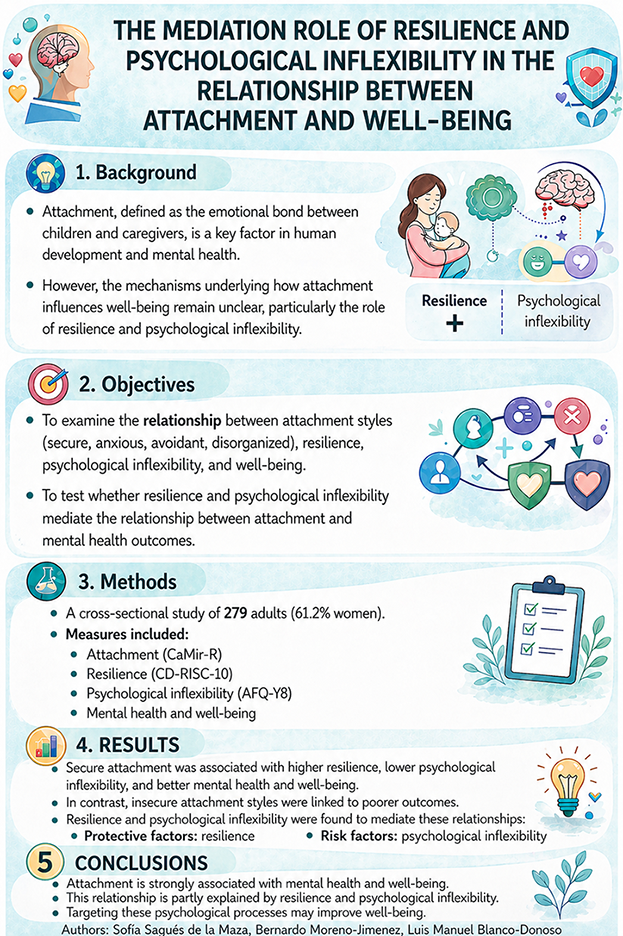
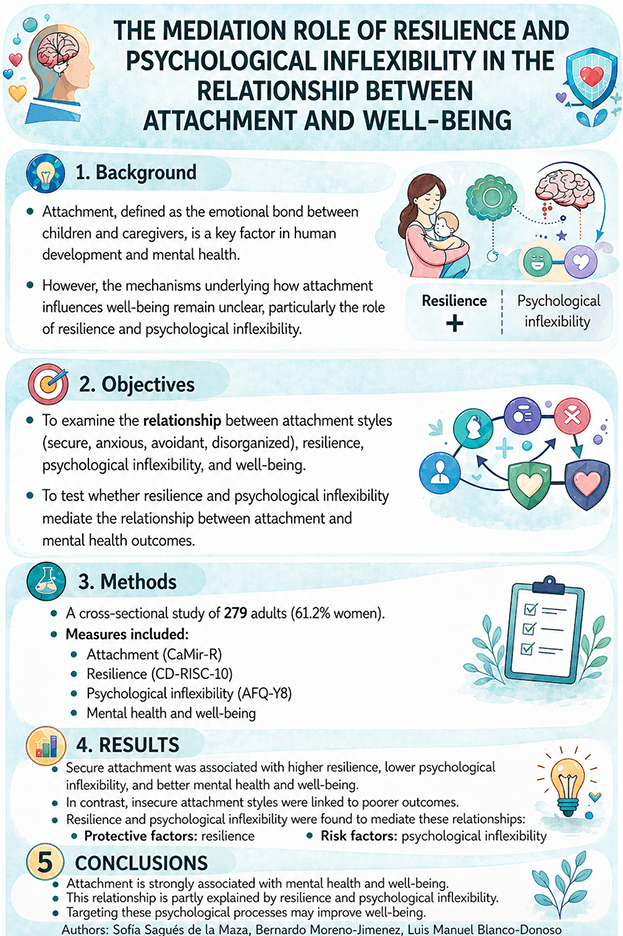
Attachment, as the emotional bond between children and primary caregivers, plays a crucial role in human development and has been linked to well-being in adulthood. However, the mechanisms underlying this relationship remain unclear.
This cross-sectional study examined whether resilience and psychological inflexibility mediate the relationship between attachment styles and well-being. A total of 279 adults (61.2% women) completed the CaMir-R (attachment), the Connor-Davidson Resilience Scale, the Fusion and Avoidance Questionnaire, and measures of mental health and well-being. Data were analyzed using the PROCESS macro for SPSS.
Findings indicated that attachment style directly influences mental health and well-being. In addition, these relationships were mediated by resilience and psychological inflexibility, highlighting their role as protective and risk factors.
Attachment is directly related to well-being, but resilience and psychological inflexibility play a mediating role. These findings suggest that interventions targeting these psychological strengths could enhance mental health. Results are discussed within attachment theory, underscoring practical implications for promoting strengths from early developmental stages.
Graphical Abstract
Keywords
- attachment styles
- resilience
- psychological inflexibility
- mental health
- well-being
The integrative study of key concepts in the field of psychology is gaining increasing interest (Salande and Hawkins, 2016). Therefore, this study seeks to explore the potential relationship between attachment styles, resilience, and psychological inflexibility, as well as their connection to well-being and mental health. The aim is to establish a theoretical model by examining mediation models that analyze whether the relationship between attachment styles (i.e., secure, anxious, avoidant, and disorganized) and various well-being variables (i.e., mental health, psychological well-being, and general well-being) is mediated by individuals’ resilience and psychological inflexibility.
Attachment theory is a widely developed and accepted framework in the field of psychology (Bowlby, 1969). It encompasses aspects related to personality, emotions, love and loss, development, and relationships (Fraley and Shaver, 2021). Guerrero and Barroso (2019) define attachment as “an intense emotional bond, bidirectional but asymmetric, between a child and their parents or primary caregivers”.
In the 1930s, Bowlby worked in a school with maladjusted children. His observations led him to assert that early relationships between a child and their parents play an essential role in human development (Marrone, 2009). A poor early relationship can have negative consequences on behavior and development, not only in childhood but also in adulthood (Fraley and Shaver, 2021). The emotional connection between a child and their primary caregivers is crucial for physical and emotional development (Hernández, 2017). Early relationships form the foundation for the development of internal working models in children, which influence how they view themselves and the world, what they expect from others, and how they will relate to others throughout life (Laurenceau et al, 1998; Vowels et al, 2023). If the attachment figure is responsive and meets the child’s needs, the child will learn that their caregiver is trustworthy and capable of providing safety and protection, making the child feel accepted and loved. Conversely, if a child grows up without the care and attention of their attachment figures, they may feel rejected and unloved—not only by their primary caregivers but also by others—potentially affecting future relationships (Shibue and Kasai, 2014). Therefore, the loss of an attachment figure in childhood can lead to poor adjustment in future behavior (Bowlby, 1980).
While Bowlby developed the theoretical framework of attachment theory, it was his colleague Mary Ainsworth who studied in detail the various attachment behaviors based on the type of bond formed between a child and their attachment figure (Fraley and Shaver, 2021). Specifically, Ainsworth and her students (1978) created what is known as the “Strange Situation”, a technique through which Ainsworth identified three attachment styles: secure, ambivalent-resistant (or anxious), and avoidant. According to Ainsworth’s studies, 60% of children displayed secure attachment, 20% ambivalent-resistant, and 20% avoidant. Subsequently, Mary Main and Judith Solomon (1990) introduced a fourth style: disorganized attachment. Thus, attachment styles were categorized into secure and insecure, with the latter comprising anxious, avoidant, and disorganized styles.
The development of secure attachment is necessary for establishing a secure base from which the child can explore their environment (Hernández, 2017). Parents who foster secure attachment are physically and psychologically available, attuned to their child’s emotions, and responsive to their emotional needs (Guerrero and Barroso, 2019). When parents provide a secure base, they promote healthy self-esteem in the child, enabling them to feel safe enough to explore and develop in a healthy way—physically, cognitively, and emotionally. In turn, strong emotional and cognitive development is essential for using tools to cope with stress and adverse situations in the future (Salande and Hawkins, 2016; Shibue and Kasai, 2014; Vowels et al, 2023).
The development of a strong emotional bond in childhood can be key to building resilience (Marrone, 2009; Shibue and Kasai, 2014; Uriarte, 2005). According to Rutter (1990), This may be attributed to the role of secure attachment in facilitating the development of self-esteem, autonomy, and self-efficacy—key components for coping with stress and adversity (Uriarte, 2005). Resilience has been defined by various authors as “The ability of individuals to withstand adversity, adapt, and experience personal growth despite exposure to high levels of stress and severe hardship.” (Suriá Martínez, 2016, p. 116). “This capacity is not exceptional but rather a universal human characteristic manifesting across diverse contexts.” (Vanistendael and Lecomte, 2002). Most researchers agree that resilience is a dynamic process in which the interaction between a person and their environment is crucial to its development (Madariaga, 2014). Boris Cyrulnik (1989) used the metaphor of a woven fabric to illustrate that resilience is interlaced with different elements. What enables the weaving of this fabric is being in contact with “the other”—a friendly gaze, respectful and attentive listening, and the support of another person—which collectively help initiate the process of resilience (Martínez and Vásquez-Bronfman, 2006). According to Benony (1998), a solid base of security enables good cognitive development, which in turn allows for the integration and understanding of lived experiences. This base is necessary for both development and autonomy, and as previously mentioned, autonomy and self-efficacy are necessary for resilience. Human beings are better able to develop their potential when they feel they have one or more reliable people to turn to in times of difficulty (Calle, 2012). In this manner, secure attachment serves a facilitative role in fostering the development of resilience (Rubio and Puig, 2015). Studies such as that by Karreman and Vingerhoets (2012) found that resilience is directly associated with secure attachment and inversely related to anxious and disorganized attachment styles. Furthermore, they found that all attachment styles had an indirect effect on well-being through resilience and cognitive reappraisal. However, contrary to expectations, they also found that avoidant attachment was directly associated with greater resilience and, consequently, indirectly with higher levels of well-being—though they did not clarify the reasons for this finding.
Alongside resilience, another strength that promotes adaptation to one’s environment and has generated considerable scientific interest in recent years is psychological flexibility. Psychological flexibility is the ability to focus on the present moment and, depending on the opportunities that the situation presents in relation to one’s values and goals, take action toward those values—even in the presence of negative internal events (e.g., unpleasant thoughts, emotions, sensations, or memories; Hayes, 2016). Conversely, individuals with high psychological inflexibility tend to engage regularly and consistently in behaviors aimed at altering or avoiding negative internal experiences, even at the cost of moving away from their personal values and goals. Thus, psychological flexibility emphasizes acceptance of unpleasant events over avoidance as a way to change the context of the experience and, in doing so, change the emotional experience itself (Salande and Hawkins, 2016).
Some studies have investigated the relationship between attachment and psychological flexibility (Hadžić and Kantar, 2021; Salande and Hawkins, 2016), although they have focused exclusively on anxious and avoidant attachment styles. Salande and Hawkins (2016) reported an inverse relationship between psychological flexibility and anxious attachment, suggesting that greater flexibility may be associated with lower levels of attachment-related anxiety. As noted by Calvo et al. (2022), people with insecure attachment tend to use experiential avoidance (i.e., attempting to avoid unpleasant thoughts, sensations, and emotions) as a regulatory strategy, while individuals with secure attachment may employ more functional coping strategies when dealing with unpleasant situations (Mikulincer and Shaver, 2017). Based on this approach, it would be expected that psychological flexibility is more developed in individuals with secure attachment (Hadžić and Kantar, 2021).
Psychological flexibility could also function as a mediating variable in the relationship between attachment styles and well-being. This is evidenced in the study conducted by Hadžić and Kantar (2021), in which insecure attachment was associated with greater negative affect through its relationship with lower psychological flexibility. However, as far as we know, this is the only study that has examined this relationship, and the focus was only in anxious and avoidant attachment styles. Therefore, the mediating role of psychological flexibility considering other attachment styles remains unknown.
The aims of this study are, on the one hand, to examine the relationship between attachment styles (i.e., secure, anxious, avoidant, and disorganized), resilience-related variables (i.e., resilience and psychological inflexibility), and well-being (i.e., mental health, psychological well-being, and general well-being); and on the other hand, to analyze whether resilience and psychological inflexibility may function as mediators in the relationship between attachment styles and well-being.
Although the constructs of psychological flexibility and resilience may be related, they represent different aspects of psychological functioning. Therefore, it is worth analyzing the unique and relevant roles they may have in explaining mental health and well-being, in interaction with individual differences in attachment styles. People with high psychological flexibility are better endowed with to deal with adversity because they are more capable of accepting negative emotions, handling negative thoughts, and acting according to their values—even when facing unpleasant situations (Jo et al, 2024; Pakenham et al, 2024). This ability allows them to interact differently with stressors and, at the same time, build new behavioral repertoires aligned with what they value (Gloster et al, 2017). Thus, psychological flexibility is a key factor in the development of resilience (Jo et al, 2024). Both constructs reflect and enable adaptive functioning and the capacity to effectively navigate challenging situations (Jo et al, 2024; Kashdan and Rottenberg, 2010).
Taking all the above into account, the expected findings of this study are that individuals with a secure attachment style will report higher levels of well-being compared to those with avoidant, anxious, or disorganized attachment styles. This expectation is based on the idea that their secure base provides more tools for mental and emotional development. Likewise, it is expected that both resilience and psychological inflexibility will mediate the relationship between attachment styles and well-being. Specifically, it is anticipated that secure attachment will be associated with greater well-being, partly due to its link with higher resilience and lower psychological inflexibility. In contrast, individuals with anxious attachment styles are expected to show lower levels of well-being, partly because of their association with lower resilience and higher psychological inflexibility.
The final sample comprised 279 adult participants, including 108 men and 171 women, the majority of whom (92.8%) held Spanish nationality. Participants ranged in age from 18 to 70 years, with the most frequently represented age group being 50 to 59 years (28.7%). In terms of educational attainment, 55% of participants had completed undergraduate or equivalent university-level studies, 24% held a master’s degree, 16% had completed secondary education (high school), and 5% had earned a doctoral degree. Regarding marital status, 53% were married, 39.5% were single, and 7.5% were divorced. Additionally, 53.8% of the participants reported having one or more children, with an average of two children per individual.
To assess attachment, we used the Spanish version of the CaMiR-r
questionnaire, validated by Balluerka et al. (2011). This scale consists of
32 items (e.g., “My loved ones have always given me the best of themselves”),
using a Likert-type response format (1 = Strongly disagree; 5 = Strongly agree).
The scale is composed of seven dimensions, five of which were used to determine
different attachment styles. The dimensions used were the following: (I)
Security: Availability and support from attachment figures: This dimension
reflects feeling loved and able to trust in attachment figures, knowing they were
available when needed. It assesses Secure Attachment. (II) Family
concern and Parental interference dimensions assess Anxious or
Preoccupied Attachment. The former refers to intense separation anxiety from
loved ones and an excessive current concern with attachment figures. The latter
focuses on the perception of having been overprotected, experiencing fear of
abandonment, and having been a fearful child. (III) Self-sufficiency and
resentment toward parents evaluates Avoidant Attachment, referring to the
rejection of emotional dependence and resentment toward loved ones. (IV)
Childhood trauma measures Disorganized Attachment, referring to
experiences of unavailability, violence, and threats from attachment figures
during childhood. The scale has shown adequate psychometric properties in terms
of reliability and validity. In validation studies, Cronbach’s alpha for the five
dimensions ranged from 0.60 to 0.85. In this specific study, reliability scores
were:
Resilience was assessed using the shortened version of the
Connor-Davidson Resilience Scale (CD-RISC-10; Connor and Davidson; 2003), which includes 10 items (e.g., “I can adapt to change”) rated on a
Likert-type scale (0 = Not true at all; 4 = True nearly all the time). The
Spanish version was validated by Notario-Pacheco et al. (2011). This scale
has demonstrated good psychometric properties, with a reported reliability of
To assess psychological inflexibility, we used the Avoidance and Fusion
Questionnaire for Youth (AFQ-Y8), validated in Spanish by García-Rubio et
al. (2020). This instrument has been used in both adolescent and adult
populations. It includes eight items (e.g., “My life won’t be good until I feel
happy”), with responses ranging from 0 (Not at all true) to 4 (Completely true).
This scale has shown adequate reliability (
Mental health was assessed using the General Health Questionnaire
(GHQ)-12 developed by Goldberg and Williams (1988). This scale measures
general self-perceived mental health through 12 items—six positively worded
(e.g., “Have you been able to concentrate on what you’re doing?”) and six
negatively worded (e.g., “Have you felt worthless?”). We used a 4-point Likert
scale for participants’ responses. For positive items, the scale ranged from
“better than usual” to “much worse than usual”; for negative items, from
“not at all” to “much more than usual”. Positive items were recoded to align
with the negatively worded ones, allowing for the calculation of an overall index
of Reduced mental health. The scale has demonstrated good psychometric
properties in terms of reliability (
This variable, used to assess psychological well-being, corresponds to one of
the six subdimensions of Ryff’s Psychological Well-Being Scale (1989).
We used the Spanish version adapted by Díaz et al. (2006). The subscale
includes six items (e.g., “I have been able to build a home and lifestyle to my
liking”), rated on a Likert scale from 1 (Strongly disagree) to 6 (Strongly
agree). This subdimension was selected because it concisely reflects individuals’
psychological well-being through their ability to adapt to their environment,
which is highly relevant to our study variables. Validation studies of this scale
show adequate reliability (
To assess general well-being, we used the World Health Organization-5
(WHO-5) Well-Being Index developed by the WHO. This scale measures subjective
well-being with five items (e.g., “I have felt calm and relaxed”) rated from 0
(At no time) to 5 (All the time). The scale has shown adequate levels of validity
and reliability (
First, this study received a favorable ethical report from the Research Ethics Committee of the institution affiliated with the authors (blinded for peer review) (reference CEI-115-2283).
Participants accessed the study through an electronic link shared via email and social media. The sampling method used was the snowball sampling technique, a non-probabilistic method that begins with a small group of participants meeting the inclusion criteria and asking them to refer or connect others with similar characteristics. This process continues recursively as each new participant refers additional individuals.
Before starting the survey, participants completed an informed consent form. They were informed about the organization responsible for the study and that all data would remain confidential, in compliance with the Spanish Organic Law 3/2018 on the Protection of Personal Data and the Guarantee of Digital Rights. Participants were also informed that the data would be used exclusively for research purposes. After giving consent, participants provided demographic information and then completed the questionnaires described above. Participation took approximately 15–20 minutes.
Data analysis was conducted using IBM SPSS Statistics, Version 29 (IBM Corp., Armonk, NY, USA). Initially, correlation analyses were performed to examine the relationships between the different attachment styles (i.e., secure, anxious, avoidant, and disorganized), resilience variables (i.e., resilience and psychological inflexibility), and well-being variables (i.e., reduced mental health, psychological well-being, and general well-being).
In the next step, mediation analyses were conducted to determine whether the relationships between attachment styles, reduced mental health, psychological well-being, and general well-being were mediated by resilience and psychological inflexibility. To test these hypotheses, the “PROCESS” macro developed by Hayes (2013) was used as an SPSS plugin. This macro applies a resampling method known as bootstrapping, which estimates the sampling distribution of a statistic through repeated random resampling of the available data. This distribution is used to calculate p-values and confidence intervals. In this study, 5000 bootstrap samples were used. If the value zero does not fall within the 95% confidence interval, it can be concluded that the indirect effect is significantly different from zero, indicating the presence of a mediation effect.
As shown in Table 1, secure attachment was positively correlated with resilience, psychological well-being, and general well-being. Additionally, it was negatively correlated with psychological inflexibility and reduced mental health.
| Variables | M | SD | 1 | 2 | 3 | 4 | 5 | 6 | 7 | 8 | 9 | |
| 1. Secure Attachment | 4.14 | 0.85 | 0.88 | 1 | ||||||||
| 2. Anxious Attachment | 2.72 | 0.71 | 0.73 | –0.081 | 1 | |||||||
| 3. Avoidant Attachment | 2.87 | 0.81 | 0.57 | –0.469** | 0.314** | 1 | ||||||
| 4. Disorganized Attachment | 2.17 | 1.03 | 0.82 | –0.667** | 0.246** | 0.505** | 1 | |||||
| 5. Resilience | 2.76 | 0.62 | 0.84 | 0.290** | –0.225** | –0.174** | –0.176** | 1 | ||||
| 6. Psychological Inflexibility | 1.51 | 0.77 | 0.76 | –0.154** | –0.380** | –0.174** | 0.180** | –0.411** | 1 | |||
| 7. Reduced Mental Health | 0.90 | 0.51 | 0.88 | –0.187** | 0.248** | 0.286** | 0.240** | –0.411** | 0.343** | 1 | ||
| 8. Psychological Well-Being | 4.53 | 0.87 | 0.76 | 0.286** | –0.291** | –0.356** | –0.259** | 0.570** | –0.479** | –0.563** | 1 | |
| 9. General Well-Being | 2.97 | 0.96 | 0.86 | 0.243** | –0.282** | –0.293** | –0.316** | 0.427** | –0.334** | –0.680** | 0.598** | 1 |
Notes: N = 279; **p
Anxious attachment was negatively correlated with resilience, psychological well-being, and general well-being, as well as with psychological inflexibility. However, it showed a positive correlation with reduced mental health.
In the case of avoidant attachment, an inverse correlation was found with all variables except for reduced mental health, with which the correlation was positive. Finally, disorganized attachment was negatively correlated with resilience, psychological well-being, and general well-being, while it showed a positive correlation with reduced mental health and psychological inflexibility.
Regarding the scales used in this study, most demonstrated adequate internal consistency (i.e., Cronbach’s alpha), with values ranging from 0.57 to 0.88 (see Table 1).
When examining the relationship between attachment and reduced mental health, a
significant total effect was found for secure attachment (
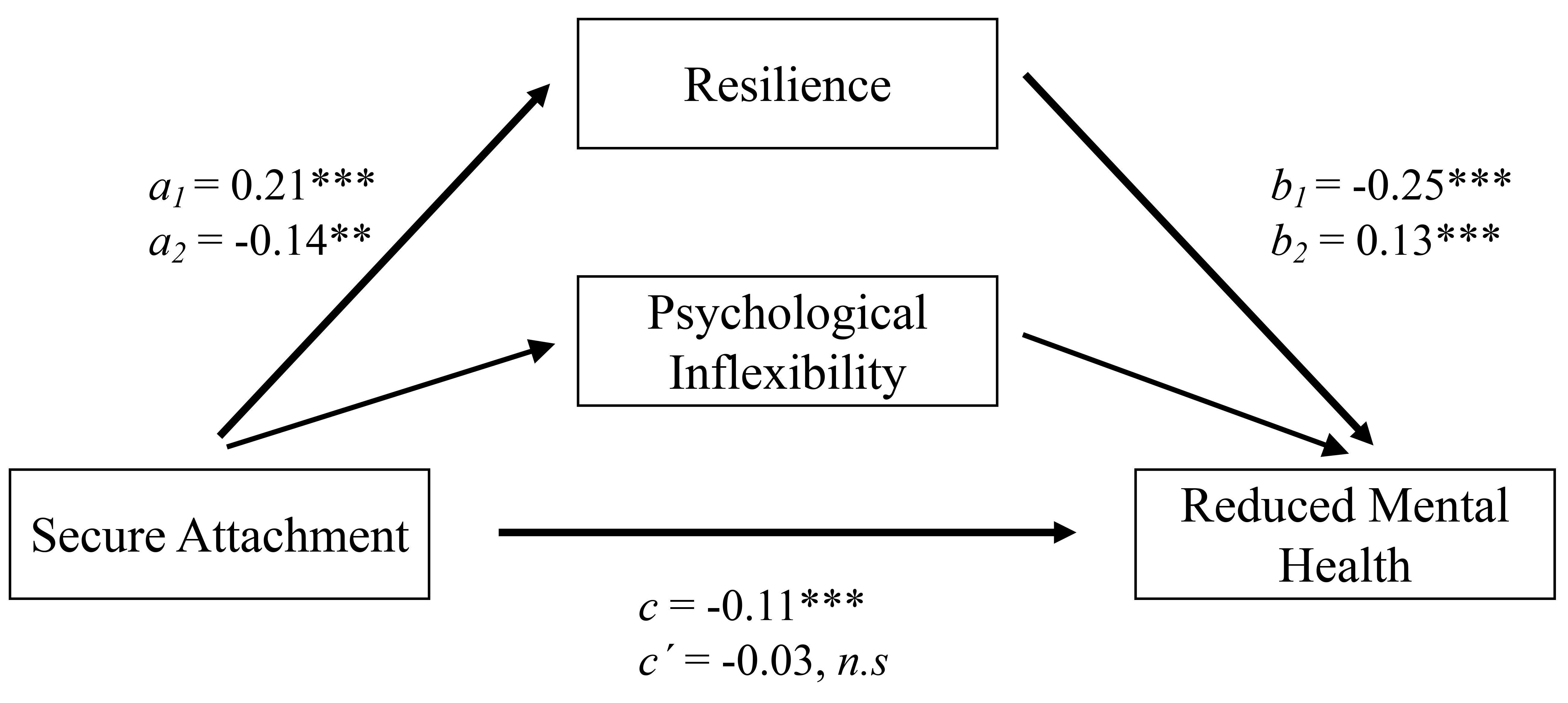
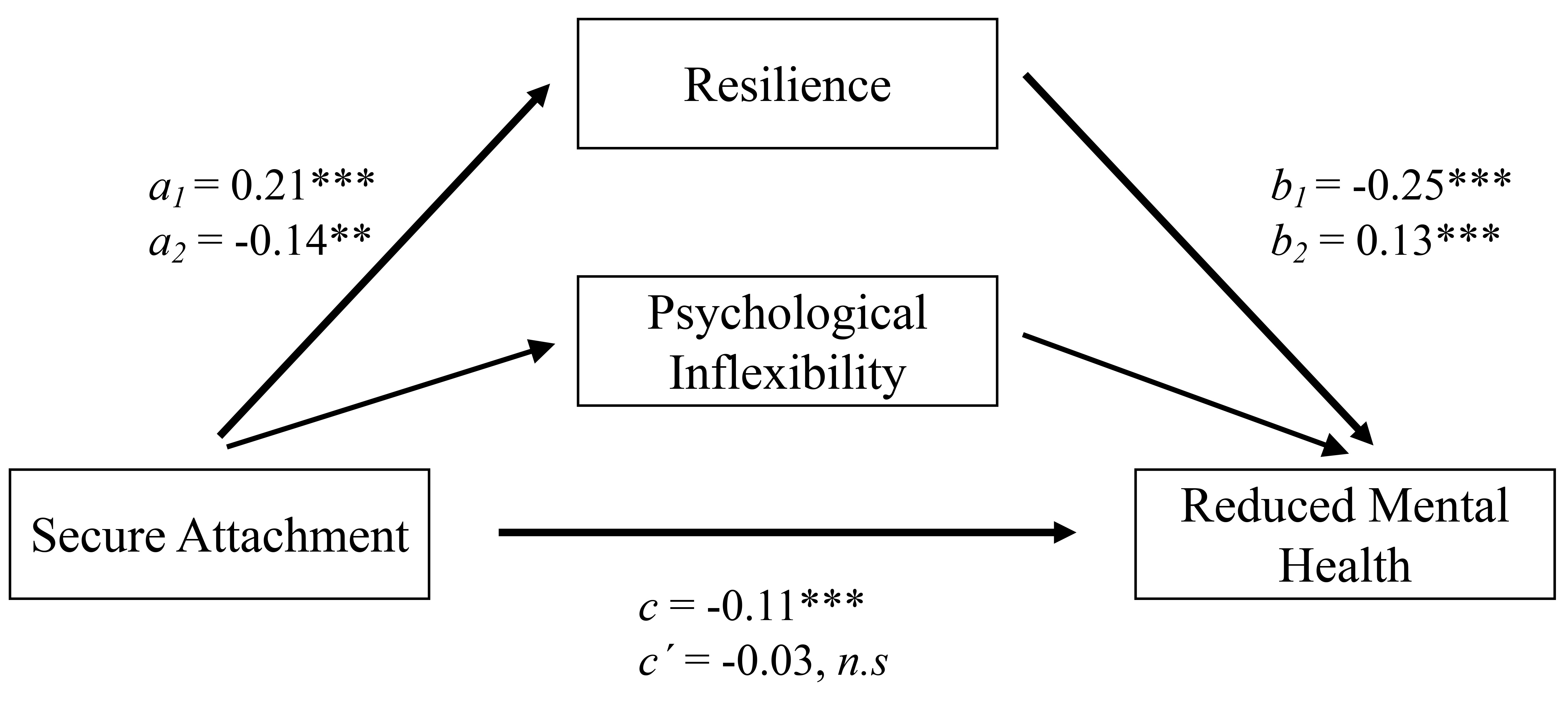 Fig. 1.
Mediation model of secure attachment and reduced mental
health through resilience and psychological inflexibility. Note. Total Effect
(c), Direct Effect (c’). **p
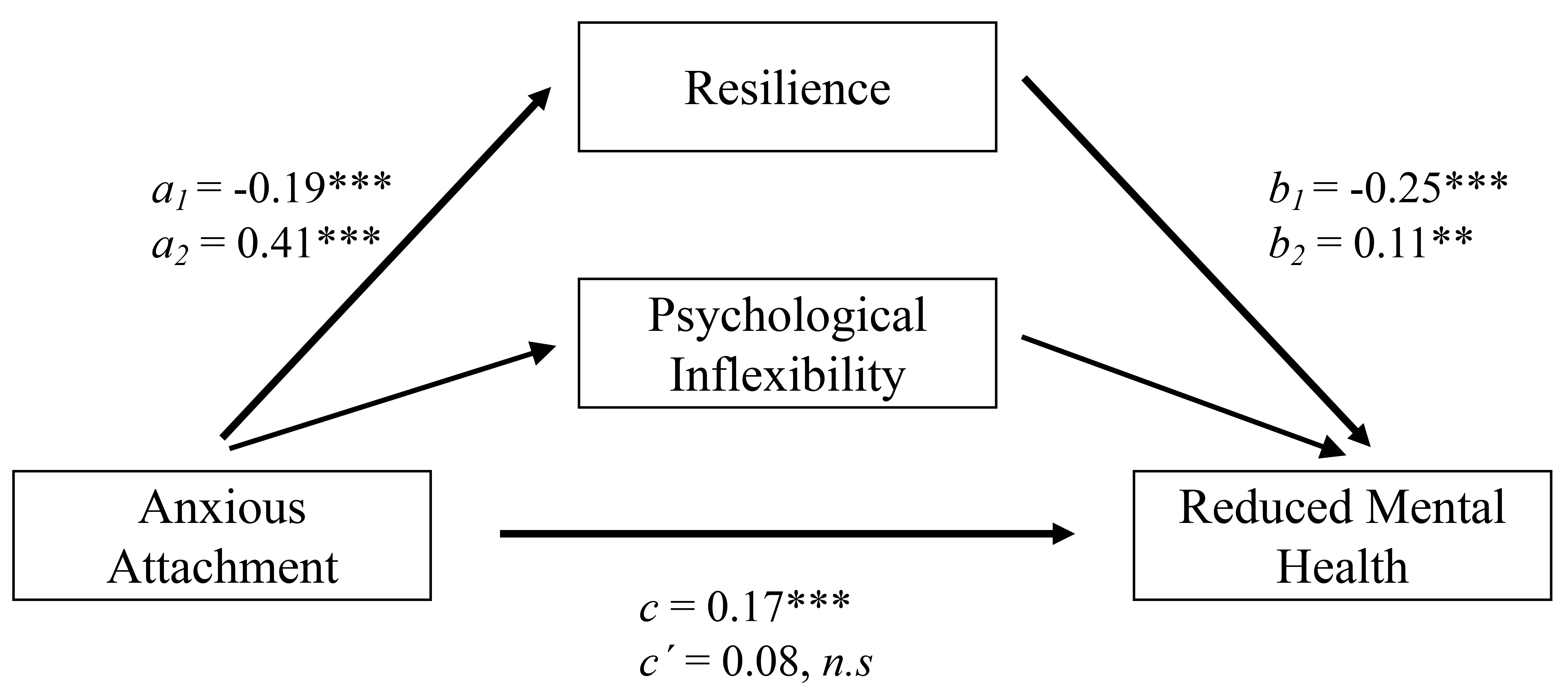
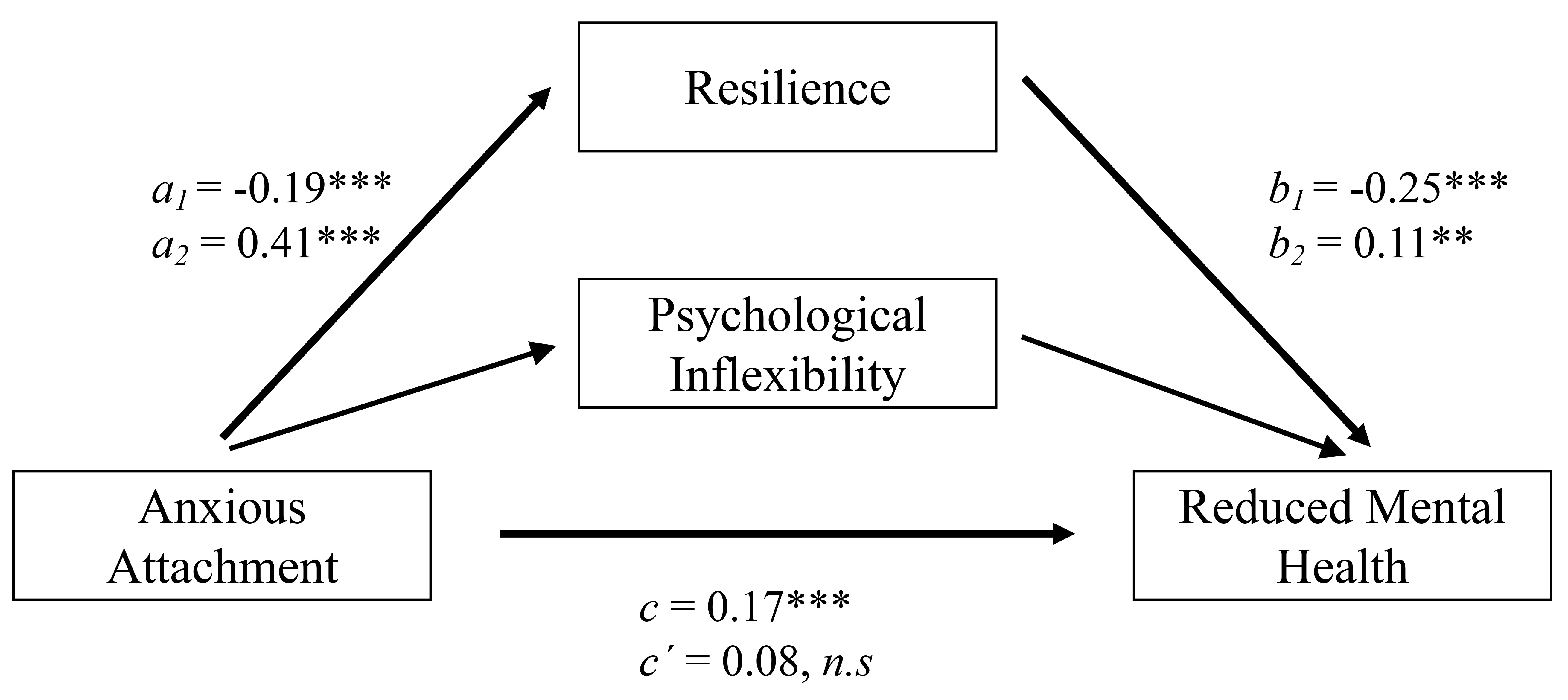 Fig. 2.
Mediation model of anxious attachment and reduced
mental health through resilience and psychological inflexibility. Note. Total
Effect (c), Direct Effect (c’). **p
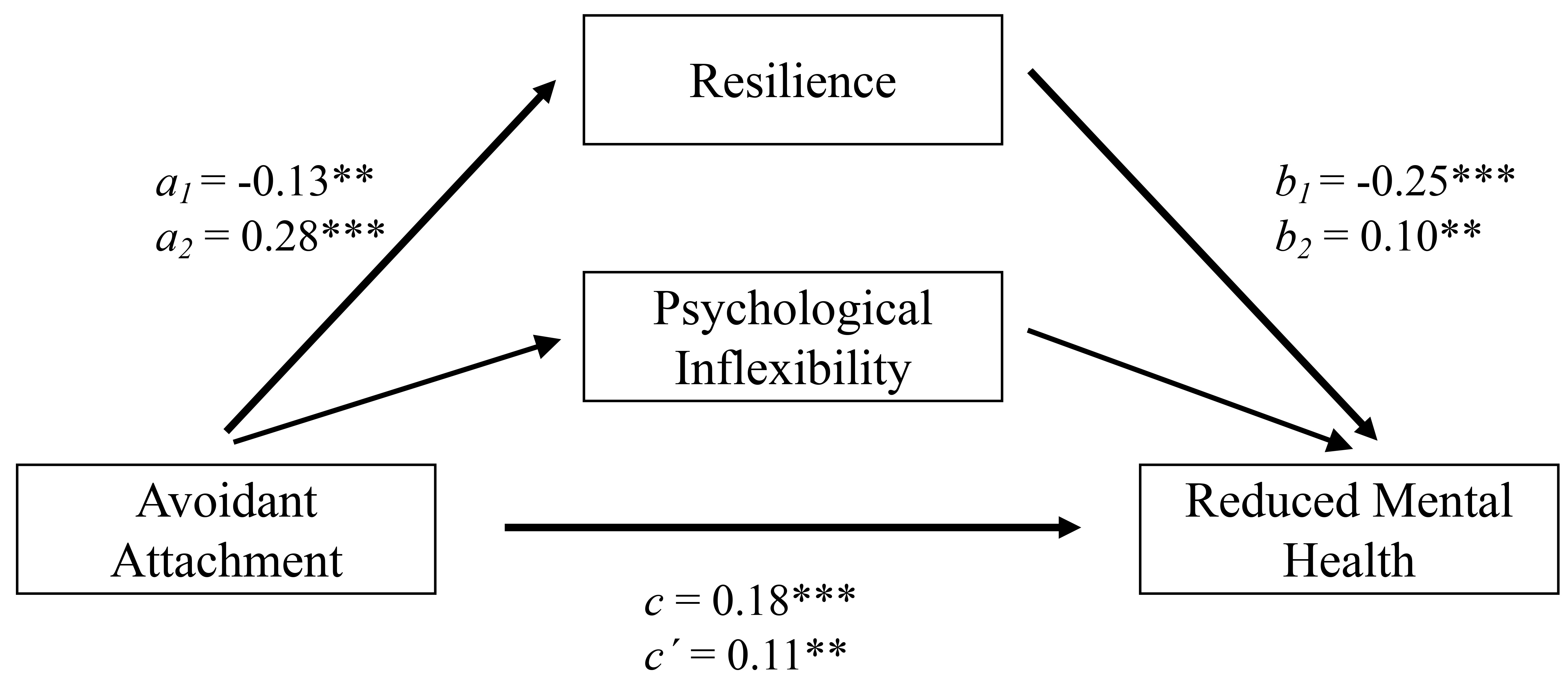
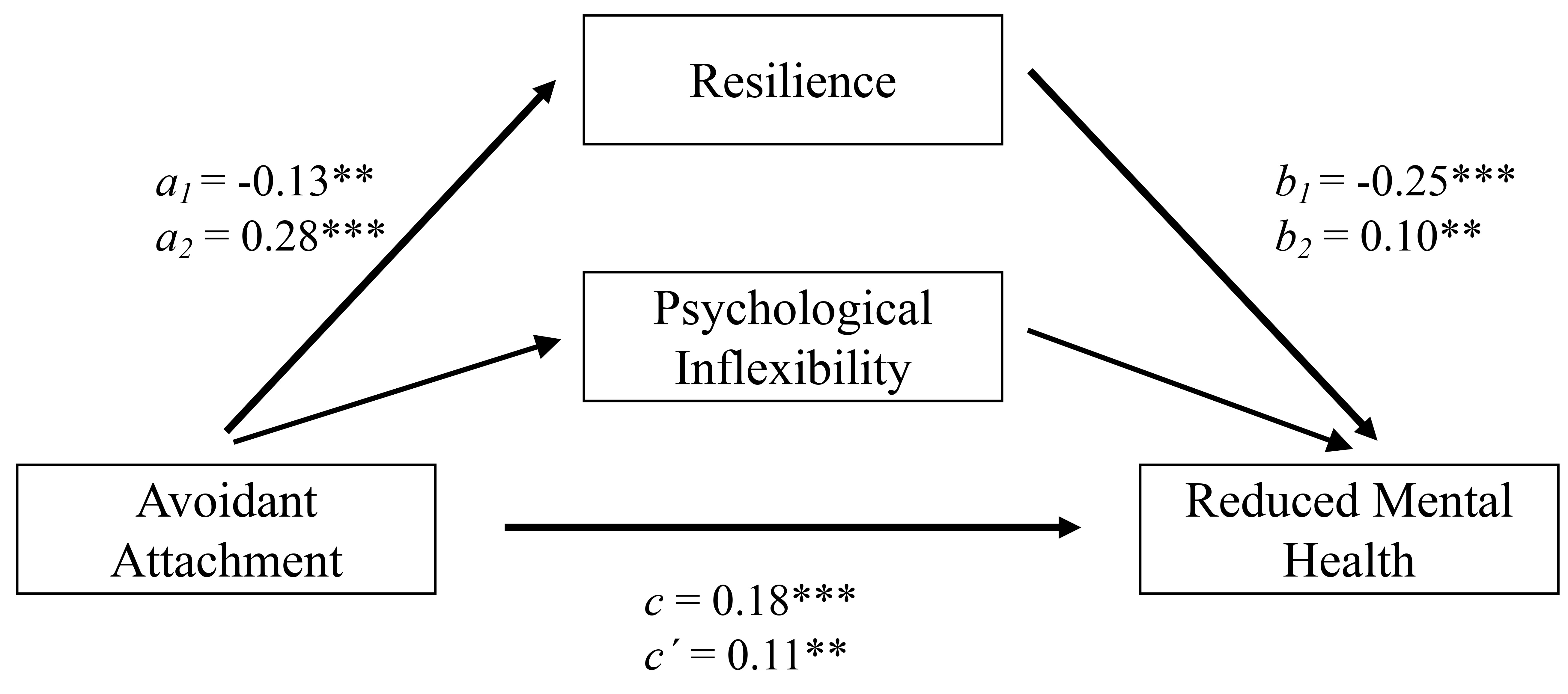 Fig. 3.
Mediation model of avoidant attachment and reduced
mental health through resilience and psychological inflexibility. Note. Total
Effect (c), Direct Effect (c’). **p
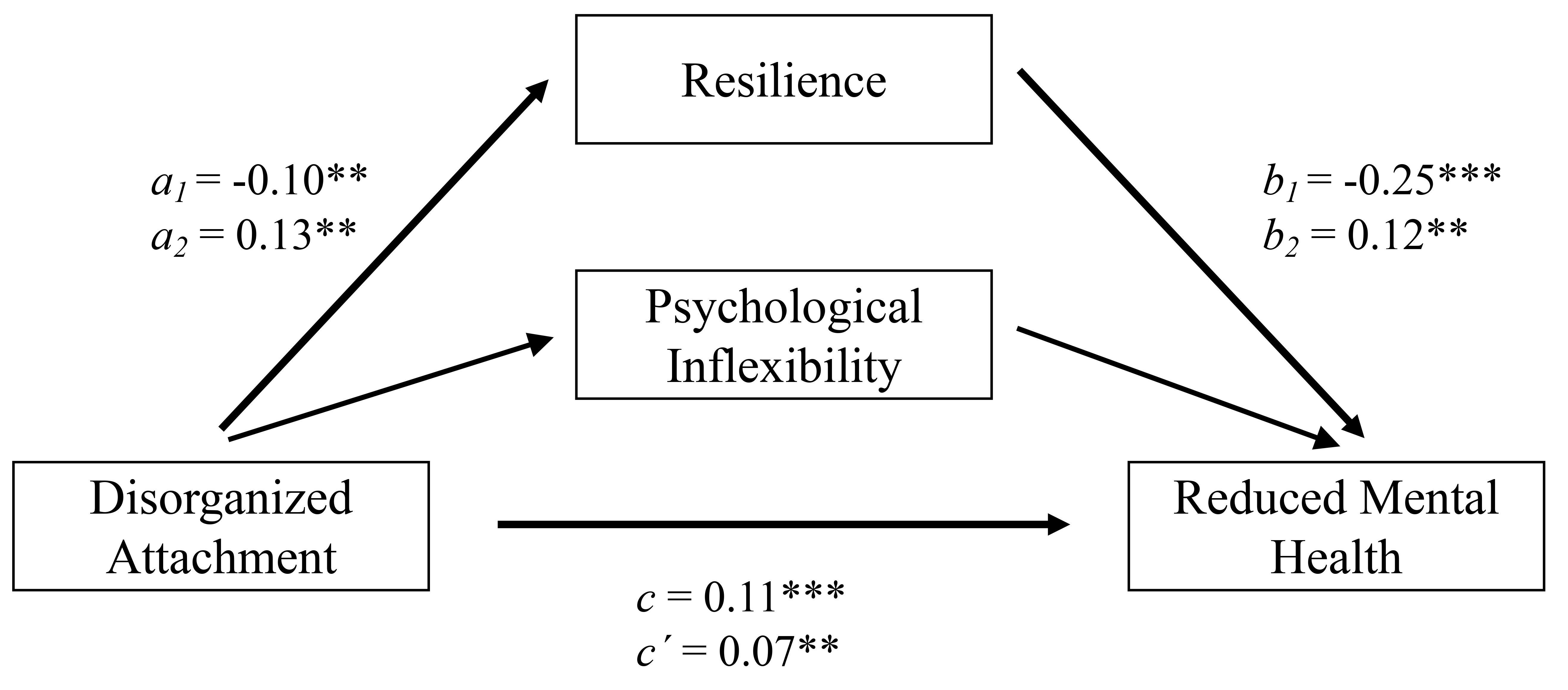
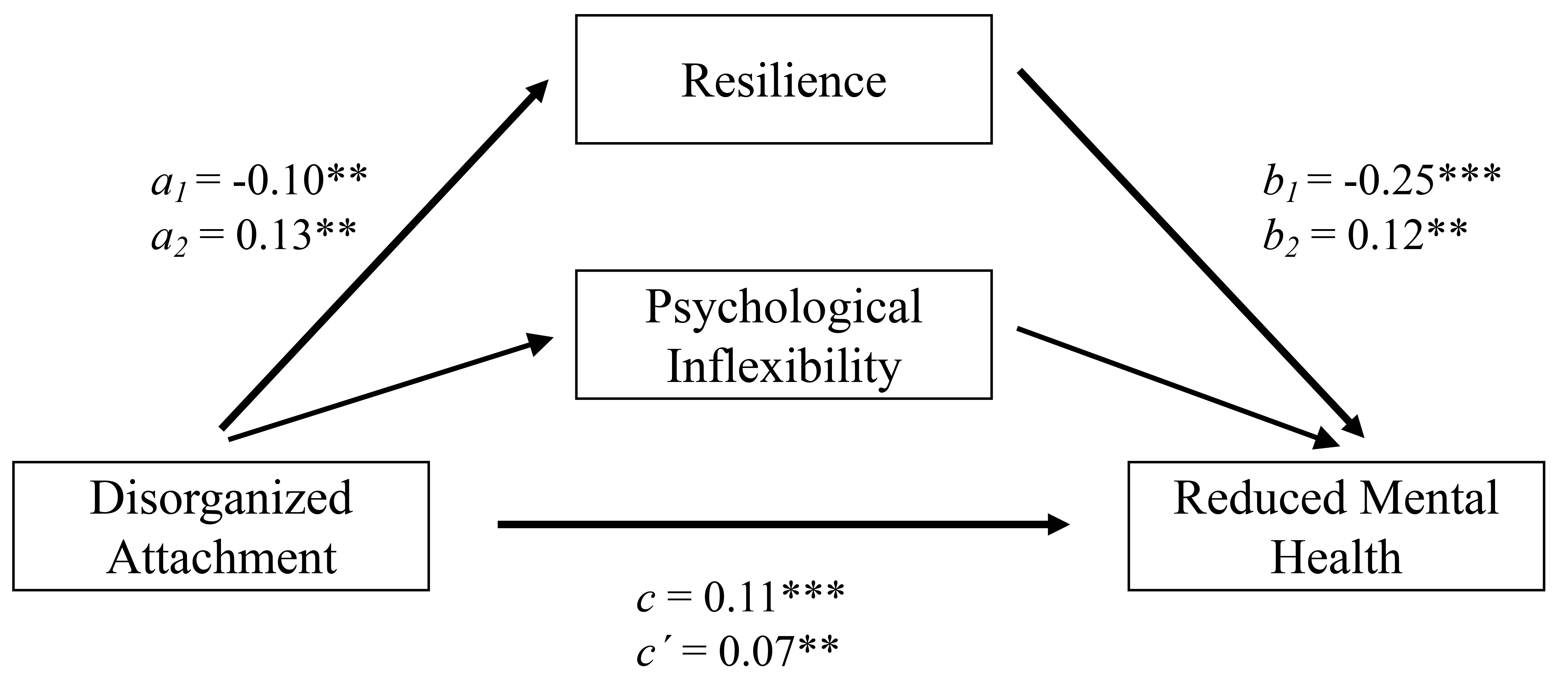 Fig. 4.
Mediation model of disorganized attachment and reduced
mental health through resilience and psychological inflexibility. Note. Total
Effect (c), Direct Effect (c’). **p
Secure attachment was also significantly associated with the mediating variables (i.e., resilience and psychological inflexibility). These relationships are depicted in Fig. 1 via paths a₁ and a₂, respectively. In the same figure, both mediators were significantly associated with the outcome variable (i.e., reduced mental health) through paths b₁ and b₂.
The direct effect, represented by path c’, was not statistically significant, suggesting the presence of an indirect effect through the two mediating variables. As shown in Table 2, based on the confidence intervals, both resilience and psychological inflexibility acted as significant mediators in the relationship between secure attachment and reduced mental health. This indicates that secure attachment is associated with better mental health due to its positive association with higher resilience and lower psychological inflexibility. In this case, the relationship between secure attachment and mental health was fully mediated by the proposed mediators.
| Reduced Mental Health | Psychological Well-Being | General Well-Being | ||||||||
| SE | CI | SE | CI | SE | CI | |||||
| Secure Attachment | Resilience | –0.05 | 0.01 | –0.09, –0.02* | 0.12 | 0.03 | 0.06, 0.19* | 0.10 | 0.03 | 0.04, 0.17* |
| Psychological Flexibility | –0.01 | 0.00 | –0.04, –0.00* | 0.04 | 0.01 | 0.01, 0.08* | 0.03 | 0.01 | 0.00, 0.07* | |
| Anxious Attachment | Resilience | 0.05 | 0.02 | 0.01, 0.09* | –0.12 | 0.03 | –0.20, –0.04* | –0.10 | 0.03 | –0.17, –0.03* |
| Psychological Inflexibility | 0.04 | 0.01 | 0.01, 0.08* | –0.12 | 0.03 | –0.19, –0.06* | –0.07 | 0.03 | –0.14, 0.00 | |
| Avoidant Attachment | Resilience | 0.03 | 0.01 | 0.00, 0.07* | –0.08 | 0.03 | –0.14, –0.02* | –0.06 | 0.02 | –0.13, –0.01* |
| Psychological Inflexibility | 0.03 | 0.01 | 0.00, 0.06* | –0.07 | 0.02 | –0.12, –0.03* | –0.04 | 0.02 | –0.10, –0.00* | |
| Disorganized Attachment | Resilience | 0.02 | 0.01 | 0.00, 0.05* | –0.06 | 0.02 | –0.11, –0.01* | –0.05 | 0.02 | –0.10, –0.01* |
| Psychological Inflexibility | 0.01 | 0.00 | 0.00, 0.03* | –0.04 | 0.01 | –0.07, –0.01* | –0.02 | 0.01 | –0.06, –0.00* | |
Notes: * p
Regarding anxious attachment, results similar to those found for secure attachment were observed. As shown in Fig. 2, the relationship between anxious attachment and the mediating variables was significant (see paths a₁ and a₂). Additionally, both resilience and psychological inflexibility were significantly associated with reduced mental health (paths b₁ and b₂). As with secure attachment, the total effect (c) was significant, whereas the direct effect (c’) was not, once again indicating full mediation. The confidence intervals presented in Table 2 confirmed the presence of an indirect effect through the mediating variables.
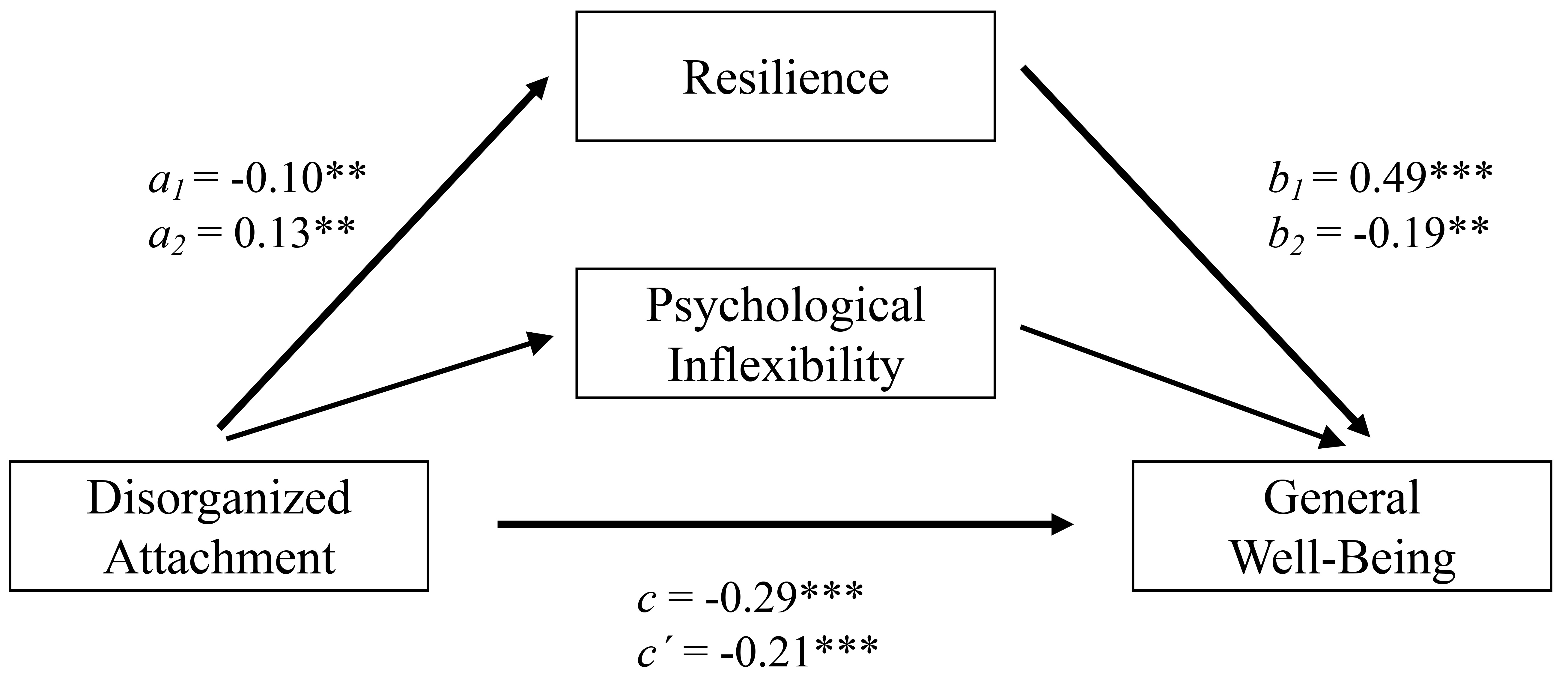
Lastly, focusing on avoidant and disorganized attachment, significant associations were observed between both attachment styles and the mediating variables—resilience and psychological inflexibility. These relationships are illustrated in Figs. 3,4 (respectively) through paths a₁ and a₂. Additionally, significant associations were found between the mediators and reduced mental health (paths b₁ and b₂).
In contrast to the secure and anxious attachment styles, both the total effect (c) and the direct effect (c’) were significant for avoidant and disorganized attachment. This indicates that the relationship between these attachment styles and reduced mental health is driven not only by a direct effect but also by an indirect effect through resilience and psychological inflexibility. As shown in Table 2, the confidence intervals confirm that the indirect effects of the mediators were also significant. Therefore, these results support the presence of partial mediation in both cases.
Regarding the relationship between attachment and psychological well-being—as
assessed through the environmental mastery domain—secure attachment
(
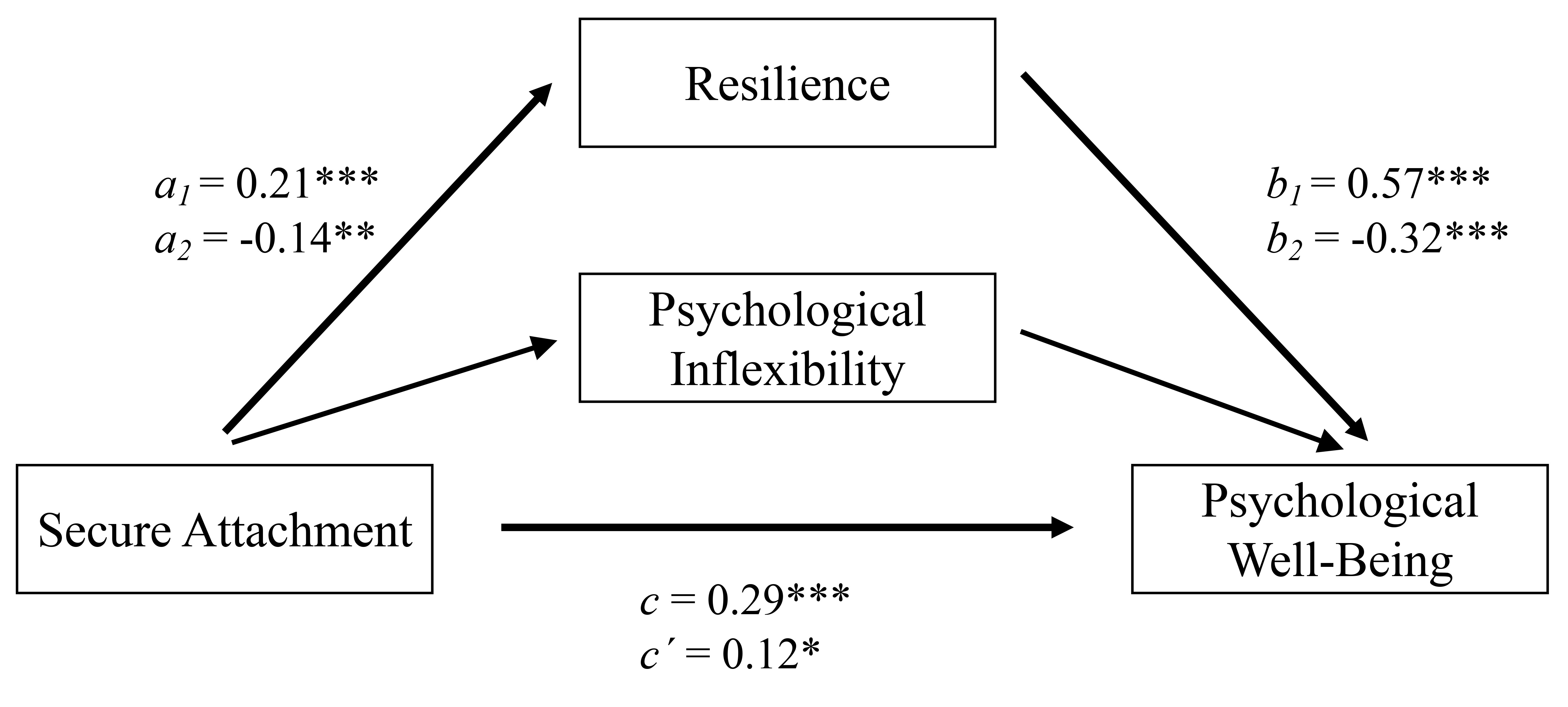
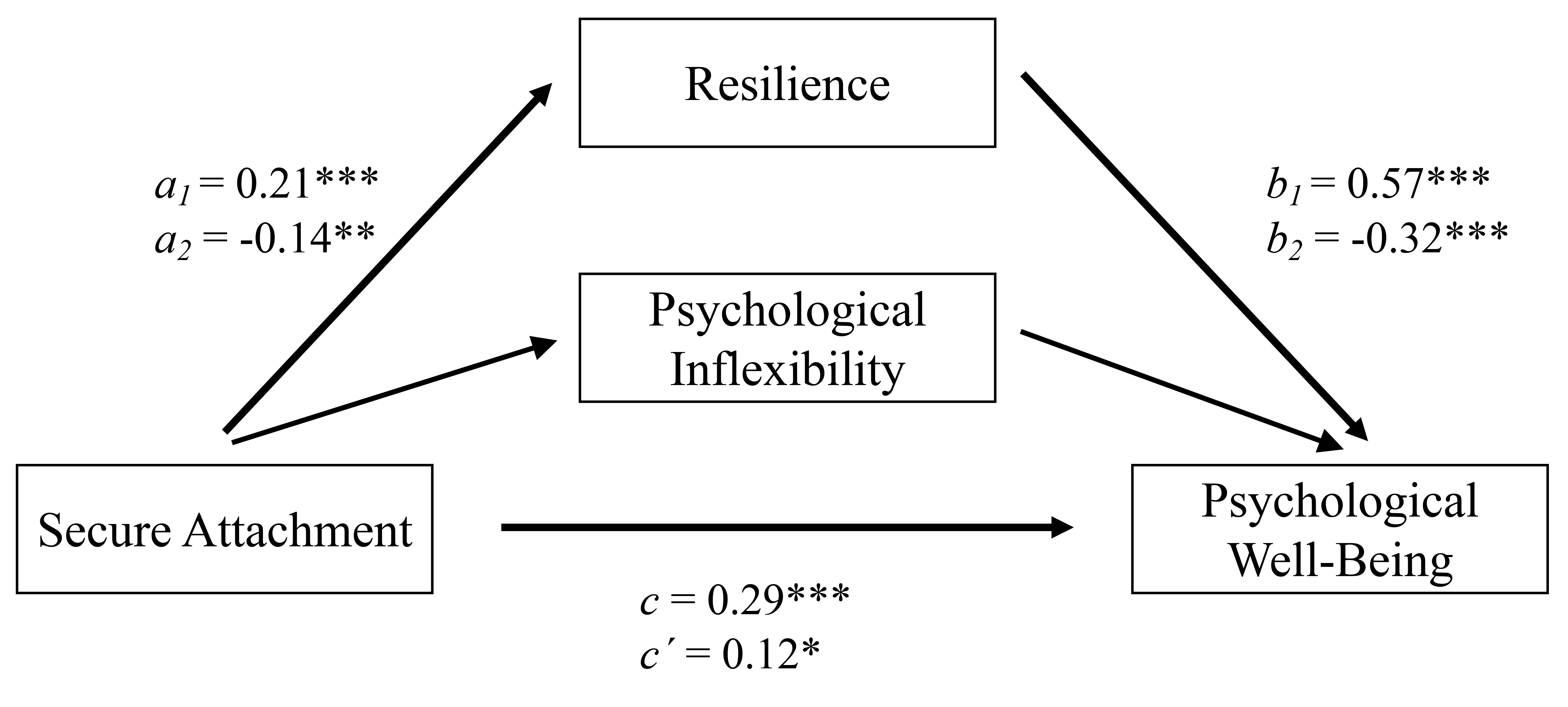 Fig. 5.
Mediation model of secure attachment and psychological
well-being through resilience and psychological inflexibility. Note. Total
Effect (c), Direct Effect (c’). *p
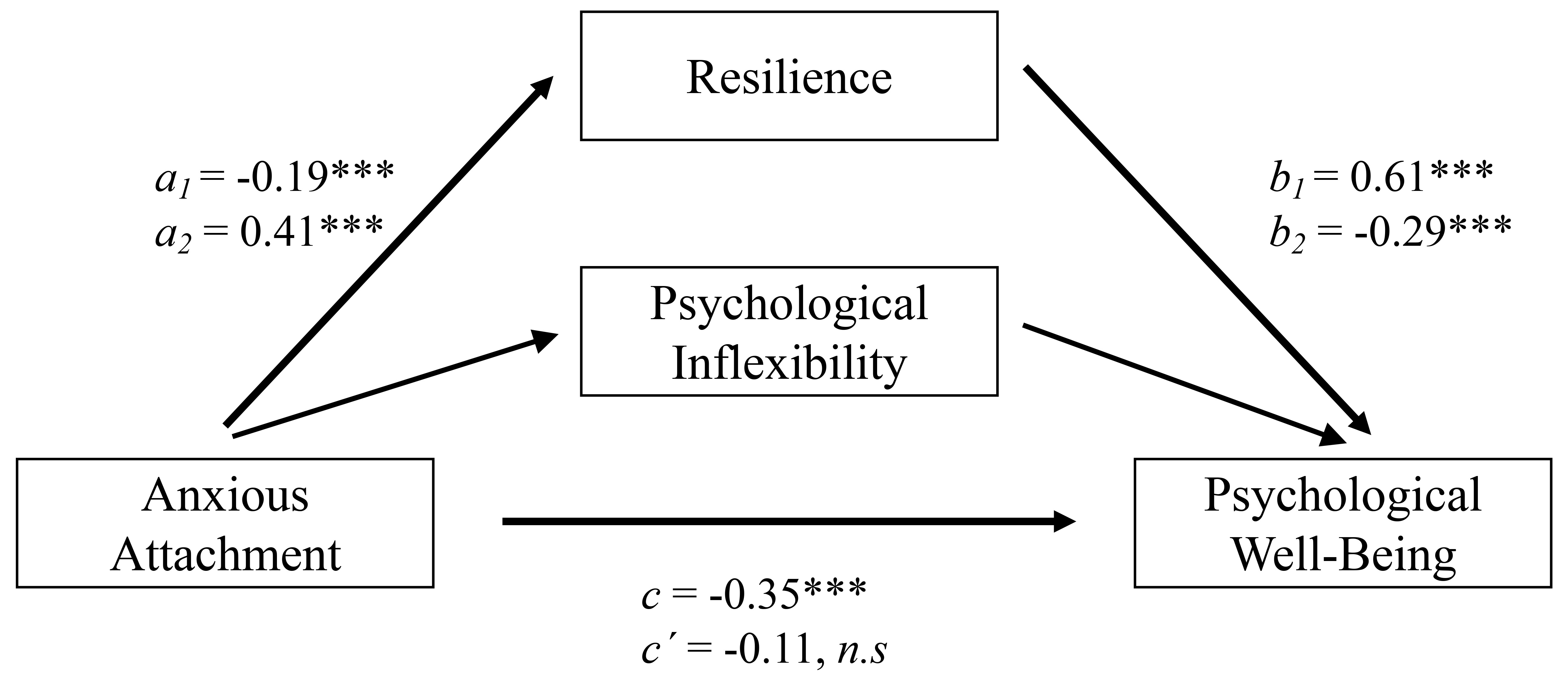
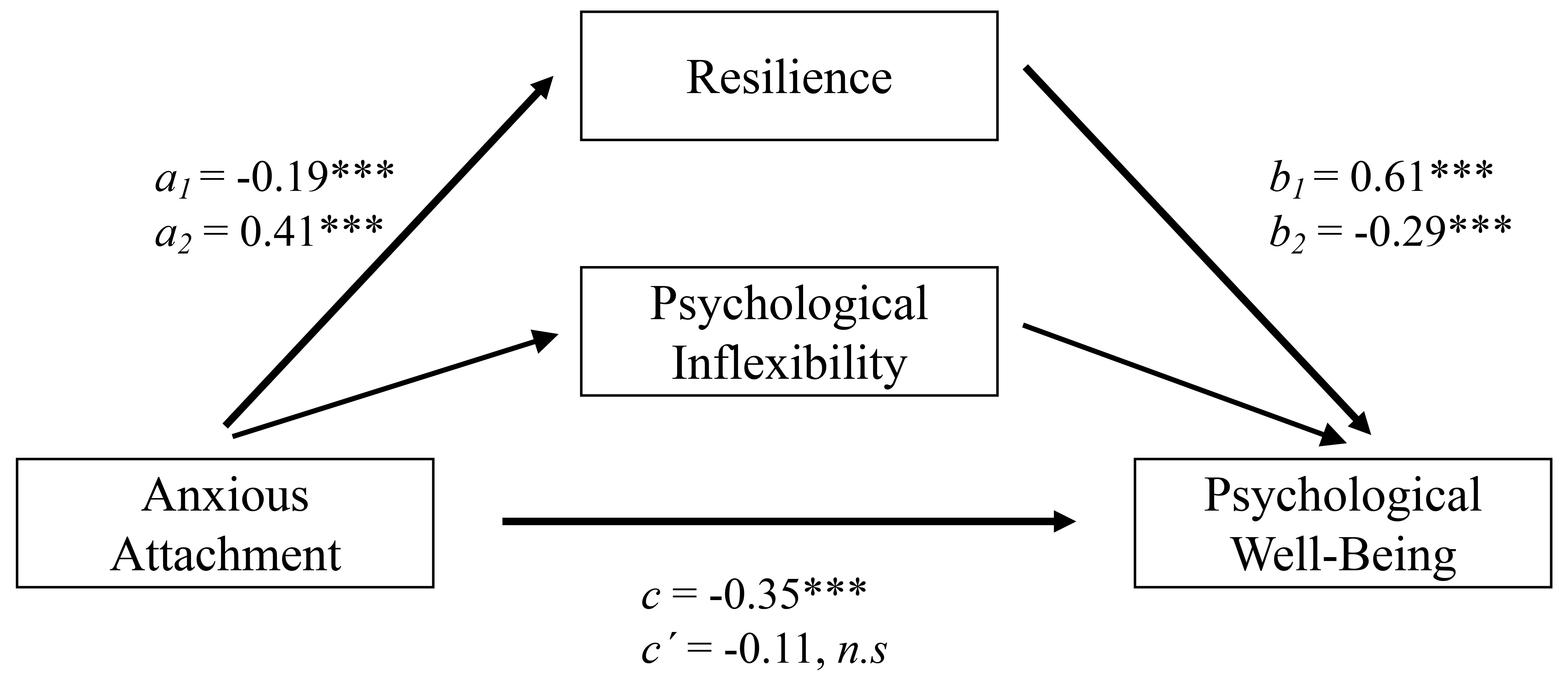 Fig. 6.
Mediation model of anxious attachment and psychological
well-being through resilience and psychological inflexibility. Note. Total
Effect (c), Direct Effect (c’). ***p
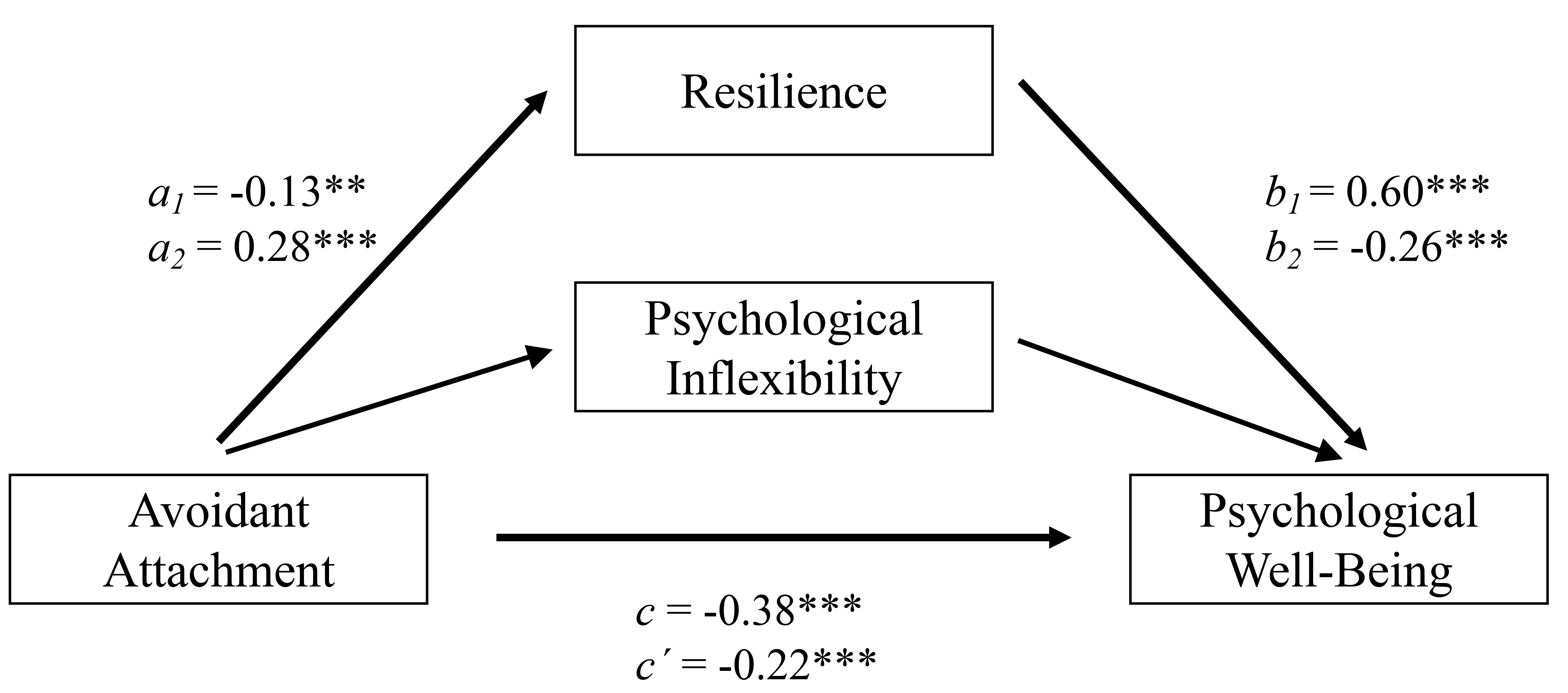
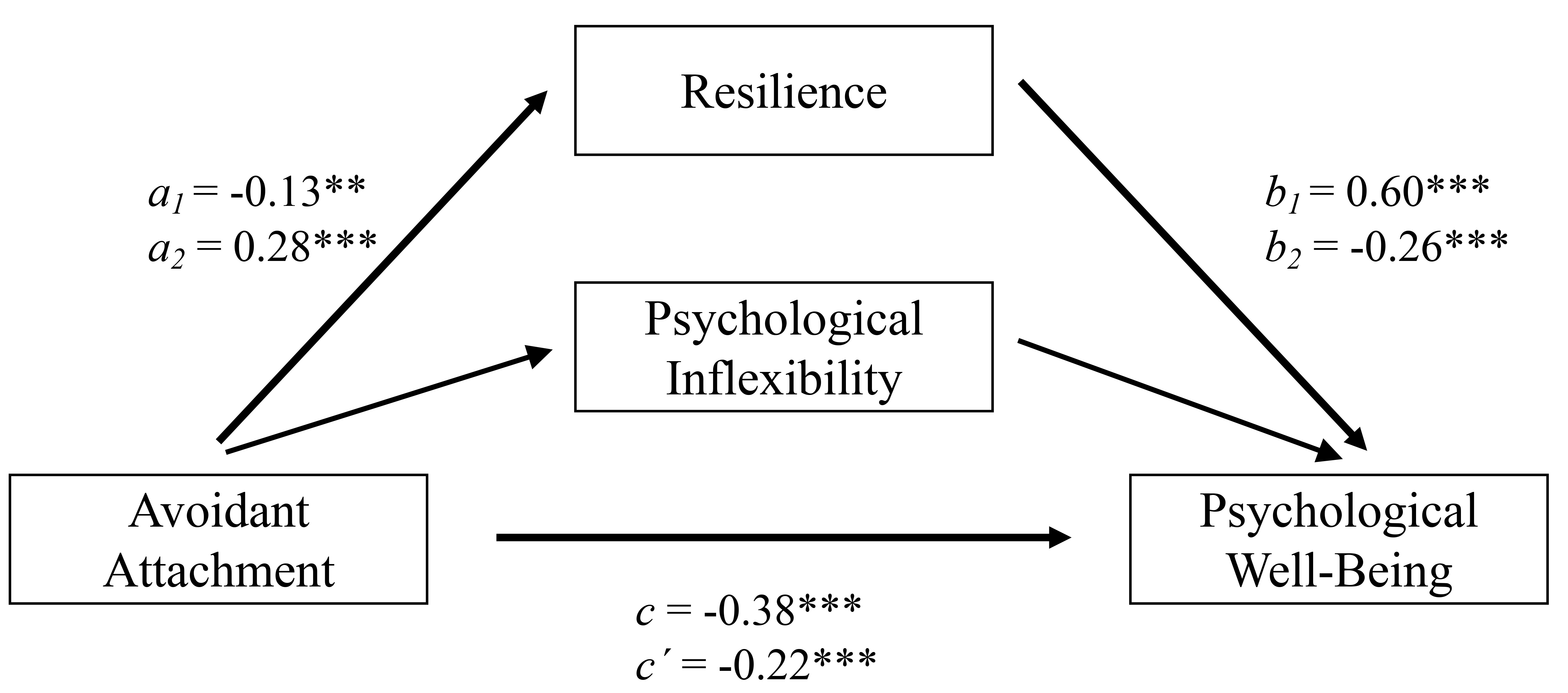 Fig. 7.
Mediation model of avoidant attachment and
psychological well-being through resilience and psychological inflexibility.
Note. Total Effect (c), Direct Effect (c’). **p
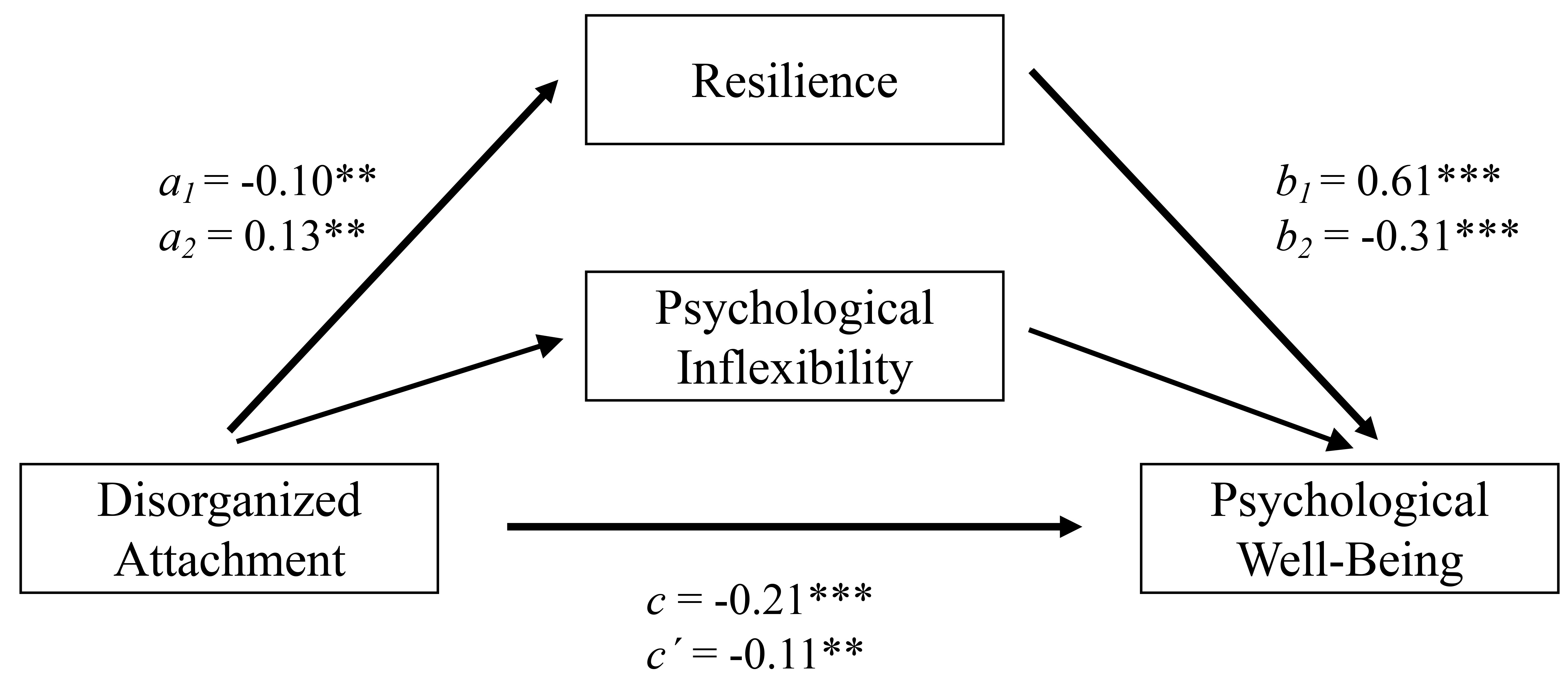 Fig. 8.
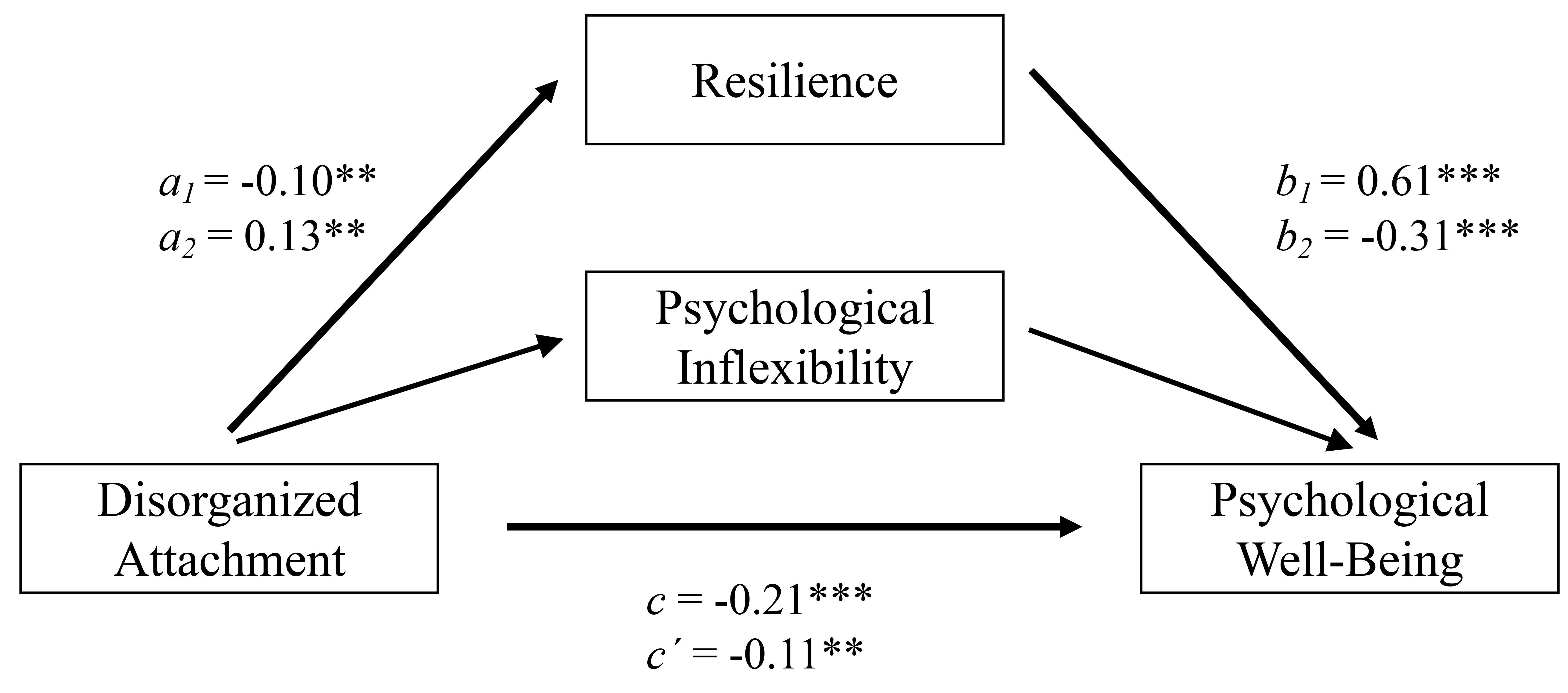
Mediation model of disorganized attachment and
psychological well-being through resilience and psychological inflexibility.
Note. Total Effect (c), Direct Effect (c’). **p
Additionally, in Fig. 5, paths a₁ and a₂ show that secure attachment was significantly associated with the mediating variables (i.e., resilience and psychological inflexibility, respectively). These mediators, in turn, were significantly related to psychological well-being (paths b₁ and b₂). In the case of secure attachment, both the total effect (c) and the direct effect (c’) were significant, indicating that the relationship between secure attachment and psychological well-being was explained by both a direct association and an indirect effect through the mediating variables. As shown in Table 2, the confidence intervals confirmed that the indirect effects of the mediators were also significant. Therefore, this is considered a case of partial mediation. Based on these findings, secure attachment is associated with higher levels of psychological well-being, due to its connection with greater resilience and lower psychological inflexibility.
When analyzing the relationship between anxious attachment and psychological well-being, a significant association emerged between anxious attachment and the mediating variables (see Fig. 6, paths a₁ and a₂). The relationship between the mediators and psychological well-being was also significant (paths b₁ and b₂). In this case, the total effect (c) was significant, while the direct effect (c’) was not. This suggests that the association between anxious attachment and psychological well-being is fully mediated by resilience and psychological inflexibility. As shown by the confidence intervals in Table 2, the indirect effect of the mediating variables was significant.
In relation to the avoidant and disorganized attachment styles, similar results to those observed for secure attachment were obtained. Paths a₁ and a₂ (see Figs. 7,8) demonstrate a significant association between both attachment styles and the mediating variables. Likewise, the relationships between the mediators and the criterion variable were significant (paths b₁ and b₂). In both models, the total effect (c) and the direct effect (c’) were also significant, replicating the pattern observed in secure attachment. As shown in Table 2, the confidence intervals indicate that the mediating variables exerted a significant indirect effect, confirming their mediating role in the relationship between avoidant and disorganized attachment and psychological well-being. Therefore, in both cases, partial mediation is evident.
When examining the criterion variable of general well-being, it was found that
secure attachment (
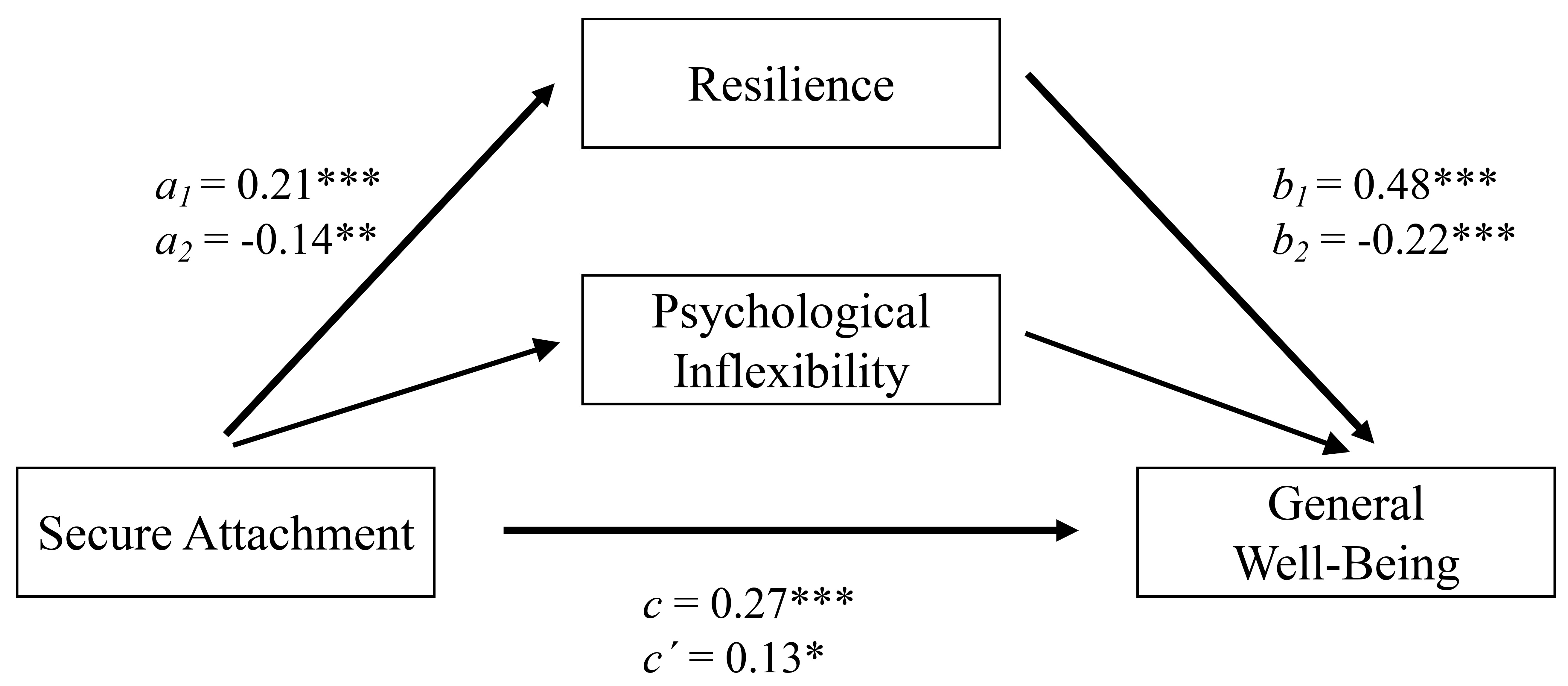
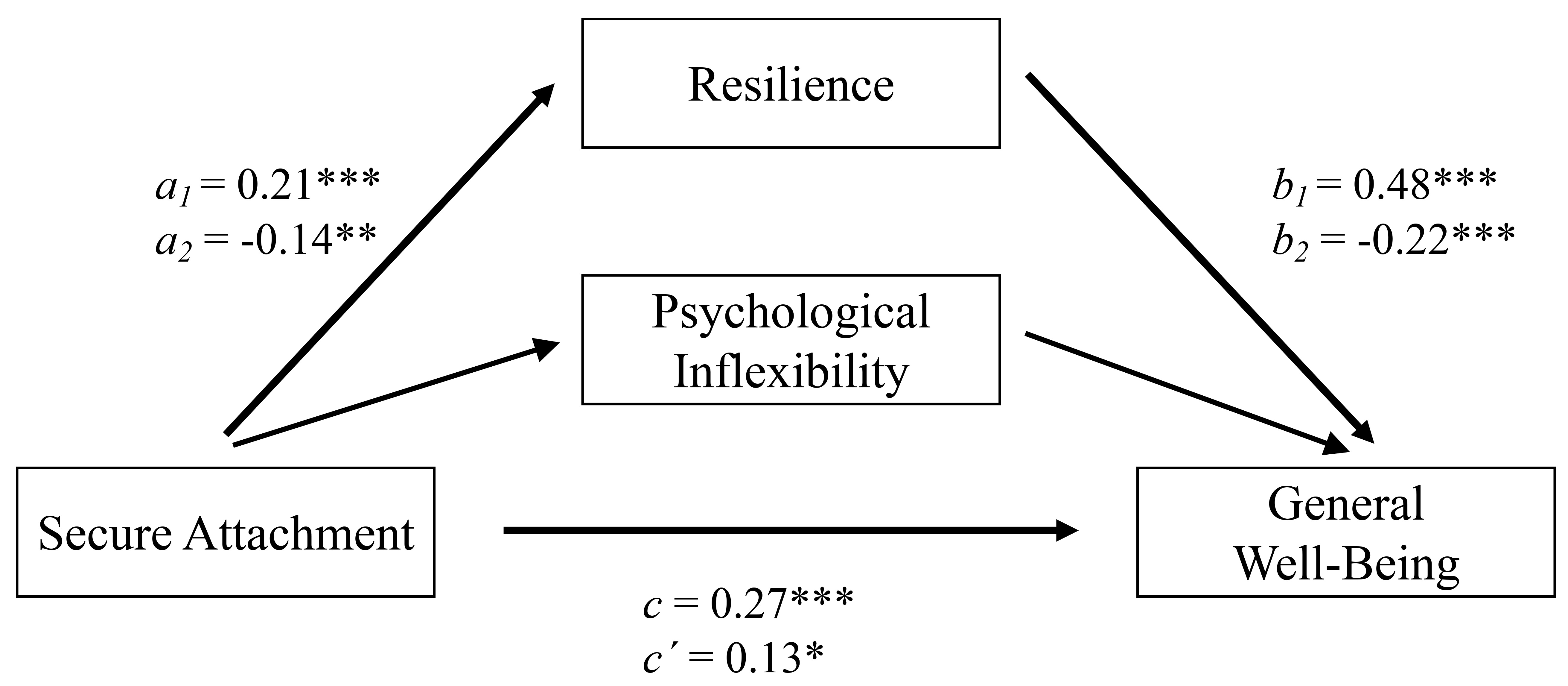 Fig. 9.
Mediation model of secure attachment and general
well-being through resilience and psychological inflexibility. Note. Total
Effect (c), Direct Effect (c’). *p
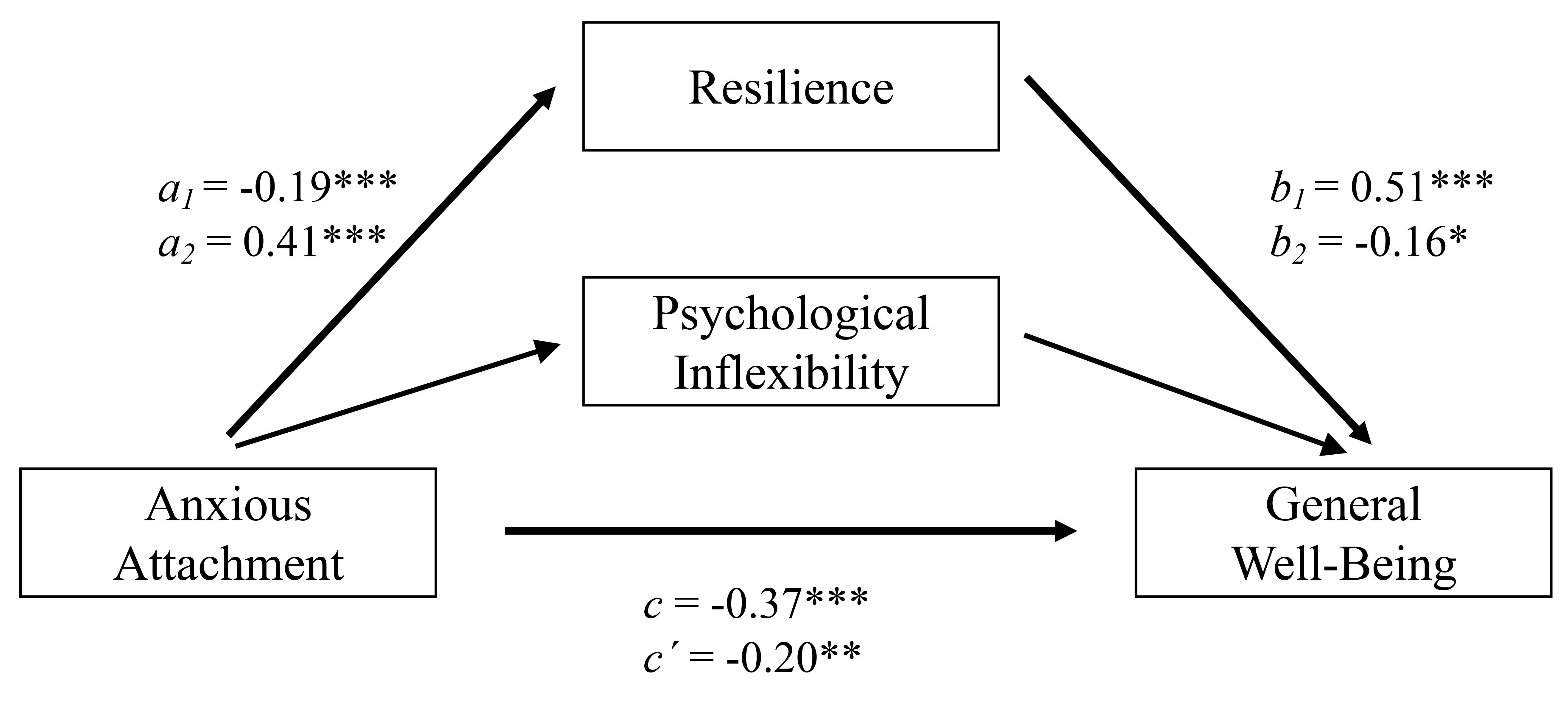
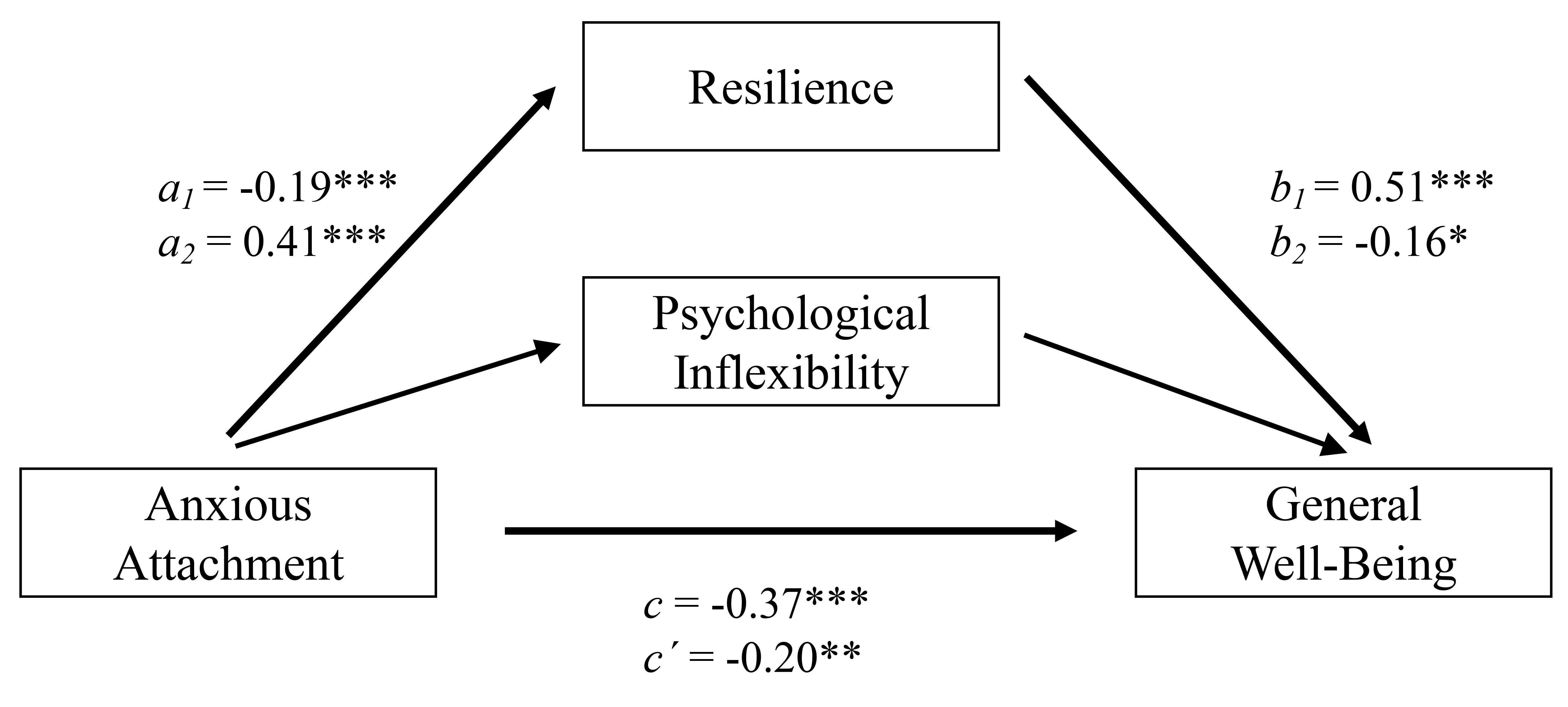 Fig. 10.
Mediation model of anxious attachment and general
well-being through resilience and psychological inflexibility. Note. Total
Effect (c), Direct Effect (c’). *p
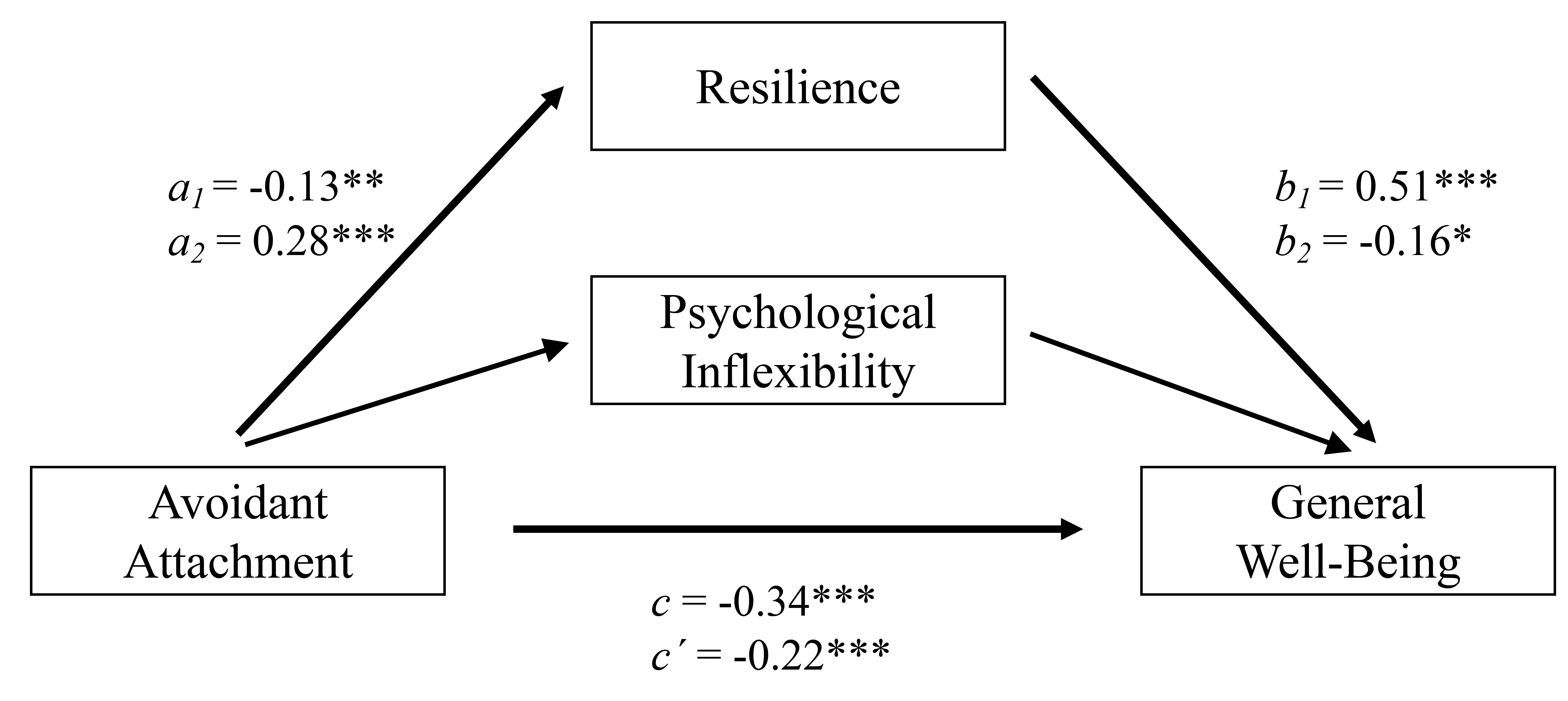
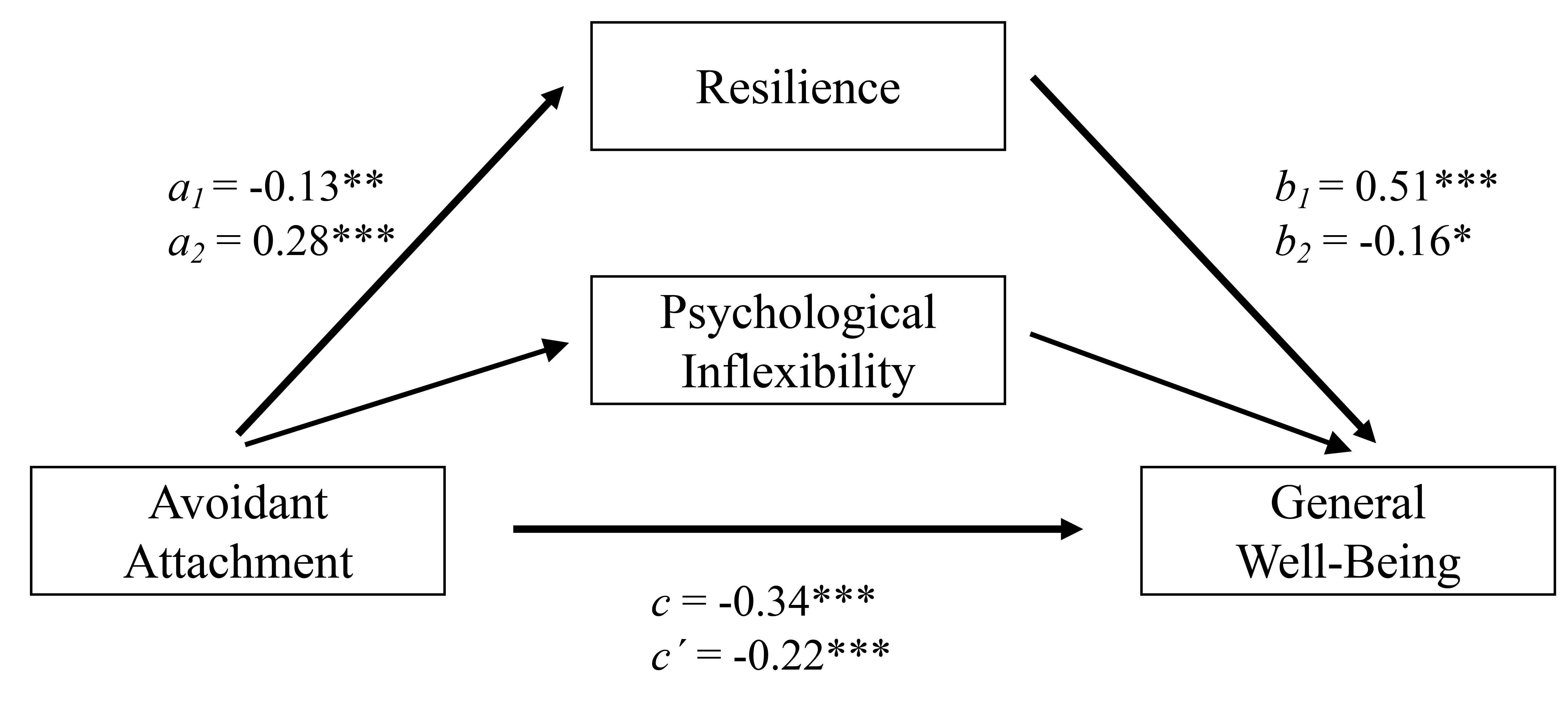 Fig. 11.
Mediation model of avoidant attachment and general
well-being through resilience and psychological inflexibility. Note. Total
Effect (c), Direct Effect (c’). *p
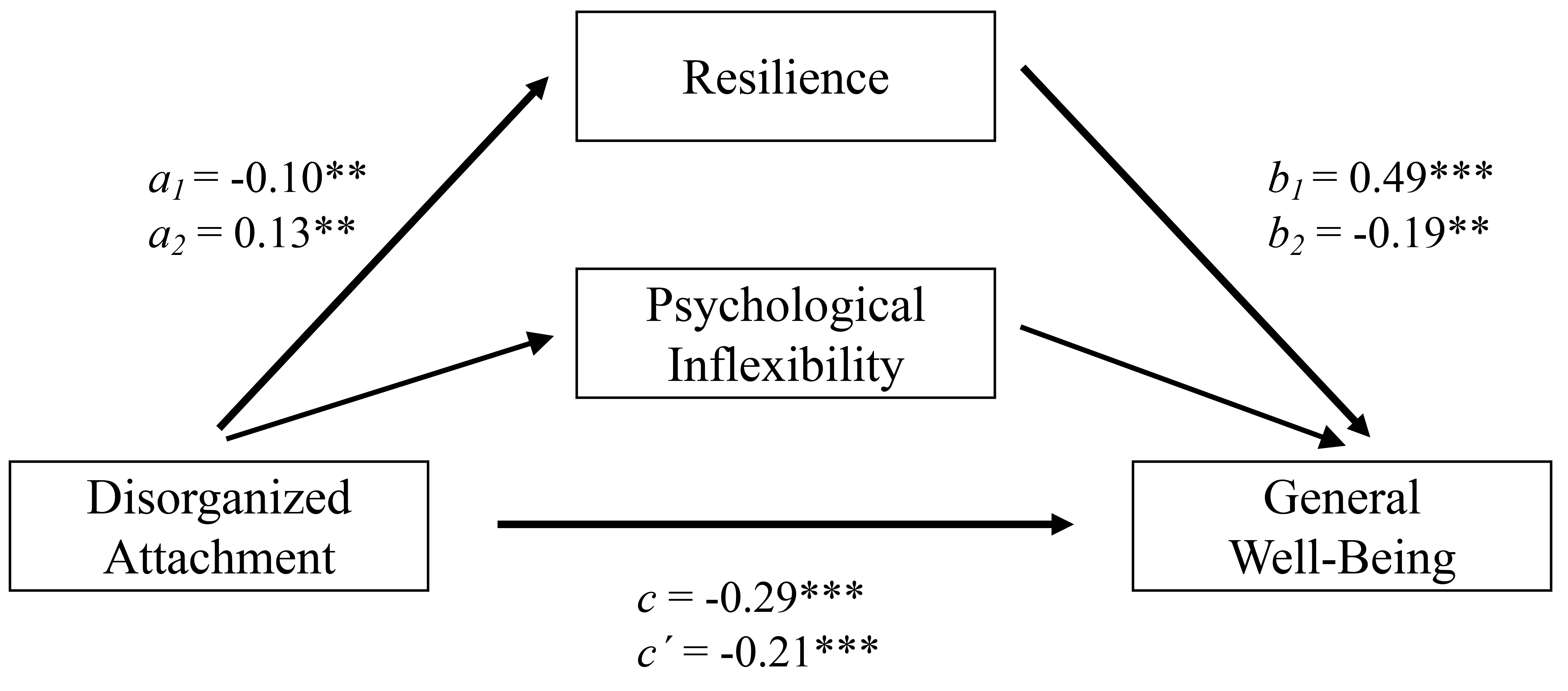 Fig. 12.
Mediation model of disorganized attachment and general
well-being through resilience and psychological inflexibility. Note. Total
Effect (c), Direct Effect (c’). **p
The only difference found among these models was in the case of anxious attachment. In Table 2, through the confidence intervals, it can be observed that the indirect effects of the mediating variables were significant in all cases except for psychological inflexibility and anxious attachment. Here, only resilience functions as a mediating variable. Nonetheless, in all cases, the mediation can be characterized as partial.
The objective of this study was twofold. First, to examine the relationship between attachment styles (i.e., secure, anxious, avoidant, and disorganized), resilience-related variables (i.e., resilience and psychological flexibility), and individuals’ levels of mental health and well-being. Second, to analyze whether resilience and psychological flexibility—considered as psychological strengths—serve a mediating role in the relationship between attachment, health, and well-being. To the best of our knowledge, this is the first study to investigate the mediating role of these strengths in such a relationship, thereby contributing to a deeper understanding of the mechanisms that explain why attachment is associated with mental health and well-being outcomes.
To begin with, the results of this study revealed a direct association between secure attachment and resilience, which aligns with findings reported by other authors such as Shibue and Kasai (2014). In contrast, the three insecure attachment styles (i.e., anxious, avoidant, and disorganized) were inversely related to resilience. While it could be assumed that individuals with insecure attachment styles might have been exposed to adverse experiences that could have led to greater resilience, the results suggest that such exposure alone may not be sufficient for resilience to develop. Rather, the establishment of a solid and secure foundation during childhood may be a key contributing factor.
Secure attachment may foster the development of healthy self-esteem, autonomy, and a stronger sense of self-efficacy (Uriarte, 2005)—elements that are fundamental for successfully coping with stress and adversity, which could explain its association with resilience (Rubio and Puig, 2015). Conversely, insecure attachment styles may be linked to lower resilience due to a lack of consistent early experiences and emotional support, both of which are critical for building a secure base from which to face stressors. In fact, research has shown that insecure attachment styles hinder the development of resilience. This association can be explained by the fact that insecure attachment is characterized by negative internal representations of the self and others, which undermines interpersonal trust and perceived self-efficacy (Mikulincer and Shaver, 2017). Furthermore, individuals with insecure attachment styles often experience difficulties with emotional regulation and tend to employ maladaptive coping strategies in response to stress, compromising their ability to recover from adverse experiences (Karreman and Vingerhoets, 2012).
Secondly, the results also showed that secure attachment was negatively correlated with reduced mental health and positively correlated with both psychological and general well-being, in contrast to the other attachment styles, which showed a direct relationship with reduced mental health and lower well-being. Numerous studies have shown that individuals with a secure attachment style tend to report better levels of mental health, psychological well-being, and general well-being, as secure attachment serves a protective function (Fonagy et al, 2014; Fraley and Shaver, 2021; Moneta, 2014), while insecure attachment is associated with lower levels of mental health, psychological well-being, and general well-being (Marrero-Quevedo et al, 2019).
As a third point, the findings of this study showed that secure attachment was inversely related to psychological inflexibility. Thus, individuals who form secure bonds in childhood may have a greater capacity to accept negative emotions without needing to avoid them, which would explain their lower levels of psychological inflexibility (Hadžić and Kantar, 2021). Secure attachment fosters a foundation of trust and feelings of autonomy that help individuals develop tools to remain present, connected to their emotions, and more capable of achieving their goals (Guerrero and Barroso, 2019), thereby promoting greater psychological flexibility. However, contrary to expectations, anxious and avoidant attachment styles also showed an inverse relationship with psychological inflexibility. One possible explanation for this unexpected finding could be that these individuals were exposed earlier in life to negative internal experiences, which may have helped them gradually develop emotional acceptance skills and coping strengths over time. Nevertheless, alternative explanations are also plausible. For example, people with an avoidant attachment style may tend to suppress or distance themselves from their emotions, which could result in lower reported internal conflict or emotional reactivity when asked about their experience with negative internal events. Further research is needed to clarify and explore this relationship in more depth. In the case of disorganized attachment, individuals with this style did show higher levels of psychological inflexibility, which is consistent with the fact that this attachment style is associated with the most severe negative outcomes, including traumatic experiences (Hughes, 2019). Several studies have indicated that people with disorganized attachment are more likely to develop psychological inflexibility. This association may be explained by the contradictory nature of disorganized attachment, in which the caregiver represents both a source of safety and a source of threat (Main and Solomon, 1990), thereby interfering with the development of coherent emotion regulation strategies (Doyle and Cicchetti, 2017). Furthermore, this attachment style is associated with rigid cognitive schemas, heightened activation of the threat system, and difficulties with mentalization (Fonagy et al, 2002)—all factors that contribute to lower psychological flexibility.
Lastly, the mediation models analyzed in this study suggest that individuals with a secure attachment style tend to have better mental health, higher psychological well-being, and greater general well-being than individuals with insecure attachment styles (i.e., anxious, avoidant, and disorganized). This is because secure attachment is associated with higher resilience and lower psychological inflexibility, thus supporting our mediation hypothesis. In other words, individuals with secure attachment may be more capable of developing resilience and greater psychological flexibility, which in turn positively impacts their mental health and well-being. In fact, attachment theory supports the mediating role of resilience and psychological flexibility in this relationship. Individuals who experienced a solid and secure foundation in childhood are able to develop a healthy sense of self and worldview, allowing for healthy development on physical, cognitive, and emotional levels (Hernández, 2017; Özbay and Çelik, 2024). Securely attached individuals possess more psychological resources and tools that enable them to cope with stressful events more effectively and positively, as they are more likely to develop good self-esteem and a strong sense of self-efficacy (Uriarte, 2005). High self-esteem and a strong belief in one’s ability to face adversity are essential ingredients for developing resilience and psychological flexibility. In turn, people with higher levels of resilience and psychological flexibility show better mental health and greater psychological and general well-being (Asensio-Martínez et al, 2017; Estrada Araoz and Uchasara, 2020; Nuñez Cruz and Vásquez de la Bandera Cabezas, 2022). These individuals are better able to select coping strategies based on the specific situation they are facing (Chen et al, 2025). Being able to face adversity and emerge stronger from it promotes higher mental health and well-being. Resilient people are capable of gathering information from their environment in order to evaluate which course of action will help them face a stressful situation while maintaining their well-being (Waugh and Sali, 2023). According to Masten and Coatsworth (1998), children with high levels of resilience are able to collect environmental cues that later help them find solutions to their problems. Resilient individuals also experience more positive emotions when dealing with stressful situations (Folkman, 2008). In this way, resilience helps to maintain both psychological and general well-being and supports the development of good mental health. Therefore, having a secure attachment greatly facilitates the development of resilience (Rutter, 1990), and being resilient, in turn, contributes to improved mental health and greater psychological and general well-being. However, individuals with anxious attachment tend to magnify problems, perceiving them as more threatening than they actually are, and often rely on less effective emotional strategies (Calvo et al, 2022). Those with avoidant attachment make efforts to avoid and “deactivate” unpleasant thoughts and emotions, while individuals with disorganized attachment display inconsistent and erratic patterns when managing stress (Calvo et al, 2022). These coping mechanisms result in ineffective ways of dealing with both internal and external negative events, leading to lower levels of health and well-being. In summary, individuals with insecure attachment appear to have a reduced capacity to develop adaptive tools to manage distress. As a result, they are less likely to develop resilience and tend to exhibit higher levels of psychological inflexibility. Through the influence of these two variables, their levels of mental health, psychological well-being, and general well-being are negatively affected, in contrast to those with a secure attachment style.
This study has several limitations. First, the CaMir-R questionnaire was used to assess attachment style. Although this is a valid and useful instrument for measuring attachment, its considerable length may have posed a challenge for participants. Additionally, the questionnaire presents some statistical difficulties when analyzing different attachment styles. On the other hand, all instruments used in this study were self-report measures, and participants may not have been entirely objective when responding to questions related to their past attachment experiences. Future research could incorporate other types of tools, such as interviews or observational methods.
Second, because this was a cross-sectional study, it is not possible to establish causal relationships between the variables examined. Therefore, the mediation models and their proposed directions should be interpreted with caution, as it could also be argued that low levels of resilience or psychological flexibility, or reduced mental health and well-being, might influence attachment style and the way individuals recall past attachment experiences. Future research should explore the variables and models examined here using a longitudinal design with repeated measures across childhood, adolescence, and adulthood.
One finding that warrants further exploration is the initial correlational result indicating a negative relationship between anxious and avoidant attachment styles and psychological inflexibility. However, when the outcome variable was included in the mediation models, this relationship reversed and became positive, suggesting a more complex dynamic between the variables, influenced by the inclusion of the criterion variable. According to attachment theory, both anxious and avoidant attachment are associated with higher levels of psychological distress. Statistically, it is likely that difficulties in mental health and well-being act as amplifiers of psychological inflexibility, resulting in a positive relationship when the full model is considered.
Lastly, the avoidant attachment subscale yielded a somewhat low Cronbach’s alpha
coefficient (
In conclusion, the results of this study suggest that secure attachment is associated with mental health, psychological well-being, and general well-being, in contrast to insecure attachment styles. Furthermore, both resilience and psychological flexibility may serve as mechanisms that help explain the association between attachment style and positive health indicators. If resilience and psychological flexibility can mediate the relationship between attachment style and levels of health and well-being, these strengths could be targeted in therapeutic settings to improve outcomes for individuals. While it is well established that secure attachment significantly enhances well-being, modifying one’s attachment style is a complex and not always feasible task. However, by working on resilience and psychological flexibility, it may be possible to help patients with low levels of health and well-being improve their condition, even if their attachment style remains insecure.
Secondly, the findings of this study highlight the importance of increasing awareness among parents about the critical role that a secure emotional bond plays in the early years of a child’s life. There is a growing number of resources available to parents and primary caregivers that aim to promote an understanding of the value of early attachment and foster the development of sensitive parenting skills. Nevertheless, more efforts are needed to broaden the reach and impact of these resources. From a public policy perspective, it would be beneficial to invest in training for professionals in healthcare, education, and social work on the topics of attachment and emotional regulation, thereby enabling wider access to such support systems.
Although cultural differences were not examined in this study, it is important to note that attachment styles, resilience, and psychological flexibility are all deeply influenced by the cultural context in which an individual grows up. Cultural differences in parenting practices, emotional expression, and social norms regarding autonomy or interdependence may shape both the development of attachment bonds and the coping strategies used to deal with stress. For instance, in collectivist cultures—where group harmony and mutual dependence are valued—certain indicators of anxious or avoidant attachment may be interpreted or expressed differently than in individualistic cultures (Mesman et al, 2016). Thus, it would be valuable for future research to take cultural differences into account when examining these variables. The type of attachment formed in childhood can influence how a person relates to themselves and to others, and may have an impact on the types of tools and strengths they are able to build throughout their life.
This study confirms that secure attachment is positively associated with mental health, psychological well-being, and overall well-being, whereas insecure attachment styles are linked to lower levels of these variables. Furthermore, resilience and psychological flexibility act as important mediators in the relationship between attachment and well-being, suggesting that these strengths may serve as key therapeutic targets to improve health and well-being, even among individuals with insecure attachment. The findings also highlight the importance of fostering secure affective bonds from childhood and considering cultural differences in attachment formation and the development of coping strategies. Taken together, the results reinforce the relevance of attachment and psychological strengths as central factors in promoting mental health and well-being across the lifespan.
The data supporting the findings of this study are available from the corresponding author upon responsible request.
SS, BM, and LB designed the research study. SS carried out the research. LM and BM provided assistance and guidance in data interpretation. SS and LM analyzed the data. SS drafted the manuscript. All authors contributed to the critical revision of the manuscript for important intellectual content. All authors read and approved the final version of the manuscript. All authors have participated sufficiently in the work and agree to be accountable for all aspects of the work.
The study was carried out in accordance with the guidelines of the Declaration of Helsinki. The Ethics Committee of the Universidad Autónoma de Madrid (reference number CEI-115-2283) approved the study protocol, and all participants provided written informed consent.
Not applicable.
This research received no external funding.
The authors declare no conflict of interest.
References
Publisher’s Note: IMR Press stays neutral with regard to jurisdictional claims in published maps and institutional affiliations.