
Special Interview with Reviews in Cardiovascular Medicine Editorial Board Member Prof. Carl “Chip” Lavie: Insights into Preventive Cardiology, Exercise, and Journal Development
2 June 2026
We are honored to have Prof. Carl “Chip” Lavie, a distinguished cardiologist and Editorial Board Member of Reviews in Cardiovascular Medicine (RCM), join us for this special interview. Prof. Lavie is Professor of Medicine and Medical Director of Cardiac Rehabilitation and Preventive Cardiology at the John Ochsner Heart and Vascular Institute, Ochsner Clinical School – The University of Queensland School of Medicine. With over 1,900 medical publications, an h-index of 165 (as of May 2026), and editorial leadership in numerous top journals.
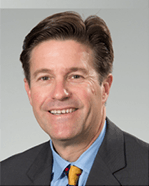 |
Carl “Chip” Lavie, MD, FACC |
| John Ochsner Heart and Vascular Institute, Ochsner Clinical School–The University of Queensland School of Medicine, New Orleans, LA, USA; | |
| Department of Cardiology, Xavier-Ochsner College of Medicine, Ochsner Health, New Orleans, LA, USA | |
| Interests: cardiac rehabilitation and prevention, lipids, hypertension, obesity, and exercise, echocardiography, exercise testing, and nuclear cardiology |
We hope this conversation will inspire our readers and foster deeper engagement between the journal and the cardiovascular community.
1. Could you briefly introduce your academic background, your main research areas, and your current scientific work to the readers of Reviews in Cardiovascular Medicine (RCM)?
I did my medical school at LSUHSC in New Orleans and my internal medicine training at Ochsner in New Orleans where I currently work, and then went to Mayo Clinic in Rochester, Minnesota for training in cardiovascular diseases and stayed on staff a short time before returning to Ochsner, where I have led Cardiac Rehab and Preventive Cardiology for over 35 years and the Exercise Laboratories and also worked as a non-invasive cardiologist mostly in echocardiography. During my almost 4 decades back at Ochsner, I have full clinical loads most workdays, but I also have almost 1900 medical publications, 1334 on PubMed as of May 28, 2026, with an h-index of 165 currently. I have been Editor of a major journal, Progress in Cardiovascular Diseases, and Associate Editor of many, one being the prestigious Mayo Clinic Proceedings, where I have been Cardiovascular Section Editor for 2 decades. I currently serve on over 50 Ed Boards and personally review or handle over 35 new papers weekly for all. I also give 1-3 lectures many weeks, and in recent years, write about 2 of my own papers weekly.
2. You are both a cardiologist and an accomplished runner. You have published extensively on exercise dose—how to maximize benefits and minimize risks. What is the connection between your runner identity and this line of research?
I have published on many aspects of Preventive Cardiology, but physical activity, exercise, and fitness, and cardiac rehab are some of my main topics, including many running papers and papers on doses of exercise for maximizing gains and minimizing risks. My other main topics have been obesity and the obesity paradox in CVD, Omega-3 and CVD, and many other topics.
3. You hold multiple identities, such as professor, clinician, journal editorial board member, and scientific researcher, and you also have to handle a large number of manuscript reviews, teaching, academic lectures, and other work daily. How do you balance scientific research, clinical work, academic services, and personal life? You previously mentioned handling more than 35 papers a week. What is the secret to this efficient time management?
It has been a high priority. I often do an hour of work before leaving for home, frantic paces during the work day, 2-4 hours at night, and 4-6 hours/d most weekends, holidays, and vacation days to keep up. I also do not miss a day of exercise, although I run slower and slower with age. I have 4 children, and all said when they went to college that they weren’t doing medicine as all I did was work, but I convinced them that no one was making me work this much, but I loved the academic and clinical work, and that many physicians and Scientists can work less -my first 3 are physicians. Despite my schedule, I attended the majority of their games as a kid, and I love sports and frequently watch games at night and on weekends while I work. My wife Bonnie has been very supportive of the family as I do Cardiology, and she does almost everything else. Thanks to her dedication and support, I was able to devote myself wholeheartedly to the career I love.
4. It’s known that you submitted a manuscript to RCM as early as 2008, and we’d like to ask how you first formed a connection with RCM.
Since I have published a lot for many years, I end up knowing a lot about the Journals and RCM has been a journal for decades with good reviews and now, of course, original articles. I started building my connection with RCM by submitting articles.
5. You have mentioned that you handle a high volume of new submissions each week. Under such demanding conditions, how do you efficiently assess a manuscript’s scientific value and publication potential? Are there any “early signals” or even “fatal flaws” that you can identify at first glance?
The first thing is deciding if it is worthy of publication, unless it is clear that there is a fatal flaw. Most papers do not have fatal flaws, but one needs to have a feel for how competitive the Journals are and the relative priorities to decide if it makes a Journal’s priority. For example, if a Journal in 2000 had an IF of 1.5, a paper making priority then may not currently if the IF is now 10 or 20.
6. RCM has always emphasized a rigorous and transparent peer-review process. As an experienced reviewer and editor for several high-impact journals, what criteria do you prioritize when reviewing a manuscript for RCM? How would you assess RCM’s current performance in terms of peer review?
Most journals use similar methods, but clearly RCM screens the papers well, has an experienced academic editor decide if it should be sent for review, and then makes decisions based on the reviewers' comments and recommendations. Like other journals, RCM wants to improve the quality of good papers and become better and more competitive over time.
We extend our sincere gratitude to Prof. Lavie for his invaluable time, expertise, and continued support for the development of Reviews in Cardiovascular Medicine. We remain committed to upholding a rigorous peer-review process, advancing the academic quality and RCM's international impact, and fostering meaningful collaboration and dialogue among editors, reviewers, and authors worldwide.
Journal Homepage: Reviews in Cardiovascular Medicine