
Special Interview with Prof. Victor L. Serebruany: RCM Journal Editorial Board Member and World's Top 2% Scientist
18 February 2025
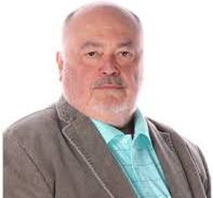
Victor L. Serebruany, M.D., Ph.D., is a distinguished cardiovascular researcher specializing in thrombology and cardiovascular pharmacology. He currently serves as an Assistant Professor of Medicine at Johns Hopkins University and is the founder of HeartDrug™ Research Laboratories, focusing on antithrombotic drug development and cardiovascular disease research. Dr. Serebruany is an editorial board member and reviewer for multiple prestigious medical journals. With significant contributions to antiplatelet and anticoagulant therapy, he has participated in numerous international clinical trials, published extensively in high-impact journals, and holds multiple patents, advancing innovations in thrombosis treatment.
The RCM Journal is proud to present an exclusive interview with Prof. Victor L. Serebruany, a distinguished member of the journal’s Editorial Board and recognized globally as one of the World's Top 2% Scientists.
1. Introduce your primary research direction.
I'm Victor Serebruany. I'm a faculty at Johns Hopkins University Division of Neurology And my main interests are antiplatelet drugs, myocardial infarction, stroke, and scrutiny of clinical trials.
2. What inspired your interest in your research field? Were there any special experiences or opportunities that guided you into this field?
That's a good question. Long one, but I will do it short.
I did my first platelet aggregation studies in 1976. When I was a first-year medical student, I went to some place where people were investigating platelets and they taught me how to do platelet aggregation studies. Now the whole world is doing it.
And I was pretty knowledgeable not only in how to measure the effect on platelets, but also in how to write good papers and publish them well and, that was a very good start. I never thought that my little experience back in the Soviet Union will result in such an opportunity for development and that is very critical for any one of us. When you have some achievements early in life, don't discard them. Don't say, ah, it's irrelevant. You never know what you will need and how you can benefit, and the society may benefit, the patients may benefit, from your discoveries and your talents. And this is also related to you, my dear guys.
3. What are the current cutting-edge developments or hot topics in your research field?
Now the entire anti-platelet area is on big hold. Because the top speed of development of new drugs was diminished about 12 years ago.
4. What advice would you give to young scholars who are just starting their journey in the field?
For the young people, the situation is very simple. You need to advance. You do not know what exactly will happen and how you can implement your skills and what you are going to do but you need to advance, you need to be extremely sufficient in statistics. You need to know how to use all the graphic programs, and how to work with the data there will be more and more data coming from the original clinical trials which will require very good and solid you know, analysis.
For example, many former FDA statisticians start their own companies. I know a few of them who actually know how to mine how to dig the evidence from the big data sets which are millions of entries like spreadsheets. You can't even find the end of it. But they know how to do it.
So have a skill that not many people have. That is exactly what you need in sites these days. For instance, if you are doing molecular biology and know how to do PCR, there will be 1200 people around you who know how to do it. But if you know how to mine data away from the FDA database you're golden because you will have clients and you can even start your own business and do the job so the same thing with research, do something, where competition is not there yet and you will be golden. You never know because you never know if things will change this way or the other with artificial intelligence. And there will be differences and you will succeed only if you present something which not many people can do.
Related Papers:
Primary Causes of Death Reported to the FDA Suggest Less Ticagrelor Mortality Benefit than the List Issued to the PLATO Trial Investigators: https://doi.org/10.31083/j.rcm2304132
Enoxaparin dose impacts blood cell phenotypes during mild SARS-CoV-2 infection: the observational single-center study: https://doi.org/10.31083/j.rcm2204176
Impact of olokizumab on platelets, leukocytes and erythrocytes during mild COVID-19: https://doi.org/10.31083/j.rcm2203065
FDA PLATO deaths list challenges aspirin dose—ticagrelor interaction: https://doi.org/10.31083/j.rcm2203066