

 , Maria Luiza de Almeida Campos 2, Cristiane Mendes Netto 3
1 Federal University of Minas Gerais, 31270-901 Belo Horizonte, MG, Brazil
2 Federal University of the State of Rio de Janeiro (UNIRIO), 22290-250 Rio de Janeiro, RJ, Brazil
3 Vale do Rio Doce University (Univale), 35020-220 Governador Valadares, MG, Brazil
Abstract
Knowledge Organization Ecosystems (KOE) constitute an analytical metaphor for understanding the growing complexity of contemporary information environments, characterized by interdependence, automation, continuous updating, and algorithmic mediation. Traditionally, Knowledge Organization has relied on relatively stable structures, such as documentary languages and ontologies. However, the incorporation of artificial intelligence and digital infrastructures has expanded this scope, requiring conceptual frameworks capable of integrating epistemological, sociotechnical, and ethical dimensions. This article critically examines KOE as ecosystems composed of people, technologies, and organizations, proposing an interpretative perspective that articulates epistemic plurality, distributed governance, and sociotechnical responsibility. Methodologically, the study is based on an analytical and conceptual review of 26 texts selected for thematic relevance, of which 10 form the theoretical core used to characterize KOE and compare them with Knowledge Organization Systems (KOS). The results indicate that KOS provide semantic stability and terminological control, whereas KOE incorporate collaborative dynamics, algorithmic mediation, and ethical governance, enabling a more comprehensive understanding of knowledge organization in artificial intelligence contexts. The article concludes that the ecosystem paradigm enhances the field’s explanatory capacity by recognizing the distributed, ethical, and adaptive nature of contemporary knowledge mediation systems, thereby establishing KOE as a necessary methodological evolution within Information Science.
Keywords
- knowledge organization ecosystems
- knowledge organization systems
- algorithmic mediation
- sociotechnical governance
- epistemic plurality
Over the past decades, the field of Knowledge Organization has witnessed the emergence of new ways of understanding the relationship between representation systems, human agents, and digital infrastructures, leading to a conceptual reconfiguration that goes beyond the scope of traditional Knowledge Organization Systems (KOS). In this context, although KOS remain essential for ensuring semantic stability, it has become evident that, on their own, they are insufficient to address the distributed, adaptive, and ethically sensitive dynamics that characterize contemporary digital ecosystems.
It is within this scenario that the concept of Knowledge Organization Ecosystems (KOE), as proposed by Bagchi (2021), emerges as an expanded framework that integrates epistemological, sociotechnical, and ethical dimensions. This concept does not replace KOS; rather, it extends them by conceiving knowledge organization as part of interdependent ecosystems in which human practices, algorithmic models, and institutional values collectively shape the organization of knowledge.
However, this article proposes a theoretical and temporal expansion of the initial paradigm, moving beyond a simple reaffirmation of Bagchi’s (2021) proposal by systematizing the conceptual trajectory developed between 2018 and 2024. By incorporating the contributions of Stahl (2022; 2023) and Floridi (2023), whose work introduces the dimensions of meta-responsibility and distributed governance, this study advances more robust conceptual models capable of addressing issues that isolated systems cannot adequately resolve, such as algorithmic transparency and epistemic justice, as discussed below.
Knowledge Organization Ecosystems can be understood both as an analytical metaphor and as an interpretative framework capable of capturing the dynamic, interdependent, and multifaceted nature of contemporary information environments. These environments are marked by continuous flows, constant updating, and multiple layers of mediation. Advances in artificial intelligence intensify this transformation by reconfiguring processes such as indexing, classification, relevance construction, and algorithmic filtering. As a result, established practices are reshaped, while new forms of opacity, automation, epistemic asymmetries, and governance challenges are introduced.
The increasing incorporation of algorithms, knowledge graphs, collaborative ontologies, and recommender systems highlights the need to understand Knowledge Organization not merely as a set of documentary instruments, but as an ecological and distributed process. This perspective makes it possible to analyze how epistemic plurality, algorithmic mediation, distributed governance, and sociotechnical responsibility interact in the formation of KOE. Such elements are already evident in open science initiatives, institutional networks, and digital educational environments, as demonstrated by Järvi et al. (2018) and Rojas and Chiappe (2024).
Against this backdrop, the aim of this article is to critically analyze KOE as sociotechnical ecosystems, articulating epistemological, technological, and ethical dimensions, while also comparing their configuration with that of KOS. This focus is justified by the timeliness and urgency of the topic, particularly in light of the growing need to develop information infrastructures that are more transparent, responsible, and sensitive to epistemic diversity. By establishing this interpretative framework, the article contributes to consolidating KOE as a necessary evolution of traditional models, reinforcing conceptual coherence and the articulation between theoretical foundations, analysis, and results.
This study adopts a qualitative, analytical-conceptual approach, guided by the identification, selection, and critical interpretation of studies related to KOE and KOS. The review corpus was constructed through searches conducted in Google Scholar and the Coordenação de Aperfeiçoamento de Pessoal de Nível Superior (CAPES) Journal Portal, a Brazilian national digital library maintained by federal research funding agency, using the descriptors “Knowledge Organization Ecosystems”, “KOS and KOE”, “knowledge ecosystems”, and complementary terms associated with sociotechnical systems and ethics in artificial intelligence. This stage was carried out between November and December 2025 and aimed to map publications that addressed, either directly or indirectly, the epistemological, sociotechnical, and ethical dimensions associated with KOE.
The initial search resulted in 54 documents, of which 26 were selected based on thematic relevance, theoretical consistency, and their contribution to the characterization of KOE. Following the application of inclusion criteria, 10 texts were identified as the analytical core, as they provided explicit definitions of KOE, demonstrated conceptual depth, or offered direct contributions to distinguishing between KOS and KOE.
The selection does not claim exhaustive coverage of the literature. Instead, it constitutes a theoretically oriented corpus aimed at identifying key conceptual movements that structure the emergence and consolidation of KOE between 2018 and 2024. The emphasis lies on analytical relevance rather than quantitative representativeness, since the purpose of this study is conceptual clarification and theoretical modeling rather than bibliometric mapping.
The corpus analysis followed a systematic reading procedure focused on identifying four central analytical axes: (1) epistemological foundations of KOE; (2) sociotechnical dynamics; (3) ethical dimensions; and (4) contemporary applications. These axes structured the organization of the discussion, guided the comparison between KOS and KOE, and supported the interpretation of the ecosystem concept in light of contemporary literature.
In this way, the methodological approach ensures conceptual rigor and interpretative transparency, allowing the results to reflect the theoretical evolution of KOE and their articulation with contemporary information practices.
This section is organized into five subsections that outline the conceptual trajectory and the critical dimensions of contemporary Knowledge Organization. Subsection 3.1 examines KOS, presenting them as one of the technical and theoretical foundations of the field, responsible for ensuring semantic stability, terminological control, and interoperability through instruments such as thesauri, taxonomies, and ontologies.
Subsection 3.2 introduces KOE, characterizing them as complex and dynamic sociotechnical systems that go beyond isolated artifacts by integrating interdependencies among individuals, technologies, and organizations.
Building on this framework, subsection 3.3 discusses the differences and similarities between KOS and KOE, demonstrating that KOE do not replace traditional systems but rather expand them by functioning as living environments that shape interactions and values upon the stable infrastructure provided by KOS.
Subsection 3.4 explores the sociotechnical dimensions of KOE, focusing on regulated interactions between human agents and algorithms, as well as on the role of institutional norms in the circulation of knowledge. Finally, subsection 3.5 addresses ethical and political challenges, treating ethics as a constitutive dimension of KOE and discussing critical issues such as algorithmic transparency, shared responsibility, and the promotion of epistemic justice in environments mediated by artificial intelligence.
Knowledge Organization Systems (KOS) constitute the theoretical and technical foundation of Knowledge Organization, articulating conceptual models, semantic structures, and documentary practices. According to Zeng (2008), KOS:
“Knowledge organization systems (KOS) can be described based on their structures (from flat to multidimensional) and main functions. The latter include eliminating ambiguity, controlling synonyms or equivalents, establishing explicit semantic relationships such as hierarchical and associative relationships, and presenting both relationships and properties of concepts in the knowledge models” (pp. 160–161).
This formulation highlights that KOS are formal artifacts designed to provide terminological standardization, semantic coherence, and structured access to knowledge.
This perspective is reinforced by Mazzocchi (2018), who defines KOS as:
“A generic term used for referring to a wide range of items (e.g., subject headings, thesauri, classification schemes, and ontologies) (…) However, what they all have in common is that they have been designed to support the organization of knowledge and information in order to make their management and retrieval easier” (p. 54).
Both definitions converge on the understanding of KOS as conceptual infrastructures that support mediation and information retrieval processes across different contexts.
The epistemological dimension of KOS is further developed by Hjørland (2008, pp. 86–90), who understands them as expressions of underlying theories and disciplinary values. From this perspective, KOS are social constructions that reflect worldviews, academic traditions, and cultural interests. Consequently, organizing knowledge is not limited to operationalizing formal structures; it also involves epistemological decisions, disciplinary choices, and conceptual negotiations that shape how domains and relationships are stabilized.
From a technical standpoint, KOS encompass a wide range of formal structures, including taxonomies, classification schemes, thesauri, concept maps, metadata schemas, and ontologies. Each of these is guided by specific semantic relationships, such as hierarchies, associations, equivalence relations, and facets. Soergel (2009) emphasizes that “knowledge must be organized in order to be used, be it by people or by machines” (p. 3), indicating that systematic knowledge organization is not merely an instrumental activity, but a necessary condition for meaningful information use.
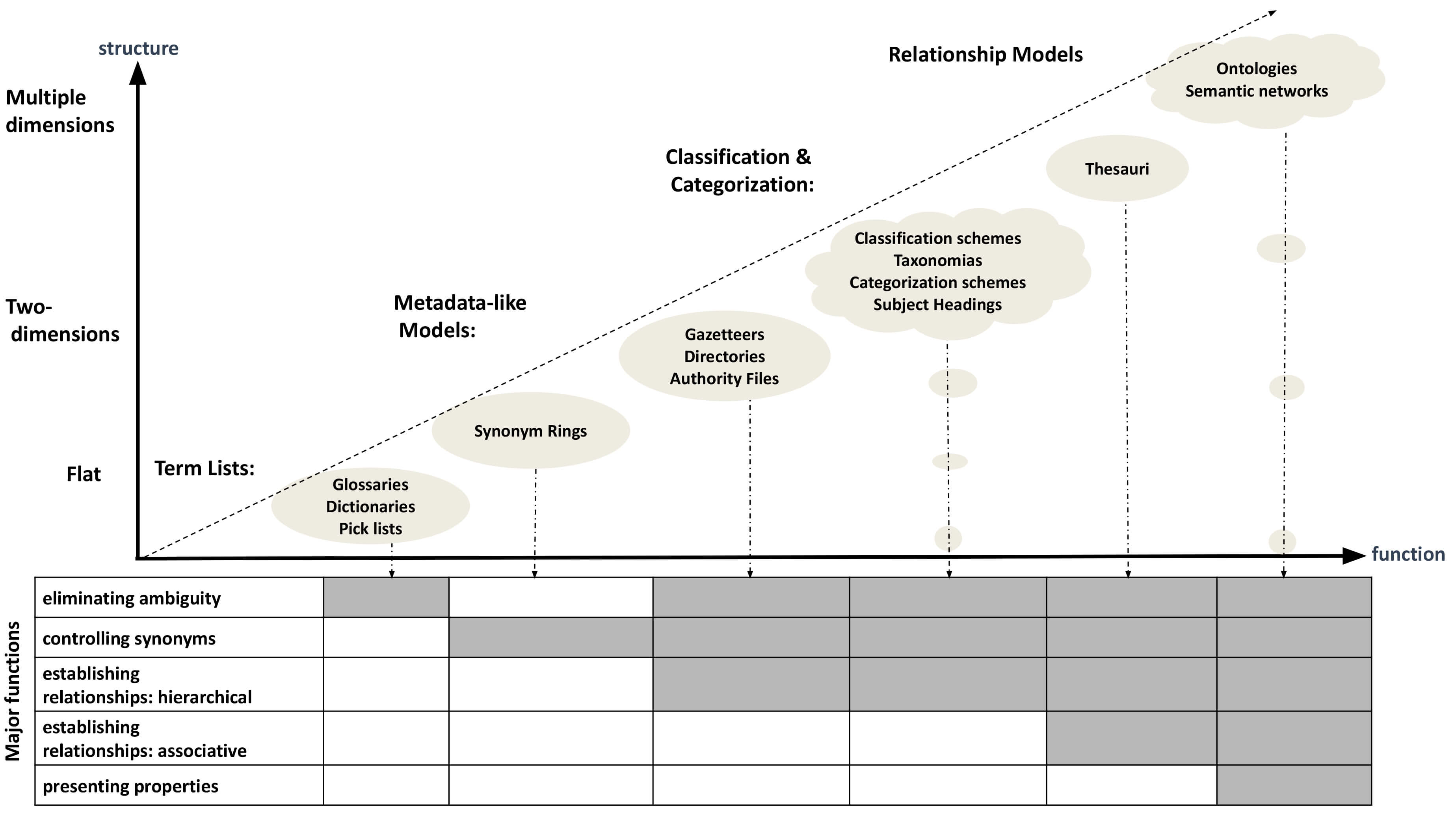
In the functions matrix of Fig. 1, the shaded cells indicate the capabilities associated with each type of Knowledge Organization System, demonstrating that, as models become more complex, they are able to perform more advanced functions, such as eliminating ambiguities, controlling synonyms, establishing hierarchical and associative relationships among concepts, as well as representing richer properties and meanings of knowledge.
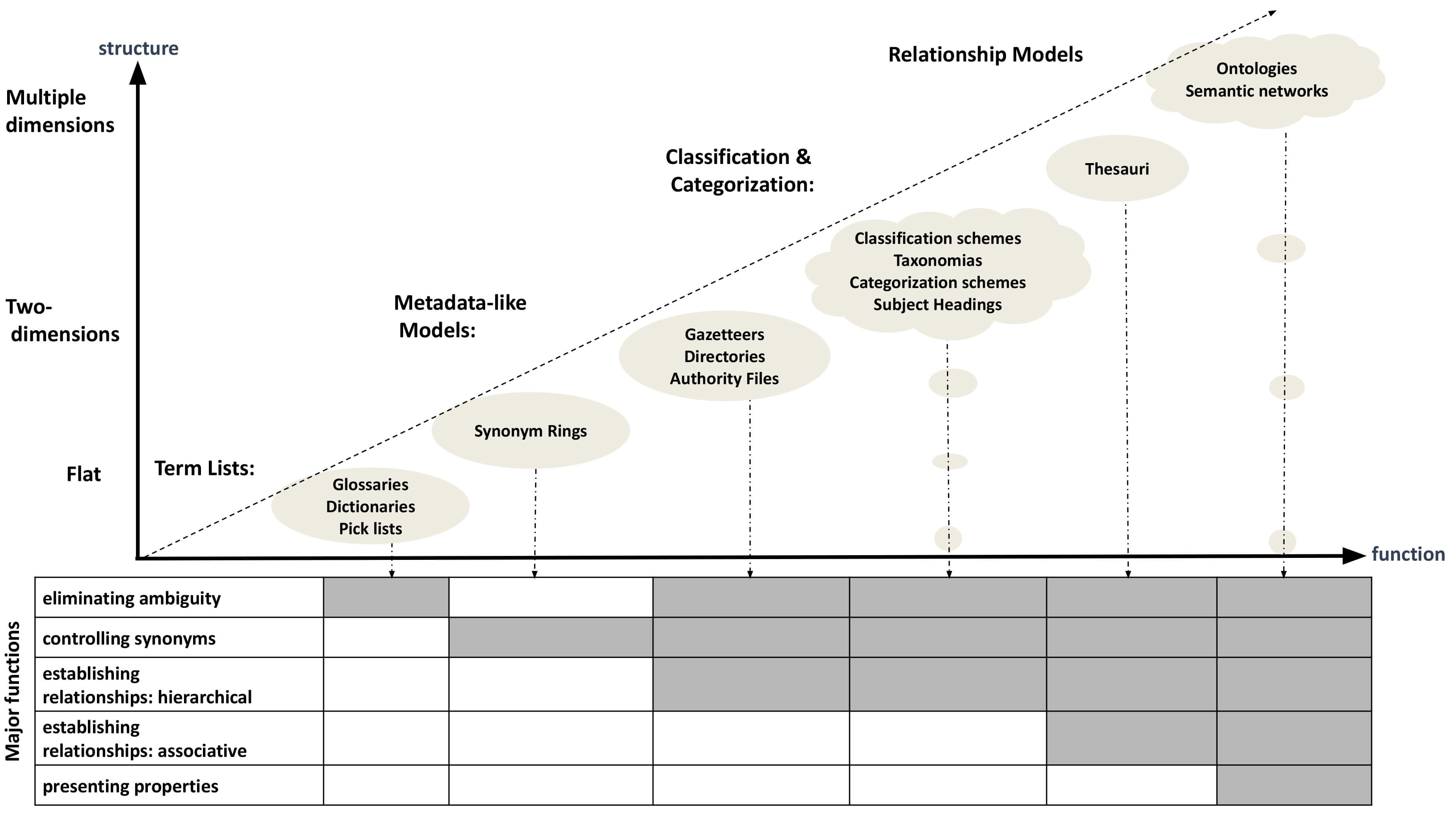 Fig. 1.
Taxonomy of KOS (Zeng, 2008, p. 161). KOS, Knowledge Organization Systems. The shaded cells indicate the capabilities associated with each type of Knowledge Organization System.
An expansion of KOS conceptual modeling is proposed by Giunchiglia and Dutta (2011) through the introduction of the DERA framework (Domain, Entity, Relation, Attribute). This framework shifts from predominantly terminological or classificatory structures toward multidimensional, logic-based knowledge models. According to the authors, a domain is “an area of knowledge or field of study that we are interested in or that we are communicating about” (p. 2) and should be structured through homogeneous facets that describe its essential aspects. Faceted approaches such as DERA enhance the precision and semantic expressiveness of KOS, particularly in digital environments characterized by high granularity and strong interoperability requirements.
In summary, KOS can be characterized by the following features:
These elements make KOS an indispensable infrastructure for complex information systems, serving as the semantic foundation upon which more dynamic models—such as Knowledge Organization Ecosystems—can be developed and operationalized.
Beyond their role as semantic infrastructures, KOS also actively participate in the production, stabilization, and circulation of knowledge. By selecting terms, structuring domains, and defining relationships, they shape epistemic visibility, influence interpretative frameworks, and condition what becomes retrievable and legitimate within a given field. In this sense, KOS do not merely organize pre-existing knowledge; they contribute to its construction and dissemination.
Knowledge Organization Ecosystems expand the traditional scope of Knowledge Organization by situating knowledge organization processes within dynamic sociotechnical contexts characterized by interdependencies, continuous information flows, and collaborative practices. Järvi et al. (2018) describe a knowledge ecosystem as one in which “users and producers of knowledge [are] organized around joint knowledge search” (p. 1533), emphasizing that knowledge organization is not only structural, but also processual and collaborative.
Bagchi (2021) deepens this understanding by proposing the concept of Knowledge Organization Ecosystems, shifting the focus from isolated artifacts to sociotechnical ecosystems composed of interdependent individuals, technologies, and organizations. According to the author, KOE operate as complex systems that integrate social and technical components in order to sustain coherent, sustainable, and ethically oriented knowledge organization solutions.
In this context, an ecosystem should not be understood merely as a biological analogy, but as an analytical metaphor for systems characterized by coevolution, adaptation, and interdependence among components, where changes affecting one agent dynamically influence the functioning of others.
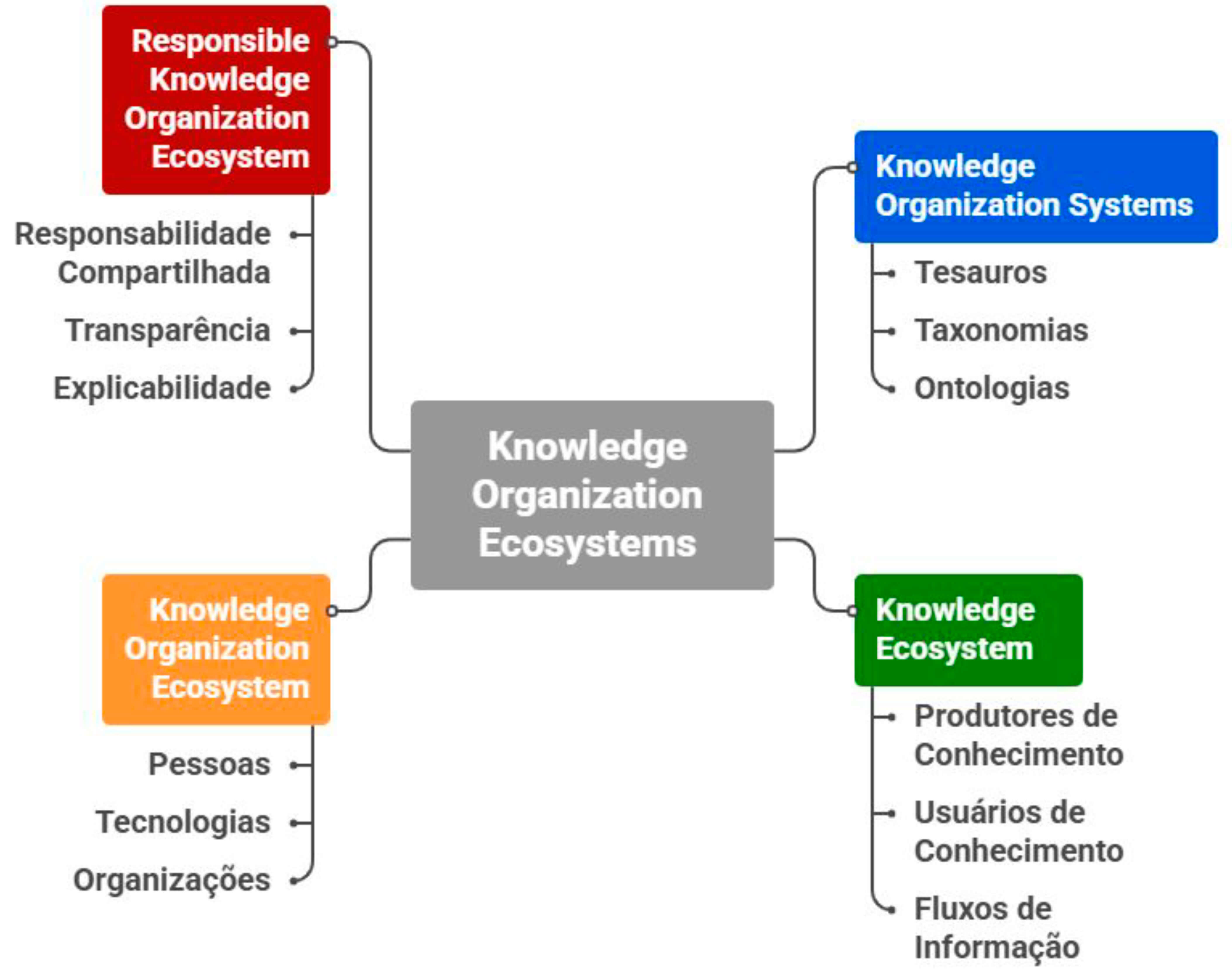
Fig. 2 illustrates this conceptual transition by representing the evolution from KOS to KOE, as proposed by Bagchi (2021), highlighting the integration of sociotechnical and ethical components into the knowledge organization process.
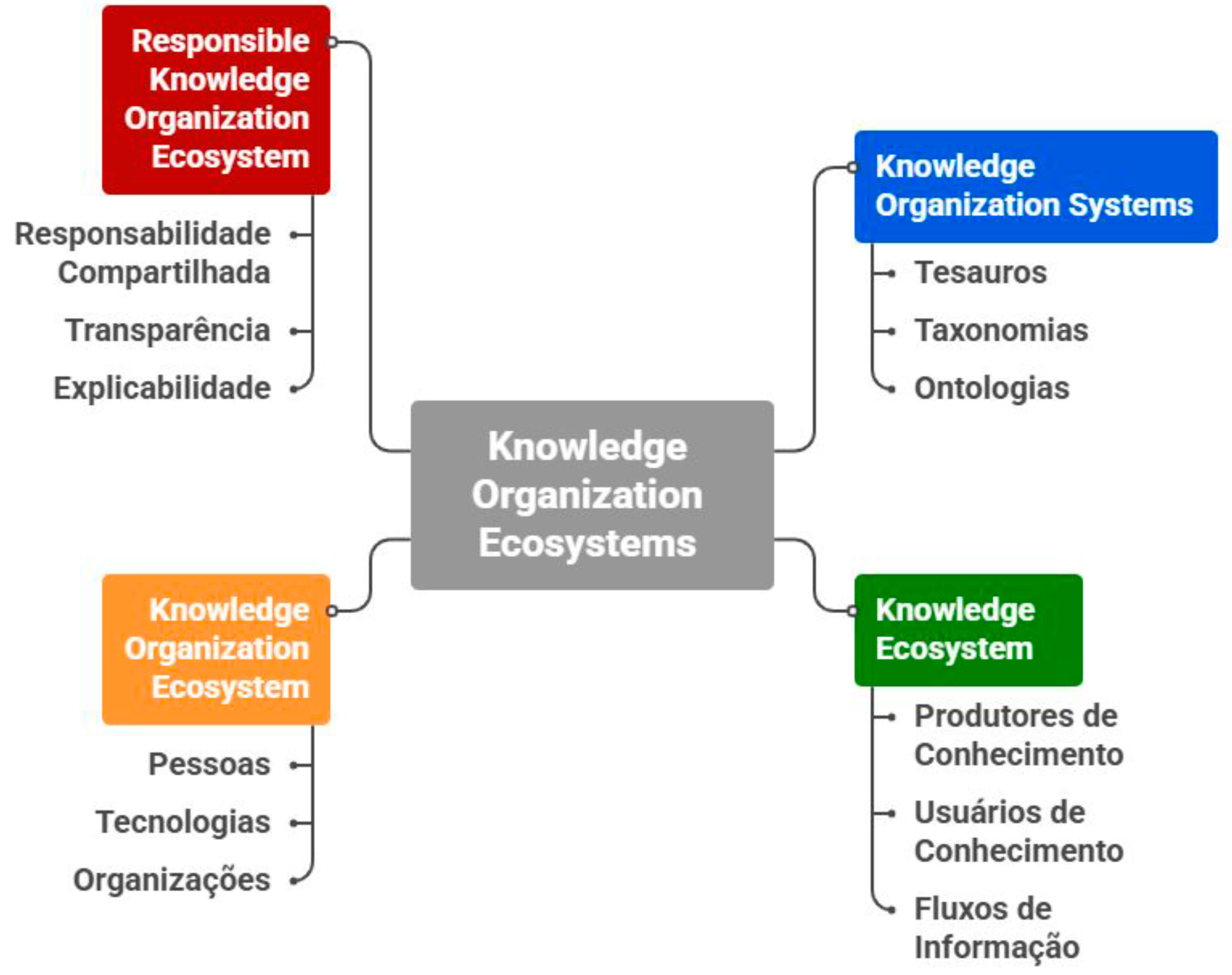 Fig. 2.
Evolution from KOS to KOE. Source: prepared by the authors. KOE, Knowledge Organization Ecosystems.
In addition, Bagchi (2021) shows that KOE extend KOS by integrating human, institutional, and ethical dimensions, positioning Knowledge Organization as part of a sustainable sociotechnical ecosystem that is responsive to artificial intelligence. This perspective highlights KOE as living systems that articulate epistemological perspectives, technological infrastructures, and ethical principles from their very conception.
The dynamics of KOE involve both exploratory processes and integrative processes oriented toward coordination and governance, indicating that KOE continuously produce, transform, and negotiate meanings. The emergence of AI-based technologies, including knowledge graphs, recommender systems, and predictive models, further reinforces the need to understand KOE as ecosystems that integrate people, algorithms, data, infrastructures, and values (Bagchi, 2021, p. 4).
This understanding is closely aligned with the literature on sociotechnical systems. Jones et al. (2013) argue that intelligent systems depend on regulated interactions among agents, rules, and infrastructures. Accordingly, understanding KOE requires recognizing that knowledge circulates through normative, technical, institutional, and human interactions.
The ecosystem concept introduces key elements such as coevolution, adaptation, distributed governance, modularity, and complementarity among components—dimensions that go beyond the structural limits of KOS. This view resonates with sociotechnical systems research, particularly the work of Jones et al. (2013), who emphasize that intelligent systems rely on coordinated interactions among rules, agents, and infrastructures. Thus, understanding KOE implies acknowledging that knowledge circulates through interconnected normative, technical, institutional, and human interactions that mutually reinforce one another.
From this perspective, KOE can be defined as living arrangements characterized by:
Thus, while KOS stabilize domains, KOE describe the environment and the processes through which those domains are transformed.
Within the field of Knowledge Organization (KO), Bagchi (2021) argues that KOE constitute an expanded paradigm by integrating ethical principles, epistemic diversity, and algorithmic mediation into the structuring of knowledge. According to Bagchi (2021), KOE “are conceived as an ecosystem of interdependent components—individuals, knowledge organization models, and organizations—that collaborate and combine their individual efforts toward a more coherent and sustainable knowledge management solution” (p. 4). This view is consistent with broader understandings of ecosystems as adaptive arrangements.
In summary, the literature converges on three structuring dimensions of KOE:
Although they share the general purpose of structuring and facilitating the use of knowledge, KOS and KOE differ in their principles, dynamics, and scope. Both involve conceptual modeling and information mediation; however, they operate at different levels. KOS provide a stable framework for representation, whereas KOE describe the sociotechnical environment in which knowledge circulates, evolves, and is negotiated. Their core similarities include: (a) the objective of promoting meaningful access to knowledge; (b) the use of conceptual structures; and (c) support for both human and algorithmic mediation processes.
It is also important to clarify the terminological distinction adopted in this article. “KOS” is used as a generic category referring to formal systems of knowledge organization, whereas “KOE” refers to concrete ecosystem configurations in which such systems are embedded. In this sense, KOS designates types of semantic infrastructures, while KOE designates sociotechnical arrangements that may vary according to domain, scale, and institutional context.
It is essential to emphasize that KOE place knowledge organization processes and their systems (KOS) at the structural core of the ecosystem. Without the semantic infrastructure provided by KOS, broader sociotechnical ecosystems would lack the interoperability and coherence required to sustain complex knowledge flows under algorithmic mediation.
The limitation of merely extending KOS stems from their condition as relatively stable artifacts. While KOS organize knowledge as a structured product, KOE approach it as a living sociotechnical process. Critical challenges of the AI era, such as algorithmic transparency and shared responsibility, cannot be addressed solely through structural refinements in taxonomies; they demand forms of coordination grounded in dynamic interactions among human and non-human agents.
Nevertheless, their structural, epistemological, and sociotechnical differences reflect distinct paradigms, as summarized in Table 1.
| Dimension | Knowledge Organization Systems (KOS) | Knowledge Organization Ecosystems (KOE) |
| Nature | Formal, stable, and semantically controlled structures | Open, adaptive, and interdependent sociotechnical environments |
| Focus | Static representation of domains and concepts | Dynamic processes of knowledge production, circulation, and negotiation |
| Actors | Specialists, classifiers, indexers | Communities of practice, specialists, users, organizations, algorithms, and infrastructures |
| Scope | Delimited systems with specific purposes | Broad ecosystems composed of multiple systems, agents, and practices |
| Epistemology | Terminological control and conceptual stability | Multiparadigmatism, plurality of perspectives, and coevolution |
| Technology | Thesauri, taxonomies, ontologies | Knowledge graphs, collaborative platforms, Artificial Intelligence (AI), and sociotechnical systems |
| Dynamics | Periodic updating, slow modification | Continuous flow, permanent updating, and feedback loops |
| Governance | Centralized authority | Distributed governance and shared responsibility |
| Ethics | Generally implicit or neutral | Explicit dimension: justice, transparency, explainability, and bias mitigation |
Source: prepared by the authors.
The literature consistently demonstrates that KOE represent a theoretical and methodological expansion of KOS, particularly because they incorporate agents, values, and processes that go beyond the formal limits of traditional systems. Thus, while KOS stabilize conceptual units and relationships, KOE structure the ecosystem that conditions the creation, transformation, and use of knowledge. In this sense, KOE make it possible to represent knowledge in its dynamic form, since they operate under technological conditions that differ from those typically associated with KOS. Paraphrasing Ranganathan (1967), KOE allow for the accommodation of the “dynamics of knowledge”.
Accordingly, KOE do not replace KOS; rather, they are complementary. KOE
integrate semantic infrastructure (provided by KOS), sociotechnical dynamics
(derived from ecosystems), and ethical governance (grounded in responsible AI).
This articulation makes it possible to understand: (1) KOS as stable
infrastructures necessary for representation and interoperability; (2) KOE as
living environments that shape interactions, agents, values, and processes; and
(3) the KOS
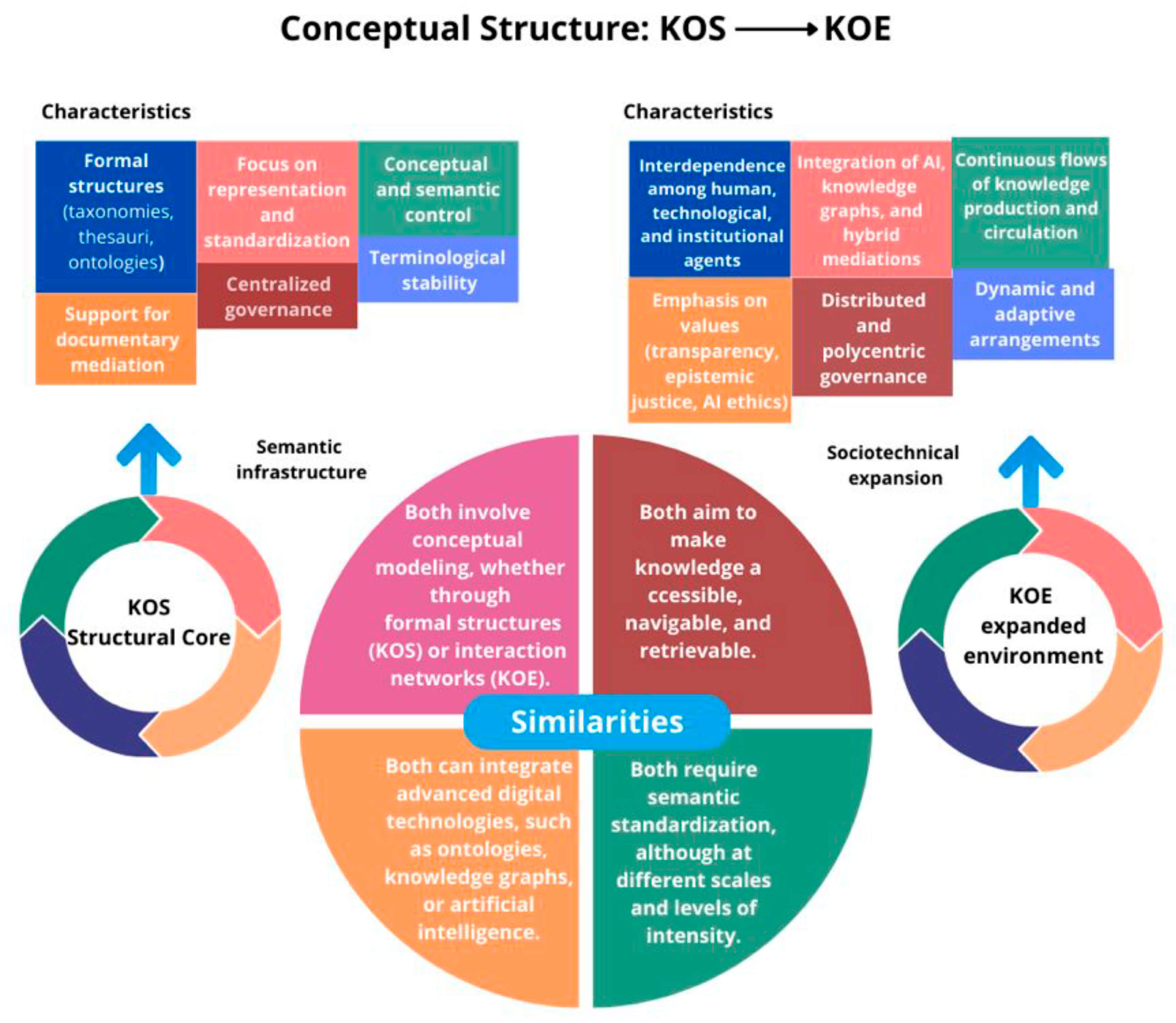
Fig. 3 illustrates this conceptual structure by articulating KOS as semantic infrastructure and KOE as a dynamic sociotechnical ecosystem involving agents, processes, and values.
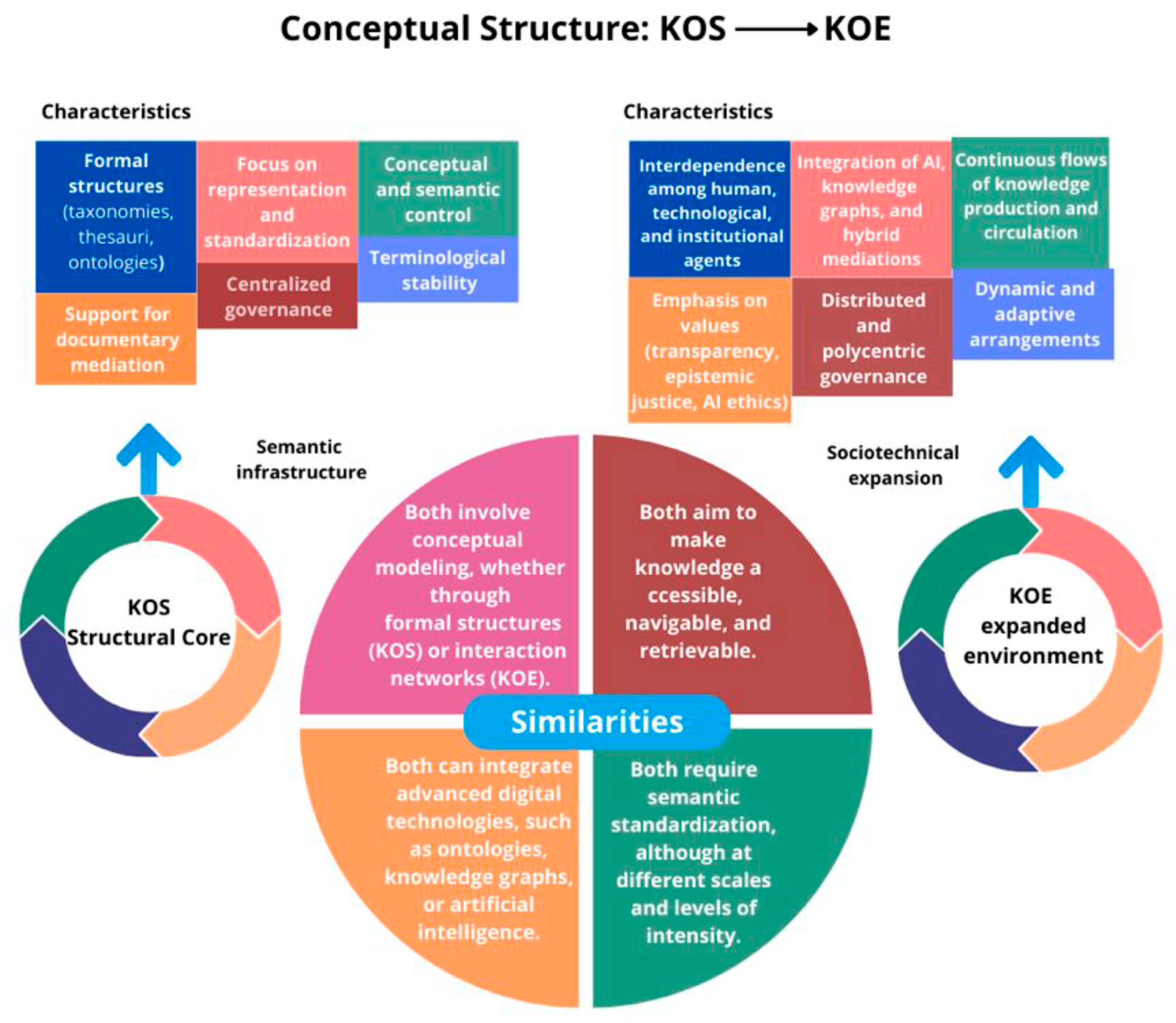 Fig. 3.
Conceptual structure of the relationship between KOS and KOE. Source: prepared by the authors.
This interpretation is consistent with Bagchi (2021), who emphasizes that KOE extend KOS by integrating human, institutional, and ethical dimensions, positioning Knowledge Organization as part of a sustainable sociotechnical ecosystem that is responsive to artificial intelligence. Table 2 summarizes the main differences between KOS and KOE as described by Bagchi (2021).
| Dimension | Knowledge Organization Systems (KOS) | Knowledge Organization Ecosystems (KOE) |
| Conceptual nature | Isolated and structured artifacts (thesauri, ontologies, taxonomies, term lists) | Interdependent ecosystems composed of people, technologies, and organizations |
| Epistemological perspective | Technical and informational focus on concept representation | Sociotechnical and ethical focus on the generation, maintenance, and evolution of knowledge |
| Operational dynamics | Relatively static structures with limited adaptability | Dynamic, open, and evolving systems capable of self-organization |
| Interaction and interdependence | Operate autonomously and independently of their institutional contexts | Based on collaboration among individuals, technologies, and organizations |
| Ethical dimension | Generally neutral or lacking explicit ethical principles | Grounded in AI Ethics and Responsible AI from their inception |
| Purpose | Facilitate information organization and retrieval | Sustain continuous, transparent, and responsive knowledge ecosystems |
| Underlying paradigm | Cognitive and documentary | Systemic, ecological, and socioethical |
Source: prepared by the authors.
In summary, KOS represent an instrumental and stable view of knowledge organization, whereas KOE express an ecosystem-based, adaptive, and ethical approach, aligned with the logic of sustainable sociotechnical systems and responsible artificial intelligence.
Based on the synthesis of the ten analyzed works, it is possible to identify clear distinctions between KOS and KOE. While KOS remain grounded in formal structures that are relatively stable and oriented toward classification and information retrieval, KOE represent a more dynamic and sociotechnical approach focused on the production and circulation of knowledge through interdependent human, organizational, and technological interactions, characterizing self-organized environments shaped by co-production. The ethical dimension, which is often marginal or implicit in KOS, becomes a central element in KOE, particularly in formulations that address responsible ecosystems, distributed governance, and meta-responsibility.
In the specific analysis of each author, it can be observed that only Bagchi (2021) explicitly formulates the theoretical transition from KOS to KOE. Järvi et al. (2018) introduce the concept of the knowledge ecosystem, but without the ethical and sociotechnical dimensions that were later incorporated. Works by Stahl (2022; 2023) and Floridi (2023) further expand the ecosystem-based approach by integrating responsibility, governance, and epistemic justice, thus moving closer to what Bagchi refers to as Responsible KOE.
Applied studies, such as those by Rojas and Chiappe (2024) and Espina-Romero et al. (2024), demonstrate the diffusion of ecosystem logic across specific domains, including education and industry. These studies reinforce the adaptability of the concept, although they do not directly address the KOS–KOE transition, as detailed in Table 3 below.
| Year/Document | Focus of the study | Presence of definition or characterization of KOE/Knowledge Ecosystem | Relationship or differentiation between KOS and KOE |
| Bagchi (2021) – Towards Knowledge Organization Ecosystems | Epistemology and ethics of KOE as an evolution of KOS | Defines KOE as a sociotechnical ecosystem composed of people, technologies, and organizations, guided by AI ethics | Explicit and central: proposes the paradigm shift “from KOS to KOE” |
| Järvi et al. (2018) – Organization of Knowledge Ecosystems | Structure and governance of knowledge ecosystems | Defines a knowledge ecosystem as a set of knowledge producers and users organized around a shared search | Does not discuss KOS; characterizes the ecosystem as a system of co-production |
| Han et al. (2022) – Enhancing the Understanding of Ecosystems under Innovation Management Context | Innovation ecosystems and knowledge management | Characterizes ecosystems as self-organized and interdependent systems with information flows and coevolution | Does not mention KOS, but provides conceptual foundations compatible with the idea of KOE (dynamism and interconnectivity) |
| Stahl (2022) – Responsible Innovation Ecosystems | Ethics and responsibility in innovation and AI ecosystems | Applies the concept of responsible innovation ecosystems to AI, emphasizing ethical and social aspects | Does not use the term KOE, but aligns with its ethical and sociotechnical dimension |
| Stahl (2023) – Embedding Responsibility in Intelligent Systems | Moral responsibility in intelligent systems ecosystems | Introduces “responsible AI ecosystems” and the concept of meta-responsibility | Does not mention KOS, but reinforces the ethical and interdependent dimension of ecosystems, converging with the KOE perspective |
| Floridi (2023) – The Ethics of Artificial Intelligence | Philosophy and governance of AI | Discusses the infosphere and ethical digital ecosystems, but not KOE directly | Indirectly compatible: addresses informational ecosystems and distributed moral agents |
| Rojas and Chiappe (2024) – Artificial Intelligence and Digital Ecosystems in Education | AI and digital educational ecosystems | Defines digital educational ecosystems as interconnected and dynamic environments mediating knowledge and learning | Does not mention KOS/KOE, but offers an ecological view of information and knowledge applicable to education |
| Espina-Romero et al. (2024) – AI in Manufacturing | Industrial ecosystems and AI | Refers to the integration of AI into smart Industry 4.0 ecosystems | No mention of KOS or KOE; focus on automation and efficiency |
| Zouari and Dakhli (2018) – A Multi-Faceted Analysis of Knowledge Management | Organizational knowledge management | Uses the term knowledge ecosystem to describe networks of innovation and organizational learning | Does not distinguish KOS/KOE, but suggests a systemic evolution of knowledge management |
| Stahl et al. (2022) – The Ethics of Artificial Intelligence (Elsevier) | Ethical foundations of AI | Describes sociotechnical ecosystems of AI and responsible innovation | Indirectly compatible: reinforces the role of ethical ecosystems without explicit reference to KOS/KOE |
Source: prepared by the authors (2026).
Based on the ten texts analyzed, it is possible to identify the evolution of KOE between 2018 and 2024, which reveals four main phases:
(1) 2018–2020 — Foundational phase
The term knowledge ecosystem emerges in connection with innovation, collaboration, and coevolution, highlighting interdependence and continuous knowledge flows (Järvi et al., 2018; Han et al., 2022).
(2) 2021 — Paradigmatic phase
Bagchi (2021) introduces the concept of Knowledge Organization Ecosystems, integrating social, technical, and ethical components and shifting the focus from isolated artifacts to sustainable sociotechnical ecosystems.
(3) 2022–2023 — Ethical-systemic phase
Stahl (2022; 2023) and Floridi (2023) incorporate distributed governance, responsibility, and epistemic justice, consolidating the paradigm of Responsible KOE.
(4) 2024 — Applied and transversal phase
The ecosystem logic is increasingly applied in practical domains, such as education (Rojas and Chiappe, 2024) and smart manufacturing (Espina-Romero et al., 2024), demonstrating its adaptability and diffusion across domains. It is important to note that several of the reviewed works employ the term “organization” primarily in a managerial or innovation-oriented sense, rather than in the disciplinary sense of Knowledge Organization. Their inclusion in this review does not imply conceptual equivalence with KO scholarship, but rather reflects the broader ecosystem discourse that later intersects with and informs the development of Knowledge Organization Ecosystems.
Unlike Table 3, which compares the positions of individual authors regarding KOS and KOE, Table 4 synthesizes the diachronic consolidation of the ecosystem paradigm by highlighting the main conceptual shifts that structured KOE between 2018 and 2024.
| Phase | Period | Dominant conceptual shift | Main analytical contribution | Relevance for KOE consolidation |
| Foundational ecosystem framing | 2018–2020 | Knowledge understood as interdependent and co-creative system | Emphasis on collaboration, coevolution, and structured knowledge flows | Establishes ecological logic later incorporated into KO |
| Paradigmatic rearticulation | 2021 | Transition from KOS to KOE | Explicit integration of people, technologies, and organizations into a KO framework | Formal introduction of KOE as a KO-specific paradigm |
| Ethical-systemic consolidation | 2022–2023 | Integration of distributed responsibility and AI governance | Incorporation of meta-responsibility, transparency, and epistemic justice | Strengthens the normative and governance dimension of KOE |
| Applied diffusion | 2024 | Operationalization of ecosystem logic across domains | Application in education, industry, and digital infrastructures | Demonstrates scalability and adaptability of the KOE paradigm |
Source: prepared by the authors.
In summary, the conceptual trajectory of KOE reveals a progressive expansion at the paradigmatic level: from collaborative knowledge ecosystems (2018–2020), to a formalized Knowledge Organization Ecosystem framework (2021), and subsequently to ethically consolidated and governance-oriented configurations (2022–2024).
KOE are characterized as sociotechnical systems in which the interaction among humans, algorithms, data, and infrastructures constitutes the core of knowledge processing, circulation, and use. This perspective, grounded in the sociotechnical systems literature, emphasizes that the effectiveness of knowledge organization depends on regulated relationships among norms, agents, and technological architectures (Jones et al., 2013).
Such mediation entails data governance, privacy, information security, system interoperability, and trust mechanisms that enable collaboration in decentralized environments, particularly those mediated by artificial intelligence and machine learning, by integrating technical requirements with institutional values.
Within KOE, knowledge is not merely represented; it is produced and negotiated through interactions among:
This interpretation aligns with Bagchi (2021), who positions KOE as sustainable sociotechnical ecosystems, and with Stahl (2022; 2023), who introduces the notion of distributed responsibility (meta-responsibility) in intelligent systems. Accordingly, the sociotechnical dimensions of KOE encompass technological architectures, institutional roles, human interactions, and the values that structure the production and circulation of knowledge.
Thus, understanding KOE as sociotechnical systems means recognizing that knowledge circulates and transforms through regulated interactions among human agents, algorithms, infrastructures, and institutional norms—a reality that redefines the traditional boundaries of KOS and underpins the ecosystem paradigm.
Ethics constitutes a structuring dimension of Knowledge Organization Ecosystems, particularly in contexts shaped by artificial intelligence, automation, and algorithmic decision-making. Within KOE, decisions about what should be organized, how it should be structured, and which uses should be prioritized necessarily involve moral, social, and epistemic criteria that directly influence the quality and fairness of informational outcomes.
The main ethical challenges identified in the literature include algorithmic bias, explainability, transparency, responsibility, privacy, information security, distributed governance, and epistemic justice—concerns that are central in highly complex digital environments.
Contemporary scholarship indicates that KOE should be conceived from their inception as sociotechnical systems guided by robust ethical principles. Rather than merely mitigating risks, KOE must incorporate permanent mechanisms of moral governance, shared responsibility, and the inclusion of marginalized perspectives from the outset.
A conceptual model for the digital ethical assessment of the use of AI in digital technologies is proposed by Ashok et al. (2022), which organizes ethical challenges into four ontological domains: physical, cognitive, informational, and governance-related.
This model articulates implications such as dignity, safety, sustainability, intelligibility, solidarity, autonomy, privacy, and regulatory impacts, demonstrating how each domain influences the organizational and social effects of artificial intelligence. In doing so, it reinforces the understanding that KOE operate across multiple ethical layers, ranging from system design to institutional decisions regarding use and implementation.
The model structures ethical implications through the interaction of four ontological domains: physical, cognitive, informational, and governance. These domains are interconnected and jointly shape both organizational and social consequences. Ethical effects are therefore not confined to technical design, but emerge from the interaction among infrastructures, representational systems, institutional norms, and interpretative practices.
When related to Knowledge Organization Ecosystems, these domains correspond to distinct but interdependent dimensions of ecosystem functioning. The informational domain is associated with semantic infrastructures and KOS-based representations. The cognitive domain concerns processes of interpretation and epistemic validation. The governance domain encompasses regulatory frameworks and distributed responsibility. The physical domain refers to the material and technological conditions under which digital systems operate.
The connection between organizational and social impact underscores that ethical assessment in AI-mediated knowledge organization must address structural interdependencies rather than isolated algorithmic procedures. The model therefore reinforces the view of KOE as configurations in which semantic structures, institutional arrangements, and normative commitments are continuously articulated.
Stahl’s work (2022; 2023) deepens this perspective by introducing the concept of responsible innovation ecosystems and, subsequently, responsible AI ecosystems, in which responsibility is distributed among human, organizational, and technical agents. This notion of meta-responsibility is essential for understanding KOE in AI-driven environments.
Floridi (2023), in addressing the infosphere and the ethical ecology of information, further argues that the digital revolution has profoundly transformed the structure of reality by exerting a “cleaving power”, capable of coupling, decoupling, and recoupling fundamental elements of the modern world—such as identity and data, presence and location, law and territoriality, and production and consumption. In this context, artificial intelligence emerges not as intelligence per se, but as a form of agency—understood here as the capacity to act in the world—made possible by the separation between functional performance and cognitive capability. This ontological and epistemological transformation of the infosphere demands new normative frameworks, as digital systems increasingly operate as moral ecosystems in which human and artificial agents interact, thereby requiring governance, explainability, and cognitive justice.
Accordingly, the ethical and political challenges of KOE include:
Therefore, the ethical dimension is not ancillary but constitutive of KOE, shaping processes of knowledge organization, mediation, and use within complex sociotechnical environments.
This section examines the materialization of Knowledge Organization Ecosystems (KOE) in real-world settings, as well as the tensions and opportunities that emerge from their implementation. Subsection 4.1 explores contemporary practices, demonstrating that KOE are not merely abstract models, but concrete sociotechnical arrangements in which human agents, algorithmic systems, and digital infrastructures operate in interdependent ways. To support this claim, we draw on examples that show how these ecosystems articulate semantics and automation to sustain continuous information flows in institutional contexts. Subsection 4.2 addresses the limits and potentialities of this paradigm by confronting the challenges posed by the complexity of digital environments. It discusses the limitations of statistical models in capturing cognitive plurality and semantic ambiguity, as well as governance challenges that require distributed responsibility (meta-responsibility). Conversely, it highlights the potential of KOE to promote cognitive sustainability and epistemic justice, strengthening public trust through knowledge organization processes that prioritize transparency, auditability, and the inclusion of diverse forms of knowledge.
Knowledge Organization Ecosystems manifest in contemporary practices in which human agents, algorithmic systems, and digital infrastructures interact in interdependent ways. These examples demonstrate that KOE are not only theoretical constructs, but concrete sociotechnical arrangements that articulate semantics, collaboration, and automation in institutional contexts.
Within the scope of open science, knowledge graphs stand out as infrastructures that integrate researchers, digital objects, ontologies, and scientific data. The conceptual structure of these graphs draws on principles outlined by Zeng (2008, p. 160) regarding terminological control and semantic relations, as well as on the heterogeneity of KOS discussed by Mazzocchi (2018, s.p.). The multimodal modeling of these environments is further related to the use of facets and ontological structures described by Giunchiglia and Dutta (2011, p. 3), which emphasize the need for conceptual segmentation in complex digital systems. Bagchi (2021, pp. 4–5) complements this perspective by showing that KOE integrate people, technologies, and organizations into responsive ecosystems.
In recommendation systems and automated indexing in digital libraries, human practices, institutional data, and algorithms interact in continuous processes of filtering and categorization. The need to organize knowledge for both human and machine use, as noted by Soergel (2009, s.p.), and the notion of sociotechnical systems regulated by rules and interactions, as discussed by Jones et al. (2013), help explain how these systems constitute genuine KOE. Such systems do not merely automate processes; they integrate institutional policies, usage practices, and algorithmic decisions.
Collaborative ontologies developed in institutional environments clearly illustrate ecosystem principles. The notion of knowledge as co-production, introduced by Järvi et al. (2018, p. 1533), supports collaborative dynamics, while studies such as Rojas and Chiappe (2024, pp. 2149–2160) show how digital learning ecosystems depend on interactions among agents, infrastructures, and cognitive mediation. Bagchi (2021, pp. 6–7) further emphasizes that KOE interweave ethical, technological, and human dimensions.
The understanding of KOE as a paradigmatic expansion gains practical clarity when one observes the evolution of systems traditionally regarded as stable KOS. The development of the International Classification of Diseases ICD-11 offers a concrete case. By integrating digital technologies and unifying classificatory, thesaural, and ontological approaches, ICD-11 moves beyond the replication of previous editions and emerges as a dynamic and multifaceted system embedded in global digital infrastructures (Hong and Zeng, 2022; World Health Organization, 2024).
This process of modernization reveals that the three structuring dimensions of KOE, sociotechnical, epistemological, and ethical-political, can be identified in the contemporary transformation of KOS. At the sociotechnical level, ICD-11 exemplifies regulated interaction between expert communities, institutional actors, and digital infrastructures. At the epistemological level, it reflects the convergence and negotiation of multiple medical, cultural, and terminological perspectives within a shared classificatory framework. At the ethical level, it manifests governance mechanisms required for global standardization, interoperability, and responsible use of health information.
The relationship between KOS and KOE should therefore not be interpreted as substitution or rupture, but as paradigmatic expansion. KOS are not merely static retrieval structures; they are semantic systems that, when incorporated into automated and collaborative information flows, evolve into complex sociotechnical configurations. This perspective reinforces the view that contemporary knowledge organization resides in the capacity to articulate the terminological stability of KOS with the adaptive and distributed dynamics characteristic of KOE.
Overall, the practices analyzed demonstrate that KOE articulate interoperability, collaborative dynamics, and algorithmic mediation, configuring living infrastructures for knowledge organization. In summary, these examples show that KOE are not abstract models, but real ecosystems in which technological infrastructure, human practices, institutional decisions, ethical values, and algorithms are intertwined. These practical manifestations reinforce the paradigmatic transition discussed by Bagchi (2021) and complemented by ethical-systemic contributions such as those of Stahl (2022; 2023).
Despite their relevance, Knowledge Organization Ecosystems present structural limitations arising from the complexity of digital environments, ethical demands, and the diversity of agents involved. These limitations are partly associated with statistical models that fail to capture epistemic divergences, semantic ambiguity, and cognitive plurality.
The transition toward KOE also brings significant political tensions. Distributed governance, although presented as democratic in theory, may result in a diffusion of responsibility, as the opacity of algorithms and the multiplicity of involved actors can complicate the attribution of accountability for errors or biases. In addition, AI-oriented infrastructures may intensify existing power asymmetries, particularly when global metadata standards and algorithmic frameworks conflict with local or marginalized knowledge practices, thereby placing the ecosystem’s commitment to epistemic justice under strain.
Another critical challenge concerns governance and sustainability. In distributed ecosystems, norms, responsibilities, and auditing mechanisms become complex. The model of distributed responsibility (meta-responsibility) developed by Stahl (2023, pp. 155–170) demonstrates that ethical decisions emerge from the ecosystem itself and cannot be attributed solely to developers or institutions. The European report analyzed by Bird et al. (2020, s.p.) highlights political, regulatory, and social risks that affect these environments, while the ethical model proposed by Ashok et al. (2022, pp. 20–21; p. 44) confirms that the social and organizational impacts of AI depend on the articulation among physical, cognitive, informational, and governance domains.
From a practical standpoint, maintaining a KOE requires sustained resources that extend beyond technical development. The long-term viability of the ecosystem depends on continuous coordination between social and technical components, which entails significant operational and institutional commitments to ensure that semantic infrastructures remain responsive to the rapid evolution of artificial intelligence.
The KOE paradigm should not be reduced to statistical or computational models. Although artificial intelligence functions as a mediator within the ecosystem, its coordination remains intrinsically human-centered and interpretative. It depends on institutional norms and ethical judgment to provide meaning to interactions that purely mathematical models are unable to fully capture.
Despite these limitations, KOE exhibit significant potential. Bagchi (2021, pp. 2–7) shows that, when integrated with ethical values, KOE promote cognitive sustainability, epistemic diversity, and inclusion. Floridi (2023, s.p.) further argues that digital ecosystems guided by justice and explainability strengthen public trust. Accordingly, KOE can enhance transparency, auditability, and social legitimacy in information mediation processes. These elements support the construction of trustworthy, plural, and socially oriented information ecosystems that combine technical efficiency with ethical responsibility.
By incorporating ethical principles from their inception, KOE can promote:
These factors contribute to strengthening public trust by making visible the processes and agents involved in the organization, mediation, and circulation of knowledge. Therefore, KOE synthesize technical efficiency, ethical responsibility, and epistemic sensitivity, positioning themselves as a promising model for addressing contemporary challenges in Knowledge Organization.
The results presented throughout this article indicate that KOE represent a significant advance in the contemporary understanding of Knowledge Organization. By integrating epistemological, sociotechnical, and ethical dimensions, KOE provide a framework capable of explaining the complexity of digital environments characterized by automation, interdependence among agents, and algorithmic mediation. The analysis demonstrated that, while KOS remain essential for ensuring conceptual stability and interoperability, their scope becomes limited when confronted with information practices marked by continuous flows, multiple epistemologies, and collaborative processes.
Although analytically distinguished, KOS and KOE can be understood in a more integrated manner. As KOS have evolved alongside emerging technologies, many have gradually incorporated attributes once associated primarily with knowledge ecosystems: a sociotechnical dimension, marked by continuous interaction among humans, algorithms, data, and infrastructures; an epistemological dimension, capable of accommodating multiple perspectives, conceptual disputes, and diverse forms of validation; and an ethical and political dimension, oriented toward responsible governance, the mitigation of asymmetries, and the promotion of epistemic justice. When endowed with these attributes, KOS cease to function solely as stable infrastructures and begin to operate as genuine KOE, articulating representation, interaction, values, and processes within complex environments. The relationship between KOS and KOE therefore does not signify a rupture, but rather a paradigmatic expansion that reflects the transformation of KOS into increasingly complex sociotechnical ecosystems.
With regard to future research, this study draws on the agenda outlined by Bagchi (2021), which is particularly relevant because it both identifies directions for new investigations and provides an overview of current developments in the field. One proposed direction involves the detailed characterization of KOE at the interdisciplinary intersection of Knowledge Organization, Knowledge Representation, Knowledge Management, and ecological theories applied to strategic management. Another line of inquiry concerns a systematic analysis of the correspondence between KOE and sociotechnical systems, with the aim of identifying the specific features that distinguish KOE from other system models. A further central issue for future research is the development of a conceptual framework that positions KOE as systems intrinsically aware of AI ethics. Finally, Bagchi (2021) emphasizes the importance of implementing KOE across different domains in order to validate their impact on AI-based systems.
In summary, the findings converge on the need to establish KOE as a central analytical reference within Knowledge Organization, especially in scenarios permeated by artificial intelligence and continuously transforming digital ecologies.
All data reported in this paper are available from the corresponding author upon reasonable request.
GAL designed the study. GAL, MLAC, and CMN analyzed the data. GAL, MLAC, and CMN drafted the manuscript. All authors contributed to revisions, read and approved the final version, and agree to be accountable for all aspects of the work.
The first author acknowledges the support of the National Council for Scientific and Technological Development (CNPq, Brazil) for the award of a Research Productivity Grant (PQ-B, Process No. 306713/2025-0).
This research received no external funding.
The authors declare no conflicts of interest.
During the preparation of this work, the authors used ChatGPT-4.0 (based on a large language model) in order to check spelling and grammar. After using this tool, the authors reviewed and edited the content as needed and take full responsibility for the content of the publication.
References
Publisher’s Note: IMR Press stays neutral with regard to jurisdictional claims in published maps and institutional affiliations.