

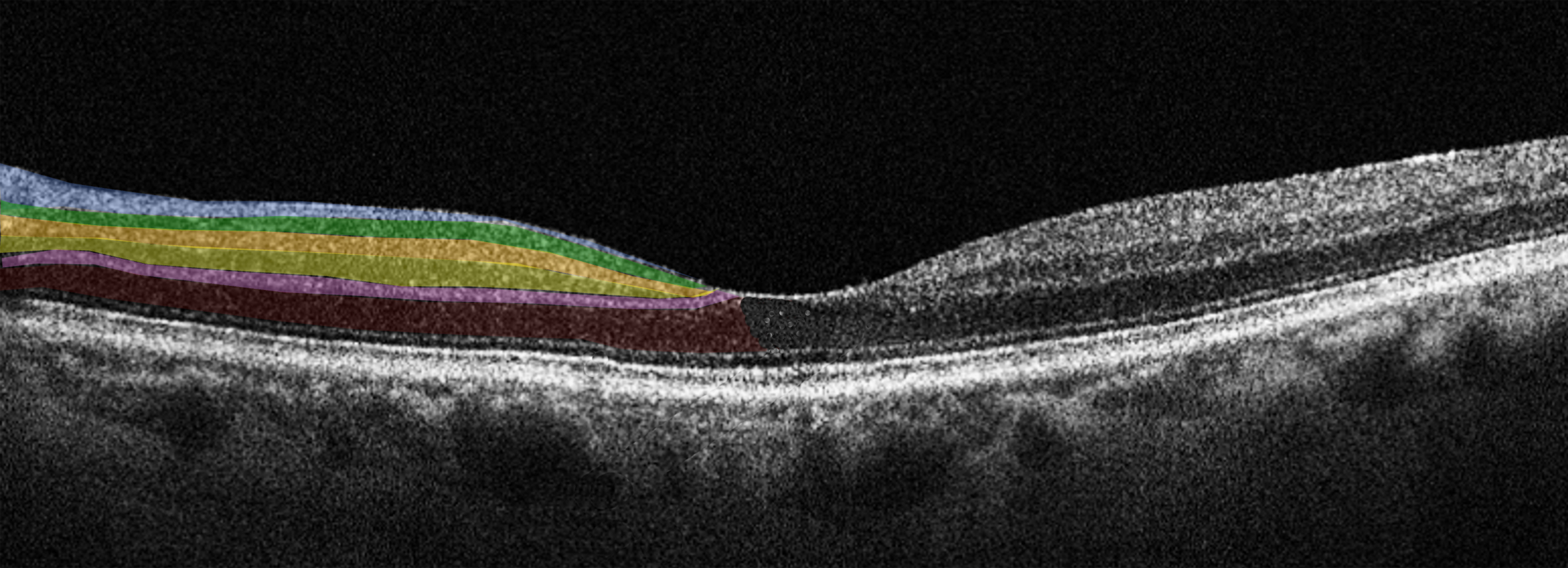
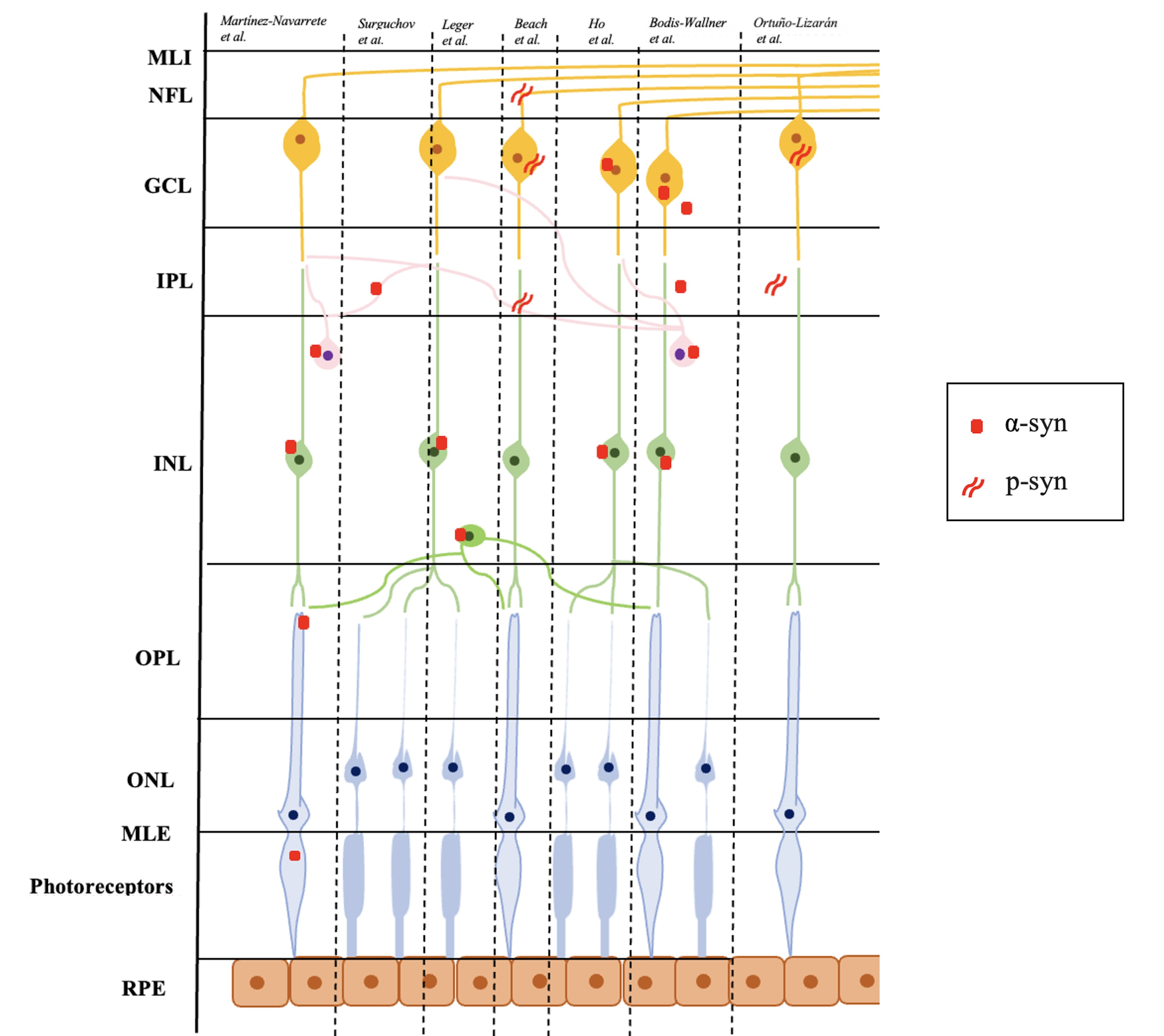
 , Daniele Fumi 1,†, Lorena Bassis 1, Mariachiara Di Pippo 1, Solmaz Abdolrahimzadeh 1,2,*
1 Ophthalmology Unit, Neurosciences, Mental Health, and Sense Organs (NESMOS) Department, Faculty of Medicine and Psychology, University of Rome Sapienza, 00189 Rome, Italy
2 Ophthalmology Unit, Department of Surgical Sciences, St. Andrea Hospital, 00189 Rome, Italy
†These authors contributed equally.
Abstract
Optical coherence tomography (OCT) is a non-invasive imaging technique in the field of ophthalmology that has been increasingly recognized for its capability to identify potential biomarkers in neurodegenerative processes. While the retinal nerve fiber layer (RNFL) has been vastly explored, this review focuses on the ganglion cell layer (GCL), highlighting its relevance and potential advantages in the diagnostic approach and monitoring of neurodegenerative conditions. In the present review we explore the role of GCL changes detected by OCT in Alzheimer’s disease (AD), Parkinson’s disease (PD), and multiple sclerosis (MS). We focus on these conditions due to their prevalence and substantial social impact among neurodegenerative diseases. We summarize key findings on the changes in the GCL and their correlations with disease progression and severity. Moreover, we highlight GCL measurements in the context of a multidisciplinary diagnostic approach, and their potential in adapting tailored therapeutic strategies in neurodegenerative disease management. Challenges such as methodological variability in OCT measurements, automatic instrumental output parameters, the limitations of GCL as a standalone diagnostic tool, and the impact of systemic and ocular factors are discussed. Finally, we propose that forthcoming advancements in OCT technology, integration with other biomarkers, and longitudinal studies will likely further enhance the understanding of GCL changes over time.
Keywords
- ganglion cell layer
- spectral domain optic coherence tomography
- Alzheimer disease
- Parkinson’s disease
- multiple sclerosis
- neurodegenerative diseases
Retinal tissue and the optic nerve share an embryological origin with the central nervous system, as they both derive from the neuroectoderm [1, 2, 3, 4, 5, 6, 7, 8, 9]. Given the similarities in structure and characteristics, there is a growing interest in utilizing retinal in vivo imaging as a potential diagnostic and monitoring tool for neurological conditions, particularly neurodegenerative diseases [1, 2, 3, 4, 5, 6, 7, 8, 9].
Optical coherence tomography (OCT) delivers rapid, non-invasive, cost-effective, and accessible imaging with near-histological precision, facilitating the distinct identification of individual retinal layers. OCT evaluation of the inner retinal structures, such as the retinal nerve fiber layer (RNFL), inner plexiform layer (IPL), and ganglion cell layer (GCL), is valuable in evaluating neurodegenerative diseases [1, 6, 7, 8, 9, 10, 11, 12, 13] (Fig. 1, Ref. [14]).
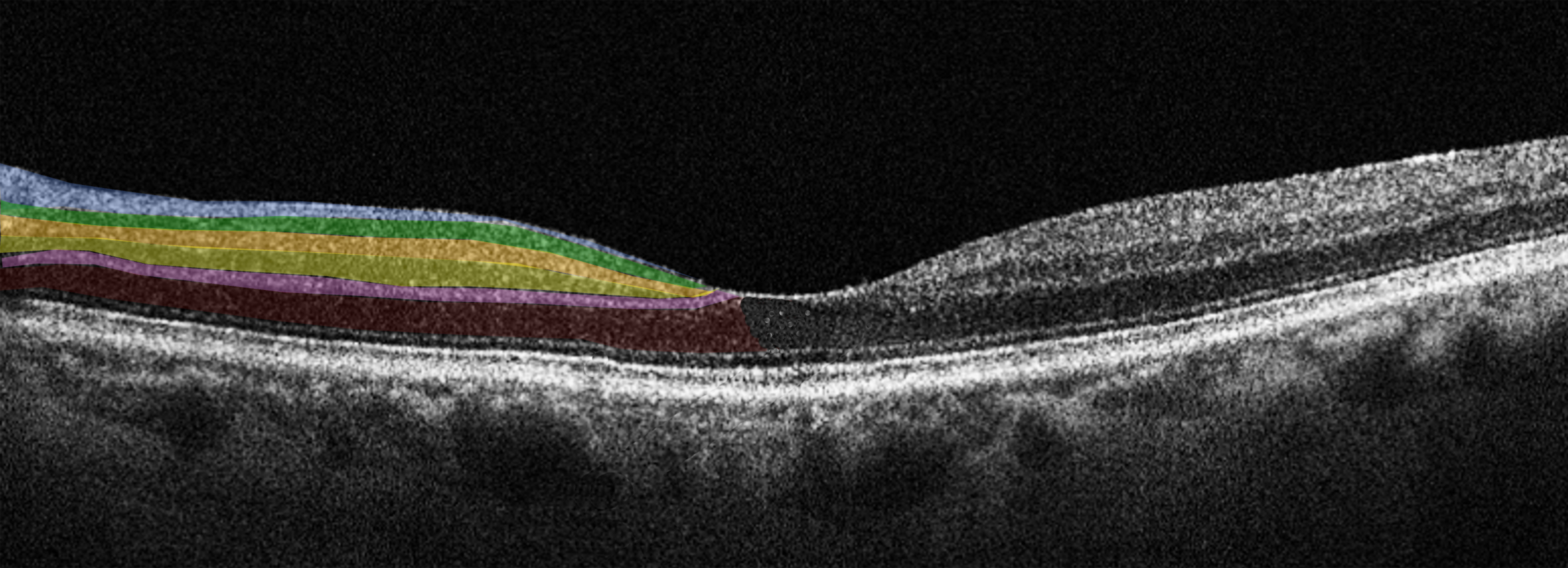 Fig. 1.
Retinal layers optical coherence tomography (OCT) depiction. Horizontal spectral domain optical coherence tomography (SD-OCT) cross-sectional scan passing through the fovea. The various retinal layers are shown with added color overlayers on the left side as follows: blue: retinal nerve fiber layer; green: ganglion cell layer; orange: inner plexiform layer; yellow: inner nuclear layer; pink: outer plexiform layer; red: outer nuclear layer. The right side shows original SD-OCT output in scales of grey. From Di Pippo M, Fragiotta S, Di Staso F, Scuderi L, Abdolrahimzadeh S. The Role of Alpha-Synuclein Deposits in Parkinson’s Disease: A Focus on the Human Retina. International Journal of Molecular Sciences. 2023; 24: 4391. https://doi.org/10.3390/ijms24054391 [14].
Traditionally, the diagnosis and follow-up of neurodegenerative pathology often involves costly and time-consuming neuroimaging examinations such as magnetic resonance imaging (MRI) and positron emission tomography (PET) scans. In contrast, in vivo retinal imaging through OCT offers a quicker and more widely available alternative. Moreover, OCT can capture micrometric variations that are not discernible with conventional neuroimaging techniques [1, 2, 3, 10, 13]. Therefore, a significant quantity of publications have recently emerged, exploring the relationship between retinal imaging and traditional biomarkers of neurodegenerative diseases. While it is not anticipated that retinal imaging will supplant neuroimaging as the main diagnostic tool for neurodegenerative processes, nor serve as a standalone diagnostic criterion, its potential to efficiently deliver further insights is undeniable [1, 2, 3, 6, 7, 8, 9, 12, 13, 15]. The integration of OCT could prove instrumental during the diagnostic and screening phases—owing to its rapidity and non-invasiveness—and throughout the monitoring phases of disease, significantly enhancing patient care quality [1, 2, 3, 6, 7, 8, 9, 12, 13, 15].
The three innermost layers of the retina are the RNFL, the GCL and the IPL, also known as the ganglion cell complex (GCC) [1, 10]. The RNFL constitutes the axons, the GCL contains the cell bodies of the inner retina’s third neuron, making it a critical indicator of neuronal loss, and the IPL contains the ganglion cell dendrites primarily consisting of synaptic connections [11]. The RNFL has demonstrated a strong correlation with disease markers and has been extensively studied [4, 5, 16, 17, 18, 19, 20, 21, 22, 23], but the presence of large retinal vessels in the peripapillary region can complicate RNFL measurement, as these vessels may obscure or alter the apparent thickness of the RNFL [24]. In contrast, the GCL is not affected by vascular structures, potentially offering more consistent measurements [25]. While this paper focuses on the GCL, including the IPL may be beneficial for understanding trans-synaptic degeneration and other neurodegenerative mechanisms by offering a more comprehensive view of retinal layer changes. Nevertheless, analysis of the GCL reflects its prominence in the existing literature and ensures consistency in synthesizing findings [26, 27].
In this review, we aim to summarize the existing literature on the role of the GCL as a biomarker in Alzheimer’s disease (AD), Parkinson’s disease (PD), and multiple sclerosis (MS), highlighting the GCL as a valuable biomarker across neurodegenerative diseases. In AD the thinning of the GCL correlates with cognitive decline, suggesting its potential as a biomarker for integrating diagnosis and monitoring disease [28]. In PD, GCL thinning is associated with both motor and non-motor symptoms, reflecting broader central nervous system involvement [29]. In MS, GCL thinning correlates with disease activity and progression, particularly in cases of optic neuritis [30]. When integrated appropriately into a diagnostic workflow, OCT imaging of the GCL can significantly enhance the diagnostic process and longitudinal neurodegenerative disease evaluation.
The complexity and frequently invasive nature of traditional diagnostic methods in the diagnosis and follow-up of disease progression have posed significant challenges in the management of neurodegenerative conditions. Given the crucial need for early diagnostic approaches, there is an ongoing imperative to develop and enhance techniques for detecting initial pathological signs while ensuring they are minimally invasive. Recent advances in medical imaging have highlighted the role of retinal imaging methods as a potential tool in the diagnostic workup of neurodegenerative diseases [2, 3, 14]. The retina, an accessible extension of the central nervous system, shares many anatomical and physiological characteristics with brain tissue [28, 31]. This has led to the hypothesis that changes occurring in central degenerative diseases might be reflected, or even anticipated, at the retina [4, 5, 16, 17, 32]. The retinal GCL and the RNFL contain the neuronal body and axons that connect the photoreceptors with the pathways of vision in the central nervous system. These structures can be analyzed using OCT, which enables in vivo assessment of the GCL, IPL, and RNFL thickness [18]. The basis for GCL evaluation as a valid biomarker lies in the fact that retinal ganglion cells (RGC) are neurons located in the GCL [1, 11, 33, 34, 35, 36, 37, 38]. This leads to a strong likelihood that, neurodegenerative changes affecting the retina would have an impact on this specific layer [26]. Indeed, it has been extensively reported that cognitive impairment is related to thinning of the neuronal retinal layers, specifically impacting the RGCs observed through retinal layer segmentation provided by OCT software [18, 19, 33, 34, 35]. Thinning of the GCL has been linked to cognitive decline in AD, motor and non-motor symptoms in PD, and disease activity in MS [29, 30, 33].
AD is a neurodegenerative disease that represents the predominant cause of dementia. The condition primarily starts with episodic memory deficits, and as the disease progresses, patients experience difficulty in routine activity, cognitive status changes, and visual alterations, eventually leading to brain atrophy [39]. Historically, AD was diagnosed at autopsy, while the clinical diagnosis was considered as “probable AD”. Over time, the definition of AD has broadened, encompassing both a prototypical clinical syndrome lacking neuropathological confirmation and neurologically-defined AD [18, 40].
Research on AD benefits from the ongoing development of biomarkers indicative of
critical neuropathological changes such as
The pathological finding in the retina of AD patients is the deposit of A
OCT evaluation could be useful in the diagnostic phase and in monitoring disease activity. Although not well established, Kao et al. [18] hypothesized that there could be a correlation between disease severity, evaluated through cognitive function impairment, and macular thickness as they found that retinal thickness correlated with clinical disease severity measured with both MMSE and CDR but better aligned with the CDR scores.
Wisely et al. [52], based on OCT and optical coherence tomography angiography (OCTA), developed a convolutional neural network (CNN) to evaluate AD using multimodal retinal images. These authors analyzed images from 284 eyes of 159 subjects [52]. The CNN model successfully distinguished AD from healthy controls. The GC-IPL maps were identified as the most reliable value in discerning between AD subjects and healthy controls, achieving a high predictive accuracy (area under the curve (AUC) of 0.809). The integration of multiple imaging modalities and patient data further enhanced the model’s performance (AUC of 0.836), showing the potential of retinal imaging using OCT scans as a rapid and non-invasive method for early AD monitoring [52]. Santangelo et al. [53] recently studied a total of 137 patients: 43 with AD, 37 with mild cognitive impairment (MCI), and 57 healthy controls assessed through OCT examination to evaluate the RNFL, GCL, and IPL. The authors found that the reduction in macular GCL thickness, serving as a biomarker, was more specific for AD, while the peripapillary RNFL was significantly reduced in thickness both globally and in the superior quadrant in MCI and in AD, with no major differences between the two, thus, making GCL a better fit as a diagnostic biomarker [53]. The authors, however, did not report on axial eye length measurement, which can affect retinal layer thickness values. Thinning of the GCL in AD was also observed predominantly in the central and temporal regions of the retina, aligning with the distribution of RGCs [54].
Wang et al. [55] conducted a cross-sectional study including 159
patients with AD and 299 healthy control subjects in order to assess the
diagnostic role of a machine learning (ML) model. The authors found a positive
correlation of GCL thickness with CSF A
The diagnosis of AD is predominantly clinical, given the well-documented limitations of the methods required for definitive instrumental and laboratory diagnosis [18, 41, 42]. In this context, OCT analysis could serve as a valuable tool in managing the disease. Several studies have shown that a reduction in GCL thickness may serve as a marker not only to differentiate between healthy and affected individuals [52, 53] but also to distinguish between different stages of the disease [49, 56]. A limitation lies in the nonspecific nature of this finding, which can be addressed through a comprehensive patient evaluation. Thus, retinal thickness analysis should not be considered a standalone metric but one of several parameters to observe in a global patient approach.
PD is a progressive neurodegenerative disorder characterized by degeneration of dopaminergic neurons in the substantia nigra, and abnormal protein aggregates (mainly alpha-synuclein) known as Lewy bodies [57, 58]. The abnormal aggregates cause progressive neuronal loss and, consequently, decreased dopamine, resulting in a multitude of motor and non-motor symptoms [59, 60]. The etiology of PD is not completely understood, and only a small percentage of defined monogenic mutations have been shown [61]. Therefore, most forms are idiopathic, and recognizing characteristic symptoms, even in the early stages, is crucial for the diagnosis. However, PD presents with a wide range of clinical features, including motor and non-motor symptoms, reflecting its heterogeneous nature [62]. While the classical motor triad of tremor, rigidity, and bradykinesia is often used for diagnosis, non-motor symptoms such as cognitive decline, sleep disturbances, autonomic dysfunction, and impaired olfaction frequently precede motor symptoms by years. The variability in symptom presentation and progression has led to subclassifications, including tremor-dominant and non-tremor-dominant PD, each with distinct clinical features and treatment responses. This diversity underscores the complexity of diagnosing and managing PD [59, 62]. Given the multiplicity of possible clinical presentations, misdiagnoses often occur, leading to delays in the therapy and management of these patients.
Documented retinal changes in PD patients were extensively studied through
histopathological investigations on both human and animal models. These studies
suggested that retinal damage and subsequent layer atrophy primarily arose from
deposits of
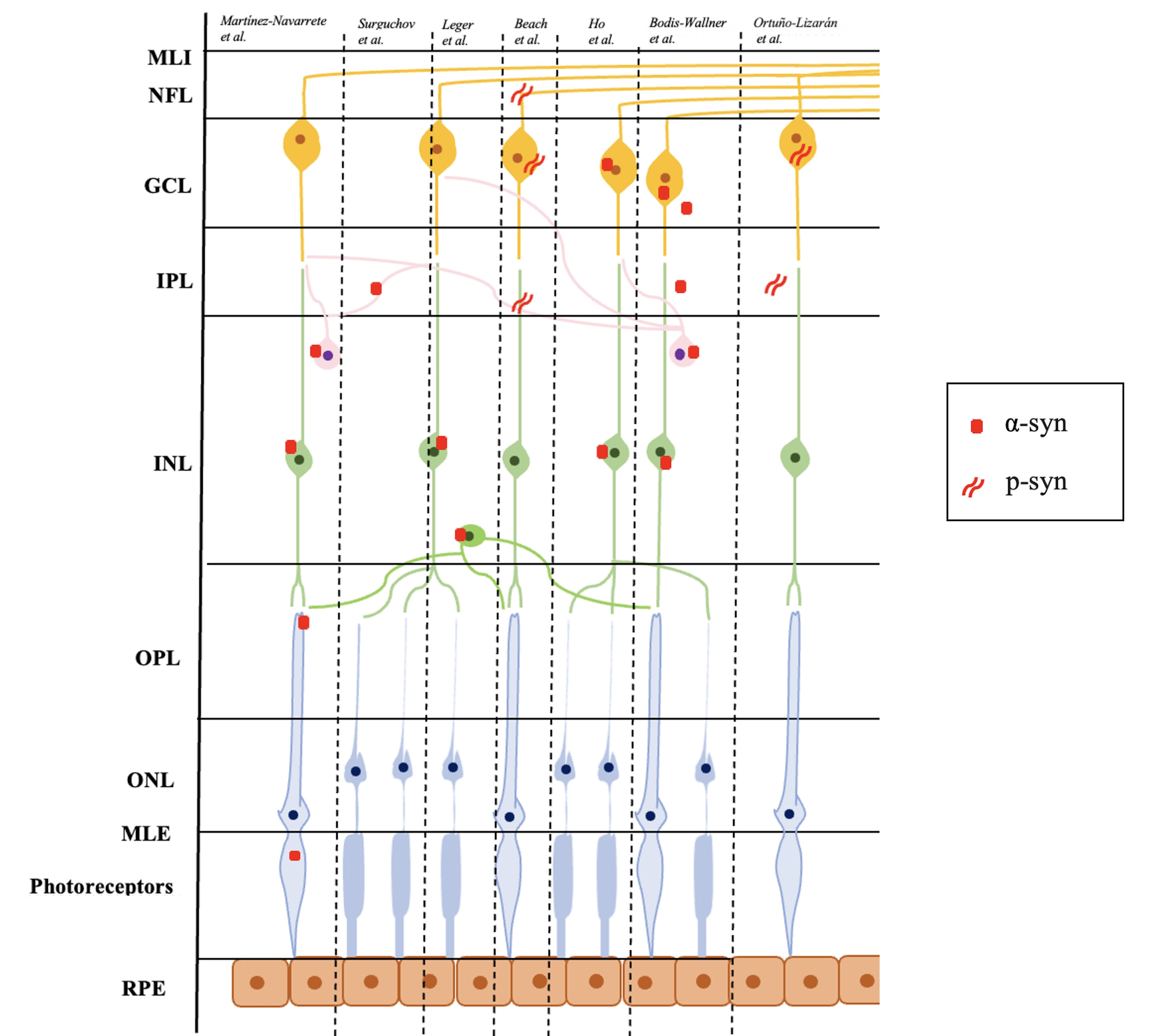 Fig. 2.
Schematic representation of the main localization of
While a broader literature concerning other OCT-related PD biomarkers exists [60], the GCL received comparatively less attention, but it’s increasing potential future significance has made it one of the main biomarkers in the diagnostic and therapeutic evaluation of this neurodegenerative disorder. Numerous studies identified a global thinning of the RNFL and GCL in PD patients [75, 76, 77, 78, 79, 80]. The thickness reduction at these levels appeared to correlate with disease severity and duration, providing a rationale for OCT as a follow-up method [81]. In a longitudinal study including 129 PD patients, Garcia-Martin et al. [51] demonstrated RNFL and GCL thinning to be progressive. This study was among the first to suggest that the observed retinal thinning could be due to axonal loss resulting from PD lesions within the posterior visual pathways and the direct degeneration of RGCs. Modestino et al. [82] and Bayhan et al. [83] used the Hoehn-Yahr scale (the scoring system used to evaluate the extent of clinical disability), the Unified Parkinson’s Disease Rating Scale (UPDRS) total, and motor score as indicators of disease severity. These authors examined the correlation between average GCC thickness and disease severity and introduced novel parameters such as the ganglion cell volume (GLV) measuring the average volume loss across the entire GCC and focal loss volume (FLV) detecting focal losses adjusting for absolute changes similar to corrected pattern standard deviation [83]. This enabled the precise measurement of GCC volume loss, drawing parallels to traditional visual field assessments. These findings revealed significant differences in the GLV and FLV between PD patients, particularly in evaluating the eye ipsilateral to the body’s most affected side and control subjects [83]. This asymmetry supported the theory of uneven neurodegeneration in PD, impacting both the substantia nigra and the eye [83]. Notably, this study also highlighted that GCC thinning was more pronounced in the eye opposite to the body’s most affected side, suggesting a neurodegenerative spread pattern. Despite the small sample size, which might limit general conclusions, these observations underscored the potential of OCT in the diagnostic workup, evaluating the efficacy of new treatments, and monitoring disease progression [83].
Murueta-Goyena et al. [84] elucidated that diminished parafoveal thickness, particularly within the 1–3 mm ring of the GC-IPL, was directly correlated with a higher risk of cognitive decline progression over a 3-year period. However, the authors highlighted that this correlation was likely attributable to the reliance of a significant portion of cognitive assessments on visual input, which may consequently be compromised. Indeed, the authors did not report a relationship between GC-IPL thinning and a decline in UPDRS motor score, suggesting divergent underlying mechanisms for these respective impairments [84].
Sari et al. [85], in a longitudinal analysis demonstrated that disease duration correlated significantly with a progressive reduction in thickness in the GC-IPL that was more evident in the inferior and inferotemporal sectors. These findings suggested an evolving nature of the neurodegeneration process and its reflection in a retinal setting, providing the rationale for OCT implementation in the management of PD. Other studies highlighted the importance of the inferior sector in correlation with disease severity. Živković et al. [86], besides identifying a clear statistical relevance in the association between PD and thinning of the GC-IPL in all sectors, reported that the areas most associated with disease duration were the inferotemporal and inferior sector of the GC-IPL, and those most associated with disease severity were the inferior and inferonasal sectors. Similarly, as previously observed, Sari et al. [85] highlighted the stronger correlation between disease duration and inferior GC-IPL thinning. A key study on the relationship between retinal atrophy and disease severity was reported in the meta-analysis by Ahn et al. [87], in which the authors reported that thinning of inferior GCL correlated with the Hoehn-Yahr disease severity scale. This study was focused on de novo, drug-naive PD patients and showed that inner retinal layer thinning, particularly in the inferior sector of the GCL, strongly correlated with Hoehn and Yahr staging of PD, dopamine transporter (DAT) loss in the substantia nigra, and microperimetry damage [87]. According to these authors, the inferior localization of this thinning was likely due to the loss being focal rather than diffuse in the early stages [87]. Lee et al. [88] demonstrated significant thinning across the GCC, with marked variations between different sectors. The authors showed that the parafoveal region exhibited the most substantial thinning, correlating with reduced visual acuity. The inferior and inferotemporal sectors of the GCC were particularly affected, suggesting a differential vulnerability among RGCs based on their location. Furthermore, the extent of thinning was linked to both the severity and duration of PD, highlighting the potential of sector-specific GCC thinning as a valuable biomarker in disease progression [88].
However, these retinal changes suffer from limited specificity, as similar findings do indeed appear in other neurodegenerative conditions [54, 89, 90]. There have been a few studies in which no direct correlation between the thickness of the GCL in PD was found [91, 92]. The significance of the correlation between GCL/GCL-IPL/GCC and PD has emerged relatively recently, but it is increasingly gaining attention due to the potential applications of this parameter in disease management. It holds promise for facilitating novel assessments of ocular pathogenesis [93] in this disease and providing new insights into the visual mechanisms underlying cognitive impairment [88] and their association with disease severity and duration. Particularly noteworthy is the necessity to establish a parallelism between retinal-brain damage in preclinical PD patients to conduct more extensive studies investigating correlations with disease duration, severity, and cognitive decline [94]. Further research is warranted to validate OCT as a diagnostic tool in PD; as imaging technology advances, retinal imaging could potentially be included in the comprehensive assessment of PD and increase our understanding of this neurodegenerative disorder.
MS is a chronic neurodegenerative demyelinating condition of the central nervous system, causing a plethora of symptoms varying from cognitive and motor impairment to visual alterations. It typically manifests between the ages of 20 and 30 and is more prevalent in females, affecting nearly two females for every male [95]. Diagnosis is confirmed via the McDonald criteria, which integrate clinical, imaging, and laboratory findings but are only applicable in the advanced stages of the disease [96].
One frequent acute manifestation of MS is optic neuritis (ON), which can affect the entire visual pathway from the retina to the cortex [97, 98, 99]. Acute ON is the initial symptom in about 20% of MS patients, and symptomatic ON attacks occur in 30–70% of patients throughout the disease course [97, 98, 99]. Axonal loss in the optic nerve and retina can even be detected in patients without a history of ON, indicating the sensitivity of these structures to MS pathology [98]. Acute inflammation in ON can cause axonal damage at the retrobulbar level, possibly spreading to RGCs [100]. Histopathological and imaging studies showed that when ON is present, retrograde axonal degeneration of the RGCs can determine residual optic nerve head pallor and thinning of the RNFL [101, 102]. This degeneration results in pronounced GCL, IPL, and RNFL thinning. Özbilen et al. [103] found consistent GCL thinning across all macular sectors, significantly more pronounced in MS patients with ON. This was confirmed in a systematic review and meta-analysis by Britze et al. [104]. These authors suggested that this thinning may result from retrograde transsynaptic degeneration of RGCs and their axons, triggered by MS lesions in the posterior visual pathways or by subclinical episodes of ON [104].
Despite the absence of previous ON episodes, GCL thickness evaluation is reported to be more sensitive in detecting damage with respect to peripapillary RNFL analysis, particularly in patients with relapsing-remitting MS (RRMS). Unlike peripapillary RNFL analysis, which may underestimate damage when measured soon after an acute ON episode due to swelling, macular GCL thickness measurements remained unaffected by optic nerve edema, offering more accurate assessments of structural changes early in the disease course [103].
Relapse episodes and inflammation in MS can result in extensive neurodegeneration. Neuronal and axonal damage are common outcomes, with damage occurring through mechanisms such as acute axonal injury, Wallerian degeneration (anterograde), or retrograde degeneration [105]. These factors underscore the importance of monitoring structural changes in the retina, particularly the GCL, to understand and track the progression of MS [103]. Furthermore, RNFL thickness is not as well correlated with visual dysfunction, while macular GCL-IPL thickness correlates with visual acuity, low-contrast letter acuity, visual field mean deviation, vision-related quality of life, and disability [104]. This makes GCL-IPL thinning a valuable marker of disease and visual function in MS patients, surpassing traditional RNFL measurements in predictive reliability and utility [106].
Research by Lee et al. [107] demonstrated that baseline and six-month follow-up measurements of RNFL and GCL-IPL thickness can effectively predict the likelihood of progression in disability based on Expanded Disability Status Scale (EDSS)-plus score at one-year follow-up. The EDSS-plus system is a tool designed to evaluate the functional systems of the central nervous system, using a score from 0 to 10, where the lowest represents a normal status and the highest death from MS [108]. Therefore, understanding and monitoring GCL-IPL thickness through OCT may serve as a critical prognostic tool for assessing the progression of MS. However, further longitudinal studies are required to provide a deeper and more precise understanding of GCL reliability and validity as a biomarker in monitoring disease progression over time.
The reduction in GCL thickness observed in MS appears to have a well-defined cause, primarily linked to episodes of ON, whether clinically evident or subclinical and thus harder to detect. While this explanation holds true, it is equally valid that changes in the GCL have been observed in patients without documented episodes of ON [104]. This has been particularly noted in patients with RRMS, where the thinning seems to be associated with the pro-inflammatory characteristic of this disease, leading to axonal injury and degeneration, both anterograde (Wallerian) and retrograde [107]. Furthermore, the extent of thinning appears to correlate with differences in disease progression [107].
Detailed findings on GCL and GC-IPL thinning in AD, PD, and MS, emphasizing the diagnostic value of OCT in neurodegenerative diseases, are shown in Table 1 (Ref. [18, 51, 52, 53, 84, 85, 86, 109, 110]). Studies underscore the specificity of GCL thinning in distinguishing between AD and other conditions like MCI and controls. This specificity is supported by findings such as those reported by Santangelo et al. [53], who demonstrated a strong alignment between GCL thinning and CDR stages, underscoring its association with disease severity. Complementing these results, Kao et al. [18] found significant correlations between GCL thinning and MMSE scores, although their findings were limited by cross-sectional analysis. Further studies, such as those by Querques et al. [109], localized GCL thinning predominantly to the central and temporal macular regions, emphasizing the structural specificity of these changes. Together, these findings point to GCL thinning as a promising biomarker for both early detection and disease progression monitoring in AD [18, 52, 53, 109]. GCL thinning in PD shows a progressive pattern, with studies identifying strong correlations with motor and cognitive impairments. Research by Garcia-Martin et al. [51] and Živković et al. [86] highlights the inferotemporal and inferior sectors as key regions of thinning, correlating closely with disease duration and severity. Similarly, Murueta-Goyena et al. [84] linked parafoveal GCL thinning to cognitive decline, reflecting PD’s dual motor and cognitive dysfunctions. The consistent evidence of focal thinning in PD further supports the relevance of GCL as a biomarker for disease monitoring [51, 84, 85, 86]. In MS, GCL thinning has been strongly associated with markers of neuroinflammation and disease progression. Knier et al. [110] demonstrated correlations between GCL thinning, intrathecal immunoglobulin G (IgG) synthesis, and disability scores, emphasizing the link between retinal structural changes and central nervous system inflammation.
| Study | Disease focus | Main findings on GCL | Sample size | OCT model used | Significant correlations | Limitations |
| Kao et al., 2023 [18] | AD | Thinning of GC-IPL particularly vulnerable to AD | 156 | Spectralis OCT (Heidelberg Engineering, Heidelberg, Germany) | Thinning correlated with MMSE scores | Limited longitudinal data |
| Wisely et al., 2022 [52] | AD | Developed a CNN using OCT to detect AD with high accuracy | 284 | Zeiss Cirrus HD-5000 Spectral-Domain OCT with AngioPlex OCT Angiography (Carl Zeiss Meditec, Dublin, CA, USA) | GC-IPL maps most useful; AUC 0.836 with full data model | Cross-sectional study |
| Santangelo et al., 2020 [53] | AD | GCL thinning specific for AD compared to MCI and controls | 137 | Spectralis OCT (Heidelberg Engineering, Heidelberg, Germany) | GCL thinning more pronounced in AD; aligned with CDR | Axial eye length not reported |
| Querques et al., 2019 [109] | AD | Thinning of the GCL | 56 | Spectralis high-resolution imaging (HRA) + OCT device (Heidelberg Engineering, Heidelberg, Germany) | Thinning is mainly confined to the central and temporal regions | Employment of a single time point for each patient |
| Garcia-Martin et al., 2014 [51] | PD | Progressive thinning of RNFL and GCL | 129 | Spectralis OCT (Heidelberg Engineering, Heidelberg, Germany) | Thinning correlated with disease progression | Only early-stage PD; limited to a specific cohort |
| Murueta-Goyena et al. 2021 [84] | PD | Diminished parafoveal thickness linked with cognitive decline | 89 | OCT Angiography Module (Heidelberg Engineering, Germany) | Correlation between parafoveal GCL-IPL thinning and cognitive decline | Correlation with motor symptoms not reported |
| Sari et al. 2015 [85] | PD | Progressive reduction in GC-IPL thickness, especially in inferior and inferotemporal sectors | 108 | Cirrus high-definition (HD)-OCT Model 4000 (Carl Zeiss Meditec, Dublin, CA, USA) | GC-IPL thinning correlated with disease duration and severity | Focus on specific sectors |
| Živković et al. 2017 [86] | PD | Thinning of GC-IPL in all sectors, particularly in inferotemporal and inferior sectors | 92 | Cirrus spectral domain (SD)-OCT device 4000 (software version 6.0, Carl Zeiss Meditec, Dublin, CA, USA) | Strong correlation between GC-IPL thinning and disease severity and duration | Cross-sectional analysis |
| Knier et al., 2017 [110] | MS | Low GC-IPL volumes | 312 | Not applicable | Association between low GC-IPL volumes and increased intrathecal B-cell frequencies and intrathecal IgG synthesis | Observational cohort study |
AD, Alzheimer disease; GC-IPL, ganglion cell-inner plexiform layer; OCT, optical coherence tomography; MMSE, Mini Mental Status Examination; CNN, convolutional neural network; MCI, mild cognitive impairment; GCL, ganglion cell layer; CDR, Clinical Dementia Rating; PD, Parkinson’s Disease; RNFL, retinal nerve fibers layer; MS, multiple sclerosis; AUC, area under the curve; IgG, immunoglobulin G.
These studies demonstrate the potential of OCT in capturing disease-specific patterns of GCL thinning across neurodegenerative conditions [18, 53, 84, 109, 110], and consistent correlations with disease severity, cognitive impairment, and functional outcomes emphasize its relevance in the diagnostic work-up and monitoring of disease.
OCT technology advancements have significantly expanded its capacity to assess additional parameters beyond retinal layer thickness, including volume, cell density, and structural integrity. These parameters offer a more comprehensive understanding of neuronal health, enhancing the utility of OCT in the assessment of neurodegenerative diseases. For example, GCL volume measurements provide a three-dimensional evaluation that captures neuronal loss more holistically than thickness alone. Studies such as that by Al-Hawasi et al. [111] demonstrated that GCL volume changes can detect subtle retinal alterations associated with neurodegeneration, offering potential as early biomarkers, particularly in AD. Their findings highlight how volumetric metrics enhance the sensitivity of OCT in capturing retinal changes that might otherwise go unnoticed in traditional two-dimensional thickness assessments.
Furthermore, combining OCT with adaptive optics (AO) has enabled the visualization and quantification of individual retinal cells, offering indirect measures of cell density [112]. This technology allows researchers to gain novel insight into neuronal loss at a cellular level, particularly in neurodegenerative diseases such as AD. For instance, Soltanian-Zadeh et al. [113] utilized AO-OCT to segment and quantify ganglion cell density, demonstrating its potential as a diagnostic tool in assessing neuronal damage.
In addition to volume and density, OCT has proven useful in assessing the structural integrity of retinal layers by detecting microstructural abnormalities in retinal architecture. This application is particularly relevant in MS, where disruptions in retinal layer structure correlate with disease activity and progression. Saidha et al. [106]. demonstrated that OCT can identify subtle microstructural damage within the GCL and other layers, highlighting its ability to act as a biomarker for neurodegeneration. Furthermore, Sharma et al. [114] reviewed the broader applications of OCT in neurodegenerative diseases, emphasizing its role in assessing trans-synaptic degeneration and visual pathway abnormalities.
These advancements underscore the potential of OCT to move beyond simple thickness measurements, enabling a more comprehensive analysis of retinal health. Incorporating metrics such as GCL volume, cell density, and structural integrity into routine OCT assessments may significantly enhance diagnostic accuracy and disease monitoring in neurodegenerative conditions [106, 111, 112, 113, 114]. These developments expand the scope of OCT in clinical and research settings and provide a promising foundation for more precise and personalized approaches to understanding and managing neurodegeneration.
This review highlights the potential of the GCL as a biomarker in AD, PD, and
MS. Data in the literature show that OCT imaging provides evidence of the
relationships between GCL thinning and disease progression. This suggests the
value of implementing OCT imaging in research and in the clinical setting owing
to the advantages of performing a rapid, non-invasive, and cost-effective
examination to monitor disease activity. However, the use of GCL as a standalone
diagnostic tool is currently limited by variability in measurement techniques
owing to the use of different OCT devices and systemic and ocular factors that
affect the specificity and sensitivity of this biomarker. Additionally, the
limitations of the existing studies in the literature, such as small sample sizes
and the predominantly cross-sectional nature of research, do not provide
information regarding GCL changes over time. In order to enhance OCT technology
and improve diagnostic accuracy, future research should prioritize the
standardization of imaging protocols across devices and explore the development
of higher-resolution OCT platforms. Emerging innovations, such as AO and deep
learning algorithms, could improve both the sensitivity and precision of GCL
measurements. Advanced image analysis techniques, such as automated segmentation
and three-dimensional mapping of retinal structures, may further refine
diagnostic workflows. Integrating GCL measurements with molecular biomarkers,
such as neurofilament light chain, A
FR, MDP and SA designed the research study. FR, DF and LB performed the literature research. MDP and SA provided help and advice on reviewing and editing the original manuscript. FR, DF and LB analyzed and synthesized the literature. All authors wrote the manuscript and contributed to editorial changes in the manuscript. All authors read and approved the final manuscript. All authors have participated sufficiently in the work and agreed to be accountable for all aspects of the work.
Not applicable.
We would like to express our gratitude to the editor and the peer reviewers for their opinions and suggestions.
This research received no external funding.
The authors declare no conflict of interest.
References
Publisher’s Note: IMR Press stays neutral with regard to jurisdictional claims in published maps and institutional affiliations.