


 , Shirish Premchand Jain 1, Siddharth Vitthalrao Kamble 1, Sachin Purushottam Borikar 1, Sangameshwar Baburao Kanthale 2, Manisha Ranganath Jawale 1
1 Department of Pharmacology, Rajarshi Shahu College of Pharmacy, 443001 Buldana, Maharashtra, India
2 Department of Pharmaceutics, Rajarshi Shahu College of Pharmacy, 443001 Buldana, Maharashtra, India
Abstract
Plants have played a crucial role in human health since ancient times, serving as reliable and significant sources of biologically active compounds used to treat numerous disorders. Thus, the potential of these compounds to treat various diseases, including cancer and cardiovascular conditions, is being extensively researched. Notably, the diverse mechanisms of action associated with these compounds make them promising candidates for future drug development. Meanwhile, 7-hydroxyflavone (7-HF), a natural flavonoid, has demonstrated notable biological properties; however, the therapeutic potential of 7-HF for pain remains unexplored. Threfore, this study aimed to investigate the potential role of 7-HF in alleviating pain in rats.
This prospective experimental study employed healthy Swiss albino rats with Institutional Animal Ethical Committee (IAEC) approval. Rats were divided in to four groups: control group, which received normal saline; the standard group, which received morphine 2 mg/kg; and two test group, which received 7-HF at doses of 5 & 10 mg/kg/rat. Behavioral analysis was performed after treatment to assess the central and peripheral analgesic effects using the hot plate, tail flick analgesiometer, tail immersion, and acetic acid-induced writhing, a validated animal model for screening analgesic effects in a preclinical laboratory. All animals were sacrificed after the writhing test and screened for oxidative stress markers as well as antioxidants level.
At 30–240 min, the administration of a 10 mg/kg test dose notably showed prolonged response time in the hot plate test, tail flick test and tail immersion method. In the acetic acid writhing test, 7-HF at 10 mg/kg significantly inhibited writhing in experimental animals. Moreover, 7-HF at a dose of 10 mg/kg restored superoxide dismutase (SOD) and glutathione (GSH) levels, and conversely reduced elevated lipid peroxidation (LPO) levels.
This study provides the first evidence that 7-HF effectively mitigates pain in rats, likely through the associated antioxidant, anti-inflammatory, and analgesic effects. These results support the therapeutic potential of 7-HF as a novel candidate for a management pain in various chronic disorders.
Keywords
- analgesics
- 7-hydroxy flavone
- oxidative stress
- acetic acid induced writhing
- hot plate
- pain measurement
Pain is a complex protective response that arises when tissue injury or dysfunction disrupts physiological homeostasis. It is transmitted through ascending nociceptive pathways involving the spinothalamic tract, thalamus, midbrain, and pons before reaching the somatosensory cortex, where the intensity, location, and severity of pain are perceived. Although pain serves as an essential defense mechanism, persistent or pathological pain significantly impairs quality of life and represents a major global clinical burden [1, 2, 3].
Despite advances in pharmacological management, effective treatment of pain remains a major clinical challenge. Opioid analgesics and non-steroidal anti-inflammatory drugs (NSAIDs) are the mainstay of pain therapy; however, their long-term use is frequently associated with serious adverse effects. Opioids are well known to cause tolerance, physical dependence, and addiction [4, 5]. Whereas NSAIDs are commonly linked to gastrointestinal irritation, renal dysfunction, and increased cardiovascular risk. Moreover, these conventional analgesics often provide only partial relief, with many patients experiencing inadequate pain control [6, 7, 8]. Collectively; these limitations underscore the urgent need to develop safer and more effective non-opioid analgesic strategies for the management of acute and chronic pain.
In earlier studies, natural bioactive compounds have gained increasing attention
as potential non-opioid analgesics due to their multi-target mechanisms and
favorable safety profiles [8]. Among these, flavonoids represent a large class of
polyphenolic compounds widely distributed in fruits and medicinal plants,
exhibiting antioxidant, anti-inflammatory, and neuroprotective properties [9, 10].
Furthermore, previous research has demonstrated that flavonoids can modulate pain
and inflammation by inhibiting cyclooxygenase (COX) and lipoxygenase (LOX)
enzymes, suppressing oxidative stress, and interacting with key neurotransmitter
systems, including
7-Hydroxyflavone (7-HF), a naturally occurring flavonoid isolated from
Oxytropis falcata Bunge, a traditional Tibetan medicinal plant, has been
reported to exhibit a broad spectrum of pharmacological activities, including
antioxidant, anti-inflammatory, antiplatelet, and organ-protective effects
[17, 18, 19]. Mechanistic studies have demonstrated that 7-HF activates the
Nrf2/NQO1/HO-1 signaling pathway, thereby enhancing endogenous antioxidant
defenses, as evidenced by increased superoxide dismutase activity and reduced
lipid peroxidation [20]. In addition, 7-HF has been shown to suppress
pro-inflammatory cytokines such as tumor necrosis factor-
Safety evaluations further support the therapeutic potential of 7-HF. Developmental toxicity assessments using zebrafish embryo-larval models have shown no significant adverse effects on growth or behavior, indicating a favorable safety profile [23].
Despite such promising pharmacological activities, no study has systematically evaluated the analgesic efficacy of 7-HF, and its underlying mechanisms have not been comprehensively investigated using both centrally and peripherally mediated pain models. Therefore, the present study was undertaken to investigate the analgesic and antioxidant effects of 7-hydroxyflavone using established experimental pain models and to elucidate its possible mechanisms of action. This investigation aims to contribute to the development of safer, non-opioid therapeutic strategies for effective pain management.
All drugs used in treatment protocols were obtained from different sources. 7-Hydroxyflavone (7-HF) was purchased from PP Enterprises, Chhatrapati Sambhajinagar, Maharashtra, India. Morphine was obtained from Rajarshi Shahu College of Pharmacy, Buldana. Additional chemicals, including 7-CMC, DMSO (dimethyl sulfoxide), saline, DTNB (5,5’-dithio-bis-2-nitrobenzoic acid), phosphate buffer, hydrogen peroxide, glacial acetic acid, thiobarbituric acid, sodium dodecyl sulfate, distilled water, n-butanol, and pyridine, were of analytical grade.
Healthy Wistar rats with 180–200 g body weight were used for this study. The
animals were sourced from the Department of Pharmacology, Rajarshi Shahu College
of Pharmacy, Buldhana, Maharashtra, India. The animals were housed in
well-ventilated polypropylene cages (six animals per cage) under standard
laboratory animal house conditions (12-hour light/12-hour dark cycle, temperature
of 25
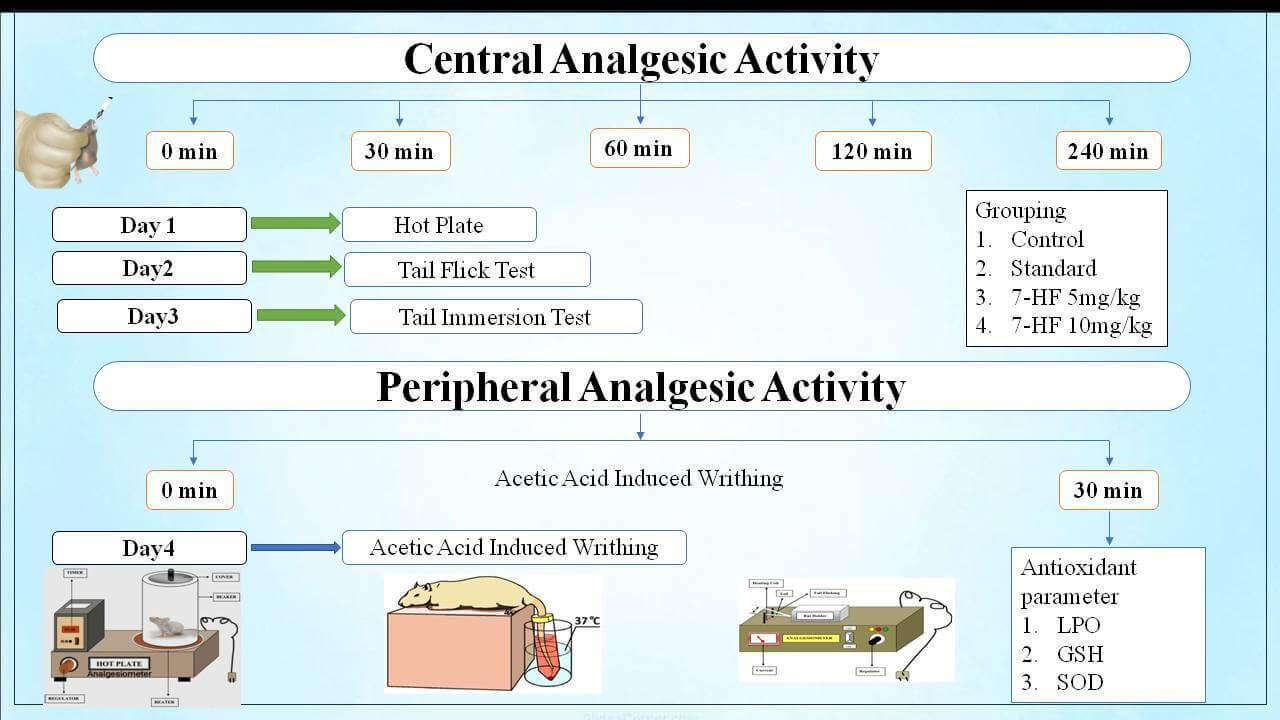
Twenty-four Wistar rats of either sex were randomly allocated into the following four groups (n = 6) as follows: Group I (Normal Control) received vehicle (0.9% NaCl) orally. Group II (Standard) received Morphine Sulphate 2 mg/kg i.p.; Groups III-IV (Test groups) received 7-Hydroxyflavone (5 & 10 mg/kg in 0.5% CMC orally). The experimental design was depicted in Fig. 1, and the grouping of animals was shown in Table 1 The doses of 7-hydroxyflavone (5 and 10 mg/kg) were selected based on earlier reports demonstrating pharmacological efficacy of flavone derivatives within this dose range. The selected doses allowed evaluation of dose-dependent effects. The individual’s animals in each group received the treatment before the experiment, and they were evaluated for the analgesic test after the treatment at 30, 60, 120, and 240 minutes respectively. Animals were monitored daily throughout the entire experimental period for general health, behavior, and signs of distress. Behavioral and biochemical assessments were conducted according to the experimental timeline, and animals were observed until completion of the study.
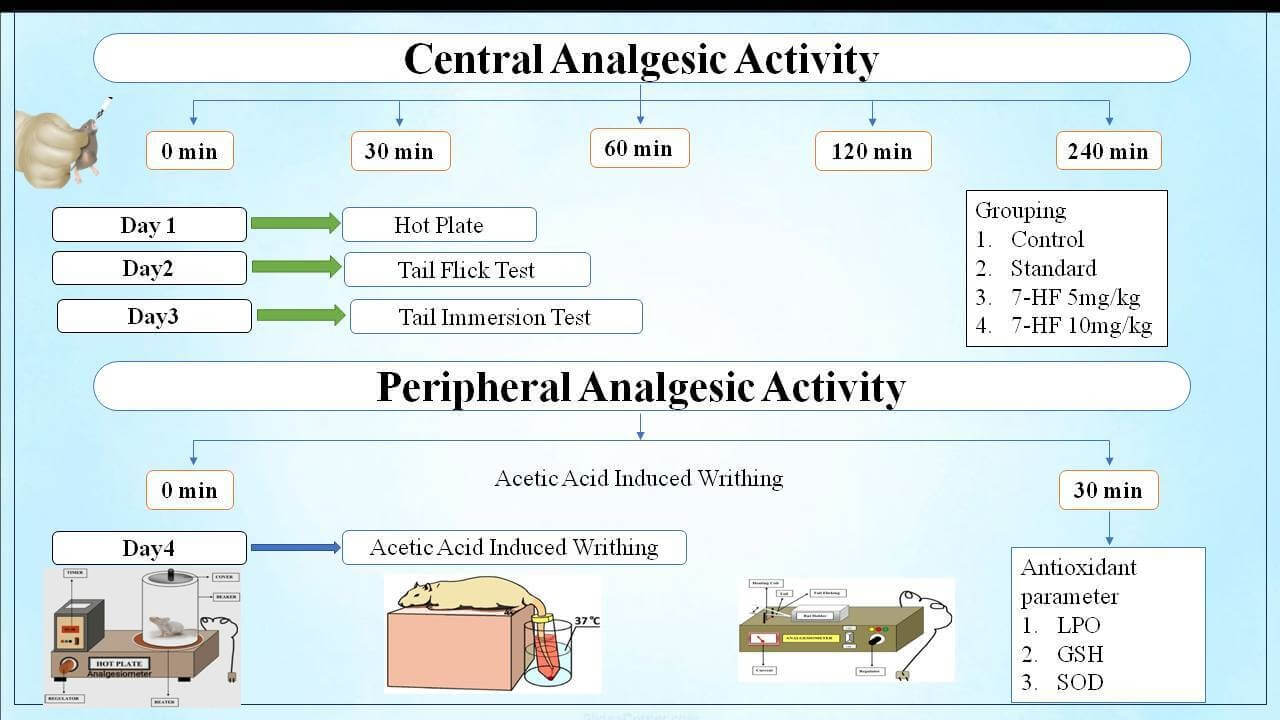 Fig. 1.
Experimental design. 7-HF, 7-hydroxyflavone; LPO, lipid peroxidation; GSH, glutathione; SOD; superoxide dismutase.
| Sr. no. | Groups | No. of animal | Treatment |
| 1 | Normal | 6 | Normal saline 1 mL/kg (p.o) |
| 2 | Standard | 6 | Morphine Sulphate 2 mg/kg (i.p.) |
| 3 | Test1 (low dose) | 6 | 7-Hydroxyflavone 5 mg/kg (p.o) |
| 4 | Test2 (high dose) | 6 | 7-Hydroxyflavone 10 mg/kg (p.o) |
After the completion of the experimental investigation, rats were anesthetized with ketamine (50 mg/mL, 90 mg/kg body weight, i.p) and xylazine (20 mg/mL, 10 mg/kg, i.p). Blood sample was obtained via retro-orbital puncture.
According to Eddy and Leimbach’s detailed method [24], the hot plate is a
valid model that is often used in preclinical research to screen the analgesic
effect of medicines. Rats were kept on a hot plate with a constant temperature of
55
The tail flick test was utilized to determine analgesic effects using procedure highlighted by D’amour and Smith (1941) [26]. With little modification to the procedure, the anti-nociceptive effect in rats was evaluated using the tail flick method. The study employed a radiant heat automatic tail flick analgesiometer, which was utilized to assess pain response as tail flick latencies. The animals’ basal reaction time to heat was evaluated by placing the tip of the tail 1–2 cm on a radiant heat source. The termination point was determined by removing the tail from the radiant warmth. The 15-second time limit considered as cutoff time was applied to prevent additional heat-related harm or damage to the tail. Four groups (n = 6) of rats were treated. Following the administration of normal saline, 7-hydroxyflavone (5 & 10 mg/kg), and morphine sulfate (2 mg/kg), the tail-flick response time was evaluated before and after 30, 60, 120, and 240 minutes after treatment [25, 27].
An assessment of 7-hydroxyflavone’s analgesic effect was conducted using a tail
immersion test on rats, following the protocol proposed by Aydin et al.
(1999) [28]. The rats’ lower 5 cm of tails were immersed in a beaker with water
kept at a constant temperature of 55
The test for writhing in response to acetic acid was conducted using the methodology outlined by Sharma et al., 2019 [29]. In this paradigm, rats were treated with morphine sulfate 2 mg/kg, a standard drug, and 7-hydroxyflavone was given at a dose of 5 & 10 mg/kg 30 minutes prior to the i.p. injection of 0.6% acetic acid at 10 mL/kg body weight. The experiment measured the number of abdominal constrictions, trunk tuning, and limb extensions for each mouse, counting and classifying them as writhes. The data was collected from 5 minutes to 30 minutes following the acetic acid injection and expressed as a percentage of protection. Using the following formula, the % protection against acetic acid was determined [29].
% Protection = [(Nc – Nt)]/Nc
Were,
Nc- is number of writhing in control Rats
Nt- is number of writhings in test animals.
At the end of the experimental protocol, blood samples were collected from animals under submaximal anesthesia using ketamine (50 mg/mL; 90 mg/kg body weight, i.p.) and xylazine (20 mg/mL; 10 mg/kg, i.p.) via retro-orbital puncture and transferred into gel tubes. The blood samples were allowed to clot at room temperature, followed by centrifugation to obtain serum. The separated serum samples were stored at –20 °C until further biochemical analysis. Animals were allowed to recover after the procedure in accordance with the guidelines of the Institutional Animal Ethics Committee. The overall sample preparation procedure was carried out according to the methodology described by Rasoul and Jwad (2022) [30].
The level of lipid peroxide in the serum was evaluated according to the method of Rasoul and Jwad, 2022 [30] and the absorbance was read at the wavelength (450 nm). The detailed method was given by Geetha and Geetha, 2014 [31]. Results were expressed as nmol MDA/mL serum.
The level of glutathione in the serum was evaluated by using the assay kit supplied by BTLAB company and the ELISA device according to the method of Geetha and Geetha, 2014 [31]. And its absorbance was estimated at a wavelength of 412 nm. The detailed method was provided by author Rasoul and Jwad, 2022 [30]. GSH levels were expressed as µmol/mL serum.
All of the group’s animals had their blood samples taken in vials. Serum was separated and stored at –20 °C to estimate superoxide dismutase. The detailed method was mentioned by Kath and Gupta, 2006 [32], and Marklund S and Marklund G, 1974 [33]. SOD activity was expressed as U/mL serum, where one unit (U) represents the amount of enzyme required to inhibit 50% of superoxide radical formation.
All the data were statistically analyzed, and charts were drawn using GraphPad
Prism software (version 8.0.2.) (GraphPad Software, San Diego, CA, USA). Results were expressed as mean
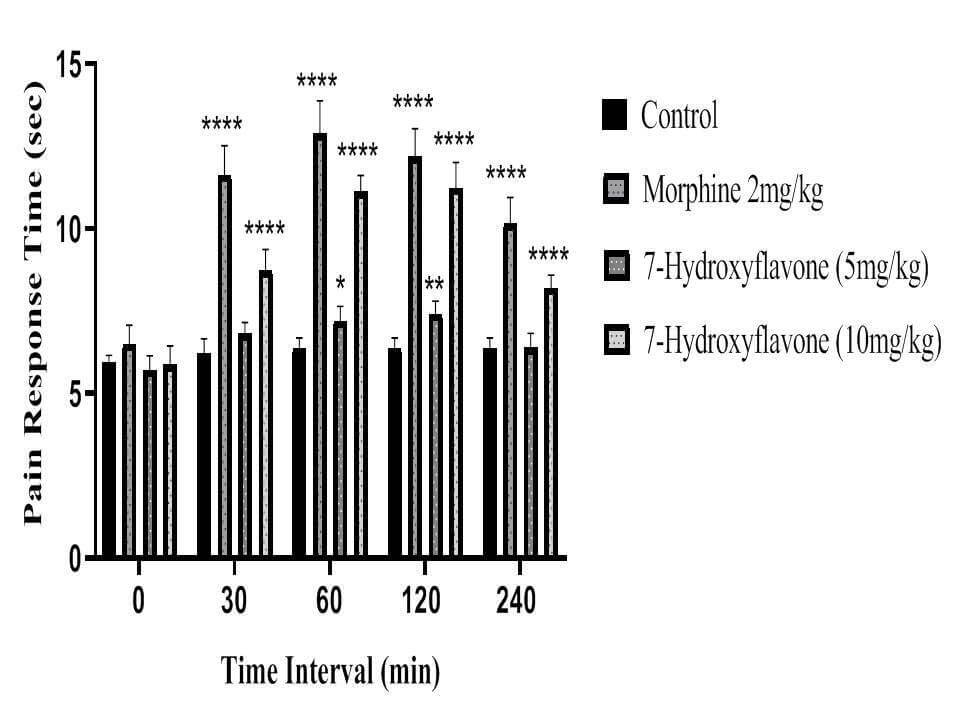
Oral administration of 7-hydroxyflavone at the low dose (5 mg/kg) produced a
significant increase in the reaction time at 60 min (p
| Groups | Drugs | Response mean | ||||
| Before | After | |||||
| 30 min | 60 min | 120 min | 240 min | |||
| A | Normal saline (10 mL/Kg) | 5.95 |
6.21 |
6.36 |
6.36 |
6.36 |
| B | Morphine (2 mg/Kg) | 6.48 |
11.61 |
12.88 |
12.18 |
10.15 |
| C | 7-Hydroxyflavone (5 mg/Kg) | 5.7 |
6.81 |
7.2 |
7.4 |
6.38 |
| D | 7-Hydroxyflavone (10 mg/Kg) | 5.86 |
8.73 |
11.11 |
11.23 |
8.18 |
Values are expressed as mean
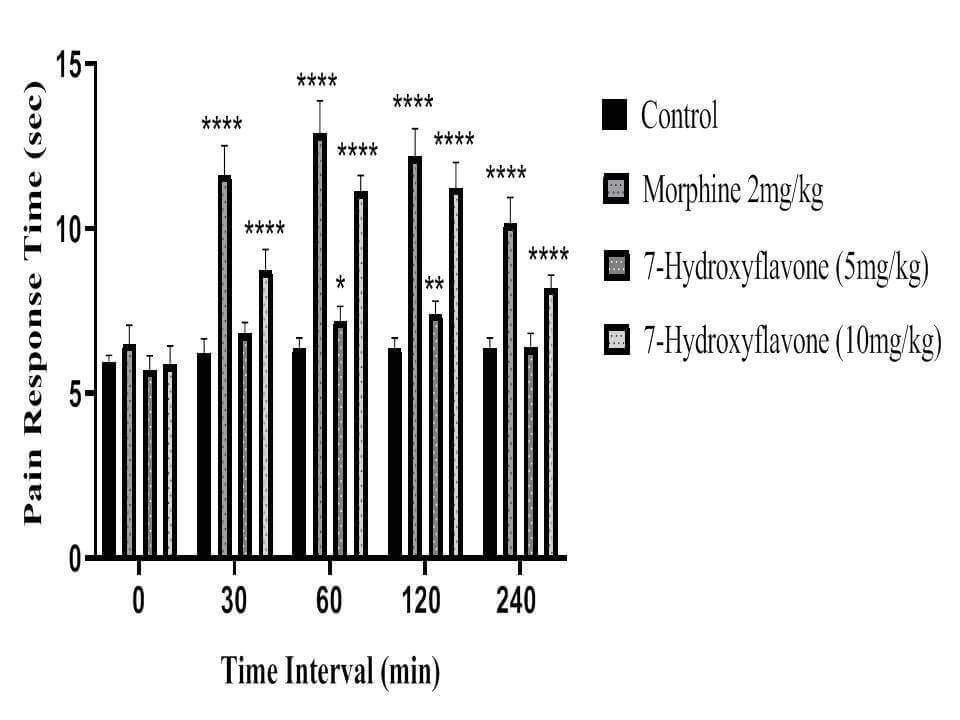 Fig. 2.
Effect of 7-hydroxyflavone (5 and 10 mg/kg) on pain response
time (sec) in the hot plate test. Data are expressed as mean
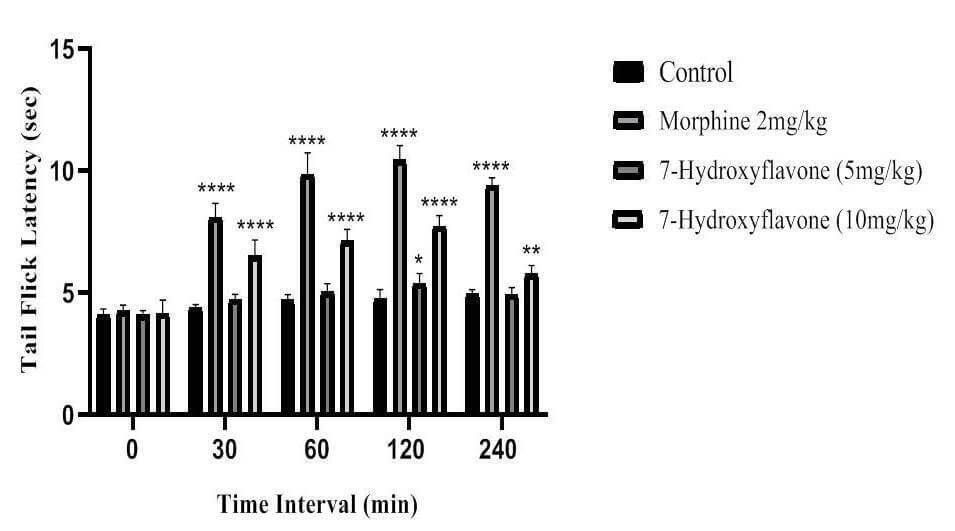
Oral administration of 7-hydroxyflavone at the low dose (5 mg/kg) produced a
significant increase in the tail flick latency at 120 min (p
| Groups | Drugs | Response mean | ||||
| Before | After | |||||
| 30 min | 60 min | 120 min | 240 min | |||
| A | Normal saline (10 mL/Kg) | 4.08 |
4.4 |
4.7 |
4.76 |
4.95 |
| B | Morphine (2 mg/Kg) | 4.25 |
8.08 |
9.85 |
10.43 |
9.4 |
| C | 7-Hydroxyflavone (5 mg/Kg) | 4.1 |
4.73 |
5.05 |
5.38 |
4.93 |
| D | 7-Hydroxyflavone (10 mg/Kg) | 4.15 |
6.5 |
7.13 |
7.71 |
5.78 |
Values are expressed as mean
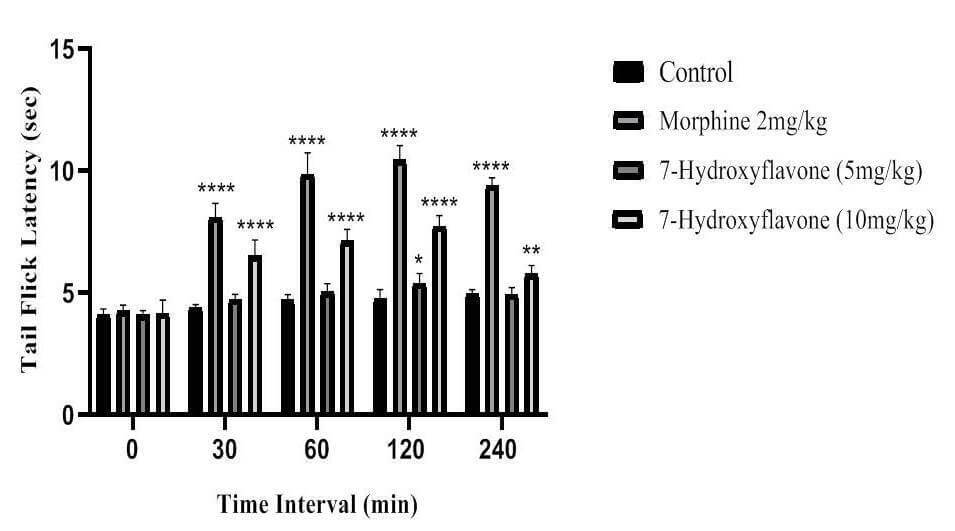 Fig. 3.
Effect of 7-hydroxyflavone (5 and 10 mg/kg) on tail flick
latency (sec) in the tail flick test. Data are expressed as mean
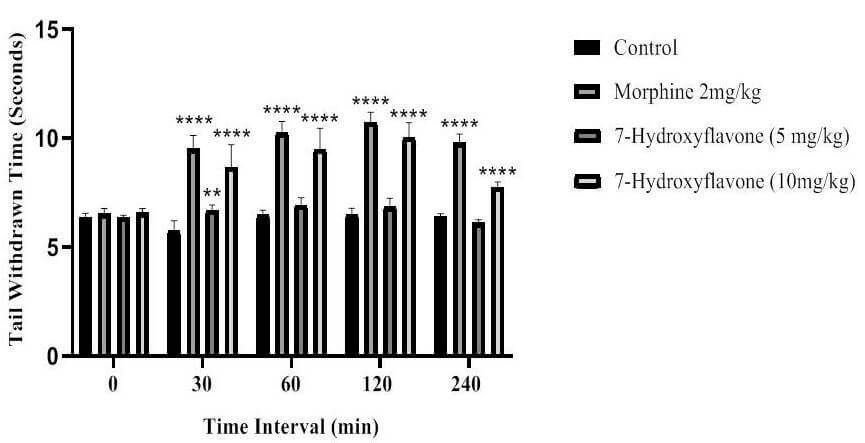
Oral administration of 7-hydroxyflavone at the low dose (5 mg/kg) produced a
considerable increase in the tail withdrawal latency at 30 min (p
| Groups | Drugs | Response mean | ||||
| Before | After | |||||
| 30 min | 60 min | 120 min | 240 min | |||
| A | Normal saline (10 mL/Kg) | 6.36 |
5.75 |
6.48 |
6.51 |
6.4 |
| B | Morphine (2 mg/Kg) | 6.53 |
9.51 |
10.25 |
10.73 |
9.8 |
| C | 7-Hydroxyflavone (5 mg/Kg) | 6.36 |
6.7 |
6.93 |
6.86 |
6.13 |
| D | 7-Hydroxyflavone (10 mg/Kg) | 6.58 |
8.66 |
9.50 |
10.03 |
7.76 |
Values are expressed as mean
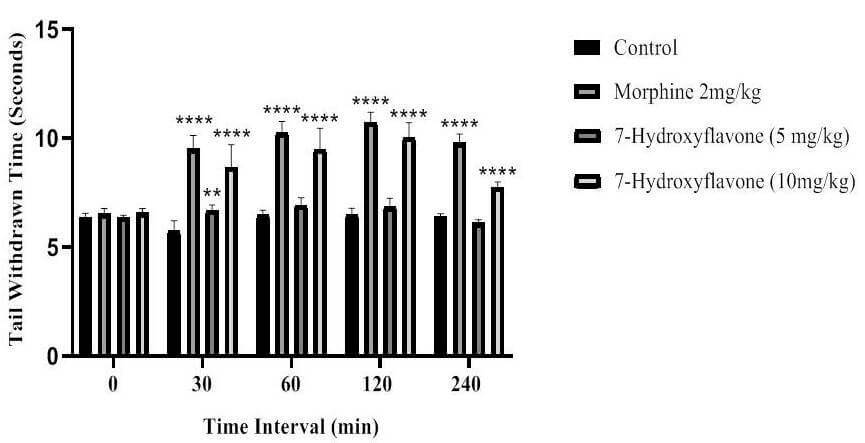 Fig. 4.
Effect of 7-hydroxyflavone (5 and 10 mg/kg) on tail withdrawal
latency (sec) in the tail immersion test. Data are expressed as mean
Oral administration of 7-hydroxyflavone produced a significant, dose-dependent
reduction in acetic acid–induced writhing compared with the control group.
7-hydroxyflavone at the dose of 5 mg/kg produced a considerable reduction in
writhing at 30 min (p
| Groups | Drugs | Writhing response mean | |||
| 0–10 min | 10–20 min | 20–30 min | Total | ||
| A | Normal saline (10 mL/Kg) + Acetic acid | 61.16 |
41.16 |
20.83 |
123.15 |
| B | Morphine (2 mg/Kg) | 51.16 |
29.16 |
16.5 |
96.83 |
| C | 7-hydroxyflavone (5 mg/Kg) | 69.83 |
37.66 |
15.83 |
123.33 |
| D | 7-Hydroxyflavone (10 mg/Kg) | 52.83 |
33.33 |
15.33 |
101.50 |
Values are expressed as mean
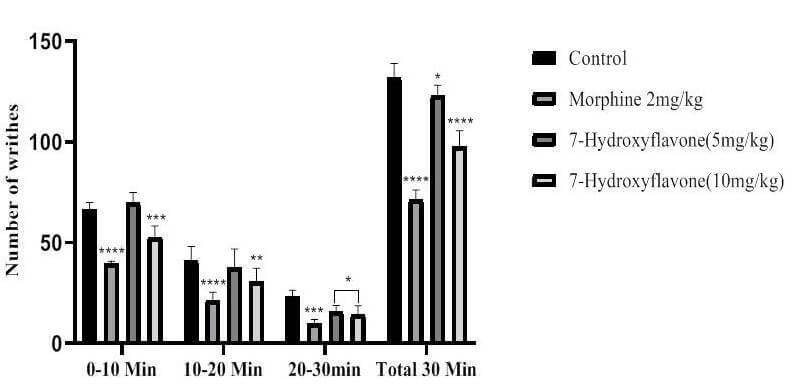
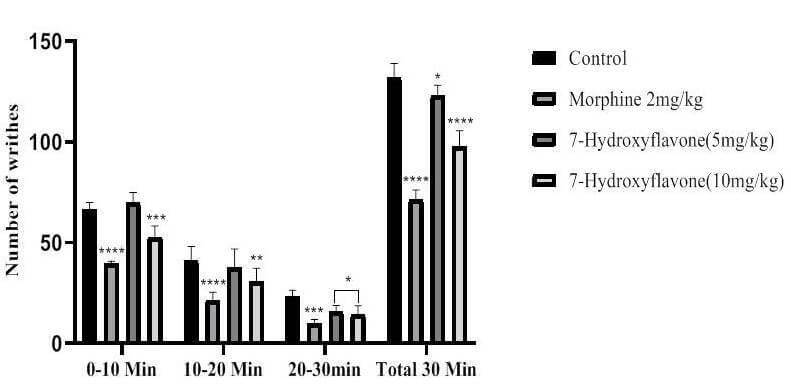 Fig. 5.
Effect of 7-hydroxyflavone (5 and 10 mg/kg) on writhing response
in acetic acid-induced writhing test. Data are expressed as mean
Oral administration of 7-hydroxyflavone produced a significant, dose-dependent
reduction in lipid peroxidation (LPO) levels compared with the control group.
7-hydroxyflavone at the dose of 5 mg/kg produced a considerable reduction in LPO
levels (p
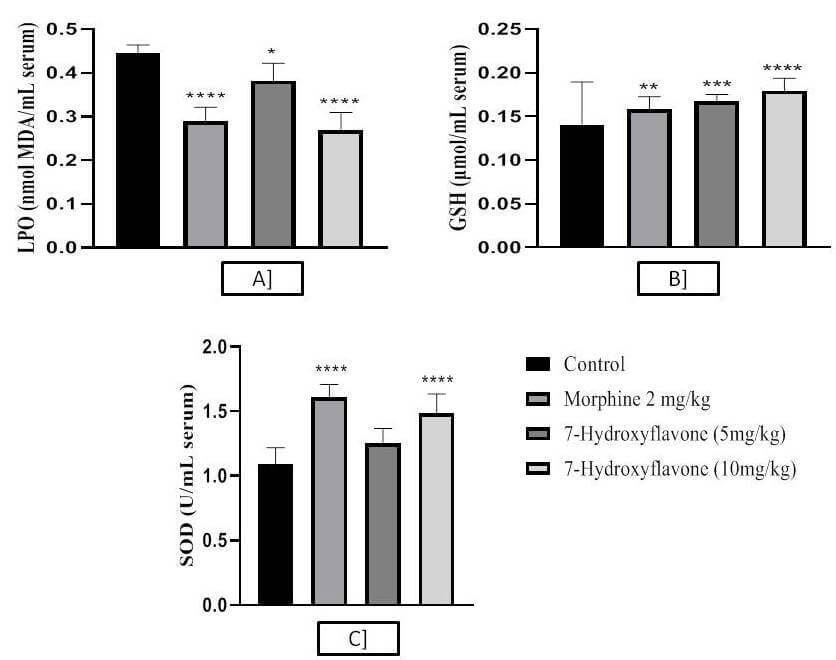
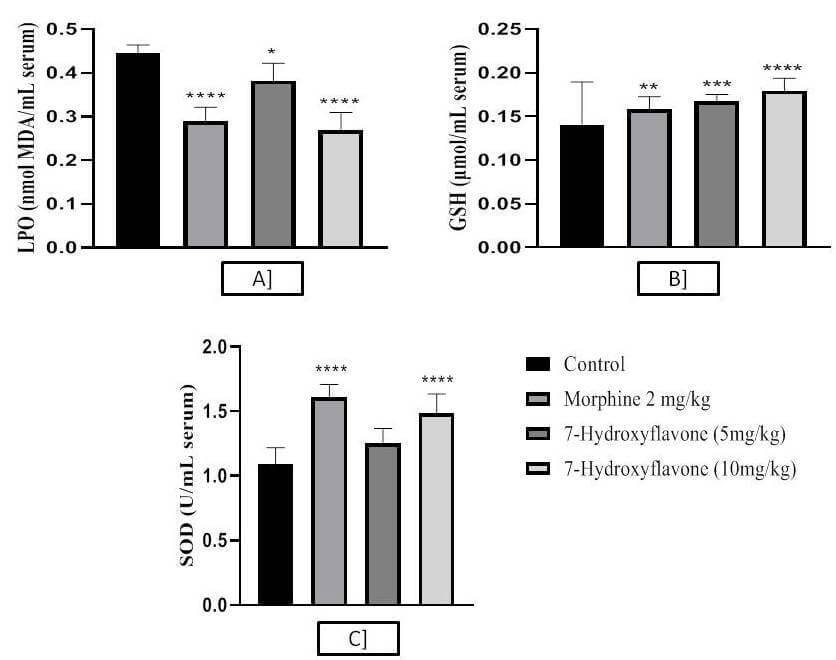 Fig. 6.
Effect of 7-hydroxyflavone (5 and 10 mg/kg) on oxidative stress
markers. (A) LPO activity, (B) GSH activity, (C) SOD
activity. Data are expressed as mean
The present study provides experimental evidence that 7-hydroxyflavone (7-HF) exerts dose-dependent analgesic activity through both central and peripheral mechanisms, with the higher dose (10 mg/kg) producing significant and sustained antinociceptive effects. 7-Hydroxyflavone (7-HF) effectively modulates analgesic activity through modulation of behavioral and oxidative parameters. These findings suggest that 7-HF possesses analgesic potential in experimental pain models and supports its involvement in both central and peripheral antinociceptive pathways.
Pain is a complex protective response that arises when tissue injury or dysfunction disrupts physiological homeostasis [1]. Analgesics are medications that target the peripheral or central nervous system to alleviate pain without causing substantial changes in consciousness [34]. Centrally acting analgesics raise the pain threshold and modify the physiological response. In contrast, peripherally acting analgesics block chemoreceptor impulses [35]. Analgesic activities were screened in pain-state models employing thermal stimuli like tail-flick and hot plate methods. Both approaches demonstrate centrally mediated antinociceptive responses, which focus generally on changes above the spinal cord level [36]. The tail-flick approach mediates a spinal reflex to a nociceptive stimulus, while the hot plate method is a supraspinal structured response [37].
The efficacy of 7-HF in central nociceptive models (hot plate, tail flick, and tail immersion tests) suggests possible involvement of supraspinal and spinal pathways, which are typically sensitive to centrally acting analgesics such as morphine. These models are sensitive to agents that modulate opioid receptors, ion channels, and descending inhibitory pathways.
7-hydroxyflavone was administered at low and high dose (5 and 10 mg/kg) and tested for antinociceptive potential utilizing hot plate, tail flick, and tail immersion models. The lower dose of 7-hydroxyflavone (5 mg/kg) did not show any analgesic effect. Steroids like calcitriol have a similar lack of analgesic effect at low dosages, suggesting that sub-therapeutic dosing may not modulate central nociceptive pathways [38]. However, 7-hydroxyflavone at 10 mg/kg increased reaction time, tail flick latency, and tail withdrawal time, indicating a significant improvement in pain threshold. Furthermore, the hot plate and tail flick experiments showed antinociceptive effects at 30 and 240 min, suggesting a prolonged central analgesic effect. The consistent increase of pain threshold in the tail immersion test up to 240 minutes supports spinal and supraspinal neural mechanisms associated with 7-hydroxyflavone’s higher dose analgesic profile; these results are correlate with earlier studies [1].
The acetic acid–induced writhing test was employed to evaluate the peripheral analgesic activity of the test compound. This model is widely regarded as a sensitive and reliable method for detecting antinociceptive effects, particularly for natural products and novel compounds that may remain inactive in other analgesic assays [39]. The peritoneal cavity gets irritated and stimulated by intraperitoneal acetic acid injection, which results in the production and release of endogenous inflammatory mediators, including histamine, serotonin, bradykinin, substance P, and PGs [40]. These different endogenous inflammatory mediators caused chemical-induced visceral pain, which is characterized by elongation of the body, extension of the forelimbs, and contraction of the abdominal muscles. The writhing test in response to acetic acid is therefore regarded as a model of visceral pain [41]. 7-hydroxyflavone dose-dependently showed significant peripheral analgesic activities by reducing the number of writhing compared to the control. The peripheral antinociceptive effect of 7-HF observed in acetic acid-induced writhing model may be associated with inhibition of inflammatory mediator release or reduced sensitivity of peripheral nociceptors in the peritoneal free nerve endings for chemically induced pain [41].
In this present investigation, the major strength lies in the integration of behavioral analgesic evaluation with oxidative stress assessment, allowing a mechanistic interpretation of the observed antinociceptive effects. It is well established that pain induction, particularly in chemically induced nociceptive models such as acetic acid–induced writhing, is associated with excessive generation of reactive oxygen species (ROS), leading to lipid peroxidation and depletion of endogenous antioxidant defenses [42, 43]. Elevated oxidative stresses have been shown to sensitize nociceptive pathways and exacerbate pain perception [44].
In the current study, administration of 7-hydroxyflavone (7-HF) significantly restored the levels of key endogenous antioxidants, including reduced glutathione (GSH) and superoxide dismutase (SOD), while concurrently reducing lipid peroxidation (LPO). These findings indicate a pronounced antioxidant effect of 7-HF under nociceptive conditions. The observed antioxidant restoration is consistent with previous reports demonstrating that flavonoids exert protective effects by enhancing cellular redox balance and suppressing oxidative damage [45, 46]. Notably, accumulating evidence suggests that flavonoids activate the nuclear factor erythroid 2–related factor 2 (Nrf2)/heme oxygenase-1 (HO-1) signaling pathway, which plays a central role in regulating antioxidant enzyme expression and maintaining cellular homeostasis [47]. Activation of the Nrf2/HO-1 axis has been linked to reduced oxidative stress–mediated neuronal sensitization and attenuation of pain signalling [48]. Therefore, the antioxidant effects observed in the present study may contribute at least in part, to the antinociceptive activity of 7-HF potentially through modulation of oxidative stress–dependent nociceptive pathways.
Morphine was employed as a standard due to its well-characterized and robust analgesic efficacy across multiple nociceptive models. Morphine’s well-known side effects sedation, respiratory depression, constipation, tolerance, and dependence limit its clinical use. Flavonoid-based drugs like 7-HF may reduce opioid-related side effects by acting as non-opioid analgesics. The tested doses of 7-HF did not show behavioral abnormalities. The limitation of the current study is orally administered 7-HF and intraperitoneally administered morphine may differ in bioavailability and latency to peak effects. Morphine was chosen as a reference standard due to its well-characterized and substantial analgesic efficacy in multiple nociceptive models. Therefore, the comparison assessed relative pharmacodynamic efficacy, not pharmacokinetic equivalency. Oral conventional analgesics, such as aspirin or other non-steroidal anti-inflammatory drugs, might provide a more direct route-matched comparison in future investigations.
The antinociceptive effects of 7-HF at the tested dose showed measurable efficacy in several parameters, although direct equivalence with morphine can not be concluded due to differences in route of administration and pharmacokinetics. Overall, this study supports the potential of 7-HF as a promising analgesic candidate with antioxidant properties, warranting further pharmacological, mechanistic and translational stuudies to confirm its therapeutic relevance. The efficacy of 7-HF at 10 mg/kg doses further provides scope for its dose optimization. More study is needed to be required for the confirmation of the precise mechanism of the test drug as an analgesic potential and factors associated with pain and analgesia.
In conclusion, the 7-hydroxyflavone (7-HF), particularly at a dose of 10 mg/kg, demonstrated significant analgesic activity in the experimental rat model. The treatment with 7-HF effectively attenuated both central and peripheral nociception, as evidenced by the hot plate, tail flick, tail immersion, and acetic acid-induced writhing tests. In addition, 7-HF showed a favorable safety profile and was associated with improvement in antioxidant parameters, suggesting a potential link between its analgesic and antioxidant effects. The observed analgesic efficacy of 7-HF may be attributed to its multi-target mechanism of action. However, further studies are required to confirm its efficacy, safety, and therapeutic potential in the management of pain.
In this study, Rats were used to investigate the analgesic properties of 7-hydroxyflavone compared to morphine and a control group. The experimental animals were subjected to various tests to measure pain perception, including the hot plate, tail flick, and tail immersion tests for central mechanisms, and acetic acid-induced writhing for peripheral mechanisms. 7-hydroxyflavone were tested at low and high dose (5 mg/kg and 10 mg/kg), with the higher dose it showing significant analgesic effects compared to the lower dose and control groups. Moreover, the higher dose of 7-hydroxyflavone improved pain thresholds and reduced writhing responses in the experimental animals. Notably, in this study 7-hydroxyflavone treatment rats showed more significant restoration of antioxidant enzymes level like glutathione and superoxide dismutase and by reducing lipid peroxidation level that indicates inhibition of oxidative stress to pertaining its analgesic effect via central and peripheral mechanism.
7HF, 7 hydroxyflavone; SOD, Superoxide Dismutase; LPO, Lipid Peroxidation; GSH, Glutathione.
The datasets used and analyzed during the current study are available from the corresponding author on reasonable request.
ADT and SVK designed and conducted behavioural experiments. SVK performed statistical analysis. SPB, SBK, MRJ, and SPJ assisted in data compilation and manuscript drafting. ADT prepared the initial manuscript draft. SPJ supervised the work and revised the manuscript to its final version. All authors read and approved the final manuscript. All authors contributed to editorial changes in the manuscript. All authors have participated sufficiently in the work and agreed to be accountable for all aspects of the work.
The study was done in accordance with the committee for the purpose of control and supervision of experimental animals (CPCSEA) guidelines after approval of the experimental protocols by the institutional animal ethics committee (IAEC) Rajarshi Shahu College of Pharmacy, Buldana. Project Proposal No. IAEC 1865/24-25/P-11.
The authors would like to acknowledge the Dr. Prakash N. Kendre vice principal of Rajarshi Shahu College of Pharmacy, Buldhana for the estimation of biomarkers of oxidative stress.
This research received no external funding.
The authors declare no conflict of interest.
References
Publisher’s Note: IMR Press stays neutral with regard to jurisdictional claims in published maps and institutional affiliations.