



1 Department of Cardiothoracic Surgery, The First Affiliated Hospital, Hengyang Medical School, University of South China, 421001 Hengyang, Hunan, China
2 Department of Cardiovascular Surgery, Second Xiangya Hospital, Central South University, 410011 Changsha, Hunan, China
3 Department of Thoracic Surgery, Yueyang People's Hospital, Hunan Normal University, 414000 Yueyang, Hunan, China
Dear Readers,
Thank you for your careful review and valuable feedback on our study, “Clinical Application of Three Antegrade Cerebral Perfusion Strategies in Acute DeBakey Type I Aortic Dissection”. We sincerely appreciate your insightful comments and will respond point by point, with reference to the content of the original article.
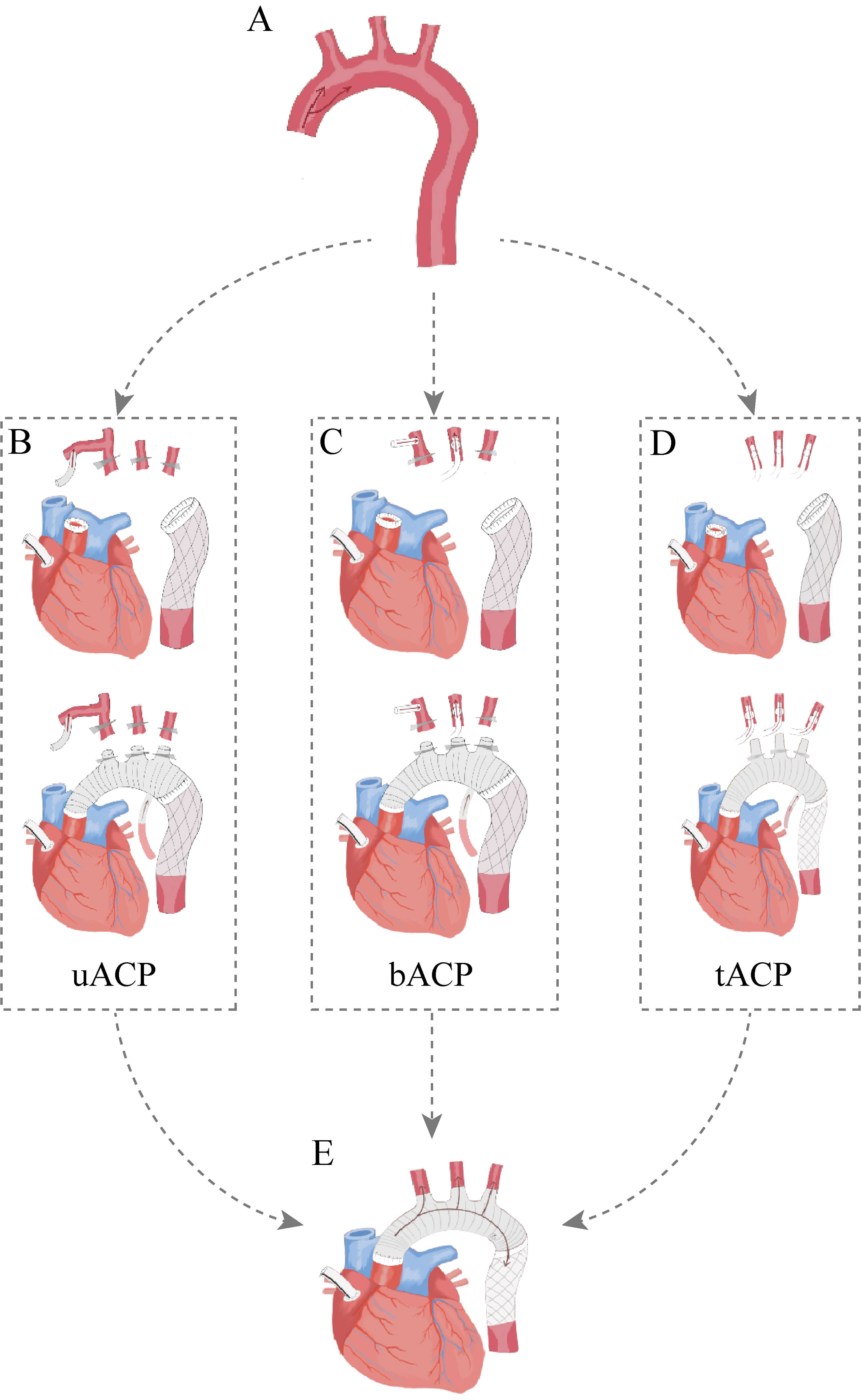
You have correctly pointed out that the description of the cannulation method in the total antegrade cerebral perfusion (tACP) group may have been ambiguous, particularly regarding the phrasing of “ascending aortic cannulation” versus “separate cannulation of the three supra-aortic vessels”. We fully understand this concern. As clearly illustrated in Fig. 1D of the original manuscript, the tACP group employed separate cannulation of the brachiocephalic trunk, left common carotid artery, and left subclavian artery to achieve total cerebral perfusion. The term “ascending aortic cannulation” may have been misleading; it actually referred to the standard cardiopulmonary bypass (CPB) cannulation strategy (ascending aorta + right atrium) used in the tACP group, not the cerebral perfusion cannulation. Cerebral perfusion was achieved through separate cannulation of the three vessels. In future publications, we will strive to clarify this terminology to avoid any confusion.
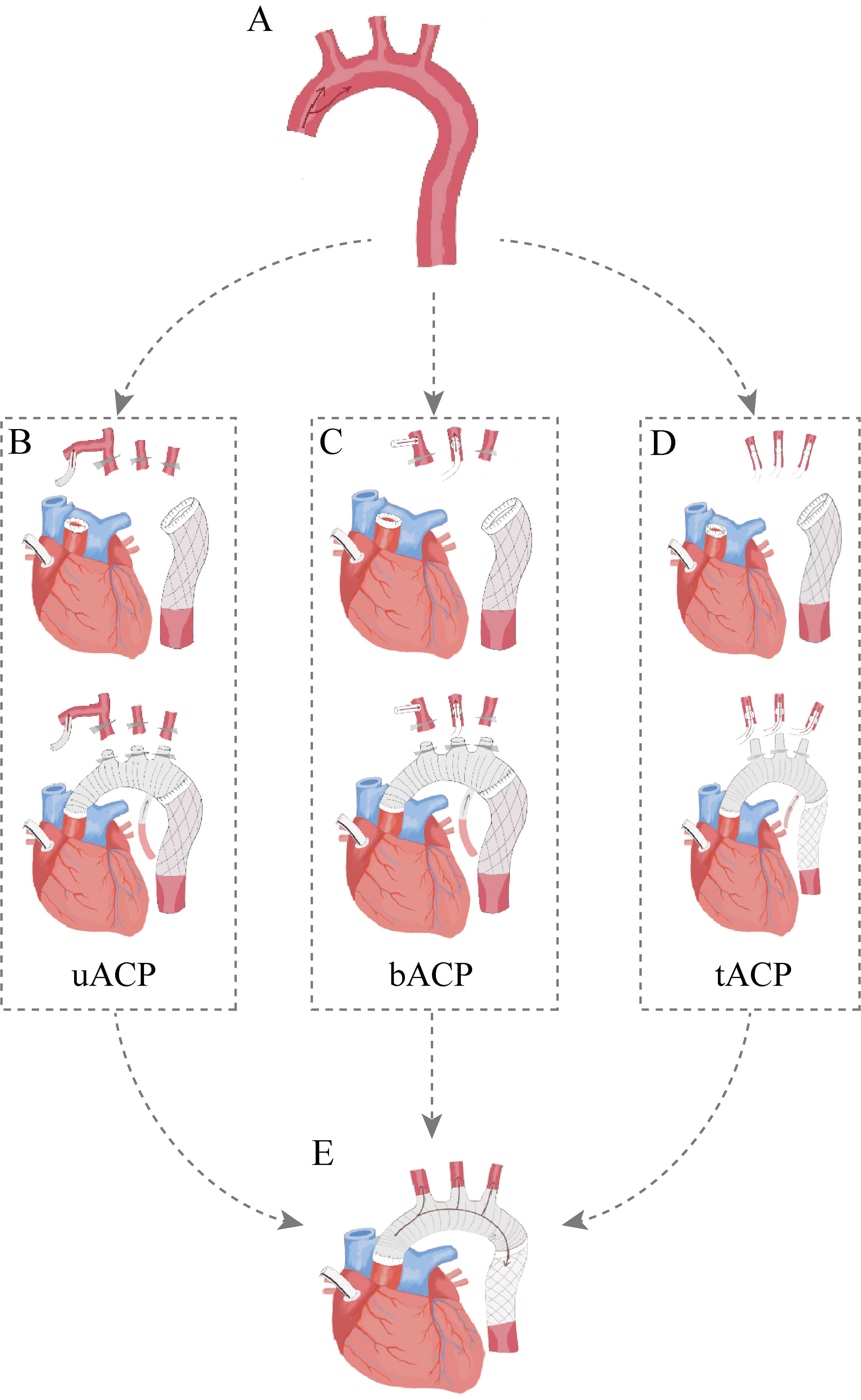 Fig. 1.
Schematic diagram of the surgical procedure. (A) Acute DeBakey type I aortic dissection. (B) uACP: Cerebral perfusion and arch reconstruction via the axillary artery alone. (C) bACP: Cannulation of the brachiocephalic trunk and left common carotid artery to maintain bilateral cerebral perfusion and perform arch reconstruction. (D) tACP: Cannulation of the brachiocephalic trunk, left common carotid artery, and left subclavian artery for cerebral perfusion and arch reconstruction. (E) Completion of ascending aorta replacement, total arch replacement, and stented graft implantation.
You noted that the incidence of permanent neurological dysfunction (PND) was higher in the bilateral antegrade cerebral perfusion (bACP) group (28.6%) compared to the unilateral antegrade cerebral perfusion (uACP) (12.5%) and tACP (17.7%) groups. This is an interesting observation worthy of further exploration. Potential explanations may include: (1) Sample size and temporal bias: The bACP group had a larger sample size (n = 87) and was implemented earlier (2021–2022), possibly reflecting less optimal techniques, intraoperative management, or postoperative care during that period. (2) Complexity of lesions: The bACP group may have included more patients with extensive aortic arch involvement or cerebrovascular variations (e.g., incomplete Circle of Willis), which could increase the risk of PND. (3) Statistical variation: Although the intergroup difference in PND did not reach statistical significance (p = 0.124), it still suggests the need for a larger sample size or more detailed subgroup analyses to identify influencing factors. We agree that neurological outcomes are multifactorial and cannot be attributed solely to the perfusion strategy. We plan to further investigate this through multicenter collaborations and long-term follow-up data.
You correctly identified the limitations of our study: the relatively small sample size in the uACP group (n = 28) and the sequential implementation of the three strategies, which may introduce temporal bias. We acknowledged these limitations in the “Limitations and Future Directions” section of the original article. To minimize bias, we implemented the following measures: (1) All surgeries were performed by the same team using uniform instruments and CPB circuits. (2) Preoperative baseline characteristics showed no significant differences among the three groups, ensuring comparability. (3) Intraoperative management was standardized, including target temperature, perfusion pressure, and flow rate. Nevertheless, we fully agree with your suggestion that multicenter, prospective, randomized controlled trials are needed, and this is a direction we intend to pursue in future research.
You questioned why the tACP group, despite requiring more complex cannulation, had the shortest cardiopulmonary bypass (CPB) time (224 minutes). We believe this may be attributed to: (1) Improved technical proficiency: The tACP group was implemented most recently (2023–2024), and the surgical team had gained efficiency in vascular anastomosis and cannulation techniques. (2) Optimized perfusion management: Simultaneous perfusion through three vessels may better approximate physiological conditions, facilitating more rapid circulatory stability. (3) More confident decision-making: Under total cerebral perfusion, surgeons may perform distal anastomoses more efficiently, reducing operative time. These factors may collectively offset the additional time required for multi-vessel cannulation.
You cited literature suggesting that prolonged selective cerebral perfusion time may be associated with neurocognitive decline. In our study, although the tACP group had the longest selective cerebral perfusion time (36 minutes), it also had the lowest incidence of TND (10.6%). This implies that perfusion quality may be more critical than perfusion duration. By providing more uniform and physiologically oriented cerebral blood flow, tACP may mitigate the potential risks associated with prolonged perfusion time. This will be a key focus of our future clinical research.
We once again thank you for your thorough review and constructive comments. Your questions have not only helped us present our study design more clearly but have also guided our future research directions. We are currently establishing a long-term postoperative follow-up database and plan to report on neurological function, quality of life, and other long-term outcomes in future studies to further validate the clinical value of tACP.
JZC, JL, YGF, JHX, CEL, and ZWL contributed to the study’s conception, design, and manuscript drafting. contributed to the overall conceptualization and design. All authors participated in revising the manuscript, approved the final version, and agreed to be accountable for all aspects of the work to ensure its accuracy and integrity.
Not applicable.
Not applicable.
This research received no external funding.
The authors declare no conflict of interest.
Publisher’s Note: IMR Press stays neutral with regard to jurisdictional claims in published maps and institutional affiliations.