
Special Interview with CEOG Authors Dr. Pornpimon Nittiwatthanawit & Dr. Pornnapa Suriyachai: Exploring Pathways to Enhanced Recovery in Emergency Obstetrics
9 March 2026
We are honored to have interviewed Dr. Pornpimon Nittiwatthanawit and Dr. Pornnapa Suriyachai. Their recent study, “Comparison of a Modified Enhanced Recovery After Surgery Protocol and a Standard Protocol in Emergency Cesarean Section: A Randomized Controlled Trial” (Volume 52, Issue 10 (2025)), published in Clinical and Experimental Obstetrics & Gynecology (CEOG), provides valuable insights into optimizing postoperative care in resource-limited settings. This interview aims to explore their latest research on a modified ERAS (mERAS) protocol, share their academic perspectives, and discuss their experience publishing with CEOG.
 |
Dr. Pornpimon Nittiwatthanawit is an obstetrician and gynecologist at Phayao Hospital in northern Thailand, with a long-standing interest in the clinical application of evidence-based perioperative care. |
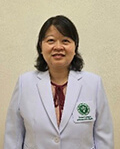 |
Dr. Pornnapa Suriyachai is the Head of the Department of Obstetrics and Gynecology at the same institution and has extensive experience in clinical research and academic supervision. |
1. Briefly introduce your academic background and your current main research interests. Could you also share the specific area you have recently focused on?
Pornpimon: I am an obstetrician and gynecologist working at Phayao Hospital, a small medical education center in a northern province of Thailand. This is my first research project since completing my obstetrics and gynecology residency training a few years ago. Currently, my responsibilities include clinical service and teaching in general obstetrics and gynecology for medical students, interns, and ward-based trainees.
Pornnapa: I am the head of the Department of Obstetrics and Gynecology at Phayao Hospital. I have published a few research papers in Thailand on pregnant women and have been involved in supervising and supporting clinical research within our department.
2. After obtaining your medical degree, how have your experiences shaped your academic philosophy and approach to research?
Pornnapa: After obtaining my medical degree, my clinical experiences shaped my academic philosophy by making me more evidence-driven and patient-centered, and observing routine postoperative practices in Thailand, including delayed feeding and reliance on intravenous opioids that prolonged hospital stays, and highlighted gaps between traditional care and current evidence. These experiences motivated me to focus on clinically relevant research questions and to approach research as a bridge between real-world clinical observations and evidence-based improvements in patient care.
Pornpimon: During my residency training in 2020, the increasing adoption of Enhanced Recovery After Surgery (ERAS) protocols for elective cesarean sections in Thailand influenced my academic interests. Observing improved pain control and shorter hospital stays without increased complications motivated me to explore the application of ERAS principles in emergency cesarean sections. This experience shaped my research approach by focusing on clinically relevant, practical outcomes, including postoperative pain, length of stay, and easily assessable indicators of recovery of bowel function.
3. Among your findings, the mERAS group showed significant improvements in 48-hour pain scores, length of hospital stay, and gastrointestinal recovery. Was there any particular result that personally surprised or impressed you during your data analysis?
Pornpimon: Although many studies have already shown benefits, such as better pain control, shorter hospital stays, and faster gastrointestinal recovery, I initially expected that, in emergency settings—where the entire ERAS protocols cannot be fully applied—the main improvement would be limited to gastrointestinal recovery. What surprised me most was the significant improvement in 48-hour pain scores in the mERAS group. Even though the mean difference in visual analogue scores was only about one point, a much larger proportion of patients reported mild pain. Together with earlier gastrointestinal recovery within the first postoperative day, this likely contributed to earlier discharge, similar to routine postpartum care under standard vaginal delivery protocols in Thailand.
4. When reviewing the literature, which aspects do you pay the most attention to? Looking ahead, what breakthroughs or new directions do you foresee in the field?
Pornpimon: When reviewing the literature, I pay particular attention to the clinical relevance and feasibility of strategies aimed at optimizing postoperative pain control and early ambulation, as these are key determinants of recovery. Looking ahead, I see an important direction in the adaptation of ERAS principles to broader and more complex clinical settings, including high-risk obstetric cases and uncomplicated emergency gynecologic surgeries. Expanding evidence-based recovery protocols beyond elective procedures has the potential to improve patient outcomes and significantly redefine standard postoperative care.
5. What practical advice would you give to young researchers to help them improve the quality of their manuscripts?
Pornpimon: As this is my first research project in a limited-resource setting, my main advice is to follow established guidelines as closely as possible. Even in small hospitals, applying recommended standards can greatly improve the quality of a study. I also believe this is a good opportunity to show that meaningful research can be conducted in resource-limited settings. Finally, I am very grateful to my research team, reviewers, and the CEOG team for their support in completing this paper.
Pornnapa: research starts with a good question, follows the steps of research methodology, and does not give up, although the process is difficult. Keep practicing writing manuscripts, and then it will become better.
6. How did you learn about the journal CEOG? And what motivated you to submit this work to the CEOG published by IMR Press? What aspects of the journal do you find most attractive?
Pornpimon: I learned about CEOG through my supervisor. I was motivated to submit to this journal because of its focus on clinically relevant research and its broad international audience.
7. How would you describe your overall experience with the submission, peer review, and publication process at CEOG?
Pornpimon: This was a very supportive and positive experience, especially as a first-time author. The peer-review process provided valuable and constructive feedback, and the close follow-up from the CEOG team made the submission and publication process smooth and reassuring.
8. Do you have any further suggestions for improving the current submission process? Would you be willing to recommend CEOG to your colleagues and friends in the future?
Pornpimon: I have no specific suggestions for improvement; it was clear and well organized. I would definitely recommend CEOG to my colleagues and friends, especially for its supportive peer-review process and responsive editorial team.
We extend our sincere gratitude to Dr. Pornpimon Nittiwatthanawit and Dr. Pornnapa Suriyachai for sharing their research journey and insightful perspectives with us. Their work not only contributes valuable evidence to the field of obstetric recovery but also demonstrates how meaningful research can be conducted and published from diverse clinical settings.
We look forward to continuing our collaboration with researchers worldwide and welcome further submissions that bridge clinical practice with scientific innovation.
journal homepage: https://www.imrpress.com/journal/CEOG