

 , Emre Sinan Güngör 2, Yusuf Ziya Kızıldemir 1, Sezin Eda Karsli 1, Ali Galip Zebitay 2
1 Department of Obstetrics and Gynecology, Sanliurfa Training and Research Hospital, 63250 Sanliurfa, Turkey
2 Department of Obstetrics and Gynecology, Istanbul Training and Research Hospital, 34098 Istanbul, Turkey
Abstract
Prompt diagnosis of preeclampsia in pregnant patients with new-onset hypertension is critical, and shorter urine collection intervals may offer a practical alternative to 24-hour urine testing for detecting proteinuria.To evaluate the predictive value and clinical utility of 8-hour urine samples for the diagnosis of preeclampsia, using 24-hour urine collection as the gold standard for detecting proteinuria in pregnant patients with new-onset hypertension.
This prospective study enrolled 99 pregnant women with new-onset hypertension, defined as blood pressure ≥140/90 mmHg on two occasions at least 4 hours apart after 20 weeks of gestation, between December 2022 and April 2023 at the Obstetrics and Gynecology Clinic of Istanbul Training and Research Hospital. Participants were consecutively recruited before confirmation of proteinuria to reflect real-world diagnostic challenges in distinguishing gestational hypertension from preeclampsia. Patients were evaluated based on protein levels in their 24-hour urine samples, which served as the gold standard, and these values were compared with protein levels obtained from three consecutive 8-hour urine collections.
The mean age was 29.7 ± 6.0 years, and the mean gestational age was 33.5 ± 4.2 weeks. Based on the area under the curve (AUC), proteinuria measured in urine collected between 8 AM and 4 PM demonstrated the highest diagnostic accuracy for preeclampsia (AUC = 0.95). All 8-hour urine collections showed a statistically significant strong positive correlation with the 24-hour gold standard. Optimal cut-off values for 8-hour urine protein excretion for the diagnosis of preeclampsia were as follows: >121 mg/8 hours (8 AM to 4 PM), >81 mg/8 hours (4 PM to 12 AM), and >71 mg/8 hours (12 AM to 8 AM).
Prompt diagnosis is critical in patients with new-onset hypertension during pregnancy. Our findings demonstrate that 8-hour urine protein measurement, particularly the 8 AM to 4 PM collection, provides a reliable alternative to 24-hour urine collection for detecting significant proteinuria in this population, offering a practical approach to expedite preeclampsia diagnosis and improve patient compliance.
Keywords
- preeclampsia
- proteinuria
- pregnancy-induced hypertension
- diagnostic techniques and procedures
- urinalysis
Hypertensive disorders of pregnancy constitute one of the leading causes of maternal and perinatal mortality and morbidity worldwide. Preeclampsia is estimated to affect 2–8% of pregnancies worldwide [1].
Preeclampsia is a complex multisystemic disease of pregnancy characterized by new-onset hypertension, typically developing after 20 weeks of gestation, often accompanied by new-onset proteinuria or maternal organ dysfunction [2, 3]. Preeclampsia increases the risk of premature birth, perinatal death, and neurodevelopmental delay in the fetus, along with long-term cardiovascular and metabolic diseases. Maternal risks include stroke, cardiovascular disease, and diabetes, imposing a substantial burden on both maternal and fetal health [4, 5, 6, 7].
Despite extensive research, the etiopathogenesis of preeclampsia remains
incompletely understood. Therefore, there is no known effective treatment for
preeclampsia, and delivery remains the only definitive management [8]. Although
proteinuria has been removed as a mandatory criterion for diagnosing
preeclampsia, it remains an important diagnostic marker in clinical practice.
While 24-hour urine proteinuria (300 mg/day or more) remains the gold standard,
some obstetricians may also utilize the protein/creatinine ratio (
While previous studies have explored the utility of shorter urine collections, a direct comparison of three consecutive 8-hour intervals within a 24-hour period is less common. This study aimed to not only correlate 8-hour proteinuria with the 24-hour standard but also to identify the optimal 8-hour time window for diagnosis and establish specific, time-dependent Receiver Operating Characteristic (ROC)-derived cutoffs. By doing so, we sought to provide a practical, evidence-based protocol to accelerate the diagnosis of preeclampsia, thereby reducing diagnostic delays and improving patient compliance.
This prospective observational study was conducted at the Department of
Obstetrics and Gynecology, Istanbul Training and Research Hospital, Istanbul,
Turkey between December 2022 and April 2023. The study protocol was approved by
the Ethics Committee of Istanbul Training and Research Hospital (Approval No:
393, Date: 23/12/2022). For analytical purposes, patients were categorized into
two groups based on the gold-standard 24-hour urine protein measurement. Patients
with
All participants received detailed information about the study and provided written informed consent using an ‘Informed Voluntary Consent Form’ after verbal explanation and adequate time to review the document.
Urine samples were collected in three separate containers over 24 hours in consecutive 8-hour periods, and protein levels were measured in the Istanbul Training and Research Hospital biochemistry laboratory. During the study period, patients’ demographic and clinical data were obtained from direct interviews, medical records, and the clinical database.
Medical history, medication history, obstetric history, and background
information were obtained and recorded for each patient with new-onset
hypertension. Noninvasive arterial pressure, oxygen saturation (SpO2), and body
temperature were measured, and respiratory rates were recorded. After obstetric
examination, urine was collected in 3 separate containers for 24 hours in
consecutive 8-hour periods (8 AM to 4 PM, 4 PM to 12 AM, and 12 AM to 8 AM) to
determine proteinuria levels. Spot urine, complete blood count, urea, creatinine,
aminotransferase enzymes, uric acid, lactate dehydrogenase enzyme, and
standardized prothrombin time were measured and recorded. Patients were started
on an appropriate diet; their blood pressure was monitored four times daily, and
values were recorded. Patients were informed about the symptoms of preeclampsia
and followed up closely. Urine collection containers were sent to the
biochemistry laboratory of Istanbul Training and Research Hospital for
proteinuria measurement. Urinary protein concentration was measured using a
standardized pyrogallol red–molybdate colorimetric assay on an automated
analyzer (Cobas 8000; Roche Diagnostics, Mannheim, Germany). Patients were
evaluated according to the diagnostic criteria for preeclampsia. Those who met
the criteria were diagnosed with preeclampsia, while others were classified as
gestational hypertension (non-preeclampsia). The diagnosis of preeclampsia was
based on 24-hour urine proteinuria, which is the gold standard test for detecting
urinary proteinuria. The 24-hour urine protein levels were compared with the
protein levels in 8-hour urine collections to evaluate the clinical utility of
8-hour urine proteinuria for diagnosing preeclampsia. Preeclampsia was
definitively diagnosed per ACOG 2022 criteria: hypertension (
Our sequential 8-hour collection design (rather than randomized groups) was intentionally chosen to: characterize diurnal protein excretion patterns in preeclampsia, enable direct within-patient comparison of shortened vs gold-standard collections, and replicate real-world clinical scenarios where both tests might be run concurrently during diagnostic uncertainty. All participants provided both 8-hour segmented and complete 24-hour samples to control for inter-patient variability.
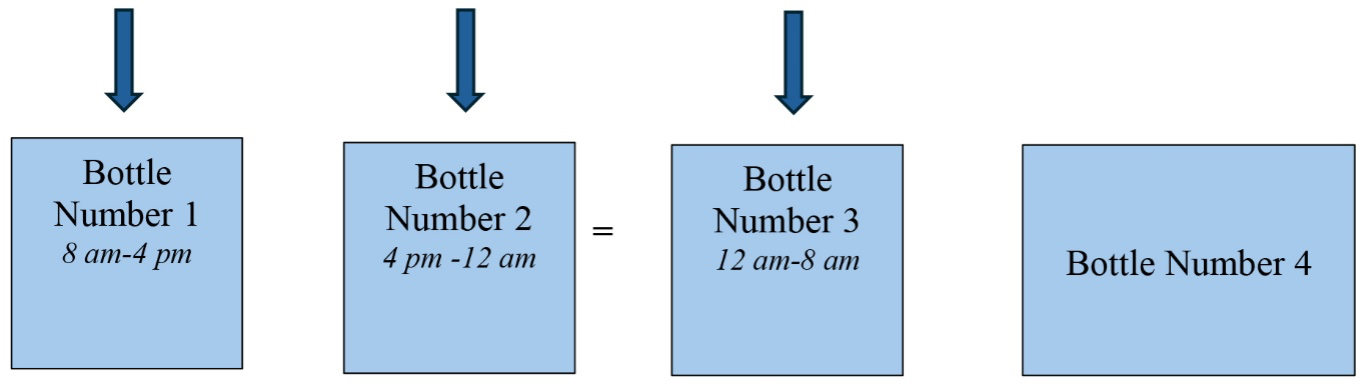
Three different containers with patient barcodes were prepared to collect urine samples at three different time intervals (8 AM to 4 PM, 4 PM to 12 AM, 12 AM to 8 AM). The urine collection method was explained to the patients by assistant health personnel, and compliance was monitored. Patients were also given a written checklist to record voiding times, and any discrepancies (e.g., missed collections) were documented and excluded from analysis. After the first voided sample was discarded, urine collection started at 8 AM and continued in the same container (bottle number 1) until 4 PM. Then, urine was collected in container number 2 between 4 PM and 12 AM. Finally, urine was collected in container number 3 between 12 AM and 8 AM, completing the collection process. The urine collection process lasted 24 hours in total. After completion, the urine containers were sent to the biochemistry laboratory.
The volumes of the three containers were measured and recorded separately, and 10 cc urine samples were collected from each container. The samples were named Sample-1, Sample-2, and Sample-3 for 8 AM to 4 PM, 4 PM to 12 AM, and 12 AM to 8 AM, respectively. The urine collected over 24 hours was then transferred to a single container and mixed. A 10 cc urine sample was taken from the pooled 24-hour urine sample and named Sample 4. For all four samples, proteinuria levels were calculated in milligrams (Fig. 1).
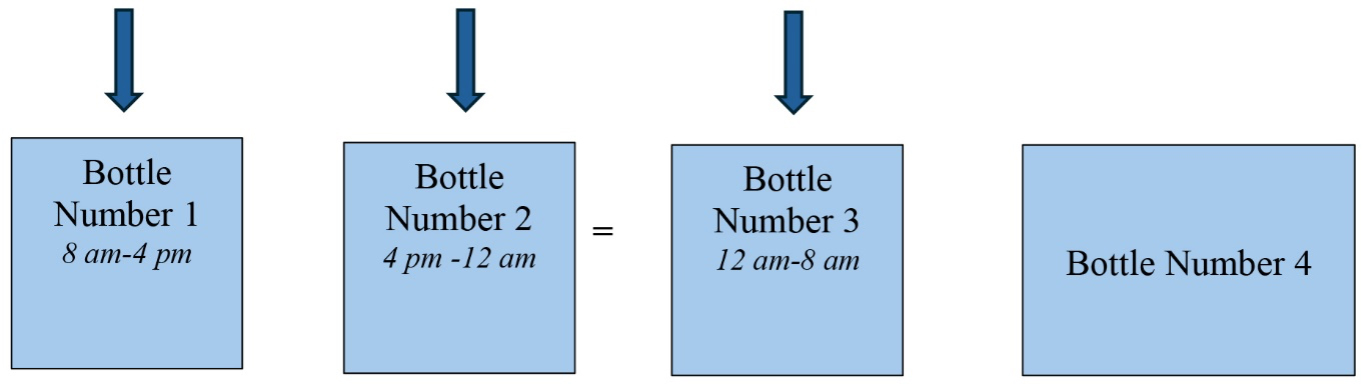 Fig. 1.
Schematic representation of the sequential 8-hour urine collection method. Urine was collected in three separate, labeled containers corresponding to distinct 8-hour intervals (Bottle 1: 8 AM to 4 PM, Bottle 2: 4 PM to 12 AM, Bottle 3: 12 AM to 8 AM). A fourth sample (Sample 4) was created by pooling aliquots from the three containers to represent the total 24-hour collection.
Patients with documented incomplete urine collections were excluded from the
final analysis. All collected data were checked for outliers. Although some
patients in the preeclampsia group exhibited very high proteinuria (e.g.,
A total of 99 patients with new-onset hypertension (blood pressure
| None (Gestational HT) | Preeclampsia | p-value | |
| n (%) | 45 (45.5%) | 54 (54.5%) | |
| Age (years) | 29.0 |
30.2 |
0.35 |
| Gestational age (weeks) | 33.2 |
33.8 |
0.47 |
| Ethnicity (n (%)) | T: 28 (62.2%)/K: 13 (28.9%)/A: 4 (8.8%) | T: 31 (57.4%)/K: 16 (29.6%)/A: 7 (13.0%) | 0.792 |
| BMI (kg/m2) | 28.1 |
31.4 |
|
| Nulliparous (n (%)) | 23 (51%) | 34 (63%) | 0.235 |
HT, Hypertension; T, Turkish; K, Kurdish; A, Arab; BMI, Body mass index.
Among the 54 patients diagnosed with preeclampsia, the mean systolic and
diastolic blood pressures were 143.0
| Parameter | Non-Preeclampsia (n = 45) | Preeclampsia (n = 54) | p-value |
| Mean SBP (mmHg) | 124.0 |
143.0 |
|
| Mean DBP (mmHg) | 71.0 |
93.0 |
|
| Spot Urine Protein ( |
2 (4.4%) | 16 (29.6%) | =0.001 |
SBP, Systolic blood pressure; DBP, Diastolic blood pressure.
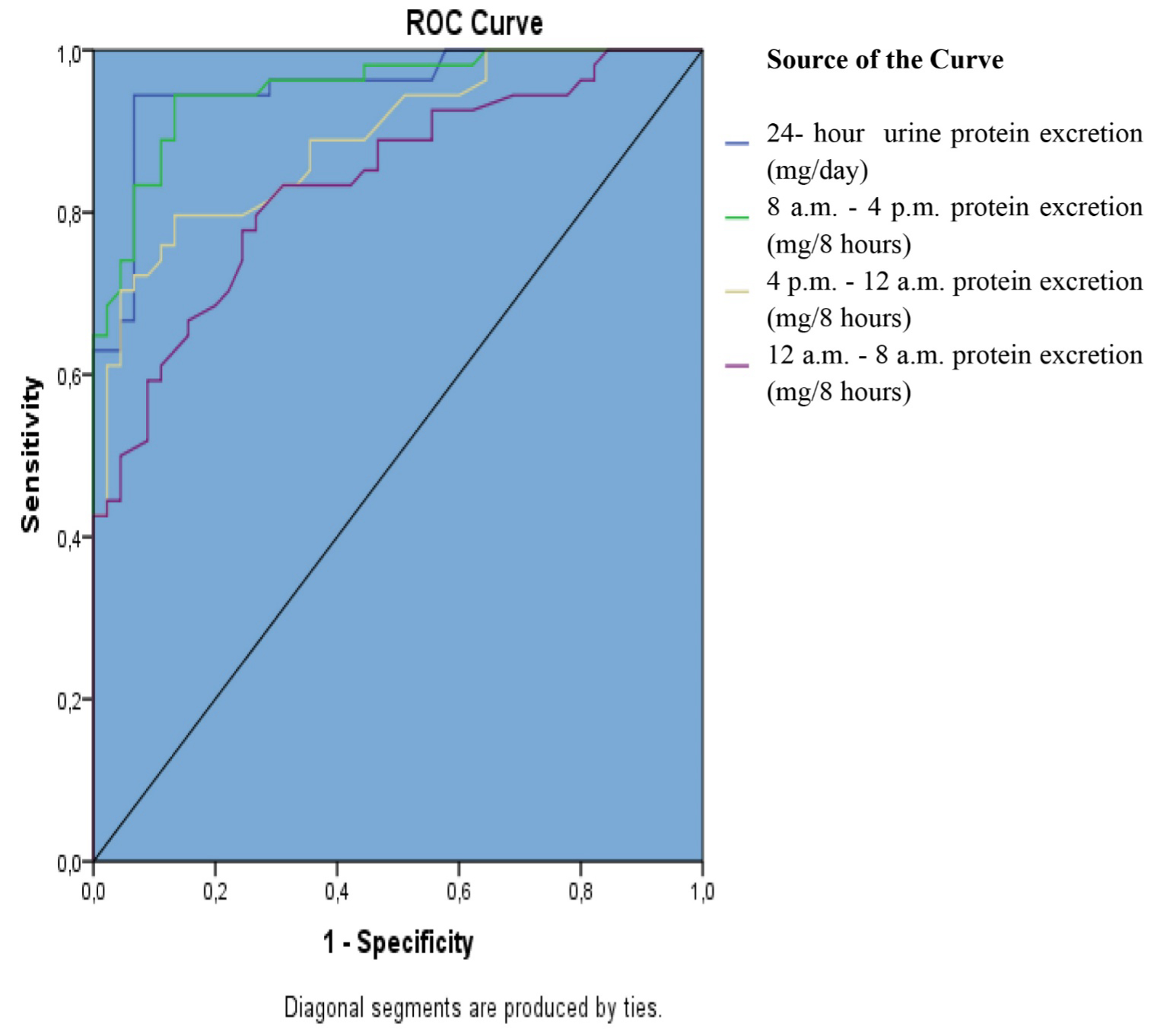
ROC analysis was performed to assess the diagnostic value of proteinuria
measured during the 8 AM to 4 PM interval. The area under the curve (AUC) was
0.95 (95% confidence interval [CI]: 0.89–0.96), with an optimal cut-off value
of
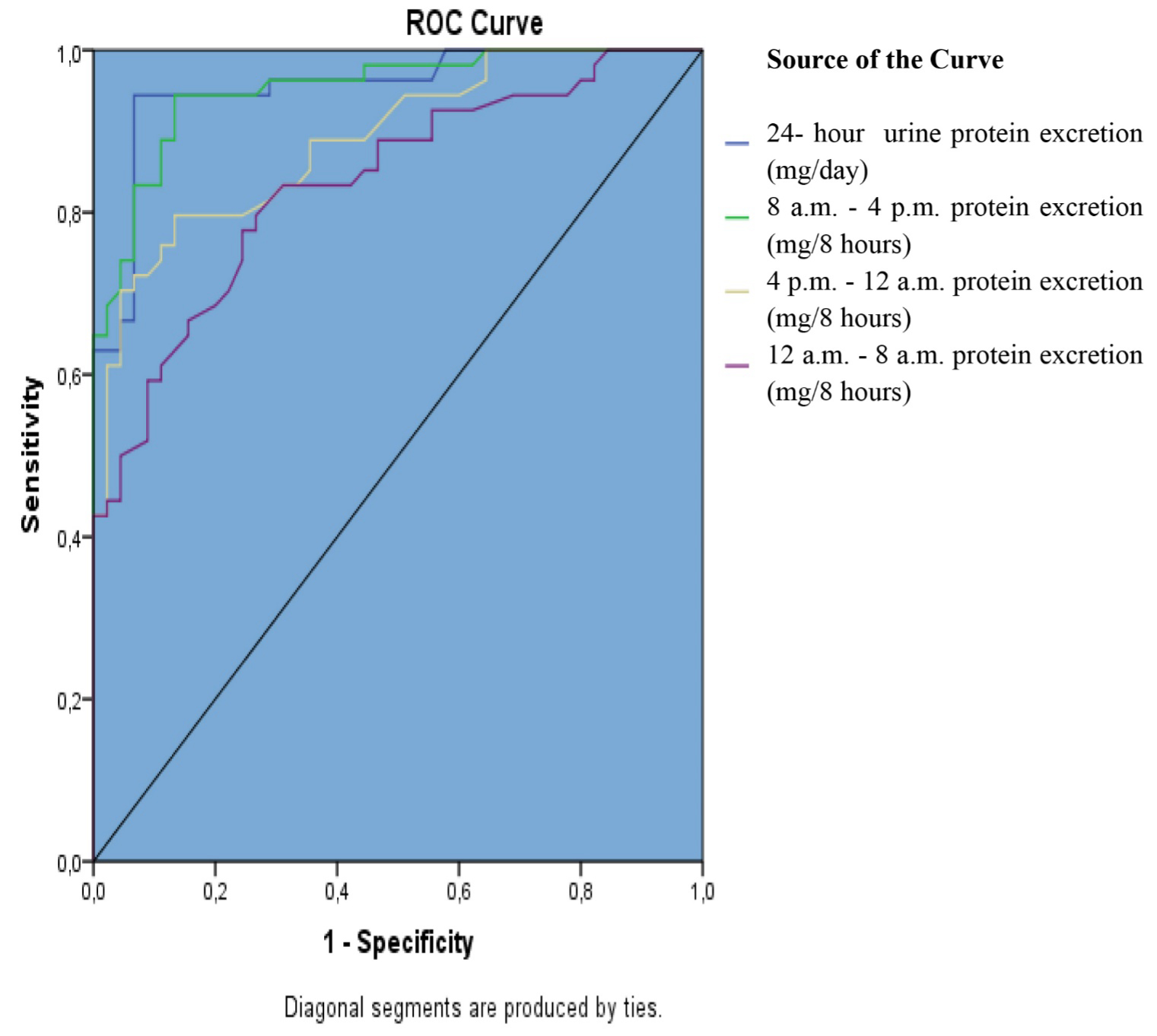 Fig. 2.
Receiver Operating Characteristic (ROC) Curves for Proteinuria Measurements in Predicting Preeclampsia. The curves illustrate the diagnostic performance of different urine collection intervals. The 24-hour collection (gold standard, AUC = 0.95) and the 8 AM to 4 PM collection (AUC = 0.95) demonstrated the highest predictive accuracy. The 4 PM to 12 AM (AUC = 0.89) and 12 AM to 8 AM (AUC = 0.84) collections also showed significant, albeit lower, diagnostic value. The diagonal line represents a test with no discriminative power (AUC = 0.5). AUC, Area under the curve.
| Parameter | Amount of protein excretion between 12 AM to 8 AM | Amount of protein excretion between 8 AM to 4 PM | Amount of protein excretion 4 PM to 12 AM |
| Cut-off (mg/8 hours) | |||
| AUC | 0.84 | 0.95 | 0.89 |
| SE | 0.04 | 0.02 | 0.03 |
| 95% CI (AUC) | 0.75–0.91 | 0.89–0.96 | 0.81–0.94 |
| p-value | 0.01 | 0.01 | 0.01 |
| Sensitivity (%) | 77.70 | 94.40 | 79.60 |
| 95% CI (Sensitivity) | 64.4–88.0 | 84.6–98.8 | 66.5–89.4 |
| Specificity (%) | 75.50 | 86.60 | 86.60 |
| 95% CI (Specificity) | 60.5–87.1 | 73.2–94.9 | 73.2–94.9 |
| LR + | 3.10 | 7.00 | 5.90 |
| LR - | 0.20 | 0.00 | 0.20 |
ROC, Receiver operating characteristic; AUC, Area under the curve; SE, Standard error; CI, Confidence interval; LR +, Positive likelihood ratio; LR -, Negative likelihood ratio.
Our study established a standardized 100 mg/8 hours proteinuria threshold across
all collection intervals (8 AM to 4 PM, 4 PM to 12 AM, and 12 AM to 8 AM) to
predict the gold-standard 24-hour proteinuria
| Cut-off value | Sensitivity | 95% CI (Sensitivity) | Specificity | 95% CI (Specificity) | Positive Predictive Value (PPV) | |
| 24-hour urine protein excretion (mg/day) | 0.94 | 0.85−0.98 | 0.90 | 0.79−0.97 | 0.94 | |
| 8 AM to 4 PM protein excretion (mg/8 hours) | 0.95 | 0.86−0.99 | 0.71 | 0.58−0.84 | 0.80 | |
| 4 PM to 12 AM protein excretion (mg/8 hours) | 0.70 | 0.58−0.82 | 0.93 | 0.86−1.00 | 0.93 | |
| 12 AM to 8 AM protein excretion (mg/8 hours) | 0.59 | 0.46−0.72 | 0.91 | 0.83−0.99 | 0.89 |
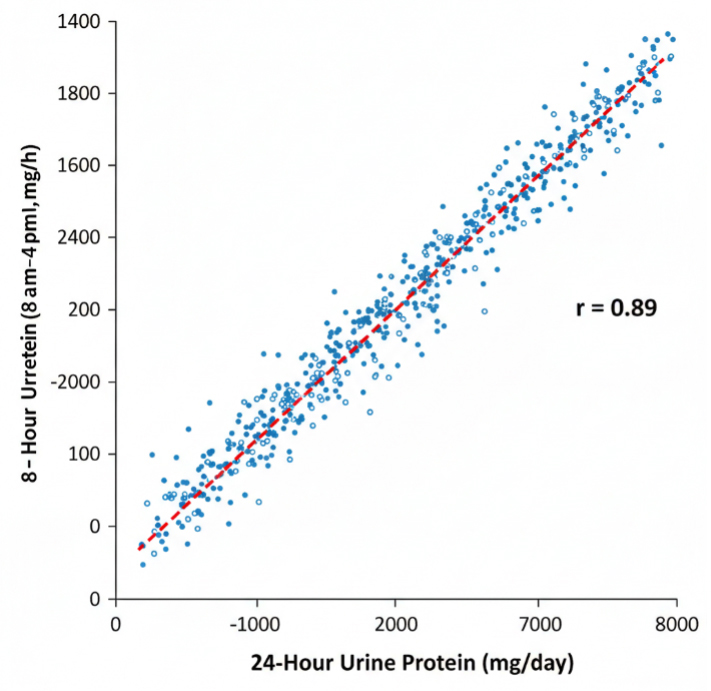
A statistically significant strong positive correlation was found between the
24-hour urine proteinuria values and the levels measured in each 8-hour period: 8
AM to 4 PM (r = 0.89, p
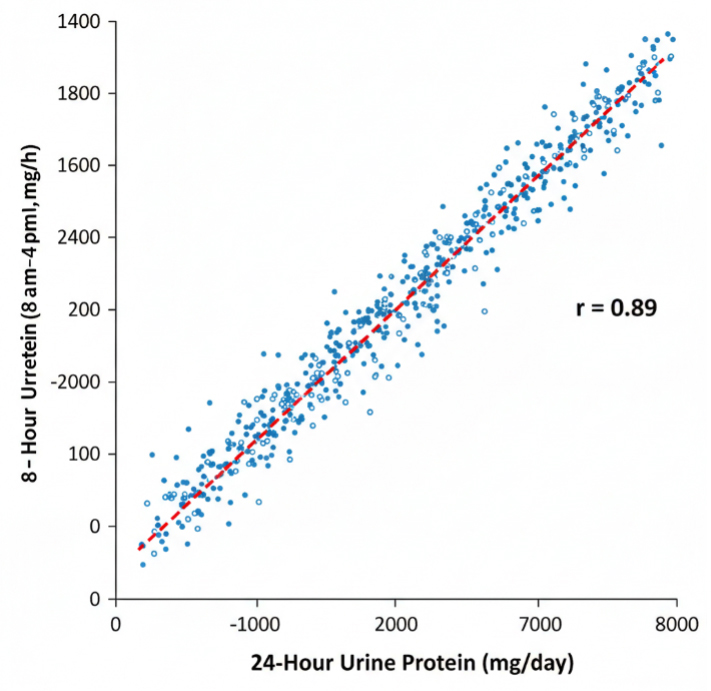 Fig. 3.
Scatter Plot of 8-Hour (8 AM to 4 PM) vs. 24-Hour Urine Proteinuria. The plot visually demonstrates the strong positive correlation (Spearman’s r = 0.89) between the two measurement methods across all patients (n = 99). The dashed line represents the line of best fit, illustrating a clear linear relationship.
| 24-hour urine | 8 AM to 4 PM | 4 PM to 12 AM | 12 AM to 8 AM | |
| 24-hour urine protein excretion (mg/day) | r: 1.0 | r: 0.89 | r: 0.87 | r: 0.82 |
| - | p: |
p: |
p: | |
| 8 AM to 4 PM protein excretion (mg/8 hours) | r: 0.89 | r: 1.0 | r: 0.7 | r: 0.7 |
| p: |
- | p: |
p: | |
| 4 PM to 12 AM protein excretion (mg/8 hours) | r: 0.87 | r: 0.7 | r: 1.0 | r: 0.80 |
| p: |
p: |
- | p: | |
| 12 AM to 8 AM protein excretion (mg/8 hours) | r: 0.82 | r: 0.7 | r: 0.80 | r: 1.0 |
| p: |
p: |
p: |
- |
r: Spearman correlation coefficient.
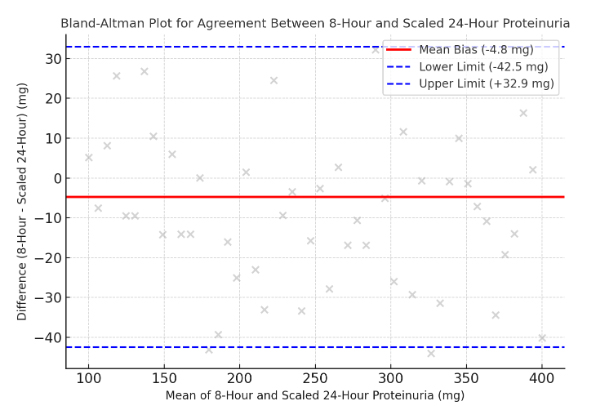
To assess the clinical interchangeability of the 8-hour (8 AM to 4 PM) collection with the 24-hour gold standard, a Bland-Altman analysis was performed. After scaling the 24-hour results to an 8-hour equivalent (total protein/3), the analysis revealed a mean bias of –4.8 mg, with 95% limits of agreement ranging from –42.5 mg to +32.9 mg (Fig. 4). This indicates that while the methods are highly correlated, individual measurements can differ, although the mean bias is small, suggesting no systematic over- or under-estimation by the 8-hour method.
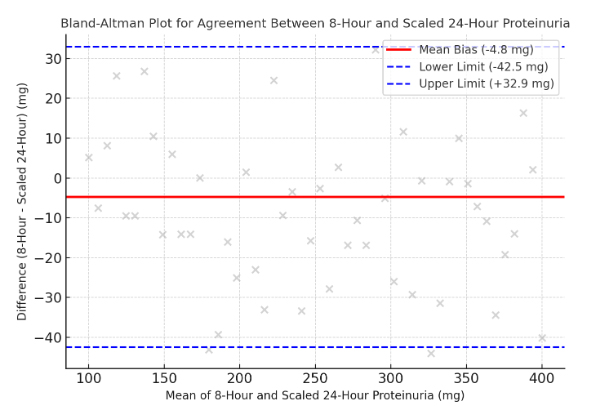 Fig. 4.
Bland-Altman plot for agreement between 8-hour and scaled 24-hour proteinuria. The plot compares the difference between the 8-hour (8 AM to 4 PM) and the 8-hour equivalent of the 24-hour measurement against their mean. The solid line indicates the mean bias (–4.8 mg), and the dashed lines represent the 95% limits of agreement (–42.5 mg to +32.9 mg).
The mean proteinuria in 24-hour urine was 215.2 mg/day in the non-preeclampsia group, while this value was 788.4 mg/day in the preeclampsia group. Proteinuria in the preeclampsia group was widely distributed, ranging from a minimum of 191.0 mg/day to a maximum of 7534.0 mg/day. In contrast, proteinuria values in the non-preeclampsia group were narrower, with a minimum of 79.0 mg/day and a maximum of 432.0 mg/day (Table 6).
| Preeclampsia | ||||||||||
| None | Preeclampsia detected | |||||||||
| SD | Median | Min. | Max. | SD | Median | Min. | Max. | |||
| 24-hour urine protein excretion (mg/day) | 215.2 | 79.3 | 215.0 | 79.0 | 432.0 | 788.4 | 1103.7 | 537.0 | 191.0 | 7534.0 |
| 8 AM to 4 PM protein excretion (mg/8 hours) | 82.8 | 32.3 | 83.0 | 33.0 | 151.0 | 280.5 | 274.6 | 188.0 | 65.0 | 1615.0 |
| 4 PM to 12 AM protein excretion (mg/8 hours) | 61.0 | 25.7 | 60.0 | 19.0 | 138.0 | 277.8 | 594.3 | 131.0 | 54.0 | 3758.0 |
| 12 AM to 8 AM protein excretion (mg/8 hours) | 55.4 | 25.7 | 50.0 | 12.0 | 117.0 | 174.6 | 293.3 | 105.0 | 32.0 | 2131.0 |
For the 8 AM to 4 PM collection period, the mean protein excretion was 82.8 mg/8 hours in the non-preeclampsia group and 280.5 mg/8 hours in the preeclampsia group. Similarly, for the 4 PM to 12 AM period, mean proteinuria was 61.0 mg/8 hours in the non-preeclampsia group, while this value was 277.8 mg/8-hours in the preeclampsia group. During this interval, proteinuria levels in the preeclampsia group reached a maximum of 3758.0 mg/8 hours (Table 6).
Proteinuria during the 12 AM to 8 AM period also showed a significant difference between the two groups. While the mean protein excretion was 55.4 mg/8 hours in the non-preeclampsia group, this amount increased to 174.6 mg/8 hours in the preeclampsia group. Notably, the maximum proteinuria in the preeclampsia group during this period reached 2131.0 mg/8 hours (Table 6). These findings demonstrate that pregnant patients with preeclampsia have significantly higher protein excretion at all time points throughout the day, with 24-hour proteinuria values showing a wide range.
Proteinuria was previously a necessary criterion for the diagnosis of preeclampsia. In 2013, ACOG removed proteinuria as an essential criterion for diagnosing preeclampsia. However, in the absence of severe end-organ damage, urinary protein quantification remains an important criterion for evaluating hypertension. The gold standard test for measuring protein excretion in pregnancy is 24-hour urine protein measurement. However, this method is not practical, especially in cases requiring rapid diagnosis. Additionally, 24-hour urine collection may show limitations due to factors such as inadequate collection, inconvenience, and spillage during collection.
While randomization between 8-hour and 24-hour collection groups could reduce carryover effects, our paired design offered critical advantages: First, it demonstrated that 8-hour samples can reliably predict 24-hour results in the same patient—the fundamental clinical question when considering test substitution. Second, it revealed time-dependent performance variations (daytime vs nighttime) that would be obscured in parallel-group designs. Third, this approach matches clinical practice where abbreviated collections often precede 24-hour confirmation. We acknowledge that future randomized implementation studies could further validate our findings.
A study by Adelberg et al. [12] in 2001 involved 65 pregnant women with hypertensive disorders. For each participant, urine was collected over a 24-hour period, segmented into distinct containers for the initial 8 hours, the subsequent 4 hours, and the final 12 hours. The researchers then quantified urine volume and total protein concentrations in the 8-hour, 12-hour, and full 24-hour samples. Employing simple regression analysis, they assessed the relationship between the 8-hour and 12-hour measurements against the established 24-hour findings. This analysis revealed substantial correlations between both the 8-hour and 12-hour urine collections and the gold-standard 24-hour samples. Furthermore, even in patients without proteinuria, a significant correlation persisted between the 12-hour and 24-hour urine collections [12].
In the study conducted by Wongkitisophon et al. [13] in 2003, 38
patients diagnosed with hypertensive disease of pregnancy were included. In this
study, urine samples were collected in 2 separate periods over 28 hours: the
first 4 hours and the subsequent 24 hours. In these patients with hypertensive
disorders of pregnancy, a correlation was found between the results of the 4-hour
urine protein and the results of the 24-hour urine protein (p
Schubert and Abernathy demonstrated a significant correlation between proteinuria in 12- and 24-hour urine samples for the diagnosis of preeclampsia. They concluded that a protein/creatinine ratio of 0.15 ruled out significant proteinuria [14].
In the study conducted by Silva et al. [15] in 2018, 99 pregnant
patients were included. The diagnosis of preeclampsia was confirmed in 42 of
these patients (42%). Urine samples were collected from the patients in 2
separate containers for 24 hours in consecutive 12-hour periods. Proteinuria
cut-off values for the diagnosis of preeclampsia were 150 mg/12 hours for 12-hour
urine and 300 mg/day for 24-hour urine. Qualitative analysis (preeclampsia or no
preeclampsia) showed significant agreement between the 12- and 24-hour samples
(Cohen
In 2014, Rani et al. [16] conducted research involving 125 pregnant
patients who were diagnosed with preeclampsia via a dipstick test indicating
urine albumin levels greater than +1. Their methodology involved collecting urine
samples over a 24-hour period, segmented into five different time intervals. The
total protein from the two-hour, four-hour, eight-hour, and 12-hour collections
was quantified and subsequently compared with the total 24-hour protein
measurement. Using Pearson’s correlation coefficient, the analysis revealed a
significant correlation (p
Kieler et al. [17] compared urine albumin in spot and 12-hour urine samples with 24-hour urine collection in 30 women with preeclampsia. They found that the 12-hour collection showed a good correlation with the 24-hour collection, but the relationship between spot urine and protein content in the 24-hour urine was poor. They concluded that 12-hour urine collection can be used instead of 24-hour urine collection, which is the gold standard for detecting proteinuria, while spot urine gives erroneous results [17].
A study by Haghighi et al. [18] supports the use of shorter urine collection times as an alternative to the 24-hour standard. They found a significant positive correlation between 4-hour, 8-hour, and 12-hour (daytime/nighttime) samples and the 24-hour results. This led them to conclude that these shorter tests are effective for detecting proteinuria in pregnant women with new-onset hypertension when a rapid diagnosis is needed [18]. Our findings indicate that an 8-hour urine collection is a dependable substitute for the 24-hour test in detecting proteinuria among pregnant patients with new-onset hypertension. The 8 AM to 4 PM collection period, in particular, demonstrated the strongest agreement with the 24-hour results. Our findings align with a growing body of evidence supporting shorter collection periods and contribute to the ongoing debate about the optimal rapid diagnostic method. For instance, a recent meta-analysis by Tian et al. [19] found that 12-hour proteinuria estimation showed slightly better diagnostic performance (AUC: 0.97) than the spot urine protein-to-creatinine ratio (uPCR) (AUC: 0.93) when compared to the 24-hour standard. More directly comparable to our study, Massalha et al. [20] investigated four different short methods and also confirmed strong correlations with the 24-hour method. Our study builds upon this work by specifically characterizing three distinct 8-hour intervals, identifying the 8 AM to 4 PM window as the most accurate (AUC: 0.95), performing on par with the 12-hour collections reported by Tian et al. [19] and offering a practical daytime alternative for clinical triage. It is important to note that while the ROC curve for the 24-hour collection is presented for illustrative comparison, its AUC value should be interpreted with caution. Since 24-hour proteinuria was used as the gold standard to define the diagnostic outcome, its performance analysis is inherently circular. The primary utility of our ROC analysis lies in evaluating the performance of the shorter 8-hour collection intervals against this established benchmark.
In our analysis, we proposed a standardized 100 mg/8 hours cutoff for clinical utility, although ROC analysis identified slightly different optimal thresholds for each time window (ranging from 71 to 121 mg). Our rationale for adopting a single, pragmatic threshold was threefold. First, 100 mg directly corresponds to one-third of the established 24-hour diagnostic criterion of 300 mg, making it conceptually intuitive for clinicians [21]. Second, this value maintained acceptable diagnostic performance across all time intervals, particularly during daytime hours, which is when most clinical decisions are made. Third, implementing a single, memorable cutoff simplifies clinical protocols and reduces the potential for error compared to using multiple time-dependent thresholds. While a lower cutoff for nighttime collections could slightly increase sensitivity, we believe the substantial benefit of clinical simplicity justifies the use of a unified 100 mg threshold for initial screening [22].
It is also important to position our findings within the context of other rapid diagnostic alternatives, most notably the spot urine protein-to-creatinine ratio (uPCR). While uPCR offers the advantage of near-instantaneous results from a single void, its accuracy can be affected by variations in urine concentration and diurnal creatinine excretion [23]. The 8-hours collection, though requiring more time than a spot test, offers a more robust measure of protein excretion over a defined period, potentially mitigating the variability seen with single spot samples. Our proposed method could serve as a valuable intermediate step: faster than a 24-hour collection but potentially more reliable than a single uPCR, especially in cases where the initial spot result is equivocal.
In a clinical setting, the 8-hour urine collection protocol could be seamlessly integrated into obstetric triage units. Upon presentation with new-onset hypertension, a patient could immediately begin an 8-hour collection, most practically during daytime working hours (8 AM to 4 PM). A result exceeding our ROC-derived cutoff of 121 mg could prompt expedited clinical decision-making, such as hospital admission or initiation of treatment, without waiting a full 24 hours. This method would not necessarily replace the 24-hour collection but could serve as a rapid triage tool to identify high-risk patients much earlier, reserving the full 24-hour test for cases where the 8-hour result is borderline or for longitudinal monitoring.
Our findings also raise an important question regarding clinical implementation:
whether specific decision thresholds for preeclampsia should be explicitly noted
on laboratory reports. Currently, most laboratories report a general upper
reference limit for proteinuria (e.g.,
This study’s strengths include identifying cut-off points for proteinuria measurements in urine samples obtained at different time intervals, with sensitivity and specificity. This study has several limitations. First, its single-center design may limit the generalizability of the findings, as patient demographics and clinical practices can vary across regions. Second, we did not stratify analyses by disease severity (e.g., mild vs. severe preeclampsia), which could influence proteinuria patterns and test performance. Third, while we implemented standardized collection protocols and compliance checks (including timed container labeling and patient diaries), potential variability in patient adherence or unmeasured confounders (e.g., dietary protein intake, physical activity patterns) could influence proteinuria measurements. Fourth, our multivariate analysis was limited to BMI, age, and parity; we did not adjust for other potential confounders such as pre-existing renal conditions or the use of antihypertensive medications. Fifth, we did not standardize patient activity levels; it is known that proteinuria can increase with ambulation compared to bedrest, which could potentially influence excretion patterns [28]. Additionally, our sample size, though adequate for correlation analyses, was insufficient to perform robust subgroup analyses on whether the diagnostic performance of 8-hour testing differs by preeclampsia severity or gestational age at onset. Furthermore, we did not perform a decision curve analysis to evaluate the net clinical benefit of different proteinuria thresholds. Finally, we did not account for inter-laboratory variability in urine protein measurement methods. As highlighted by Kamińska et al. [27], a lack of standardization can lead to significant differences in quantitative results, suggesting that the cut-off values identified in our study may need to be validated locally at other institutions. Future multi-center studies with larger, diverse cohorts, including stratification by preeclampsia severity and real-time collection monitoring, are needed to validate these findings and optimize cut-off values for clinical use.
Our study demonstrates that 8-hour urine collection is a reliable alternative to
24-hour urine collection for assessing proteinuria in pregnant women with
new-onset hypertension. Specifically, proteinuria measured in urine collected
between 8 AM and 4 PM showed the strongest alignment with the 24-hour gold
standard for diagnosing preeclampsia. Furthermore, a statistically significant
strong positive correlation was found between all 8-hour urine collections and
the 24-hour measurements. Overall, this study suggests that 8-hour urine
collection can serve as a valuable alternative method to assess proteinuria,
thereby minimizing diagnostic delays and patient non-compliance often associated
with 24-hour urine collection, which is crucial for timely diagnosis and
management of preeclampsia. However, while our single-center sample size (n = 99)
provided adequate power for correlation analyses (post-hoc power
The datasets used and/or analyzed during the current study are available from the corresponding author on reasonable request.
IIO: Development of study concept and design, data collection and analysis, manuscript writing, and critical revision. ESG: Study design, interpretation of results, critical revision, and approval of the manuscript. YZK: Statistical analysis of data, scientific content review. Contribution to manuscript drafting and critical revision. ESK, AGZ: Data interpretation, contribution to manuscript writing, and final review. All authors read and approved the final manuscript. All authors have participated sufficiently in the work and agreed to be accountable for all aspects of the work.
The study protocol was approved by the Ethics Committee of Istanbul Training and Research Hospital (Approval No: 393, Date: 23/12/2022). The study was conducted in accordance with the principles of the Declaration of Helsinki. Written informed consent was obtained from all participants prior to their inclusion in the study.
We would like to express our gratitude to all the patients who participated in this study and to the clinical and laboratory staff of the Istanbul Training and Research Hospital for their invaluable support. We also thank the peer reviewers for their insightful comments and suggestions that helped improve this manuscript.
This research received no external funding.
The authors declare no conflict of interest.
References
Publisher’s Note: IMR Press stays neutral with regard to jurisdictional claims in published maps and institutional affiliations.