


 , Feixia Zhang 1, Rong Lyu 1
1 School of Educational Science, Shanxi University, 030006 Taiyuan, Shanxi, China
Abstract
Childhood obesity is a growing public health concern with significant physical and psychosocial consequences. Obese children are more likely to face peer rejection and campus victimization, increasing their risk of depression. However, the psychological mechanisms underlying this association remain underexplored. This study examined the relationship between campus victimization and depression among obese children and adolescents, focusing on the mediating role of self-esteem and the moderating role of academic performance.
Using multi-stage stratified cluster sampling, 6369 students from Shanxi and Henan provinces were surveyed, and 548 obese students were selected based on body mass index (BMI) criteria.
(1) Campus victimization significantly infers elevated depression levels among children with obesity; (2) Self-esteem mediates the relationship between campus victimization and depression in this population; (3) Academic performance plays a moderating role in the direct path and the second half of the mediating path.
These findings underscore the compounded psychological risks faced by obese students and highlight the need for targeted school-based mental health and academic support interventions.
Keywords
- obese children and adolescents
- campus victimization
- self-esteem
- depression
- academic performance
With the improvement of living standards among Chinese residents, the obesity rate among children and adolescents is increasing. According to the Report on Nutrition and Chronic Diseases of Chinese Residents (2020), the obesity rate of children and adolescents aged 6–17 was 7.9% (Centre of Children of China, 2024). A study had shown that obesity not only affected children’s physical health, but was also closely related to various mental health problems, such as depression, anxiety, and low self-esteem (Aparicio et al., 2013). In addition, there were other risks, such as campus victimization (Gong et al., 2020).
Campus victimization refers to a situation where a child repeatedly experiences intentional negative behavior, including verbal and physical attacks, from another or a group of children in school over a period of time (Awiria, 1994). An existing study had shown that obese children received more rejection from peers and were more likely to suffer campus victimization than children of normal weight (Krukowski et al., 2009). At the same time, obese children also led to depression, lower academic performance, internalization problems, psychological maladjustment and other problems (Foody et al., 2020; Samara et al., 2021). Stress exposure models suggested that health risks increased when individuals were exposed to negative stressful environments over a long period of time (Rudolph and Hammen, 1999). In other words, when an individual suffered from campus victimization, his or her bad interpersonal relationship would increase the risk of physical and mental health, and when an individual was repeatedly and long-term exposed to this negative environment, his or her risk of depression would increase (Hemphill et al., 2014). Therefore, compared with children of normal weight, obese children were more likely to suffer from diseases such as depression, anxiety, eating disorders and attention deficit hyperactivity disorder (Hu, 2023). However, a study on the impact of campus victimization on depression have focused on normal weight children and adolescents (Lai et al., 2024), with very little research on obese children and adolescents. Under the dual pressure of obesity and campus victimization, children and adolescents may have a profound impact on their mental health. Therefore, this study focuses on obese children and adolescents as research subjects, exploring the impact of campus victimization on their depression status, and further exploring the mechanisms of self-esteem and academic performance in it, in order to more systematically reveal the mechanism of depression in obese children and adolescents, and scientifically prevent the occurrence of depressive symptoms in obese children and adolescents.
As a negative emotional state that affects the physical and mental health of individuals, depression is widespread in children and adolescents. According to a report released by the World Health Organization (WHO) (2021), the global prevalence of depression among children and adolescents is as high as 14.3%. According to the “2023 Blue Book of China’s Mental Health” released by the Good Mood Internet Hospital (2023), the rate of depression among children and adolescents in China was 14.8%. Chinese researchers conducted a meta-study, which included 144,060 adolescents and estimated that 24.3% of them had depressive symptoms (Tang et al., 2019). Depression had a negative impact on adolescents’ physical, psychological, and social functioning, and was an important predictor of suicide (Pozuelo et al., 2022). Therefore, the problem of depression in children needs attention.
The interpersonal risk theory of depression suggests that poor interpersonal relationships can weaken an individual’s sense of belonging to the group, thereby having a negative impact on their psychological, behavioral, and social functioning, leading to depression (Patterson and Capaldi, 1990). Interpersonal relationships were considered a predictor of depression (Stapinski et al., 2015). Children and adolescents spent most of their time in school with friends, and if they experienced negative interpersonal relationships such as campus victimization, they were more likely to develop depression (Wang et al., 2011). Many researchers also confirmed that campus victimization was one of the main causes of depression in children and adolescents (Chou et al., 2020; Dervishi et al., 2019). At the same time, Chinese scholars pointed out that campus victimization played a mediating role between body mass index (BMI) and depression, and BMI was positively correlated with the degree of campus victimization (Yen et al., 2014).
At present, about the influence of campus victimization on depression in children and adolescents, most of the existing studies took children and adolescents with normal weight as the research object, and there was a lack of research on obese children and adolescents. Therefore, this study took obese children and adolescents as the research object to explore the influence of campus victimization on their depression, and further explored its mechanism. Based on this, this study proposed the following hypotheses: campus victimization experienced by obese children and adolescents positively predicts their depressive mood.
A large number of scholars had studied the relationship between campus victimization and depression for children and adolescents, and explored the underlying mechanisms, such as self-esteem (Balluerka et al., 2023), internet addiction (Lai et al., 2024), personality (Li et al., 2022), etc. However, for the effect of campus victimization on depression in obese children and adolescents, it is still necessary to consider whether its internal mechanism is consistent with previous studies. Self-esteem is an individual’s subjective evaluation of his or her positive or negative value, and is a core component of the ego system (Rosenberg, 1965). A study had shown that campus victimization could negatively predict the self-esteem of children and adolescents (Wang et al., 2018b). In this study, we still explored the mechanism of self-esteem.
The cognitive theory of depression further emphasized that negative events experienced by individuals could activate their negative self-cognition and evaluation, and thus produced low self-esteem and led to depression (Beck, 2002). In a longitudinal analysis, the relationship between campus victimization and self-esteem was explored (van Geel et al., 2018), suggesting that experiences of victimization could weaken an individual’s self-esteem (Agustiningsih et al., 2024; Overbeek et al., 2010; Shattnawi et al., 2024). Low self-esteem could lead to aggressive behavior, antisocial behavior, and depression (Yu et al., 2022; Zuffianò et al., 2014). Many studies had also confirmed that self-esteem could significantly negatively predict depression (Sui and Yeung, 2024; Lei et al., 2024). According to the self-system beliefs model, self-system beliefs mediated between social adversity and mental health problems in children (Sandler, 2001). In other words, social adversity (campus victimization) can influence mental health problems (depression) in children and adolescents through their self-system beliefs (self-esteem).
Meanwhile, a study had shown that there was a significant positive correlation between obese children and adolescents and low self-esteem (Moradi et al., 2021). Compared with normal-weight children, obese children and adolescents had different self-esteem and depression symptoms at school age (Sánchez-Rojas et al., 2022). After the intervention, obese children lost weight and their self-esteem improved (Coleman et al., 2024; Gow et al., 2020). Accordingly, this study proposed hypothesis 2: self-esteem played a mediating role between campus victimization and depression in obese children and adolescents.
Campus victimization in obese children and adolescents may indirectly influence depression through self-esteem, but when does this effect become more pronounced? Therefore, it is necessary to examine whether the effect of campus victimization on depression through self-esteem is moderated by other factors.
A study had shown that academic performance could negatively predict depression in children and adolescents (Cattelino et al., 2021). Good academic performance could improve adolescents’ mental health (Mujiaba, 2017). The Sociometer Theory of self-esteem showed that when individuals received positive evaluations of themselves from others, they were more likely to form positive self-concepts (Leary, 2005). In other words, when children and adolescents have excellent academic performance, they are more likely to receive positive evaluations from teachers, classmates, parents, etc., and thus have a higher level of self-esteem. A relevant study also showed that academic performance could positively predict children’s self-esteem (Ye et al., 2019). All these indicate that good academic performance is a protective factor for children and adolescents’ mental health. Based on this, the following hypotheses were proposed in this study: academic performance played a moderating role in the mechanism of depression in obese children and adolescents affected by campus victimization through the mediating role of self-esteem.
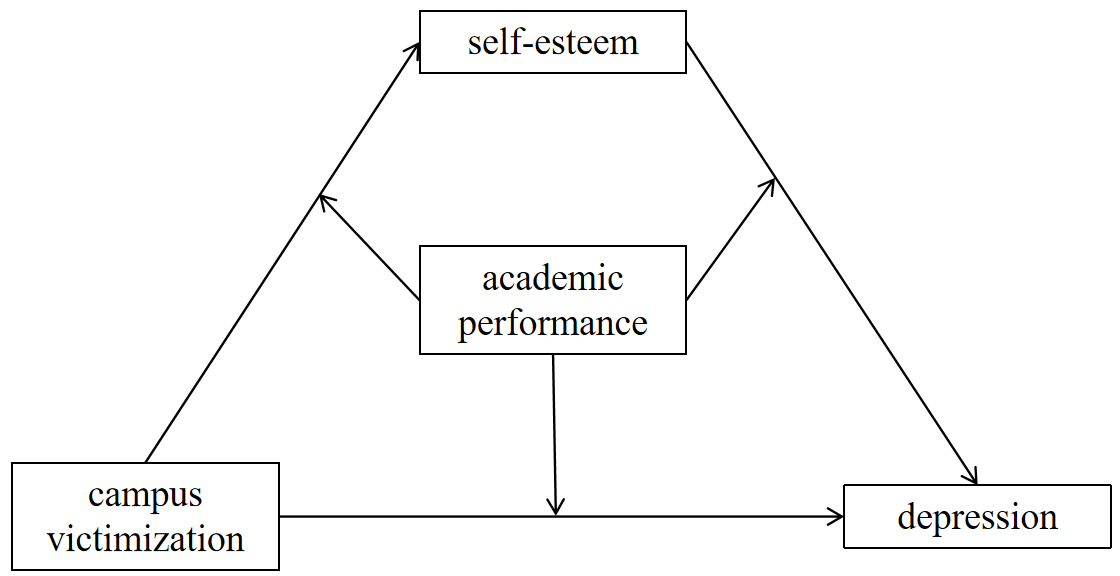
In summary, this study proposed a moderated mediation model (see Fig. 1).
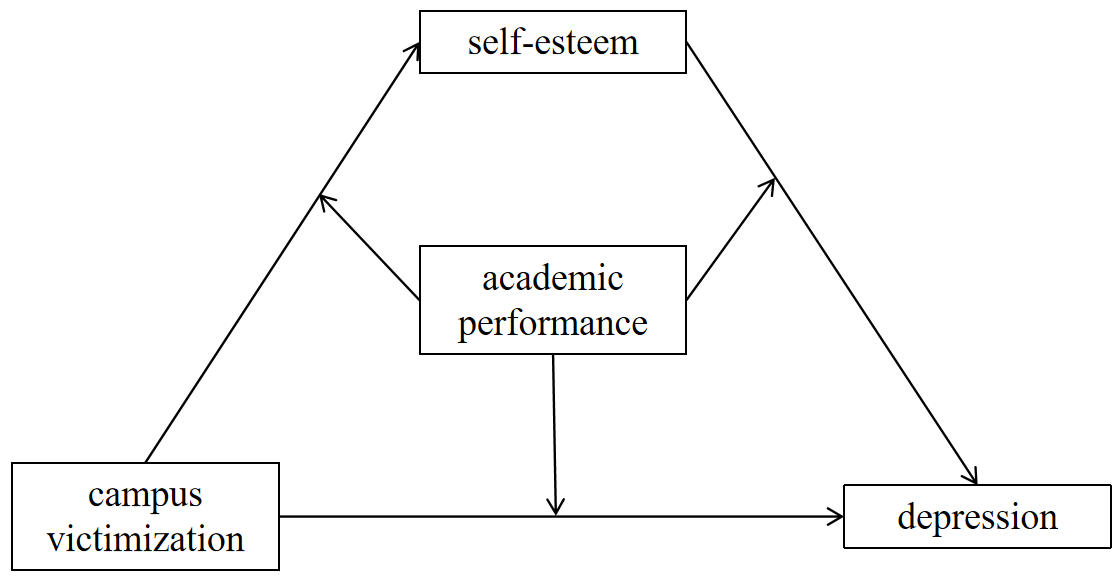 Fig. 1.
Theoretical research model.
This study adopts multi-stage stratified random cluster sampling method to determine the survey participants. First, 3 cities in Shanxi Province and 2 cities in Henan Province were selected as the study area. Then, in order to ensure the representativeness of the samples and the generalization and ecology of the research results, Primary and secondary schools in urban and rural areas were sampled in each of the five regions. Finally, the class list of grades 3–9 in each school was obtained, and the natural classes in each school were selected in a completely random way to participate in the survey. Although these two provinces are representative of central China, they should be carefully promoted to other provinces. A total of 7500 questionnaires were distributed in the two provinces, and 6369 valid questionnaires were collected. The total recovery was 84.89%.
According to the “Screening for overweight and obesity among school-age
children and adolescents” released by China in 2018, the formula is used to
calculate the BMI (
The mean age of the participants was 11.31 years (SD = 2.10 years). There were 321 male students (58.58%) and 227 female students (41.42%) in the total sample. There were 292 elementary school students (53.28%), 154 middle school students (28.10%), and 102 students did not report their grade. There were 177 only children (32.30%), 315 non-only children (57.50%), and 56 did not report whether they were only children or not. There were 166 urban students (30.30%), 178 rural students (32.50%), and 204 students who did not report their region.
(a) The Victim Questionnaire (VQ) compiled by Olweus (1993) and revised by Zhang
W. (2002) was used to measure the campus victimization situation of obese
adolescents in school (Zhang, 2002). The scale contains 7 items and is scored
with 5 points. In this study, the Cronbach’s
(b) Rosenberg’s self-esteem scale was adopted, which was widely used among
adolescents in China (Wang et al., 2018a). The scale includes 10 items and
uses 4 points to score. The higher the total score is, the higher the level of
self-esteem is. In this study, the Cronbach’s
(c) Academic performance is tested using the question “Your level of achievement in the class”, which is scored on a 4-point scale (1 = poor, 2 = medium, 3 = good, 4 = excellent).
(d) The Shot Version of Children’s Depression Inventory (CDI) in the survey project
“Psychological Development Characteristics of Chinese Children and Adolescents”
was used to measure the depressive mood of obese children and adolescents (Dong and Lin, 2011). The scale contains 10 items, of which 5 items are scored in
reverse. The higher the total score, the higher the degree of depression. In this
study, the Cronbach’s
This study was approved by the Ethics Committee of Shanxi University (Approval No. SXULL2024080). The experimenters of this test are all graduate students majoring in psychology, and unified training is conducted before the test. The minors participating in the experiment have obtained parental consent. The test was conducted in the class unit, the experimenters issued informed consent, and the participants had the right to withdraw voluntarily. The test was conducted by the experimenters in accordance with the unified test instructions, requiring the participants to complete all the questions in the questionnaire within the specified time and collect them on the spot.
We used SPSS 26.0 (IBM SPSS Statistics, Chicago, IL, USA) and the PROCESS macro
for data analysis. First, considering that all data were collected through
self-report questionnaires, we systematically assessed potential common method
bias using SPSS 26.0. Descriptive statistics and correlation analyses were then
conducted for the key study variables. The skewness and kurtosis values of all
variables—school victimization, depression, self-esteem, and academic
performance—fell within acceptable ranges (i.e., skewness
Because the questionnaires were filled out by students and self-reported, there might be common methodological bias. Therefore, the Harman single factor test method was used in this study for common method bias test (Zhou and Long, 2004). The results showed that a total of 5 common factors with eigenvalues greater than 1 were extracted, and the variability explained by the first factor was 22.27%, far less than the 40% judgment standard recommended by Podsakoff et al. (2003). It showed that there was no serious common methodology bias in this study.
The descriptive statistics and correlation analysis results of this study are
presented in Table 1. All bivariate associations were statistically significant
(p
| Variables | M | SD | 1 | 2 | 3 |
| 1. Campus victimization | 11.79 | 5.67 | 1 | ||
| 2. Self-esteem | 26.32 | 5.37 | –0.13** | 1 | |
| 3. Depression | 14.73 | 3.80 | 0.20*** | –0.66*** | 1 |
Note: **p
M, mean; N, number of participants.
In this study, Model 4 of the SPSS macro system PROCESS was first used to
examine the mediating role of self-esteem between campus victimization and
depression in obese children. The results show (see Table 2) that campus
victimization can significantly predict depression in obese children (
| Variables | M1 (Self-esteem) | M2 (Depression) | ||
| t | t | |||
| Campus victimization | –0.13 | –3.11** | 0.12 | 3.58*** |
| Self-esteem | –0.64 | –19.89*** | ||
| R2 | 0.02 | 0.44 | ||
| F | 9.65*** | 217.34*** | ||
Note: **p
R2, R squared; F, F statistic.
| Type | Effect | Effect size | Boot SE | BootLLCI | BootULCI |
| Total effect | 0.134 | 0.028 | 0.078 | 0.189 | |
| Direct effects | 0.077 | 57.46% | 0.022 | 0.035 | 0.120 |
| Indirect effects | 0.057 | 42.54% | 0.018 | 0.022 | 0.092 |
Boot SE, Bootstrap standard error; BootLLCI, Bootstrap lower limit of the confidence interval; BootULCI, Bootstrap upper limit of the confidence interval.
Since academic performance might play a moderating role in multiple paths, this
study adopted Model 59 of the macro system PROCESS for data analysis. The results
show (see Table 4) that in Model 1, the interaction term between campus
victimization and academic performance has no significant predictive effect on
self-esteem (
| Variables | M1 (Self-esteem) | M2 (Depression) | ||
| t | t | |||
| Campus victimization | –0.11 | –2.77** | 0.11 | 3.68*** |
| Academic performance | 0.27 | 6.43*** | 0.09 | 2.77** |
| Campus victimization × academic performance | –0.00 | –0.03 | –0.07 | –2.54* |
| Self-esteem | –0.64 | –20.16*** | ||
| Self-esteem × academic performance | –0.07 | –2.37* | ||
| R² | 0.09 | 0.46 | ||
| F | 17.27*** | 92.79*** | ||
Note: *p
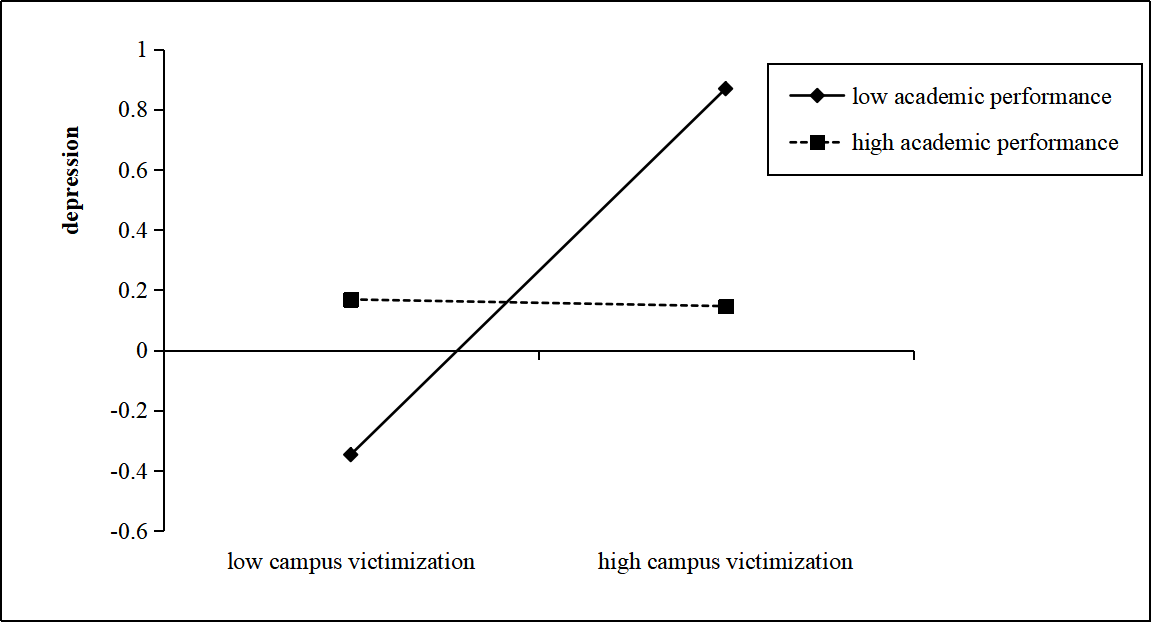
In order to more clearly explained the moderating role of academic performance
in the direct path, the academic performance was divided into high and low groups
according to the average score plus or minus one standard deviation (M
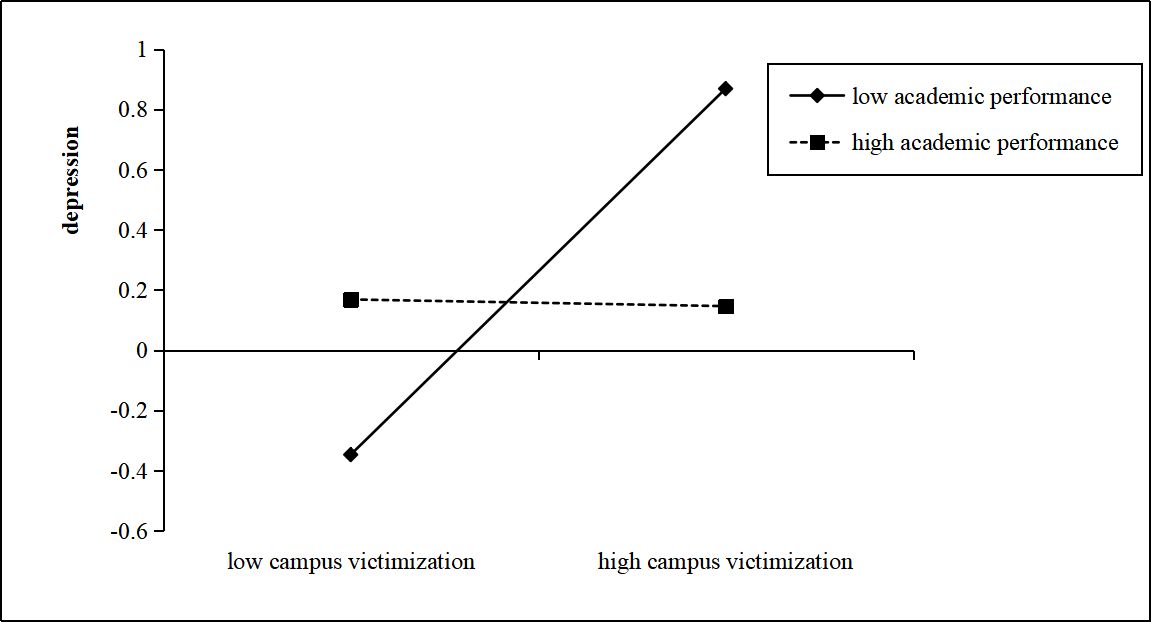 Fig. 2.
The moderating effect of academic performance on the relationship between campus victimization and depression in schools.
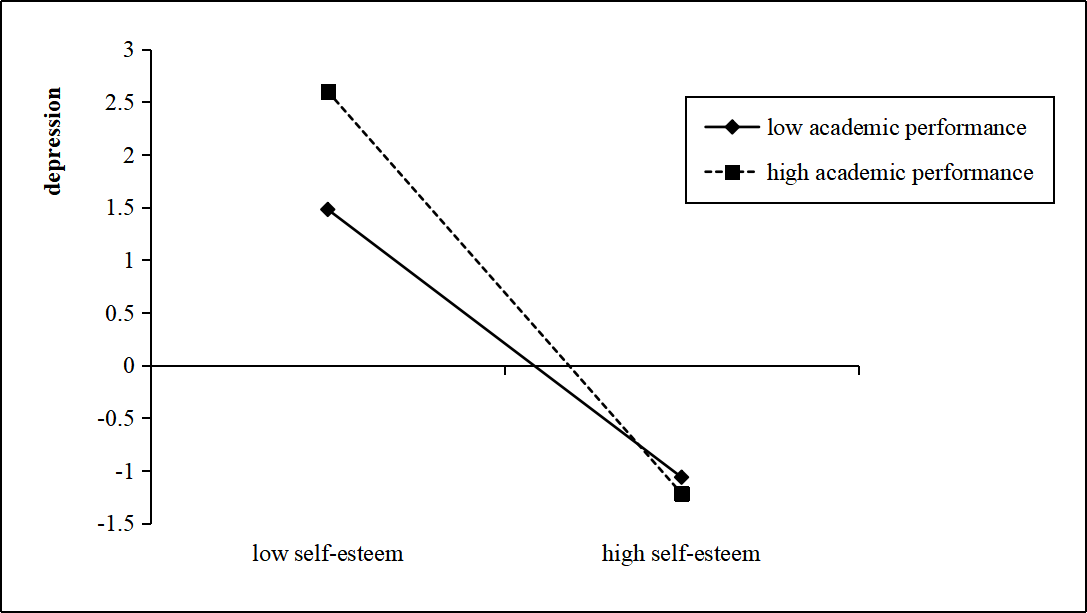
In order to more clearly explained the moderating role of academic performance
in the second half of the mediating effect, we divided academic performance into
high and low groups according to the average score plus or minus one standard
deviation (M
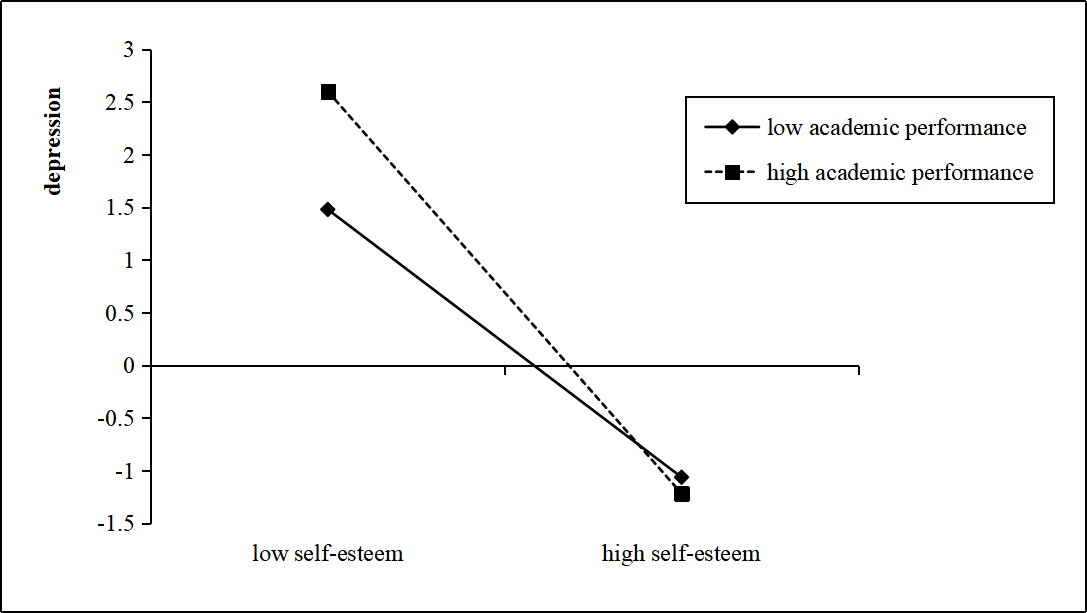 Fig. 3.
The moderating effect of academic performance on the relationship between self-esteem and depression.
This study found that campus victimization could positively predict depression in obese children and adolescents, which was consistent with previous research findings (Jang et al., 2024; Li et al., 2024; Yu and Zhu, 2023). Obese children and adolescents are often targeted for campus victimization due to their physical appearance. Prolonged exposure to rejection, ridicule, or aggression can lead to negative emotional outcomes, such as low self-esteem, loneliness, and helplessness (Krukowski et al., 2009). This result supports the interpersonal risk theory and stress exposure model of depression. Obese children who had been subjected to campus victimization for a long time had unhealthy interpersonal relationships, and long-term exposure to this stressful environment could cause them to feel insecure, thereby increasing their risk of depression (Hemphill et al., 2014; Stapinski et al., 2015). Recent research has shown that bullying and cyberbullying increase the risk of suicide among adolescent girls through the mediating effect of depression (Tabares et al., 2024). This further underscores the severity and widespread impact of school victimization on adolescents’ mental health.
Campus victimization can indirectly affect the depression of obese children and adolescents through self-esteem (Zhong et al., 2021). On the one hand, according to the cognitive theory of depression, obese children and adolescents who experienced negative events such as campus victimization would develop negative perceptions of themselves, leading to a decrease in their self-esteem and subsequently developing depressive emotions (Beck, 2002). On the other hand, according to the self-system beliefs model, the self system beliefs of children and adolescents could mediate social adversity and mental health (Sandler, 2001). Specifically, when obese children and adolescents encounter campus victimization (social adversity), they will develop negative perceptions and evaluations of themselves, leading to low self-esteem and negative emotions such as depression.
In addition, when obese children and adolescents experience campus victimization, they often internalize negative external evaluations, leading to feelings of shame and self-denial, which in turn contribute to lower levels of self-esteem (Wang et al., 2018b). Low self-esteem, as a significant risk factor for depression, may undermine psychological resilience and increase vulnerability to persistent negative emotions (Sui and Yeung, 2024). This pathway aligns with Rosenberg’s self-esteem theory and is consistent with previous empirical findings on the campus victimization–self-esteem–depression linkage (Rosenberg, 1965; Yang et al., 2022; Tabares et al., 2025). This suggests that helping obese children establish a correct self-awareness is beneficial for improving their self-esteem and thus promoting their mental health development.
Academic performance plays a moderating role in the direct pathway between campus victimization and depression in obese children and adolescents. When the academic performance of obese children and adolescents is lower, the positive predictive effect of campus victimization on depression was significant. Specifically, for obese children and adolescents who suffered from campus victimization and had poor academic performance, they not only suffered interpersonal setbacks, but also suffered academic setbacks, and these negative life events could exacerbate their depressive mood (Suzuki et al., 2018). When the academic performance of obese children is higher, the predictive effect of campus victimization on depression was not significant, suggesting that academic performance played a buffer or protective role. Specifically, Chinese social and cultural environment attaches great importance to academic performance, which is an important criterion to evaluate a student’s excellence. Although obese children and adolescents suffer from campus victimization, good academic performance is more likely to get them appreciated support from teachers and parents, which to some extent offset the harm caused by campus victimization. At the same time, children with excellent academic performance will have a higher sense of self-worth (Li et al., 2020), have a clear goal and self-motivation, and can focus on learning and personal development, which helps them maintain a positive attitude and reduce the occurrence of depression.
Academic achievement plays a moderating role in the second half of the mediating effect. When the academic performance of obese children and adolescents is higher, self-esteem has a significant negative predictive effect on depression, and the predictive effect is enhanced. Specifically, for obese children and adolescents with good academic performance, they may suffer from campus victimization because of their size and body shape, leading to a decline in self-esteem. At this time, they may compensate for their self-esteem from the academic aspect, thus reducing the production of depression, which is in line with the social gauge theory of self-esteem (Leary, 2005).
The findings of this study hold significant practical value for the development of targeted intervention programs as well as the formulation of educational and public health policies. First, the critical role of campus victimization in predicting depression among obese children and adolescents highlights the urgency of implementing school-based anti-bullying initiatives. Schools should foster inclusive environments that actively prevent weight-based bullying and promote respect and diversity among students. Specific measures may include classroom-based awareness campaigns, peer mentoring programs, and professional development for teachers on how to recognize and respond to subtle forms of harm.
Second, given the mediating role of self-esteem, intervention programs should incorporate components aimed at enhancing self-esteem, such as group counseling and positive identity development workshops tailored to the needs of obese students. Schools play a vital role in helping students develop a more positive self-concept and effectively cope with negative peer interactions.
Third, the moderating effect of academic performance underscores its protective role in mitigating depressive symptoms. Therefore, academic support strategies can serve as effective buffers for vulnerable students. By enhancing academic self-efficacy and promoting school engagement, educators can help at-risk children build psychological resilience against stress.
Finally, these findings also carry important implications for clinical practice and public policy. Clinicians working with obese children and adolescents should routinely assess experiences of school victimization and monitor depressive symptoms, particularly in individuals with low self-esteem and poor academic performance. Early identification and intervention through school-based mental health screenings or pediatric consultations may prevent the escalation of psychological distress. From a policy perspective, national or regional health education programs should address weight-related stigma and improve mental health literacy among students, educators, and parents.
In conclusion, our study suggests that a multi-level intervention framework can effectively improve the mental health outcomes of obese children and adolescents exposed to campus victimization.
This study also has certain limitations. Firstly, the data in this study were all from self-reports of children and adolescents, which might have biases. Future research should adopt multiple forms of reporting. Secondly, this study only focused on obese children and adolescents as research subject. Future research may consider expanding the scope of research subject to further explain the mechanisms of campus victimization and depression in different groups on campus. Third, this study was a cross-sectional study and could not provide causal explanations for the relationships between variables. Future research could consider longitudinal studies to further investigate the mechanism of campus victimization on depression. Finally, this study did not compare obese and non-obese groups, and it is suggested that future studies should consider the comparison of the relationship between obese and non-obese groups to further explore the similarities and differences between campus victimization, self-esteem, depression and academic performance. This will provide a more complete understanding of the impact of victimization on the mental health of different weight groups.
(1) Campus victimization positively predicted depression in obese children and adolescents; (2) Self-esteem mediated the relationship between campus victimization and depression among obese children and adolescents in school; (3) Academic performance played a moderating role in the direct path and the second half of the mediating path. Specifically, when academic performance is low, campus victimization has a significant positive predictive effect on depression in obese children and adolescents; When academic performance is high, self-esteem has a significant negative predictive effect on depression, and the predictive effect is enhanced.
The data that support the findings of this study are available on request from the corresponding author. The data are not publicly available due to privacy or ethical restrictions.
FL was responsible for conceptualization, project and ministration, manuscript drafting, and revision. FZ participated in conceptualization, investigation, and original manuscript drafting. RL made contributions to data curation, data analysis, and manuscript revision. All authors read and approved the final manuscript. All authors have participated sufficiently in the work and agreed to be accountable for all aspects of the work.
This study was conducted in accordance with the Declaration of Helsinki and was approved by the Ethics Committee of Shanxi University (Approval Code: SXULL2024080; Approval Date: 7 May 2024). Written informed consent was obtained from all the participants prior to the publication of the present study.
Not applicable.
This study received funding from the National Social Science Foundation of China (Grant No. 23BSH130).
The authors declare no conflict of interest.
References
Publisher’s Note: IMR Press stays neutral with regard to jurisdictional claims in published maps and institutional affiliations.