

 , Hanxue Yang 2, Lin Liu 1, Hu Deng 1, Jiaqi Song 1, Na Hu 3,4, Ying Li 3,4,*
 , Jiabao Chai 1,*,†
1 Department of Rehabilitation, Beijing Huilongguan Hospital, Peking University Huilongguan Clinical Medical School, 100096 Beijing, China
2 School of Psychology, Beijing Language and Culture University, 100083 Beijing, China
3 Now with Department of Psychosomatic Medicine, Beijing Children’s Hospital, National Center for Children Healthy, Capital Medical University, 100101 Beijing, China
4 Department of Psychiatry, Beijing Children’s Hospital, National Center for Children Healthy, Capital Medical University, 100101 Beijing, China
†These authors contributed equally.
Abstract
This study examined the relationships among negative symptoms, self-stigma, and quality of life in individuals with schizophrenia, and investigated whether these relationships differ between patients with high versus low levels of negative symptoms.
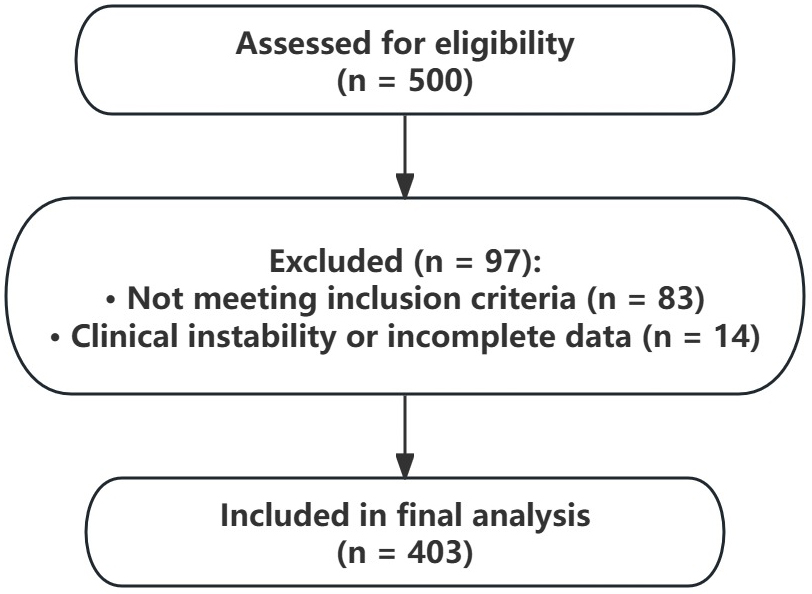
This cross-sectional study included 403 inpatients with schizophrenia. Participants were assessed using the Positive and Negative Syndrome Scale (PANSS), the Internalized Stigma of Mental Illness Scale (ISMI), the Schizophrenia Quality of Life Scale (SQLS), and other relevant measures. Descriptive statistics, correlation analyses, and multiple regression models were conducted. Of the 500 inpatients with schizophrenia who were screened, 403 met the inclusion criteria and were included in the final analysis.
Negative symptoms were significantly associated with overall self-stigma and its subdimensions. Among participants with high levels of negative symptoms, self-stigma was significantly associated with general psychopathology, objective support, and avoidance coping. In contrast, only avoidance coping showed a significant association in the low-symptom group. Regarding quality of life, stereotype endorsement and stigma resistance were significantly associated with higher SQLS scores (indicating worse quality of life) in the low-symptom group, whereas no significant associations were observed in the high-symptom group.
Negative symptoms are closely associated with internalized stigma in individuals with schizophrenia. The psychosocial correlates and consequences of self-stigma appear to vary according to the severity of negative symptoms. These findings highlight the importance of tailored interventions, such as enhancing social support for individuals with prominent negative symptoms and promoting adaptive coping strategies for those with milder symptoms.
Keywords
- negative symptoms
- quality of life
- schizophrenia
- self-stigma
- social support
Negative symptoms are one of the key features of schizophrenia and have a profound impact on the long-term prognosis of patients (Mosolov and Yaltonskaya, 2022). Negative symptoms include affective flattening, lack of motivation, reduced interest, social withdrawal, and poverty of speech, which collectively represent a loss of normal emotional expression and motivation. Compared to positive symptoms such as hallucinations and delusions, negative symptoms are more persistent and difficult to treat with traditional antipsychotic medications (Correll and Schooler, 2020). Research has shown that the severity of negative symptoms is related to the recovery of social functioning, occupational functioning, and self-care abilities in patients (Giordano et al, 2022). Pronounced negative symptoms are commonly associated with increased social withdrawal and reduced functional capacity, which significantly hinders their reintegration into society and reduces their overall quality of life (Galderisi et al, 2021; Maj et al, 2021). Therefore, understanding how negative symptoms interact with other psychosocial factors is critical for improving long-term outcomes.
Self-stigma refers to the process in which individuals with mental disorders internalize society’s negative labels and prejudices against mental illness, leading to negative self-perceptions (Chan and Mak, 2017). It often manifests as diminished self-worth, low self-esteem, and a sense of hopelessness about the future. Self-stigma not only increases psychological distress but also undermines treatment adherence and willingness to seek support (Ingram et al, 2016). Studies have shown that self-stigma is a major barrier in the recovery process of patients with schizophrenia, particularly affecting their treatment adherence and participation in rehabilitation activities (Pellet et al, 2019). Moreover, self-stigma has a profoundly negative impact on the emotional state and psychological adaptation of patients with schizophrenia, limiting their ability to benefit from social support systems (Jian et al, 2022; Karaçar and Bademli, 2022). Given the impact of self-stigma on recovery, it is important to understand its interaction with symptom severity to identify strategies for mitigating its effects.
Emerging theoretical models suggest that the relationship between self-stigma and quality of life in schizophrenia may be shaped by symptom-related psychological processes. According to Corrigan’s cognitive-behavioral model of self-stigma, individuals internalize societal prejudices, which, in turn, erodes self-esteem and diminishes motivation to pursue valued life goals (Corrigan and Watson, 2002). Quality of life is consequently impaired, not only by external discrimination but also by the internalization of devaluing beliefs. Negative symptoms, such as avolition and anhedonia, may amplify this process by suppressing volitional engagement, emotional responsiveness, and goal-directed behavior (Correll and Schooler, 2020). These deficits are thought to weaken the individual’s ability to resist stigma and buffer its emotional toll, thereby moderating the impact of self-stigma on life satisfaction and psychosocial functioning. In this context, negative symptoms are not merely outcomes of stigma but may also function as psychological moderators that alter how stigma is experienced and internalized. However, empirical studies specifically examining how negative symptoms may moderate the relationship between self-stigma and quality of life, remain limited.
Self-stigma has a broad impact on the quality of life of individuals with mental disorders. Quality of life encompasses not only the emotional state of patients but also aspects such as social functioning, occupational ability, and independent living skills (Chan and Mak, 2017). Research has suggested that self-stigma leads to an underestimation of one’s abilities and withdrawal from social roles, thereby affecting daily functioning (Kudva et al, 2020). Patients with higher levels of self-stigma are more likely to experience social isolation and abandon career aspirations, resulting in a decline in overall quality of life (Ociskova et al, 2023). Those with severe self-stigma often display avoidance behaviors in social activities, and their work performance is significantly affected, exacerbating their economic and social challenges (González-Menéndez et al, 2021; Liu et al, 2024). Thus, addressing self-stigma is essential for improving the overall well-being of individuals with schizophrenia. Understanding how self-stigma interacts with clinical-symptom profiles is therefore essential for identifying vulnerable subgroups and tailoring interventions accordingly.
Although negative symptoms and self-stigma each play a significant role in the prognosis and recovery of individuals with schizophrenia, research on the relationship between the two remains limited. Studies have suggested that self-stigma is closely related to emotional disorders such as depression and anxiety, but its impact may vary across different symptom profiles (Corrigan and Nieweglowski, 2021). Some research has indicated that patients with high levels of negative symptoms may be more prone to self-stigma, as symptoms like social withdrawal and emotional blunting reduce interaction with the outside world, deepening their internalization of negative self-perceptions (Ociskova et al, 2023). Despite these findings, there is limited understanding of how self-stigma and negative symptoms collectively influence quality of life, particularly when comparing groups with different symptom severity.
Factors influencing self-stigma may include the patients’ level of social support, understanding of their illness, and personal coping strategies (Del Rosal et al, 2021). Feelings of loneliness and a lack of social support are key contributors to heightened self-stigma, which are often closely linked to negative symptoms (Fond et al, 2023). Additionally, negative symptoms can diminish patients’ active engagement in social interactions and their expectations for the future, potentially exacerbating self-stigma (González-Menéndez et al, 2021). Understanding how these relationships vary by symptom severity is essential for developing targeted and effective interventions.
Given the heterogeneity of negative symptoms among individuals with
schizophrenia, the present study adopted a group-based approach to examine the
differential effects of symptom severity. Specifically, patients were categorized
into high- and low-negative-symptom groups based on scores on the Positive and
Negative Syndrome Scale (PANSS) Negative Symptom subscale (PANSS-N). A PANSS-N
score of 19 was used as the threshold, with scores
To address methodological gaps in capturing the heterogeneity of negative symptoms, the present study adopted a dual analytic approach. In light of the theoretical and clinical relevance of negative symptoms, there is increasing recognition of the need for flexible analytic strategies to capture their effects. Stratified approaches, which compare subgroups based on symptom severity, can highlight heterogeneity in psychosocial functioning and identify clinical subtypes that may benefit from tailored interventions. At the same time, treating negative symptoms as a continuous variable preserves statistical power and allows for fine-grained examination of dose-response relationships with self-stigma and quality of life. Therefore, this study used both methods—group-based stratification using PANSS-N thresholds and dimensional analysis via linear regression—to ensure analytical robustness and generate complementary insights that enhance both clinical interpretability and statistical precision.
Previous research has often relied on either group comparisons or dimensional analyses to examine negative symptoms, but few have combined both approaches to fully capture their heterogeneity and complex associations with psychosocial outcomes. To address these gaps, the present study investigated the interrelationships among negative symptoms, self-stigma, and quality of life in individuals with schizophrenia. By dividing patients into high and low negative-symptom groups based on PANSS-N scores, the study explored whether the severity of negative symptoms is differentially associated with self-stigma, and whether the impact of self-stigma on quality of life varies across symptom severity levels. These insights are intended to inform individualized psychosocial interventions and rehabilitation planning for this population. This integrative design offered methodological novelty and practical relevance for psychiatric rehabilitation.
We examined the following:
(1) There is a significant correlation between negative symptoms and self-stigma.
(2) The severity of negative symptoms is associated with differences in self-stigma.
(3) The factors influencing self-stigma differ between the high and low negative symptom groups.
(4) The impact of self-stigma on quality of life differs between the high and low negative symptom.
This cross-sectional study was conducted at Beijing Huilongguan Hospital between May and October 2023. A total of 500 inpatients with schizophrenia were initially screened for eligibility. Based on the inclusion and exclusion criteria (below), 83 individuals were excluded. An additional 14 participants were removed due to clinical instability or incomplete questionnaire responses. Ultimately, 403 participants were included in the final analysis. Participants were selected using a random-number-table method. All patients met the diagnostic criteria for schizophrenia according to the World Health Organization (WHO) International Classification of Diseases, 10th Revision (ICD-10) (World Health Organization, 1993) classification, and diagnoses were confirmed by at least two experienced psychiatrists. The sample comprised 206 males (51.1%) and 197 females (48.9%), with a mean age of 48.8 years (SD = 13.52). Written informed consent was obtained from all participants, along with demographic and clinical data. The study was approved by the Ethics Committee of Beijing Huilongguan Hospital (Approval Number: 2023-24), and all procedures complied with the Declaration of Helsinki.
The inclusion criteria were as follows: (1) diagnosed with schizophrenia according to ICD-10; (2) stable use of antipsychotic medication for at least one month prior to the study; (3) aged between 18 and 65 years; (4) education level of junior high school or above. The exclusion criteria were as follows: (1) major physical illnesses that could interfere with assessment or participation; (2) organic brain disorders (e.g., traumatic brain injury, epilepsy, or dementia), or significant intellectual disabilities, defined as clinically documented intellectual functioning equivalent to an intelligence quotient (IQ) below 70 or as noted in the medical records by a psychiatrist; (3) severe and unstable physical illnesses considered unmanageable in an inpatient psychiatric setting, including but not limited to decompensated diabetes, acute cardiovascular events, or other treatment-resistant somatic conditions as determined by the treating physician; (4) psychiatric disorders secondary to substance abuse (e.g., alcohol or drug dependence).
Three trained psychiatrists independently rated symptom severity after joint calibration on PANSS anchor vignettes and with periodic drift-check meetings during data collection. Inter-rater reliability was examined on a subset of parallel-rated interviews (n = 3) using a two-way random-effects, single-measure intraclass correlation coefficient [ICC (2,1)]: PANSS-N = 0.84 (95% confidence interval [CI] 0.76–0.90), positive syndrome (PANSS-P) = 0.82 (0.73–0.89), general (PANSS-G) = 0.80 (0.70–0.88), and PANSS total = 0.92 (0.88–0.95), indicating good to excellent agreement among raters. Given the small calibration sample, these estimates should be interpreted with caution; agreement was further maintained via routine cross-ratings, case-conference reviews, and adjudication.
The PANSS (Kay et al, 1987; Keepers et al, 2020) scale is widely used to
assess three main dimensions: PANSS-P, PANSS-N, and general psychopathology (GP).
The values range from 1 (“absent”) to 7 (“extreme”). The scale’s total score
ranges between 30 and 210 points, with higher scores indicating more severe
symptoms. It serves as a tool for gauging the severity of symptoms in study
participants. The internal consistency was good (Cronbach’s
The SEI (Casale et al, 2022) scale has a total of 58 questions, using a
two-point scoring method: 1 point for being like me, and 0 for not being like me.
There are 30 questions in reverse scoring. The total score ranges from 0 to 50,
and the higher the total score, the higher the self-esteem level. The internal
consistency coefficient of Cronbach’s
The CD-RISC (Connor and Davidson, 2003; Taylor, 2022) consists of 25 items
rated on a 5-point similar scale, ranging from 0 (“not true at all”) to 4
(“true almost all of the time”). The total score ranges from 0 to 100, with
higher scores indicating greater resilience. Cronbach’s
The ISMI (Mucci et al, 2021) Scale contains 29 items distributed among five
subscales that capture various aspects of the subjective experience of stigma:
alienation, stereotype endorsement, perceived discrimination, social withdrawal
and stigma resistance. These items are assessed on a 4-point scale, from 1 to 4,
yielding a total possible score range of 29 to 116. The higher the score, the
greater the internalized stigma. Cronbach’s
The SQLS (Wilkinson et al, 2000) has a total of 30 items, which are divided
into three subscales to evaluate psychosocial factors, motivation and energy,
symptoms, and side effects, using a 5-point scale (0–4). Each scale is scored
from 0–100, and the higher the score, the worse the quality of life. Cronbach’s
The CQSP (Tong et al, 2006) consists of 54 items and includes four
subscales: problem solving, avoidance, cognitive adjustment, and emotion
regulation. Each item is rated on a 5-point Likert scale ranging from 1 (“never
use”) to 5 (“always use”), with higher scores indicating greater utilization
of the corresponding coping strategy. The total score for each subscale is the
sum of its item scores. The scale has demonstrated good internal consistency,
with Cronbach’s
The SSRS (Xiao, 1994) was used to measure the social support level of the
participants (Cronbach’s
The TEPS was used to evaluate the capacity for anticipatory and consummatory pleasure across abstract and contextual domains. The TEPS consists of 20 items grouped into four subscales: abstract anticipatory; contextual anticipatory; abstract consummatory; and contextual consummatory. Each item is scored on a Likert 6-point scale. Higher scores indicate a greater ability to experience pleasure over time. This measure has been widely used in schizophrenia research to assess deficits in motivation and hedonic processing and has demonstrated good internal consistency and construct validity across clinical and non-clinical populations (Gard et al, 2006).
To explore how negative symptoms relate to self-stigma and quality of life,
participants were primarily categorized into high and low negative-symptom groups
based on their scores on the PANSS-N. A cutoff score of
19 was used, with scores
To assess the robustness and generalizability of the findings, supplementary analyses were also performed using the more conventional PANSS-N cutoff of 24 to define high versus low negative-symptom groups (Supplementary Tables 1–3). In addition, complementary dimensional analyses treating PANSS-N as a continuous variable were conducted to examine associations with self-stigma and quality of life (Supplementary Tables 4,5). These supplementary methods and corresponding results are detailed in Supplementary Tables 1–5 and are referenced in the Results and Discussion sections.
All analyses were conducted in SPSS 22.0 (IBM Corp., Armonk, NY, USA) in
accordance with the Strengthening the Reporting of Observational studies in
Epidemiology (STROBE) (von Elm et al, 2007) recommendations for
observational studies. Continuous variables were summarized as mean
Bivariate associations among negative symptoms, self-stigma, and quality of life
were examined using Pearson correlations (Spearman’s rho when normality
assumptions were not met). Multiple linear regressions were then fitted within
each negative-symptom group to identify predictors of (i) self-stigma (ISMI
total) and (ii) quality of life (SQLS total). We report standardized beta
coefficients (
To assess robustness, two sets of sensitivity analyses were performed: (1) repeating the main analyses using an alternative PANSS-N cutoff of 24 to define high vs. low negative-symptom groups, and (2) dimensional models treating PANSS-N as a continuous variable to examine associations with ISMI and SQLS. Detailed methods and full results are provided in Supplementary Tables 1–5, and key findings are summarized in the Results section.
A total of 500 inpatients with schizophrenia were initially screened. After
excluding 83 patients due to not meeting the inclusion criteria and 14 due to
clinical instability or incomplete data, 403 were included in the final analysis
(Fig. 1). Among the study sample, 51.12% (206) were male and 48.88% (197) were
female, with a mean age of 48.80
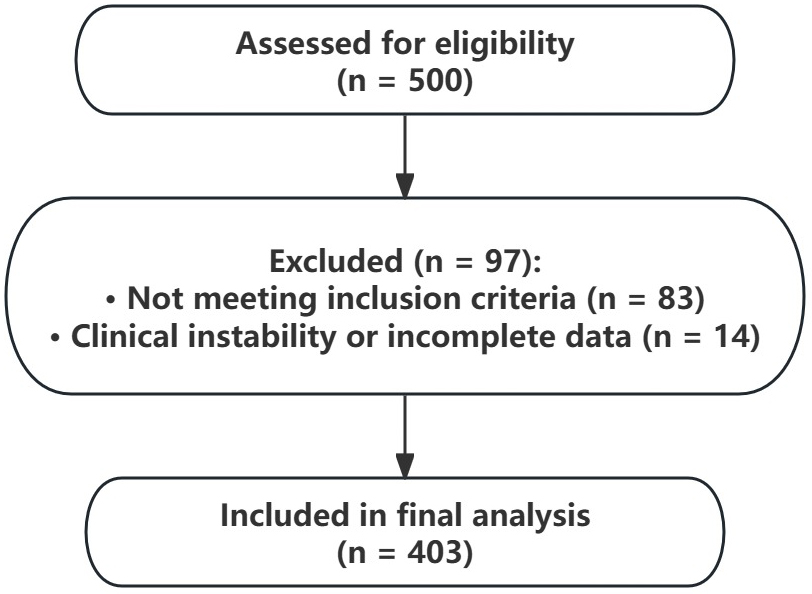 Fig. 1.
Research Roadmap. n, number of samples.
| Category | Minimum | Maximum | Mean | |
| Number of patients | 403 | |||
| Age | 17 | 72 | 48.80 | |
| Sex: men/women | 206 (51.1%)/197 (48.9%) | |||
| Education | 1 | 8 | 3.97 | |
| Education Year | 1 | 20 | 11.25 | |
| History | 0 | 38 | 5.20 | |
| Course | 0 | 49 | 20.61 | |
| Onset | 5 | 63 | 28.08 | |
| Treat age | 5 | 63 | 28.81 | |
| Drug dosage | 1 | 40 | 11.69 | |
| Drug duration | 0 | 49 | 15.45 | |
| PANSS-Total score | 30 | 121 | 67.12 | |
| PANSS-P | 7 | 33 | 15.23 | |
| PANSS-N | 7 | 37 | 17.42 | |
| PANSS-G | 16 | 51 | 31.81 | |
| SSRS-Total score | 8 | 45 | 21.21 | |
| SSRS-O | 1 | 17 | 5.14 | |
| SSRS-S | 4 | 16 | 9.31 | |
| SSRS-U | 3 | 12 | 6.77 | |
| CD-RISC-Total score | 3 | 104 | 54.31 | |
| CD-RISC-F1 | 1 | 36 | 17.73 | |
| CD-RISC-F2 | 1 | 28 | 14.35 | |
| CD-RISC-F3 | 1 | 20 | 11.67 | |
| CD-RISC-F4 | 0 | 12 | 6.25 | |
| CD-RISC-F5 | 0 | 8 | 4.31 | |
| ISMI-Total score | 29 | 116 | 61.05 | |
| ISMI-A | 9 | 36 | 20.38 | |
| ISMI-SE | 7 | 28 | 15.90 | |
| ISMI-PD | 5 | 20 | 11.17 | |
| ISMI-SW | 3 | 12 | 6.76 | |
| ISMI-SR | 5 | 20 | 10.85 | |
| SQLS-Total score | 0 | 127 | 45.96 | |
| SQLS-PS | 0 | 68 | 23.57 | |
| SQLS-ME | 0 | 27 | 11.75 | |
| SQLS-SSE | 0 | 32 | 10.64 | |
| CQSP-Total score | 51 | 270 | 146.39 | |
| CQSP-PS | 21 | 110 | 62.41 | |
| CQSP-A | 15 | 75 | 36.14 | |
| CQSP-CA | 8 | 50 | 29.27 | |
| CQSP-ER | 7 | 35 | 18.58 | |
| SEI-Total score | 12 | 53 | 26.86 | |
| TEPS-Total score | 20 | 110 | 69.31 | |
| TEPS-AA | 4 | 24 | 14.76 | |
| TEPS-CA | 5 | 30 | 15.39 | |
| TEPS-AC | 5 | 36 | 21.91 | |
| TEPS-CC | 4 | 34 | 17.24 | |
Note: History, number of previous hospitalizations; Treat age, Age at first treatment; PANSS, Positive and Negative Syndrome Scale; PANSS-P, Positive and Negative Syndrome Scale (Positive syndrome); PANSS-N, Positive and Negative Syndrome Scale (Negative syndrome); PANSS-G, Positive and Negative Syndrome Scale (General psychopathology); SSRS, Social Support Rating Scale; SSRS-O, Social Support Rating Scale (Objective support); SSRS-S, Social Support Rating Scale (Subjective support); SSRS-U, Social Support Rating Scale (Utilization of support); CD-RISC, Connor- Davidson resilience scale; CD-RISC-F1, Connor-Davidson Resilience Scale (Adversity); CD-RISC-F2, Connor-Davidson Resilience Scale (Persistence); CD-RISC-F3, Connor-Davidson Resilience Scale (Adaptability); CD-RISC-F4, Connor-Davidson Resilience Scale (Positive Acceptance); CD-RISC-F5, Connor-Davidson Resilience Scale (Secure Relationships); ISMI, Internalized Stigma of Mental Illness; ISMI-A, Internalized Stigma of Mental Illness (Alienation); ISMI-SE, Internalized Stigma of Mental Illness (Stereotype Endorsement); ISMI-PD, Internalized Stigma of Mental Illness (Perceived Discrimination); ISMI-SW, Internalized Stigma of Mental Illness (Social Withdrawal); ISMI-SR, Internalized Stigma of Mental Illness (Stigma Resistance); SQLS, Schizophrenia Quality of Life Scale; SQLS-PS, Schizophrenia Quality of Life Scale (Psychosocial); SQLS-ME, Schizophrenia Quality of Life Scale (Motivation and energy); SQLS-(SSE), Schizophrenia Quality of Life Scale (Symptoms and side Effects); CQSP, Coping Questionnaire for Schizophrenic Patients; CQSP-PS, Coping Questionnaire for Schizophrenic Patients (Problem Solving); CQSP-A, Coping Questionnaire for Schizophrenic Patients (Avoidance); CQSP-CA, Coping Questionnaire for Schizophrenic Patients (Cognitive Adjustment); CQSP-ER, Coping Questionnaire for Schizophrenic Patients (Emotion Regulation); SEI, Self-esteem Inventory; TEPS, Time Experience Pleasure Scale; TEPS-AA, Abstract Anticipatory; TEPS-CA, Contextual Anticipatory; TEPS-AC, Abstract Consummatory; TEPS-CC, Contextual Consummatory.
The findings revealed significant correlations between negative symptoms and both the overall score and subfactors of self-stigma. A significant correlation was observed between negative symptoms and the subfactor related to temporal pleasure experience (Table 2).
| PANSS-N | ISMI-A | ISMI-SE | ISMI-PD | ISMI-SW | ISMI-SR | ISMI-Total score | TEPS-AA | TEPS-CA | TEPS-AC | TEPS-CC | |
| PANSS-N | 1 | ||||||||||
| ISMI-A | 0.202** | 1 | |||||||||
| ISMI-SE | 0.178** | 0.807** | 1 | ||||||||
| ISMI-PD | 0.134** | 0.736** | 0.699** | 1 | |||||||
| ISMI-SW | 0.154** | 0.730** | 0.661** | 0.659** | 1 | ||||||
| ISMI-SR | 0.117** | 0.803** | 0.745** | 0.725** | 0.672** | 1 | |||||
| ISMI-Total | 0.185** | 0.943** | 0.908** | 0.850** | 0.809** | 0.887** | 1 | ||||
| TEPS-AA | 0.060 | –0.083 | –0.130** | –0.089** | –0.159** | –0.083** | –0.118* | 1 | |||
| TEPS-CA | 0.055 | 0.005 | 0.003 | 0.030 | –0.031 | 0.019 | 0.007 | 0.519** | 1 | ||
| TEPS-AC | –0.029 | –0.171** | –0.191** | –0.144** | –0.194** | –0.159** | –0.193** | 0.764** | 0.476** | 1 | |
| TEPS-CC | 0.160** | 0.025 | 0.004 | 0.016 | –0.068 | 0.003 | 0.004 | 0.619** | 0.570** | 0.479** | 1 |
Note: *p
The results showed that there were significant differences in Education years (t
= –3.013, p = 0.003), PANSS-P (t = –4.732, p
| Outcomes | PANSS-N |
PANSS-N |
t | p |
| (Mean |
(Mean | |||
| Age | 47.81 |
50.42 |
–1.888 | 0.060 |
| Education years | 10.87 |
11.87 |
–3.013 | 0.003 |
| Course | 20.59 |
20.63 |
21,467.000 (U) | 0.001 |
| Dosage | 11.29 |
12.33 |
18,120.500 (U) | 0.331 |
| PANSS-P | 14.13 |
17.02 |
–4.732 | |
| PANSS-N | 13.55 |
23.75 |
–27.004 | |
| PANSS-G | 29.62 |
35.40 |
–7.430 |
Note: U values are from Mann-Whitney U tests.
Regression analyses were conducted separately for the high and low
negative-symptom groups to explore factors associated with self-stigma. In the
low negative-symptom group, avoidance coping (CQSP-A) was significantly
associated with higher levels of self-stigma (t = 4.70, p
| Low Negative Symptom Group | High Negative Symptom Group | ||||||||
| Dependent Variable | Predictors | Beta | t | p | Dependent Variable | Predictors | Beta | t | p |
| ISMI | Education | 0.011 | 0.182 | 0.856 | ISMI | Education | –0.038 | –0.532 | 0.595 |
| (F = 4.053) | PANSS-P | 0.065 | 0.868 | 0.386 | (F = 6.084) | PANSS-P | 0.018 | 0.232 | 0.817 |
| (p |
PANSS-G | –0.046 | –0.640 | 0.523 | (p |
PANSS-G | –0.165 | –2.262 | 0.025 |
| SSRS-O | –0.096 | –1.302 | 0.194 | SSRS-O | –0.289 | –3.409 | 0.001 | ||
| SSRS-S | 0.051 | 0.671 | 0.503 | SSRS-S | –0.130 | –1.326 | 0.187 | ||
| SSRS-U | –0.007 | –0.091 | 0.928 | SSRS-U | 0.144 | 1.665 | 0.098 | ||
| CD-RISC-F1 | 0.006 | 0.060 | 0.952 | CD-RISC-F1 | –0.213 | –1.568 | 0.119 | ||
| CD-RISC-F2 | –0.058 | –0.530 | 0.597 | CD-RISC-F2 | 0.162 | 1.309 | 0.193 | ||
| CD-RISC-F3 | –0.048 | –0.514 | 0.608 | CD-RISC-F3 | 0.022 | 0.186 | 0.852 | ||
| CD-RISC-F4 | 0.091 | 1.060 | 0.290 | CD-RISC-F4 | 0.162 | 1.610 | 0.110 | ||
| CD-RISC-F5 | 0.070 | 1.001 | 0.318 | CD-RISC-F5 | –0.031 | –0.342 | 0.733 | ||
| CQSP-PS | –0.087 | –0.653 | 0.515 | CQSP-PS | –0.198 | –1.039 | 0.301 | ||
| CQSP-A | 0.344 | 4.704 | CQSP-A | 0.508 | 5.631 | ||||
| CQSP-CA | –0.256 | –2.023 | 0.044 | CQSP-CA | –0.051 | –0.300 | 0.765 | ||
| CQSP-ER | 0.116 | 1.386 | 0.167 | CQSP-ER | 0.033 | 0.322 | 0.748 | ||
Separate regression models were used to examine the associations between self-stigma and quality of life in the high and low negative-symptom groups. In the low negative-symptom group, the stereotype endorsement (ISMI-SE) (t = 2.095, p = 0.037) and stigma resistance (ISMI-SR) (t = 2.027, p = 0.044) dimensions of self-stigma were significantly associated with quality of life. In the high negative-symptom group, no self-stigma dimensions showed significant associations with quality of life (Table 5).
| Low Negative Symptom Group | High Negative Symptom Group | ||||||||
| Dependent Variable | Predictors | Beta | t | p | Dependent Variable | Predictors | Beta | t | p |
| SQLS | Education | 0.057 | 0.957 | 0.339 | SQLS | Education | –0.020 | –0.267 | 0.790 |
| (F = 8.891) | PANSS-P | –0.031 | –0.179 | 0.858 | (F = 4.885) | PANSS-P | –0.017 | –0.211 | 0.833 |
| (p |
PANSS-G | –0.050 | –0.735 | 0.463 | (p |
PANSS-G | –0.068 | –0.855 | 0.394 |
| ISMI-A | 0.073 | 0.590 | 0.556 | ISMI-A | 0.235 | 1.535 | 0.127 | ||
| ISMI-SE | 0.212 | 2.095 | 0.037 | ISMI-SE | 0.108 | 0.788 | 0.432 | ||
| ISMI-PD | 0.043 | 0.478 | 0.633 | ISMI-PD | 0.195 | 1.546 | 0.124 | ||
| ISMI-SW | –0.037 | –0.427 | 0.670 | ISMI-SW | –0.126 | –1.056 | 0.293 | ||
| ISMI-SR | 0.213 | 2.027 | 0.044 | ISMI-SR | 0.043 | 0.306 | 0.760 | ||
Using the alternative PANSS-N cutoff of 24 (low
Regression analyses showed that in the
Regarding quality of life, stereotype endorsement (
When PANSS-N was treated as a continuous variable, predictors of higher
self-stigma included higher education, more severe positive symptoms, lower
SSRS-O, greater positive acceptance of change, and greater avoidant coping,
whereas cognitive adjustment coping predicted lower stigma. For quality of life,
stereotype endorsement remained a significant predictor of poorer outcomes
(
This study explored the relationships among negative symptoms, self-stigma, and quality of life in individuals with schizophrenia, with a particular focus on differences between high and low negative-symptom groups. The findings demonstrated that negative symptoms were significantly associated with self-stigma, and this relationship varied depending on the severity of symptoms. Moreover, associations between self-stigma and quality of life were observed only in individuals with lower levels of negative symptoms.
Consistent with previous findings, individuals in the high negative-symptom group showed stronger associations between self-stigma and both SSRS-O and general psychopathology (Fond et al, 2023; Ociskova et al, 2023). One possible explanation is that more severe negative symptoms—such as emotional blunting and social withdrawal—reduced opportunities for meaningful social interactions, thereby exacerbating the internalization of stigma (Ociskova et al, 2023). Those patients may receive less external affirmation and experience fewer corrective social experiences, reinforcing negative self-evaluations over time (Fond et al, 2023; Galderisi et al, 2021).
In contrast, in the low negative-symptom group, only CQSP-A was significantly associated with self-stigma. These findings indicated a symptom-severity-dependent shift in the mechanisms underlying self-stigma, which has important implications for intervention planning. Cognitive-behavioral styles such as avoidance may exert a stronger influence on stigma-related outcomes (Galderisi et al, 2021). Avoidance has been shown to increase vulnerability to internalized stigma by limiting adaptive engagement with both social networks and treatment opportunities (Liu et al, 2024).
Furthermore, the association between self-stigma and quality of life was observed only in the low negative-symptom group, specifically through stereotype endorsement and stigma resistance dimensions of the ISMI. That may indicate that individuals with lower negative symptoms retain greater insight and self-reflection capacities, thereby perceiving stigma more acutely and experiencing its emotional consequences more directly (Corrigan and Nieweglowski, 2021; Ociskova et al, 2023). In the high negative-symptom group, the blunting of affect and diminished social responsiveness may buffer or obscure the subjective effects of stigma on perceived quality of life (González-Menéndez et al, 2021). These subgroup-specific patterns underscore the importance of symptom-level assessments in psychosocial outcome prediction.
Sensitivity analyses using a PANSS-N cutoff of 24 produced consistent patterns, reinforcing the robustness of the main findings. While the precise set of significant predictors varied slightly, the core associations—particularly the role of avoidant coping and the differential impact of stereotype endorsement—remained evident across analytic strategies.
Beyond the dichotomous group comparisons, the dimensional regression analysis provided complementary insights, revealing that more severe negative symptoms were associated with heightened perceived discrimination and reduced stigma resistance. Those individuals also reported lower quality of life across multiple domains, including motivation, treatment-related burden, and psychosocial functioning. These results were consistent with prior dimensional studies highlighting the broad functional impact of negative symptoms in schizophrenia (Abbas et al, 2024; Desalegn et al, 2020).
Beyond group comparisons, the dimensional regression analysis provided additional insights into the complex interplay among negative symptoms, self-stigma, and quality of life. By modeling PANSS-N as a continuous variable, this approach preserved the full range of symptom variability and enabled more sensitive detection of dose-response effects. This analysis revealed that education level, positive symptom severity, and cognitive adjustment coping were significant predictors of self-stigma, in addition to SSRS-O and CQSP-A. These findings indicated that dimensional modeling captured additional psychosocial determinants—such as cognitive coping and education level—that were not detectable in group-based analysis. Moreover, the dimensional analysis confirmed the negative impact of stereotype endorsement on quality of life, reinforcing its centrality in patient functioning. The stronger associations found between negative symptoms and both stigma resistance and treatment-related burden support the notion that functional outcomes deteriorate progressively with symptom severity, even within subthreshold ranges.
Together, these findings highlight the methodological value of combining stratified and dimensional approaches. Although group-based comparisons clarify clinical thresholds and inform subgroup-specific interventions, dimensional modeling enhances precision and reveals gradients of vulnerability. This dual strategy offers a more comprehensive understanding of stigma-related dynamics and provides a stronger foundation for personalized rehabilitation planning.
These results underscore the importance of developing tailored psychosocial interventions. For patients with prominent negative symptoms, enhancing SSRS-O—such as through structured community programs, peer support networks, or family-based interventions—may help mitigate the development of self-stigma (Ociskova et al, 2023). For those with milder negative symptoms, psychological interventions such as cognitive-behavioral therapy (CBT), focusing on restructuring maladaptive beliefs and promoting active coping strategies, may be particularly effective (Del Rosal et al, 2021). This patient-centered approach is consistent with recovery-oriented frameworks that emphasize personal empowerment, social integration, and adaptive functioning (Del Rosal et al, 2021). Routine screening for internalized stigma and coping styles in clinical settings could help identify at-risk individuals and inform personalized rehabilitation plans. Since self-stigma is a modifiable factor, addressing it proactively may play a critical role in improving treatment outcomes and facilitating long-term recovery (Karaçar and Bademli, 2022; Pellet et al, 2019). Building upon these findings, recent research has suggested that negative symptoms may not only be outcomes of social and psychological challenges but could also act as moderators that alter the impact of self-stigma on quality of life. Specifically, the presence of patients with high levels of negative symptoms such as emotional numbing and reduced motivation may dampen patients’ cognitive-affective responses to stigma, thereby buffering its direct influence on life satisfaction and daily functioning. This aligns with moderation frameworks supported by recent evidence, wherein individual differences in symptom severity shape the internalization and psychosocial consequences of stigma (Degnan et al, 2021; Devoe et al, 2020). In this context, addressing negative symptoms is critical not only for their intrinsic burden but also for their potential role in amplifying or attenuating stigma-related harm.
These insights reinforce the need for tailored intervention strategies that match symptom profiles and target specific psychological vulnerabilities. Recognizing the heterogeneity in how patients experience and respond to stigma is crucial for the development of more effective and equitable mental health services. Taken together, our findings emphasize the importance of aligning assessment strategies with symptom heterogeneity to optimize intervention outcomes.
This study has several limitations that should be acknowledged. First, the cross-sectional design precludes any conclusions about causal relationships among negative symptoms, self-stigma, and quality of life. Although significant associations were identified, the directionality of these relationships cannot be determined. Longitudinal studies are needed to clarify whether negative symptoms contribute to increased self-stigma over time or vice versa (Pellet et al, 2019).
Second, the sample consisted exclusively of inpatients from a single psychiatric hospital in Beijing. Although this allowed for controlled data collection, it may have limited the generalizability of the findings to broader populations, including outpatients, individuals in community settings, or those from rural areas (Mosolov and Yaltonskaya, 2022). Future research should include more diverse clinical and cultural contexts to enhance external validity.
Additionally, the cross-cultural applicability of our findings should be interpreted with caution. This study was conducted within the sociocultural context of China, where collective values, stigma norms, and conceptions of mental illness may influence the expression of symptoms and the internalization of stigma. For instance, cultural expectations of emotional restraint or social harmony could shape how individuals perceive and report quality of life or stigma-related experiences. These cultural factors may limit the applicability of our findings to Western or other non-Asian populations. Cross-cultural replication studies are warranted to explore the universality or cultural specificity of the observed relationships.
Third, the classification of patients into high and low negative-symptom groups was based on a cutoff score from the PANSS-N subscale. Although this approach followed precedents in previous studies, it may not have fully captured the multidimensional nature of negative symptoms, such as experiential and expressive domains (Fond et al, 2023; Galderisi et al, 2021). The PANSS-N total score does not differentiate between primary and secondary negative symptoms or account for overlaps with other symptom dimensions, which may have influenced group comparisons. More refined instruments or dimension-based approaches are recommended for future studies.
In addition, unmeasured clinical variables may have influenced key outcomes. For example, depressive symptoms and clinical insight have been linked to self-stigma, quality of life, and symptom dimensions; these factors were not directly assessed in the present study and should be considered in future work (Bartoli et al, 2024; Dönmezler et al, 2023).
Finally, self-report measures may be subject to social desirability bias, especially in institutionalized settings. Future studies could incorporate Ecological Momentary Assessment (EMA), behavioral tasks, or informant reports to complement subjective data and reduce retrospective reporting errors.
The present study adds to the growing body of literature examining the interplay between psychopathological symptoms, stigma, and quality of life in individuals with schizophrenia. Our findings indicated that negative symptoms are significantly associated with higher levels of self-stigma. However, the factors associated with self-stigma—and the strength of its link to quality of life—differed based on the severity of negative symptoms.
In patients with high negative symptoms, SSRS-O and general psychopathology showed significant associations with self-stigma, whereas in those with low negative symptoms, CQSP-A played a dominant role. Notably, only in the low negative symptom group did self-stigma dimensions significantly correlate with quality-of-life outcomes. These findings suggest that both the antecedents and psychosocial consequences of self-stigma may differ across subgroups and underscore the need for stratified clinical approaches.
Interventions should be tailored to patients’ symptom profiles. For example, strengthening social support systems may benefit individuals with more pronounced negative symptoms, and cognitive-behavioral strategies targeting maladaptive coping may be more effective for patients with milder symptoms. Routine screening for self-stigma and coping patterns could serve as a valuable component of personalized rehabilitation planning.
Future research should adopt longitudinal designs to clarify the directional relationships among negative symptoms, self-stigma, and quality of life. Stratified approaches are also needed to account for the heterogeneity of negative symptoms (e.g., experiential vs. expressive domains) and tailor interventions accordingly. Emerging digital interventions, such as mobile applications for stigma monitoring and virtual reality–based social skills training, offer promising tools to enhance engagement and accessibility, particularly for individuals with severe social withdrawal. Their integration into community rehabilitation programs warrants further investigation.
Additionally, translational research linking neurobiological mechanisms (e.g., reward processing) with psychological outcomes could inform more targeted treatments. Combining biological, cognitive, and social data may help advance personalized psychiatry. Future studies should include more diverse samples—such as outpatients, rural populations, and culturally varied groups—and adopt patient-centered designs to ensure ecological validity and broader applicability.
The data that support the findings of this study contain sensitive clinical information and are not publicly available due to privacy and institutional restrictions. De-identified data may be made available upon reasonable request from the corresponding authors, subject to a data-use agreement and approval by the Ethics Committee of Beijing Huilongguan Hospital. Materials necessary to interpret the analyses are provided in the Supplementary Information (Supplementary Tables 1–5).
FL and JC contributed equally to the conceptualization and design of the study. YL provided critical guidance and oversaw manuscript revision. YL, JS supervised data analysis, which constitutes a direct and substantial contribution to the analysis and interpretation of data. HD and LL were responsible for data collection and initial interpretation. NH and HY contributed to data interpretation. All authors contributed to editorial changes in the manuscript. All authors read and approved the final manuscript. All authors have participated sufficiently in the work and agreed to be accountable for all aspects of the work.
This study was approved by the Ethics Committee of Beijing Huilongguan Hospital (Approval No. 2023-24). All participants provided written informed consent prior to participation. The study was conducted in accordance with the ethical standards of the institutional research committee and the principles outlined in the Declaration of Helsinki.
We would like to express our sincere gratitude to all patients who participated in this study and the medical staff at Beijing Huilongguan Hospital for their support and assistance during the data collection process. Additionally, we thank all peer reviewers and editors for their valuable comments and insightful suggestions, which have significantly improved the manuscript.
This work was supported by the Beijing Huilongguan Fund and the Longyue Plan Research Support Project of Beijing Huilongguan Hospital (Grant: QMS20222011), the Capital Health Research and Development Special Project (Grant: SF2024-4-2134), and the Beijing Municipal Administration of Hospitals’ Youth Program (Grant: QML20232003). The support from these grants reflects the priority of improving mental health care in Beijing and advancing targeted rehabilitation strategies.
The authors declare no conflict of interest.
Supplementary material associated with this article can be found, in the online version, at https://doi.org/10.31083/BP41915.
References
Publisher’s Note: IMR Press stays neutral with regard to jurisdictional claims in published maps and institutional affiliations.